A large blob of warm ocean water in the Pacific has made the formation of an El Niño event more likely – but a lot is still up in the air – literally, one expert says.
The Bureau of Meteorology's (BoM) El Niño watch says there's approximately a 50 per cent chance one may develop later in 2023.
Data from the National Oceanic and Atmospheric Administration (NOAA), shows the global mean ocean surface temperature is at record highs, peaking at 21.1C in early April; up 1.1C from the 21.0C seen in March 2016.
READ MORE: What Australians can expect for summer after El Niño watch issued
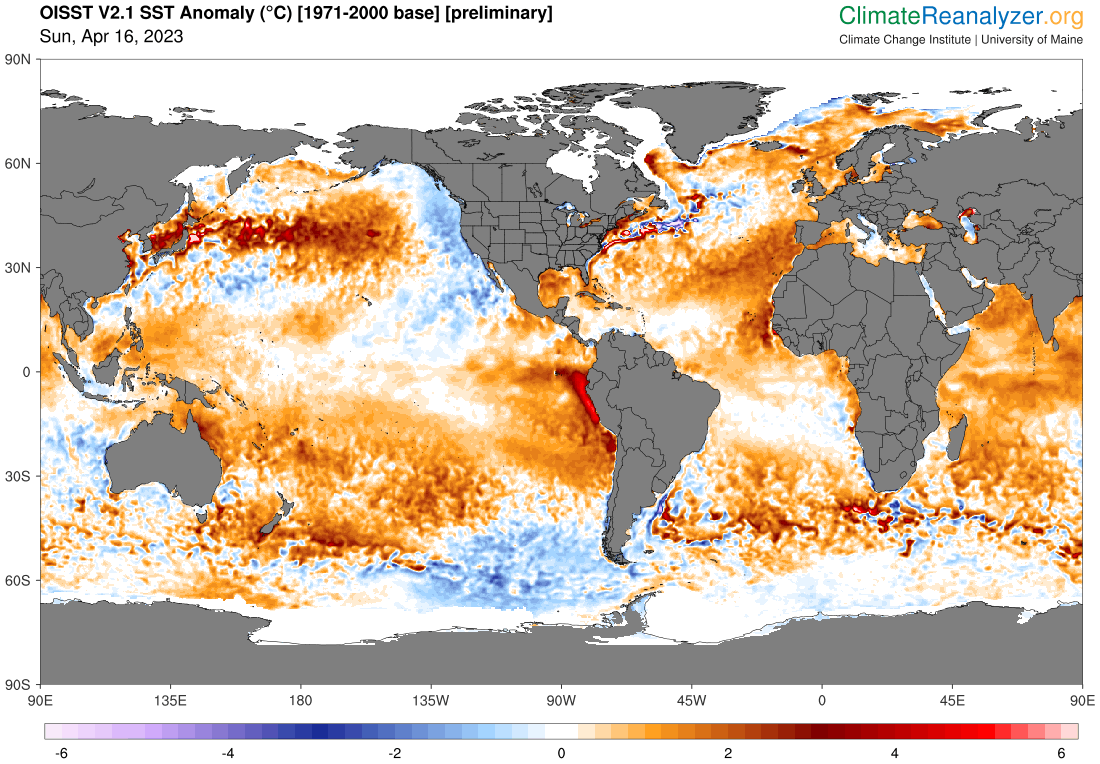
CSIRO climate scientist, Dr Nandini Ramesh, said while warm ocean temperatures point towards a possible El Niño, it's still too early to tell if one will form.
"We think it's possible but we have to wait and see," she told 9news.com.au.
Ramesh explained that as of yet, only one of two key El Niño conditions have presented as the atmosphere needs to react to the warm water.
"Even if you do have that warm water it's not definite an El Niño will occur," she said.
"Right now the stage we are in is we know the warm water is there and we're waiting for the atmosphere to react.
"We think it's possible but we just have to wait and see".
Ramesh said "it will become clearer if the atmosphere is reacting" in the winter months of June through to August.
READ MORE: Incredible figure Fox News will pay Dominion
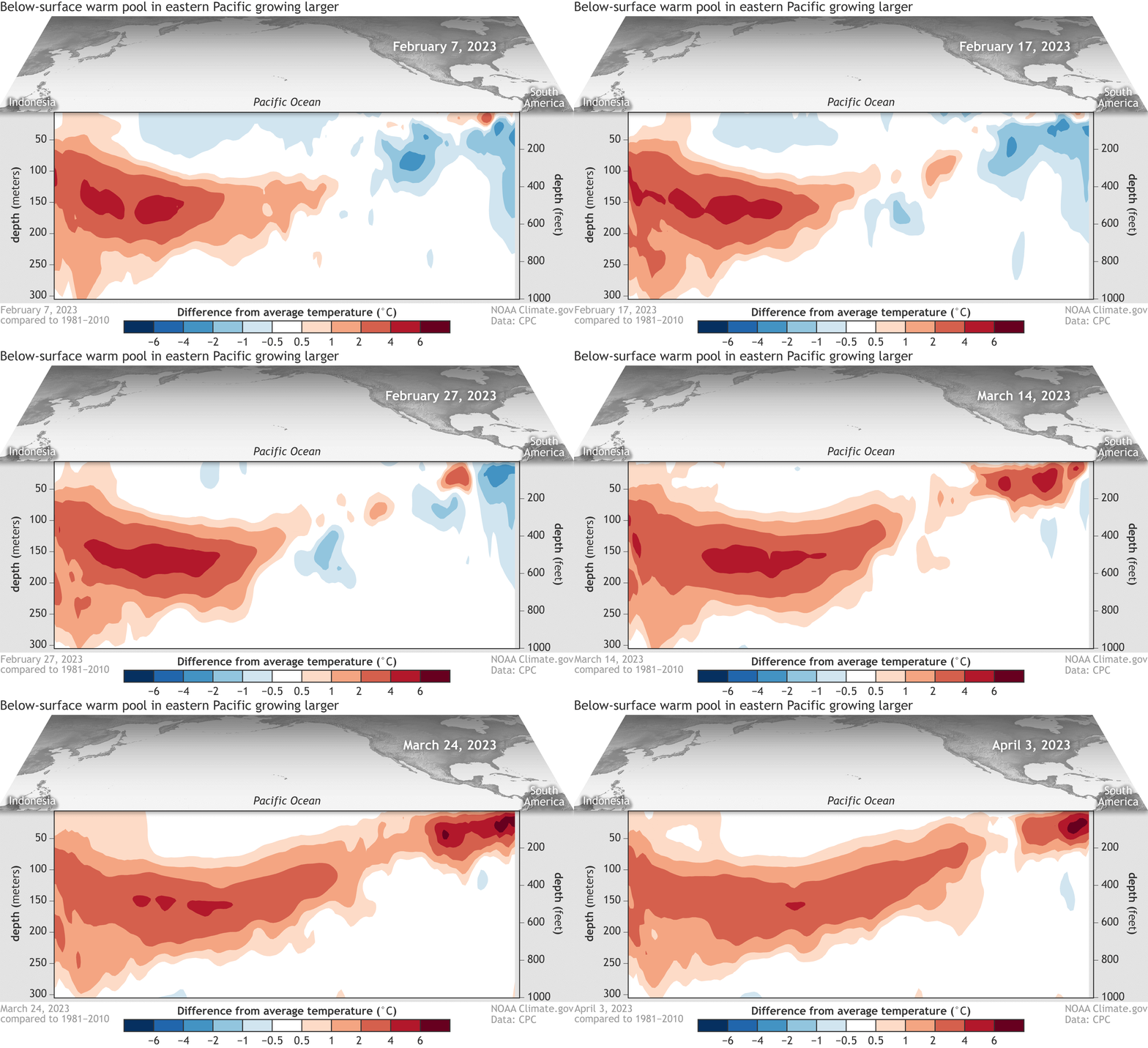
El Niño and La Niña events occur when the seawater in the tropical Pacific is either warmer or cooler; El Niño when it's warmer and La Niña cooler.
During an El Niño year, temperatures typically increase by about 0.2C; hot, dry conditions bring an increased risk of drought and bushfires.,
However Ramesh said talk about potential severity – or a super El Niño – is way too premature.
READ MORE: Government to knock back $34b welfare boost
"We can't say this early if there's going to be a huge or small El Niño," she said.
"We can't make predictions about the magnitude of the event so far out.
"And we're still at the stage where we're not sure if one will form or not."
Ramesh said El Niño events occur "every few years", and will typically last for around nine months.
"The usual pattern is it peaks around December, January," she said.
"We are way ahead of the peak right now.
"There's a lot of uncertainty."
Sign up here to receive our daily newsletters and breaking news alerts, sent straight to your inbox.