Fierce battle lines have been drawn in the agricultural heartland of southern New South Wales as farmers try to stop a massive multi-billion-dollar renewable electricity line, deemed critical by government, rising up and carving through their properties.
There are serious environmental issues in play over the controversial HumeLink project, which has a ballooning cost yet to be determined beyond a moving figure of many billions.
HumeLink's objective is to connect clean energy from new wind and solar farms to major towns and cities which were once served by coal plants in Hunter Valley in NSW and Latrobe Valley in Victoria.
READ MORE: Terrifying climate record broken in Antarctica
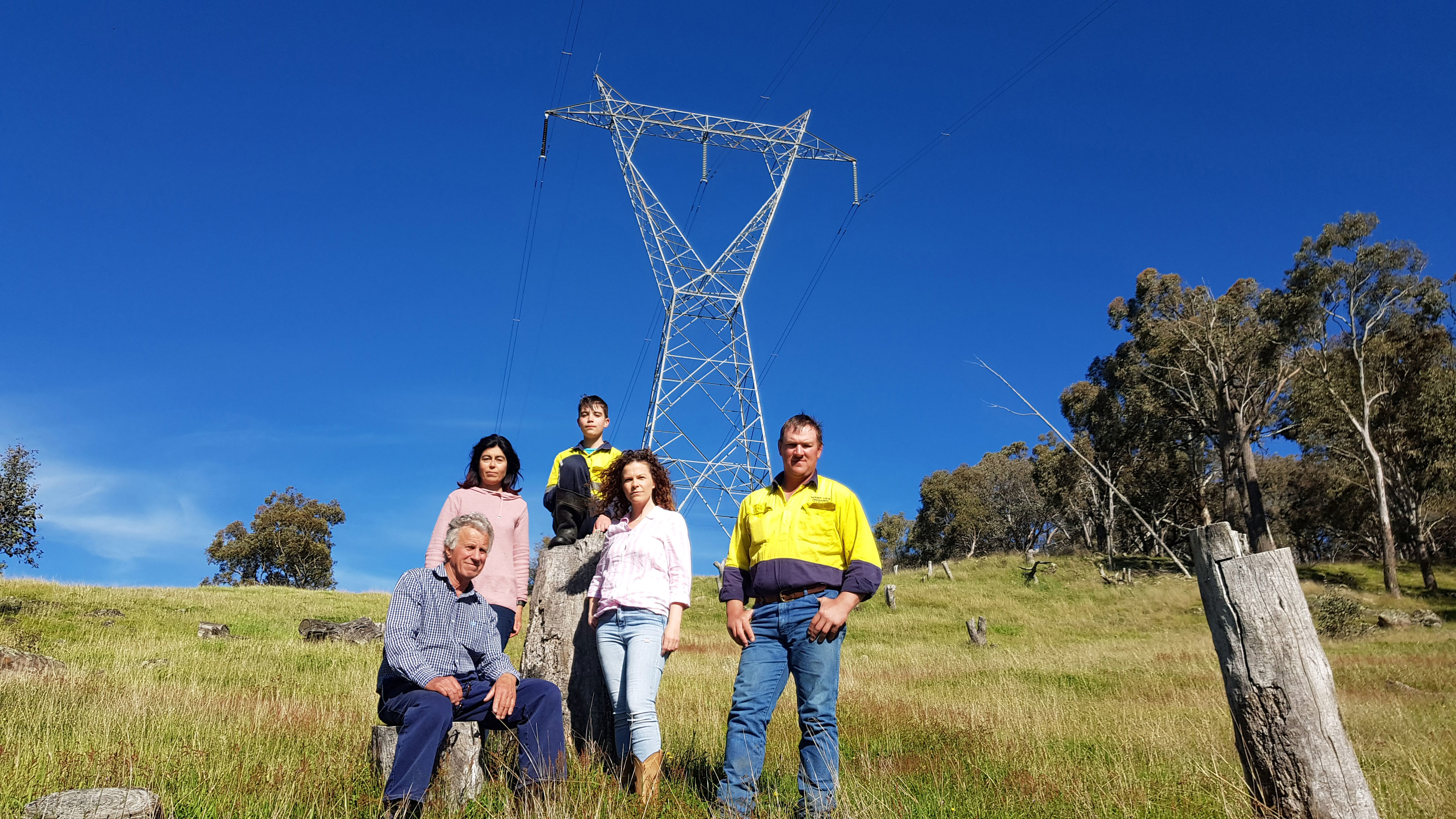
Up for debate is how Transgrid, the privatised NSW transmission monopoly, chooses to do that: overground or underground.
It is a complex discussion, with much at stake.
Depending on who is speaking about HumeLink, you'll hear about the crucial supply of clean energy to reduce Australia's carbon emissions, and how vehement opposition to the project is slowing the project down.
Then there's the damage the lines will inflict on large swathes of tranquil private property and multigenerational farming operations, and the potential harm to wildlife, nature and tourism.
And it's impossible to ignore the question of whether or not the chain of 80-metre-high steel masts which will carry high voltage lines that stretch 360km across the NSW hinterland is a bushfire risk in an area prone to devastating fires.
The cost of building the 500kV line has already blown out from $3.3 billion to about $5 billion, but farmers want Transgrid to cough up billions more and sink the line underground, an option they argue is safer and less destructive than the 70-metre-wide ugly "scar" that will otherwise sit underneath the overhead lines.
A Transgrid spokesperson told 9news.com.au that going subterranean, as has been done in California and Germany, could increase costs by $5 billion to $10 billion.
Wherever the costs might land, the spokesperson insisted an underground route will delay HumeLink by three to five years, "slowing down the delivery of cheaper, cleaner renewables into the grid".
'Scared stiff' behind lines
Michael Katz, who owns a Wagyu beef stud west of Goulburn, told 9news.com.au that, if built, the overground lines "basically constitute a wall" that could trap his family in the event of a bushfire, such as the 2019 Dunns Road blaze.
Heavy smoke around high voltage lines, such as the HumeLink, can create "arcing", a dangerous phenomenon which results in electricity jumping through air because of elevated levels of carbon particles.
Do you know more? Email Sign up here to receive our daily newsletters and breaking news alerts, sent straight to your inbox.