Every week, a million Australians use pathology services for everything from a simple blood test to cancer screening.
But the industry's peak body is warning that more of the bill for tests could be passed on to patients unless the government restarts increases in funding.
"We don't want to see mums with kids, or cancer patients, have to choose whether they get their pathology test or not," Australian Pathology's chief executive Liesel Wett told 9news.com.au.
READ MORE: New type of flu vaccine made free for vulnerable Australians
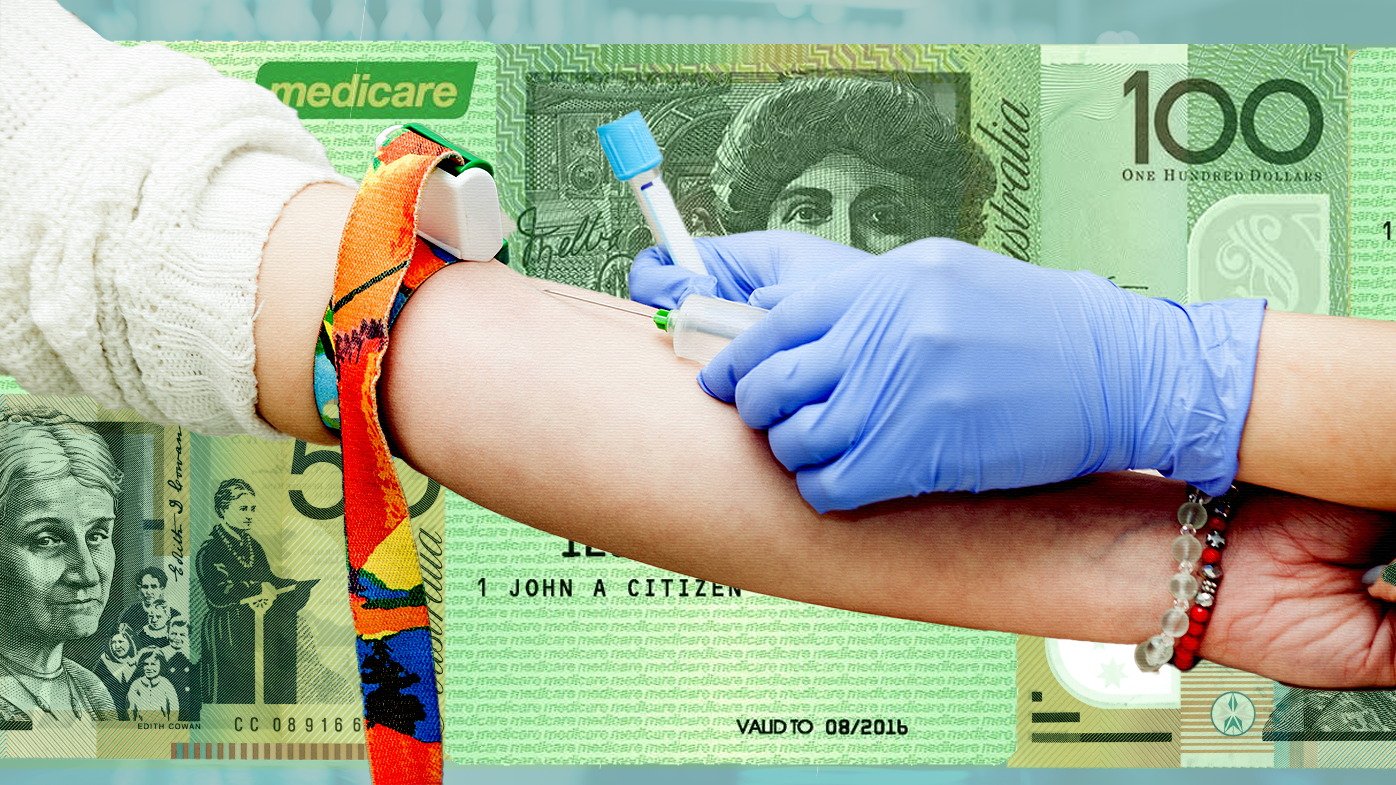
By bulk-billing Medicare for the costs of most tests, pathology services have stayed largely free for patients in Australia when they have a doctor's referral.
But these days, no industry is immune from financial pressures.
Australian Pathology claims that while the cost of performing services has risen, the level of funding pathology companies get from the federal government has remained frozen for the last 24 years.
Between January 2020 and the beginning of 2024, the government's yearly investment in pathology services increased by $333 million, not including COVID-19-related pathology funding.
But labour costs for the tens of thousands of staff employed in the industry are rising.
Do you rely on blood testing or pathology services and are worried about increased costs? Contact reporter Josh Hohne at Groundbreaking treatment hope for ovarian cancer
Researchers at the Pragmatic Policy Group said that without increased funding, the consequences could be especially dire for regional Australia.
"This immense cost burden threatens the viability of the Australian pathology industry", they wrote in a report commissioned by Healius and shared with 9news.com.au.
"We expect many unprofitable collection centres will close, particularly in remote, rural, regional, and Indigenous communities.
"Critical services will be lost and many workers will lose their jobs."
They say Australian Pathology's funding figure may not be high enough, estimating the cost to maintain bulk billing at its current level at $890 million.
Some of the largest pathology companies including Healius, Australian Clinical Labs, and Sonic Healthcare have seen their earnings slumping in recent years, especially after the reduction in revenue from the pandemic.
Over the last four years, the federal government's total annual investment in pathology services increased by $333 million in benefits.
The government has indicated it is open to exploring changes to indexation and said it would work with the pathology sector to consider how best to ensure the high bulk-billing rates continue.
"From July 2022 to December 2023, the government invested a total of $5.4 billion in Medicare benefits to subsidise more than 244 million pathology services for patients," a spokesperson from the Department of Health said.
"During this period, almost 100 per cent of pathology tests provided to patients out-of-hospital were bulk-billed.
"Out-of-hospital services accounted for almost 90 per cent of all pathology services.
"The government also routinely invests in updating the Pathology Services Table (PST) to ensure that the services available under Medicare align with contemporary clinical best practice in response to recommendations from the Medical Services Advisory Committee (MSAC).
"From 1 January 2020 to 31 January 2024, the government introduced 71 new pathology items on the PST (excluding COVID-19 pathology items), such that Medicare now provides rebates for more than 500 pathology tests.
"Over this period, the government's total annual investment in non-COVID-19 pathology services has increased by approximately $333 million in benefits, totalling $3.4 billion in 2023.
"The government will continue to consider MSAC recommendations for public funding of pathology services and will work with the pathology sector to consider how best to ensure the high bulk-billing rates continue, including by exploring indexation changes."
Both the government and industry are hoping the public-private partnership will continue successfully but the future of pathology bulk-billing likely won't become clearer until after the federal budget in May.