The Israeli military has unleashed another wave of heavy airstrikes on the Gaza Strip, as international diplomats work to end a week of fighting that has killed hundreds of people.
Residents of Gaza awakened by the overnight barrage described it on Monday as the heaviest since the war began.
The military said the latest attacks destroyed 15 kilometres of militant tunnels and the homes of nine Hamas commanders. They killed a top Gaza leader of the Islamic Jihad militant group whom the Israeli military blamed for some of the thousands of rocket attacks launched at Israel in recent days.
READ MORE: More airstrikes hammer Gaza after war's deadliest day so far
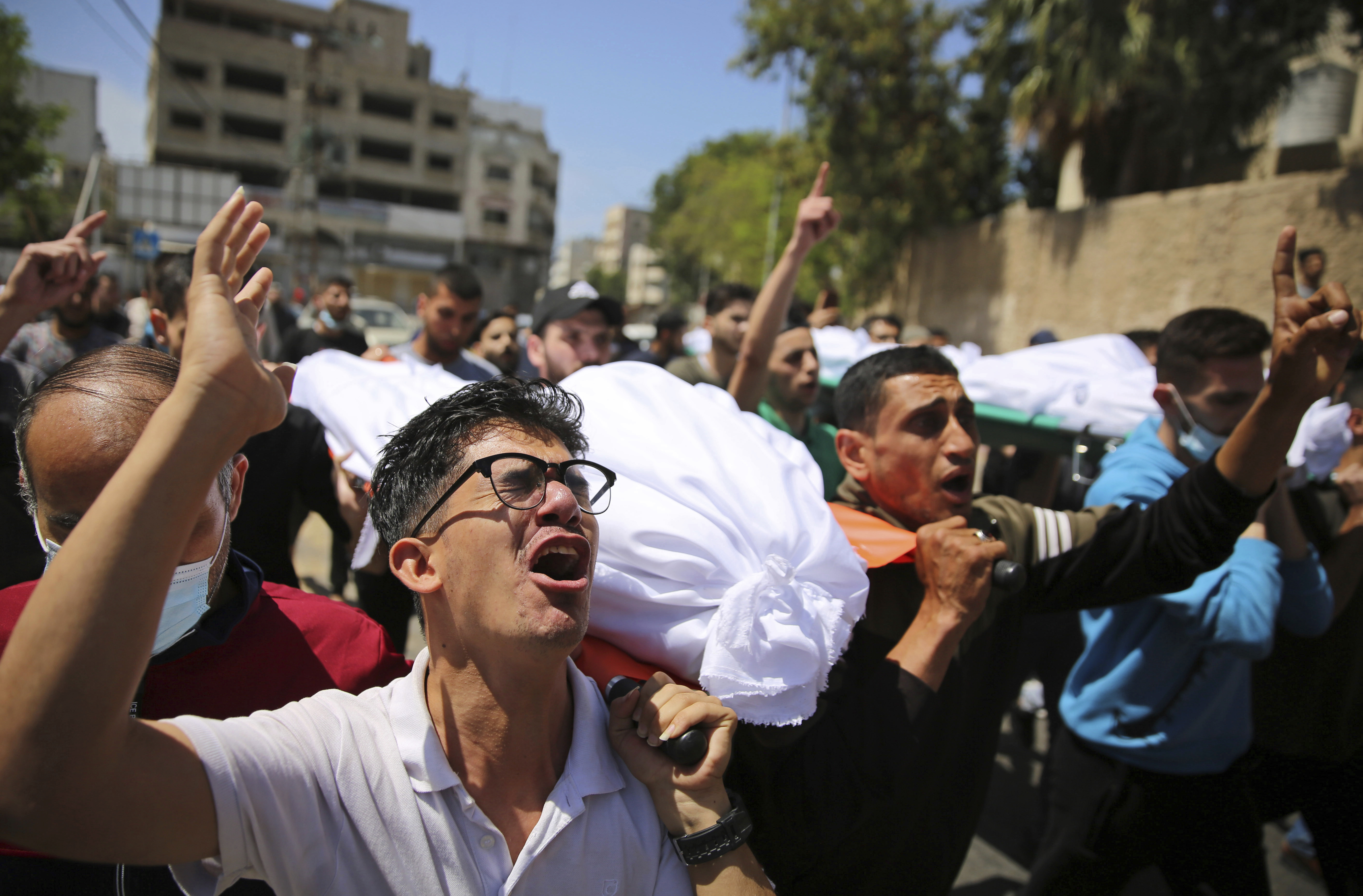
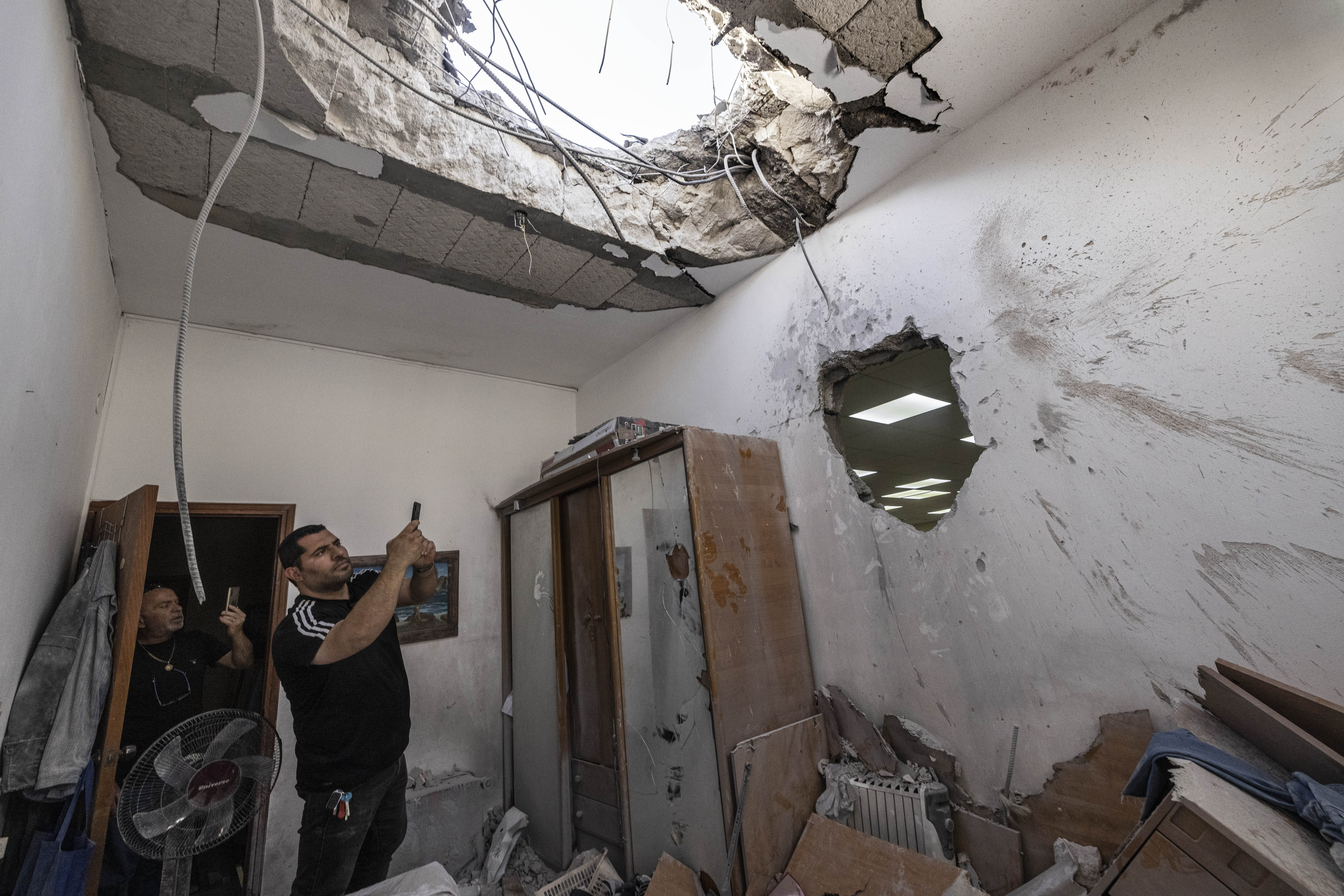
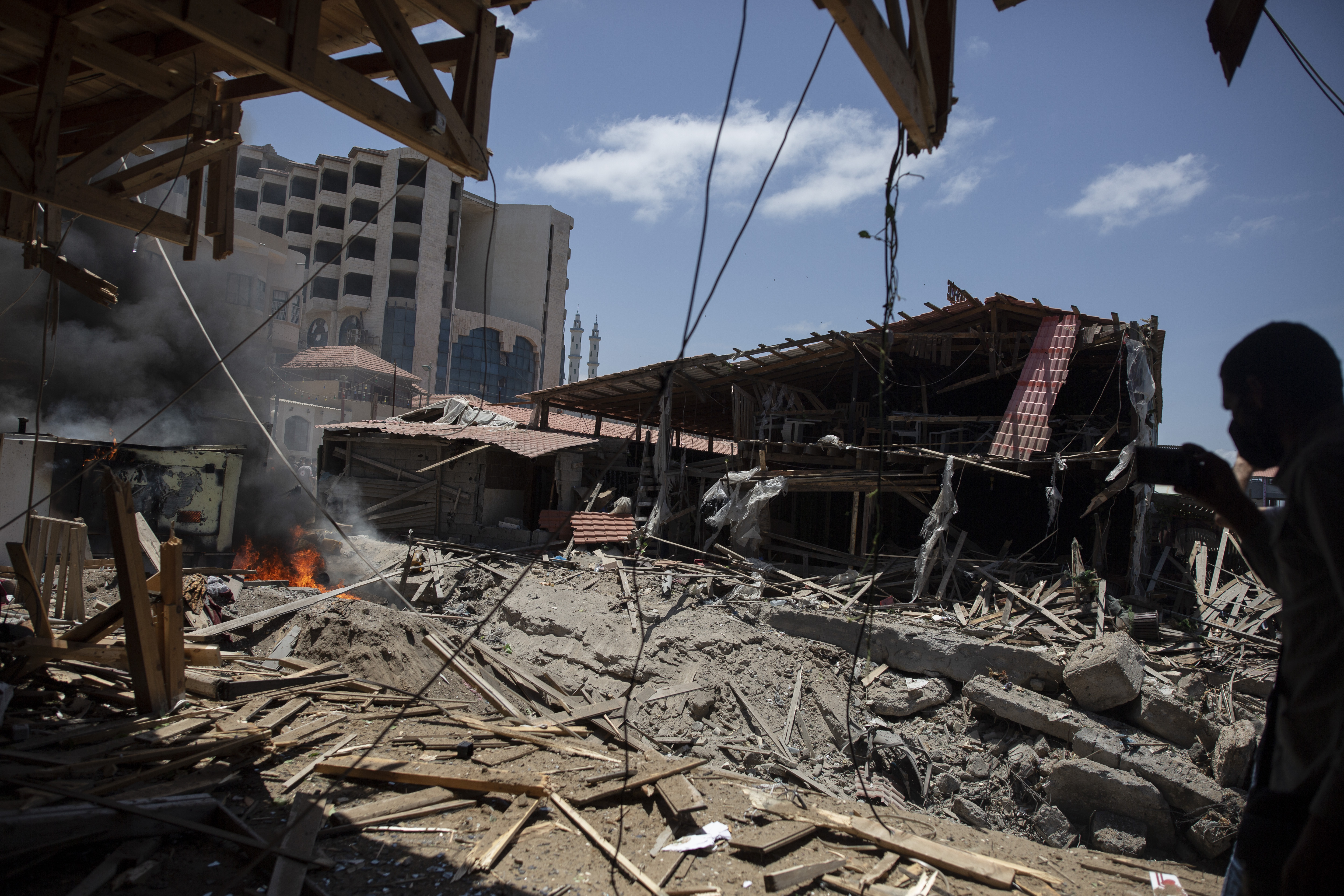
The strikes hollowed out one floor of a multi-storey concrete building. A woman picked through clothing, rubble and splintered furniture in a room that had been destroyed.
One strike demolished the wall of one room, leaving untouched an open cabinet filled with bedding inside. Children walked over debris in the road.
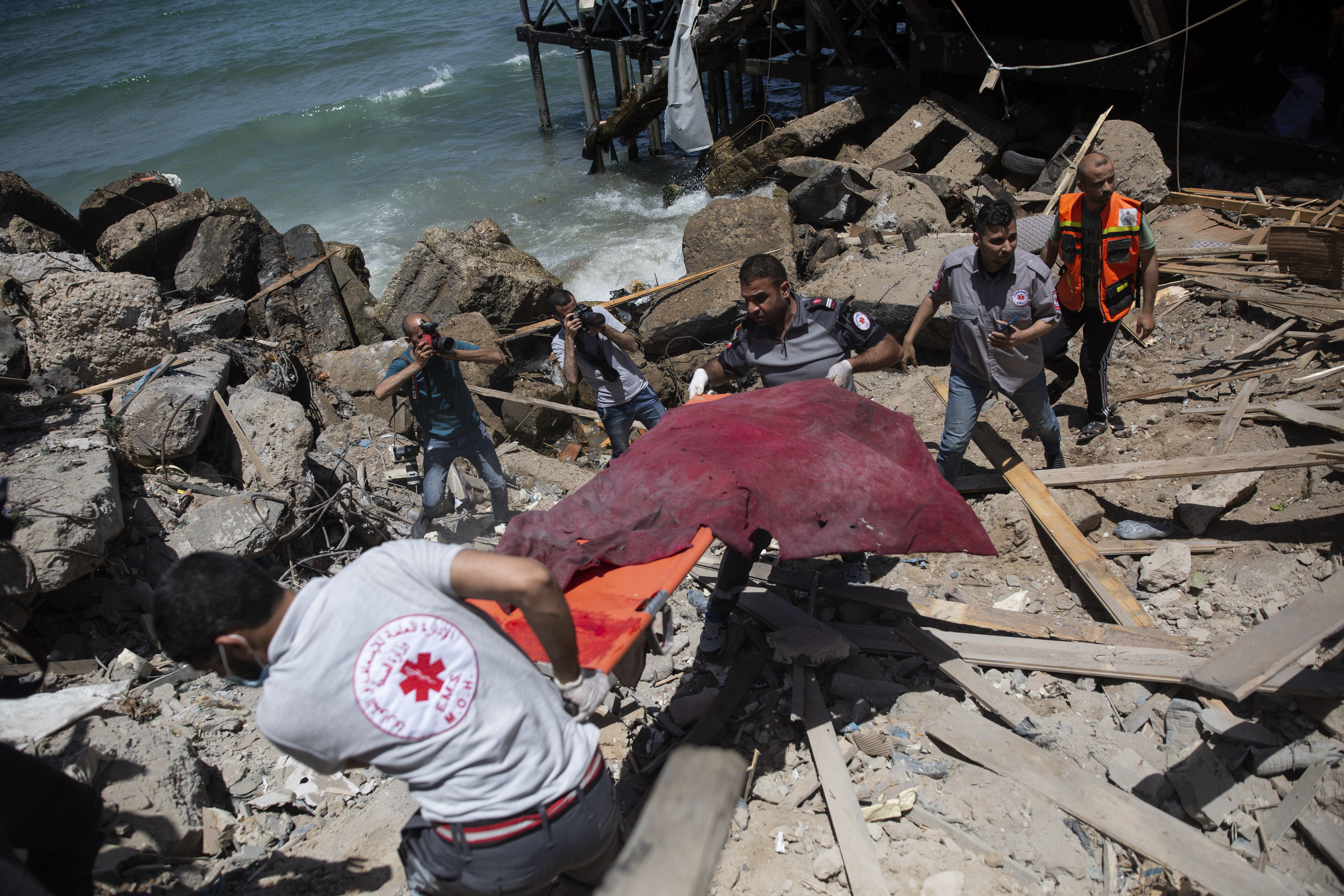
A car in the street that witnesses said was hit by an airstrike was bent and torn, its roof ripped back and what was left of the driver's side door smeared with blood.
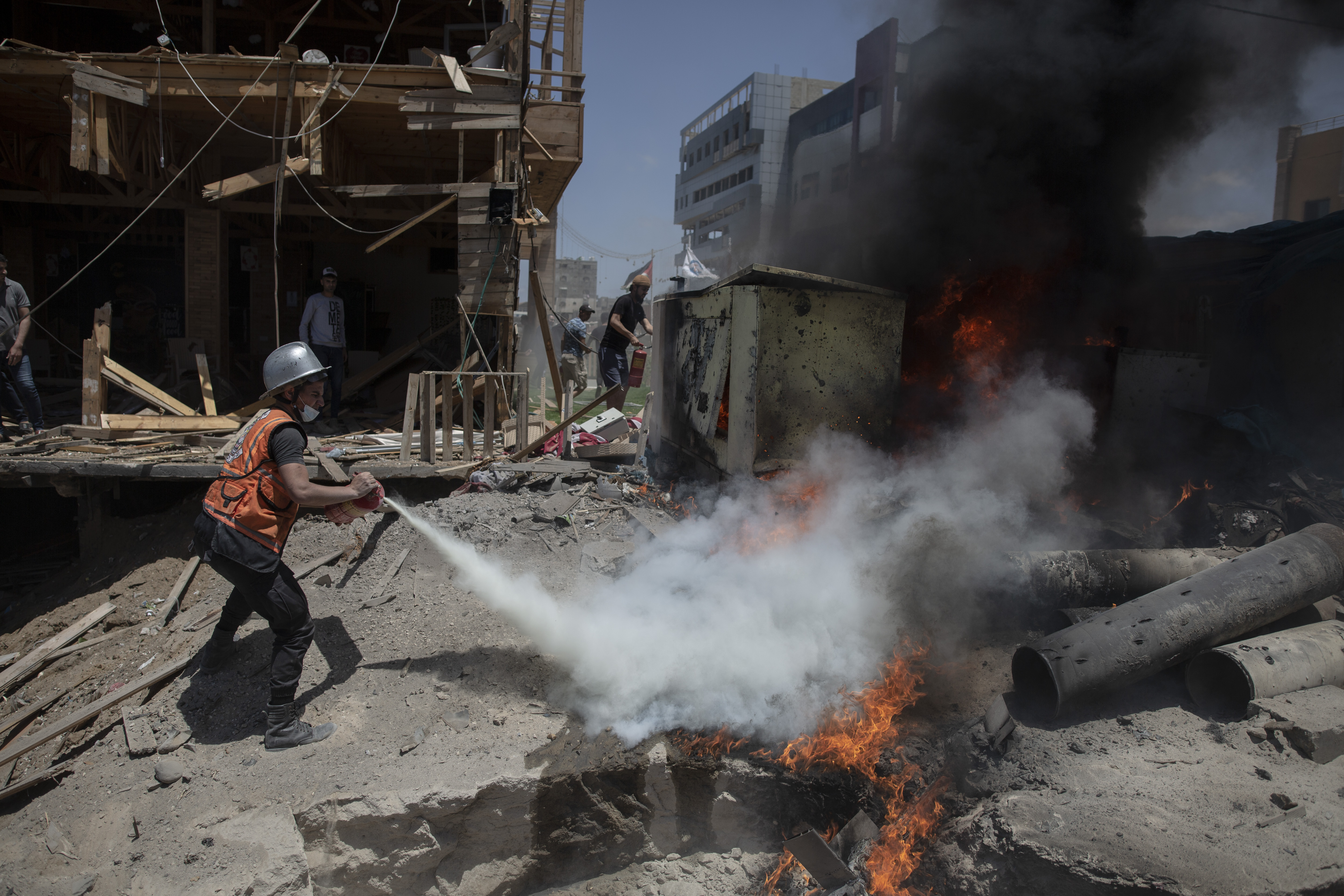
A beachside cafe the car had just left was splintered and on fire. Rescue workers tried to put out the blaze with a small fire extinguisher. There was no immediate word on casualties.
The strikes came a day after the deadliest attack in the current round of hostilities between Israel and Gaza's Hamas rulers, which killed 42 people and flattened three buildings in Gaza.
Gaza's mayor, Yahya Sarraj, told Al-Jazeera TV the strikes had caused extensive damage to roads and other infrastructure. "If the aggression continues we expect conditions to become worse," he said.
READ MORE: Netanyahu warns war will go on, after dozens died in deadliest attack yet
The UN had warned the territory's sole power station is at risk of running out of fuel, and Sarraj said Gaza was also low on spare parts. Gaza already experiences daily power outages for between eight and 12 hours, and tap water is undrinkable.
Mohammed Thabet, a spokesman for the the territory's electricity distribution company, said it had fuel to supply Gaza with electricity for two or three days.
The war broke out last Monday, when the Hamas militant group fired long-range rockets at Jerusalem after weeks of clashes in the holy city between Palestinian protesters and Israeli police.
The protests were focused on the heavy-handed policing of a flashpoint sacred site during the Muslim holy month of Ramadan and the threatened eviction of dozens of Palestinian families by Jewish settlers.
READ MORE: The Palestinians facing eviction after decades in Jerusalem homes
More protests were expected across the region on Tuesday in response to a call by Palestinian citizens of Israel for a general strike. The protest has the support of Palestinian Authority President Mahmoud Abbas' Fatah party.
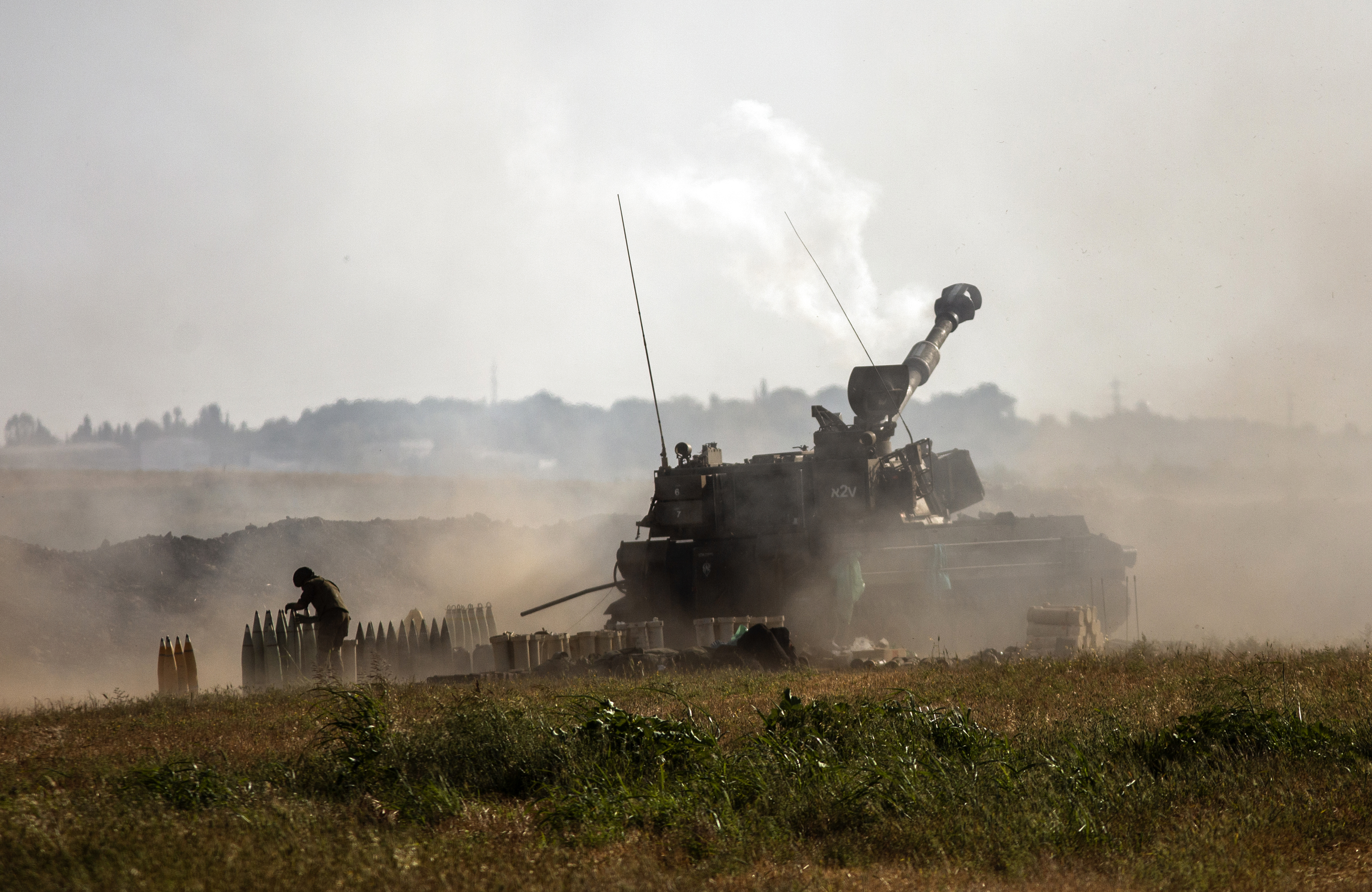
Since the fighting began, the Israeli military has launched hundreds of airstrikes it says are targeting Hamas' militant infrastructure. Palestinian militants in Gaza have fired more than 3200 rockets into Israel.
Israeli military officials said Hamas had stockpiled about 15,000 rockets before the war started.
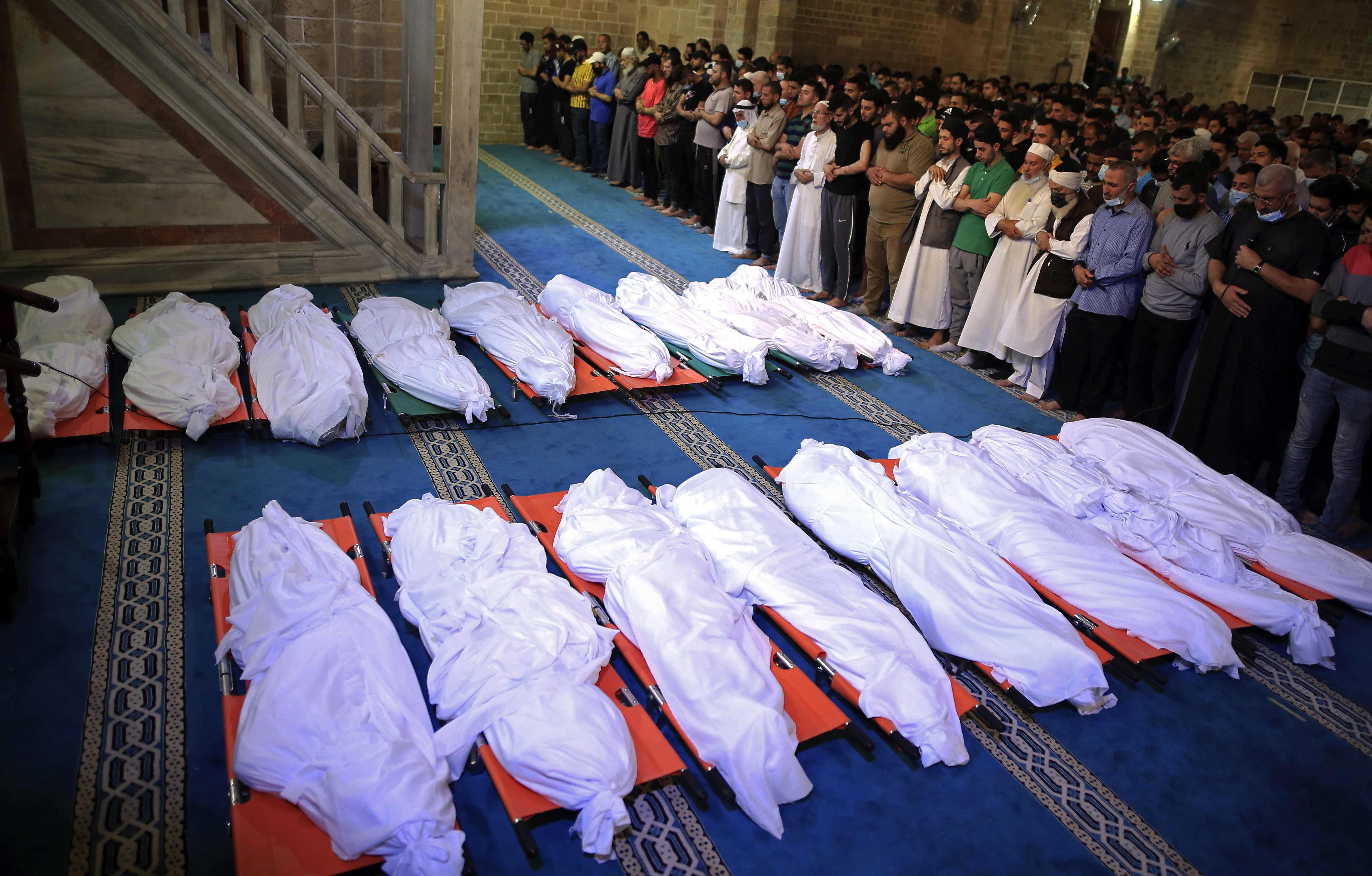
At least 200 Palestinians have been killed in the strikes, including 59 children and 35 women, with 1300 people wounded, according to the Gaza Health Ministry.
Eight people in Israel have been killed in rocket attacks launched from Gaza, including a five-year-old boy and a soldier.
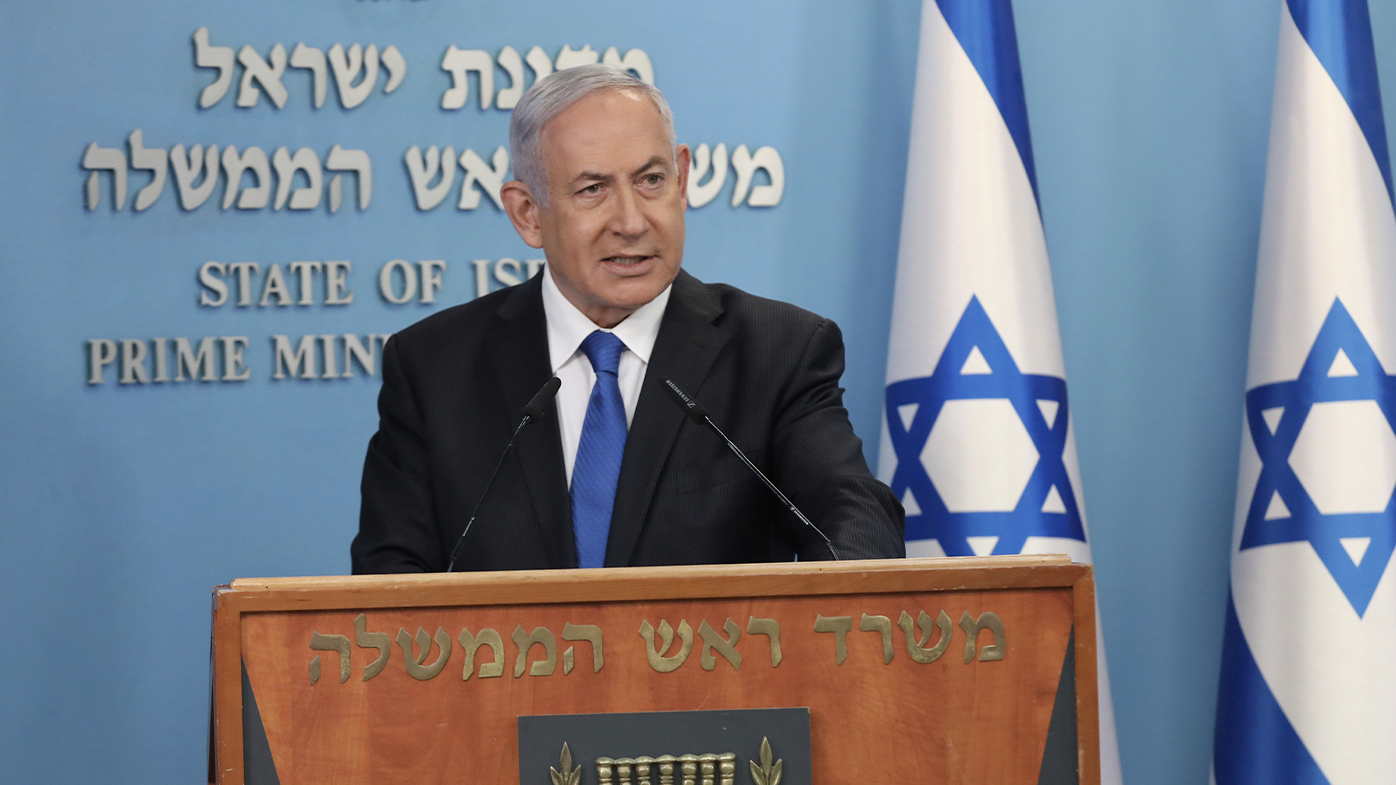
Despite international efforts for a ceasefire, Israeli Prime Minister Benjamin Netanyahu said on Sunday Israel's attacks were continuing at "full-force" and would "take time."
Israel "wants to levy a heavy price" on the Hamas militant group, he said.
READ MORE: Media demand Israel explain destruction of news offices
Hamas' top leader, Ismail Haniyeh, who is based abroad, said the group had been contacted by the United Nations, Russia, Egypt and Qatar as part of ceasefire efforts but "will not accept a solution that is not up to the sacrifices of the Palestinian people."
In an interview with the Lebanese daily Al-Akhbar, he blamed the war on Israel's actions in Jerusalem and boasted that the rockets were "paralysing the usurping entity (Israel)."
Egyptian President Abdel Fattah el-Sissi said his government was working to "urgently" end the violence, in his first comments since the war broke out.
Egypt, which borders Gaza and Israel, has played a central role in the ceasefires brokered after previous rounds of fighting.
An Egyptian diplomat said the current efforts were focusing on two issues — a halt in all attacks from both sides and halting Israeli policies in the contested city of Jerusalem that helped spark the fighting.
These include police raids against Palestinian protesters in and around the Al-Aqsa Mosque and the planned evictions of Palestinians by Jewish settlers in East Jerusalem.
EXPLAINED: What led to the recent Israel-Gaza violence
The diplomat, speaking on condition of anonymity because he was talking about confidential diplomatic discussions, said mediators were counting on the Biden administration to put pressure on Israel to stop its offensive and there were expectations for action in the coming 48 hours.
US diplomat Hady Amr met with a delegation from the Palestinian Authority on Monday, a day after meeting senior Israeli leaders.
But the Biden administration has declined so far to publicly criticise Israel's part in the fighting or send a top-level envoy to the region.
Speaking to reporters during a trip to Denmark, Secretary of State Antony Blinken said the United States would support any initiative to stop the fighting but signalled the country did not intend to put pressure on the two sides to accept a ceasefire.
"Ultimately it is up to the parties to make clear that they want to pursue a ceasefire," he said.
READ MORE: Sydney charity worker tells of conflict's 'heartbreaking' toll on children

Rocket attacks continued Monday, with one hitting a building in the city of Ashdod that caused injuries, the Israeli police said.
The Israeli military, meanwhile, said it struck 35 "terror targets" on Monday as well as the tunnels, which it says are part of an elaborate system it refers to as the "Metro," used by fighters to take cover from airstrikes.
The tunnels extend for hundreds of kilometres, with some more than 20 metres deep, according to an Israeli Air Force official who spoke to reporters on condition of anonymity, in keeping with regulations.
The official said Israel was not trying to destroy all the tunnels, just chokepoints and major junctions.
The military said it struck nine houses in different parts of northern Gaza that belonged to "high-ranking commanders" in Hamas.
Islamic Jihad said one strike killed Hasam Abu Harbid, the militant group's commander for the northern Gaza Strip.
In recent days, Israel has targeted the homes of a number of senior Hamas leaders, including Yehiyeh Sinwar, the top leader inside the territory.
The group's leadership goes underground when the fighting begins, and it's unlikely any were at home at the time of the strikes.
Hamas and Islamic Jihad say at least 20 of their fighters have been killed, while Israel says the number is at least 130 and has released the names of and photos of more than two dozen militant commanders it says have been "eliminated."
Israel's airstrikes have levelled a number of Gaza City's tallest buildings. Among them was the building housing The Associated Press Gaza office and those of other media outlets. The Israeli military alerted staff and residents before the strike, and all were able to evacuate safely.
Sally Buzbee, the AP's executive editor, has called for an independent investigation into the airstrike.
Netanyahu alleged that Hamas military intelligence was operating inside the building and said Sunday any evidence would be shared through intelligence channels. Neither the White House nor the State Department would say if any had been seen.