 image copyrightGetty Images
BBC- Peru has more than doubled its Covid death toll following a review, making it the country with the world’s highest death rate per capita, according to Johns Hopkins University data.
The official death toll is now more than 180,000, up from 69,342, in a country of about 33 million people.
PM Violeta Bermudez told reporters that the number was increased on the advice of Peruvian and international experts.
This was in line with so-called excess deaths figures.
Excess deaths are a measure of how many more people are dying than would be expected based on the previous few years.
“We think it is our duty to make public this updated information,” Ms Bermudez said.
The news, released on Monday, came just six days before Peru holds a presidential run-off election between leftist Pedro Castillo and right-wing candidate Keiko Fujimori.
Peru has been one of the worst-hit countries in Latin America, resulting in an overstretched healthcare system and a lack of oxygen tanks.
The criteria for recording Covid deaths has now been broadened beyond people who tested positive for the virus to include “probable” cases – those with “an epidemiological link to a confirmed case” or who present “a clinical picture compatible with the disease”.
The president of the Peruvian Medical Federation, Godofredo Talavera, said the increased toll was not a surprise.
“We believe this occurs because our health system does not have the necessary conditions to care for patients.
“There has been no government support with oxygen, with intensive care beds. We do not have enough vaccines at the moment. The first line of care has not been reactivated. All this makes us the first country in the world in mortality,” he said.
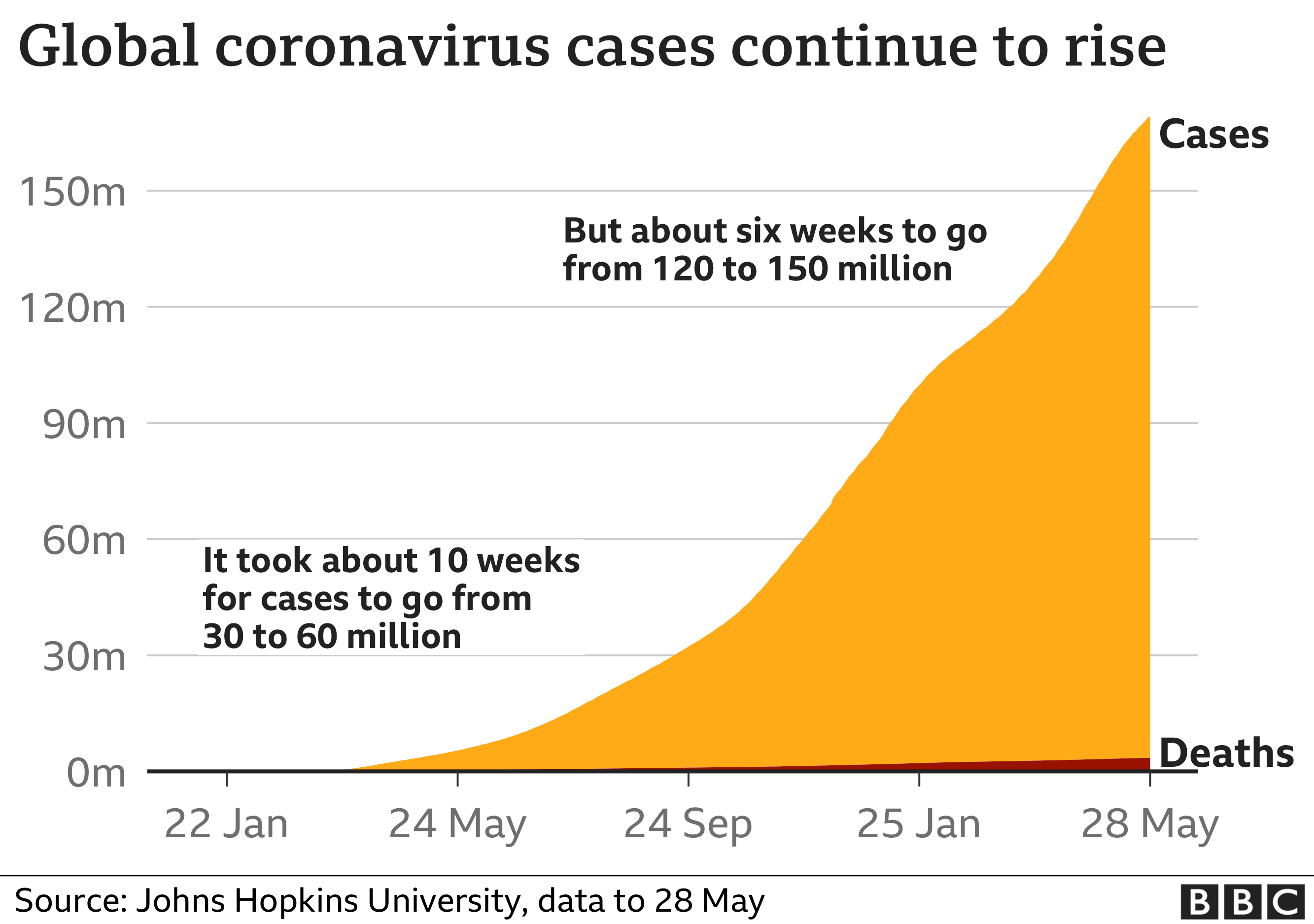
The official number of Covid deaths now stands at 180,764, a huge increase on the previous official figure of 69,342.
That makes more than 500 Covid deaths per 100,000 people, overtaking Hungary with 300 per 100,000.
In comparison, neighbouring Colombia, with a larger population than Peru, has registered 88,282 deaths.
Brazil has one of the world’s highest death tolls with more than 460,000, but in a country of more than 211 million.

A true picture emerges

Peruvians had long suspected they weren’t getting the true picture of the country’s dire coronavirus situation from the government.
The revised figure for Covid-19 related deaths shows they were right to be doubtful. In fact, the government has admitted the real number is more than twice the previous figure.
A government working group of experts, formed to analyse Peru’s data, published the revised figures after establishing broader criteria by which deaths from coronavirus were recorded.
Now that the narrower definition has been abandoned, the country’s per capita death toll is in fact much higher than Brazil’s.
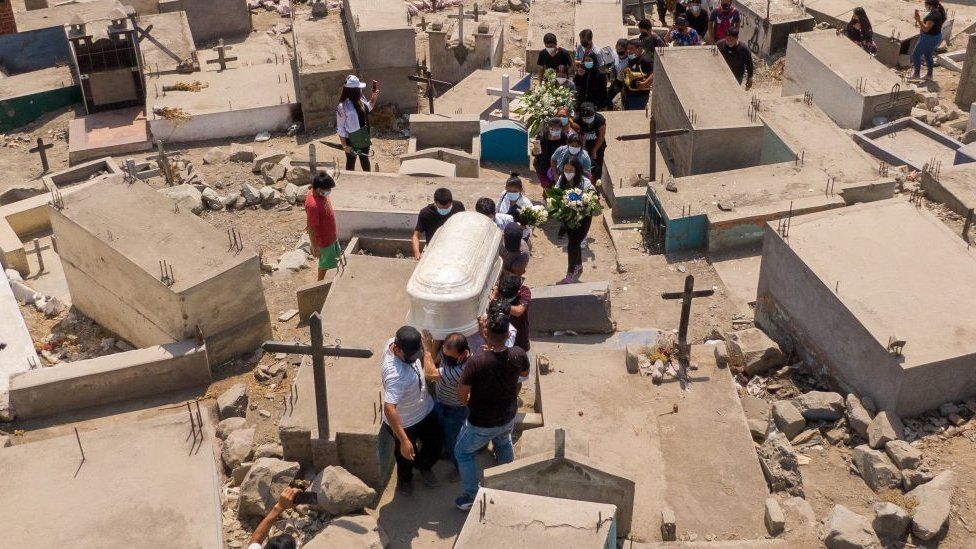
Such a figure coincides more closely to the anecdotal evidence coming from hospitals and intensive care units across the country and with the images of cemeteries struggling to find space for the high number of burials each day.
Meanwhile, the process of vaccination has been slow and beset with difficulties across most of South America.
=================================================
Scientists call on UK to speed up second Covid jabs as India variant spreads
Government urged to delay decision on ending lockdown restrictions amid fears of third wavee
Scientists are urging the government to speed up second doses of Covid vaccines and delay a decision on easing lockdown restrictions in England on 21 June in an effort to tackle the creeping spread of new cases.
Data has shown the coronavirus variant first detected in India, known as B.1.617.2, is continuing to spread across England, and is thought to be driving a rise in cases. It is believed to be both more transmissible than the variant first detected in Kent, which previously dominated, and somewhat more resistant to Covid vaccines, particularly after one dose.
The situation has led some scientists to warn the country is in the early stages of a third wave of coronavirus which, despite the vaccination programme, modelling suggests could lead to a rise in hospitalisations and deaths, and that full easing of restrictions in England in three weeks’ time should be reconsidered.
The British Medical Association called on the prime minister, Boris Johnson, to honour his pledge to lift measures based on “data, not dates” and said the government should hold off giving the green light to progressing to stage four of the roadmap “until the latest data can be scientifically considered”.
“We are at a pivotal moment,” said the BMA council chair, Dr Chaand Nagpaul, who warned a “premature” ending of all legal restrictions may result in a surge of infections that “would undermine our health service” and undo all the progress made suppressing Covid-19. “We cannot afford to repeat past mistakes,” he said.
Labour accused the government of being distracted by the turbulence resulting from Dominic Cummings’ bombshell claims last week.
Jon Ashworth, the shadow health secretary, said the single biggest threat to the 21 June reopening was “ministerial incompetence”, and claimed members of the cabinet were engulfed “by internal rows and blame shifting at just the moment we need a laser-like focus on this variant”.
Ministers have been unable to say in recent days whether the 21 June unlocking will be delayed or only implemented partially. George Eustice, the environment secretary, told the BBC on Monday that infection rates are “going up again slightly but from a low base” which was “probably to be expected, given there are a significant number of younger people who are now out and mixing but haven’t had the vaccine”.
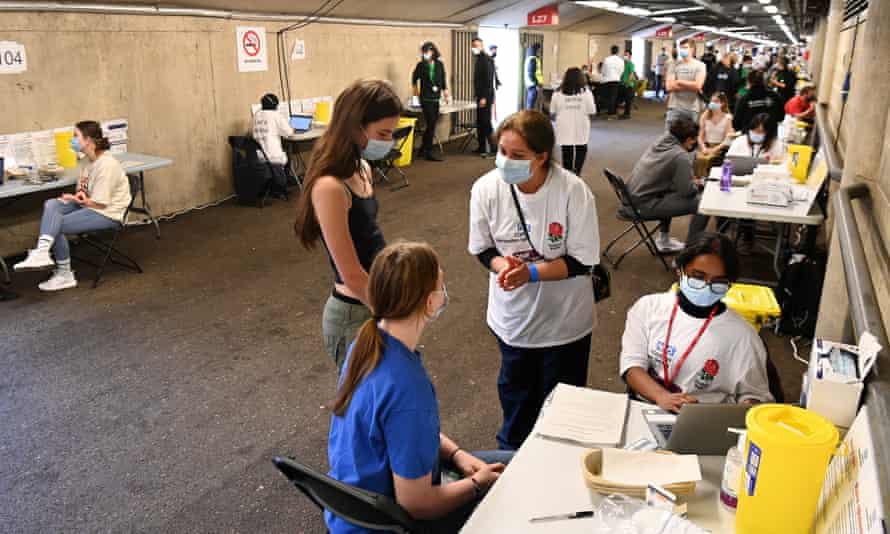
But despite guidance that adults under 30 not in a priority group are still ineligible for a jab, a vaccination centre at Twickenham Stadium in London began offering injections to all over-18s in an attempt to avoid wastage – causing large queues of what appeared to be largely young people outside.
In the run-up to the official announcement expected on 14 June about what will happen the following Monday, government scientists on the Scientific Pandemic Influenza Group on Modelling (SPI-M) have been asked to model how the India variant and other factors could affect cases if restrictions are lifted. A No 10 source said the government was continuing to monitor the data closely.
Calls for further delay in easing restrictions were met with concerns from the hospitality sector. Kate Nicholls, the chief executive of UK Hospitality, told BBC News that not being able to fully reopen in June would be devastating for venues. She said many were operating at 60% capacity and “haemorrhaging cash”. A delay would “push them closer to the cliff edge of business failure”, she added.
Some experts have called for the gap between the first and second Covid jabs to be reduced to eight weeks for all adults in order to tackle rising number of cases. Second doses have already been brought forward for priority cohorts 1 to 9, which included health workers and elderly people, while efforts to get the first dose to other adults has been ramped up, particularly in areas with high levels of the India variant.
Prof Lawrence Young, a virologist at the University of Warwick, told the Guardian that while a longer interval between first and second jabs resulted in a stronger and longer protective immune response, it was necessary to accelerate second doses more widely.
“The importance of full vaccination is now becoming even more obvious with real-world data showing how it protects from infection and spread of the Indian variant. We need to do everything we can to speed up vaccination, particularly second shots,” he said.
Prof Danny Altmann, an expert in immunology of infectious disease at Imperial College London, also backed an acceleration of second doses beyond priority groups, adding he was concerned about the current situation.
“When we speak of a third wave … we mean resetting the clock yet again, as happened to us with the Kent variant. Having got this far, why not hold our nerve and do the job properly,” he said. “I’m disturbed that we may be drifting into a plan to tolerate long-term endemic virus – at a cost – while other countries aim for elimination. This is too important to drift to without debate.”
However, Prof Adam Finn of the University of Bristol, a member of the Joint Committee on Vaccination and Immunisation, urged caution, noting that the schedule for doses involved balancing a number of factors.
At present, he said, available vaccines were being used either to give second doses to the most vulnerable, or a first dose to others – few of whom are near the timeframe for a second dose in any case. Furthermore, reducing the dosing interval for these groups would reduce their overall protective immune response, and could delay delivery of the first doses to others.
The debate came as data from the Wellcome Sanger Institute, which tracks the variants detected in Covid-positive samples through genome sequencing, revealed the variant has spread further across England.
While parts of north-west England, such as Bolton and Blackburn with Darwen, have previously been identified as hotspots for the India variant, the data shows that in the two weeks to 22 May it cropped up in areas as far afield as Babergh, Wycombe and Cornwall – although numbers in these areas remain low. This data includes Covid-positive samples analysed for general surveillance and surge testing, but not those related to travel.
The Department of Health and Social Care said: “We are working in partnership with local authorities to put in place additional measures to help control the spread of Covid-19 variants and rapidly break chains of transmission.
“It is imperative we all continue to be vigilant and keep following current guidance on social distancing, and come forward for a vaccine as soon as eligible.”
===================================================
US: Dr. Fauci Warns Too Early to Declare Victory
Guardian- Dr Anthony Fauci, the top infectious diseases expert in the US, has warned it is too early to declare victory against Covid-19 as cases fall in the country to the lowest rates since last June.
“We don’t want to declare victory prematurely because we still have a ways to go,” Fauci told the Guardian in an interview. “But the more and more people that can get vaccinated, as a community, the community will be safer and safer.”
The Memorial Holiday weekend marks the unofficial start of summer in the US, and for the at least 50% of the adult population that is fully vaccinated, it could usher in a season of maskless barbecues and trips to the beach.
Daily coronavirus cases have dropped 53% since 1 May, according to Johns Hopkins University data, but the rates are still high in the unvaccinated population and cases are growing globally. Already there have been more global cases in 2021 than in all of 2020, according to Johns Hopkins University data.
“As long as there is some degree of activity throughout the world, there’s always a danger of variants emerging and diminishing somewhat the effectiveness of our vaccines,” said Fauci, director of the National Institute of Allergy and Infectious Diseases (Niaid).
The US has been under pressure to provide greater aid in global vaccine efforts and has in recent weeks committed to donate 80m vaccines in addition to the $4bn donation its pledged to Covax, the global vaccine-sharing scheme. Fauci said more help could be on the way.
“We are discussing right now at various levels about how we might be able to up production to get vaccine doses from the companies that are already making them for us, get more doses that will be able to be distributed to lower- and middle-income countries,” Fauci said.
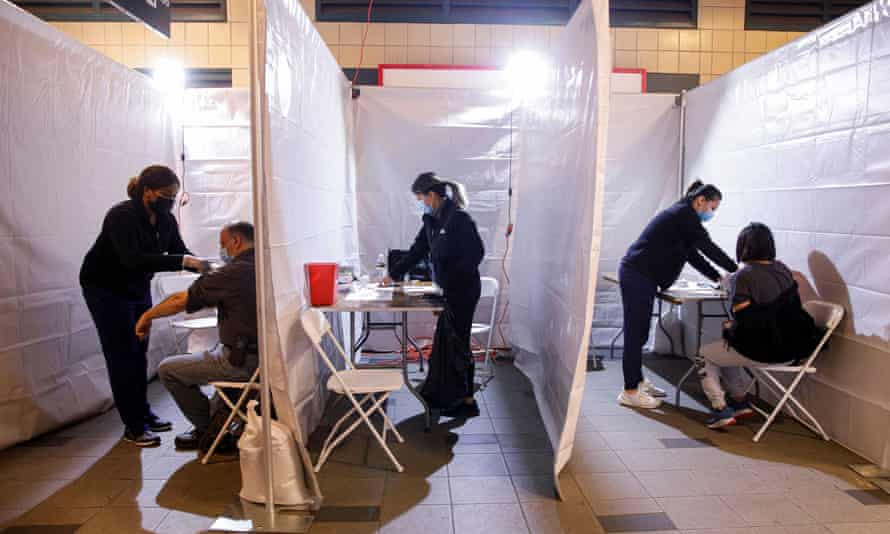
At the same time, the US must address the issues stopping its people from getting vaccinated. Part of this group is strongly opposed to the vaccine but there is also a portion of the unvaccinated population that hasn’t been able to get the shot because of lack of access to information or transportation or concerns about missing work because paid sick leave is not guaranteed in the US.
Fauci said this too is something the US is focusing its efforts on as Joe Biden’s administration seeks to get a first dose of the vaccine to 70% of the US adult population by 4 July.
This month, the White House deployed more vaccination resources to underserved areas and mobile clinics and supported an effort by ride-share companies to offer free trips for people getting vaccinated. In April, Biden called for all employers to provide paid time off for employees to get vaccinated and made a tax credit for small and medium-sized businesses to offer paid leave for employees to get the shot and to recover from any side-effects they might experience after.
“Today, in our current day, the accessibility and the convenience of getting a vaccine is really rather striking,” Fauci said.
But until the overwhelming majority of Americans have been vaccinated, the Covid-19 risk is still high in the US.
As of Friday, 59.1% of Americans 12 and older had received their first dose of the vaccine and 47.4% were fully vaccinated, according to the Centers for Disease Control and Prevention(CDC).
“We cannot abandon public health measures when you still have a degree of viral activity in the broad community in the United States,” Fauci said. “Although we’re down to less than 30,000 infections per day that’s still a lot of infections per day.”
The national death rate among the unvaccinated population is roughly the same as it was in late March, according to a Washington Post data analysis published this month. The adjusted hospitalization rate is as high as it was in late February, though cases are declining, according to the analysis.
Tara Kirk Sell, a senior scholar at the Johns Hopkins Center for Health Security, said in the next few months, coronavirus could spread out of hand among unvaccinated people.
“Unfortunately these groups of people who are anti-vax or who will end up being susceptible to the disease are going to be in pockets,” Sell said. “It’s not going to be evenly distributed through the population.”
Earlier this month, the CDC released an optimistic report which said in a best case scenario, Covid-19 infections could be driven to low levels by July if the vast majority of people get vaccinated and take other precautions, such as wearing masks and social distancing.
The CDC report was not a forecast, but a set of scenarios created by six independent research teams using data through 27 March. The modeling does not include what could happen if there was a new, more dangerous variant.
Sell expects things will be better this summer, but warned that autumn is still an unknown.
“I think we should be humble about what our certainty is about how things will unfold,” Sell said. ”There have been a lot of curveballs.”
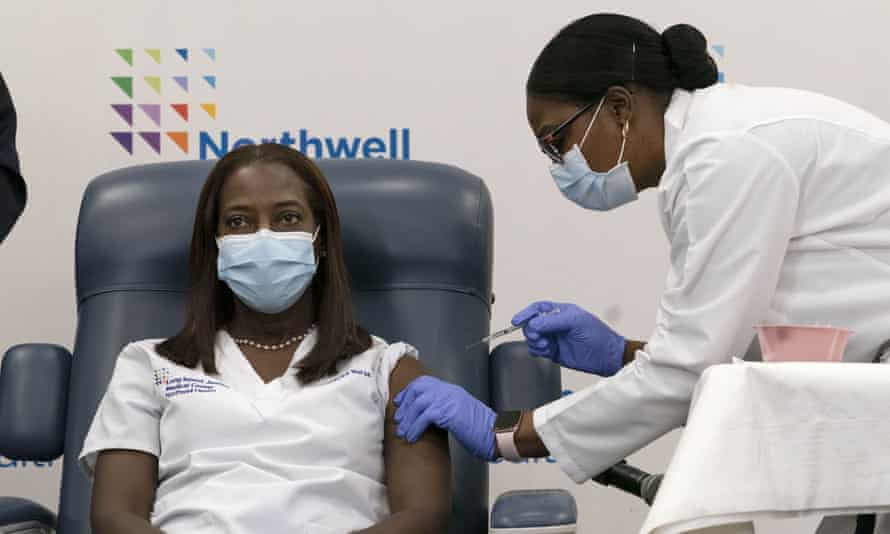
In the meantime, clinicians like Dr Michelle Chester, who administered the first Covid-19 vaccine in the US outside a clinical trial, are pushing to get vaccinations in as many people as possible.
“I’m happy with the numbers but we need to do more because there is still a huge number of people that are still not vaccinated,” said Chester, director of employee health services at Northwell Health, the healthcare system which has treated more hospitalized Covid-19 patients than anywhere in the US.
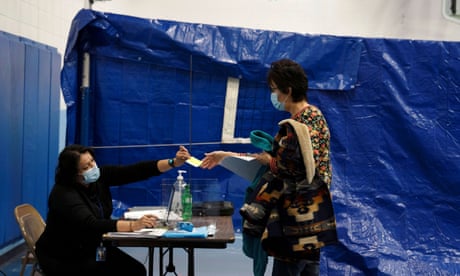
Northwell Health has vaccination sites operating for people 12 and older in the greater New York City area. Some are open 24 hours a day to ensure people with difficult work schedules can find time to get the vaccine.
“The more that we can get people vaccinated, the less we have to worry about the virus in a sense of it affecting those individuals who maybe cannot get the vaccine for medical reasons,” Chester said. “We’re protecting them.”
Chester said there is still “a long way to go”, but she expects for her family, at least, a more normal summer than last year.
“My husband is vaccinated, my daughter couldn’t wait to get her vaccine,” Chester said. “I feel very comfortable that my family is protected and I want that same level of comfort everyone else because I just want to get back to normal.”
The post New Report: Peru Doubles COVID Death Toll, World’s Highest, More appeared first on The St Kitts Nevis Observer.