The World Health Organization (WHO) chief said on Thursday that there was a “premature push” to rule out the COVID-19 lab leak theory without enough evidence.
WHO Director-General Tedros Adhanom Ghebreyesus acknowledged to reporters during a briefing that the theory that COVID-19 originated from a lab is possible, in remarks that strayed from the WHO’s controversial report designating the hypothesis as “extremely unlikely.”
Tedros cited his experience as a lab technician and immunologist, saying that “lab accidents happen” and “it’s common,” so “checking what happened, especially in our labs,” is important to deducing what sparked the pandemic.
“If we get full information, we can exclude that,” he said, referring to the theory.
“In any outbreak, you go and understand the origins,” Tedros added. “We need to know what happened in order to prevent the next one.”
He called for China and other member states to be transparent and cooperate with scientists and officials trying to determine how the pandemic started, including through providing raw data. The first COVID-19 case was documented in Wuhan, China.
“I think we owe it to the millions who suffered and the millions who died really to understand what happened,” Tedros said.
Global deaths surpassed 4 million last week. Nearly 15 percent of those occurred in the U.S., according to Johns Hopkins University data.
“I hope there will be better cooperation and we have the continued engagement with China and also with member states, and there will be better cooperation to getting to the bottom of what happened.”
German Health Minister Jens Spahn backed up Tedros’s remarks, requesting more investigations into the origin of COVID-19.
“We do appreciate the cooperation of the Chinese government so far for the first mission,” Spahn said. “But that’s not yet enough.”
The WHO officials’ comments took a turn from the organization’s March report, conducted along with Chinese scientists, that said it was “a likely to very likely pathway” that the virus began in an animal before spreading to humans.
The lab leak theory, which was initially dismissed, has gained traction in recent months, prompting President Biden to ask the U.S. intelligence community to “redouble their efforts” looking into how the COVID-19 virus emerged.
The Chinese government responded by asserting Biden was playing politics with his request instead of investigating the evidence.
================================================
Asia Pacific sees sharp rise in Covid infections as Delta strain threatens new wave
From South Korea to Australia, authorities are struggling to contain the highly transmissible coronavirus strain that has caused a surge in UK, Europe and
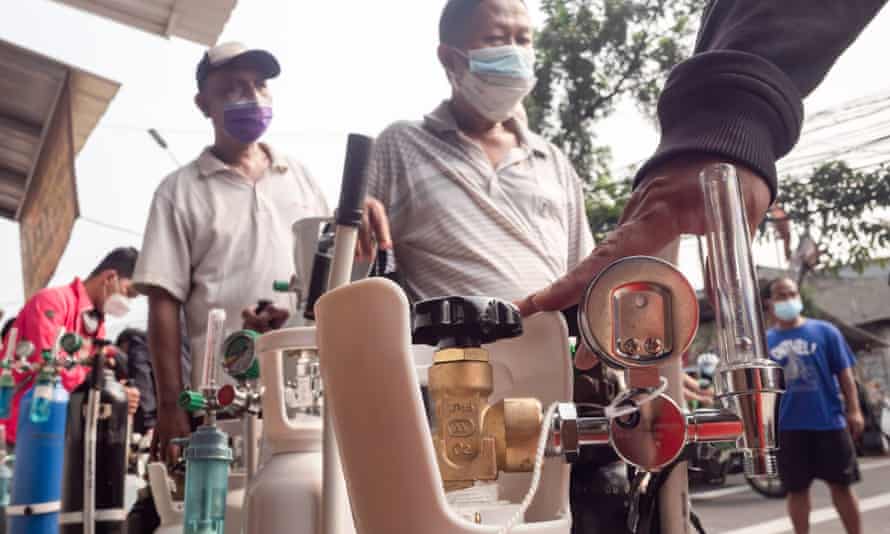
People wait in line to refill their oxygen tanks at a filling station in Jakarta. Indonesia is facing an oxygen crisis amid a surge in Covid-19 cases. Photograph: Wisnu Agung Prasetyo/SOPA Imag/Rex/Shutterstock
Guardian staff and agencies
Countries throughout Asia Pacific – from South Korea to Australia – have been hit by a rise in coronavirus infections as the Delta variant threatens a new wave of the pandemic even in a region renowned for tackling the virus with a high degree of success.
China reported 57 new coronavirus cases in the mainland for 6 July, up from 23 cases a day earlier, the national health authority said on Wednesday. It was the highest daily tally of infections since 30 January.
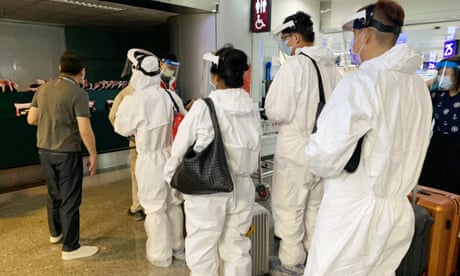
Air VnV: sold-out flights start from Taiwan to Guam for ‘vacation and vaccination’ trips
Fifteen of the new cases were local infections, the national health commission said in a statement. All 15 cases were located in Yunnan province in the city of Ruili, which borders Myanmar. In response, authorities locked down the city, shutting most businesses and requiring residents to stay at home.
The latest cases were discovered during mass testing of residents. The positive cases include Chinese and Myanmar nationals in the city, where there is an active cross-border trade. Authorities said they would step up border controls.
Ruili previously had a Covid outbreak in March and launched a campaign to vaccinate the entire city in April.
China has relied on a tough lockdown strategy and mass testing to tamp down outbreaks, even as it has stepped up the pace of vaccinations. Central health officials have said they want to vaccinate 80% of the population.
In South Korea, where vaccinations have been slow, authorities reported the highest cases since December 2020. The 1,212 new cases reported on Wednesday came close to the country’s largest daily increase during the pandemic, on Christmas Day, when officials listed 1,240 new cases.
Cases of the highly contagious Delta variant are “spreading fast, especially in the Seoul metropolitan area”, Yonhap reports. It was spreading especially rapidly among unvaccinated people in their 20s and 30s.
New Zealand not willing to risk UK-style ‘live with Covid’ policy, says Jacinda Ardern
The government had planned to raise the cap on private social gatherings from four to six people and allow restaurants to extend indoor dining by two hours starting this month. But officials in Seoul and nearby areas have held off as infections rise. Just 30% of South Korea‘s people have received the first dose of a coronavirus vaccine as of Wednesday.
Prime minister Kim Boo-kyum says officials will consider tougher social distancing rules if transmissions continue to grow over the next two or three days.
In Australia, which has vaccinated less than 10% of its eligible population, cases continued to climb in the state of New South Wales, which is at the centre of a new outbreak. On Wednesday the state extended the lockdown in its capital Sydney for another week to contain the latest outbreak of the highly infectious Delta variant.
The two-week stay-home orders, which were scheduled to end Friday, will now end on 16 July, state premier Gladys Berejiklian told reporters in Sydney. Twenty-seven new locally acquired cases of Covid were reported in NSW, up from 18 a day earlier, taking the total infections in the outbreak to more than 350.
The Delta variant is spreading in Thailand, too – the country reported 54 deaths and 6,519 new cases on Wednesday. Delta cases now account for the majority of new cases in Bangkok.
Finally, in Indonesia, a nightmarish coronavirus wave has brought hospitals to their knees, forcing desperate families to hunt for oxygen tanks to treat the sick and dying at home.
‘Dire need’: Australia urged to offer more aid to Indonesia as Covid crushes health system
Nearly 1,000 Indonesian medical workers have died of Covid-19, including more than a dozen who were already fully inoculated.
On Tuesday, Jakarta said about 10,000 concentrators – devices that generate oxygen – were to be shipped from nearby Singapore. Some had already been flown in on a Hercules cargo plane. The government said it was also in talks with other countries, including China.
Senior minister Luhut Binsar Pandjaitan said the country was bracing for up to “70,000 [cases] per day at worst – but we hope that won’t happen”.
UK: Covid-19- Whitty says case levels may get ‘scary’ and warning on organ damage
BBC- Here are five things you need to know about the coronavirus pandemic this Friday morning. We’ll have another update for you this evening.
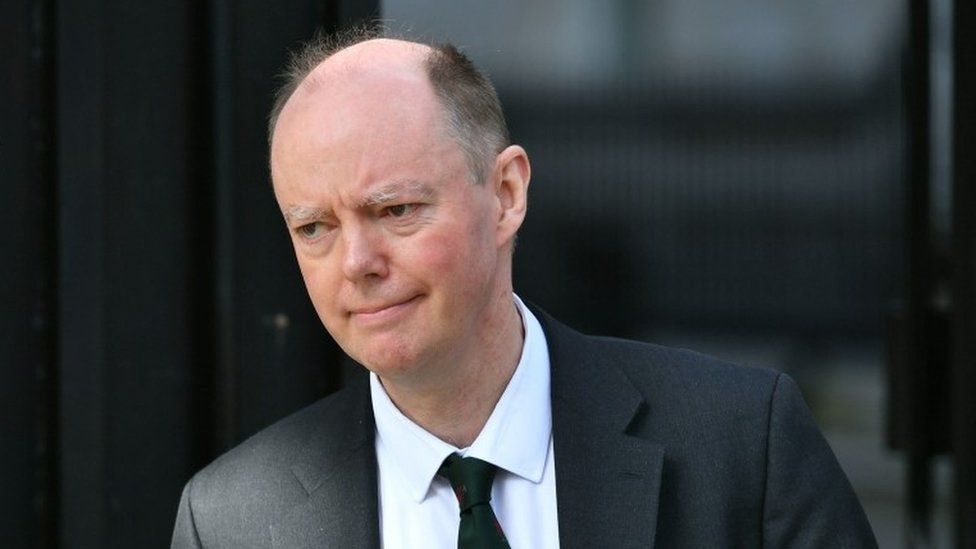
1. Infection numbers could still get ‘scary’, says Whitty
The UK is “not out of the woods” and people should act with caution as Covid restrictions in England end on Monday, says the chief medical adviser Prof Chris Whitty. With the UK recording nearly 50,000 new coronavirus cases on Thursday, he says hospital admissions – already doubling every three weeks – could hit “scary numbers” if the trend continues and “we could get into trouble again surprisingly fast”.
Dr. Chris Whitty
2. Younger adults risk Covid organ damage – study
Younger adults admitted to hospital with Covid are almost as likely to suffer from complications as those aged over 50, research suggests. Four in 10 of those between 19 and 49 developed problems with their kidneys, lungs or other organs, according to a study of 73,197 treated in hospital during the first wave of Covid in 2020.
Paul Godfrey says he has still not recovered from lung damage caused by Covid
3. Covid staff shortage could shut meat production
Staff absences could see shortages of meat products, as processors see one in 10 of their workforce being told to self-isolate by the NHS Covid app, the industry warns. The number of people notified by the app in England and Wales recently passed half a million in a single week. And staff shortages are being felt across all sectors, in particular hospitality and leisure, says the president of the CBI, which represents 190,000 businesses.
image copyrightPA Media
4. Small shops face £1.7bn debt mountain, says report
The UK could face a “tsunami” of shop closures this autumn, with owners faced with repaying £1.7bn in debt, Bill Grimsey, the former boss of Wickes and Iceland, says. His latest report into the future of High Streets says small shops survived the pandemic by taking on government-backed loans that would not normally have been granted, based on their finances. The review calls for the government to write off some debt. The Treasury says it’s already providing further support and flexibility in loan repayment.
image copyrightReuters
5. Covid patient’s own blood could treat lung scarring
A therapy made from a Covid patient’s own blood is being trialled to treat lung scarring that can be left after hospital treatment. Doctors at Guy’s and St Thomas’ NHS Foundation Trust in London have begun a small trial using patients’ white blood cells.


 Dr. Chris Whitty
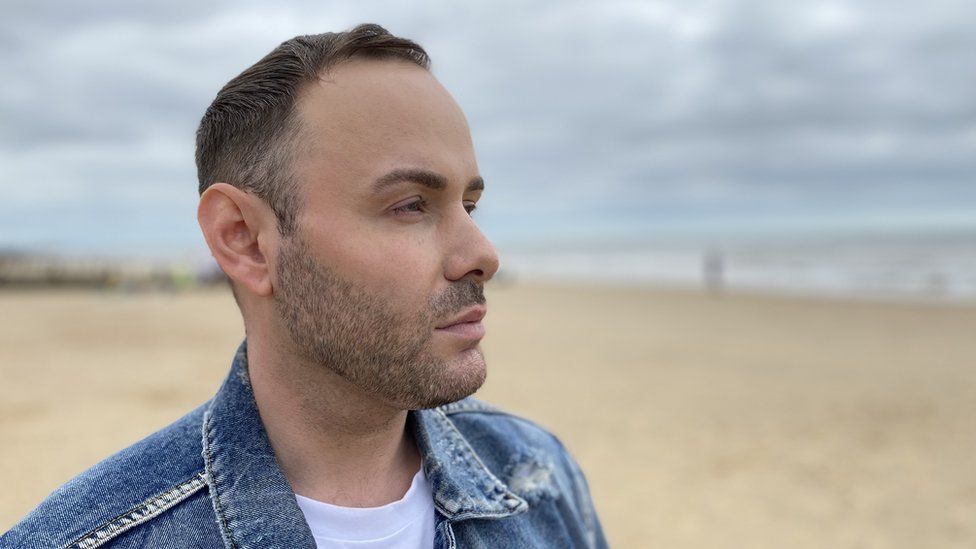
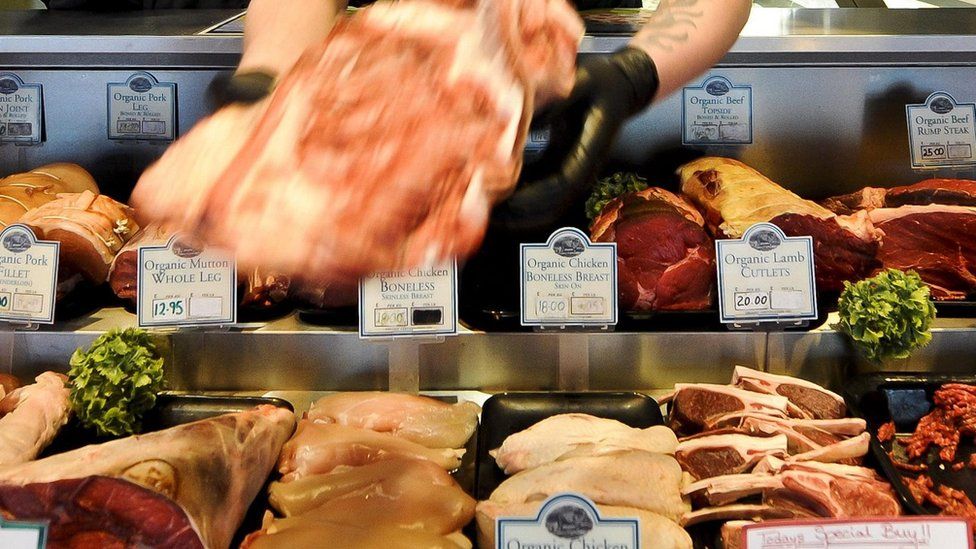 image copyrightPA Media
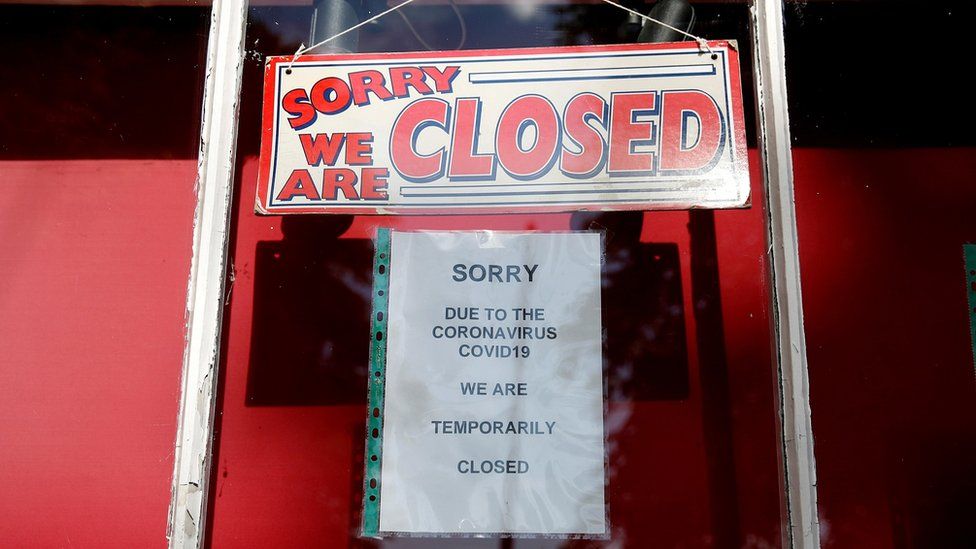 image copyrightReuters