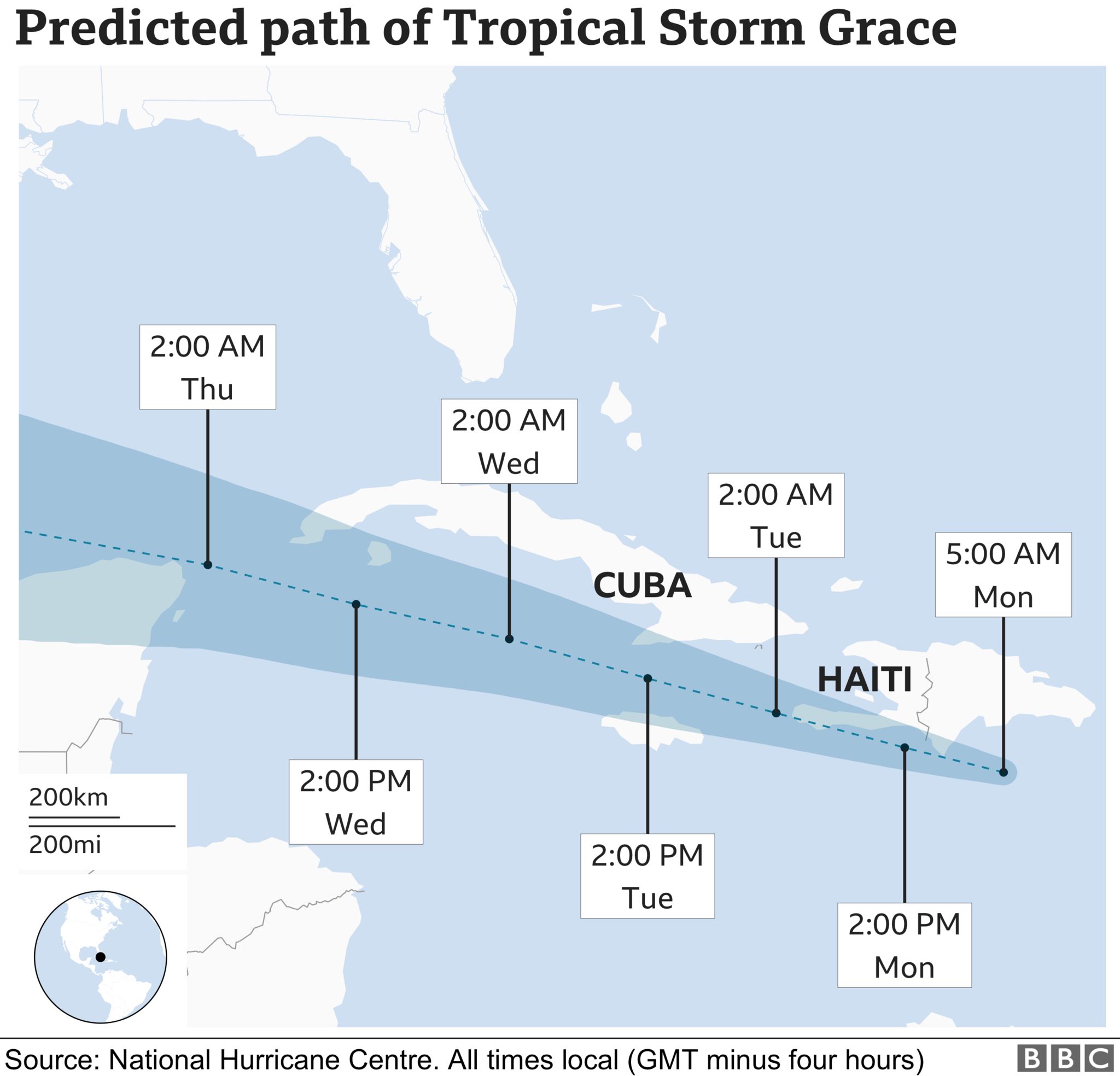
BBC- Rescue workers are rushing to locate survivors of the deadly earthquake that struck Haiti on Saturday as a tropical storm hit the Caribbean nation.
At least 1,419 people are known to have died in the 7.2-magnitude quake. More than 6,900 were injured, and an unknown number are still missing.
Tropical Depression Grace is expected to dump up to 25cm (10 inches) of rainfall over the worst affected area.
It is feared the deluge could trigger landslides.
Social media footage showed heavy rain pouring over the island’s east, with the quake-hit west next in its path.
Roads already made impassable by the quake could be further damaged by the rains, so aid teams are racing to get essential provisions to the quake-hit region.
On Twitter, Haiti’s civil protection agency urged “good neighbours whose space has not been affected” to help shelter displaced people.

Search and rescue teams have been arriving from the United States and Chile, with more on the way from Mexico. Cuban medical teams are already in Haiti and helping people.
Humanitarian organisations say survivors need drinking water and shelter. More than 30,000 families have reportedly been left homeless.
Homes, churches and schools were among buildings flattened in the quake. Some hospitals were left overwhelmed and in need of supplies as they struggled to treat the injured.
The earthquake compounds problems facing the impoverished nation, which is already reeling from a political crisis following the assassination of its president last month.
The south-west of Haiti appears to have suffered the worst of the damage, especially around the city of Les Cayes.
Footage on social media showed residents desperately trying to pull victims from ruined buildings.
“The streets are filled with screaming,” Archdeacon Abiade Lozama, head of an Anglican church in Les Cayes, told the New York Times. “People are searching, for loved ones or resources, medical help, water.”
The epicentre of Saturday’s quake was about 12km (7.5 miles) from the town of Saint-Louis du Sud, the US Geological Survey (USGS) said.
But the tremor could be felt in the densely-populated capital of Port-au-Prince, some 125km away, and in neighbouring countries.

Hospitals under fear of collapse
By James Clayton, BBC News, Les Cayes
It’s hard enough to treat survivors of any natural disaster but when the hospitals themselves are under fear of collapse it makes it all the more difficult.
Les Cayes Ofatma hospital is deemed too unsafe so they’ve brought everyone outside. People swat away flies on hospital beds placed under makeshift tents and trees. You can hear people screaming in pain.
One woman, Elsy, had only just woken up when the earthquake happened. Her son has a serious fracture to his leg.
There simply aren’t the facilities needed to treat people in this remote part of the country. One doctor comes to us, angry, asking why he has no medicine.
One woman we spoke to – who has a very bad broken leg and is also pregnant – has had no pain relief for two days.
The people here need help, but at the moment not enough help is coming – and with a tropical storm close by it could become even more difficult.

Prime Minister Ariel Henry declared a month-long state of emergency and urged the population to “show solidarity”.
The Pope offered prayers for the victims during a Sunday address and expressed hope that aid would arrive soon.
Japanese tennis star Naomi Osaka, whose father is from Haiti, said she would donate her earnings from next week’s Western & Southern Open to help finance relief efforts.
Aftershocks were felt after the initial tremor on Saturday, with the USGS initially warning the earthquake could result in thousands of fatalities and injuries.
A 2010 earthquake in Haiti killed more than 200,000 people and caused extensive damage to the country’s infrastructure and economy.
Haiti: Key facts
- 11 millioninhabitants
- 59%percentage who live below the poverty line
- 2004-2017years in which a UN peacekeeping force was present
- 200,000number of people killed in the 2010 earthquake
Source: BBC Monitoring
================================================
Hopes for quake survivors dwindle as storm lashes Haiti
1/2
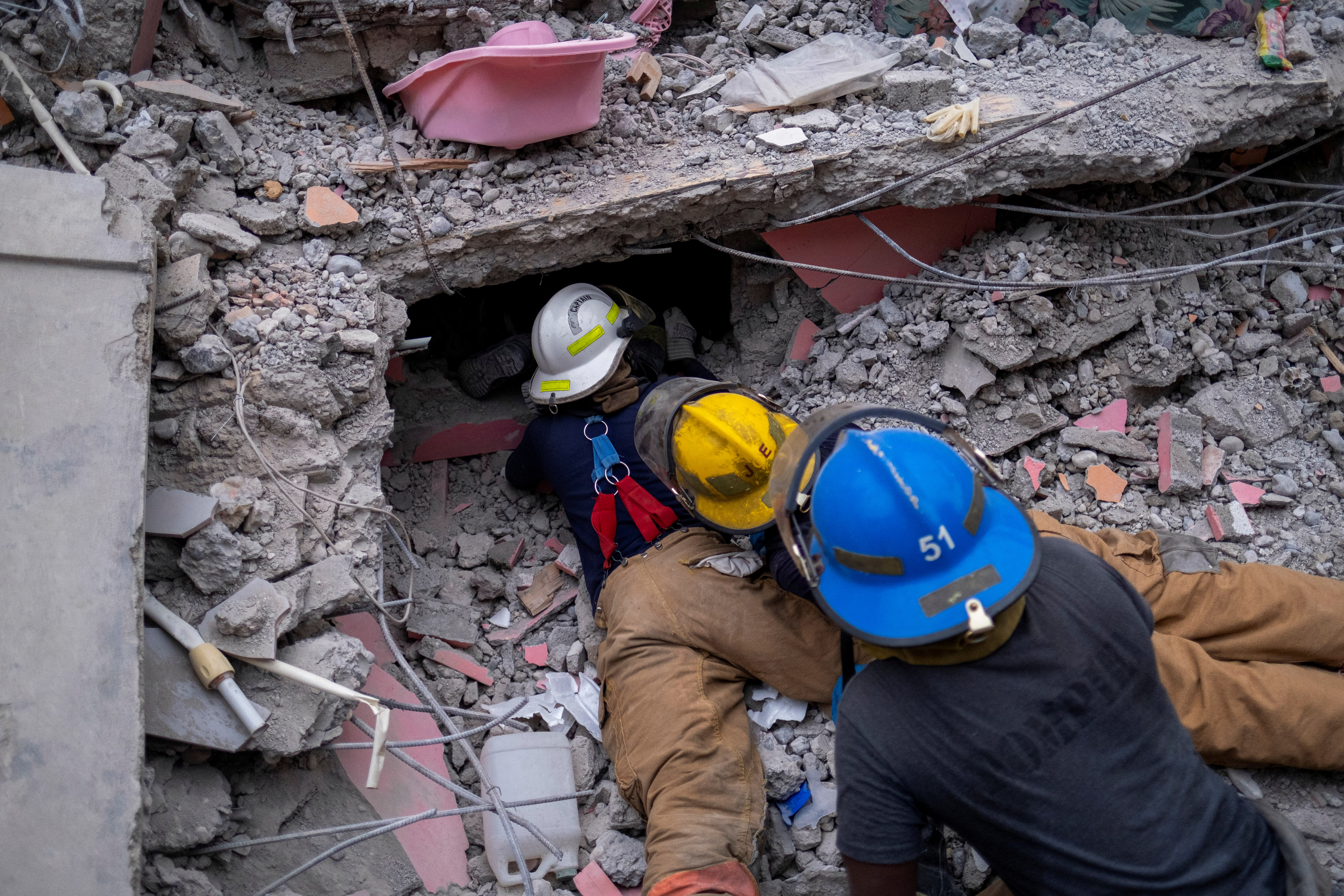
Haitian firefighters search for survivors, under the rubble of a destroyed hotel, after Saturday’s 7.2 magnitude quake, in Les Cayes, Haiti August 16, 2021. REUTERS/Ricardo Arduengo
LES CAYES, Haiti, Aug 17 (Reuters) – Heavy rains lashed Haiti on Tuesday night, complicating rescue efforts and drenching thousands left homeless by a devastating earthquake that killed at least 1,419 people, as hopes dimmed for survivors.
Tropical Depression Grace churned over the regions of southwest Haiti worst-hit by Saturday’s quake of magnitude 7.2, whipping devastated towns with high winds and torrential rains, causing flooding in at least one area.
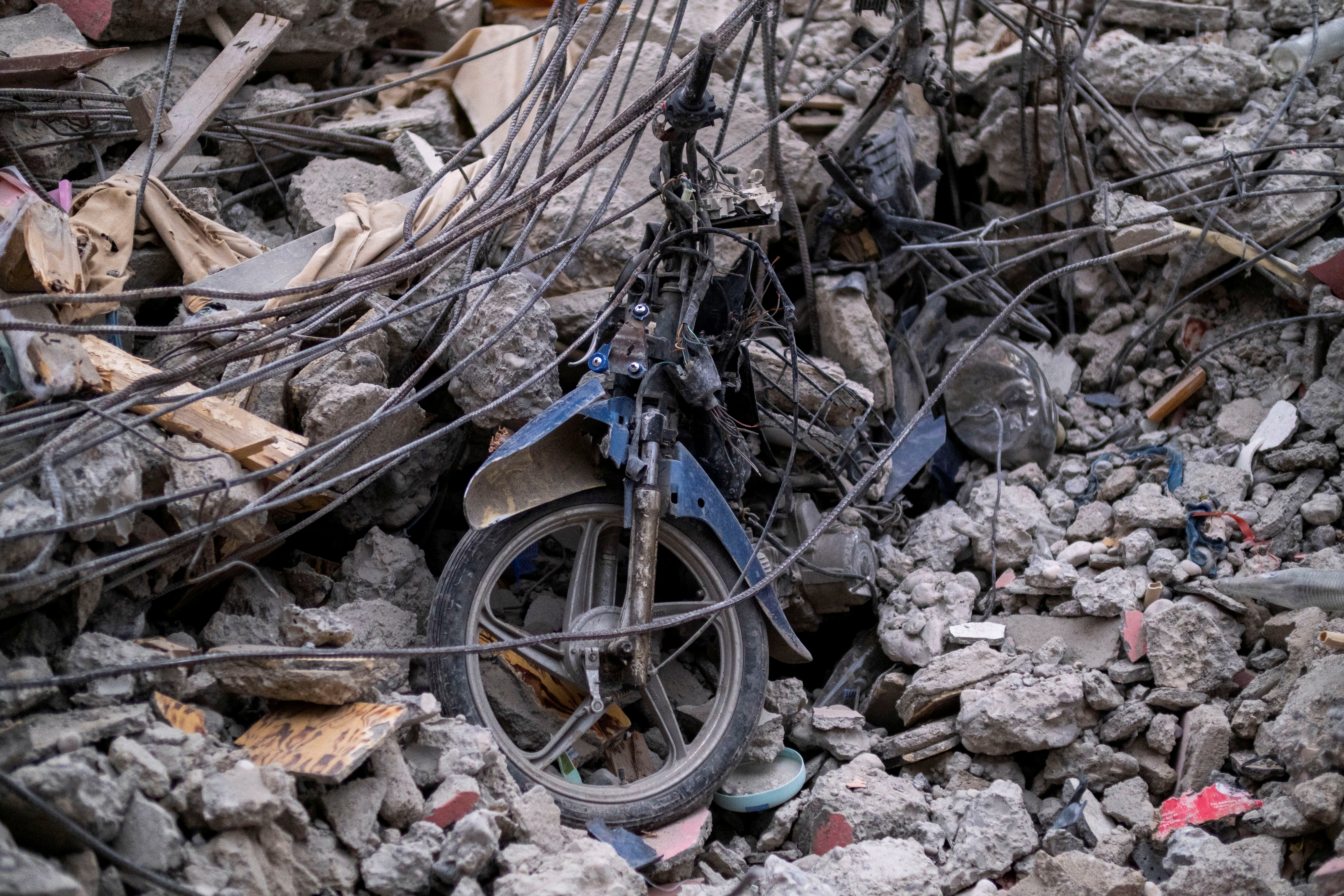
The earthquake brought down tens of thousands of buildings in the poorest country in the Americas, which is still recovering from a major quake 11 years ago that killed more than 200,000 people.
The latest disaster comes just over a month after Haiti was plunged into political turmoil by the assassination of President Jovenel Moise on July 7.
Several major hospitals were severely damaged, hampering humanitarian efforts, as were the focal points of many shattered communities, such as churches and schools.
Haitian authorities said on Monday that 1,419 deaths had been confirmed, with some 6,900 people injured.
As hopes began to dim of finding significant numbers of survivors among the wreckage, the storm impeded rescuers in the seaside city of Les Cayes, about 150 km (90 miles) west of the capital Port-au-Prince, which bore the brunt of the quake.
The storm is expected to dump up to 15 inches (38 cm) of water on parts of Haiti, creating a risk of flash floods, according to the U.S. National Hurricane Centre.
Rescue workers from across Haiti were digging alongside residents through the rubble on Monday evening in a bid to reach bodies, though few voiced hope of finding anyone alive. A smell of dust and decomposing bodies permeated the air.
“We came from all over to help: from the north, from Port-au Prince, from everywhere,” said Maria Fleurant, a firefighter from northern Haiti.
As heavy rain began to fall, emergency workers pulled a blood-stained pillow from under the rubble, followed by the corpse of a three-year-old boy who appeared to have died in his sleep during the earthquake.
Shortly after, as the rain intensified, the workers left.
TOLL EXPECTED TO RISE
With about 37,312 houses destroyed by the quake, according to Haitian authorities, and many of those still unexcavated, the death toll is expected to rise.
Vital Jaenkendy, who watched as a bulldozer shifted rubble from his collapsed apartment building, said eight residents had died and four were missing.
Jaenkendy and others have been sleeping under a tarpaulin on a dirt road nearby, and were hunkering down for the rains.
“When the storm comes, we’ll take shelter in car ports of the houses nearby, just until it passes, and then we’ll return to our place in the road,” he said.
Doctors in battled makeshift tents outside hospitals to save the lives of hundreds of injured, including young children and the elderly.
Prime Minister Ariel Henry, who was sworn in less then a month ago after Moise’s assassination, vowed to disburse humanitarian aid better than in the wake of the 2010 quake.
Though billions of dollars in aid money poured into Haiti after that quake and Hurricane Matthew in 2016, many Haitians say they saw scant benefits from the uncoordinated efforts: government bodies remained weak, amid persistent shortages of food and basic goods.
“The earthquake is a great misfortune that happens to us in the middle of the hurricane season,” Henry told reporters, adding that the government would not repeat “the same things” done in 2010.
The post Haiti Earthquake: Death Toll Climbs as Tropical Depression Grace Hits, Hope Dims for Survivors appeared first on The St Kitts Nevis Observer.