Critics: Congress falls short on pandemic prep,

Advocates are pushing Congress to provide more funding to prepare for future pandemics after preparedness money in President Biden‘s $1.75 trillion social spending and climate package was scaled back.
The White House initially proposed $30 billion for pandemic preparedness in Biden’s Build Back Better package. In September, it lowered its proposal to a $15 billion down payment, with the goal of spending $65 billion over seven to 10 years.
The breakdown: The roughly $10 billion in the package includes $7 billion in broader public health funding to help state and local health departments and the Centers for Disease Control and Prevention (CDC) with tasks like updating outdated IT systems and hiring more workers.
Some groups say the remaining $3 billion, for areas like upgrading labs and directly working on vaccines and treatments for different types of viruses, is particularly meager.
That $3 billion includes $1.3 billion that can go toward the Biomedical Advanced Research and Development Authority (BARDA), an arm of the Department of Health and Human Services that helps lead work on vaccines, tests and treatments.
Anita Cicero, deputy director of the Johns Hopkins Center for Health Security, said that $1.3 billion “really has shortchanged that necessary investment.”
Amnesia?: Rep. Ritchie Torres (D-N.Y.) said part of the problem is there is not as much organized advocacy for pandemic preparedness funding as there is for other issues, saying it is not as “sexy” as issues like climate change.
He is pushing for more funding particularly for BARDA.
“Congress might be suffering from amnesia about the worst of COVID-19,” he said, adding: “A few billion dollars is a pitiful response to the worst pandemic in the history of the United States.”
===================================================
Canada’s new COVID-19 epicenters are more remote, less vaccinated and less resourced
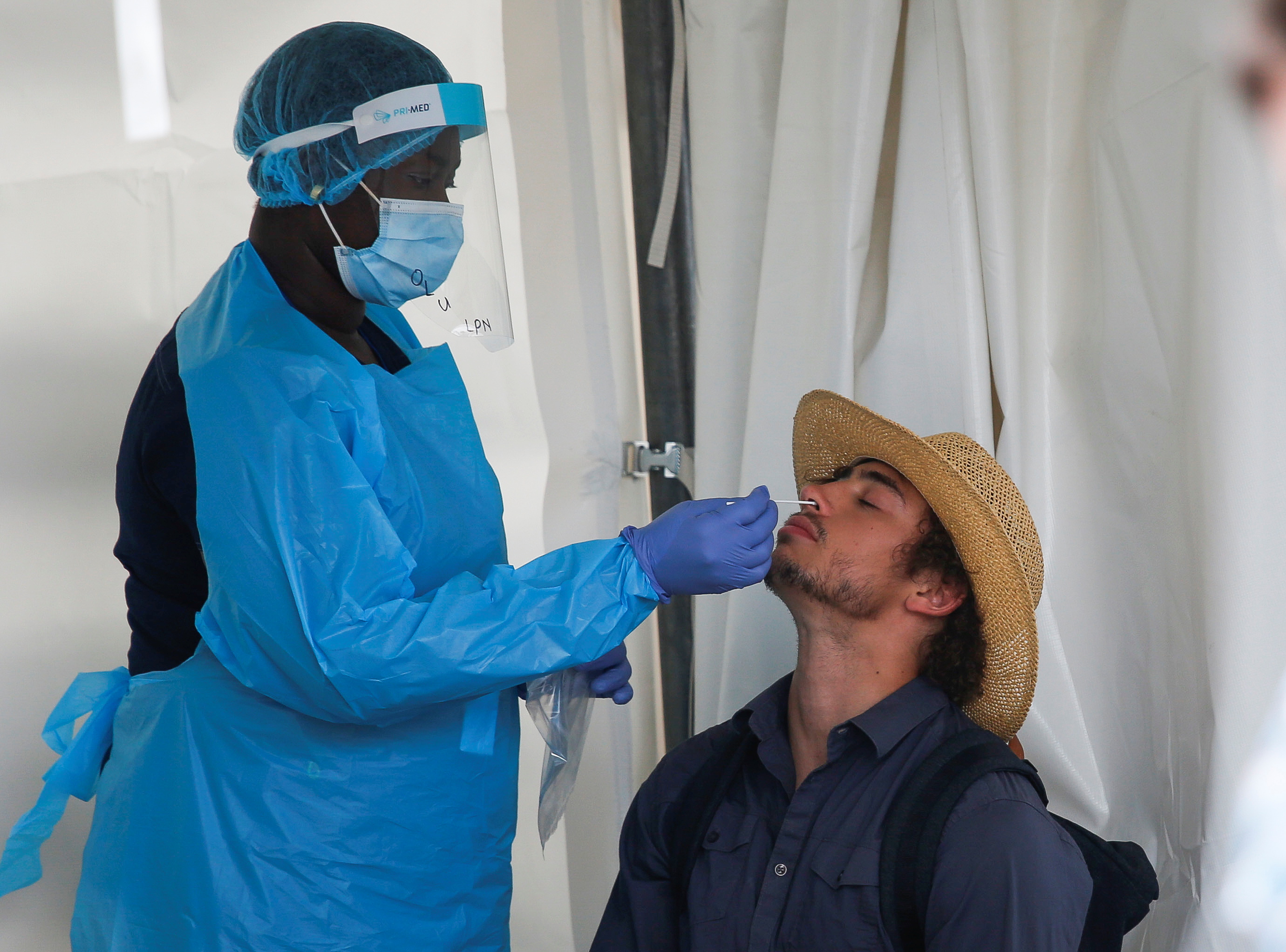
A man gets a COVID-19 test before being allowed entry into Nashville North a live concert venue as the Calgary Stampede gets underway following a year off due to the coronavirus disease (COVID-19) restrictions, in Calgary, Alberta, Canada July 9, 2021. REUTERS/Todd Korol/File Photo
TORONTO, Nov 11 (Reuters) – Canada’s coronavirus epicenters are shifting from dense urban zones to more rural or remote areas that have lower vaccination rates and fewer public health resources.
Some of those areas were spared in earlier waves of the pandemic and are now forced to contend with a widely spreading virulent strain of the coronavirus with fewer options at their disposal to deal with the surge.
Canada has high overall vaccination rates but pockets of hesitancy allow the virus to spread.
In Ontario, Canada’s most-populous province, the Sudbury health region about 250 miles (400 km) north of Toronto has tightened restrictions. Officials have brought back capacity limits in public spaces, requiring residentsto mask and provide proof of vaccination. Its COVID-19 recent case rate, at 164.7 per 100,000 as of Monday, is by far the highest in the province.
It has also seen positivity rates, the percentage of people tested for COVID-19 who test positive, spike to 4.43% as of Oct. 24. The provincial average that week was 1.56%.
“Less dense, less urban areas were relatively spared in this pandemic but … I think we’re starting to see the non-urban wave of COVID starting,” said Zain Chagla, an infectious diseases physician at St. Joseph’s Healthcare in Hamilton, Ontario.
Greater Sudbury has more than 160,000 people but less hospital capacity than the Toronto area.
“What’s particularly worrisome is the number of cases and the rapid rise of cases combined with the fact that we’re seeing cases kind of all over,” including about a quarter with no identified source, said Penny Sutcliffe, medical officer of health for Public Health Sudbury and Districts.
On Wednesday, Ontario paused plans to raise capacity limits at sites such as sex clubs “out of an abundance of caution.”
Sutcliffe said the increased transmission in her region could be linked to both an easing of restrictions and widespread COVID-19 fatigue: “We’re all tired of the pandemic and tired of having to take precautions.”
PANDEMIC FATIGUE
It is a fatigue felt elsewhere.
Yukon declared a state of emergency this week after announcing 80 COVID-19 cases in three days, bringing the total active cases to 169 in the territory of 43,000 people. About 22.1% of Yukon’s population is indigenous, compared with the national average of about 5%.
In Saskatchewan, the province’s far northwest region, which is home to multiple First Nations communities, had the highest COVID-19 infection rates this week. It also had the lowest vaccination rate as a percentage of the total population, government data showed.
In Alberta, the province’s relatively rural northern region that includes the oil sands hub of Fort McMurray had the highest hospitalization rate and the highest case rate as of early November.
This past summer, the Delta variant ran through crowded oil sands housing and a young population that did not see itself at risk of COVID-19, said Fort McMurray family doctor Raman Kumar.
“There’s more a sense of rugged individualism where people don’t necessarily rely as much on the government.”
Now, he said, he and his colleagues are tackling the “Three Cs” of vaccine hesitancy: quashing complacency and conspiracies and maximizing convenience.
“If someone comes in for a prescription refill, it’s always a really good opportunity to mention to someone: ‘Hey, did you get your vaccine?’”
SVG records new COVID-19 cases & deaths

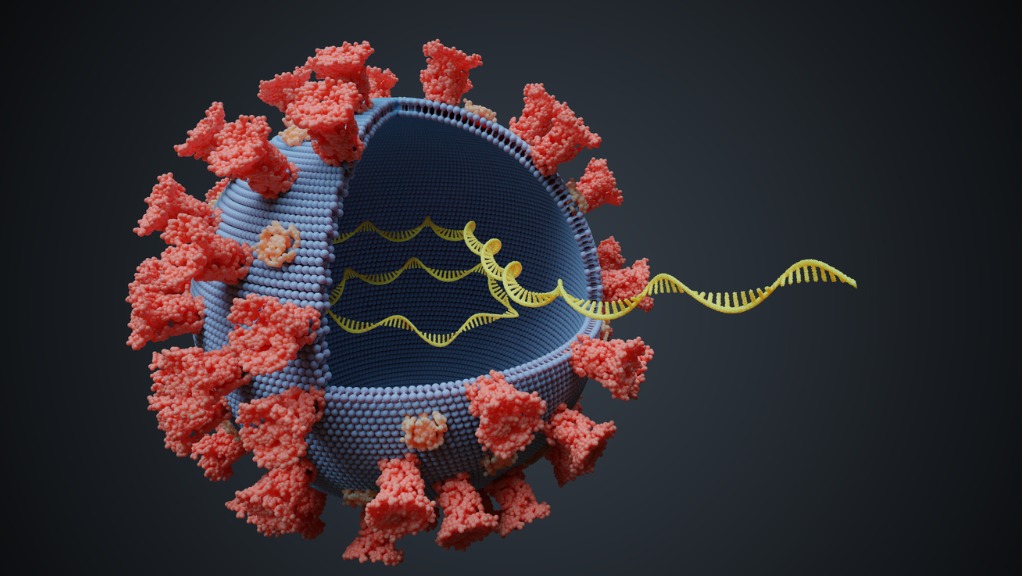
The COVID-19 surge in St Vincent and the Grenadines continues as the country recorded 37 new infections.
These new infections were detected in samples collected on November 9.
St Vincent and the Grenadines now has over 1,161 active cases of COVID-19.
Meanwhile, the country recorded two new coronavirus deaths.
The first was an unvaccinated 59-year-old male who tested positive for COVID-19 on October 28th, 2021.
He died on November 6.
The second deceased was a 90-year-old woman, who was partially vaccinated.
She died on November 10, 2021.
The Ministry of Health said she had a comorbidity.
Their deaths bring the COVID-19 mortality figure to 71.
================================================
WORLD STATS
Coronavirus Cases
252,747,511
Deaths:
Recovered:
Latest News
November 12 (GMT)
- 23 new cases and 2 new deaths in Saint Lucia [source]
- 27 new cases in New Caledonia [source]
- 1,894 new cases and 170 new deaths in the Philippines [source]
- 1 new case in the Turks and Caicos Islands [source]
- 1 new case in Saint Kitts and Nevis [source]
- 294 new cases and 2 new deaths in Uzbekistan [source]
- 107 new cases and 2 new deaths in Kyrgyzstan [source]
- 1,260 new cases and 28 new deaths in Kazakhstan [source]
- 2,368 new cases and 18 new deaths in South Korea [source]
- 199 new cases in New Zealand [source]
The post US Unprepared for Next Pandemic, Canada’s Remote Virus Epicenters,World Stats, More appeared first on The St Kitts Nevis Observer.