Omicron variant has “robust ability” to evade COVID vaccines, but Pfizer says booster shots “neutralized” it
U.S. vaccine maker Pfizer and its German partner BioNTech said on Wednesday, meanwhile, that while the standard two-dose regimen of their vaccine was “significantly less effective at blocking the virus,” a booster shot “neutralized the Omicron variant in lab tests.”
The pharmaceutical companies released a statement reporting their latest data as both they and independent researchers race to understand how much of a threat Omicron poses to the world. The news from Pfizer and BioNTech echoed what scientists in South Africa have reported — including that the standard two-dose inoculation “may still induce protection against severe disease.”
Alex Sigal, the researcher behind the latest data from South African trials, said what his team had found was “better than I expected,” showing that Omicron still relies on the same biological mechanism to attack human cells that previous variants have used. That means the current vaccines — which prompt the body to deploy two weapons against COVID-19 that work in different ways, T-cells and antibodies — will still have some effect.
Sigal said in a series of tweets announcing his team’s preliminary data, which has not yet been peer reviewed, that while there was “a very large drop in neutralization of Omicron” seen with the Pfizer/BioNTech vaccine, the highly-mutated strain’s “escape” from the vaccine’s protection was “incomplete,” which he said “means its a tractable problem with the tools we got (sic).”
In other words, while the vaccines alone appear to offer significantly less protection against catching the new variant, they’ll still help. Crucially, the vaccines are expected to continue keeping people out of hospitals, even with Omicron, and there’s also information suggesting the new strain may land fewer people in ICUs than previous variants to begin with.
Dr. Mike Ryan, the World Health Organization’s emergencies director, stressed on Wednesday that there was no indication yet that the vaccines would prove less effective at preventing serious illness with Omicron than with previous variants.
“We have highly effective vaccines that have proved effective against all the variants so far, in terms of severe disease and hospitalization,” he told the French news agency AFP. “And there’s no reason to expect that it wouldn’t be so” for Omicron.
Ryan also pointed to early, real-world information coming from South Africa, which suggests that while Omicron is extremely contagious, it does not appear to make people any sicker than Delta or other strains: “If anything, the direction is towards less severity.”
As South Africa heads toward the peak of its fourth wave, one of the country’s leading vaccinologists told Patta that the world doesn’t need to wait for lab results to determine whether Omicron is more deadly, as there’s already data from hospitals, and it’s better news than predicted.
South African health officials are racing to vaccinate people as Omicron spreads fast across the country, but Patta says there has been one notable difference with this wave: It has not been accompanied by the high number of hospitalizations and deaths associated with previous surges in infections from other variants.
When Patta and her team visited a hospital COVID ward six months ago during the country’s deadly third wave, fueled by the Delta variant, it was overwhelmed. ICU beds and oxygen were in desperately short supply.
Today, despite the huge spike in new infections from Omicron, the same hospital is unrecognizable. Their COVID wards are half empty — and the science is backing up the powerful anecdotal evidence.
While the study carried out by Sigal’s team shows the Pfizer shot may be 40 times less effective at preventing Omicron infections, the cases confirmed so far in South Africa have been far milder than those seen during previous waves, according to vaccinologist Professor Shabir Madhi.
“What that tells us is that we’re building up some level of immunity, even against Omicron, which is adequate to prevent the progression from infection to severe disease and death,” said Madhi, a senior researcher who has led many of South Africa’s COVID-19 trials.
What appears to be helping so much is “T-cell immunity.” Unlike antibodies that can prevent a virus from bonding to human cells in the first place, the body’s T-cells, induced by both vaccines and past infections, attack infected cells to prevent the disease from becoming severe.
Madhi said that in Johannesburg, where infections have been surging, over 70% of the population have developed antibodies against COVID-19, and not just from the vaccines.
Vaccination rates remain low in South Africa, but so many people have been previously infected with COVID that there are high levels of natural immunity in the population. Getting there has come at a cost, however. Nearly 90,000 lives have been lost to the disease according to official tallies, but many experts say the real toll is probably closer to 270,000.
Scientists stress that while the current vaccines may not be nearly as effective at preventing infections with the Omicron variant, they are still crucial.
“When people choose not to be vaccinated, they’re more likely to end up in hospital and die of COVID-19,” said Madhi.
South Africa now has enough vaccines for the country, but uptake has slowed down in recent weeks due to apathy and vaccine hesitancy.
Covid: Vaccines should work against Omicron variant, WHO says
Existing vaccines should still protect people who contract the Omicron variant from severe Covid cases, a World Health Organization (WHO) official says.
It comes as the first lab tests of the new variant in South Africa suggest it can partially evade the Pfizer jab.
Researchers say there was a “very large drop” in how well the vaccine’s antibodies neutralised the new strain.
But the WHO’s Dr Mike Ryan said there was no sign Omicron would be better at evading vaccines than other variants.
“We have highly effective vaccines that have proved effective against all the variants so far, in terms of severe disease and hospitalisation, and there’s no reason to expect that it wouldn’t be so” for Omicron, Dr Ryan, the WHO’s emergencies director, told AFP news agency.
He said initial data suggested Omicron did not make people sicker than the Delta and other strains. “If anything, the direction is towards less severity,” he said.
The new South African study – which has not yet been peer-reviewed – found the Pfizer/BioNTech vaccine may result in up to 40 times fewer neutralising antibodies against Omicron than against the original Covid strain.
But Omicron’s ability to escape vaccine antibodies is “incomplete”, said Prof Alex Sigal, a virologist at the Africa Health Research Institute, who led the research.
He said the results, based on blood tests from 12 people, were “better than I expected of Omicron”.
Prof Sigal said vaccination, combined with previous infection, could still neutralise against the variant. That suggests boosters may bring a significant benefit.
Scientists believe previous infection, followed by vaccination or a booster, is likely to increase the neutralisation level and will probably protect people against severe disease.
More data on how well the Pfizer jab works against Omicron is expected to be released in the coming days.
There is no significant data yet on how the Moderna, Johnson & Johnson and other jabs hold up against the new variant.
================================================
Omicron: What are the new Plan B rules for England?
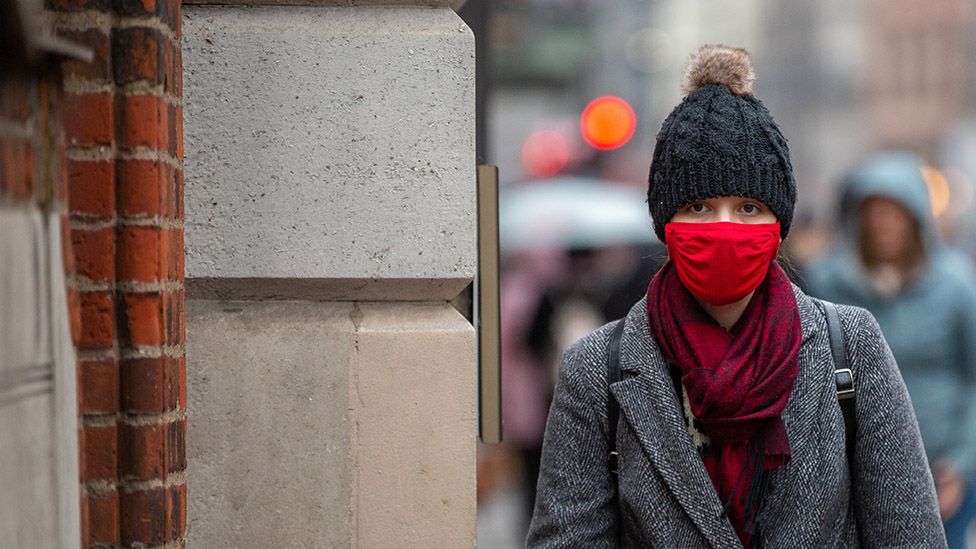 Image source, Getty Images
The government has announced new Covid rules for England, in response to concern over the Omicron variant.
It says people should work from home where possible, and will have to show their Covid status for entry to many venues.
What are the new measures for England?
From Friday 10 December, face coverings will be mandatory for most indoor public venues including places of worship, theatres and cinemas, as well as in shops and on public transport.
Masks will still not be needed in hospitality settings such as pubs or restaurants, nor in venues where it is “not practical to wear them” (for instance, where exercise or singing takes place).
From Monday 13 December, people should work from home “if they can”.
From Wednesday 15 December (subject to parliamentary approval), people will need an NHS Covid Pass – or a negative lateral flow test – to gain entry to:
- Nightclubs
- Indoor unseated venues with more than 500 people
- Unseated outdoor venues with more than 4,000 people
- Any venue with more than 10,000 people
What rules are already in place?
- Pupils at secondary schools are being “strongly advised” to wear face coverings in communal areas; the guidance also applies to staff and visitors at all schools and childcare settings
- Secondary school pupils in Wales are being urged to wear face masks in classrooms and communal areas; staff and students in colleges and universities should also wear face coverings inside
- All contacts of suspected Omicron cases will be contacted by their local contact tracing system and required to self-isolate for 10 days, regardless of their age or vaccination status
- Anyone travelling to the UK has to take a PCR or Lateral Flow Test no more than 48 hours before their departure, and take a PCR test within 48 hours of arrival in the UK – they must self-isolate until they have a negative result
- 1m-plus social distancing remains in places such as hospitals and passport control
- people are advised to test for Covid before going to crowded places or spending time with those at greater risk
- Anyone testing positive has to self-isolate
What’s happening with boosters?
The booster campaign is being stepped up:
- Booster jabs will be offered to all over-18s
- The gap between second dose and booster will be reduced to three months from six
- People with weakened immune systems will be offered a fourth dose – as a booster – no sooner than three months after their third
- Children aged 12 to 15 will be invited for a second dose, three months after their first
Vulnerable people will be contacted first, followed by older age groups, then younger ones.
People are being urged not to try to book their booster until the NHS says it’s their turn.
Every eligible person in England and Scotland should be able to book their booster by the end of January – although some may be given at a later date.
Wales will increase capacity in clinics and drive-through centres and will work with GPs and others – including soldiers and firefighters – to deliver vaccines.
Northern Ireland has announced extra vaccination clinics.
Scotland says it will set out its approach “very soon”.
Why are the new changes being made?
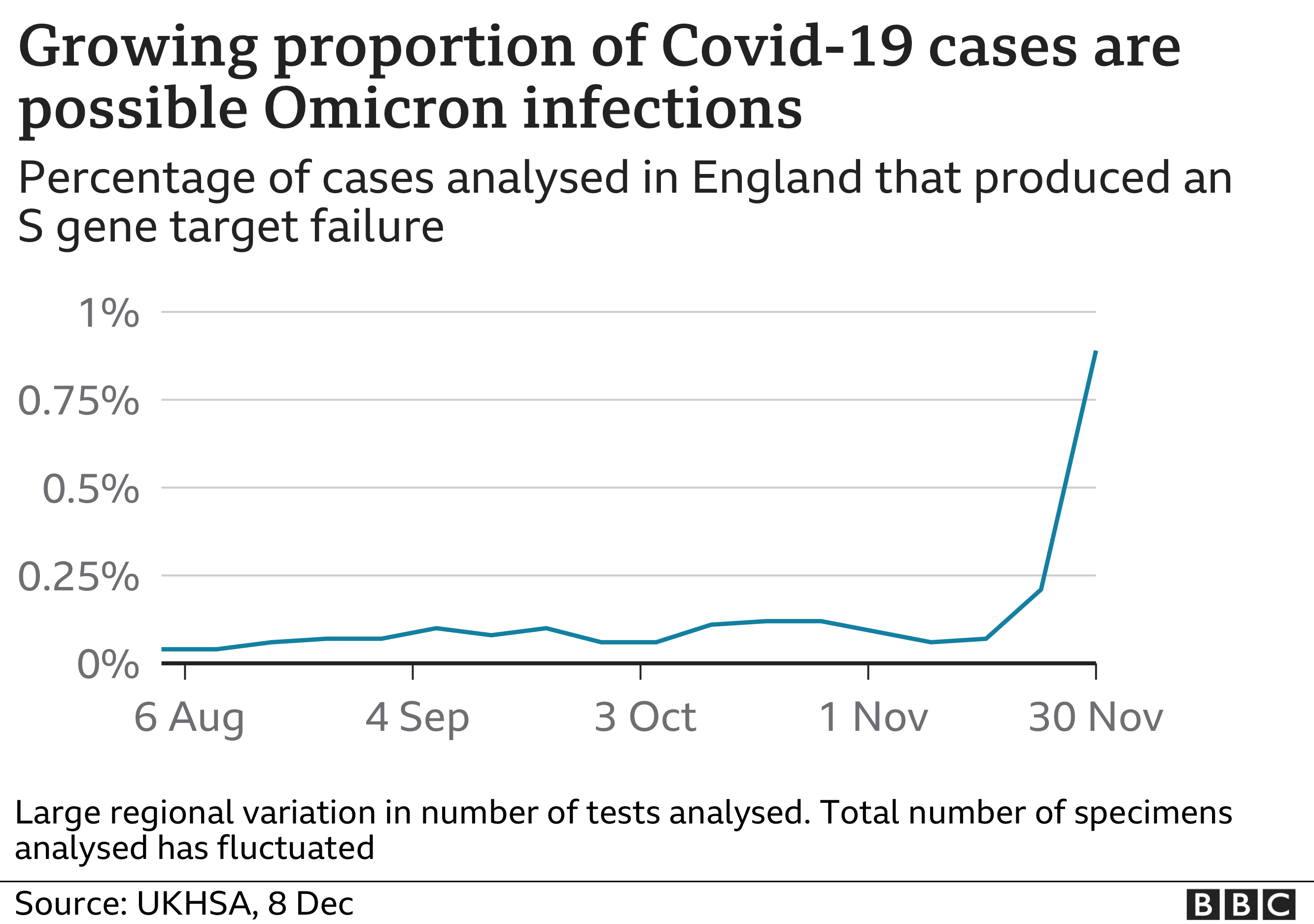
A new Covid variant – Omicron – has been identified, and there are fears that it could be more infectious and less responsive to vaccines.
Precautions are being taken until scientists can properly assess what the new variant’s impact could be.
What’s the situation in Wales?
Current measures already included:
- NHS Covid Pass needed for entry to nightclubs, cinemas, theatres and concert halls and many other indoor and outdoor events
- working from home wherever possible
- face coverings compulsory on public transport, and in shops and hospitals
 Image source, Getty Images
What’s the situation in Northern Ireland?
Restrictions include:
- a limit of 30 people from different households mixing indoors in domestic settings
- face coverings compulsory in shops, indoor seated venues and visitor attractions, public transport and some other settings
- post-primary pupils must wear a face covering inside school buildings, as well as on school transport. Staff are encouraged to wear masks in school areas where they can’t socially distance
- vaccine passports for venues including nightclubs, bars and cinemas
What restrictions are currently in place in Scotland?
- physical distancing rules remain in healthcare settings such as hospitals, GP surgeries and dentists, where the 2m (6ft) rule applies
- face coverings still compulsory on public transport and inside places like shops
- all school staff and secondary pupils to wear face coverings indoors
- indoor hospitality venues must collect customer contact details
- working from home where possible
- all over-18s required to prove their vaccine status at nightclubs and other venues
The post Pfizer Claims Its Vax Kills Omicron, WHO Supports Vaccines, England Into Plan B appeared first on The St Kitts Nevis Observer.