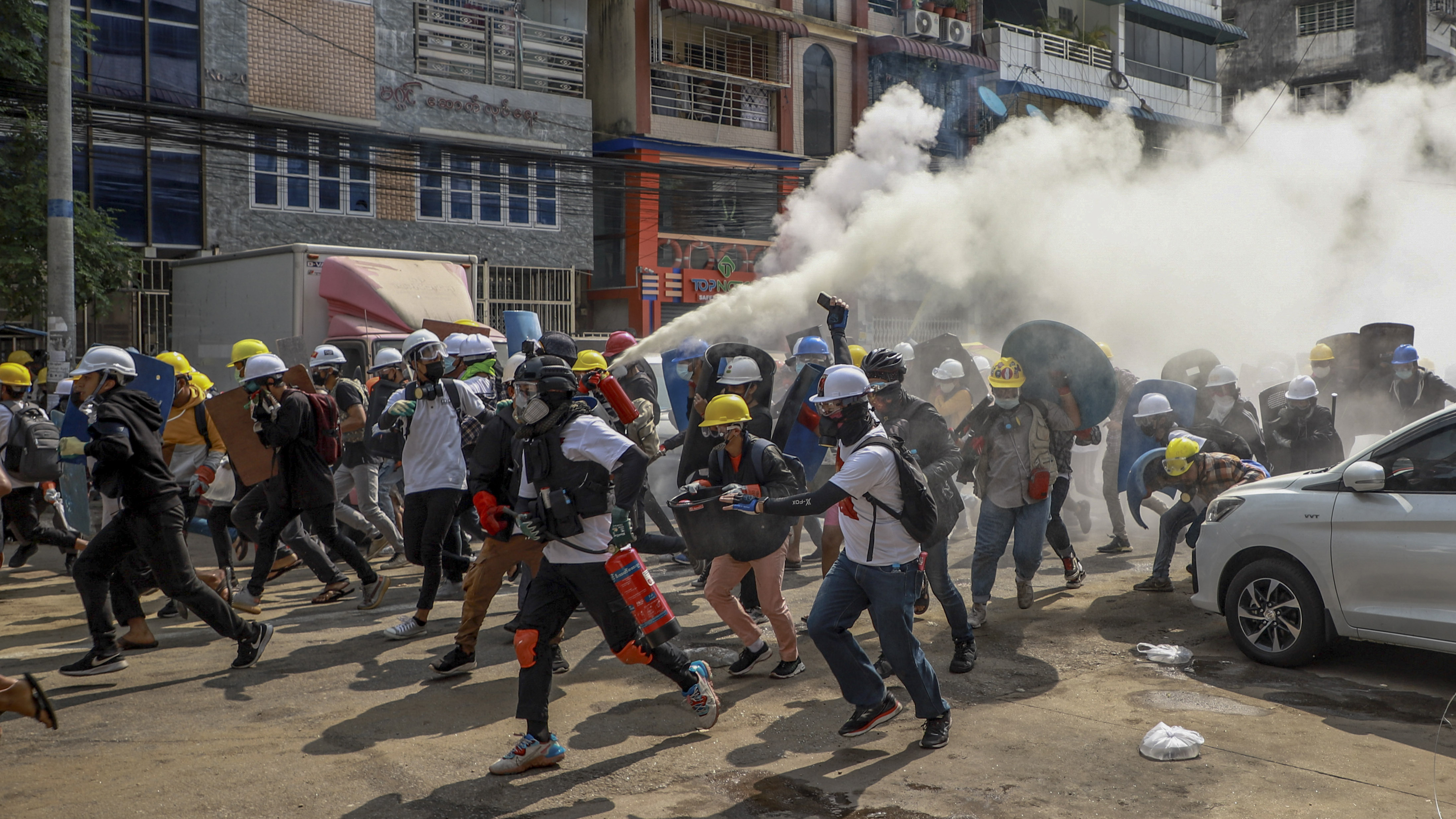
Security forces were seen firing slingshots at demonstrators, chasing them down and even brutally beating an ambulance crew.
All posts by FreeNews
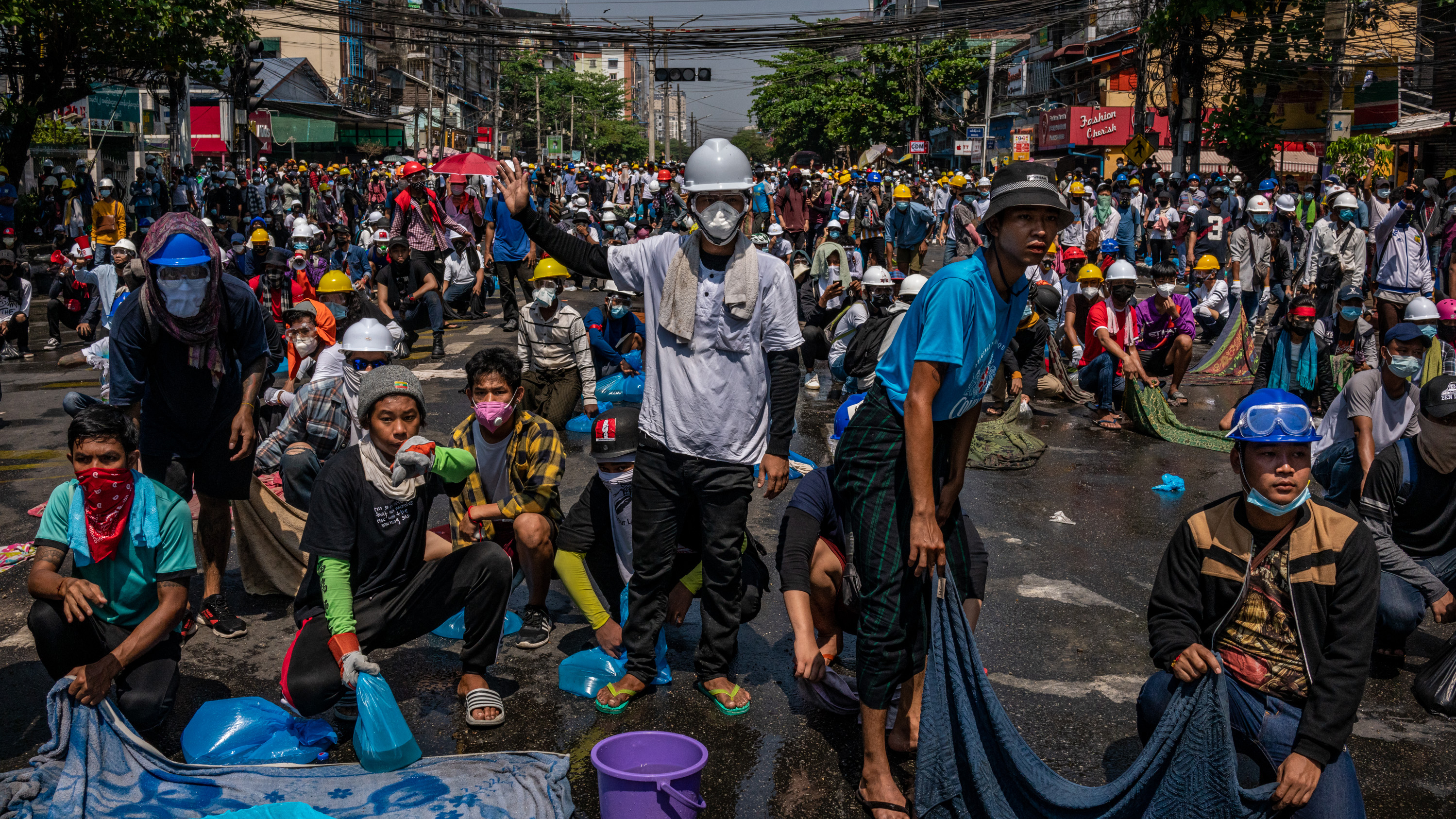
Myanmar security forces kill at least 34 protesters
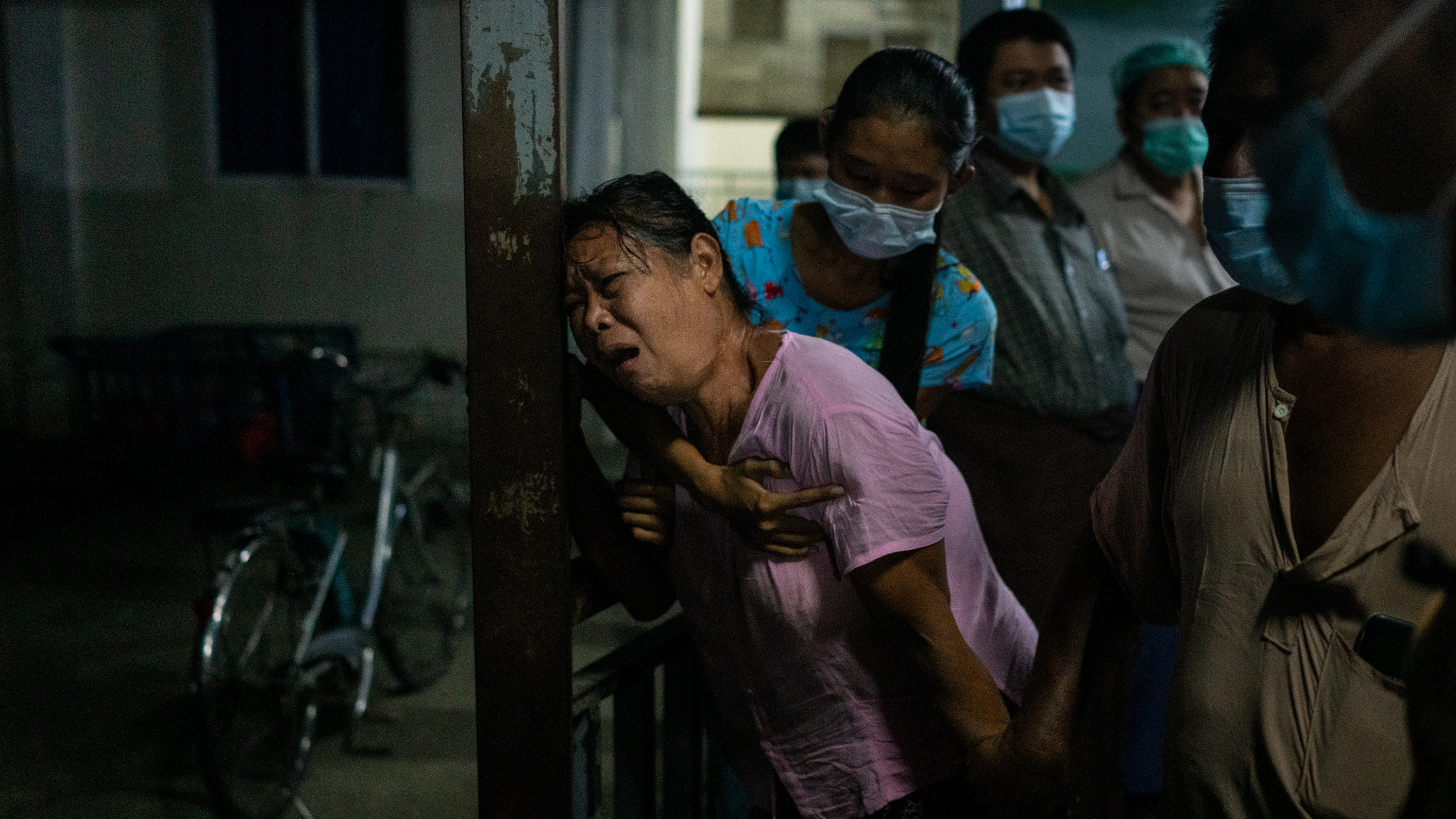
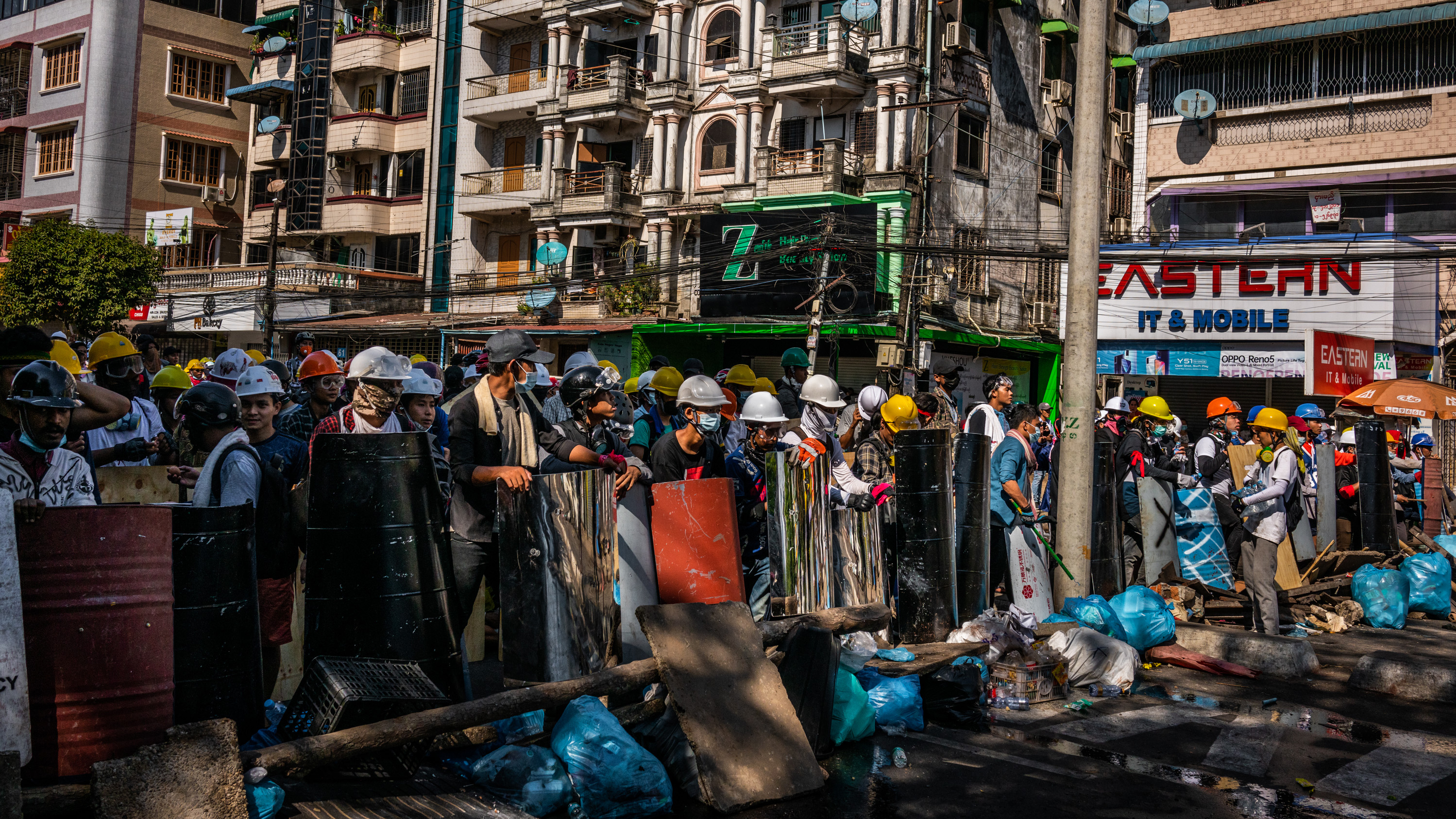
Myanmar security forces dramatically escalated their crackdown on protests against last month's coup, killing at least 34 protesters yesterday in several cities, according to accounts on social media and local news reports compiled by a data analyst.
That is highest daily death toll since the February 1 takeover, exceeding the 18 that the UN Human Rights Office said were killed on Sunday, and could galvanise the international community, which has responded fitfully so far to the violence.
Videos also showed security forces firing slingshots at demonstrators, chasing them down and even brutally beating an ambulance crew.
READ MORE: Aung San Suu Kyi hit with another charge as protesters return to Myanmar streets
The toll could even be higher; the Democratic Voice of Burma, an independent television and online news service, tallied 38 deaths.
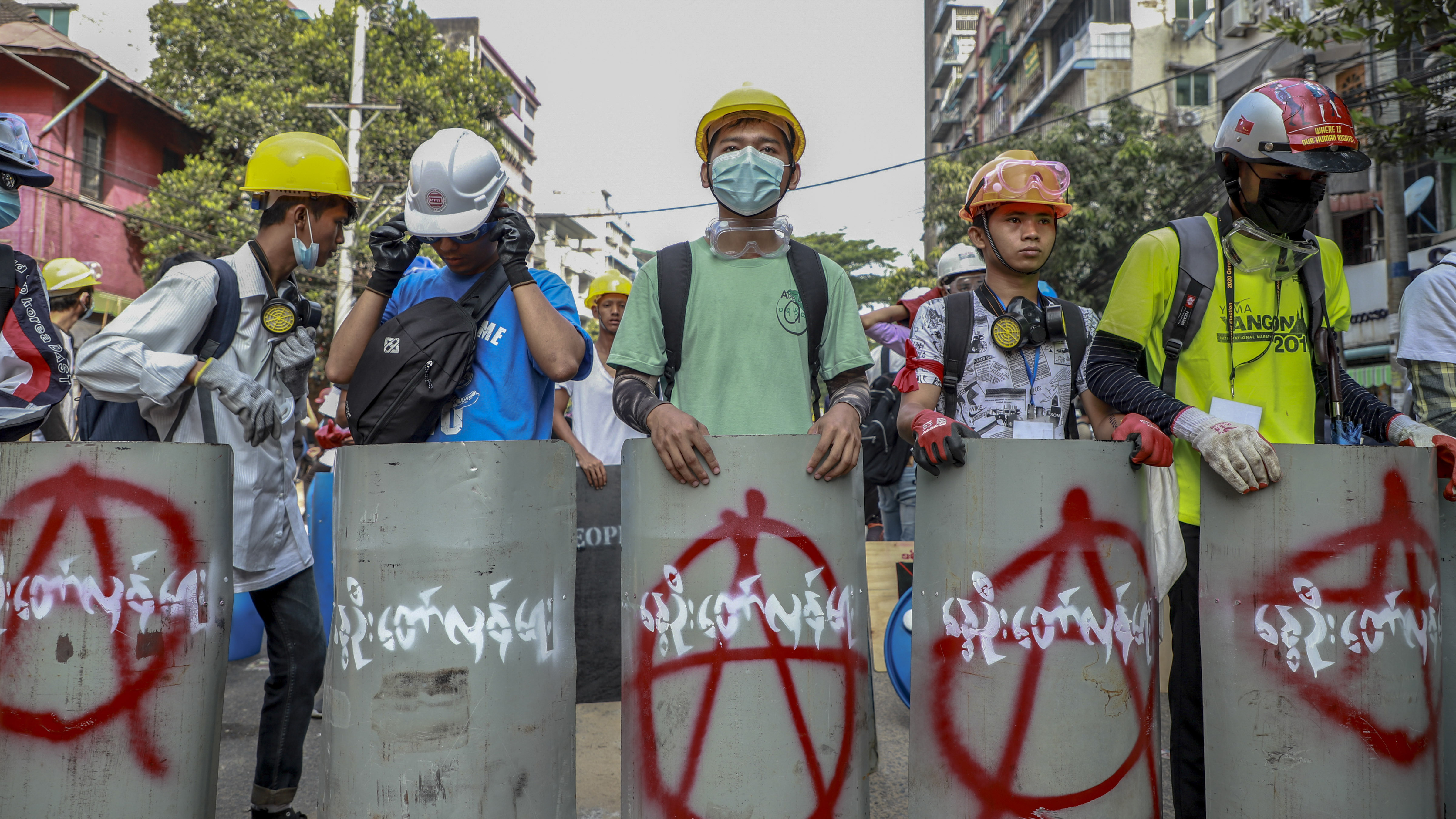
Demonstrators have regularly flooded the streets of cities across the country since the military seized power and ousted the elected government of leader Aung San Suu Kyi.
Their numbers have remained high even as security forces have repeatedly fired tear gas, rubber bullets and live rounds to disperse the crowds, and arrested protesters en masse.
The intensifying standoff is unfortunately familiar in a country with a long history of peaceful resistance to military rule — and brutal crackdowns.
The coup reversed years of slow progress toward democracy in the Southeast Asian nation after five decades of military rule.
The death toll from yesterday was compiled by a data analyst who spoke on condition of anonymity because he feared for his safety.
READ MORE: At least 18 anti-coup protesters killed in Myanmar
He also collected information where he could on the victims' names, ages, hometowns, and where and how they were killed.
The Associated Press was unable to independently confirm most of the reported deaths, but several square with online postings.
The data analyst, who is in Yangon, the country's biggest city, said he collected the information to honour those who were killed for their heroic resistance.
According to his list, the highest number of deaths were in Yangon, where the total was 18.
In the central city of Monywa, which has turned out huge crowds, eight deaths were reported.
Three deaths were reported in Mandalay, the country's second-biggest city, and two in Salin, a town in Magwe region. Mawlamyine, in the country's southeast, and Myingyan and Kalay, both in central Myanmar, each had a single death.
As part of the crackdown, security forces have also arrested hundreds of people, including journalists.
On Saturday, at least eight journalists, including Thein Zaw of The Associated Press, were detained.
A video showed he had moved out of the way as police charged down a street at protesters, but then was seized by police officers, who handcuffed him and held him briefly in a chokehold before marching him away.
He has been charged with violating a public safety law that could see him imprisoned for up to three years.
The escalation of the crackdown has led to increased diplomatic efforts to resolve Myanmar's political crisis — but there appear to be few viable options.
It's not yet clear if the soaring death toll could change the dynamic.
The UN Security Council is expected to hold a closed meeting on the situation tomorrow, council diplomats said, speaking on condition of anonymity because they were not authorised to make the information public before the official announcement.
The United Kingdom requested the meeting, they said.
Still, any kind of coordinated action at the United Nations will be difficult since two permanent members of the Security Council, China and Russia, would almost certainly veto it.
Some countries have imposed or are considering imposing their own sanctions.
https://twitter.com/AustraliaUN/status/1365380104453558272?ref_src=twsrc%5Etfw
Yesterday, UN special envoy for Myanmar, Christine Schraner Burgener, told reporters at UN headquarters in New York that she receives some 2,000 messages per day from people inside Myanmar, many "who are really desperate to see action from the international community".
The Association of Southeast Asian Nations, of which Myanmar is a member, held a teleconference meeting of foreign ministers on Tuesday to discuss the crisis.
But there, too, action is unlikely.
The regional group of 10 nations has a tradition of non-interference in each other's internal affairs.
A statement by the chair after the meeting merely called for an end to violence and for talks on how to reach a peaceful settlement.
Ignoring that appeal, Myanmar's security forces yesterday continued to attack peaceful protesters.
In addition to the deaths, there have been reports of other violence.
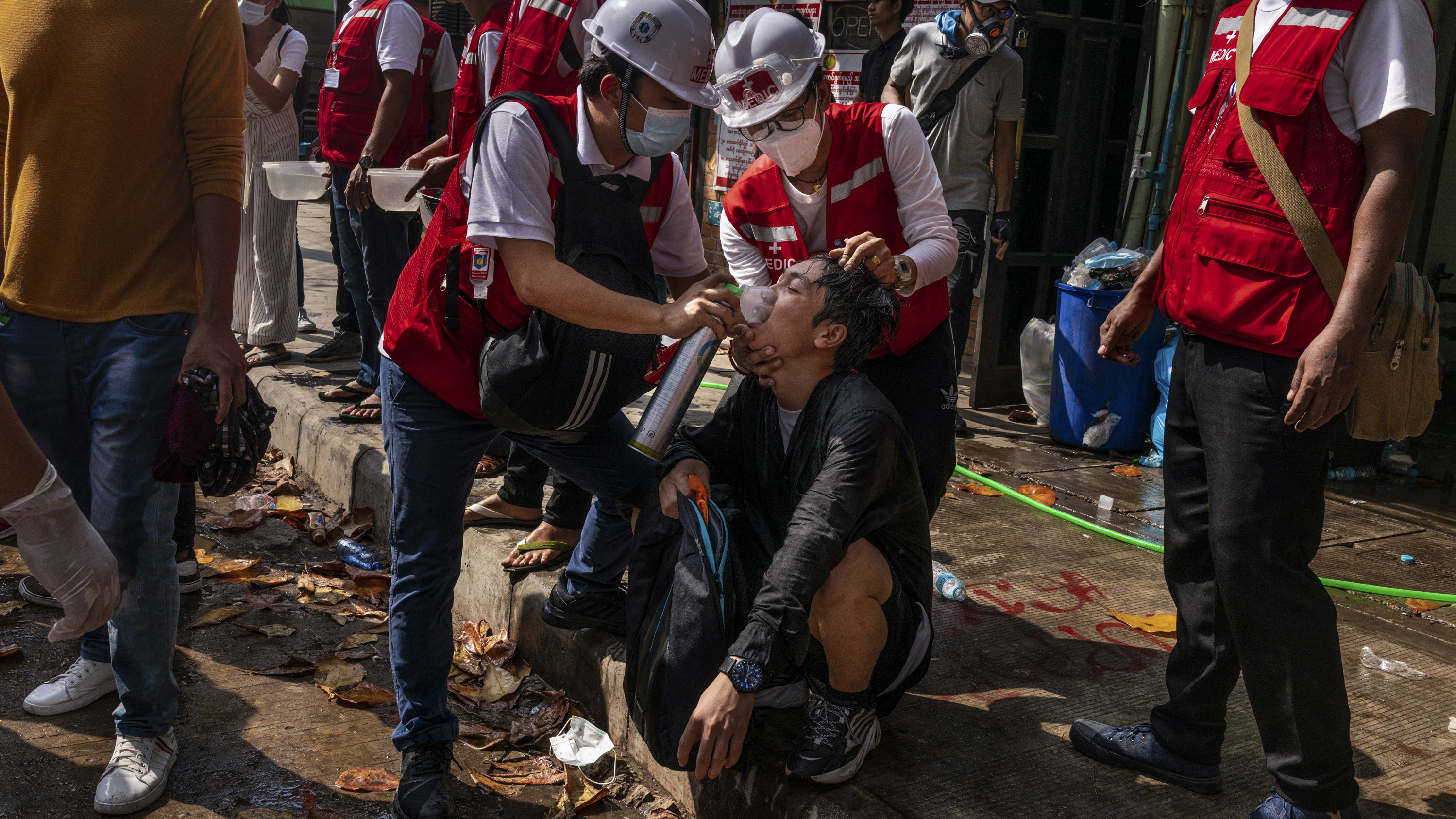
In Yangon, a widely circulated video taken from a security camera showed police in the city brutally beating members of an ambulance crew — apparently after they were arrested.
Police can be seen kicking the three crew members and thrashing them with rifle butts.
Security forces are believed to single out medical workers for arrest and mistreatment because members of the medical profession launched the country's civil disobedience movement to resist the junta.
In Mandalay, riot police, backed by soldiers, broke up a rally and chased around 1,000 teachers and students from a street with tear gas as gun shots could be heard.
Video from the AP showed a squad of police firing slingshots in the apparent direction of demonstrators as they dispersed.'
Wellington City Council proposes one-off rates increase of 13.5 per cent
By Harry Lock of RNZ Wellington City Council has finalised its budget for the next 10 years, proposing a rates increase next year of 13.53 per cent, and an average increase of 5.77 per cent over the next decade.The marathon…
Brittany Higgins' lawyers demand apology over 'lying cow' comment
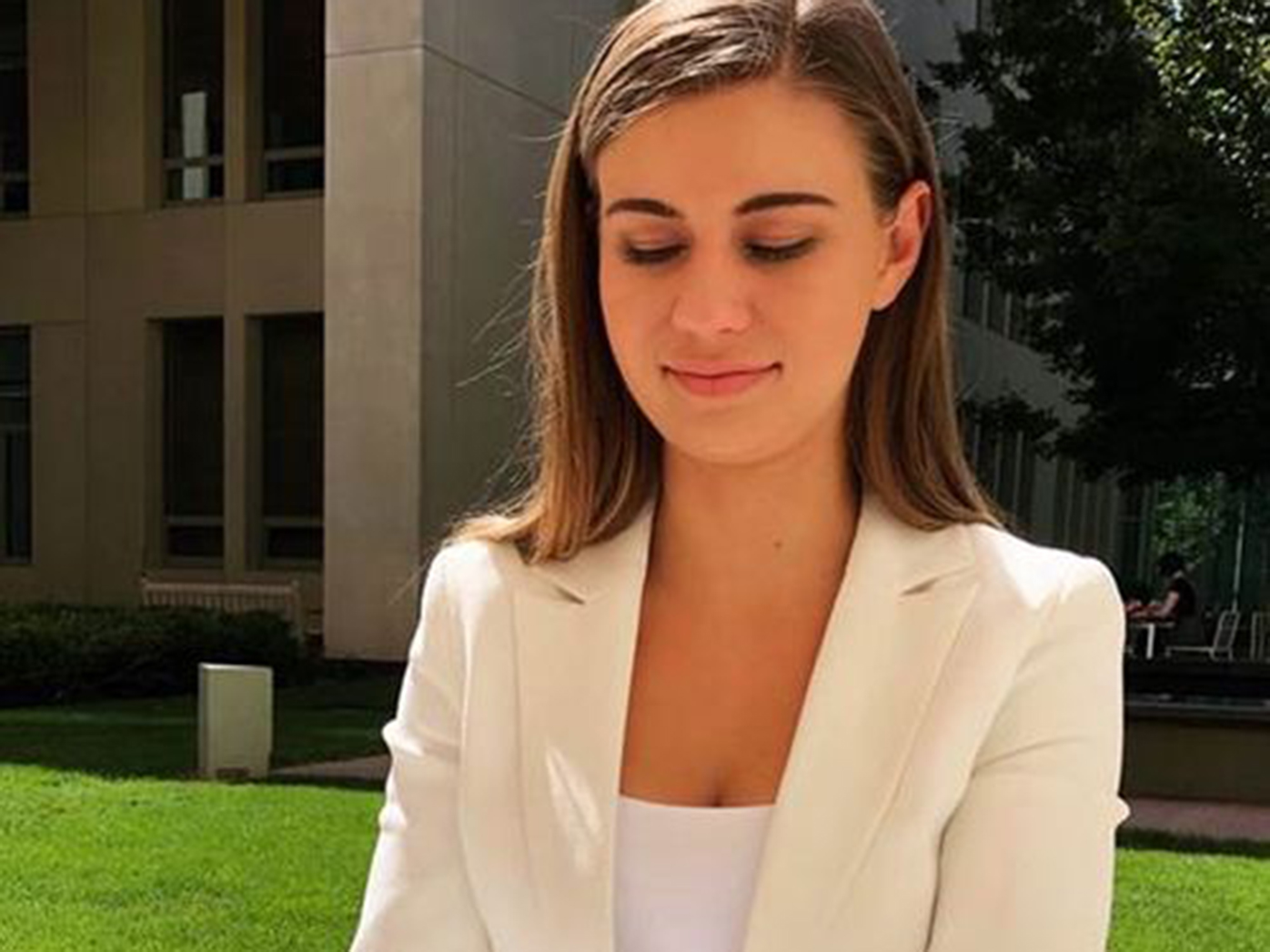
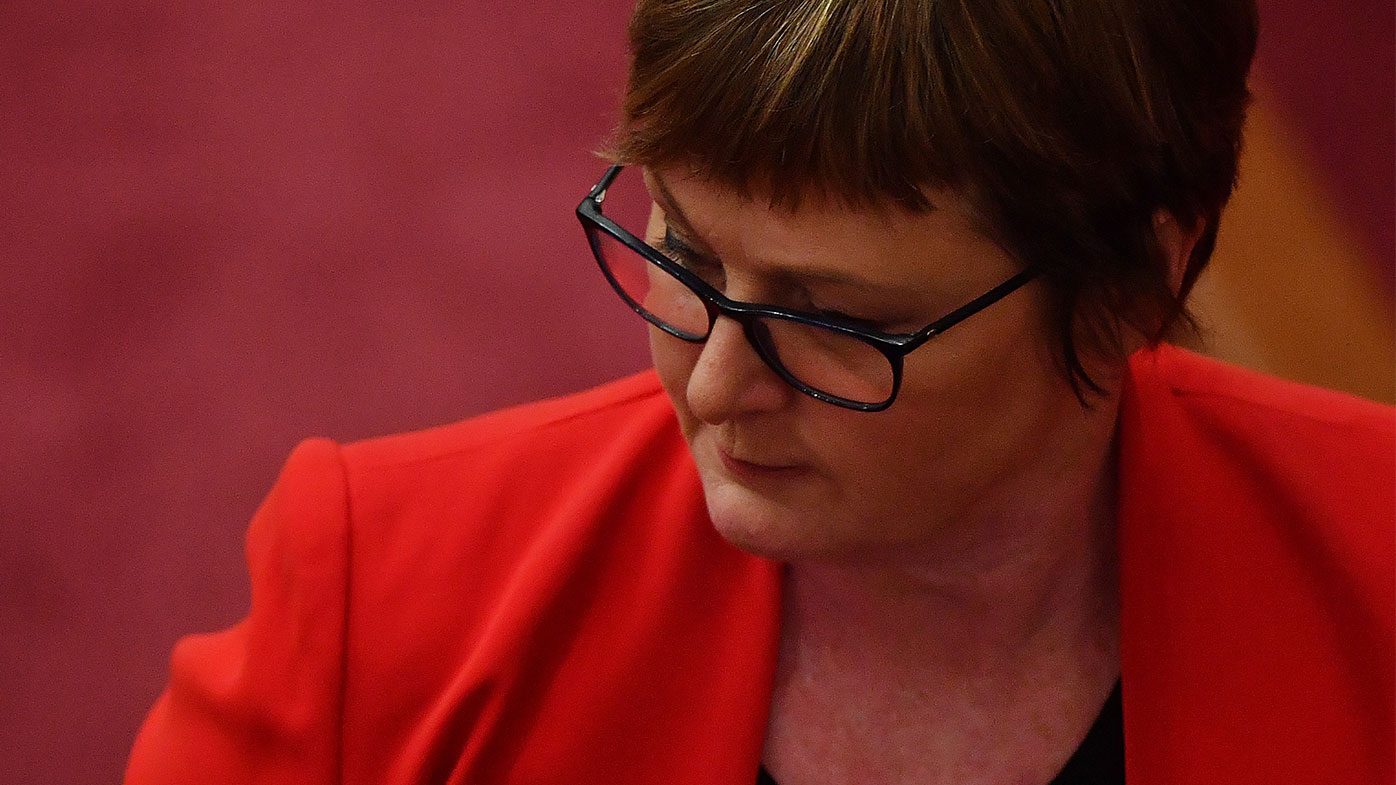
Brittany Higgins has demanded an apology from Defence Minister Linda Reynolds after reports the minister called her a "lying cow".
Ms Higgins, a former Liberal staffer, came forward last month with allegations she was raped in Senator Reynolds' office by a colleague in 2019.
Today, The Australian reported the defence minister, who is currently on medical leave, made the remark in front of staffers on the day Ms Higgins went public with her allegations.
Now, a law firm representing Ms Higgins has issued a demand for "an immediate and unequivocal public withdrawal of (Ms Reynolds') comments and (an) apology to our client for the hurt and distress caused".
The letter reads: "The demeaning and belittling statement, in which you refer to our client as a member of the animal kingdom and declare her to be untruthful, is highly defamatory of our client's good character and unblemished reputation."
The firm, Company (Giles) said the letter constituted a "Concerns Notice" under defamation legislation.
A Concerns Notice is a communique sent to a person who has made allegedly defamatory statements, prior to commencing legal proceedings for defamation.
Ms Higgins earlier today issued a statement saying Ms Reynolds' comments were evidence of a "toxic culture" in Parliament House.
"I appreciate that it has been a stressful time but that sort of behaviour and language is never excusable," she said.
In a statement earlier today, Senator Reynolds did not dispute using the term, but sought to clarify the context of the comment.
"I have never questioned Ms Higgins' account of her alleged sexual assault and have always sought to respect her agency in this matter," she said.
"I did however comment on news reports regarding surrounding circumstances that I felt had been misrepresented.
"I have consistently respected Ms Higgins' agency and privacy and said this is her story to tell and no one else's."
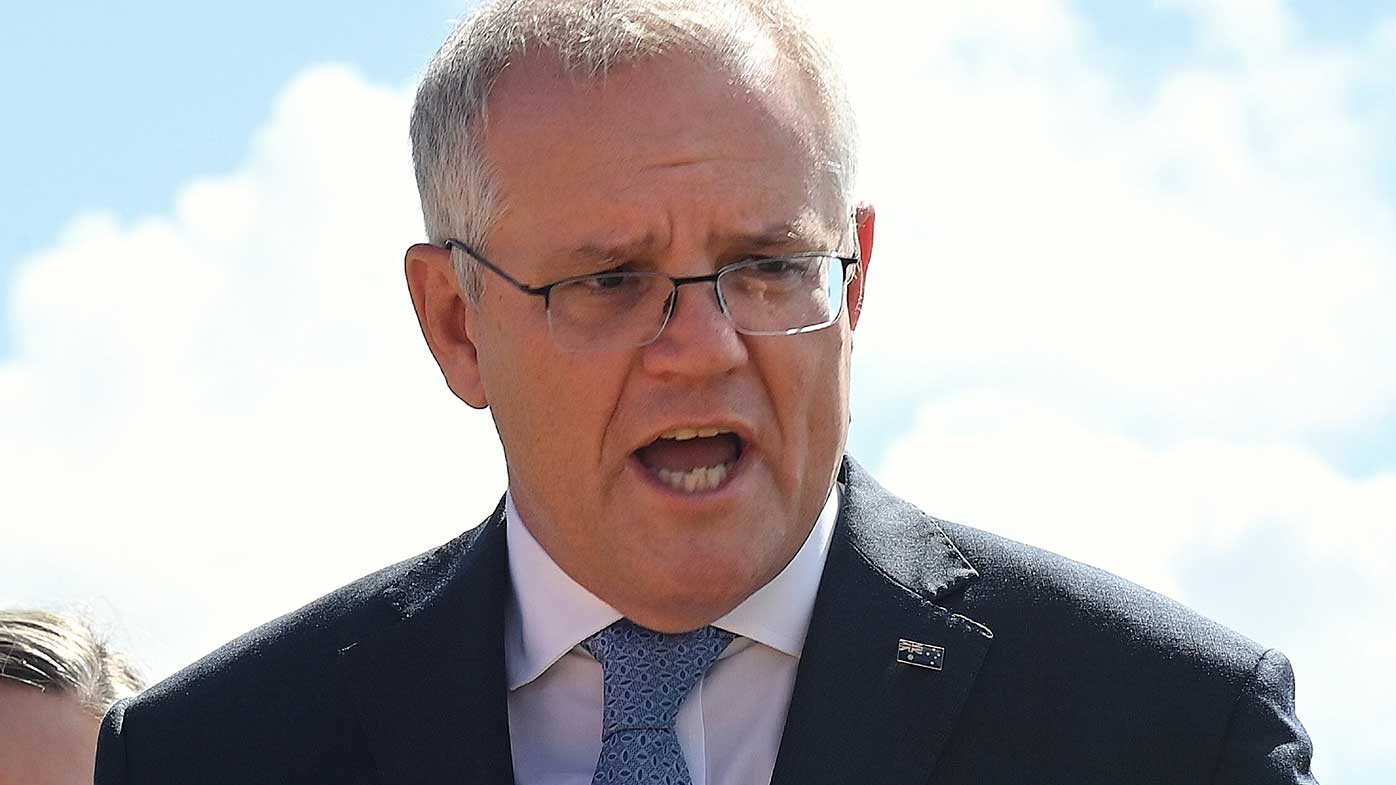
Prime Minister Scott Morrison earlier condemned the remarks but defended Senator Reynolds, saying she regrets the comments and the last few weeks had been "traumatic" for many people, resulting in high tensions.
"She has deeply regretted them, she made them in a private office," Mr Morrison said.
"She immediately apologised."
Man charged over Christchurch massacre anniversary terror threats
A 27-year-old man has been charged after he allegedly made a series of online posts threatening a terror attack in Christchurch involving car bombs on March 15, the second anniversary of the mosque massacre.
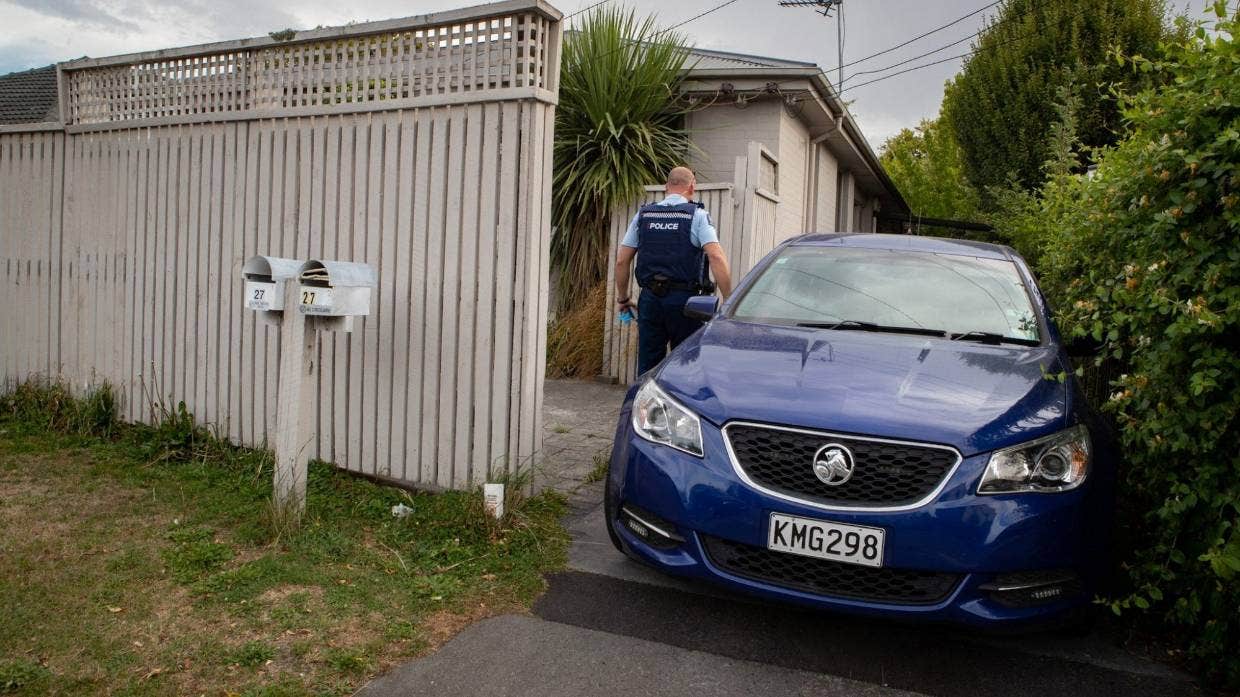
Members of the armed offenders squad raided properties in St Albans and Linwood shortly before 6pm on Thursday.
Two men were arrested.
READ MORE: How Australian terrorist prepared for Christchurch mosque attack
Police later confirmed a 27-year-old man had been charged with threatening to kill.
He would appear in the Christchurch District Court on Friday morning.
Further charges against the man were being considered, police said.
The other man was released without charge.
Detective Inspector Michael Ford earlier said police searched the two properties after receiving information from a member of the public regarding "concerning communications on the 4chan site".
4chan is an anonymous online message board known to be frequented by far-right individuals.
On Sunday night, a person made a series of posts on the site using a similar online name to that used by the Australian terrorist who fatally shot 51 people at two Christchurch mosques on March 15, 2019.
The person said they were "originally English", but grew up in South Africa before moving to New Zealand in 2009.
They said they planned to "take action" on March 15 by carrying out an attack remotely on the two mosques using car bombs.
The explosions would be livestreamed, the person said.
READ MORE: Christchurch terrorist could only have been stopped 'by chance'
Others on the message board told them not to do anything "stupid or radical".
Canterbury district commander Superintendent John Price described the threat, which police received via anonymous tip line Crimestoppers, as "medium level".
It was "credible enough that we took action straight away", Price said.
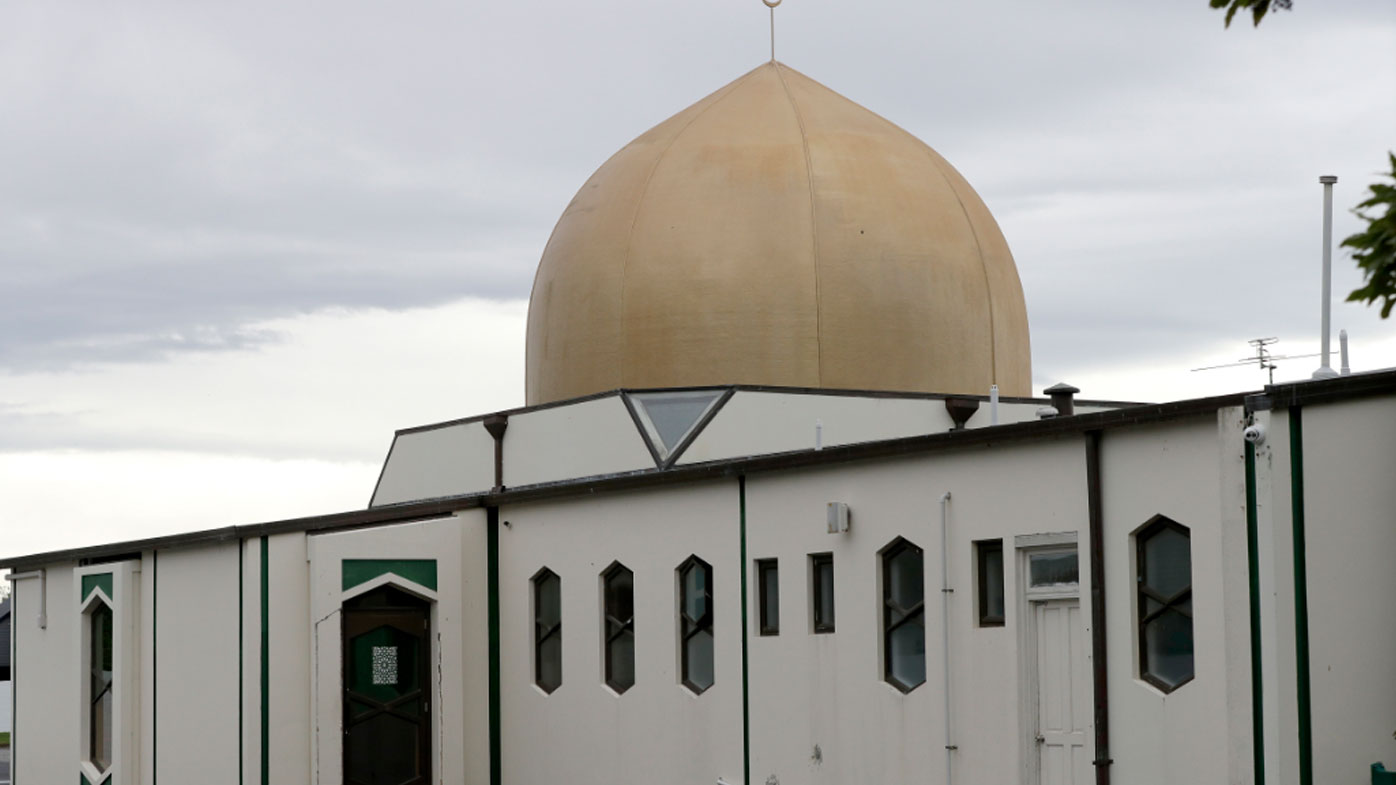
It is understood police visited the Christchurch mosques after learning of the online threats and searched them for bombs. Nothing of interest was found.
Price urged people to be vigilant in the lead up to March 15 and report any concerning behaviour immediately.
"Any messages of hate or people wanting to cause harm in our community will not be tolerated – it's not the Kiwi way."
READ MORE: Christchurch mosque gunman sentenced to life without parole
Linwood Masjid Imam Abdul Lateef said it was "sad to hear" there were people trying to scare the community.
He thought people would not be worried though as they would not take the threat seriously.
"We rely on NZ police to protect us, and they are doing the best they can do," he said.
A neighbour told Stuff she met a man who lived at the property a few days ago. He told her he had only just moved into the area, she said. She was shocked to hear why police were at the house.
The Australian terrorist, now aged 30, was last year jailed for life without the possibility of parole after he pleaded guilty to 51 charges of murder, 40 charges of attempted murder and a charge of committing a terrorist act.
This story originally appeared on Stuff NZ and has been republished with permission.
Mejid Hamzy's mother says her son was 'only good'
The mother of Brothers for Life founder Bassam Hamzy braces each time she answers the door of her Auburn home.
It's here Lola Hamzy has been shot at, collapsed at the news of her murdered son, and learned about the arrests of her other two sons.
This week Ms Hamzy bravely answered the door and was again reduced to tears after learning of news she didn't expect; but this time is was welcomed.
READ MORE: Police release CCTV of person of interest in fatal shooting of Mejid Hamzy

"I'm so happy, I'm so happy, this is really good," Ms Hamzy said as she was told police were turning up the heat on the killers responsible for her son's execution.
Mejid Hamzy was executed on the driveway of his Condell Park home in October last year by two masked gunmen.
"It was his 44th birthday last week, I miss him every day, I can't forget him — just last night he came to me in my dreams.
"He was an honest man, a family man, and he was good. Everyone brings up my other son Bassam … it's not right."
Bassam Hamzy is one of the country's most notorious criminals, jailed for life in 2002 for a shooting murder at a Sydney nightclub in 1998.
He was also convicted for conspiring to murder a witness due to give evidence against him.
Ms Hamzy says Mejid was "only good" and worked at Flemington Markets while raising four orphaned children with his wife.
This week NSW Police criminal group detectives released CCTV of two hitmen in black, which showed them running towards Mejid outside his Simmat Avenue home at 8am on October 19.
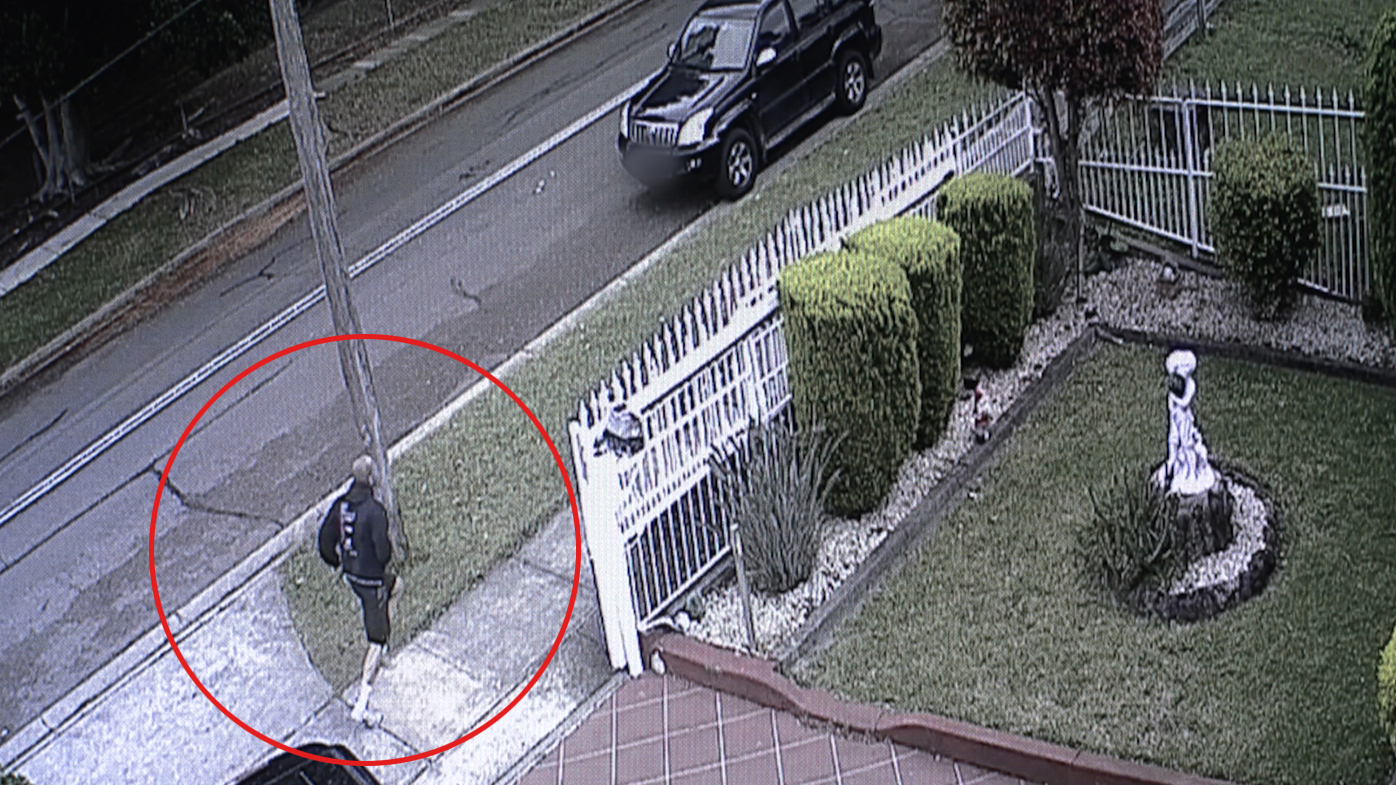
They also released images of the men driving a black Mercedes with partial number plate EHV, seen in the Moorebank area 20 minutes after the murder.
Police say there are many possible motives and can't rule out an ongoing feud they believe continues between the Hamzys and the Alameddines, a rival crime family.
"We know some of them are feeling the pressure and we will continue (to) make their life difficult," Criminal Group squad boss Superintendent Rob Critchlow told media this week.
"Regardless of what people think about the participants in these conflicts, the people that have been murdered leave behind family that love them; Mejid was killed on the doorstep of his home."
Ms Hamzy strenuously denies her family is engaged in a conflict with the Alameddines.
"We don't have nothing against the Alameddines, nothing going on between us; we never said the Alameddine family killed my son," Ms Hamzy told 9News as she sat on a couch in her living room.
By her side was her daughter Mejida, who says she cannot why anyone would want to murder her brother.
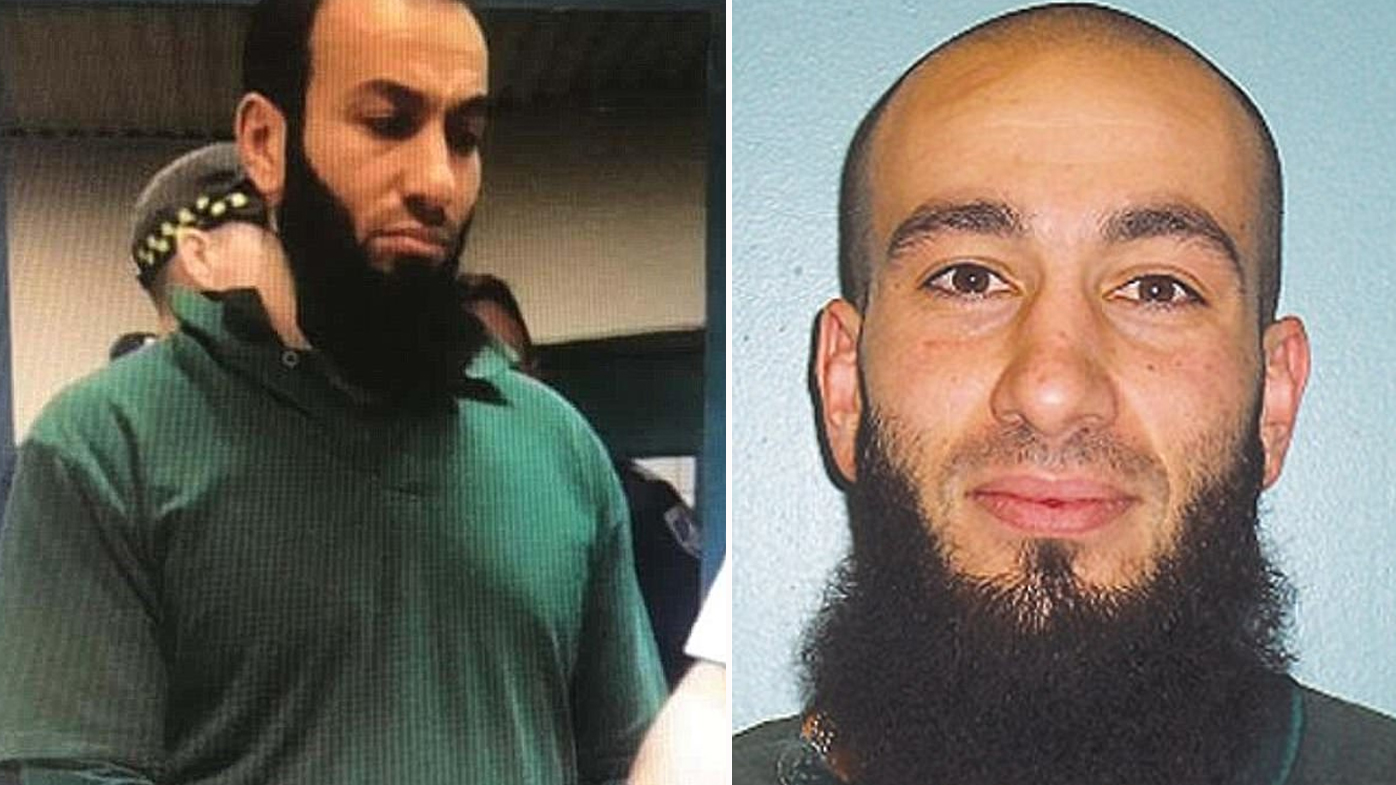
She last saw him three days before he was killed, when he dropped in at his mother's house on his way home from the gym.
"I think it was a shock to everybody because Mejid was not part of that lifestyle at all," she said.
"He was never a violent person, he helped everyone in the family and was a peacemaker.
"Mejid had not spoken to Bassam for 15 years – he wasn't allowed to anyway – and everyone keeps linking them."
Ms Hamzy survived after being shot in the stomach after her home was fired at several times in 2014.
But she struggling to survive the loss of Mejid.
"I still don't believe it, I still ask myself, 'why?'"
Despite her family's chequered history with police, Ms Hamzy says she trusts the detectives will catch her son's killers.
"They are doing good; they are doing a good job.
"I hope [the killers] get punished just like what happened to my son, that's what I wish," she said.
Auckland Mayor Phil Goff says mana whenua consulted in Erebus Memorial
Auckland Mayor Phil Goff says full consultation was made with iwi and mana whenua as protesters occupy the pā site of Mataharehare where an Erebus memorial is planned. Occupants who oppose the memorial at Auckland’s Dove-Myer…
Man charged with threatening to kill over messages about Christchurch mosques
A man has been charged with threatening to kill over messages posted online about attacking mosques ahead of the anniversary of the Christchurch terror attack. The 27-year-old man is due to appear in Christchurch District Court…
Auckland councillor highlights urban sprawl concerns in letter to minister
Auckland councillor Chris Darby says a Government proposal to help protect prime horticultural land in areas like Pukekohe from urban sprawl could clash with its plans to increase the supply of housing and urban development.The…
How the 'cold blob' is slowing down our oceans – and what it means
The "cold blob" sounds like a rejected monster from a 1950s horror show – but new research shows it could be bringing some very scary climate changes indeed.
The world's major ocean currents are slowing down, and though the consequences will not be as immediate or dramatic as in Hollywood fiction, there are real-world impacts for global weather patterns and sea levels.
The slowdown of ocean circulation is directly caused by warming global temperatures and has been predicted by climate scientists.
READ MORE: Polar vortex breaks away from Arctic Circle
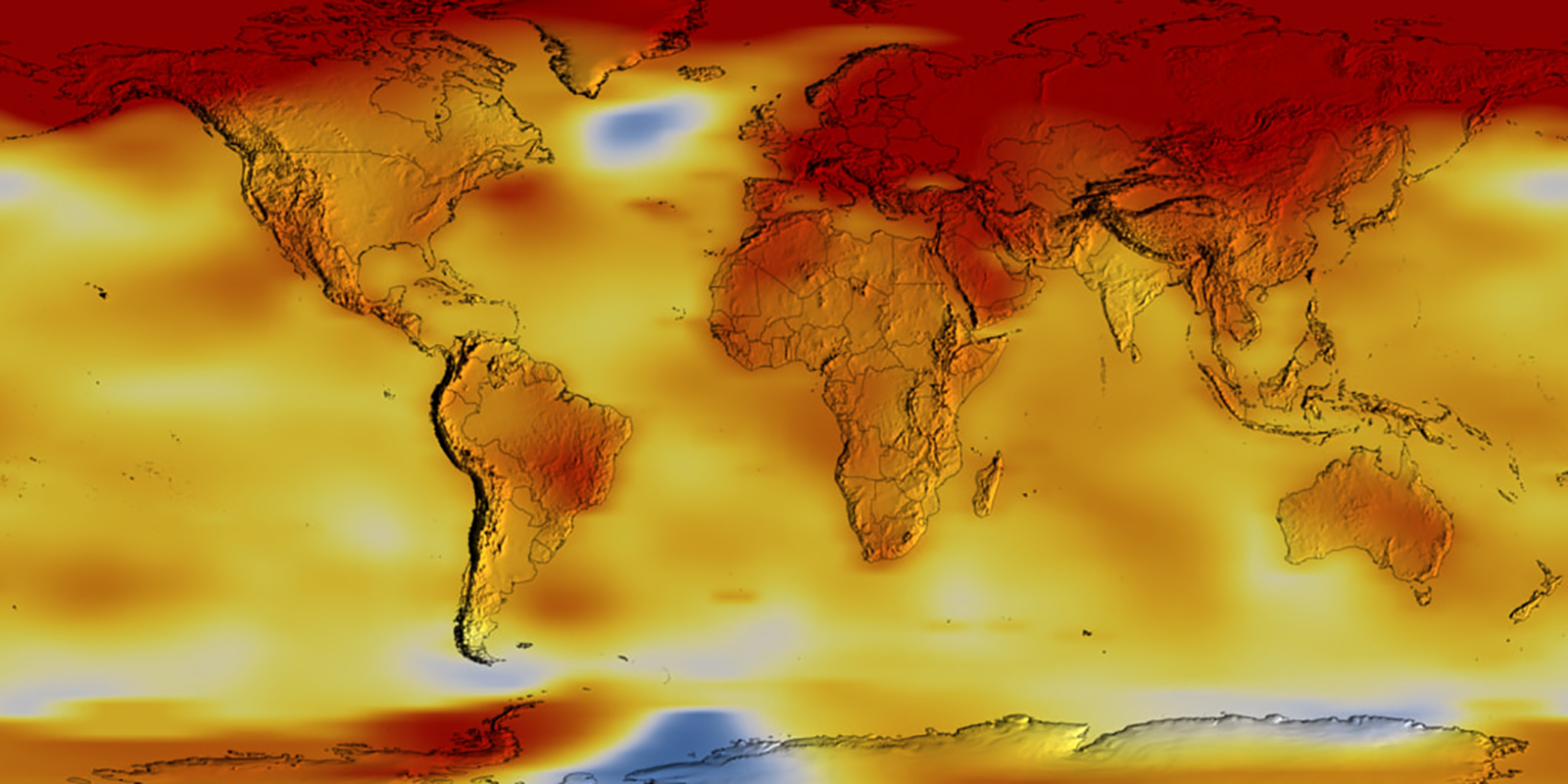
"This has been predicted, basically, for decades that this circulation would weaken in response to global warming. And now we have the strongest evidence that this is already happening," said Stefan Rahmstorf of Potsdam University, who contributed to this research.
The Atlantic Meridional Overturning Circulation (AMOC) transports water across the planet's oceans, including the Atlantic, Pacific and Indian. The region contributing to the slowdown is the North Atlantic, according to the research.
"If this Atlantic overturning circulation breaks down all together, this will lead to a strong cooling around the northern Atlantic, especially into Europe, into the kind of coastal areas (of) Britain and Scandinavia. But that's only true if the overturning breaks down all together," Rahmstorf said.
READ MORE: Iceberg bigger than New York City broke off Antarctic ice shelf
In this part of the ocean, the Greenland ice sheets are melting, contributing to both a rise in sea levels and serving to reduce the speed of the circulation.
"This indicates that the slowdown is likely not a natural change but the result of human influence. The AMOC has a profound influence on global climate, and particularly in North America and Europe, so this evidence of an ongoing weakening of the circulation is critical new evidence for the interpretation of future projections of regional and global climate," said Andrew Meijers, deputy science leader of polar oceans at British Antarctic Survey.
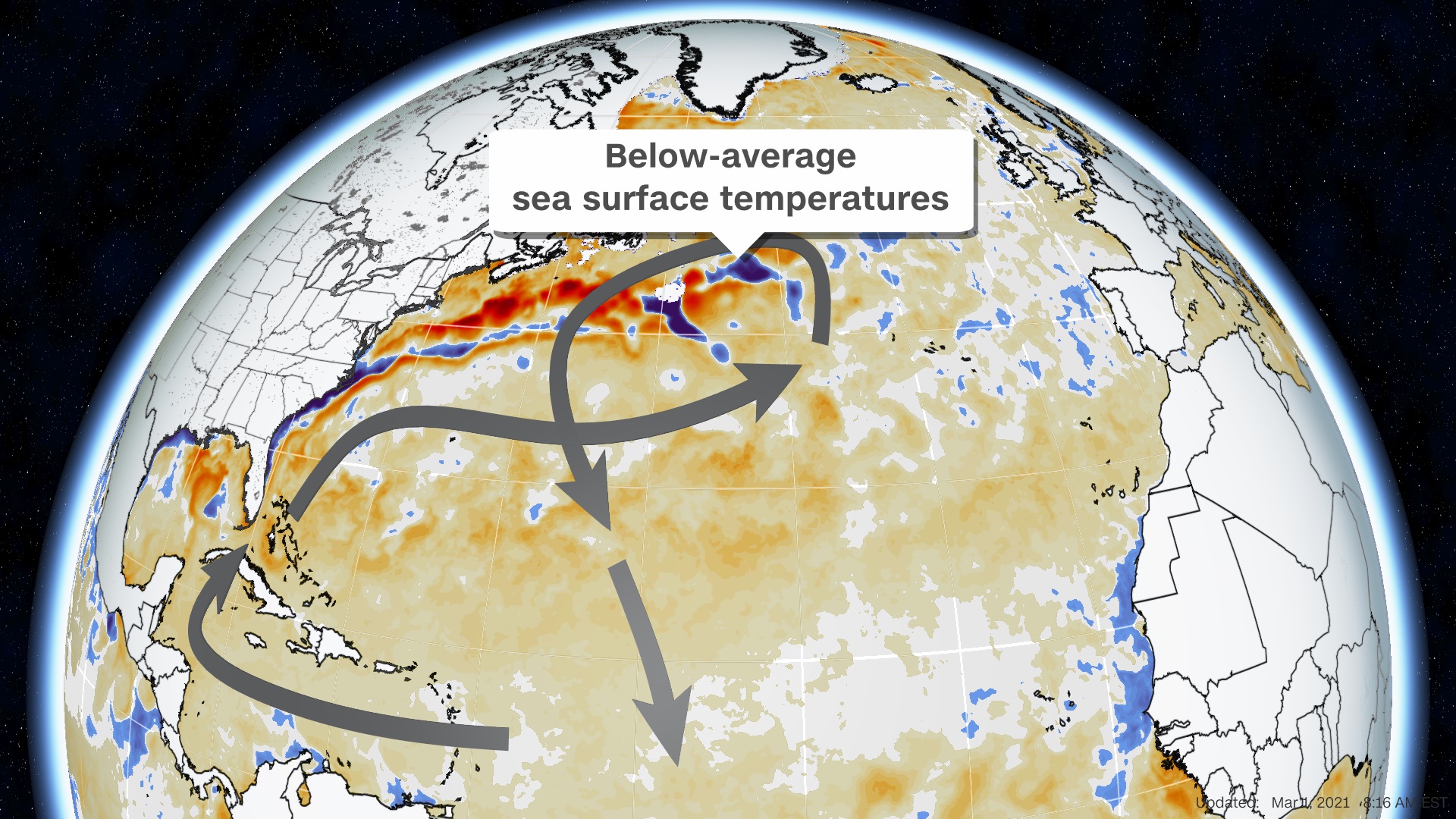
Ice melting in Greenland and the heavy rainfall over the North Atlantic induced by climate change has affected the salinity and density of the waters, Rahmstorf explained.
"Both surface warming and the increased water cycle, increased rainfall and the ice melt are all a consequence of global warming" across parts of the North Atlantic Ocean, he said.
READ MORE: Why snow storms are smashing the northern hemisphere
As warm water currents move north, they typically turn back south as it gets cooler and heavier. Added freshwater from the melting ice is causing this turn to be slower because of reduced salinity.
"This weakening also leads to cold in the northern Atlantic, but it's confined to the ocean. This cold blob, as we call it, is over the ocean, and it doesn't touch on land areas," said Rahmstorf.
Current estimates show this weakening is moderate, at about 15 percent weaker compared to normal and based on data analyzed up from to 1600 years ago.
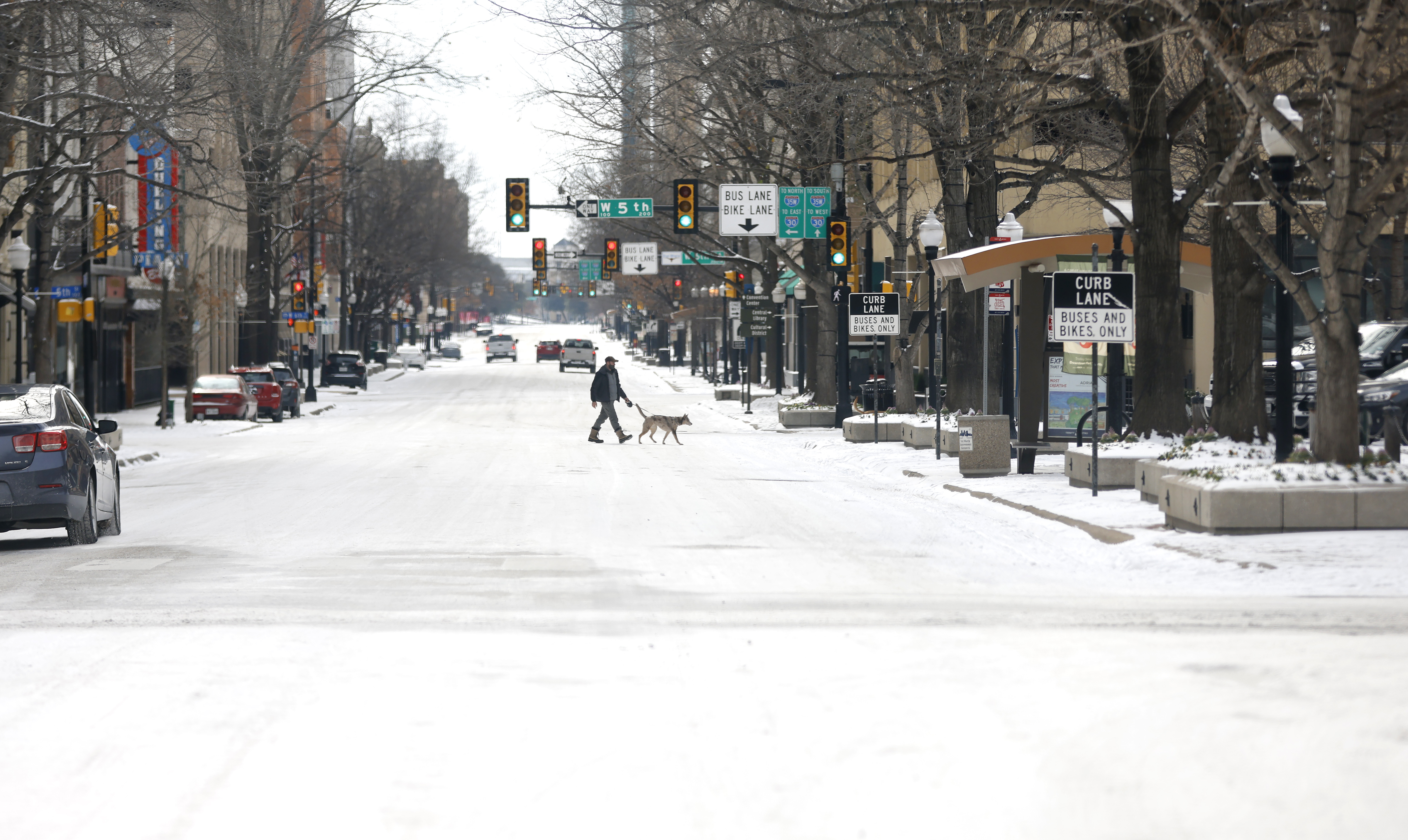
US East Coast to see higher sea levels
One of the main impacts of the slowing ocean circulation is on sea levels, especially those of the US East Coast.
"The northward surface flow of the AMOC leads to a deflection of water masses to the right, away from the US East Coast. This is due to Earth's rotation that diverts moving objects such as currents to the right in the Northern Hemisphere and to the left in the Southern Hemisphere. As the current slows down, this effect weakens and more water can pile up at the US East Coast, leading to an enhanced sea-level rise," said Levke Caesar, one of the authors of the report.
Sea-level rise is already happening due to factors like melting ice sheets and warming oceans. According to the National Oceanic and Atmospheric Administration (NOAA), water levels have risen by eight to nine inches (20-22.8cm) on average within the past 140 years.
READ MORE: Photos taken 30 years apart reveal glacier's alarming retreat
The rate at which these waters are rising has also increased in recent years.
"The pace of global sea-level rise more than doubled from 1.4mm per year throughout most of the twentieth century to 3.6mm per year from 2006-2015," said NOAA.
A further slowdown of global ocean circulation, especially along the crucial Gulf Stream current off the eastern coastline of the US, could combine with the already accelerating sea-level rise to make major Northeastern cities even more vulnerable to flooding.

Hotter heat waves, stronger hurricanes
Global weather patterns are critically linked with the ocean circulations and their transport of heat and nutrients around the planet.
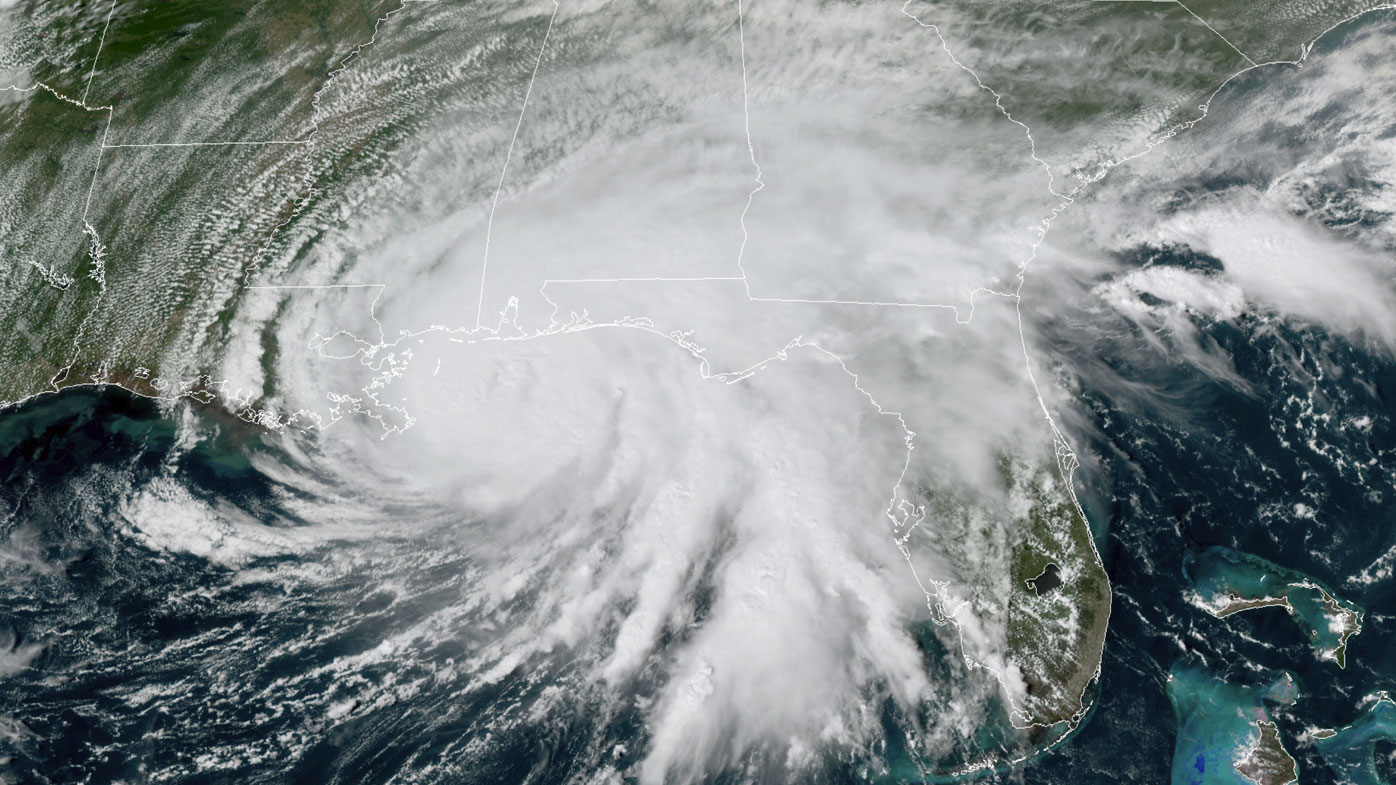
An increase in heat waves across Europe and stronger hurricanes closer to the US coastline because of warmer water drifting closer to the coast can be linked to the ocean circulation, Rahmstorf said.
"The world's seven warmest years have all occurred since 2014, with 10 of the warmest years occurring since 2005," said NOAA. Heat waves are becoming more frequent already.
The ocean and the currents also play a role in absorbing carbon dioxide, the most dominant greenhouse gas, from the atmosphere. The changing currents could decrease the amount of carbon being taken out of the atmosphere, according to NASA.
In addition to people being affected, the marine biology population is also at risk.
Marine organisms "very strongly depend on these ocean currents, which basically set the conditions for the whole ecosystem in terms of nutrient supply, temperature, and salinity conditions," Rahmstorf said.
When asked whether the AMOC could slow down further or even stop, Rahmstorf said climate models suggest currents will slow down to between 34 percent and 45 percent by 2100.
"Despite a lot of research over the last decade on this, it's very hard to pin down quantitatively, how far away is this tipping point. But the kind of model simulations that I know suggest that if you weaken this circulation by roughly half, you're getting into a critical state. And so this could well … happen by the end of the century," Rahmstorf said.
"We should (strive to) stay well clear of that tipping point because the consequences if the circulation would break down all together would be really dramatic."