All posts by FreeNews

Haiti Jail Break: 8 Dead, Including Prison Director

CROIX-DES-BOUQUETS, Haiti (AP) — A prison director was among at least eight people killed Thursday after several inmates tried to escape from a prison in Haiti’s capital, a police officer and witnesses said.

The incident occurred in northeast Port-au-Prince at the Croix-des-Bouquets Civil Prison, which was built by Canada in 2012 and is known for a 2014 breakout in which more than 300 inmates escaped.

Residents in the area who declined to be identified out of concern for their safety told The Associated Press that they observed a group of heavily armed men start shooting at prison guards before the inmates began to flee.

Gunshots could still be heard from within the prison several hours after the shooting began.

The police officer who confirmed the killing of the prison director to the AP, and declined to be identified because he was not authorized to speak to the media, said authorities were preparing to raid the prison and described the inmates as armed and dangerous.

At the time of the 2014 breakout, the prison held 899 inmates, some 130 over its capacity.

During Thursday’s incident, one escapee, 37-year-old Jhon Hippolyte, was shot in the back. He told the AP that he was serving a sentence for murder and was in the infirmary when he noticed everybody running and decided to join them.

AP journalists saw the bodies of at least seven men along streets near the prison. They had been shot. Their identities were not immediately available, and it wasn’t clear if they were inmates or who had killed them.

Video captured by residents shows one police officer leading a group of men tied together with a rope. It wasn’t immediately clear if they were inmates.

Authorities could not be immediately reached for comment.

The post Haiti Jail Break: 8 Dead, Including Prison Director appeared first on The St Kitts Nevis Observer.

Brazil: Virus Deaths Top 250,000, Pandemic Out of Control

RIO DE JANEIRO (AP) — Brazil’s COVID-19 death toll, which surpassed 250,000 on Thursday, is the world’s second-highest for the same reason its second wave has yet to fade: Prevention was never made a priority, experts say.

Since the pandemic’s start, Brazil’s President Jair Bolsonaro scoffed at the “little flu” and lambasted local leaders for imposing restrictions on activity; he said the economy must keep humming along to prevent worse hardship.

Even when he approved pandemic welfare payments for the poor, they weren’t announced as a means to keep people home. And Brazilians remain out and about as vaccination has started up — but rollout has proven far slower than was anticipated.

“Brazil simply didn’t have a response plan. We’ve been through this for the last year and still we don’t have a clear plan, a national plan,” Miguel Lago, executive director of Brazil’s Institute for Health Policy Studies, which advises public health officials, told the Associated Press. “There’s no plan, at all. And the same applies to vaccination.”

Whereas other countries’ daily cases and deaths have fallen, Latin America’s largest nation is parked on an elevated plateau — a grim repeat of mid-2020. In each of the last five weeks, Brazil has averaged more than 1,000 daily deaths. Official data showed a confirmed death toll total of 251,498 on Thursday.

At least 12 Brazilian states are in the midst of a second wave even worse than the one faced in 2020, said Domingos Alves, an epidemiologist who has been tracking COVID-19 data.

“This scenario is going to get worse,” Alves told the AP, adding that the virus was spreading faster among the population. In Amazonas state, where the capital, Manaus, saw hospitals run out of oxygen last month, there have been more than 5,000 deaths in the first two months of the year, about as many as in all of 2020.

“It is the most difficult moment that we have had since the confirmation of the first case,” Carlos Lula, chair of the National Council of Health Secretaries, was quoted as saying Thursday by O Globo newspaper. ”We have never had so many states with so much difficulty at the same time.”

Alves and other public health experts said the spread is exacerbated by authorities’ reluctance to follow recommendations from international health organizations to implement stricter restrictions.

It is up to governors and mayors to impose lockdowns or other restrictions to contain the virus. The states of Sao Paulo and Bahia recently introduced nighttime curfews, but experts say the moves are too late and insufficient.

“They are not containment measures; they are palliative measures, always taken after the fact,” said Alves, who is also an adjunct professor of social medicine at the University of Sao Paulo. “‘Lockdown’ has become a curse word in Brazil.”

Miguel Nicolelis, a prominent Brazilian neuroscientist, warned in January that Brazil had to either enter lockdown or “we won’t be able to bury our dead in 2021.” He had been advising northeastern states on how to combat COVID-19, but recently left his position, dissatisfied with their refusal to go into lockdown, the Folha de S.Paulo newspaper reported.

“Right now, Brazil is the largest open-air laboratory, where it is possible to observe the natural dynamics of the coronavirus without any effective containment measure,” he wrote on Twitter on Tuesday. “Everyone will witness the epic devastation.”

There are some exceptions, but they remain marginal and have failed to inspire a broader movement.

Sao Luis, capital of northeastern Maranhao state, was the first Brazilian city to go into full lockdown last May. It was successful, notwithstanding Bolsonaro’s efforts to undermine the restrictions and sow doubt about their efficacy, according to the state’s governor, Flávio Dino.

“It has been very difficult to manage distance and prevention measures,” Dino said, adding that the first obstacle was an economic and social one, especially after the federal government’s emergency pandemic aid program ended last year.

Lago noted that Bolsonaro rarely even comments on the pandemic anymore, and has effectively moved on to other priorities, including securing support in Congress for loosening gun control laws and passing economic reforms. His administration is seeking to reinstate some COVID-19 welfare payments, but for a smaller group of needy Brazilians.

The only preventative measure Bolsonaro consistently supported was the use of treatments like hydroxychloroquine, which showed no benefit in rigorous studies.

Bolsonaro’s administration has also adopted a hands-off approach regarding the vaccination campaign. It relied mostly on a deal to purchase a single vaccine, AstraZeneca, which has been slow in coming. The national immunization effort to date has relied mostly on Chinese-made CoronaVac shots secured by Sao Paulo state, though the federal government is now trying to buy others.

Brazil’s decades of experience with successful vaccination programs and its large nationwide public health care network led many experts to believe that immunization — even if it were to start with a delay — would be a relatively speedy affair. In previous campaigns, the nation of 210 million was able to vaccinate as many as 10 million people in a single day, health experts noted.

Five weeks after the first shot, Brazil has vaccinated only 3.6% of its population. That is more than double Argentina and Mexico, but less than one-fourth that of Chile, according to Our World in Data, an online research site that compares official government statistics.

“There is no way to be fast with a shortage of vaccines; that is the crucial point,” said Carla Domingues, who for eight years coordinated Brazil’s national vaccination program, until leaving her position in 2019. “Until there is greater supply, the speed will be slower, as you have to keep selecting who can be vaccinated.”

Meantime, the virus continues to run rampant across Brazil, and take its toll.

In the Sao Paulo state city of Araraquara there have been more deaths so far this year than all of last year and intensive-care unit occupancy surpassed full capacity, with people on waiting lists to enter ICUs and get treatment. Local authorities responded Sunday by announcing a full lockdown — making Araraquara only the second city to impose such a restriction.

“We never imagined we would reach this point,” said Fabiana Araújo, a nurse and a coordinator of the city’s committee to fight COVID-19. “It was the only option.”

—— AP writers David Biller contributed from Rio and Mauricio Savarese from Sao Paulo.

The post Brazil: Virus Deaths Top 250,000, Pandemic Out of Control appeared first on The St Kitts Nevis Observer.

Mexico: Monarch Butterfly Population Down 26%

MEXICO CITY (AP) — The number of monarch butterflies that showed up at their winter resting grounds in central Mexico decreased by about 26% this year, and four times as many trees were lost to illegal logging, drought and other causes, making 2020 a bad year for the butterflies.

The government commission for natural protected areas said the butterflies’ population covered only 2.1 hectares (5.2 acres) in 2020, compared to 2.8 hectares (6.9 acres) the previous year and about one-third of the 6.05 hectares (14.95 acres) detected in 2018.

Because the monarchs cluster so densely in pine and fir trees, it is easier to count them by area rather than by individuals.

Gloria Tavera, the regional director of Mexico’s Commission for National Protected Areas, blamed the drop on “extreme climate conditions,” the loss of milkweed habitat in the United States and Canada on which butterflies depend, and deforestation in the butterflies’ wintering grounds in Mexico.

Illegal logging in the monarchs wintering rounds rose to almost 13.4 hectares (33 acres), a huge increase from the 0.43 hectare (1 acre) lost to logging last year.

Jorge Rickards of the WWF environmental group acknowledged the lost trees were a blow, but said “the logging is very localized” in three or four of the mountain communities that make up the butterfly reserve.

In addition, wind storms, drought and the felling of trees that had fallen victim to pine beetles or disease, caused the loss of another 6.9 hectares (17 acres) in the reserve, bringing the total forest loss in 2020 to 20.65 hectares (51 acres). That compares to an overall loss of about 5 hectares (12.3 acres) from all causes the previous year.

Tavera said the drought was affecting the butterflies themselves, as well as the pine and fir trees where the clump together for warmth.

“The severe drought we are experiencing is having effects,” Tavera said. “All the forests in the reserve are under water stress, the forests are dry.”

“The butterflies are looking for water on the lower slopes, near the houses,” she noted.

Tavera also expressed concern about the sever winter storms in Texas, which the butterflies will have to cross — and feed and lay their eggs — on their way back to their northern summer homes in coming months.

“This is a cause for worry,” Tavera said, referring to whether the monarchs will find enough food and habitat after the winter freeze.

It was also a bad year for the mountain farming communities that depend for part of their income on tourists who visit the reserves. Because of the coronavirus pandemic, visits fell from around 490,000 last year, to just 80,000 in the 2020-2021 season.

Environmentalist and writer Homero Aridjis, who grew up around the reserve, said the decline in butterflies and rise in logging was not surprising, given the reduction in Mexican government funding for protected natural areas and environmental work.

“While the reserves were closed to tourism during practically the whole (winter) season, the way was open for loggers, with no control,” Aridjis said. “The question is, can the monarch migration survive this environmental negligence?”

The U.S. group Center for Food Safety called for the monarchs to be granted endangered species protection, noting “the minimum population threshold needed to be out of the danger zone of extinction is six hectares.”

It was unclear whether the drop in tourism income contributed to the increased logging. Rickards said there has long been pressure on the area’s forests from people who want to open land for planting crops.

Felipe Martínez Meza, director of the butterfly reserve, said there have been attempts to plant orchards of avocados — hugely profitable crop for farmers in the area — in the buffer zones around the reserve.

The high mountain peaks where the butterflies clump in trees are probably a bit above the altitude where avocado trees like to grow, Martinez Meza said. But the buffer zones provide protection and support for the higher areas, and he said more must be done to combat the change in land use.

Frequently, illegal logging is carried out by outsiders or organized gangs, and not by the farm communities that technically own the land.

Millions of monarchs migrate from the U.S. and Canada each year to forests west of Mexico’s capital. The butterflies hit a low of just 0.67 hectares (1.66 acres) in 2013-2014.

Loss of habitat, especially the milkweed where the monarchs lay their eggs, pesticide and herbicide use, as well climate change, all pose threats to the species’ migration.

While there was plenty of bad news for the butterflies — very few showed up to some historic wintering sites like Sierra Chincua — there was the welcome news that a new wintering site was discovered nearby, in a mountaintop near the Lagunas de Zempoala protected area, near Mexico City.

Tavera said the wintering site had always been there, but was so difficult to reach that it wasn’t discovered until earlier this month.

The post Mexico: Monarch Butterfly Population Down 26% appeared first on The St Kitts Nevis Observer.

Associated Press World View:US Bombs Syria, Vaccine Passports,Volcano Erupts

Feb 26, 2021

Alternate text

AP MORNING WIRE

  • US bombs facilities in Syria used by Iran-backed militia.
  • Vaccination ‘passports’ may open society, but global inequity looms.
  • Exclusive: Some local GOP leaders fire up base with conspiracies, lies. 
  • Italy’s Mount Etna puts on its latest spectacular volcanic show.

Today is my last edition of the Morning Wire. Look out for news Monday about an engaging new format in which various colleagues in different parts of the world will take the helm. After a year of unparalleled modern-day global tumult in a pandemic, we thank you for reading. Be well and stay safe.

TAMER FAKAHANY
DEPUTY DIRECTOR – GLOBAL NEWS COORDINATION, LONDON

The Rundown

Alternate text

AP PHOTO/ALEX BRANDON

US bombs facilities in Syria used by Iran-backed militia groups in response to rocket attacks in Iraq; US ties with Saudis at stake as US releases findings on Khashoggi killing

The Biden administration has carried out its first military action with airstrikes in Syria, targeting facilities near the Iraqi border used by Iranian-backed militia groups.

The Pentagon said the strikes were retaliation for a rocket attack in Iraq earlier this month that killed one civilian contractor and wounded a U.S. service member and other coalition troops.

Every American president from Ronald Reagan onward has ordered bombardment of countries in the Middle East; Iraq, Syria, Libya and Yemen have taken the brunt.

The airstrike in Syria targeted facilities belonging to a powerful Iranian-backed Iraqi armed group, killing one of their militiamen and wounding a number of others, an Iraqi militia official told the AP today.

The official said that the strikes against the Kataeb Hezbollah militia, or Hezbollah Brigades, hit an area along the border between the Syrian site of Boukamal facing Qaim on the Iraqi side.  Qassim Abdul-Zahra in Baghdad and Lolita C. Baldor and Robert Burns in Washington have the latest developments.

The new administration, in its first weeks, has emphasized its intent to put more focus on the challenges posed by China, even as volatility and threats to U.S. military presence and interests persist in the Arab World.

But Biden’s decision to attack in Syria does not appear to signal an intention to widen U.S. military involvement in the region but rather to demonstrate a will to defend U.S. troops in Iraq.

U.S.-Saudi Relations: President Biden has spoken to Saudi King Salman for the first time since taking office more than a month ago. The conversation between the two strategic partners was overshadowed by the expected release of U.S. intelligence findings on whether the king’s son approved the killing of a U.S.-based Saudi journalist, Ellen Knickmeyer reports.

Jamal Khashoggi was a critic of Crown Prince Mohammed bin Salman’s authoritarian consolidation of power. Saudi security and intelligence agents killed him inside the Saudi consulate in Istanbul in 2018. The Saudi prince denies ordering the killing. The Biden administration has promised “accountability” in the gruesome slaying.

Alternate text

AP PHOTO/MAYA ALLERUZZO

Vaccination ‘passports’ may open society, but global inequity looms; Brazil passes 250,000 deaths; As US hospital numbers fall, fatigued staff get relief at last 

Governments around the world say getting vaccinated and having the proper documentation to prove it will smooth the way to recovery from the pandemic.

Such efforts have gotten a head start in Israel.

But that also raises the prospect of further dividing the world along the lines of wealth and access to vaccines, creating ethical and logistical issues that have alarmed decision-makers globally, Laurie Kellman reports from Tel Aviv.

An expert on global health law says that in many low-income countries, most people won’t be vaccinated for many years. Israel has enough vaccine to inoculate everyone over 16.

But even with that wealth, there’s concern about using the shots as diplomatic currency and power, further exacerbating inequality.

Brazil Death Toll: The country’s death toll has surpassed 250,000. It is the world’s second-highest after the U.S., and the virus continues to run rampant in the country. Health experts say this is because prevention was never made a priority. Brazilian President Jair Bolsonaro has called the virus a “little flu” and lambasted local leaders who imposed restrictions on activities. Experts say that at least a dozen states are in the midst of a second surge even worse than the one faced in 2020. The executive director of Brazil’s Institute for Health Policy Studies said Brazil simply didn’t have a response plan. Diane Jeantet reports from Rio de Janeiro.

U.S. Hospitals: The number of people hospitalized with COVID-19 in the U.S. has plummeted by 80,000 in six weeks, and 17% of the nation’s adult population has gotten at least one dose of vaccine. The improvements offer some relief to front-line workers. One St. Louis respiratory therapist at Mercy Hospital recalled that when virus patients were inundating the region’s hospitals, colleagues arriving for yet another grueling shift with a dwindling supply of ventilators would often glance at their assignments and cry. On his most recent shift there were only about 20 virus patients, down from as many as 100 at the peak of the surge. Heather Hollingsworth and Todd Richmond report.

Variant in NYC: Scientists have identified a mutated version of the virus spreading in New York City. Researchers this week said the new variant first appeared in the metropolitan area in late November and has since cropped up in neighboring states. Public health experts warn it’s not clear yet how problematic the variant may be and how effective vaccines will be. Experts say that public health measures like social distancing and mask-wearing are critical to stop the virus mutating and spreading, Marion Renault reports.

U.S. Economy: Democrats are ready to push a $1.9 trillion COVID-19 relief package through the House today. That win is expected despite a setback that means a minimum wage boost is unlikely to be in the final version that reaches President Biden. A near party-line vote seemed certain on the relief measure in the House. It represents Biden’s first crack at his initial legislative goal of acting decisively against the pandemic. In the year since the virus has taken hold, it has stalled much of the economy, killed half a million Americans and reshaped the daily lives of virtually everyone, Alan Fram reports.

Romania’s Crisis: It reported its first infection a year ago this week. Since then, the country’s underfunded medical system has turned its focus to treating patients with the virus. But that has left many Romanians with other health problems deprived of the critical care they need, including patients who are HIV positive or have cancer. Romania’s government has announced plans to reorganize the country’s hospitals so that more non-COVID-19 patients can get access to health care as a third surge looms.  Nicolae Dumitrache and Stephen McGrath report from Bucharest.

Asia Today: South Korea has administered its first available vaccine shots, launching a mass immunization campaign health authorities hope will restore some level of normalcy by the end of the year. Hong Kong, too, began administering its first vaccines to the public, kicking off a program offering free vaccinations to all 7.5 million of the city’s residents. In Japan, officials said enough vaccine shipments will arrive at local government offices by the end of June to inoculate the nation’s 36 million elderly people. The timeline was given after questions were raised about supplies of the imported vaccines.

More from Around the World:

  • Italy’s northern Lombardy region, where Europe’s virus outbreak erupted last year, has asked the national government for more vaccines to help stem a surge of new cases that are taxing the health system in the province of Brescia.
  • Ukraine has recorded a 50% increase in the number of daily new infections, a day after authorities launched the country’s vaccination campaign.
  • Syria’s health minister has said his government procured vaccines from a friendly country which he declined to name, adding that front-line health workers would be the first to be inoculated starting next week.
  • Bahrain has become the first nation to authorize Johnson & Johnson’s single-dose vaccine for emergency use. The announcement comes just a day after U.S regulators concluded the shot offers strong protection against severe COVID-19.
  • Two U.S. Navy warships operating in the Mideast have been affected by the coronavirus. A dozen troops aboard the USS San Diego tested positive. The commanders says that ship is at port in Bahrain. The USS Philippine Sea also has several suspected cases of the virus.
  • A resurgence of cases is hitting Somalia hard, straining one of the world’s most fragile health systems.
  • China has approved two more vaccines for wider use, adding to its growing arsenal of shots.
  • A state of emergency that was set up to curb the coronavirus in Japan will be lifted in six urban areas this weekend while staying in the Tokyo area for another week.
  • Britain’s Queen Elizabeth II is encouraging people to be vaccinated, saying the shot is quick, harmless and will help protect others against the disease.
  • England’s ethnic minority communities have higher levels of infection and lower levels of vaccine acceptance than other groups, according to a new study.
  • Cyprus will reopen high schools, gyms, pools, dance academies and art galleries on March 1 in a further, incremental easing of the country’s second lockdown.

EXPLAINER: Meet the vaccine appointment bots, and their foes.To cope with trouble booking online, some people in the U.S. have turned to bots that scan websites and send alerts when slots for vaccines open up. Bots provide relief to people struggling to score appointments. But not all public health officials are fans. Some say they give even more of an advantage to tech-savvy people. One Massachusetts clinic canceled appointments after learning that out-of-towners used a bot to scoop them up. Health officials are putting in measures to prevent the use of bots, Matt O’Brien and Candice Choi report.

Alternate text

AP PHOTO/JOHN MINCHILLO

Exclusive: Some local GOP leaders in US are firing up their base with conspiracies, lies

“Sham-peachment,” they say, and warn that “corporate America helped rig the election.” They call former president Donald Trump a “savior” who was robbed of a second term — despite no evidence — and President Joe Biden, a “thief.” “Patriots want answers,” they declare.

A faction of local, county and state Republican officials across the country is pushing lies, misinformation and conspiracy theories online that echo those that helped inspire the deadly U.S. Capitol insurrection. Garance Burke, Martha Mendoza, Juliet Linderman and Larry Fenn have this exclusive story worthy of your time.

These GOP officials’ posts are being amplified by algorithms that boost extreme content, allowing the officials to grow their bases on social media and exert outsize sway on their communities, city councils, county boards and state assemblies.

The AP reviewed social media accounts of nearly 1,000 federal, state and local elected and appointed Republican officials. The rhetoric exposes the party’s internal struggle over whether it can include traditional conservative politicians, conspiracy theorists and militias.

VIDEO: Conspiracy theories and lies drive rift within GOP. 

EXPLAINER: What were the intelligence warnings before the Capitol riot?

Alternate text

AP PHOTO/SALVATORE ALLEGRA

Italy’s Volcanic Eruptions

Mount Etna, the volcano that towers over eastern Sicily in Italy, evokes superlatives.

It is Europe’s most active volcano and also the continent’s largest.

And the fiery, noisy show of power it puts on for days or weeks, even years, every so often, is always nothing short of spectacular.

Fortunately, Etna’s latest eruption captivating the world’s attention has caused neither injuries nor evacuation.

But each time it roars back into dramatic action, it wows onlookers and awes geologists who spend their careers monitoring its every quiver, rumble and belch.

VIDEO: Italy’s Mount Etna keeps belching lava and rocks.

WHAT’S HAPPENING NOW

On Feb. 16, Etna erupted, sending up high fountains of lava, which rolled down the mountain’s eastern slope. The activity has been continuing since, in bursts more or less intense. The flaming lava lights up the night sky in shocking hues of orange and red. There’s no telling how long this round of exciting activity will last, say volcanologists.

LIVING UNDER A VOLCANO

With Etna’s lava flows largely contained to its uninhabited slopes, life goes in towns and villages elsewhere on the mountain. Sometimes, like in recent days, lava stones rain down on streets, bounce off cars and rattle roofs.

IT’S BEEN DEADLY IN THE PAST

Inspiring ancient Greek legends, Etna has had scores of known eruptions in its history. An eruption in 396 B.C. has been credited with keeping the army of Carthage at bay.

In 1669, in what has been considered the volcano’s worst known eruption, lava buried a swath of Catania, about 23 kilometers (15 miles) away and devastated dozens of villages.

An eruption in 1928 cut off a rail route circling the mountain’s base. More recently, in 1983, dynamite was used to divert lava threatening inhabited areas.

Other Top Stories

A new Amnesty International report says soldiers from Eritrea systematically killed “many hundreds” of people, the large majority men, in a massacre in late November in the Ethiopian city of Axum. The report echoes the findings of an AP story last week and cites more than 40 witnesses. The new report on what might be the deadliest massacre of Ethiopia’s Tigray conflict describes soldiers gunning down civilians as they fled, lining up men and shooting them in the back, and refusing to allow people to collect and bury the dead. Ethiopia has not commented. Eritrea called the AP story “lies.”

A former U.S. Olympic gymnastics coach with ties to disgraced sports doctor Larry Nassar has killed himself in Michigan. John Geddert died after being charged with two dozen crimes, including human trafficking. Geddert was supposed to appear in court. His body was found at a rest area. Earlier, Geddert was accused of turning his elite Lansing-area gym into a criminal enterprise by coercing girls to train there and then abusing them. Geddert also was charged with lying to investigators about Nassar, who is serving decades in prison for sexual assault.

The confirmation hearing for Deb Haaland has raised questions about whether she’s being treated differently because she is a Native American woman. She would become the first Native American to lead the U.S. Interior Department.

Some Republican, white senators have labeled Haaland as “radical” over her calls to reduce dependence on fossil fuels and address climate change. Those who support the Democratic congresswoman from New Mexico say Haaland is being attacked for her ethnicity and beliefs that are widespread among Native Americans. Republicans expressed frustration at her lack of specifics during the hearing and claim it’s not about race.

Tiger Woods has been moved to another Los Angeles hospital after undergoing surgery to his right leg that was badly injured in a car crash. Harbor-UCLA Medical Center said Woods was transferred to Cedars-Sinai Medical Center for “continuing orthopedic care and recovery.” Cedars-Sinai has a renowned Sports Medicine Institute and a rehabilitation program. Woods was hurt Tuesday when an SUV he was driving struck a raised median in a coastal LA suburb, crossed into oncoming lanes and flipped several times. The L.A. County Sheriff’s Department says there wasn’t any evidence that Woods was impaired by drugs or alcohol.

The post Associated Press World View:US Bombs Syria, Vaccine Passports,Volcano Erupts appeared first on The St Kitts Nevis Observer.

Melbourne mother pleads guilty to murdering greyhound trainer

A Melbourne mother has pleaded guilty to killing her aunt, prominent greyhound trainer Karen Leek, just days before she was due to give birth.

Jessie Moore appeared in Melbourne Magistrates' Court today, pleading guilty to one count of murder.

Moore was heavily pregnant when she was charged with the murder of her 69-year-old aunt at a Devon Meadows home on May 25 last year.

The court previously heard Moore may have an intellectual disability.

https://twitter.com/NearyTy_9/status/1365095161689112581

The greyhound trainer's death sent shockwaves throughout the Victorian racing community, with many paying tribute to the beloved trainer.

Friend and chair of Greyhound Racing Victoria, Peita Duncan, previously described Ms Leek as a "fantastic person" loved by the whole racing community.

"She was an amazing person, it's such a massive loss for us," she said.

"She has taught many, many people in this industry over her whole career.

"It's devastating for our industry and it's rocked us to our core."

Greyhound Racing Victoria, in a statement on its website, said Ms Leek was one of the industry's most "respected" trainers.

"The greyhound racing community is devastated by the shock news that Karen Leek has passed away, aged 69," the statement read.

"Karen was one of the most respected people in greyhound racing, recognised for her success as a breeder, rearer and trainer."

Moore will appear in Victoria's Supreme Court next month.

Jetski hoons facing $500 fine

Dangerous and disruptive jetski riders have been put on notice as police threaten fines in maritime safety blitz.

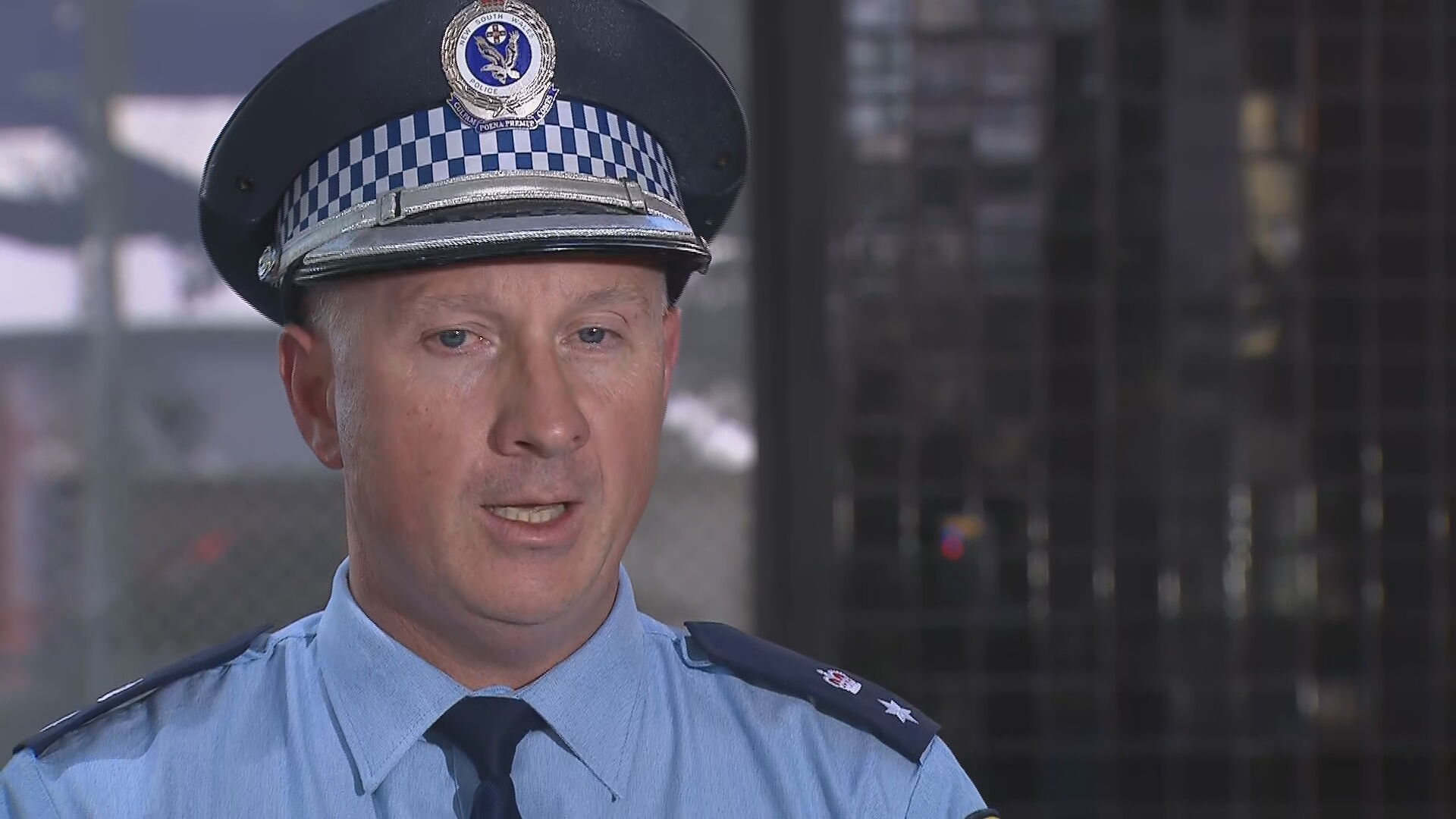
NSW Police have warned any jetski riders who speed, are unlicenced, come close to swimmers or make excessive noise that they will be slapped with a $500 fine.

Maritime officers will prowl waterways over the weekend as temperatures are expected to soar on the last weekend of summer, with a vow offenders won't be let off with a caution.

READ MORE: Mosquito warning issued for Victoria as Ross River virus cases rise

Jet skis

"This isn't really a warning today, this is a promise," Transport for NSW Acting Chief Operations Officer Mark Hutchings said.

"What happens when the sun comes out – the guns come out. Jet skis are everywhere," Mr Hutchings said.

READ MORE: Urgent examination of airflow in WA quarantine hotels called for after COVID-19 outbreak

Police also have the power to seize jet skis that have been illegally-modified.

Despite the fact that this is the last weekend of summer, police deemed the operation necessary due to a recent surge in jet skis.

READ MORE: Ute engulfed by flames after air conditioning starts leaking smoke

Since May, more than nine thousand licenses have been issued, which was a 90 per cent spike.

The aim of the operation is to keep people safe in the water.

9News App

Authorities aim to get this number to

"This weekend we need everyone to cool their jets," Minister for Transport and Roads Andrew Constance said.

"We've seen a dozen people lose their lives over the last 12 months on the state's waters."

zero.

Man charged with attempted murder following hotel attack

A man has been charged with attempted murder after he allegedly bashed a young woman with a sledgehammer in a five-star Sydney hotel.

Matthew Donaldson was found hiding in bushland in the Blue Mountains yesterday after allegedly bludgeoning a 25-year-old woman at the Primus Hotel in Sydney on Tuesday night.

Police allege the woman was left unconscious and covered in blood. She remains in an "extremely serious but stable condition" in the Royal Prince Alfred Hospital.

READ MORE: Missing Sydney woman Melissa Caddick's remains found

"It's going to be a very, very long road to recovery for that lady," Acting Superintendent Paul Dunstan said.

The 41-year-old was charged with five offences this afternoon, including attempted murder, grievous bodily harm and possessing a loaded firearm.

Police allege the man was in possession of the gun during the attack.

Officers said he led police to the weapon today.

"This morning he accompanied us on a search and in the company of police led us to a backpack containing a loaded firearm, pistol, which police allege he had during the offence at Pitt Street," Mr Dunstan said.

Mr Donaldson was found 500 metres from Lapstone train station in lower Blue Mountains after police and sniffer dogs battled "horrible" conditions to locate him.

Police also raided a Kingswood property yesterday and allegedly seized knives, ammunition and other weapons.

Mr Donaldson was refused bail and will appear in court tomorrow.

LIVE UPDATES: US takes military action in Syria