All posts by FreeNews

US to Begin Allowing In Thousands of Mexican Border Asylum Seekers

The Biden administration says it will start gradually allowing into the US tens of thousands of asylum seekers currently forced to wait in Mexico.

It says it will begin next week processing about 25,000 people with active cases.

Asylum seekers will first be required to register and pass a Covid-19 test, before being allowed in via one of three border crossings.

The move reverses the much-criticised policies of ex-President Donald Trump.

The Migrant Protection Protocols programme was enacted in 2019, deterring would-be asylum seekers from coming to the US.

It required migrants entering through the southern border to wait in Mexico while their cases were being heard by US immigration courts.

But on his first day in office since winning last year’s election, President Joe Biden suspended the policy.

“As President Biden has made clear, the US government is committed to rebuilding a safe, orderly, and humane immigration system,” Homeland Security Secretary Alejandro Mayorkas said.

“This latest action is another step in our commitment to reform immigration policies that do not align with our nation’s values.”

The Biden administration plans to start with two border crossings each processing up to 300 people a day and a third crossing taking fewer numbers, according to the Associated Press.

The authorities say asylum seekers will be released with notices to appear in court in cities close to or in their final destinations, typically with family.

At the same time, Mr Mayorkas stressed that “individuals who are not eligible under this initial phase should wait for further instructions and not travel to the border”, amid concerns that many people would try to cross the border illegally.

Friday’s announcement was welcomed in a sprawling migrant camp in the Mexican city of Matamoros, just across the border from Texas.

“Honestly, I have no words for how I’m feeling right now!” Salvadoran asylum seeker Sandra Andrade, who has been waiting in Mexico for over a year, told Reuters news agency.

The border cities where migrants wait for months are suffering from growing crime rates.

The post US to Begin Allowing In Thousands of Mexican Border Asylum Seekers appeared first on The St Kitts Nevis Observer.

Meghan & Harry Expecting 2nd Child

Britain’s Prince Harry and his wife Meghan Markle are expecting their second child, their spokesman said in a Valentine’s Day announcement on Sunday.

The couple released a black and white image of them under a tree, all smiles, with Markle, 39, showing signs of pregnancy. “We can confirm that Archie is going to be a big brother,” the spokesman said, referring to the couple’s son. “The Duke and Duchess of Sussex are overjoyed to be expecting their second child.

Meghan and Harry, 36, who is Queen Elizabeth II’s grandson, quit frontline royal duties in March last year and now live in California.

The news follows Markle’s disclosure in The New York Times in November that she had suffered a miscarriage in July.

A Buckingham Palace spokesman said: “Her Majesty, Duke of Edinburgh, Prince of Wales and the entire family are delighted and wish them well.”

Misan Harriman, a friend of the couple who took the photograph they released, wrote on Twitter: “Meg, I was there at your wedding to witness this love story begin, and my friend, I am honoured to capture it grow.”

The couple’s departure last year — dubbed “Megxit” by the British press — was a far cry from 2018, when they married in a ceremony at Windsor Castle watched around the world.

The mood soured as reports circulated about a rift between Harry and his brother Prince William, second in line to the throne.

Since leaving, they have launched several legal cases against news outlets alleging invasion of privacy — including one that ended on Thursday with a victory against Associated Newspapers in the UK.

The cases have attracted criticism from some, as the couple are also launching themselves into the public eye with high-profile commercial projects.

Last year they launched a non-profit organisation, Archewell, after giving up a “Sussex Royal” brand as part of the terms of their departure from frontline royal duties.

They have started other ventures, including signing a deal with Spotify to produce podcasts that tell “uplifting and entertaining stories”.

The couple also signed a contract, reportedly worth tens of millions of dollars with streaming giant Netflix to produce “impactful” films and series.

As well complaining about invasion of her privacy, Meghan, a former television actor, has also described past trolling of her as “almost unsurvivable”.

In 2016, Harry issued an unprecedented statement denouncing “the racial undertones of comment pieces” and “the sexism and racism of social media trolls”.

Pressure from tabloids has dogged Harry throughout his life, and he blames them for the death of his mother Princess Diana.

Harry and Meghan’s announcement came days after Princess Eugenie, a granddaughter of the queen, gave birth to a baby boy.

The post Meghan & Harry Expecting 2nd Child appeared first on The St Kitts Nevis Observer.

First Report Examining UNHRC Charges Against Israel Debunks Many

By Eliana Rudee


(February 12, 2021 / JNS) Geneva-based independent human-rights group UN Watch has published a detailed report in advance of the 46th session of the U.N. Human Rights Council, which is scheduled to open this month on Feb. 22 in Geneva and run until March 23. The study debunks more than 20 different major accusations leveled by numerous different countries—accusing Israel of violating Palestinians’ religious freedom, damaging their health and practicing racism.

In its first-ever report that thoroughly fact-checked and responded to the UNHRC’s anti-Israel claims, UN Watch released its 58-page “Agenda Item 7: Country Claims & UN Watch Responses” examining 23 accusations made by various countries under Agenda Item 7 against Israel in the period covering the six UNHRC sessions held in 2019 and 2020.

According to report researcher and writer Dina Rovner, legal adviser of UN Watch, the paper sets the record straight regarding distorted statements, including: “Israel hinders the Palestinian fight against COVID-19;” “Israel has occupied Palestinian territory for 70 years;” “Israel commits apartheid against the Palestinians;” “Israel damages Palestinian holy sites” and “Israel’s blockade of Gaza is illegal.”

“The truth is very different from what is being put on the record at the United Nations,” she told JNS. “When Israel is accused of hindering the Palestinian fight against COVID-19, it is actually helping and coordinating with the Palestinians. When Israel is accused of violating the rights of Syrians on the Golan, the opposite is the case—the Golan Syrians have more rights and freedoms than their counterparts in Syria, and are flourishing economically. Israel damages Palestinian holy sites? No. History shows that only under Israeli control are the holy sites of Jews, Muslims and Christians fully protected.”

According to Hillel Neuer, UN Watch executive director and editor of the report (with contributions from managing editor of UN Watch Simon Plosker), it is being sent to all U.N. ambassadors in New York and Geneva “to make clear to all delegates who tell lies that, from now on, their countries will be called out by name before the international community and refuted with the facts.”

UN Watch has also submitted several written statements that will be circulated to delegates as official U.N. documents of the session, calling out the lie that Israel’s vaccination campaign—one of the best-run in the world—is “racist”; exposing UNRWA teachers’ incitement to terrorism and anti-Semitism; and documenting the Palestinians’ illegal use of child soldiers.

“Israel has become a convenient punching bag and scapegoat for non-democratic states—many of them members of the UNHRC, such as Cuba, Pakistan and Libya—to divert attention away from their own gross and systematic human-rights abuses,” Neuer told JNS.

Agenda Item 7 is the only debate concerning a specific country, which takes place three times a year pursuant to the Palestinian Authority, Syria, North Korea and dozens of other council members and observers that routinely accuse Israel of numerous crimes and human-rights violations, while making no mention of Hamas, Islamic Jihad or the Palestinian Authority.

There is no special agenda item on Iran, Syria, North Korea or any other country in the world, noted Neuer. While all 193 countries of the world are addressed under Agenda Item 4, only Israel gets its own special treatment under Agenda Item 7.

‘It’s important to educate them on the facts’

In recent years, nearly all Western democracies have joined Israel in declining to participate in the Item 7 debate, citing the selectivity of the proceedings.

“It makes sense for democracies not to legitimize discrimination, but the problem is that many spurious claims go on the record at the United Nations with no fact-checking or accountability,” explained Neuer. “This report provides the first examination of claims made under Item 7, using detailed analysis and citing sources of fact and international law. It’s time to confront the toxic brew of hate and misinformation at the UN.”

“When it comes to voting—both at the UNHRC and at the General Assembly—most countries vote to condemn Israel, including European democracies that support about 70 percent of the biased resolutions,” he said.

Though many wonder how the change in U.S. administration might affect the discussion of Item 7, Neuer maintained that America, “whether under Republican or Democratic administrations, has always been a fierce opponent of Agenda Item 7 and anti-Israel discrimination at the U.N. generally.”

However, he added, “they never had anywhere near the majority to remove it.”

“We expect the Biden administration to continue to oppose the demonization of Israel at the United Nations,” he said. “We applaud Biden’s U.N. envoy Linda Thomas-Greenfield for saying recently that she looks forward to “standing with Israel” and “against the unfair targeting of Israel” at the United Nations.

The Biden administration recently announced that it will rejoin the UNHRC as an observer state, with the goal of fully rejoining the council next year.

If the U.S. rejoins the Human Rights Council, we trust that it will continue to demand the elimination of Item 7 from the agenda. But it’s far from clear that they will make any progress, given the automatic majority that still applies when it comes to anything targeting Israel.”

For the ambassadors who don’t attack Israel under Item 7, he continued, “many of them are nevertheless influenced by the proceedings, and so it’s important to educate them on the facts.”

At the upcoming debate, UN Watch plans to take the floor and speak on a full range of human-rights issues and conduct online side events, including one on anti-Israel bigotry in the halls of the United Nations, and a high-level panel on the gross abuses committed by Venezuela’s Nicolás Maduro regime.

Rover said “we hope this report will be one more step in encouraging countries to consider the facts, and to stop voting for skewed texts. These lies go on the record at the United Nations, and are never refuted on the merits because Israel and nearly all Western democracies rightly boycott the Item 7 debate as a matter of principle, as it singles out Israel for discriminatory treatment. The purpose of this report is to fill that gap by providing the first-ever examination of claims made under Item 7, and to provide a detailed analysis, citing sources of fact and international law.”

She also voiced her hope that the report will influence diplomats to be more vocal during the session in speaking out against the injustice of Agenda Item 7, and that it will bolster their campaign to persuade countries to stop voting for anti-Israel resolutions, of which there are expected to be five in the upcoming session.

The post First Report Examining UNHRC Charges Against Israel Debunks Many appeared first on The St Kitts Nevis Observer.

Missing woman may have fallen asleep in skip bin police say

A missing Brisbane mother-of-three might have fallen asleep in a skip bin before being picked up by a rubbish truck, with fatal consequences, police have said.

More questions than answers surround the disappearance of 38-year-old Natarn Auld.

She was last seen on CCTV walking past a Capalaba service station at 3.30am on December 14.

But, investigators say, her mobile showed she stayed near the same location until 4.10am, during which time she wasn't shown on CCTV leaving.

The phone was then located several times tracking in a northbound direction, before finally stopping at a recycling facility in Northgate.

Police have found a garbage truck that followed the same route at the exact same time.

Authorities are now trying to determine whether Ms Auld could have fallen asleep in a skip bin, and was killed after a rubbish truck picked it up on its rounds.

Neither Ms Auld nor her phone have been found.

COVID Revealing the EU’s Weaker Side

(CNN) The year is only six weeks old, but 2021 and the pandemic is already revealing the European Union’s inherent limitations.

While the EU is no stranger to crises, the past few weeks have thrown up issues that highlight the chasm between the grand ambition of Brussels and its capability.

Things have been so bad that two of the bloc’s most senior officials have been called on to resign, while serious questions are being asked of the EU’s executive arm, the European Commission.

The most immediate problem is a Covid-19 vaccines scandal. Earlier in the pandemic, Brussels realized that a rush for vaccines could lead to wealthy member states buying huge supplies and poorer nations relying on their charity. It stepped in and secured deals with manufacturers at a better price than individual countries could negotiate.

Most member states were happy with this situation — until the United Kingdom started vaccinating at a faster rate than the EU. The Commission decided to address this by announcing a policy that threatened creating a border on the island of Ireland, risking the return of sectarian violence. Member states — not least EU member Ireland — were furious at not being consulted

It is true that nations have varying qualities of health services and some will vaccinate faster than others. However, blaming Brussels is a popular pastime of European governments when things go wrong. The fact the Commission took such an active role in Europe’s vaccine program and is historically terrible at its own PR leaves von der Leyen and her subordinates vulnerable to criticism.

In many policy areas, the Commission has no real authority and can only act in an organizational capacity. The former official adds that “it’s important not to get stuck making grand statements in areas like foreign policy or moral leadership” when in reality, national interests can scupper your whole agenda.

Another criticism of the von der Leyen Commission is that it’s too close to German Chancellor Angela Merkel and French President Emmanuel Macron, Europe’s two most influential leaders.

“She served in Merkel’s cabinet and was proposed for President by Macron, having not bothered campaigning for the job,” said Kati Piri, a Dutch social democrat in the European Parliament. “She only won her approval by nine votes, relying on Orban’s MEPs. How can she possibly be independent when it comes to France, Germany or Hungary?”

While it might be harsh to lay all the blame on von der Leyen, it is true that her Commission is close to the Council, which is a problem for those who think Brussels should act independently in the EU’s interest.

Rich nations rule the roost

The way power works inside the EU Council often perplexes outsiders. On most issues, wealthy nations call the shots.

“When Greece needed bailing out, it was Germany who insisted on austerity. On foreign policy, it is the economic priorities of Germany and France that trump the concerns for human rights when striking deals with China,” said Daniel Kelemen, Jean Monnet Chair in European Union Politics at Rutgers University.

The impact this has on Europe’s foreign policy is significant. “You have 27 member states acting in their national interest, you have diplomats briefing journalists on every statement you make, and have to coordinate foreign policy that doesn’t really exist,” said Stubb, the former Finnish premier.

Piri agreed that “much of our foreign policy is reacting when something bad happens,” but pointed a finger specifically at Berlin and Paris. “With Russia, Turkey and China, we put out statements when there are human rights abuses but underscore the need for economic cooperation. That won’t change so long as the biggest member states put their economies ahead of moral imperative,” she said.

Another odd quirk of the Council is how it provides individual member states with the power to kill certain policies they don’t like. One of the most contentious issues that can be vetoed by one member state is the removal of a nation’s voting rights via what is known as the Article 7 process.

This is where we come back to Hungary.

Over the past decade, Orban has assaulted democratic norms by clamping down on press freedom, undermining the judiciary, and censoring universities, amongst other things. The Commission, which talks a big game on the rule of law, has to date done little to significantly reign in Orban.

“When countries like Hungary were in the process of joining the EU, Brussels could use money and other trinkets to build up democratic norms. But once they were in, punishments for backsliding could have implications for other member states, so the EU repeatedly does little to punish bad behavior,” says Daniel Freund, a German MEP.

The problem with article 7 is that it requires unanimity. Poland, another serial offender, will always have Hungary’s back and vice-versa. Earlier this year, the Commission proposed a rule of law mechanism to withhold funds from the EU budget for states violating the rules. But when push came to shove, von der Leyen ceded authority to the Council and, with Merkel, fudged it.

Whereas the initial plan would have the Commission unilaterally impose the mechanism and only reverse it if the member states voted by qualified majority to do so, the onus is now on the member states to trigger it. All of which means it will probably never happen.

Kelemen believes that the Commission’s reluctance to punish delinquents is a side product of its desire to be more political. “A technocratic Commission could quite easily say ‘you have broken the rules so we are imposing this mechanism.’ A political Commission considers the implications of its actions in a different context.”

The EU is a hybrid ecosystem that when working properly, has an executive branch that drives common policy in areas that make sense. The member states then shape that policy before the European Parliament scrutinizes and approves it.

However, critics believe that as different institutions have sought greater power, the Commission has drifted into a position where it has huge power in the Brussels bubble, but works at the behest of member states, while the Parliament is disrespected and undermined.

Many Europhiles are desperate for reform that makes Europe more fit for purpose. Viewed from the outside, the EU is often seen as a positive project built on an idea of unity after centuries of conflict.

Yet many who have taken a closer look believe that as it stands, the EU is a bit of a basket case whose internal power struggles prevent it from being a true global power in the 21st century.

And as the continent tries to navigate pan-European crises at the most challenging moment in the bloc’s history, it’s hard to escape the feeling that no one is really in charge.

The post COVID Revealing the EU’s Weaker Side appeared first on The St Kitts Nevis Observer.

Democracy on Trial in Chaotic Haiti

(CNN) Turmoil in Haiti could soon test democratic leaders’ support for embattled president Jovenel Moise, a former banana exporter whose claim to another year in office has sparked protests in the capital, arrests and the abrupt dismissal of several Supreme Court judges.

Hundreds of protesters took to the streets in Port-au-Prince this week, with plumes of black smoke from burning tires and flags seen in the capital city, as well as white clouds of tear gas. At least two journalists were injured, a witness told CNN.

“I heard people saying I’m a dictator, but I want to be clear; I have a mandate for five years and I will finish my term,” Moise said in a televised speech on Sunday.

The United Nations, the Organization of American States, and the Biden Administration support his plan to remain in office until 2022 — but Moise’s attempts to end the debate domestically have taken an undemocratic cast that has his backers worried. On Monday, Moise ordered the retirement of three of 10 Supreme Court judges, raising the question of what institutional guardrails now remain on the presidency.

Moise has ruled by decree since letting the parliament’s mandate expire in January 2020. “Jovenel Moise destroyed every institution, from the parliament to local government. It is clear what he wanted to do. Unfortunately, we have an international community who don’t support the fight against this corrupt dictator,” opposition leader and former senator Nenel Cassy told CNN.

Moise’s office declined to comment directly for this story, instead referring questions to Haiti’s ambassador to the US.

Haiti’s opposition has called for a three day “general uprising” this weekend. It will be the latest in a succession of anti-government demonstrations that have marked Moise’s term, fueled by anger over Haiti’s foundering economy, a sweeping corruption scandal and surging criminal violence.

A president accused of dismantling democracy

Haiti’s democratic institutions have been crippled under Moise, who has not organized parliamentary or local elections, leaving the legislative branch of government largely vacant and powerless. His new order for judges from Haiti’s highest court to retire now deals a blow to the country’s judicial branch.

In an interview with Voice of America, Moise accused all three of designs on the presidency, and said his order was intended to keep the Court from getting involved in politics. “As a guarantor of the institutions, we cannot allow an institution such as the Supreme Court to stray from its mission,” he said.

“President Moise did not remove the judges. He only asked them to exercise their right to retire,” Haiti’s Ambassador to the US, Bocchit Edmond, told CNN.

Judge Jean Wilner Morin, President of the National Association of Haitian Judges, explains to CNN that the President has no constitutional authority to unilaterally retire a judge, or appoint a new one.

“One cannot remove a judge in the course of his term. It is impossible. Therefore the decision to remove three judges from the Supreme Court by the President of the Republic, the order given by the president, is an illegal and unconstitutional order.”

Without a functioning legislature, though, who is left to challenge the move?

The US said it is monitoring developments. “We are deeply concerned about any actions that risk damaging Haiti’s democratic institutions. The Executive Order is now being widely scrutinized to determine whether it conforms to Haiti’s Constitution and laws,” the US Mission to Haiti said in a statement.


Journalists face armed police as they gather outside the Departmental Directorate of Police to file a complaint after they were hit with tear gas in Port-au-Prince, February 10, 2021.

In the coming year, critics fear that yet another blow to Haiti’s democracy could take the form of changes to the constitution, which Moise sees as his legacy project. The new constitution, aimed to further empower the presidency, will go to a referendum in April — and only afterward will elections to fill parliamentary, mayoral and other posts follow.

“The new constitution will guarantee when a president is elected they can do the job they were elected to do,” Moïse said in his Sunday speech.

Backed by foreign support

Haiti’s political opposition say that that Moise completed his constitutionally mandated five-year term on Sunday and is now illegally occupying his office. But the President argues that he deserves more time because although he was elected in 2016, he was only sworn in 2017.

A Constitutional Court could issue a definitive ruling on this. The problem, as Morin points out, is that such a court only exists in theory.

“Haiti’s 1987 constitution provides for this constitutional court — but it has never actually been created and that’s why today we find ourselves in a situation where the president says his term ends in 2022 and the political opposition says it ends in 2021,” he says.

“If (Moise) wants to stay in power, he must find a political consensus with other political actors and civil society,” he added.

In the court’s absence, Haiti’s national bar association and its Superior Council of Judiciary Power (CSPJ) — a powerful body that appoints, fires, and disciplines judges — have sided with the opposition, in calling for Moise to step down.

But the current government dismisses domestic criticism, pointing instead to its foreign support. “That’s the issue in Haiti. … Everybody thinks they can do everything, but do not listen to the Bar Association of Lawyers,” said Edmond.


Last week, US State Department spokesman Ned Price echoed Moise when he told reporters that “a new elected president should succeed President Moise when his term ends … on February 7, 2022″ — though in tacit acknowledgement of the country’s hamstrung democracy, he also urged Moise to let voters pick a parliament and to “exercise restraint in issuing decrees.”

Such support is key to Moise’s continuation in office, said Nicole Phillips, a law professor at the University of California, Hastings and Université de la Foundation Dr. Aristide (UNIFA) in Port-au-Prince.

She describes US endorsement of the president’s stance, despite his erosion of democratic norms, as a short-sighted campaign to keep Haiti in stasis in the immediate term “as opposed to figuring out policies in the long term that will actually sustain democracy and justice in Haiti.”

“The international bodies are not following Haitian constitutional experts and legal bodies in their interpretation,” she said. “You have Haitian constitutional scholars as well as the CSPJ and the federal bar association who are making their interpretations and the international community doesn’t care.”

Some US lawmakers have called on the US State Department in an open letter to “condemn President Moise’s undemocratic actions, and support the establishment of a transitional government.”

Without support from Haiti’s powerful neighbor, efforts to form any transitional government will hold little clout while Moise retains control of the country’s police and military.

Edmond, the ambassador, argues there would be nothing democratic about appointing a transitional government, and urges observers at home and abroad to wait for the next general elections to select a new president to take office in 2022.

“Transitional governments have never been useful to Haiti,” he said. “It’s really important to strengthen the democratic process, and to make sure that a democratically elected president is replaced by another democratically elected one.”

But with an emboldened president, no functioning legislature and only a partial Supreme Court, the question is whether Haiti’s shaky democracy can make it until then.

The post Democracy on Trial in Chaotic Haiti appeared first on The St Kitts Nevis Observer.

The 27 public servants earning more than $1 million

They are members of an elite club, pocketing annual salary packages of more than $1 million a year.

But the 27 men and women aren't investment bankers, brain surgeons or casino moguls – they are Australian public servants.

With pay packets that dwarf their international counterparts, they raked in a combined $35.3 million in the 2019/20 financial year.

A 9News analysis of all Federal Government departments and agencies reveals the highest-earning key management personnel earn more than 99.9 per cent of the rest of us.

Scroll down to see the full list.

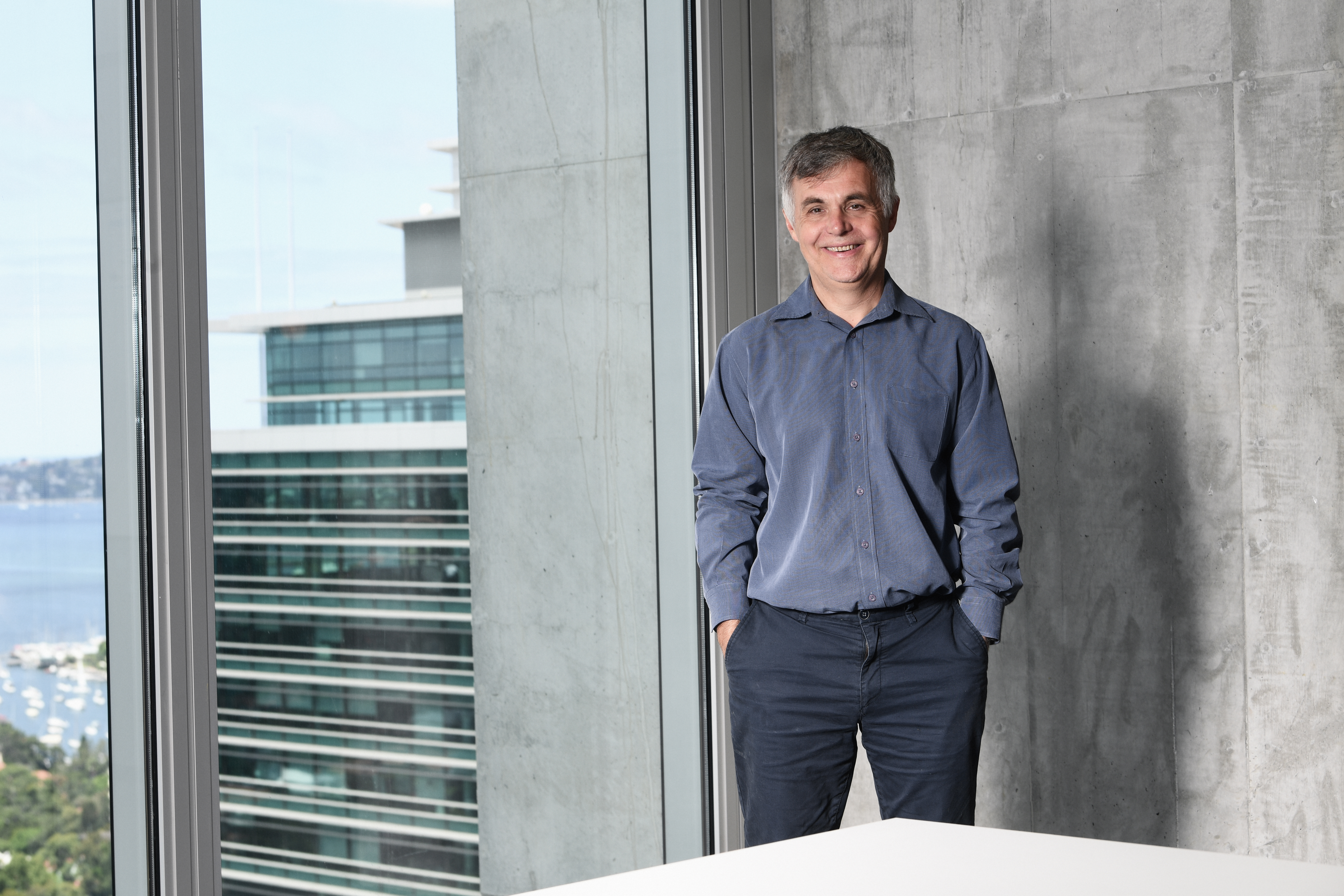
This man was the highest paid public servant last financial year, with a $3.15 million renumeration. Stephen Rue, CEO of the NBN Co

"They're not servants," Emilie Dye, policy director of the Australian Taxpayers' Alliance, told 9News.

"They're making a CEO's salary. The difference with a CEO's salary – you don't have to buy their products.

"They're doing something for the good of society and they should see it is such."

The fattest renumeration was $3.15 million paid to Stephen Rue, CEO of the NBN Co.

Next was Paul Broad, CEO and MD of Snowy Hydro, at $2.08 million.

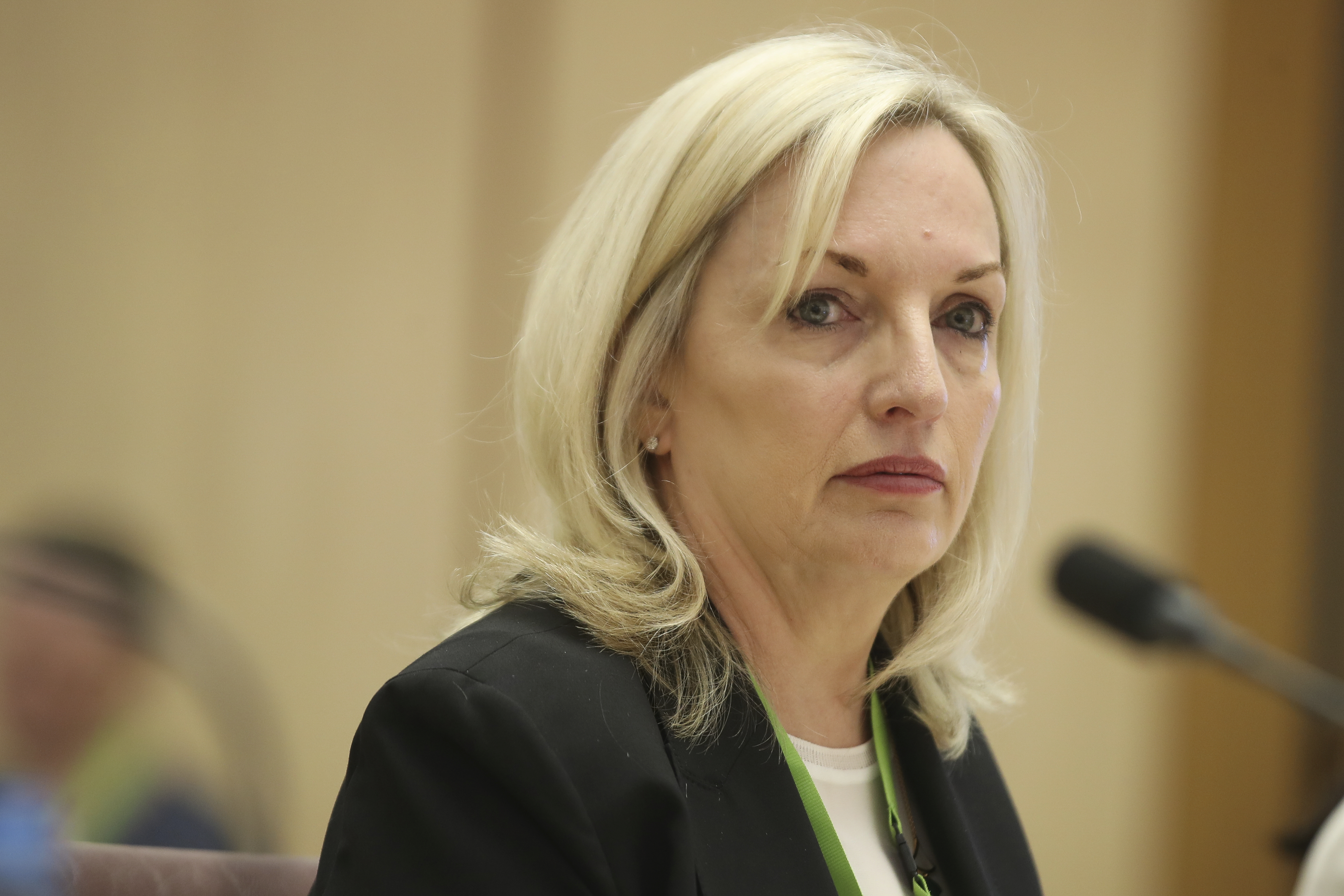
Third and fourth spots went to Christine Holgate and Bob Black, ex-CEO and ex-COO of the Australian Postal Corporation, both of whom departed their more than $1.5 million a year jobs last year in the fallout of the scandal over the gifting of $20,000 worth of luxury Cartier watches to executives as rewards.

Third spot went to Christine Holgate, ex-CEO of the Australian Postal Corporation, who departed her more than $1.5 million a year job last year in the fallout of the scandal over the gifting of $20,000 worth of luxury Cartier watches to executives as rewards.

The extent of the bloated packages, which are far higher than those of any of Canberra's politicians including the prime minister, emerge as many key workers tighten their belts amid COVID's wage freezes, reduced hours and job losses.

Richard Wankmuller, CEO of Inland Rail at the Australian Rail Track Corp, received $1.5 million. He's well-placed for a comfortable life after he retires in mid-2021.

The NBN has a whopping seven people in the $1 million-plus club: in addition to the CEO, it includes two chief customer officers, the CFO, chief network deployment officer and chief strategy officer.

It's a rich management structure for a government-owned corporation that doesn't pay corporate tax.

Raphael Arndt, chief investment officer at Future Fund Management, pulled in $1.4 million – almost half ($628,940) of which was in bonuses.

Similarly, Alison Tarditi, chief investment officer at Commonwealth Superannuation Corporation, received $1.2 million – with half ($607,725) from bonuses.

Some were elevated into the millionaires' club by generous payouts, which made up more than half of their annual pay packets.

For Martin Parkinson, ex-secretary of the Department of Prime Minister and Cabinet, it was more than 80 per cent of his total pay.

Graham Millett, CEO of WSA Co, was pushed up to $1.36 million thanks to more than $369,000 in termination benefits.

While the coronavirus pandemic has had a negative impact on many in the private sector, our reliance on the public sector has increased.

"If you have a public sector job, you're doing great," the ATA's Ms Dye added.

"If you don't, life kind of sucks right now."

Five of the top earners were women – two of whom only made the $1 million cut because of termination benefits and one who has since left her job.

Some of the agencies generate their own revenue, so salaries are funded by a combination of taxpayers and profit.

Total renumeration can include base salary, bonuses, benefits and allowances, superannuation contributions, long service leave, and termination payments.

Minister for Education and Youth Alan Tudge defended the salaries today, saying: "They are paid well but they are very highly skilled people, particularly those who are running departments.

"They are in charge of thousands of people, have very significant responsibilities and they obviously have to have competitive salaries to the private sector."

Luxury yacht catches fire in Sydney marina

NSW Police are investigating how a yacht suddenly caught fire at a marina in Sydney's south early this morning.

Emergency services were called to the marina on Fernleigh Road in Caringbah South at about 4am.

Fire & Rescue NSW crews arrived to find a 40m long yacht well alight. It sank as attempts were made to put out the fire, police said in a statement.

A yacht caught fire early this morning at a marina in Sydney's south.

Two men were on the yacht when the fire broke out. They managed to flee the vessel and were taken to St George Hospital to be treated for smoke inhalation.

Officers from Sutherland Police Area Command attended, along with the Marine Area Command. A crime scene has been established at the marina as inquiries continue.

Attempts are still being made to contain the debris.