New Zealanders are waking up to a change in Covid-19 alert levels – with Auckland shifting into the more serious level 3 lockdown just before midnight. And people are being urged to check on the official rules about what you can…
All posts by FreeNews
Woman desperate for housing banned from showering more than once every three days
A woman says she was only allowed to shower once every three days and subjected to other draconian rules during a series of Auckland housing horrors.Her plight was partly due to what a community leader described as unethical subletting…
Herald morning quiz: February 15
Test your brains with the Herald’s morning quiz. Be sure to check back on nzherald.co.nz at 3pm for the afternoon quiz.
Covid-19 coronavirus: Auckland into level-3 lockdown; NZ to alert level 2
VIRUS LATEST* Revealed: The 21 locations of interest visited by three new community cases * No need to rush: Aucklanders queue at supermarkets * ‘It’s a difficult situation’: Prada Cup racing postponed * Australia suspends…
UK hits target: Gives at least 1 vaccine shot to 15 million
The UK government said Sunday that it reached its goal of giving at least one COVID-19 vaccine shot to the most vulnerable people in the country, increasing pressure on ministers to clarify when they will ease a lockdown imposed in early January.
Some 15 million people, or 22 per cent of the UK population, have received their first shot or were offered one. The figure includes most people in the government's top four priority groups, including everyone over 75, frontline healthcare workers and nursing home staff.
"15,000,000! Amazing team,'' Nadhim Zahawi, the vaccines minister, said in a tweet that featured a red heart. "We will not rest till we offer the vaccine to the whole of phase1 the 1-9 categories of the most vulnerable & all over 50s by end April and then all adults.''
READ MORE: Germany tightens border checks to keep out virus variants
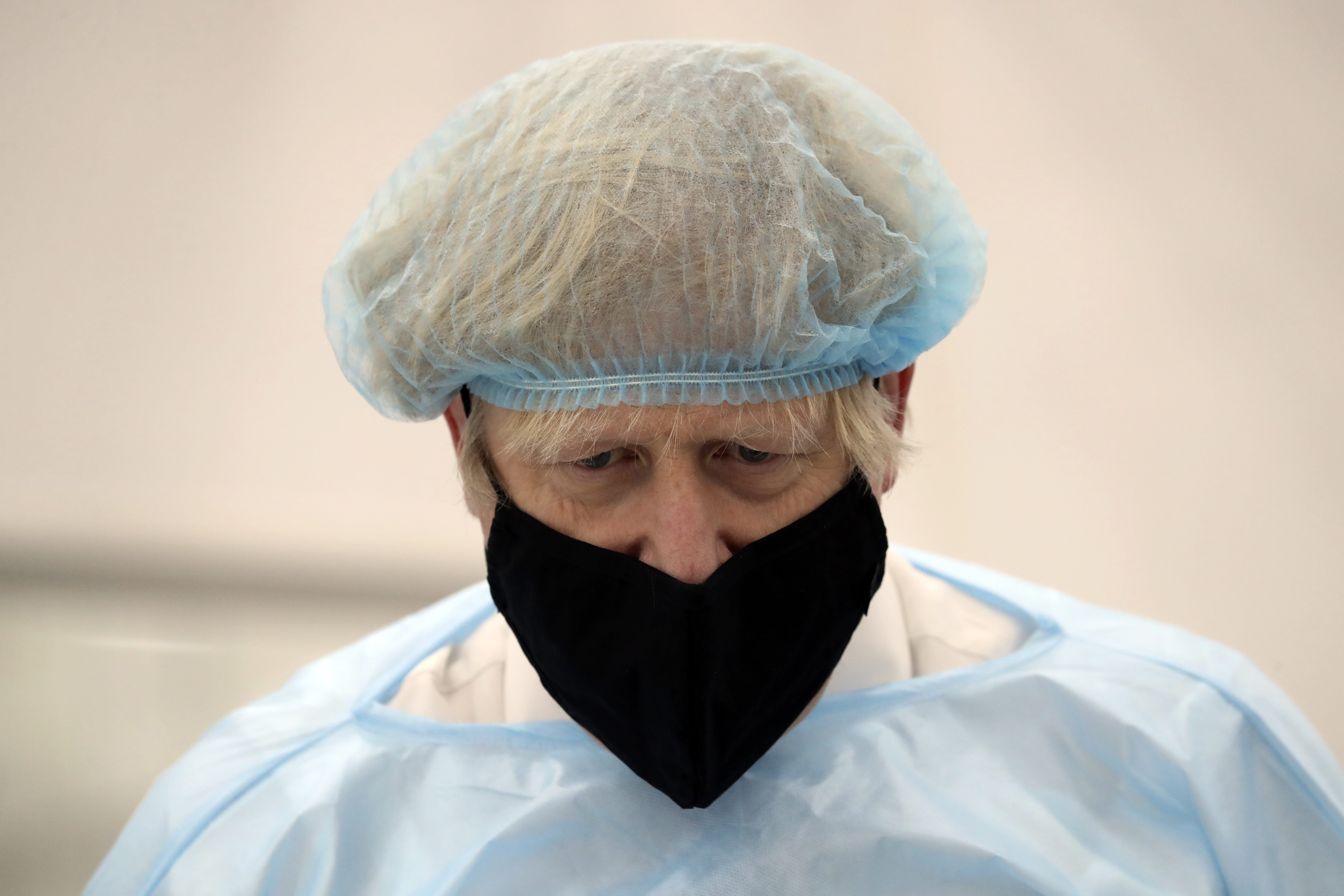
British Prime Minister Boris Johnson plans to unveil his roadmap for easing restrictions on February 22 amid signs that infection rates, hospitalisations and deaths have fallen sharply since England's third national lockdown began on January 4.
Jockeying has already begun between those who want the measures lifted as soon as possible and those who fear moving too fast will lead to a resurgence of the virus.
Britain got a head start on its vaccination effort in December, when it became the first country to authorize widespread use of a COVID-19 shot. It ranks behind only Israel, 71 per cent, the Seychelles, 53 per cent, and the United Arab Emirates, 50 per cent in the percentage of people who have received one dose, according to data compiled by Oxford University. The US is fifth at 15 per cent.
At the same time, rules that have closed schools, restaurants and nonessential shops in the UK are starting to pay off. The number of new infections, hospital admissions and deaths recorded over the past seven days have all dropped by more than 20 per cent from the previous week, according to government figures.
https://twitter.com/nadhimzahawi/status/1360954512006078467
When Johnson announced the lockdown, he said the government would review the measures in mid-February based on their success in controlling the pandemic and progress in the vaccination effort. Johnson's first priority is to reopen schools, and he has promised to give schools two weeks notice to give teachers time to prepare for the return of students.
The prime minister on Saturday applauded the vaccine rollout but urged people to be cautious.
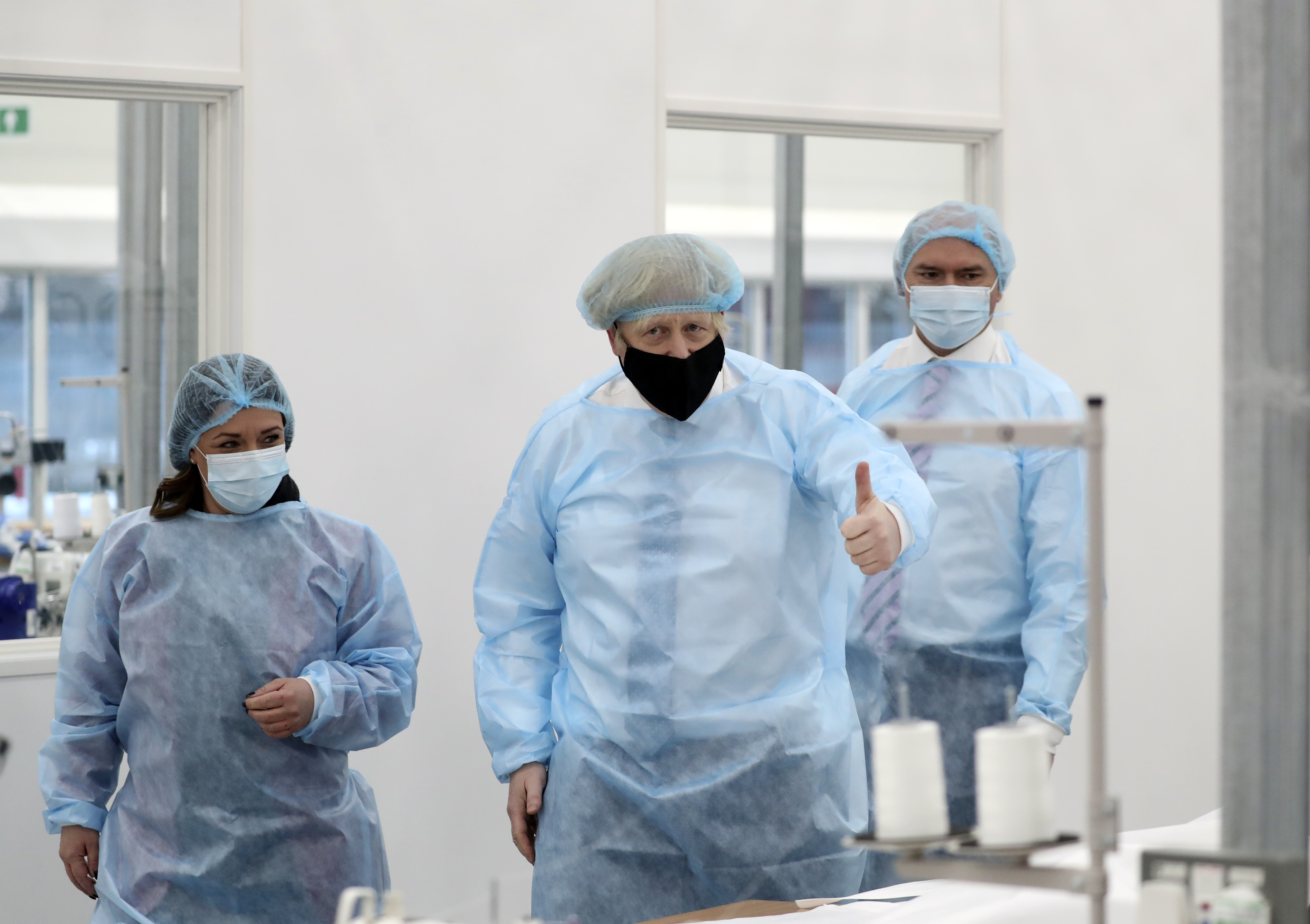
"We have still got infections running very high throughout the country — levels which last year we would have thought were really very high indeed — (and) still, sadly, a great many deaths in our hospitals," he said during a visit to a vaccine manufacturing facility in northeastern England. "Although the number is beginning to come down, and perhaps starting to come down quite fast, we need to look at the data very, very hard."
Britain has reported over 117,000 virus-related deaths, the highest toll in Europe.
Mark Harper, a member of Parliament from the ruling Conservative Party, last week warned the government against "moving the goalposts" for deciding when to ease the lockdown.
READ MORE: Australia halts 'green zone' bubble with New Zealand
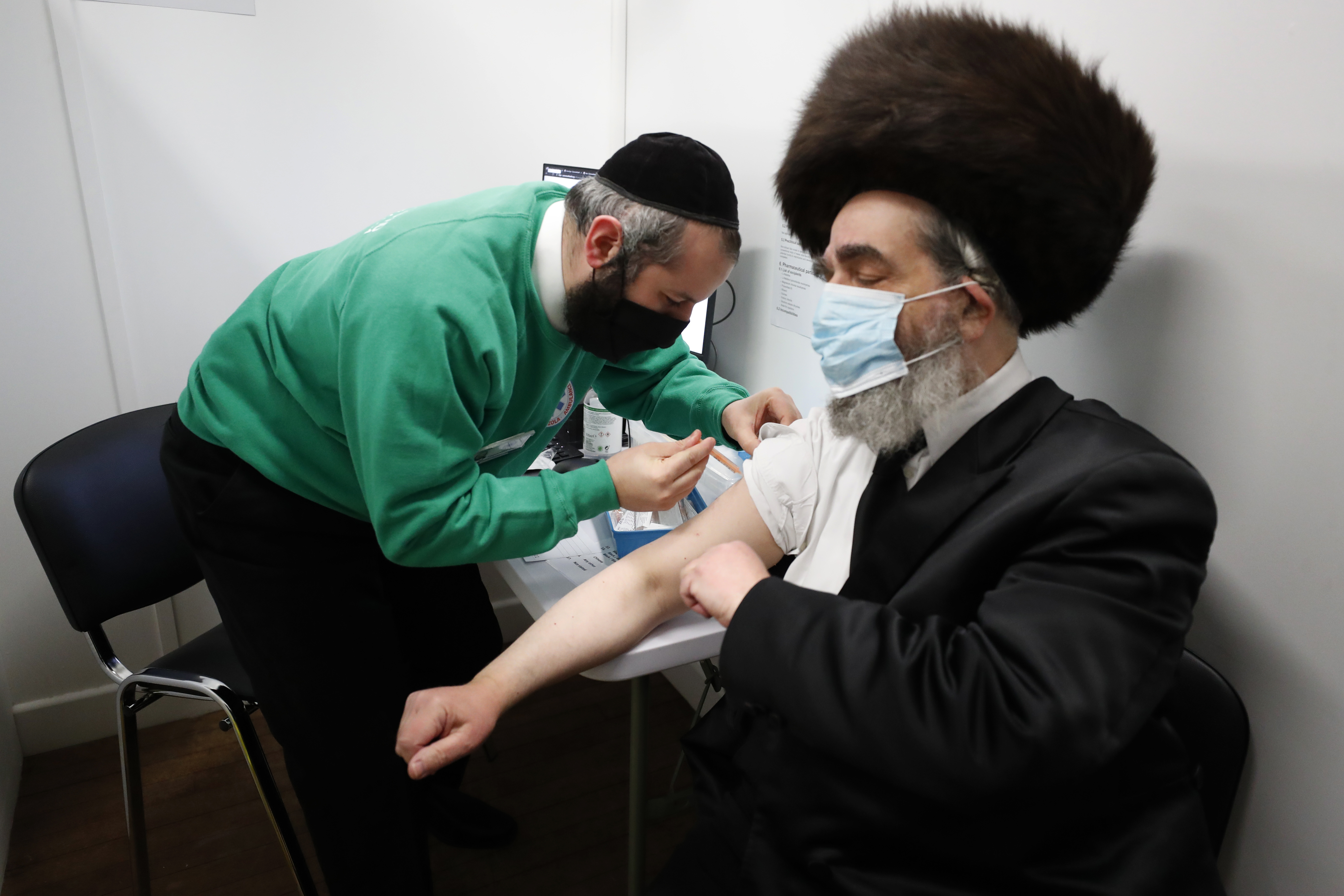

Johnson should start by reopening schools, then gradually lift other restrictions as more people are vaccinated, said Harper, who leads a group of about 70 lawmakers who have lobbied for the government to consider the negative economic and social impacts of the restrictions, along with the health benefits.
"If you think about the restrictions that the government's placed on everybody, they are the toughest set of restrictions that have ever been placed on the British people outside of the Second and First World Wars," Harper told the BBC. "So it's kind of just worth stepping back a bit and saying, 'This isn't normal, and it shouldn't continue, frankly, for a moment longer than it's absolutely necessary.'"
After meeting the target for reaching the most vulnerable people, UK authorities will progressively expand the vaccination drive to the next five priority groups until everyone over 50 and vulnerable younger people with health conditions that put them at higher risk from the virus have been offered the vaccine.
Public health officials say the top nine priority groups account for 99 per cent of the deaths caused by COVID-19 so far.
While the vaccines currently authorised for use in the UK require two doses to ensure full protection against COVID-19, British authorities say one dose provides a significant level of protection.
READ MORE: 'Victorians are furious more than frightened'
Because of this, they have made it their priority to give the first dose to as many people as possible as quickly as possible. To do this, Britain has suggested that the second dose be administered after three months, instead of one month as recommended by the manufacturers.
Jeremy Farrar, director of the Wellcome Trust health think tank, said the number of COVID-19 infections in Britain is still too high to think about lifting the restrictions.
"We've made enormous progress … but the transmission is incredibly high still and we've got to get it lower," he said.
There are other dangers on the horizon. UK government scientific advisers say the COVID-19 variant now predominant in the country may be up to 70 per cent more deadly than previous variants, underscoring concerns about how mutations may change the characteristics of the disease.
The findings from the New and Emerging Respiratory Virus Threats Advisory Group, published Friday on the government's website, confirm preliminary research released January 21. The group, known as NERVTAG, includes experts from universities and public agencies across the UK.
The new report is based on analysis of a dozen studies that found the so-called Kent variant, named after the county where it was first identified, was 30 per cent to 70 per cent more deadly than other variants. The studies compared hospitalisation and death rates among people infected with the variant and those infected with other variants.
"Based on these analyses, it is likely that infection with (the Kent variant) is associated with an increased risk of hospitalisation and death compared to infection with non-variant of cancer viruses," the advisory group said. "It should be noted that the absolute risk of death per infection remains low."
Biden White House seeks to turn page on Trump
The end of former President Donald Trump's impeachment trial opens a new chapter for his successor in the White House.
But while President Joe Biden and his team are eager to move past the impeachment, the bitterly partisan tone of the proceedings underscores the deep challenges ahead as the president and his party try to push forward their agenda and address historic crises.
Biden, who was at the Camp David presidential retreat when the Senate voted Saturday to acquit Trump, had acknowledged that Democrats needed to hold the former president responsible for the siege of the US Capitol but did not welcome the way it distracted from his agenda.
READ MORE: The Republicans who voted to convict Trump
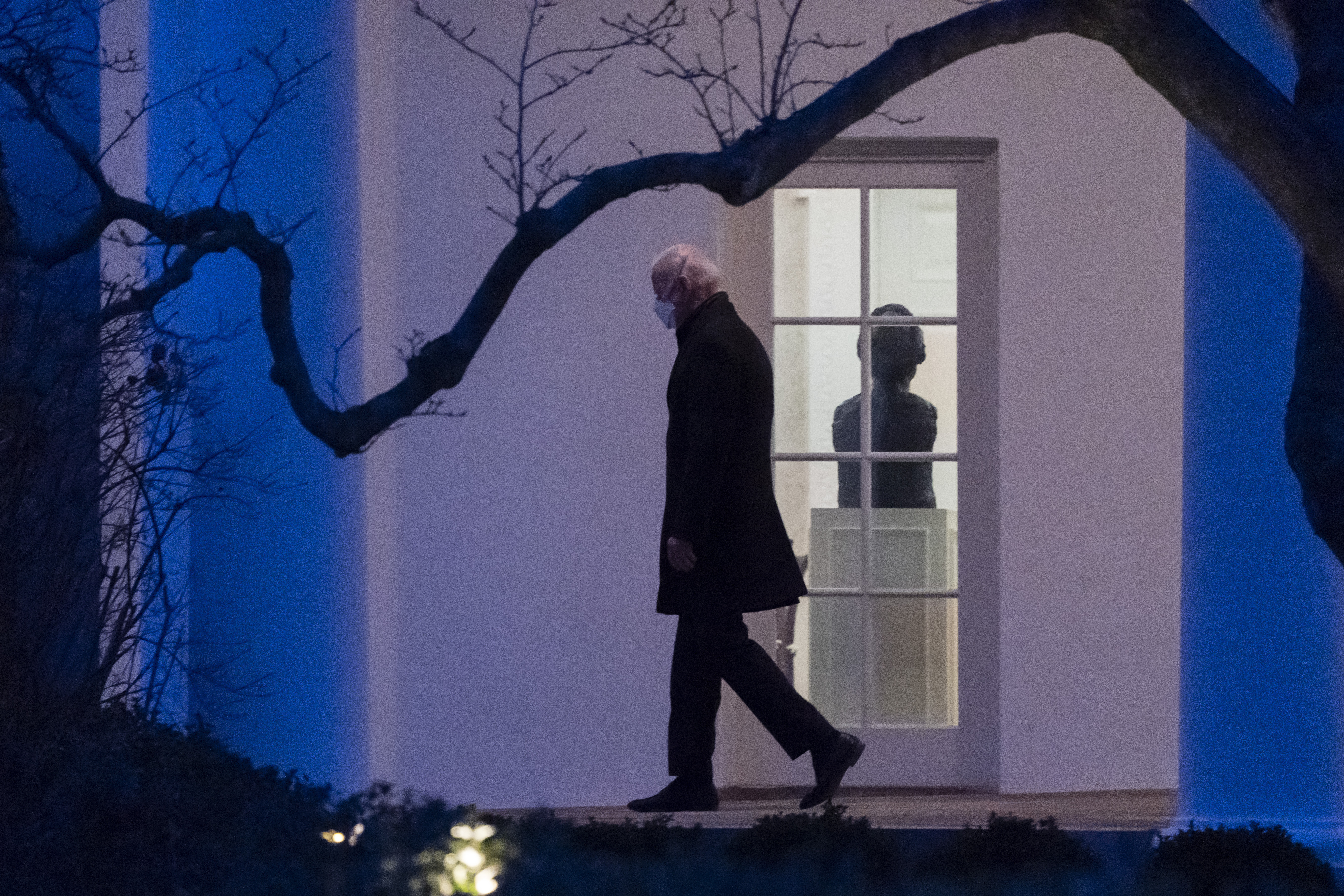
The trial ended with every Democrat and seven Republicans voting to convict Trump, but the 57-43 vote was far from the two-third threshold required for conviction. Whether the seven GOP votes against Trump offered Biden any new hope for bipartisan cooperation within Congress remained an open question.
In a statement, Biden referenced those GOP votes in favour of convicting the former president — and Senate Minority Leader Mitch McConnell's own indictment of Trump's actions — as evidence that "the substance of the charge," that Trump was responsible for inciting violence at the Capitol, is "not in dispute".
But he quickly moved on to the work ahead, sounding a note of unity and declaring that "this sad chapter in our history has reminded us that democracy is fragile" and that "each of us has a duty and responsibility as Americans, and especially as leaders, to defend the truth and to defeat the lies."
"It's a task we must undertake together. As the United States of America," Biden said.
Biden made a point of not watching the trial live, choosing to comment only briefly on the searing images of the riot that gripped the nation. Though his White House publicly argued that the trial did not hinder their plans, aides privately worried that a lengthy proceeding could bog down the Senate and slow the passage of his massive COVID-19 relief bill. That US$1.9 trillion ($2.45 trillion) proposal is just the first part of a sweeping legislative agenda Biden hopes to pass as he battles the coronavirus pandemic, which has killed more than 480,000 Americans and rattled the nation's economy.
READ MORE: Trump labels impeachment trial 'a witch hunt' after acquittal
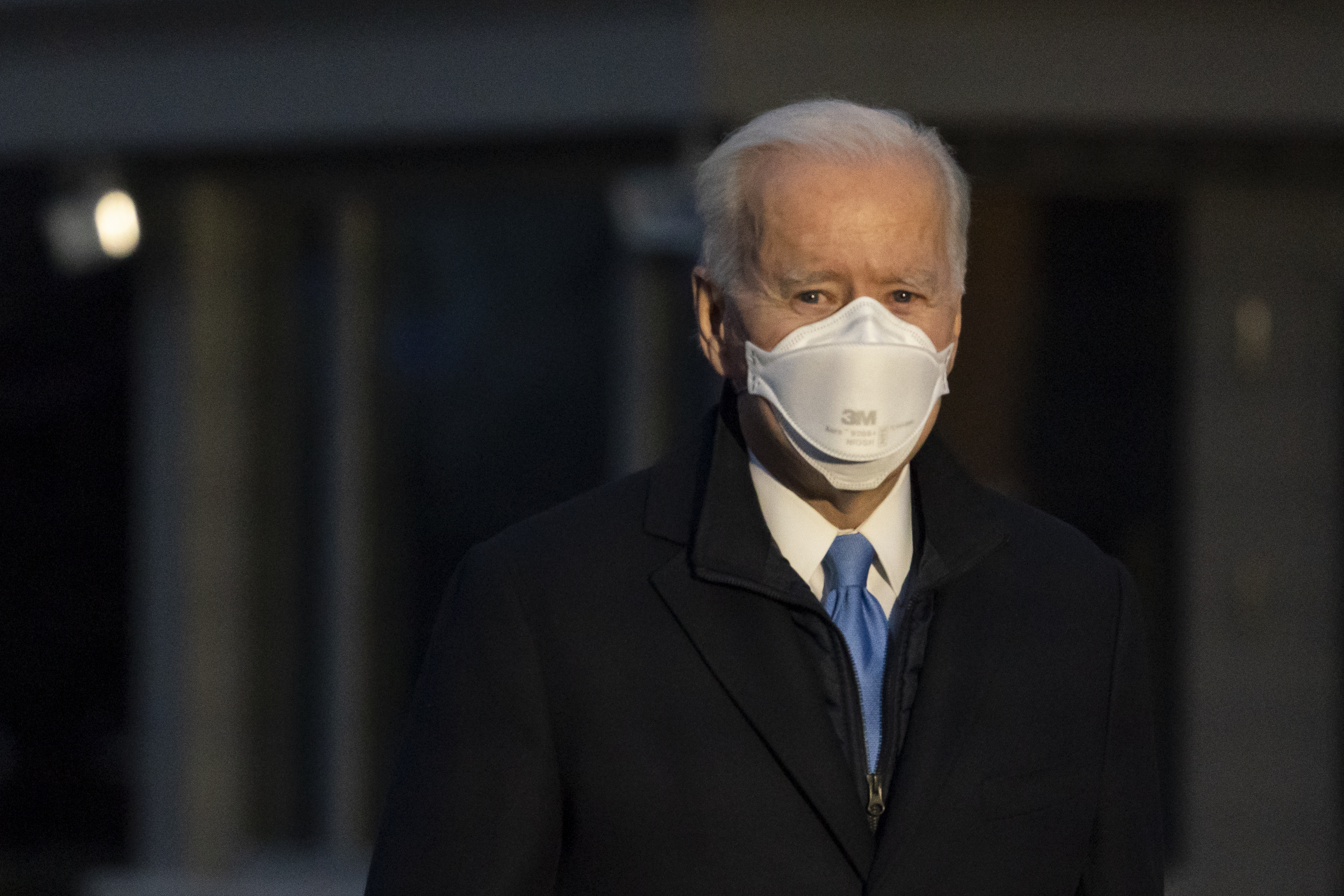
"The No. 1 priority for Democrats and the Biden administration is going to be to deliver on the promises that have been made on the pandemic, both on the vaccine front and the economic front," said Democratic strategist Josh Schwerin.
The end of the impeachment trial frees the party to focus on less divisive and more broadly popular issues and policies, like the coronavirus relief package, which polls show has significant support among Americans.
Throughout his campaign, Biden worked to avoid being defined by Trump and his controversies and instead sought to draw a contrast on policy and competence, a guiding principle that he and his aides have carried over into the White House.
His team kept up a steady drumbeat of events during the trial, including an update on vaccine development and Biden's first visit to the Pentagon as commander in chief. With the proceedings on the other end of Pennsylvania Avenue now over, the White House plans to increase its efforts to spotlight the fight against the pandemic and push past Trump's chaos.
Former Democratic Sen. Heidi Heitkamp of North Dakota predicted that in a state like hers, where Trump won 65% of the vote, focusing on those urgent issues would make more headway with average voters now.
READ MORE: White House aide suspended for threatening reporter
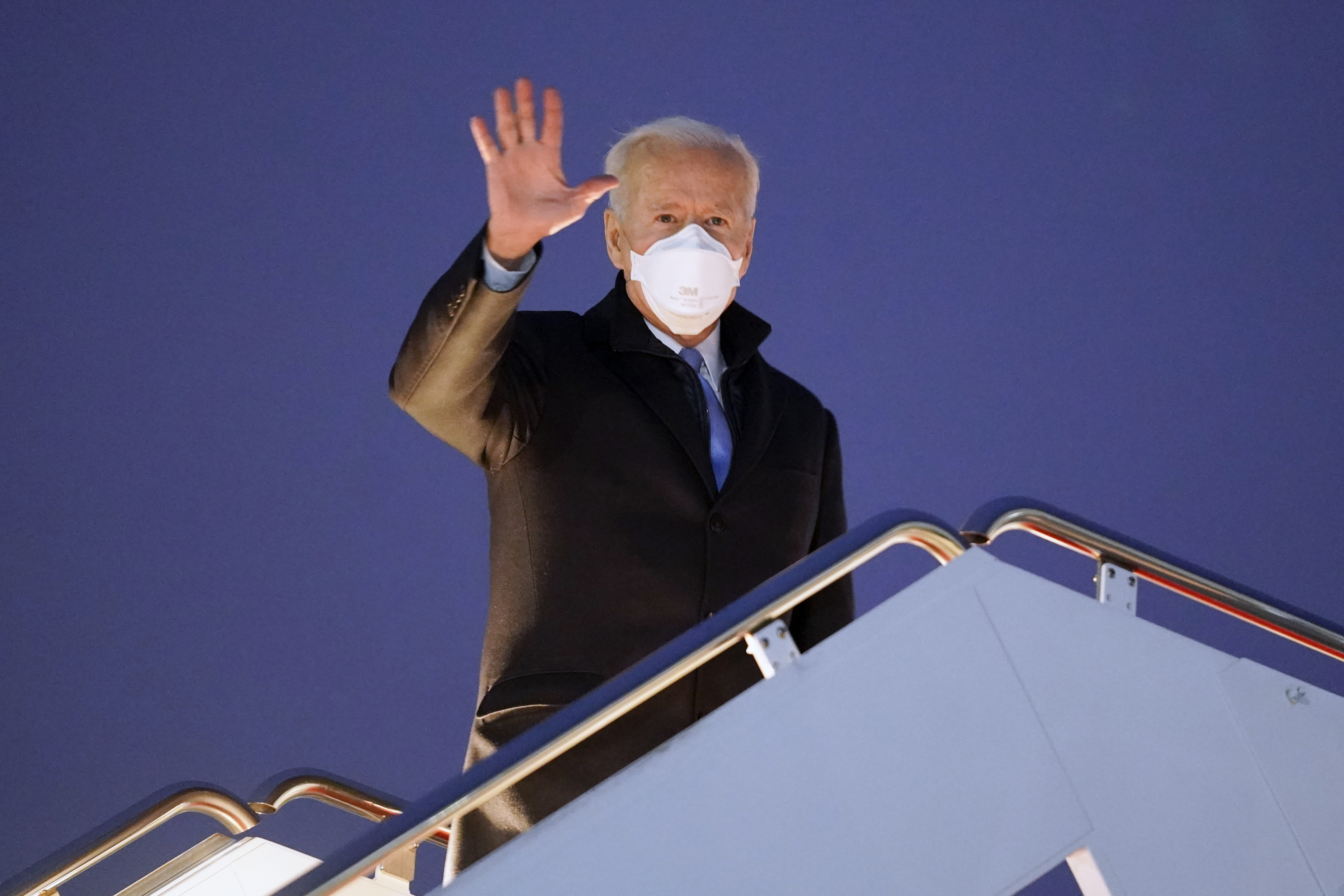
"What we have to be talking about is the economy — getting the economy back working, and turning the page" on the last administration, she said. "Good policy is good politics. We need to get back to that."
Democrats have a decision to make in how to deal with Trump going forward. While the end of the impeachment trial offers a clear opportunity for the party to focus squarely on its own agenda, Trump can also be a potent political weapon for Democrats, not to mention a big driver of campaign cash.
After Saturday's vote, American Bridge 21st Century, the Democratic Party's opposition research arm, issued a statement calling out senators from Ohio and Florida, two states that Democrats are targeting in the 2022 election, for voting against convicting Trump.
"Ron Johnson, Marco Rubio, and nearly every other Senate Republican put their loyalty to Donald Trump ahead of the rule of law, the Capitol police officers who protect them every day, and the oaths they swore to uphold the Constitution," said Bradley Beychock, the group's president, calling the senators "spineless sycophants."
Still, Schwerin cautioned that Trump can't be Democrats' "primary focus."
READ MORE: Child, 9, handcuffed and pepper-sprayed by police in US

"We shouldn't ignore the fact that a lot of the problems that the country is dealing with are because of Trump's failures, but he shouldn't be the focus of every fundraising email and press release. We should be looking forward," he said.
Biden plans to keep up a busy schedule focused on the coronavirus pandemic in the coming week.
The president will make his first official domestic trips this week: a TV town hall in Wisconsin on Tuesday to talk to Americans impacted by the coronavirus and a visit to a Pfizer vaccine facility in Michigan on Thursday.
White House legislative affairs staffers were poised to work with House committees on crafting details of the COVID-19 relief bill, which Democrats hope to vote on next month.
Still, some within the party aren't finished with Trump. The Progressive Change Campaign Committee, a leading progressive advocacy group, issued a petition Saturday night encouraging supporters to call on attorney general nominee Merrick Garland to "investigate and prosecute Trump and his entire criminal network for law breaking."
Biden is likely to continue to face questions about how his Justice Department will handle a number of ongoing federal and criminal probes into Trump's businesses and his conduct as president.
And his aides will be watching for Trump's next moves, particularly if he claims exoneration and heats up his political activity and even points toward a 2024 campaign. The plan, for now, is to try to ignore the former president.
Former Democratic National Committee Chair Donna Brazile warned that Trump won't make it easy but Democrats need to avoid getting sucked back into his orbit.
"I don't think Donald Trump is going to disappear from anyone's lips any day soon, and that's because Donald Trump will always seek to find ways to inject himself and serve himself," she said.
"While Donald Trump is figuring out who he is going to go after next, Democrats are going to figure out how they're going to lift people up and how they're going to protect and help the American people."
Loopholes in CDC's eviction moratorium leave some mobile home dwellers homeless
“I feel like we’re losing it all,” said one owner.
Covid 19 coronavirus: National, Act respond to Auckland lockdown move
The Prime Minister’s political opponents have spoken up about the latest alert level changes in which Auckland moved to level 3 last night for three days. The rest of New Zealand will be at level 2 over the same time period, Jacinda…
Australia halts 'green zone' bubble with New Zealand
Australia's "green zone" bubble with New Zealand will face new restrictions from Monday after Auckland was moved to an Alert Level Three COVID-19 lockdown after three people from one family have tested positive with the source of the infections unknown.
Australia's Chief Medical Officer Professor Paul Kelly convened an urgent meeting this evening with Chief Health Officers of states open to New Zealand green zone flights (NSW, Queensland and Victoria) to discuss the three-day lockdown in Auckland.
It was decided that all flights originating in New Zealand will be classified as "red zone" flights for an initial period of 72 hours from 12.01am on February 15, the CMO's office said in a statement.
LATEST: Child and woman latest local COVID-19 cases in Victoria, both linked to Coburg venue
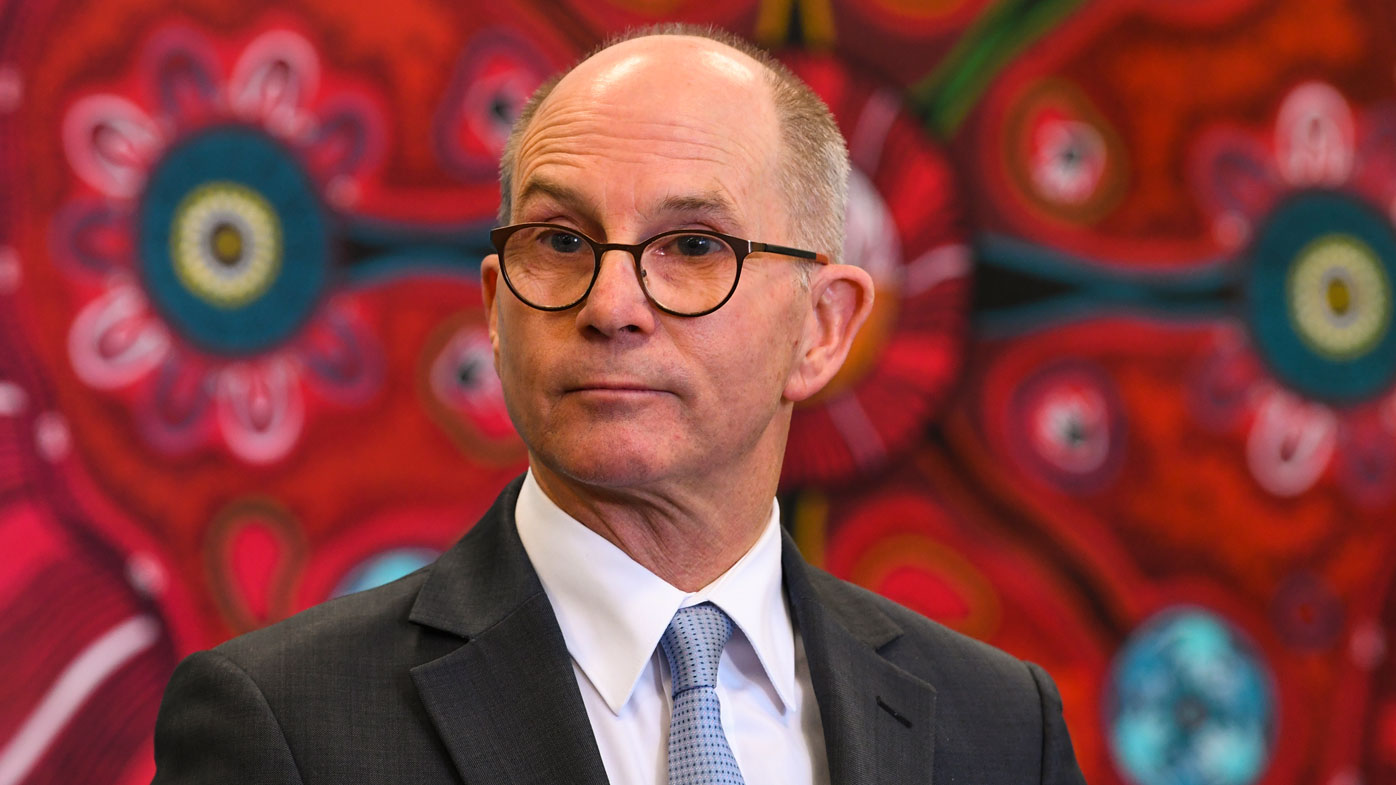
"As a result of this, all people arriving on such flights originating within this three-day period will need to go into 14 days of supervised hotel quarantine."
States will determine their own response to anyone who has already arrived in Australia from New Zealand and may pose a risk of transmitting the virus.
As Auckland enters the three-day lockdown, the rest of New Zealand will be placed under heightened restrictions.
This means in Auckland schools can stay open for parents that need to be at work. but otherwise children are asked to stay at home. Supermarkets and pharmacies will continue to stay open but businesses that interact with customers face-to-face will close. Gatherings outside of a person's bubble are prohibited.
New Zealand had successfully stamped out community spread of the virus, although new cases are regularly caught at the border among returning travellers, all of whom are required to spend two weeks in quarantine.
Officials said they’re keeping an open mind on how the Auckland mother, father and daughter caught the disease. They said the mother works at an airline catering company, and officials are investigating whether there is a link to infected passengers.
"I'm asking New Zealanders to continue to be strong and to be kind," Ardern said at a hastily arranged press conference on Sunday evening. "I know we all feel the same way when this happens. We all get that sense of 'Not again.' But remember, we have been here before and that means we know how to get out of this again, and that is together."
Officials said the daughter’s high school will be closed on Monday and Tuesday as a precaution, but so far they have not announced any broader restrictions.
“We are gathering all of the facts as quickly as we can, and the system that served us so well in the past is really gearing up to do so again,” said COVID-19 Response Minister Chris Hipkins.
He described the cases as new and active. He said scientists are carrying out genome sequencing to see whether the cases are of the more transmissible variants, and also to see whether they match with any infected passengers.
“New Zealand has kept COVID-19 contained better than almost any other country,” Hipkins said. “But as we have kept saying, there is no such thing as no risk.”
New Zealand, with a population of 5 million, has reported a total of just over 2,300 cases and 25 deaths since the pandemic started.
With AP, Stuff
Toddler, woman two latest COVID-19 cases in Victoria
A three-year-old child and a woman are the two latest locally acquired COVID-19 cases in Victoria as more exposure sites are added to the state's ever growing list.
Health Minister Martin Foley confirmed the cases today and said both were linked to the Holiday Inn at Melbourne Airport and each visited the same venue on the same night.
"Both attended a private dining venue in Sydney Road, Coburg on the night of February 6," he said.
READ MORE: Will Victoria's five-day lockdown be extended?

Mr Foley said they are from separate households and have been in isolation since Friday.
Both returned a positive test yesterday.
The toddler has attended the Goodstart Early Learning Centre in Glenroy but it has not been added to the list of exposure sites.
The centre will be closed tomorrow.
"Goodstart Glenroy – Pacoe Vale Road will be temporarily closed after a child at the centre tested positive to COVID-19 late last night," a statement read.
"Families have been notified of the closure and the parents of any child who is deemed a close contact with the positive case will be contacted directly by DHHS.
"The child contacted the virus from a person outside of the centre linked to the Holiday Inn cluster.
"The centre will be deep cleaned before it is given clearance to re-open by DHHS."
Testing commander Jeroen Weimar said a COVID-19 Quarantine Victoria (CQV) employee had attended the private function while unknowingly infected with COVID-19.
He said 38 people were at the Coburg venue on February 6.
The CQV staff member worked at the Holiday Inn on February 3 and February 4 and tested negative on both of those days.
"So we have a staff worker who was exposed on February 3 and 4. She now turns up at a social gathering on February 6 and there is an immediate transmission on to a number of other people," Mr Weimar said.
https://twitter.com/VicGovDH/status/1360834287436718081?ref_src=twsrc%5Etfw
Authorities said the worker originally tested negative the day after the Coburg function.
But after her positive test on February 10, her sample from February 7 was retested and found to be a weak positive.
The mother of the infected child could also be a possible case after returning three different results in 24 hours.
"Our epidemiologists and specialists are working with her and with our labs to be clear about the nature of what possible infection she may have, whether she is at the start of her infectious period or whether she is coming towards the end," Mr Weimar said.
"Serology is being done and we will work out over the next few hours exactly where this individual stands.
"She does have some workplace contacts, particularly with Alfred Health and we are working closely with them to do preliminary testing, precautionary testing of her potential contacts."
There are now three cases associated with the Coburg function.
One further case was also detected inside the state's hotel quarantine program today.
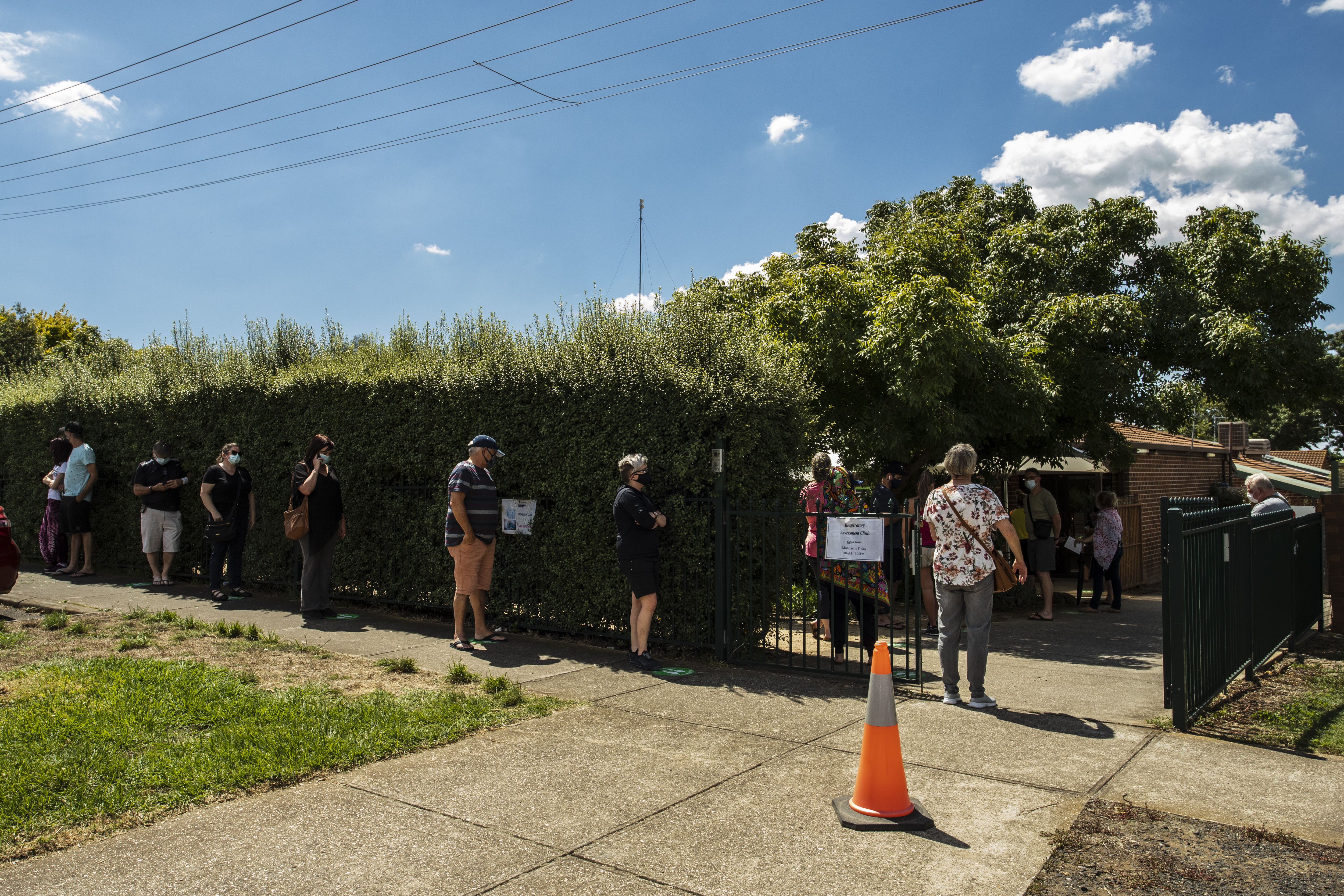
A total of 21,475 Victorians were tested for the virus yesterday.
The results come after Victoria's health department published a several new exposure sites.
Anyone who was at the locations at the listed times is being directed into mandatory 14-day self isolation and must get tested for COVID-19.
The exposure sites and times are as follows:
- Yarra Trams No. 11 on February 11, 7:55am – 8:10am between Harbour Esplanade and William Street
- Yarra Trams No. 58 on February 11, 8.10am – 8:25am between Bourke Street/William Street and Queen Victoria Market/Peel Street
- Queen Victoria Market, Queen Street Melbourne, 8:25am – 10:10am Section 2 – Fruit and Vegetables, and used Section 2 – Female toilet
- Yarra Trams No. 58 on February 11, 9:40am – 9:55am between Queen Victoria Market/Peel Street and Bourke Street/William Street
- Elite Swimming, Pascoe Vale on February 8, between 5pm and 6pm
- Woolworths inside Broadmeadows Central in Broadmeadows on February 9, between 12.15pm and 12.30pm
- Ferguson Plarre Bakehouses, Broadmeadows on February 9 between 12.30pm and 12.45pm
- Oak Park Sports and Aquatic Centre, Pascoe Vale on February 9 between 4pm and 7.30pm
You can view the full list of current COVID-19 exposure sites for Victoria on the Department of Health and Human Services website.
READ MORE: Victoria's 'circuit breaker' lockdown: What you can and can't do
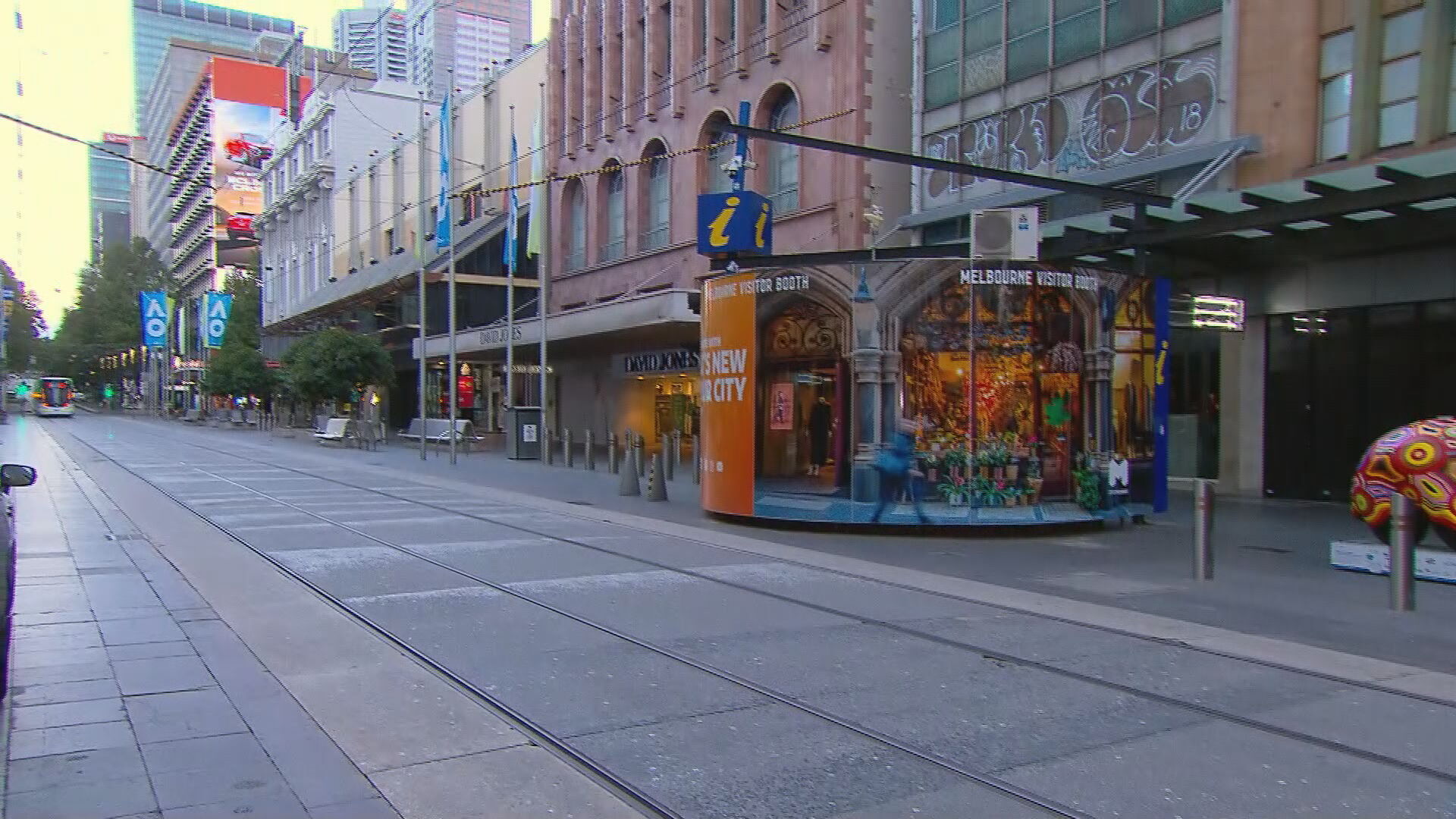
The new alerts come as Victorians entered their second day of hard lockdown, with non-essential businesses closed and residents unable to leave home except for four essential reasons.
Just one new locally acquired COVID-19 case was confirmed in the state yesterday: a friend of one of the Holiday Inn quarantine hotel workers where the outbreak originated.
The total number of cases linked to the Holiday Inn cluster is now 16.
Meanwhile, viral fragments have been detected in wastewater in Coburg and South Melbourne.
"We have two detections that we are currently investigating. One is in the Coburg catchments which takes in Coburg, Coburg North, and the other is in the south of Melbourne, that Punt Road, Clarendon Street area, which we are keen to understand more of," Mr Weimar said.
"We do have a couple of exposure sites, a few cafes in that area that are listed on our website, so I would really encourage people who are in Reservoir, Southbank, South Melbourne to be extra vigilant and come forward to be tested if you have any symptoms."