All posts by FreeNews

Haiti: Ambassador to US Calls for International Support in Talks with Opposition


The Ambassador of Haiti in Washington DC, Bocchit Edmond called on the international community to support talks between the government of President Jovenel Moïse and the opposition as the constitutional crisis worsens, but he rejected calls for the resignation of Head of State.

Let us recall that this crisis was born of a dispute between President Jovenel Moïse and the opposition on the date on which his mandate is supposed to end with regard to 2 contradictory articles in the Constitution : article 134.1 on which the Head of State https://www.haitilibre.com/en/news-32954-haiti-politic-16-political-parties-for-an-end-of-the-president-s-mandate-on-february-7-2022.html and article 134.2 invoked by the opposition.

Ambassador Edmond told reporters he did not believe there should be a situation where President Jovenel Moïse leaves office before February 7, 2022, when his 5-year term expires.

“I believe that the international community, our international partners, should work with us and with the opposition parties to make sure that we come to some kind of dialogue or political agreement, so that we can have a better way of ‘move forward “said Ambassador Edmond adding “We have a legitimate President. The international community must support it, accompany it, so that we can carry out the electoral process successfully.”

The post Haiti: Ambassador to US Calls for International Support in Talks with Opposition appeared first on The St Kitts Nevis Observer.

Hundreds gather in Melbourne CBD to protest COVID-19 lockdown

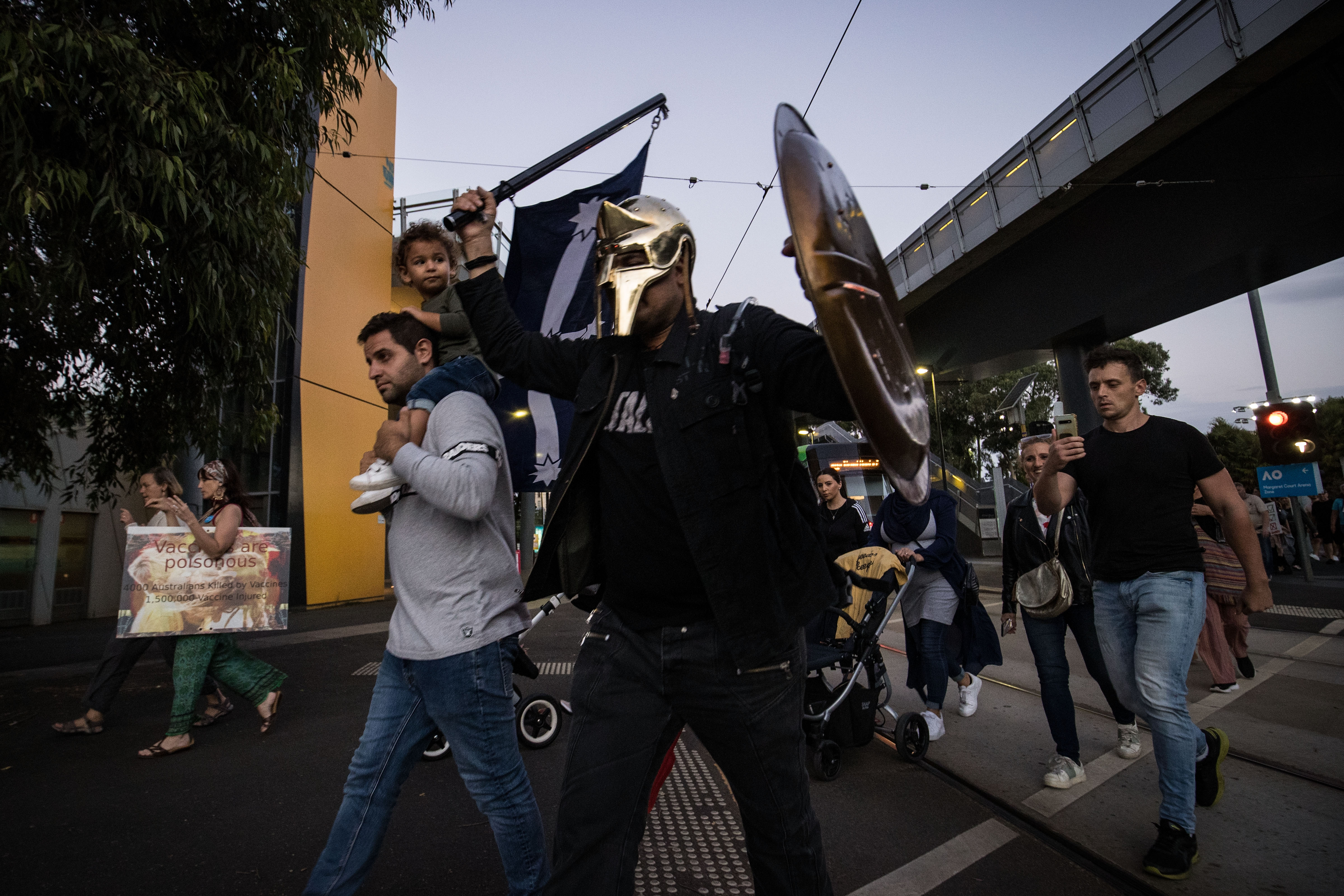
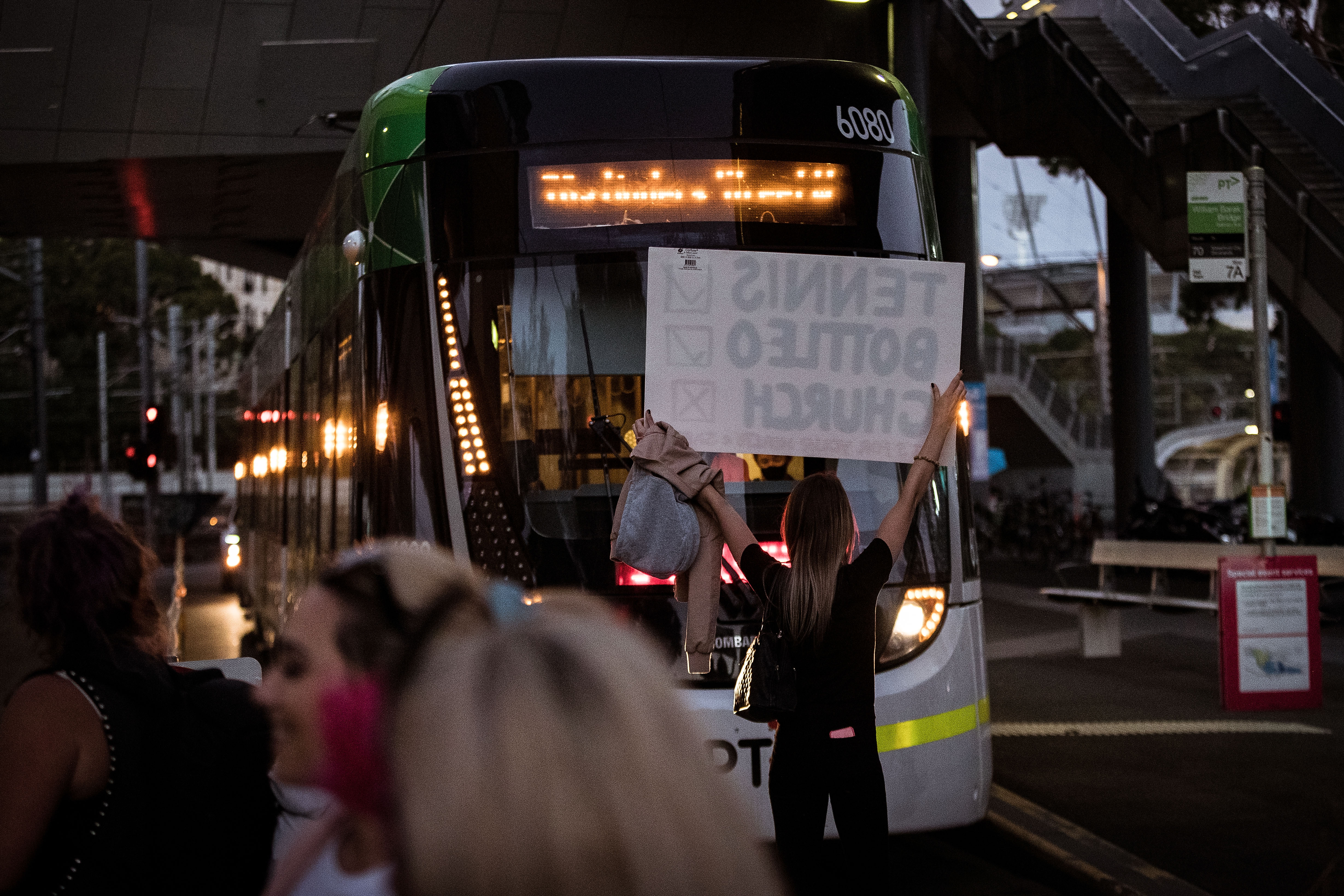
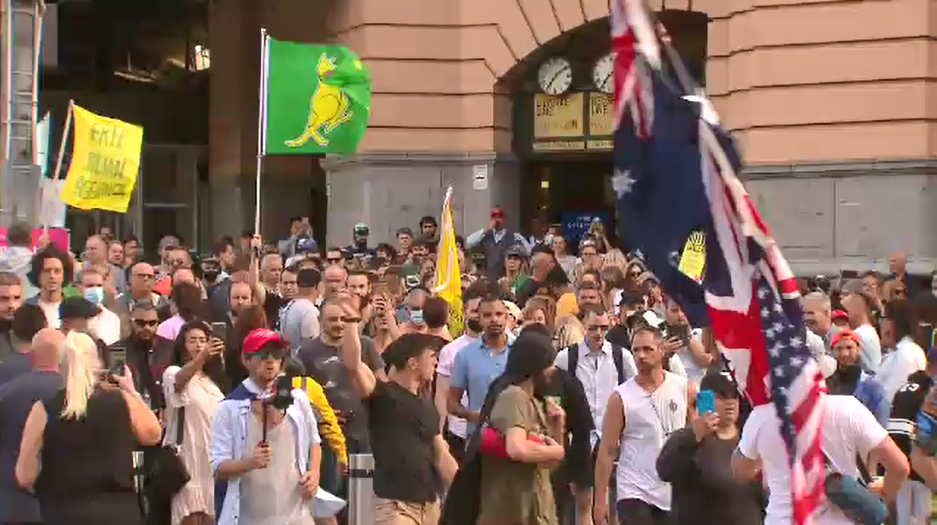
As Victoria braces to be flung into a snap lockdown from 11.59pm tonight, hundreds have gathered at Melbourne CBD to protest the restrictions.

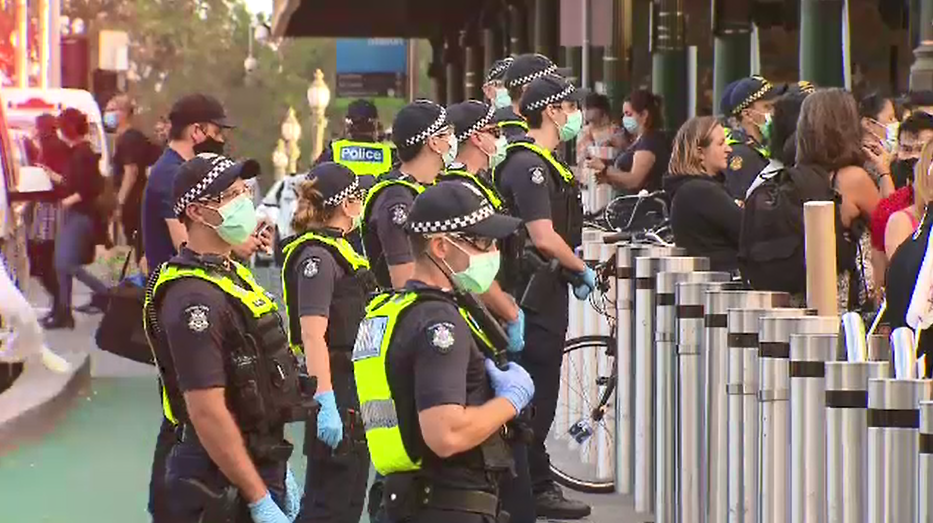
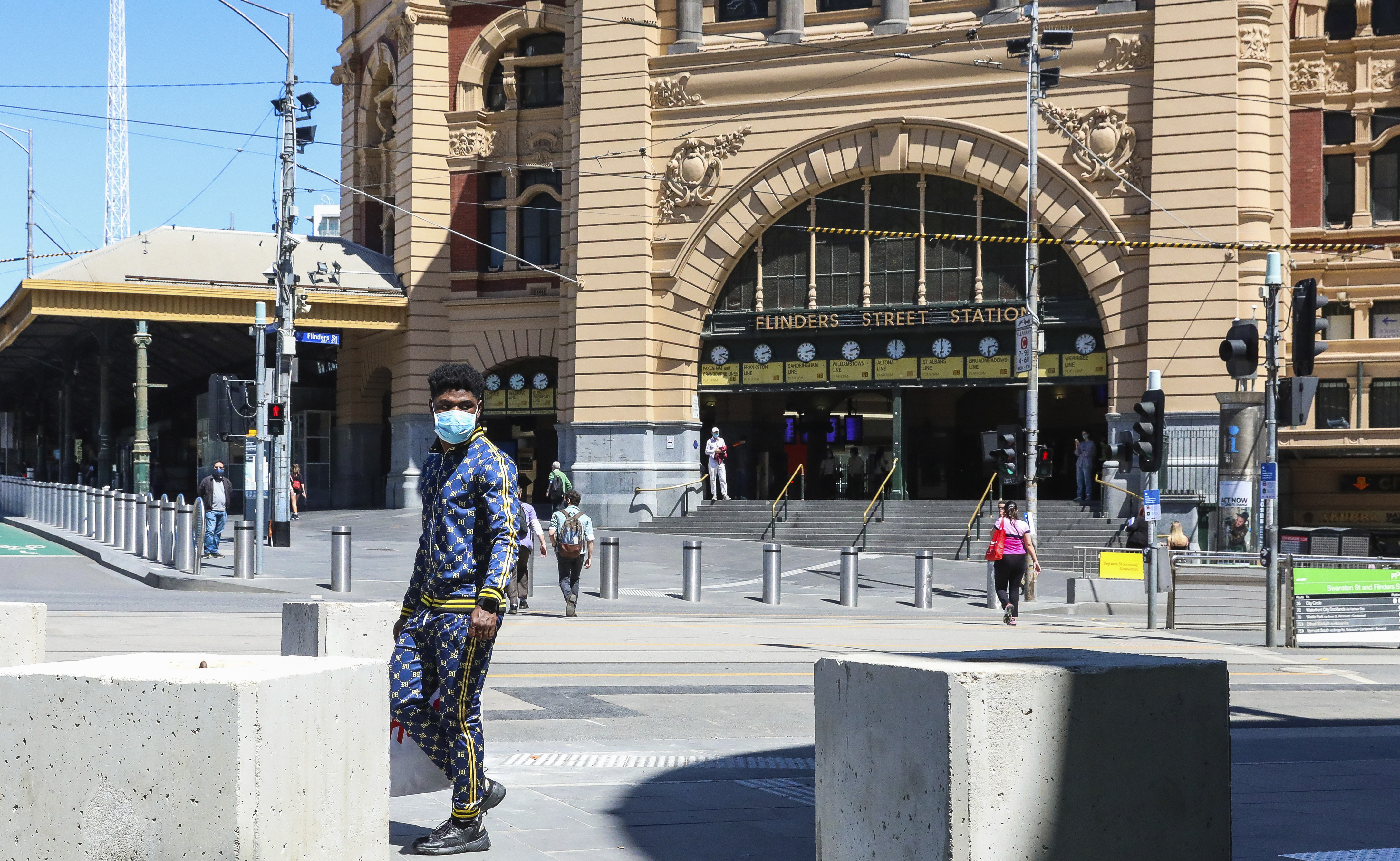
Police have set up a barrier at the steps of Flinders Street Station, where organisers told crowds to meet at 7pm.

The message coming out of protesters is to "make your voices heard" saying Melburnians cannot endure another lockdown.

https://twitter.com/Eliza_Rugg9/status/1360141405843120129?s=20

READ MORE: Victoria to enter five-day 'circuit breaker' lockdown from 11:59pm tonight

The hard lockdown comes as the Holiday Inn cluster grew to 13 cases overnight, now spreading beyond the hotel quarantine program.

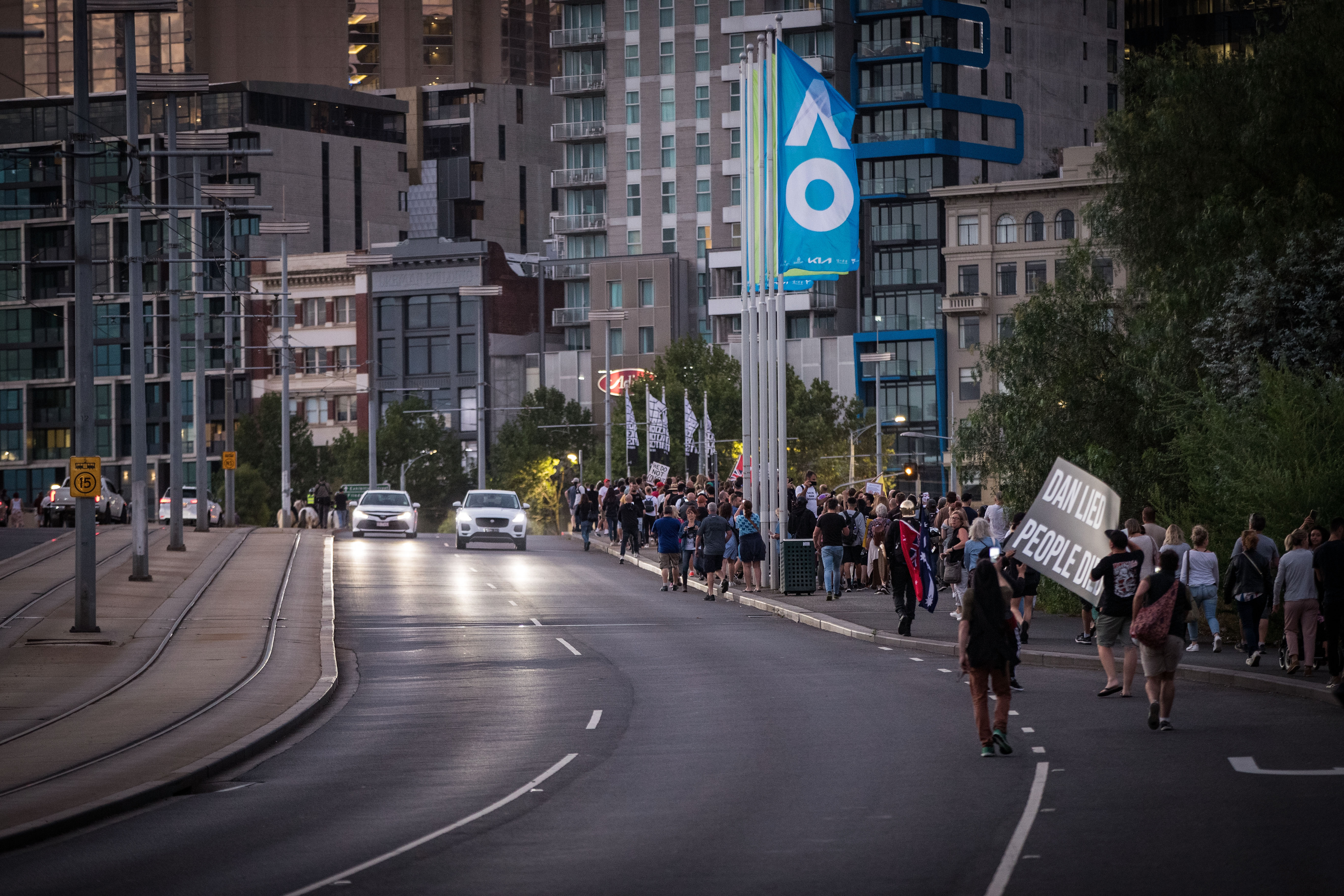
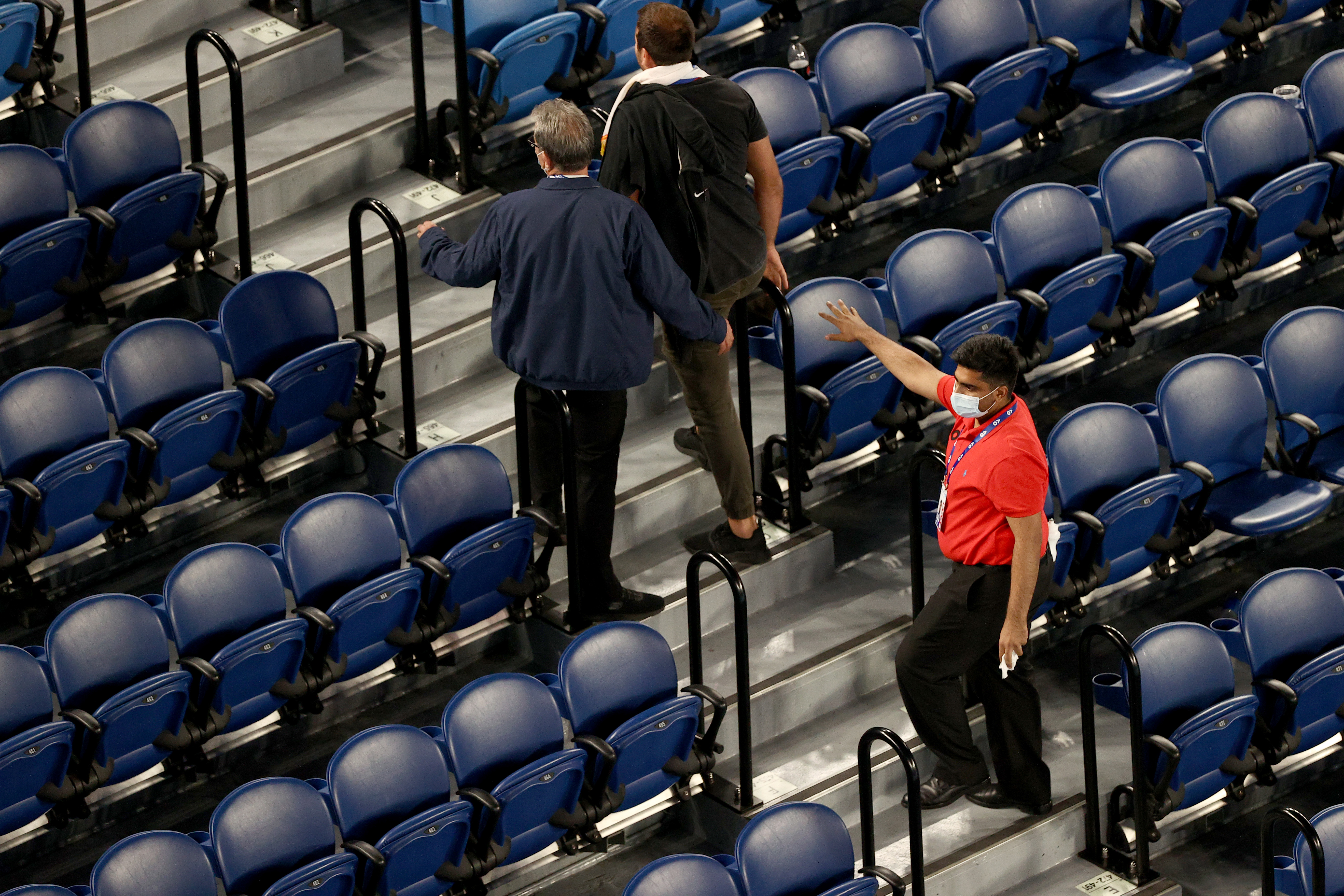
Hundreds have begun marching through the city, escorted by police as organisers say they are heading towards the Australian Open at Rod Laver Arena.

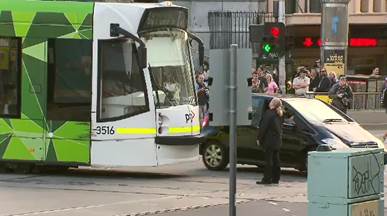
One protester has already been arrested after allegedly standing in front of a moving tram.

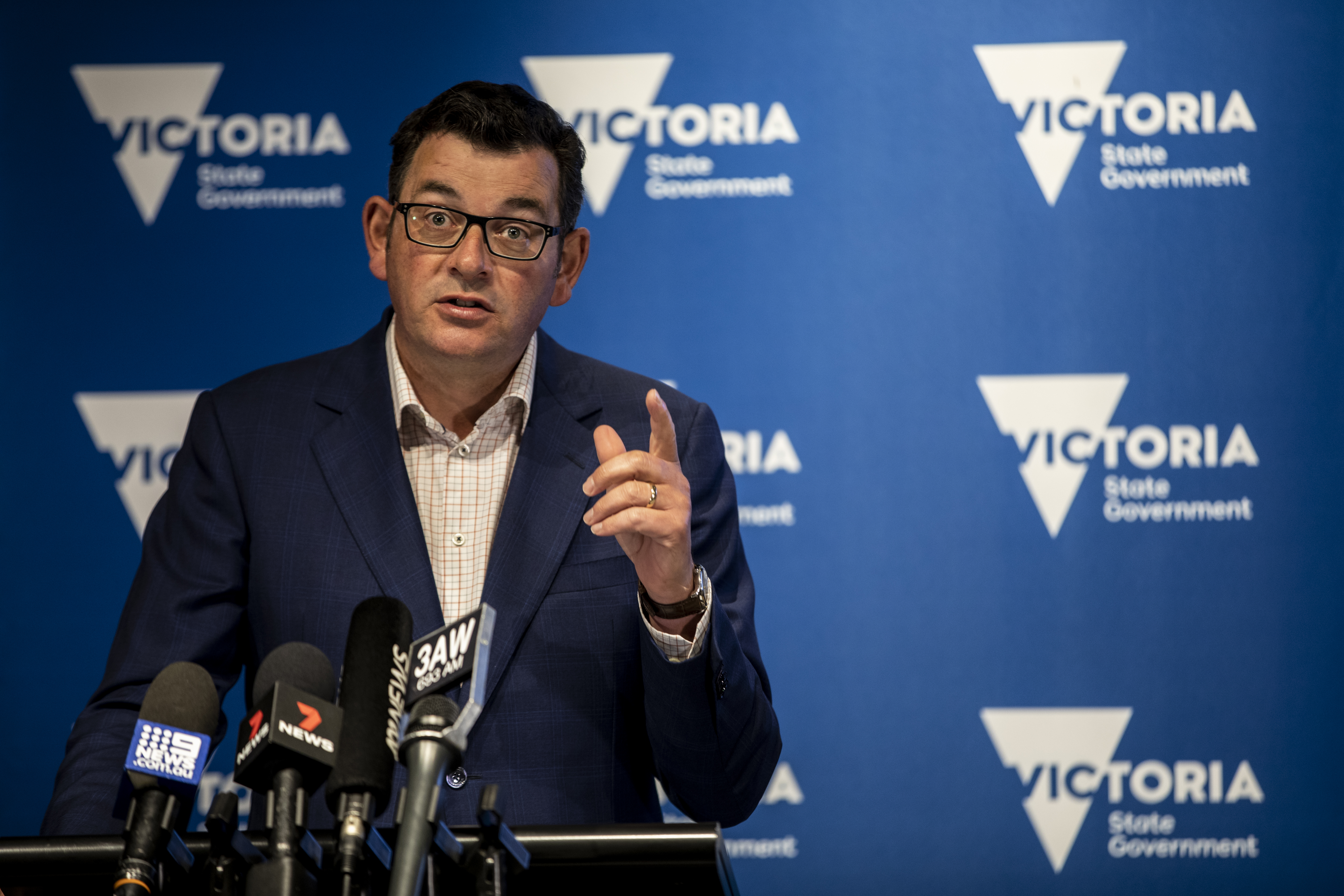
Premier Daniel Andrews has heard about the protest and says he is not impressed.

READ MORE: Everything you need to know as Victoria's five-day lockdown kicks off

"Having a protest tonight, that's like a vaccine is it that's suddenly going to fix everything?" Mr Andrews said.

"No it's not. It might well spread the virus though and it's not really a good thing to be doing."

Two men dead after three fishermen swept off rocks in NSW

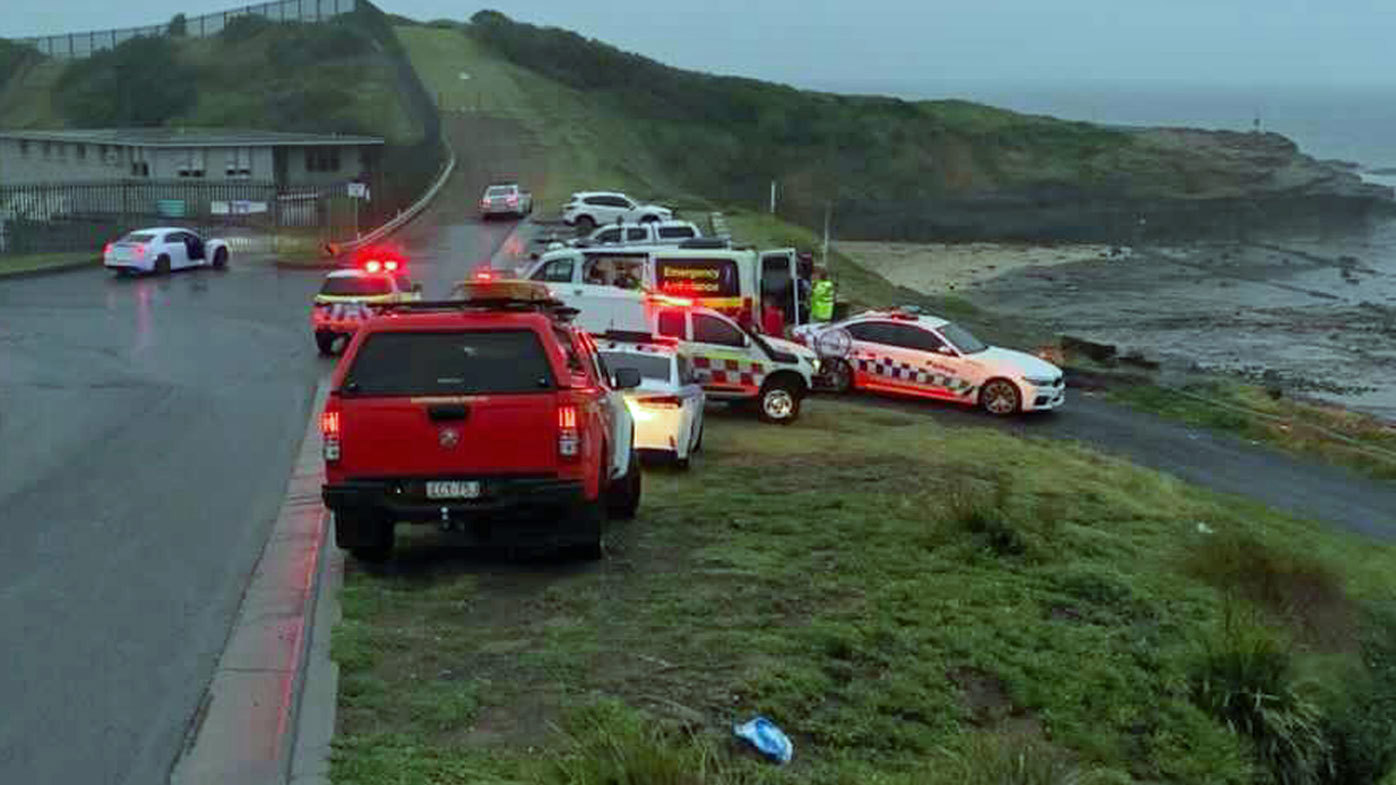
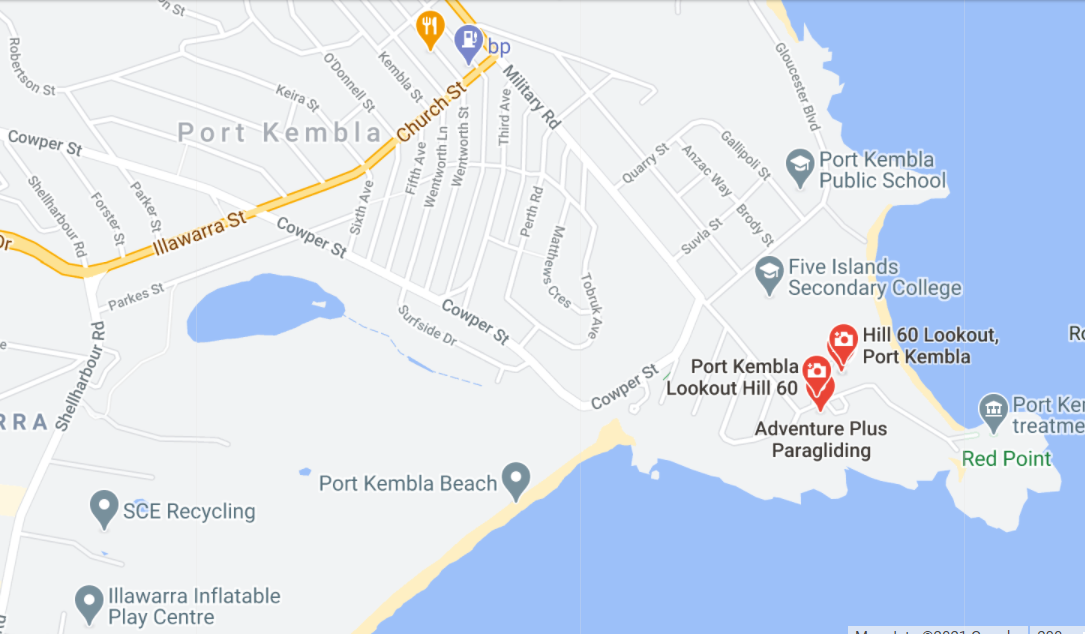
Two men have died after three fishermen were swept into the ocean at a popular fishing spot at Port Kembla, NSW this evening.

Emergency crews rushed to the scene following reports the group were washed off the rocks at Hill 60 just before 7pm today.

Two men were pulled from the water after a Highway Patrol officer and member of the public entered the water with a flotation device in an attempt to save them, but it took local surf lifesaving crews to retrieve them from the water.

Hill 60 Port Kembla drowning

Despite CPR being performed, one of the men died at the scene. He's been identified as a 30-year-old man from Lakemba, in Sydney's west.

A second man, who is yet to be identified, died later in hospital after being winched from the sea and taken to Wollongong Hospital in a critical condition.

The third man, a 42-year-old from Wiley Park, was not injured.

Ten ambulance crews attended with paramedics treating a total of seven patients at the scene, including two police officers who suffered minor injuries and are being assessed at Wollongong Hospital.

"No words can describe the chaotic scene that paramedic crew and other first responders we were faced with this evening," Inspector Norm Rees, NSW Ambulance said.

"Surf living saving, bystanders and the Toll Ambulance Rescue Helicopter went above and beyond in the assistant of retrieving patients from the water and also helping paramedics with CPR."

Three weeks ago, another three men drowned in the same spot after being swept off the rocks and into the ocean at night.

"It was absolutely heartbreaking to respond to a scene where previous lives have been lost despite the warnings," Inspector Rees said.

The rock platform is the same location another three men died in January after they were also swept into the sea while fishing.

Anyone with information about this incident is urged to contact Crime Stoppers on 1800 333 000 or https://nsw.crimestoppers.com.au.

Everything you need to know as Victoria's five-day lockdown kicks off

Victoria has begun its 'circuit breaker' five-day lockdown, in an effort to curb the spread of the deadly UK coronavirus strain in the community.

The state was plunged into hard lockdown after the Holiday Inn cluster grew to 13 on Thursday and the list of exposure sites continues to climb, putting hundreds at risk.

Seven new exposure sites were identified just moments before Victoria entered stage four restrictions.

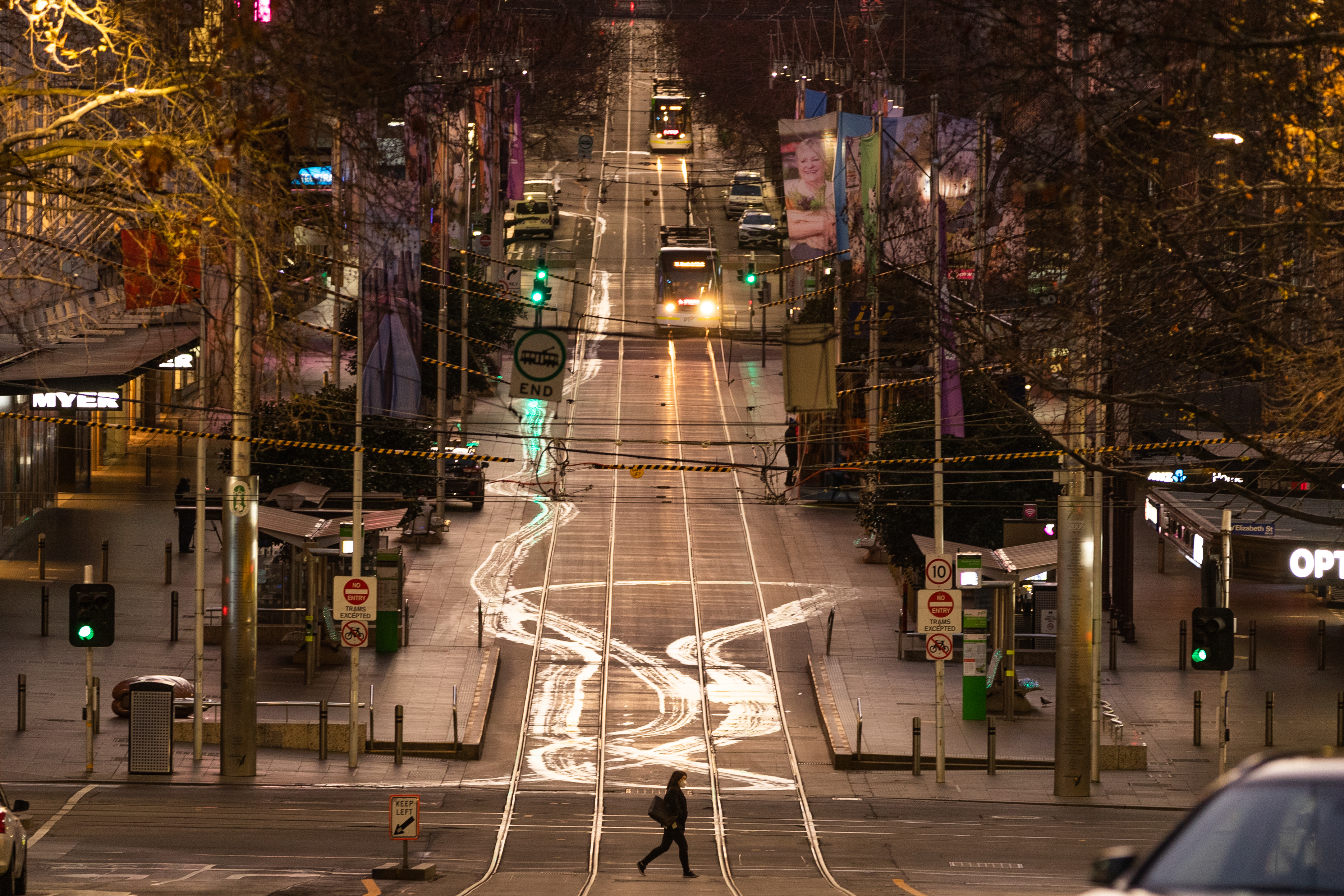
Bourke Street deserted due to Melbourne lockdownhttps://twitter.com/VicGovDH/status/1360204917647028224?s=20

READ MORE: Hundreds gather in Melbourne CBD to protest COVID-19 lockdown

Between Saturday February 6 and Tuesday February 9, a Coburg function venue, retail stores at Hoppers Crossing and South Melbourne and multiple bus routes across the city have been identified as risk exposure sites.

Anyone who visited the locations during at the specified times must isolate, test and remain isolated for 14 days regardless of the result.

For a full list of exposure sites, see the Victoria Government Department of Health website.

https://twitter.com/9NewsMelb/status/1360213167045963778?s=20https://twitter.com/VicGovDH/status/1360223362472157188?s=20

As the state wakes up to a raft of new restrictions including prescribed reasons to leave home, mask mandates and border closures, here's what to expect:

Lockdown restrictions

Stage four restrictions are currently in place until 11.59pm on Wednesday February 17.

Victorians can only leave their homes for one of the four essential reasons: shopping for necessary goods and services, essential work or education if it cannot be done from home, care and caregiving, exercise for two hours per day with household members, an intimate partner or one other person only.

A five-kilometre travel radius has also been reinstated and masks must be worn everywhere in public.

READ MORE: Panic buying frenzy begins in Victoria after lockdown announced

Schools have closed, but will remain open for vulnerable children or the children of permitted workers.

Places of worship, religious gatherings and ceremonies are not be permitted to operate.

Weddings can't go ahead unless on compassionate grounds.

Hairdressing and beauty services have been forced to close, along with real estate auctions and inspections, unless online.

Indoor physical recreation and sporting venues, outdoor physical recreation and community sport have shut down. However, outdoor playgrounds remain open.

Swimming pools are closed, along with community facilities such as libraries.

Creative studios, entertainment venues and non-essential retail also shut their doors.

READ MORE: What does Victoria's five-day lockdown mean for NSW?

Hospitality venues are now takeaway only.

Visits to residential aged care facilities are banned during the stage four lockdown and restrictions on hospital visits have also come into effect, visitors only allowed by essential contractors or for end-of-life reasons.

The Australian Open tennis tournament will continue as professional athletes are classed as essential workers under the Victorian government's latest advice, including staff "attending to ensure the safe running of the event".

Venues hosting professional sport events are allowed to remain open, but spectators are banned.

Border Restrictions

All states and territories have closed their borders to Victoria, except NSW, after thousands of interstate travellers were potentially exposed to COVID-19 at Melbourne Airport.

Each state is taking a slightly different approach to exactly how those rules are enforced – and at what date they commence.

Queensland:

The sunshine state has closed its borders to Greater Melbourne for two weeks from 1am this morning.

The decision comes after more than 1500 people now in Queensland who passed through Terminal Four of Melbourne Airport while an infected worker was there.

The two-week border closure is said to allow Queensland contact tracers time to contact and test people exposed.

New South Wales:

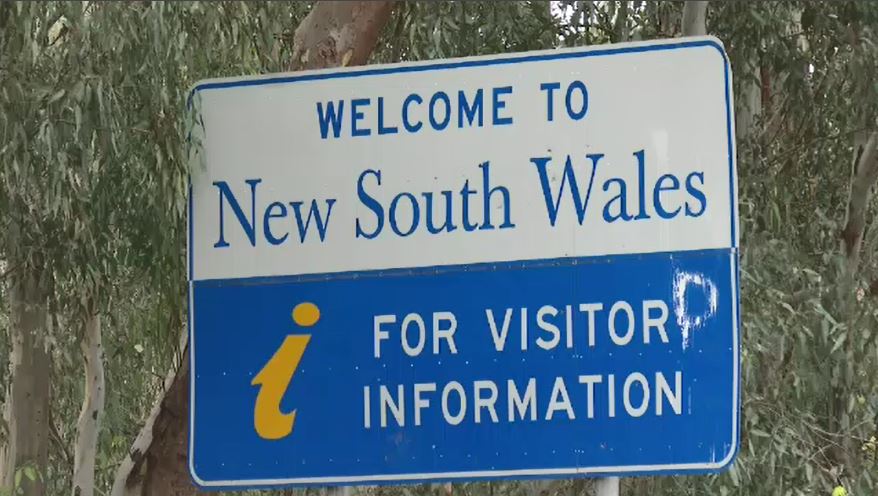
A staunch advocate of open borders, NSW Premier Gladys Berejiklian ruled out shutting the border to Victoria.

Instead, the state will mimick Victoria's five-day hard lockdown for all returned Victorian travellers.

Under a new state-wide Order, anyone arriving in NSW from Victoria after 11.59 last night must remain at their home or place of residence for the five-day period announced by the Victorian Government.

They will be required to follow the same rules as are in place in Victoria, meaning they cannot leave home except for the four essential reasons.

Anyone attempting to enter New South Wales from Greater Melbourne by road will be required to fill out a declaration form.

Northern Territory:

The Northern Territory has banned Victorian travellers from entering the state from 10.45am yesterday.

The whole of Greater Melbourne has been declared a COVID-19 hotspot, meaning anyone attempting to enter after that time obliged to undertake a 14-day quarantine at Howard Springs.

https://twitter.com/kathleengazzola/status/1360035968795906051?s=20

Western Australia:

West Australian Premier Mark McGowan has implemented a hard border with Victoria for 72 hours, starting at 6pm AWST (9pm AEDT) Friday night.

This means that only exempt travellers will be allowed into Western Australia, including government officials, the military and freight drivers.

Compassionate reasons are also possible including for returning WA residents.

Anyone with an exemption will have to undergo 14 days of self isolation, not hotel quarantine, and be tested for COVID-19.

Australian Capital Territory:

Australia's capital is also tightening its border restrictions with Victoria, starting at 11.59 last night.

Anyone who enters the ACT after that time will have to self-isolate for 14 days.

South Australia:

South Australia had already closed its borders to Greater Melbourne from midnight on Wednesday.

While as of Friday evening, measures were tightened further with bans on transit through Melbourne.

The bordertown checkpoint and COVID testing site on the Western Highway from Kaniva to the SA border re-opened.

South Australian residents will be allowed to return, but have to self isolate for 14 days.

Meanwhile anyone in SA who has visited a COVID-19 hotspot in Victoria is required to quarantine for 14 days.

This includes anyone who passed through Terminal Four of Tullamarine Airport in Melbourne on February 9.

Tasmania:

Tasmania is introducing a hard border to all of Victoria from midnight Friday.

All states except NSW close to Victoria

State and territory governments across Australia are tightening border restrictions with Victoria after thousands of interstate travellers were potentially exposed to COVID-19 at Melbourne Airport.

There are now 13 coronavirus cases linked to Melbourne's Holiday Inn, with the state now entering a five-day snap lockdown.

There are also new potential community infection sites across Melbourne.

READ MORE: Victoria enters five-day snap lockdown

Of most concern to health authorities is the Brunetti cafe at Melbourne Airport.

An infected staff member worked there on Tuesday – potentially spreading the virus to interstate travellers before they boarded their planes.

All states and territorities except for New South Wales have now implemented tough border controls on those coming in from Victoria, while NSW is choosing to mimick Victoria's hard lockdown for those coming across the border.

However, each state is taking a slightly different approach to exactly how those rules are enforced – and at what date they commence.

Here's a breakdown of each state's rules for travelling to Victoria.

Queensland

Queensland will close its borders to Greater Melbourne for two weeks from tonight, the state's Deputy Premier Steven Miles has announced.

This encompasses 36 Local Government Areas and comes into effect at 1am on Saturday.

Mr Miles said the 14-day border closure "won't make much practical difference" for the first five days, as the whole of Victoria will be in hard lockdown with residents unable to leave home.

LIVE UPDATES: Victoria enters five-day 'circuit breaker' lockdown
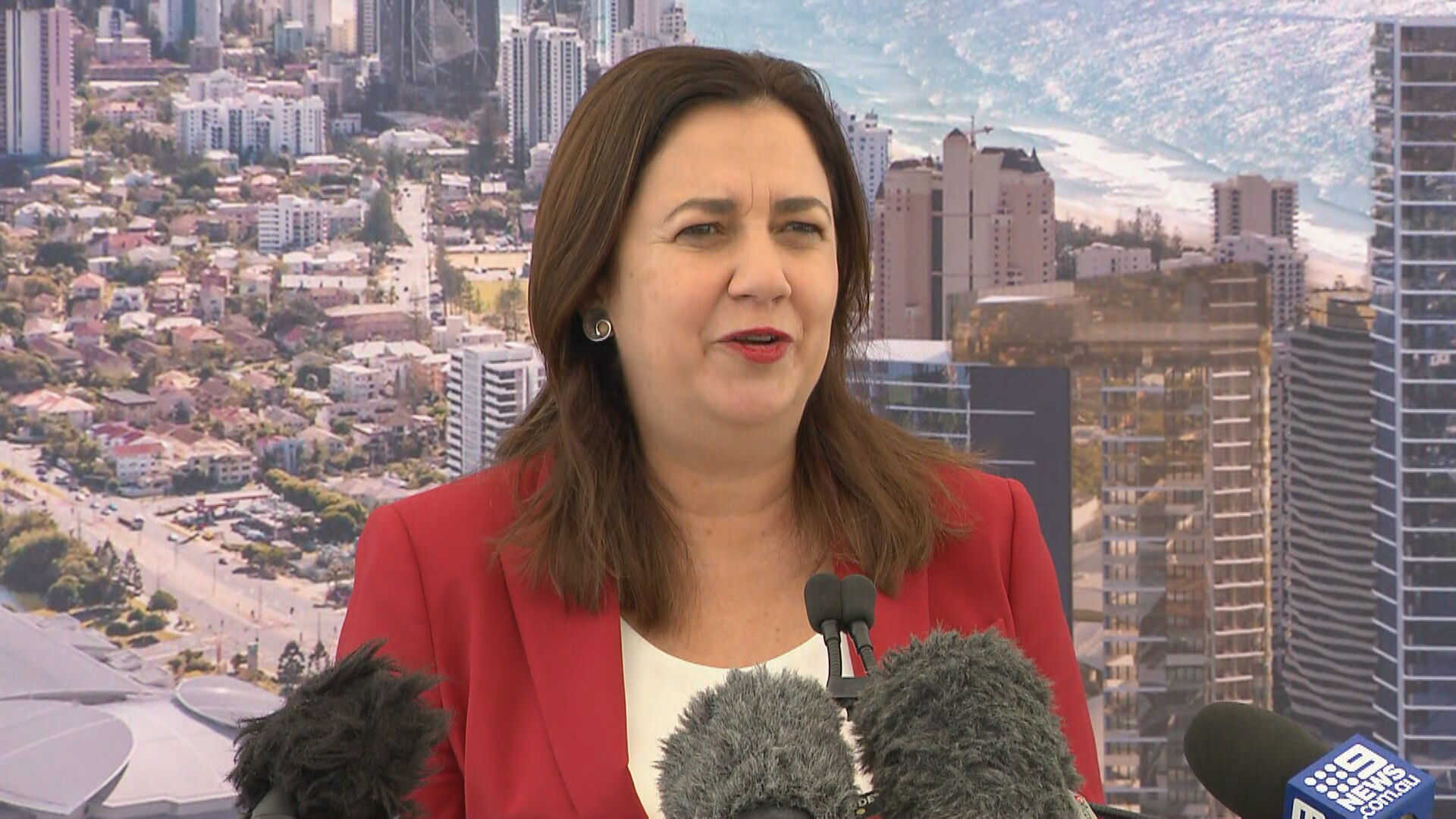
However, he said the longer two-week period will allow Queensland contact tracers time to contact and test the more than 1500 people now in Queensland who passed through Terminal Four of Melbourne Airport while an infected worker was there.

Health authorities are racing to contact the people who passed through Terminal 4 at Brisbane Airport on January 9, who will be required to self-isolate for two weeks and test for the virus.

The decision comes after Queensland health bosses held emergency talks with Victorian authorities earlier today.

There are no new cases of coronavirus in Queensland today, either locally acquired or in hotel quarantine.

READ MORE: Bottling of Australia's locally-made COVID-19 vaccine to begin
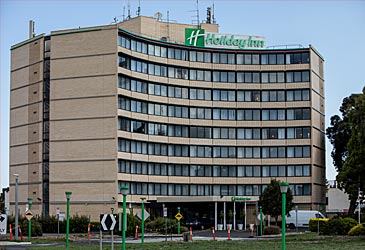
Melbourne Holiday Inn (Getty)

The result comes from 7110 tests conducted in the previous 24 hours.

There are now just six active cases remaining in the state.

New South Wales

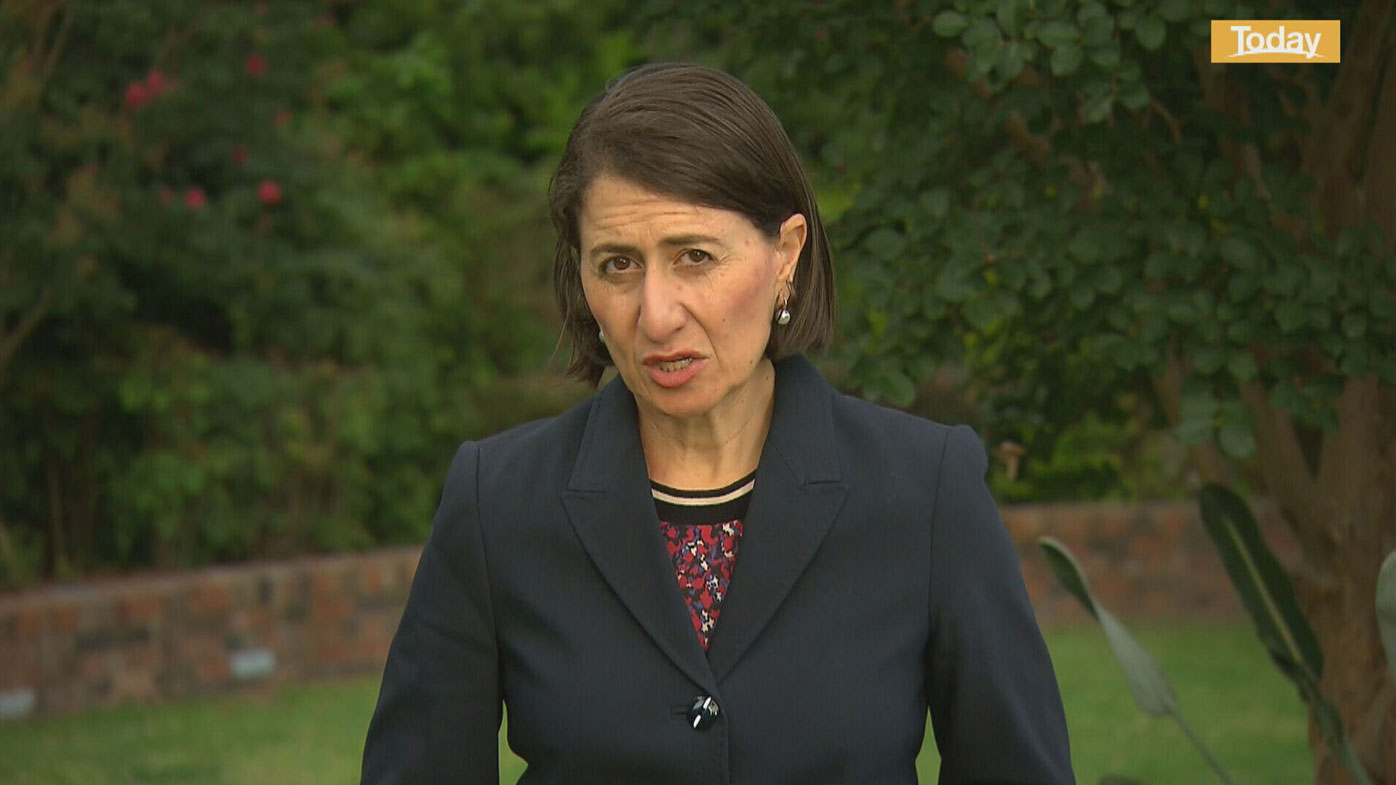
A staunch advocate of open borders, NSW Premier Gladys Berejiklian ruled out shutting the border to Victoria just this morning, hours before Victoria's snap lockdown was announced.

Instead, the state will mimick Victoria's five-day hard lockdown for all returned Victorian travellers.

Under a new state-wide Order, anyone arriving in NSW from Victoria after 11.59 tonight must remain at their home or place of residence for the five-day period announced by the Victorian Government.

They will be required to follow the same rules as are in place in Victoria, meaning they cannot leave home except for four essential reasons: shopping for essential items, exercise, essential work and to seek or provide medical or other care.

For NSW residents living along the Victorian border, the five-day stay-at-home requirement will only apply to people who have visited Greater Melbourne after 11.59 tonight. It will not apply to NSW border residents who travel into regional Victoria.

READ MORE: Victoria's lockdown explained: What you can and can't do
In addition, anyone attempting to enter New South Wales from Greater Melbourne by road will be required to fill out a declaration form.

This requirement is already in place for those travelling by air or rail.

Despite labelling the Holiday Inn cluster "concerning", Ms Berejiklian said that there was "no reason for us to close the border".

"The one and only occasion where we have closed the border was to Victoria and that is when they had in excess of 150 cases a day," she said.

"We are nowhere near that. At this stage we think it is manageable."

Increased screening measures are in place at Sydney Airport to monitor travellers coming in from the areas impacted by Melbourne's Holiday Inn cluster.
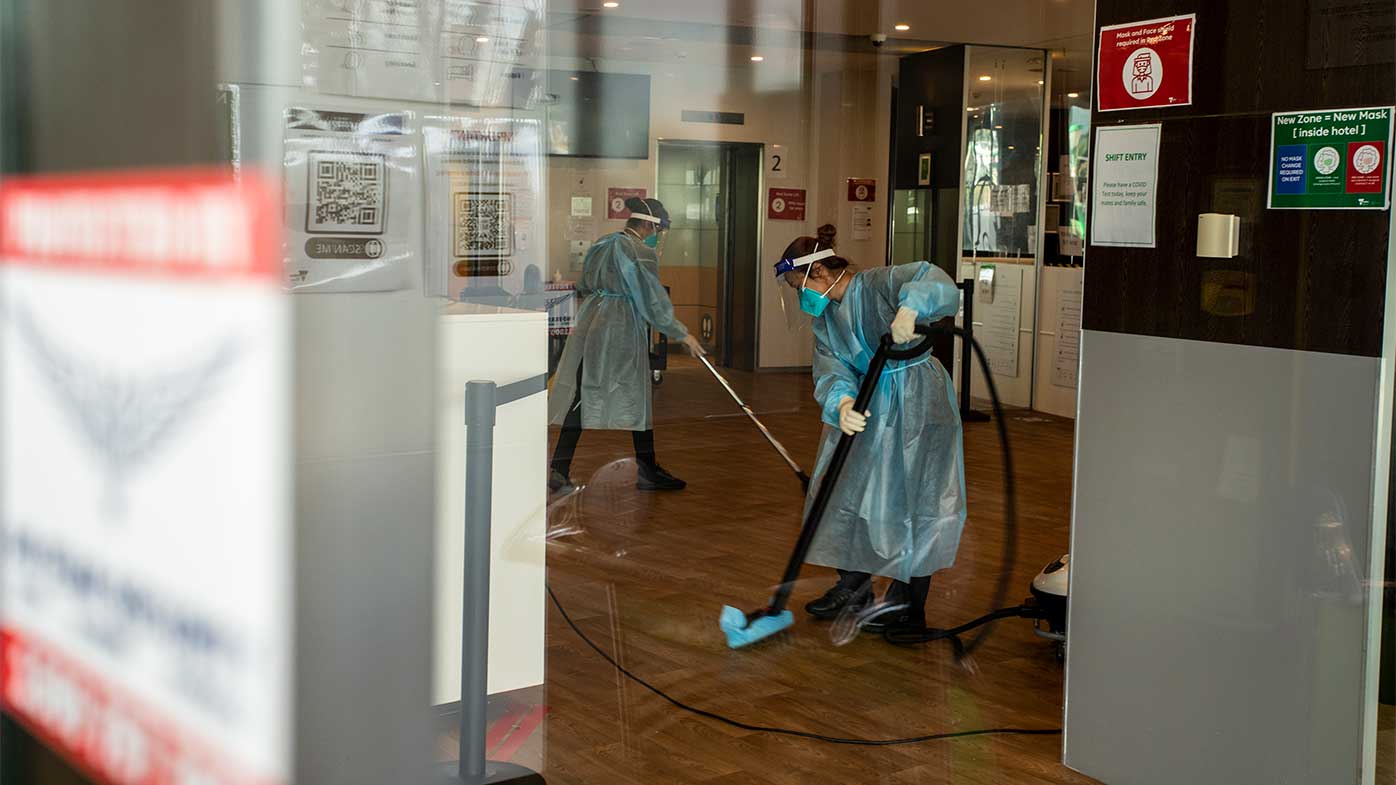
Cleaners are seen wearing full PPE while working at the disinfection of the Holiday Inn hotel.

Hundreds of NSW returned travellers will have to undergo 14 days in self isolation after a worker at a Melbourne Airport cafe tested positive.

NSW Health is currently contacting 7000 returned travellers who passed through the airport between February 7 and February 9, directing them to get a COVID-19 test and isolate until they receive a result.

Anyone who was at Terminal Four of Melbourne Airport between 4.45am and 2pm on February 9 is being told they must isolate for 14 days.

NSW Health is now "strongly advising" against travelling to Victoria unless it is essential.

Northern Territory

The Northern Territory has banned Victorian travellers from entering the state.

The whole of Greater Melbourne has been declared a COVID-19 hotspot, meaning anyone attempting to enter after that time obliged to undertake a 14-day quarantine at Howard Springs.

The change came into effect as it was announced at 10.45am today.

https://twitter.com/kathleengazzola/status/1360035968795906051?ref_src=twsrc%5Etfw

Additionally, for the first time Melbourne's Tullamarine Airport is being included in this hotspot designation.

This means anyone transitting through Melbourne from other states or territories will have to quarantine, regardless of where they started their journey.

Passengers on board flights scheduled to arrive in the territory this afternoon have already been notified of the requirements.

Anyone who has arrived from greater Melbourne including the airport since February 7 must self isolate and get tested.

Western Australia

West Australian Premier Mark McGowan has implemented a hard border with Victoria for 72 hours, starting at 6pm AWST (9pm AEDT) tonight.

This means that only exempt travellers will be allowed into Western Australia, including government officials, the military and freight drivers.

Compassionate reasons are also possible including for returning WA residents.
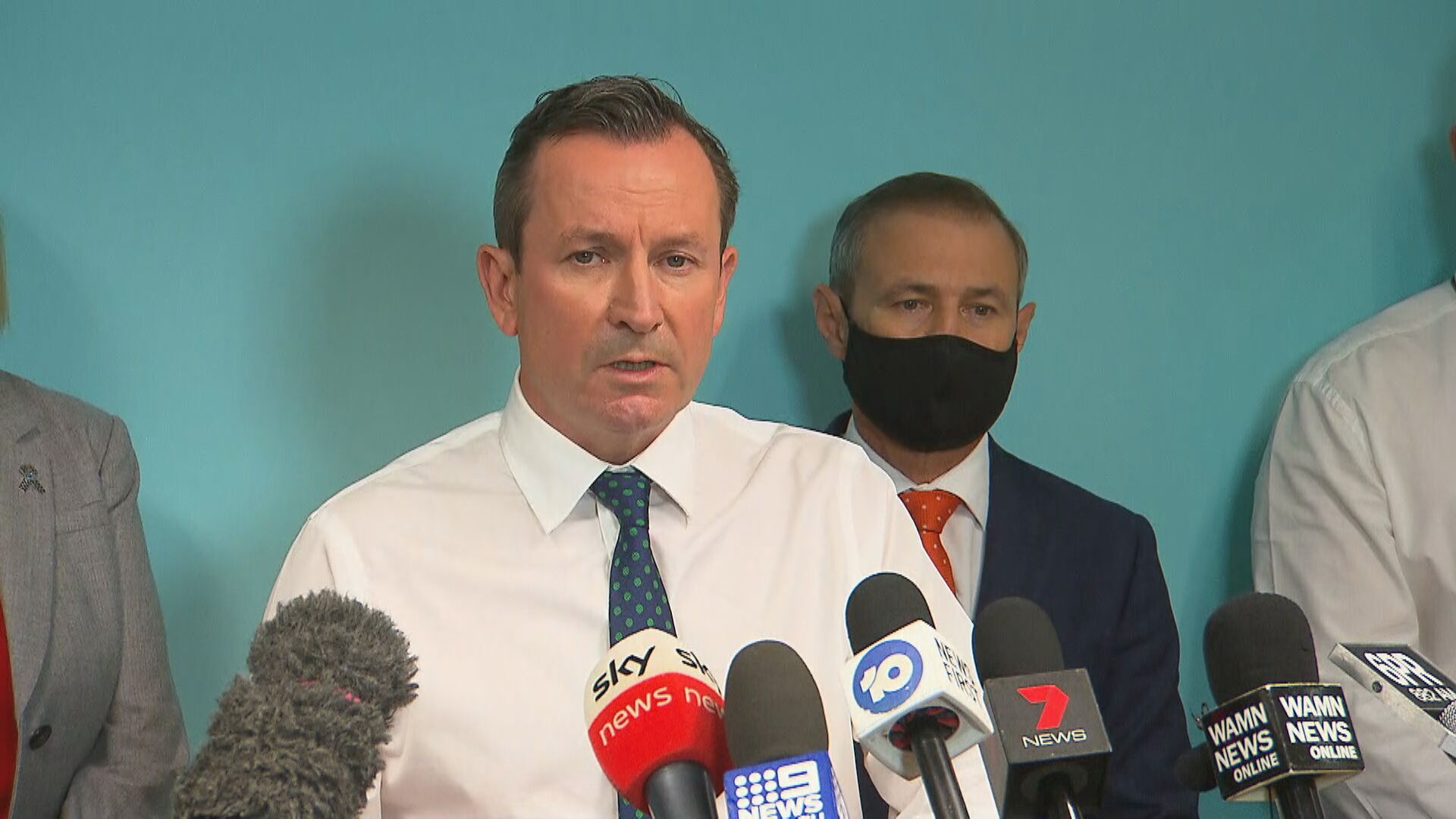
Mr McGowan said those exempt people will have to do 14 days of self isolation – not hotel quarantine – and be tested for COVID-19.

He said the measures were needed to be "extra cautious."

Currently, Victorians seeking to enter WA have to quarantine for 14 days and return a negative COVID-19 test.

It comes as border restrictions for NSW residents entering WA are removed, with the state now classed as "very low risk".
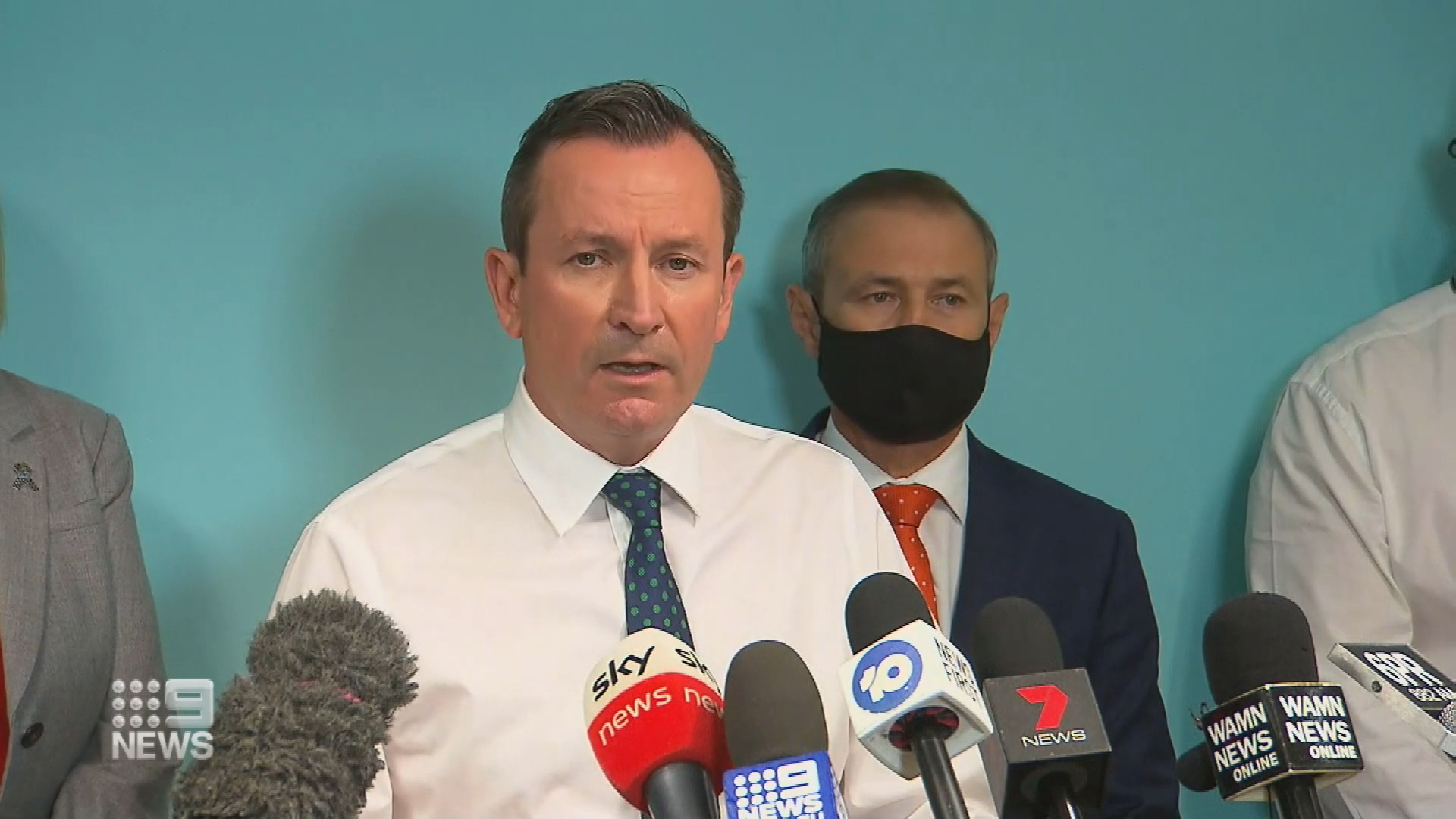
Border slammed shut with Victoria

ACT

Australia's capital is also tightening its border restrictions with Victoria, starting at 11.59pm tonight.

Anyone who enters the ACT after that time will have to self-isolate for 14 days.

Crucially, the state isn't backdating this requirement so anyone who enters before that time will be free to move around.

https://twitter.com/ACTHealth/status/1360013174934757376

It comes after Victorian MPs were advised to return to Canberra before midnight tonight so they can attend parliament next week.

A note from the Usher of the Black Rod to senators on Friday warned them that border restrictions were likely to change.

South Australia

South Australia had already closed its borders to Greater Melbourne from midnight on Wednesday.

As of Friday evening those measures were taken further, with restrictions on visiting care homes as well as a ban on transiting through Melbourne.

The bordertown checkpoint and COVID testing site on the Western Highway from Kaniva to the SA border re-opened.

While Victorians living within 70km of the Victoria/South Australia border are restricted to enter South Australia unless they are permitted to leave their home for; shopping for necessary goods/services (one person per household per day), caregiving reasons, permitted education, essential cross-border employment or providing care/support.

South Australian residents will be allowed to return, but have to self isolate for 14 days.
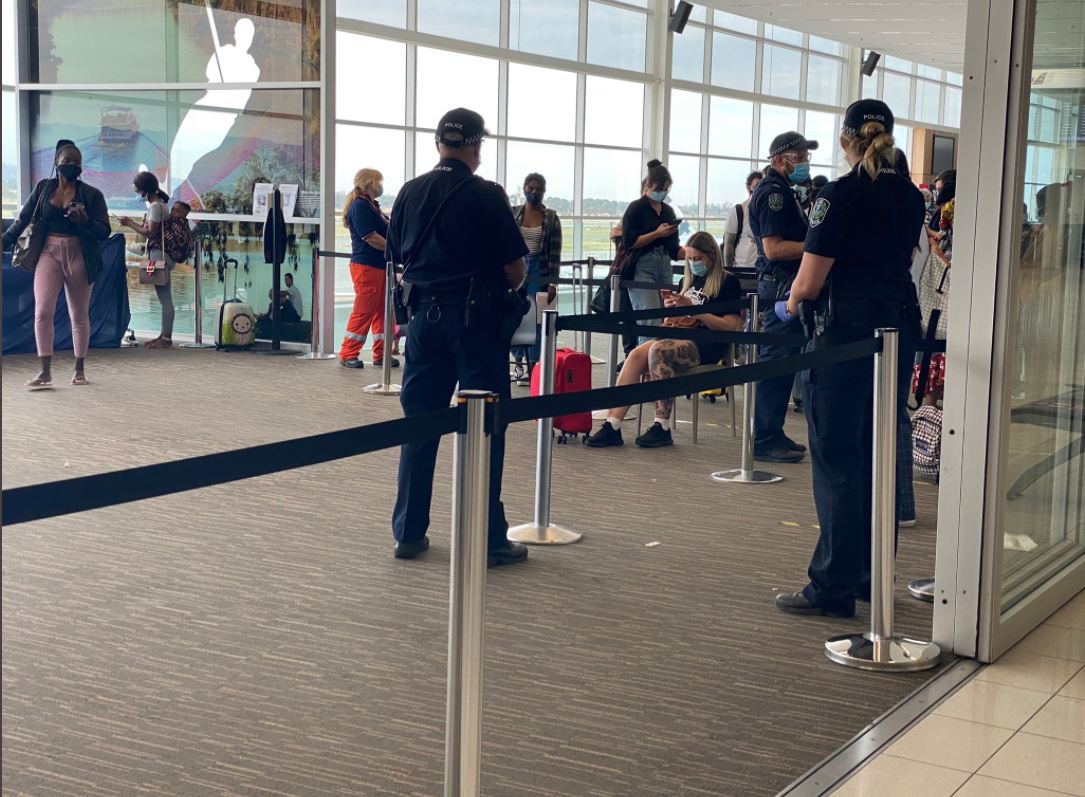
Meanwhile anyone in SA who has visited a COVID-19 hotspot in Victoria is required to quarantine for 14 days.

This includes anyone who passed through Terminal Four of Tullamarine Airport in Melbourne on February 9.

Households and contacts of those people will be required to isolate until their first negative COVID-19 test.

However, the current testing arrangements in place for people who have arrived from NSW and Western Australia will be lifted early, as of midnight tonight.
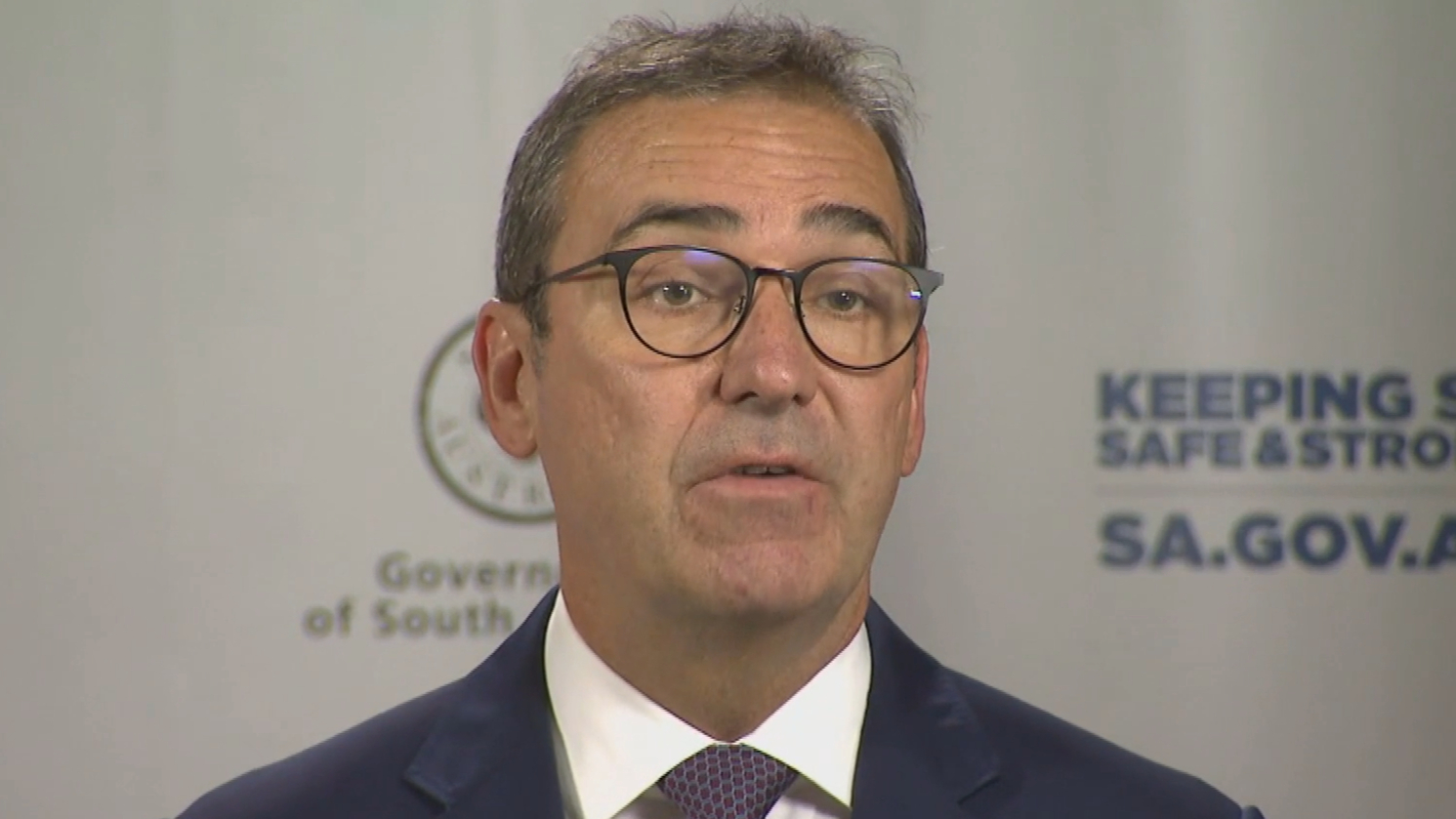
SA races to trace potential Melbourne outbreak exposures

Tasmania

Tasmania is introducing a hard border to all of Victoria, Premier Peter Gutwein has announced.

From midnight tonight, the entire state will be classed as "high risk".

Mr Gutwein said if anyone tried to enter Tasmania from Victoria after the border closed, they would be denied entry unless they had approval from the State Controller.

The decision will be reviewed if Victoria's five-day lockdown lifts as planned on Wednesday night.

Tourists Claim Barbados COVID Quarantine ‘Like Being in Prison’

British tourists have told how they experienced ‘prison camp’ conditions at a Covid quarantine facility in Barbados. Holidaymakers said they had to fight to be released after being escorted to the compound which they say lacked basic amenities.

They were taken late at night to the Harrisons Point Isolation Facility, which they described as a makeshift centre fenced off with little outdoor space and armed guards in military fatigues posted outside.

The tourists claim that the rules kept changing after they tested positive for Covid on the Caribbean island, despite being fit and healthy and having returned negative PCR results in the UK.

One couple found themselves separated on a two-week trip after flying out on December 20, before non-essential travel was banned as England’s third lockdown came into force.

Kirsten Day was escorted from her hotel at 11.30pm on Christmas Eve after a positive test. The healthcare assistant, 47, said: ‘Harrisons Point was like a prison. ‘They told my partner I would have my own room with a television but I was put straight into a ward with people who were quite poorly.

‘The care when they realise you are poorly is quite good but if you’re ok, you’re just stuck there. ‘You are fenced off from the outside world and while there was a small area outside with chairs no one was cleaning them afterwards. If the door wasn’t open, you had to ask. ‘I didn’t touch the kettle or the microwave because people with symptoms were touching them and they were not being cleaned afterwards. I just drank water. It was just a battle to find out what was going on, different doctors told you different things.’

Ms Day was in Harrisons Point for six days while her partner, Jason Green, who tested negative throughout their stay, continually demanded answers. She says it was a constant battle to find out the testing criteria but she was eventually allowed to leave in a taxi after returning a blood test, which showed Covid antibodies, and a negative swab test.

The couple paid a total of around £900 for the tests they took on the island and are trying to get the money refunded. Kirsten and Jason, 52, an accountant, both complained to the management and Barbadian authorities throughout their stay on different parts of the island and since returning home to Cambridgeshire.

Ms Day said: ‘The food was just horrendous, we had chicken nuggets and bread and butter for breakfast one morning and there were no knives. ‘They did eventually provide knives but the basics just weren’t there. ‘They would ask you to take medicine and give it another patient.’

Ms Day tested positive for Covid antibodies in July but followed all the travel rules before leaving for her holiday. She added: ‘We knew we took a risk, but nothing was ever explained. ‘I knew the isolation centre wouldn’t be a hotel but if I’d have known if I could have ended up somewhere like that I would have stayed at home.’

Another tourist, who travelled to Barbados with her baby daughter on a budget deal with a holiday club, says she was left thousands of pounds out of pocket after being taken to Harrisons Point. The 38-year-old had also been given the all-clear for Covid with PCR and lateral flow tests before leaving the UK on December 28. The teacher and her eight-month-old daughter were taken to the 200-bed isolation facility after they and a friend arrived at the Blue Orchid resort to begin a two-week break.

The post Tourists Claim Barbados COVID Quarantine ‘Like Being in Prison’ appeared first on The St Kitts Nevis Observer.

Squeezed by Sanctions, Pandemic, Cuba Turns to Capitalism

By Katell ABIVEN (AFP)     9 hours ago in Travel
Cuba is undergoing a paradigm shift: after decades of tight, centralized control, the communist government is opening up the bulk of its economy to the private sector.

While economic decline and spiralling unemployment are the main drivers, analysts say the liberalization measures can also be seen as an overture to a new US president.

“It is definitely a strong signal at a crucial moment when the US administration said it is revising the policies of (Donald) Trump towards Cuba,” said Ricardo Torres, an economist at the University of Habana.

Six decades of US sanctions, toughened during Trump’s term in office, have claimed a heavy toll on Cuba’s economy, worsened by the coronavirus crisis and a steep drop in tourism, a critical sector.

Last month, Havana said Trump’s sanctions cost the country some $20 billion, adding that “the damage to the bilateral relationship during this time has been considerable.”

The Cuban economy shrank 11 percent in 2020, and exports declined by 40 percent.

At the weekend, the government in Havana announced it would authorize private enterprise in a bid to boost its economy and create jobs, though limited to individual entrepreneurs for now, not businesses.

The number of authorized private activities would grow from 127 to over 2,000, but excludes 124 sectors including the press, health and education, which remain in government hands.

The reform represents a major ideological shift in a country where the government and its affiliate companies have monopolized most of the economy since 1961.

– ‘Long overdue’ –

Cuba began timidly opening up to private capital in the 1990s before fuller authorization in 2010, followed by a boom after the historic warming of ties with Cold War rival the United States in 2014 under then-president Barack Obama.

Today, about 600,000 Cubans — some 13 percent of the workforce — are employed in the private sector.


Today about 600 000 Cubans -- some 13 percent of the workforce -- are employed in the private secto...

Today, about 600,000 Cubans — some 13 percent of the workforce — are employed in the private sector. Most work in gastronomy, transportation and tourist accommodation
YAMIL LAGE, AFP/File

Most work in hotels, restaurants, transportation and tourist accommodation.

Millions of people work for the government, but the exact number is not known.

Trump reversed many of Obama’s moves to ease tensions with Cuba.

He banned American cruise ships stopping over on the island, blacklisted a range of Cuban companies and bosses, prosecuted foreign companies doing business there, and made it difficult for Cubans working abroad to send money home.

The new US President, Joe Biden, has promised to bring back some of Obama’s policies to normalize ties, while also paying attention to human rights concerns in the country of some 11.2 million people.

Some in the United States have welcomed Cuba’s policy shift, which will for the first time see private salary earners in sectors such as agriculture, construction and IT.

“This is long overdue, it’s welcome news. And the United States should affirm that the embargo was never intended, and will not be used, to penalize private enterprise in #Cuba,” US Senator Patrick Leahy said on Twitter.

Former Obama adviser Ben Rhodes tweeted the announcement was “a big step forward for Cubans and a welcome signal. The Biden Administration can make this more beneficial for the Cuban people by resuming the opening to Cuba as soon as possible.”

– Skepticism –

For many of Cuba’s leaders, the change may be difficult to swallow.

“There is still a lot of skepticism regarding the word ‘private’,” which many see “as people who can conspire against power,” said Cuban economist Omar Everleny Perez.

But politicians appear to have read the writing on the wall just like in Vietnam in the 1980s, where the Communist Party managed to stay in power by heavily liberalizing the economy.

“We are still a little far from that, but (the Cuban leaders) have it in mind,” said Perez of the Vietnam example.

The southeast Asian country, too, was under US sanctions, lifted in 1994 after rapprochement with Washington.

“So from a geopolitical point of view, there is a lesson that is important to recognize,” said Perez.


Cuba's policy shift will for the first time see private salary earners in sectors such as agric...

Cuba’s policy shift will for the first time see private salary earners in sectors such as agriculture, construction and IT
YAMIL LAGE, AFP/File

For his part, Torres said Vietnam’s economy was smaller and the country more rural, making change easier.

But there is a lesson to be learnt from the fellow Communist country’s experience: “if you want to create jobs, you have no choice but to create a framework for the private sector to grow”.

John Kavulich, president of the US-Cuba Trade and Economic Council, said the Cuban government must now convince the Biden administration that it is serious about restructuring the economy.

“If the Biden administration believes the (President Miguel) Diaz-Canel administration is prepared to do what is difficult, maintain the processes despite challenges, then far

The post Squeezed by Sanctions, Pandemic, Cuba Turns to Capitalism appeared first on The St Kitts Nevis Observer.

SV&G First Caribbean Country to Order Russia’s Sputnik 5 Vaccine

MOSCOW, February 12. /TASS/. The Russian Direct Investment Fund (RDIF) has confirmed registration of the anti-coronavirus vaccine Sputnik V in Montenegro and Saint Vincent and the Grenadines, the Fund said in a statement.

“The Russian Direct Investment Fund announces the approval of Russian Sputnik V vaccine against coronavirus in Montenegro and Saint Vincent and the Grenadines. In total, 26 countries have already authorized Sputnik V. Saint Vincent and the Grenadines is the first island nation of the Caribbean to register Sputnik V,” the statement said.

The vaccine was approved in Montenegro and Saint Vincent and the Grenadines under the emergency use authorization procedure without additional local clinical trials.

Sputnik V was approved earlier in Russia, Belarus, Argentina, Bolivia, Serbia, Algeria, Palestine, Venezuela, Paraguay, Turkmenistan, Hungary, UAE, Iran, Republic of Guinea, Tunisia, Armenia, Mexico, Nicaragua, Republika Srpska (entity of Bosnia and Herzegovina), Lebanon, Myanmar, Pakistan, Mongolia and Bahrain.

Moreover, the Russian preparation is one of the world’s top three coronavirus vaccines in terms of the number of approvals issued by government regulators. It is the third after those produced by Pfizer and Astra Zeneca (35 and 31 countries, respectively).

The post SV&G First Caribbean Country to Order Russia’s Sputnik 5 Vaccine appeared first on The St Kitts Nevis Observer.