(CNN) — The U.S. Coast Guard rescued three Cuban nationals from a deserted Bahaman island, where they had been living off coconuts for 33 days, the agency announced.
“It was incredible. I don’t know how they did it. I was amazed they were in as good as shape as they were,” Lt. Justin Dougherty told CNN affiliate WPLG.
While doing routine patrols on Monday, US Coast Guard aircrews saw the two men and a woman waving makeshift flags on Anguilla Cay, located in a chain of islands between the Lower Florida Keys and Cuba.
The Coast Guard dropped down a radio, food, and water to the trio on Monday and rescued them off the island on Tuesday.
The Cubans’ boat capsized in rough waters about five weeks ago, the trio told the Coast Guard, and they swam to the island.
The trio reportedly had no serious injuries but were flown to the Lower Keys Medical Center to be checked out. .
Safety officials: Kobe Bryant crash pilot got disoriented flying in clouds.
TAMER FAKAHANY DEPUTY DIRECTOR – GLOBAL NEWS COORDINATION, LONDON
The Rundown
Impeachment trial gets go-ahead after emotional, graphic first day; Senators to hear opening arguments as Trump fumes
Confronting a painful and bloody moment or period in a nation’s history can take years, decades, even centuries, if it transpires at all. And even then, there will be those who fight against addressing and extricating the thorn in the country’s shared past.
It’s rare, almost inconceivable, such a reckoning in a hallowed democratic setting would take place just one month after it occurred.
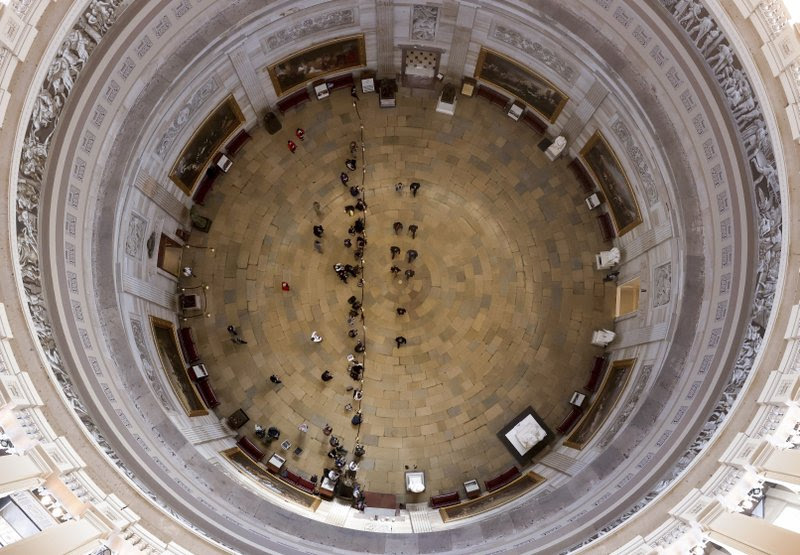
But that’s what is happening as U.S. House prosecutors wrenched senators and the country back to the deadly attack on Congress on Jan. 6.
They opened Donald Trump’s historic second impeachment trial with graphic video of the insurrection and Trump’s own calls for a rally crowd to march to the iconic building and “fight like hell” against his reelection defeat to Joe Biden.
Trump is charged with inciting the violent mob attack.
“That’s a high crime and misdemeanor,” Democratic Rep. Jamie Raskin declared in opening remarks. “If that’s not an impeachable offense, then there’s no such thing.”
Democratic prosecutors argue Trump committed a “grievous constitutional crime,” but his defense team insists his fiery words at the rally were just figures of speech — and thus protected by the Constitution’s First Amendment.
The opening arguments are set to begin today. House Democrats prosecuting the case and Trump’s attorneys will lay out their opposing arguments before the senators, who are serving as jurors. Lisa Mascaro, Eric Tucker, Mary Clare Jalonick and Jill Colvin report.
The defense lost a vote seeking to halt the trial on constitutional grounds, 56-44
AP FACT CHECK: Trump’s lawyers and the Constitution: The question of impeaching a former president has not been settled, but the AP’s Hope Yen and Calvin Woodward find that the weight of legal views contradicts the Trump team’s assertions.
Rep. Raskin: Congressman Raskin evoked tragedy in his own life as he argued for Trump’s conviction during the trial. Raskin described how, because of the funeral of his son who took his own life in December, his adult daughter was with him at the Capitol when the mob overran the building. The Maryland Democrat wiped away tears as he recalled his daughter believing that she would be killed and how she said afterward that she didn’t want to come back to the Capitol again, Will Weissert reports.
Media Decisions: The opening of the trial featured some explicit language not normally seen on daytime television or broadcast TV at all. But ABC, CBS, NBC and the cable news networks all aired unedited the 13-minute film prepared by House impeachment managers that showed disturbing details of the attack on the Capitol.The language included obscene chants by demonstrators surging toward the Capitol, David Bauder reports.
US vaccine drive complicated by first, second dose juggling act; Stimulus plan: Democrats attempt to push through school funding, wage increase
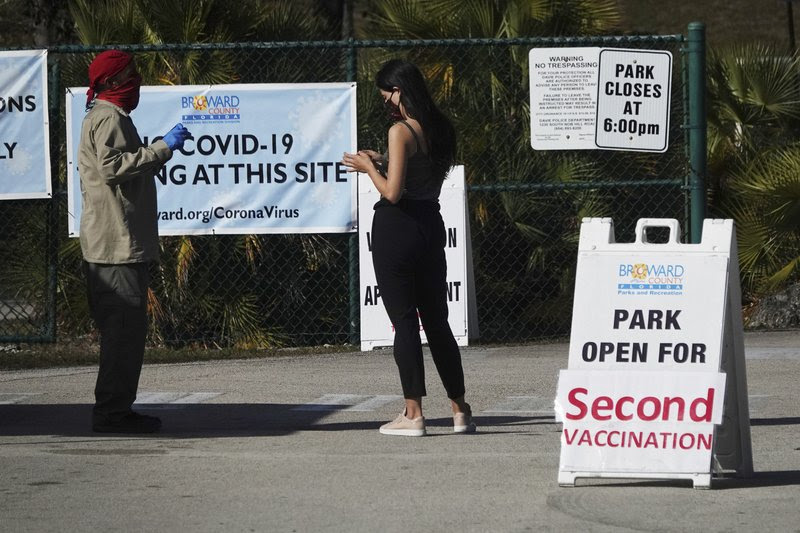
The U.S. has entered a precarious phase of the COVID-19 vaccination effort as providers try to ramp up the number of people getting first shots while also ensuring a growing number of others get the required second doses.
The need to give each person two doses a few weeks apart vastly complicates the country’s biggest-ever vaccination campaign. And persistent uncertainty about future vaccine supplies fuels worries that some people will not be able to get their second shots in time.
Some providers have curbed or canceled appointments for first doses to ensure there are enough second doses.
U.S. Relief Bill: House Democrats muscled past Republicans on major portions of President Biden’s pandemic plan, including a proposed $130 billion in school relief and a gradual increase of the federal minimum wage to $15 an hour. It’s part of a $1.9 trillion relief package of Biden’s plan reopening plan. Democrats say schools won’t be able to reopen safely until they get funding to repair ventilation systems, buy protective equipment and take other steps recommended by health officials. Republicans oppose the legislation. Colin Binkley reports.
Small Business Struggles-New Orleans: The pandemic is tamping down the joy — and revenue — associated with Carnival season in New Orleans. Parades that normally draw thousands in the weeks before Mardi Gras, or Fat Tuesday, which falls on Feb. 16 this year, have been canceled. Bars and restaurants that usually overflow with customers are closed or operating at limited capacity. Live music is all but dead. Many small business owners have weathered a lot already. Even as vaccinations ramp up, they’re preparing for a long wait before business gets back to normal, Rebecca Santana reports.
The Garden in Winter: Deep into this pandemic winter, it’s worth noting everything that a garden offers — indoors, outdoors and even in people’s own minds. It can be hard to remember what a refuge gardens were for many people last spring and summer. Seed companies sold out and household vegetable plots sprang up all over in the U.S. But even in winter the garden can provide comfort and perspective, assuring that spring is coming. Already, seed companies are selling out again. And along with spring, the arrival of vaccines might just signal a turn in the season, Julia Rubin reports.
Israel’s ultra-Orthodox believers defy virus safety rules, reject sharp criticism; South Africa scraps AstraZeneca vaccine, will give J&J jabs; World’s second-oldest person survives COVID-19 at age 116
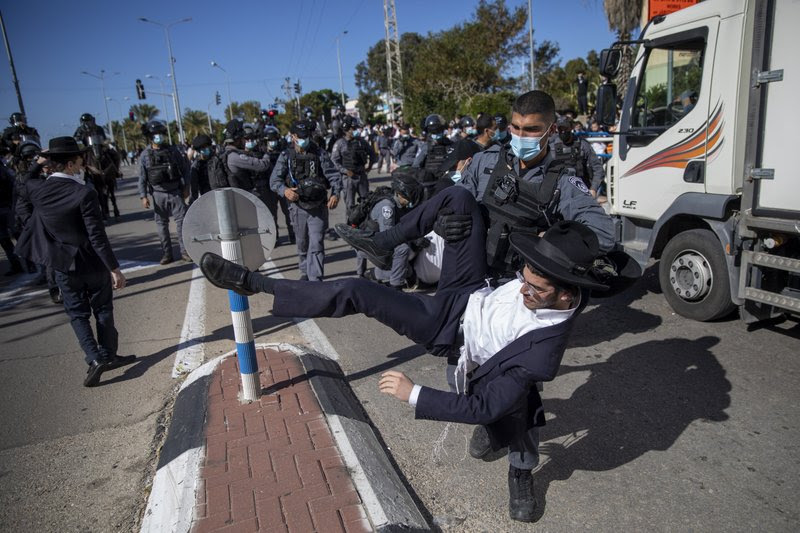
Israel’s ultra-Orthodox community has come under heavy criticism for holding large funerals and weddings in clear and dangerous violations of coronavirus restrictions.
The ultra-Orthodox community makes up 12% of Israel’s 9.3 million people but accounts for an estimated third of the country’s virus cases.
Preserving the ultra-Orthodox way of life is the community’s ultimate aim. And if that means infections spread and put others at risk, it’s a price that some members are willing to pay.
South Africa Vaccines:The country will begin administering the unapproved Johnson & Johnson vaccine to its front-line health care workers next week. It will also study them to see what protection the J&J shot provides from COVID-19, particularly against the variant dominant in the country. Health Minister Zweli Mkhize said South Africa has scrapped its plans to use the AstraZeneca vaccine because it “does not prevent mild to moderate disease” of the variant dominant in the nation. Mkhize said the J&J vaccine, which is still being tested internationally, is safe. Andrew Meldrum reports from Johannesburg.
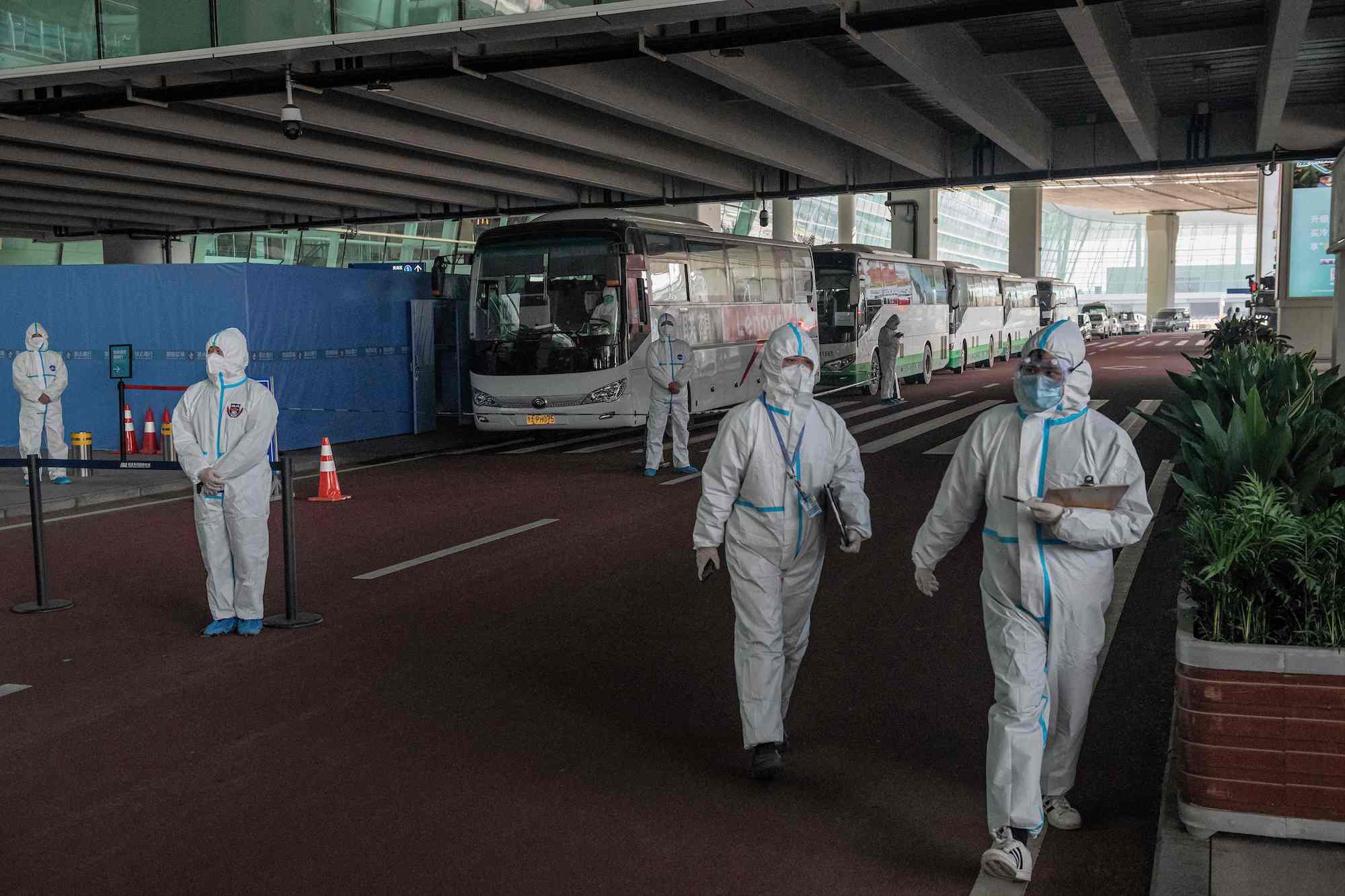
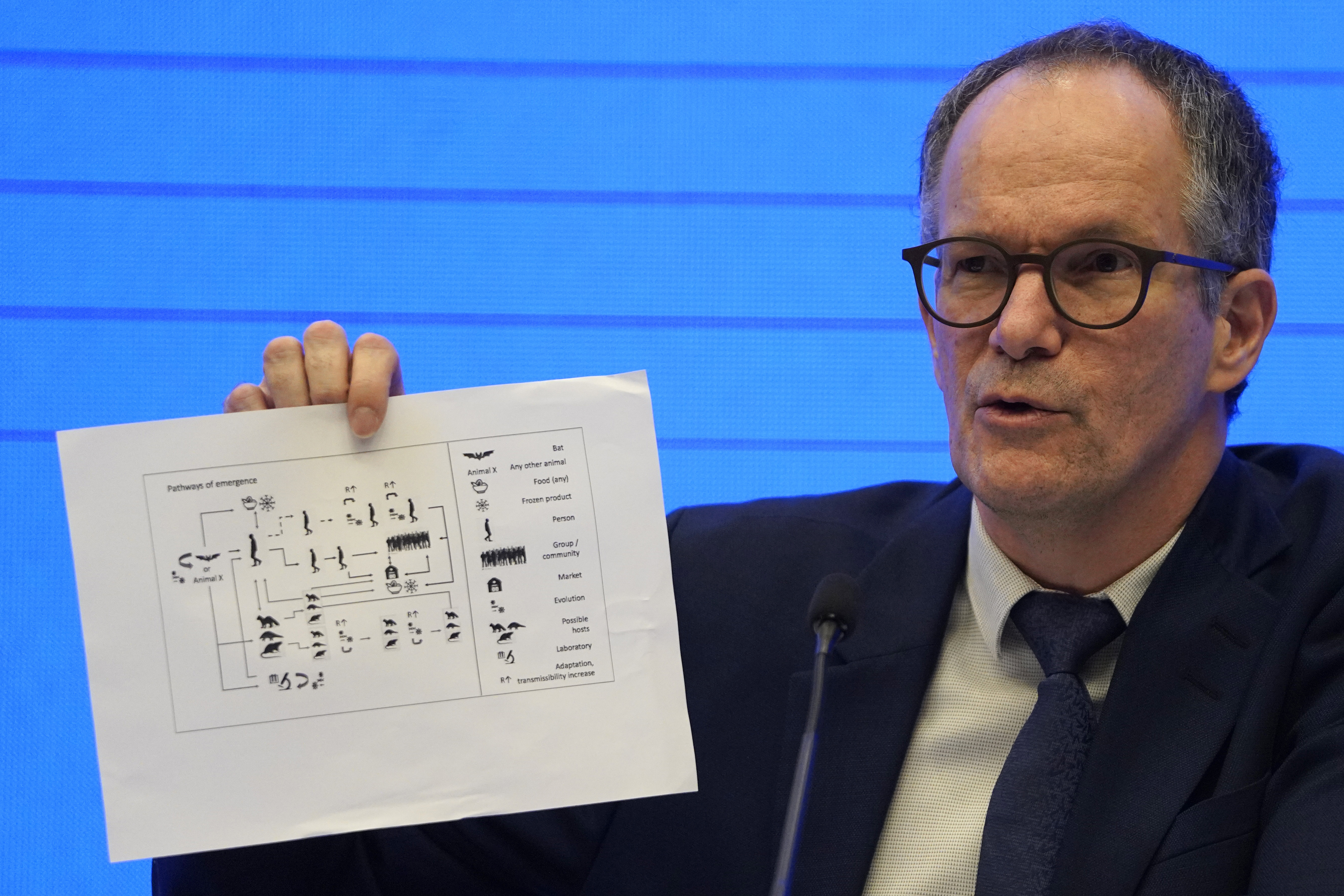
WHO in Wuhan: A team of international and Chinese scientists looking for the origins of the virus have said it most likely first appeared in humans after jumping from an animal. The team dismissed as unlikely a theory that the virus leaked from a Chinese lab. The mission leader of the closely watched visit by the World Health Organization to Wuhan said the probe did not dramatically change the current understanding of the early days of the pandemic, But it did offer more details. The pandemic has now killed more than 2.3 million people worldwide. Emily Wang Fujiyama reports from Wuhan.
France Island Inequality: It’s the poorest corner of the European Union and was the last to receive any coronavirus vaccines. Welcome to the French Indian Ocean territory of Mayotte, where virus cases are spiking to their highest levels since the pandemic began, and demand for ICU beds is more than triple the supply. The French army is sending in relief, but the temporary aid will only go so far in a region where masks are a luxury and where nearly a third of the population has no running water. Local authorities say their difficulties in fighting the virus reflect long-standing inequalities between the French mainland and its far-flung former colonies, Sony Chamsidine and Angela Charlton report.
France Oldest Survivor: A 116-year-old French nun who is believed to be the world’s second-oldest person has survived COVID-19. Sister André tested positive for the coronavirus in mid-January in France’s southern city of Toulon. But just three weeks later, she has recovered and is healthy enough to look forward to her 117th birthday on Thursday. She said, “I didn’t even realize I had it.” Once doctors declared the nun no longer infected, she was allowed to attend Mass. The Gerontology Research Group lists her as the second-oldest known living person in the world.
Japan Quarantine: What’s it like traveling to Japan, six months ahead of the Olympics? Almost impossible, unless you’re Japanese or have resident status. A state of emergency for a large part of the country means even those allowed to enter have to take multiple coronavirus tests and stay quarantined. So, what could the entry process be like for the thousands of Olympic athletes scheduled to arrive for the July Games? Plans now call for the athletes to be tested 72 hours before they leave home, again when they arrive and frequently inside the athletes’ village “bubble.” There are other restrictions too, but the biggest caveat is that the plans can change quickly. Mayuko Ono reports from Tokyo.
Pilot Ara Zobayan violated federal standards that required him to be able to see where he was going before the helicopter crashed during a roughly 40-minute flight, according to members of the National Transportation Safety Board, Stefanie Dazio, Brian Melley and David Koenig report.
Zobayan was among the nine people killed, including Bryant’s 13-year-old daughter, Gianna.
The pilot went against his training by becoming spatially disoriented in thick clouds, a condition that can happen to pilots in low visibility, when they cannot tell up from down or discern which way an aircraft is banking, board members said.
The others killed in the crash were Orange Coast College baseball coach John Altobelli, his wife, Keri, and their daughter Alyssa; Christina Mauser, who helped Bryant coach his daughter’s basketball team; and Sarah Chester and her daughter Payton. Alyssa and Payton were Gianna’s teammates.
The crash has generated lawsuits and countersuits.
On the day that a massive memorial service was held at the Staples Center, where Bryant played most of his career for the NBA’s Los Angeles Lakers, Vanessa Bryant sued Zobayan and the companies that owned and operated the helicopter for alleged negligence and the wrongful deaths of her husband and daughter. Families of other victims sued the helicopter companies but not the pilot.
Larger numbers of immigrant families have been crossing the U.S.-Mexico border in the first weeks of the Biden administration. Warning signs are emerging of the border crises that marked Donald Trump’s term: Hundreds of newly released immigrants are getting dropped off with nonprofit groups and there are growing accounts of prolonged detention in short-term facilities. Measures to control the virus have sharply cut space in holding facilities that got overwhelmed during a surge of arrivals in 2018 and 2019. To deal with the new influx, the Border Patrol reopened a large tent facility in South Texas to house migrant families and children. Meanwhile, long-term facilities for kids who cross alone are 80% full.
Crowds demonstrating against the military takeover in Myanmar have again defied a ban on protests even after security forces ratcheted up the use of force against them and raided the headquarters of the political party of ousted leader Aung San Suu Kyi. Fresh protests were reported in Yangon and Mandalay, the country’s two biggest cities, as well as the capital Naypyitaw and elsewhere. The protesters are demanding that power be restored to Suu Kyi. They’re also seeking freedom for her and other governing party members since the military detained them after blocking the new session of Parliament on Feb. 1. The growing rallies and the junta’s latest raid suggest there is little room for reconciliation.
A hacker’s botched attempt to poison the water of a small Florida city is raising alarms about just how vulnerable such systems may be to attacks by more sophisticated intruders. Treatment plants are typically cash-strapped and lack the cybersecurity depth of the power grid and nuclear plants. Suspicious incidents are usually chalked up to mechanical or procedural errors. But experts say they occur more often than the public is told and many go unreported to protect reputations, customer trust — and revenues. Officials say the Florida town of Oldsmar was only briefly in jeopardy last week, with safety features likely to have triggered alarms had the hack gone undetected.
The offspring of hippos illegally imported to Colombia by drug kingpin Pablo Escobar in the 1980s are flourishing in the lush area and experts are warning about the dangers of the growing numbers. One group of scientists is now urging that some of the animals be killed. They say the hippos pose a major threat to the area’s biodiversity and could lead to deadly encounters with humans. The scientists concluded that Colombia’s current sterilization program is not enough to control hippo numbers. The population has increased in the last eight years from 35 to somewhere between 65 and 80. The scientists’ forecast published last month says there could be roughly 1,500 by 2035 if some aren’t killed.
TThe first doses of Sinopharm vaccines have arrived
Peru, with one of the world’s highest virus death rates, has started its Covid vaccination campaign after the first consignment of 300,000 Sinopharm vaccines arrived on Sunday.
The South American country is in the midst of a second wave of the pandemic. With the hospitals close to full capacity, the authorities have decided that medical staff should be among the first to be vaccinated.
On Tuesday morning local time, Josef Vallejos, the chief of the intensive care unit at a hospital in Lima, received the first jab.
Members of the military, security guards and election workers will also be given priority ahead of the general election scheduled for 11 April.
Peru has had almost 1.2 million confirmed cases and more than 42,000 people have died.
A woman has blood drawn for COVID-19 antibody testing. The Ministry of Health and Wellness has sent samples overseas to determine if the latest variant of the virus is in Jamaica.
PRIME Minister Andrew Holness said yesterday that while there has been a significant increase recently in the number of people testing positive for COVID-19, there is no evidence that the country has entered a new phase of the novel coronavirus pandemic.
Holness made the statement while announcing new measures which have been included in the orders under the Disaster Risk Management Act (DRMA), which regulates activities during the crisis, as follows:
Effective today, February 10, the islandwide curfew will commence at 8:00 pm instead of 10:00 pm, and end at 5:00 am the following morning, until February 24. Additionally, the gathering limit will be reduced from 15 to 10 people.
However, the prime minister conceded that he was well aware there were other issues which were still on the minds of the public.
“I know one of the questions on persons’ minds is whether the spread we are now seeing is related, in any way, to the new strains or variants of the SARS-CoV-2 virus,” Holness told the House of Representatives.
He said the Ministry of Health and Wellness has advised that, as part of its surveillance activities on new variants, it has sent off for genome sequencing, 14 positive samples from travellers from the United Kingdom and, later this week, plan to send off another 101 samples randomly selected from parishes.
“The results from genome sequencing will give us better insights into how prevalent the new variants may be in Jamaica,” he told the House.
BOGOTA, Colombia (AP) — Colombia has failed to protect human rights activists in its remote communities, resulting in hundreds of slayings since the government reached a peace deal with the country’s biggest rebel movement in 2016, an international monitoring group said Wednesday.
Armed groups, including some that emerged from the now-demobilized Revolutionary Armed Forces of Colombia, known as FARC, are responsible for part of the killings, researchers with Human Rights Watch said in a report.
“Authorities’ failure to exercise effective control over many areas previously controlled by the FARC has in large part enabled the violence against human rights defenders,” the report said. “The government has deployed the military to many parts of the country but has failed simultaneously to strengthen the justice system and ensure adequate access to economic and educational opportunities and public services.”
The United Nations Office of the High Commissioner for Human Rights has documented more than 400 slayings of activists since 2016, of which 108 happened in 2019 and 53 in 2020. The figure for last year could increase because 80 additional reported killings are still being verified.
Human rights defenders include community, Indigenous, peasant and Afro-Colombian leaders as well as victims’ and women’s rights activists.
The 2016 peace deal with the FARC ended five decades of war. But the group has suffered deep divisions, with some of its members heading to mainstream leftist movements while others have given up on the peace process and returned to arms.
While the accord included strategies for remedying problems that have kindled conflict for decades, the government has been slow to implement initiatives to strengthen authorities’ presence in rural areas, combat illegal economies and address the dearth of legitimate economic opportunities, according to the report.
Left to act as quasi government officials, the leaders of Indigenous groups and other social organizations are put at increased risk as armed groups can target them. The New York-based human rights organization said some rights activists have been killed for their support of government proposals started under the accord, including substituting food crops for the cultivation of coca, the plant from which cocaine is produced.
Among the slayings mentioned in the report is that of Deiver Quintero Pérez, who organized activities for children to keep them away from armed groups in his northern Colombia community. He was shot multiple times in the head in February 2018, and his body was found by a river. Prosecutors have said another rebel group, the Popular Liberation Army, killed him because he appeared to be assisting the government.
“Colombia has had the highest number of human rights defenders killed of any Latin American country in recent years, but the government’s response has been mostly talk, with little meaningful action,” José Miguel Vivanco, Americas director at Human Rights Watch, said in a statement. “The administration of President Iván Duque frequently condemns the killings, but most of the government systems to address the problem are barely functional or have serious shortcomings.
Police Commissioner Grant Stevens told 9News there were officers at the property 24 hours a day, and additional security had also been built into the house.
A statement from SA Health said additional testing and high levels of infection control are in place for the exemption.
WASHINGTON/PORT-AU-PRINCE (VOA) – In an exclusive interview with VOA Creole, Haitian President Jovenel Moise on Tuesday defended his decree announcing the “retirement” of three Supreme Court justices saying the move is aimed at “protecting” the high court.
On Monday, opponents seeking to end Moïse’s rule declared Supreme Court Judge Joseph Mécène Jean-Louis as interim president. That move came one day after Moïse announced police had arrested more than 20 people he accused of trying to kill him and overthrow his government, including Judge Joseph Mécène Jean-Louis.
The opposition and Moise, who is currently ruling by decree after dissolving a majority of Parliament in January 2020, are embroiled in a long-running dispute over the length of Moïse’s term. The opposition says it ended Sunday. Moïse says he has another year.
“The council of ministers met yesterday and we took measures to protect democracy and the independence of the judiciary branch. Because as you know, the judiciary branch is independent, the executive branch is independent, the legislative branch is independent. But the president is the guarantor of the national institutions and in reality this decision was made, as I said, to protect the institution of the republic which is called the Supreme Court,” President Moise told VOA Creole, speaking via Skype from his office in Port-au-Prince.
Haitian Président Jovenel Moïse speaks to VOA Creole about his decision to retire three Supreme Court Justices, Feb. 9, 2021.
The U.S. State Department expressed concern Tuesday.
“We are deeply concerned about any actions that risk damaging Haiti’s democratic institutions,” a spokesperson for the State Department’s Bureau of Western Hemisphere Affairs told VOA. “The executive order is now being widely scrutinized to determine whether it conforms to Haiti’s Constitution and laws.”
The United Nations also told VOA it is closely following developments in Haiti.
“We emphasize the importance of ensuring the separation of powers, the non-politicization and respect for and autonomy of the independence of a judiciary,” a spokesperson told VOA.
The decree
Moise alarmed Haitians Monday when he issued the decree announcing that justices Yvickel Dabrezil, who was arrested by national police during an operation to thwart the alleged coup in the early hours of Sunday, Wendelle Coq Thelot and Jean-Louis are now retired.
Jean-Louis, the most senior member of the Supreme Court, posted a video to social media on Monday in which he declared he had accepted the nomination by the opposition and civil society members to “serve his country as provisional president of the transition.”
President Moise defended his actions, telling VOA they were justified because the three targeted judges decided to involve themselves in politics.
“I see that people are asking many questions,” he said. “There’s a lot of talk out there, but as I said, we are here to respect the law and the mission of the law … and that is why, as a guarantor of the institutions, we cannot allow an institution such as the Supreme Court to stray from its mission.”
Is it legal?
Jean Wilner Morin, president of the National Association of Haitian Judges, called Moise’s decree retaliatory and unconstitutional.
“This is retaliation against the justices of the Supreme Court,” Morin told VOA. “[They are] all judges of character who want to apply the law.”
Judge Jean Wilner Morin, president of the National Association of Haitian Judges, ANAMAH. (VOA/Renan Toussaint)
Pressed by VOA Creole, Moise denied his decision was retaliatory or meant to remove officials in line of presidential succession, which, as stipulated by Haiti’s constitution, requires a Supreme Court justice to replace a president deemed unable to perform official duties.
“There is no connection. The connection is with the law and what it dictates. As president the law dictates how I do my job,” Moise said. “The same law dictates how a judge should function. Put yourself in my shoes … you see a judge giving a speech as president. How can a country have a president and then a judge gives a [presidential] speech? That means one is stepping on the other’s toes.
“That’s why I made the decision,” he added. “The judges were retired to avoid this dangerous situation that the country is living. We have three judges who claim to be president — in fact, when a person reads a speech claiming he is president, the only thing left [for him] to do is move into the palace,” Moise said.
Morin told VOA that “Article 177 of the Haitian constitution states that the justices of the Supreme Court, the Appeals Court, the Circuit Courts are irremovable.” The judge said a 1995 amendment to the constitution addresses the retirement of judges.
“A judge cannot retire, be promoted or moved from one jurisdiction to another without his consent,” Morin told VOA.
After the age of 60, if a judge’s health is failing or his mental faculties are not 100% he has the right to request retirement, Morin said. A law adopted in 2007 separates judges from other public servants and sets “special procedures” regarding how they are to be dealt with.
Judge transferred to prison
Justice Dabrezil, who was arrested Sunday, was transferred out of detention this afternoon and moved to the Prison Civile de Croix des Bouquets in a Port-au-Prince suburb.
VOA Creole reporter Matiado Vilme says Dabrezil was moved without being arraigned. As a Supreme Court judge, his authority would supercede that of a lower court judge.
A protester in the Solino neighborhood of Port au Prince holds a photo of Supreme Court Justice Joseph Mécène Jean Louis. (VOA/Matiado Vilme)
Protesters say Moise no longer president
Tuesday afternoon, people in the Solino neighborhood of the capital, took to the streets and danced to Rara music as they protested the president’s latest actions and refusal to step down.
“Enough, we can’t take it anymore!” a protester shouted.
“We’re on the street because Jovenel Moise’s presidency is over as of February 7, according to article 134-2 of the constitution,” said a protester holding a poster of Supreme Court Justice Jean Louis. “Jovenel Moise has chosen to violate the constitution he swore to uphold. We want people to know we applaud the opposition for giving us a new president who will be the 59th president [of Haiti] — Joseph Mecene Jean Louis.”
"The skier who was attacked at some point realised he should play dead, which is probably a good idea in this type of circumstance," state wildlife biologist Carl Koch told CNN.
A Coast Guard MH-60 Jayhawk helicopter from Air Station Sitka located the man and two other skiers about 16km northwest of Haines at an elevation of 487 metres, according to the Coast Guard.
A Coast Guard rescue swimmer was lowered to evaluate the man's condition and then used a litter to hoist the man to the helicopter. He was flown to Juneau for treatment.
The man was alert at the time of the rescue, but the Coast Guard did not have any further information about his condition.
The other two skiers were able to give him first aid and contact the Coast Guard.
"Their satellite communication device provided the precise GPS coordinates and elevation of their location," co-pilot Lieutenant Commander Will Sirokman said.
"Equally important, they had brightly colored fabric to signal the helicopter as we approached. This was absolutely crucial to us finding them in a timely manner."
The other two skiers did not need assistance and continued down the mountain on their own, according to the Coast Guard.
The Supremes (L-R) Florence Ballard, Mary Wilson, Diana Ross
Diana Ross has saluted the memory of her The Supremes bandmate Mary Wilson following her death on Monday night.
The legendary singer passed away “suddenly” at her Las Vegas home, aged 76, and on Tuesday, her old classmate and fellow band co-founder Ross took to Twitter to share her sadness at the loss.
“I just woke up to this news , my condolences to you Mary’s family,” Ross wrote.
“I am reminded that each day is a gift ,I have so many wonderful memories of our time together The Supremes will live on ,in our hearts (sic),” she went on.
Ross also released a formal statement to Entertainment Tonight, saying: “I remember Mary’s joy and love during happier times and our love and years together. I recall ‘the good old days’ with a smile in my heart and a song in my heart during these changing times. I’m happy to have known her. Love and condolences to her family.”
Wilson’s death leaves Ross as the only surviving member of the original R&B icons – fellow bandmate Florence Ballard died from a heart attack in 1976, aged 32.
Ross’ comments emerge hours after Motown label founder Berry Gordy paid homage to Wilson, honouring her as “a trailblazer” and “a diva” who “will be deeply missed”.
Other tributes have also been paid by actresses Whoopi Goldberg and Pam Grier, who tweeted: “Mary Wilson co-founding member of the Supremes, was so beautiful inside. She continued to sing all over the world. So gracious. Peace be still, lady (sic).”
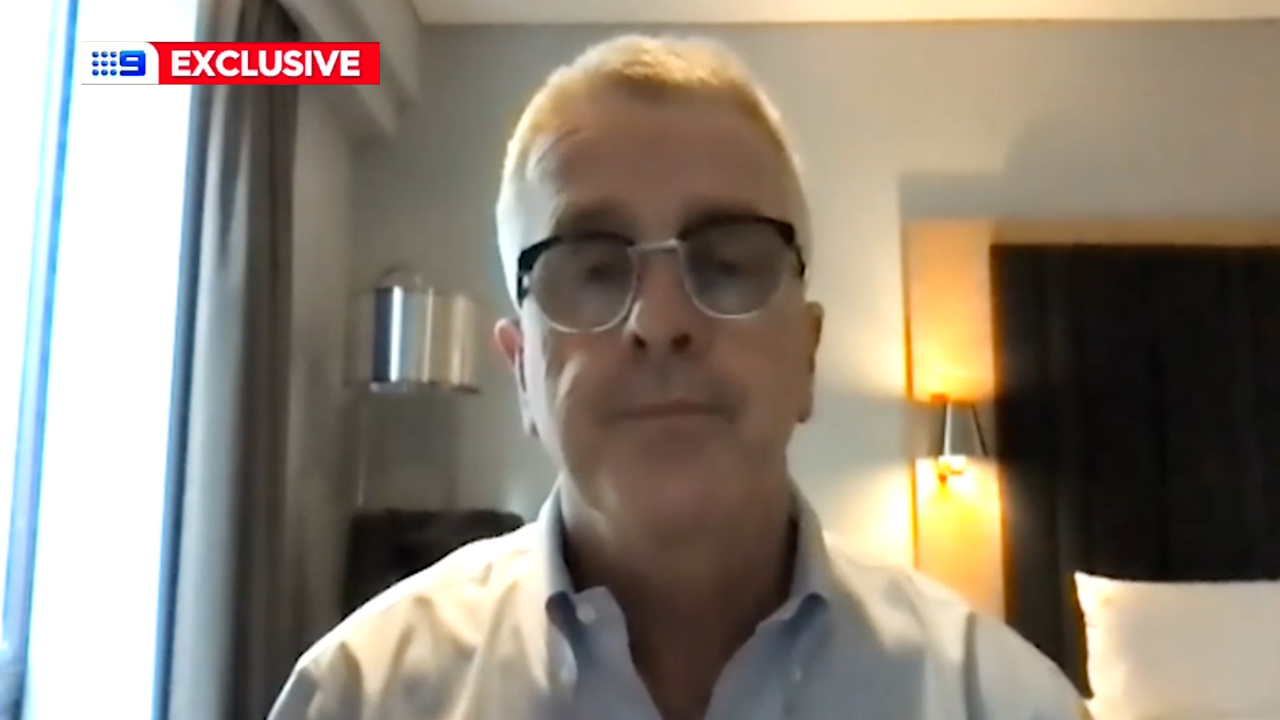
An Australian scientist involved in the inquiry into the origins of COVID-19 says he believes the virus started in China and had been circulating in the community as early as mid-November.
Professor Dominic Dwyer, a microbiologist and infectious diseases expert with NSW Health Pathology, said the evidence for an origin outside China was "very limited" in an exclusive interview with 9News on the day he returned from the Chinese city of Wuhan.
WHO experts last night said COVID-19 most likely first appeared in humans after jumping from an animal, dismissing as unlikely the claim that the virus leaked from a Chinese lab.
The team also found no evidence that the disease was spreading widely any earlier than the initial outbreak that flared in the second half of December 2019.
"I think it started in China, I think the evidence for it starting elsewhere in the world is actually very limited," Professor Dwyer told 9News from hotel quarantine in Sydney.
"There is some evidence but it's not really very good.
"I think it's most likely that it came from a bat. We know that other viruses that are closely related to (COVID-19) are present in bats.
"We know that other viruses like MERS and SARS back in 2003 also came from bats. Now these bats don't respect borders of course so they are present not just in China but in other parts on South East Asia and indeed elsewhere around the world."
Professor Dwyer said what surprised him most about his time in Wuhan was the degree of attention given to the politics of the meeting.
"It's one thing discussing the science and all of us are used to doing that, it's another thing, talking about the politics around this and see responses change around the politics," he said.
"The Chinese were very hospitable hosts, everyone worked together very well, it was a joint mission after all," he said.
"There were some clear differences of opinion and there were some quite firm and heated exchanges over things but in general everyone was trying to do the right thing and certainly WHO got more data than they've ever had before, and that's some real progress."
Professor Dwyer said one of the key differences was trying to get an agreement about what was happening just prior to the virus outbreak in the market in Wuhan.
"Some of the other evidence for example – genetic analysis of the virus and so on – would show the virus has probably been circulating maybe from mid-November, early December," he said.
"We also know the Chinese were reporting the people who went to hospital were really sick, but we now know – and to be fair they didn't know at the time. But we now know there's a lot of ordinary transmission going on between otherwise healthy people, so there must've been many, many more cases in December than were identified."
Asked whether he believed there would be a definitive conclusion on how the virus started, Professor Dwyer said he hoped it would.
"Many of these outbreaks actually take years to sort out, so part of the WHO work was advising what sort of studies need to be done to try and sort this out over the next year or so," he said.
"Remember with SARS it took well over a year before the bat virus was identified, I would expect it will be similar here. There's clearly a lot of work that needs to be done, not just in China but in the region and elsewhere around the world."
Professor Dwyer said he believes the explosion of COVID-19 in the market in Wuhan was really an amplifying event.
"The virus had probably circulating some good few weeks beforehand amongst people in the community," he said.

 *****@
 *****@
 *****@
 *****@
 *****@
 *****@
 *****@
 *****@
 *****@
 *****@
 *****@
 *****@