All posts by FreeNews

Circular Economy Coalition Launched for Latin America, Caribbean

A new initiative to support Latin America and the Caribbean in the transition to a circular economy as part of the COVID-19 recovery has been launched.

The Regional Coalition on Circular Economy was announced during a virtual side event at the XXII Meeting of the Forum of Ministers of Environment of the region, hosted by Barbados and the United Nations Environmental Programme (UNEP).

The Coalition will support access to financing by governments and the private sector, with special emphasis on small and medium enterprises (SMEs), in order to promote resource mobilization for innovation and the implementation of specific projects in the region.

Coordinated by UNEP, the Coalition will be led by a steering committee composed of four high-level government representatives on a rotating basis, starting with Colombia, Costa Rica, the Dominican Republic and Perú for the 2021-2022 period.

“As extracting, wasting and ‘doing business as usual’ can no longer be supported by the planet, it is key to build a common regional vision on circular economy. The Coalition we are launching today will help precisely to do that and to implement concrete and measurable practices,” said Carlos Correa, Minister of Environment and Sustainable Development of Colombia and Chair of the Coalition.

Correa participated in the side event along with Mariano Castro, Vice Minister of Environmental Management of the Ministry of the Environment of Peru, Rolando Castro, Vice Minister of Energy and Environmental Quality of the Ministry of Environment and Energy of Costa Rica, and Walter Verri, Undersecretary of the Ministry of Industry, Energy and Mining and Uruguay.

Circular economy

A circular economy is a resilient, diverse and inclusive economic model that creates opportunities for a sustainable growth that moves away from a ‘take, make, waste’ mentality. It fosters long-term economic productivity and green jobs, while tackling global challenges like climate change, pollution and biodiversity loss.

The initiative will count on eight permanent strategic partners: the Climate Technology Centre & Network (CTCN), the Ellen MacArthur Foundation, the Inter-American Development Bank (IDB), the Konrad Adenauer Foundation (KAS), the Platform for Accelerating the Circular Economy Coalition (PACE), the United Nations Industrial Development Organization (UNIDO), the World Economic Forum (WEF) and UNEP.

Driven by eco-design, a circular economy eliminates waste and pollution, keeps products and materials in use, and regenerates natural systems. Adopting these principles can reduce the use of raw materials by up to 99%, contributing to protect biodiversity, according to UNEP’s International Resource Panel.

While the current climate discussions focus on switching to renewable energy and energy efficiency matters, which will tackle 55% of the total GHG emissions, circular economy can help address the remaining overlooked 45%, which are generated by the way we make and use products and the way we produce food, according to the Ellen MacArthur Foundation.

The Coalition aims to implement a circular economy approach through collaboration between governments, businesses, and society as a whole.

“The creation of this coalition reaffirms the region’s commitment to the implementation of the 2030 Agenda, with special emphasis on SDG12, Sustainable Consumption and Production, through the promotion of innovation, sustainable infrastructure, and an inclusive and circular economy,” said Leo Heileman, UNEP Regional Director in Latin America and the Caribbean.

“Acknowledging that unsustainable consumption and production patterns are the root cause of the three planetary crises we face today—climate change, pollution and biodiversity loss—, we have a unique opportunity to rethink our linear economy and reshape our unsustainable consumption and production patterns,” he added.

The post Circular Economy Coalition Launched for Latin America, Caribbean appeared first on The St Kitts Nevis Observer.
Positive tennis quarantine COVID-19 case wasn't revealed

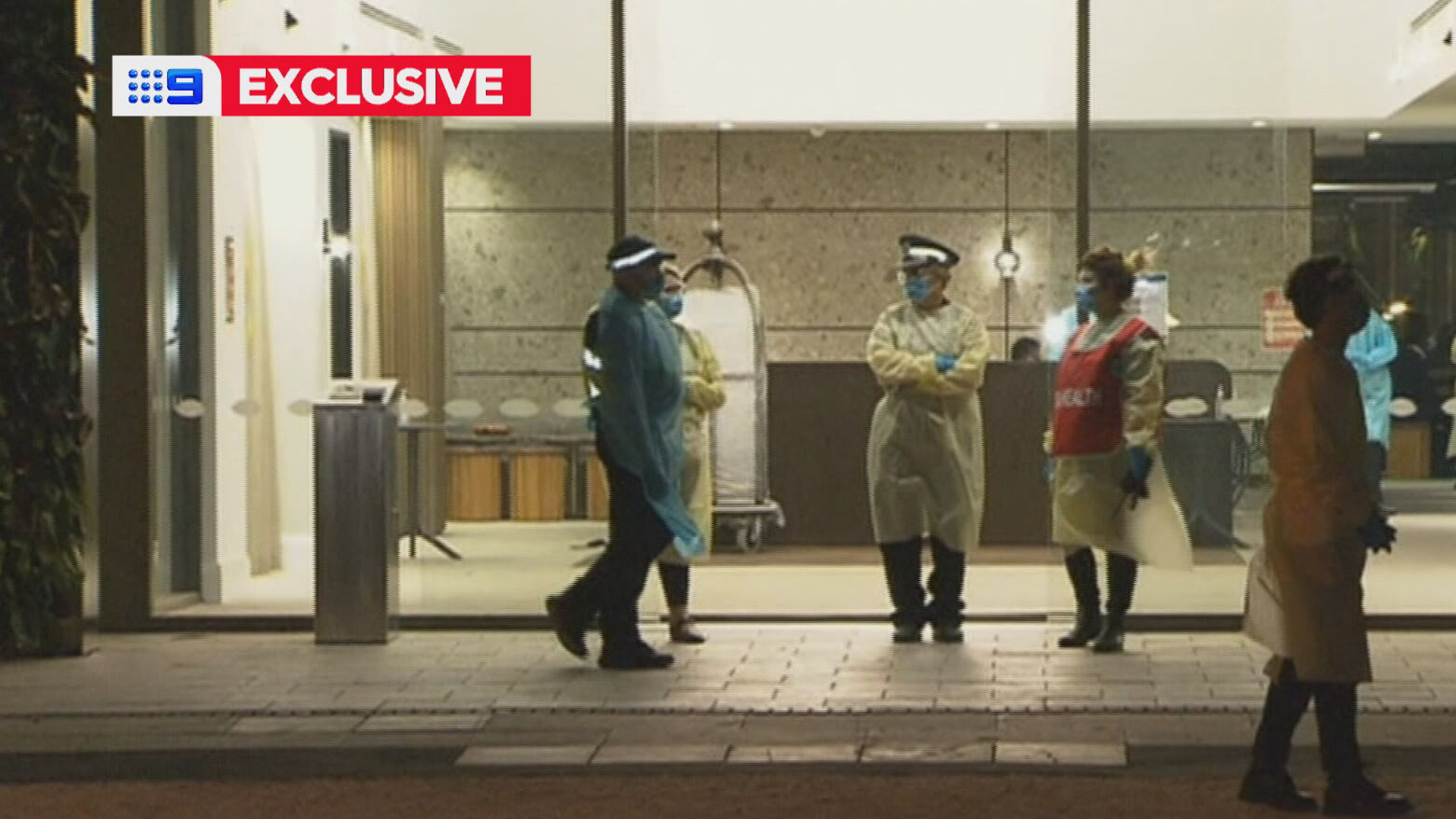
A positive COVID-19 case linked to the Adelaide's tennis quarantine program was not revealed to the public when it was detected, 9News has been told.

The result was returned by a support staffer of one of the players.

"Nine News repeatedly asked authorities in the lead-up to The Day At The Drive event if anyone had tested positive to COVID," 9News reporter Rory McClaren said tonight.

"We understand the result came from a member of a player's support staff and not one of the players themselves.

"The result indicated an old infection and the person was shedding the virus, that means it wasn't deemed an active case, nor recorded int eh state's statistics. But previously, similar cases have been made public."

The result came to light after French men's player Benoit Paire raised questions about players' treatment ahead of the Australian Open.

Paire had previously claimed there had been a positive COVID-19 case in Adelaide while Melbourne players were in lockdown.

READ MORE: Sunshine and superstars on day two of the Australian Open

Shadow Health Minister Chris Picton has questioned why the result wasn't announced.

"There's been other cases of old infections where the public has been told, why did (Premier) Steven Marshall decide not to tell us about this particular case?" he said.

Chief Health Officer Nicola Spurrier said in a statement there was no requirement to publicly report the case and that health authorities had sought to avoid double-counting of cases already found overseas who had recovered and no longer deemed infectious.

French men's Australian Open contestant Benoit Paire had previously claimed there had been a positive COVID-19 case in Adelaide, while Melbourne players were in lockdown.

New Virus Variants Question Need for New Vaccines

LONDON (Reuters) – It is not yet clear whether the world needs a new set of vaccines to fight different variants of the novel coronavirus but scientists are working on new ones so there is no reason for alarm, the head of the Oxford Vaccine Group said on Tuesday.

South Africa has paused a planned rollout of AstraZeneca’s vaccines after data showed it gave minimal protection against mild infection among young people from the dominant variant there, stoking fears of a much longer battle with the pathogen.

AstraZeneca and Oxford University aim to produce a next generation of vaccines that will protect against variants as soon as the autumn before the Northern Hemisphere winter, AstraZeneca’s research chief said this month.

“There are definitely new questions about variants that we’re going to be addressing. And one of those is: do we need new vaccines?,” Andrew Pollard, Chief Investigator on the Oxford vaccine trial, told BBC radio.

“I think the jury is out on that at the moment, but all developers are preparing new vaccines so if we do need them, we’ll have them available to be able to protect people.”

Vaccines are seen as the swiftest path out of the COVID-19 crisis which has killed 2.33 million people and turned normal life upside down for billions.

Researchers from the University of Witwatersrand and the University of Oxford said in a prior-to-peer analysis that the AstraZeneca vaccine provided minimal protection against mild or moderate infection from the South African variant among young people.

TARGET POPULATION

Protection against moderate-severe disease, hospitalisation or death could not be assessed in the study of around 2,000 volunteers who had a median age of 31 as the target population was at such low risk, the researchers said.

“I think there’s clearly a risk of confidence in the way that people may perceive you. But as I say I don’t think that there is any reason for alarm today,” Pollard said.

“The really important question is about the severe disease and we didn’t study that in South Africa, because that wasn’t the point of that study, we were specifically asking questions about young adults.”

The so-called South African variant, known by scientists as 20I/501Y.V2 or B.1.351, is the dominant one in South Africa and is circulating in 41 countries around the world including the United States.

Other major variants include the so-called UK variant, or 20I/501Y.V1, and the Brazilian variant known as P.1.

An analysis of infections by the South African variant showed there was only a 22% lower risk of developing mild-to-moderate COVID-19 if vaccinated with the AstraZeneca shot versus those given a placebo.

If vaccines do not work as effectively as hoped against new and emerging variants, the world could be facing a much longer – and more expensive – battle against the virus than previously thought.

“As long as we have enough immunity to prevent severe disease, hospitalisations and death then we’re going to be fine in the future in the pandemic,” Pollard said.

Pollard said the South African government was right to look at how it deployed the AstraZeneca vaccine because the original plan was to use it in young adults – particularly healthcare workers – who were not expected to get severe disease.

“It needs a relook at how best to deploy the vaccine,” Pollard said.

Reporting by Guy Faulconbridge and Kate Holton, editing by Ed Osmond

The post New Virus Variants Question Need for New Vaccines appeared first on The St Kitts Nevis Observer.
UK Arrivals: 3 Virus Test Needed, Hotel Quarantine

All travellers entering the UK will be required to take two coronavirus tests while quarantining in an attempt to prevent variants entering the country, plus having a negative test result upon entry.

Arrivals will be required to get a test on days two and eight of their 10-day quarantine period, whether they are isolating at home or in a hotel.

The Department of Health said the move would enable authorities to track new cases more effectively.

Health Secretary Matt Hancock will set out more details in the Commons later.

It is in addition to the current rules which say travellers arriving in the UK, whether by boat, train or plane, must show proof of a negative Covid-19 test to be allowed entry.

This test must be taken in the 72 hours before travelling, and anyone arriving without one faces a fine of up to £500, with Border Force officials carrying out spot checks.

Travellers must provide contact details and their UK address. They can then travel – by public transport if necessary – to the place where they plan to self-isolate.

The new testing policy comes amid concern about new variants entering the country that are more resistant to existing vaccines.

Early trials of the Oxford-AstraZeneca vaccine suggest it offers “minimal protection” against mild disease from the South Africa variant. More than 100 cases of the variant have been found in the UK.

Prof Andrew Pollard, director of the Oxford Vaccine Group, told BBC Radio 4’s Today programme the results were “expected” because the virus is “introducing mutations… to allow it to still transmit in populations where there’s some immunity.”

“As long as we have enough immunity to prevent severe disease, hospitalisations and death, then we’re going to be fine in the future in the pandemic,” he said.

From 15 February, UK residents and Irish nationals arriving from certain countries will have to quarantine in hotels.

Passengers will have to stay in their rooms for 10 nights, with security guards accompanying if they go outside.

The rules will apply to UK nationals and residents arriving from 33 “red list” Covid-19 hotspots – mostly in South America and Africa – where it’s feared Covid variants may have already spread. Passengers will be expected to pay for the cost of the accommodation.

Non-UK travellers who have been in these countries in the 10 days before travelling are banned from entry.

All travellers – including British nationals – must self-isolate for 10 days when they get to the UK.

The “test to release scheme” – where travellers from non-red list countries can leave home isolation after a negative test on day five – will remain under the new testing rules.

Passengers will be expected to use the gold-standard and more expensive PCR tests.

‘Guesses about the unknown’

It comes as England’s deputy chief medical officer warned it was soon to say to what extent people could begin to start planning summer holidays.

Speaking at Monday’s coronavirus briefing, Prof Jonathan Van-Tam said: “The more elaborate your plans are for summer holidays, in terms of crossing borders, in terms of household mixing, given where we are now, I think we just have to say the more you are stepping into making guesses about the unknown at this point,” he said.

“I can’t give people a proper answer at this point because we don’t yet have the data. It is just too early to say.”

Lockdown rules mean people must only travel abroad for essential reasons. These are the same as the “reasonable excuses” for domestic travel, including:

  • Work that cannot be done from home
  • Medical appointments
  • Educational reasons

People leaving England will soon have to make a declaration on why they need to travel, which will be checked by carriers prior to departure.

The post UK Arrivals: 3 Virus Test Needed, Hotel Quarantine appeared first on The St Kitts Nevis Observer.

Hanson calls for swastika ban in Australia

Pauline Hanson has called for a ban on hate symbols like swastikas, sparking warnings from civil libertarians.

Senator Hanson said Prime Minister Scott Morrison should work on creating laws to forbid the display of symbols like the swastika and the ISIS flag.

"I think it's offensive, I think it's insulting, and I think it's intimidating," Senator Hanson said.

READ MORE: Pauline Hanson URL directed to refugee site

"Australians do not like racism and they do not like hatred."

Senator Hanson, in her maiden speech to Parliament in 1996, claimed Australia was in danger of being "swamped by Asians".

When she entered the Senate in 2016, she called for a halt to Muslim immigration and the banning of the burqa.

Civil libertarians have said a legal ban on hate symbols could be a dangerous move that might have serious consequences on freedom of speech.

"The fact is, freedom of speech in a free society means that you have to cop some images, such as those flags, that you find personally offensive," lawyer Terry O'Gorman said.

READ MORE: Hanson slams Queensland's Olympic bid

Senator Hanson recently showed support for embattled government backbencher Craig Kelly over his attempt to lobby the government to look into alternate COVID-19 treatments.

Mr O'Gorman said Mr Kelly also had a right to speak on the subject.

"The fact is that Craig Kelly has a right to be fundamentally wrong, and, some people would say, fundamentally stupidly wrong," he said.

Second isolation ordered for people who have left Holiday Inn

NSW has declared anyone who stayed at the Holiday Inn at Melbourne Airport over a two-week period must now isolate again after being deemed a close contact to new coronavirus cases that have emerged at the quarantine hotel.

The previous advice was that only people on the third floor were close contacts after a woman tested positive to COVID-19 in Melbourne two days after completing her 14-day quarantine at the Holiday Inn.

A food and beverage worker at the same hotel also tested positive to COVID-19, with that result only emerging late this afternoon.

https://twitter.com/NSWHealth/status/1359079850170978306?s=20Melbourne COVID-19 Holiday Inn quarantine worker

"Anyone who worked or stayed on any floor of the hotel between 27 January and 9 February is now considered a close contact who must get tested immediately and isolate for 14 days regardless of the result," NSW Health said in a statement tonight.

Health Minister Martin Foley confirmed the two new cases.

The first woman, a returned traveller, left the Holiday Inn on Sunday. She returned the positive test today after testing negative several times during her quarantine period.

Mr Foley said early interviews with her indicated she had not left her house except to get a COVID-19 test.

Close contacts, including those who completed their quarantine on Sunday, will be now be required to isolate again for 14 days.

Mr Foley said it was not yet known if the two hotel workers and the returned traveller had been in contact with each other.

"It is early days … that is one of the areas that is being explored," he said.

Investigations are also being made as to whether a certain floor may be a particular area of risk.

READ MORE: Eddie McGuire steps down as Collingwood president after 22-year tenure

"It would appear that it was one particular floor and that floor has certainly not taken any further residents," Mr Foley said.

Chief Health Officer Brett Sutton said the facility was being closely observed and it was likely transmission did occur on the same floor.

"We will go through a process of review and discussing it in terms of the operational needs, how much it has been paired back already and advise if that is required," he said.

Residents in hotel quarantine are tested on days three and 11 but additional testing is now being carried out at the Holiday Inn.

"We are certainly testing all of those people who were at the facility at that time and subsequently have moved away," Mr Foley said.

The health minister said he did not think it was appropriate to shut down the Holiday Inn yet.

READ MORE: Crown deemed 'not suitable' to hold gaming licence at Barangaroo: Bergin report

"Not at the moment, we don't think so. The numbers are right down anyway," Mr Foley said.

Professor Sutton said it was possible the cases were genetically linked but could not confirm how they came about.

"Cases can happen anywhere at any time and they can happen without a breach of protocol or without any particular erroring being made," he said.

"We are talking about an incredibly infectious virus.

"We have known that airborne transmission is possible, the extent to which it occurs and how well you can reduce that risk is a matter for ongoing review."

The CHO said it was likely more cases could crop up.

Cyber Menace: Hackers Try to Poison Florida City’s Water Supply

Local and federal authorities are investigating after an attempt Friday to poison the city of Oldsmar’s water supply, Pinellas County Sheriff Bob Gualtieri said.

Someone remotely accessed a computer for the city’s water treatment system and briefly increased the amount of sodium hydroxide, also known as lye, by a factor of more than 100, Gualtieri said at a news conference Monday. The chemical is used in small amounts to control the acidity of water but it’s also a corrosive compound commonly found in household cleaning supplies such as liquid drain cleaners.

The city’s water supply was not affected. A supervisor working remotely saw the concentration being changed on his computer screen and immediately reverted it, Gualtieri said. City officials on Monday emphasized that several other safeguards are in place to prevent contaminated water from entering the water supply and said they’ve disabled the remote-access system used in the attack.

The Pinellas County Sheriff’s Office is investigating, along with the FBI and the Secret Service, Gualtieri said. Oldsmar is located in Pinellas.

Nobody has been arrested, Gualtieri said, though investigators have some leads. They do not know why Oldsmar was targeted, he said. He added that other area municipalities have been alerted to the attack and encouraged to inspect the safeguards to their water treatment systems and other infrastructure.

Though some cities obtain water through Pinellas County, Oldsmar provides water directly to its businesses and roughly 15,000 residents, Gualtieri said. The computer system at the water treatment plant was set up to allow authorized users to remotely access it for troubleshooting.

A plant operator was monitoring the system at about 8 a.m. Friday and noticed that someone briefly accessed it. He didn’t find this unusual, Gualtieri said, because his supervisor remotely accessed the system regularly.

But at about 1:30 p.m. the same day, Gualtieri said, someone accessed the system again. This time, he said, the operator watched as someone took control of the mouse, directed it to the software that controls water treatment, worked inside it for three to five minutes and increased the amount of sodium hydroxide from 100 parts per million to 11,100 parts per million.

The attacker left the system, Gualtieri said, and the operator immediately changed the concentration back to 100 parts per million.

“At no time was there a significant adverse effect on the water being treated,” the sheriff said. “Importantly, the public was never in danger.”

Even if the operator hadn’t caught it, he said, it would have taken more than a day for the water to enter the water supply.

“The protocols that we have in place, monitoring protocols, they work — that’s the good news,” said Oldsmar Mayor Eric Seidel. “Even had they not caught them, there’s redundancies in the system that would have caught the change in the pH level.

“The important thing is to put everyone on notice,” he said. “There’s a bad actor out there.”

Sen. Marco Rubio also addressed the attack in a tweet Monday, saying it “should be treated as a matter of national security.”

The Sheriff’s Office learned of the attack and began investigating Friday evening, Gualtieri said. Investigators don’t yet know whether the attack originated within or outside Pinellas County, Florida or the United States. If the attacker is apprehended, he said, they’ll face state felony charges and possibly federal charges.

Contact with sodium hydroxide can kill skin and cause hair loss, according to the National Center for Biotechnology Information. Ingestion can be fatal.

Gualtieri said he didn’t know what physiological effects would result from the concentration dialed up in the attack. Nor was it immediately apparent whether a similar attack had ever happened in the U.S. In 2007, the water of a town in Massachusetts was accidentally treated with too much lye, causing burns and skin irritation among people who showered with it.

“I’m not a chemist,” Gualtieri said. “But I can tell you what I do know is … if you put that amount of that substance into the drinking water, it’s not a good thing.”

The post Cyber Menace: Hackers Try to Poison Florida City’s Water Supply appeared first on The St Kitts Nevis Observer.
Trump’s 2nd Impeachment Trial Opens Today

No American president has been impeached twice or has faced two impeachment trials, the second one while no longer in office.

Donald Trump’s historic second impeachment trial is opening  Tuesday with a sense of urgency, Lisa Mascaro and Hope Yen report.

Democrats want to hold the former president accountable for the violent U.S. Capitol insurrection. And Republicans want it over as fast as possible.

It comes just over a month since the deadly Jan. 6 riot. Senate leaders are still working out the details, but it appears there will be few witnesses, and Trump has declined a request to testify.

Holed up at his Mar-a-Lago club in Florida, the former president has had his social media bullhorn stripped from him by Twitter, without public comments since leaving the White House.

House managers prosecuting the case are expected to rely on the trove of videos from the siege, along with Trump’s incendiary rhetoric refusing to concede the election, to make their case. His new defense team has said it plans to counter with its own cache of videos of Democratic politicians making fiery speeches.

Analysis: The outcome of Trump’s second impeachment trial may seem preordained, but the trial itself matters. It is ultimately a test of whether a president, who holds an office that many of the nation’s founders feared could become too powerful in the wrong hands, is above the law. Senators will be forced to sit still, listen to the evidence and wrestle with elemental questions about American democracy. The American people will also be sitting in their own form of judgment as they watch. The verdict and the process itself will be scrutinized for generations, Political Editor Steven Sloan writes.

Capitol Breach-What We Know: On Jan. 6, the U.S. Capitol was besieged by supporters of Trump who were angered by the then-president’s election loss. While lawmakers inside the building were voting to affirm Joe Biden’s win, Trump loyalists were marching to Capitol Hill and breaking in. Five people died in the violent melee, including a police officer. The toll of the siege is still being tallied, from the growing number of people charged with crimes to the continued presence of National Guard troops in the nation’s capital, Kevin Freking, Nomaan Merchant and Lolita C. Baldor report.

Insurrection Remembrances: The trial is more than an effort to convict the former president over inciting an insurrection. It’s a chance for a public accounting and remembrance of the worst attack on the U.S. Capitol in 200 years. In the month since the siege, Trump defenders say it’s time to move on. But many lawmakers have started recounting their personal experiences from that day. For many who were witnesses, onlookers and survivors, it’s far from over. Lisa Mascaro has that story.

Trump Prosecutor: Stacey Plaskett couldn’t cast a vote last month when the House impeached Trump, but she can help prosecute him. The non-voting delegate from the Virgin Islands is among the impeachment managers selected by House Speaker Nancy Pelosi to argue the case. It’s an extraordinary moment that places Plaskett in the center of just the fourth U.S. impeachment trial in history. But there will also be a familiar dynamic when Plaskett walks into the Senate chamber that she’s experienced before. She’ll be one of the only Black women in the room, Padmananda Rama and Mary Clare Jalonick report.

The post Trump’s 2nd Impeachment Trial Opens Today appeared first on The St Kitts Nevis Observer.

Communist Cuba to Allow Private Businesses

Cuba has announced it will allow private businesses to operate in most sectors, in what is a major reform to its state-controlled economy.

Labour Minister Marta Elena Feito said the list of authorised activities had expanded from 127 to more than 2,000.

Only a minority of sectors would be reserved for the state, she said.

The communist country’s economy has been hit hard by the pandemic and US sanctions introduced by the Trump administration.

Last year its economy shrank by 11% – its worst decline in almost three decades – and Cubans have been facing shortages of basic goods.

Ms Feito said just 124 economic activities would be exempt from private involvement although she did not mention which ones.

“That private work continues to develop, is the objective of this reform,” Ms Feito was quoted by AFP as saying. She said the move would “help free the productive forces” of the private sector.

media captionWhat changed in US-Cuba policy under Trump?

Experts on Cuba’s tangled and complicated economy say the step essentially opens up almost all economic activity on the island to some form of private enterprise, the BBC’s Will Grant in Havana says.

This will be a significant shot in the arm for those families and individuals who harbour hopes of moving beyond just the very small businesses into medium-sized ventures, he notes.

Apart from hundreds of thousands of small farms, Cuba’s non-state sector is composed mainly of small private businesses run by artisans, taxi drivers and tradesmen. Around 600,000 people, around 13% of the workforce, joined the private sector when the opportunity arose.

However a large number of private businesses are involved in the island’s tourist industry, which has been hard hit by the pandemic and sanctions.

Given how slowly reforms tend to move in Cuba, it may still be some time before the change is noticeable in daily economic life, our correspondent says.

Some 60 years of hostility between the US and Cuba were eased in 2015 when then US President Obama and Cuban leader Raul Castro agreed to normalise relations, allowing US citizens to visit the island and empowering local businesses.

But Obama’s efforts were rolled back by his successor, President Donald Trump, with the support of hawkish Cuban-Americans who saw Mr Obama’s historic opening as an appeasement of Castro’s communist regime.

New US President Joe Biden – who was Barack Obama’s vice-president – has previously signalled that he wants to improve US-Cuban relations but observers say it is not clear how high it might be on his priority list.

Related Topics

The post Communist Cuba to Allow Private Businesses appeared first on The St Kitts Nevis Observer.
Progress Made Against COVID Threatened by New Variants

AP- The rise of more contagious variants of the coronavirus is threatening an encouraging trend of falling COVID-19 cases across the USA..

New U.S. cases of COVID-19 on Sunday dropped below 100,000 for the first time since November, a hopeful sign after a brutal post-Thanksgiving period that saw cases, hospitalizations and deaths spike.

Health officials are urging the public and governors not to ease up on precautions despite the somewhat improved situation, given that measures like wearing a mask and distancing from others are even more important when the virus is more contagious.

In addition, while the trend is going in a positive direction, the levels of cases, hospitalizations and deaths are still much higher than either of the previous peaks in the spring and summer of last year.

There were 96,000 new cases on Sunday, according to the COVID Tracking Project, down from a peak of almost 300,000 in early January. But that is still far above any level experts would consider a goal. It is still higher than the peak of cases over the summer, for example, which was around 75,000 cases per day.

Around 3,000 people are dying every day from the virus, and around 80,000 are in the hospital with COVID-19.

Still, the positive trend has spurred some governors to start loosening restrictions.

In Iowa, Gov. Kim Reynolds (R) last week lifted the mask mandate and distancing restrictions on restaurants and bars.

While that is perhaps the most drastic recent move, other states have been taking more gradual steps to ease back. Gov. Andrew Cuomo (D) announced that indoor dining can return at 25 percent capacity in New York City ahead of Valentine’s Day.

Asked about Iowa’s decision, Centers for Disease Control and Prevention Director Rochelle Walensky on Monday urged states not to lift precautions, in part citing the rise of new variants of the virus.

“We still have this emerging threat of variants, and I would just simply discourage any of those activities,” she said. “We really need to keep all of the mitigation measures at play here if we’re really going to get control of this pandemic.”

Highlighting the threat of a more contagious variant of the virus first identified in the United Kingdom, a study released Sunday found that the variant is doubling every 10 days in the U.S. and will likely become the dominant strain in many states by March.

Because the variant is 35 to 45 percent more transmissible, experts warn its rise could lead to a sharp spike in cases and hospitalizations.

“We certainly do expect to see a spike in cases” on the current trajectory, said Karthik Gangavarapu, a researcher at the Scripps Research Institute and one of the authors of the study. “We still don’t know how much of a spike it will be.”

Ramping up genomic sequencing to keep track of the prevalence of different variants, as well as additional contact tracing efforts from local public health departments aimed at slowing the spread of the UK variant, could both help in the fight, Gangavarapu said.

Ashish Jha, dean of the Brown University School of Public Health, issued a warning by pointing to the example of Ireland, which was hit hard by the new variant. It peaked at 132 new cases per 100,000 people in early January. “US has never seen numbers like that. Only the Dakotas had infection rates that high,” Jha wrote on Twitter.

Jha added he is “optimistic about late spring and summer,” given that vaccines will be more widely available by then, but he said the next few weeks are more worrisome.

While there are not enough available vaccines to immunize everyone in the next couple of months, and there are logistical challenges in getting shots into millions of arms, the faster the vaccination campaign can go, the more any spike from the new variant will be blunted.

Encouragingly, the vaccines appear to work well against the UK variant.

But another variant, first identified in South Africa, is more concerning based on the initial data. The results so far have suggested some dropoff in how well vaccines work with the South African variant. That variant has also been found in the U.S., but is less prevalent so far.

Tom Frieden, a former CDC director, wrote that the recent improving trends are likely due to a continued recovery from the post-holiday peak, when a surge in travel and indoor gatherings led to spikes.

“Now is not the time to let our guard down,” he wrote on Twitter. “We’re making progress with vaccines, but variants are coming.”


Tags South Africa United Kingdom CDC Centers for Disease Control and Prevention Rochelle Walensky Andrew Cuomo Coronavirus COVID-19 Vaccines


The post Progress Made Against COVID Threatened by New Variants appeared first on The St Kitts Nevis Observer.