Residents in south-east Queensland have been put on high alert after fragments of coronavirus were repeatedly detected in multiple sewage catchments.
In the past fortnight, 16 sewage catchments have detected fragments of the virus across the state, Queensland Acting Chief Health Officer Dr Sonya Bennett said in a statement on Friday night.
Coombabah, Cleveland and Carole Park sewage catchments have repeatedly provided positive readings for the virus which Dr Bennett said is "concerning" as there are no quarantine hotels that feed to these locations.
"That means there could potentially be an undetected case in the community," she said.
"That is why we are urging anyone with any symptoms, no matter how mild to come forward and get tested."
It is possible the detection relates to previous COVID-19 cases as viral fragments are known to shed months after the source is no longer infectious.
However, Dr Bennett said it is critical people come forward to get tested, to curb a possible outbreak.
"This is especially important now more than ever, as we know the new variants emerging overseas are more contagious than previous variants we have seen in Queensland," she said.
"If there is a case, we are not yet aware of, it is critical we detect it through our testing mechanisms as quickly as possible to contain any potential spread."
Other sewage catchments have also repeatedly tested positive for coronavirus fragments, including Gibson Island and Pulgul (Hervey Bay) in the past three weeks, and Cairns North, Maryborough and Loganholme in the past four weeks.
While some are in areas where coronavirus has been detected among international arrivals, Dr Bennett said " it is very important" for everyone in the area to monitor their health and come forward for testing if symptoms present.
Work has been completed on the reconstruction and expansion of the airside infrastructure at Owen Roberts International Airport on Grand Cayman in the Cayman Islands.
According to the Stantec led design team, the major airfield upgrades are set to increase safety and efficiency at the island’s “most vital piece of infrastructure” as it serves as its primary connection to the rest of the world.
The project included strengthening and extending the airport’s only runway to allow for long-haul, wide-body aircraft to fly direct routes from Europe and North America to Grand Cayman.
A parallel taxiway and a taxiway turnaround were also constructed to increase safety and efficiency at the airport by giving aircraft a viable alternative to back-taxiing on the runway.
A multi stand parking apron was also constructed to expand the airport’s parking stands by up to four additional aircraft. The upgrades are expected to enable increased tourism and economic development for residents and businesses of the Cayman Islands.
Construction began in early 2020 and was initially impacted by the COVID-19 pandemic. As the Cayman Islands closed its borders and halted air traffic in March, Stantec’s design team committed to remaining on site to help usher the project to its scheduled completion.
The contractor – a joint venture between two Caymanian companies (Island Paving and Decco) and Canadian company IDL Projects – worked with Stantec and the airport authority to keep the project moving and completed on time.
The closed borders allowed for greater flexibility regarding airfield access during construction, which minimised the need for complex project phasing – always a challenge during large airfield development projects.
“This was a major airfield overhaul executed under the most unusual circumstances,” said Leigh Bartlett, principal with Stantec’s airport group.
“My hat is off to our onsite project personnel, and thankful for the partnership of Island Paving/Decco/IDL Projects and the airport authority. Working together, we were able to see this to a successful completion.”
Stantec was able to leverage in-house expertise from the United States and Canada to put together a project team comprised of civil and electrical aviation infrastructure experts.
“This airfield expansion is part of a larger airports development master plan that will have lasting economic and community benefits for the people of the Cayman Islands,” said Cayman Islands Airports Authority CEO Albert Anderson.
“Completing the project through the pandemic was not without its challenges, but its success is a testament to the flexibility and commitment of the project team.”
Guardian (UK)- Donald Trump was cultivated as a Russian asset over 40 years and proved so willing to parrot anti-western propaganda that there were celebrations in Moscow, a former KGB spy has told the Guardian.
Yuri Shvets, posted to Washington by the Soviet Union in the 1980s, compares the former US president to “the Cambridge five”, the British spy ring that passed secrets to Moscow during the second world war and early cold war
Now 67, Shvets is a key source for American Kompromat, a new book by journalist Craig Unger, whose previous works include House of Trump, House of Putin. The book also explores the former president’s relationship with the disgraced financier Jeffrey Epstein.
“This is an example where people were recruited when they were just students and then they rose to important positions; something like that was happening with Trump,” Shvets said by phone on Monday from his home in Virginia.
Shvets, a KGB major, had a cover job as a correspondent in Washington for the Russian news agency Tass during the 1980s. He moved to the US permanently in 1993 and gained American citizenship. He works as a corporate security investigator and was a partner of Alexander Litvinenko, who was assassinated in London in 2006.
Unger describes how Trump first appeared on the Russians’ radar in 1977 when he married his first wife, Ivana Zelnickova, a Czech model. Trump became the target of a spying operation overseen by Czechoslovakia’s intelligence service in cooperation with the KGB.
Three years later Trump opened his first big property development, the Grand Hyatt New York hotel near Grand Central station. Trump bought 200 television sets for the hotel from Semyon Kislin, a Soviet émigré who co-owned Joy-Lud electronics on Fifth Avenue.
According to Shvets, Joy-Lud was controlled by the KGB and Kislin worked as a so-called “spotter agent” who identified Trump, a young businessman on the rise, as a potential asset. Kislin denies that he had a relationship with the KGB.
Then, in 1987, Trump and Ivana visited Moscow and St Petersburg for the first time. Shvets said he was fed by KGB talking points and flattered by KGB operatives who floated the idea that he should go into the politics.
The ex-major recalled: “For the KGB, it was a charm offensive. They had collected a lot of information on his personality so they knew who he was personally. The feeling was that he was extremely vulnerable intellectually, and psychologically, and he was prone to flattery.
“This is what they exploited. They played the game as if they were immensely impressed by his personality and believed this is the guy who should be the president of the United States one day: it is people like him who could change the world. They fed him these so-called active measures soundbites and it happened. So it was a big achievement for the KGB active measures at the time.”
Soon after he returned to the US, Trump began exploring a run for the Republican nomination for president and even held a campaign rally in Portsmouth, New Hampshire. On 1 September, he took out a full-page advert in the New York Times, Washington Post and Boston Globe headlined: “There’s nothing wrong with America’s Foreign Defense Policy that a little backbone can’t cure.”
The ad offered some highly unorthodox opinions in Ronald Reagan’s cold war America, accusing ally Japan of exploiting the US and expressing scepticism about US participation in Nato. It took the form of an open letter to the American people “on why America should stop paying to defend countries that can afford to defend themselves”.
The bizarre intervention was cause for astonishment and jubilation in Russia. A few days later Shvets, who had returned home by now, was at the headquarters of the KGB’s first chief directorate in Yasenevo when he received a cable celebrating the ad as a successful “active measure” executed by a new KGB asset.
“It was unprecedented. I am pretty well familiar with KGB active measures starting in the early 70s and 80s, and then afterwards with Russia active measures, and I haven’t heard anything like that or anything similar – until Trump became the president of this country – because it was just silly. It was hard to believe that somebody would publish it under his name and that it will impress real serious people in the west but it did and, finally, this guy became the president.”
Trump’s election win in 2016 was again welcomed by Moscow. Special counsel Robert Mueller did not establish a conspiracy between members of the Trump campaign and the Russians. But the Moscow Project, an initiative of the Center for American Progress Action Fund, found the Trump campaign and transition team had at least 272 known contacts and at least 38 known meetings with Russia-linked operatives.
Shvets, who has carried out his own investigation, said: “For me, the Mueller report was a big disappointment because people expected that it will be a thorough investigation of all ties between Trump and Moscow, when in fact what we got was an investigation of just crime-related issues. There were no counterintelligence aspects of the relationship between Trump and Moscow.”
He added: “This is what basically we decided to correct. So I did my investigation and then got together with Craig. So we believe that his book will pick up where Mueller left off.”
Unger, the author of seven books and a former contributing editor for Vanity Fair magazine, said of Trump: “He was an asset. It was not this grand, ingenious plan that we’re going to develop this guy and 40 years later he’ll be president. At the time it started, which was around 1980, the Russians were trying to recruit like crazy and going after dozens and dozens of people.”
“Trump was the perfect target in a lot of ways: his vanity, narcissism made him a natural target to recruit. He was cultivated over a 40-year period, right up through his election.”
The woman who took a flight back to New Zealand was supposed to avoid all physical contact with others for 14 days as she went into mandatory quarantine.
The man working at the quarantine hotel was supposed to be the last line of defence.
But the two started passing notes to each other, including one written on the back of a face mask.
Then she ordered a bottle of wine, which he delivered to her room.
When he didn't return 20 minutes later, a security manager sent to investigate found the pair together in what authorities are describing as an inappropriate encounter, one in which physical distancing wasn't maintained.
The incident earlier this month, which came to light on Friday, has highlighted a very human weak point in New Zealand's coronavirus elimination procedures, in a country which has stamped out community spread of the virus.
It is similar to lapses in Australia that may have contributed to a major outbreak last year in Melbourne.
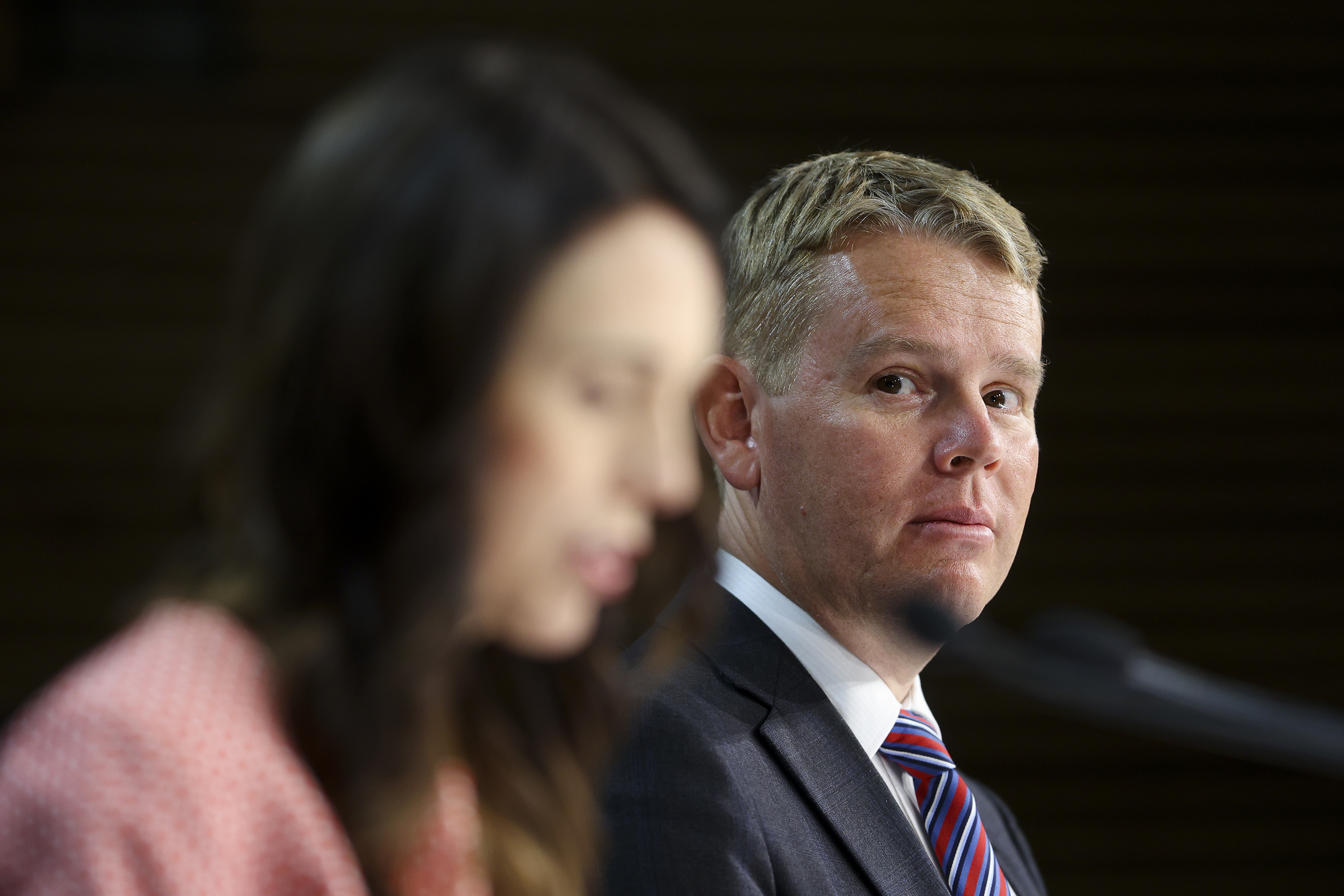
"We're dealing with human beings," COVID-19 Response Minister Chris Hipkins said.
"We ask everybody to adhere to the standards that we put in place. I cannot control the actions of every individual."
Mr Hipkins said the pair's behavior was totally unacceptable and he'd asked for a thorough inquiry.
Brigadier Jim Bliss, the head of managed isolation and quarantine, said the worker was immediately sent home and told to self-isolate.
He was later fired.
The returning traveller, meanwhile, was given a formal written warning by the police.
Authorities breathed a sigh of relief after both returned negative coronavirus tests.
"The actions of the two people involved in this incident are incredibly irresponsible and extremely disappointing," Brig. Bliss said.
"There is absolutely no room for complacency."
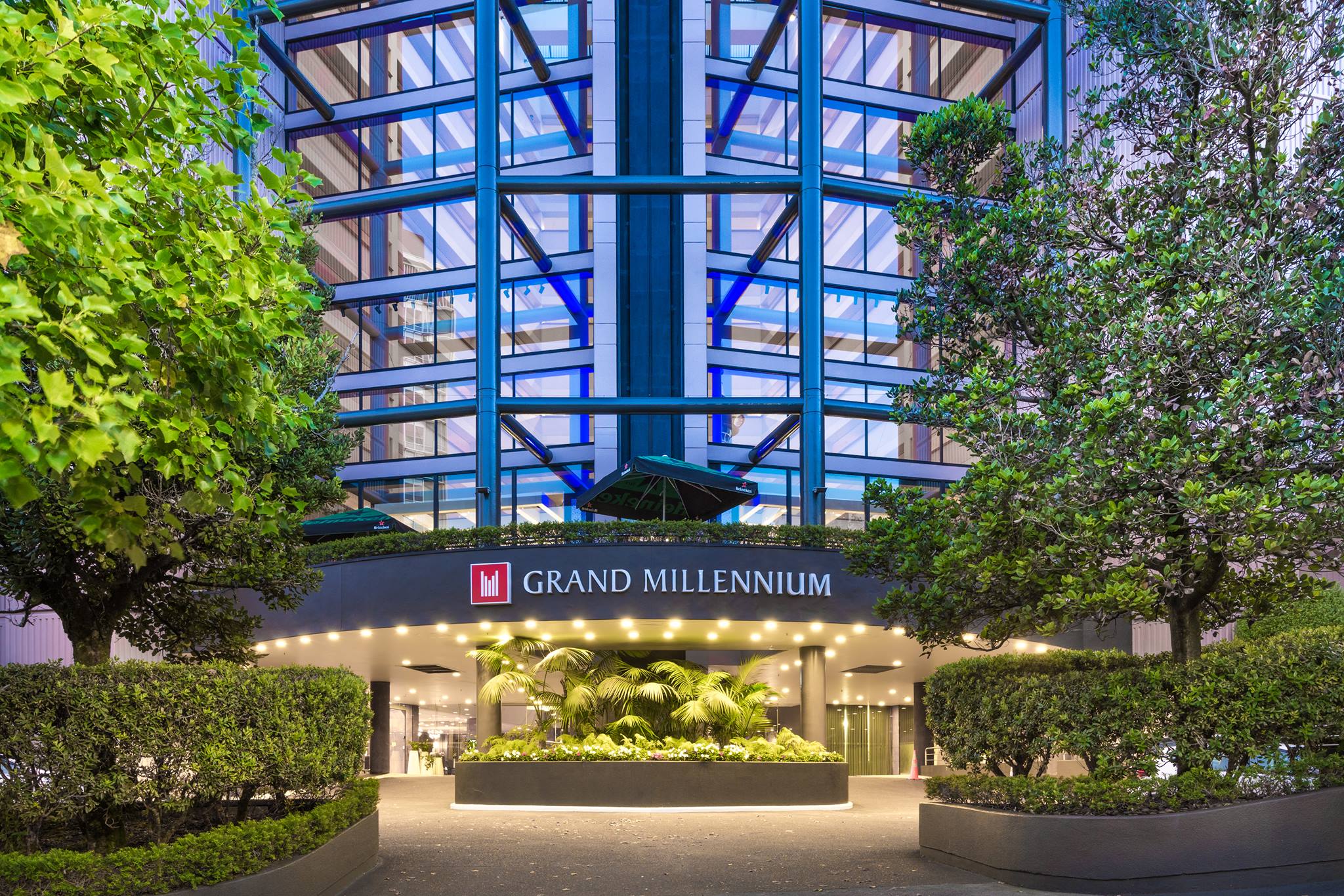
Brig. Bliss said the actions of the staffer at the Grand Millennium Auckland hotel weren't reflective of the 4000 people working at quarantine hotels who each day "selflessly put themselves between us and this virus."
He said an investigation is underway to consider whether additional security measures are needed.
The identities of the two people involved have not been disclosed by authorities.
New Zealand's successful response has resulted in just 25 people dying from the virus in a nation of 5 million.
The only new cases are those originating from returning travellers, 100,000 of whom have flown in over the past year.
Authorities and people around the country remain highly tuned to any breaches at the border.
Rodney and Ekaterina Baker in an undated photo from social media
A millionaire Canadian couple who secretly travelled to a remote community to receive a coronavirus vaccine meant for vulnerable and elderly Indigenous residents may now face jail sentences for breaking public health rules.
Casino executive Rodney Baker and his wife, Ekaterina Baker, an actor, were widely condemned after it emerged that they had chartered a plane to a remote community in the Yukon territory, where they posed as local motel employees to receive the vaccine.
They were fined C$2,300 (US$1,800) for violating Yukon’s Civil Emergency Measures Act, but community leaders argued that the penalty would be insignificant for the wealthy couple: Baker resigned from his position as a casino executive on Sunday but records show he made a C$45.9m profit on stock options over the past 13 months.
Amid growing outrage, the Yukon community services minister announced on Wednesday that the couple’s tickets had been stayed and they had been served with a notice to appear in court. If convicted, they could serve up to six months in jail.
Backlash grows for ‘selfish millionaire’ who got vaccine meant for Indigenous people
“I have to say I’m outraged by this selfish behaviour. All of us as Yukoners are outraged,” minister John Streicker told reporters on Wednesday. “I find it disturbing that people would choose to put fellow Canadians at risk in this manner.”
The Bakers are each charged with failing to self-isolate for 14 days and failing to act in a manner consistent with their declarations upon arriving in the Yukon. They are due to appear in a Whitehorse court on 4 May.
Streicker confirmed the Royal Canadian Mounted Police are also investigating the couple’s actions.
A mobile vaccine team was dispatched to Beaver Creek, because of its limited health care and the elderly population, many of who belong to White River First Nation.
Streicker said members of the First Nation said they felt “violated” by the couple’s behaviour, which has also prompted officials in the territory to change the criteria for vaccine eligibility. Anyone whose health cards issued outside of the territory will need to demonstrate proof of residency, he said.
Streicker said he had heard that the couple had not made any attempt to apologize to the First Nation.
Canada’s Indigenous services minister, Marc Miller, joined the chorus of criticism, saying: “I understand these people are wealthy and I won’t tell them what to do with their money but, you know, perhaps reparations are due at some level.”
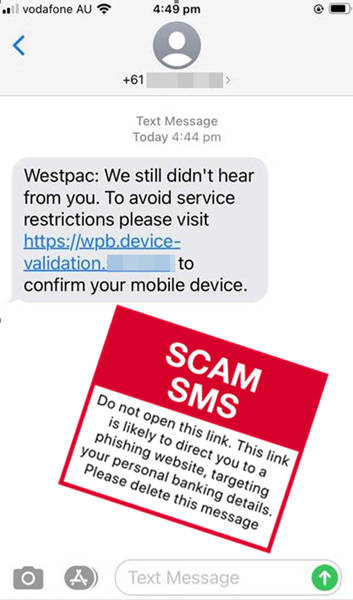
Australian's are being warned of the latest text scam attempting to steal banking details by posing as Westpac.
The text advises you to confirm your mobile device by clicking a provided link, which redirects to a fake sign in page and requests personal banking information, Westpac said.
The Australian Competition and Consumer Commission's Scamwatch said phishing scams, such as this one, are designed to look genuine, but are used to retrieve information to carry out fraudulent activity.
"Do not click on any links or open attachments from emails claiming to be from your bank or another trusted organisation and asking you to update or verify your details – just press delete," Scamwatch said in a statement.
Westpac users can confirm the authenticity of a text message by contacting the bank on 132 032.
WARNING: Some readers may find this article disturbing.
TRAVEL: by Eric Mackenzie Lamb
Usually, my travel pieces feature destinations which consist of a combination of stunning natural beauty, an off the beaten track location, as well as things to do and see- all of which, one hopes, leaves readers with a positive sense from learning at least something they hadn’t known before. Of course, one of the most important goals of any such story is to also share the location’s history. But, sadly, it may not always turn out to be what you really want to know. This is one example. To read through to the end, you will have to sacrifice some emotions. As for myself, I have to admit that writing this wasn’t easy.
A few months ago, when Covid-19 related lockdowns in Europe weren’t as strict as they are today and driving across borders was still relatively easy, I decided to take a shortcut through Poland on my way back from Eastern Europe to Switzerland. My first overnight stop was in the Polish city of Kraków.
After breakfast the following morning, I booked a taxi and asked the driver to take me to one of the city’s lesser known attractions: the birthplace of Helena Rubinstein, who founded a global cosmetics empire and, while doing so, became one of the world’s richest women of her time.
The Hotel Rubinstein. Image by the author.
Dedicated to Rubinstein, ( whose original first name was Chaja and who had lived next door before leaving Poland for Australia to escape an arranged marriage) the Hotel Rubinstein was originally a 15th century tenement building which fell into severe disrepair after World War II. Following years of extensive and painstaking renovations, it’s now a Four Star hotel located in the heart of Kazimierz, once known as Kraków’s Jewish Ghetto district. As for Helena Rubinstein’s own life, her extraordinary adventures and accomplishments, as well as her travels, would make an unforgettable story in itself. (A renowned businesswoman, philanthropist, and art collector, she died in New York City in 1965, at the age of 92).
When I walked back to the taxi, the driver asked me whether I’d like to continue on to the Auschwitz Holocaust Museum. It was less than an hour’s drive away, he added, and still early enough to join one of the museum’s escorted tours. At first, I hesitated, unsure of whether I wanted to undergo an experience which would darken what otherwise would have been a normal day of sightseeing, taking pictures, and scribbling down notes. (Some years ago, I had briefly visited Birkenau, another camp only a few miles from Auschwitz, where hundreds of thousands of Holocaust victims, including women, children, disabled persons, and the elderly, had been transported in brutally-packed trains from all parts of Nazi-occupied Europe to an infamous place where their lives would be snuffed out like a candle. But more on that later). In the end, my answer was Yes. And that’s when an overwhelming feeling of apprehension began. How does one even begin to contemplate a place where more than 1.1 million human beings were exterminated?
The main entrance to the Auschwitz concentration camp, now a Holocaust Museum and a UNESCO World Heritage Site. Image by the author.
As things turned out, tours of the concentration camp were arranged in separate groups according to languages spoken by their participants. At no time was there even the slightest hint of commercialization. It was all about history and what each of us could learn from it. Many of the multilingual guides, we later learned, were themselves descendants of those who had survived the horrors of Auschwitz. As we walked in silence from building to building, each with its own exhibit, I couldn’t help but think of the number of people in the world who still deny that the Holocaust ever happened. In fact, many of today’s younger generation have never even heard of it. What we were now seeing with our own eyes made that fact even more incomprehensible.
An exhibit of shoes forcibly taken from arriving prisoners who were later sent to the gas chambers. Image by the author.
Photographs, along with names, of some of the camp’s victims. Image by the author.
Jews were not the only people targeted by the Schutzstaffel, commonly known as the SS. Other groups included – but were not limited to any particular nationality- dissidents who opposed the Nazi regime, Christians (particularly those of Catholic faith), Roma (Gypsies), people of color, and Soviet prisoners of war.An original sign warning prisoners not to approach the camp’s outer walls. Image by the author.
After about an hour and a half, our group re-boarded our tour bus and continued on to the adjacent camp of Birkenau, about three miles away. It was here where the trains arrived with their human cargo, and where their fate would be decided by the simple wave of an SS officer’s hand. To the left if you were judged fit to work. To the right for anyone deemed unfit, including women and children, who were immediately marched into what they were told was a shower-but was in fact a gas chamber. Doors were locked, after which cans of lethal Zyklon-B would be dropped into the room through the ceiling. Less than twenty minutes later, everyone was dead. This was followed immediately by collection of the bodies and their transportation to the crematoriums. (But not before items considered to be of value, like jewelry, wedding rings, and even gold teeth, had been removed).
Then came the next wave of unsuspecting victims.
Prisoners arriving at Birkenau, awaiting examination by SS doctors (foreground) who would determine each individual’s fate: Life (at least for a while). Or death.
Finally, as an ending to this grim story, I’ll return to what I mentioned in the beginning of this article: this was not my first visit to Birkenau. Years ago, long before the railway yards were included as part of a UNESCO World Heritage Site, I stopped here while driving from Sweden to what was then East Germany -officially called the German Democratic Republic-and eventually on to West Berlin. I remember it as clearly as it were yesterday. The place was totally deserted. It was a chilly overcast November morning, with not a single person to be seen. All I could hear was the screeching of crows as they dipped and bobbed overhead.
Birkenau. Image by the author.
Straight ahead of me lay a platform with railway tracks on each side. To my left I could see rows of small buildings, each about the size of a garage, which, from what I’d already learned, had served as temporary shelters for those incoming prisoners who’d been selected as fit to work. Overcome by curiosity, not to mention a strange sense of foreboding, I approached the nearest hut, found its door unlocked, and cautiously stepped inside.
The first thing I saw were eight crude bunks, four on each side, each built on top of the other. A rusted metal bucket, which had almost certainly served as a primitive toilet, stood in a corner. The stench of mold was almost overwhelming. But what really got my attention was the graffiti scribbled on the walls. Most were in languages I didn’t understand, but one faded message in particular, written in what appeared to be Italian, was clear: God Almighty, please save us.
It was at that moment that I heard a strange sound . At first, I thought that it was wind making its way through cracks in the wooden shutters. But then, standing by the door, I realized that there was no wind at all outside. But the sound only increased and gradually began to fluctuate between low and high pitches, like the desperate moaning of human voices. Then, as suddenly as it had begun, it stopped. For a few seconds, everything was dead quiet. Then it started again. And that’s when I finally realized what I was hearing. I quickly walked back to my car and drove off.
Do I believe in ghosts? Not until that moment. But I do now.
Prime Minister of Barbados, Mia Mottley announced that the Ministry of Health and Wellness will begin health checks of Barbadians in their homes during the coming February 3-17 lockdown.
In a televised address, she said ministry officials would be knocking on doors to survey occupants about their health, and checking for symptoms of COVID-19.
“This lockdown that we are calling, this pause, this national reset is going to be necessary in order for us to give ourselves also a chance, to go into the community, house by house.”
The Prime Minister disclosed that The University of the West Indies and the Ministry of Health and Wellness would work together to effectively roll out the program, and it would be led by Minister of Foreign Affairs and Foreign Trade, Senator Dr. Jerome Walcott, who is also Chairman of the Cabinet Sub-Committee on COVID-19.
She revealed that one aspect of the plan is to go into the communities by organizing the island into polling districts.
“We have 300 polling districts. We need at least 300 persons going into the community on a parallel track, so that over the course of 10 to 12 days, we are able to get into as many houses as possible. We will ask persons through a questionnaire if they have symptoms, and then to use the rapid antigen tests to confirm their status so we can take them out of the community for treatment,” Mottley explained.
She told Barbadians to stay at home and in their communities, so agents of the ministry could get to them and rule them out through the antigen tests, which is 99 percent accurate for persons who are symptomatic.
The Prime Minister has also urged all persons over the age of 70 to remain at home for the next three weeks unless it is absolutely necessary for them to leave to go in search of medical care or purchase food supplies or medicine because of dire circumstances.
Speaking directly to the elderly, whom she described as the country’s most vulnerable group, she stated: “You need to protect yourself. And importantly, I am saying to you, we need to protect you, and we shall.”
Mottley also urged elderly persons to reach out to family members and close friends to assist them with any errands.
Three elderly people have died of COVID-19 in a week, bringing the number of deaths since the start of the pandemic to 10.
According to the latest statistics provided on Wednesday, the number of active cases on the island is 360. Since March 2020, Barbados has recorded 1,427 cases.
SAN JUAN, Puerto Rico — A heavy winter storm battered Bermuda on Thursday, forcing the British territory to cancel some flights and close schools early.
Forecasters at the Bermuda Weather Service warned of sustained winds of up to 58 mph and gusts of up to 81 mph until midnight. They said there was a small chance of hail Friday, with conditions expected to ease by Saturday.
Ferry service was cancelled, although government offices and the island’s international airport remained open.
The government said the storm delayed by one day the arrival of a plane carrying thousands of doses of a coronavirus vaccine.