Test your brains with the Herald’s morning quiz. Be sure to check back on nzherald.co.nz at 3pm for the afternoon quiz. To challenge yourself with more quizzes, CLICK HERE.
All posts by FreeNews
Trump faces impeachment charge
House Democrats have formally introduced their resolution to impeach President Donald Trump, charging him with "incitement of insurrection" for his role in last week's riots at the US Capitol.
The impeachment resolution that the House is poised to vote on later this week is the Democrats' first step toward making Trump the first president in history to be impeached twice.
The single impeachment article, which was introduced when the House held a brief session on Monday (just after 3.30am on Tuesday AEDT), points to Trump's repeated false claims that he won the election and his speech to the crowd on January 6 before pro-Trump rioters breached the Capitol.
READ MORE: Melania Trump breaks silence on Capitol riot, hits back at her critics

It also cites Trump's call with the Georgia Republican secretary of state where the President urged him to "find" enough votes for Trump to win the state.
"In all this, President Trump gravely endangered the security of the United States and its institutions of Government," the resolution says.

"He threatened the integrity of the democratic system, interfered with the peaceful transition of power, and imperilled a coequal branch of Government. He thereby betrayed his trust as President, to the manifest injury of the people of the United States."
The resolution also cites the Constitution's 14th Amendment, noting that it "prohibits any person who has 'engaged in insurrection or rebellion against' the United States" from holding office.

Pence vote blocked
Before the charge was formally declared, a House resolution calling on Vice President Mike Pence to invoke constitutional authority to remove Trump from office was blocked by Republicans.
Democrats are pushing Pence and the Cabinet to oust Trump, saying the president is is unfit for office.

Pence has given no indication he is ready to proceed on such a course, which would involve invoking the 25th Amendment to the Constitution, including a vote by a majority of the Cabinet to oust Trump before he leaves office on January 20.
Democratic President-elect Joe Biden will be sworn in on that date.
READ MORE: 'Has to happen now': House seeks to impeach Trump

House Speaker Nancy Pelosi says the House will proceed with legislation to impeach Trump this week.
A Republican senator, Pat Toomey of Pennsylvania, joined Republican Sen. Lisa Murkowski of Alaska over the weekend in calling for Trump to "resign and go away as soon as possible".
Lawmakers warned of the damage the president could still do before Joe Biden is inaugurated January 20. Trump, holed up at the White House, was increasingly isolated after a mob rioted in the Capitol in support of his false claims of election fraud. Judges across the country, including some nominated by Trump, repeatedly dismissed cases and Attorney General William Barr, a Trump ally, said there was no sign of any widespread fraud.
"We will act with urgency, because this President represents an imminent threat," Pelosi said in a letter late Sunday to colleagues emphasising the need for quick action.
"The horror of the ongoing assault on our democracy perpetrated by this President is intensified and so is the immediate need for action."
Poll: Most Americans Support Trump’s Immediate Removal
CNN- The potential removal of President Donald Trump from office starts out more popular than any other removal process of a president in recent American history. Yet, removing Trump from office remains quite unpopular among Republicans, however.
A look across polls conducted since riots at the Capitol on Wednesday shows that a clear plurality of Americans overall want Trump out of office, even as President-elect Joe Biden is set to be inaugurated on January 20.
You can see that well in an ABC News/Ipsos poll released on Sunday. The majority (56%) say Trump should be removed from office, while just 43% believe he should not be removed.
How Trump led Republicans to historic losses
An average across polls since Wednesday (in which no pollster is counted more than once) shows that 50% of Americans want Trump to either be impeached, for the 25th Amendment to be invoked or for Trump to resign from office. The minority (43%) say that none of these should occur.
The high percentage of Americans who want Trump out of office comes as House Democrats are already planning to introduce an impeachment resolution against Trump as soon as Monday.
When Democrats began an impeachment inquiry against Trump in September 2019, removing him from office wasn’t anywhere near as popular. Before House Speaker Nancy Pelosi announced that inquiry, only about 40% of Americans were for impeaching and removing Trump. About half the electorate was against it.
The fact that so many Americans want Trump out of office is, indeed, historically unprecedented this early in the process.
The percentage of Americans who wanted Bill Clinton impeached after his affair with Monica Lewinsky never climbed higher than 40%.
Likewise, the percentage of Americans who thought Richard Nixon should be removed or should resign from office was at about 40% when the House voted to formally start an impeachment inquiry in February 1974.
]
Eventually, the plurality of Americans wanted Nixon and Trump out of office, but it took impeachment proceedings for support to outrun opposition.
At this point, it’s not clear whether more Americans want Trump out of office than after the impeachment and removal proceedings against him began and took place in late 2019 and early 2020. The percentages between now and then (about half the electorate) are close.
Trump, of course, was impeached by the House, but he was not removed by the Senate.
Read MoLike last time around, there does not seem to be much of an appetite among Republicans for Trump to be booted from office. In order for Trump to be found guilty by the Senate this time around, at least 34% of Senate Republicans would have to vote yes.
Support among Republicans stood at just 13% in the ABC News/Ipsos poll. And an average of all polls since Wednesday puts that percentage at about 15%. About 10% to 15% of Republicans were in favor of impeaching and/or removing Trump during the last Trump impeachment proceedings.
What happens to these percentages in the coming weeks is very much up in the air. Biden’s going to be president in less than two weeks. He will be president and Trump will likely be gone from office by the time the Senate votes on any impeachment issues regarding Trump.
It’s possible that Trump leaving office will leave Americans wanting to forget about the issue of impeachment all together. (Scholars are split on whether you can impeach and remove a president who is no longer in office.) It’s also conceivable that Trump being out of office will make the stakes less high on impeachment proceedings and more Americans more likely to want to punish him
What is clear cut is that Americans are very unhappy with Trump after the events and aftermath of Wednesday. The mere idea of removing a president from office is a big step. A lot of Americans look ready to take it again.
The post Poll: Most Americans Support Trump’s Immediate Removal appeared first on The St Kitts Nevis Observer.
Coronavirus Fighting Nasal Spray Being Tested
The spray works by killing the virus in the upper airways, which prevents it from incubating and spreading into the lungs.
The SaNOtize Nitric Oxide Nasal Spray (NONS), developed by a team of researchers in Vancouver, Canada, has proven to be 99.9% effective in killing the coronavirus in independent lab tests conducted at Utah State University’s Antiviral Research Institute.
Other studies have also shown a 95% reduction in COVID-19 infection based on rodent tests.
This unique treatment utilizes nitric oxide, which is produced in the human body, to directly combat the effects of SARS-CoV-2, the virus that causes COVID-19, and can be delivered via nasal spray, throat gargle or nasal lavage.
“Any intervention for treating coronavirus – the virus responsible for COVID-19 – is to be welcomed. The fact that a relatively easy and simple nasal spray could be an effective treatment is welcome news and offers a significant advance in our therapeutic armory against this devastating disease,” said Pankaj Sharma MD PhD FRCP, Professor of Neurology and director of the Institute of Cardiovascular Research at Royal Holloway, University of London.
“Ashford and St. Peters Hospitals [where clinical trials will be held] NHS Foundation Trust is proud to be at the forefront of trialing this intervention,” Sharma added.
Drawing from previous research on the effects of nitric oxide, which was first discovered by Prof. Ferid Murad of Stanford University and others, the significance of its healing properties cannot be understated.
“Nitric oxide is an incredibly versatile molecule that regulates almost everything in our body,” he said.
“When used therapeutically, it has a well-documented safety profile and is demonstrated to be effective against a wide variety of viruses, bacteria and fungi,” Murad said. “I’m excited to be working with the SaNOtize team and believe that they have a safe technology that could be effective in treating infections, including Covid-19.”
Former British government minister Rob Wilson, who represents SaNOtize in the UK and EU, noted the importance of the nasal spray as a measure before the widespread inoculation of people with a vaccine can be achieved.
“If, as we expect, the current Phase II results in Canada confirm the very encouraging results received from the Antiviral Research Institute and ongoing studies at Colorado State University, SaNOtize will be seeking emergency approval in Canada to proceed directly to Phase IV introduction of the product to the market as part of the continuing global fight against this deadly pandemic,” said Wilson.
“The vaccination program is essential, but it will also take time to distribute to the general public,” he said. “Mutant strains may develop, requiring changes to the vaccine. It is not known how long the immunological protection will last. It is also unclear if the vaccines will prevent vaccinated people from becoming infected and potentially transmit the virus to other non-protected individuals.
“For these reasons, it is important to explore and deliver simple, safe and inexpensive therapeutic product solutions over the counter in the UK and EU as soon as possible, which is why I am getting these UK trials, the first in Europe, underway very shortly,” Wilson said.
“The nasal spray not only can block entry of the virus, but the active ingredient nitric oxide actually kills the virus and prevents it from multiplying. If successful, people in Britain and Europe could have an effective, safe and accessible treatment within months that they can use daily to kill the coronavirus and stop it spreading,” he said.
“This simple treatment will assist us in resuming something approaching normal social life, work and travel with some confidence that even if we inhale the virus, we can both protect against it and destroy it by applying the SaNOtize solution on a regular basis,” Wilson claimed.
“The SaNOtize treatment should be thought of as an effective treatment for the upper airways, similar to when people use hand sanitizers to clean their hands on the outside of the body,” Wilson said. “When people are potentially exposed, they will spray to cleanse their upper airways and kill the virus, before it can cause serious illness.”
Research on the spread of coronavirus has found that it is largely transmitted through airborne droplets to the mucous membranes in the nose, where it replicates and then spreads in the body via nasal secretions to the lower respiratory tract.
The post Coronavirus Fighting Nasal Spray Being Tested appeared first on The St Kitts Nevis Observer.
PPP loan program reopens with revamped rules to stamp out fraud
The revised program focuses on minority- and women-owned businesses, who did not get enough money during the first two PPP rounds last year compared with bigger businesses.
UK Seeing Worst of Pandemic, Covid Around the World
BBC- The UK will go through the “most dangerous time” of the pandemic in the weeks before vaccine rollout has an impact, England’s chief medical officer has warned.
Prof Chris Whitty urged people to minimise all unnecessary contact with others.
The next few weeks will be “the worst” of the pandemic for the NHS, he said.
Thousands more people are due to receive a vaccine this week after seven mass centres opened across England.
NHS England said hundreds more GP-led and hospital services would also open later this week.
But with all centres, people will need to wait until they receive an invitation.
The government is aiming to offer vaccinations to around 15 million people in the UK – the over-70s, older care home residents and staff, frontline healthcare workers and the clinically extremely vulnerable – by mid-February.
Health Secretary Matt Hancock will set out the government’s vaccine delivery plan at a news conference later.
He said the proposals would be the “keystone of our exit out of the pandemic”.
Outlining the vaccine rollout in Scotland, First Minister Nicola Sturgeon confirmed that ministers aim to give all over-80s the first dose of the vaccine over the next four weeks.
The Welsh Government plans to offer a vaccine to all over-50s and everyone who is at greater risk by spring.
In Northern Ireland, which is rolling out vaccines for care workers, health trusts have seen the busiest 48 hours since the start of the pandemic.
Mr Hancock said on Sunday about two million people in the UK had been vaccinated so far.
Over the weekend, the UK passed the milestone of 80,000 deaths with coronavirus since the start of the pandemic.
Currently, around one in 50 people across the UK is infected and Prof Whitty told BBC Radio 4’s Today programme: “There’s a very high chance that if you meet someone unnecessarily they will have Covid.”
In a separate interview with BBC One’s Breakfast, he said: “This is everybody’s problem. Any single unnecessary contact you have with someone is a potential link in a chain of transmission that will lead to a vulnerable person.”
He said there were over 30,000 people [in English hospitals alone] with Covid-19 – compared to about 18,000 [in England] at the peak last April.
He added that “anybody who is not shocked” by the number of people in hospital “has not understood this at all”.
“This is an appalling situation,” he said.
In Essex, Southend Hospital has had to reduce the amount of oxygen used to treat patients after supply “reached a critical situation“, according to a document shared with the BBC.
In Surrey, a temporary mortuary has been opened as hospital mortuaries have reached capacity.
Almost 200 bodies are being stored at the emergency site, which is a former military hospital, and other local authorities have told the BBC they expect to open similar facilities soon.
Prof Stephen Powis, NHS England national medical director, said “this is much bigger than the first wave back in April”.
“I don’t think anyone in the NHS has known anything like this, this is a once-in-a-century pandemic,” he said.
Prof Rupert Pearse, an intensive care doctor, told BBC Breakfast that in a “normal” winter it would be “unlikely” that more than three of four flu patients would need intensive care at any one time, but his unit is now running 130 intensive care beds because of the effects of Covid.
“To compare this to a normal winter flu epidemic is out of all proportion, it’s orders of magnitude larger,” he said
Under the national lockdown, people in England must stay at home and can go out only for limited reasons such as food shopping, exercise, or work if they cannot do so from home.
Similar lockdown measures are in place across much of Scotland, Wales and Northern Ireland.
Ministers held two meetings on Sunday to discuss how to enforce the current lockdown measures more strictly and whether even tighter restrictions may be needed.
BBC political correspondent Iain Watson said no decisions on further restrictions were taken as there was a desire within government to wait until reliable data on existing measures becomes available in 10 days.
However, he added there had been a discussion on better enforcement of existing regulations, including at shops and workplaces.
Labour leader Sir Keir Starmer questioned why there are “less restrictions in place” now than there were last March.
In his first speech of the year, he said “we need to see the evidence behind nurseries” remaining open.
Asked whether tighter restrictions were needed, he said: “I do think it’s time to hear from the scientists [about] what else could be done and that probably should be done in the next few hours”.


There is a lot of debate about whether the lockdown restrictions need to be tightened.
There are certainly some anomalies. For example, we are told to only leave the home for essential purposes, but coffee shops remain open for takeaways and retail shops for click-and-collect in England and Wales.
However, even if those elements are tightened up, there is a limit to what the government can do. It is why, in his round of media interviews on Monday, Prof Whitty repeatedly talked about individual decision-making.
The mixing of different households continues. Some of it is allowed under the support bubble exemptions, but undoubtedly some of it is taking place outside of this. It is, after all, virtually impossible to police what goes on in people’s homes.
It is why messaging is so important – and so ministers and officials are stressing the pressure the NHS is under. A further tightening of the restrictions could also help make the point.
But there is also a recognition this is hard. People are fatigued. A further crackdown could also erode goodwill.
Coronavirus Cases:
90,781,253
Deaths:
1,944,894
Recovered:
64,919,391
Highlighted in green
= all cases have recovered from the infection
Highlighted in grey
= all cases have had an outcome (there are no active cases)
Latest News
January 11 (GMT)
Updates
- 1,140 new cases and 18 new deaths in the United States
- 41 new cases and 1 new death in China, Hong Kong SAR [source]
- 52 new cases in Seychelles [source]
- 140 new cases and 4 new deaths in Saudi Arabia [source]
- 6 new cases in Liechtenstein [source]
- 6,523 new cases and 57 new deaths in Switzerland [source] [source]
- 7 new cases in Equatorial Guinea [source]
- 2,404 new cases and 3 new deaths in the United Arab Emirates [source]
- 849 new cases and 22 new deaths in Bangladesh [source]
- 60 new cases and 8 new deaths in the DR Congo [source]
- 62 new cases and 13 new deaths in Afghanistan [source]
- 2,052 new cases and 11 new deaths in the Philippines [source]
- 9 new deaths in El Salvador [source]
The post UK Seeing Worst of Pandemic, Covid Around the World appeared first on The St Kitts Nevis Observer.
Grenada PM Changes His Mind, Will Stand in Next Election
Prime Minister Dr. Keith Mitchell has confided that he will not be exiting public life before the 2023 general election despite previously stating that he would not be doing so.
During the campaign for the 2018 general election Mitchell, who is at the helm of the ruling New National Party (NNP), then indicated that he will not contest another general election, however, in an interview on Thursday – approximately two years before the election is constitutionally due, the Prime Minister said that he has had to change his plans about handing over leadership.
“A decision has been made, I would have preferred not to have but there are rationales based on my own colleagues’ views and general perceptions that the right time will have to be after the next election to hand over the reigns to someone. So, it looks likely, highly likely that I will certainly run, unless I have some health issues or physical problem,” said Mitchell who has served in the Parliament for almost four decades.
The Prime Minister will celebrate his 75th birth in November.
The NNP, which is currently in the process of identifying caretakers, was returned to office in the last election with voters giving majority support to the NNP candidates. All 15 constituency seats were won by the NNP candidates.
As a result, there was not an official opposition in Lower House of Parliament until Tobias Clement who represents the constituency of St George’s North East crossed the floor and became the Leader of the Opposition.
That constituency is one in which the NNP must appoint a new caretaker.
The other constituency will be St Patrick West because Anthony Boatswain who currently represents that constituency has also indicated that he will not contest another election.
CMC
The post Grenada PM Changes His Mind, Will Stand in Next Election appeared first on The St Kitts Nevis Observer.
Jamaica: Careless Party Goers Blamed for Corona Case Rise
Desmond McKenzie
Since the start of the new year, Jamaica has reported a steady uptick in COVID-19 cases. The Minister of Local Government and Rural Development, Desmond McKenzie has placed some of the blame for the increase on party promoters and patrons who he says have disobeyed the island’s safety protocols.
McKenzie said that over the holiday period, an alarming number of parties were held on the island. The government had placed a ban on all mass gatherings over the December holidays, but McKenzie said residents insisted on being defiant.
“I can’t deny that there is value in terms of entertainment events. But under the circumstances, I think a lot of what is happening is just mere indiscipline and disregard for law and order. We have a problem and I don’t think it’s a lack of public education,” McKenzie said while on a local radio program.
Many of the island’s well-known party promoters also travelled to Florida to host their annual Christmas parties. Videos on social media showed massive Caribbean parties being held in South Florida at the start of January, many of which were hosted by Jamaican promoters.
With no local parties being granted permits in Jamaica, the Florida events were attended by scores of Jamaican residents who flew to the United States for the holidays.
Minister McKenzie said residents that travel elsewhere to party and come back to the island pose a serious public health threat.
“Quite a number of people travel during that period. But what we are seeing is going to create major problems. I’ve listened to the Chief Medical Officer explain the difficulties that we are going to face. With that amount of persons that I’ve seen on the video and other residents who we aren’t aware of, it means that a significant number of Jamaicans are coming back into the island and we don’t know if they’re COVID-positive,” the Minister said.
Over the last month, the government of Jamaica has shut down Maiden and Lime Cays due to illegal yacht parties. Entertainer Beenie Man was also recently charged for hosting an illegal party.
The post Jamaica: Careless Party Goers Blamed for Corona Case Rise appeared first on The St Kitts Nevis Observer.
Fire threat eases, residents still on alert
A fire teetering on the outskirts of a town in South Australia's southeast has eased, but authorities warn it could spark up again if weather conditions change.
At least 100 residents in the small town of Lucindale were forced out of their homes earlier today after the uncontrolled fire started edging towards them.
An advice warning has been issued for Mail Bridge Road at Blackford, warning people in the area stay alert, monitor local conditions and decide what you will do if the situation changes.
https://twitter.com/CFSTalk/status/1348581436337475584?ref_src=twsrc%5Etfw
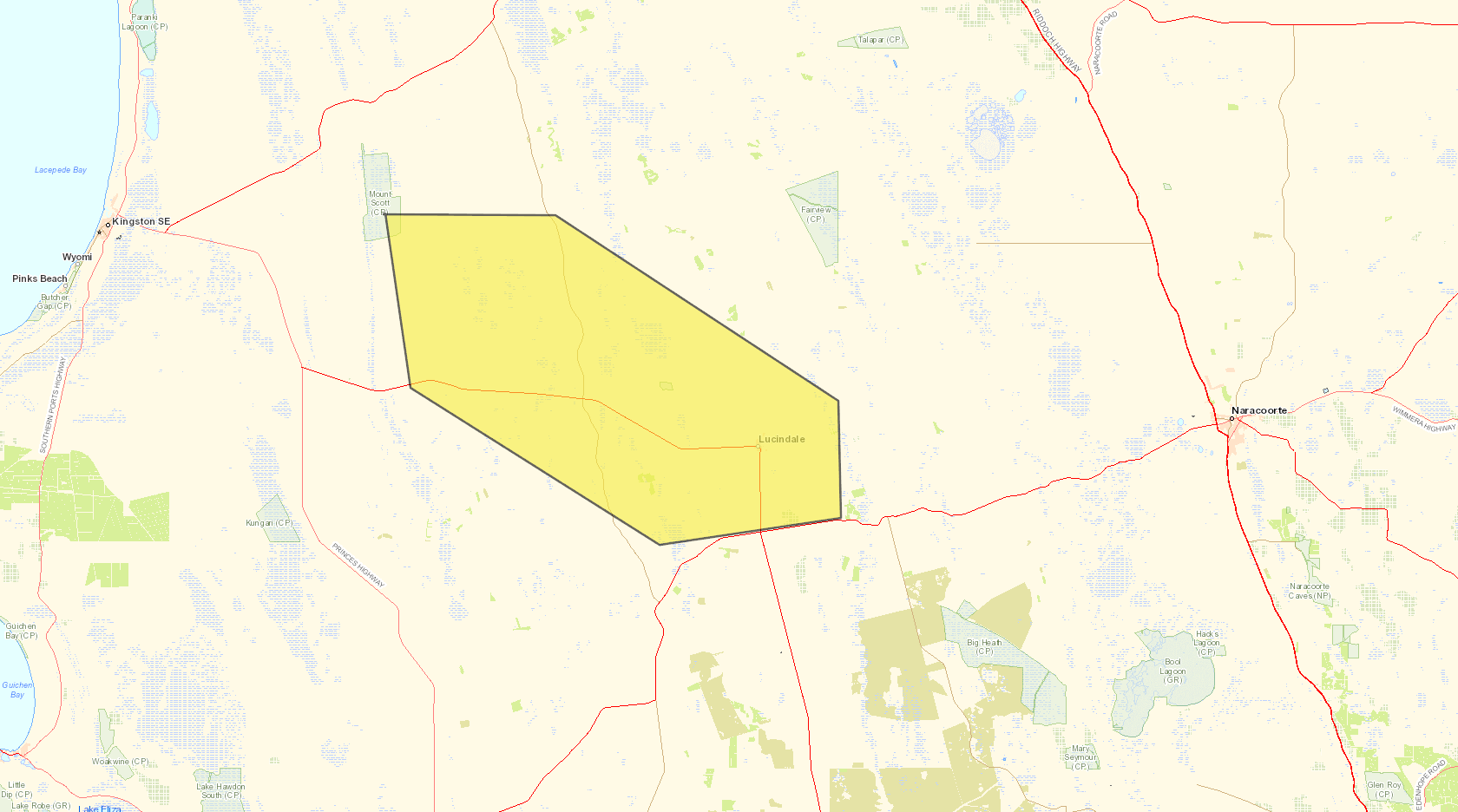
The South Australia Country Fire Service said there is currently no threat to life or property and firefighters are attending the fire.
The new advice comes after the blaze was downgraded from an emergency warning to Watch and Act level this evening.
Residents were earlier told it was too late to leave the area and to seek shelter immediately as the fire approached.
"It's getting thicker and thicker and the winds (are) not helping, it's very windy here and the wind is blowing towards Lucindale – so the smoke is coming up behind, it's slowly covering Lucindale on one side," local resident Shirley Solomon told 9News moments before she was told to evacuate.
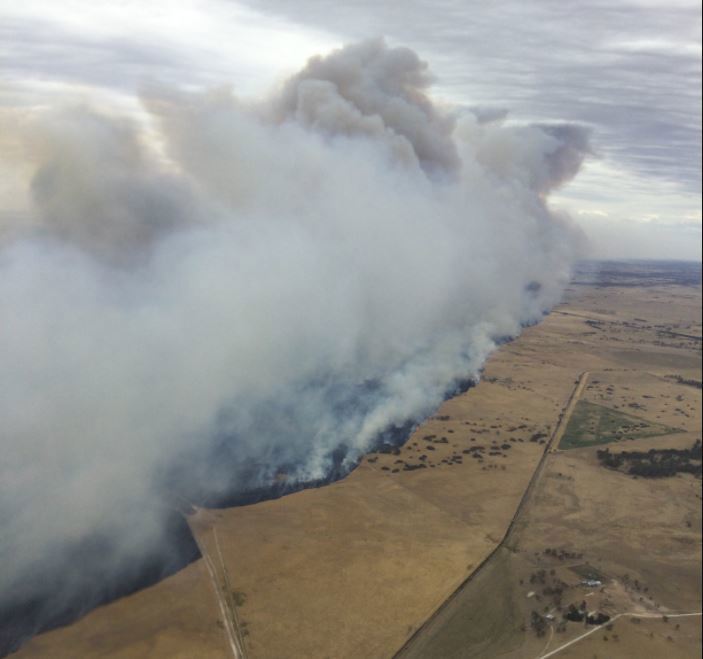
Several roads were closed and at least 100 locals holed up at Lucindale War Memorial Hall for protection.
CFS and Department of Environment and Water had 45 fire trucks and 200 firefighters, supported by farm fire units, fighting the blaze on the ground and six waterbombing aircrafts were used during the day.
South Australia Police warned people not to enter Blackford, Avenue Range and Lucindale as conditions were still dangerous.
"If you are not prepared, leave now and if the path is clear, go to a safer place," SA Police said in a statement this evening.
"The Blackford, Mail Bridge Road fire is uncontrolled. This grass fire is burning in a East to North East direction towards Minnie Crowe Road, Avenue Range and Fairview Road at Lucindale. Conditions are continually changing."
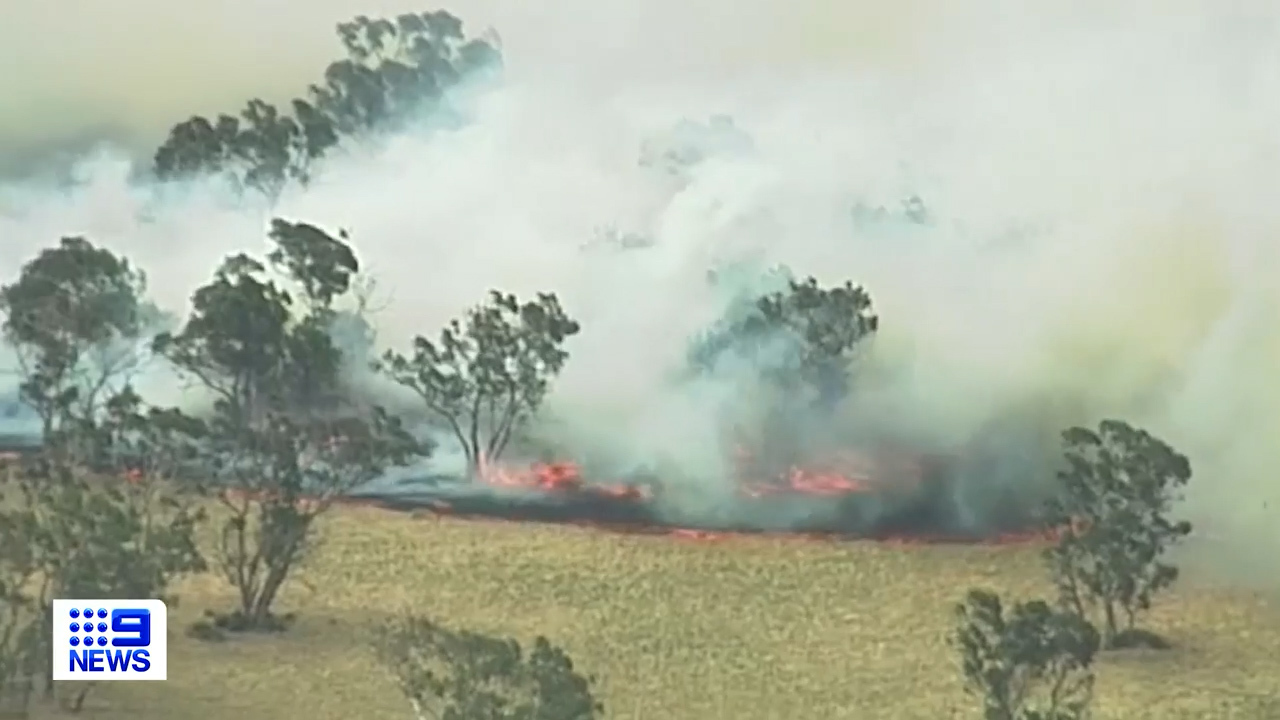
Conditions changed just before 8pm, with cool winds helping push the fire back.
Authorities anticipate the blaze will continue to burn throughout the night and could become a threat again with more crews expected to be brought in tomorrow.
As of this evening, CFS says the fire has burned through about 16,800 hectares of land and evacuated residents have a nervous wait to see if their homes have been damaged or destroyed.
"Numerous buildings, fences and stock have been lost or damaged. The fire burnt into the township of Lucindale, although there has been no confirmed losses of houses," CFS said in a statement.
A watch and act warning is also in place for areas east of Lucindale, with authorities warning they could also be under threat if conditions change again.
The towns of Woolumbool, Lachaber, Spence and as far east as Naracoorte are also on alert.
Sweltering temperatures and gusty winds throughout the state caused issues for firefighters trying to contain several blazes earlier. Temperatures in some areas reached the low 40s, prompting a total state-wide fire ban.
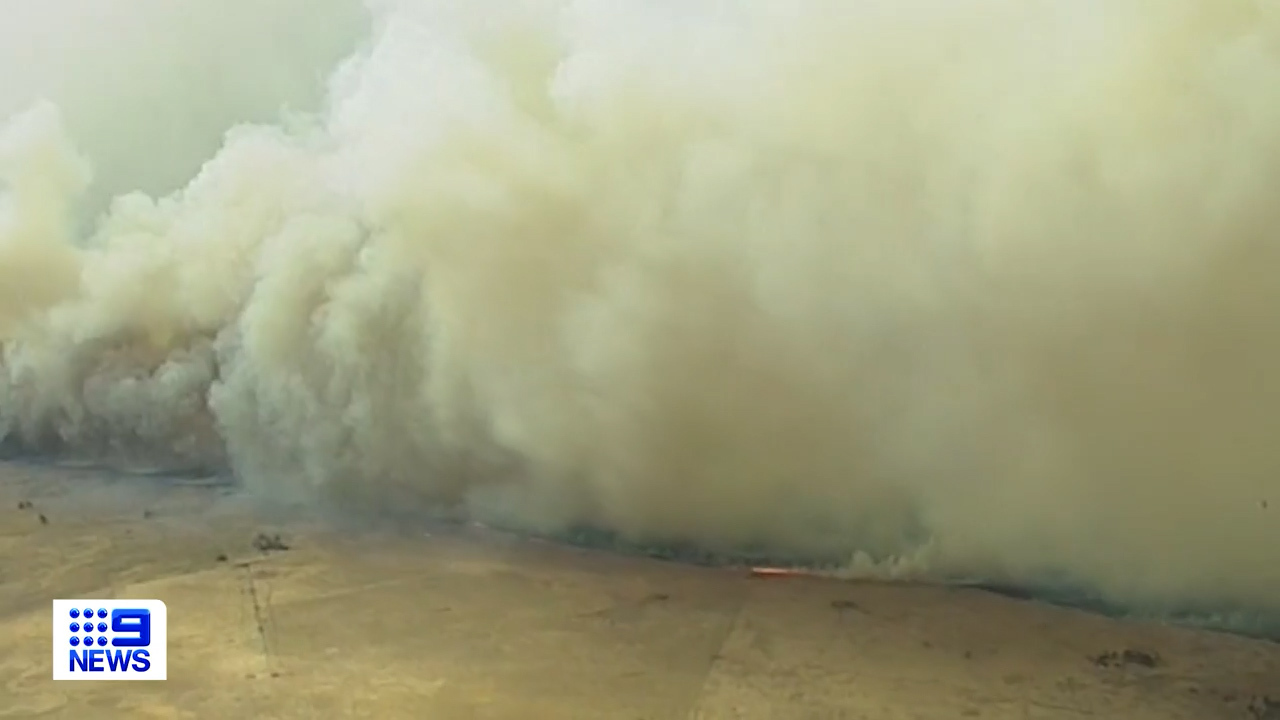
"The fire conditions are what we call extreme, high temps, strong winds mean this fire is very dangerous and people need to not underestimate the potential risks," CFS told 9News.
For current SA Country Fire Service warnings on the situation click here
Silent Killer: How to Help Prevent a Stroke
Strokes are way too common in our communities and are often the cause of death or permanent disabilities. It’s important for people to be aware of the causes of a stroke and be proactive in preventing being a victim.
What is a stroke?
A stroke occurs when a blood vessel in the brain ruptures and bleeds, or when there’s a blockage, a blood clot, in the blood supply to the brain. The rupture or blockage prevents blood and oxygen from reaching the brain’s tissues.
According to the Centers for Disease Control and Prevention (CDC), stroke is the fifth-leading cause of death in the United States. Every year, more than 795,000 U.S. people have a stroke.
One of the unknown factors that cause stroke, according to local cardiologists, is a cardiac condition known as Atrial Fibrillation or A-Fib.
This condition affects some 2.2 million people in the U.S. annually, and pertains to an irregular heartbeat, often caused when the two upper chambers of the heart, beat unpredictably and sometimes rapidly. These irregular heartbeats can cause blood to collect in the heart and potentially form a clot, which can travel to a person’s brain and cause a stroke.
Some people have pronounced symptoms of AFib as they will sense a pulsating, rapid heartbeat over a period of time. But AFib can also be asymptomatic, that is without any symptom. This type of AFib, paroxysmal AFib, can be quite dangerous, resulting in blood clots that cause a stroke.
AFib is more common in people over age 60, and more common in those with diabetes and high blood pressure. Without symptoms, some people are not aware of the problem until they have an electrocardiogram (ECG) done during the course of an annual or bi-annual physical when an irregular heartbeat is determined.
Cardiologists caution that people with AFib are several times more likely to have a stroke.
Symptoms of AFib
When they are symptoms of AFib, these may include the following:
Frequent heart palpitations, feeling tired and out of breath with little exertion, unusual sweatiness, feeling dizzy and lightheaded, or fainting spells, pain or pressure in the chest, and experiencing anxiety or panicky.
If these symptoms recur, people should visit their doctor as s soon as possible, so the appropriate tests can be conducted to determine the cause.
The first and most common test to determine if one has AFib is the ECG which will measure the rhythm of your heartbeat for a few minutes. If the readout of the ECG detects any irregularity, one is usually referred to a cardiologist who will conduct more advanced tests.
These tests will likely include a Stress test, which included another ECG but normally conducted while the patient walks on a treadmill or take a medicine that increases heartbeat. The cardiologists may also prescribe that the patient wear a Holter, a small device attached to the chest, which is in effect a portable ECG that measures heart rhythm during a period, normally at least 24 hours.
If AFib is confirmed the cardiologists will recommend treatment.
Typically, the first course of treatment is to be prescribed blood-thinning medication to prevent clots that could cause a stroke. One of the more common blood thinner is aspirin, preferably Baby Aspirins 81mg, which are chewable, and can be taken at least once daily. However, there are stronger blood-thinning medications and, depending on the patient’s condition, the doctor will make the appropriate prescription.
Based on the severity of the AFib, the cardiologist could treat the condition with cardioversion a procedure that stimulates the heart to its regular rhythm with medication or low bursts of electricity.
It’s extremely important that people with AFib, especially, paroxysmal AFib, adjust their lifestyle significantly in order to improve the condition of their heart and minimize the risks of blood clots, and therefore strokes.
Those diagnosed with AFib must not smoke, eat a heart-healthy diet and exercise regularly, avoid weight gain, avoid alcohol, especially where this triggers AFib symptoms, and most importantly avoid a life of stress or stressful situations.
Essentially, a healthy low-fat, sugar- and salt-free diet along with regular light exercise and a stress-free life will be useful in countering AFib, and the possibility of blood clots that could cause a stroke.
The post Silent Killer: How to Help Prevent a Stroke appeared first on The St Kitts Nevis Observer.