All posts by FreeNews

New Poll: Climate Change a Global Emergency

Despite the pandemic, almost two thirds of people around the world now view climate change as a global emergency.

That’s the key finding from the largest opinion poll yet conducted on tackling global warming.

More than a million people in 50 countries took part in the survey, with almost half the participants aged between 14 and 18.

Conserving forests and land emerged as the most popular solution for tackling the issue.

So who has taken part?

The poll, called the “People’s Climate Vote”, has been organised by the United Nations Development Programme in conjunction with Oxford University.

The organisers distributed poll questions through adverts in mobile gaming apps across 50 countries, between October and December last year.

strikeimage copyrightNurPhoto
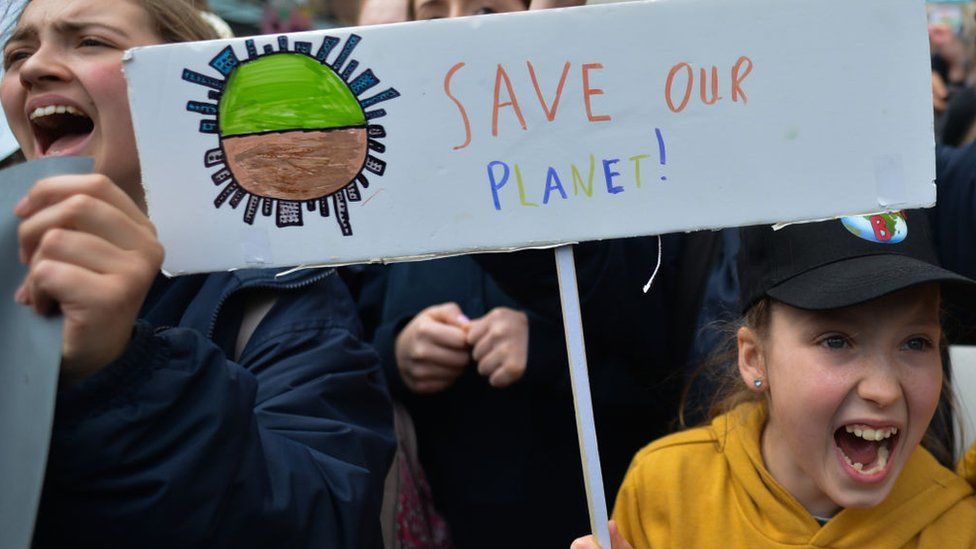
image captionHuge numbers of 14-18 year olds took part in the poll

Around 1.22 million people of all genders, ages, and educational backgrounds took part, but with significant numbers of younger people.

Some 550,000 people aged 14-18 took part.

What were the key findings?

Across all countries, 64% of participants saw climate change as an emergency, requiring urgent responses from countries. The margin of error was +/- 2%.

This result varied somewhat by age and location.

In the UK and Italy, 81% agreed with the question, while this dropped to 50% among those responding from Moldova.

Newly installed US President Joe Biden can take some comfort that 65% of those in the US taking part now view climate change as an emergency.

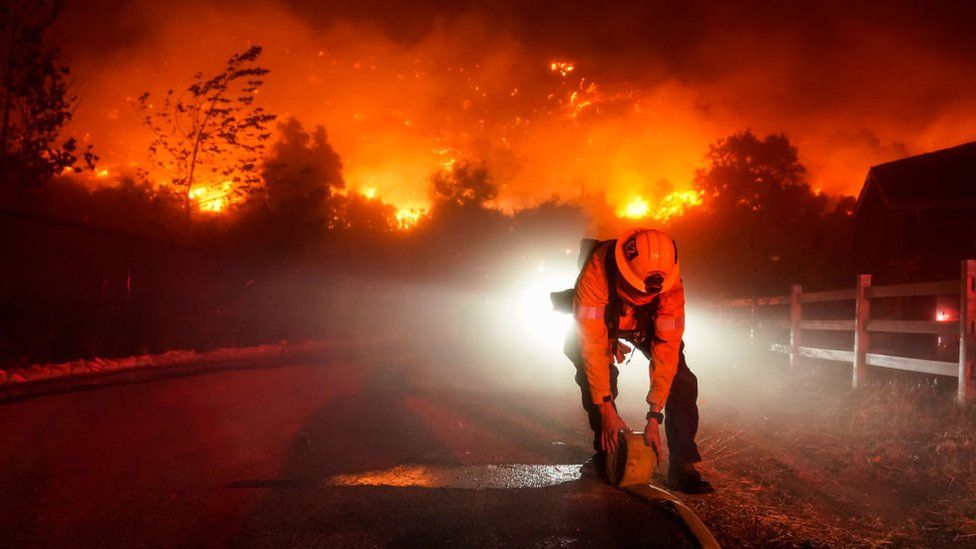
firesimage copyrightGetty Images
image captionFires in California and Australia have influenced people’s views on climate change

Overall, younger people were more likely to agree with the view that rising temperatures were an emergency, with nearly 70% in favour.

For people over the age of 60, this dropped to 58%.

“People are scared, they are seeing the the wildfires in Australia and California, they’re seeing the category five storms and in the Caribbean, they are seeing flooding in in Southeast Asia,” said Cassie Flynn, strategic adviser to the UNDP.

“And they’re looking around them and they’re saying, this is a real problem. We have to do something about this.”

Most popular policies

The actions that people tend to favour when it comes to tackling climate change depend, to some extent, on where people live.

In eight of the 10 countries with the highest emissions from generating electricity, there were majorities in favour of using more green energy.

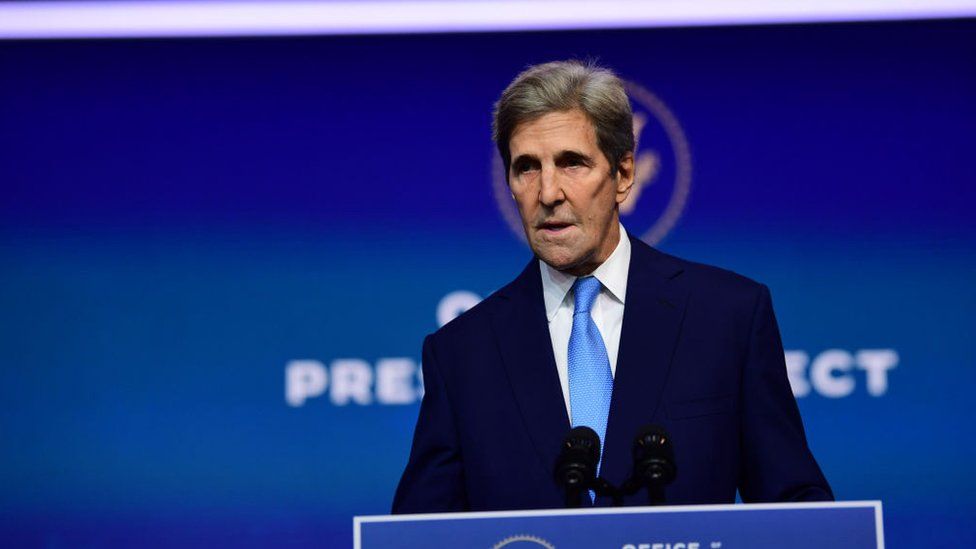
Kerryimage copyrightGetty Images
image captionFormer Secretary of State John Kerry is the new climate czar in the Biden administration

But in countries with bigger emissions from deforestation and land use changes, there was majority support for conserving forests and land.

This emerged from the overall survey as the most popular policy for dealing with climate change, by a narrow margin.

2px presentational grey line

Top four policies to tackle climate change:

  1. Conserve forests and land (54%)
  2. Use solar, wind and renewable power (53%)
  3. Climate friendly farming techniques(52%)
  4. Investing more money in green businesses and jobs (50%).

The post New Poll: Climate Change a Global Emergency appeared first on The St Kitts Nevis Observer.

COVID: US Disease Center Urges Schools to Reopen, Jan. Deadliest Month

In the US, where cases have fallen by about 30% over the past two weeks (see previous write-up), the Centers for Disease Control and Prevention called for schools to begin returning students to the classroom.

The decision cited accumulating evidence in districts where schools have opened that in-person learning has not contributed meaningfully to community spread of the virus, assuming mitigation measures were in place. See an overview of the data here.

However, January has already become the worst month for US Covid-19 deaths since the start of the pandemic.

As of Tuesday, there have been more than 79,000 coronavirus fatalities, topping the previous record set in December by more than a thousand, according to data from Johns Hopkins University.
The grim milestone underpins the growing demand from state officials for more vaccines so that Americans can be inoculated more quickly.

The total number of COVID-19 cases reported worldwide has surpassed 100 million, with more than 2.1 million deaths (see dashboard). Five countries—the US (25 million), India (11 million), Brazil (8.8 million), Russia (3.7 million), and the UK (3.7 million)—make up more than half of all reported cases.

Separately, Johnson & Johnson said it was on track to produce 100 million doses of its COVID-19 vaccine by June, and would present efficacy data early next week. Pending approval, it would become the third available vaccine in the US. Unlike the existing two vaccines, it requires only one shot and can be stored at standard refrigerator temperatures for up to three months (how it works).

As of this morning, the US had distributed more than 44 million vaccine doses, with about 23.5 million administered. Roughly 4,100 COVID-19 deaths were reported yesterday, bringing the total in the US to just over 425,200. See rolling averages for cases and deaths.

The post COVID: US Disease Center Urges Schools to Reopen, Jan. Deadliest Month appeared first on The St Kitts Nevis Observer.

Indonesian volcano unleashes river of lava in new eruption

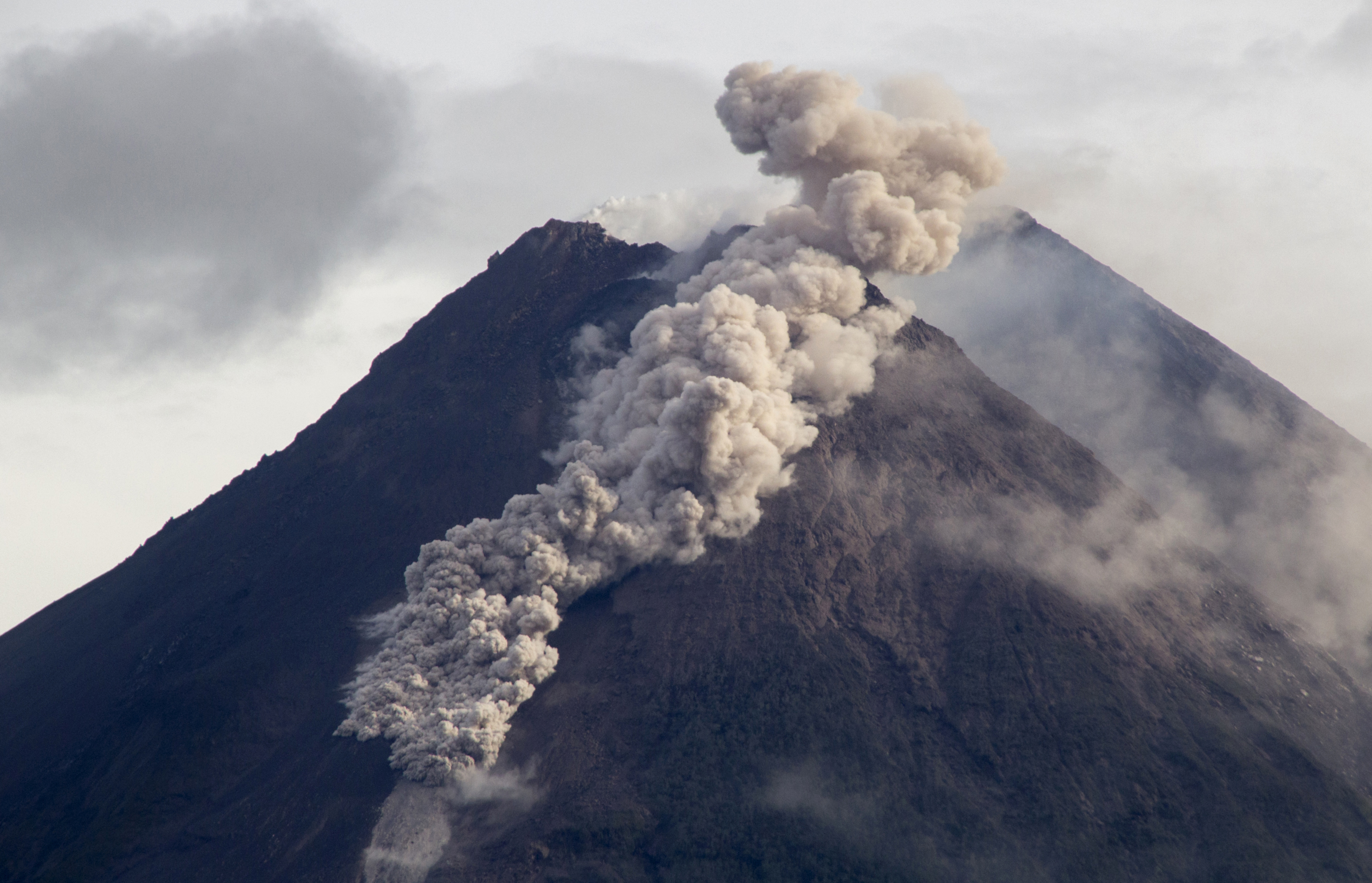
Indonesia’s most active volcano erupted on Wednesday with a river of lava and searing gas clouds flowing 1500 metres down its slopes.

It was Mount Merapi’s biggest lava flow since authorities raised its danger level in November, Hanik Humaida, the head of Yogyakarta’s Volcanology and Geological Hazard Mitigation Centre, said.

Authorities in November had evacuated nearly 2000 people living on the mountain in Magelang and Sleman districts on Java Island but most have since returned.

There has been no new evacuation.

The alert was being maintained at the second-highest level and authorities told people to stay out of the existing five kilometre danger zone around the crater as the local administrations in Central Java and Yogyakarta provinces closely monitor the situation.

The 2968-metre-high volcano is on the densely populated island of Java and near the ancient city of Yogyakarta.

READ MORE: Indonesia's confirmed coronavirus cases exceed 1 million

It is the most active of dozens of Indonesian volcanoes and has repeatedly erupted with lava and gas clouds recently.

Merapi's last major eruption in 2010 killed 347 people.

Indonesia, an archipelago of 270 million people, is prone to earthquakes and volcanic activity because it sits along the Pacific “Ring of Fire,” a horseshoe-shaped series of seismic fault lines around the ocean.

Caribbean Story and Author in Book of Year Win

BBC- The Mermaid of Black Conch, a dark love story about a fisherman and a mermaid torn from the sea, has won the Costa Book of the Year award.

Trinidadian-born British writer Monique Roffey beat four other contenders with her sixth novel to scoop the £30,000 prize.

Judges said the book was “utterly original… and feels like a classic in the making”.

A “delighted” Roffey said her win was a vote for Caribbean literature.

“A huge thank you to the judges for exposing my book to a wide readership. I’ll be pinching myself for weeks to come,” she added.

Based on a Taino legend of a beautiful woman transformed into a mermaid, the story is set in the Caribbean village of St Constance.

David, a fisherman, unexpectedly attracts the attention of Aycayia, a mermaid who is drawn to his singing. When she is captured from the sea during an annual fishing competition, he does all he can to save her, with dramatic consequences.

Professor Suzannah Lipscomb, chair of judges, said: “The Mermaid of Black Conch is an extraordinary, beautifully written, captivating, visceral book – full of mythic energy and unforgettable characters, including some tremendously transgressive women.”

line

Analysis from Rebecca Jones, BBC Arts correspondent

The Costa Book Awards have a reputation for picking popular reads: books you would recommend to a friend. And I would definitely recommend The Mermaid of Black Conch.

At first, the novel might sound a bit odd. Set on a Caribbean island in the 1970s, it is a bittersweet love story between a beautiful young woman cursed to live as a mermaid and a fisherman.

Based on a legend passed down by the indigenous people of the Caribbean, the Taino, there are touches of magic and snippets of poetry. The book was also shortlisted for the Goldsmiths Prize last year, which rewards fiction that breaks the mould or extends the possibilities of the novel.

But while it is unusual it is also a joy to read, brimming with memorable characters and vivid descriptions.

We see the mermaid’s “hair flying like a nest of cables” while we are told “sea moss trailed from her shoulders like slithers of beard” and “barnacles speckled the swell of her hips.”

For me, this was a hugely entertaining and thought-provoking novel and a worthy winner.

line

Caribbean representation

Roffey, a senior lecturer in creative writing at Manchester Metropolitan University, secured her publishing deal through Peepal Tree Press, an independent publisher supporting Caribbean writers.

She then crowd-funded her publicity campaign with the support of fellow authors.

Monique Roffey's book coverimage copyrightCosta Awards
image captionThe Mermaid of Black Conch is set in the Caribbean

Roffey’s entry was also named Costa’s Novel of the Year earlier this month, alongside winners from four other categories:

  • First Novel Award – Love After Love by Ingrid Persaud
  • Children’s Book Award – Voyage of the Sparrowhawk by Natasha Farrant
  • Poetry Award – The Historians by Eavan Boland
  • Biography Award – The Louder I Will Sing by Lee Lawrence

The Mermaid of Black Conch is the thirteenth novel to take the overall prize. Days Without End by Sebastian Barry was the last novel to be named Costa Book of the Year in 2016.

Tuesday’s virtual ceremony also saw London-based writer Tessa Sheridan receive the 2020 Costa Short Story Award.

Sheridan won the public vote and £3,500 for her story, The Person Who Serves, Serves Again.

The Costa Book Awards, formerly the Whitbread Book Awards, were established in 1971 to encourage, promote and celebrate the best contemporary British writing.

It is open to UK and Irish authors.

Seamus Heaney, Ted Hughes and Sebastian Barry are among the authors to have won the book of the year award more than once.

line

The post Caribbean Story and Author in Book of Year Win appeared first on The St Kitts Nevis Observer.

Coronavirus: Barbados Returns to Lockdown

The Caribbean island nation of Barbados will return to a two-week lockdown next Wednesday, which includes wearing a face mask in all public places, as part of an initiative to curtail a rise in COVID-19 cases.

Prime Minister Mia Mottley announced Tuesday night that from February 3 to February 17, a 7:00 pm to 6:00 am curfew will be in effect.

She also announced that the country had confirmed three cases of the easily spread British strain of the virus.

Motley said the rise in COVID-19 cases coupled with the deaths of three elderly people within a week prompted her to bring back the restrictions.

Essential businesses such as supermarkets, pharmacies and gas stations will continue to operate during the lockdown.

Supermarkets will only open from 8:00 am to 3:00 pm Monday through Friday during the lockdown.

All other businesses, including bars, restaurants and gyms will close during the lockdown. Banks are excepted, shutting down for just six days, February 3 to 9.

Barbados has recorded more than 1,400 COVID-19 infections and 10 deaths, according to Johns Hopkins University COVID Resource Center.

The post Coronavirus: Barbados Returns to Lockdown appeared first on The St Kitts Nevis Observer.

Teenagers 'kicked and stomped' by violent mob at Australia Day party

An Australia Day beach party turned to bloodshed after a group of teenagers were ambushed by a violent mob at Perth's City Beach.

The group of party-goers were repeatedly hit, kicked and stomped on between 9pm and 10pm last night, leaving two hospitalised and five injured, Perth Police said.

Jamie, 16, says he was taunted then punched to the ground, surrounded by the mob and beaten so badly he was taken to hospital.

Perth Australia Day party

"My friend was about to get bashed and I've kind of jumped in the middle to try and separate them," Jamie told 9News.

"One of them [mob member] has just king hit me across the head, out of nowhere and then you already know I'm the next target, getting bashed."

READ MORE: Body found in a wheelie bin in a dam east of Perth identified

A second teenager was also sent to the emergency department after losing a tooth in the violence.

"His eyes were sort of rolling back into his head slightly, he was bleeding all from his mouth, he lost a lot of blood and he was unresponsive for about I'd say 15 seconds," a party-goer said about the hospitalised teen.

According to the teenagers, the gang were demanding anything valuable including phones, wallets, jewellery.

"My phone was taken off me and I was threatened over the head with a wine bottle if I didn't reset my phone in 5 seconds, then they would have smashed me with it," a teenager said.

"I actually thought I was going to die."

The teenagers say the group was chanting BDK, the call sign of a notorious gang from Atwell, about 21 kilometres south of Perth CBD.

The group is known to ambush parties to steal belongings and "beat people".

The gang, who are also teens, have been found uploading and bragging about their crimes on social media.

"They attacked girls as well, they were kicking people's heads around like a soccer balls," a party-goer said.

Police have confirmed five teenagers were injured, however cannot trace the violence to a known gang.

"We'd like to catch these people as soon as we can," Acting Detective Inspector Stephen Crowley said.

Trump Likely to Skate Free at 2nd Senate Trial

Senate Republicans seem ready to hand former President Trump his second acquittal in an impeachment trial in a little more than a year after just five GOP senators on Tuesday rejected a motion that the trial was unconstitutional.

Most GOP senators haven’t formally announced how they will vote on convicting Trump, and, in a shift from 2020, most are not rushing to defend him after a mob, egged on by the then-president, sacked the Capitol.

But Tuesday’s vote, which sidelined the effort from Sen. Rand Paul (R-Ky.), sends a clear signal to everyone in Washington that the trial is highly unlikely to end with a Trump conviction vote.

At least 17 GOP votes to convict would be needed to reach the two-thirds majority.

“I can’t see how you get 17. I think that that was a test vote,” said Sen. John Boozman (R-Ark.) after 44 GOP senators sided with Paul.

While it is possible senators could change their minds, few think that is likely.

Sen. Mike Rounds (R-S.D.) said the Tuesday vote was a “pretty good indication” that most Republicans don’t believe the trial is constitutional.

“It would really surprise me if any of those individuals decided that it was appropriate to move forward with an impeachment,” Rounds said.

Sen. James Inhofe (R-Okla.) said the vote was a “good indication” of where the final vote on convicting Trump would end up, while Paul declared the chances that Trump would become the first president to be found guilty “dead on arrival.”

The vote comes as Republicans have been increasingly signaling they view the impeachment trial as unconstitutional. Trump will be the first president to have a trial after leaving office, but the Senate previously held a trial for a Cabinet official who was no longer in office.

“We’re now being asked to convict a president who’s been impeached and he’s no longer in office. To me, this lacks legitimacy as I read the Constitution,” said Sen. John Barrasso (Wyo.), the No. 3 GOP senator.

Sen. Joni Ernst (R-Iowa) said in a statement that while Trump’s rhetoric on Jan. 6 showed “poor leadership,” she was also concerned that “the president is no longer in office” and Congress could be “opening itself to a dangerous standard.”

Asked about the upcoming trial, Ernst told reporters that Tuesday’s vote shows “they’ve got a long ways to go to prove it.”

Barrasso and Ernst joined with every other member of GOP leadership to vote against tabling Paul’s efforts to deem the impeachment trial unconstitutional.

Senate Minority Leader Mitch McConnell (R-Ky.), who said last week that Trump “provoked” the mob, supported Paul’s efforts.

Some Republicans cautioned against mapping the vote total on Paul’s effort as a direct correlation of what the breakdown will be on the final vote on convicting Trump.

Sen. John Thune (R-S.D.) called Tuesday’s vote “indicative of where a lot of people’s heads are” but stressed that he didn’t think it binded anyone into voting to acquit Trump at the end of the trial.

“I think most of us thought that the threshold issue of whether or not you can remove, as the Constitution suggests, somebody who’s no longer in office … from a constitutional standpoint, it’s on really shaky ground,” Thune said.

Sen. Rob Portman (R-Ohio), who voted against tabling Paul, said he wasn’t voting to say a trial would not be constitutional but was voting to say the issue should be discussed. Tuesday’s vote effectively pigeonholed Paul.

“I mean, I’ve the same position Mitch McConnell has. He didn’t do that to be tabled either, even though he wants to have, you know, a fulsome discussion,” Portman said.

He added that he viewed Tuesday’s vote and whether he would ultimately vote to acquit Trump as “a totally different issue, as far as I’m concerned.”

Republicans have questioned if the Senate, by moving forward, would be setting a precedent under which Republicans, once they are back in the majority, could reach back and try to impeach former presidents, in a warning shot to Democrats.

“Could we go back and try President Obama?” asked Sen. John Cornyn (R-Texas), an adviser to McConnell.

Sen. Thom Tillis (R-N.C.) told reporters that Republicans were looking at the “broader issue” about impeaching a private citizen and viewed the current discussion as “kind of laying down a marker.”

Republicans got a closed-door briefing on Tuesday from legal professor Jonathan Turley, where they quizzed him and discussed the constitutionality of holding an impeachment trial after a president has left office.

Sen. Lisa Murkowski (R-Alaska) appeared frustrated by the decision to force a vote, a move that appeared to catch GOP senators off guard, without more briefings and discussion within the caucus.

“Whether or not you’re going to see members change their mind after they’ve already taken a vote? I think that’s hard for people to do,” Murkowski added.

Asked about the implications for the outcome of the Senate trial, Sen. Susan Collins (R-Maine), who was also one of the five to oppose Paul, replied, “Just do the math.”

“It is extraordinarily unlikely the president will be convicted,” Collins said.

The GOP strategy is a sharp shift from 2020, when Republicans were pledging publicly that they would acquit Trump and defended him publicly throughout the trial.

Republicans fumed after Trump urged his followers to march to the Capitol, repeating his false claims that the election was “rigged.” And McConnell disclosed on Tuesday that he hadn’t spoken to Trump since Dec. 15.

But Democrats are worried that the argument that the trial is unconstitutional is giving Republicans an option that GOP senators view is politically safe because it allows them to vote against convicting Trump, without having to specifically endorse his Jan. 6 rhetoric.

Sen. Tim Kaine (D-Va.), who has floated trying to bar Trump from office through the 14th Amendment, warned that the constitutional argument, which Sen. Tom Cotton (R-Ark.) articulated weeks ago, was emerging as a “safe harbor” for Republicans.

“I think Cotton has given Republicans a safe place to land. ‘I don’t like the behavior, but I’m not sure you can convict.’ And whether or not that’s the right legal answer or not I think that’s a safe harbor,” Kaine said.

The post Trump Likely to Skate Free at 2nd Senate Trial appeared first on The St Kitts Nevis Observer.
Malka Leifer lands in Melbourne after extradition from Israel

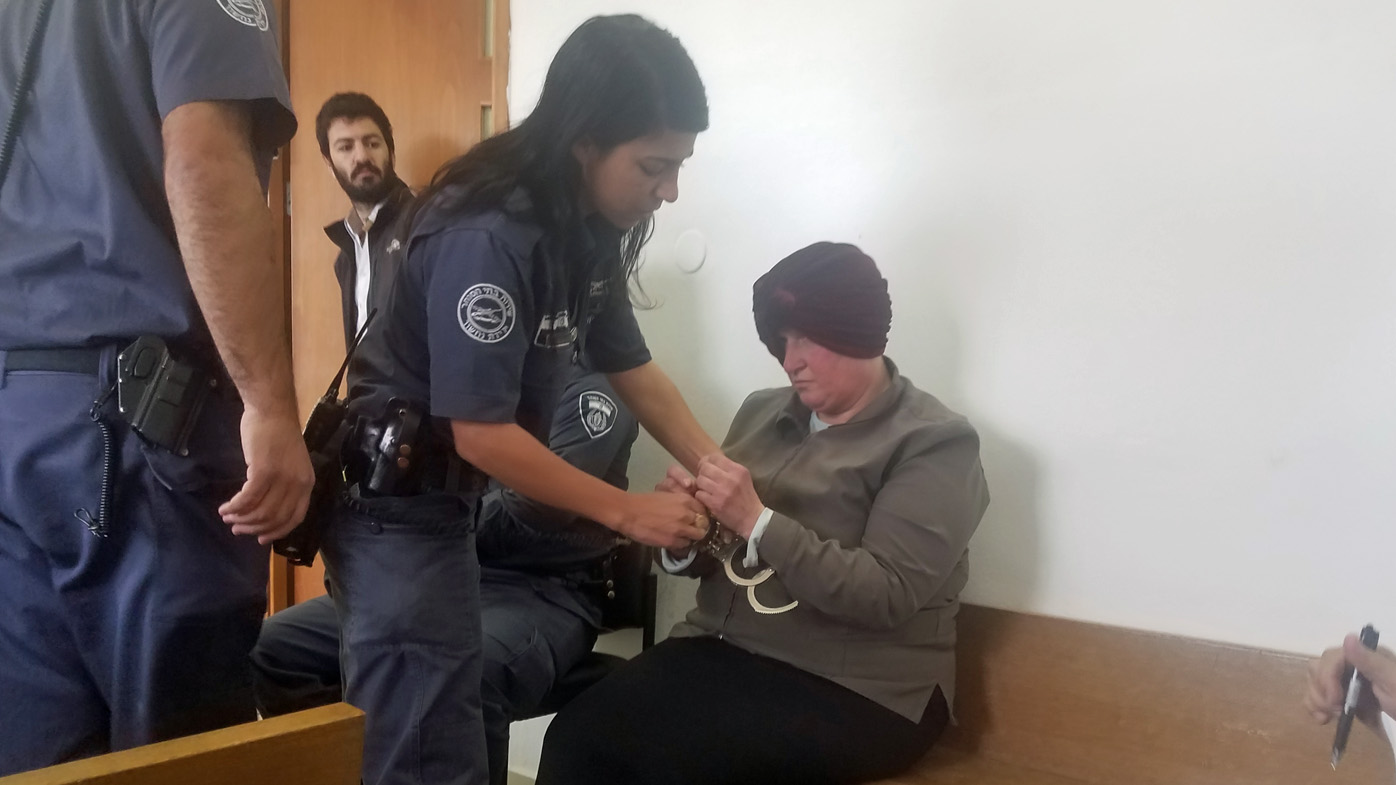
Malka Leifer has arrived in Australia after being extradited from Israel.

The former school principal was taken into police custody after being escorted from the plane when it landed in Melbourne, two days after she departed her native Israel on Monday.

Ms Leifer will face the Melbourne Magistrates' court tomorrow, appearing via WebEx from prison to face more than 70 charges of child sexual abuse after a six-year legal battle to extradite her.

READ MORE: Malka Leifer's 'last-ditch' hearing in Israeli Supreme Court over extradition to Australia

A person believed to be Malka Leifer walks off a plane at Melbourne Airport on January 27, 2021 in Melbourne, AustraliaMembers of Victoria Police are seen waiting at the International Terminal on January 27, 2021 in Melbourne, Australia.Police move into place to take Malka Leifer into custody after she was escorted off a plane on landing in Melbourne

Ms Leifer is accused of sexually abusing three female students at the Adass Israel School in Elsternwick between 2001 and 2008.

In December last year the Supreme Court of Israel signed the extradition order for Ms Leifer to return to Australia when it dismissed her final appeal.

It is understood her return to Melbourne has included stopovers at Hamburg in Germany and Singapore.

https://twitter.com/Eliza_Rugg9/status/1354309107386249221?ref_src=twsrc%5EtfwFormer school principal Malka Leifer to face Melbourne court

The 54-year-old will have to quarantine at a women's prison upon arrival in accordance with Victoria's COVID rules.

She will appear before the Bail and Remand Court in what is expected to be a filing hearing.

A supplied image obtained on Thursday, February 15, 2018, of ex-Melbourne school principal Malka Leifer, who is accused of child abuse.