A political figure has again lost a legal argument to prevent the Herald and other media from naming them after being mentioned during a businessman’s high-profile sex and corruption trial last year.Today, the Court of Appeal released…
Category Archives: headline
Squalid: Tenant to pay landlord $3K after leaving rental property unlivable
Faeces on the walls, urine on the carpet, black mould and an infestation of cockroaches so extreme that the pests chewed through wiring have formed a nightmare clean-up for one landlord. The rental property was described by the…
Rudy Giuliani claims supermarket worker's pat on the back was assault
Police have dropped felony charges against a supermarket worker former New York mayor Rudy Giuliani accused of assault, after CCTV revealed the man patted him on the back.
Giuliani, who served as Donald Trump's lawyer during his administration, was campaigning for his son's gubernatorial campaign in the New York borough of Staten Island.
CCTV showed supermarket worker Daniel Gill walking up behind Giuliani and patting him on the back.
READ MORE: One decision has just turned the next US election on its head

"What's up, scumbag," Gill is purported to have said.
Giuliani, himself a former prosecutor, had Gill arrested.
"I got hit as if a boulder hit me," Giuliani said.
"It didn't knock me down, but it hurt tremendously."
Gill was charged with second degree assault and has been suspended from his job "pending termination".
"He almost knocked me down. Thank God for a 78-year-old, I am in pretty good shape," Giuliani said.
"If I wasn't, I would have hit the ground and probably cracked my skull."
READ MORE: New York court suspends Rudy Giuliani's law licence
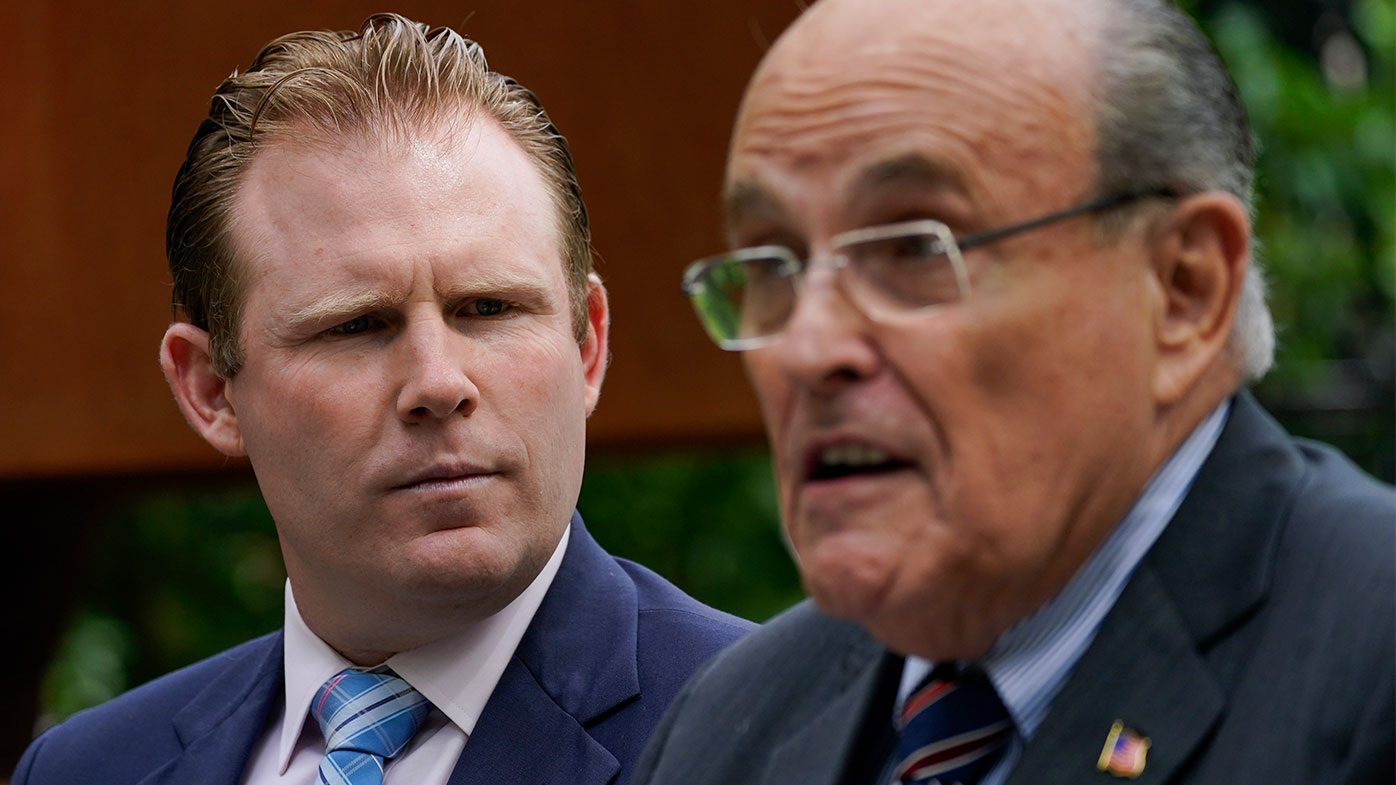
Gill was held by the New York Police Department for 24 hours before the felony charges were dropped.
He has since been charged with third-degree assault, a misdemeanour, third-degree menacing and second-degree harassment.
The Legal Aid Society, which is representing Gill, said the charges were inconsistent with existing law.
"Our client merely patted Mr Giuliani, who sustained nothing remotely resembling physical injuries, without malice to simply get his attention, as the video footage clearly showed," the society said in a statement.
"Given Mr Giuliani's obsession with seeing his name in the press and his demonstrated propensity to distort the truth, we are happy to correct the record on exactly what occurred over the weekend on Staten Island."
READ MORE: Trump's favourite candidate enmired in scandal over secret children
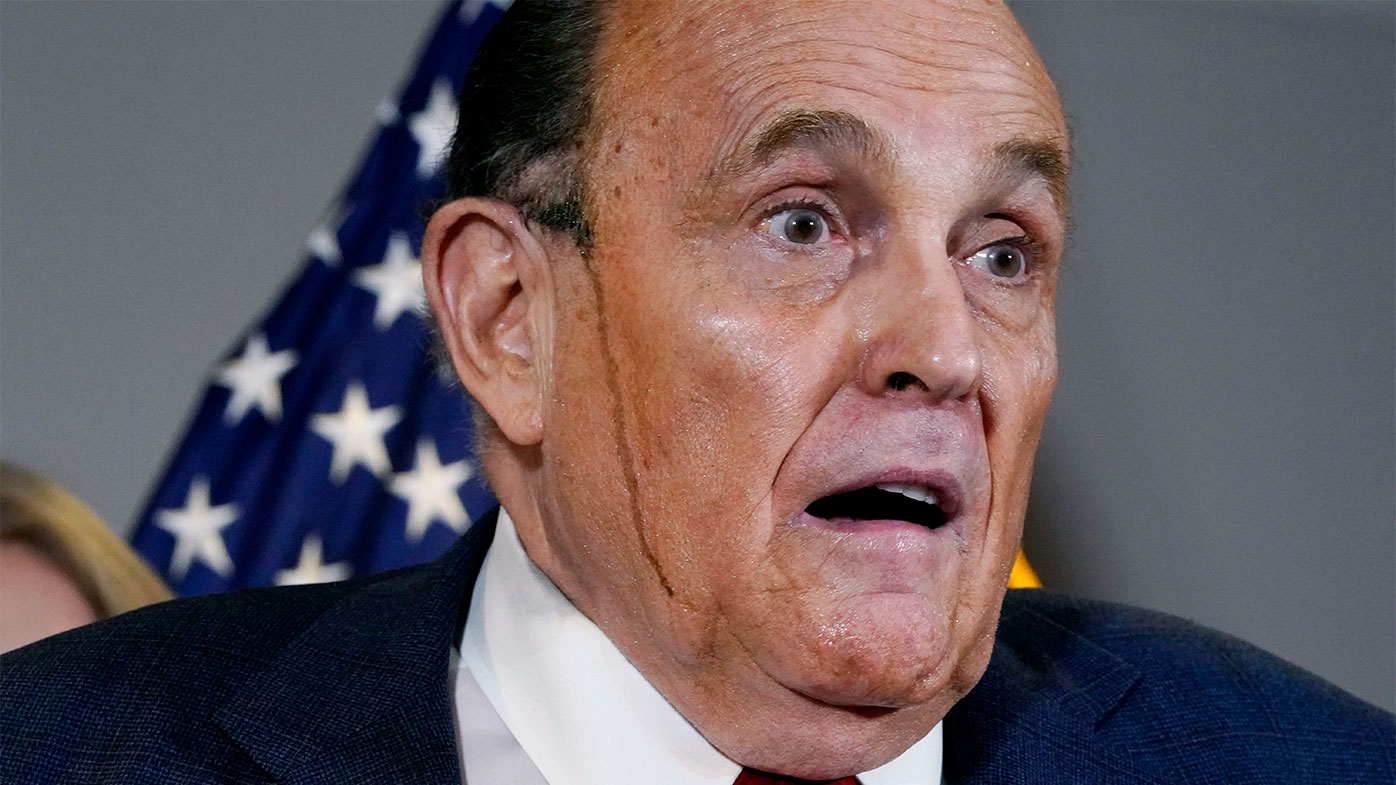
Giuliani's son Andrew is running as a Republican in the New York primary for governor.
"The assault on my father, America's Mayor, was over politics," the younger Giuliani said in a statement.
"We will not be intimidated by left-wing attacks."
A poll by SurveyUSA last week shows Democratic Governor Kathy Hochul has a 26-point lead on the younger Giuliani.
US drug expert warns fentanyl a very dangerous drug
By RNZ An expert at the National Institute of Drug Abuse in the United States has warned that fentanyl is extremely potent, very dangerous and easy to overdose on.The deadly synthetic opioid fentanyl is now circulating in New…
Dying lecturer: 'Te Wānanga o Aotearoa has not acted in good faith'
By Aroha Awarau of Whakaata Maori Terminal cancer patient Ruth Nuku Stanshall (Ngati Maru and Ngaruahine) has worked for 18 years as a dedicated social work lecturer at Te Wānanga o Aotearoa.She always knew that if she…
Man cites language barrier and lawyer's 'illegitimate actions' in second failed appeal
A man convicted of strangling his wife and threatening to kill her with a hammer claims a language barrier limited his understanding of the charges he faced and he was forced to plead guilty by the “illegitimate” actions of his lawyer….
Study finds earthquake brain fades over time, cognitive ability restored
The fog of the Christchurch earthquakes is finally lifting for resilient Cantabrians.New research from the University of Otago, Christchurch has found the brain function of otherwise-healthy individuals living through a traumatic…
How personal data could be used to enforce anti-abortion laws
The US Supreme Court's Friday ruling to overturn Roe v. Wade is almost certain to spark a wave of new state legislation taking aim at abortion rights, and to reinforce existing laws that prohibit and, in some cases, criminalise the procedure.
Among the wide-ranging potential implications of the decision are concerns about the potential use of personal data to punish people who look for information about or access to abortion services online.
In some of the most restrictive states, digital rights experts warn that people's search histories, location data, messages and other digital information could be used by law enforcement agencies investigating or prosecuting abortion-related cases.
READ MORE: Poorest to be hardest hit by US abortion rights ruling

On Friday, the Supreme Court struck down Roe v. Wade, the 50-year-old ruling that guaranteed a person's Constitutional right to terminate a pregnancy before viability, usually around 24 weeks.
A draft of the opinion leaked in May.
Overturning the landmark 1973 court ruling is expected to transform the landscape of reproductive health in America, leaving abortion policy up to individual states and potentially paving the way for more than 20 states to pass new laws restricting abortions.
Even before the ruling, concerns about the digital privacy implications of abortion restrictions had started to arise amid a movement by Republican-controlled states, including Georgia, Texas, Mississippi and Oklahoma, in recent years to pass laws severely curtailing access to the service.
America is a much different place today than in the pre-Roe era: Because of the pervasiveness of the Internet and mobile technology, people today share vast troves of data about themselves — whether they realise it or not — opening the door to significant surveillance.
The possibility of a complex patchwork of state laws following the rolling back of Roe v. Wade raises a host of new questions about the everyday technology Americans use to make health decisions and how it might be used to enforce those laws, and could create confusion about what online behaviour is permitted or not.
For example, in states that make it a crime to help an abortion-seeker, data from women's period-tracking or pregnancy apps could end up being subpoenaed as evidence against the person who helped them, said Danielle Citron, a law professor at the University of Virginia and author of the forthcoming book "The Fight for Privacy."
"Let's say you got your period, stopped your period and then got your period again in a short time," Citron said.
"It's [potential] evidence of your own criminality, or your doctor's criminality."
Groups promoting digital rights and reproductive freedoms are now warning people in states that criminalise providing access to abortions to safeguard their digital footprints when seeking abortion information and resources online and sharing tips for how to do so.
"We are living in a much more surveilled culture than we were in 1972 and prior, so in a future where abortion rights are limited or there's not a federal right, people will be at risk for exercising their bodily autonomy," said Elisabeth Smith, director for State Policy and Advocacy at the Centre for Reproductive Rights.
"The consequences of those decisions are likely to fall hardest on Black, brown, Indigenous people of colour."
https://twitter.com/DrCatherineBall/status/1540454489995759616
A growing number of US lawmakers have expressed alarm about the potential misuse of advertising data to prosecute abortion-seekers.
In May, dozens of congressional Democrats wrote to Google saying that the company's practice of collecting and storing vast troves of geolocation data from mobile phones "will allow it to become a tool for far-right extremists looking to crack down on people seeking reproductive health care".
And on June 24, the same day the Supreme Court struck down Roe v. Wade, another group of US lawmakers wrote to the Federal Trade Commission saying Apple and Google should face an agency investigation over ad practices that they said could end up harming abortion-seekers.
"Data brokers are already selling, licensing, and sharing the location information of people that visit abortion providers to anyone with a credit card. Prosecutors in states where abortion becomes illegal will soon be able to obtain warrants for location information about anyone who has visited an abortion provider," wrote the group, which included Senators Ron Wyden, Elizabeth Warren, Cory Booker, and Rep. Sara Jacobs.
"The FTC should investigate Apple and Google's role in transforming online advertising into an intense system of surveillance that incentivises and facilitates the unrestrained collection and constant sale of Americans' personal data."
READ MORE: How is abortion handled in Australia?
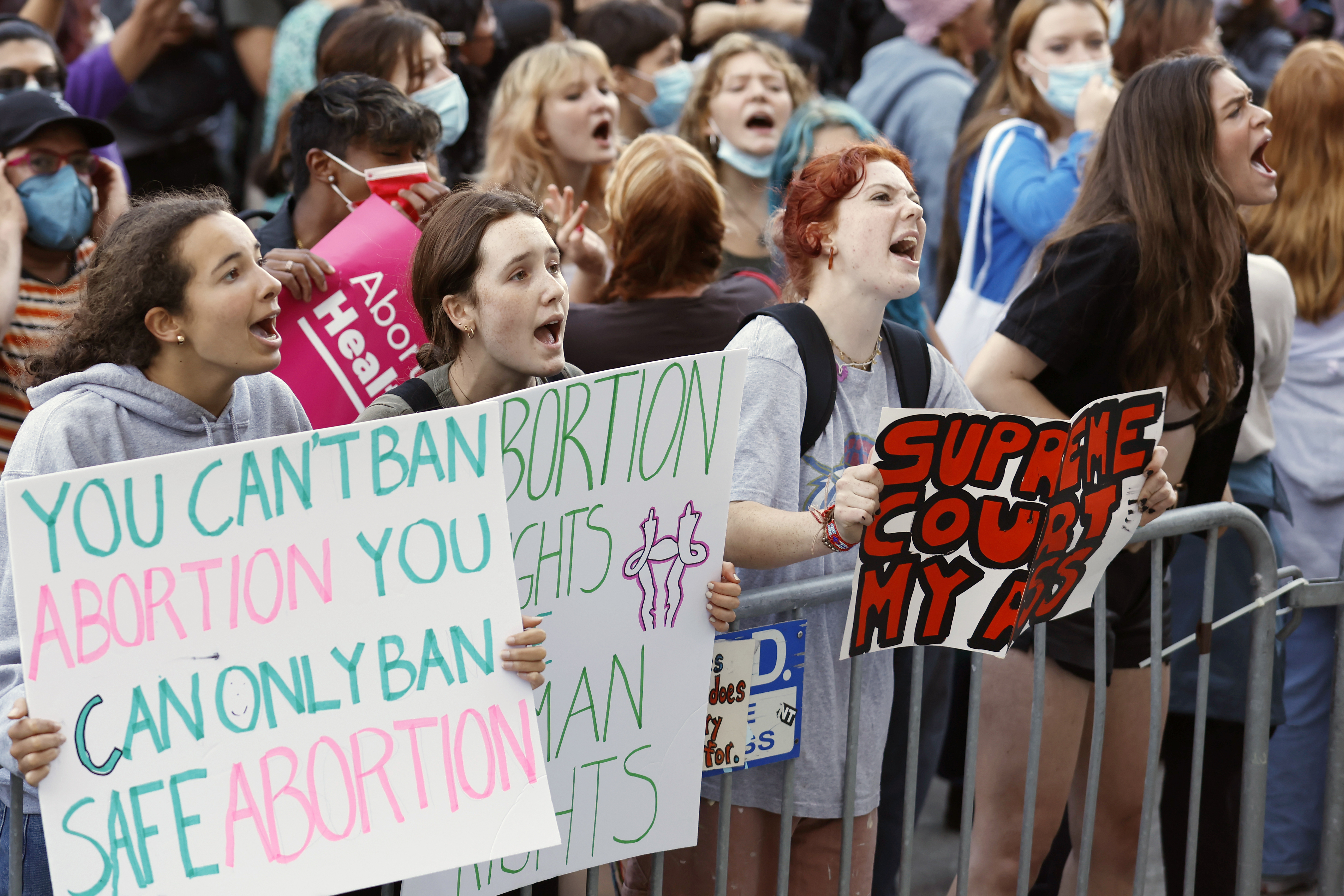
Much has also changed in the reproductive health care landscape since Roe v. Wade was decided in 1973.
Self-managed abortions and online pharmacies that provide abortion medication are increasingly accessible options, especially for low-income people or those in rural areas or states that restrict access to in-person abortion services.
The US Food and Drug Administration in December lifted a requirement for patients seeking abortion medications to pick them up in-person, instead allowing the pills to be sent by mail.
Although a number of states, including Texas, prohibit receiving medication abortions through telehealth, that does not necessarily stop online pharmacies and services in other countries, such as the European-based Aid Access, from mailing the medications to people in those states.
Web traffic to online abortion resource site Plan C — which offers information on how to find abortion medications and how to use them — increased from 500 people per day to 25,000 per day immediately after Texas banned most abortions after six weeks in September, before levelling out to about 2500 a day, according to Elisa Wells, Plan C's co-founder and co-director.
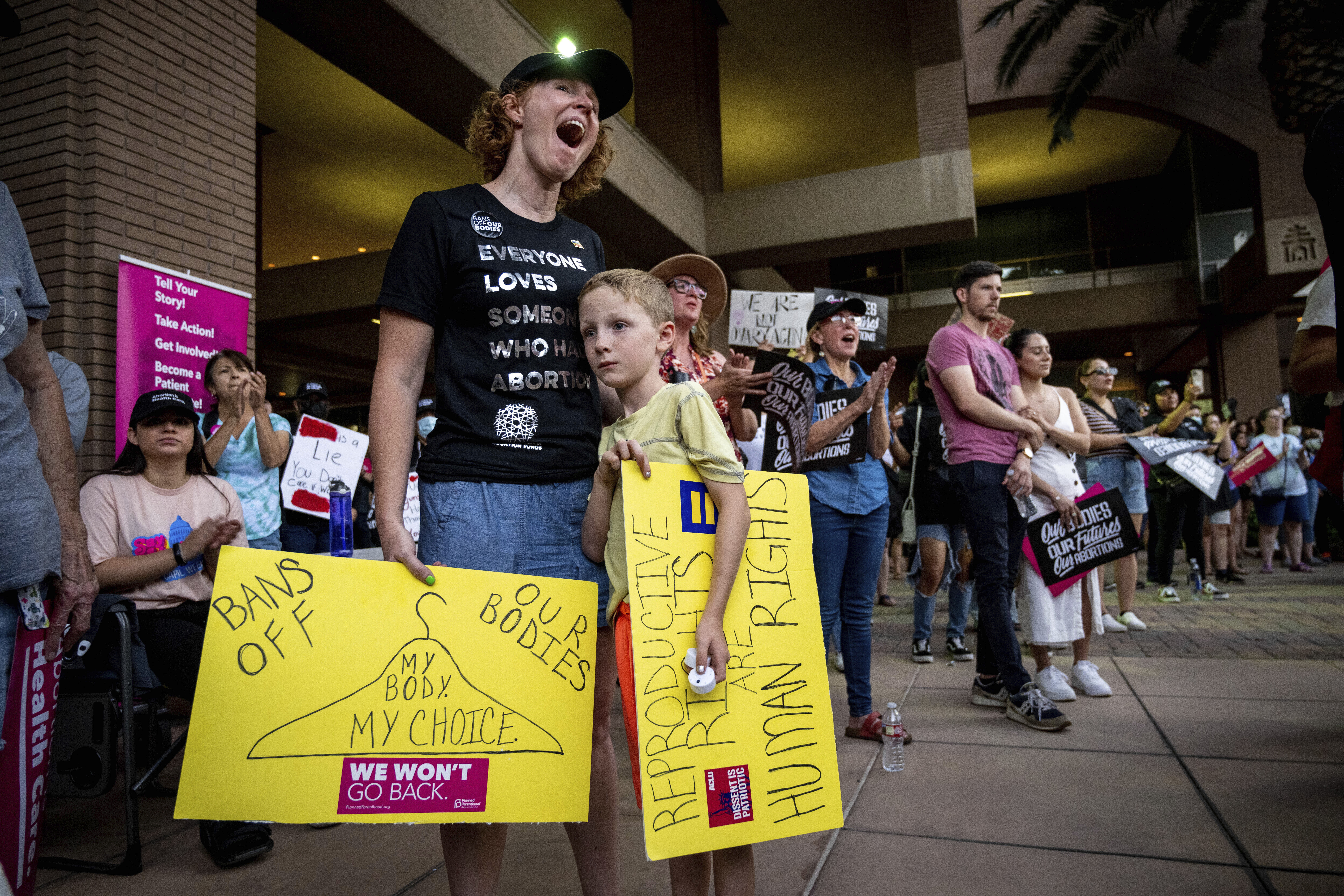
"Most people go directly to our 'Find Abortion Pills' directory that we have," Wells told CNN Business.
"Disproportionately these people are from states that have laws on the books that restrict access."
Various online behaviours could become part of investigations and court proceedings in states where helping to provide access to abortions is criminalised, including internet searches, location history, call and text logs, emails and financial records, according to Cynthia Conti-Cook, a civil rights attorney and tech fellow at the Ford Foundation.
Any part of a person's digital footprint is fair game once a device is in law enforcement's possession, she said.
"As long as abortion and abortion-seeking related conduct is what is criminalised, all of that information can be totally fair game," Conti-Cook told CNN Business.
She added that law enforcement has the forensic tools at their disposal to view virtually everything a person does on their device — but only once the device is in their possession.
Unless voluntarily handed over, a phone and all its data typically cannot be accessed without a search warrant.
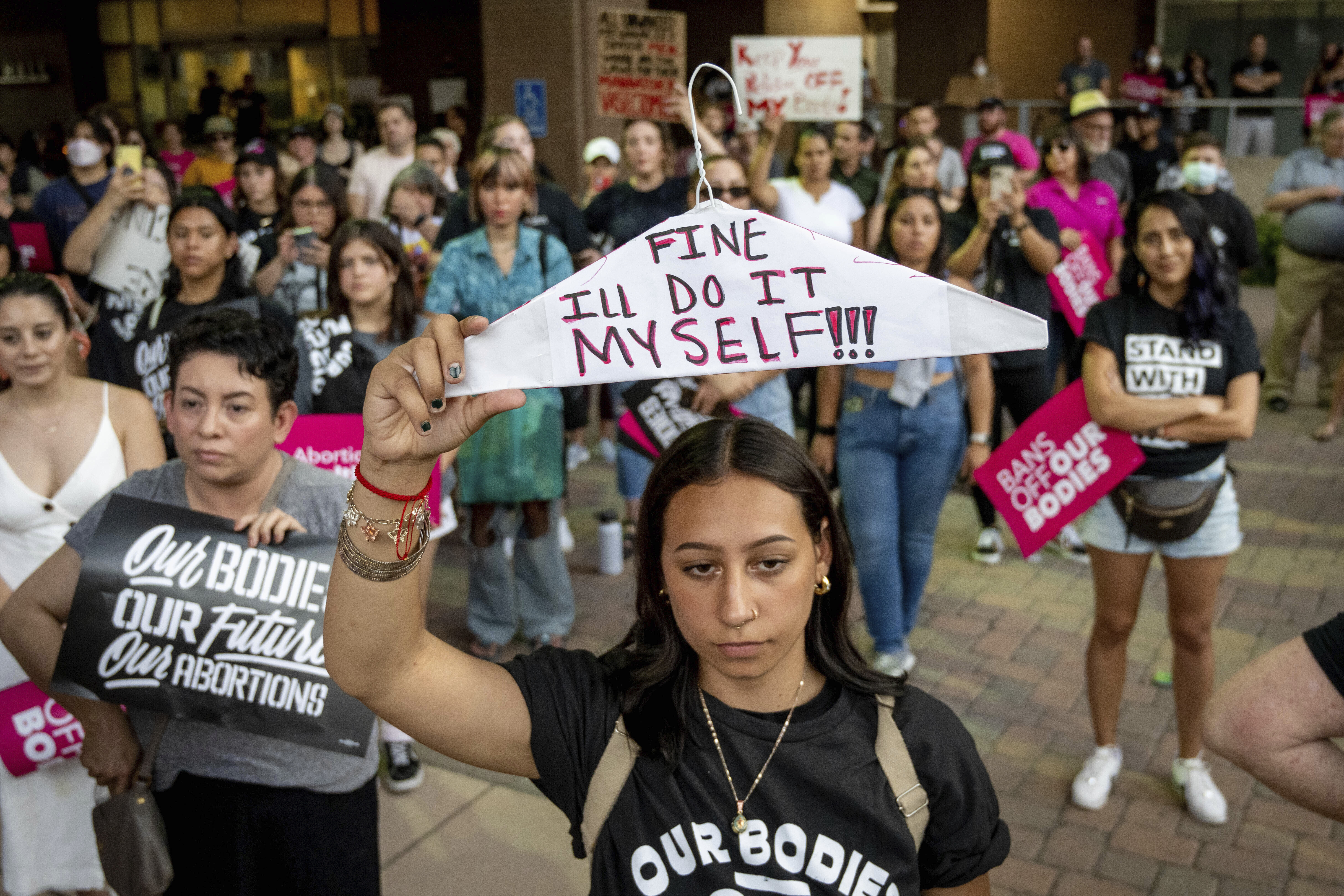
Various state-by-state laws governing abortion care raise novel questions about what role an abortion-seeker's internet usage might play.
"In a state like Texas, Oklahoma, Mississippi, if someone orders pills online, they are doing so outside of the laws of that state," Smith said.
"Because they have prohibited telemedicine and more states are passing laws prohibiting the possession of medication abortion, there is the risk of criminalisation when people do not follow the laws of their state."
Some lawmakers have even put forward proposals that would effectively ban citizens from getting out-of-state abortions.
Missouri state representative Elizabeth Coleman is pushing a provision that would allow citizens to sue anyone who "aids or abets" a Missouri resident in getting an abortion, including out of state doctors, friends who help arrange transportation or even hosting a website that "encourages or facilitates efforts" of Missouri residents to get elective abortions.
And other states could follow suit.
Law enforcement could also use so-called geofence warrants, which request from internet companies a list of devices within a certain boundary at a certain time.
Such warrants are gaining popularity as a law enforcement tool for various alleged crimes — the number of geofence warrants submitted to Google by US police departments rose from 982 in 2018 to 11,554 in 2020, according to the company's latest transparency report.
For its part, Google says that in some cases, it requests to provide less information or declines to provide such information at all.
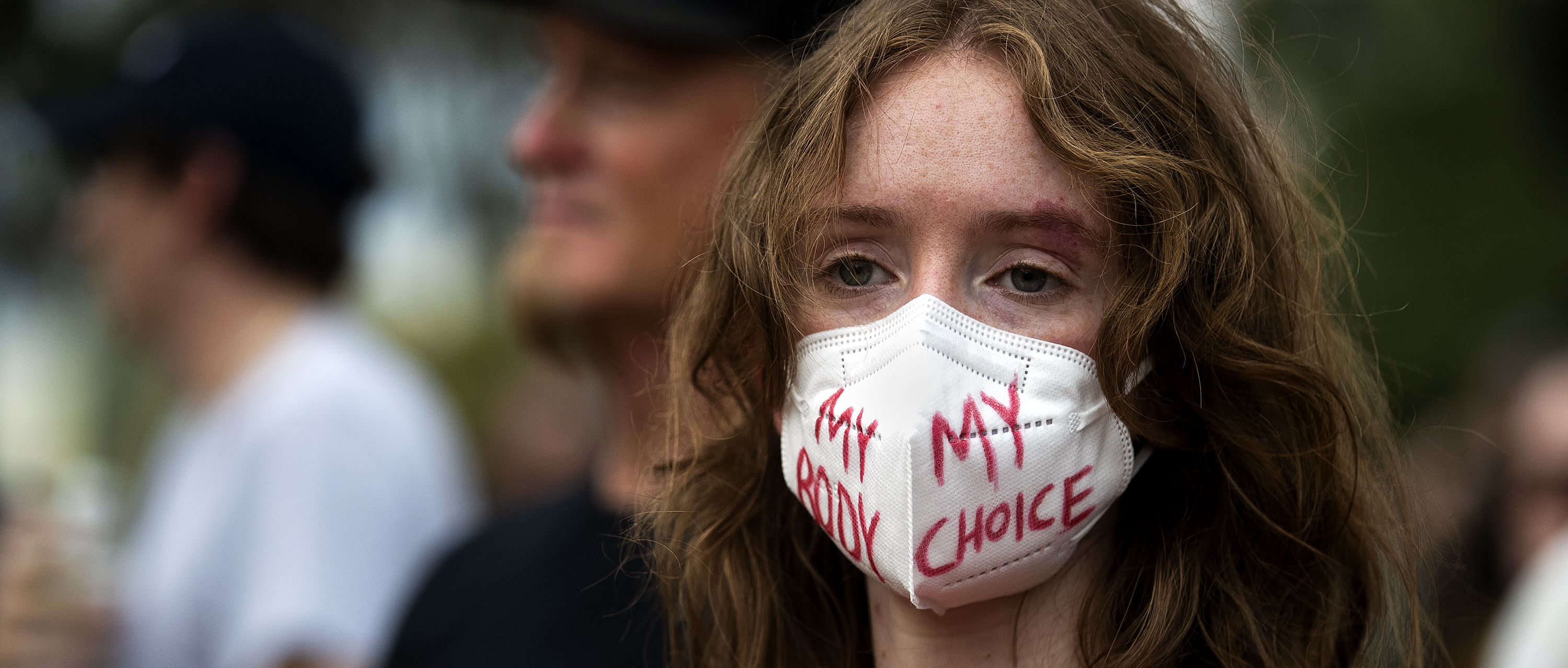
In at least one case, search history data has already been used to prosecute people who seek information about abortion services.
In 2018, Latice Fisher was indicted by a Mississippi Grand Jury for second degree murder after an at-home pregnancy loss.
While the criminal charges against Fisher were ultimately dropped, law enforcement pointed to alleged internet search results such as "buy abortion pills, mifeprisone online, misoprostol online" to argue their case.
Mifepristone and misoprostol are the two pills frequently taken together by women performing self-managed abortions.
In anticipation of the passage of more restrictive laws, advocacy groups are promoting education on digital privacy and sharing information on how to seek reproductive health services safely online.
The Digital Defence Fund created a guide for women on how to keep digital footprints protected when seeking information on abortions.
It includes tips such as opting out of personalized ads on Google and social media sites to minimise tracking, turning off location sharing and using privacy-focused browsers like DuckDuckGo or Firefox Focus that do not save search data, collect personal information or allow third-party trackers.
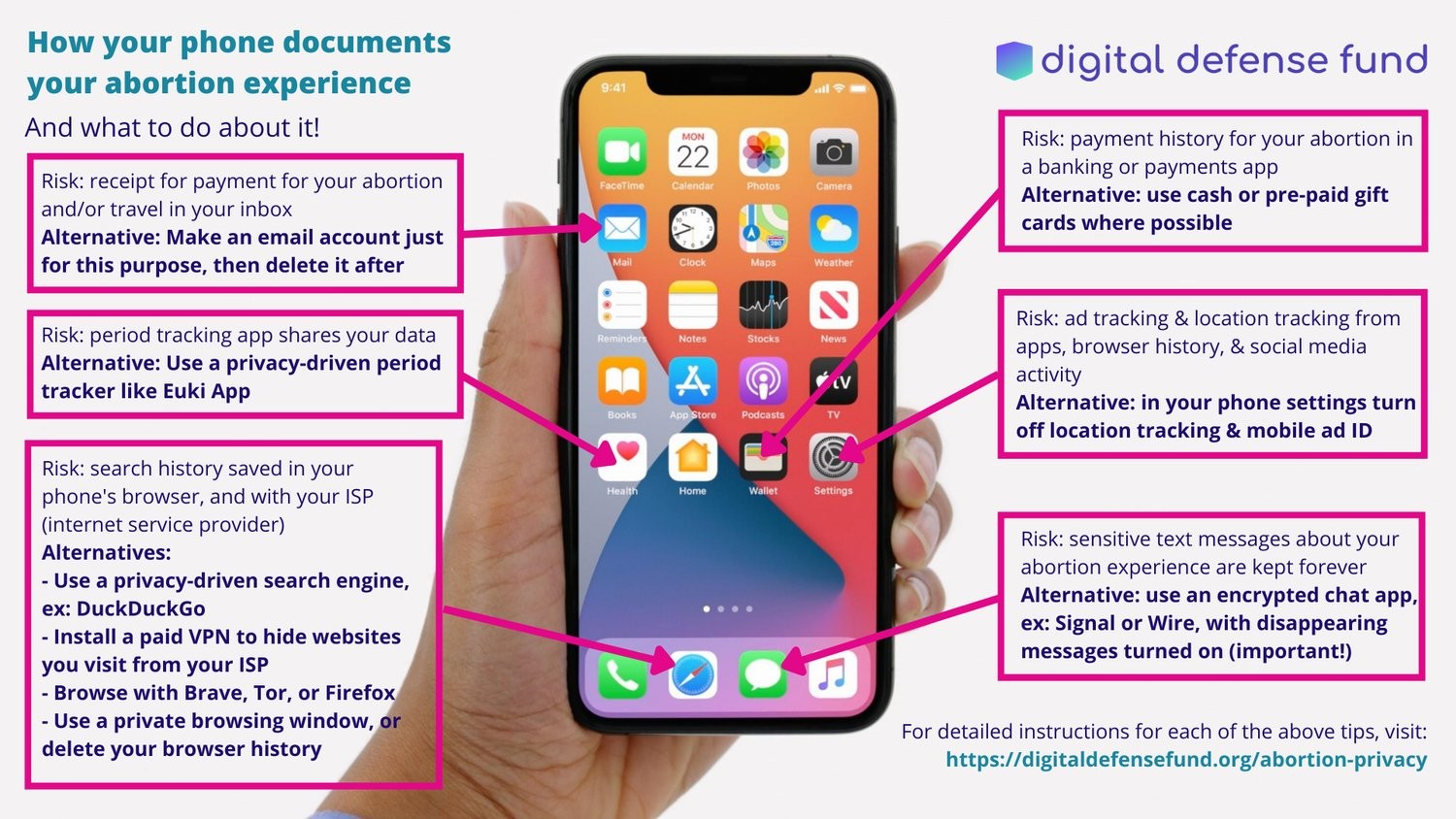
When seeking abortion information, the guide also recommends using end-to-end encrypted messaging apps like Signal or WhatsApp to keep calls and messages private – these apps also offer timed auto-delete features for messages.
Unlike a phone company with access to SMS text messages, the developers of such apps can't access the content of encrypted messages, and therefore could not be compelled by a court to share them.
Other privacy steps individuals seeking abortion information can take to protect their internet browsing include using anonymous browsing service Tor or Virtual Private Networks (VPNs) and using incognito search windows, according to the Digital Defence Fund.
While it is nearly impossible to completely hide digital history, experts say such methods can help to minimise risk and make it difficult for law enforcement to seize data.
Millennials overtaking Boomers as Australia's biggest generation
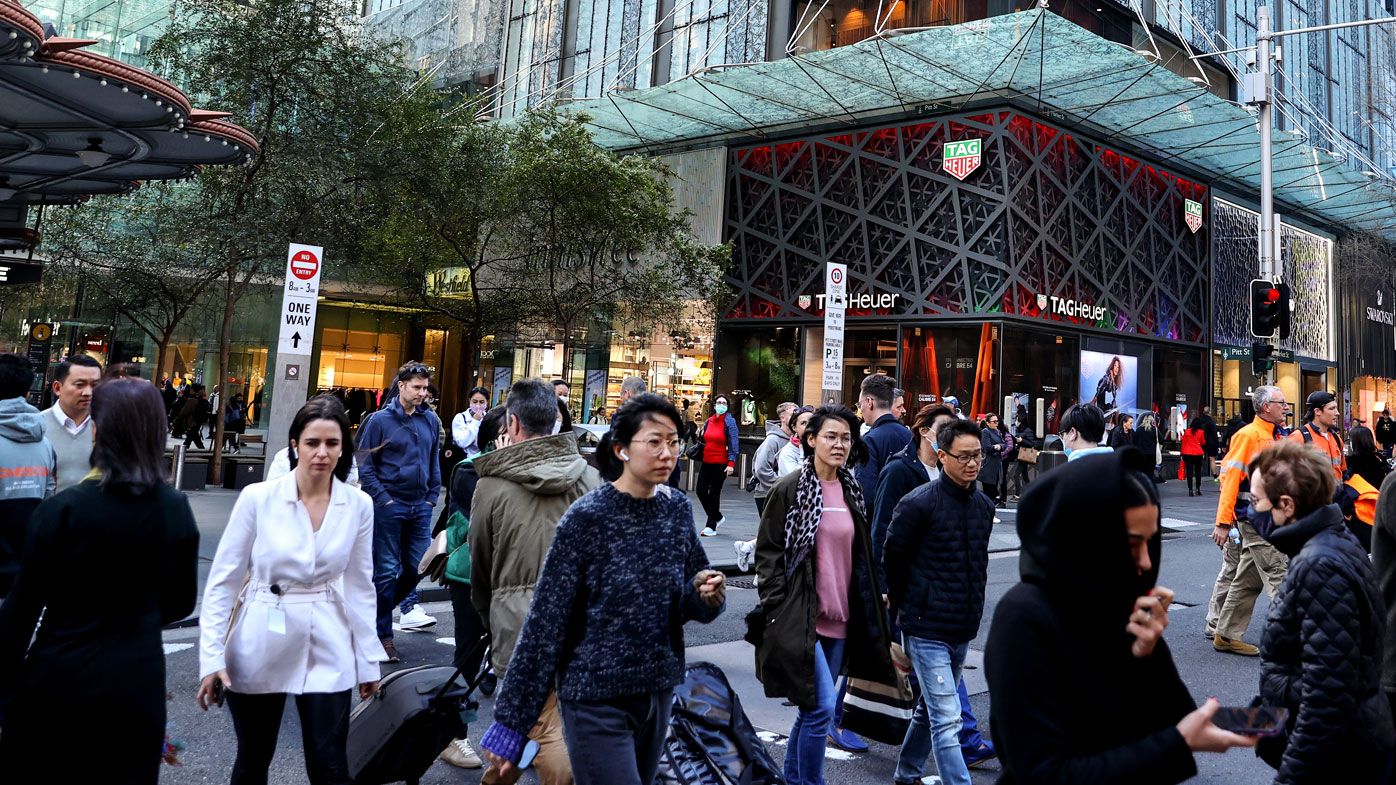
Australia's most generous and outward-looking generation, the Boomers, are about to be overtaken in number by Millennials, a group often unfairly derided as narcissistic and selfish.
Just-released 2021 census data reveals that Millennials, people born between 1981 and 1996 and now aged 25-39 years old, have caught up to Baby Boomers, aged 55-74, as the largest generational cohort in Australia.
Boomers and Millennials each number over 5.4 million people, with just 5662 more Baby Boomers counted on census night last August.
READ MORE: Almost 40 per cent of Aussies say they have 'no religion'
Over the last ten years, Millennials, also known as Generation Y, have increased from 20.4 per cent of the population in 2011 to 21.5 per cent in 2021.
Baby Boomers dropped considerably from 25.4 per cent in 2011 to 21.5 per cent in 2021.
In the 1966 census, nearly two in every five people were Boomers.
Census data revealed the important role Baby Boomers provide in caring for other peoples' children, often their grandchildren.
Around one in eight Boomers reported caring for other peoples' children, and of those who looked after others, two thirds were women.
Boomers are also the generation most likely to volunteer and provide unpaid assistance to others, according to census data.
Generational wars and tropes have existed throughout human history.
Common clichés are that Millennials are snowflakes and Boomers have stolen and ruined the future for younger generations.
Bobby Duffy, a professor at King's College in London, argued in his book Generations that many "myths" about Boomers and Millennials need to be identified and discarded.
READ MORE: Paige waited so long for an Australian visa she grew up
Millennials are not lazy at work or disloyal to their employers, Duffy wrote, nor are they more materialistic than previous generations of young.
Equally, Duffy continued, old people are not uncaring or unwilling to act on climate change.
"In fact, they are more likely than young people to boycott products for social purpose reasons."
The latest Australian census data showed a chasm between the two generations when it came to religion.
Nearly 60 per cent of Baby Boomers reported a Christian religious affiliation compared to just 30 per cent of Millennials.
More than 45 per cent of Millennials reported that they had no religion, compared to 30 per cent of Boomers.
READ MORE: 'Unseasonable' rain closing in
Australia's aged-care sector losing 65,000 workers every year
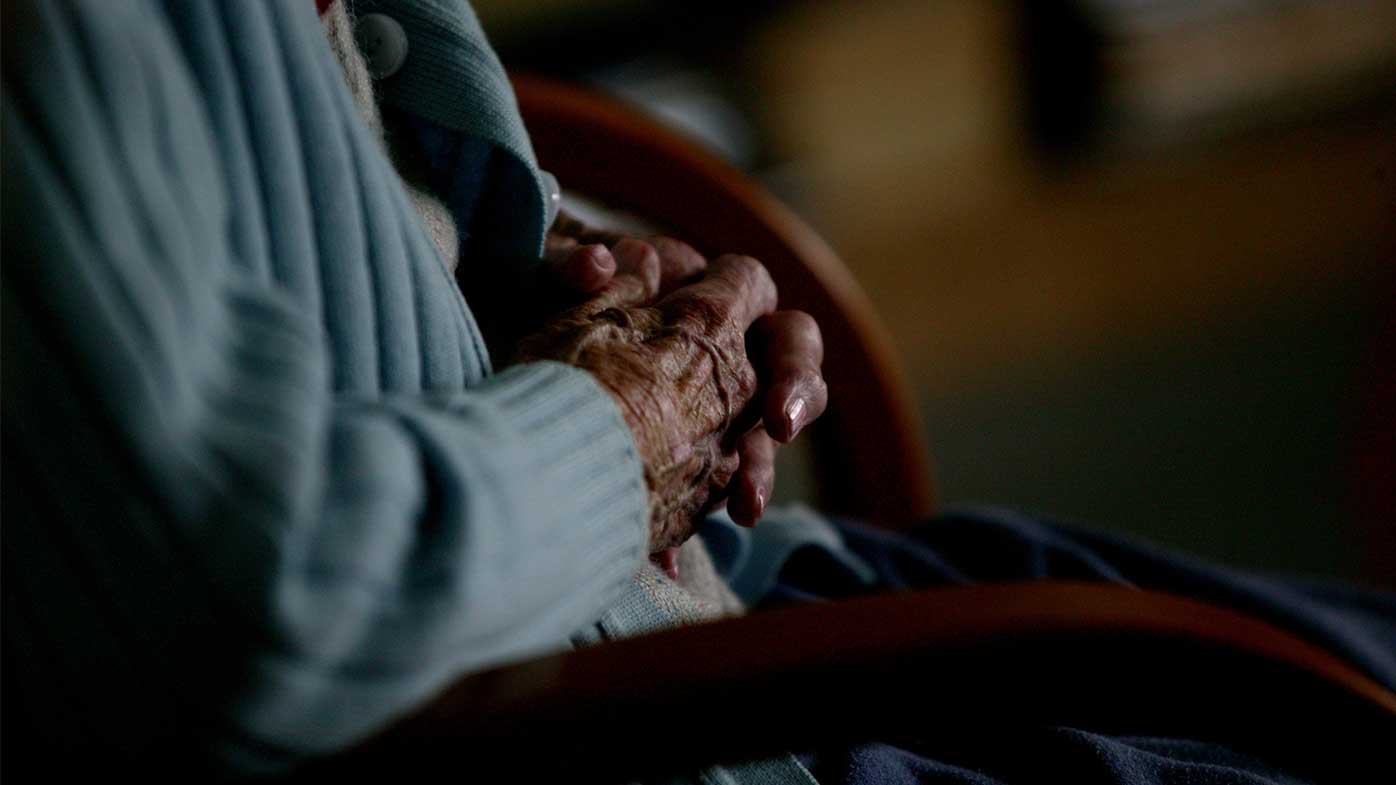
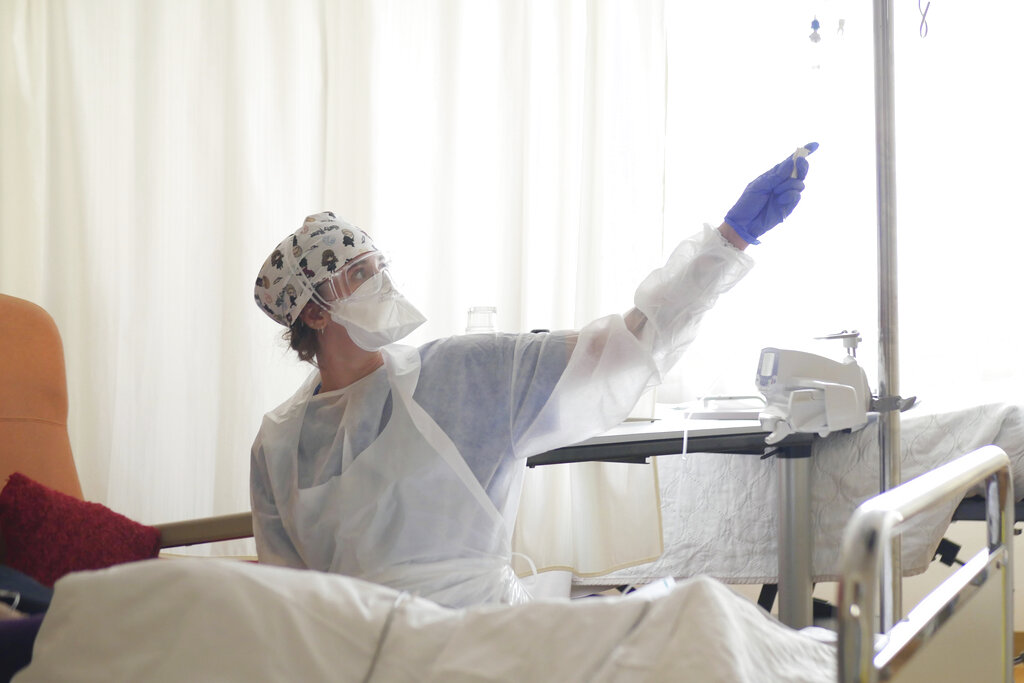
Australia's aged-care sector is short of 35,000 workers, with about 18,000 staff members having left the industry since August, a new report has revealed.
The report from the Committee for Economic Development of Australia highlights a staffing "crisis" in Australia's aged-care sector, which has been significantly impacted by the COVID-19 pandemic.
The report has found the sector is likely losing around 65,000 workers each year, with another 8000 workers are desperately needed to meet the international best practice standards of care for aged-care residents.
READ MORE: 'It's bananas': How to navigate buying and selling in a never-before-seen car market
However, Aged and Community Care Providers Association (ACCPA) interim CEO Paul Sadler has said his team believe much more than 800 workers are needed.
"We believe it could be closer to 20,000," he said.
"The CEDA report highlights the need for urgent action to ensure older Australians do not miss out on care and support."
The aged-care workforce was already under significant pressure with staff shortages, low pay and poor working conditions, before the COVID-19 pandemic exacerbated the issues, the report details.
"For a workforce that was already burnt out prior to COVID-19 this has been the breaking point for many," it reads.
"Many have chosen to leave the sector."
A survey by the Australian Nursing and Midwifery Federation earlier this year found one in five workers intended to leave their job in the next year.
READ MORE: Thousands of aged care workers walking off the job
Almost two in five planned to leave in the next one to five years.
Sadler said the federal government would have difficulty achieving its aged care policy priorities of Registered Nurses in aged care homes 24/7 and minimum care minutes without immediate action.
"Funding is a key issue. We welcome the government's commitment to fund a pay increase for aged care workers arising from the Fair Work Commission work value case due later this year or early next year.
The government is expected to announce the indexation figure for 2022-23 sometime this week, which will indicate how much subsidies paid to providers to provide aged care will increase in the coming year.
Sadler said ACCPA was working with the government to examine ways tp make working in aged care more attractive, including higher pay, improved training and better working conditions.
Last month, thousands of aged-care workers in Queensland and Western Australian walked off the job to express their anger over working conditions.
South Australian workers were meant to take part, but the workplace tribunal blocked strike action in that state over concern for the welfare of aged care residents.