Category Archives: headline

Climate change activist chains herself to steering wheel

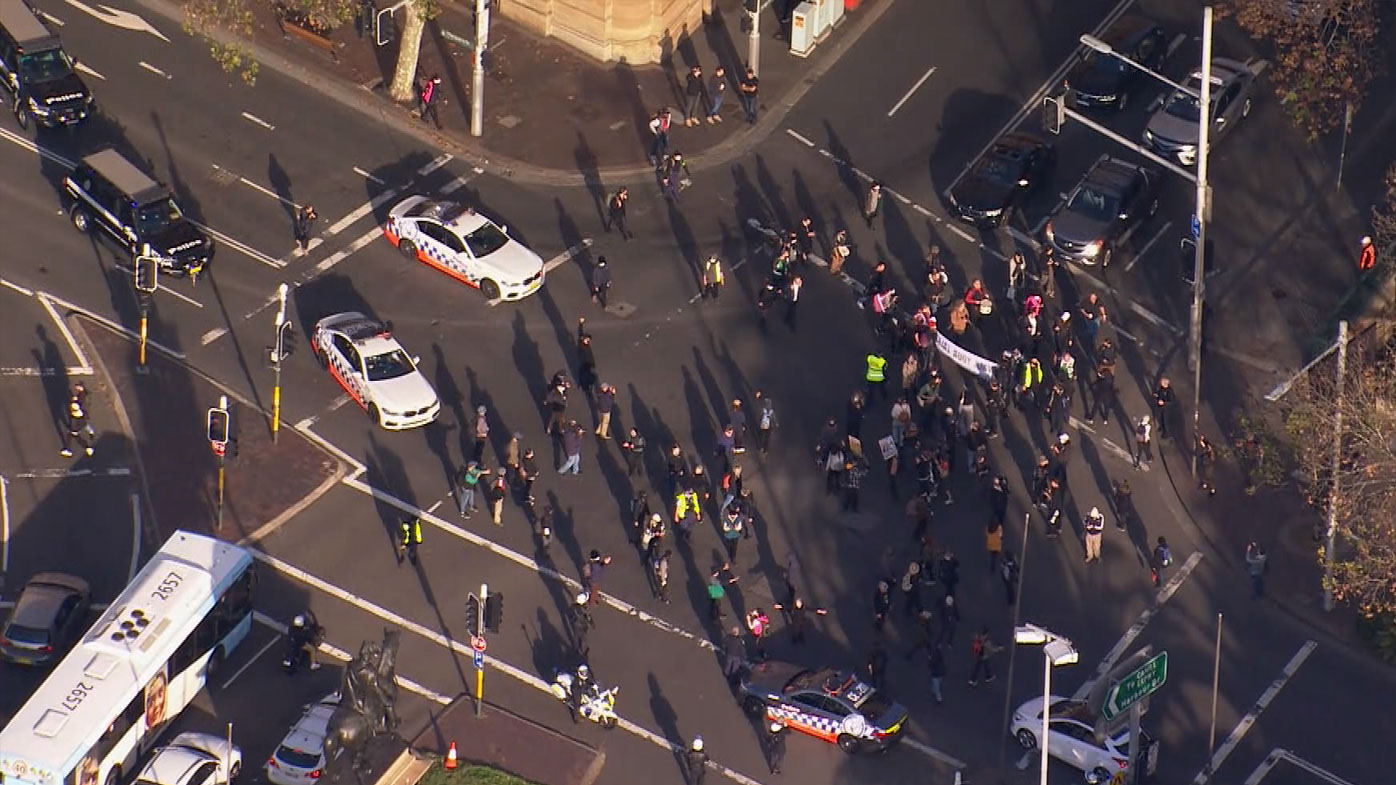
The young activist who chained herself to a car and blocked traffic in Sydney this morning said she was doing so to demand climate action in Australia.

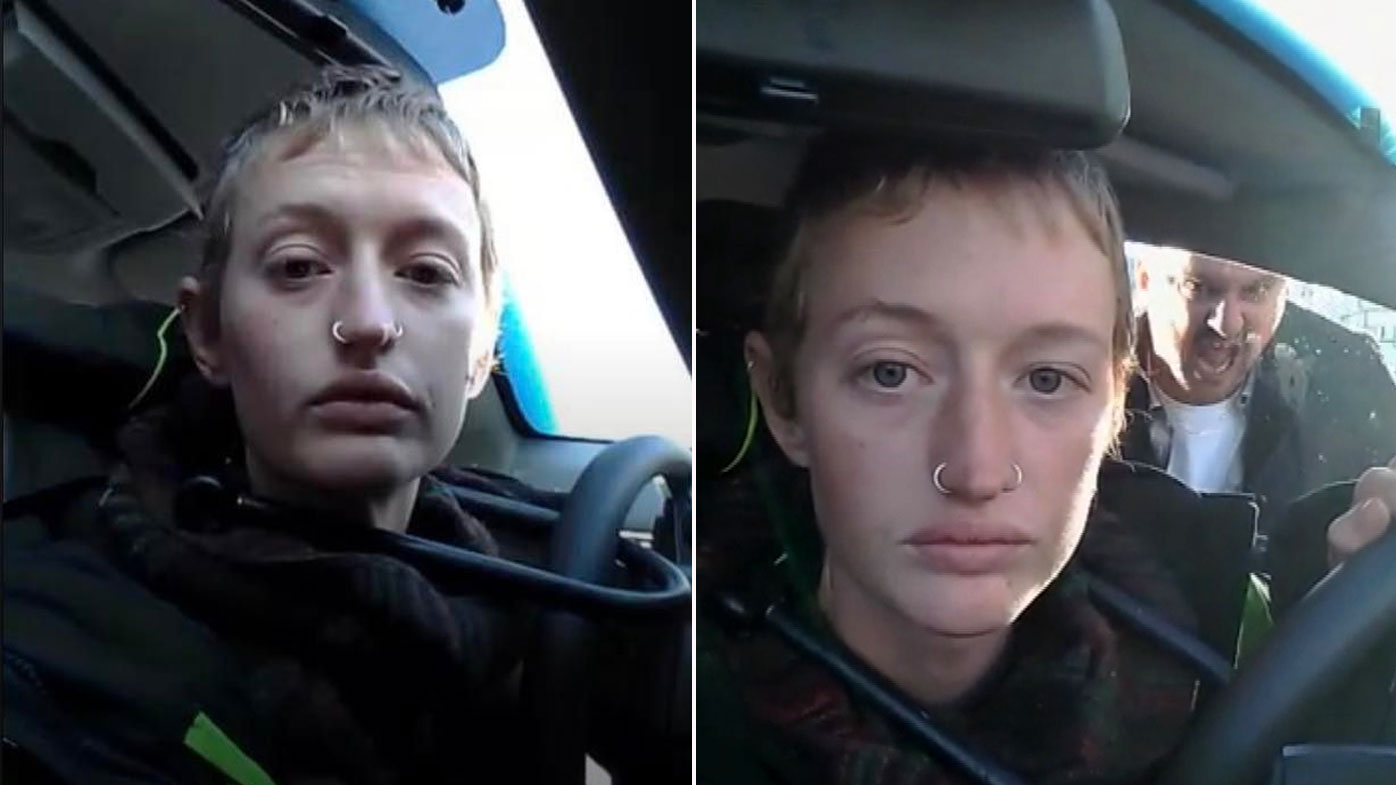
Mali locked herself to the steering wheel and parked her car across both lanes at the southbound entrance of the Harbour Tunnel.

The 22-year-old filmed herself sitting in the driver's seat, explaining she was doing so "in protest of the climate destruction that is happening on this continent right now".

READ MORE: Teachers, train drivers and nurses to walk off the job across city

Blockade Australia protest 27 June

"There are some really angry people who are screaming and threatening me and banging on doors.

"The police are on their way, and I'm not sure how long this is going to happen for. I'm not sure what is about to happen."

In the video a man can be heard screaming at the protester calling her a "dumb c—" and saying "you're f—ing everyone's day up".

READ MORE: Multiple fatalities after stadium collapses during Colombia bull fight

Blockade Australia protest 27 June

"You f—ing selfish c—, you're a f—ing selfish c—", he said.

"To this man I say I stand with you," Mali responded.

She was among 10 people arrested for their involvement in the protests. As of Monday afternoon no one had been charged.

The stunt was part of a wider week of disruption planned by climate activist group Blockade Australia.

READ MORE: Australia's third wave of COVID-19 our biggest killer, study finds

https://twitter.com/LiveTrafficSyd/status/1541193267827642369

This morning activists caused chaos across the city, marching through the CBD, and have vowed they have more action planned.

This is despite a raid on a property supposedly being used as a training camp for protesters leading to a number of arrests.

The protests come months after the NSW government announced it would crack down on protesters who disrupt traffic.

The impact of Russia's $57 billion debt default explained

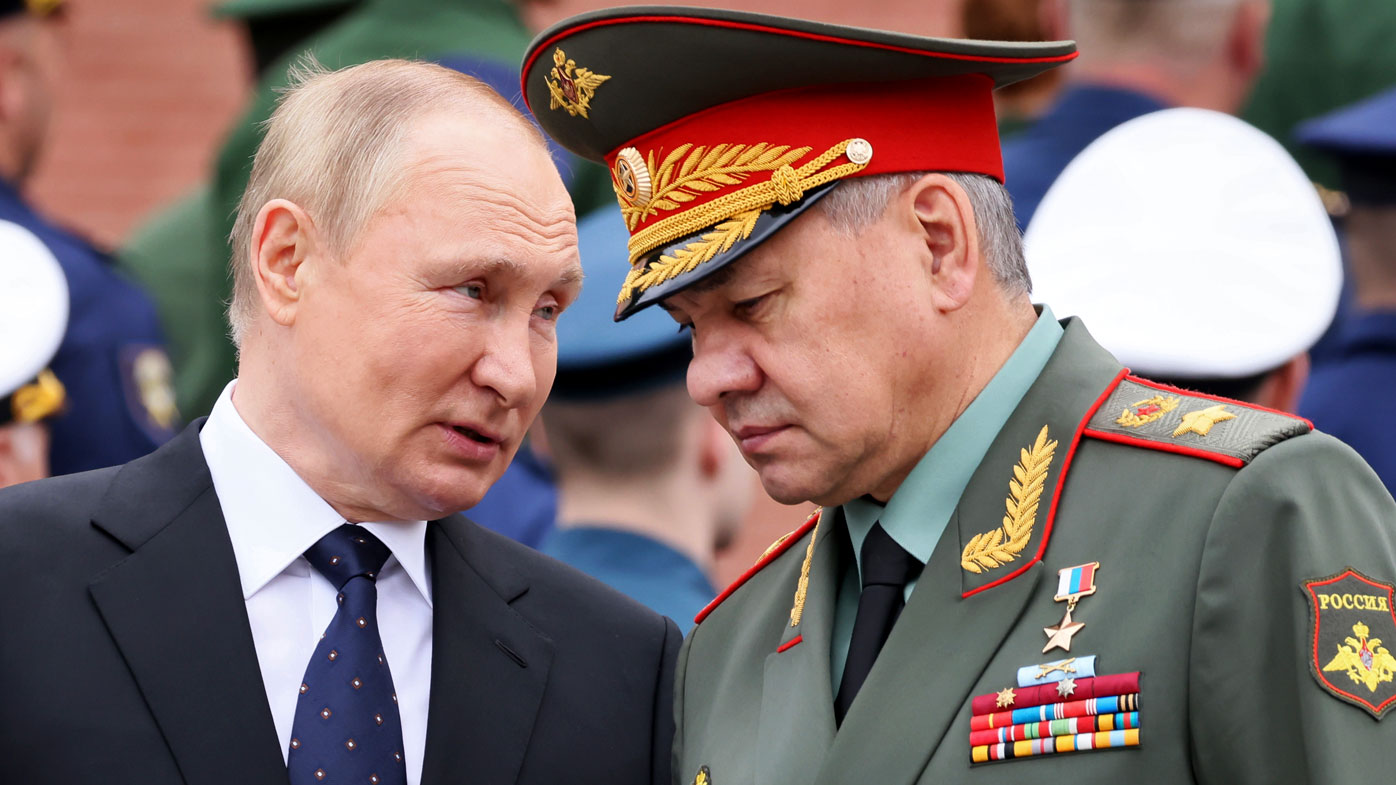
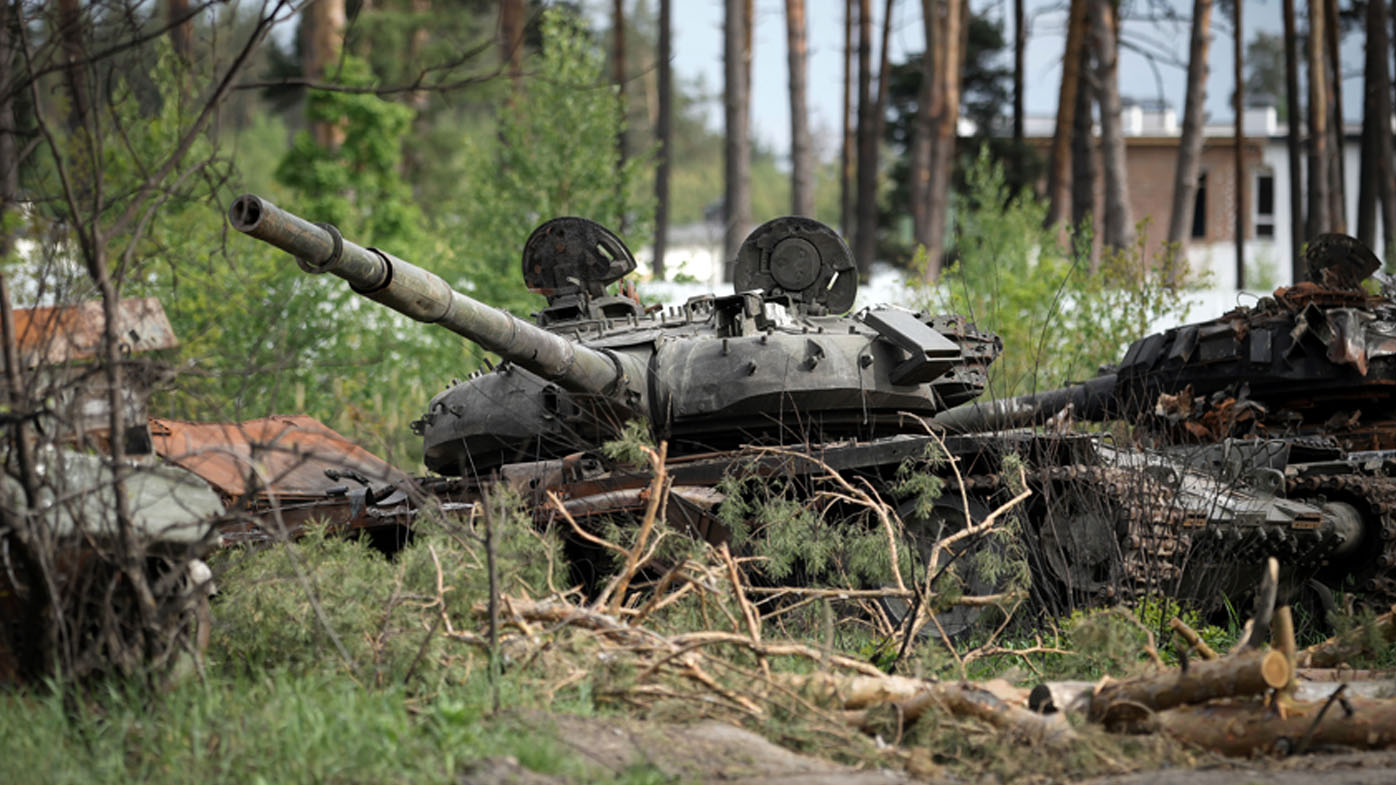
Russia has just defaulted on its foreign debt for the first time since the 1917 Bolshevik Revolution, according to Bloomberg, further alienating the country from the global financial system following sanctions imposed over its war in Ukraine.

The country missed a Sunday night deadline (local time) to meet a 30-day grace period on interest payments originally due May 27.

Last month, the US Treasury Department ended Russia's ability to pay its billions in debt back to international investors through American banks.

Russia has defaulted on its overseas debt for the first time in more than a century after missing a Sunday deadline

READ MORE: Retailers finding it impossible to hire new staff, survey reveals

In response, the Russian Finance Ministry said it would pay dollar-denominated debts in rubles and offer “the opportunity for subsequent conversion into the original currency".

Russia calls any default artificial because it has the money to pay its debts but says sanctions have frozen its foreign currency reserves held abroad.

“There is money and there is also the readiness to pay," Russian Finance Minister Anton Siluanov said last month.

“This situation, artificially created by an unfriendly country, will not have any effect on Russians’ quality of life.”

Tim Ash, senior emerging market sovereign analyst at BlueBay Asset Management, tweeted that the default “is clearly not" beyond Russia's control and that sanctions are preventing it from paying its debts because it invaded Ukraine.

Here are key things to know about a Russian default:

HOW MUCH DOES RUSSIA OWE?

About $57.6 billion in foreign bonds, about half of that to foreigners.

Before the start of the war, Russia had around $922 billion in foreign currency and gold reserves, much of which was held overseas and is now frozen.

Before today, Russia had not defaulted on its international debts since the Bolshevik Revolution more than a century ago, when the Russian Empire collapsed and the Soviet Union was created.

READ MORE: Biden reveals new blow about to hit Putin

With the final deadline passed, focus will now shift to what investors do next.

READ MORE: The inside story of Ukraine's secret, deadly 'hellhole' rescue missions

Russia defaulted on its domestic debts in the late 1990s but was able to recover from that default with the help of international aid.

Investors have expected Russia to default for months.

Insurance contracts that cover Russian debt have priced a 80 per cent likelihood of default for weeks, and rating agencies like Standard & Poor’s and Moody’s have placed the country’s debt deep into junk territory.

HOW DO YOU KNOW IF A COUNTRY IS IN DEFAULT?

Ratings agencies can lower the rating to default or a court can decide the issue.

Bondholders who have credit default swaps — contracts that act like insurance policies against default — can ask a committee of financial firm representatives to decide whether a failure to pay debt should trigger a payout, which still isn’t a formal declaration of default.

READ MORE: Off-duty officer's shocking act at abortion protest

Russia calls any default artificial because it has the money to pay its debts but says sanctions have frozen its foreign currency reserves held abroad.

READ MORE: Australia's third wave of COVID-19 our biggest killer, study finds

The Credit Default Determination Committee — an industry group of banks and investment funds — ruled on June 7 that Russia had failed to pay required additional interest after making a payment on a bond after the April 4 due date.

But the committee put off taking further action due to uncertainty over how sanctions might affect any settlement.

WHAT CAN INVESTORS DO?

The formal way to declare default is if 25 per cent or more of bondholders say they didn’t get their money.

Once that happens, provisions say all Russia’s other foreign bonds are also in default, and bondholders could then seek a court judgment to enforce payment.

In normal circumstances, investors and the defaulting government typically negotiate a settlement in which bondholders are given new bonds that are worth less but that at least give them some partial compensation.

But sanctions bar dealings with Russia’s finance ministry.

And no one knows when the war will end or how much defaulted bonds could wind up being worth.

In this case, declaring default and suing “might not be the wisest choice", Auslander said. It's not possible to negotiate with Russia and there are so many unknowns, so creditors may decide to “hang tight for now".

READ MORE: Key Ukrainian city now 'completely under Russian occupation'

The last time Russia fell into default was more than a century ago

READ MORE: Russia strikes as Western leaders meet in Europe

Investors who wanted out of Russian debt have probably already headed for the exits, leaving those who may have bought bonds at knocked-down prices in hopes of profiting from a settlement in the long run.

And they might want to keep a low profile for a while to avoid being associated with the war.

Once a country defaults, it can be cut off from bond-market borrowing until the default is sorted out and investors regain confidence in the government’s ability and willingness to pay.

But Russia has already been cut off from Western capital markets, so any return to borrowing is a long way off anyway.

The Kremlin can still borrow rubles at home, where it mostly relies on Russian banks to buy its bonds.

WHAT WOULD BE THE IMPACT OF RUSSIA'S DEFAULT?

Western sanctions over the war have sent foreign companies fleeing from Russia and interrupted the country's trade and financial ties with the rest of the world.

Default would be one more symptom of that isolation and disruption.

Investment analysts are cautiously reckoning that a Russia default would not have the kind of impact on global financial markets and institutions that came from an earlier default in 1998.

Back then, Russia’s default on domestic ruble bonds led the US government to step in and get banks to bail out Long-Term Capital Management, a large US hedge fund whose collapse, it was feared, could have shaken the wider financial and banking system.

READ MORE: Teachers, train drivers and nurses to walk off the job across Sydney

READ MORE: Multiple fatalities after stadium collapses during Colombia bull fight

Holders of the bonds — for instance, funds that invest in emerging market bonds — could take serious losses.

Russia, however, played only a small role in emerging market bond indexes, limiting the losses to fund investors.

While the war itself is having devastating consequences in terms of human suffering and higher food and energy prices worldwide, default on government bonds would be “definitely not systemically relevant”, the IMF's Kristalina Georgieva has said.

With Associated Press

Melbourne woman thought $3 million Lotto win 'was a hoax'

A Melbourne woman has been given the shock of a lifetime after becoming almost $3 million richer overnight.

The woman, from Knoxfield, initially thought the win "was a hoax" after discovering she was the lucky recipient of a $2.8 million TattsLotto win.

She was getting ready for work this morning when she got the "mind-blowing call".

READ MORE: Teachers, train drivers and nurses to walk off the job across city

"Oh my god! Oh my god! I want to scream; I want to shout!" she said.

"I can't grasp this news. I'm speechless.

"I thought it was a hoax… I thought to myself: 'Who is playing mind games with me on a Monday morning'."

READ MORE: Multiple fatalities after stadium collapses during Colombia bull fight

After falling "on tough times" recently, the woman says the money will totally transform her life and her family's.

"My heart is going a thousand miles an hour – I'm getting goosebumps," she said.

"It's such a beautiful feeling."

READ MORE: Peter Overton tells viewers why he has a burst blood vessel in his eye

There were seven division one winning entries across Australia in TattsLotto draw 4271 on Saturday June 25. Each entry scored a division one prize of $2,857,142.86.

The winner said she has a couple of ideas in mind about how she will spend the money – paying off the house mortgage, visiting family overseas, and upgrading the car.

Her winning 12-game Quickpick was purchased online at thelott.com.

Iran launches rocket into space as nuclear talks to resume

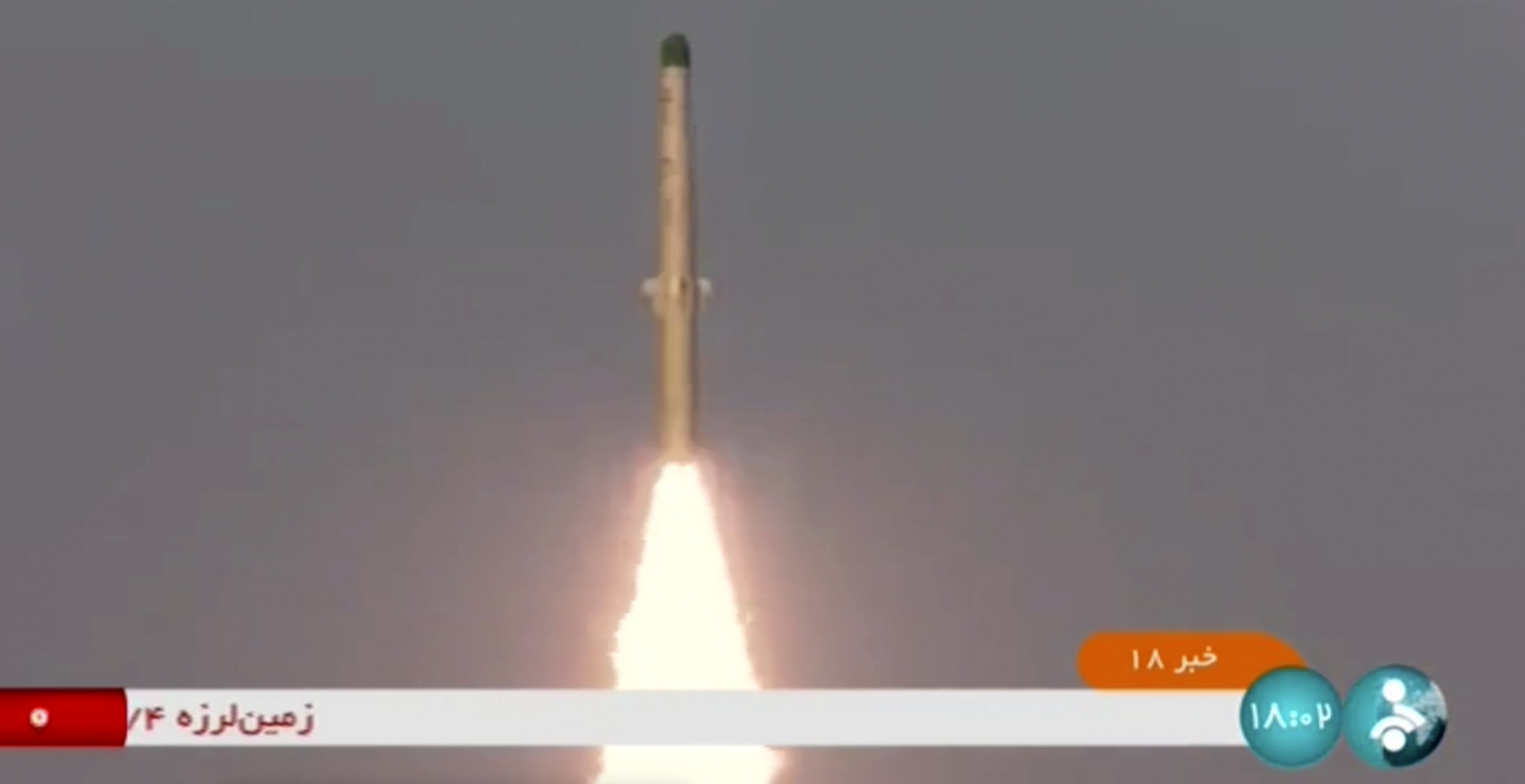
Iranian state television said on Sunday that Tehran had launched a solid-fuelled rocket into space, drawing a rebuke from Washington ahead of the expected resumption of stalled talks over Tehran's tattered nuclear deal with world powers.

It's unclear when or where the rocket was launched, but the announcement came after satellite photos showed preparations at Imam Khomeini Spaceport in Iran's rural Semnan province, the site of Iran's frequent failed attempts to put a satellite into orbit.

State-run media aired dramatic footage of the blastoff against the backdrop of heightened tensions over Tehran's nuclear program, which is racing ahead under decreasing international oversight.

READ MORE: Teachers, train drivers and nurses to walk off the job across city

Iran had previously acknowledged that it planned more tests for the satellite-carrying rocket, which it first launched in February of last year.

Ahmad Hosseini, spokesman for Iran's Defence Ministry, said Zuljanah, a 25.5 metre-long rocket, was capable of carrying a satellite of 220 kilograms that would ultimately gather data in low-earth orbit and promote Iran's space industry. Zuljanah is named for the horse of Imam Hussein, the grandson of the Prophet Muhammad.

The White House said it was aware of Iran's announcement and criticised the move as "unhelpful and destabilising."

The launch comes just a day after the European Union's foreign policy chief, Josep Borrell, travelled to Tehran in a push to resuscitate negotiations over Iran's nuclear program that have stalemated for months. A few significant sticking points remain, including Tehran's demand that Washington lift terrorism sanctions on its paramilitary Revolutionary Guard.

Borrell said on Saturday that talks over the nuclear deal would resume in an unnamed Persian Gulf country in the coming days, with Iranian media reporting that Qatar would likely host the negotiations.

Former President Donald Trump withdrew the US from the nuclear deal in 2018 and reimposed crushing sanctions on Iran. Tehran responded by greatly ramping up its nuclear work and now enriches uranium closer than ever to weapons-grade levels.

READ MORE: Multiple fatalities after stadium collapses during Colombia bull fight

In a further escalation that limits the international community's view into its nuclear program, Iran removed over two dozen International Atomic Energy Agency cameras from its nuclear sites this month. The agency's director called the move a "fatal blow" to the tattered nuclear deal.

Tehran's rocket launches have raised alarm in Washington amid the unraveling of the nuclear deal. The US warns the launches defy a United Nations Security Council resolution calling on Iran to steer clear of any activity related to ballistic missiles capable of delivering nuclear weapons.

The White House on Sunday said it was committed to using sanctions and other measures to prevent further advances in Iran's ballistic missile program.

The US intelligence community's 2022 threat assessment, published in March, claims such a satellite launch vehicle "shortens the timeline" to an intercontinental ballistic missile for Iran as it uses "similar technologies."

READ MORE: Peter Overton tells viewers why he has a burst blood vessel in his eye

Iran, which long has said it does not seek nuclear weapons, maintains its satellite launches and rocket tests do not have a military component.

Even as Iran's government has sharpened its focus on space, sending several short-lived satellites into orbit and in 2013 launching a monkey into space, the program has seen recent troubles. There have been five failed launches in a row for the Simorgh program, a type of satellite-carrying rocket. A fire at the Imam Khomeini Spaceport in February 2019 also killed three researchers.

The launch pad used in the preparations for the launch of the Zuljanah rocket remains scarred from an explosion in August 2019 that even drew the attention of then-President Trump. He later tweeted what appeared to be a classified surveillance image of the launch failure. Satellite images from February suggested a failed Zuljanah launch earlier this year, though Iran did not acknowledge it.

Meanwhile, Iran's paramilitary Revolutionary Guard in April 2020 revealed its own secret space program by successfully launching a satellite into orbit. The Guard operates its own military infrastructure parallel to Iran's regular armed forces.

E-scooter rider fined for doing almost 60km/h on road

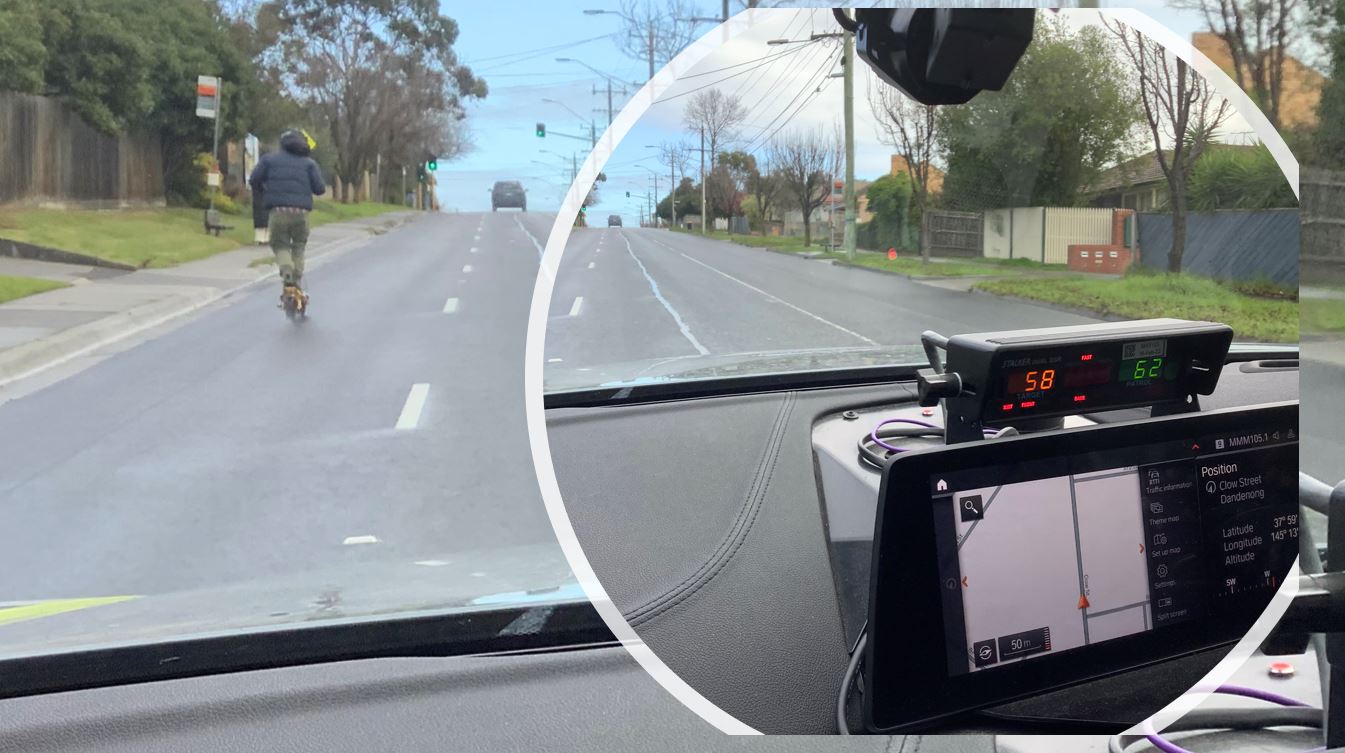
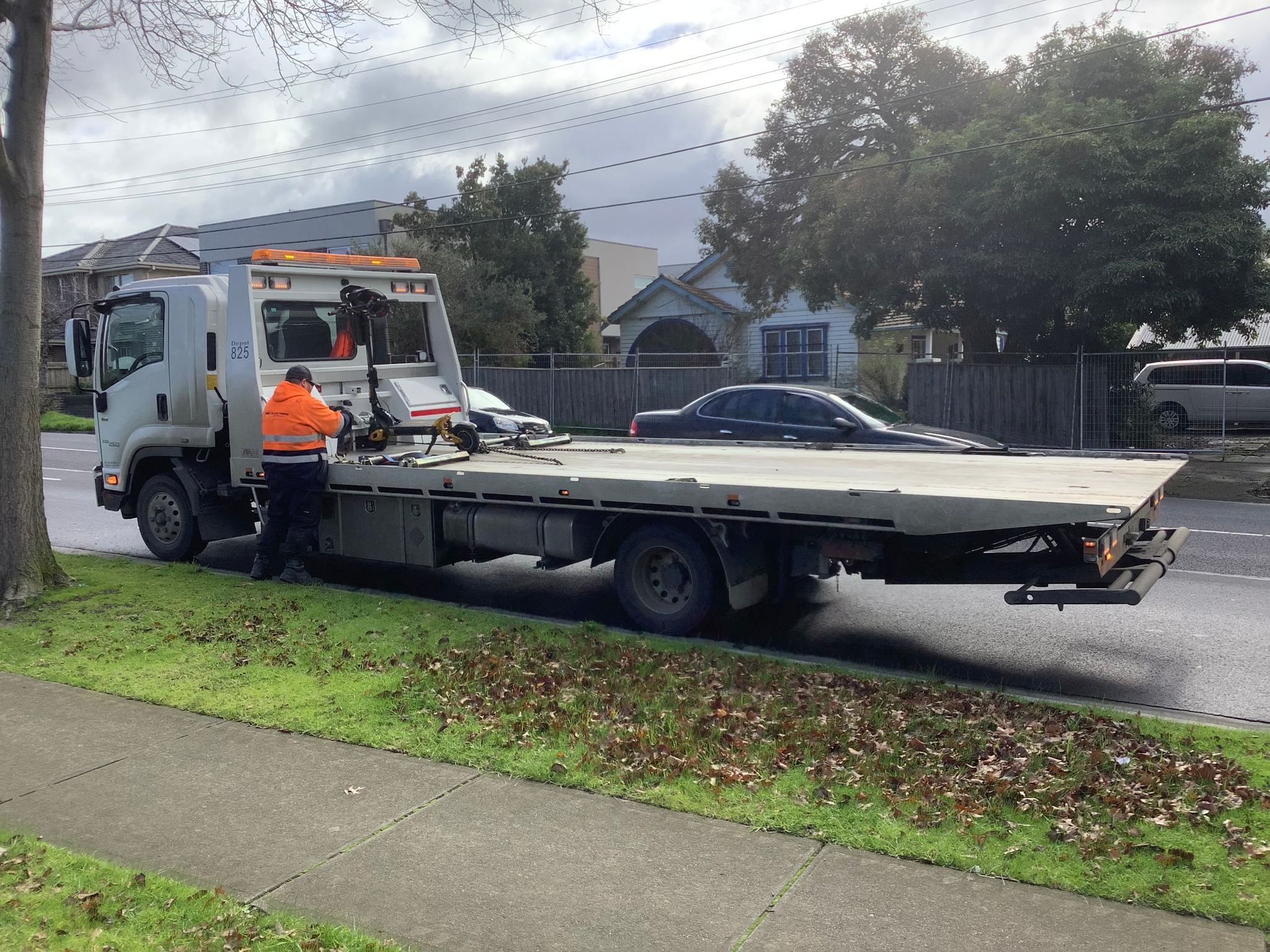
A man who was caught riding an e-scooter on a Melbourne road at almost 60km/h has lost his scooter, been hit with a hefty fine and is set to face charges.

Police pulled the man over when they found him riding his e-scooter on Clow Street in Dandenong in Melbourne's south-east on Friday.

They explained that under current laws the speed at which he was travelling meant the scooter was classified as a motorcycle.

READ MORE: 'It's bananas': How to navigate buying and selling in a never-before-seen car market

"If the e-scooter motor exceeds a continuous power output of more than 200 Watts, or they are capable of being ridden at speeds greater than 10km/h, then YES, they meet the definition of a motor vehicle," police said.

"In cases where the device has two wheels, they are deemed to be motorcycles."

This then brought the man into trouble because he wasn't wearing a helmet, was found to be unlicensed and also under the influence of methylamphetamine.

READ MORE: Teen caught driving motorised Esky allegedly carrying drugs around Melbourne suburb

The e-scooter was immediately impounded for 30 days at a cost of $1038.

Police said the 45-year-old Dandenong man could also expect a summons in the mail for numerous traffic offences.

Five killed as packed stadium collapses in Colombia

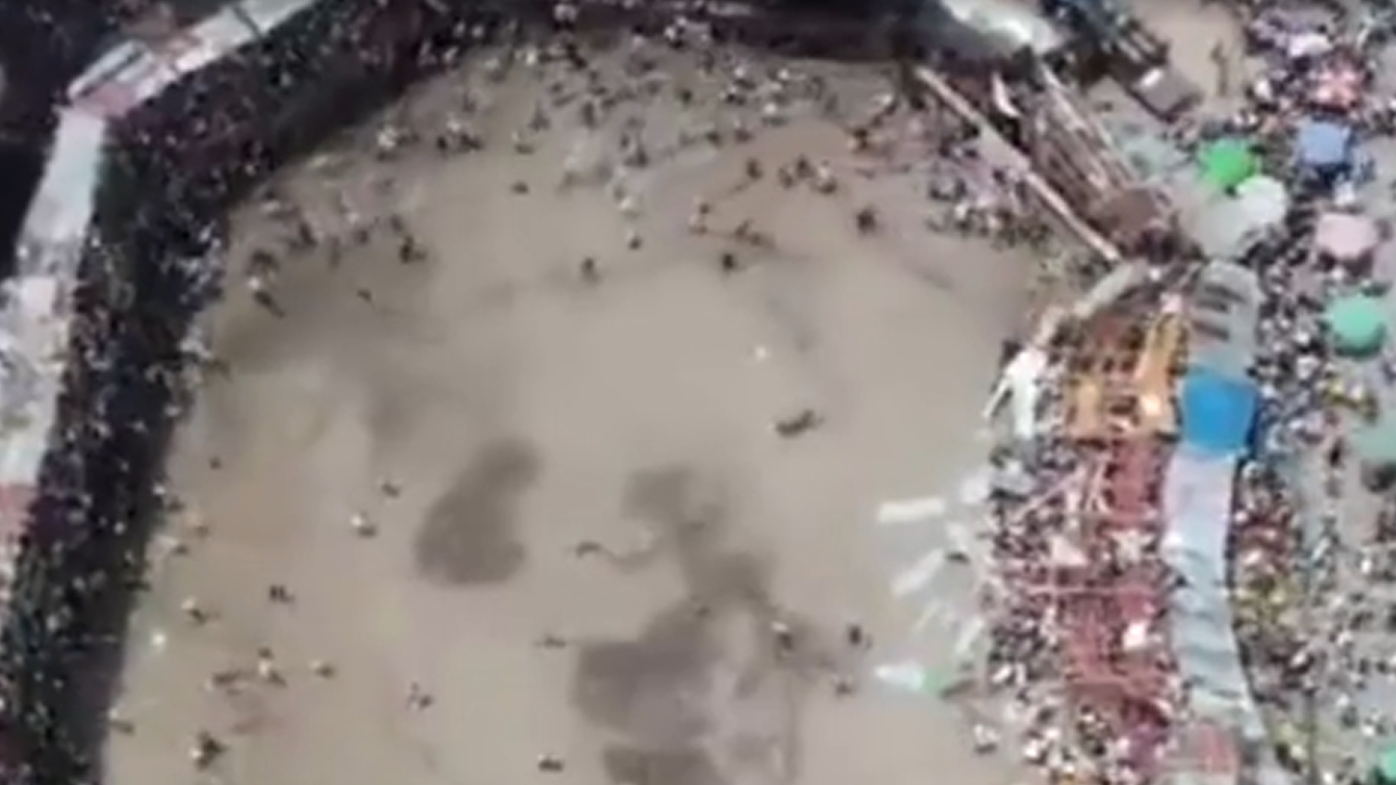
At least five people are dead and dozens seriously injured after a stadium suddenly collapsed during a bullfight in Colombia.

Video shows the moment wooden stands crumbled at the improvised stadium in El Espinal in Tolima, where annual San Juan and San Pedro festivities were underway.

The incident occurred during a "corraleja", an event where members of the public jump into the ring to run alongside the bulls.

READ MORE: Russia strikes Kyiv as Western leaders meet in Europe

The improvised stadium collapsed during annual San Juan and San Pedro festivities.

At least one bull has fled the stadium into neighbouring streets, according to reports.

"At this moment, we have four (dead) victims confirmed – two women, an adult man and a minor – plus about 30 people seriously injured," Governor Ricardo Orozco said on BluRadio Colombia, a local radio outlet.

"Of course, we have activated all the hospitals and ambulances we can work with."

There are fears the true number of injured could be much higher.

As news of the incident broke Major Luis Fernando Vélez, director of the civil defence department, told a local radio station "there is talk of 500 wounded".

A statement from the Mayor's Office of Espinal said they "deeply regret what happened in the bullring".

READ MORE: Off-duty officer's shocking act at abortion protest

It's reported several people were in the ring with bulls when stadium stands gave way.

"We want to call for calm to the entire community," it continued.

"Once the emergency became known, the relief agencies acted immediately, achieving the evacuation of the injured for primary care at the San Rafael Hospital in the municipality."

But according to a local news report one local councillor said hospitals are not able to cope with the influx of patients.

"We need support from ambulances and neighbouring hospitals, many people are still unattended," Iván Ferney Rojas told El Tiempo newspaper.

Sunday's event has put bullfighting under the spotlight, with Columbia's president-elect Gustavo Petro calling for similar shows to be halted.

https://twitter.com/petrogustavo/status/1541138473532493826?ref_src=twsrc%5Etfw%7Ctwcamp%5Etweetembed%7Ctwterm%5E1541138473532493826%7Ctwgr%5E%7Ctwcon%5Es1_&ref_url=https%3A%2F%2Fd-1574428756915006848.ampproject.net%2F2206101637000%2Fframe.html

"This had already happened before in Sincelejo," he tweeted.

"I ask the mayors not to authorise more shows with the death of people or animals."

'Biblical' plague of insects descends on US state's farmland

Driving down a windy canyon road in northern Oregon rangeland, Jordan Maley and April Aamodt are on the look out for Mormon crickets, giant insects that can ravage crops.

“There’s one right there,” Aamodt says.

They’re not hard to spot. The insects, which can grow larger than 5 centimetres blot the asphalt.

READ MORE: 'They'll get their day': Shot ex-bikie tweets from hospital bed
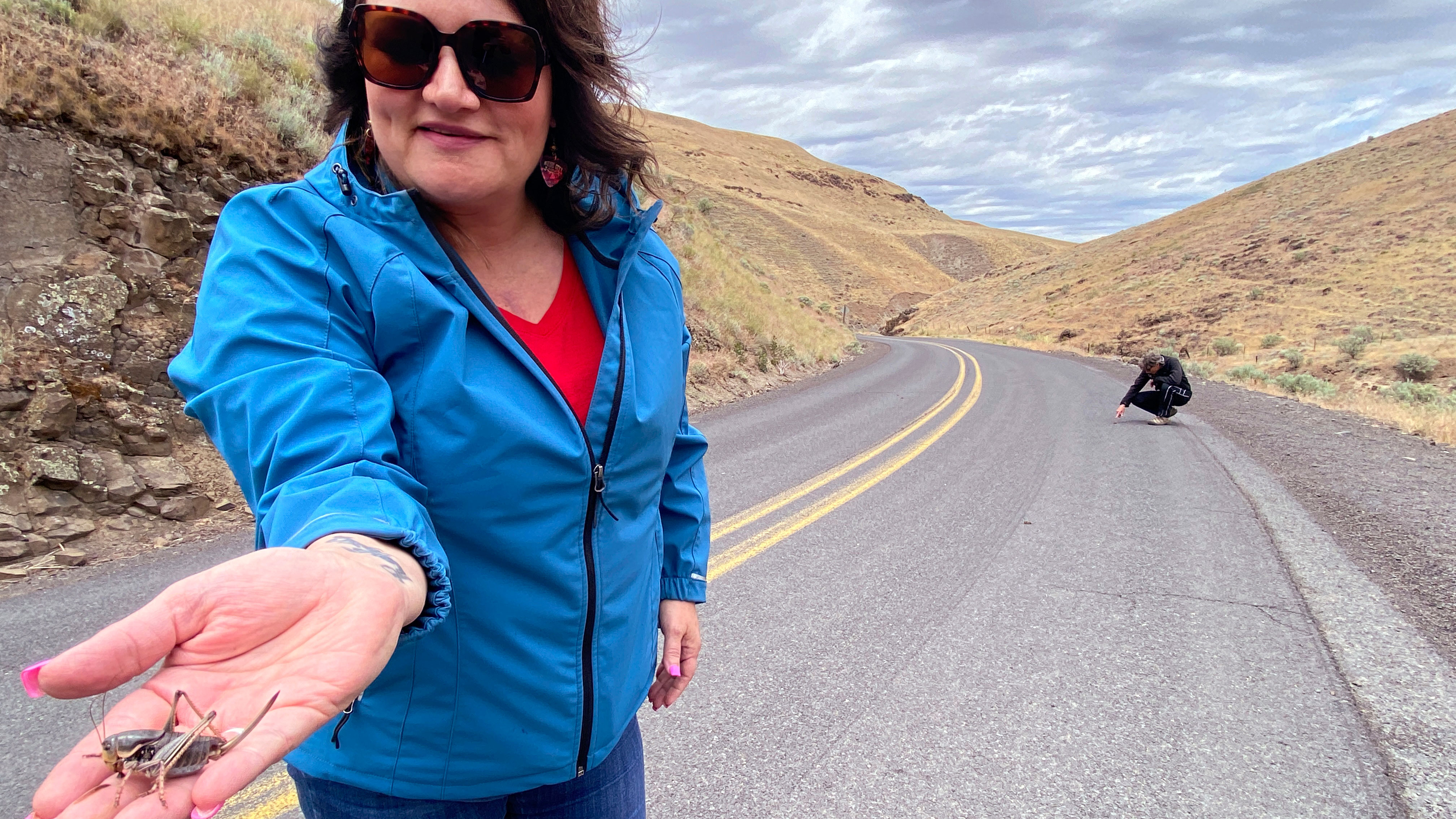
April Aamodt holds a Mormon cricket that she found in Blalock Canyon near Arlington, Oregon.

Mormon crickets are not new to Oregon.

Native to western North America, their name dates back to the 1800s, when they ruined the fields of Mormon settlers in Utah.

But amidst drought and warming temperatures — conditions favoured by the insects — outbreaks across the West have worsened.

The Oregon Legislature last year allocated $US5 million ($7.2 million) to assess the problem and set up a Mormon cricket and grasshopper “suppression” program.

An additional $US1.2 million ($1.73 million) for the program was approved earlier this month.

It’s part of a larger effort by state and federal authorities in the US West to deal with an explosion of grasshoppers and Mormon crickets that has hit from Montana to Nevada.

But some environmental groups oppose the programs, which rely on the aerial spraying of pesticides across large swaths of land.

Maley, an Oregon State University Extension Agent, and Aamodt, a resident of the small Columbia River town of Arlington, are both involved in Mormon cricket outreach and surveying efforts in the area.

In 2017, Arlington saw its largest Mormon cricket outbreak since the 1940s.

The roads were “greasy” with the squashed entrails of the huge insects, which damaged nearby wheat crops.

Rancher Skye Krebs said the outbreaks have been “truly biblical”.

“On the highways, once you get them killed, then the rest of them come,” he explained.

Mormon crickets are cannibalistic and will feast on each other, dead or alive, if not satiated with protein.

The insects, which are not true crickets but shield-backed katydids, are flightless.

But they can travel around half a kilometre in a day, according to Maley.

READ MORE: At least five killed after stadium collapses during bull fight
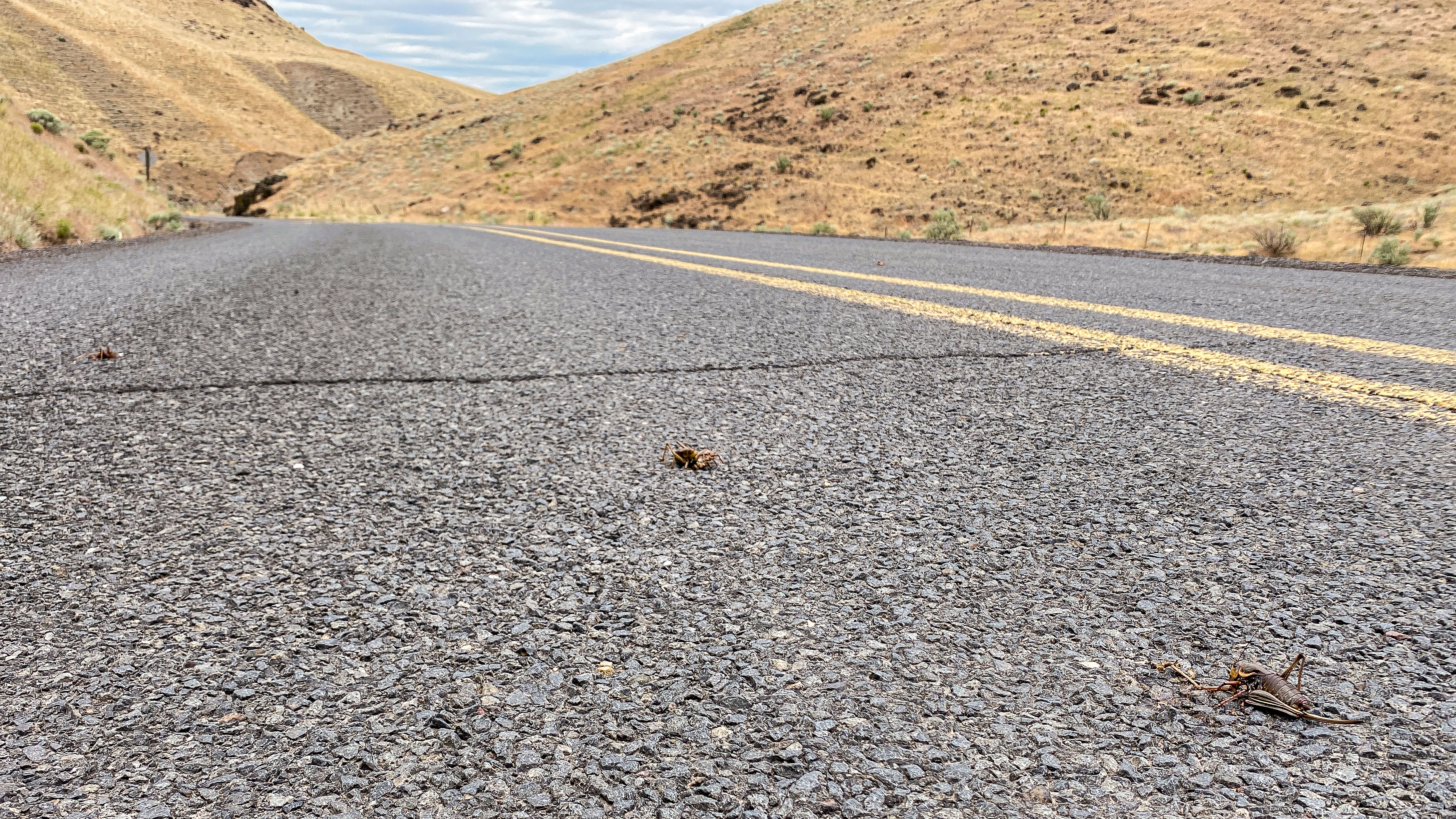
Mormon crickets seen on Blalock Canyon Road near Arlington, Oregon.

Aamodt fought the 2017 outbreak with what she had on hand.

“I got the lawnmower out and I started mowing them and killing them,” she said.

“I took a straight hoe and I’d stab them.”

Aamodt has organised volunteers to tackle the infestation and earned the nickname “cricket queen”.

Another infestation last year had local officials “scrambling,” Maley said.

“We had all those high-value crops and irrigation circles,” he explained.

“We just had to do what we could to keep them from getting into that.”

In 2021 alone, Oregon agricultural officials estimate 10 million acres of rangeland in 18 counties were damaged by grasshoppers and Mormon crickets.

Under the new Oregon initiative, private landowners like farmers and ranchers can request the Oregon Department of Agriculture (ODA) survey their land.

If ODA finds more than three Mormon crickets or eight grasshoppers per square yard it will recommend chemical treatment.

In some areas near Arlington surveyed in May soon after the hatch there were 201 Mormon crickets per square yard.

State officials recommend the aerial application of diflubenzuron.

The insecticide works by inhibiting development, preventing nymphs from growing into adults.

Landowners can be reimbursed for up to 75 per cent of the cost.

Diana Fillmore is a rancher participating in the new cost-sharing initiative.

She says “the ground is just crawling with grasshoppers” on her property.

ODA recommended she treat her 988-acre ranch in Arock in south-eastern Oregon.

As the program’s protocol calls for applying insecticide to only half the proposed area, alternately targeting swaths then skipping the next one, this means nearly 500 acres of her land will actually be sprayed.

Fillmore decided to act, remembering last year’s damage.

“It was horrible,” Fillmore said.

“Grasshoppers just totally wiped out some of our fields.”

She was forced to spend $US45,000 ($65,000) on hay she normally wouldn’t have to buy.
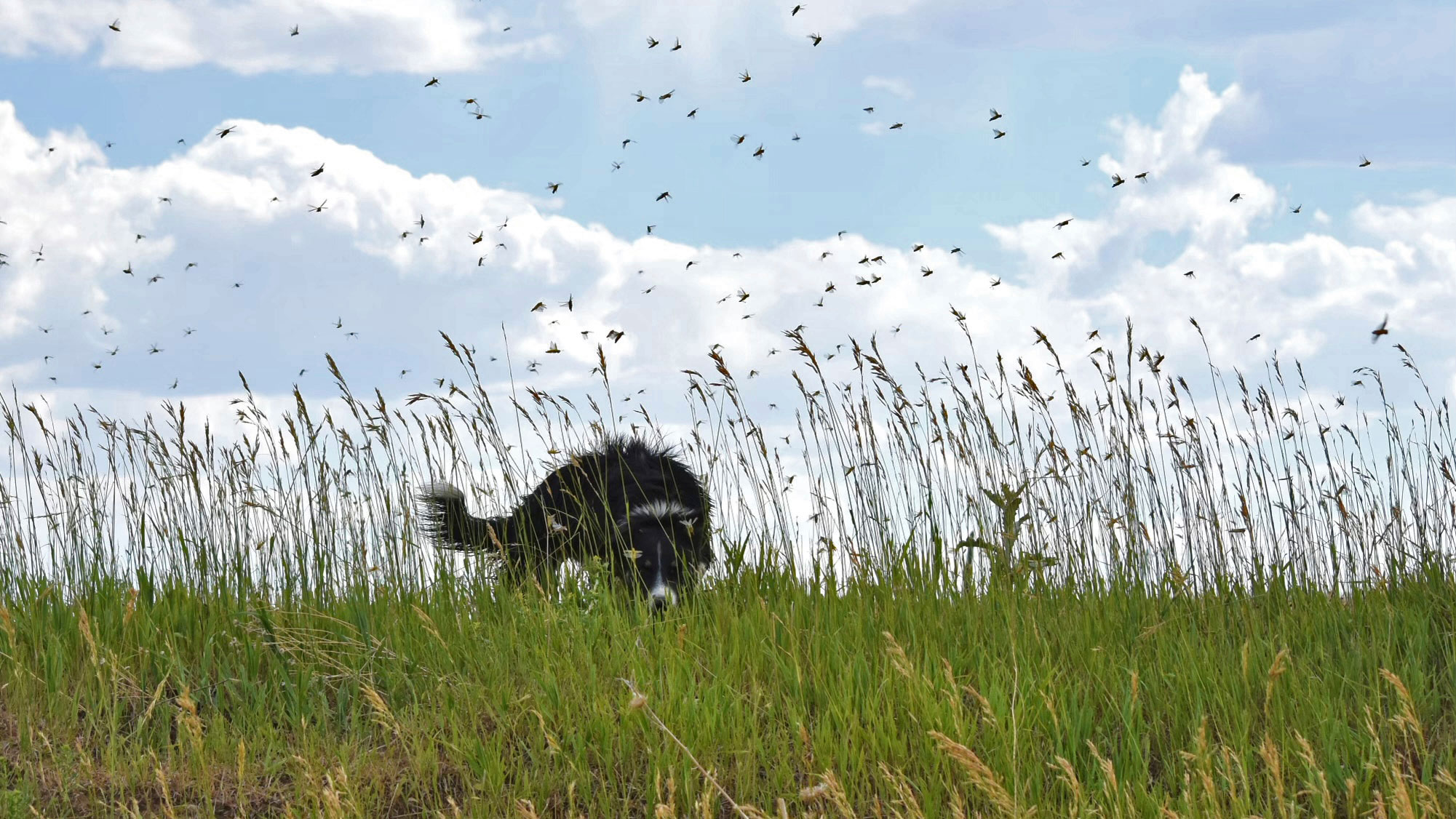
In this photo provided by rancher Diana Fillmore, grasshoppers swarm around the dog of rancher Diana Fillmore on her land in Arock, Oregon.

Todd Adams, an entomologist and ODA’s Eastern Oregon field office and grasshopper program coordinator, said as of mid-June ODA had received 122 survey requests and sent out 31 treatment recommendations for roughly 16,187 hectares.

Landowners must act quickly if they decide to spray diflubenzuron as it is only effective against nymphs.

“Once they become adults it’s too late,” Adams said.

Oregon’s new program is geared toward private landowners.

But the federal government owns more than half of Oregon’s total land, and the US Department of Agriculture has its own program for outbreaks on Western public land.

The US government’s grasshopper suppression program dates back to the 1930s, and USDA’s Animal and Plant Health Inspection Service (APHIS) has sprayed millions of acres with pesticides to control outbreaks since the 1980s.

APHIS National Policy Director William Wesela said the agency sprayed 326,581 hectares of rangeland across seven Western states in 2021.

So far this year, it has received requests for treatment in Oregon, Idaho, Montana, Utah, Nevada and Arizona, according to Jake Bodart, its State Plant Health Director for Oregon.

In a 2019 risk assessment APHIS recognised the main insecticide used, diflubenzuron, remains “a restricted use pesticide due to its toxicity to aquatic invertebrates,” but said risks are low.

APHIS says it follows methods to reduce concerns.

It instructs pesticide applicators to skip swaths and apply the insecticide at lower rates than listed on the label.

But environmental groups oppose the program.

Last month, the Xerces Society for Invertebrate Conservation and the Centre for Biological Diversity (CBD) sued APHIS in the US District Court in Portland.

In their filing, they accuse APHIS of harming rangeland ecosystems and not adequately informing the public about treatment areas.

They also allege the agency violated the National Environmental Policy Act by not assessing all the alternatives to pesticides or analysing the cumulative effects of the program.

Federal officials declined to comment on the suit because it is pending before courts.

Environmentalists say the reduction of grasshoppers diminishes the food source of other wildlife that prey on them.

“We’re very concerned about the impact of these broad, large sprays to our grassland and rangeland ecosystems,” said Sharon Selvaggio, the Xerces Society’s Pesticide Program Specialist.

Selvaggio added the sprays can be “toxic to a wide variety of insects” beyond grasshoppers and Mormon crickets, expressing particular concern for pollinators such as bees.

The two environmental groups want the agency to adopt a more holistic approach to pest management, by exploring methods such as rotational grazing.

“We’re not trying to stop APHIS from ever using pesticides again,” said Andrew Missel, staff attorney at Advocates for the West, the nonprofit law firm that filed the suit.

“The point is really to reform” the program, he added.

In Arlington, the “cricket queen” Aamodt said residents had experimented with pesticide alternatives.

During 2017, some covered trees in duct tape to trap the insects. The following year, local officials brought in goats to graze hillsides.

For now, those fighting against future infestations hope the new state program will bring much-needed support.

“Keep in mind that these are people that are taking time out from their own lives to do this,” said OSU Extension Agent Maley.

“The volunteers made a huge difference.”
Off-duty officer's shocking act at abortion protest

A Rhode Island police officer accused of punching a woman at an abortion protest while he was off-duty has now been charged in connection with Friday's demonstration at the State House.

In a Saturday evening news release, state police said Providence patrolman Jeann Lugo, 35, was charged with simple assault and disorderly conduct.

Jennifer Rourke, the chair of the progressive Rhode Island Political Cooperative seeking the Democratic nomination for a state Senate seat, said she had been punched in the face at least twice by Lugo, who – at the time – was running for the GOP nomination for the same seat.

READ MORE: Groups for and against abortion in USA map next moves after Roe reversal

Jennifer Rourke is running to represent Rhode Island's 29th district in the State SenateJennifer Rourke said she stepped in to protect someone when a group of agitators started attacking.

Providence police said earlier Saturday that Lugo had been suspended from his job with pay pending an investigation, and Lugo subsequently ended his campaign.

Friday's protest outside the Rhode Island State House in Providence was in response to the decision released the same day by the US Supreme Court overturning Roe v. Wade, the 1973 decision that had provided a constitutional right to abortion.

DEB KNIGHT OPINION: America is no longer the land of the free or of the brave

https://twitter.com/ProvidenceRIPD/status/1540774855661993984?ref_src=twsrc%5Etfw%7Ctwcamp%5Etweetembed%7Ctwterm%5E1540774855661993984%7Ctwgr%5E%7Ctwcon%5Es1_&ref_url=https%3A%2F%2Fwww.thedailybeast.com%2Fdemocrat-senate-candidate-jennifer-rourke-allegedly-punched-by-gop-opponent-jeann-lugo-at-abortion-rally

Video of the event posted online shows a physical altercation at the protest right before a woman appearing to be Rourke is seen being hit. The video does not show what happened between Lugo and Rourke beforehand.

In a call with The Associated Press on Saturday, Rourke said that as she was attempting to escort a counterprotester who had agreed to leave off the premises, another physical altercation broke out during which she was punched in the face multiple times. She confirmed she pressed charges against Lugo.

State police say Lugo turned himself in Saturday, was arraigned before a justice of the peace and then released.

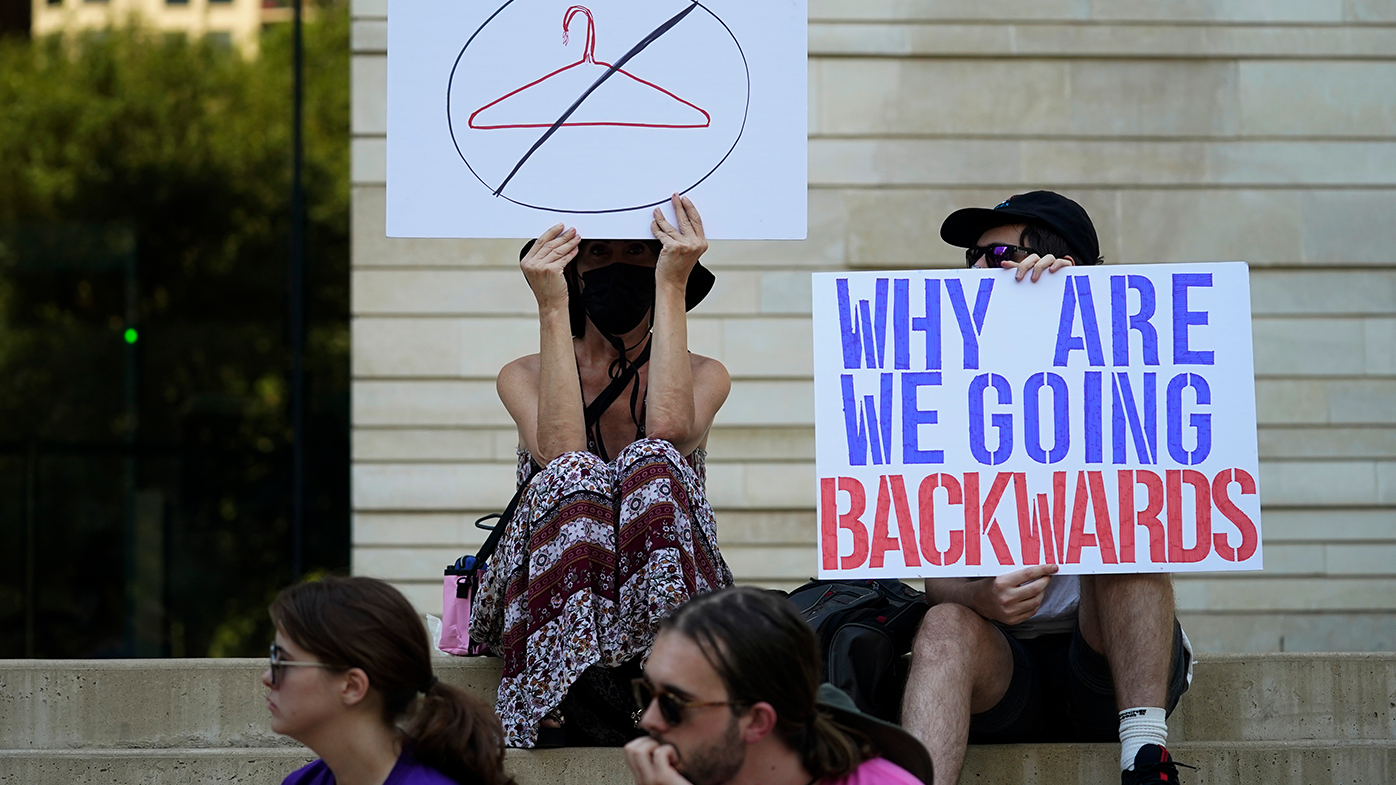
 Demonstrators gather at the federal courthouse following the Supreme Court's decision to overturn Roe v. Wade, June 24, 2022, in Austin, Texas.

He’s due in court again on July 8. Lugo didn’t respond to requests for comment on Saturday and Sunday, but told the Boston Globe before charges were announced that he “stepped in to protect someone that a group of agitators was attacking.”

Lugo had also told the Providence Journal he was “not going to deny” the punching allegation, but added that “everything happened very fast.”

Rourke told the AP she had never interacted with Lugo before and did not know he would be at the protest.

“I’m disappointed he chose to use violence in this way. As a police officer, he’s trained to deescalate. He did not do what he was trained to do,” she said.

READ MORE: Supreme Court Justice flags ends to contraceptive, LGBTQ rights

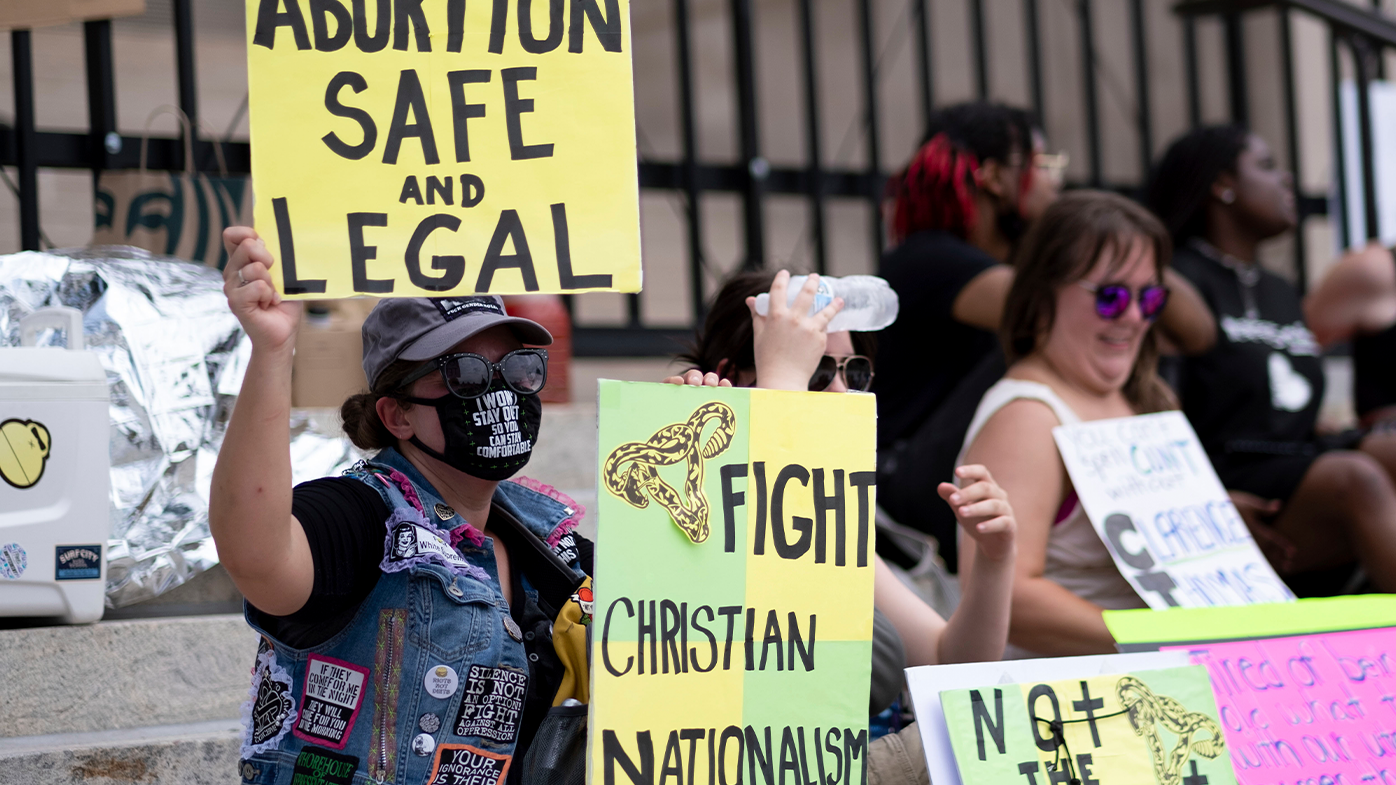
A small group sits on the steps of the Georgia State Capitol protesting the overturning of Roe v. Wade on Sunday, June 26, 2022. (AP Photo/Ben Gray)

Rourke sought medical care and received a CT scan on Saturday afternoon. She said she was doing OK but was experiencing a lot of tenderness in her face and ringing in her ears.

Two other people were also charged following the Friday event that briefly turned violent.

One of the two people, Nicholas Morrell, of Warwick, said in a Sunday message that he is 30, not 31 as police said, and he had “video evidence of the entire thing (and) I was arrested for standing there.”

The other person who was arrested did not respond to a social media message Sunday seeking comment.