While the cost of living is soaring in Australia, there are cities around the world that are also becoming increasingly pricey to live in.
Category Archives: headline
Pedestrian killed: Name suppression denied for teens, but appeal in the works
A judge asked to consider name suppression for one of two teenagers accused of manslaughter after the death of an Auckland CBD pedestrian has lambasted “repugnant” and “deplorable” social media posts and communications about the case….
Herald afternoon quiz: June 9
Test your brains with the Herald’s afternoon quiz. Be sure to check back on nzherald.co.nz for the morning quiz tomorrow. To challenge yourself with more quizzes, CLICK HERE.
Severe storm rips through Waikanae, tornado downs Norfolk pines
Multiple tornadoes have ripped through Kāpiti just over a week after two tornadoes left damage in their wake last Wednesday.Tim O’Connor from auto parts workshop ACS Limited on Omahi St, Waikanae said he didn’t know what was…
What you pay every day for defending Australia
Ballooning defence spending over the coming years will be a major challenge for the new federal government, with many big-ticket projects eating up billions of dollars.
The warning comes in the Australian Strategic Policy Institute's (ASPI) annual report released this week on military spending.
Australia's defence budget for the 2021-2022 financial year was $48.6 billion, or 2.11 per cent of GDP.
READ MORE: Albanese calls for transparency on any Chinese plans for Cambodian military base

The figure – which included the Department of Defence and the Australian Signals Directorate – equates to a daily cost of $133,191,781, the report said.
National security was a major issue during this year's federal election campaign, with the former Coalition government accusing Labor of being soft on defence and having a track record of cutting military spending.
'Megaprojects bring big risks'
But Labor leader and new Prime Minister Anthony Albanese insisted a government he led would increase the defence budget, with better management of expensive projects.
But that may prove a tough task for the federal government, the report said.
It said the Australian Defence Force was improving but warned of the risks in a defence budget designed around "megaprojects".
"Such projects take years or decades to design and deliver, while spending huge sums for little benefit in the short term," the report said.
READ MORE: Four groups of Aussies to be most affected by rate rise
"When they encounter problems, those problems are big."
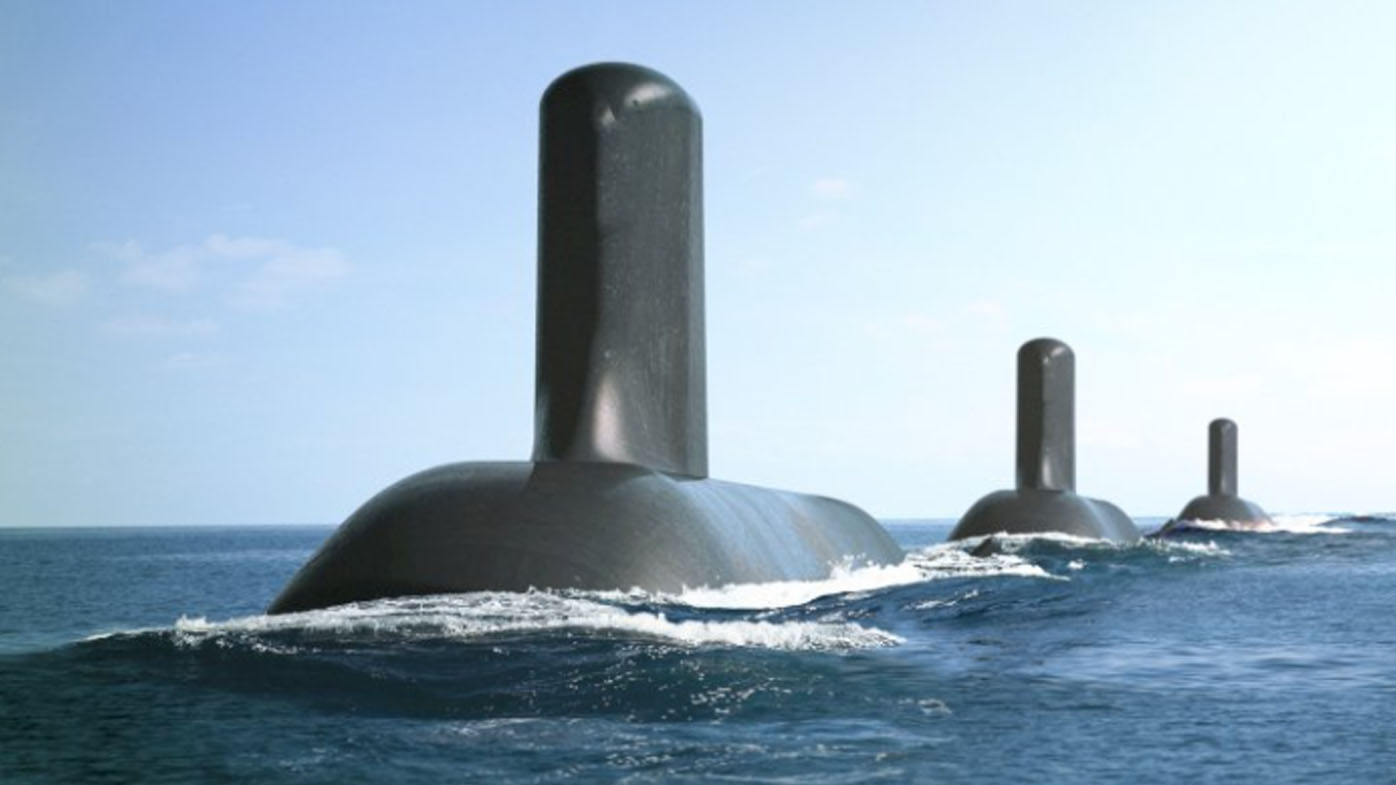
Leading those is the AUKUS agreement under which Australia will acquire a nuclear-powered submarine fleet by accessing US and British technology.
The move by the former Morrison government led to the controversial scrapping of an agreement to acquire French-designed conventional submarines.
The nuclear submarines project will cost "significantly more" than the cancelled $90 billion French project, the ASPI report said.
While the nuclear submarines, projected to enter service from 2030 onwards, had "the potential to deliver a huge step-up in undersea warfare capability", the risk of a major blowout in costs was significant.
'China can reach anywhere in region'
The report also highlighted the significant role growing Chinese assertiveness in the Pacific region was playing in shaping Australian defence planning.
It pointed to incidents over the past months involving the People's Liberation Army in our region such as its "state-of-the-art" naval surveillance ships transiting through the Arafura Sea and Torres Strait off northern Australia and the lasering of an Australian surveillance plane by a Chinese warship.
READ MORE: China warns Australia off 'provocative' acts after 'dangerous' interception of RAAF plane
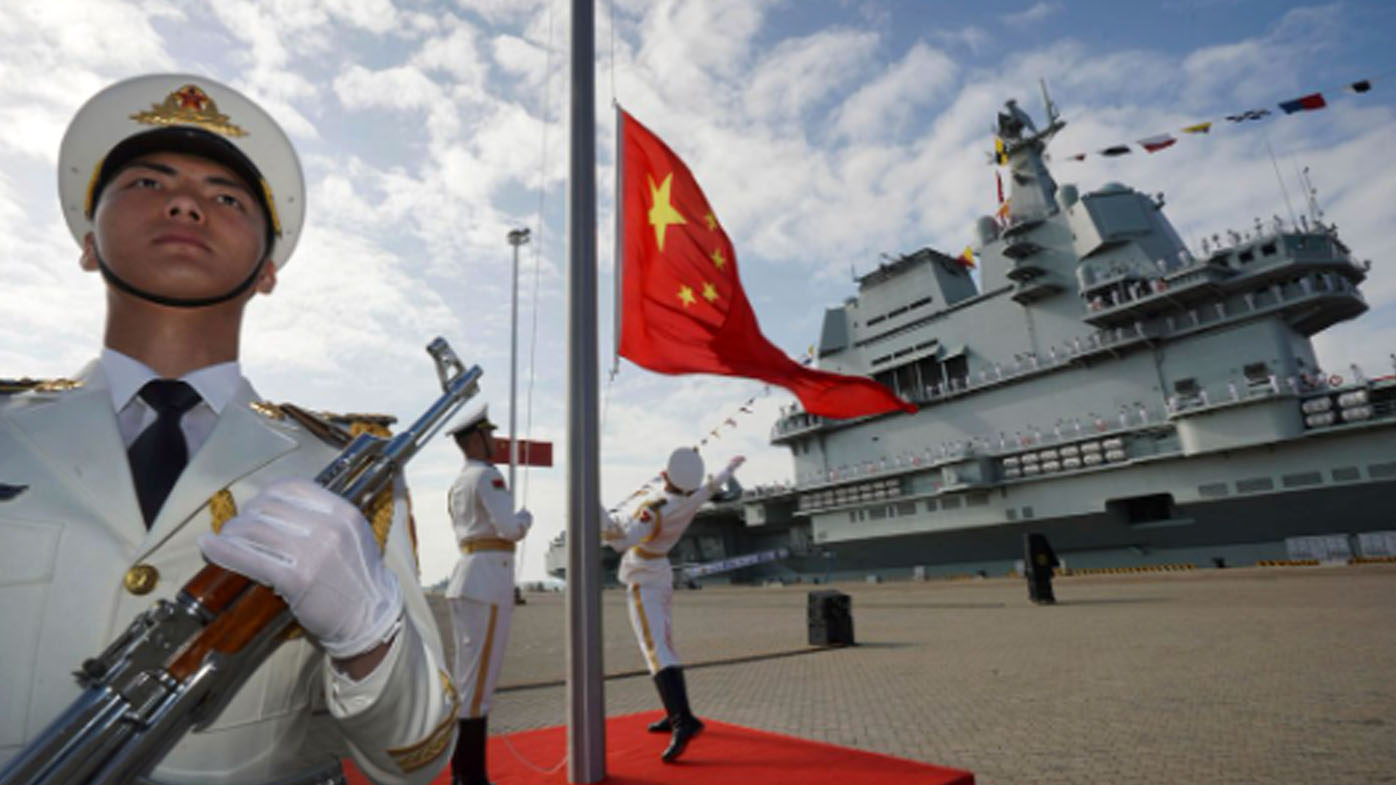
The report said such incidents were meant to be a reminder for Australia and other countries that the PLA Navy is now the largest in the world and "can reach anywhere in the Indo Pacific".
In another display of Chinese military assertiveness, one of its fighter jets carried out an interception of a Royal Australian Air Force surveillance plane in the South China Sea last month, described this week as "dangerous" by the federal government.
Albanese showed how serious he is taking the issue of rising Chinese power by flying to Tokyo just hours after he was sworn in last month to attend the Quad summit, with the leaders of Japan, the US and India.
And soon after Foreign Minister Penny Wong began the first of two visits to the Pacific as her Chinese counterpart toured the region and signed a dozen bilateral agreements but failed to clinch a security and trade deal with 10 countries.
Wong pledged to work for better relations with Pacific countries and "make a uniquely Australian contribution" to the region.
READ MORE: What is stagflation, and why central banks fear the dreaded vortex
'Win for savers': Two banks increase interest rates on savings accounts
Aussies looking to gain more out of their savings accounts are finally in luck as two banks have decided to increase the Reserve Bank's rate hike to their savings accounts.
The RBA announced on Tuesday it would lift the nation's interest rates for the second month in a row, raising the cash rate target by a larger than expected 50 basis points to 0.85 per cent.
All four major banks passed on the rate hike in full to home loan customers however the good news is some banks are setting a new standard and passing on the rate rise to savings customers too.
READ MORE: Four groups of Aussies to be most affected by rate rise
Macquarie and ING have raised interest rates on their transaction and savings accounts which finance experts are calling a big "win for savers".
Macquarie will increase the interest rate on its transaction account from 0.2 per cent to 1.5 per cent on balances up to $250,000 from June 17.
This is a substantial increase for savers as the highest rate from a big four bank on a transaction account is 0.02 per cent from ANZ on balances over $100,000.
Meanwhile, ING is also increasing its interest rate on the Savings Maximiser account by 75 basis points to 2.10 per cent on balances up to $100,000 from June 15.
ING did not pass on the RBA rate hike in May which has contributed to this big change.
Commonwealth Bank will pass on the full 0.5 per cent rate hike to its GoalSaver and Youthsaver accounts from June 17.
READ MORE: Gold Coast suburb in lockdown amid police siege
So, what does this mean for you?
RateCity.com.au research director Sally Tindall said it is a sign of banks making a move to "up the ante" on the return from savings accounts for Australians.
"Finally, we have some proof that competition in the savings sector isn't dead and buried," she said.
"ING and Macquarie have reset the battlefield for savings rates in what is ultimately a win for savers."
She added this will put pressure on other major banks like Westpac, NAB and ANZ to pass on the rate hike to savings customers.
READ MORE: Seething Blues to seek 'please explain' over key State of Origin calls
In terms of main transaction accounts, RateCity data showed Commonwealth and Westpac don't offer any interest on their main banking accounts however NAB and ANZ respectively offer 0.01 per cent and 0.02 per cent.
Macquarie's decision to pass on interest rate rises to the main banking accounts is a "game-changer", Tindall added.
It means customers will be able to get more back for the hard-earned cash they're saving.
Tindall suggested now is the time to "shop around" for the best deals at the banks for savings accounts.
The information provided on this website is general in nature only and does not constitute personal financial advice. The information has been prepared without taking into account your personal objectives, financial situation or needs. Before acting on any information on this website you should consider the appropriateness of the information having regard to your objectives, financial situation and needs.
Man convicted of raping two women allowed to appeal against sentence
A man sentenced last year to nine years in prison without parole for a list of offences including what one victim described as “10 years of horrific abuse”, is allowed to appeal against his sentence.Ashleigh Crowley-Lewis was sentenced…
Vodafone tries to disconnect elderly woman's internet one day after her Whangarei house burned down
A woman critical of Vodafone for charging her mother-in-law a disconnection fee a day after her Whangārei house burned down has received an unexpected response from the company’s boss.Wendy Smith complained on Twitter yesterday…
'Intense thundering' as funnel cloud whirls through Waikanae, pines hurled into roof
A person has been injured after a twister barrelled through Waikanae, shearing off giant trees that were hurtled through the air and into the roof of an autoparts business.ACS Ltd worker Gordon Cameron described the terrifying moments…
Government to introduce changes to 'racist' Māori electoral voting laws; National vows to block it
National says it will block changes to electoral laws that currently mean Māori can only switch electoral rolls once every five to six years, which proponents have labelled “racist”. The Government has today announced a proposal…