Category Archives: headline

Pensioners pushed into poverty as cost of living soars

Pat Isaacs doesn't eat meat – not because she is vegetarian – but because she cannot afford to buy it.

She doesn't drink alcohol, smoke or gamble. She can't afford to buy new clothes. She doesn't have any investments and no superannuation.

She has a small bank balance for emergencies, which she is forced to dip into to survive.

Pat is 78 and the Age Pension is her only income. Groceries costs are increasing, as are her medical costs.

READ MORE: Pensioners suffer largest increase in living costs since 2006

Every month life is getting more expensive, but the pension does not increase.

"I was doing OK really until everything increased in price so much," Pat tells 9News.com.au

"Now I'm not sure I will survive with the age pension as my only income. My $250 cost of living bonus went the next day when my car battery died.

"I'm not sure how well I will survive at 78 and plan to be around a while longer to enjoy my family.

"What would Scomo and his mates know about my reality? They get a third of my week's income for meal allowance each day! So out of touch with real issues."

READ MORE: Drones capture incredible shark feeding frenzy in Western Australia
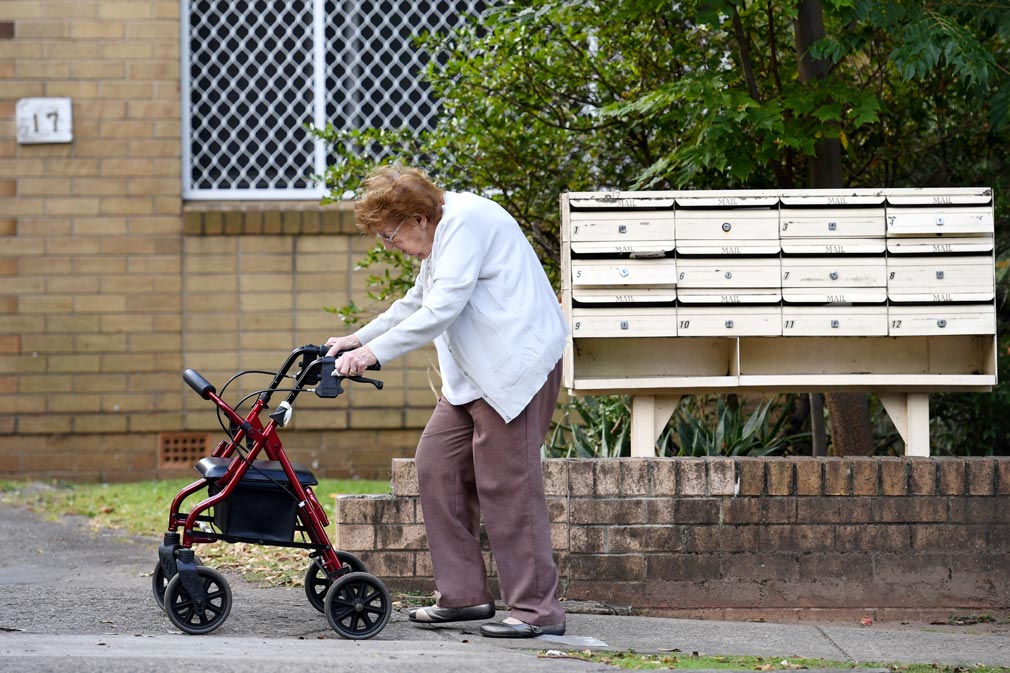
Pat's situation is not unique.

Around 1.5 million older Australians rely on the age pension as their main source of income. When paid at the maximum rate, the age pension is just over $25,000 a year for singles.

OECD data shows that a third of Australians over the age of 65 were at risk of being in pension poverty. Of those, single women who are renting are most vulnerable.

New data from the Australian Bureau of Statistics (ABS) released two weeks ago shows that pensioners are suffering from the highest annual increase in living costs in 16 years.

The response to the story was overwhelming.

Many pensioners who shared stories of struggling to survive on the age pension would not give their names, out of shame or a fear that they will be seen as a burden to their families.

READ MORE: Rain to make weekend return as cold front slams into south-east

In March this year the Age Pension increased in line with inflation, giving an extra $10 a week for single pensioners and $15 a week for couples.

It was touted as the biggest increase since 2013 – but only because the last six months have seen the largest cost of living increase since the introduction of the GST in 2000.

In 2016 the Benevolent Society commissioned an investigation into the adequacy of the age pension, conducting town hall meetings and analysing HILDA data that covered more than 9,000 households and more than 25,000 individuals.

It concluded that the pension was "barely effective" at keeping older Australians out of poverty.

"Pensioners mash their food because they cannot afford to visit the dentist to have their teeth fixed. Some turn off their hot water for months on end because they cannot afford the utility bills. Others split one meal into three in order to stretch out their food budget," the report reads.

"This is what life on the pension looks like in Australia. It is not one that the majority of us would find acceptable for ourselves.

"We must therefore ask why it is acceptable for a subset of older Australians who are our parents, friends and neighbours."

READ MORE: The list Scott Morrison would rather wasn't read on TV
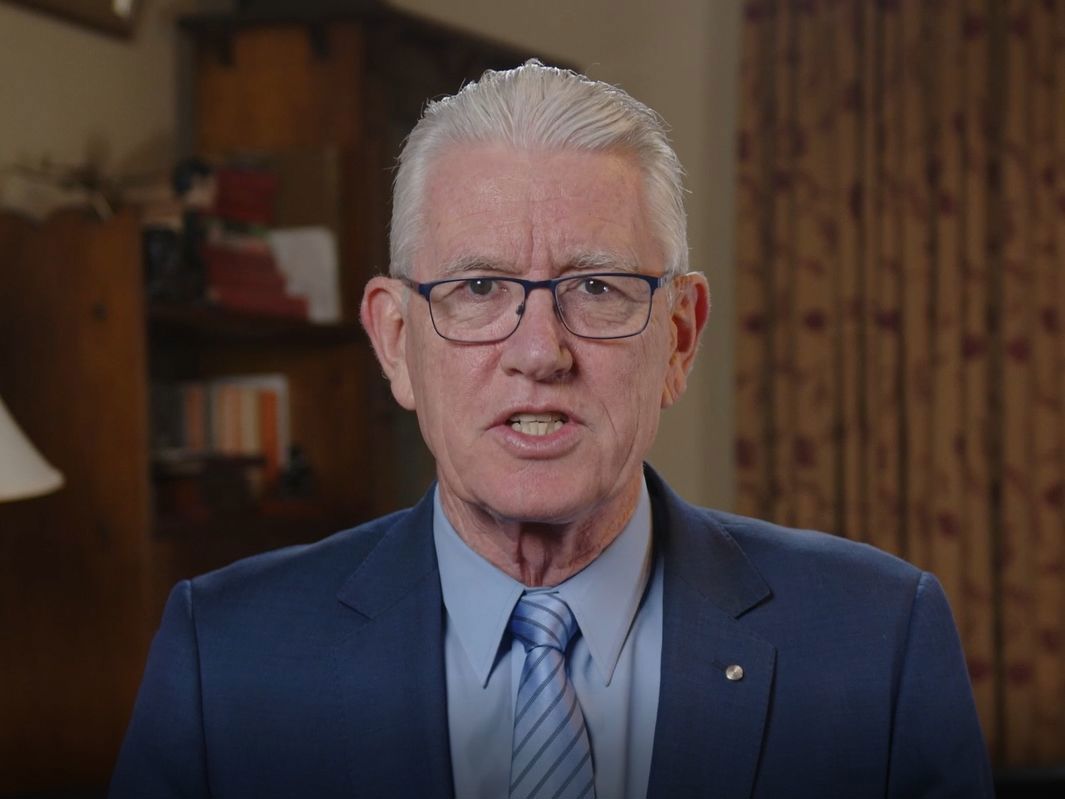
Ian Henschke is the Chief Advocate for National Seniors, a not-for-profit organisation that campaigns for better outcomes for older Australians.

He says pensioners are being ignored by the government, and have "barely featured" in an election campaign that is almost entirely focused on the cost of living.

"We've got pensioners living in poverty and they are out of sight, out of mind," Henschke tells 9News.com.au

"No one no one is caring about it. And I don't know why. In the entire election campaign, there was virtually nothing said about about the adequacy of the age pension. 

"What happened is that they said 'we gave $250 as a cost of living adjustment'. That's $5 a week. Now, if you're renting and your rate went up by CPI, that $5 a week that disappeared the moment it hit your bank account."

READ MORE: Russia releases images of Ukraine fighters after claiming a 'victory'

Henschke says other than raising the age pension outright, two things need to be done to lift more older Australians out of poverty: an independent tribunal needs to set the pension, and older Australians must be able to work more hours without their pension being cut.

"We have an independent tribunal that sets the wages of politicians. We have an independent tribunal that sets the basic wage. We have an independent tribunal that sets that Fair Work wage for someone in aged care," he said.

"Why wouldn't you have an independent body that sets the rate of the age pension?"

Henschke says he knows of many pensioners who are forced to work because the age pension is not adequate to cover their rent, power bills and the soaring cost of living.

Under current rules, a single pensioner can earn up to $180 a fortnight – just $90 a week – before their pension is cut.

Under the Age Pension income test, for every dollar of income earnt over $180 a fortnight a person's age pension will be cut by 50 cents for each dollar over $180.

A recent "Work Bonus" was also introduced, whereby pensioners get the first $300 of income a fortnight to lower their eligible income.

FULL COVERAGE: Federal Election 2022
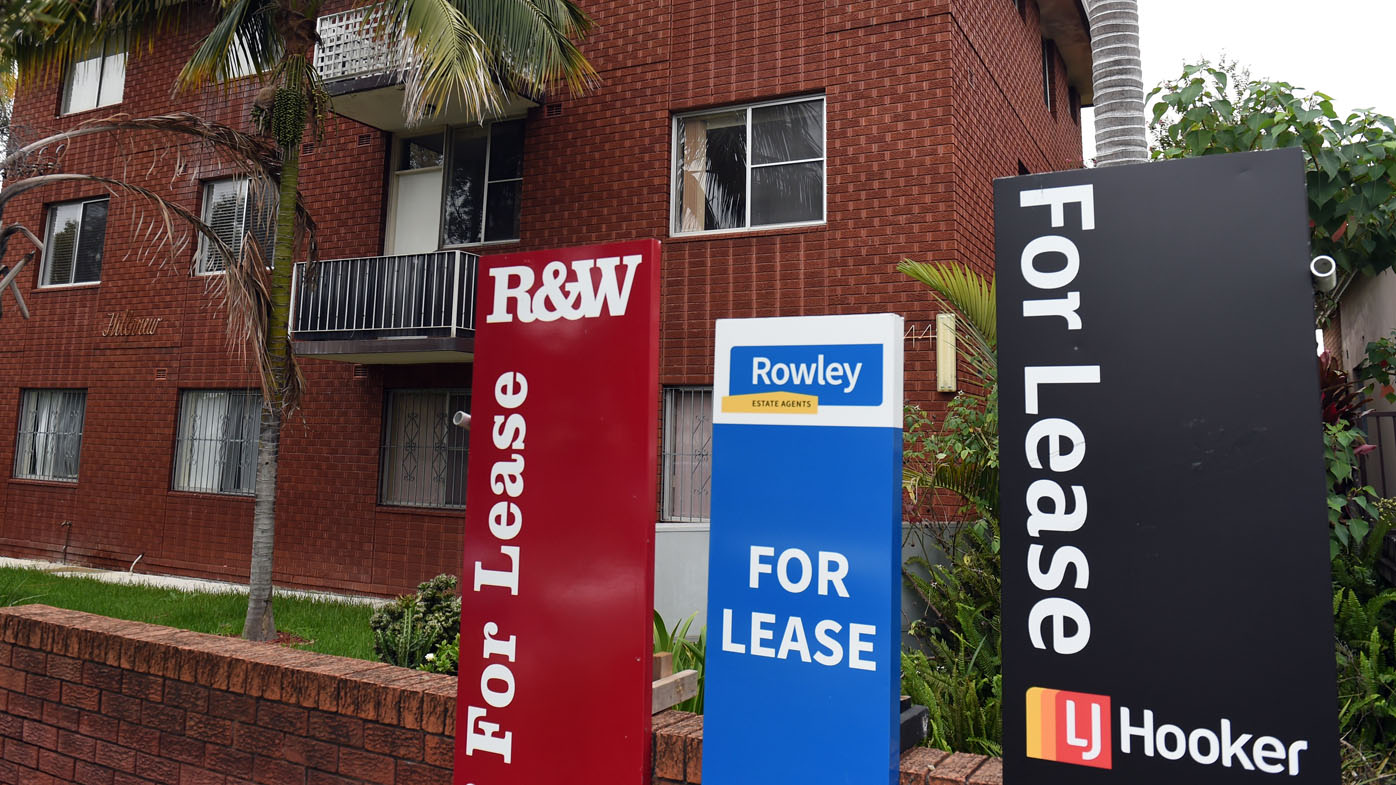
He argues that if pensioners were allowed to work without their pension being cut, it is likely that their combined efforts would contribute more income tax and a greater boost to Australia's GDP that the savings recouped from the government by cutting their pension.

"Don't penny pinch off the pensioners. Change the taxation system," he says. 

"Those people that still need to work, or those people that still want to work, or those people that are actually working to get a better deal – why do they want to work? In many cases it's a necessity."

Henschke argues that fundamentally, pensioners are not being paid enough and when they work to cover their expenses and contribute to the economy, they're being unfairly penalised.

"The bottom line is, the age pension is not adequate to provide for all Australians," Henschke says.

"We've got roughly one in four older Australians living in poverty. And the fastest growing group of people who are in poverty are single women who are renting."

Is the age pension inadequate to cover your basic living expenses? If you'd like to share your story for an article get in touch with reporter Stuart Marsh at sm****@******om.au.
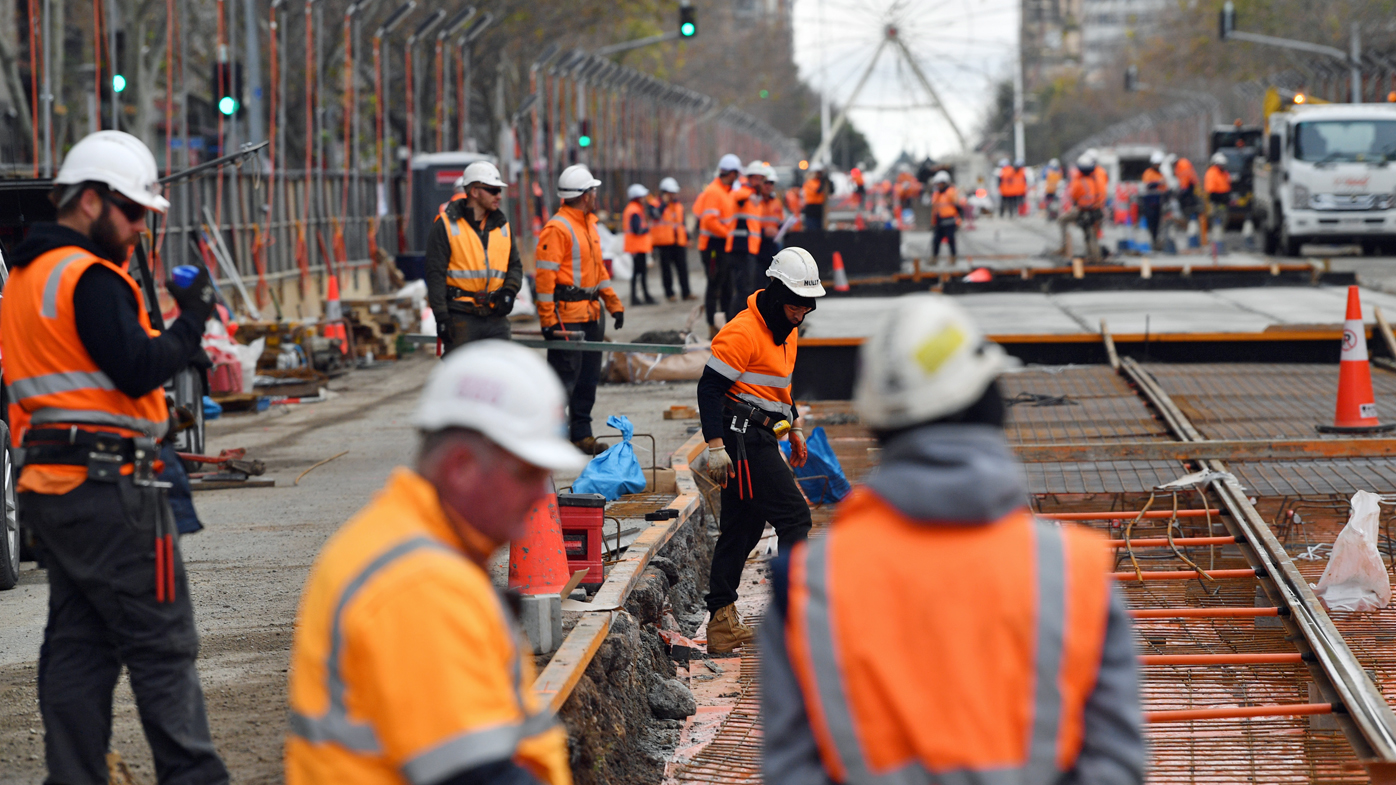
Disappointing wage price growth fails to cover cost of living

Australian wages have grown at less than half the rate of inflation, resulting in a real pay cut to workers of around 2.7 per cent.

New data from the Australian Bureau of Statistics (ABS) showed that in the 12 months to March 2022 the Wage Price Index (WPI) grew by 2.4 per cent.

Over the same period the Consumer Price Index (CPI) – which roughly measures the cost of living – rose by 5.1 per cent.

READ MORE: Drones capture incredible shark feeding frenzy in Western Australia

On a quarterly basis, Australian wages grew by 0.7 per cent for the second consecutive quarter.

Michelle Marquardt, head of Prices Statistics at the ABS, said wages have been steadily tracking higher since the worst economic damage of COVID-19.

"The annual rate of wage growth has risen for each of the last five quarters from a low point of 1.4 per cent in December quarter 2020," Marquardt said.

READ MORE: Rain to make weekend return as cold front slams into south-east

On an annual basis, today's hike is the largest recorded since December 2018.

Marquardt specified that private sector wages were leading the way in terms of growth.

"Wage growth is influenced by both the size of changes in hourly wage rates and the proportion of jobs recording a change," she said.

"In March quarter 2022, the average size of private sector hourly wage rises increased to 3.4 per cent, the highest quarter increase since June 2013.

"The proportion of jobs recording these rises (15 per cent) returned to pre-pandemic March quarter levels, following higher than usual increases in the proportion of private sector jobs receiving a wage increase in the March quarter last year."

READ MORE: The list Scott Morrison would rather wasn't read on TV

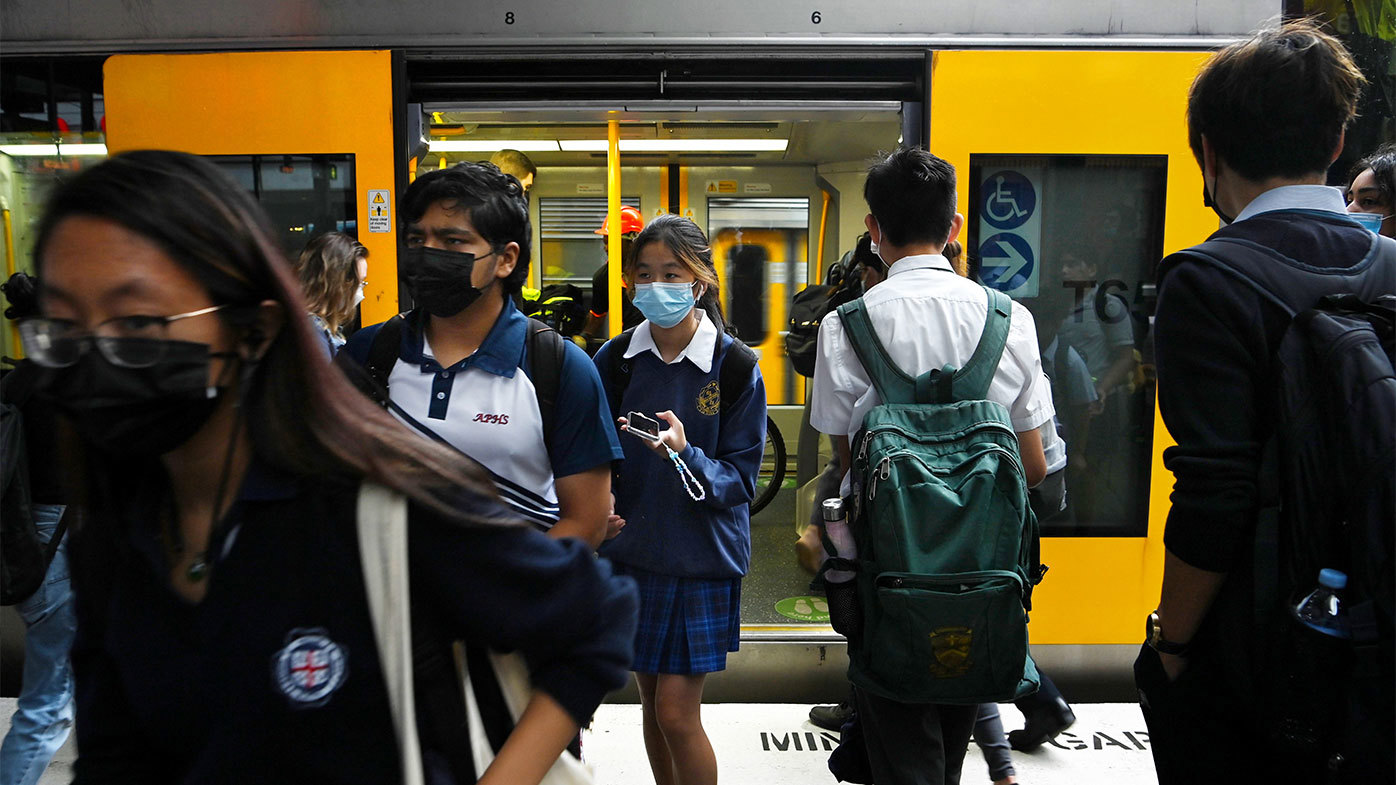
Commuters disembark from a Sydney train.

In simple terms, today's lower-than-expected growth to wages is being described as "real pay cut" because it is not keeping pace with inflation.

While the average Australian wage is increasing on a statistical level, it is not increasing fast enough to keep up with the cost of living – meaning that while Aussies have more money, it is not enough to cover the lift in expenses.

This is what is meant by a "real pay cut".

Secretive Aussie waters where whales quietly hide

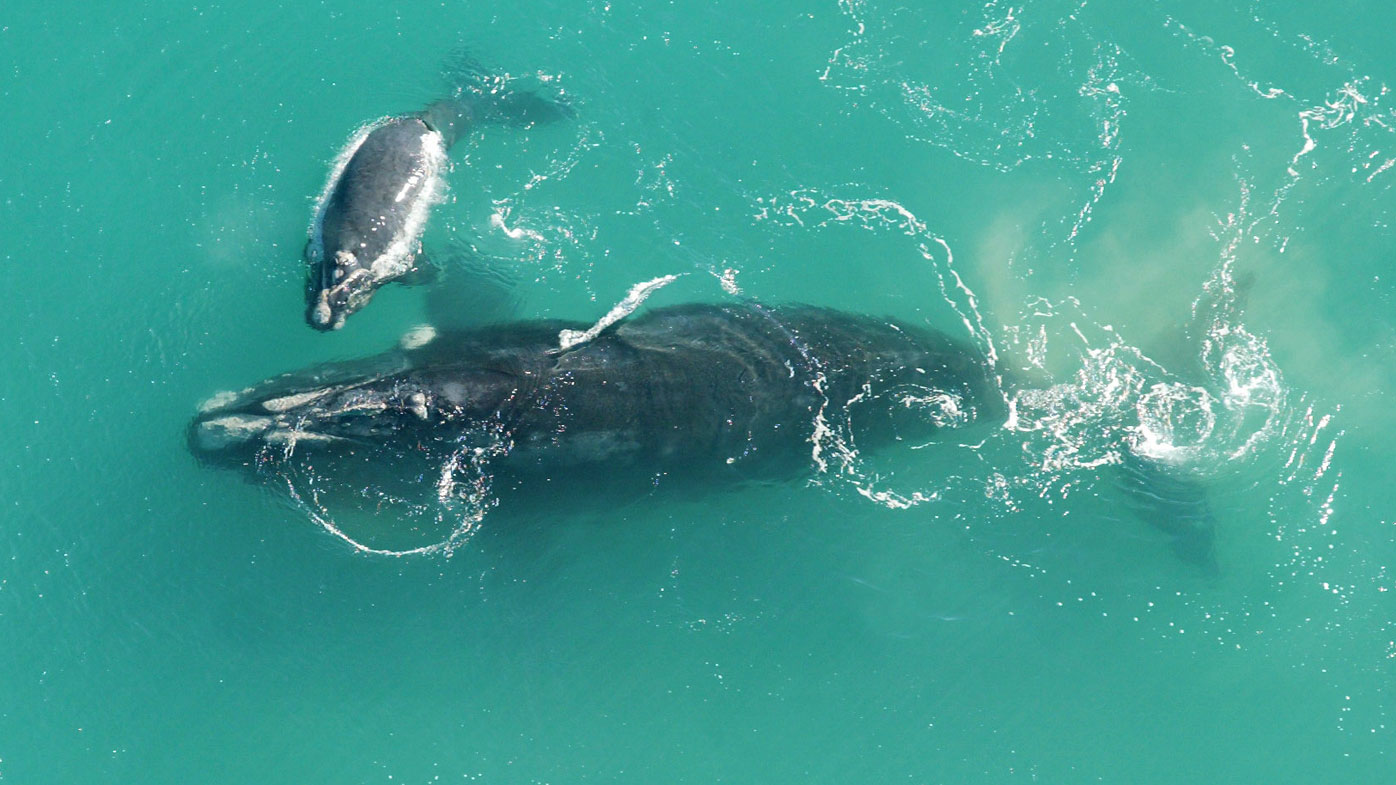
Each year, from May to October, dozens of southern right whales swim to a remote headland off South Australia's Nullarbor Plain coastline to give birth and raise calves.

Just-released research suggests these large pods of whales have carefully selected Head of the Bight as a safe nursery ground because, in these specific waters, mums and calves can hear each other but predators, such as killer whales, can't listen in.

This phenomenon of "acoustic crypsis" allows the whales to avoid ocean "eavesdroppers" who might attack newborn calves at their most vulnerable, researchers from New York's Syracuse University said.

READ MORE: Scientists predict three COVID-19 scenarios over next five years

The study found that in the shallow water nursery grounds, southern right whale calls can only be heard from a very short distance away, making it difficult for distant predators to detect them

Baleen whales, which include southern rights, use acoustic signals to attract mates, socially interact and for mother and calf to communicate.

Scientists observed right whale mothers using "quiet calls" and "low call rates" to signal calves, and their research has shown how changes in water depth significantly impacts how those noises are detected and heard.

"These quiet calls may protect vulnerable calves by reducing their detectability," the study published today in Royal Society Open Science said, essentially shielding newborns from aggressive right whale males and killer whales, the apex predator of baleen calves.

READ MORE: Flu strain circulating now may have very sinister origins

READ MORE: More housing market shockwaves predicted

Across continents, southern right whales have shown a strong and similar preference for nursery sites in shallow, sandy and gradual sloping habitats.

The study found those kind of ocean and seabed characteristics created "poor" propagation conditions for low frequency sounds.

Researchers suggested whales had chosen spots like Head of the Bight to "maximise acoustic crypsis" and "minimise eavesdropping" during the first few months after birth.

Head of the Bight was one of three renowned nursery grounds, including Ribanceria on Brazil's east coast and De Hoop at the southern tip of South Africa, with a high density of mother-calf pairs which were studied by scientists.

READ MORE: The illegal, addictive opioid sold under counter in Aussie grocery stores

Scientists modelled acoustics at varying water depths at the three sites to measure just how detectable the right whale signals were.

They found calls from "very shallow water" of less than 10m unlikely to be heard by predators or male rights more than 500 metres away.

The potential for eavesdropping in these kind of nursery waters was massively reduced, the study said, compared to the incredible distance of 100 kilometres that right whale signals have been recorded travelling on the eastern Bering Sea shelf, near Alaska.

Researchers said the baleen whale species, which have a very slow reproduction rate, may have honed the way they select nursery grounds because any risk to their species' reproduction is so costly.

Similar acoustic crypsis behaviours can be found in mother-calf humpback and grey whales, researchers said, as well as moths, birds and other mammals.

READ MORE: The most common way obese people try to lose weight will 'likely fail'

PM's 'bulldozer' pledge 'doesn't stack up', Uhlmann says

Prime Minister Scott Morrison's pledge to be less of a "bulldozer" in his next term has attracted a lot of media ink – but according to Nine political editor Chris Uhlmann, it just "doesn't stack up".

While Morrison has aimed to strike a new hopeful note in the final week of the election campaign, it stands in stark contrast to the dire warnings and forecasts of his colleagues.

"Don't forget that (Defence Minister) Peter Dutton is saying we might be heading towards war," Uhlmann said on Today.

READ MORE: How TikTok is changing the campaign game of Australian politics

"The prime minister is saying in these happier times that are ahead, I will be less of a bulldozer – he might need to be more of a bulldozer in the years to come because we're heading into a difficult time."

Uhlmann said the PM's pledge to change his leadership style was a "late gear change".

"It sounds more like a grinding of the gear than the gear change to me, and whether or not people believe it, well, we will find out," he said.

READ MORE: Drone captures shark feeding frenzy off Western Australian coast

But, having predicted Morrison would fail in 2019, Uhlmann said he wasn't prepared to do that again.

And he suggested the new poll in Nine newspapers out today, showing the Coalition creeping closer to Labor, might not reflect the reality of the ballot.

"If you go back to the last election, Labor lost that on a primary vote of 33.3 per cent, which was its lowest primary vote since the Second World War," he said.

READ MORE: Rain to make weekend return as cold front slams into south-east

"It now has a primary vote, according to this poll, of 31 per cent.

"The Liberal Party won that election on a primary vote of 41 per cent. It now has a primary vote of 34 per cent. Neither party can form government from that position."

Uhlmann said at this point, it looked most likely the election would end in a Labor minority government in a hung parliament.

But he also said he thought the low primary vote levels would increase on polling day.

Ancient tooth could help solve human evolution's biggest mystery

A tooth unearthed from a remote cave in Laos is helping to sketch an unknown chapter in the human story.

Researchers believe the tooth belonged to a young female who lived at least 130,000 years ago and was likely a Denisovan – an enigmatic group of early humans first identified in 2010.

The lower molar is the first fossil evidence placing Denisovans in Southeast Asia and may help untangle a puzzle that had long vexed experts in human evolution.

LIVE NEWS UPDATES: New poll suggests voter shift

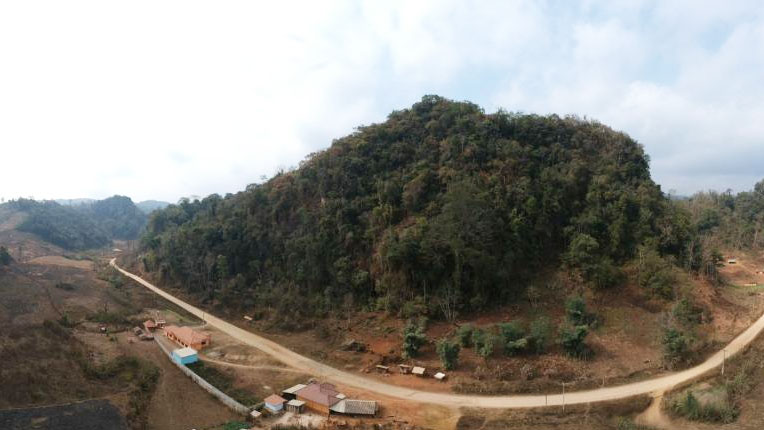
The researchers began excavating Cobra Cave in northern Laos in 2018.

The only definitive Denisovan fossils have been found in North Asia – in the eponymous Denisova cave in Siberia's Altai Mountains in Russia.

Genetic evidence, however, has tied the archaic humans most closely to places much further south – in what's now the Philippines, Papua New Guinea and Australia.

"This demonstrates that the Denisovans were likely present also in southern Asia," said study author Clément Zanolli, a researcher in palaeoanthropology at CNRS, the French National Centre for Scientific Research and the University of Bordeaux.

"And it supports the results of geneticists who say that modern humans and the Denisovans might have met in Southeast Asia."

READ MORE: Seized jewellery going under the hammer from just $1

Archaeologists uncovered the tooth in a place known as Cobra Cave, 260km north of Laos' capital, Vientiane, where excavations began in 2018.

The study, which published in the journal Nature Communications on Tuesday, estimated the molar was between 131,000 and 164,000 years old, based on analysis of cave sediment, the dating of three animal bones found in the same layer, and the age of rock overlying the fossil.

"Teeth are like the black box of an individual. They preserve a lot of information on their life and biology. They have been always used by paleoanthropologists, you know, to describe species or to distinguish between species. So for us paleoanthropologists (teeth) are very useful fossils," Zanolli said.

Comparison with archaic human teeth

The researchers compared the ridges and dips on the tooth with other fossilised teeth belonging to archaic humans and found it didn't resemble teeth belonging to Homo sapiens or Homo erectus – an archaic human that was the first to walk with an upright gait whose remains have been found across Asia.

The cave find most closely resembled a tooth found in a Denisovan jawbone found on the Tibetan plateau in Xiahe county, in Gansu province, China. The authors said it was possible, though less likely, it could belong to a Neanderthal.

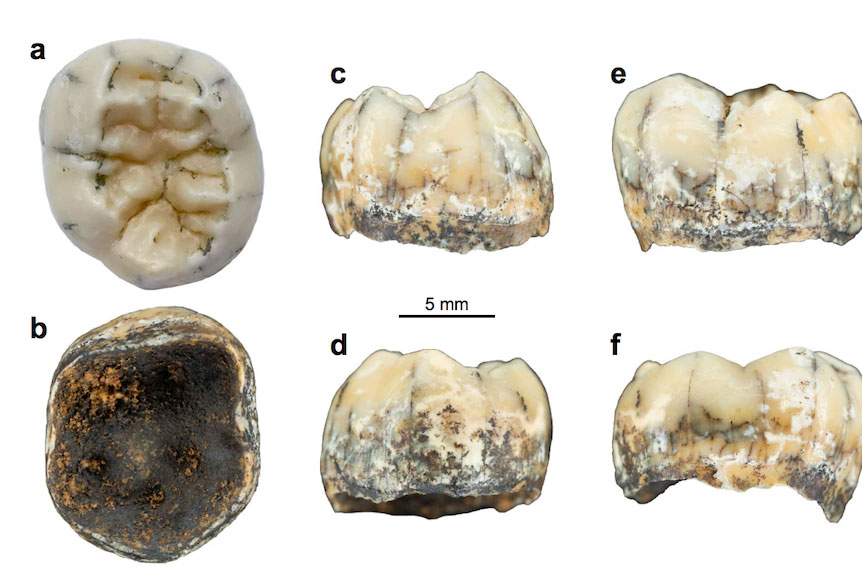
"Think about about it (the tooth) as if you are traveling into (a) valley between mountains. And the organisation of these mountains and valleys is very typical of a species," Zanolli explained.

The tooth shown from top, bottom and side angles.

Analysis of some protein in enamel from the tooth suggested that it belonged to a female.

Denisovan DNA lives on in some humans today because, once our Homo sapiens ancestors encountered the Denisovans, they had sex with them and gave birth to babies – something geneticists call admixture.

This means we can look back into human history by analysing current-day genetic data.

The "admixing" happened was thought to have happened more than 50,000 years ago, as modern humans moved out of Africa and likely crossed paths with both Neanderthals and Denisovans.

But pinning down exactly where it happened has proven difficult – particularly in the case of Denisovans.

Definitively Denisovan?

Any addition to the meagre hominin fossil record of Asia is exciting news, said Katerina Douka, an assistant professor of archaeological science at the department of evolutionary anthropology at the University of Vienna.

She wasn't involved in the research.

She said she would have liked to see "more and extensive evidence" that the tooth was definitively Denisovan.

"There is a chain of assumptions the authors accept in order to confirm that this is a Denisovan fossil," she said.

"The reality is that we cannot know whether this single and badly preserved molar belonged indeed to a Denisovan, a hybrid or even an unknown hominin group. It might well be a Denisovan, and I would love it to be a Denisovan, because how cool would that be? But more confident evidence is needed," she said.

In deeming the Laos tooth Denisovan, the researchers in this study relied heavily on a comparison with the Xiahe jawbone, Douka said.

However, the jawbone, while thought by many to be Denisovan, was not an open-and-shut case. No DNA had been retrieved from the fossilized jawbone, only "thin" protein evidence, she added.

"Anyone working on this hominin group, where many major questions still remain, wants to add new dots on the map. The difficulty is in reliably identifying any fossils as that of a Denisovan," she said.

"This lack of robust biomolecular data, however, reduces significantly the impact of this new find and it is a reminder of how difficult it is to work in the tropics.

"The study authors said they planned to try and extract ancient DNA from the tooth, which, if possible, would provide a more definitive answer but the warm climate means that could be a long shot.

The research team also plans to continue excavating the site after a pandemic-induced hiatus in the hope of more discoveries of ancient humans that lived in area.

"In this kind of environment, DNA doesn't preserve well at all but we'll do our best," said study co-author Fabrice Demeter, an assistant professor at the Lundbeck Foundation GeoGenetics Centre in Denmark.

PM: Government continues despite axing

Despite the sacking of six cabinet members, the work of the government continues according to Prime Minister Dr Harris who also did outreach to senior civil servants on Wednesday  On Tuesday, Dr Timothy Harris announced Tuesday the axing of six Cabinet Ministers after their absence from Cabinet meetings since writing the Governor-General in April none […]

The post PM: Government continues despite axing appeared first on The St Kitts Nevis Observer.