Category Archives: headline

How dangerous was Russia's nuclear plant strike?

Europe's largest nuclear power plant was hit by Russian shelling early Friday, sparking a fire and raising fears of a disaster that could affect all of central Europe for decades, like the 1986 Chernobyl meltdown.

Concerns faded after Ukrainian authorities announced that the fire had been extinguished, and while there was damage to the reactor compartment, the safety of the unit was not affected.

But even though the Zaporizhzhia nuclear plant is of a different design than Chernobyl and is protected from fire, nuclear safety experts and the International Atomic Energy Agency warn that waging war in and around such facilities presents extreme risks.

LIVE UPDATES: Russia captures biggest nuclear power plant in Ukraine
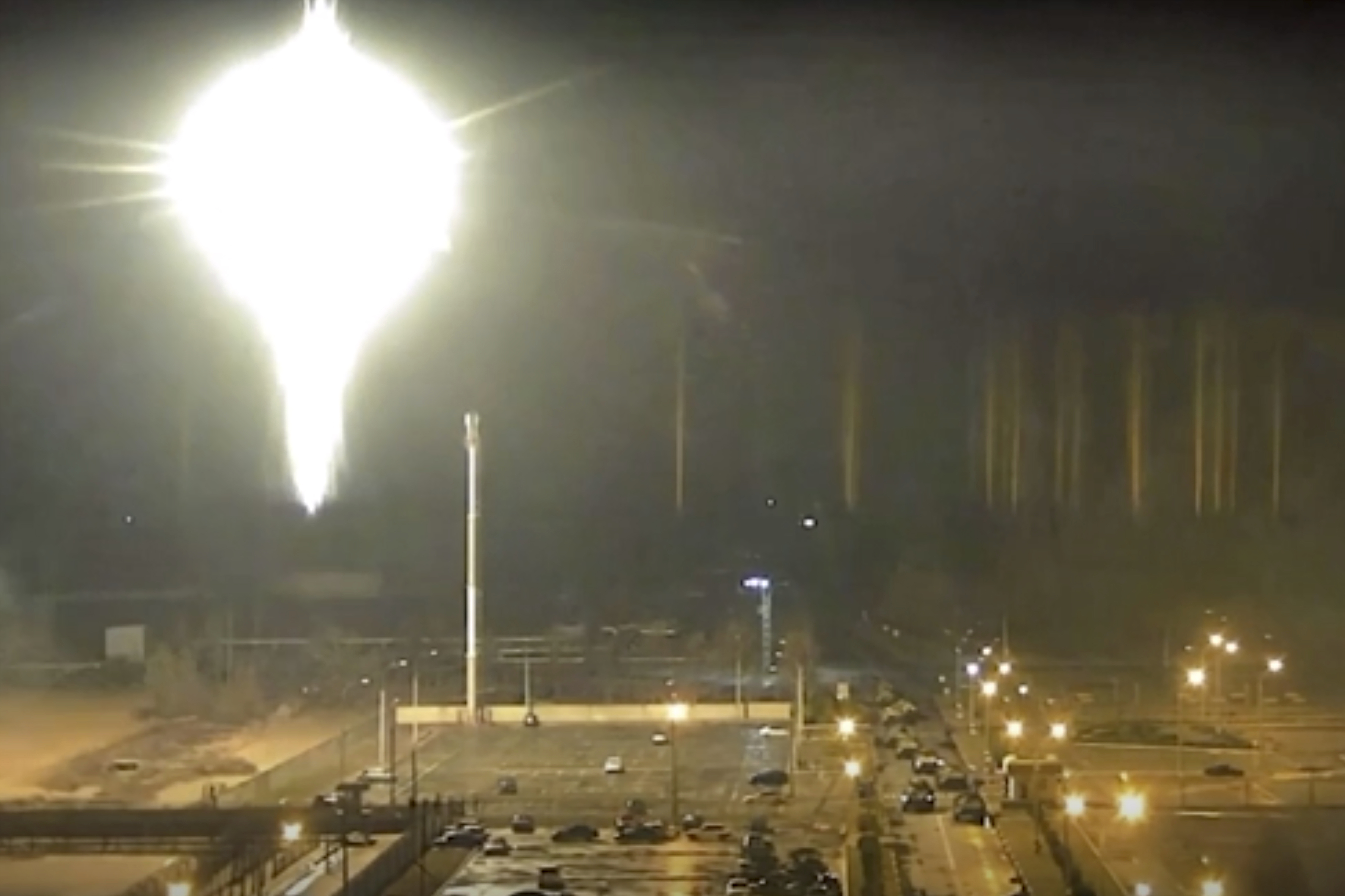
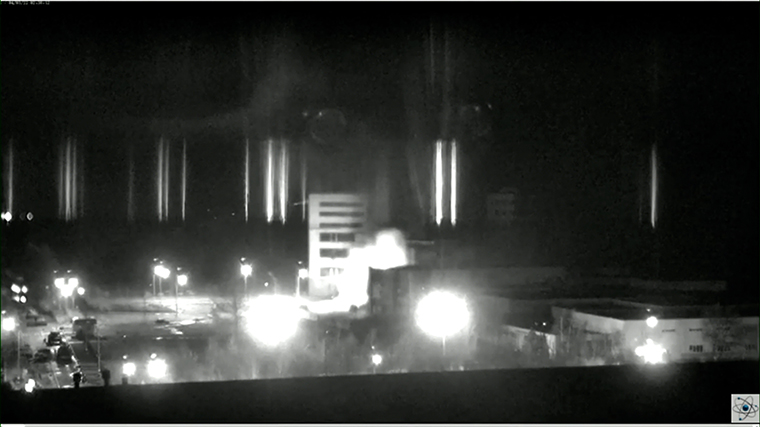
This image made from a video released by Zaporizhzhia nuclear power plant shows bright flaring object landing in grounds of the nuclear plant in Enerhodar, Ukraine Friday, March 4, 2022.

One major concern, raised by Ukraine's state nuclear regulator, is that if fighting interrupts power supply to the nuclear plant, it would be forced to use less-reliable diesel generators to provide emergency power to operating cooling systems.

A failure of those systems could lead to a disaster similar to that of Japan's Fukushima plant, when a massive earthquake and tsunami in 2011 destroyed cooling systems, triggering meltdowns in three reactors.

READ MORE: Russian attack on Ukrainian nuclear plant 'catastrophic', top official says

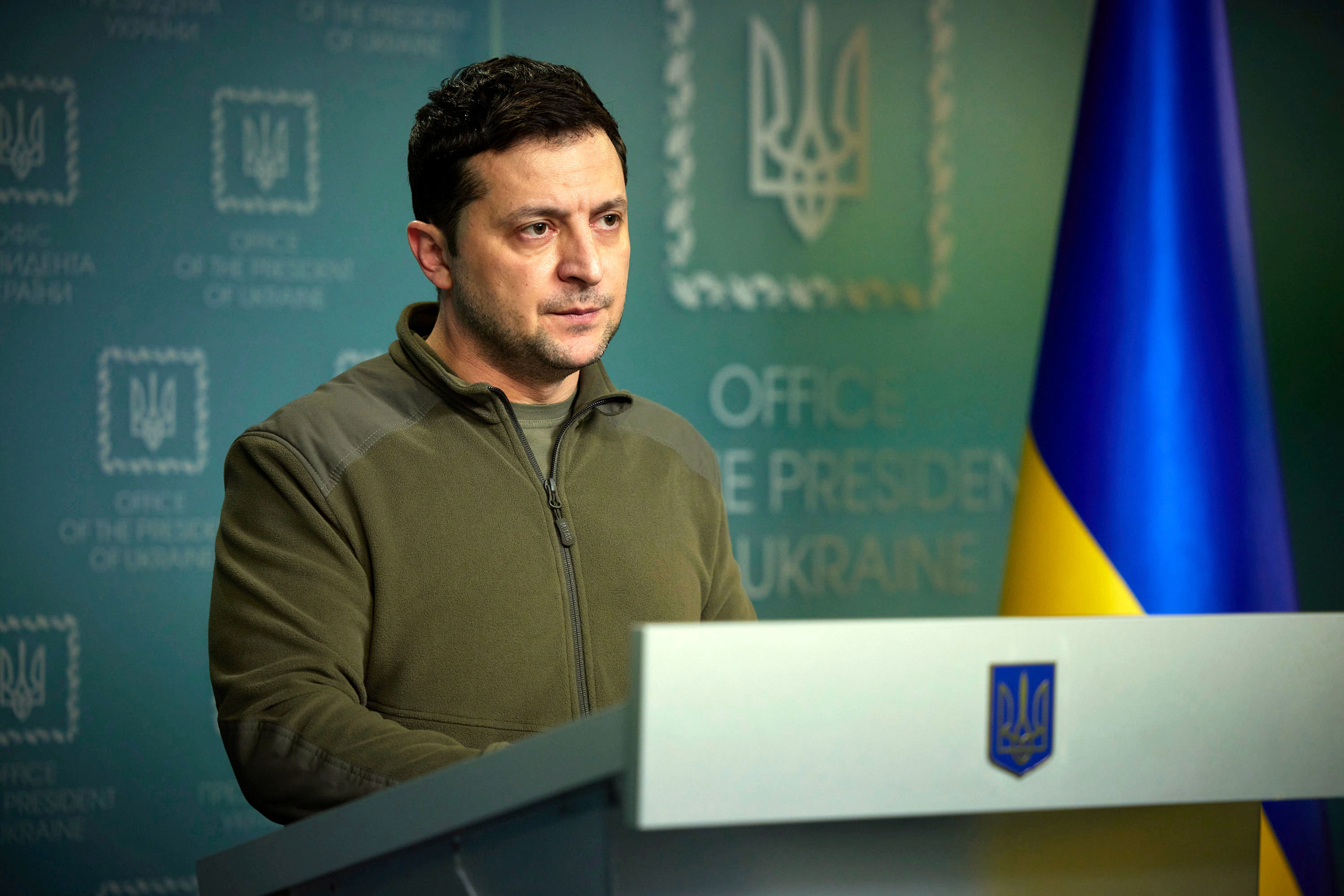
The consequence of that, said Ukrainian President Volodymyr Zelenskyy, would be widespread and dire.

"If there is an explosion, that's the end for everyone. The end for Europe. The evacuation of Europe," he said in an emotional speech in the middle of the night, calling on nations to pressure Russia's leadership to end the fighting near the plant.

"Only urgent action by Europe can stop the Russian troops. Do not allow the death of Europe from a catastrophe at a nuclear power station."

WHAT HAPPENED?

After taking the strategic port city of Kherson, Russian forces moved into the territory near Zaporizhzhia and attacked the nearby city of Enerhodar to open a route to the plant late Thursday.

It was not immediately clear how the power plant was hit, but Enerhodar Mayor Dmytro Orlov said a Russian military column had been seen heading toward the nuclear facility and that loud shots were heard in the city.
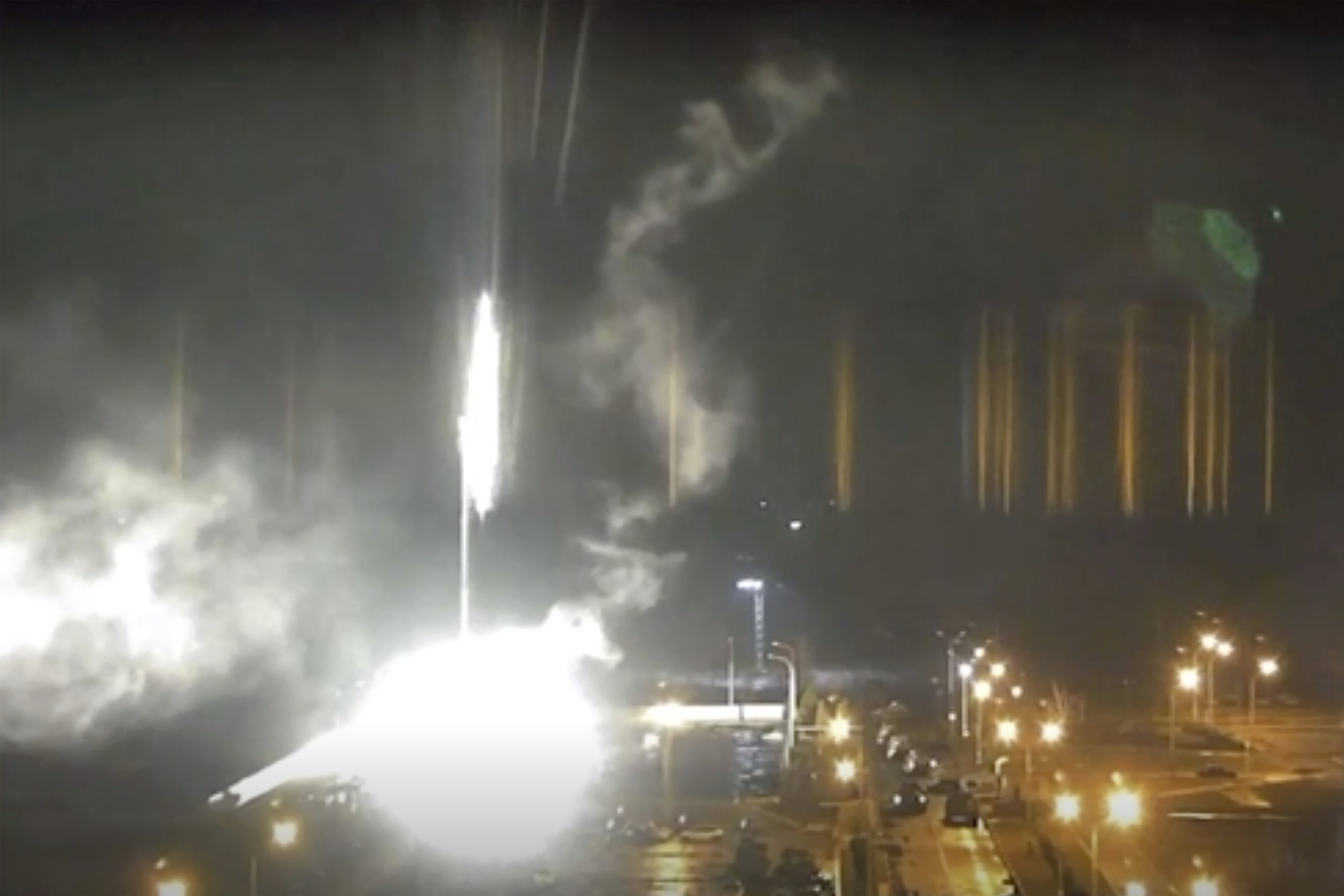
This image made from a video released by Zaporizhzhia nuclear power plant shows bright flaring object landing in grounds of the nuclear plant in Enerhodar, Ukraine Friday, March 4, 2022.

Later Friday, Ukrainian authorities said Russia had taken over the nuclear plant.

Plant spokesman Andriy Tuz told Ukrainian television that early Friday morning, shells fell directly on the facility and set fire to one of its six reactors.

Initially, firefighters were not able to get near the flames because they were being shot at, Tuz said.

After speaking with Ukrainian authorities on Friday, Rafael Grossi, the director general of the IAEA, the UN's nuclear watchdog, said a building next to the reactors was hit and not a reactor itself.

"All of the safety systems of the six reactors at the plant were not affected at all and there has been no release of radioactive material," he said.

"However, as you can imagine, the operator and the regulator have been telling us that the situation naturally continues to be extremely tense and challenging."

Earlier this week, Grossi already had warned that the IAEA was "gravely concerned" with Russian forces conducting military operations so close nearby.

"It is of critical importance that the armed conflict and activities on the ground around Zaporizhzhia nuclear power plant and any other of Ukraine's nuclear facilities in no way interrupts or endangers the facilities or the people working at and around them," he said.

WHAT COULD HAVE HAPPENED?

The reactor that was hit was offline, but still contains highly radioactive nuclear fuel. Four of the other six reactors have now been taken offline, leaving only one in operation.

The reactors at the plant have thick concrete containment domes, which would have protected them from external fire from tanks and artillery, said Jon Wolfsthal, who served during the Obama administration as the senior director for arms control and nonproliferation at the National Security Council.

At the same time, a fire at a nuclear power plant is never a good thing, he said.

"We don't want our nuclear power plants to come under assault, to be on fire, and to not have first responders be able to access them," he said.
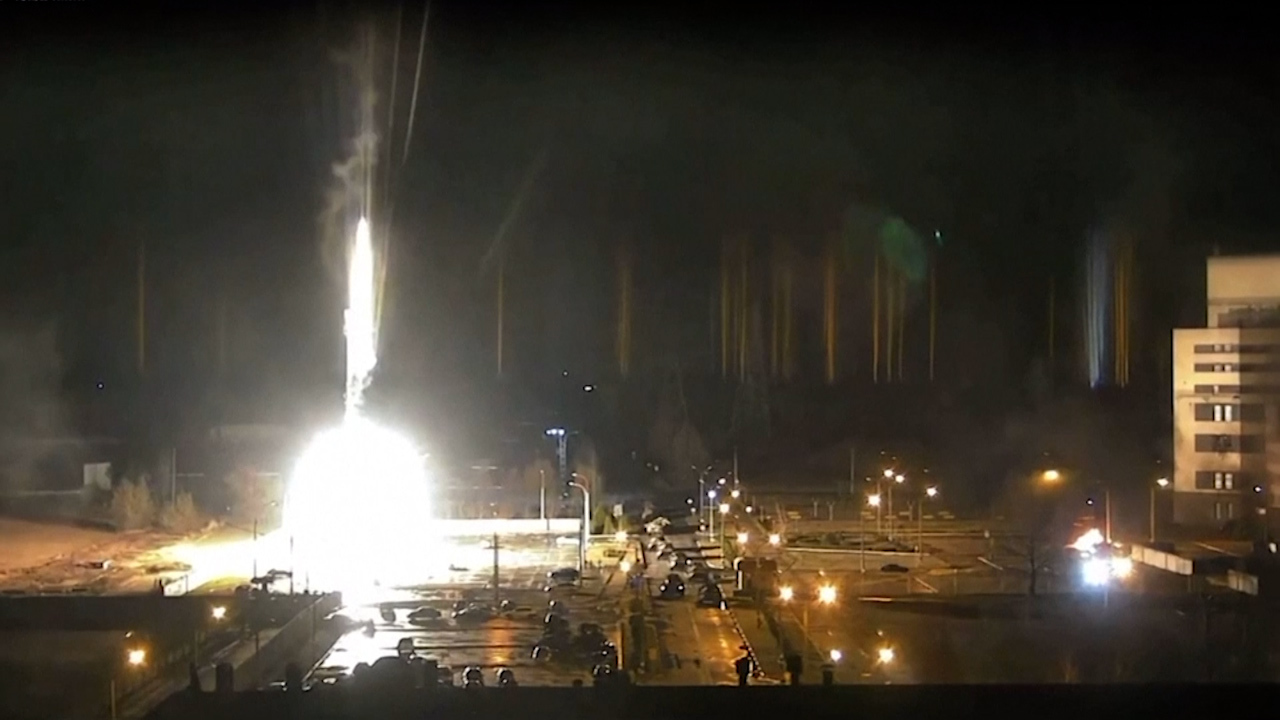
Russian troops are shelling Europe's largest nuclear power station in Ukraine.

Another danger at nuclear facilities are the pools where spent fuel rods are kept to be cooled, which are more vulnerable to shelling and which could cause the release of radioactive material.

Perhaps the biggest issue, however, is the plant's power supply, said Najmedin Meshkati, an engineering professor at the University of Southern California who has studied both the Chernobyl and Fukushima disasters, raising a concern also voiced by Wolfsthal and others.

The loss of off-site power could force the plant to rely on emergency diesel generators, which are highly unreliable and could fail or run out of fuel, causing a station blackout that would stop the water circulation needed to cool the spent fuel pool, he said.

"That is my big — biggest concern," he said.

David Fletcher, a University of Sydney professor in its School of Chemical and Biomolecular Engineering, who previously worked at UK Atomic Energy, noted that even shutting down the reactors would not help if the cooling system failed in such a way.

"The real concern is not a catastrophic explosion as happened at Chernobyl but damage to the cooling system which is required even when the reactor is shut down," he said in a statement.

"It was this type of damage that led to the Fukushima accident."

WHAT CONCERNS REMAIN?

Ukraine is heavily reliant on nuclear energy, with 15 reactors at four stations that provide about half the country's electricity.

In the wake of the attack on Zaporizhzhia, US President Joe Biden, British Prime Minister Boris Johnson and others called for an immediate end to the fighting there.
Following a conversation with Ukrainian Prime Minister Denys Shmyhal, IAEA Director Grossi appealed to all parties to "refrain from actions" that could put Ukraine's nuclear power plants in danger.

Shmyhal called on western nations to close the skies over the country's nuclear plants.

"It is a question of the security of the whole world!" he said in a statement.

Ukraine is also home to the former Chernobyl nuclear plant, where radioactivity is still leaking, which was taken by Russian forces in the opening of the invasion after a fierce battle with the Ukrainian national guards protecting the decommissioned facility.

In an appeal to the IAEA for help earlier this week, Ukrainian officials said that Chernobyl staff have been held by the Russian military without rotation and are exhausted.

Grossi earlier this week appealed to Russia to let the Chernobyl staff "do their job safely and effectively."

During fighting on the weekend, Russian fire also hit a radioactive waste disposal facility in Kyiv and a similar facility in Kharkiv.

Both contained low-level waste such as those produced through medical use, and no radioactive release has been reported, but Grossi said the incidents should serve as a warning.

"The two incidents highlight the risk that facilities with radioactive material may suffer damage during the armed conflict, with potentially severe consequences," he said.

James Acton, the co-director of the Nuclear Policy Program at the Carnegie Endowment for International Peace, said the simple key to keeping the facilities safe was to immediately end any military operations around them.
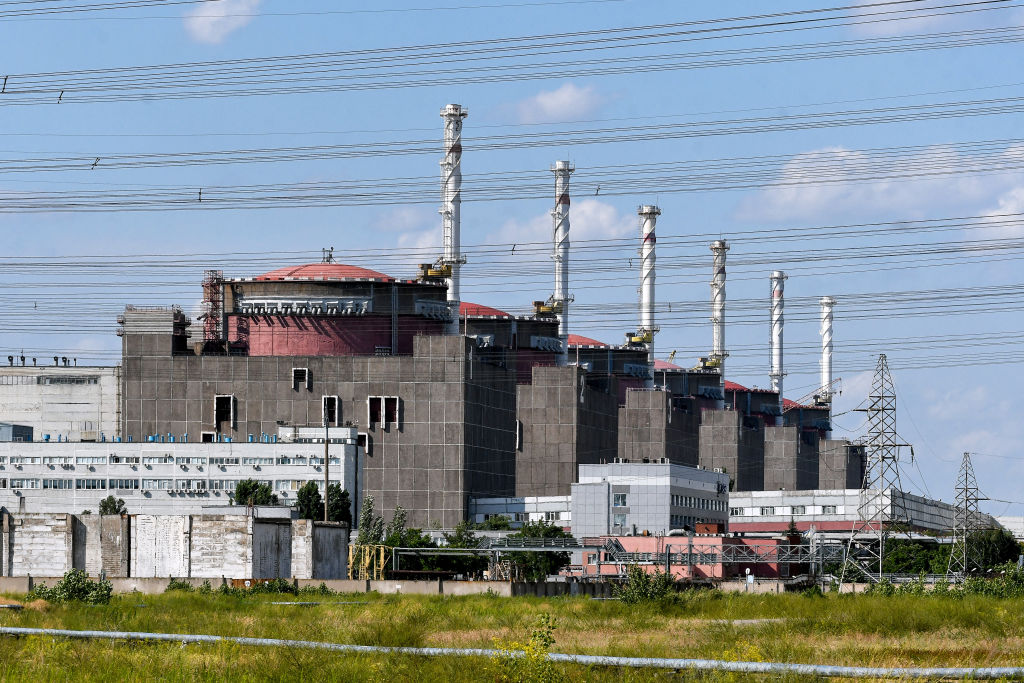
The Zaporizhzhia Nuclear Power Plant.

"Under normal circumstances, the likelihood of a reactor losing power and of the emergency diesel generators being damaged and of not being repaired adequately quickly is very, very small," Acton said.

"But in a war, all of these different failures that would have to happen for a reactor to become damaged and meltdown — the likelihood of all of those happening becomes much more likely than it does in peacetime."

Mitsuru Fukuda, a professor at Nihon University in Tokyo and expert on crisis management and security, said the Zaporizhzhia attack raises broader questions for all countries.

"Many of us did not expect a respected country's military would take such an outrageous step," he said.

"Now that (Russian President Vladimir) Putin has done it, not only Ukraine but the international community, including Japan, should reevaluate the risk of having nuclear plants as potential wartime targets."
US: Jamaican Woman Gets 14 Years for Drug Trafficking, Money Laundering

CNW- A Jamaican woman living in Florida will serve 14 years in prison for laundering money for an international cocaine ring that distributed the illegal drug by mail in Western Pennsylvania.

A US District Judge ordered the woman, 54-year-old Marcia Cunningham, to serve 178 months in federal prison for violations of money laundering and narcotics laws.

She had pleaded guilty to the charges during a previous hearing.

The Jamaican woman has been linked to a cocaine ring run by Hector Forbes of California.
Forbes who pleaded guilty in 2020 is awaiting sentencing.

According to the police, Forbes’ operations arranged for the importation of cocaine from Mexico. The cocaine was then distributed through the mail to customers.
Cunningham’s role was to launder the proceeds.

According to the criminal investigation division of the Internal Revenue Service, the Jamaican set up a post office box using fake identification and used dozens of bank accounts to take in drug money and then used it to buy cars, property, jewelry, and other items to support her lavish lifestyle.

She also arranged to use drug money to buy assets in Jamaica where she hoped to return to live.

Prosecutors said Cunningham is not a U.S. citizen and is likely to be deported to Jamaica after serving her prison term.

The post US: Jamaican Woman Gets 14 Years for Drug Trafficking, Money Laundering appeared first on The St Kitts Nevis Observer.

Jamaican Government to Name Highway in Honor of Harry Belafonte

CNW- The Jamaican government has announced plans to honor Jamaican-American Singer and Civil Rights Activist, Harry Belafonte, for his work as a humanitarian and activist across the diaspora.

In a message to mark Belafonte’s 95th birthday on March 1, Jamaica’s Prime Minister Andrew Holness announced that one of the country’s highways will be renamed in his honor.

“As we celebrate with Harry Belafonte his 95 years, the Government and people of Jamaica…. in this our 60th year of Independence… will name one of our highways after our Titan, in his honor and in recognition of the long road to freedom Harry Belafonte has traversed on behalf of our people,” the Prime Minister said.

– Advertisement –

He pointed out that Belafonte “is an icon whose pristine voice, soaring melodies, and music on the global stage, magically matched the rhythm and power of his stride in the march for equal rights, justice, and empowerment.

In saluting his 95 years, the Prime Minister said, “Harry Belafonte’s fierce defense of the dignity and integrity of our people has inspired us to make our own commitment to the struggle towards the fuller, mental freedom asserted by Garvey”.

Referring to Belafonte as a humanitarian and an activist, he said his unflinching stance for upliftment of the Black race, must be celebrated.

“His has been a constant voice against racial prejudice not only in the United States of America but in South Africa and anywhere in the world that injustice reared its ugly head,” he declared.

Prime Minister Holness also said that over the years, Belafonte “decried colonial oppression and has given a life of service to the campaign for the elimination of chronic poverty and disease, under-education, and economic hardships”.

He said the name “Harry Belafonte” is forever affectionately associated with uniting artists, philanthropists, and businessmen in the cause for African redemption. The very well-known USA for Africa was one of his initiatives.

“Harry Belafonte has walked with kings and presidents yet has never lost the common touch. From Jamaica to Rwanda to Kenya to Senegal, he has given voice to the voiceless and hope to the downtrodden,” Holness added.

Harry Belafonte was born in Harlem, New York, to Jamaican parents. From 1932 to 1940, he lived with one of his grandmothers in Jamaica, where he attended Wolmer’s Schools.

He launched his musical career in the late 1940s. His breakthrough album Calypso (1956) became the first LP in the world “to sell over 1 million copies within a year. It also earned him the title of “Calypso King”. Some of his well-known songs included the “Banana Boat Song” (listed as “Day-O” on the Calypso LP), and “Jamaica Farewell”.

Belafonte eventually began recording in different genres of music; and eventually, branched out into acting. Throughout his career, he was also involved in the fight for civil rights.

As one of Martin Luther King Jr.’s confidants, he provided financially for King’s family. During the 1963 Birmingham Campaign, he bailed King out of Birmingham City Jail and raised $50,000 to release other civil rights protesters. He also financed the 1961 Freedom Rides, supported voter registration drives, and helped to organize the 1963 March on Washington.

In 2018, Belafonte received Jamaica’s fourth highest award, the Order of Merit (OM) for his outstanding contribution in the field of music.

The post Jamaican Government to Name Highway in Honor of Harry Belafonte appeared first on The St Kitts Nevis Observer.

U.S. to Process Some Visas in Cuba After 4-Year Hiatus

HAVANA, March 3 (Reuters) – The U.S. Embassy in Havana announced on Thursday it would increase staffing and resume some visa processing in Cuba several years after the Trump administration slashed personnel at the facility following a spate of unexplained health incidents.

The top U.S. diplomat in Havana, Timothy Zuniga-Brown, made the announcement at a news conference, confirming a Reuters report from Monday. read more

Following the drawdown of staff in Havana in 2017, the Trump administration required Cubans to apply for visas in the U.S. embassy in Guyana, a costly trip that few on the island could afford.

Zuniga-Brown’s announcement stressed a “limited resumption of some immigrant visa services” in Havana. It added that Cuban immigrant visas will still be processed primarily in Guyana, while Havana offices will focus on other consular services and “limited emergency non-immigrant visa processing.”

The eventual deployment of additional consular officers to Havana, a result of President Joe Biden’s ongoing review of Cuba policy, will begin to address a more than four-year backlog of requests for immigration visas by Cubans with family in the United States.

It also marks a rare step by the Biden administration to ease restrictions on communist-led Cuba imposed by former Republican President Donald Trump, who rolled back the historic rapprochement overseen by his Democratic predecessor, Barack Obama.

Just prior to the announcement, the Cuban government issued a statement to Reuters slamming the Trump-era policy as unjustified and harmful to U.S-Cuba ties.

“Over five years, that decision has had very damaging consequences for the entire Cuban population, as well as for Americans,” said the statement signed by Ines Fors, head of U.S.-Cuba bilateral relations for Cuba’s Foreign Ministry.

The Cuban statement did not directly address the staffing announcement, and Zuniga-Brown did not provide a timeline or numbers for the increase in personnel.

Havana resident Maria de Lourdes Galban, a 35-year old doctor hoping to reunite her two young children with their father in the United States, said she had hoped for more.

“I expected a broader opening and it hurts me because I know that there are thousands of Cubans who are in the same situation and we have been waiting for many years,” she said.

Trump scaled back embassy staff and cut down on visa processing in 2017 after some embassy personnel in Havana became ill with what has become known as “Havana syndrome.” The unexplained illnesses first affected U.S. employees in the Cuban capital but later cropped up in other parts of the world.

The Cuban government has long denied any involvement or knowledge of the incidents.

POLITICAL FALLOUT

In addition to slashing visa processing, Trump restricted remittances to Cuba, scaled back flights to the island and increased hurtles for U.S. citizens seeking to travel to Cuba for anything other than family visits.

The U.S. Embassy on Thursday did not address those issues.

Biden, who served as Obama’s vice president, had promised during the 2020 election campaign against Trump to re-engage with Cuba’s government, and many in both countries expected he would roll back Trump-era restrictions.

The Biden administration instead slapped fresh sanctions on Cuban officials in response to Havana’s crackdown on protesters following widespread marches on the island in July.

Biden officials are mindful that any easing of restrictions on Cuba could lead to political fallout from conservative Cuban Americans, a key voting bloc in south Florida.

But the resumption of visa processing at the embassy is less likely to spur a serious political backlash since a number of Cuban-American lawmakers, both Democrats and Republicans, have backed the idea.

Olga Lidia Pérez, a 67-year old retired doctor in Havana who has waited four years to reunite with her daughters in Florida, said she was left with more questions than answers following the embassy’s announcement this week.

“I still don’t know whether to believe it or not because between Cuba and the United States you never know,” she said. “There is always uncertainty.”

Reporting by Dave Sherwood, additional reporting by Nelson Acosta in Havana and Matt Spetalnick and Patricia Zengerle in Washington; Editing by David Alire Garcia, Leslie Adler and Bill Berkrot

The post U.S. to Process Some Visas in Cuba After 4-Year Hiatus appeared first on The St Kitts Nevis Observer.

Canada Welcomes Ukrainian Refugees, Will Send Military Aid to Fight Russians

Canada's Prime Minister Justin Trudeau attends a news conference about the situation in Ukraine, in Ottawa

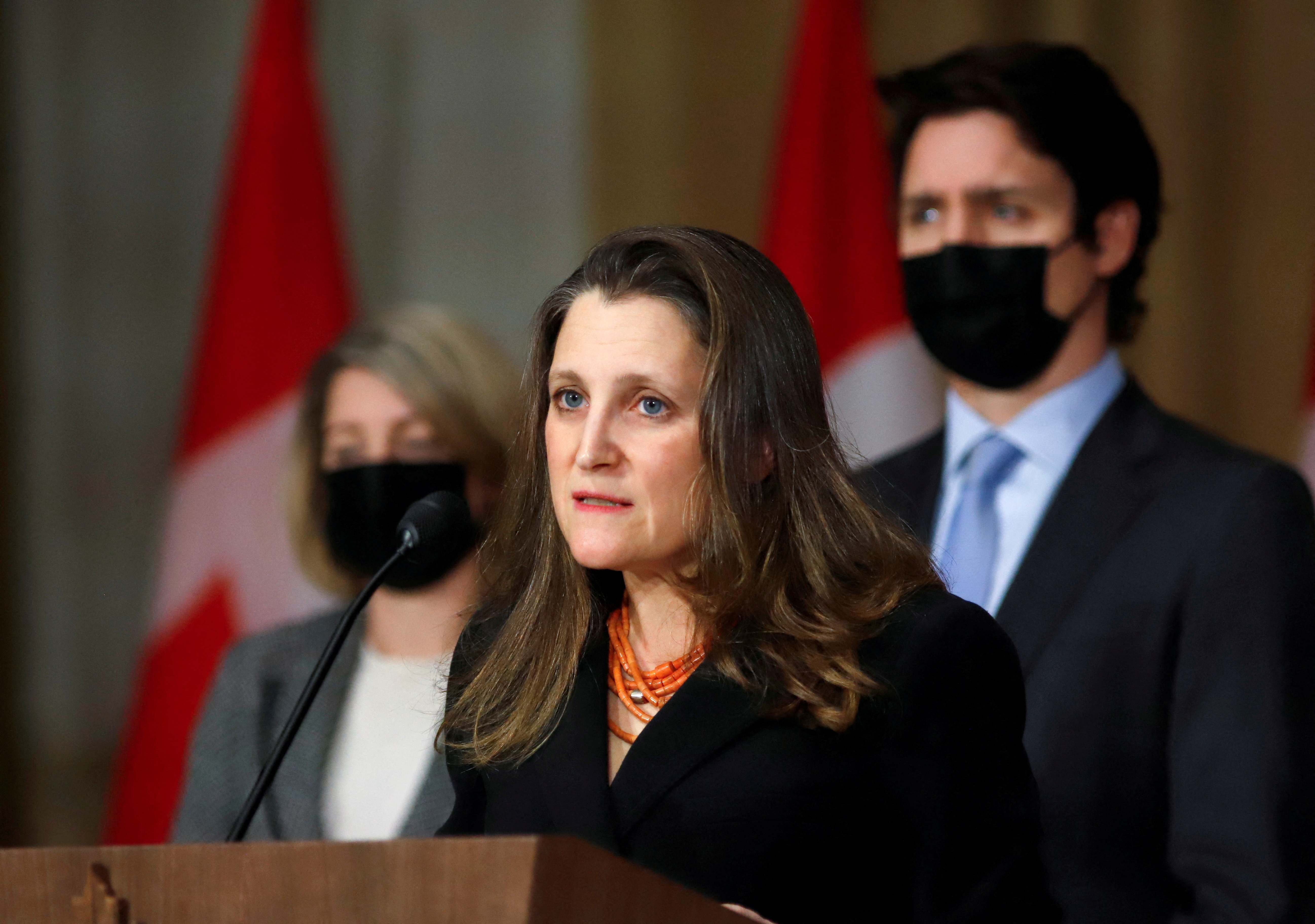
Canada’s Deputy Prime Minister and Minister of Finance Chrystia Freeland speaks at a news conference about the situation in Ukraine with Canada’s Prime Minister Justin Trudeau and Canada’s Minister of Foreign Affairs Melanie Joly, in Ottawa, Ontario, Canada, February 22, 2022. REUTERS/Patrick Doyle

March 3 (Reuters) – Canada will remove Russia and Belarus’s most favored nation status as trading partners, and will provide additional lethal aid to Ukraine, including rocket launchers and hand grenades, Canadian officials said Thursday.

The only other country that does not enjoy the most favored nation status with Canada is North Korea, and goods from Russia and Belarus will be subjected to a 35% tariff when imported into Canada, Finance Minister Chrystia Freeland said

“Simply put, this means that Russia and Belarus will no longer receive the benefits, particularly low tariffs that Canada offers to other countries that are fellow members of the WTO,” Freeland told reporters at a news conference.

Canada had about C$1.2 billion ($948 million) in imports from Russia and about C$23 million from Belarus in 2020, according to Statistics Canada.

The most favored nation principle is a part of the World Trade Organization’s (WTO) rules, and it prevents WTO members from favoring any one country with benefits like lower tariffs without giving all members the same standard

Moscow unleashed an all-out invasion of Ukraine on Feb. 24 that has prompted Canada, the European Union, United States and others to respond with strict financial sanctions on Russia. Sanctions have also been levied on Belarus, which has been used as a key staging point for the invasion.

Canada has closed airspace and ports to Russian vessels, sent lethal military aid to Ukraine, curbed oil imports, and asked the International Criminal Court (ICC) to probe alleged war crimes by Russian forces.

“The G7 has already imposed the strongest sanctions ever inflicted on a major economy on Russia, and more will follow in the days to come,” Freeland said.

Defense Minister Anita Anand, speaking at the same news conference, said Canada intends to supply more lethal aid to Ukraine, including up to 4,500 M72 rocket launchers and up to 7,500 hand grenades from the Canadian Armed Forces’ existing stockpiles.

Prime Minister Justin Trudeau said Canada, along with close partners, was calling for the suspension of Russia from the global police agency Interpol.

“We’re supporting this because we believe that international law enforcement cooperation depends on a collective commitment to the Universal Declaration on Human Rights and mutual respect between Interpol members,” he said at a separate event.

Thousands are reported to have died or been injured and more than a million people have fled Ukraine amid the biggest attack on a European state since 1945. read more

Canada also announced it would create two separate immigration streams for Ukrainians, one that allows for a temporary stay and one that is permanent.

“Canada is ready to welcome Ukrainians fleeing (Russian President) Vladimir Putin’s war, and there is no limit to the number of applications that we are going to be willing to accept,” Canada’s Immigration Minister Sean Fraser said.

($1 = 1.2659 Canadian dollars)

Reporting by Ismail Shakil in Bengaluru and Steve Scherer in Ottawa; Editing by Chizu Nomiyama and Jonathan Oatis

The post Canada Welcomes Ukrainian Refugees, Will Send Military Aid to Fight Russians appeared first on The St Kitts Nevis Observer.

Russian attack on Ukrainian nuclear plant 'catastrophic', top official says

An attack on the largest nuclear power plant in Europe has been labelled "catastrophic" by Ukraine's Charge d'Affaires in Australia.

"The consequences of such massive explosion, especially taking into account that there are five more nuclear reactors standing nearby that very reactor that is under fire, and Russian tanks continue to shell, would be catastrophic for the entire European civilisation," Volodymyr Shalkivskyi exclusively told 9News hours after first reports of the incident.

According to Ukrainian officials, the fire broke out at 2.30am, local time (11.30am AEDT), following shelling by Russian troops.

READ MORE: Fire at nuclear plant put out after Russian attack

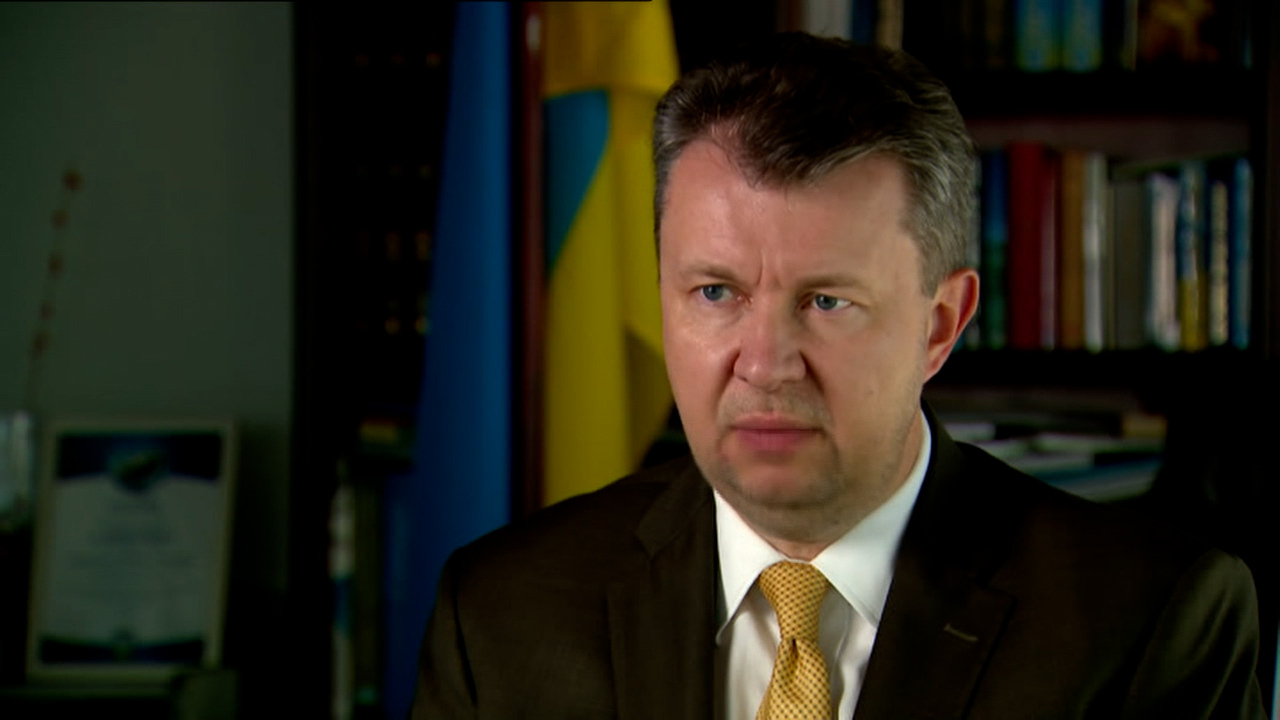
Ukraine's Charge d'Affaires in Australia, Volodymyr Shalkivskyi.

Ukraine's foreign minister Dmytro Kuleba confirmed the reports on Twitter.

"(The) Russian army is firing from all sides upon Zaporizhzhia nuclear power plant," he tweeted.

"Fire has already broke out. If it blows up, it will be 10 times larger than Chernobyl. Russians must immediately cease the fire, allow firefighters, establish a security zone!"

Mr Shalkivskyi echoed the foreign minister's fears.

"I can remind that Chernobyl, that happened in 1986 near Kyiv, was just one reactor – in the Zaporizhzhia, we have six nuclear reactors," he said.

READ MORE: Is stuck convoy in Ukraine a setback for Russia?

Russian troops are shelling Europe's largest nuclear power station in Ukraine.

Mr Shalkivskyi said due to continued shelling by Russian troops, firefighters were unable to reach the plant.

"This is the first time in world history that one country deliberately is trying to attack and create a nuclear accident on the territory of another country," he said.

"Of course, it's of very grave concern, very serious concern for the entirety of Europe.

"This is just a clear example of how far Mr Putin himself can go in order to achieve his goals.

"They have to change their tactics and now we witness he is threatening with destruction over entire territory of Ukraine in order to succeed in his position, in his plan to show the world how powerful he is.

"Under such circumstances, it leaves us really small room for negotiations.

"Kremlin would like to destroy, to kill us. How can we reach an agreement under such circumstances?"

https://twitter.com/rachbaxter9/status/1499606555775627268

Mr Shalkivskyi said Ukrainian President Volodymyr Zelenskyy has spoken with US President Joe Biden and UK Prime Minister Boris Johnson about the unfolding situation, as the country calls on its Western allies for urgent help.

"He also spoke to the head of the (International) Atomic Energy Agency," Mr Shalkivskyi said.

"We have personnel, energy specialists in place.

"Some of them are actually wounded and we do not have possibility to send emergencies to that place because the active shelling continues.

"We call for help to the international community to intervene."

Ukrainian authorities said the fire was extinguished at 3.20pm (AEDT).

World Tops 6m Covid Deaths, US to Share VIrus Tech, World Covid Stats, More

Biden officials shift toward new virus phase

A discarded face mask lies in the street in San Francisco

© Associated Press/Jeff Chiu

The Biden administration has made a marked shift toward a new phase where COVID-19 is no longer treated as a crisis, rolling out a series of new programs aimed at increasing access to treatment and boosting vaccine capacity for the future.

Why the change: The change comes amid major strides in recent weeks including new case counts that have plummeted from 800,000 per day in January to 60,000, according to a New York Times tracker.

President Biden sought to highlight this shift in his State of the Union address Tuesday, saying the virus “no longer need control our lives.” Mask mandates in the House chamber had been lifted just before his address to a joint session of Congress.

But the programs the administration aims to roll out require new funding from Congress, which could be held up by GOP lawmakers who don’t want to allocate more money toward fighting the virus.

There is also the possibility of a new variant that may evade the protection of vaccines that, for the third time in less than a year, again hangs as a threat over recent progress.

White House asks Congress for $22.5B

Deputy OMB director nominee Shalanda Young

© Greg Nash

The Biden administration is requesting $22.5 billion from Congress for the COVID-19 response, setting up a tussle with Republican lawmakers who have resisted new funding.

Where the funds would go: In a letter to Congress dated Wednesday, the White House said the additional funds are crucial for efforts around vaccines, treatments and testing. In addition, $5 billion of the funding will go towards the global COVID-19 response, including vaccinating other countries, which is key to helping stop new variants from arising.

“Without additional resources, we won’t be able to secure the treatments, vaccines, and tests Americans need in coming months and fight future variants,” wrote acting Office of Management and Budget Director Shalanda Young. “And critical COVID response efforts – such as free community testing sites and testing, treatment, and vaccination coverage for uninsured individuals – will end this spring.”

The White House is urging that the funding be included in a broader government funding bill that faces a March 11 deadline.

GOP resistance: Passing the funding could be a challenge. Republicans have pushed back on new COVID-19 funds, pointing to the billions already provided for the virus response.

Sen. Mitt Romney (R-Utah) on Wednesday led 35 other Republican senators, including Minority Leader Mitch McConnell (Ky.), in a letter telling the administration they want a “full accounting” of money already spent “before we would consider” new COVID-19 funds.

=======================================================

US TO SHARE COVID TECHNOLOGY WITH  WORLD

The Biden administration is planning to share government-backed COVID-19 technology with the World Health Organization (WHO) to help low- and middle-income countries access crucial medicines.

During a press briefing on Thursday, Health and Human Service Secretary Xavier Becerra and chief White House medical adviser Anthony Fauci both confirmed that the U.S. was looking into licensing COVID-19 medical technologies owned by the National Institute of Health (NIH) to the WHO’s COVID-19 Technology Access pool (C-TAP).

Becerra and Fauci were unable to provide specific details on this new policy.

According to Fauci, the details of this plan are still being “ironed out.” The technologies will be sub-licensed through the Medicines Patent Pool, a Switzerland-based international organization aimed at enhancing access to medicines for low and middle-income countries.

“We’re still in early stages,” said Becerra. “This latest announcement is an effort to try to let low and middle-income countries know that we want them to have capacities as well.”

=================================================

WORLD COVID STATS

Coronavirus Cases:

442,525,364

Deaths:

6,003,031

Recovered:

375,467,509
Highlighted in green
= all cases have recovered from the infection
Highlighted in grey
= all cases have had an outcome (there are no active cases)

[back to top ↑]

Latest News

March 4 (GMT)

Updates

  • 224 new cases and 2 new deaths in Laos [source]
  • 89,174 new cases and 776 new deaths in Russia [source]
  • 70,958 new cases and 257 new deaths in Japan [source]
  • 10,558 new cases and 461 new deaths in Mexico [source]


The post World Tops 6m Covid Deaths, US to Share VIrus Tech, World Covid Stats, More appeared first on The St Kitts Nevis Observer.

Seniors Recreational Group Meetings to Resume after 11-Month Hiatus

NIA CHARLESTOWN NEVIS — The Senior Citizens Division, in the Ministry of Social Development on Nevis, is set to resume its seniors group meetings from Monday, March 07, 2022.

Ms. Trudy Prentice, Coordinator of the division, said on March 03, 2022, that the resumption of meetings comes after COVID-19 restrictions halted the programme in 2021.

“The recreational groups centre meetings will be resuming on Monday, March 07, 2022. However, the days for meetings for the centre groups have been changed.

“On Monday the St. James’ group will meet at the Butlers Community Centre. On Tuesday, St. Paul’s and St. Thomas’ groups will meet at Cotton Ground Community Centre. There will be no meetings on Wednesdays from now going forward. On Thursday, St. George’s group will meet at Hanley’s Road Community Centre; and on Friday, St. John’s group will meet at the Cox Gazebo. Please note, all meetings begin at 10 a.m. weekly,” she said.

Ms. Prentice noted that although they had not met for the past 11 months, due to the increasing number of coronavirus disease cases at the time, the seniors were not forgotten.

 “During that period our community caregivers they kept on going out. They kept on visiting the seniors to check up on them, for emotional support, for psychological support and to sort of fulfil their daily needs in areas that may be necessary,” she said.

In addition, Ms. Prentice noted that they did observe Seniors Month with reduced activities which included the “You are Not Forgotten Awards” for those who the staff were unable to access for different reasons including their health or family situations.

The unit also delivered care packages to seniors throughout the island in February.

“We showed love to our seniors in the month of love, February 2022. We did some care packages to let our seniors know that we did not forget them and that we love them and we miss them…

“We would have distributed throughout the island over 100 packages to seniors of our recreational group. We went from parish to parish daily during the entire week of February 24th to February 26th2022,” she said.


The post Seniors Recreational Group Meetings to Resume after 11-Month Hiatus appeared first on The St Kitts Nevis Observer.

Caregivers Registry To Be Launched on Nevis

NIA CHARLESTOWN NEVIS  — Persons on Nevis wishing to care for seniors on the island will soon have the opportunity to register in a new programme designed by the Senior Services Division in the Nevis Island Administration’s (NIA) Department of Social Services.

Ms. Trudy Prentice, Coordinator at the division said on March 03, 2022, that the registry will be launched shortly.

“We will be launching our Caregivers Registry in March 2022, and just to let you know, the Caregivers Registry is a new programme by the Social Services Seniors Division where we are trying to help families find persons who are qualified to care for their loved ones.

“Mind you, the Care Givers Registry does not qualify anyone to work with the Social Services Seniors Division. It is a programme to formalise persons who are interested in caring for the elderly. So in case someone calls and needs someone to care for their mother, their father and they don’t know where to turn to, they call us and we in turn would call on you as a person who is seeking employment.” she said.

Ms. Prentice stated categorically that the programme is only being facilitated by the department, and successful registrants will not be employed by the NIA.

“Although the forms will be filled up by the Social Services Department, the family in turn will do their own due check on the persons who they will be employing.

“The persons will not be paid, and I repeat, the persons will not be paid by the NIA but by the persons who are employing them. They will call you; they will get information on you; they will work out payment conditions with you and they will be the one to be paying you not the Social services Seniors Division, not the government,” she said.


The post Caregivers Registry To Be Launched on Nevis appeared first on The St Kitts Nevis Observer.

Russia takes control of largest nuclear power plant in Europe after fire

Russia has taken control of the Zaporizhzhia nuclear power plant hours after a fire broke out at the facility following Russian shelling.

According to Reuters, local Ukrainian authorities said on social media that "operational personnel are monitoring the condition of power units".

Earlier, the fire that threatened potential disaster at Ukraine's — and Europe's — largest nuclear power plant following an attack by Russian troops was extinguished.

LIVE UPDATES: Pentagon official praises Ukraine forces

Several dozen firefighters worked to put out the blaze, which started in a training building outside the main reactor complex of the Zaporizhzhia nuclear power plant, Ukraine's State Emergency Services said in a statement.

"There are no dead or injured," the statement added.

The blaze was extinguished at 3.20pm (6.20am local time), about an hour after the agency confirmed firefighters were on the scene.

Background radiation levels were normal and fighting had temporarily ceased, authorities said earlier.

In a Facebook post earlier, Ukrainian President Volodymyr Zelenskyy accused Russia of intentionally firing at the power plant.

"Russian tanks are shooting at the atomic blocks equipped with thermal imagers. They know what they are shooting at. They've been preparing for this (attack)," Mr Zelenskyy said in the post, adding "our guys are keeping the atomic power station secure".

The very fact Russia launched an attack at the plant is itself an extremely dangerous act and could cause a potential catastrophe, he said, accusing the invading forces of engaging in "nuclear terror".

"No country besides Russia has ever fired upon an atomic power plant's reactors. The first time, the first time in history," he said, urging European leaders to "wake up now" and stop Russian forces "before this becomes a nuclear disaster".

He also said he feared an explosion that would be "the end for everyone. The end for Europe. The evacuation of Europe."

READ MORE: France warns 'worst yet to come' in Ukraine conflict

Ukrainian President Volodymyr Zelenskyy

"Only urgent action by Europe can stop the Russian troops," he said.

"Do not allow the death of Europe from a catastrophe at a nuclear power station."

The assault on the station triggered a phone call between US President Joe Biden and Mr Zelenskyy, and the US Department of Energy activated its nuclear incident response team as a precaution.

The attack on the eastern city of Enerhodar and its Zaporizhzhia nuclear plant unfolded as the invasion entered its second week and another round of talks between the two sides yielded a tentative agreement to set up safe corridors to evacuate citizens and deliver humanitarian aid.

Nuclear plant spokesman Andriy Tuz told Ukrainian television that shells were falling directly on the facility and had set fire to one of its six reactors.

That reactor is under renovation and not operating, but there is nuclear fuel inside, he said.

Ukrainian Foreign Minister Dmytro Kuleba tweeted a plea to the Russians to stop the assault and allow fire teams inside.

READ MORE: Is stuck convoy in Ukraine a setback for Russia?

"We demand that they stop the heavy weapons fire," Mr Tuz said in a video statement.

"There is a real threat of nuclear danger in the biggest atomic energy station in Europe."

The assault renewed fears that the invasion could damage one of Ukraine's 15 nuclear reactors and trigger another emergency like the 1986 Chernobyl accident, the world's worst nuclear disaster.

US Energy Secretary Jennifer Granholm tweeted the Zaporizhzhia plant's reactors were protected by robust containment structures and were being safely shut down.

Most experts have seen saw nothing to indicate an impending disaster.

The International Atomic Energy Agency said the fire had not affected essential equipment and that Ukraine's nuclear regulator reported no change in radiation levels.

The American Nuclear Society concurred, saying that the latest radiation levels remained within natural background levels.

"The real threat to Ukrainian lives continues to be the violent invasion and bombing of their country," the group said in a statement.

READ MORE: Ukrainians urged to wage 'guerilla war' as Russian forces advance

Jon Wolfsthal, who served during the Obama administration as the senior director for arms control and nonproliferation at the National Security Council, said the plant's reactors have thick concrete containment domes that should protect them from tank and artillery fire.

But he too was concerned about a potential loss of power at the plant, which could imperil its ability to keep the nuclear fuel cool.

The mayor of Enerhodar said earlier that Ukrainian forces were battling Russian troops on the city's outskirts.

Video showed flames and black smoke rising above the city of more than 50,000, with people streaming past wrecked cars, just a day after the UN atomic watchdog agency expressed grave concern that the fighting could cause accidental damage to Ukraine's 15 nuclear reactors.

Prior to the shelling, the Ukrainian state atomic energy company reported that a Russian military column was heading toward the nuclear plant.

Loud shots and rocket fire were heard at the site.

READ MORE: White House announces new sanctions on Russian oligarchs

"Many young men in athletic clothes and armed with Kalashnikovs have come into the city. They are breaking down doors and trying to get into the apartments of local residents," the statement from Energoatom said.

Later, a live-streamed security camera linked from the homepage of the Zaporizhzhia plant showed what appeared to be armoured vehicles rolling into the facility's parking lot and shining spotlights on the building where the camera was mounted.

Then there were what appeared to be muzzle flashes from vehicles, followed by nearly simultaneous explosions in surrounding buildings.

Smoke rose into the frame and drifted away.