Category Archives: headline

SV&G PM, Other Caribbean Leaders Call for End of Ukraine War

THE PRIME Minister of St Vincent and the Grenadines has urged Russian President Vladimir Putin to end the war with Ukraine.

Dr Ralph Gonsalves released the contents of a private letter he wrote to the Russian leader and said he was “deeply disturbed” by Russia’s “special military operation”.

In his letter, addressing President Putin, Mr Gonsalves said: “The “special military operation” will undoubtedly add much suffering to ordinary folks the world over, especially those still finding it very challenging to handle the pandemic, climate change and natural disasters.

“The people of Saint Vincent and the Grenadines and the Caribbean will undoubtedly be affected adversely.

“Please, let us give peace and diplomacy a real chance to succeed.

“In our view, the nobility of peace if far preferable than an ignoble military venture.

“I am aware that some western countries are engaged in naked hypocrisy and double-speak; their history of neo-colonialism, imperialism and interventionist adventurism undermines their self-righteous proclamationHe added: “At a personal level, as a friend of the Russian Federation, I am urging you very strongly to cease “the special military operation” in Ukraine.”

Mr Gonsalves concluded: “Let us go forth in peace, security, and prosperity for all. Please do not disappoint me.”

The prime minister recently said there are seven or eight Vincentian students in Russia and confirmed that St Vincent’s chief personnel officer (CPO) has spoken to the students and they remain in close contact.

In recent weeks, several Caribbean leaders have spoken out against Russia’s military action in Ukraine.

“Let us go forth in peace, security, and prosperity for all. Please do not disappoint me.”

Dr Ralph Gonsalves

In a statement on Thursday, CARICOM said it “strongly condemns the military attacks and invasion of Ukraine by The Russian Federation and calls for the immediate and complete withdrawal of the military presence and cessation of any further actions that may intensify the current perilous situation in that country”.

It continued: “The hostilities against Ukraine go counter to the principles of respect for sovereignty, territorial integrity, non-interference in the internal affairs of another sovereign state and the prohibition on the threat or use of force, and the peaceful resolution of disputes, which are the bedrock of this community.

“CARICOM maintains that the principles of universal respect and adherence to these norms and principles of international law are fundamental to the maintenance of the international system and global peace and security. CARICOM calls on all parties involved to urgently embark on intensified diplomatic dialogue to immediately de-escalate hostilities and work towards sustainable peace.”

The prime minister of Barbados Mia Mottley said that any unrest in Ukraine and Russia could impact the cost of food and fuel.

Ms Mottley announced the Ministry of Agriculture, Food and Nutritional Security had started to boost production across the island as a precaution.

Other islands across the Caribbean region are also preparing for significant price increases to essential household items in the coming weeks and months.

The post SV&G PM, Other Caribbean Leaders Call for End of Ukraine War appeared first on The St Kitts Nevis Observer.

World View: 1 Million Ukrainian Refugees, Finland, Sweden Warm to NATO Membership, Claim Trump Committed Crime, More

Alternate text

March 03, 2022

Today’s Headlines

I'm an image

KYIV, Ukraine (AP) — More than 1 million people have fled Ukraine following Russia’s invasion, in the swiftest refugee exodus this century, the United Nations said Thursday,…Read More

HELSINKI (AP) — Through the Cold War and the decades since, nothing could persuade Finns and Swedes…Read More

I'm an image

WASHINGTON (AP) — The House Committee investigating the U.S. Capitol insurrection said Wednesday…Rea

Editor Selections

LONDON (AP) — Auto shipments stopped, beer stopped flowing, cargo ships dropped port calls and oil…Read More

I'm an image

The latest developments on the Russia-Ukraine war: COPENHAGEN, Denmark — A Hercules C130 transport…Read More

I'm an image

AP Photos: Day 7, Ukrainians feeling weight of war

In village streets, city basements and train stations, the faces of Ukrainians reflected the steep…Read More

I'm an image

Cross Section

In a stunning reversal, Russian and Belarusian athletes have been banned from the Winter Paralympic…Read More

I'm an image

INGLEWOOD, Calif. (AP) — Olivia Rodrigo praised prior female songwriters and music artists for…Read More

I'm an image

LOS ANGELES (AP) — An estimated 38.2 million TV viewers watched President Joe Biden’s State of the…Read More

The post World View: 1 Million Ukrainian Refugees, Finland, Sweden Warm to NATO Membership, Claim Trump Committed Crime, More appeared first on The St Kitts Nevis Observer.

US New Covid Fight Plan, Virus Decreasing Globally, Beware of Fake Tests, Ukraine Health Crisis

WH unveils next phase of COVID-19 fight


© AP.

The White House on Wednesday unveiled a plan for fighting COVID-19 in its new phase, with the virus moving from a crisis to a lower-level risk that does not dominate daily life.

The plan comes as the omicron wave has declined and many are eager to turn the page on the pandemic. President Biden in his State of the Union on Tuesday night said COVID-19 “no longer need control our lives” in this “new moment.”

What’s included: The 96-page plan will require new funding from Congress, the White House said, though there are not specific dollar amounts for each item. Ahead of a March 11 deadline for funding the government, the White House recently informally outlined the need for $30 billion focused on domestic needs and $5 billion for global vaccinations.

“To fully execute on this plan requires Congress doing its part to invest in tools that work,” the document states. “This plan lays out the roadmap to help us fight COVID-19 in the future as we move America from crisis to a time when COVID-19 does not disrupt our daily lives and is something we prevent, protect against, and treat.”

The risk of a new variant that upends progress remains a threat, and the plan calls for increased surveillance and data collection aimed at monitoring for new variants.

Read more here.

COVID-19 cases, deaths continue global slide


© Associated Press/Charles Krupa

COVID-19 cases and deaths are continuing to decline worldwide, according to data from the World Health Organization (WHO), The Associated Press reports.

Global cases of the virus went down 16 percent in the past week and deaths fell by 10 percent, according to the WHO’s data. The drop in COVID-19 deaths first began to be seen worldwide last week, and the WHO data shows that decline is continuing.

However: The WHO still reported there were approximately 10 million new cases of COVID-19 reported globally in the past week, as well as 60,000 deaths, the AP reports.

In the Western Pacific region, coronavirus cases and deaths increased, making it the only region in the world to see an upward trend in COVID-19, along with a 22 percent increase in deaths caused by the virus, the news outlet noted.

In addition to the global COVID-19 decline, the delta variant has almost entirely been taken over by the omicron variant, according to the WHO. Based on the sequenced viruses worldwide, 99.5 percent of COVID-19 cases have been the omicron variant, while only 0.3 percent of cases have been the delta variant, according to the AP. #

================================================

FDA WARNS OF POSSIBLE FALSE RESULTS FROM UNAUTHORIZED COVID-19 TESTS

The Food and Drug Administration (FDA) on Tuesday named three unauthorized rapid COVID-19 tests that it says people should not use due to the risk of false results.

The FDA instructed people to not use the Celltrion DiaTrust COVID-19 Ag Rapid Test, the SD Biosensor Inc. STANDARD Q COVID-19 Ag Home Test and the Flowflex SARS-CoV-2 Antigen Rapid Test (Self-Testing).

“The FDA is concerned about the risk of false results when using this unauthorized test,” said the agency.

All three tests work through the use of a nasal swab. The agency has recommended that healthcare providers and  testing program organizers retest patients who have used any of these unauthorized tests less than two weeks ago.

All three companies have issued recalls for these tests. At least 162,000 unauthorized tests from Celltrion were distributed in the U.S. Two other COVID-19 tests from Celltrion have been authorized by the FDA: the DiaTrust COVID-19 Ag Home Test and the DiaTrust COVID-19 Ag Rapid Test.

===========================================

WHO WARNS OF ESCALATING HEALTH CRISIS IN UKRAINE

The World Health Organization (WHO) said an initial shipment of medical aid for Ukraine will arrive in Poland on Thursday as the agency cautioned of an intensified health crisis in the country amid the Russia’s invasion.

WHO Director-General Tedros Adhanom Ghebreyesus made the announcement in a media briefing on Wednesday, saying the delivery would include several tons of trauma care and emergency surgery supplies to meet the needs of around 150,000 people.

Tedros noted that the WHO supplied hospitals in Ukraine with resources prior to the conflict, but said its resources in Kiv have been rendered inaccessible.

“There is an urgent need to establish a corridor to ensure humanitarian workers and supplies have safe and continuous access to reach people in need,” Tedros said, though it was not clear how exactly supplies would be distributed to Ukrainians.

Tedro also said the WHO was “deeply concerned” about attacks on health facilities and health workers.

“The sanctity and neutrality of healthcare including of health workers, patients, supplies, transport and facilities and the right to safe access to care must be respected and protected,” Tedros added.

The post US New Covid Fight Plan, Virus Decreasing Globally, Beware of Fake Tests, Ukraine Health Crisis appeared first on The St Kitts Nevis Observer.

Cuba: Interrogated, Threatened for Delivering Flowers to Ukrainian Embassy

I

14ymedio, Havana, 27 February 2022 — Cuban Pablo Enrique was detained on Saturday by State Security for leaving flowers at the Ukrainian Embassy in Havana, in solidarity with the country facing a Russian invasion.

As confirmed to this daily, he was taken to the Seventh Police Unit of the National Revolutionary Police, where he was met by three agents. There, he received, “many threats” and a second warning letter. “They are sick with hate,” declared Enrique, who introduces himself as a Christian and a human rights activist.

“Upon my arrival, the Sepsa Guards [Specialized Protection Services, S.A.] who provide security to diplomatic headquarters did not allow me to move,” recounted Enrique himself on his Twitter account as he neared the Ukrainian diplomatic headquarters, located on Fifth Avenue, in the Miramar neighborhood of Havana.

There, he stated that diplomat Iryna Bilyk, third secretary of the Ukrainian Consulate, had to come out and escort him, “as they did not allow me to hang (neither on the fence nor to place on the floor, nor even on a tree in front of the headquarters) a small bouquet of roses I took as a show of solidarity.” The flowers, he concluded with an image, “reached their final destination, and are now within the diplomatic headquarters.”

While the Cuban Government has aligned itself with Russia and has blamed the war on the United States and NATO, civic organizations and everyday Cubans have shown their support for Ukraine.

On Thursday, a group of activists issued a public declaration in solidarity with the Ukrainian people, which can be signed by anyone who desires, to date has received 300 signatures.

Promoted by Giselle González, Claudio Gaitán, Fernando Almeyda, Leo Fernández, Saily González and Magdiel Jorge Castro, the text breaks from the regime, condemning “an imperialist war that seeks to further destabilize a country which has the right to self-determination.”

Family members of July 11th prisoners also came out in favor of Ukraine recently. Pedro López, whose daughter-in-law’s brother, Andy García Lorenzo, was sentenced to seven years in prison in Santa Clara, declared on his social media that he’d just called the Ukrainian embassy in Cuba “to show our family’s solidarity with the people of Ukraine and to make clear that the cowardly position of the Cuban Government does not represent the sentiment of our beautiful, peace-loving people.”

In his post, he also published the phone numbers of the diplomatic headquarters and asked for freedom for García Lorenzo and the rest of the political prisoners.

In charge of Ukrainian business in Cuba, Oleksandr Kalinchuk on Friday had requested that Cubans take to the street to show their support for Ukraine. “We can change the position of the Cuban Government, we can change the joint situation,” he declared on AmericaTV.

The post Cuba: Interrogated, Threatened for Delivering Flowers to Ukrainian Embassy appeared first on The St Kitts Nevis Observer.

Ukraine: The Limits of Power in a Nuclear Standoff

by Dan Ehrlich


Ukraine has asked NATO to establish a ‘no fly zone’ over the country. But this was ruled out because it could result in shooting down Russian aircraft and escalating the conflict beyond Ukraine.

In the nuclear superpower age nations least likely to go to war are those with most to lose. Nations with less to lose are more likely to wage war. That’s why Ukraine stands alone. And powerful NATO has been embarrassed by its non-military response to this unprovoked invasion.

The wealthy western nations have too much loss if they challenge Russia militarily. And Vlad Putin knows this.

Yet, in a larger context, what if Russia invaded a NATO member? What then? Putin’s war has revealed all defense alliances and treaties are toothless when military challenges are needed in confronting a nuclear power such as Russia.

I have to look back to the mid 1930s when Italy invaded Ethiopia and its emperor Hailie Selassie pleading in vain with the League of Nations for help. No developed nation wanted a war with Italy over a distant African nation.

Yet, when Germany invaded Poland in 1939, the UK was quick to declare war against Hitler. This didn’t stop the invasion and for several months the allies did little against Germany.

But that was in a pre nuclear world. When dealing with a dictator such as Putin, who knows the fear factor of nuclear war among western nations, he feels he can do what he wants with impunity, feeling assured no nation or alliance will call his bluff.

Yes, NATO is happy its united in slapping all manner of sanctions on Russia. And sports events are being cancelled here and there. But this won’t stop Putin’s war. He’s driven to knobble Ukraine, whatever that takes. And all the sanctions in the world will mean little to him as long they don’t losen his crip on power.

As for Ukraine, its best hope is a long drawn out, yet devastating conflict that will inflict heavy loses on the Russian military. What Putin doesn’t want is another Afghanistan, where the sight of Russian troops coming back in body bags, forced its exit from that country.

Yet, on a wider level, the reluctance of NATO to challenge Russia militarily in Ukraine, poses the question what good is such an alliance if its not willing to back up its rhetoric. Can Russia, one by one, invade its former Warsaw Pact member nations, with only outrage voiced by the West?

As long as Russia, the world’s largest country, remains a rogue nation, with the autocratic leadership of Putin, he will be calling the shots. And we may have to live with it.

Aside from wanting to have Russia respected as a world superpower, Putin, as with Soviet leaders before him, is obsessed with a threat from the West, from NATO. His pretext for invading Ukraine is to neutralize the security threat it poses to his country.

A Security threat from NATO? It’s a defensive alliance…When has NATO ever threatened to attack Russia? In Putin’s mind, NATO is a threat to Russia by virtue of US missiles aimed at his country, even for defense.

This brings us to the key aspect of the Cold War that Putin wants to revive, the belief that the West wants to subvert and control Russia. It’s a belief entrenched before and after WW2 which mandated keeping the West at arms length from its borders. This was the main function of the Warsaw Pact nations bordering Russia.

Yet, from the Russian perspective there was good reason for this. Most Americans and Brits are ignorant of the fact that the Cold War was a western construct.

The US and UK were so fearful that the 1917 Bolshevik revolution would spread to their workforces, they made a pariah nation out of revolutionary Russia. All but forgotten in the West was the disastrous Allied invasion of the nascent Soviet Union in 1918 designed to assist anti communist forces in overthrowing the Soviets.

The UK, France, US and several other nations sent upwards of 100,000 troops to support the White Russians Against the Reds. The operation was a disaster. Yet the memory of that operation, forgotten in the West, is very much a part of vivid Russian history.

One historian wrote: “The consequences of the expedition “were to poison East-West relations forever after, to contribute significantly to the origins of World War II and the later ‘Cold War,’ and to fix patterns of suspicion and hatred on both sides which even today threaten worse catastrophes in time to come.” For Soviet leaders, the operation was proof that Western powers were keen to destroy the Soviet government if they had the opportunity to do so.”

This is political dogma for Putin and a prime reason for his Ukraine invasion.

When Mikail Gorbachev effectively ended the Cold War in 1990,there was hope Russia might come in from the cold as a new democracy. That hope has been dashed by the ascension of Putin, a dictator who longs for the Cold War and Soviet Union.

The hope for Russia now is in its young people who want a better life than offered by a rogue state and its hard line dogmatic leaders.

But, as long as Putin remains in the driver’s seat Russia’s antagonistic relationship with the West will remain and we will have to live with it.

After Ukraine, it remains to be seen what his next target will be. But we may already know what the West’s reaction will be.

The post Ukraine: The Limits of Power in a Nuclear Standoff appeared first on The St Kitts Nevis Observer.

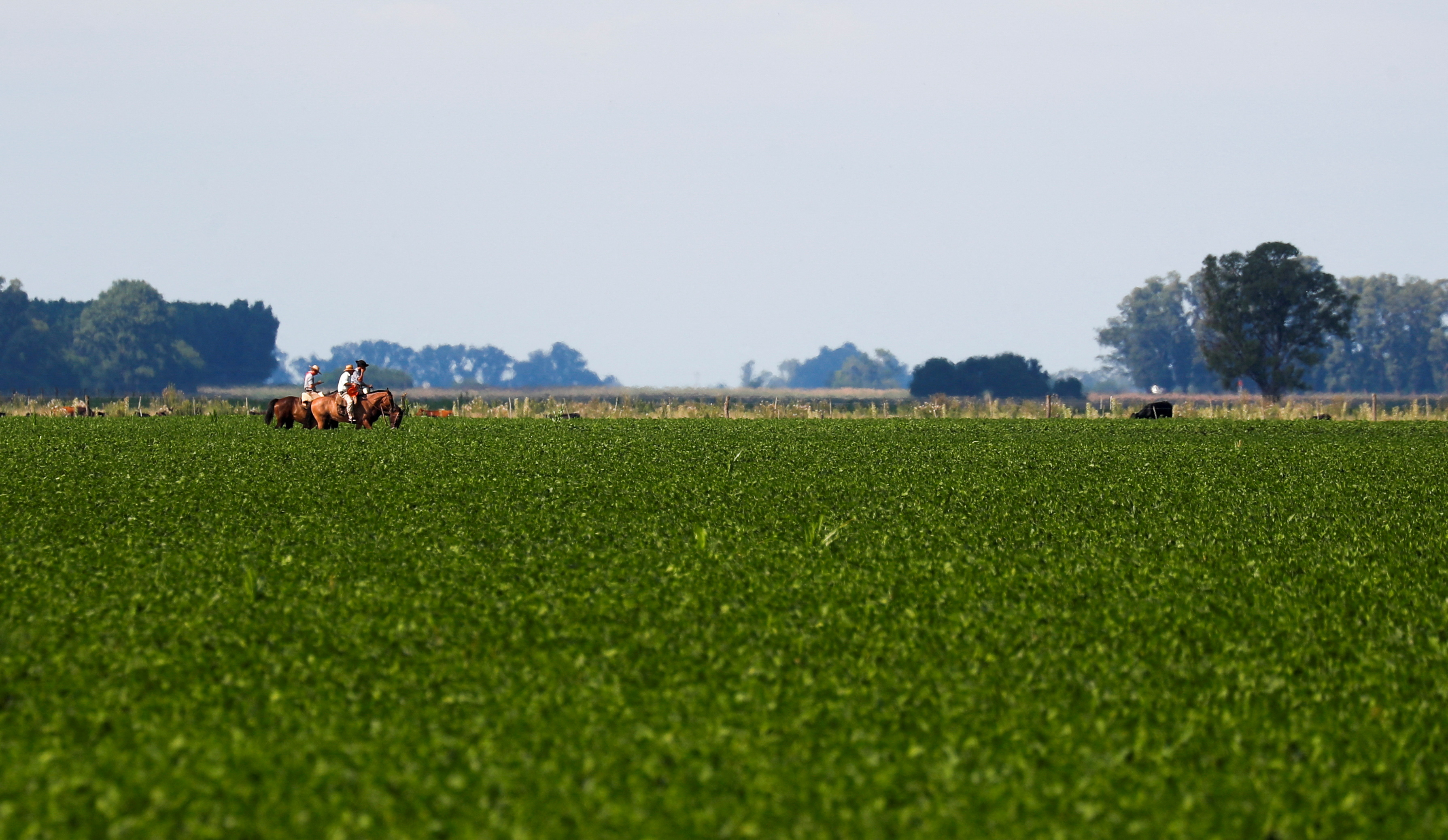
Too Much Water? Argentina Farm Belt Rains Shift Away From Drought Fears

BUENOS AIRES, March 2 (Reuters) – Heavy rains in Argentina’s farm belt and expectations of more to come are alleviating fears about a prolonged drought hitting crops after a dry start of the year, with some forecasters even concerned that too much water could affect soy and corn harvests.

The recent rain, which comes on the back of months of dry weather that have hammered crop production estimates, marks an important shift for the South American country, the world’s No. 1 exporter of processed soy and No. 2 for corn.

“The rains in recent days were very good in a large part of the agricultural area,” said Esteban Copati, head analyst at the Buenos Aires grains exchange, which cut its soy and corn outlook sharply in February due to the drought.

“What these rains allow is to sustain our current outlook. It stops the deterioration.”

Copati added, however, that there would not be any rebound in harvest forecasts, currently set at 51 million tonnes for corn and 42 million tonnes for soy because the crops had already been hit hard by the drought and were now well advanced.

Germán Heinzenknecht, a local meteorologist at the Applied Climatology Consultancy, told Reuters that forecasts of “important” rainfall over the coming weekend would add to recent precipitation, capping crop losses.

“The ones coming between Friday and Sunday are very important rains, especially in the center of Santa Fe, Entre Ríos, the east of Córdoba, they can be widespread rains of 80-90 millimeters (3.15-3.54 inches),” he said.

Heinzenknecht added that rainfall in the central farm belt should now easily reach the March average of 120-130 mm, and could become a worry in itself if it hampered the harvest that has started early for corn and will start in late March for soy.

“The only thing (farmers) don’t want now is to have excess water not allowing them to harvest,” he said.

“These rainfalls are good, it’s a good sign, but hopefully the second fortnight of March will come with a little more sun. That’s key for the harvest.”

Reporting by Maximilian Heath; Editing by Adam Jourdan and Sandra Maler

The post Too Much Water? Argentina Farm Belt Rains Shift Away From Drought Fears appeared first on The St Kitts Nevis Observer.

Mexico: Ukraine Crisis Could Spur New Inflation

MEXICO CITY, March 2 (Reuters) – Mexico’s central bank on Wednesday said pandemic shocks on inflation have been deeper and longer lasting than expected, and the bank could not rule out new price pressures caused by Russia’s invasion of Ukraine.

In a quarterly report, the Bank of Mexico, known as Banxico, said the Russia-Ukraine crisis could lead to higher commodity prices, especially for energy and agricultural products. Supply chain interruptions and higher wage costs could also lead to inflationary pressures, it said, while stressing that it is focused on monetary policy aimed at price stability.

Banxico governor Victoria Rodriguez cautioned in a news conference that it was too early to tell how the Russia-Ukraine crisis would affect prices and inflation, but said the conflict would be one of many factors taken into consideration in monetary policy decisions.

“We will be very attentive to how the conflict evolves. … It will depend on the length and scope it might have,” Rodriguez said. “It could impact the development of both energy and grains prices.”

The central bank said it expects that inflationary pressures would diminish throughout 2022 and that annual headline inflation would average 4% in the fourth quarter and decline to near the bank’s 3% target by the second quarter of 2023.

It also forecast that GDP would grow between 1.6% and 3.2% this year.

Rodriguez also noted that decisions by the U.S. Federal Reserve are one of the “relevant variables” that Banxico takes into account in its own monetary policy decisions.

Fed Chair Jerome Powell, balancing high U.S. inflation against the complex new risks of a European land war, said earlier on Wednesday the central bank would begin “carefully” raising interest rates at its upcoming March meeting but would be ready to move more aggressively if inflation does not cool as quickly as expected. read more

Reporting by Adriana Barrera, Ana Isabel Martinez, and Anthony Esposito; Editing by Chris Reese, Leslie Adler and Jonathan Oatis

The post Mexico: Ukraine Crisis Could Spur New Inflation appeared first on The St Kitts Nevis Observer.

Peruvian Community Blocks Road Used by MMG Copper Mine, Source Says

LIMA, March 2 (Reuters) – A community in the Peruvian Andes has blocked a key transport road used by MMG’s (1208.HK) Las Bambas copper mine, a source close to the Chinese company said on Wednesday, in what is at least the third blockade to affect the firm this year.

The community of Urinsaya, in the province of Espinar, some 250 km (155 miles) from Las Bambas, blocked the road on Tuesday, the source said on condition of anonymity.

Reuters was unable to reach a representative in Urinsaya, although Flavio Huanque, the leader of another nearby community in Espinar, confirmed the blockade and said Urinsaya was seeking financial contributions from Las Bambas.

Las Bambas produces 2% of the world’s copper and is key to Peru’s economy, itself the world’s No. 2 producer of the red metal.

But the dirt road used by Las Bambas is notoriously contentious. It traverses dozens of impoverished Andean communities that have blockaded it to protest what they see as the mine’s failure to improve their lives and the polluting of their crops by its trucks.

Since Las Bambas opened in 2016, communities have blocked the route on and off for more than 430 days. Reuters reported earlier this year that conflicts affecting Las Bambas were extending further and further away from the mine, as more communities demand that benefits from mining activities trickle down. Urinsaya is about a four-hour drive from Las Bambas.

Earlier this year, the government and Las Bambas reached a deal with the community of Ccapacmarca to lift a blockade that caused the miner to slow down operations. Late last year, another blockade triggered a full shutdown at the mine that lasted for more than a week.

The recurrent blockades have also weighed on the shares of Chinese-owned MMG and affected its copper output.

Reporting by Marcelo Rochabrun Editing by Paul Simao

The post Peruvian Community Blocks Road Used by MMG Copper Mine, Source Says appeared first on The St Kitts Nevis Observer.

Honduras Repeals ‘Secrets Law’ in Fight Against Corruption

TEGUCIGALPA, March 2 (Reuters) – Honduran lawmakers have repealed legislation that critics dubbed the “official secrets law” for classifying public documents on national security and defense, marking one of the first efforts under a new leftist administration to curb corruption.

President Xiomara Castro, who took office in January, had made campaign vows to repeal the law along with others that she said prevent government officials from being investigated and prosecuted for graft.

The so-called secrets law took effect in 2014 under former President Juan Orlando Hernandez, who was arrested in February after a U.S. extradition request on drug trafficking and weapons charges. read more

Honduras’ Congress voted Tuesday evening to repeal the law, which proponents during Hernandez’s administration had said was needed to avoid jeopardizing police operations against drug cartels and gangs by keeping certain documents and contracts from public view.

“We have repealed the law of secrets, an instrument that encouraged corruption for eight years in Honduras,” said Luis Redondo, the president of Congress.

The move will become official once published in the country’s official legal gazette.

Reporting by Gustavo Palencia; Writing by Kylie Madry; Editing by Aurora Ellis

The post Honduras Repeals ‘Secrets Law’ in Fight Against Corruption appeared first on The St Kitts Nevis Observer.

Costa Rica Congress Passes Medical Marijuana Bill

Costa Rica’s Congress has passed a bill which will legalise the use of marijuana for medical purposes and allow its cultivation for industrial use.

The cultivation and sale of marijuana for recreational purposes, however, will remain banned.

President Carlos Alvarado is expected to sign it within days.

Supporters of the bill say it will boost the agricultural sector and provide employment opportunities.

Following Tuesday’s vote, Costa Rica will join a host of other Latin American countries where medical marijuana has been made legal.

Recreational use of marijuana remains prohibited in most of the region except Uruguay, which in 2013 became the first country in the world to legalise it.

Costa Rica’s bill was not without controversy. President Alvarado vetoed an earlier version, arguing that limits needed to be placed on individual cultivation and consumption.

The amended bill has the backing of the president, who said it would be “of great benefit to Costa Rica”.

Patients who will benefit from easier access to medical marijuana took to Twitter to thank Zoila Rosa Volio, the lawmaker behind the bill, for pushing it through Congress.

One cancer patient posted a tearful video describing how medical marijuana had helped her regain her appetite and walk again.

The post Costa Rica Congress Passes Medical Marijuana Bill appeared first on The St Kitts Nevis Observer.