Category Archives: headline

Recording of dying brain shows we may relive memories before death

Our lives may indeed flash before our eyes in our last moments, the first-ever recording of a dying human brain has revealed.

Scientists have accidentally discovered what goes on inside a human brain just before a person dies after a man with epilepsy died of a heart attack while undergoing a brain scan to detect and treat his seizures.

The subsequent study of the man's brain activity, which has been published in Frontiers in Aging Neuroscience, suggests an explanation for people reporting experiencing vivid life recall in near-death experiences.

READ MORE: Human trials for Elon Musk's brain chip getting ready to launch

Scientists were using electroencephalography (EEG) to detect and treat seizures in the 87-year-old man when he passed away, leading to the first-ever recording of a brain's activity during death.

Dr Ajmal Zemmar, a neurosurgeon at the University of Louisville, who organised the study of the recording, has said the research shows people may in fact relive their lives in the seconds before they die.

He explained researchers focused on activity in the man's brain in the 30 seconds before and after the heart stopped beating.

"Just before and after the heart stopped working, we saw changes in a specific band of neural oscillations, so-called gamma oscillations, but also in others such as delta, theta, alpha, and beta oscillations," Dr Zemmar said.

https://twitter.com/DrAjmalZemmar/status/1496278523962662912

Brain oscillations, also known as 'brain waves', are patterns of rhythmic brain activity.

The different types of waves, including gamma, are involved in high-cognitive functions, such as concentrating, dreaming, meditation, memory retrieval, information processing, and conscious perception, just like those associated with memory flashbacks.

"Through generating oscillations involved in memory retrieval, the brain may be playing a last recall of important life events just before we die, similar to the ones reported in near-death experiences," Dr Zemmar said.

READ MORE: Dolly the cloned sheep introduced to the world

"Something we may learn from this research is: although our loved ones have their eyes closed and are ready to leave us to rest, their brains may be replaying some of the nicest moments they experienced in their lives."

Studies have previously analysed rats' brains as they died and have found increased activity in their brains in the 30 seconds after cardiac arrest.

Who are the three Russian oligarchs hit by UK sanctions?

Three super-rich Russian oligarchs with close ties to Vladimir Putin have been blacklisted with punishing UK sanctions.

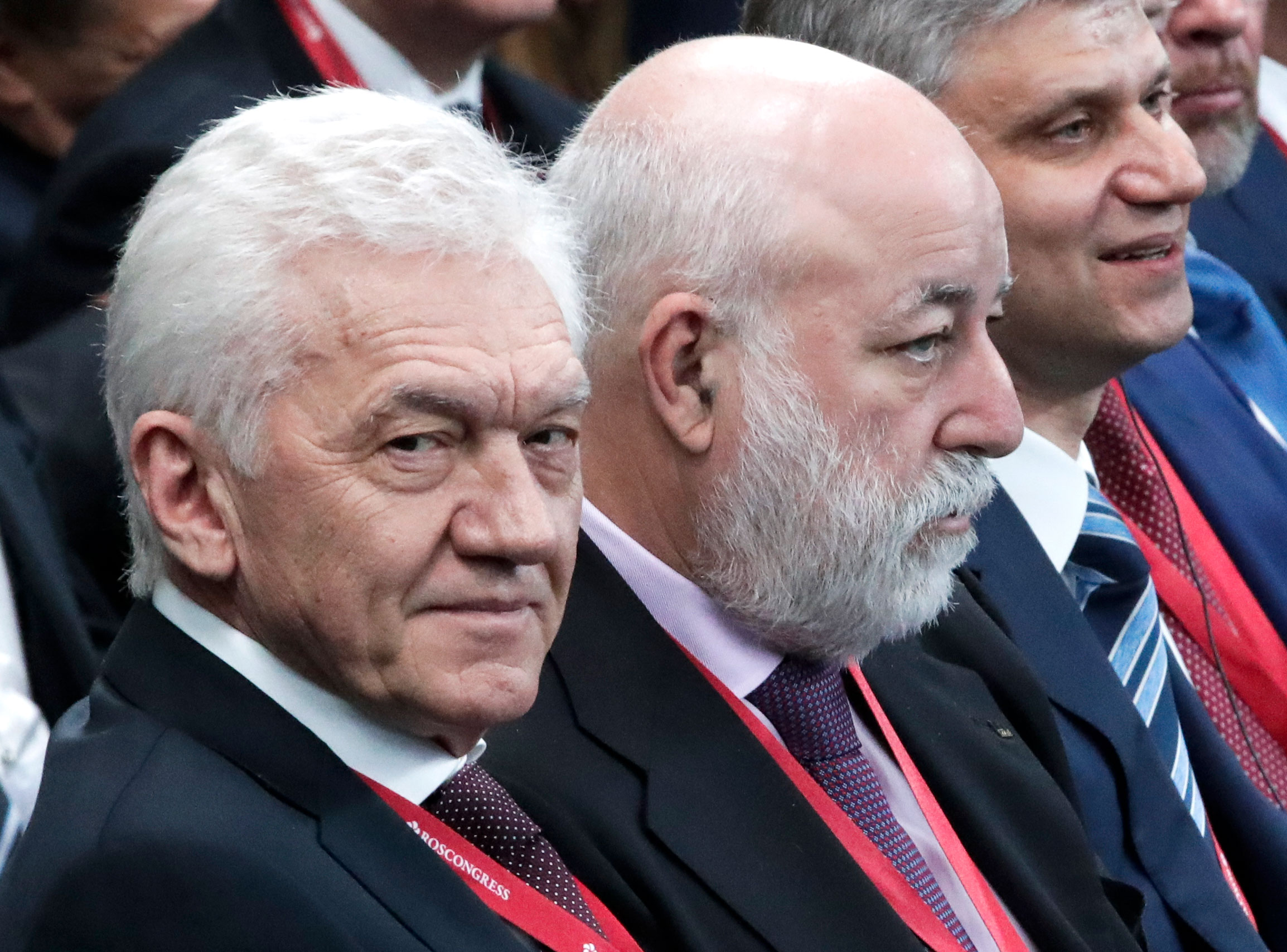
Prime Minister Boris Johnson identified the trio of "very high net wealth individuals" as Gennady Timchenko, Boris Rotenberg and his nephew Igor Rotenberg.

The men were targeted in a "first barrage" of punitive measures, Mr Johnson said.

READ MORE: All the ways a Russian invasion could hit your wallet

The sanctions against three oligarchs is a message to people around Putin, in his inner-circle, that they could also be blacklisted if Russia goes further.

"Any assets they hold in the UK will be frozen, the individuals concerned will be banned from travelling here and we will prohibit all UK individuals and entities from having any dealings with them," he said.

"This the first tranche, the first barrage, of what we are prepared to do and we hold further sanctions at readiness to be deployed."

So who are the three uber-rich, billionaire oligarchs?

Gennady Timchenko

With an estimated net worth of $32.5 billion, Mr Timchenko is one of Russia's most powerful men.

He is involved in a number of Russian businesses, including gas company Novatek and petrochemical producer Sibur Holding.

Mr Timchenko is a major shareholder in Bank Rossiya, one of five Russian banks sanctioned by the UK.

READ MORE: US sanctions against Russian banks and oligarchs

Gennady Nikolayevich Timchenko is a major shareholder in Bank Rossiya

READ MORE: What is Nord Stream 2 pipeline, and why does it make the US anxious?

The UK Foreign Office said Bank Rossiya is a key stakeholder in the National Media Group which supports Russian policy in destabilising Ukraine.

Bank Rossiya was viewed by the British government to be a beneficiary of Russia's annexation of Crimea in 2014.

Mr Timchenko is a close friend and ally of Mr Putin.

Boris Rotenberg

Forbes estimate Mr Rotenberg's net worth at $1.6 billion.

A childhood friend of Mr Putin, Mr Rotenberg is a major shareholder and director of SMP Bank.

He is also a co-owner of SGM, the largest construction company for gas pipelines and electrical power supply lines in Russia.

EXPLAINED: Why Russia-backed rebels are a thorn in Ukraine's side

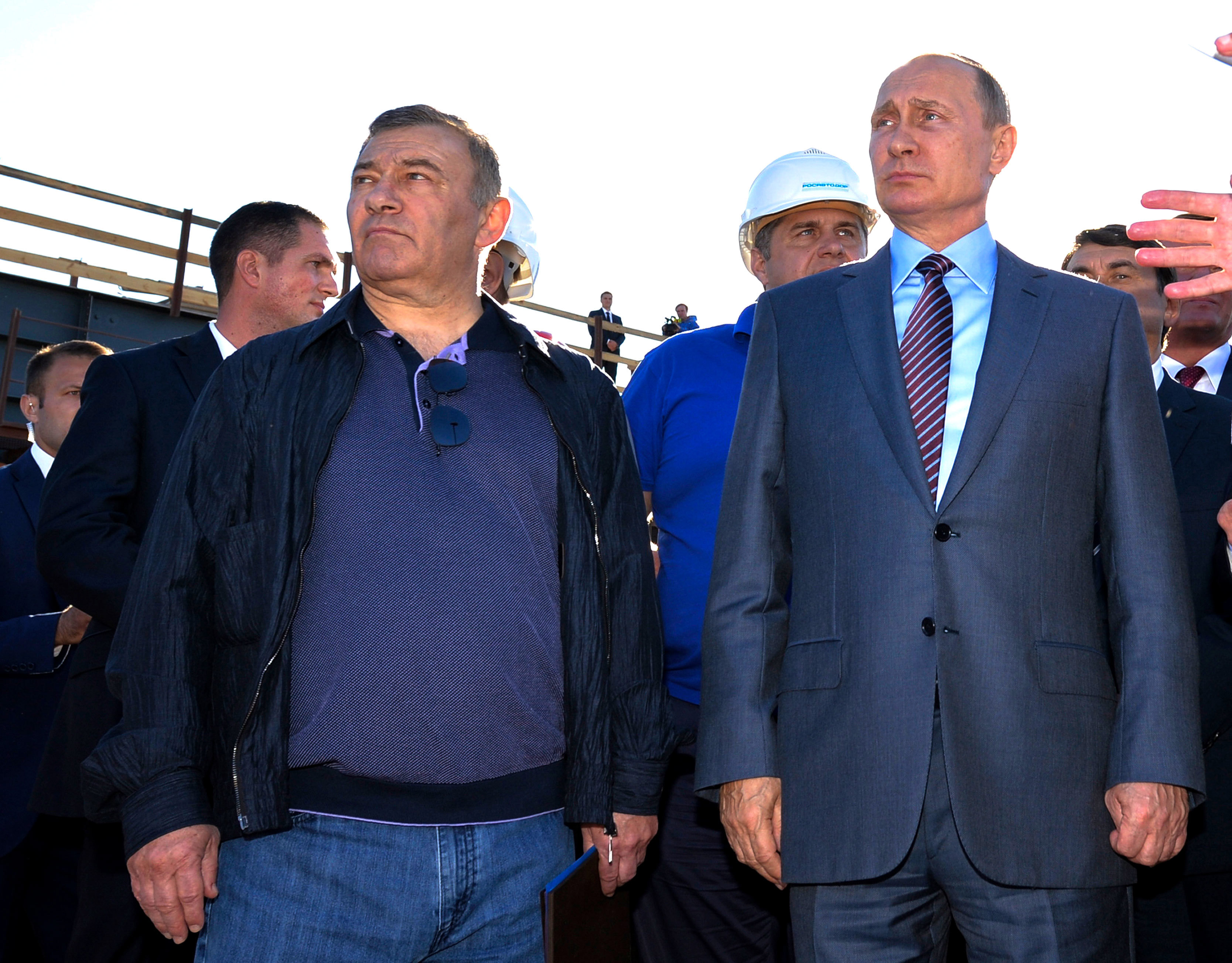
Russian President Vladimir Putin, is pictured alongside businessman and billionaire Arkady Rotenberg, who is the brother Boris Rotenberg.

READ MORE: Ukraine digs in for war with superpower Russia

"The Rotenberg brothers have known Putin since they were boys growing up in St Petersburg," the UK Foreign Office said.

"A former professional judo trainer, he was the Russian President's former sparring partner.

"Boris is also a member of the St. Petersburg Connection, a powerful energy lobby under the leadership of Putin."

Igor Rotenberg

The son of billionaire Arkady Rotenberg, Forbes rate Mr Rotenberg's wealth at $1.2 billion.

His father's net worth is estimated to be $4.7 billion.

Mr Rotenberg is the chairman of the board of directors of National Telematic Systems.

He also controls drilling company Gazprom Bureniye.

"The Rotenbergs are closely associated with Vladimir Putin," the UK Home Office said, explaining the rationale behind the sanctions.

READ MORE: Australia will impose immediate sanctions on Russia

All three men have already been sanctioned by the US; Mr Timchenko and Boris Rotenberg in 2014, and Igor Rotenberg in 2018.

The sanctions send a message to people close to Mr Putin, and those in the president's inner-circle, that they could be next if Russia presses further in Ukraine.

It is unclear if Mr Timchenko and the Rotenbergs are included in just-announced Australian sanctions.

But while not explicitly naming individuals, Prime Minister Scott Morrison said those sanctioned by Australia were the same men sanctioned by the US and the UK.

Magpies outwit scientists by helping each other remove tracking devices

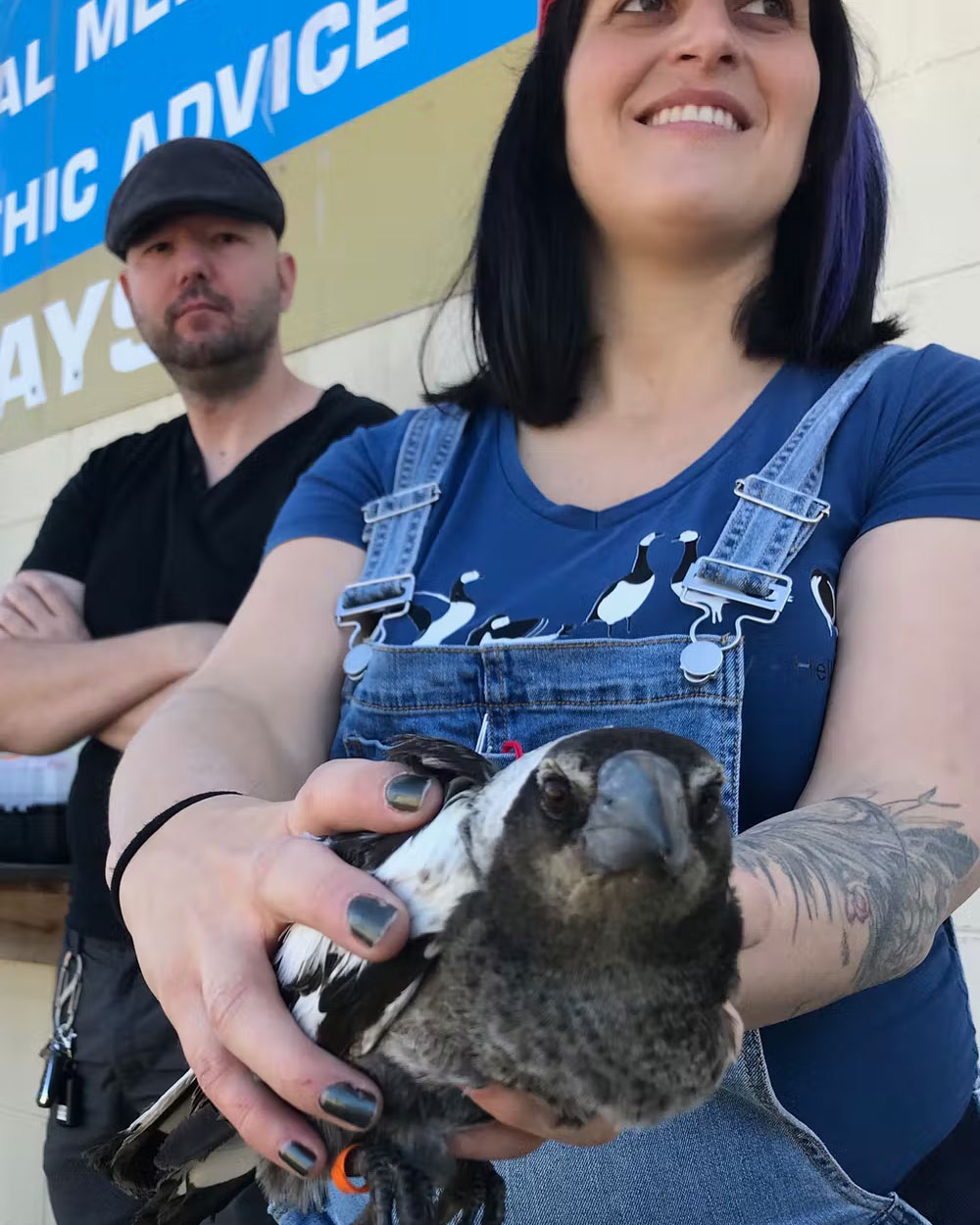
When we attached tiny, backpack-like tracking devices to five Australian magpies for a pilot study, we didn't expect to discover an entirely new social behaviour rarely seen in birds.

Our goal was to learn more about the movement and social dynamics of these highly intelligent birds, and to test these new, durable and reusable devices. Instead, the birds outsmarted us.

As our new research paper explains, the magpies began showing evidence of cooperative "rescue" behaviour to help each other remove the tracker.

READ MORE: Why best thing to do in a magpie attack is to go against your instincts

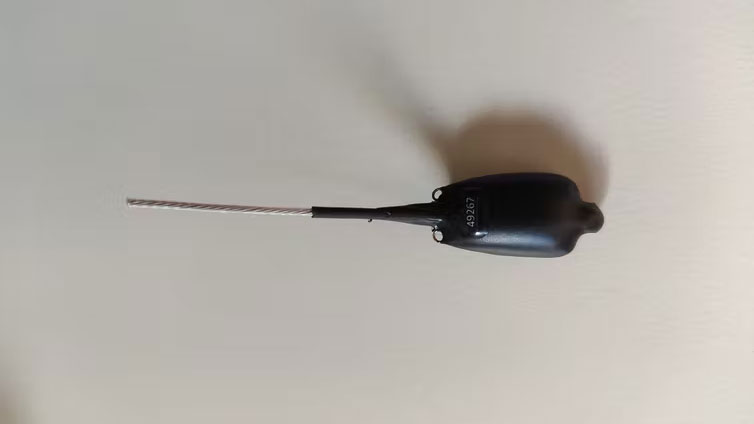
One of the trackers we attached to five magpies, which weighs less than one gram.

While we're familiar with magpies being intelligent and social creatures, this was the first instance we knew of that showed this type of seemingly altruistic behaviour: helping another member of the group without getting an immediate, tangible reward.

Testing exciting new devices

As academic scientists, we're accustomed to experiments going awry in one way or another. Expired substances, failing equipment, contaminated samples, an unplanned power outage – these can all set back months (or even years) of carefully planned research.

For those of us who study animals, and especially behaviour, unpredictability is part of the job description. This is the reason we often require pilot studies.

Our pilot study was one of the first of its kind – most trackers are too big to fit on medium to small birds, and those that do tend to have very limited capacity for data storage or battery life. They also tend to be single-use only.

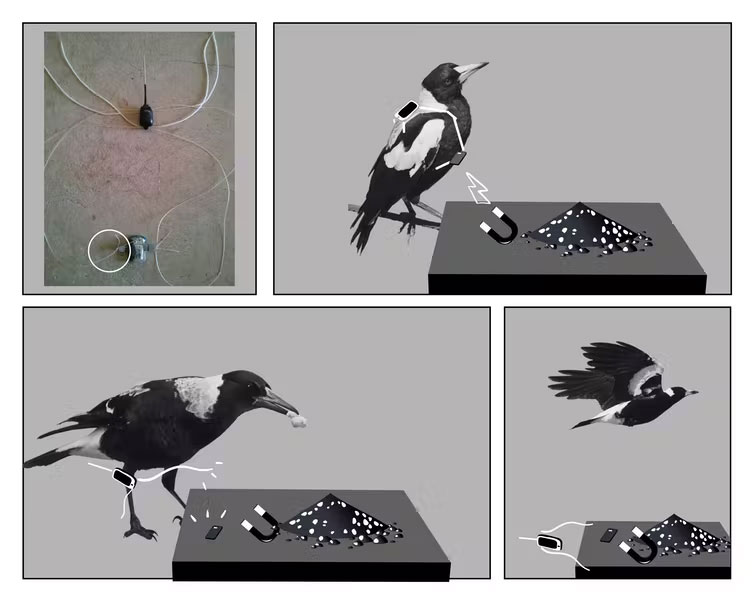
A novel aspect of our research was the design of the harness that held the tracker. We devised a method that didn't require birds to be caught again to download precious data or reuse the small devices.

We trained a group of local magpies to come to an outdoor, ground feeding "station" that could either wirelessly charge the battery of the tracker, download data, or release the tracker and harness by using a magnet.

This magpie wasn't sure what to think of its new accessory.

The harness was tough, with only one weak point where the magnet could function. To remove the harness, one needed that magnet, or some really good scissors. We were excited by the design, as it opened up many possibilities for efficiency and enabled a lot of data to be collected.

We wanted to see if the new design would work as planned, and discover what kind of data we could gather. How far did magpies go? Did they have patterns or schedules throughout the day in terms of movement, and socialising? How did age, sex or dominance rank affect their activities?

All this could be uncovered using the tiny trackers – weighing less than one gram – we successfully fitted five of the magpies with.

All we had to do was wait, and watch, and then lure the birds back to the station to gather the valuable data. It was not to be

Many animals that live in societies cooperate with one another to ensure the health, safety and survival of the group. In fact, cognitive ability and social cooperation has been found to correlate. Animals living in larger groups tend to have an increased capacity for problem solving, such as hyenas, spotted wrasse, and house sparrows.

Australian magpies are no exception. As a generalist species that excels in problem solving, it has adapted well to the extreme changes to their habitat from humans.

Australian magpies generally live in social groups of between two and 12 individuals, cooperatively occupying and defending their territory through song choruses and aggressive behaviours (such as swooping). These birds also breed cooperatively, with older siblings helping to raise young.

During our pilot study, we found out how quickly magpies team up to solve a group problem. Within 10 minutes of fitting the final tracker, we witnessed an adult female without a tracker working with her bill to try and remove the harness off of a younger bird.

Our new tracker design was innovative, allowing a magnet to release the harness.

Within hours, most of the other trackers had been removed. By day three, even the dominant male of the group had its tracker successfully dismantled.

We don't know if it was the same individual helping each other or if they shared duties, but we had never read about any other bird cooperating in this way to remove tracking devices.

The birds needed to problem solve, possibly testing at pulling and snipping at different sections of the harness with their bill.

They also needed to willingly help other individuals, and accept help.

The only other similar example of this type of behaviour we could find in the literature was that of Seychelles warblers helping release others in their social group from sticky Pisonia seed clusters. This is a very rare behaviour termed "rescuing".

Saving magpies

So far, most bird species that have been tracked haven't necessarily been very social or considered to be cognitive problem solvers, such as waterfowl and raptors. We never considered the magpies may perceive the tracker as some kind of parasite that requires removal.

Tracking magpies is crucial for conservation efforts, as these birds are vulnerable to the increasing frequency and intensity of heatwaves under climate change.

In a study published this week, Perth researchers showed the survival rate of magpie chicks in heatwaves can be as low as 10 per cent.

Importantly, they also found that higher temperatures resulted in lower cognitive performance for tasks such as foraging. This might mean cooperative behaviours become even more important in a continuously warming climate.

Just like magpies, we scientists are always learning to problem solve. Now we need to go back to the drawing board to find ways of collecting more vital behavioural data to help magpies survive in a changing world.

This article was written by Dominique Potvin, Senior Lecturer in Animal Ecology, University of the Sunshine Coast, for The Conversation.

Young men overrepresented in Australia's coastal drowning toll

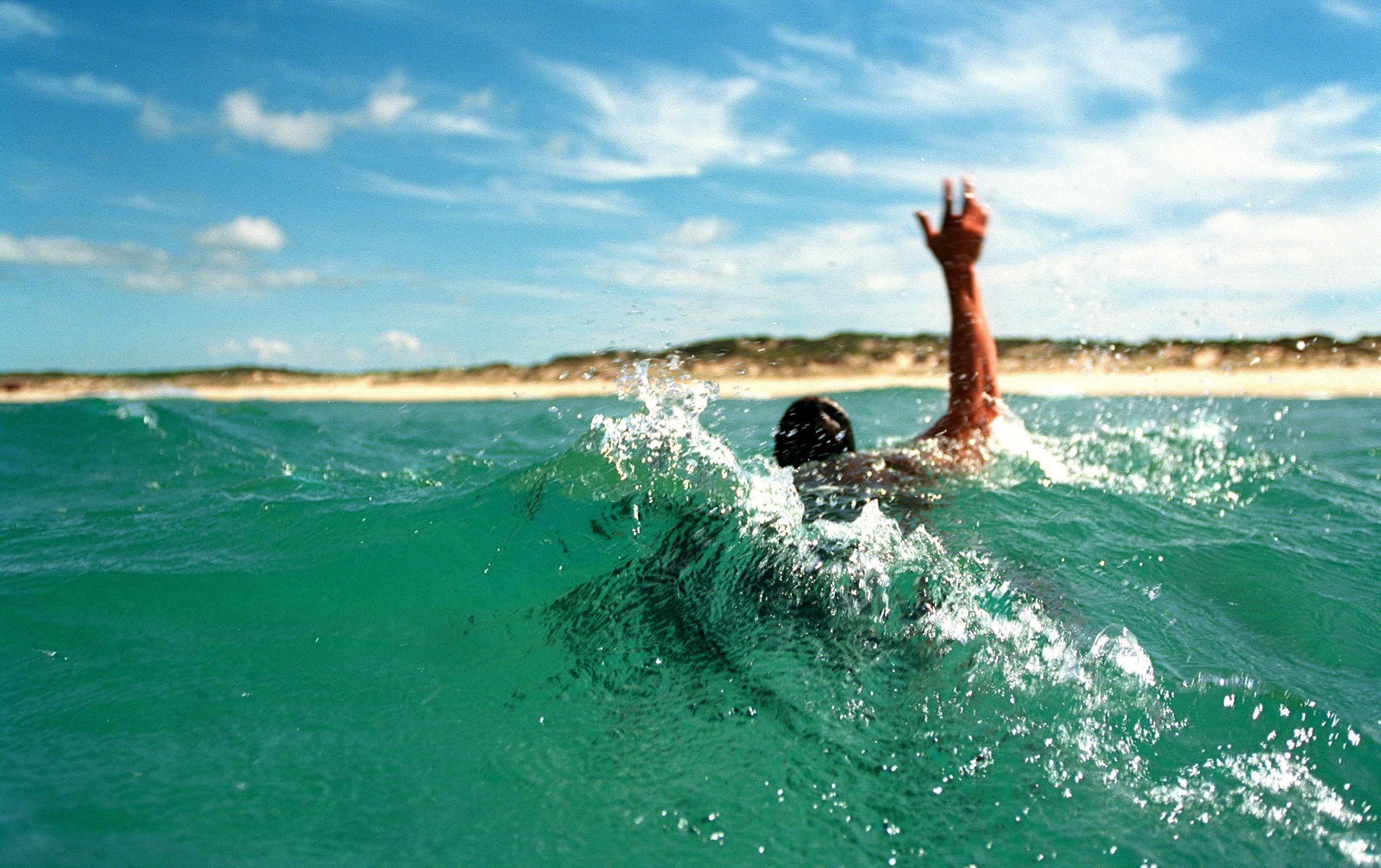
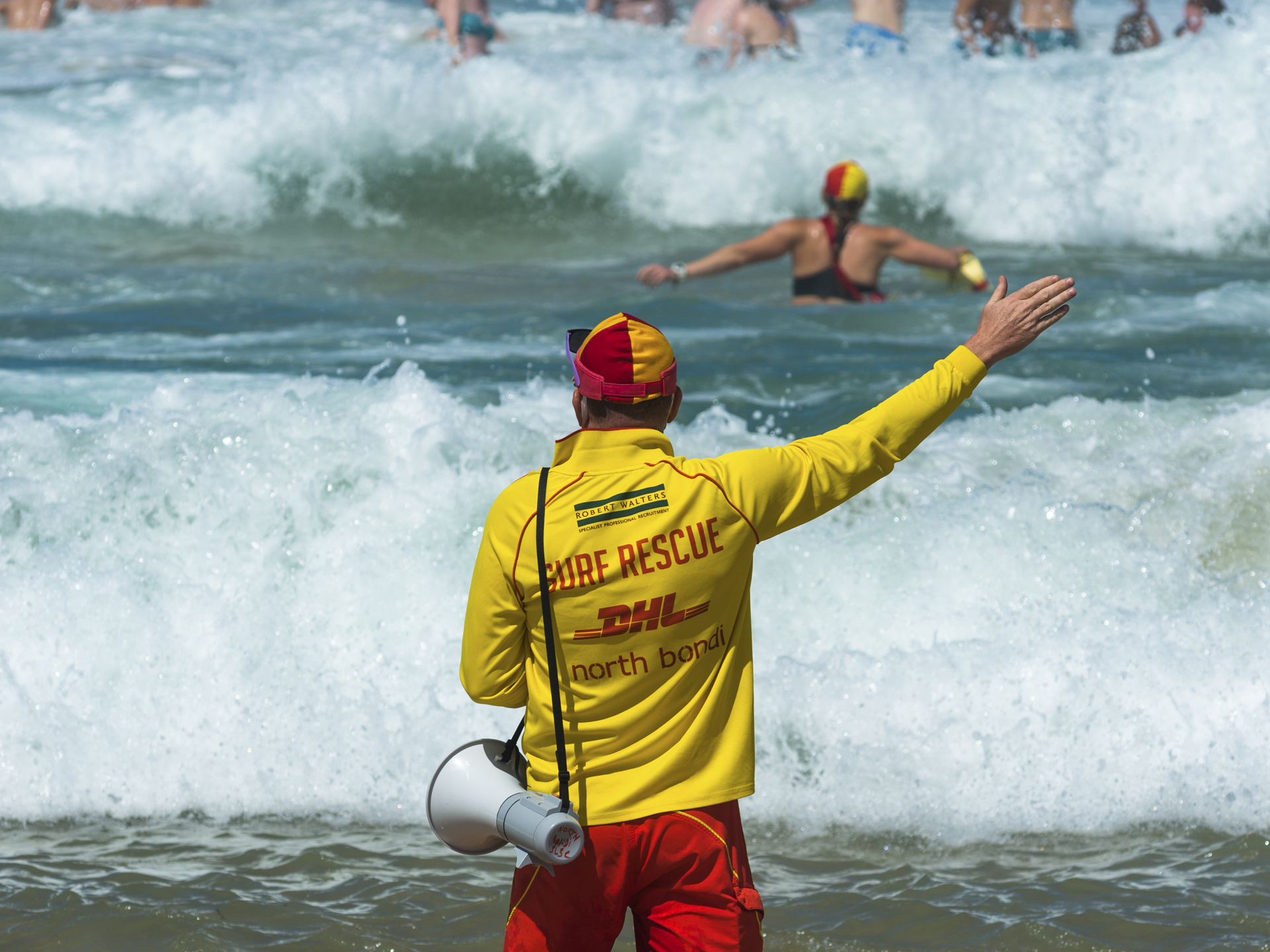
Young men have been overrepresented in Australia's coastal drowning death toll, with surf lifesavers pleading for them to take their safety seriously.

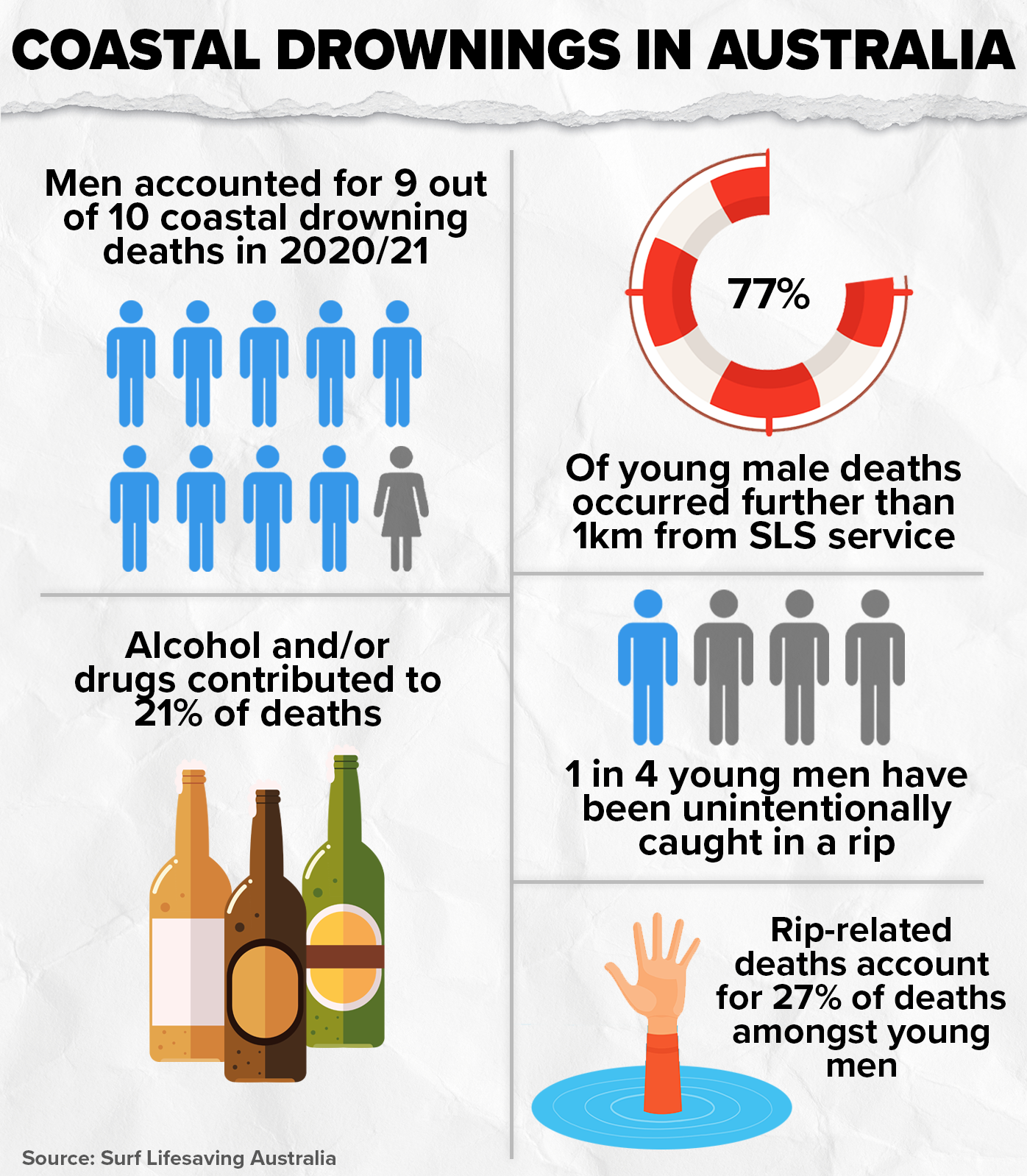
A new report from Surf Life Saving Australia (SLSA) revealed young men accounted for nine out of 10 coastal drowning deaths in 2020-21, with men aged between 15 and 39 most overrepresented in coastal injury and fatalities.

The warning comes as the summer coastal drowning death toll continues to rise above both the 10-year average and the fatalities recorded over the 2020-21 summer period.

LIVE UPDATES: Moderna to be available for kids aged six to 11 from tomorrow

SLSA general manager of coastal safety Shane Daw said 41 coastal drownings had been recorded this summer — between December 1 and January 31 — with 10 being men aged between 15 and 39.

"On average, young men account for a third of fatal incidents recorded along our coast, with the vast majority due to drowning," he said.

"Such a premature loss of life represents a significant cost to society, with both social and economic contributions cut short."

According to the SLSA Coastal Safety Brief, 53 young men die on our coast each year on average, with three out of four due to drowning.

Since 2011, 525 young men have died on Australia's coastline, which equates to a $6.9 billion economic loss to society.

The reasons behind the fatalities include greater coastal visitation and activity participation, as well as inflated confidence levels that do not reflect actual abilities, and social determinants such as peer pressure.

READ MORE: $1m reward to help solve cold case murder of Melbourne mum

Australia drowning news Surf Life Saving Australia government calls airline water safety videos

Nearly half of coastal deaths happened on a weekend, with the primary activity at the time being swimming and wading.

"In fact, the mortality risk is 2.2 times greater on the weekend for this demographic," Mr Daw said.

Research showed one in four young men have been unintentionally caught in a rip, but only 40 per cent always look for the presence of rip currents before entering the water.

Almost half of young male swimmers are not able to swim 50 metres in the ocean without touching the bottom and one in 10 are unable to swim or float at all.

"Alarmingly, we continue to see young men choosing to swim at unpatrolled locations, away from surf lifesavers and lifeguards," Mr Daw said.

"They continue to overestimate their ability, take unnecessary risks, and not look for the presence of rips before entering the water.

"Our message remains simple, where possible keep safe by swimming at a patrolled beach, between the red and yellow flags."

All the ways Russian invasion could hit world economy and your wallet

If Russia invades Ukraine, the financial shockwaves will reverberate far and wide and inevitably be felt in Australia.

Global stock markets could be in for a rough ride and any Russian invasion of Ukraine could disrupt supplies of oil.

Today oil nudged US $100 a barrel of Brent Crude, a level not seen for seven years, and there are fears oil could quickly jump to $120 if Russia moves in with a full-blown invasion.

READ MORE: Ukraine digs in for war with superpower Russia

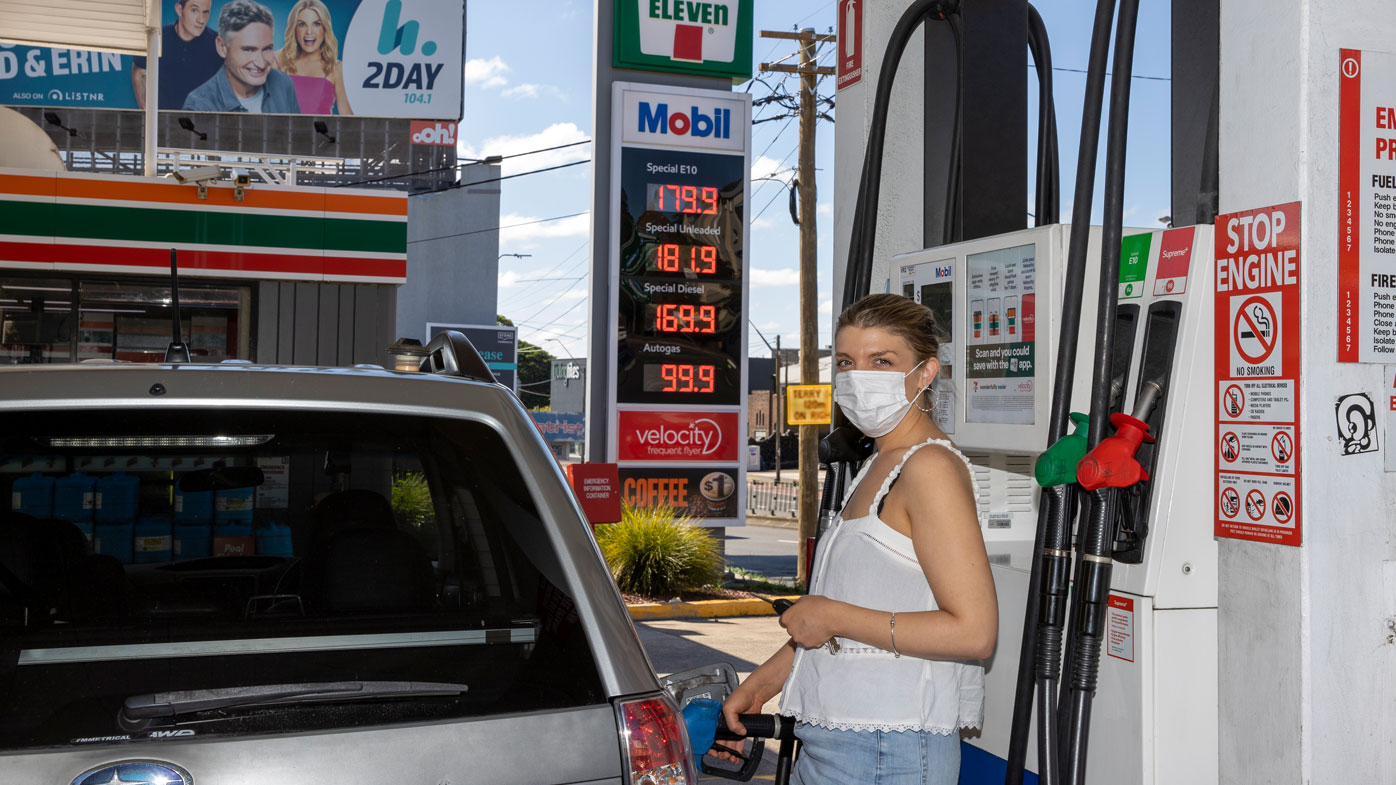
Petrol prices in Australia are at their highest in 14 years, with more sharp rises predicted if Russia invades Ukraine.

We take a look at the financial impact of a Russian invasion, what could happen and why.

More pain at the pump

Oil prices have jumped in recent weeks to levels unseen since 2014 in part because an invasion of Ukraine could derail Russian energy supply.

Stating the obvious, this is bad news. Oil price increases generally trigger rises in inflation and reduces economic growth.

Russia is an energy superpower, producing 9.7 million barrels per day last year, according to Rystad Energy.

That is second only to the United States and amounts to more oil than Iraq and Canada produced — combined.

Global supply is already failing to keep up with demand.

There are three prime concerns: War could damage oil infrastructure, sanctions on Russia could affect global supply and Moscow could weaponise it oil exports.

EXPLAINED: Why Russia-backed rebels are a thorn in Ukraine's side

Investment bank JPMorgan warned that if any Russian oil flows are disrupted by the crisis, oil prices could "easily" jump to $120 a barrel.

In the unlikely event Russian oil exports are halved, crude would surge to $150 a barrel, they added.

For Aussie homes, it comes down to this. Another pop in oil prices would lift prices at the pump across Australia, where we're already paying prices not seen for 14 years.

READ MORE: US sanctions against Russian banks and oligarchs

Trickle down effect

Higher energy prices will make it more expensive to fly.

And road transportation and other supply line costs for businesses will also inevitably track up.

Businesses would most likely pass along at least some of these higher costs to consumers in the form of price hikes.

This will almost certainly include food and other sectors.

Russian wheat farmers will have their exports cut, because of sanctions.

Wheat, corn and precious metals

Beyond energy, other commodities may experience price volatility.

Russia is a major producer of metals, including aluminium and palladium.

It is also the world's biggest exporter of wheat.

Ukraine is a significant exporter of both wheat and corn and sends more than 40 per cent of its wheat and corn exports to the Middle East or Africa.

So disruption will have far ranging consequences in those regions.

Stocks on Wall Street slid the day after Russia ordered troops into Ukraine's east.

Market turbulence

Any escalation will spook global markets.

Investors detest uncertainty, so a full-blown invasion of Ukraine may trigger a knee-jerk stock selloff as investors confront the possibility of an oil shock, higher inflation and a confusing sanctions regime.

A prolonged market downturn would wipe out wealth in the stock market and retirement accounts.

Market instability will likely dent business and consumer confidence.

READ MORE: What is Nord Stream 2 pipeline, and why does it make the US anxious?

Cyberattacks on utilities, private businesses

Now sanctions have been imposed against Russian banks and oligarchs, Moscow could lash out against the West with cyberattacks.

The hacking of the Colonial Pipeline last year showed just how disruptive that can be, shutting down one of the most important pipelines in America and sparking panic at gas stations across the southeast.

Last year's cyber attack on global meat processing company JBS Foods caused similar pain, including major supply line disruptions as far away as Australia.

Russian hackers have form for attacking huge electrical grids.

READ MORE: States bracing for more rain as two potential cyclones form off coast

With agencies

'Exceedingly rare' fossil of giant flying reptile discovered

Winged reptiles known as pterosaurs — plane-size creatures that swooped through the skies as dinosaurs walked the Earth — were the first vertebrate animals to evolve powered flight.

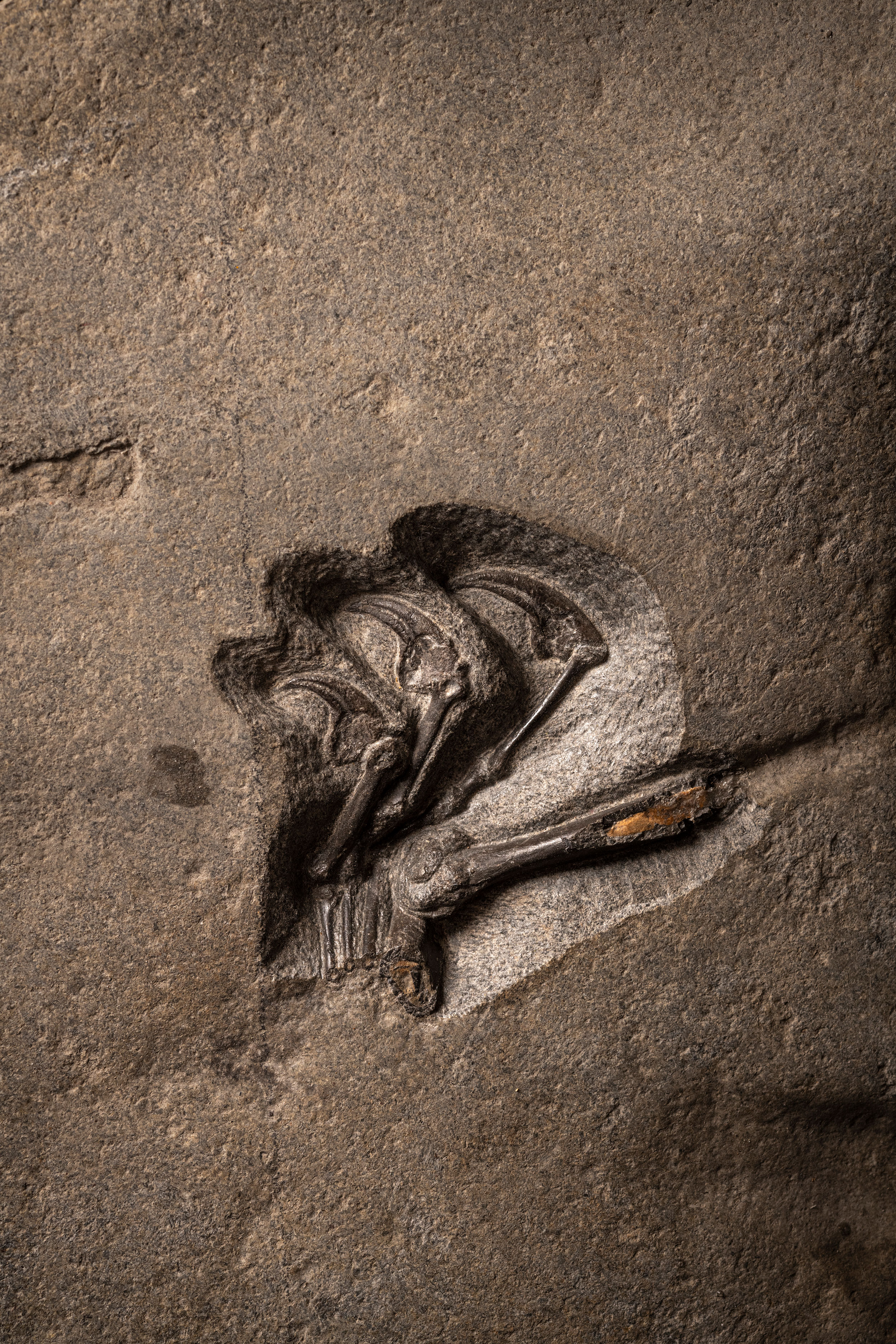
A spectacular three-dimensional fossil of one previously unknown pterosaur has been discovered on the shore of the Isle of Skye, off the west coast of Scotland.

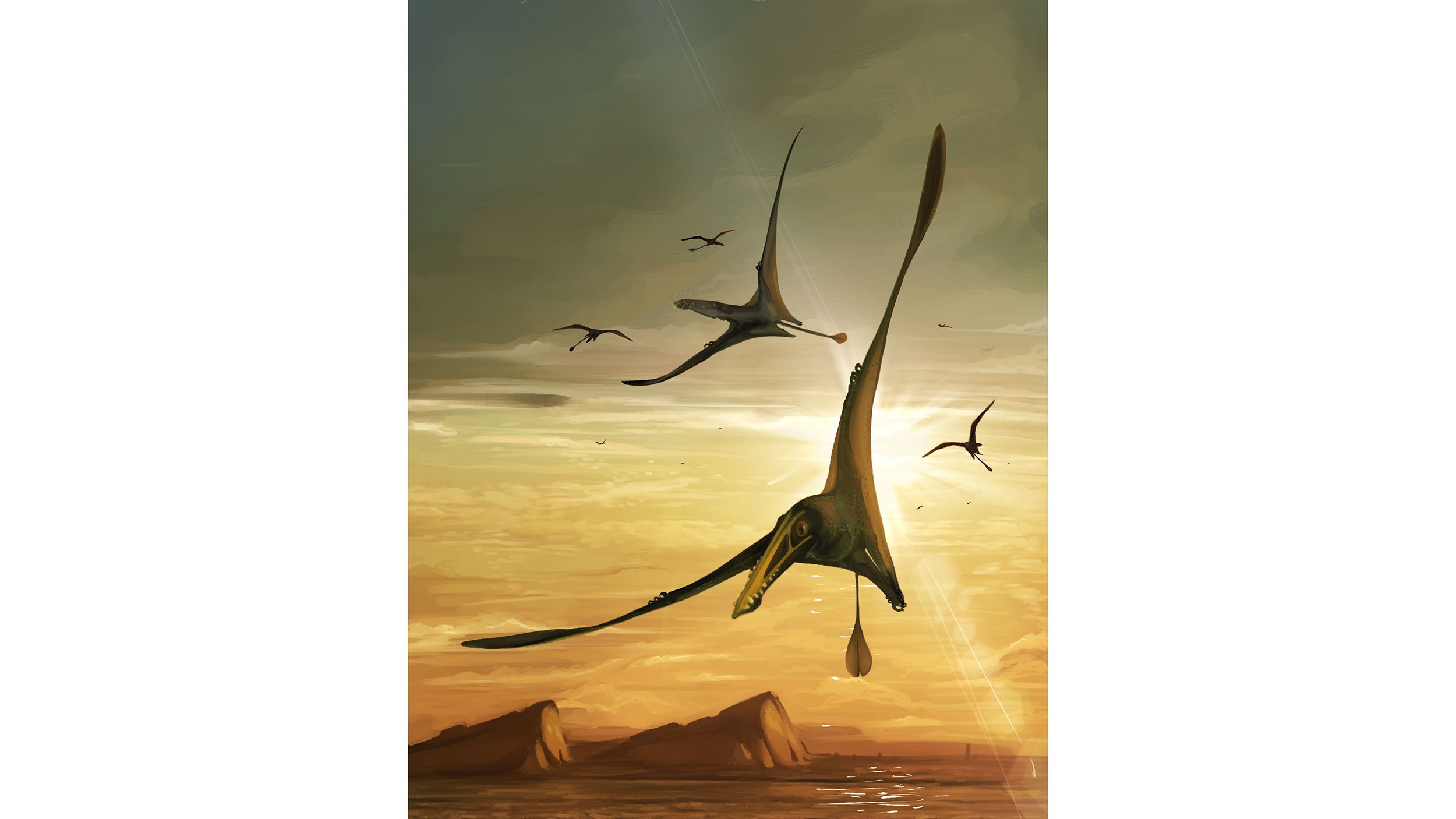
With a wingspan of more than 2.5 metres, it's the biggest pterosaur ever discovered from the Jurassic period and last flapped its wings 170 million years ago.

Its sharp teeth, which would have snapped up fish, still retain their shiny enamel.

READ MORE: Biden hits Russia with sanctions for 'beginning invasion'

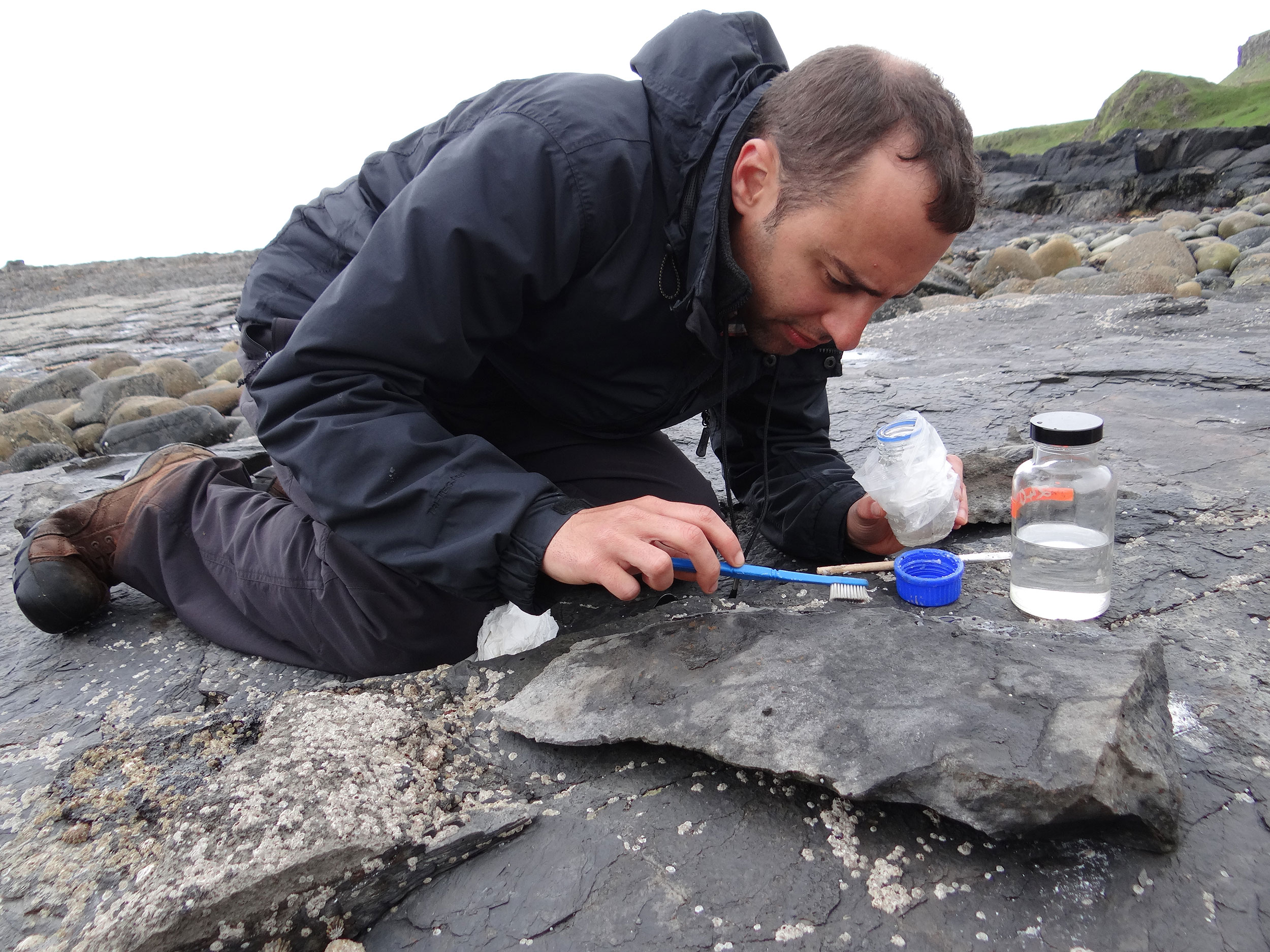
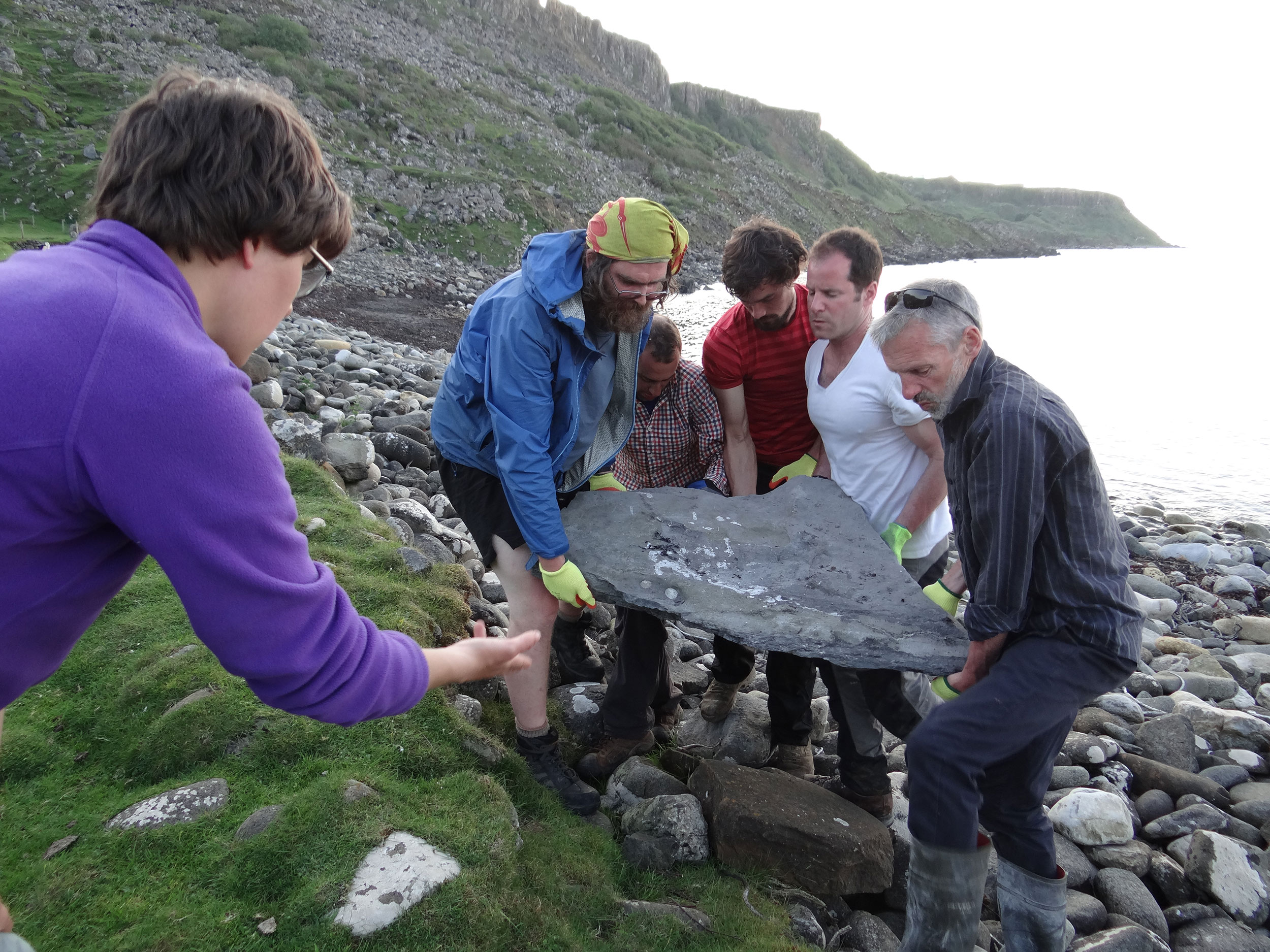
The pterosaur fossil is the biggest known from the Jurassic period, said Steve Brusatte, University of Edinburgh professor of palaeontology and evolution.Researchers remove the unusually well-preserved skeleton of a previously unknown pterosaur, discovered on the Isle of Skye, off the west coast of Scotland.

In the Cretaceous period, immediately before the asteroid strike that wiped out the dinosaurs 66 million years ago, pterosaurs like Quetzalcoatlus reached the size of fighter jets, with a 12-metre wingspan.

However, this fossil discovery confirms pterosaurs, sometimes popularly known as pterodactyls, were already very large much earlier in their evolutionary history.

EXPLAINED: Why Russia-backed rebels are a thorn in Ukraine's side

A close-up of the pterosaur's claw is shown.

"Pterosaurs preserved in such quality are exceedingly rare and are usually reserved to select rock formations in Brazil and China. And yet, an enormous superbly preserved pterosaur emerged from a tidal platform in Scotland," said Natalia Jagielska, a doctoral student at the University of Edinburgh.

She was the lead author of a paper on the fossil that was published on Tuesday in the journal Current Biology.

The fossil was discovered during a field trip in 2017, after a University of Edinburgh doctoral student, Amelia Penny, spotted its jaw protruding from the rock at an area of Skye known in Gaelic as Rubha nam Brathairean, or Brothers' Point.

READ MORE: States bracing for more rain as two potential cyclones form off coast

An illustration depicts the pterosaur, which had a wingspan of more than 2.5 metres.

The pterosaur has been given the Gaelic name Dearc sgiathanach (pronounced jark ski-an-ach), which translates to "winged reptile".

"This is a superlative Scottish fossil. The preservation is amazing, far beyond any pterosaur ever found in Scotland and probably the best British skeleton found since the days of Mary Anning in the early 1800s," said Steve Brusatte, professor and Personal Chair of Palaeontology and Evolution in the School of GeoSciences at the University of Edinburgh.

"Dearc is the biggest pterosaur we know from the Jurassic period, and that tells us that pterosaurs got larger much earlier than we thought, long before the Cretaceous period when they were competing with birds, and that's hugely significant.

Anning, an unsung pioneer of paleontology, discovered the three-metre-long Plesiosaurus in Dorset, southern England, in 1823.

The incredible fossil, the first of the species to be found intact with its snakelike neck, wowed the world, setting in motion a dinomania that gripped Victorian England and continues to this day.

A number of astounding discoveries have been made in this area of Skye in recent years, including the footprints of Stegosaurus and other dinosaurs.

Paleontologists believe it was once a subtropical lagoon and home to a thriving community of dinosaurs.

Ms Jagielska will continue to study the skeleton to understand how the ancient creature lived and flew.

"To achieve flight, pterosaurs had hollow bones with thin bone walls, making their remains incredibly fragile and unfit to (preserve) for millions of years," she said.

"And yet our skeleton, 160 million years on since its death, remains in almost pristine condition, articulated and almost complete … as if he were alive mere weeks ago."

'Fight for every inch of our land': Ukraine braced for all-out war

If Russia invades, Ukraine will not back down.

Ukrainian Foreign Minister Dmytro Kuleba made that very clear in a just-finished briefing in Washington.

He said Ukraine has two plans: diplomacy, and if that fails, to fight to the end.

"Plan A is to utilise every tool of diplomacy to deter Russia and prevent further escalation," Mr Kuleba said.

READ MORE: Joe Biden unveils US sanctions against Russia
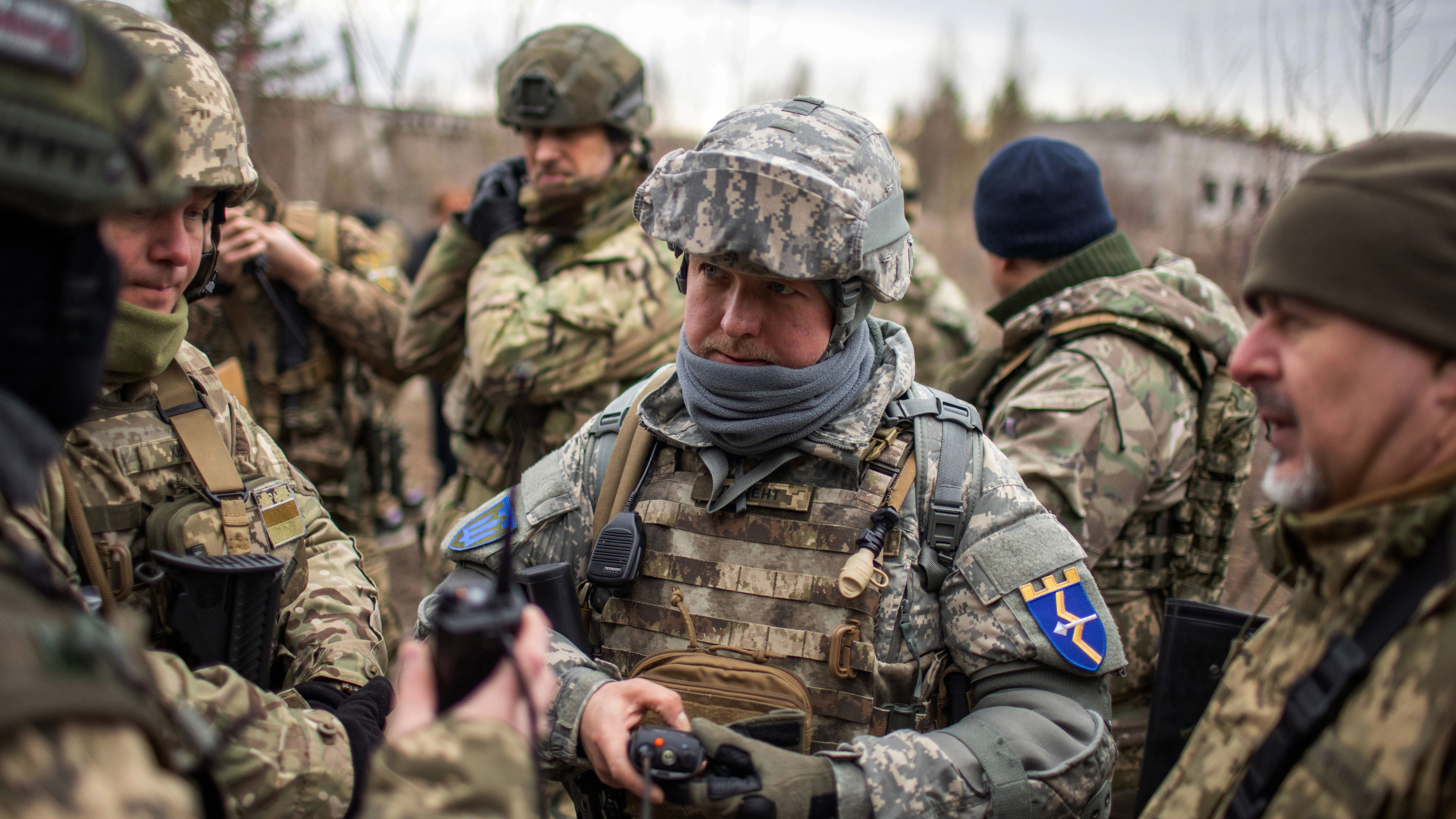
Members of Ukraine's Territorial Defense Forces during training at a former asphalt factory on the outskirts of Kyiv, Ukraine.

"And if that fails, plan B is to fight for every inch of our land, in every city and every village – to fight until we win, of course," he said.

Ukraine will not be evacuating its people from eastern Ukraine, where Russian troops have been ordered in, he said.

At 8:30am AEST, the Ukrainian president declared he is activating some reservists, but that he was not yet ordering full mobilisation despite the growing Russian threat.

The East-West faceoff over Ukraine escalated dramatically today, with Russian lawmakers authorising President Vladimir Putin to use military force outside his country and President Joe Biden and European leaders responding by slapping sanctions on Russian oligarchs and banks.

Both leaders signalled that an even bigger confrontation could lie ahead.

Mr Putin has yet to unleash the force of the 150,000 troops massed on three sides of Ukraine, while Mr Biden held back on the toughest sanctions that could cause economic turmoil for Russia but said they would go ahead if there is further aggression.
READ MORE: US demands Putin pull back as Russia flexes military

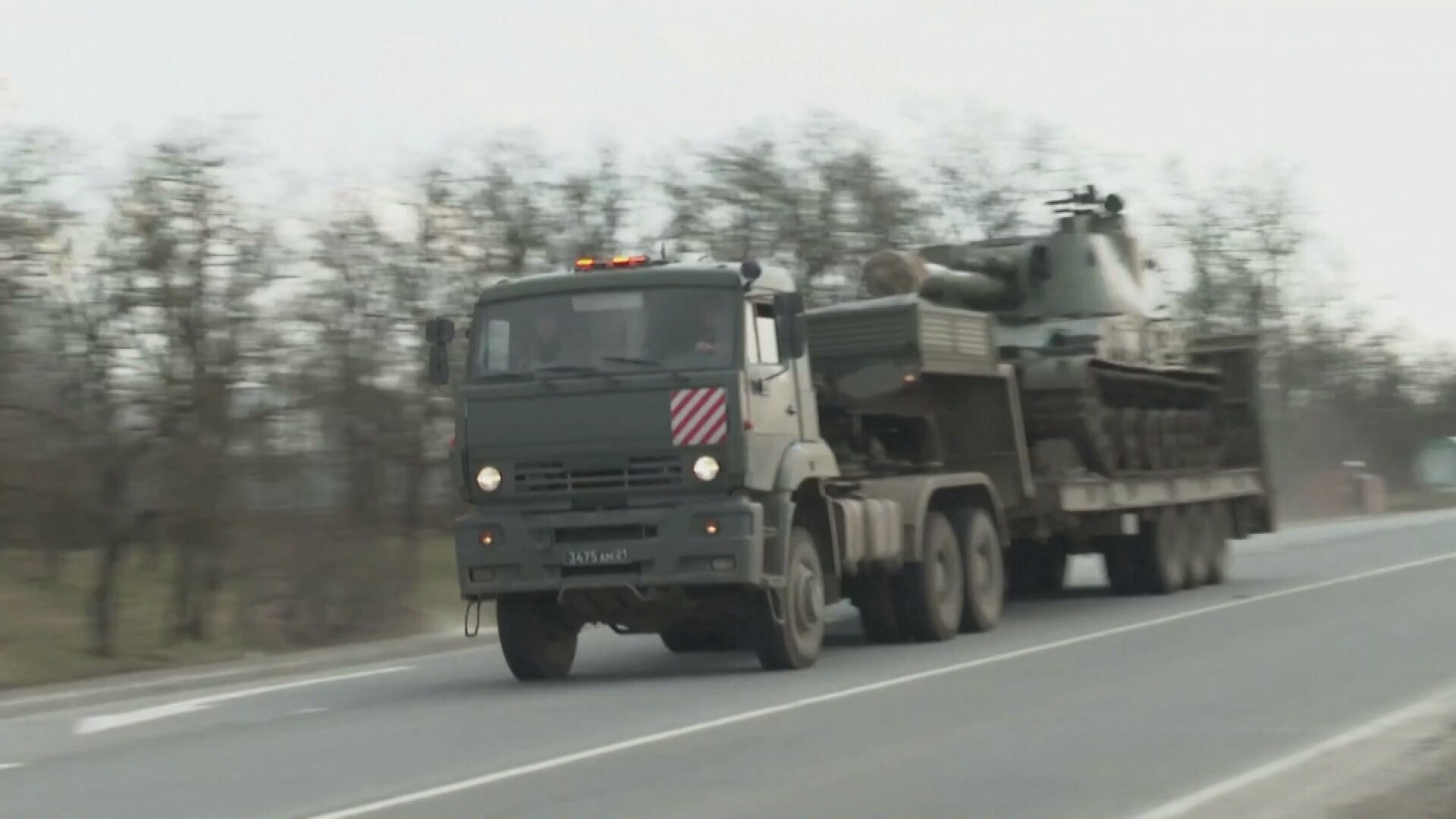
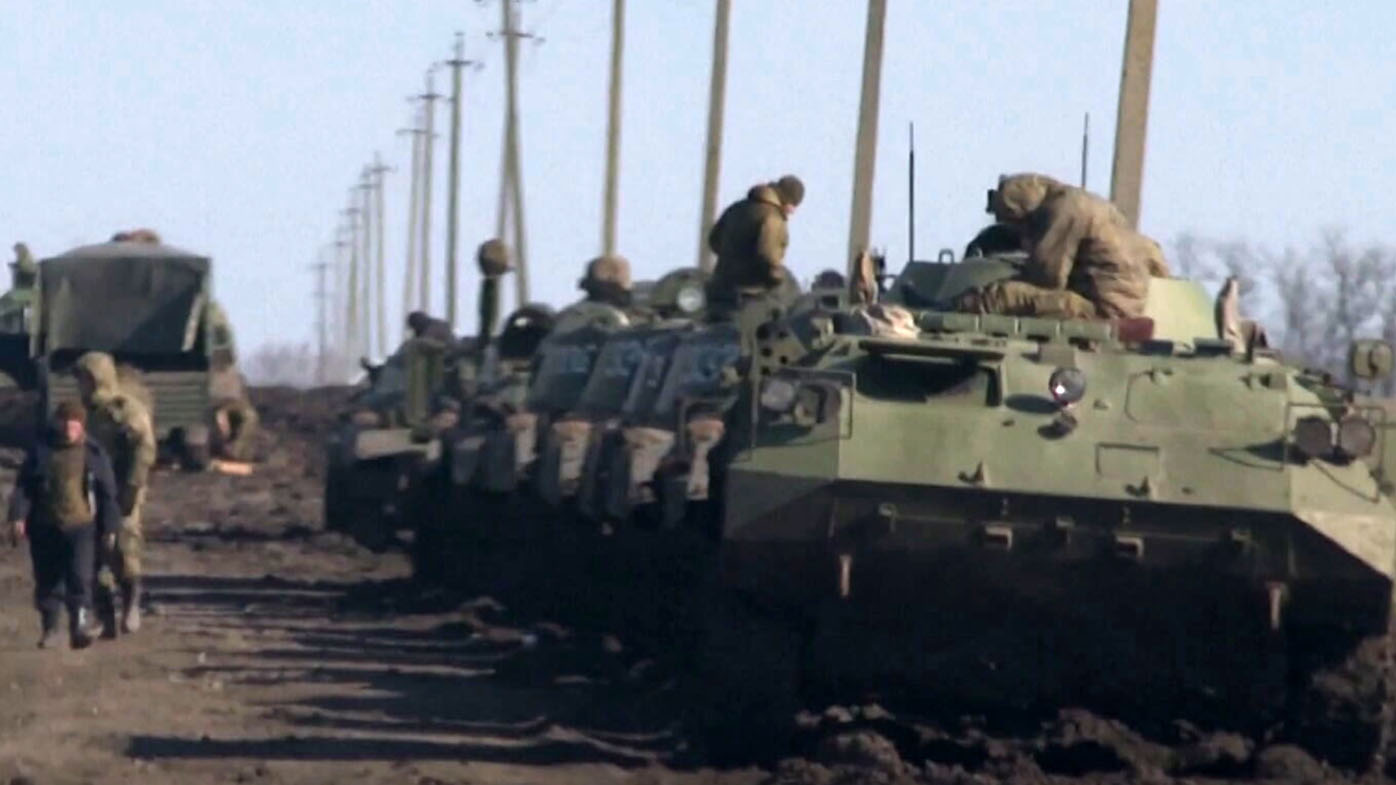
The measures, accompanied by the repositioning of additional US troops to the Baltic nations on NATO's eastern flank bordering Russia, came as Russian troops rolled into rebel-held areas in eastern Ukraine after Mr Putin said he was recognising the independence of the separatist region in defiance of US and European demands.

The US is sending about 800 infantry troops and 40 attack aircraft from other locations within Europe, and F-35 strike fighters and AH-64 Apache attack helicopters will shift their locations, according to a defence official.
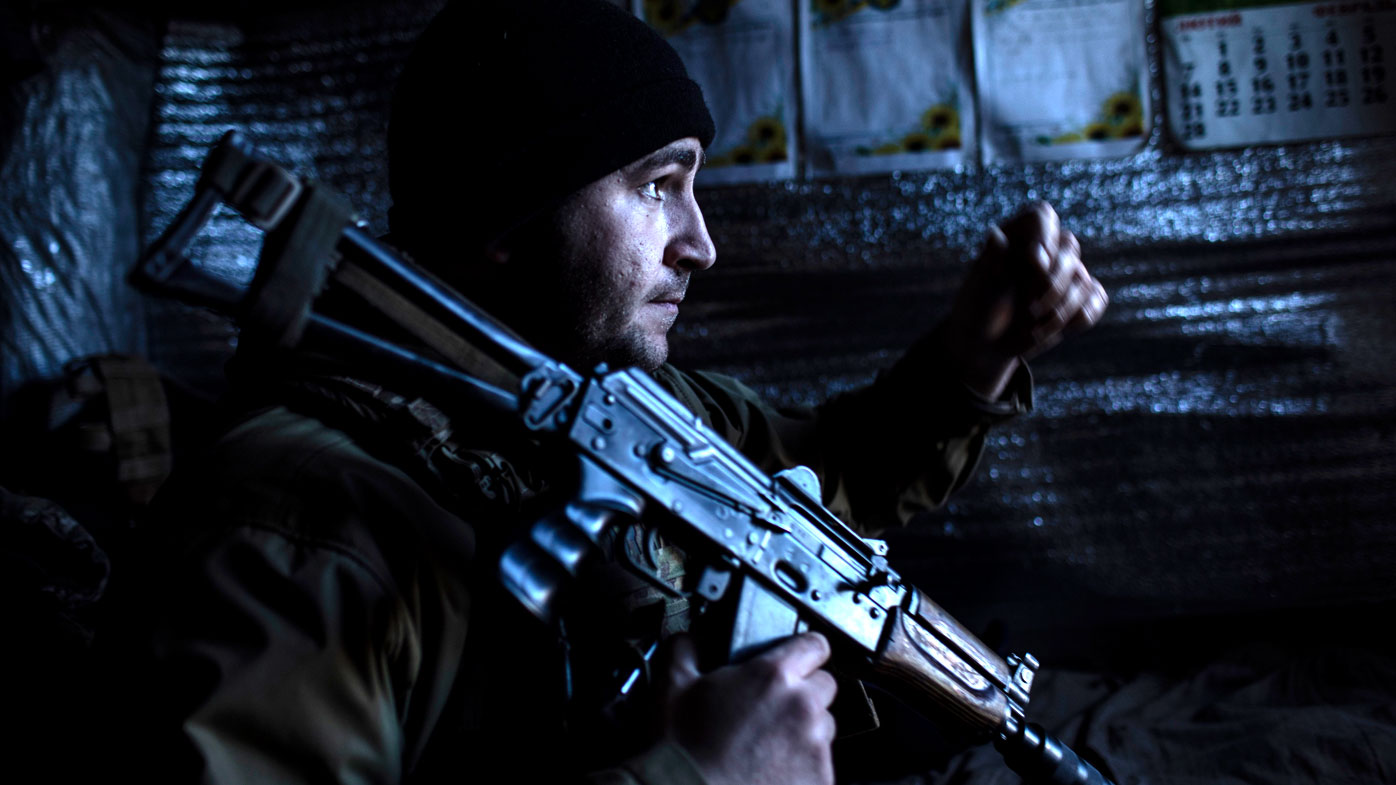
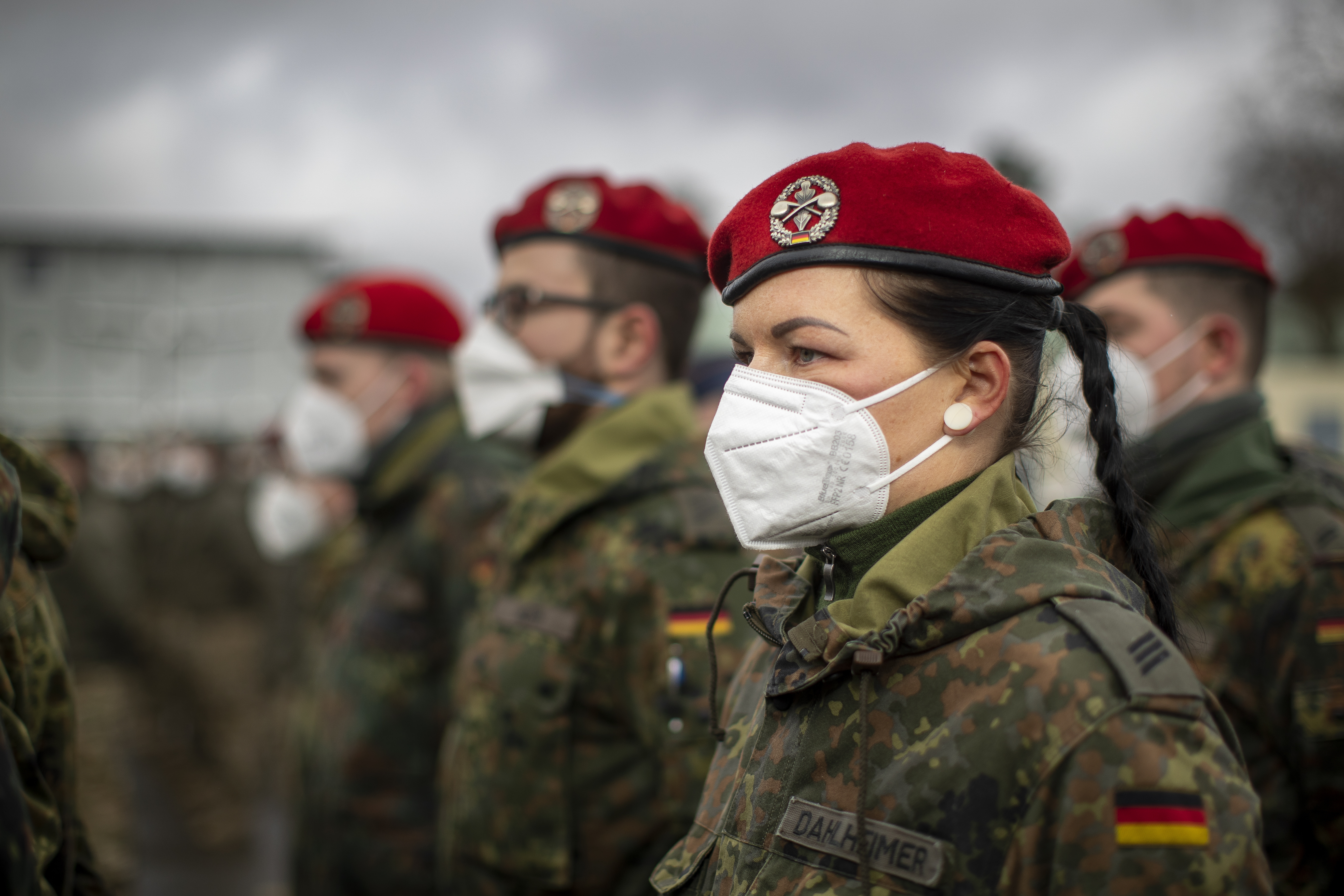
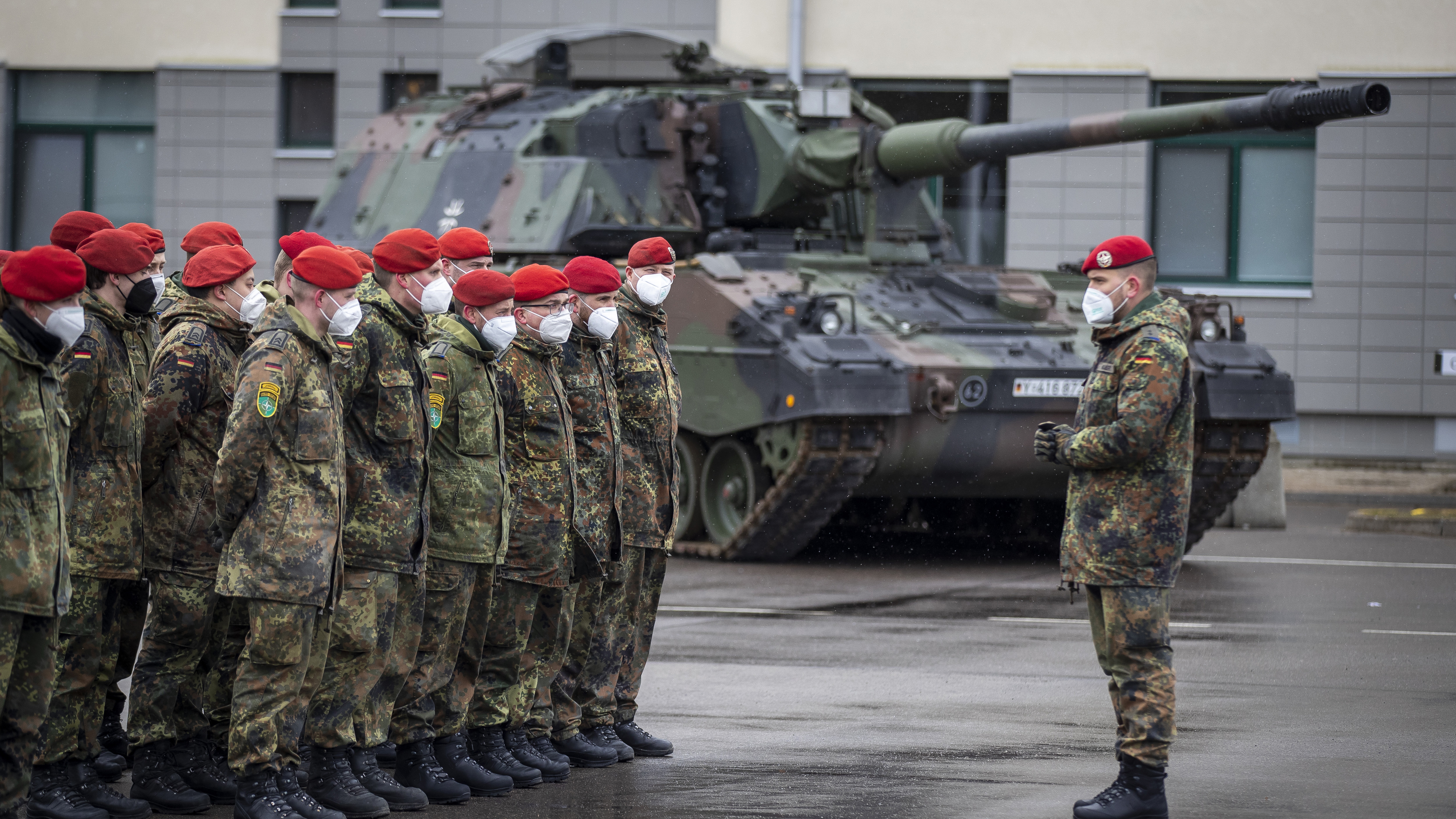
It is unclear if Russian troop movements marked the beginning of an invasion of Ukraine that Western leaders have warned about for weeks.German Bundeswehr soldiers of the NATO enhanced forward presence battalion waits to greet German Defense Minister Christine Lambrecht upon his arrival at the Rukla military base some 100 kms (62.12 miles) west of the capital Vilnius, Lithuania, Tuesday, Feb. 22, 2022. Germany is sending additional troops to Lithuania in response to Russia's military build-up on the border with Ukraine and the worsening security situation in the Baltic states. (AP Photo/Mindaugas Kulbis)

Overnight Russian forces entered rebel-held areas.

Russia had moved "from covert attempts to destabilise Ukraine to overt military action," NATO Secretary General Jens Stoltenberg said.

Mr Stoltenberg called the move a "serious escalation by Russia and a flagrant violation of international law".

He added that there's "every indication" Russia continues to plan for a full-scale attack on Ukraine.

UN want conflict solved without 'further bloodshed'

United Nations Secretary-General Antonio Guterres called for an immediate ceasefire and "reestablishment of the rule of law" after further military action from Russia.

"When troops of one country enter the territory of another country without its consent, they are not impartial peacekeepers," Mr Guterres said today from New York.

"They are not peacekeepers at all.

"We need restraint and reason. We need de-escalation now. I urge all to refrain from actions and statements that would take this dangerous situation over the brink."

Mr Guterres said diplomacy was required to avoid "further bloodshed".

"It is high time to return to the path of dialogue and negotiations," he said.
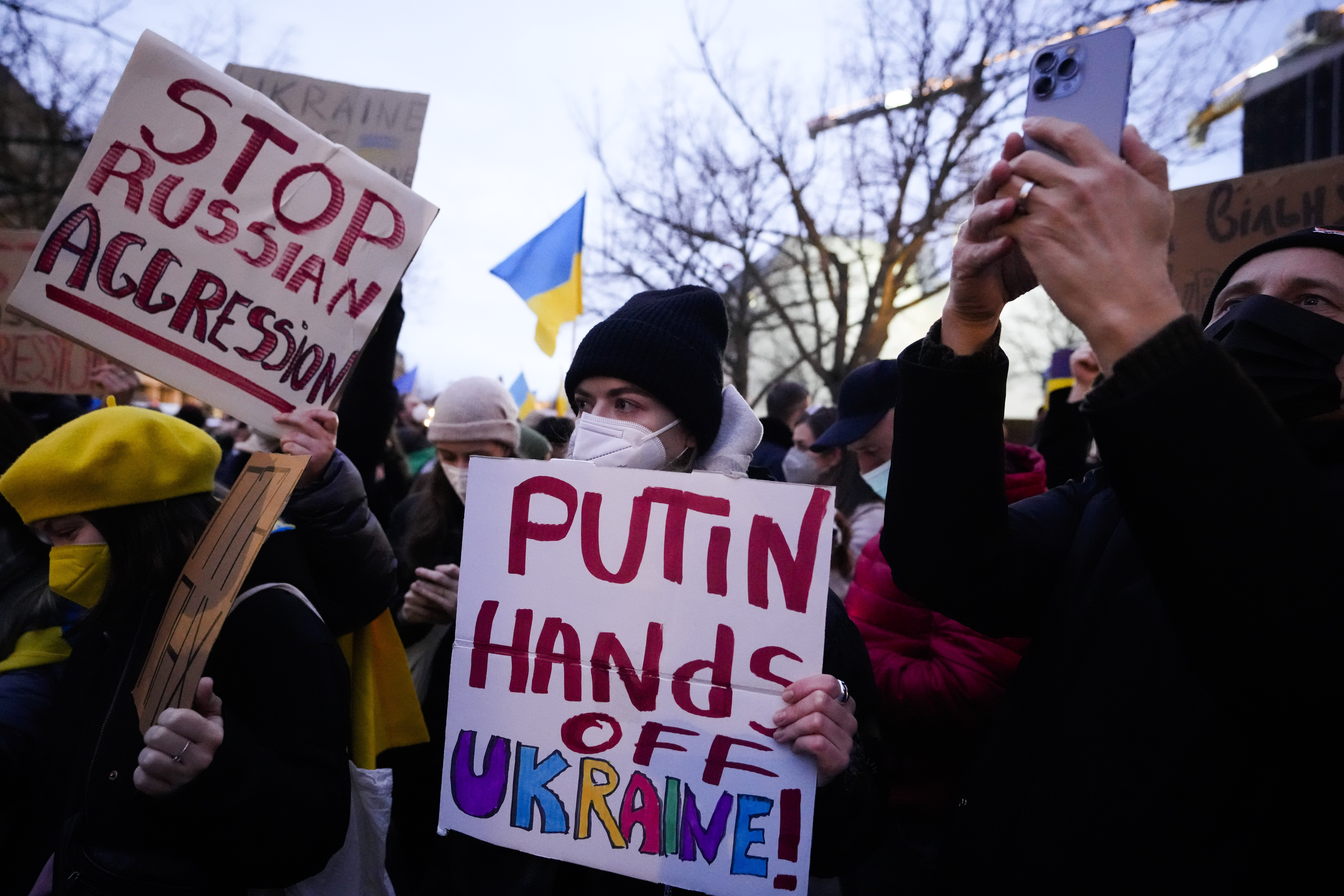
Women show posters in support of the Ukraine as they attends a demonstration along the street near the Russian embassy to protest against the escalation of the tension between Russia and Ukraine in Berlin, Germany, Tuesday, Feb. 22, 2022. (AP Photo/Markus Schreiber)

US Secretary of State Antony Blinken this morning announced he had called off his meeting with Russian Foreign Minister Sergey Lavrov.

The leaders were set to meet Thursday.

"Now that we see the invasion is beginning and Russia has made clear its wholesale rejection of diplomacy, it does not make sense to go forward with that meeting at this time.

"I consulted with our allies and partners. All agree."

US levels sanctions on Russian banks and oligarchs

The US has moved to cut off Russia's government from Western finance, sanctioning two of its banks and blocking it from trading in its debt on American and European markets.

They included hitting civilian leaders in Russia's leadership hierarchy and two Russian banks considered especially close to the Kremlin and Russia's military, with more than $110 billion in assets.

That includes freezing all of those bank's assets under US jurisdictions.

Mr Biden held back some of the broadest and toughest of the financial penalties contemplated by the US, including sanctions that would reinforce the hold that Germany put on any startup of the Nord Stream 2 pipeline; an export ban that would deny Russia US high-tech for its industries and military; and sweeping bans that could cripple Russia's ability to do business with the rest of the world.

NATO on high alert
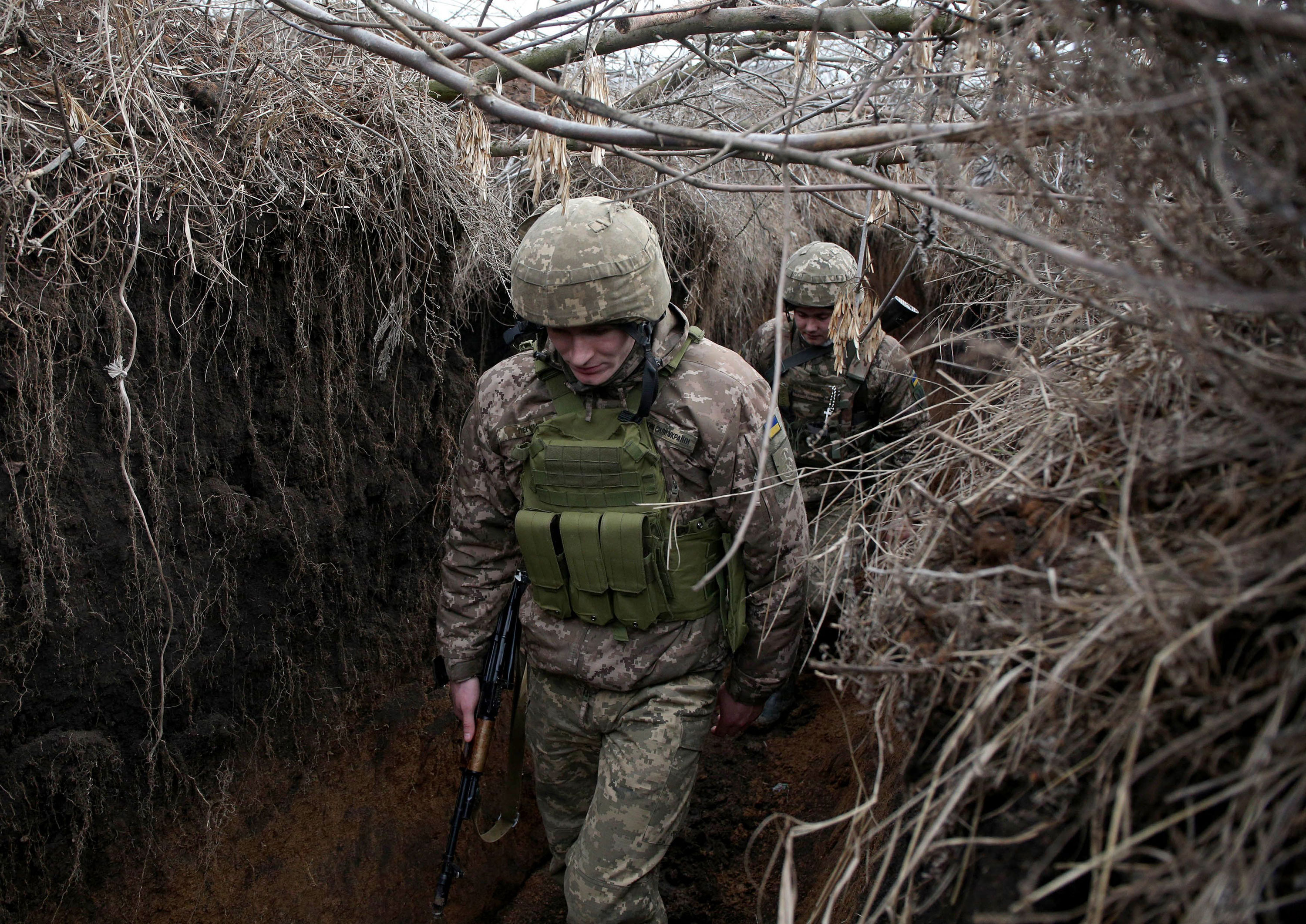
NATO allies have more than 100 warplanes on high alert and more than 120 warships ready at sea from the Arctic Circle to the Mediterranean Sea.

The White House has begun referring to Russian troop deployments in eastern Ukraine as an "invasion" after initially hesitating to use the term — a red line that President Joe Biden has said would result in the US levying severe sanctions against Moscow.

The White House decided to begin referring to Russia's actions as an "invasion" because of the situation on the ground, according to a US official who spoke on the condition of anonymity to discuss internal deliberations.

US-led sanctions were followed by many Western allies.

The UK government slapped sanctions on five Russian banks and three Russian billionaires.

And Germany has stopped the progression of the controversial Nord Stream 2 pipeline following Moscow's actions in eastern Ukraine.

Moscow demands NATO roll back
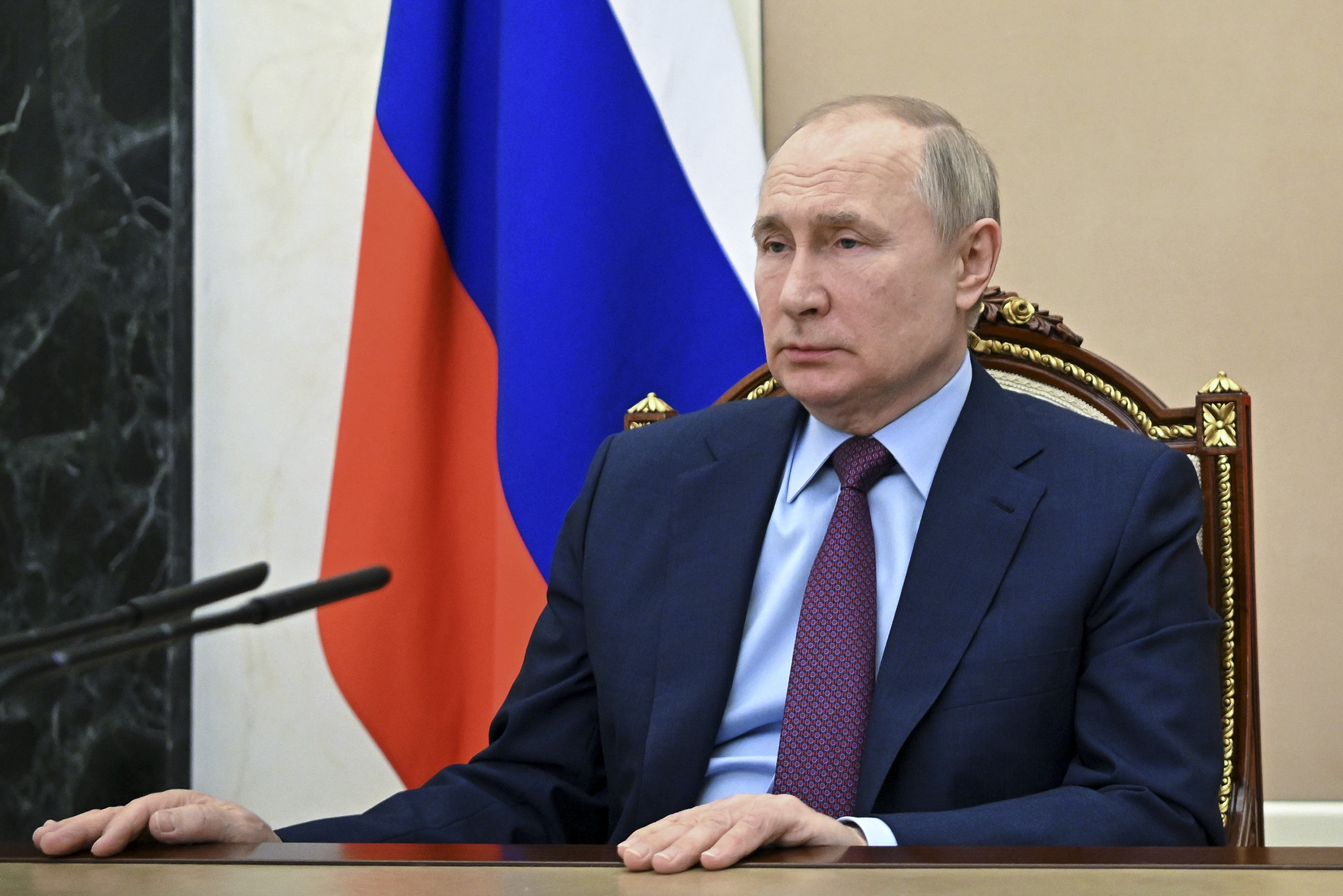
READ MORE: What is Nord Stream 2 pipeline, and why does it make the US anxious?

Meanwhile President Putin called for international recognition of Crimea as part of Russia, an end to Ukraine's NATO membership bid and a halt to weapons shipments there.

Mr Putin claimed that Russia's 2014 annexation of Ukraine's Crimean Peninsula should be internationally recognised as a legitimate reflection of the local population's choice, likening it to a vote for Kosovo independence.

The annexation has been widely condemned by Western powers as a breach of international law.

To end the current crisis, he also called for the renunciation of Ukraine's NATO bid, saying it should assume a "neutral status," and said that the West should stop sending weapons there.

Russia said it wants Western guarantees that NATO won't allow Ukraine and other former Soviet countries to join as members.

Moscow has also demanded the alliance halt weapons deployments to Ukraine and roll back its forces from Eastern Europe — demands flatly rejected by the West.

An invasion or not an invasion?
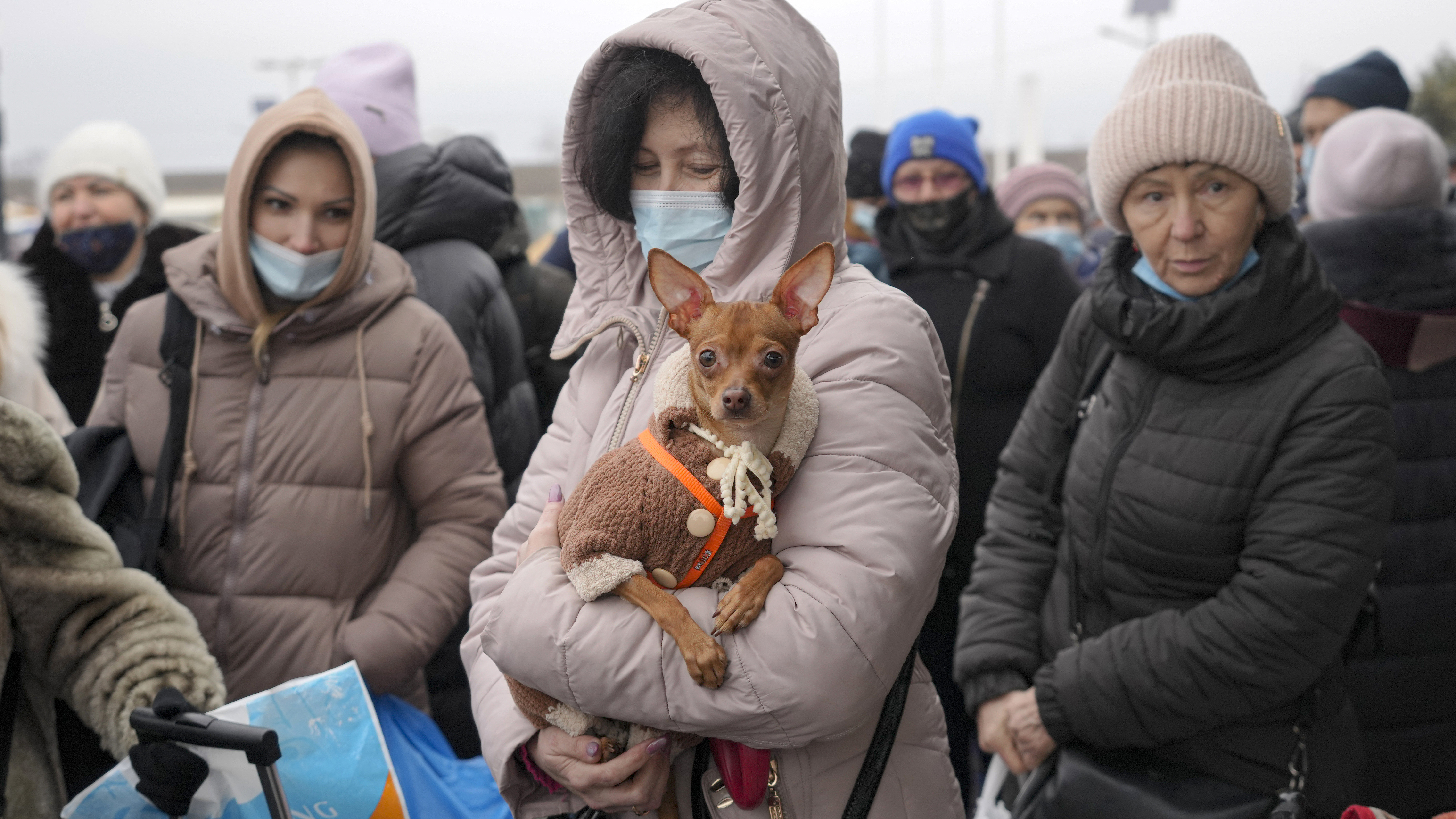
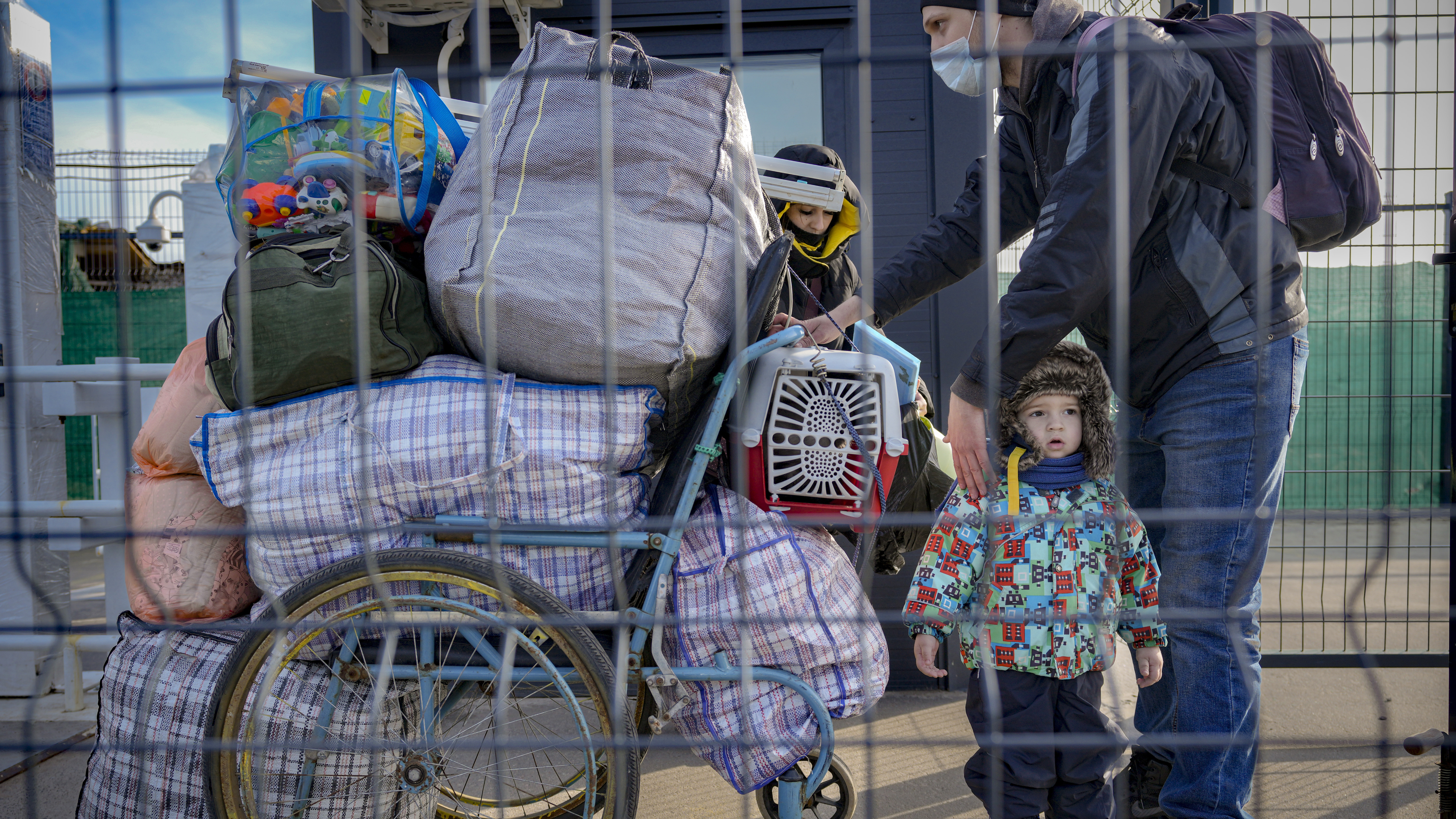
A woman holds her dog as she waits with others to cross from Ukrainian government controlled areas to pro-Russian separatists' controlled territory in Stanytsia Luhanska, the only crossing point open daily, in the Luhansk region, eastern Ukraine.A family crosses from pro-Russian separatists controlled territory to Ukrainian government controlled areas in Stanytsia Luhanska.

For weeks, Western powers have been bracing for an invasion as Russia massed an estimated 150,000 troops on three sides of neighbouring Ukraine.

They warned an attack would cause massive casualties, energy shortages in Europe and economic chaos around the globe — and promised swift and severe sanctions if it materialised.

Western leaders have long warned Moscow would look for cover to invade — and just such a pretext appeared to come on Monday, when Mr Putin recognised as independent two separatist regions in eastern Ukraine, where government troops have fought Russia-backed rebels in a conflict that has killed over 14,000 people.

Condemnation from around the world was quick. Ukrainian President Volodymyr Zelenskyy said he would consider breaking diplomatic ties with Russia and Kyiv recalled its ambassador in Moscow.

But confusion over what exactly was happening in eastern Ukraine threatened to hobble a Western response.

While the US clearly called it an invasion, some other allies hedged.

"Russian troops have entered in Donbas," the name for the area where the two separatist regions are located, EU foreign policy chief Josep Borrell said in Paris.

"We consider Donbas part of Ukraine."

But in a distinction that could complicate a European and Western response, he added: "I wouldn't say that (it is) a fully fledged invasion, but Russian troops are on Ukrainian soil."

British Prime Minister Boris Johnson also said the UK would slap sanctions on five Russian banks and three wealthy individuals.

Mr Johnson said Russian tanks and armoured personnel carriers have been spotted in the separatist Ukrainian regions recognised as independent by President Putin.

He said that amounts to "a renewed invasion" of Ukraine.

'Russian troops are on Ukrainian soil'
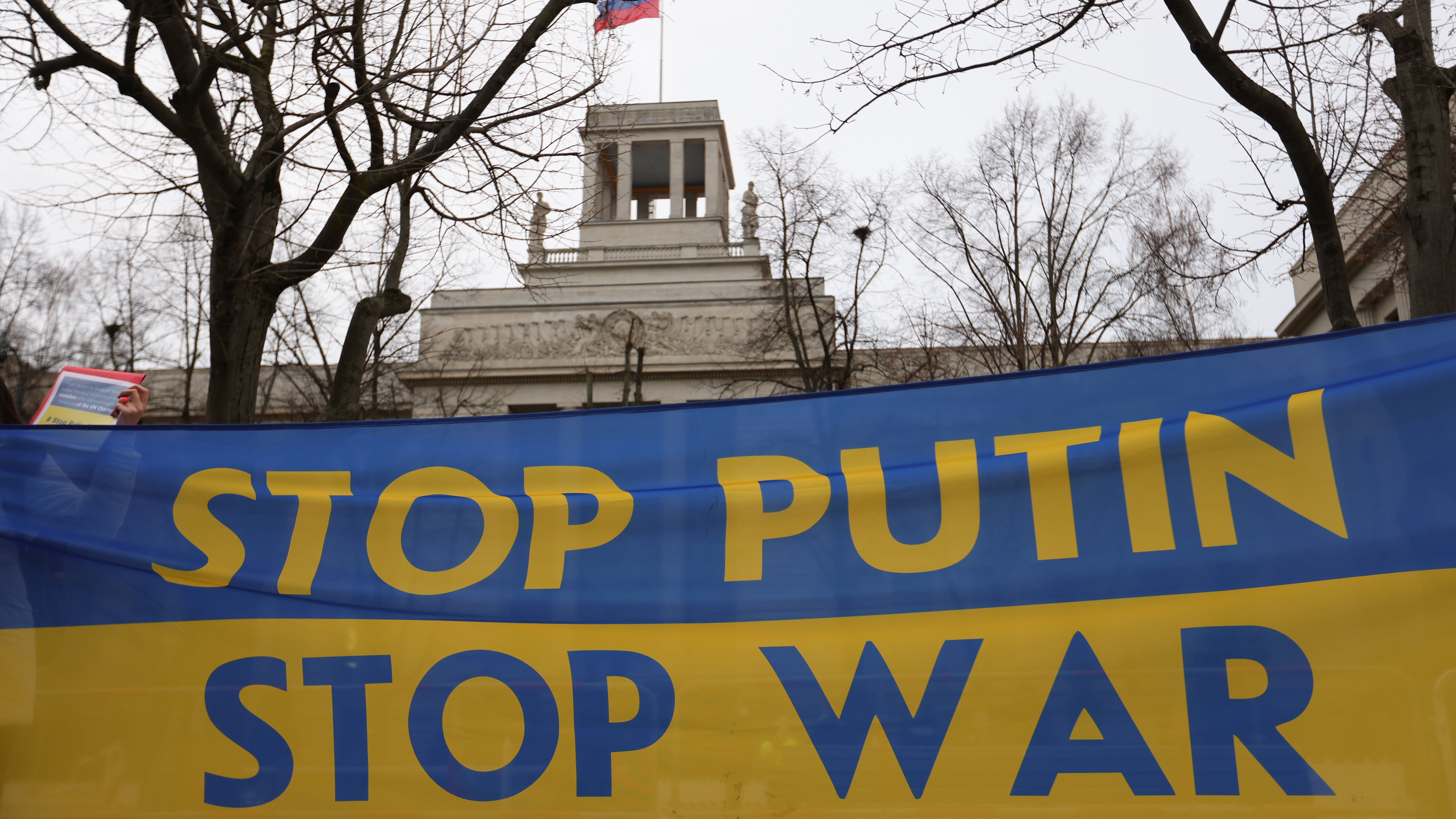
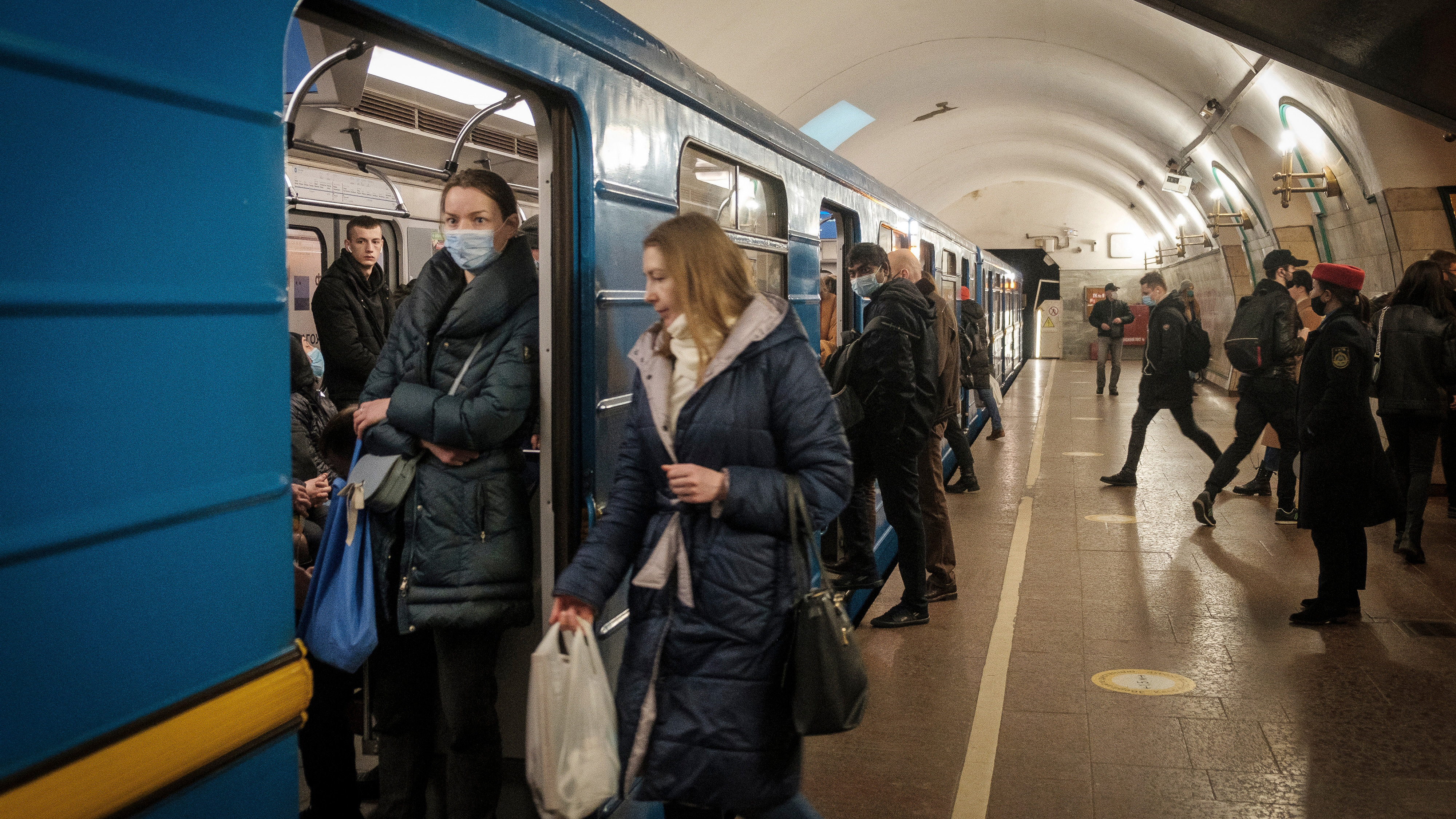
Protesters hold a banner reading stop Putin stop war in Berlin, Germany. Passengers board a train at a Kyiv Metro station in Kyiv, Ukraine.

Nord Stream 2 pipeline suspended

The Russian moves also pushed Germany to suspend the certification process for Nord Stream 2 pipeline that was to bring natural gas from Russia.

The pipeline was built to help Germany meet its energy needs, particularly as it switches off its last three nuclear power plants and phases out the use of coal, and it has resisted calls by the US and others to halt the project.
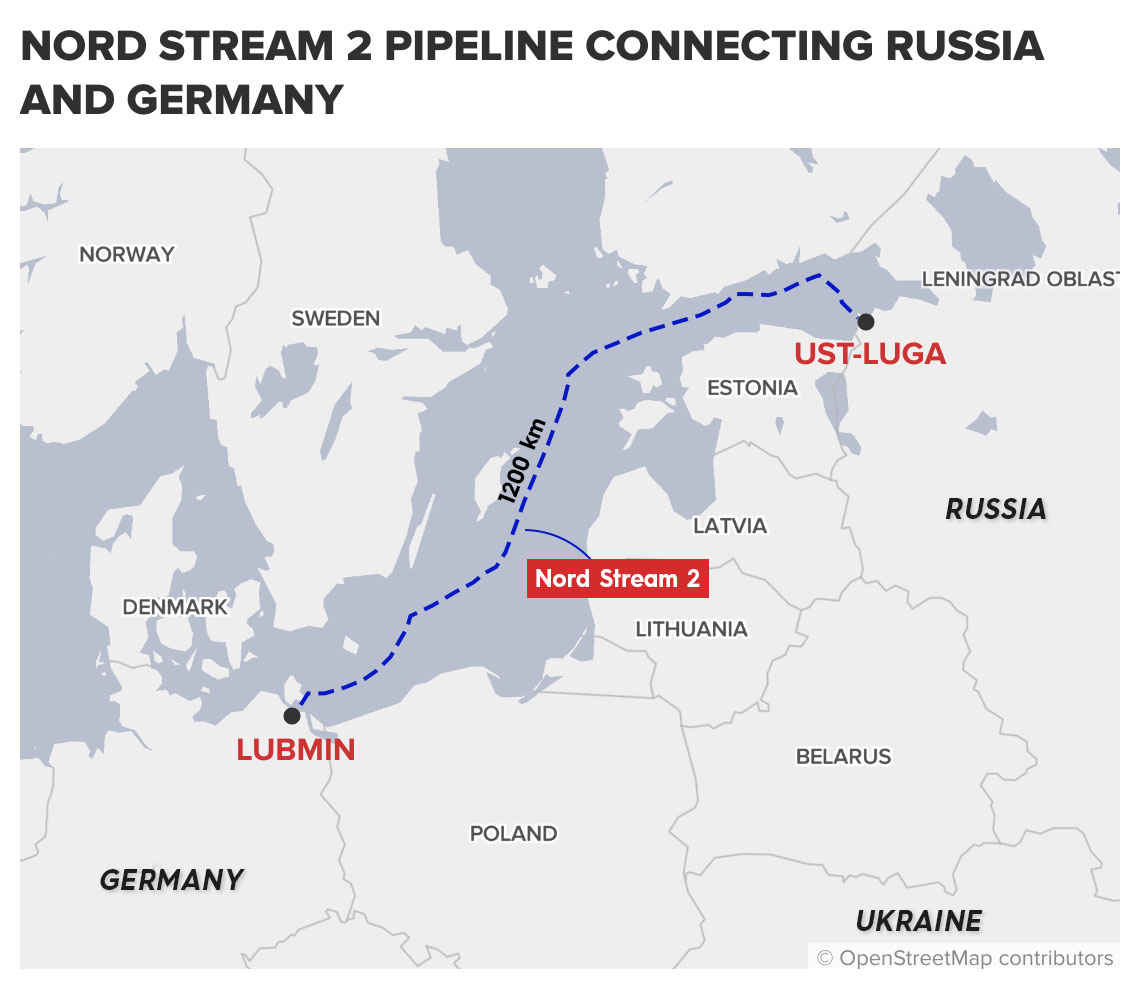
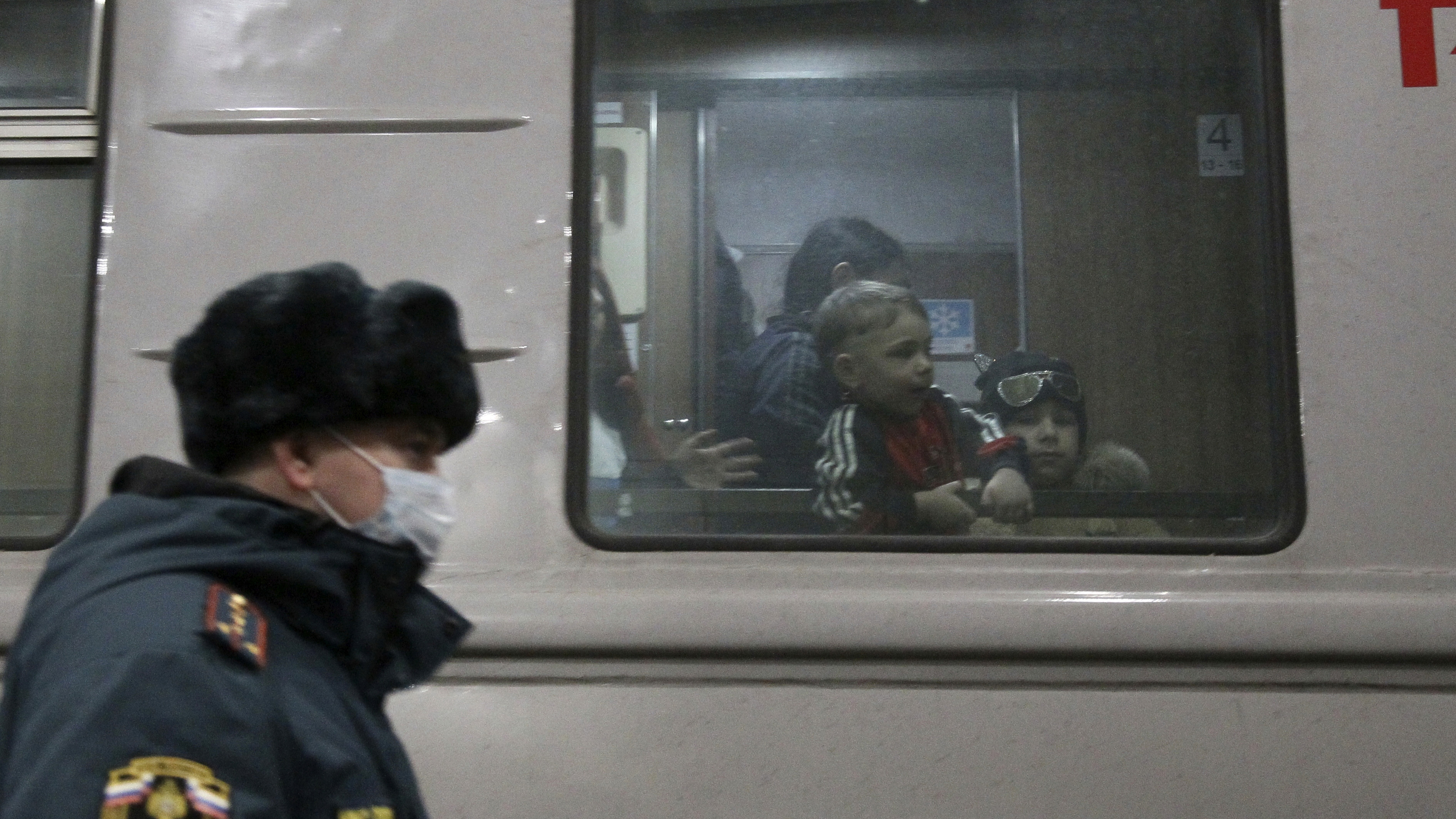
Nord Stream 2 in an undersea 1200km-long natural gas pipeline under the Baltic Sea, which runs from Russia to Germany's Baltic coast.Children evacuated from the Donetsk region, the territory controlled by a pro-Russia separatist governments in eastern Ukraine, are seen through a train window as they wait to be taken to temporary housing, at the railway station in Nizhny Novgorod, Russia.German Bundeswehr soldiers of the NATO enhanced forward presence battalion waits to greet German Defense Minister Christine Lambrecht upon her arrival at the Rukla military base 100 kms (62.12 miles) west of the capital Vilnius, Lithuania.

READ MORE: 'Anxiety is rising': Aussie mum, son stranded in Ukraine

Even as alarm spread across the globe, Zelenskyy, the Ukrainian president, sought to project calm, telling the country in an address overnight: "We are not afraid of anyone or anything. We don't owe anyone anything. And we won't give anything to anyone."

With agencies
States bracing for more rain as two potential cyclones form off coast

Two states on the east coast are in the grips of a major deluge, with warnings more rain and life-threatening flash flooding is on the way.

Meanwhile, modelling suggests two possible cyclones could be forming in the nation's far north.

Meteorologist Jonathan How from the Bureau of Meteorology (BoM) said Sydney's rain will last for the next eight to ten days.

READ MORE: Lawmakers give Putin permission to use force outside Russia

Roads have flooded in Marrickville.

"We are likely to see showers continue into the weekend with another 10 to 20mm over the next few days but for those across Sydney we're expecting showers to continue all the way into late next week," Mr How said.

"So another eight to 10 days of quite showery, cool conditions.

"Thankfully, over the next few days the rain won't be quite as heavy but the ground is so saturated so take care in low-lying areas."

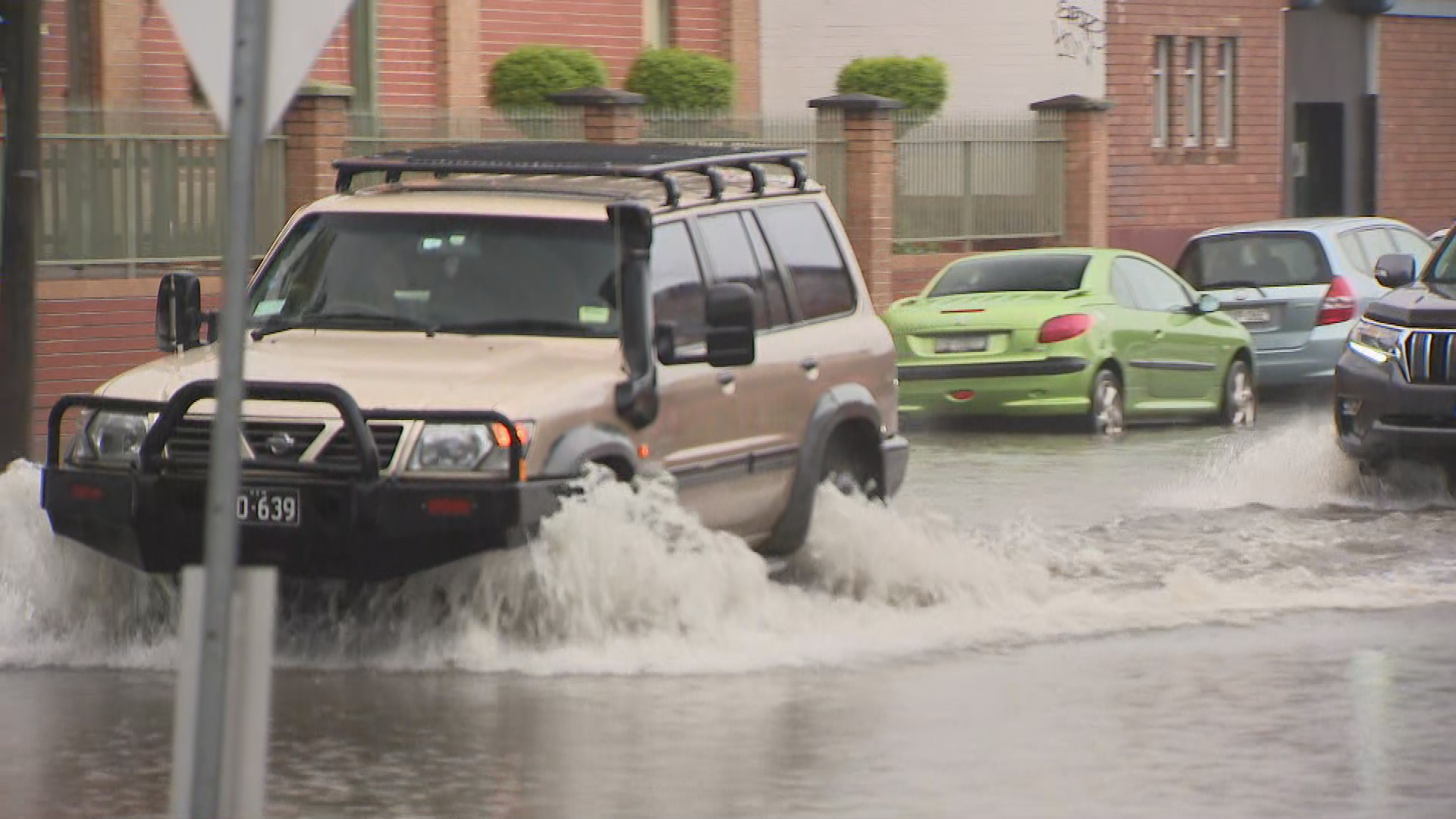
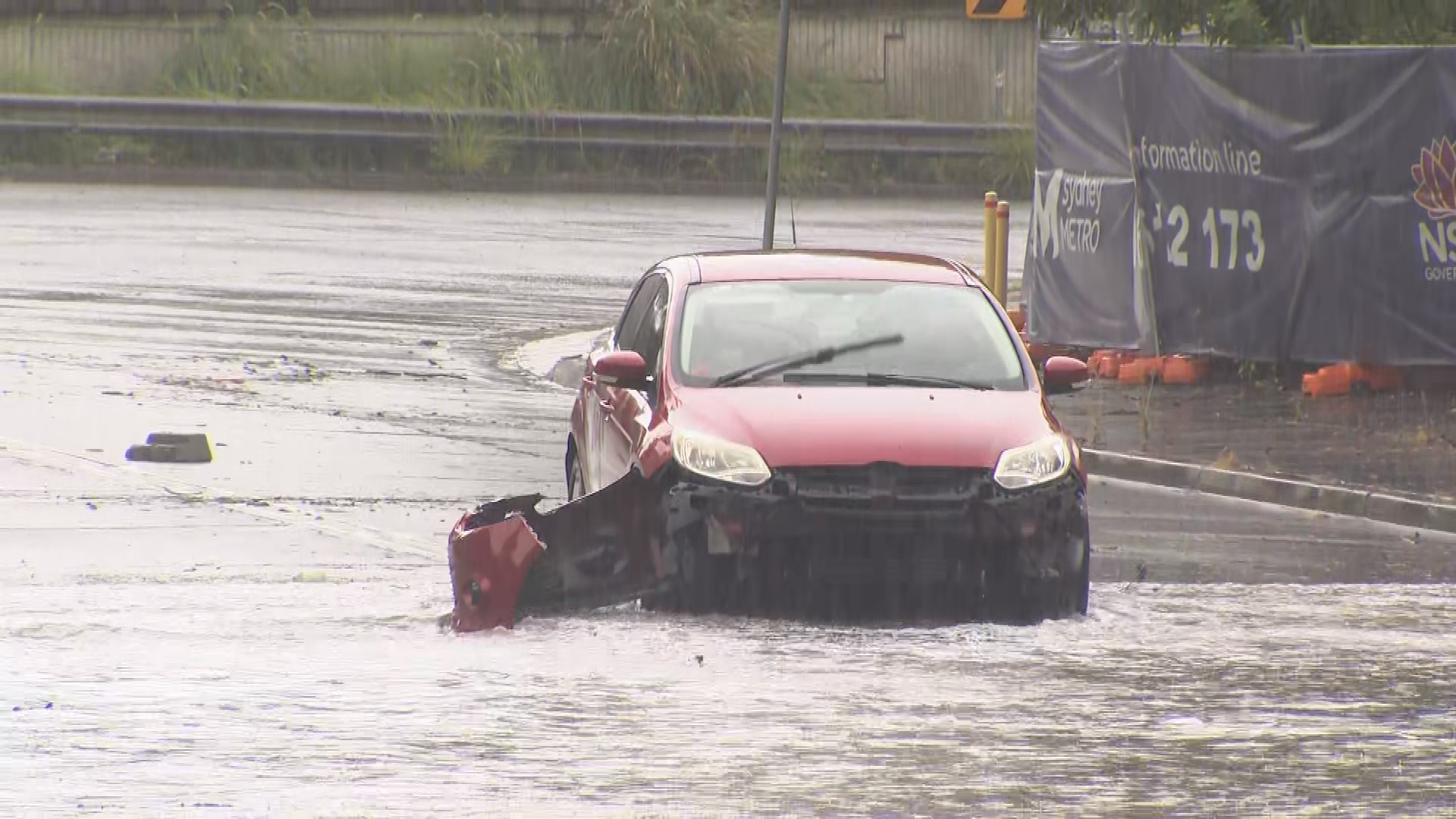
Streets across Sydney have been inundated by floodwaters as many of the city's suburbs recorded their wettest day in almost a year.

A "metre of rain" could fall on parts of south-east Queensland, Mr How predicted.

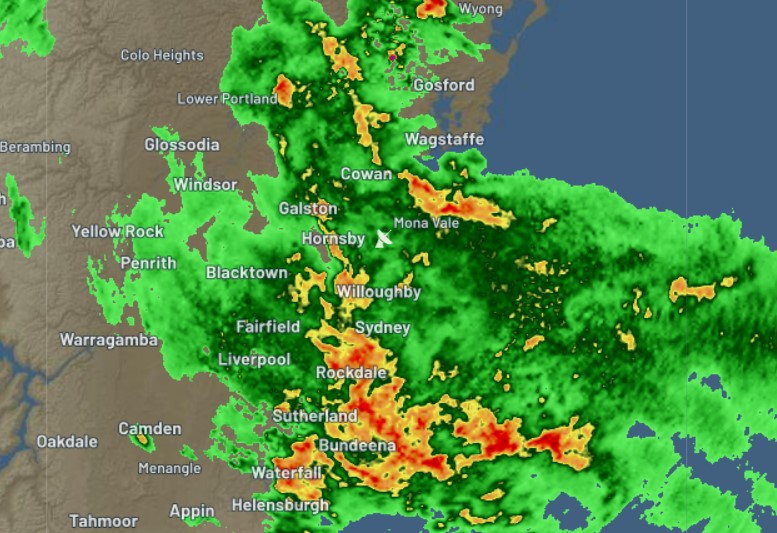
The warnings come after parts of Sydney and the Central Coast received more than a months worth of rain in two hours yesterday.

Mr How called the rain "torrential".

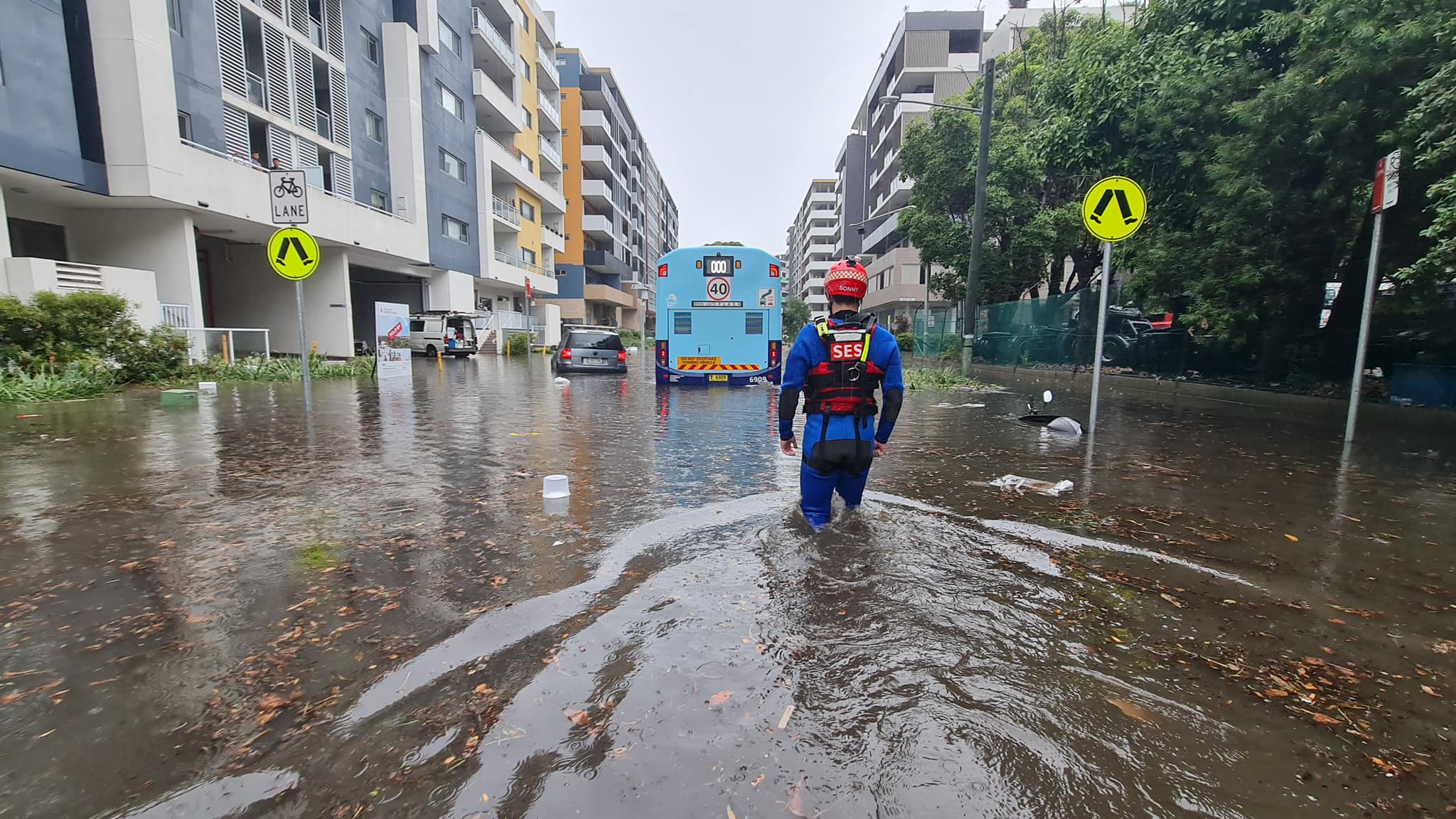
Inner-city streets turned into rivers when a storm cell hit around midday, trapping cars and forcing the closure of some train lines.

The State Emergency Service (SES) has received 632 calls for help.

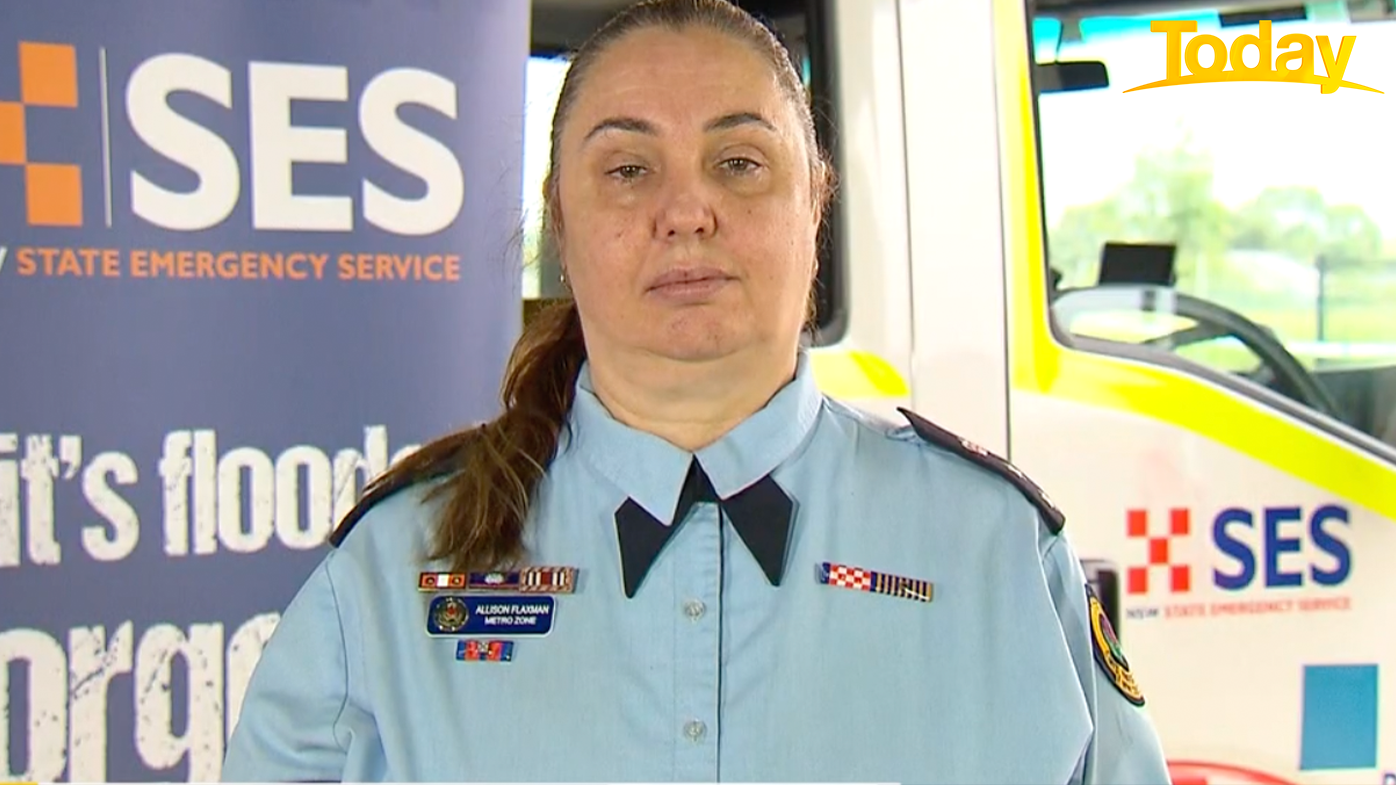
Allison Flaxman, Deputy Zone Commander at NSW SES, has urged people not to drive through floodwaters.

"We are doing a lot of jobs around leaking roofs, around rescuing people that have driven into floodwaters and trees that have come down in the wind," Ms Flaxman said.

The NSW SES has issued a warning about the dangers of floodwaters as wet weather continues across the state.

"Please just drive to the conditions of the road. Obviously, if you come across a road that is flooded, please stop. Turn around and find an alternative route.

"Our volunteers are out there trying to rescue as many people as we can. We don't want to put their lives … at risk."

Weatherzone said more than 110mm of rain fell at Marrickville since 9am, including 98mm in just two hours in the afternoon.

In Sydney's west, more than 87mm of rain fell at Toongabbie.

READ MORE: Reward for information on missing Belgian backpacker Theo Hayez

The storm hit around midday, bring a months worth of rain in two hours to some areas.

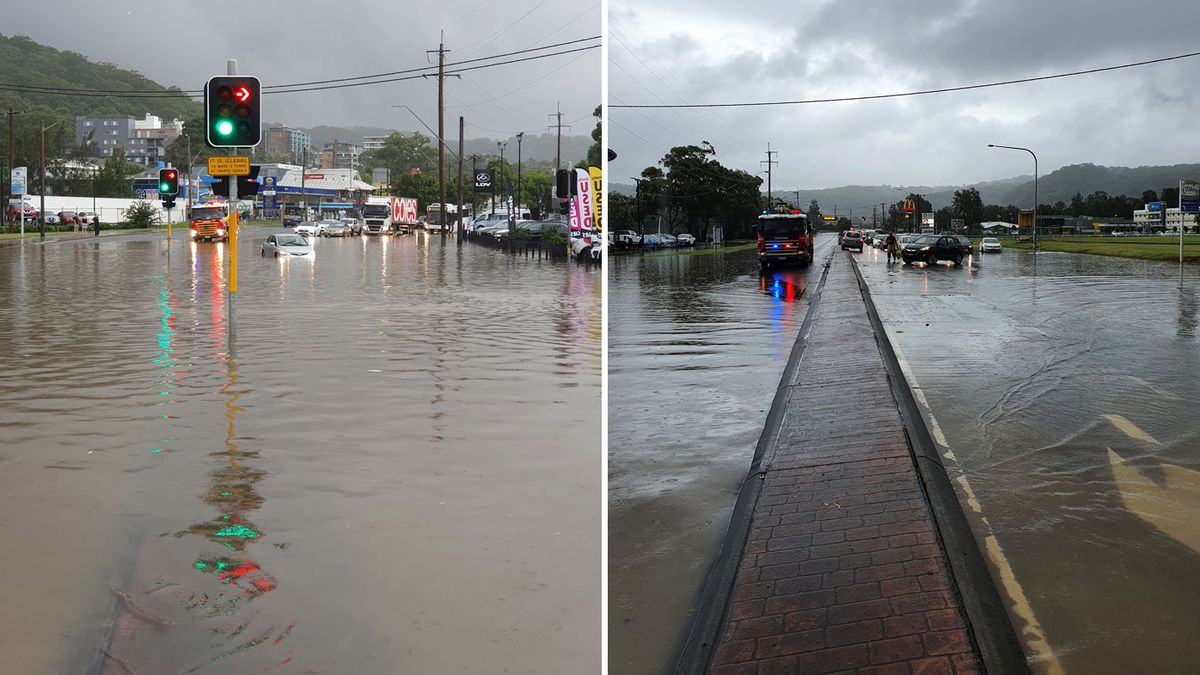
The Central Coast was also hard hit.

The Central Coast Highway was closed in both directions at West Gosford, prompting warnings for people to avoid the area.

The Central Coast Highway in Gosford is closed after flash flooding.

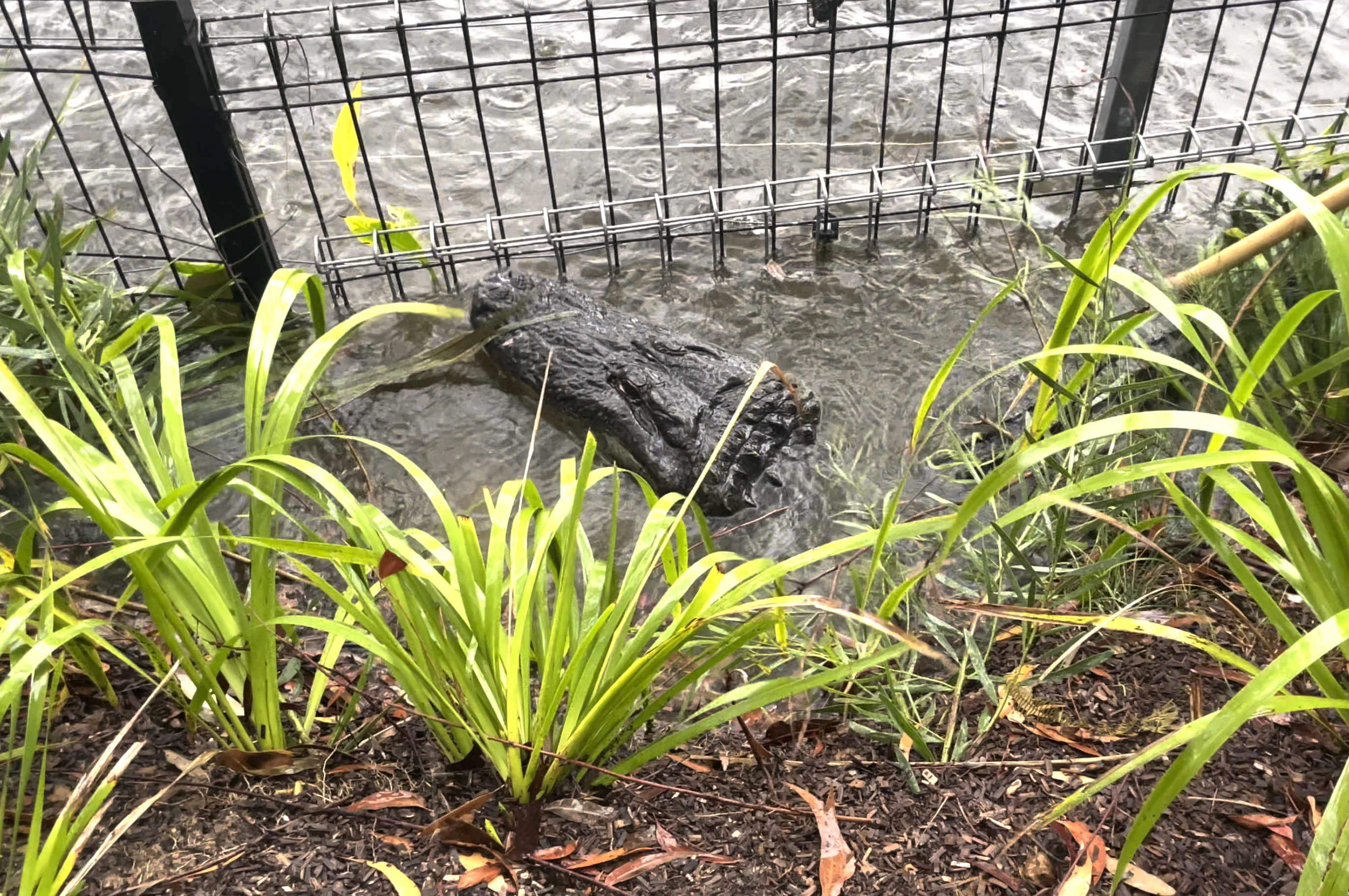
Rising waters forced the rescue of a large American alligator at the Australian Reptile Park yesterday after it swam over its enclosure.

Zookeepers had the delicate task of relocating the animal after it became stuck between fences.

READ MORE: Fresh calls for Queensland to reconsider daylight saving

A massive American Alligator was relocated by Keepers at the Australian Reptile Park this morning after rapidly rising water levels allowed him to swim over an internal boundary fence, causing him to be stuck between fences.

A separate weather system is causing chaos across south-east Queensland.

Parts of the Sunshine Coast recorded 300mm in just three hours overnight.

The wet weather will hit Brisbane and the Gold Coast this afternoon, with warnings of life-threatening flash flooding.

https://twitter.com/BOM_Qld/status/1495954879004696591

Multiple flood warnings are currently in place for the state, with two severe storm warnings also issued.

Areas in the firing line include the Southeast Coast and parts of Wide Bay and Burnett Forecast Districts — as well as parts of Central Highlands and Coalfields, Central West, Maranoa and Warrego and Darling Downs and Granite Belt Forecast Districts.

"Heavy, locally intense rainfall, which may lead to flash flooding is occurring north of Brisbane and across the Sunshine Coast and southern Wide Bay," the BoM said.

"Heavy to intense rainfall is forecast to extend to areas east of about Maryborough, Toowoomba, Boonah and the Gold Coast early Wednesday morning. Six-hourly rainfall totals between 100mm to 200mm are likely, with 250mm to 350mm possible."

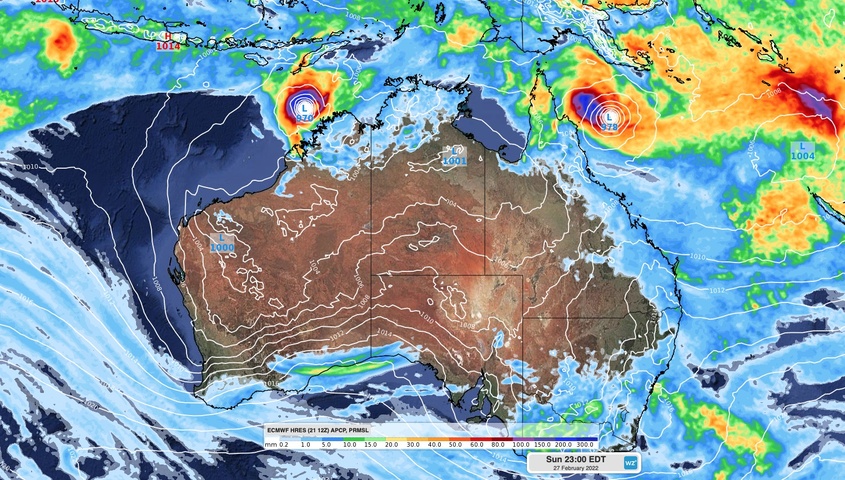
Weatherzone has also warned that two tropical cyclones could potentially form over northern Australia later this week.

ECMWF mean sea level pressure (MSLP) and 24-hour rainfall forecast at 11pm AEDT Sunday, February 27, showing low pressure systems or cyclones to the northwest and northeast of Australia.

"A number of forecast models suggest that two tropical lows may develop near northern Australia later this week, one to the north of WA and the other somewhere around the Gulf of Carpentaria or northern Coral Sea," Weatherzone said.

"At this stage, it is too early to know exactly where, when and how much these low pressure systems will develop.

"However, there is enough model agreement to suggest that the two low pressure systems may move into environments that are favourable for tropical cyclone development near Australia, most likely towards the end of this week or early next week."

Here's how the weather is looking around the nation's capitals today.

Brisbane

It will be a wet and stormy day in Brisbane, where the mercury is tipped to reach 24C.

There's a chance of showers, and the chance of a thunderstorm in the west from late this morning.

Sydney

Heavy rain is easing today in Sydney, with the city tipped to reach 28C.

There's still a very high chance of showers, and the chance of a thunderstorm.

Melbourne

It will be a sunny, hot and humid day in Melbourne, with a maximum of 32C forecast.

There's a slight chance of a shower and the chance of a thunderstorm during this afternoon and early evening, most likely about the outer western suburbs and eastern hills.

Canberra

A shower or two could hit the nation's capital today, with the BoM forecasting a medium chance of rain.

This is "most likely during this afternoon and early evening".

There's also a chance of a thunderstorm.

Temperatures will range between 14-26C.

Hobart

It will be a hot, partly cloudy day in Hobart, with temperatures reaching 28C.

Adelaide

The mercury will climb to 32C in Adelaide, which has a clear and hot day in store.

Darwin

A maximum of 31C will be felt in tropical Darwin.

There's a high chance of showers, most likely from the late morning, and the chance of a thunderstorm.

Perth

Perth's run of hot weather continues, with a 35C day forecast.

It will be a sunny, clear day.