Category Archives: headline

Why Russia-backed rebels are a thorn in Ukraine's side

Amid fears of a Russian invasion of Ukraine, tensions have also soared in the country's east, where Ukrainian forces are locked in a long conflict with Russia-backed separatists.

More than 14,000 people have been killed in nearly eight years of fighting, and a sharp increase in skirmishes last week raised concern that Moscow could use the situation as a pretext for an incursion.

Here is a look at the state of affairs in the rebel-controlled territories in eastern Ukraine:
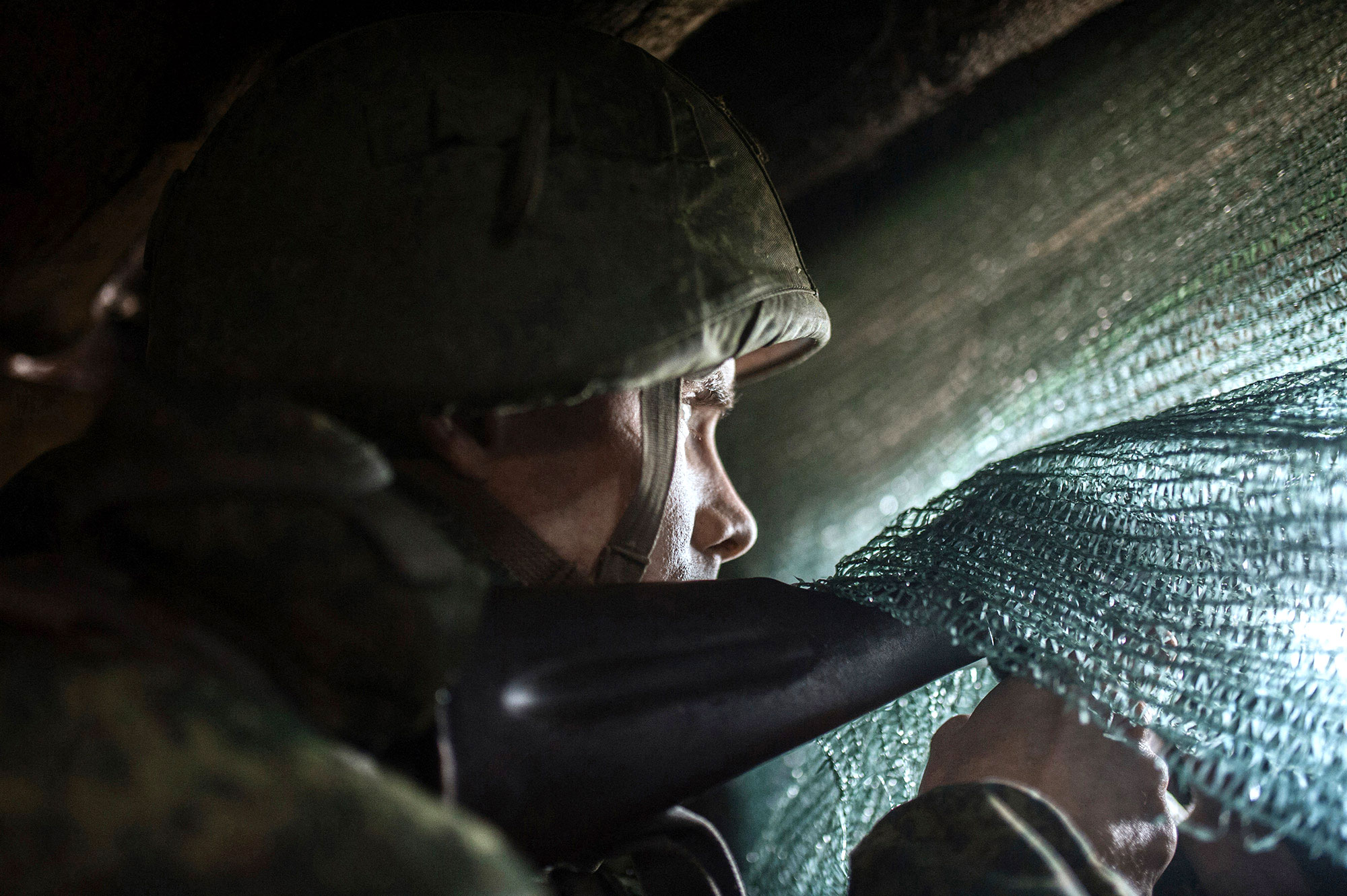
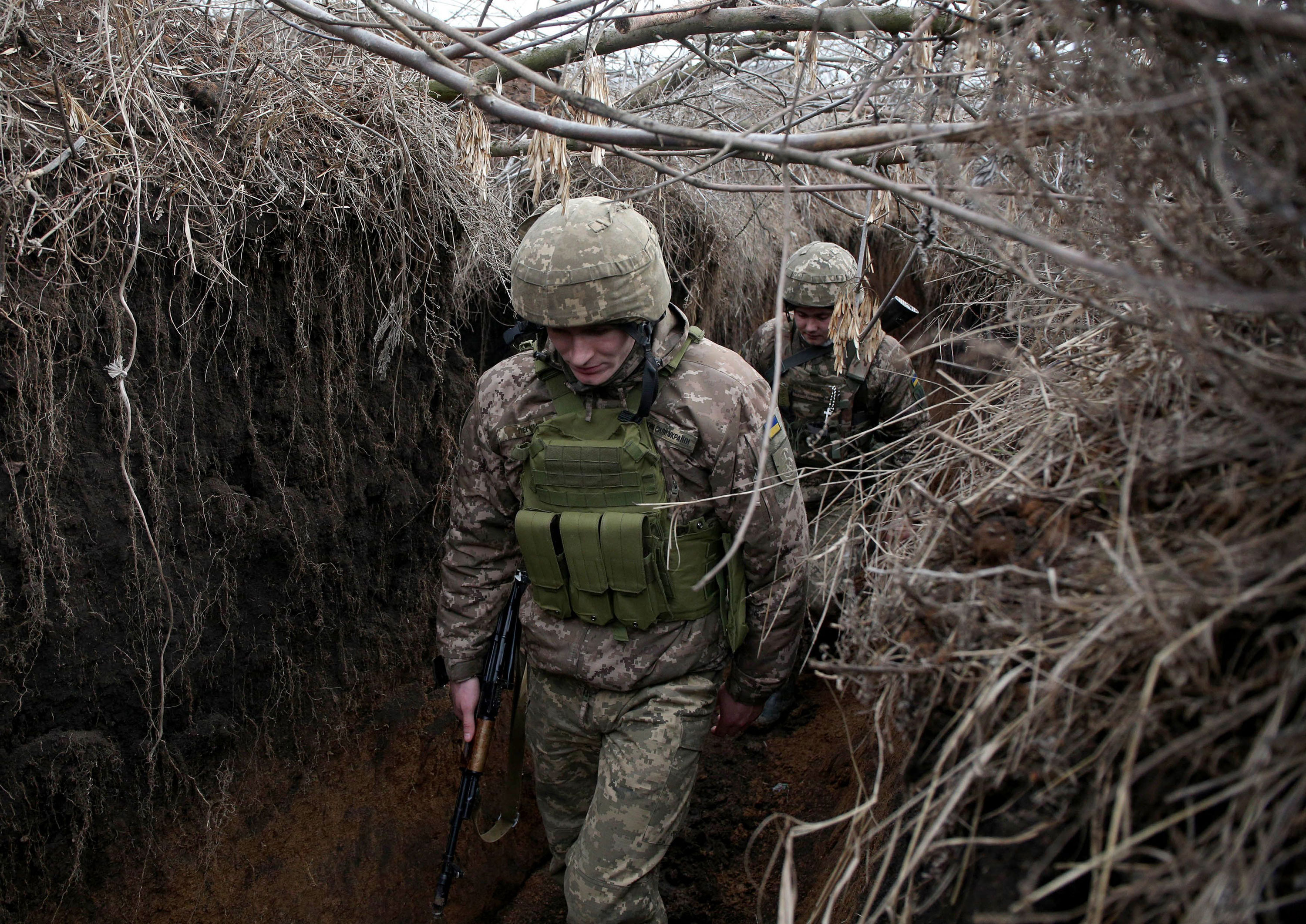
A pro-Russian serviceman sits in the advanced trenches of the people's militia of the Donetsk People's Republic in the Yasne village area, Donbas

SEPARATIST REBELLION

When Ukraine's Moscow-friendly president was driven from office by mass protests in February 2014, Russia responded by annexing Ukraine's Crimean Peninsula.

It then threw its weight behind an insurgency in the mostly Russian-speaking east, known as Donbas.

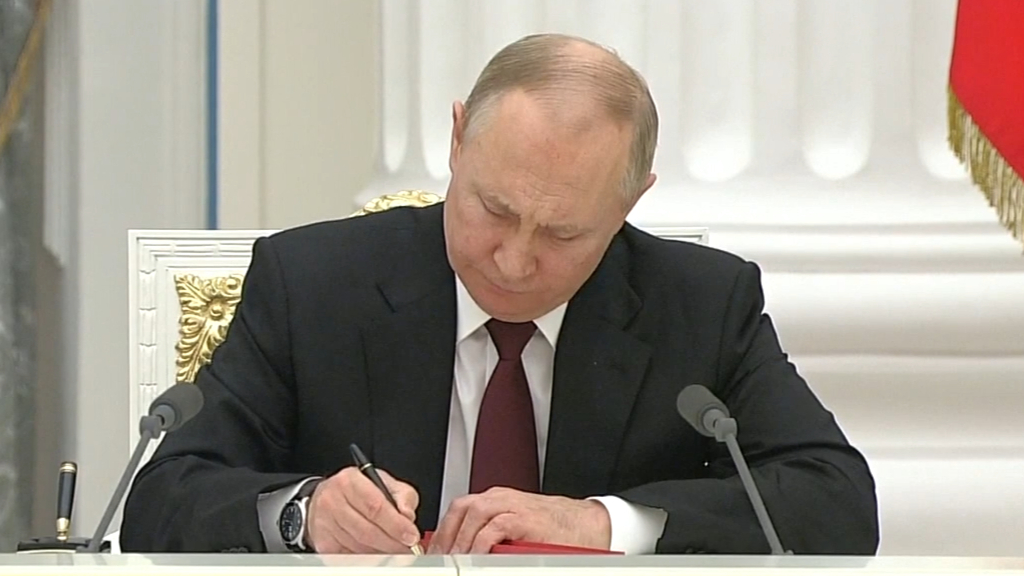
READ MORE: Putin orders forces to 'maintain peace' in eastern Ukraine

ADVERTISEMENT

In April 2014, Russia-backed rebels seized government buildings in the Donetsk and Luhansk regions, proclaimed the creation of "people's republics" and battled Ukrainian troops and volunteer battalions.

The following month, the separatist regions held a popular vote to declare independence and make a bid to become part of Russia.

Moscow hasn't accepted the motion, in the hope of using the regions as a tool to keep Ukraine in its orbit and prevent it from joining NATO.

Ukraine and the West accused Russia of backing the rebels with troops and weapons.

Moscow denied that, saying any Russians who fought in the east were volunteers.

Amid ferocious battles involving tanks, heavy artillery and warplanes, Malaysia Airlines Flight 17 was shot down over eastern Ukraine on July 17, 2014, killing all 298 people aboard.

An international probe concluded that the passenger jet was downed by a Russia-supplied missile from the rebel-controlled territory, but Moscow denied any involvement.

READ MORE: China disputes laser attack, accuses Australia of 'disinformation'
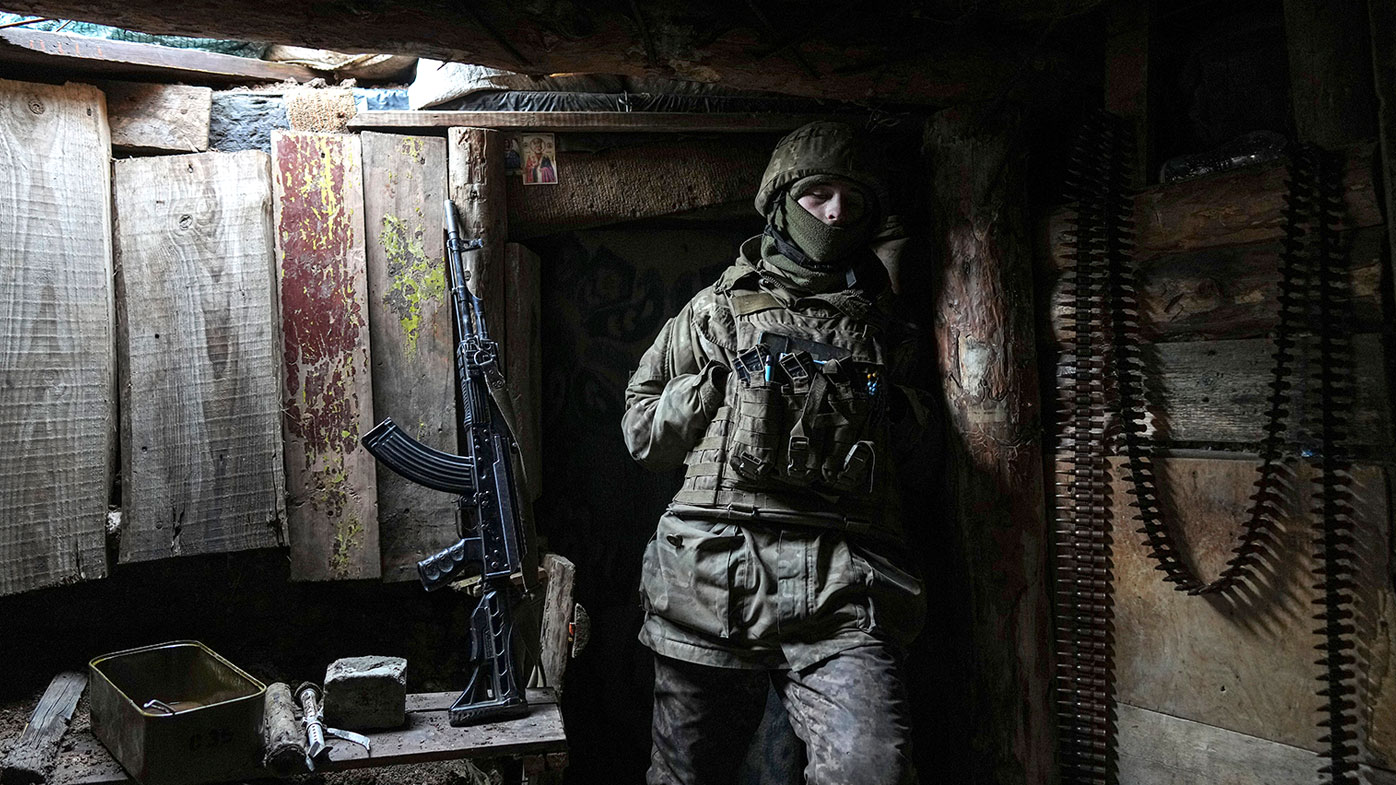
PM scathing as Russian troops advanceA Ukrainian serviceman stands in a shelter near Zolote

PEACE AGREEMENTS

After a massive defeat of Ukrainian troops in the battle of Ilovaisk in August 2014, envoys from Kyiv, the rebels and the Organisation for Security and Cooperation in Europe signed a truce in the Belarusian capital of Minsk in September 2014.

The document envisaged an OSCE-observed cease-fire, a pullback of all foreign fighters, an exchange of prisoners and hostages, an amnesty for the rebels and a promise that separatist regions could have a degree of self-rule.

The deal quickly collapsed and large-scale fighting resumed, leading to another major defeat for Ukrainian forces at Debaltseve in January-February of 2015.

France and Germany brokered another peace agreement, which was signed in Minsk in February 2015 by representatives of Ukraine, Russia and the rebels.

It envisaged a new cease-fire, a pullback of heavy weapons and a series of moves toward a political settlement.

A declaration in support of the deal was signed by the leaders of Russia, Ukraine, France and Germany.

FROZEN CONFLICT

The 2015 peace deal was a major diplomatic coup for the Kremlin, obliging Ukraine to grant special status to the separatist regions, allowing them to create their own police force and have a say in appointing local prosecutors and judges.

It also envisaged that Ukraine could only regain control over the roughly 200-kilometre border with Russia in rebel regions after they get self-rule and hold OSCE-monitored local elections — balloting that would almost certainly keep pro-Moscow rebels in power there.

Many Ukrainians see it as a betrayal of national interests and its implementation has stalled.

The Minsk document helped end full-scale fighting, but the situation has remained tense and regular skirmishes have continued along the tense line of contact.

READ MORE: Australia's remaining diplomatic staff to leave Ukraine

With the Minsk deal effectively stalled, Moscow's hope to use rebel regions to directly influence Ukraine's politics has failed, but the frozen conflict has drained Kyiv's resources and effectively stymied its goal of joining NATO — which is enshrined in the Ukrainian constitution.

Moscow also has worked to secure its hold on the rebel regions by handing out more than 720,000 Russian passports to roughly one-fifth of their population of about 3.6 million.

It has provided economic and financial assistance to the separatist territories, but the aid has been insufficient to alleviate the massive damage from fighting and shore up the economy.

The Donbas region accounted for about 16 per cent of Ukraine's Gross Domestic Product before the conflict.

READ MORE: US claims to have credible information on Russian 'kill list' for Ukraine

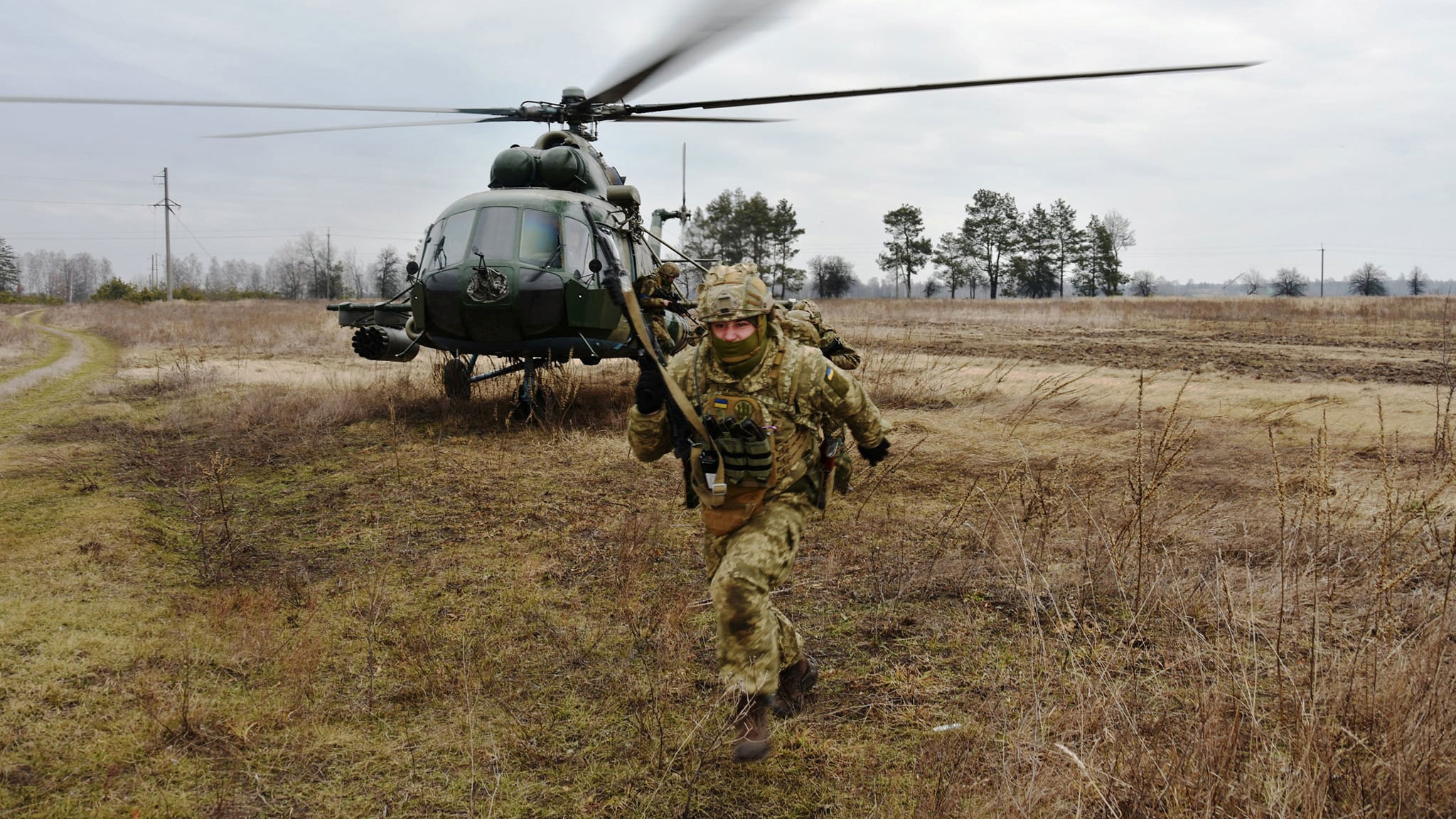
The Ukrainian Air Assault Forces perform tactical drills in an unknown location in Ukraine

EFFORTS TO REVIVE PEACE DEAL

Amid soaring tensions over the Russian troop concentration near Ukraine, France and Germany have undertaken renewed efforts to encourage compliance with the 2015 deal, in the hope that it could help defuse the standoff.

Facing calls from Berlin and Paris for its implementation, Ukrainian officials have strengthened criticism of the Minsk deal and warned that it could lead to the country's demise.

Two rounds of talks in Paris and Berlin between presidential envoys from Russia, Ukraine, France and Germany have yielded no progress.

Amid the deadlock in talks, the lower house of Russian parliament this week urged Russian President Vladimir Putin to recognise the independence of Donetsk and Luhansk.

Putin signalled, however, that he wasn't inclined to make the move that would effectively shatter the Minsk deal.

ESCALATION OF HOSTILITIES

Ukraine and the rebels accused each other last Thursday of intensive shelling along the line of contact in Donetsk and Luhansk.

Separatist authorities claimed that Ukraine mounted a "large-scale provocation" and said they returned fire.

Ukraine denied opening fire and said the separatists were shelling government-controlled areas with heavy artillery and mortars.

The Ukrainian military command charged that some shells hit a kindergarten in Stanytsia Luhanska, wounding two civilians, and cut power supply to half of the town.

Yasar Halit Cevik, head of the OSCE monitoring mission, said it reported 500 explosions along the contact line between Wednesday evening and 11:20 am Thursday.

Cevik told the United Nations Security Council that the tension appeared to be easing after that with about 30 explosions reported, adding "it is critically important to de-escalate immediately."

With Associated Press

Solar eruption captured in an unprecedented image

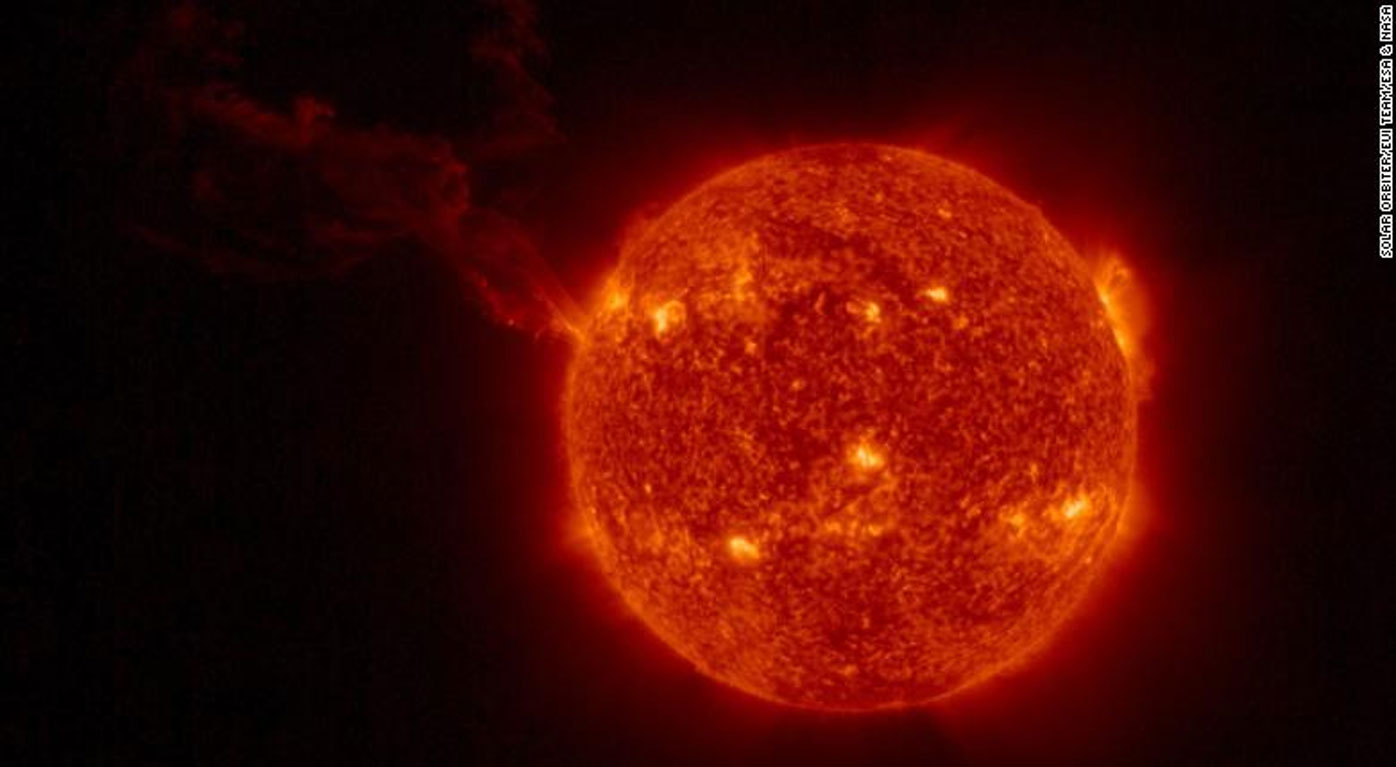
A striking and unprecedented image of a solar eruption has been captured by NASA and the European Space Agency's Solar Orbiter spacecraft.

It's the largest solar prominence ever observed in a single image together with the full disc of the sun, ESA said in a statement released Friday.

The solar eruption took place on February 15 and extended millions of miles into space. The image was taken by the Full Sun Imager of the Extreme Ultraviolet Imager onboard the Solar Orbiter.

READ MORE: Putin orders troops to enter Ukraine territories

he Solar Orbiter spacecraft, operated by NASA and the European Space Agency, captured a giant solar eruption on February 15. This is the largest solar prominence eruption ever observed in a single image together with the full solar disc.

The Full Sun Imager is designed to capture the full solar disc even during close passages of the sun.

"Right now, there is still a lot of 'viewing margin' around the disc, enabling stunning detail to be captured by FSI out to about 3.5 million kilometres, equivalent to five times the radius of the Sun," ESA said.

"At closest approach on 26 March, which will see the spacecraft pass within about 0.3 times the Sun-Earth distance, the Sun will fill a much larger portion of the telescope's field of view."

READ MORE: China disputes laser attack, accuses Australia of 'disinformation'
ESA described solar prominences as "large structures of tangled magnetic field lines that keep dense concentrations of solar plasma suspended above the Sun's surface, sometimes taking the form of arching loops."

Solar prominences are often associated with coronal mass ejections, a hugely energetic explosion of light, solar material and energy from the Sun. If these ejections are directed toward Earth, they can disrupt technology reliant on satellites. The ejections also cause the northern lights.

However, in this instance, the coronal mass ejection was traveling away from us.

The ESA said the imagery would allow space experts to understand for the first time how events like these connect to the solar disc.

READ MORE: Fugitive captured after 12 years on the run

https://twitter.com/ESASolarOrbiter/status/1494592228571951125?ref_src=twsrc%5Etfw

The sun is getting more active. It started a new 11-year cycle in 2019, and that period's solar maximum – when activity peaks – is predicted to happen about halfway through 2025.

It's important to understand the solar cycle because space weather caused by the sun – eruptions like solar flares and coronal mass ejection events – can impact the power grid, satellites, GPS, airlines, rockets and astronauts in space.

Other space telescopes, such as the ESA/NASA SOHO satellite, frequently capture solar activity but are unable to produce detailed images of the sun's corona or outer most layer, which is regarded as very difficult to study.

Next week, the Solar Orbiter and NASA's Parker Solar Probe will conduct joint observations as Parker makes its next close pass by the sun.

Last year, the Parker spacecraft became the first to "touch the sun."

It successfully flew through the sun's corona, or upper atmosphere, to sample particles and our star's magnetic fields.

Exoplanet has metal clouds and rain made of precious gems

The weather on this piping hot exoplanet is truly out of this world.

A massive gas giant orbiting a star about 855 light-years from Earth, WASP-121b may have metal clouds and rain made of liquid gems, according to new research.

A study showing how water atmospherically cycles between the planet's two sides was published Monday in the journal Nature Astronomy.

READ MORE: What Chinese laser attack means for Australia's security

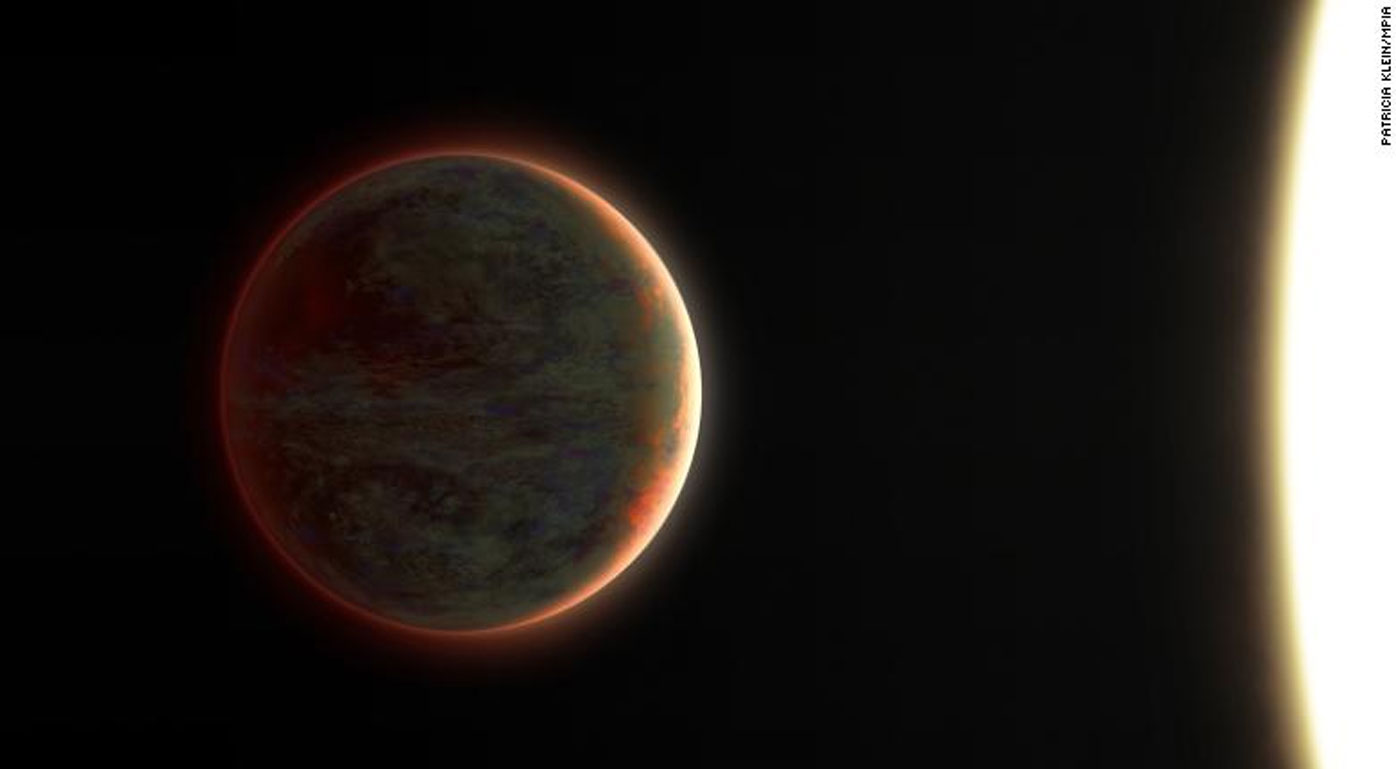
This is an artist's impression of the exoplanet WASP-121b. The world experiences extreme heating because it's so close to its star.

The planet, first discovered in 2015, is considered to be an ultrahot Jupiter-like planet because it's hotter and has a greater mass and diameter than the largest planet in our solar system.

Since then, researchers have made discoveries that show WASP-121b only gets stranger the more they learn.

The exoplanet has a glowing water vapour atmosphere and is being deformed into the shape of a football due to the intense gravitational pull of the star it orbits.

Every 30 hours, WASP-121b completes one orbit and is tidally locked, much like the moon is to Earth. That means one side of the planet, the day side, always faces the star. The other side experiences a permanent night that faces space.

"Hot Jupiters are famous for having very bright day sides, but the night side is a different beast. WASP-121b's night side is about 10 times fainter than its day side," said study co-author Dr Tansu Daylan, postdoctoral research fellow in astrophysics at the Massachusetts Institute of Technology, in a statement.

Now, astronomers have studied both sides of the planet to better understand its atmosphere and alien weather using the Hubble Space Telescope.

Extreme water cycle

On Earth, water evaporates and its vapour condenses into clouds, which then release rain. On WASP-121b, water goes through a more vicious cycle.

The water atoms are ripped apart by the blazing hot temperatures experienced by the planet on the day side. These atoms are carried over to the nightside by winds that reach more than 17,703 kilometres per hour). There, the molecules come together once more to form water before being shoved over to the day side again.

"These winds are much faster than our jet stream, and can probably move clouds across the entire planet in about 20 hours," Dr Daylan said. He previously studied the planet using data from NASA's Transiting Exoplanet Survey Satellite mission.

READ MORE: AFL star saves young girl from dangerous surf

The planet, first discovered in 2015, is considered to be an ultrahot Jupiter-like planet because it's hotter and has a greater mass and diameter than the largest planet in our solar system.

The temperature differences between the two sides of the planet also mean the night side is cool enough for metal clouds made of iron and corundum to form. Corundum is a mineral found in rubies and sapphires.

Much like water vapour that gets cycled around on WASP-121b, these metal clouds may get shoved over to the day side where the metals vaporise into gases. But before the clouds leave the nightside, they could release rain made of liquid gems.

"With this observation, we're really getting a global view of an exoplanet's meteorology," said lead study author Thomas Mikal-Evans, research group leader at the Max Planck Institute for Astronomy in Germany.

"Despite the discovery of thousands of exoplanets, we've only been able to study the atmospheres of a small fraction due to the challenging nature of the observations," he said.

"We're now moving beyond taking isolated snapshots of specific regions of exoplanet atmospheres, to study them as the 3D systems they truly are."

Dr Mikal-Evans led the study while he was a postdoctoral student at the Massachusetts Institute of Technology's Kavli Institute for Astrophysics and Space Research.

Extraterrestrial weather

The findings also reveal the dramatic differences in temperature between day and night on the planet, which the team determined by tracking the water cycle on WASP-121b.

On the day side, temperatures begin at 2227 degrees Celsius at the deepest layer of the atmosphere and reach 3,227 degrees Celsius at the top layer.

On the night side, things are cooler and reversed, with the warmest temperature being 1527 degrees Celsius and dropping to 1,227 degrees Celsius in the upper atmosphere.

The astronomers will observe WASP-121b later this year using the James Webb Space Telescope.

"It's exciting to study planets like WASP-121 b that are very different to those in our solar system, because they allow us to see how atmospheres behave under extreme conditions," said study co-author Joanna Barstow, research fellow at The Open University in the United Kingdom, in a statement.

UK: Queen Elizabeth Tests Positive for Covid, Has Mild Symptoms


By Dulcie Lee & Adam Durbin
BBC News


The Queen has tested positive for Covid, Buckingham Palace has said.

The 95-year-old monarch is experiencing “mild cold-like symptoms” but expects to continue “light duties” at Windsor over the coming week, the palace said.

“She will continue to receive medical attention and will follow all the appropriate guidelines,” it added in a statement.

Her eldest son and heir, the Prince of Wales, tested positive on 10 February, after meeting his mother on 8 February.

It is understood a number of people have tested positive at Windsor Castle, where the Queen resides.

Later on Sunday, the Palace issued a congratulatory message from the Queen to the Team GB Curling teams.

She heralded the teams’ “outstanding performance” at the Winter Olympics, which led to the women securing a gold medal and the men silver.

She added: “I know that your local communities and people throughout the United Kingdom will join me in sending our good wishes to you, your coaches and the friends and family who have supported you in your great success.”

Prime Minister Boris Johnson said he was “sure I speak for everyone in wishing Her Majesty The Queen a swift recovery from Covid and a rapid return to vibrant good health”.

Leader of the Opposition, Labour’s Sir Keir Starmer, also wished the monarch “good health and a speedy recovery”, adding: “Get well soon, Ma’am.”

The positive test comes days before England is expected to drop the legal requirement to self-isolate for those who catch Covid, as the last virus restrictions are set to be removed.

Outlining the thinking behind the government’s upcoming “living with Covid” plans, Mr Johnson told the BBC it was time to “shift the balance away from state mandation” and said the public can “get their confidence back”.

On the eve of her Platinum Jubilee marking 70 years on the throne on 6 February, the Queen carried out her first major public engagement for more than three months, meeting charity workers at Sandringham House.

The Queen, who will be 96 in April, had her first vaccine in January 2021 and is believed to have had all her follow-up jabs after that.

BBC royal correspondent Nicholas Witchell said she had been taking life “rather more easily” since spending a night in hospital for medical checks in October last year.

In November, the Queen missed the Remembrance Sunday service with a strained back, weeks after being advised to rest by doctors following the hospital stay.

It was the first time she missed the ceremony at the Cenotaph in London as monarch, other than when she was pregnant or abroad.

While on light duties it is likely the Queen will be reading documents from UK government ministers and Commonwealth representatives sent to her every day, approving and signing them where necessary.

Antiviral hope

Meanwhile, BBC health correspondent Jim Reed said newly-approved antiviral drugs could aid the Queen’s recovery.

He said the drugs were now a key way to cut the risk of vulnerable people needing hospital treatment, although it was not clear if they would definitely be offered to the monarch.

Currently, the available antivirals need to be taken within three to five days of contracting Covid.

The drugs approved for use in the UK include Paxlovid and molnupiravir, which have both demonstrated in medical trials they significantly reduce the risk of hospital admission or death.

On Tuesday, the Queen attended her first official engagement since coming into contact with Prince Charles, holding a virtual meeting with two new ambassadors to the UK.

The following day, she smiled as she suggested she had mobility problems during a meeting with defence staff. Standing while using a walking stick, she pointed to her left leg and said: “Well, as you can see, I can’t move.”

The post UK: Queen Elizabeth Tests Positive for Covid, Has Mild Symptoms appeared first on The St Kitts Nevis Observer.

Curacao: Dutch Navy Catches 224 Killos of Coke, Smugglers Escape

Dutch naval ship fires shots while on drugs patrol near Curacao CrimeSociety February 21, 2022 The Friesland. Photo: Ministry of Defence
A Dutch navy ship fired warning shots at a boat carrying drugs south of the Caribbean island of Curacao at the weekend.
The ZrMs Friesland gave chase to the boat which was on a well-known smuggling route and fired the shots in an effort to get it to stop.
The three smugglers on board threw the drugs into the sea and managed to get away, broadcaster NOS said.
The navy fished out the bails, which were found to contain 224 kilos of cocaine.
The ZrMs Friesland has been actively patrolling for drugs boats in the Caribbean since the beginning of this year. The ZrMs Holland, which was earlier in the region, seized 4.7 tonnes of cocaine in November and December last year.

The post Curacao: Dutch Navy Catches 224 Killos of Coke, Smugglers Escape appeared first on The St Kitts Nevis Observer.

WORLD VIEW: Biden-Putin to Meet Over Ukraine, US Covid Cases Decline, US Fears China Authoritarian Model, More

Feb. 14, 2022

  • Alternate textThe U.S. and Russian presidents tentatively agree to meet in last-ditch bid to avert an invasion of Ukraine
  • Daily COVID-19 infections, hospitalizations continue to decline in the U.S.
  • China succeeds in averting focus on its authoritarianism during the Olympics
  • Kuwait’s Yoga ban sparks debate on women’s rights
  • The disappearance of Indigenous woman spurs California tribe into action on missing, murdered women.  
  • Jury in Ahmaud Aubery case to weigh dueling views if killing was a hate crime
  • U.S. worries China’s authoritarian model offers challenge to democratic-led world
  • After Olympics, concern that athletes may be bringing cybersecurity threats back home
  • Tourists, business travelers return to Australia after lifting of draconian pandemic measures

Menelaos Hadjicostis

Cyprus Correspondent

The Associated Press

Advancing the Power of Facts

The Rundown

I'm an image

MOSCOW (AP) — The U.S. and Russian presidents have tentatively agreed to meet in a last-ditch diplomatic effort to stave Moscow’s invasion of Ukraine as heavy shelling continued Monday in a conflict in eastern Ukraine that is feared will spark the…Read More

I'm an image

Average daily COVID-19 cases and hospitalizations are continuing to fall in the U.S., an indicator that the omicron variant’s hold is weakening across the country. Total confirmed cases reported Saturday barely exceeded 100,000, a sharp downturn f…Read More

I'm an image

ZHANGJIAKOU, China (AP) — When three-time Olympian Gus Kenworthy took the remarkable, perhaps even brave decision to speak out against “human rights atrocities” while still in China at the Winter Games, the self-proclaimed “loud and obnoxious” Br…Read More

I'm an image

KUWAIT CITY (AP) — It all started over yoga. When an instructor in Kuwait this month advertised a desert wellness yoga retreat, conservatives declared it an assault on Islam. Lawmakers and clerics thundered about the “danger” and depravity of wome…Read More

I'm an image

YUROK RESERVATION, Calif. (AP) — The young mother had behaved erratically for months, hitchhiking and wandering naked through two Native American reservations and a small town clustered along Northern California’s rugged Lost Coast. …Read More

OTHER TOP STORIES

BRUNSWICK, Ga. (AP) — Before Ahmaud Arbery was chased by three white men in pickup trucks and fatally shot on a residential street, the trio had expressed hostility …Read More

BEIJING (AP) — At the height of the Cold War, U.S. President Richard Nixon flew into communist China’s center of power for a visit that, over time, would transform U.S…Read More

CANBERRA, Australia (AP) — International tourists and business travelers began arriving in Australia with few restrictions on Monday for the first time in almost two y…Read More

KYIV, Ukraine (AP) — Russia announced massive drills of its nuclear forces Friday amid soaring East-West tensions, as the U.S. issued some of its starkest, most detail…Read More

The post WORLD VIEW: Biden-Putin to Meet Over Ukraine, US Covid Cases Decline, US Fears China Authoritarian Model, More appeared first on The St Kitts Nevis Observer.

Reduced Health Measures Contributed to Deadly Caribbean COVID-19 Surge- PAHO

covid-19

CMC- Complacency around mask-wearing, travel, and indoor gatherings created a perfect opportunity for the new Omicron variant to spread rapidly throughout the Caribbean and increase deaths, with many places remaining just as they were before.

That’s according to the Director of the Pan American Health Organization (PAHO), Dr. Carissa F. Etienne.

“Reduced public health measures were insufficient to reduce the scale of this wave,” Dr. Etienne told a media briefing. “And now we’re dealing with the consequence: a rise in infections is driving a surge in deaths.”

According to PAHO, while still very high, COVID-19 infections declined by 31 percent last week, and deaths continued to rise by 5.6 percent.

“Undoubtedly, Omicron overtook us,” the PAHO director said. “Every time infections surge, there is a heavy toll for our families and communities,” with peaks in cases followed by rises in deaths three weeks later.

“COVID-19 is a preventable disease. And right now, we’re losing far too many lives,” she added. “As Omicron arrived, we didn’t use all the tools we had developed to slow the spread and prevent infections.”

PAHO said more than half of deaths in the latest surge occurred in people over 65. However, it noted that many others occurred among those yet to receive the COVID-19 vaccine, and unvaccinated people of all ages still fill up hospitals and beds in intensive care units.

“Omicron has shown that the vaccines we have at hand can protect most of us from severe illness and death,” Dr. Etienne said.

To ensure more equitable access, PAHO said its Revolving Fund has now delivered 100 million doses of COVID-19 vaccines to 33 countries in Latin America and the Caribbean in coordination with COVAX.

The PAHO director thanked donors for contributing 30 percent of the 100-million dose milestone. She urged countries “to focus on filling in critical gaps in vaccination coverage” to ensure that at least 20 million more people are fully vaccinated, particularly high-risk groups.

“We won’t overcome this pandemic unless we protect these groups and then go beyond to cover everyone who is eligible,” she said.

Need quicker response to keep pace

Dr. Carissa Etienne - Caribbean News Weekly
Photo Courtesy of PAHO

Dr. Etienne also highlighted that countries must be vigilant about implementing public health measures quickly.

She said they must adjust hospital systems to accommodate new surges while ensuring health care workers have the tools they need to treat COVID-19 patients safely.

“We need to activate our responses more rapidly to keep pace with the current wave and stay ahead of future surges of this very fast, very serious virus,” Dr. Etienne urged.

The PAHO director said With up to 202 people dying every hour due to this latest surge, “inaction is not an option.” She stated that countries of the Americas, including the Caribbean, reported 3.3 million new cases and more than 34,000 COVID-19 related deaths.

Dr. Etienne said in North America, the United States recorded the highest number of deaths in the sub-region – 17,000.

She said countries in Central America and the Caribbean reported a surge in COVID-19 deaths, as well as an increase in hospitalizations, reaching 19 percent in some countries and territories of the Eastern Caribbean.

In South America, the PAHO director said deaths in Brazil reached the highest numbers ever, setting a record for this wave.

CMC/

The post Reduced Health Measures Contributed to Deadly Caribbean COVID-19 Surge- PAHO appeared first on The St Kitts Nevis Observer.

El Salvador’s Pres. Proposes a CBI Scheme for His Country

SAN SALVADOR, Feb 20 (Reuters) – El Salvador President Nayib Bukele on Sunday said he will send Congress a proposal to grant citizenship to foreigners who invest in the Central American country as well as other initiatives to reduce government hurdles in order to attract investment projects.

Bukele did not specify whether the bills would be aimed exclusively at bitcoin-linked entrepreneurs, but during the week he referred to El Salvador as “the land of #Bitcoin freedom.”

“I’m sending 52 legal reforms to congress to remove red tape, reduce bureaucracy, create tax incentives, citizenship, in exchange for investments, new securities laws, stability contracts, etc,” Bukele said on Twitter.

El Salvador in September became the first country in the world to establish bitcoin as legal tender, in parallel to the U.S. dollar, a decision that has triggered criticism from the International Monetary Fund (IMF) for the volatility and risks involved in the country’s finances.

Bukele plans to launch 1 billion in bitcoin bonds in March with the aim of raising funds to finance the construction of a “Bitcoin City” project and buy more cryptocurrencies.

Reporting by Nelson Renteria; Writing by Drazen Jorgic; Editing by Mark Porter

The post El Salvador’s Pres. Proposes a CBI Scheme for His Country appeared first on The St Kitts Nevis Observer.

Cuba to Deepen Ties with Russia as Ukraine Tensions Mount

HAVANA, Feb 19 (Reuters) – Russia and Cuba will deepen ties and explore collaboration in transportation, energy, industry and banking, Cuba’s Foreign Ministry said late on Friday following a visit from Russia’s Deputy Prime Minister Yuri Borisov.

In a statement, Cuba’s communist-run government expressed support for Russia as tensions mount in Ukraine, and accused long-time rival the United States and its allies of targeting Moscow with what it called a “propaganda war” and sanctions.

Cuba “reiterates its position against the unilateral and unjust sanctions imposed by the West on the Eurasian country and against the expansion of the North Atlantic Treaty Organization towards the Russian borders.”

Borisov earlier this week visited Nicaragua and Venezuela, key Russian allies in Latin America, and said Russia would also deepen bilateral ties with both countries. read more

His tour follows visits to Moscow by Latin American leaders – including Argentina’s Alberto Fernandez and Brazil’s Jair Bolsonaro – for talks with Russian President Vladimir Putin, prompting some analysts to suggest Russia is courting the region as tensions rise over Ukraine.

Putin launched exercises by strategic nuclear missile forces on Saturday, as Washington said Russian troops massed near Ukraine’s border were “poised to strike”. read more

Cuba and Russia have a long history of deep economic and military collaboration since Fidel Castro’s 1959 revolution, though in recent decades those ties have faded.

Borisov, who met with Cuban Deputy Prime Minister Ricardo Cabrisas, said in Cuba’s statement that Russia had ramped up humanitarian aid to Cuba between December 2021 and January 2022. He also noted prior shipments of medical supplies to the island amid the coronavirus pandemic.

Russia said in December that escalating tensions over Ukraine could lead to a repeat of the Cuban missile crisis, when the world stood on the brink of nuclear war. read more

That crisis in 1962 was triggered by the stationing of Soviet nuclear missiles on the island and prompted the United States, just 90 miles (145 km) away, to impose a naval blockade on Cuba.

Cuban President Miguel Diaz-Canel discussed coordination of a “strategic partnership” with Putin in January, as tensions began to rise in Ukraine. read more

Reporting by Dave Sherwood; Editing by Daniel Wallis

The post Cuba to Deepen Ties with Russia as Ukraine Tensions Mount appeared first on The St Kitts Nevis Observer.

Dominican Republic Building BorderWall with Haiti

SANTO DOMINGO, Feb 20 (Reuters) – The Dominican government on Sunday began building a wall that will cover almost half of the 392-kilometre (244 miles) border with Haiti, its only land neighbor, to stop irregular migration and the smuggling of goods, weapons and drugs.

While the two countries share the island of Hispaniola, they are worlds apart in terms of development. Crime-plagued Haiti is one of the poorest nations in the Americas while the Dominican Republic, a popular Caribbean tourist destination, has prospered in recent decades amid marked political stability.

Many Haitians cross the border clandestinely in search of work in the fields or in the construction industry in the Dominican Republic.

“The benefit for both nations will be of great importance,” said Dominican President Luis Abinader shortly before pushing the button to begin pouring concrete into the foundations of what will be the wall in the province of Dajabón, some 230 kilometers northwest of the capital.

About 500,000 Haitians and tens of thousands of their descendents live in the Dominican Republic, a Spanish-speaking nation of about 11 million people, according to the most recent immigration survey conducted in 2018.

Abinader estimated the border wall will reduce the smuggling of commercial goods, weapons and help fight organized crime in both nations.

He started the project, which aims to build a 164 kilometer wall, ahead of the anniversary of the Dominican Republic’s independence from Haiti on Feb. 27, 1844.

Abinader said the first phase of the project will be completed within nine months at the latest.

The 20-centimetre-thick concrete wall topped by a metal mesh will be 3.9 meters (12.8 ft) high and will have fiber optics for communications, movement sensors, cameras, radars and drones.

The project also includes the construction of 70 watchtowers and 41 access gates for patrolling.

(This story corrects first paragraph to clarify the plan is to build a wall covering nearly half the 392-km border, not more than half)

Reporting by Ezequiel Abiu; Writing by Drazen Jorgic; editing by Grant McCool

The post Dominican Republic Building BorderWall with Haiti appeared first on The St Kitts Nevis Observer.