OTTAWA, Feb 9 (Reuters) – Canadians say they are concerned political strife in the United States will undermine security and economic growth at home, according to a new poll, as an anti-vaccine mandate protest praised by former U.S. President Donald Trump gripped the capital and affected the border.
The anxiety captured in the Angus Reid Institute survey provides a backdrop to protests across the country, at the international border, and especially in Ottawa, the capital, where police say Americans have provided a “significant” amount of money and organizational support.
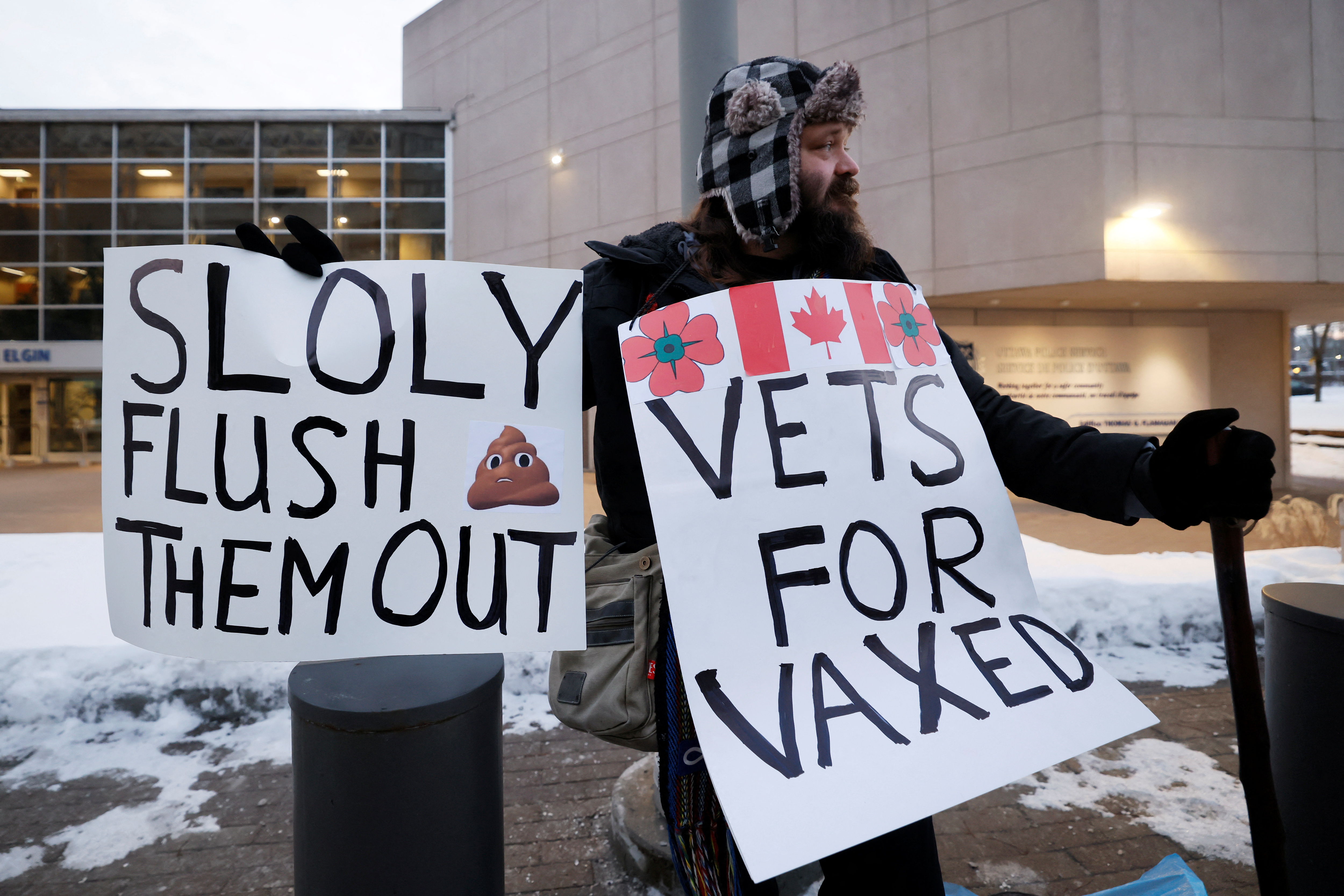
The Ottawa protest, now in its 13th day, has been marred by the appearance of hateful symbols, like the Confederate flag, associated with the aggressive populism embraced by Trump supporters and some protesters say their goal is not only to roll back vaccine mandates, but also to overthrow the government.
“The success or failure of the United States will have a profound impact on Canada,” said Bruce Heyman, former American ambassador to Canada from 2014-2017. “Part of the more extreme nature of our politics over the last few years has now moved to occupy some part of Canada today.”
In the poll, 78% of Canadians said they were worried America’s democratic discord will affect their country’s economy and security. The survey of 1,620 Canadians was conducted between Jan. 27 and Jan. 31, the days in which the Ottawa protest began.
Two-thirds of Canada’s 38 million people live within 100 km (62 miles) of the U.S. border, and the two countries are each other’s top trading partners.
The trade relationship with the United States is of existential importance to Canada, with 75% of all exports going to the southern neighbor. Half of Canada’s imports come from the United States, including 60% of all imported fresh vegetables.
The Jan. 6 anniversary of the storming of Capitol Hill in Washington last year led to a series of articles in Canadian newspapers that sounded an alarm about the resiliency of American democracy in coming years, and in particular after the 2024 election.
Until recently, politics in Canada has been less polarized than in the United States. One example is the adoption of vaccines with nearly 80% of Canadians having had two shots of a COVID-19 vaccine in contrast to 64% in the United States.
However, last week’s ouster of Conservative opposition leader Erin O’Toole in part for failing to embrace the protest suggests the political landscape is shifting.
“Canadians have generally looked to the United States and felt like, ‘Whatever is going on there, it’s not as bad in Canada,’” said Shachi Kurl, Angus Reid president.
“We like to think of ourselves as… a country of circumspection and compromise and friendliness, yet two in five people don’t feel that way anymore,” she said. Some 37% of Canadians say there is no room for political compromise in their country, the poll shows.
Ottawa police said on Tuesday they had worked with Ohio police to track down and arrest a man there for calling in fake threats “designed to deceive and distract our emergency resources,” deputy police chief Steve Bell told reporters.
On Monday, Canada’s federal Public Safety Minister Marco Mendicino said the government would be “very vigilant about external forces, about foreign interference”.
‘A WAKE UP CALL’
Trump last weekend spoke out in support of the truckers and called Liberal Prime Minister Justin Trudeau a “far-left lunatic“.
According to Angus Reid poll, 68% of Canadians believe U.S. democracy cannot survive another Trump presidency, and 47% said the United States is on its way to becoming an authoritarian state.
“The United States used to be a beacon of democracy, and now it’s exporting right-wing sedition to other democratic countries,” said Roland Paris, Trudeau’s former foreign policy adviser and professor of international affairs at University of Ottawa.
“The worse things get in the United States, the more dangerous it will be for Canada,” Paris said, calling the Ottawa protest a “wake-up call”.
Gerry Butts, Vice Chairman of Eurasia Group and formerly Trudeau’s top advisor, says “Canadians are astute observers of what’s happening in the United States, and they’re rightly anxious about it”.
“In the long term, Canada will be like everyone else… badly damaged if the United States becomes a democracy in name only,” he said.
($1 = 1.2661 Canadian dollars)
Reporting by Steve Scherer Editing by Alistair Bell
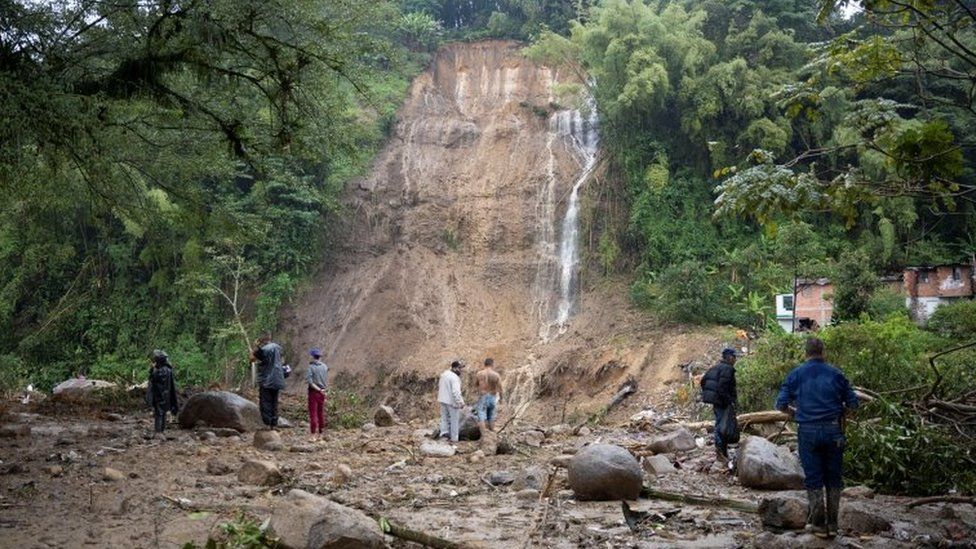
BBC- A landslide triggered by heavy rains has killed at least 14 people in central Colombia, officials say.
Another 35 people were now in hospital after several homes were engulfed in the Dosquebradas municipality, Risaralda province, on Tuesday.
The officials issued a photo showing a gash in the lush foliage covering a mountain overlooking the area.
Other residents living close to a swollen river nearby have been moved to safety.
Rescue teams have been searching in the mud for more survivors, Colombia’s disaster management officials said.
“A very loud noise scared us. We went out and saw a piece of the mountain on top of the houses,” taxi driver Dubernei Hernandez told the AFP news agency.
“I went to that place and it was a disaster, with people trapped.”
Mr Hernandez said he helped dig up two bodies and a survivor. At least five homes were buried by the mud, he added.
There are fears that the death toll will rise further.
We saw a piece of the mountain on top of the houses,” one local resident said
Landslides are common in Colombia and houses built on steep hillsides are at particular risk during the country’s rainy season.
In 2019, at least 28 people were killed after a landslide hit the south-western Cauca province.
Two years earlier, more than 250 people were killed when a landslide hit the town of Mocoa, in the southern Putumayo province.
NIA CHARLESTOWN NEVIS- In its continued pursuit of food sustainability on Nevis, the Ministry of Agriculture through the Department of Agriculture, is recording promising successes in food production.
Mr. Huey Sergeant, Permanent Secretary in the ministry, says the success is based on the demand for crops cultivated on the government-owned farms.
“Peanuts has performed exceptionally well. The demand and quality is phenomenal. We are actually harvesting peanuts again because of the response… Even when the peanuts was still in the ground, we were in a process of accepting huge orders because of that demand. Many persons were happy at the quality that they would have received.
“We are on the road to continue the production of peanuts on the island. We would have produced four acres last year and that still wasn’t enough…We have huge demands for much of the product.
“Sweet potato is something that we are quite proud of. It’s a traditional crop, yes, but the volumes in which it was produced was significantly lower than what is demanded…We are exploring ginger. Ginger is in high demand as well,” he said.
Mr. Sargeant also spoke on the growing demand for sorrel.
“The sorrel that we planted performed well, in that there is a demand for sorrel not just in the festive time but throughout the year. So we’ve embarked in Indian Castle in particular to do sorrel… We have sorrel down to as far as June based on our crop scheduling.
“We have three types of sorrel… We have pink sorrel; we have dark red that is black at the tips; and then we have what we call a white sorrel which is actually green, and all of them they’re doing quite well,” he said.
He noted there is also the demand for soursop and in order to keep up with the demand at the Nevis Agro Processing Centre, the department had to resort to cultivation on a commercial basis.
The department has also ventured into root cop production on the government owned farms and have planted cassava, tannia, ginger, cantaloupe, green banana, onion and sweet potato.
They are also cultivating beets, carrots, and other crops the farmers tend not to want to do and greenhouse sweet pepper.
Mr. Sargeant spoke to the progress at the government-owned farm at Indian Castle Estate where the focus is on tree crop cultivation.
“We would have planted in excess of 7,000 tree crops… We have citrus; we have cassava; we have over 4,000 coconut trees planted; we have mango; we have pomegranates; we have a lot of the crops that we found were not being heavily produced on the island in terms of tree crops.
“We explored sugar cane. We have passion fruit and so on… We have exotic things like the cane fig for example; we have soursop,” he said.
According to Mr. Sargeant, the imported coconut plants are progressing satisfactorily.
“The performance has literally been phenomenal of those coconut trees. I think…it’s 18 months before they start producing,” he said.
The trees, which were imported from Guyana, were brought to Nevis primarily to capture the jelly water market, primarily to reduce cost and provide a fresh product to consumers on Nevis, Mr. Sargeant explained
“We realise people have become a lot more conscious, and they are consuming a lot of jelly water. Sadly, the jelly water that is consumed, all of it is imported… so by the time they get here the shelf life is almost to the end of it.
“If we can get jelly produced on Nevis, that freshness is certainly an advantage. Hopefully, because it’s produced on Nevis and the transportation costs associated with jelly water now is going to be eliminated. We are doing all of this investment so that later on we can actually see a decrease in cost to the consumers,” he said.
A Canadian protest that began with truck drivers protesting cross-border vaccination mandates has turned into an occupation of the capital city of Ottawa, as demonstrators have blocked traffic, disrupted businesses and threatened local residents for 12 days.
The protests have also mushroomed into broader rallies against most public health measures like masks and vaccinations, as well as against the Canadian government. The demonstrations are attracting members of the far-right movement, along with former President Trump and other GOP politicians, who have warned that the Biden administration may face similar unrest.
But much of the support is coming from our side of the border: polls show most Canadians don’t back the protests, and the country’s largest trucking industry group is distancing itself.
GOP love: “The Canadian truckers are heroes, they are patriots. They are marching for your freedom and for my freedom,” Sen. Ted Cruz (R-Texas) said Sunday on Fox News.
“Those truck drivers are defending Canada, but they’re defending America as well,” he added. “The government doesn’t have the right to force you to comply to their arbitrary mandates.”
On Friday, Trump released a statement slamming Canadian Prime Minister Justin Trudeau as a “far left lunatic” who “destroyed Canada with insane Covid mandates,” and invited American and Canadian truckers to come to Washington “to protest Biden’s ridiculous Covid policies.”
====================================
Pfizer accused of pandemic profiteering as profits double
Drugmaker makes $37bn in vaccine sales and predicts bumper year ahead from Covid jabs and pill
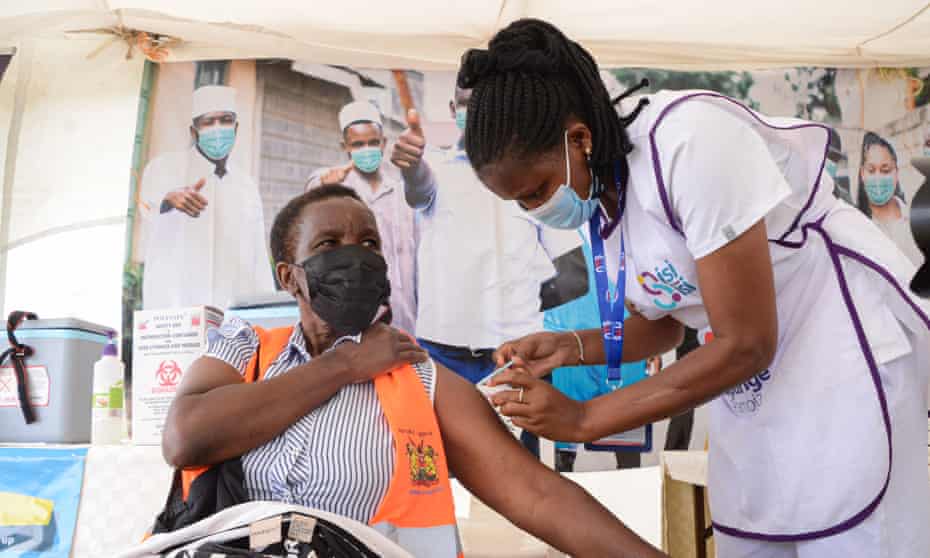
A healthcare worker administers a Pfizer vaccine in Nairobi, Kenya, this month. Photograph: John Ochieng/SOPA Images/Rex
Guardian- Pfizer made nearly $37bn (£27bn) in sales from its Covid-19 vaccine last year – making it one of the most lucrative products in history – and has forecast another bumper year in 2022, with a big boost coming from its Covid-19 pill Paxlovid.
The US drugmaker’s overall revenues in 2021 doubled to $81.3bn, and it expects to make record revenues of $98bn to $102bn this year.
The bumper sales prompted accusations from campaigners of “pandemic profiteering”. The group Global Justice Now said the annual revenue of $81bn was more than the GDP of most countries and accused Pfizer of “ripping off public health systems”.
The Covid jab Company, which the New-York based pharma firm developed with the much smaller German company BioNTech, brought in $12.5bn in revenues in the final quarter of 2021, taking the total for the year to $36.8bn. Pfizer said it had exceeded its target of manufacturing 3bn doses of the vaccine last year.
The drugmaker made a net profit of nearly $22bn last year, up from $9.1bn in 2020. It increased its 2022 estimate for Comirnaty sales to $32bn and expects Paxlovid to contribute $22bn in revenues.
The pill, which boasts nearly 90% success in preventing severe illness among vulnerable adults if taken soon after becoming infected with Covid-19, was approved for emergency use by the US regulator in late December.
Albert Bourla, Pfizer’s chairman and chief executive, said that at the start of the pandemic it had “committed to use all of the resources and expertise we had at our disposal to help protect populations globally against this deadly virus”.
“Now, less than two years since we made that commitment, we are proud to say that we have delivered both the first FDA-authorised vaccine against Covid-19 (with our partner, BioNTech) and the first FDA-authorised oral treatment for Covid-19,” he said.
“These successes have not only made a positive difference in the world, but I believe they have fundamentally changed Pfizer and its culture for ever.”
The Covid vaccine, together with that produced by US rival Moderna and the much cheaper jab made by Britain’s AstraZeneca, has saved millions of lives worldwide.
However, pharmaceutical companies have been accused of not sharing the recipe for their vaccines, which would enable drugmakers in poorer countries to produce cheaper versions of them.
Global Justice Now pointed out that Pfizer’s Covid-19 jab was invented by BioNTech, supported by €100m (£84m) in debt financing from the publicly owned European Investment Bank and a €375m grant from the German government.
Tim Bierley, a pharma campaigner at the group, said: “The development of mRNA vaccines should have revolutionised the global Covid response.
“But we’ve let Pfizer withhold this essential medical innovation from much of the world, all while ripping off public health systems with an eye-watering mark-up.”
Bierley said: “It’s nothing short of pandemic profiteering for Pfizer to make a killing while its vaccines have been withheld from so many. Pfizer is now richer than most countries; it has made more than enough money from this crisis. It’s time to suspend intellectual property and break vaccine monopolies.”
Pfizer has charged the UK’s NHS an estimated £2.8bn above production cost for the 189m doses of Covid-19 vaccines the UK government has bought, Global Justice has calculated.
According to Reuters, Pfizer has sold the vaccine to African countries at $3 to $10 a shot. It has indicated that a non-profit dose costs just $6.75, or £4.98, to produce, but it has reportedly charged the NHS £18 a dose for the first 100m jabs bought and £22 a dose for the next 89m, totalling £3.76bn, Global Justice Now said – amounting to an eye-watering 299% mark-up.
Responding to Global Justice Now’s claims, a Pfizer spokesperson said it was “firmly committed to equitable and affordable access” to the Comirnaty jab.
They said: “High- and middle-income countries pay more than low-income countries, but at a value that is significantly discounted from our normal benchmarks, during the pandemic. Low- and lower-middle-income countries pay a not-for-profit price.
“However, we would highlight that the true costs of bringing this novel mRNA vaccine to patients include ongoing large-scale clinical studies and pharmacovigilance, continued and increased manufacturing efforts including process improvements, and global distribution and supply.
“Covid vaccines are complex biologic products, and their manufacturing requires specialised experience, expertise and equipment.
“It is not as simple as sharing the ‘recipe’. Manufacturing of the Pfizer and BioNTech Covid vaccine involves the use of over 280 materials. There is enormous collaboration already taking place.”
Johnson & Johnson temporarily halted production of its COVID-19 vaccine in the Netherlands, the only manufacturing hub making usable doses for the pharmaceutical company, according to a New York Times report on Tuesday.
The company stopped production of the vaccine at its facility in the Dutch city of Leiden at the end of 2021 and has instead turned its attention to making another vaccine for an unrelated virus, the Times reported. The pause is temporary and is expected to last just a month — but it could reduce Johnson & Johnson’s vaccine supply by a few hundred million doses.
While the Johnson & Johnson vaccine from Janssen Pharmaceuticals has been linked to rare blood clots and is considered less effective than Pfizer’s and Moderna’s shots by the Centers for Disease Control and Prevention, it is extremely important in Africa and low-income countries, which rely on the simpler one-dose shot.
The vaccine also avoids the requirement of storage in ultra-cold temperatures, which makes shipment of Moderna and Pfizer doses more difficult.
In October, Johnson & Johnson said it was committing about 50 million vaccines to 40 countries through COVAX, the vaccine-sharing initiative from the World Health Organization and the United Nations.
But Ayoade Alakija, a co-head of the African Union’s vaccine-delivery program, told the Times that switching up production could endanger the vaccination effort.
“This is not the time to be switching production lines of anything, when the lives of people across the developing world hang in the balance,”she said.
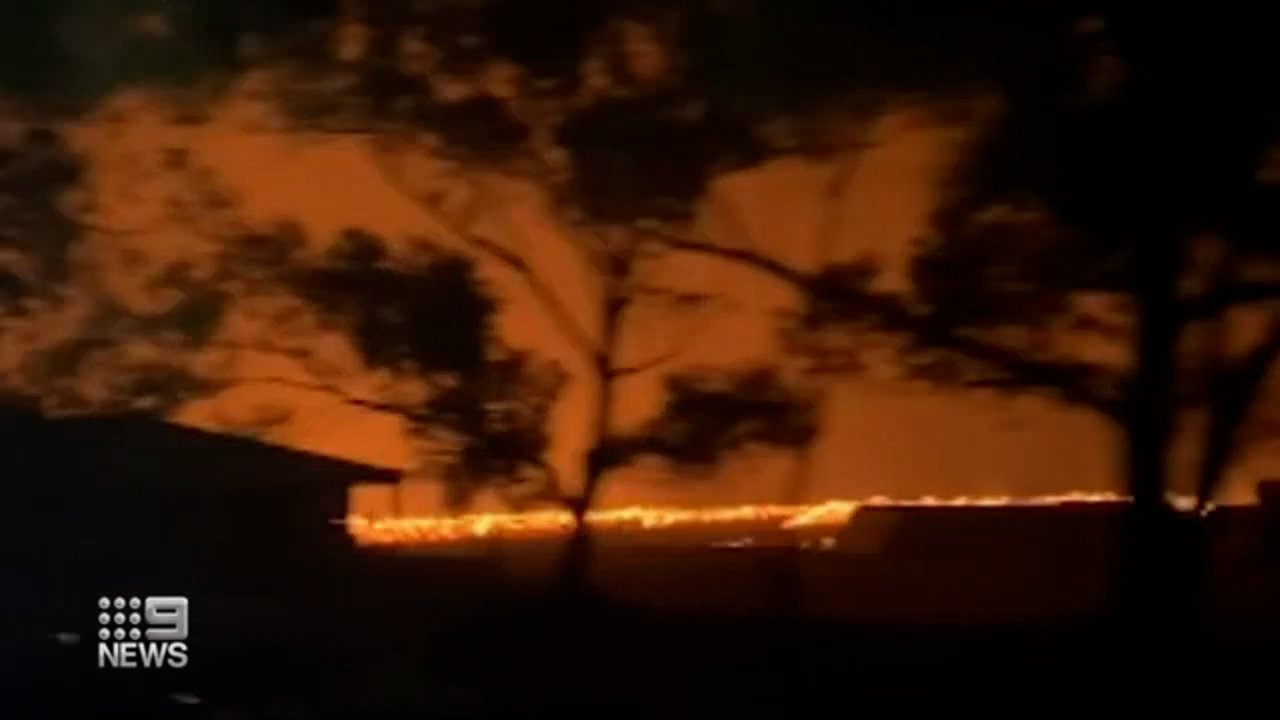
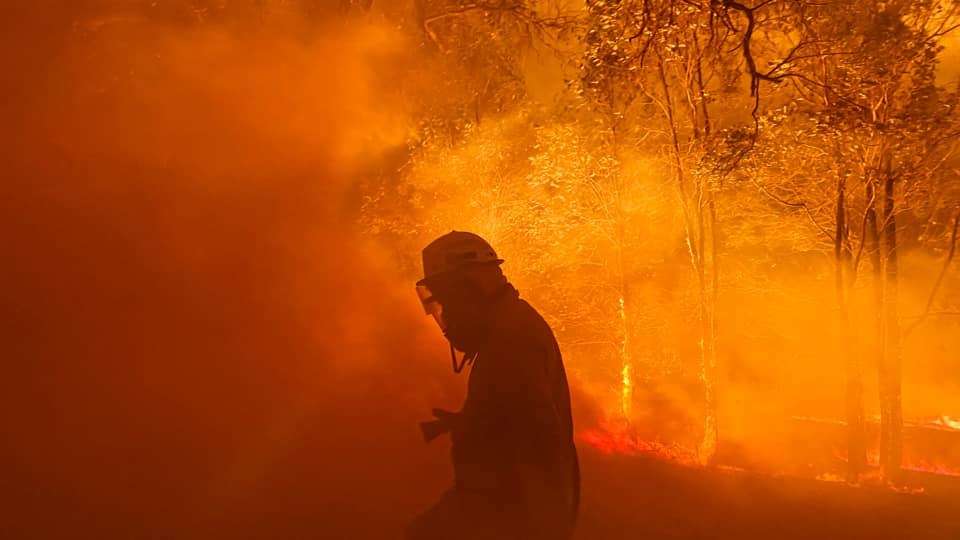
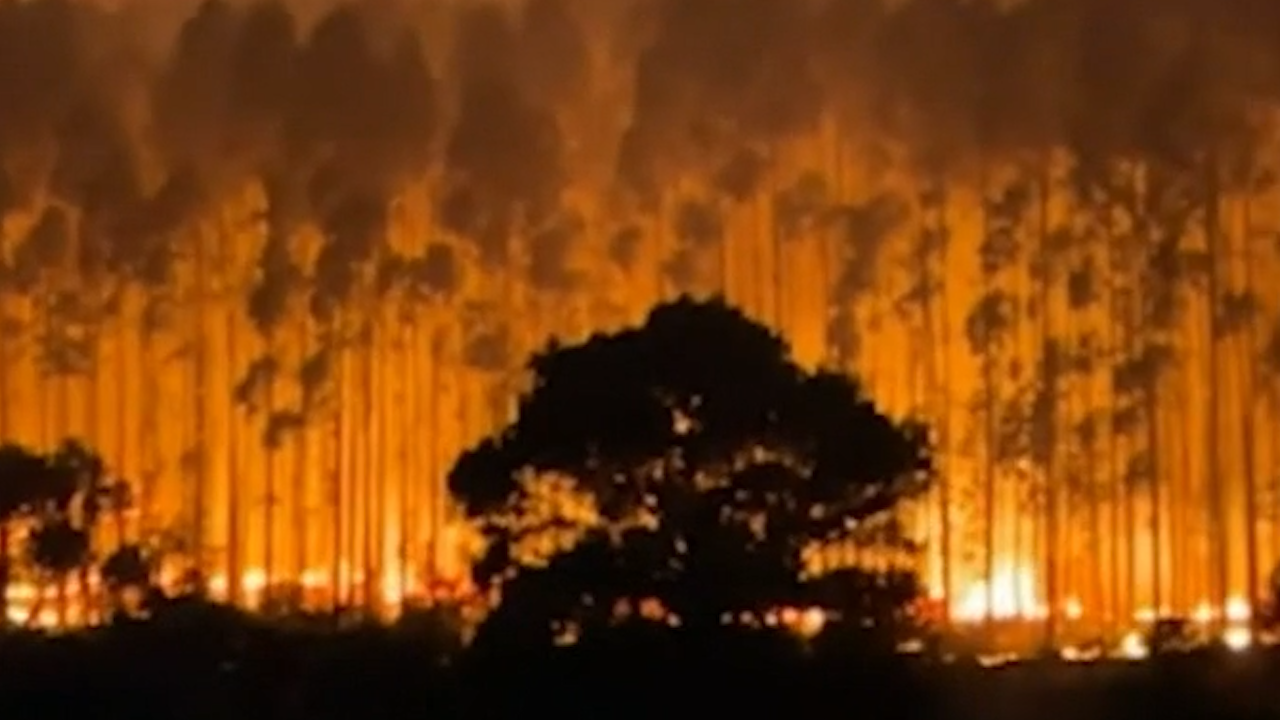
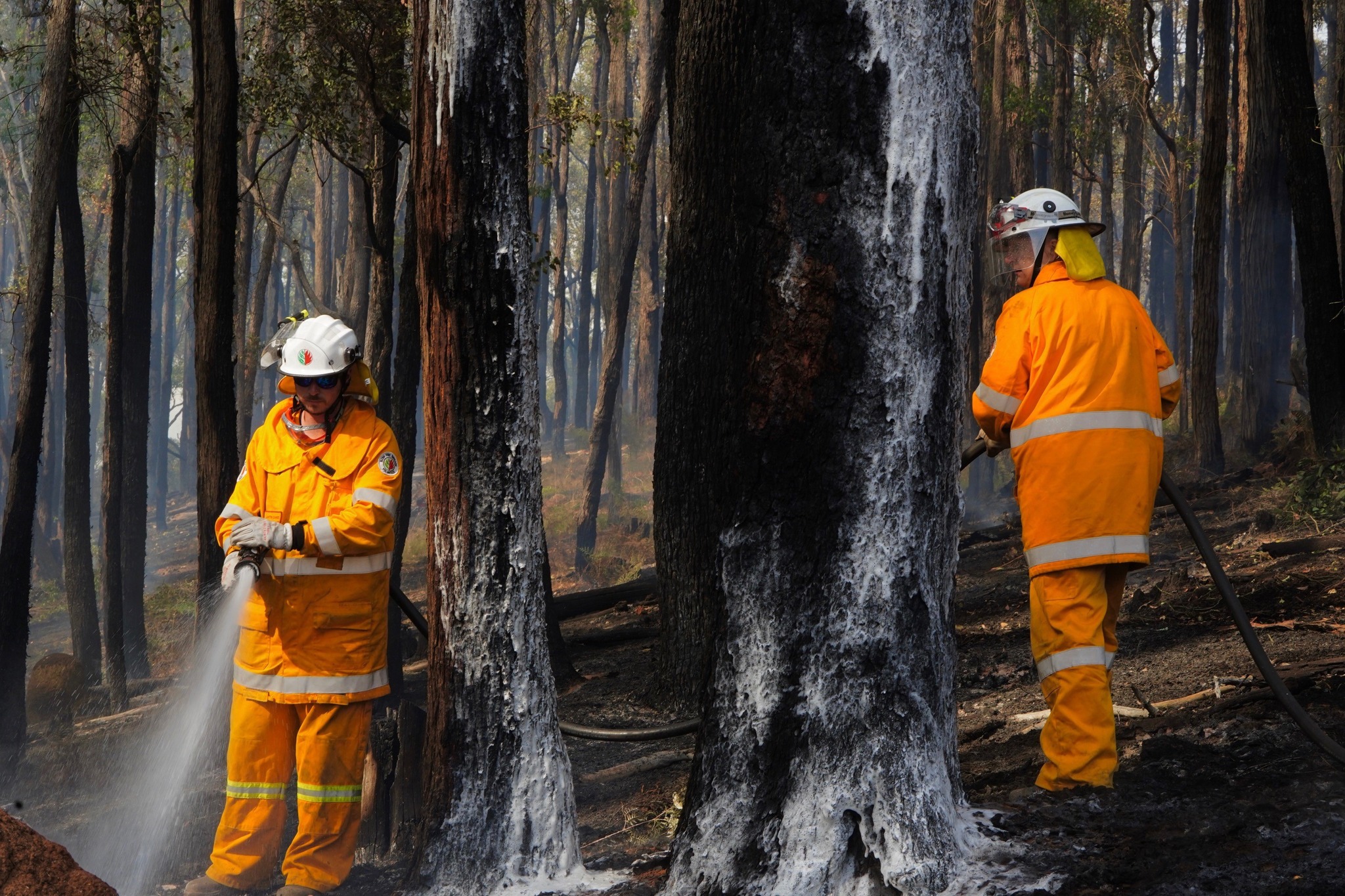
High levels of arsenic and other toxins have been detected in fire-affected Western Australian towns after a timber treatment plan went up in flames on Saturday.
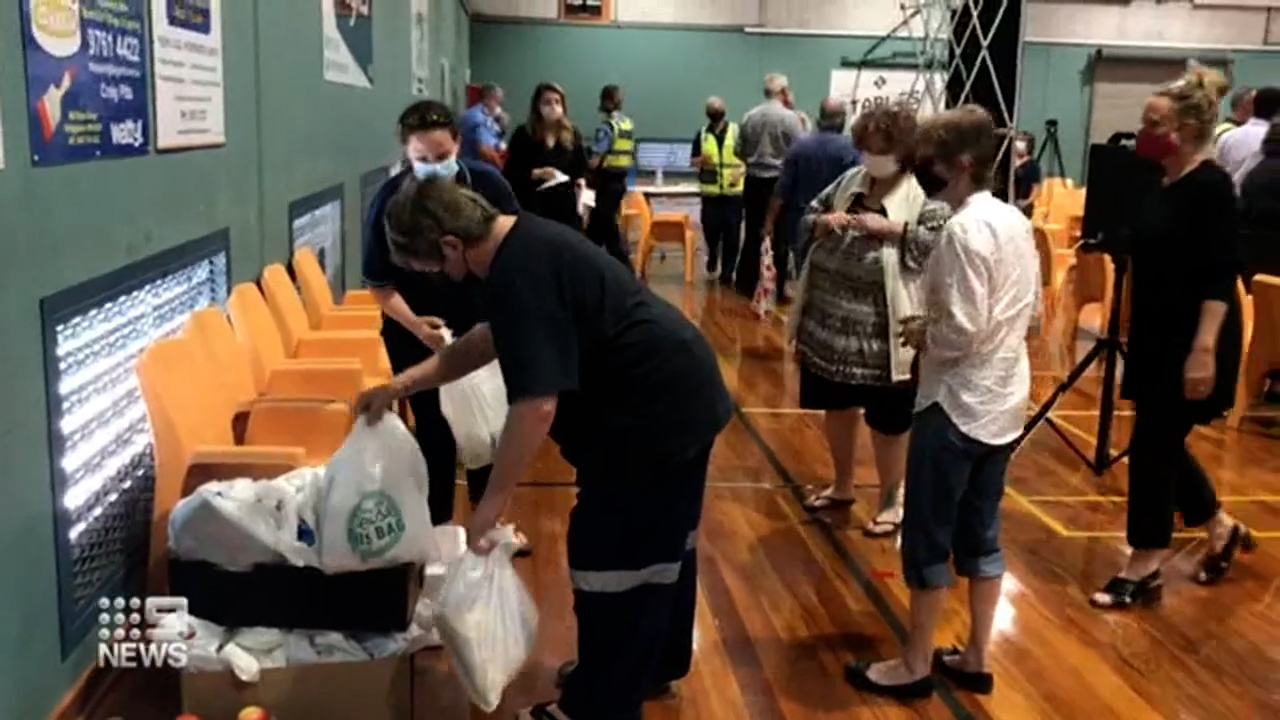
Residents of Hester and Bridgetown, almost three hours' drive south of Perth, were called to a community meeting this afternoon and advised they could not return to their homes.
"Well I'm concerned, my wife and I, we're both 74 years old," resident Jim Anderson said.
"Arsenic lands out of a cloud, it might be 10 times stronger there than it is there."
One Australian university report titled Treated Timber, Ticking Timebomb said copper chrome arsenate, even at low levels was poisonous to humans.
It suggested if burnt the ash must be removed or buried, due to the smoke containing "high levels of arsine gas and dioxins."
Professor Yuben Moodley from the University of Western Australia's Institute for Respiratory Health said inhalation of the chemicals posed a significant risk.
"Continuous exposure can cause cancer down the track, yes they are carcinogens," he said.
"I think it's a danger all round, children are obviously more vulnerable."
More wet weather is on the cards for New Zealand, with a tropical cyclone set to hit the Pacific later this week – including impacting on this country.MetService say there is a tropical depression to the north of New Caledonia.”This…
One lucky Aucklander is $1 million richer after winning Lotto’s First Division on Wednesday night.The winning ticket was sold on MyLotto to a player from Auckland.Powerball was not struck, meaning it has rolled over to Saturday…
It's too early to know for sure, but many doctors believe it's possible to have long-term effects from the Omicron variant of the virus.
Long COVID is usually diagnosed many weeks after a bout with COVID-19.
Any long-lasting effects typically appear about 90 days after symptoms of the initial infection go away, Maria Van Kerkhove of the World Health Organisation said this week.
Van Kerkhove said she hasn't seen any research indicating that the portion of COVID-19 survivors who get long COVID will change with the Omicron variant.
Dr Linda Geng of Stanford University, who co-directs one of the many clinics specialising in long COVID, said that though she can't say for sure, a new wave of patients is likely.
"We have to be very cautious and very careful and prepared," Geng said.
In the meantime, scientists are racing to figure out what's behind the mysterious condition. Some theories? It may be an autoimmune disorder.
Tiny microclots may be causing the disabling symptoms. Or perhaps latent viruses in the body have been reactivated.
Scientists are also looking at whether vaccines could be part of the answer.
A Yale University team is studying the possibility that vaccination might reduce long COVID symptoms.
And two other studies offer early evidence that being vaccinated before getting COVID-19 could help prevent the lingering illness or at least reduce its severity.
Three people have been arrested as hundreds of protesters spent a second day camped outside Parliament calling for an end to vaccine mandates.At least 100 police officers greeted the protesters this morning, many who had camped…
The survivor and advocate dropped the bombshell during her National Press Club appearance, claiming she was warned by an unnamed official not to say anything "damning" about the Prime Minister when the baton for Australian of the Year was handed over.
"You're an influential person. He'll have a fear…with an election coming soon," she claims the person said.
When asked if she was willing to name the individual or the organisation, Ms Tame refused.
Women's Safety Minister Anne Ruston labelled it a "completely unacceptable" thing for a publicly funded organisation to do and said the allegation would be investigated.
The Prime Minister's office denied any involvement.
"Those comments were not made on behalf of the PM or PMO or with their knowledge," a statement read.
It was a highly anticipated speech from Grace Tame and Brittany Higgins and neither woman spared the Prime Minister from their fury at what they see is continued inaction.
Minister Ruston defended the Coalition's response, saying "I don't think there's been a Prime Minister or a government that's done more to demonstrate it's absolutely committed to women's safety."