Category Archives: headline

Man dies while searching for missing police dog

A man has died while he was searching for Queensland's missing police dog Quizz.

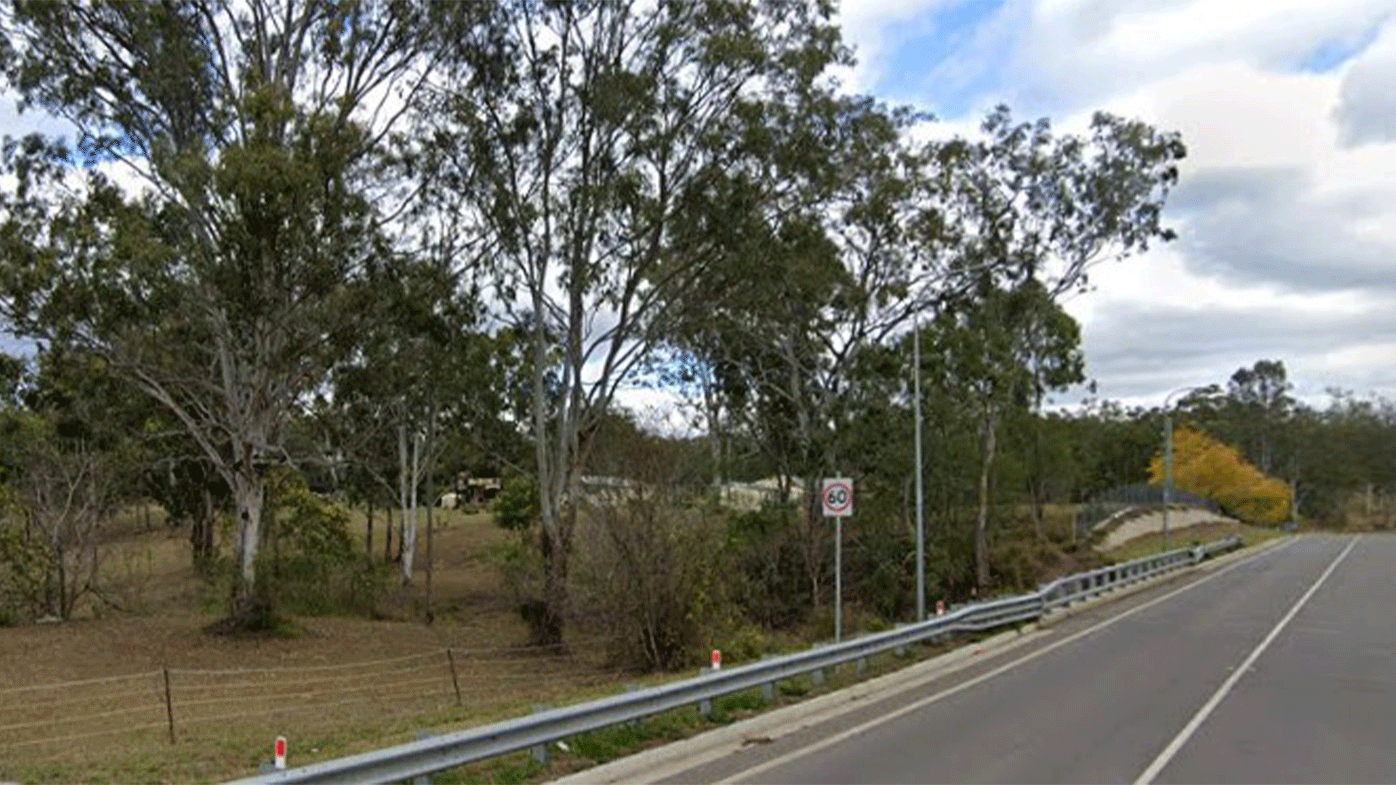
Emergency services were called to a quarry site on Halletts Road, Redbank Plains, at around 7pm last night.

A 61-year-old man was pronounced dead at the scene.

READ MORE: 'He's somewhere': Community joins search for missing police dog

Man dies while searching for missing Queensland police dog

Police believe he suffered a medical episode.

It's also understood he was searching for missing police dog Quizz.

"While the Queensland Police Service understands there are still members of our community conducting their own searches for our PD Quizz and we are grateful for the continued efforts, your safety and the safety of those around you is of paramount importance to us," Queensland Police said in a statement.

The local Queensland community has been searching for Quizz since he went missing on January 11.

READ MORE: What you need to know about WA's border changes

Quizz was separated from his handler after attempting to track a teen fleeing a stolen car.

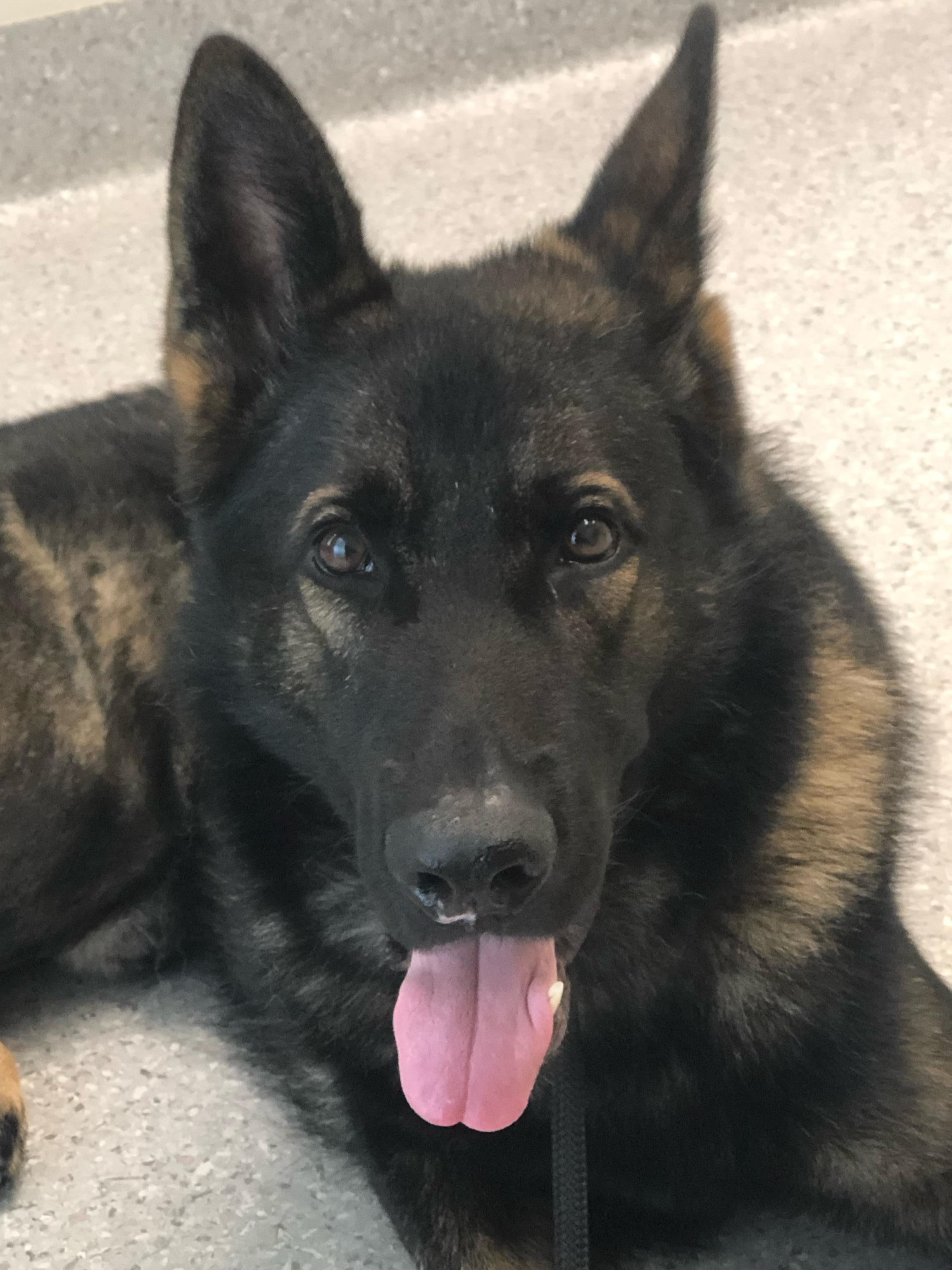
Police Dog Quizz is a three-year-old Sable German Shepherd with a black and tan hide.

He was wearing a black tracking harness with a long tracking lead.

Families 'devastated' over WA border backflip

Families are in disbelief and heartbroken over Western Australia Premier Mark McGowan's controversial decision to call off reopening the border.

Many are reeling over long-awaited reunions being called off, and experts are questioning just how long WA can keep Omicron out.

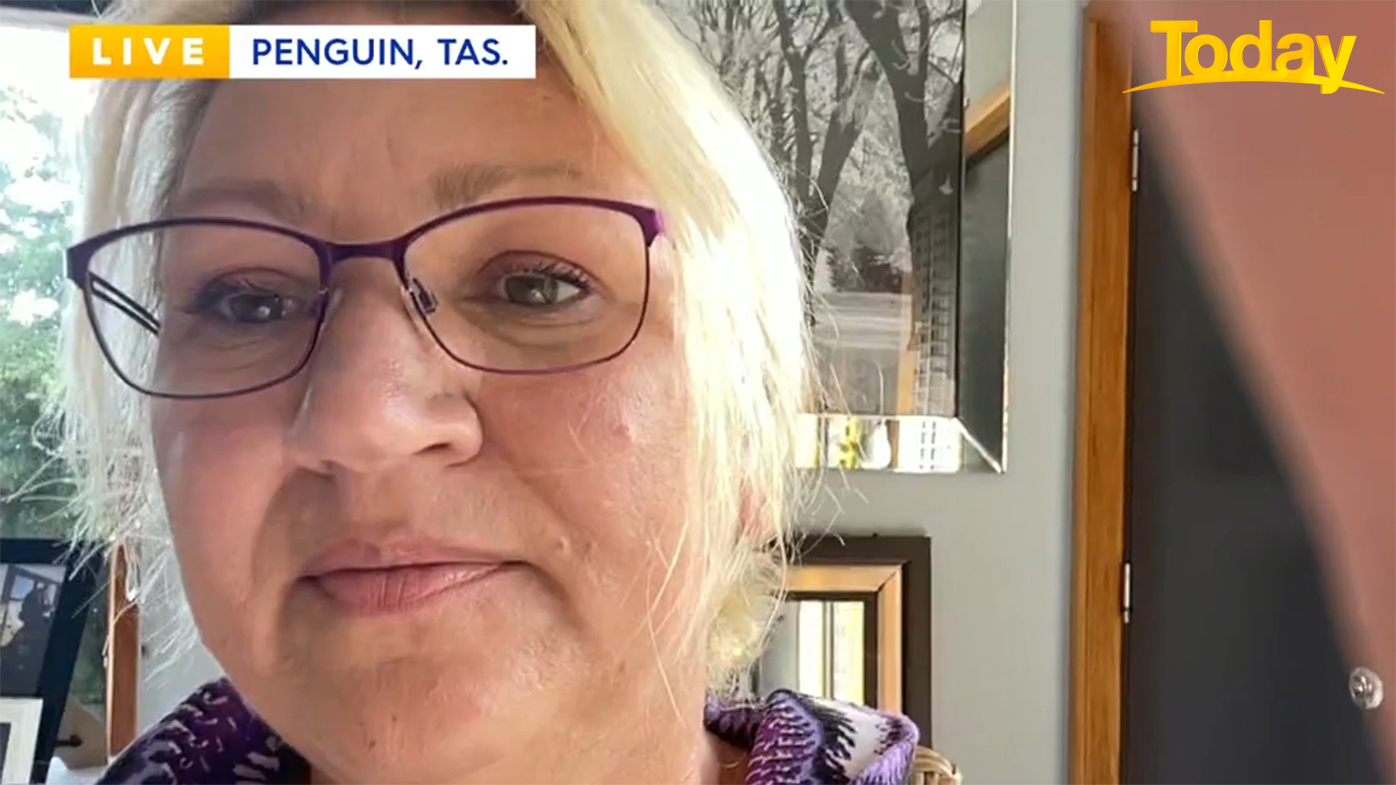
Heike Langer-Jones is one of those affected and said it is mind-blowing how the WA Government can backflip on a promise that had finally given families hope.

LIVE UPDATES: WA backtracks on border reopening

READ MORE: Twice weekly student testing flagged in Victoria's back-to-school plan

Her husband is a FIFO worker who was due to fly home to Tasmania yesterday, but is now stuck in WA, afraid to leave in case he loses his job.

"I don't know what has happened to our Australian way of life – where I am sitting on my phone at night-time waiting for a press conference to let me know when I will see my husband again next," a frustrated Ms Langer-Jones told Today.

"I'm in absolute disbelief and heartbroken. I'm drained, I'm stressed. It is just heartbreaking that this can happen in our way of life."

Ms Langer-Jones said her 15-year-old daughter doesn't yet know her dad won't be coming home and she doesn't know how she will explain why.

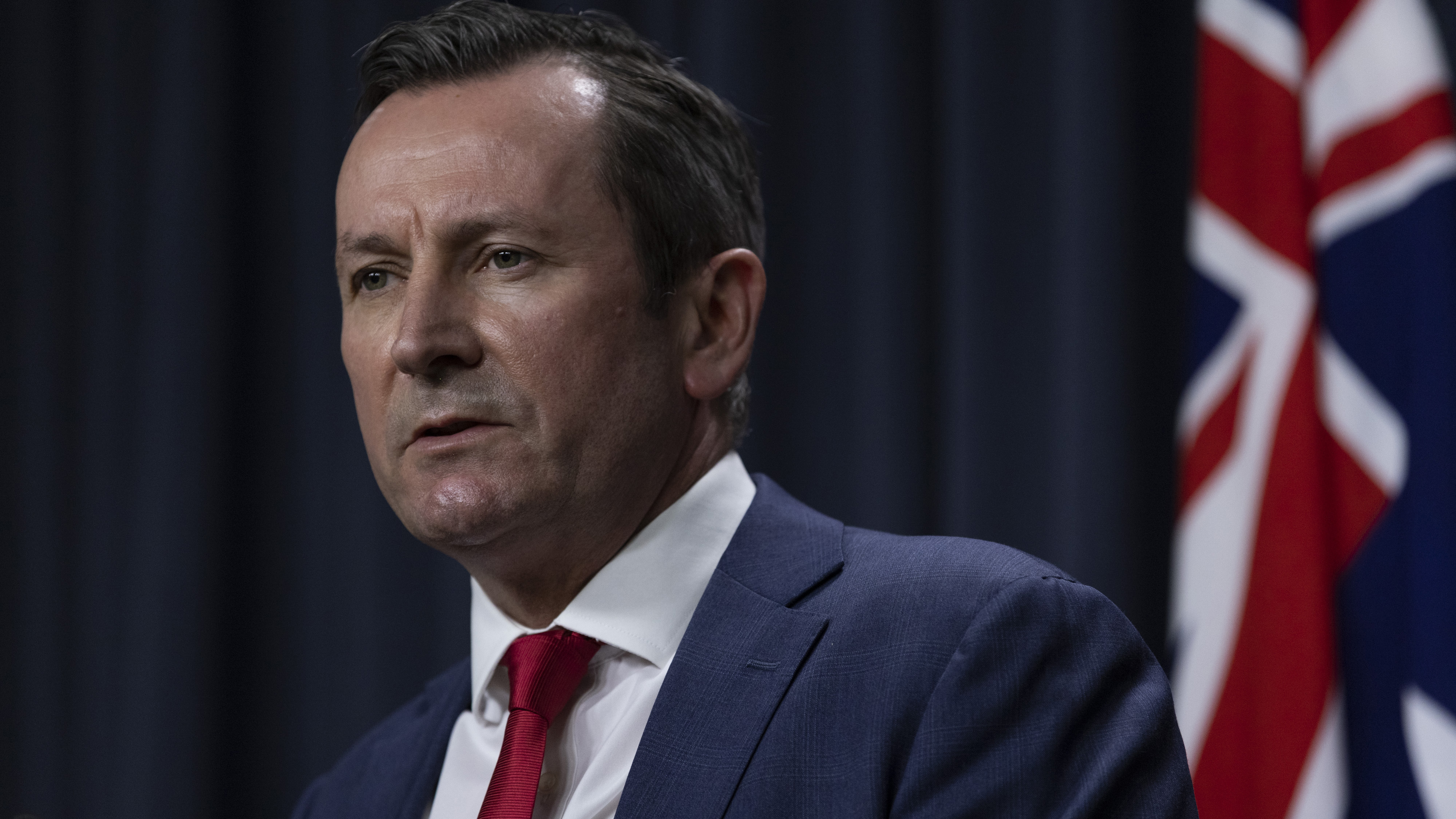
WA Premier Mark McGowan won't open the borders as planned on February 5.

"All I know is we have done everything asked of us. We are vaccinated and follow protocols and still not good enough," she said.

"I just don't understand how that can even be possible. You can't make a decision and then retract from that decision. It's mind blowing."

READ MORE – EXPLAINER: What you need to know about WA's border changes

Labor leaders back move to protect from Omicron wave

Labor leaders are backing the move as the state's leader tries to protect it from an east-coast style outbreak.

Mr McGowan said it would be "reckless and irresponsible" to open the border when he called a late-night conference to announce the push last night, just 16 days before the scheduled reopening on February 5.

He blamed the Omicron variant, and said he would prefer more people to have vaccination boosters before opening.

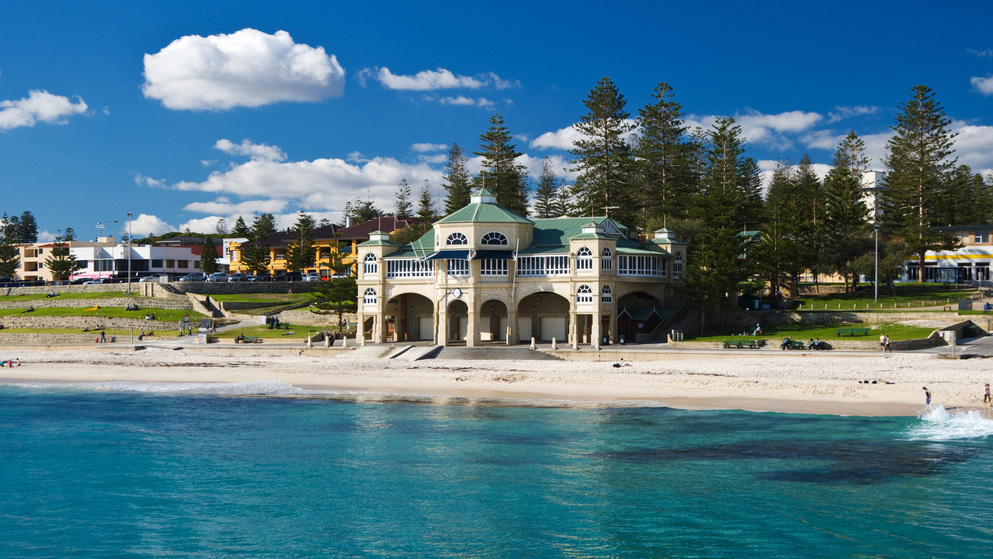
Cottesloe Beach in Perth, WA.

Currently only a quarter of the eligible population have had a third shot.

He also expressed concerns about not enough children being vaccinated.

But no new date or plan has been detailed.

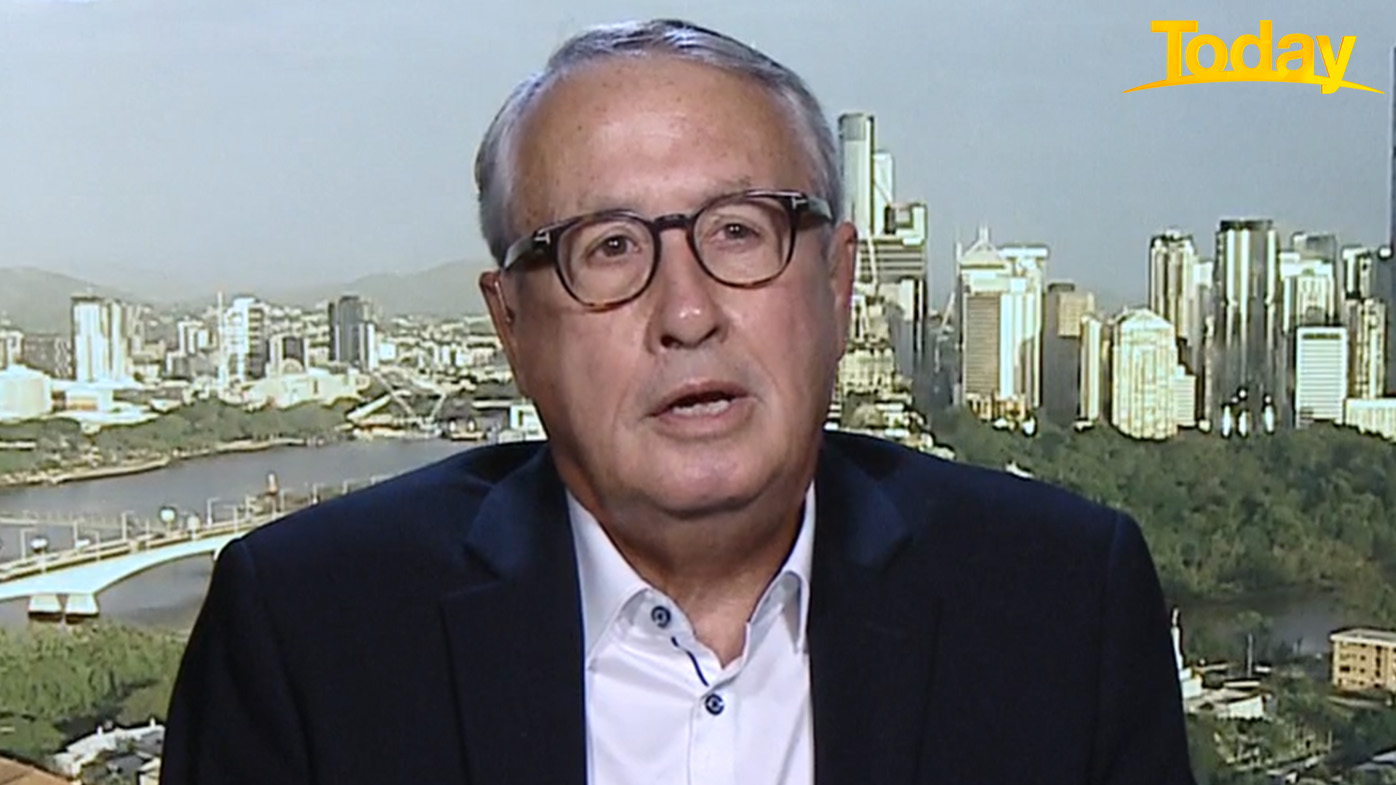
Former Deputy Prime Minister and Labor Party President Wayne Swan said the move to delay arrivals was an "entirely sensible decision".

Former Deputy Prime Minister Wayne Swan has backed WA Premier Mark McGowan over his border opening backflip.

"Mark McGowan has a choice the we didn't have a choice on the east coast when New South Wales decided to let it rip and rip it has," he told Today.

"What that has shown is how unprepared we have been … rapid antigen tests not being available, contact tracing falling apart, the virus spreading everywhere, the deaths rising.

"I think Mark McGowan has made a sensible choice, a hard one, which will be difficult for some people, but if you look at the east coast at the moment there's a de-facto lockdown in operation anyway."

Dutton says families reeling

Federal government front bencher Peter Dutton told Today many WA residents would be feeling disappointed.

"You can see the disappointment when you hear the West Australians speak and they're asking what next? How do they get through this?" he said.

"The most important thing is to see WA through to the other side.

"People are separated from their families, there are small businesses suffering, West Australians want to be opened up to the rest of the country so they can travel again."

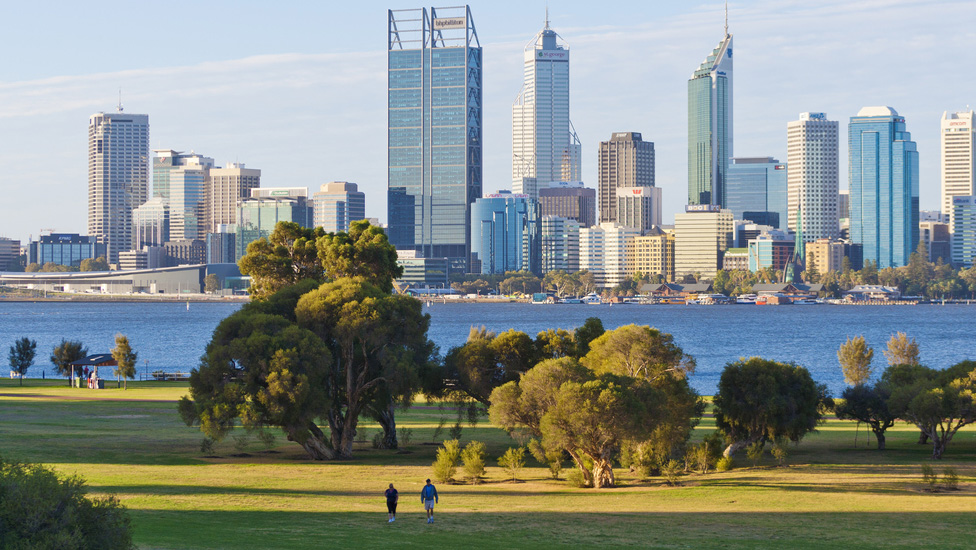
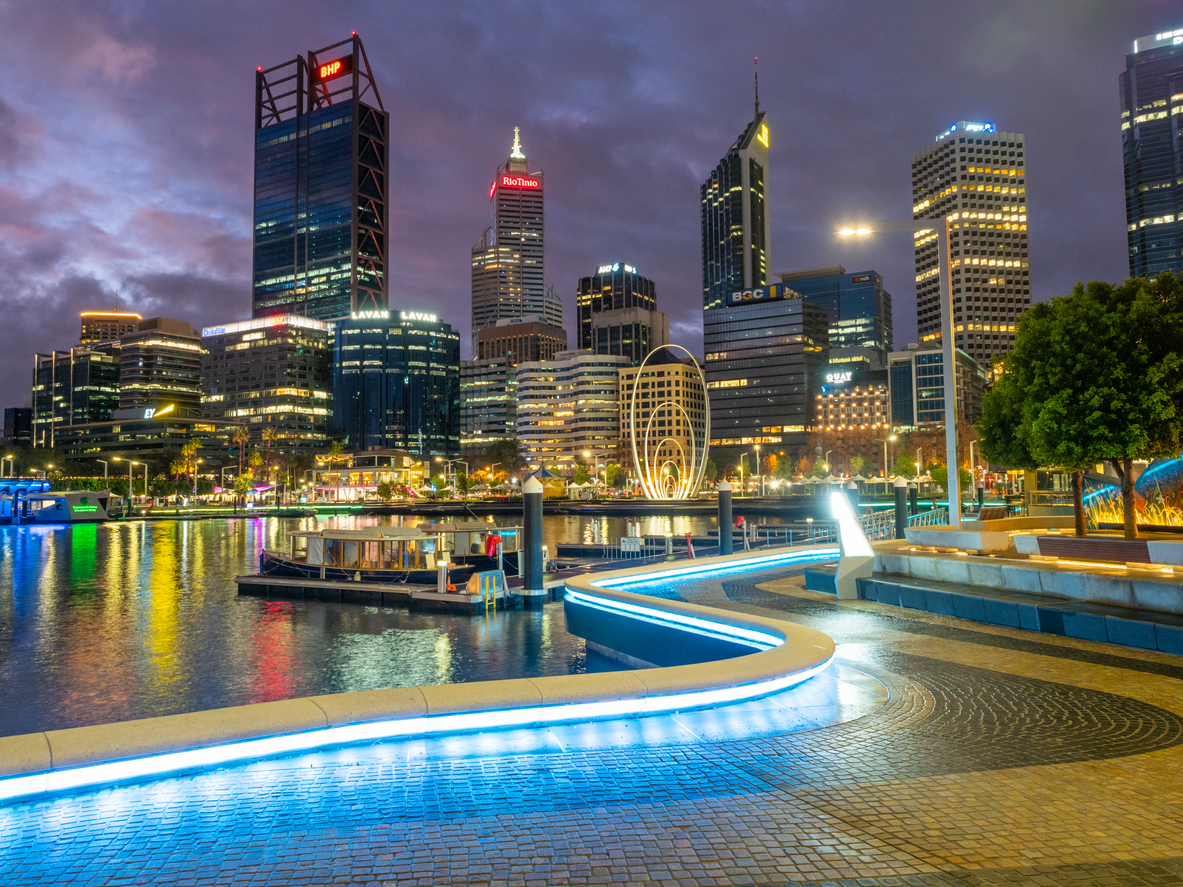
The skyline of the city of Perth in Western Australia.

Infectious diseases expert Professor Booy called Mr McGowan's decision not to open the border "very interesting," but questioned the long term plan.

"You can actually understand where he is coming from, they don't have disease and death. They don't want to have it," he told Today.

"If they opened, they would get it. But at some point their industry is going to crumble, somehow they are surviving on the mining, and so you can see a short-term gain for Mark McGowan … but long term, is it the right thing for Western Australia?

"Is it the right thing for all those relatives and friends and people needing medical care who can't get there?"

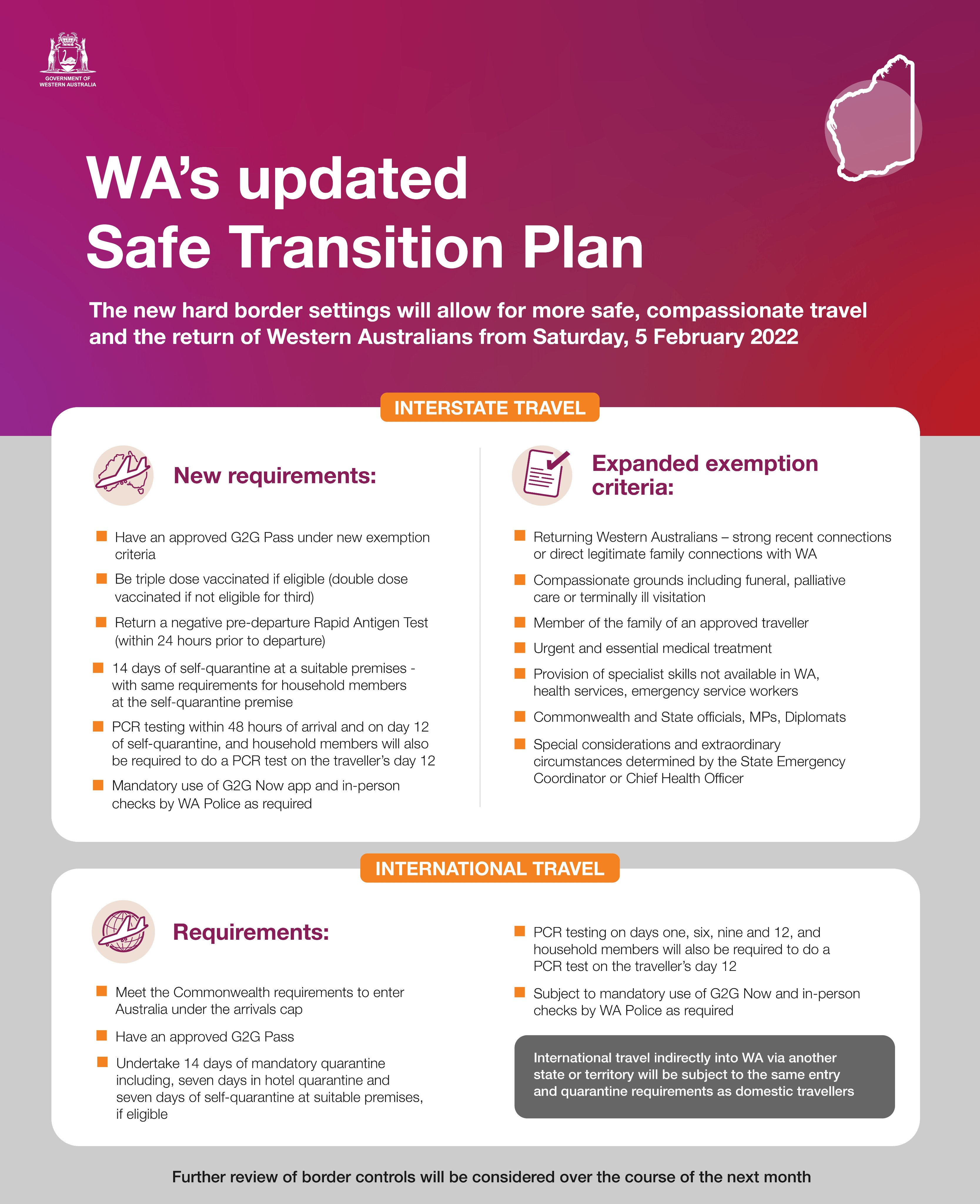
What are the new details for WA's border changes?

While the hard border controls will remain, there will be more exemptions, especially for compassionate reasons and health workers.

Hotel quarantine will also continue for international arrivals – but will be cut to seven days in a hotel and a week at home.

And interstate arrivals who are allowed in must still do 14 days home quarantine and provide multiple negative tests.

"I know this decision will be unpopular with many people. As holiday plans and some family gatherings will have been disrupted," Mr McGowan said.

READ MORE – Daniil Medvedev blasts 'low IQ' chanting Australian Open fans

"For that I am sorry. It will be reckless and irresponsible to open up now. I can't do it.

"Allowing hundreds or thousands of Omicron- infected people to fly straight into Perth from February 5 would no testing, no quarantine, and no public health measures, would cause a flood of COVID across our state."

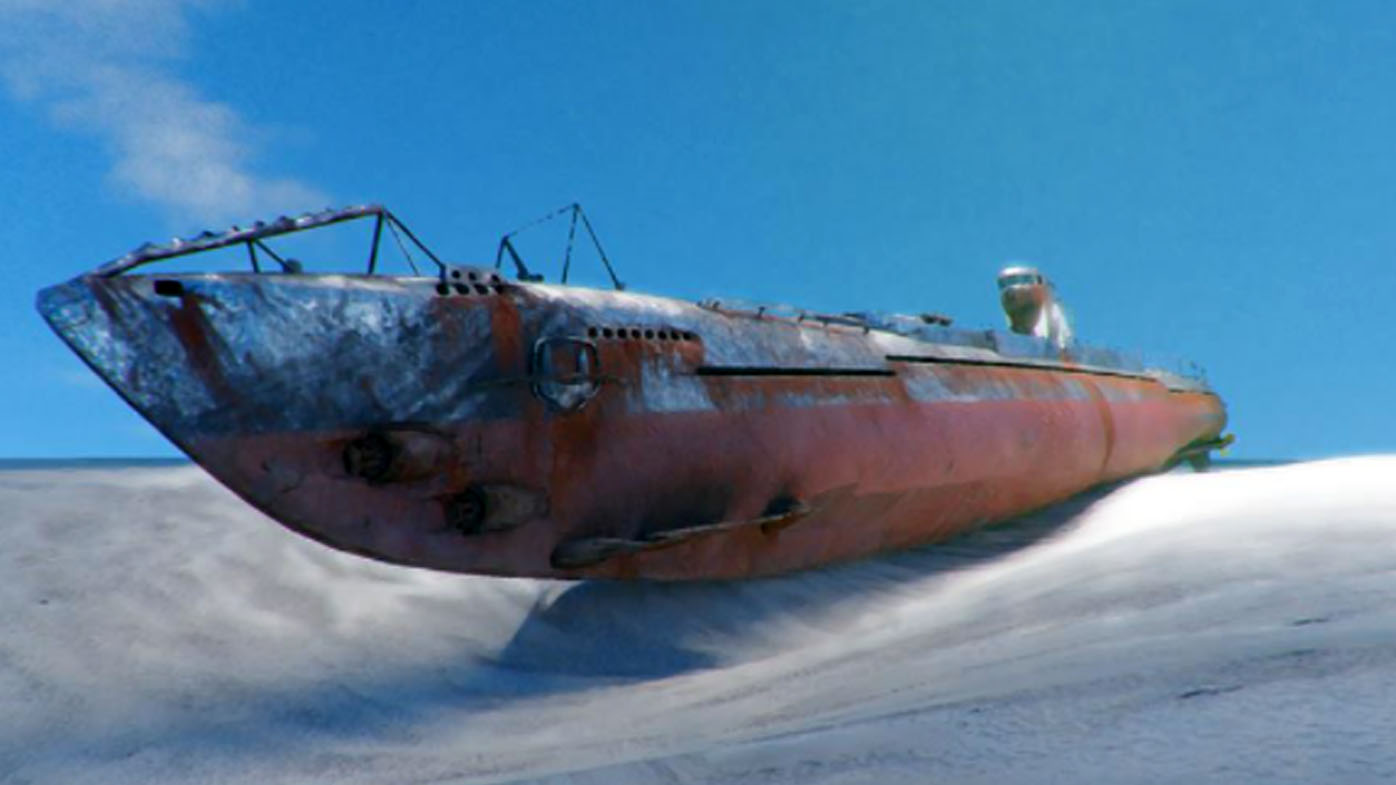
First look at submarine hidden on ocean floor for 80 years

The secrets of a World War II Japanese submarine sunk 80 years ago by the Australian navy can now be explored by history enthusiasts, thanks to virtual technology.

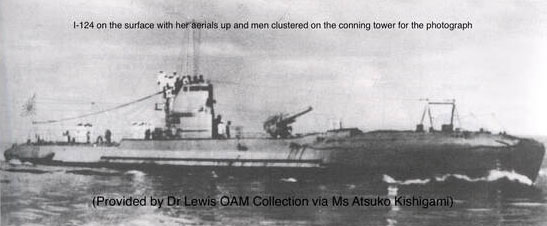
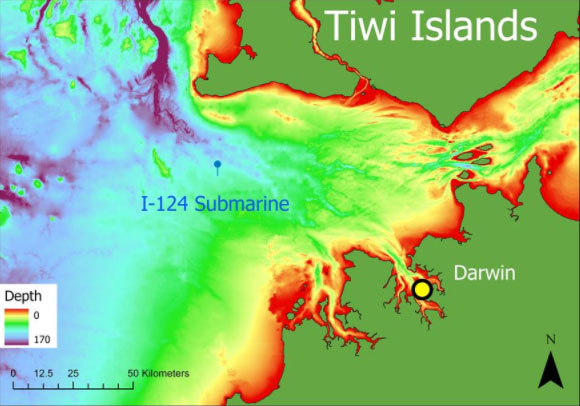
The submarine I-124 was part of an Imperial Japanese Navy squadron that had been laying mines in waters near Darwin in a bid to intercept Allied vessels and close down the port in World War II.

But on January 20, 1942, it was intercepted by Royal Australian Navy warships and sunk, with the loss of its 80-man crew.

READ MORE: Young infant died with COVID-19 in NSW hospital

Diving on the the wreck is today considered because it is a war grave and its remains are in deep and treacherous water.

But Flinders University maritime archaeologists have used modern sonar technology to provide military history enthusiasts in Australia and Japan the first look at the submarine for eight decades.

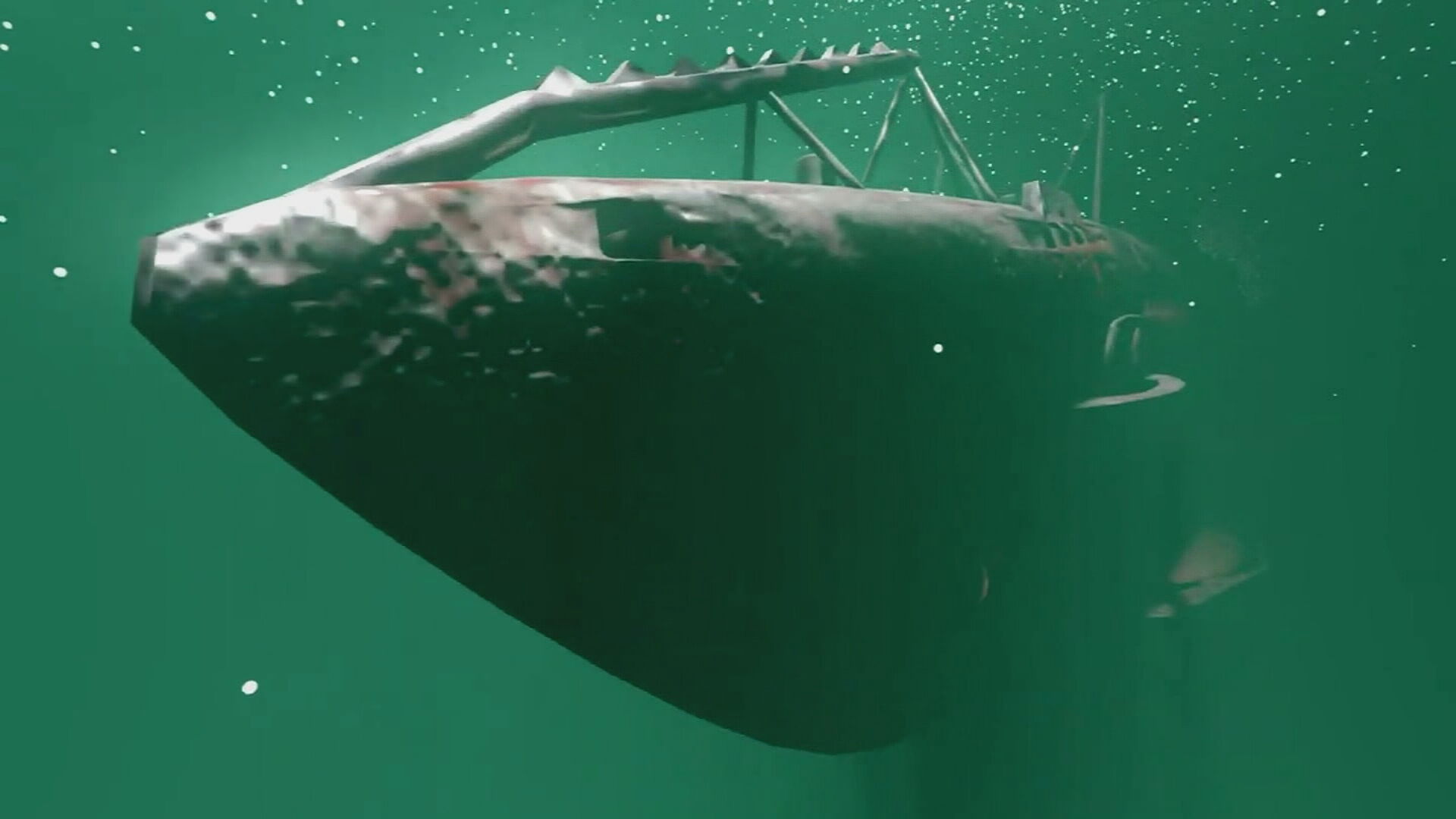
The Adelaide-based experts have created a virtual reality tour of the World War II wreck.

Flinders University maritime archaeologists have used modern sonar technology to give the world the first look at a submarine hidden on the ocean floor for 80 years.

READ MORE: Both devastation and support for McGowan's WA border shut out

The project began last October when the Northern Territory Government Heritage Branch undertook a joint project with the Australian Institute of Marine Science (AIMS) from the AIMS research vessel Solander to map the wreck using advanced remote sensing equipment.

Dr John McCarthy, a maritime archaeologist at Flinders University, was then commissioned to create a virtual dive experience to show how this data is being used to understand and monitor this site.

"Drawing on our data, and historic ship plans and photographs, we've created a virtual dive experience in which the video takes the viewer through the data gathering process, and then takes you down into the deep, to experience the wreck firsthand," Dr McCarthy said.

"The archaeological survey shows that the wreck is in good condition, but with some signs of degradation of the outer hull that require further investigation.

"Our aim was to create a realistic virtual experience with an accurate digital reconstruction of the submarine given the historical significance of the wreck in Australia and Japan."

The maritime experts said the new technology is allowing them to access parts of the ocean they've never been able to explore before.

University of Medicine and Health Sciences; Winsor University of Medicine Scholarship Offers

The Ministry of Human Resources in the Nevis Island Administration (NIA), is encouraging individuals who are interested in Health Sciences to apply for either the University of Medicine and Health Sciences (UMHS) or the Winsor University of Medicine scholarship opportunity.

These scholarships are awarded to four (4) individuals at any given time (as current students complete their studies, then other applicants are considered according to spaces available). 

Upon university acceptance, individuals are to apply to the Ministry of Human Resources. Applications will then be forwarded to the St. Kitts Human Resources Office for onward processing.

The following documents are necessary for applications to be considered:

  • Cover Letterwrite to request scholarship (please address to  the Permanent Secretary, Ministry of Human Resources, Nevis Island Administration, Social Security Building, Pinney’s Estate, Nevis.
  • Original University Acceptance Letter along with one (1) additional copy.
  • Original Birth Certificate (proof of nationality or citizenship) along with one (1) additional certified copy.
  • Original High School and/or College transcripts along with one (1) additional certified copy.

Note that there is NO deadline for receiving applications. However, it is very important that upon receiving a university acceptance letter, scholarship applications are delivered promptly as they go through quite a process before approval.

To apply to the University of Medicine and Health Sciences or the Winsor University of Medicine please visit the following websites: umhs-sk.org/Caribbean-medicalschools  or https://www.windsor.edu/

For additional guidance on scholarship application procedures, kindly contact the following individuals:

Ms Jamilla Adams

Human Resources

Government of St. Kitts

Tel. No.: 467- 1323

The post University of Medicine and Health Sciences; Winsor University of Medicine Scholarship Offers appeared first on The St Kitts Nevis Observer.

Barbados PM Mia Mottley Wins Landslide 2nd Term

PM who shot to fame at Cop26 climate talks vows to ‘lead country first to safety then to prosperity’

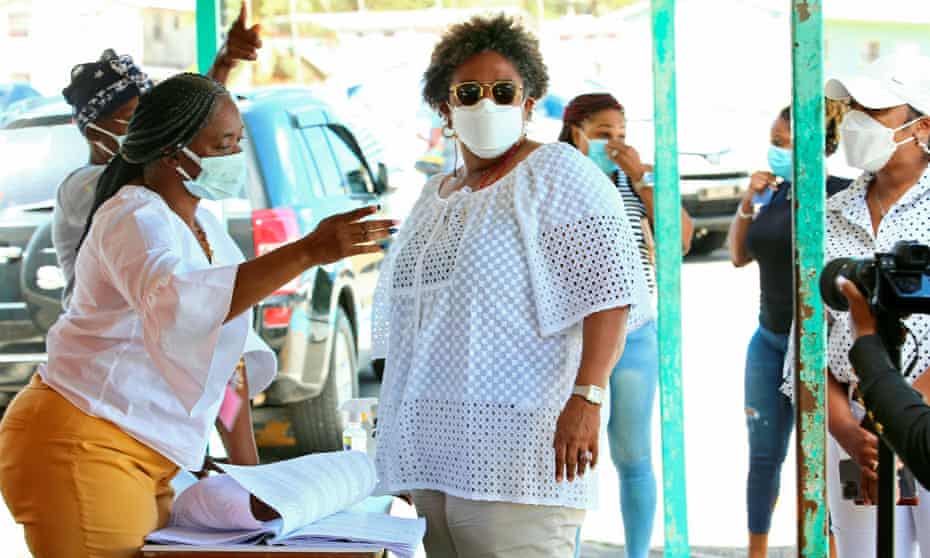
Mia Mottley casts her vote in St Michael, Barbados.
Mia Mottley casts her vote in St Michael, Barbados. Photograph: Nigel R Browne/Reuters

Mia Mottley, who shot to international fame during the Cop26 climate talks and oversaw Barbados’s break with the Queen last year, has won a second term as the Caribbean nation’s prime minister.

The 56-year-old’s Barbados Labour party (BLP) won all 30 seats, up from 29 in 2018, in an election marred by complaints that thousands of Covid-positive Bajans were denied a vote.

Mottley came to international attention last year when she castigated global leaders at Cop26 and her government jettisoned the Queen as head of state, installing the singer Rihanna as an official national hero at the same time.

She also has star power at home, where she is known by her first name only. Her clean-sweep victory suggests voters did not blame her for the island’s tourism revenues falling by 90% during her truncated first term due to the Covid pandemic.

An 11th hour attempt to stop the poll failed on Tuesday night when the country’s high court ruled it had no jurisdiction to postpone the election, which took place amid rising Omicron cases.

Philip Catlyn, the opposition candidate who brought the case, had argued that 5,600 people in isolation were disfranchised after they were banned from going to polling stations to cast their vote. Anyone who tests positive on the island of 287,000 people has to wear a tracking bracelet to deter them from breaking quarantine.

As voting got under way on Wednesday, the Portuguese government announced measures to ensure that those infected with Covid could vote in that country’s snap general election later this month, fuelling accusations of unfairness.

Huge crowds celebrated into the early hours of Thursday outside BLP’s headquarters in the capital, Bridgetown, after Barbados’s midnight curfew was lifted for the night.

In her victory speech, Mottley said the landslide victory would allow her government to “lead the country first to safety and then to prosperity” and to prepare Barbados for the challenges “of the next 10 to 15 years”. These include climate change and antimicrobial resistance, she said.

Global heating poses an existential threat to Barbados. Last year the island suffered its first hurricane in 65 years and a storm with almost 500 lightning strikes in the space a minute, plus volcanic ash-falls from neighbouring St Vincent.

Though Barbados is reliant on long-haul flights and polluting cruise ships for much of its economy, Mottley was the breakout star of Cop26, taking global leaders to task for their inaction on climate change.

At the BLP’s final rally on Tuesday, Liz Thomas, Barbados’s ambassador for climate change, reminded the crowd of the US president, Joe Biden, walking hand in hand with Mottley: “White people from all over the globe say to me: how do I get a Barbados passport? Caribbean people say to us: ‘How do I get a Mia Mottley?’, ‘I wish we had a Mia, give us Mia, lend us Mia’, but Barbados got Auntie Mia,” she said.

Basking in her second straight landslide, Mottley promised to uphold the values of Errol Barrow, the first post-independence prime minister of Barbados, who said the country would be “a friend of all and a satellite of none”.

Despite the BLP’s thumping victory, Cynthia Barrow-Giles, professor of constitutional governance and politics at the University of the West Indies, believed Mottley’s imposition of republicanism without a referendum had turned some voters away from the BLP.

“People are so angry they were not consulted by the prime minister. They see it as an authoritarian tendency and autocratic,” she said. Barrow-Giles and a colleague polled Bajans and found while only a minority wanted to retain the British monarch as head of state, most objected to the lack of consultation.

Though the BLP’s lengthy manifesto made numerous eye-catching promises, such as building 10,000 homes and investment in the medicinal cannabis industry, Mottley’s second term is likely to be dominated by recovering and diversifying the Bajan economy, post-Covid. As part of a loan deal with the International Monetary Fund, the Barbados government needs to achieve a 6% surplus of GDP, which may lead to austerity measures, said Barrow-Giles.

One of Mottley’s preoccupations is also addressing Barbados’s ageing population via immigration. She wants to attract more “digital nomads” to the island and lure back the Bajan diaspora, repeatedly saying on the campaign trail that the island “hasn’t replaced its population since 1980”.

The main opposition, the Democratic Labour party, which ruled Barbados between 2008 and 2018, campaigned against the BLP “one-party state”. Voters were not convinced and Barbados will have no official opposition for the next five years.

The post Barbados PM Mia Mottley Wins Landslide 2nd Term appeared first on The St Kitts Nevis Observer.

Rio Police Occupy Favelas in New Push to Combat Gangs

RIO DE JANEIRO, Jan 19 (Reuters) – Hundreds of heavily-armed police occupied the Jacarezinho neighborhood of Rio de Janeiro on Wednesday morning, as authorities vowed a renewed effort to bring security and public services to slums dominated by gangs of drug dealers.

Police drove armored personnel cars into the neighborhood, patrolling streets and entering homes in a four-hour operation witnessed by a Reuters photographer.

Governor Claudio Castro said it was the start of a new offensive to transform poor areas known as ‘favelas’, echoing the rhetoric of the Police Pacifying Units (UPP) that displaced violent gangs in the city ahead of the 2016 Olympic Games.

Rio’s Military Police said there were no violent encounters in the operation that had started in two favelas. A spokesperson said the large number of police forces deployed deterred any armed response from the gangs.

Jacarezinho is a sprawling favela on the violent north side of Rio, Brazil’s second largest city, where a police raid in May resulted in 29 deaths, including an officer, and drew sharp criticism from human rights groups. read more

Police said they plan to occupy other nearby favelas, such as Manguinhos, Bandeira 2 and Conjunto Morar Carioca.

Castro said on Twitter that he would give details on Saturday of further plans to restore security and “improve the lives of those who live in these areas”.

The first UPP was set up in Rio’s Santa Marta favela in 2008, and dozens more sites were rolled out across the state over the next decade.

The so-called “pacification” project, which focused on community policing to engage with residents and discourage gunfights, was an initial success and won early international praise. But by 2018, the scheme was suffering from budget cuts and inconsistent support from corrupt state governments.

That year, the federal government made a military intervention to take back control of Rio’s streets, essentially killing off the UPP project.

The 2018 election of President Jair Bolsonaro, who has called for more more aggressive tackling of organized crime, ushered in a tougher era in Rio policing.

In 2019, Rio police killed a record 1,814 people.

Reporting by Alexandre Loureiro Additional reporting by Gabriel Stargardter and Eduardo Simoes; Editing by Emelia Sithole-Matarise

The post Rio Police Occupy Favelas in New Push to Combat Gangs appeared first on The St Kitts Nevis Observer.

What you need to know about WA's border changes

Western Australia Premier Mark McGowan has announced the state's hard border will remain in place in response to the threat of the Omicron variant.

The state was due to re-open on February 5.

Whilst the hard border controls will remain, there will be more exemptions, especially for compassionate cases.

READ MORE: Man charged after haul of rapid antigen tests 'stolen' from Sydney depot
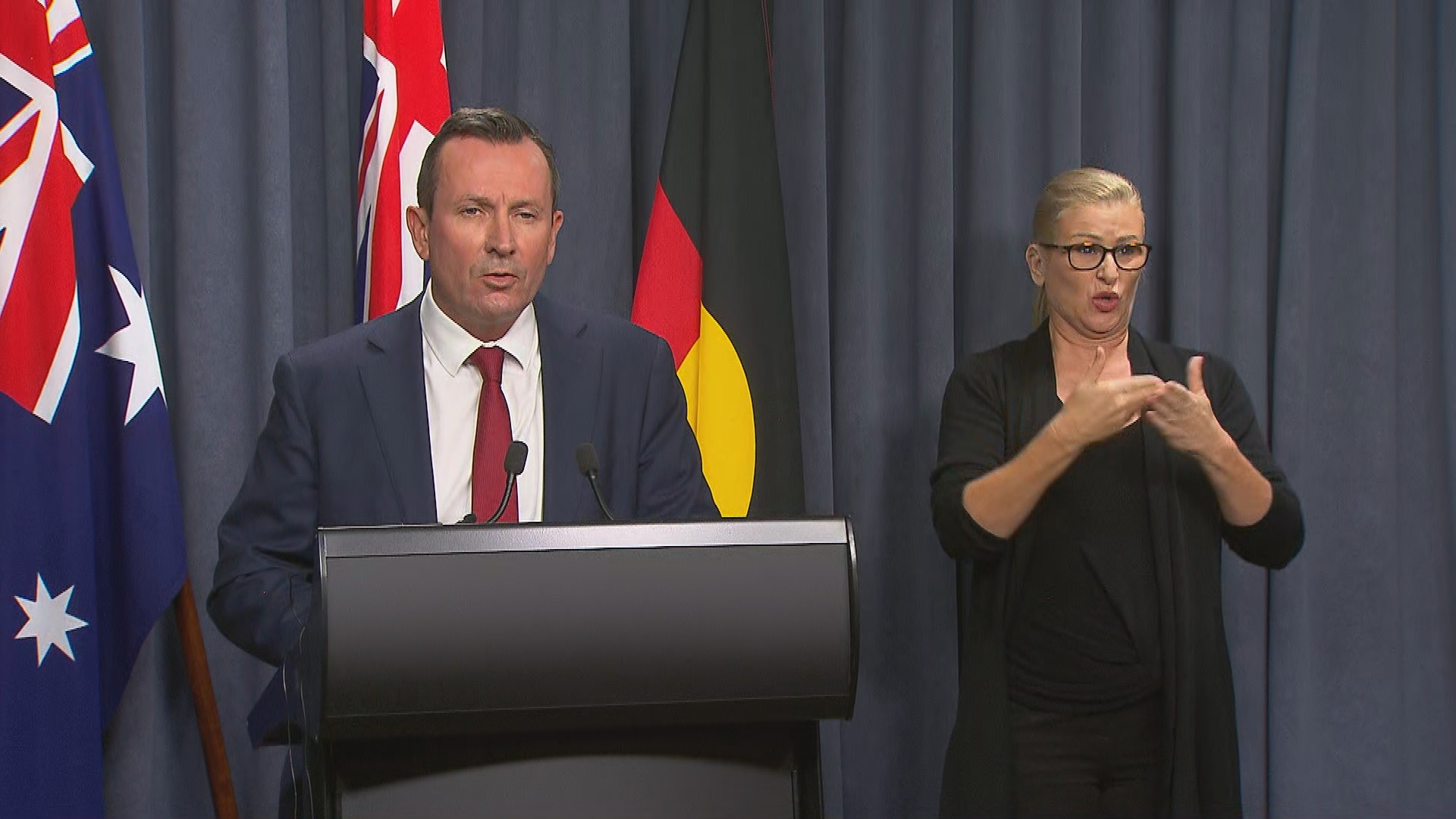
Western Australia Premier Mark McGowan.

"In light of what has occurred in the rest of the country, having closely assessed the situation over east, and listening to the latest health advice, we have reworked WA's safe transition plan to fit the environment that now confronts us," Mr McMcGowan said.

Who will be allowed to enter WA?

From 12.01am on Saturday, February 5, the hard border will stay, but with some new settings.

Returning Western Australians with strong recent connections or direct legitimate family connections with WA should be granted exemptions.

Compassionate grounds to travel to the state include: attending funerals, palliative care or terminally ill visitation, people entering for urgent and essential medical treatment, people entering for reasons of national and state security, and people with specialist skills not available in WA.

Commonwealth and state officials, members of parliament, diplomats and people with court proceedings will be allowed to enter.

Other special considerations will be given to extraordinary circumstances, as determined by the state emergency coordinator or Chief Health Officer.

What are the requirements once you enter WA?

Approved travellers from interstate will need to be an approved G2G pass traveller, have received a booster — if eligible — and return a negative pre-departure rapid antigen test 24 hours prior to departure (by uploading the result as part of the G2G pass application).

Those arrivals will need to undertake 14 days of self-quarantine at a suitable premise.
The state was due to re-open on February 5, under the safe transition plan.

Mr McGowan said household members must also self-quarantine for the same duration and follow the same requirements, if sharing the same space..

"You also need to have PCR testing within 48 hours of arrival and on day 12 of self-quarantine," he said.

"Everyone at the self-quarantine premise is subject to mandatory use of G2G now and in-person checks will be undertaken by West Australian Police as and when required."

When will the border reopen now?

No new date has been announced for the border to reopen.

Mr McGowan said WA's booster shot rate currently sat at 25.8 per cent.

He said he was aiming to get that number as high as 80 or 90 per cent but stressed his government would be watching what happened "over east" throughout February.

He was hoping 35-38 per cent of the eligible population would have received a booster by February 5 but admitted the higher numbers would take "some time" to reach.

WA's updated transition plan (full detail)

From February 5 at 12.01am, approved travellers are permitted to enter WA, or leave WA and return, with testing and quarantine requirements under the new expanded exemption criteria:

– Returning Western Australians, with strong recent connections or direct legitimate family connections with WA;

– Compassionate grounds including funeral, palliative care or terminally ill visitation;

– Member of the family of an approved traveller;

– People entering for urgent and essential medical treatment;

– Reasons of national and state security;

– Commonwealth and State officials, Members of Parliament, Diplomats;

– Provision of specialist skills not available in WA, health services, emergency service workers;

– People required to attend court matters, judicial officers and staff of court, tribunals and commissions; and

– Special considerations and extraordinary circumstances determined by the State Emergency Coordinator or Chief Health Officer.

Interstate travel

If you're coming from interstate into WA as an approved traveller, you will now need to meet the following requirements:

– Have an approved G2G Pass, under new exemption criteria;

– Be triple dose vaccinated if eligible (double dose vaccinated if not eligible for third);

– Provide proof of a negative Rapid Antigen Test within 24 hours before departure;

– Undertake 14 days of self-quarantine at a suitable premises, with the same requirements for household members at the self-quarantine premises;

– PCR testing within 48 hours of arrival and on day 12 of self-quarantine, and household members will also be required to do a PCR test on the traveller's day 12.

– Subject to mandatory use of G2G Now and in-person checks by WA Police as required

Additional requirements are in place for domestic road travel to keep WA safe:

– Approved domestic travellers to limit travel to 1500km from road borders, to enable people to travel by road to suitable premises for quarantine in Perth from Eucla;

– Entry at the Kununurra border only for transport, freight and logistics and border community residents;

– Restricted travel into remote Aboriginal communities.

Overseas travel

International travel into WA will be permitted with the following requirements:

– Meet the Commonwealth requirements to enter Australia under the arrivals cap;

– Undertake 14 days of mandatory quarantine including, seven days in hotel quarantine and seven days of self-quarantine at suitable premise, if eligible,

– PCR testing on days one, six, nine and 12, and household members will also be required to do a PCR test on the traveller's day 12

– Subject to mandatory use of G2G Now and in-person checks by WA Police as required

– International travel in-directly into WA via another state or territory will be subject to the same entry and quarantine requirements as domestic travellers
WORLD VIEW: Europe-Living With Covid, 2nd Floyd Trial, Airport Scanners Tied to China, Tonga Aftermath, More

Jan 20, 2022

Alternate text

The Associated Press

The Rundown

I'm an image

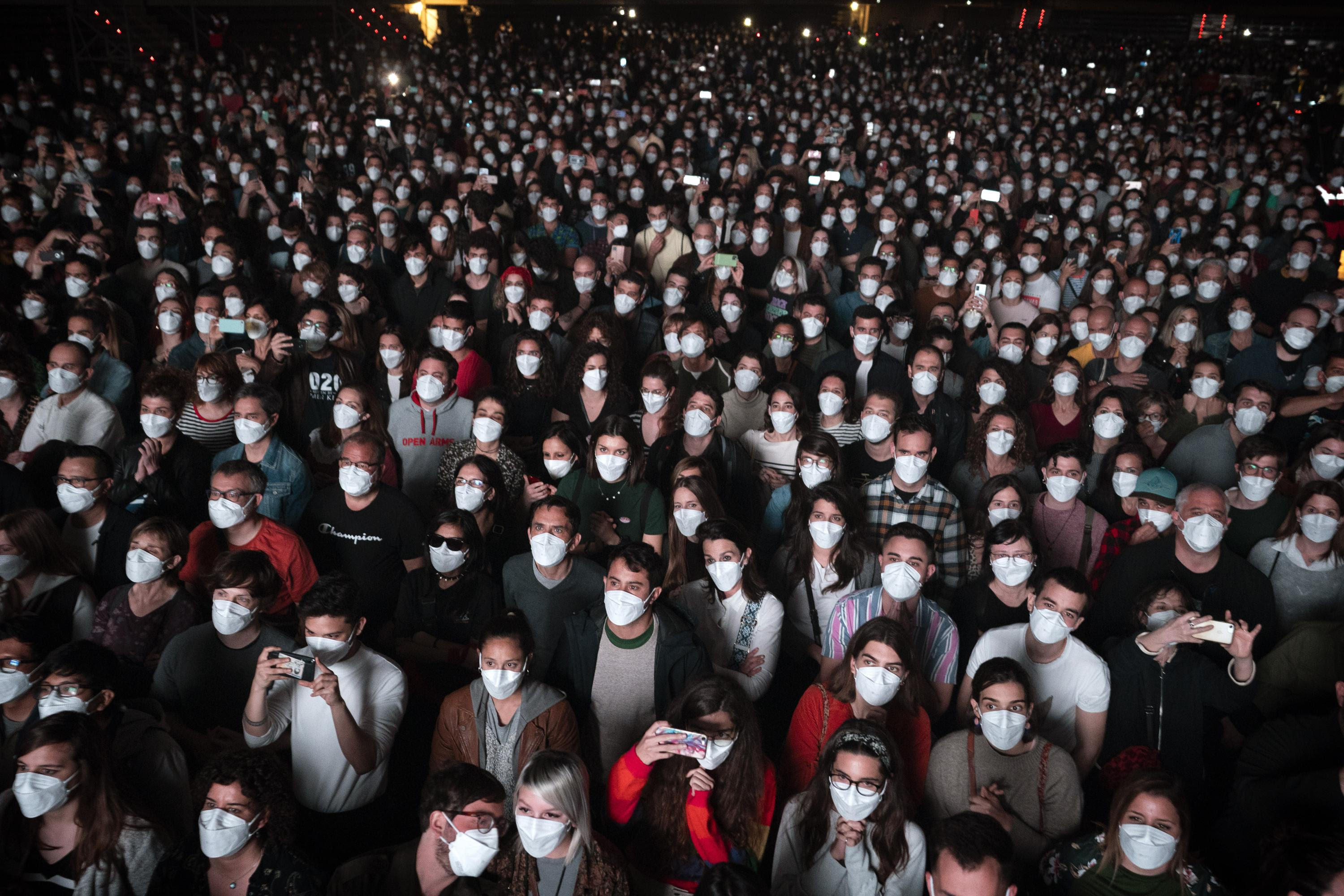
MADRID (AP) — When the coronavirus pandemic was first declared, Spaniards were ordered to stay home for more than three months. For weeks, they were not allowed outside even for…Read More

I'm an image

MINNEAPOLIS (AP) — Jury selection is scheduled to begin Thursday in the federal trial for three former Minneapolis police officers who are charged with violating George Floyd’s …Read More

I'm an image

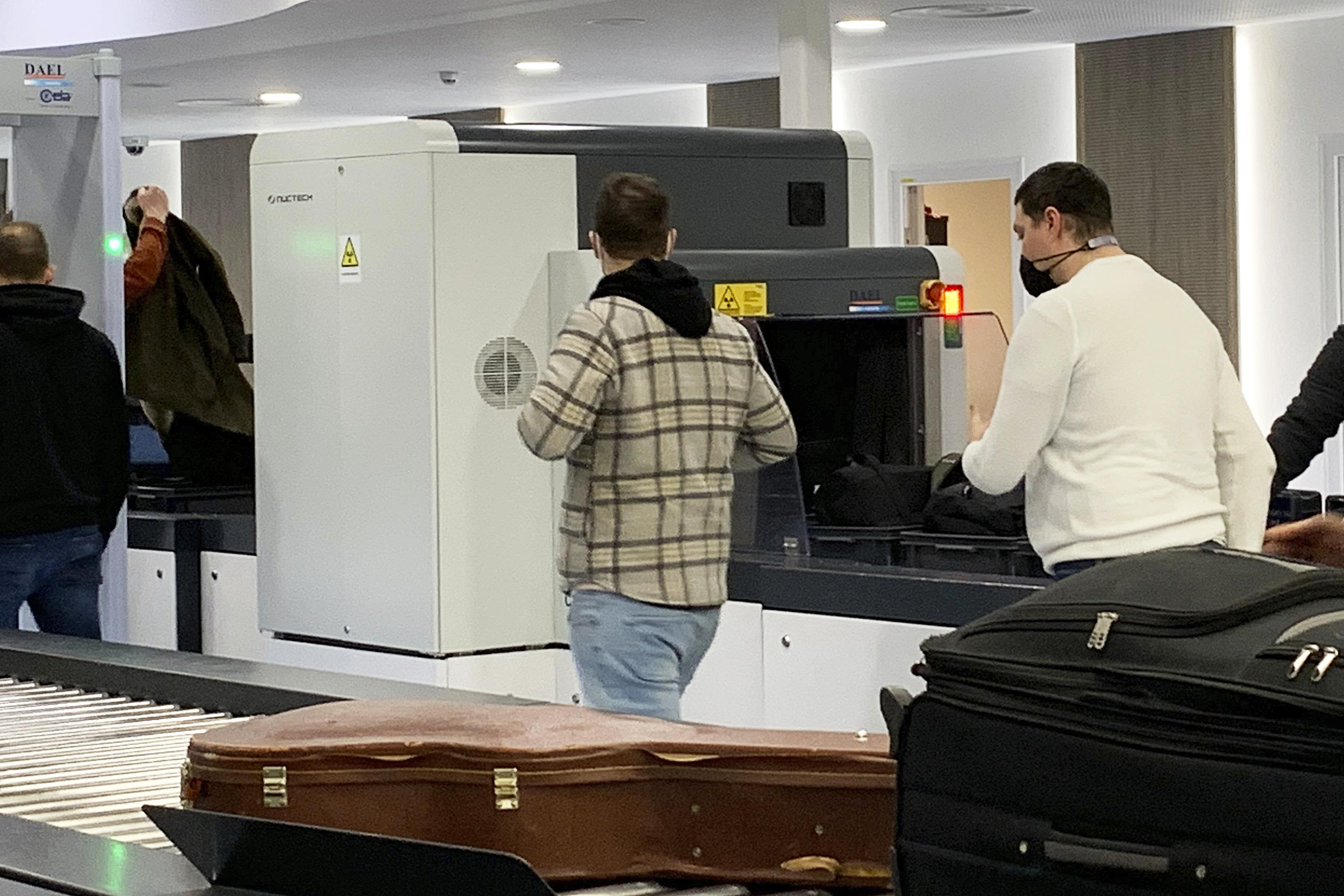
At some of the world’s most sensitive spots, authorities have installed security screening devices made by a single Chinese company with deep ties to China’s military and the hi…Read More

I'm an image

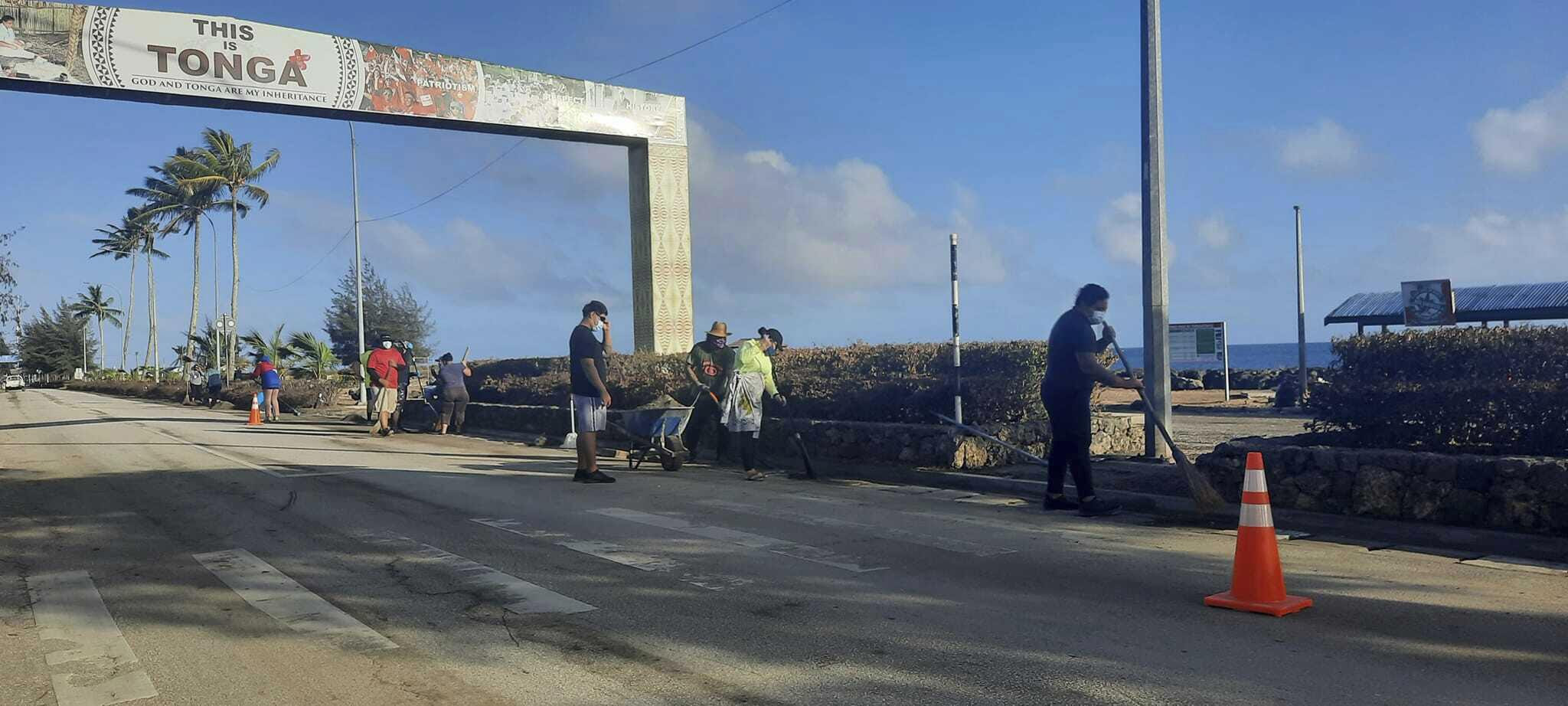
BANGKOK (AP) — As the massive undersea Hunga Tonga Hunga Ha’apai volcano erupted on Saturday, Tongans from around the world gazed on as their relatives livestreamed images of bi…Read More

I'm an image

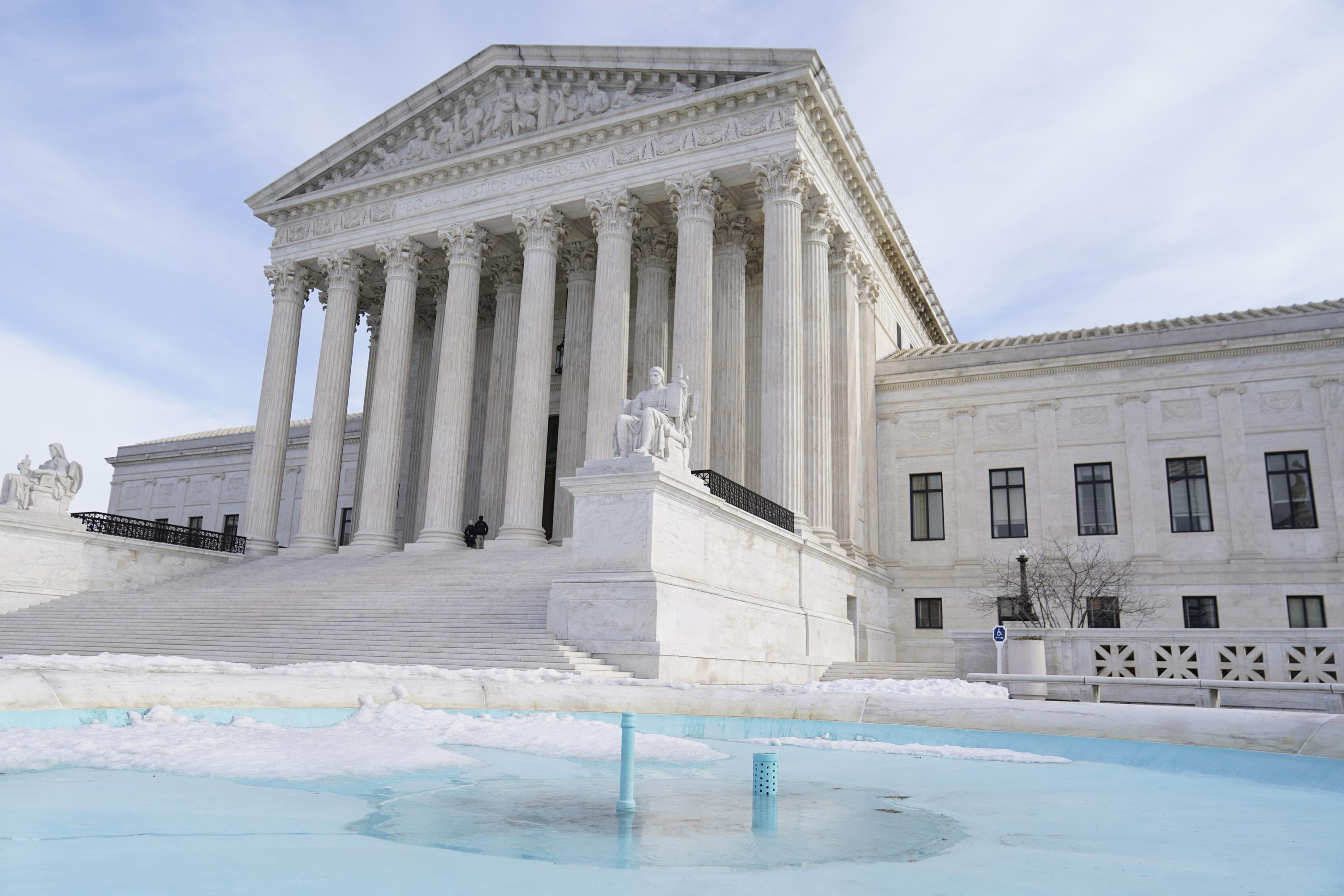
WASHINGTON (AP) — In a rebuff to former President Donald Trump, the Supreme Court is allowing the release of presidential documents sought by the congressional committee investi…Read More

OTHER TOP STORIES

JEFFERSON CITY, Mo. (AP) — The Missouri State Highway Patrol alert sent cellphones blaring statewide: Authorities in Gotham City, Missouri, were searching for a purple and g…Read More

LONDON (AP) — Some Conservative lawmakers in Britain are talking about ousting their leader, Prime Minister Boris Johnson, who has been tarnished by allegations that he and …Read More

BEIRUT (AP) — In the dark streets of a Beirut now often without electricity, sometimes the only light that shines is from headlamps worn by scavengers, searching through gar…Read More

BERLIN (AP) — Germany’s Transport Ministry has criticized a stunt that saw a Czech millionaire drive his high-powered sportscar along a public highway at speeds of up to 414…Read More

The post WORLD VIEW: Europe-Living With Covid, 2nd Floyd Trial, Airport Scanners Tied to China, Tonga Aftermath, More appeared first on The St Kitts Nevis Observer.

Bahamas: Regal British Colonial Hilton Hotel to Close

Nassau Guardian- Citing a “dismal business forecast for the foreseeable future”, the British Colonial Hilton has advised that it will cease business operations.

In a letter to Bahamas Hotel Catering and Allied Workers Union, Hilton’s Director of Operations Lynne Johnson said staff members will be made redundant on February 15.

“It is not currently foreseen that there are any steps which can be taken to avoid the closure or the redundancy exercise; however, we are willing to meet with representative of the union to discuss any measures which may be taken to avoid the closure or any other matter which the union may consider relevant,” Johnson said in the letter, dated January 18.

More than 100 employees will be impacted by the move.

Deputy Prime Minister and Minister of Tourism, Investments and Aviation Chester Cooper said in a statement that he met with the owner of the hotel, China Construction America (CCA), which indicated that the agreement to carry the Hilton brand at the property has come to an end.

“We are currently attempting to facilitate discussions with the owners and established management companies with a view to making sure the closure can be avoided or minimized,” Cooper said today.

“I am cautiously optimistic that a resolution can be reached.”

The post Bahamas: Regal British Colonial Hilton Hotel to Close appeared first on The St Kitts Nevis Observer.

CIA Finds Most Havana Syndrome Cases Unlikely Caused by Foreign Power

Jan 20 (Reuters) – Most cases of so-called Havana Syndrome can be explained by environmental causes, undiagnosed medical conditions or stress, rather than actions by a foreign power, The New York Times reported on Thursday, citing Central Intelligence Agency (CIA) officials.

A majority of 1,000 cases reviewed by U.S. investigators are explainable, and show the mysterious ailment is unlikely to have been caused by Russia or another foreign adversary, CIA officials told the newspaper, describing interim findings of a study.

The agency is continuing investigations into two dozen unexplained cases that may offer clues as to whether a foreign power is behind the condition that has affected U.S. diplomats, officials and family members overseas, including in Vienna, Paris, Geneva and Havana, the newspaper said, citing CIA officials.

In addition to those two dozen cases, a significant number of others remain unexplained, the Times cited a CIA official as saying. The CIA did not immediately respond to a Reuters’ request for comment on Thursday.

The condition first came to public attention in 2016 after dozens of diplomats at the U.S. Embassy in Havana, Cuba, complained of sickness. read more

Symptoms included migraines, nausea, memory lapses and dizziness.

CIA Director William Burns said in a statement to the Times that the agency was pursuing a complex issue with “analytic rigor, sound tradecraft and compassion,” and emphasized that agency officers had experienced real symptoms.

“While we have reached some significant interim findings, we are not done,” Burns said in the statement. “We will continue the mission to investigate these incidents and provide access to world-class care for those who need it,” he added.

Earlier this month, Secretary of State Antony Blinken said in an interview the United States still did not know what Havana Syndrome was or who was responsible for it.

Reporting by Shivam Patel in Bengaluru Editing by Mark Potter

The post CIA Finds Most Havana Syndrome Cases Unlikely Caused by Foreign Power appeared first on The St Kitts Nevis Observer.