A man has died after a boat carrying five people, including two children, flipped at Tairua bar in the Coromandel yesterday.Twenty-nine people have now died as a result of a water-related incident this summer, making it the worst…
Category Archives: headline
Big Covid vaccine booster demand in Hawke's Bay as cars line up hours before clinics open
Demand for the Covid vaccine booster is strong, with nearly 1500 people getting one in Hawke’s Bay on the first day of its widespread availability.Anyone aged 18 or over in New Zealand who had their second vaccination at least four…
Waikato crash: One dead after vehicle hits tree in Waerenga
The sole occupant of a vehicle that hit a tree in Waikato this morning has died.The crash occurred in Waerenga, about 60km north of Hamilton, and the road has now reopened.Emergency responders were called to the scene, near the…
Holiday crash tragedy: Tributes for teen driver killed in Far North
A teenager who died in a crash while on holiday with a group of friends has been remembered by family for his humour and big personality.Eden Harry Absolum Cortland, 17, died in a crash at Pukenui in the Far North on December 29.He…
What happens when you test positive in 'zero-COVID' Hong Kong
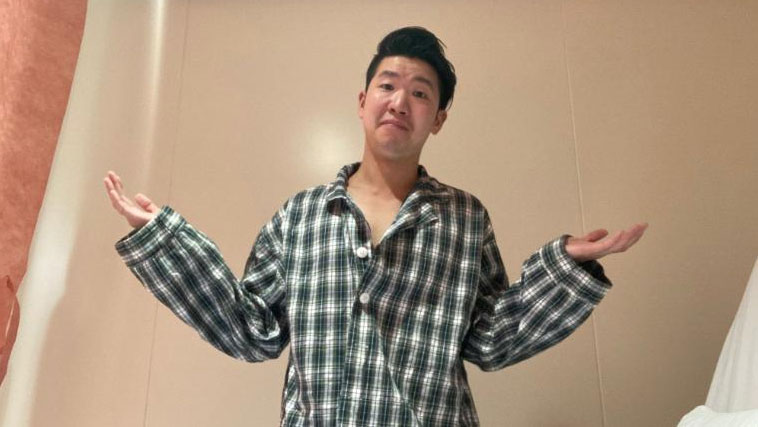
Darryl Chan tested positive for COVID-19 when he landed in Hong Kong last month. More than two weeks later — and despite never showing any symptoms — he remains isolated in a hospital bed with no sign of being allowed to leave.
"I think the worst part is not knowing when I'll be able to get out," he said.
"You're almost feeling you are back at school, with controlled wake-up and bedtime, (and) not being able to control what you can eat."
Hong Kong, along with mainland China, is one of the few places in the world still pursuing a zero-COVID policy.
READ MORE: Hong Kong bans flights from Australia, imposes other restrictions
The city's priority is reopening borders with the mainland, not the rest of the world, Hong Kong authorities have said.
That means most non-residents are banned from entering, while almost all overseas arrivals must undergo 21 days of quarantine — even if they are fully vaccinated.
Hong Kong deems travellers from the United Kingdom as a high-risk for the Omicron variant, subject to its most stringent quarantine and testing measures — which include spending the first four days at a government camp.
On December 19, Mr Chan flew to Hong Kong from London to start a new job.
Mr Chan said he was fully vaccinated with a booster shot and had tested negative for COVID-19 several times before his flight. He was mentally prepared for quarantine, but not for what happened next, he said.
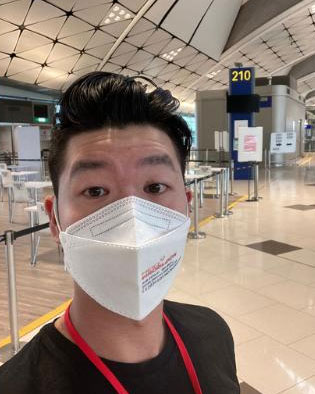
On arrival in Hong Kong, Mr Chan took a mandatory COVID-19 test and waited hours at the airport. His result was determined "preliminary positive", meaning he was required to take another test. He was then moved to a cordoned-off area with a makeshift bed.
"It was definitely a bit of a shell shock," Mr Chan said.
"Having done so many tests in the week leading up to my flight, and all of them came back negative … I didn't ever think that I'll actually test positive on arrival."
Some 13 hours after his plane landed, Mr Chan was taken by ambulance to a nearby hospital for further testing.
He was later confirmed to have the Omicron variant, though he remained asymptomatic.
"(I had) that feeling of dread, where you sort of go, 'Oh, God, what's going to happen now?'" he said.
"I definitely felt quite trapped … you can't just say, 'I'm going to get back on a flight and go somewhere else.'
"You really are just trapped there, so that was quite a scary feeling."
It's not just travellers who face indefinite hospitalisation when they test positive for COVID-19 in Hong Kong.
In recent days, Hong Kong has identified a number of Omicron cases in a cluster linked to aircrew — breaking a nearly three-month streak of no locally transmitted COVID-19 infections. Those confirmed infected have also been sent to the hospital.
Meanwhile, hundreds of people, including more than 20 restaurant staff deemed close contacts of the positive cases, have been sent to the government camp for 21 days of isolation and extensive testing.
Any positive results would mean a transfer to hospital.
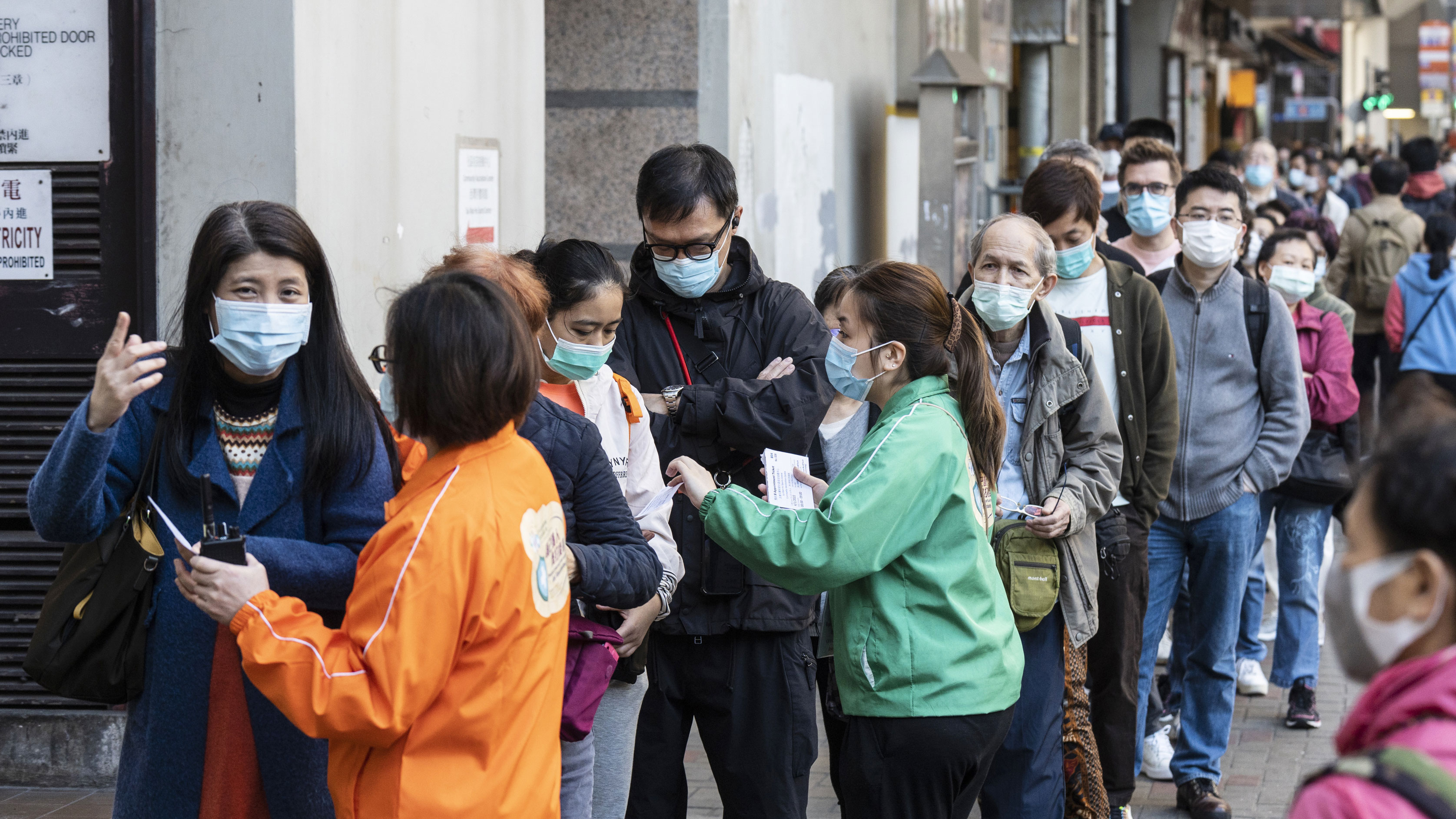
Anyone who attended the same premises as the positive cases at roughly the same time in recent days has also been ordered to take a test, while several residential buildings linked to the cluster have been temporarily locked down for mass testing.
As fears of local Omicron transmission grow, Hong Kong leader Carrie Lam said Tuesday that resumption of normal travel between the city and mainland China will "have to wait for another while".
Just before the cluster emerged, Ms Lam reaffirmed Hong Kong's zero-COVID stance.
"Hong Kong has been taking very stringent measures to guard against importation of cases with a view to maintaining zero local infection," she said in a December 28 statement.
"In the face of the fierce onslaught of Omicron, we need to be even more vigilant."
Stuck in the hospital
According to Hong Kong authorities, the minimum isolation period for anyone who tests positive for COVID-19 — even if they are asymptomatic — is nearly a month.
They must stay in the hospital for at least 10 days and are not allowed to leave until they test negative twice in succession — however long it takes.
But even testing negative twice doesn't mean you can go home. After that, those under confinement orders are transferred to an isolation facility for a further 14 days.
Upon arriving at the hospital, Mr Chan was placed in an isolation ward with two other travellers who tested positive, also with Omicron.
He is confined to his room for 24 hours a day with no fresh air or outdoor exercise.
His day follows a routine set by the hospital. At 8am, he is woken by a jingle on the public address system and an announcement reminding him to take his own vitals.
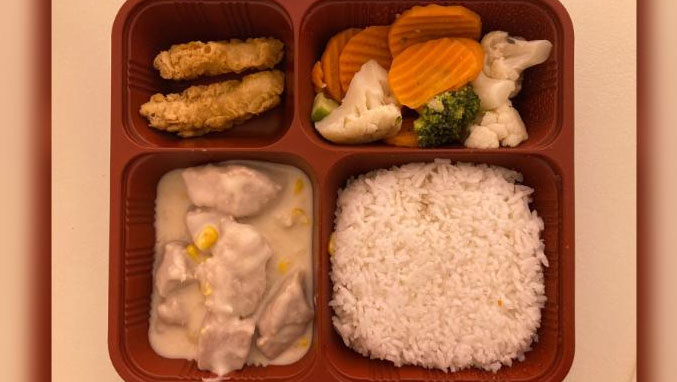
He receives meals provided by the hospital at fixed times. In the meantime, he spends his day connecting with family and friends on social media and watching Netflix.
"I'd say probably early or mid-afternoon were the hardest time of the day," he said.
"In the morning, you check your emails or social media. But by the time lunch rocks around, that's when you go, 'I don't really know what I'm going to do.'"
While he said his doctors have been professional, they are unable to tell him when he can be discharged.
"It's all dependent on when I stop testing positive, and then they start the final countdown from that point," he said.
Mental toll of isolation
Since the start of the pandemic, Hong Kong has confirmed more than 12,600 cases and 213 deaths, according to government figures — far fewer than many cities of comparative size elsewhere in the world.
But while its zero-COVID approach has shielded residents from rising hospitalisations, the city has struggled with vaccine hesitancy — despite free shots being available to residents over the age of three.
To date, under 70 per cent of Hong Kong's 7.5 million population has taken two full doses.
Uptake has been particularly low among the elderly, a group considered most at risk of hospitalisation and death from COVID-19.
Instead, Hong Kong has relied on limiting group gatherings, mandatory masks in public, tracking, tracing, testing and confining close contacts and suspected cases — plus its tough border and quarantine measures.
In a statement on December 29, the Hong Kong government reiterated its stringent measures are here to stay — including its own large-scale quarantine facility.
"Recently, the global epidemic situation has worsened considerably due to the Omicron variant," the statement said.
"The Government has to stay vigilant to prevent a fifth wave epidemic or outbreak in the community. After reviewing the situation holistically and prudently, the Government deems it necessary to reserve all rooms at the PBQC [Penny's Bay Quarantine Centre] for meeting the quarantine purpose."
Despite the city's success in keeping COVID-19 at bay, experts say long quarantine periods often come at a cost to the mental health of those confined.
"In general, there is increased sense of isolation, anxiety, and in some severe cases, even post-traumatic stress," said Dr Elisabeth Wong, a psychiatrist and clinical adviser to Hong Kong-based mental health charity, Mind HK.
However, there are tips to maintain good mental health, she added.
"There are some tricks you can do, like making sure you schedule your day quite clearly," Dr Wong said.
"So you have rest times and work times … and, as much as you can, incorporate some kind of exercise within the day."
Rather than seeing quarantine as a punishment, she said, people going through the experience may also view it as an act of altruism.
"You're doing something good for the society," she added.
But as his indefinite isolation period grows longer, Mr Chan said he is worried about his mental health.
"I'm trying to rationalise it, I think just going through the processes knowing that there are certain things you can and can't change … the only thing that I can change is how I approach it and what I do with my time," he said.
"The best part of it, I guess, is being able to see things in a different perspective," he added.
"(I am) trying to turn it into something useful, something interesting to hopefully one day look back on and remember that time when I sat in a hospital room for X number of days."
Density rules return as Victorian COVID-19 cases top 20,000
Density restrictions are set to return to indoor venues in Victoria after the state recorded 21,997 new COVID-19 cases today, as well as a further six deaths.
The return of restrictions comes as the government has announced financial support will be available to people who test positive on a rapid antigen test, following yesterday's announcement that elective surgery has been scaled back to help the healthcare system tackle COVID-19 patients.
Victorian Health Minister Martin Foley has announced a density limit of one person per two square metres will return to indoor entertainment and hospitality venues in Victoria.
READ MORE: Sydney suburbs with the most COVID cases revealed
https://twitter.com/VicGovDH/status/1478848832897097729
Indoor seated cinemas and theatres, where people are seated and masked, will be exempt from the limit.
"We think this is a sensible change, particularly in the face of the continued huge growth in transmission, particularly amongst young people," Mr Foley said.
"Yesterday's formal figures, 40 per cent of those cases where people in their 20s and every indication is it's overwhelmingly from hospitality and related environments."
Mr Foley said authorities were also strongly recommending businesses and their patrons avoid indoor dancefloors and opt for seated service.
Victorians are also being advised to work and study from home where possible.
Change to way Victoria tackles COVID-19 testing
Victoria Health Minister Martin Foley said about a third of Victorians getting a PCR test were testing positive to COVID-19.
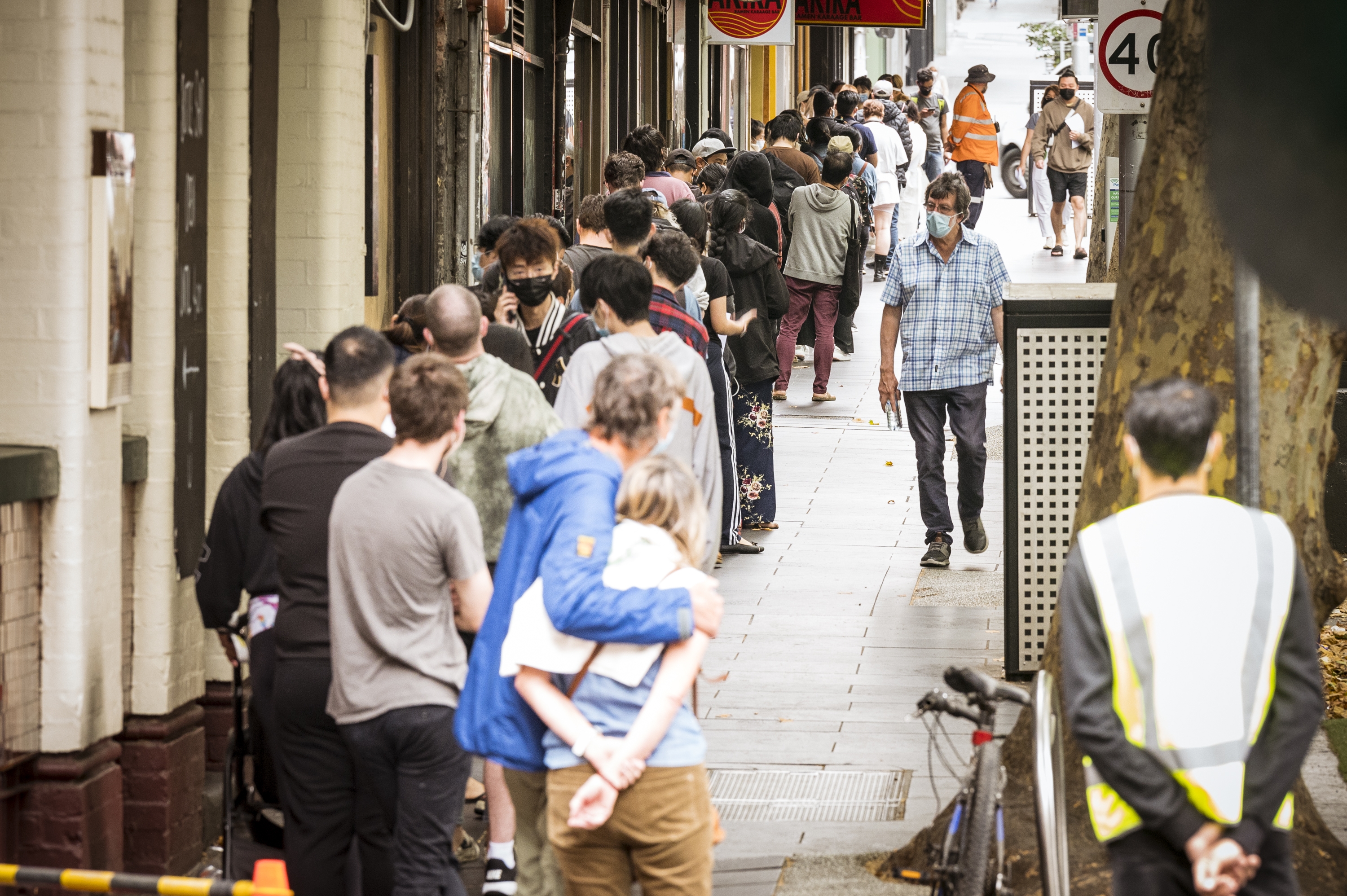
"What is clear is that we are in a new phase of this pandemic, and a new phase of how we need to respond."
Mr Foley said rapid antigen tests had to be central to the new way of responding to ease pressure on the PCR testing system.
He said at least 700,000 of the 44 million rapid antigen tests ordered by the Victorian government would be arriving in the next day or so.
He said he would be signing new pandemic orders, which will come into effect at 11.59pm, that recognise people with a rapid antigen test as a "probable case".
"Essentially they will have precisely the same obligations and the same rights as someone, whether it be for clinical support, financial support, from both the state or the Commonwealth, a whole range of other opportunities to be part of that primary healthcare response to keep them safe as they work through their infectivity.
"Essentially this new category based on the rapid antigen test will be the same in the system as if you were diagnosed through a PCR test."
READ MORE: Expert labels Queensland quarantine policy a 'contradiction'
Hospitalisations of people with COVID-19 in Victoria have risen to 631.
There are 51 people in intensive care, with 22 on ventilators.
From today, category two and three elective surgeries will be halted in public and private hospitals in the state.
Emergency surgery, however, will still go ahead.
NSW today also recorded another high case tally of more than 34,000.
Victoria recorded 17,636 new COVID-19 cases yesterday, and a further 11 deaths.
Acting Premier Jacinta Allan thanked the almost 60,000 Victorians who had been tested for COVID-19 in the past day.
"We know that these are trying and difficult times to go out and get tested," she said.
Ms Allan announced parents will be able to book in young children to get a COVID-19 vaccination from 1pm on Wednesday, both online or via the phone hotline.
"From next week, children aged five to 11 become eligible for the COVID-19 vaccine," she said.
Royal Children's Hospital Chief of Medicine Associate Professor Tom Connell has said COVID-19 is not necessarily mild in children, as is commonly believed.
He urged parents to get their kids vaccinated.
"We all want what's best for our children," he said.
READ MORE: Djokovic caught in visa bungle on landing in Melbourne
Hawke's Bay rugby player Hunter Donghi diagnosed with liver cancer
A talented young Hawke’s Bay rugby player and award-winning construction worker has been diagnosed with stage four liver cancer suspected to have been caused by a rare gene mutation.Hunter Donghi’s family have been thrown into turmoil…
House near Maheno 'well alight' by fire
Fire and Emergency New Zealand crews are battling a house fire near Maheno this morning.A FENZ spokeswoman said crews from Oamaru, Kakanui, and Weston were called to the house in Maheno-Kakanui Rd, south of Oamaru, at 10am.The…
Man who allegedly attacked 95-year-old at Auckland ATM on Christmas Eve arrested
A 95-year-old man was attacked and robbed after he withdrew cash from a suburban Auckland ATM on Christmas Eve. Police have now made an arrest and a 23-year-old will appear in the Auckland District Court charged with aggravated…
Record year for new vehicle registrations
Rising demand for hybrid and electric vehicles helped drive a record number of new vehicle registrations last year.There were 165,287 registrations in 2021 – up 38.3 per cent on 2020, figures from the Motor Industry Association…