One person has been arrested after Whangamatā police had bottles thrown at them while patrolling Williamson Park overnight.Dozens of party-goers were also fined for breaching the liquor ban.Police in Whangamatā and around…
Category Archives: headline
National Cabinet scraps day six rapid test for COVID-19 cases
The day six rapid antigen test for confirmed COVID-19 cases has been scrapped by National Cabinet after yesterday's announcement.
The Prime Minister's office issued a statement today stating a confirmed COVID-19 cases should continue to take PCR tests if they are symptomatic, instead of a rapid antigen test (RAT) on day six.
"Further to National Cabinet on 30 December 2021, and following further consultation with the Chief Medical Officer and Chief Health Officers, leaders have also agreed to remove the requirement for a Day 6 RAT for confirmed cases in isolation," the statement said.
READ MORE: Medical experts, business divided over COVID-19 close contact change

"If confirmed cases remain symptomatic, they should remain in isolation."
"Anyone with symptoms will continue to seek a PCR test."
However, the day six rapid antigen test for close contacts remains in place.
This follows Scott Morrison announcing changes to isolation periods for close contacts and confirmed cases yesterday following an emergency meeting of National Cabinet.
The isolation period for confirmed cases changed to seven days, however with today's statement if a person continues to have symptoms they will isolate for longer than seven days.
READ MORE: NSW cases 'likely' higher than reported as infections double overnight
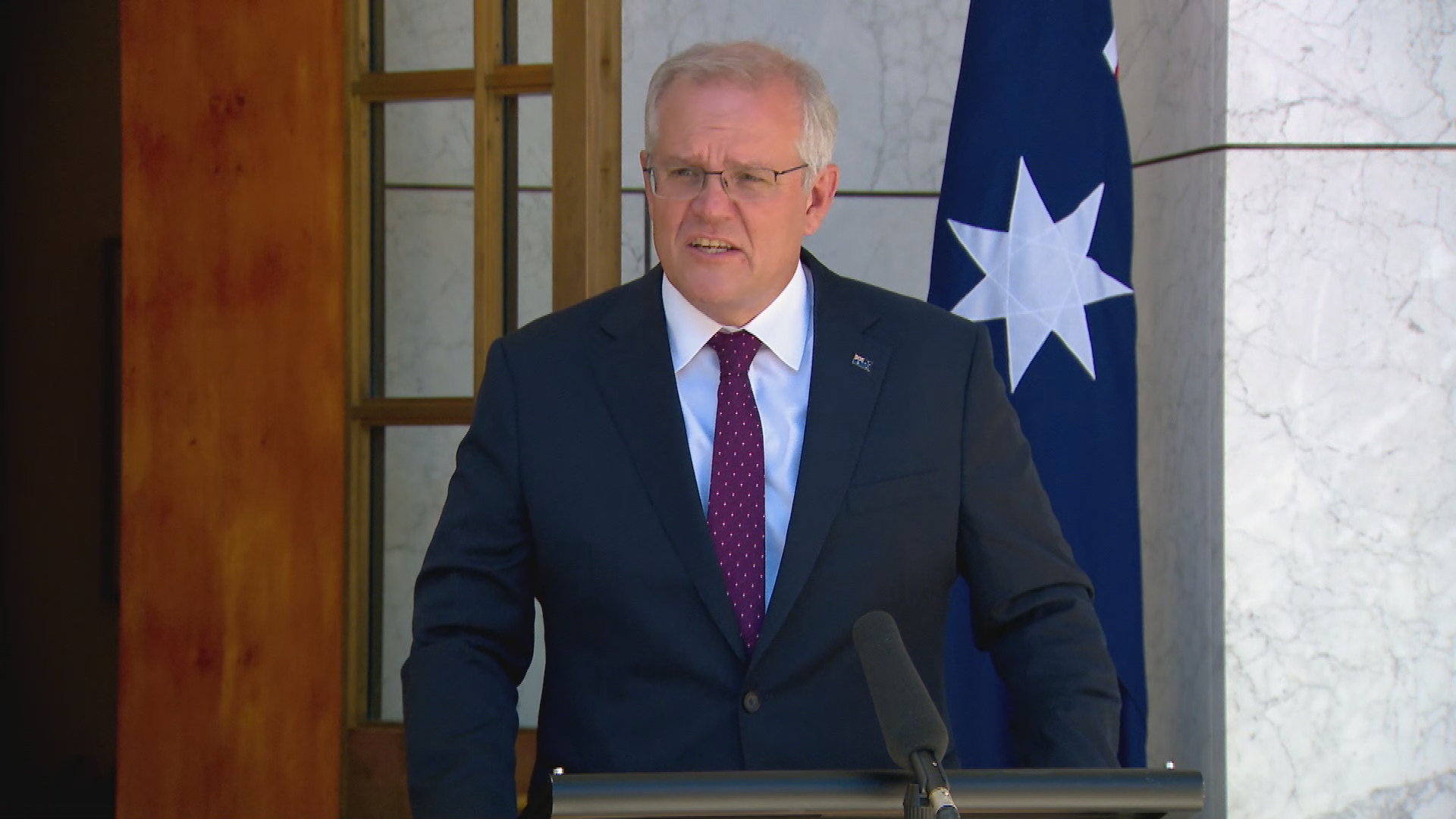
A person's isolation period starts again if a person continues to be symptomatic and test positive past day seven, the Prime Minister's office confirmed to 9News on Thursday night.
The additional quarantine period means they would not be allowed to stop isolating until after at least 12 days.
This means people may enter a longer quarantine than was previously in place in NSW and Victoria, where the duration was 10 days.
READ MORE: NSW Police warn people not to have out-of-control parties at Airbnbs
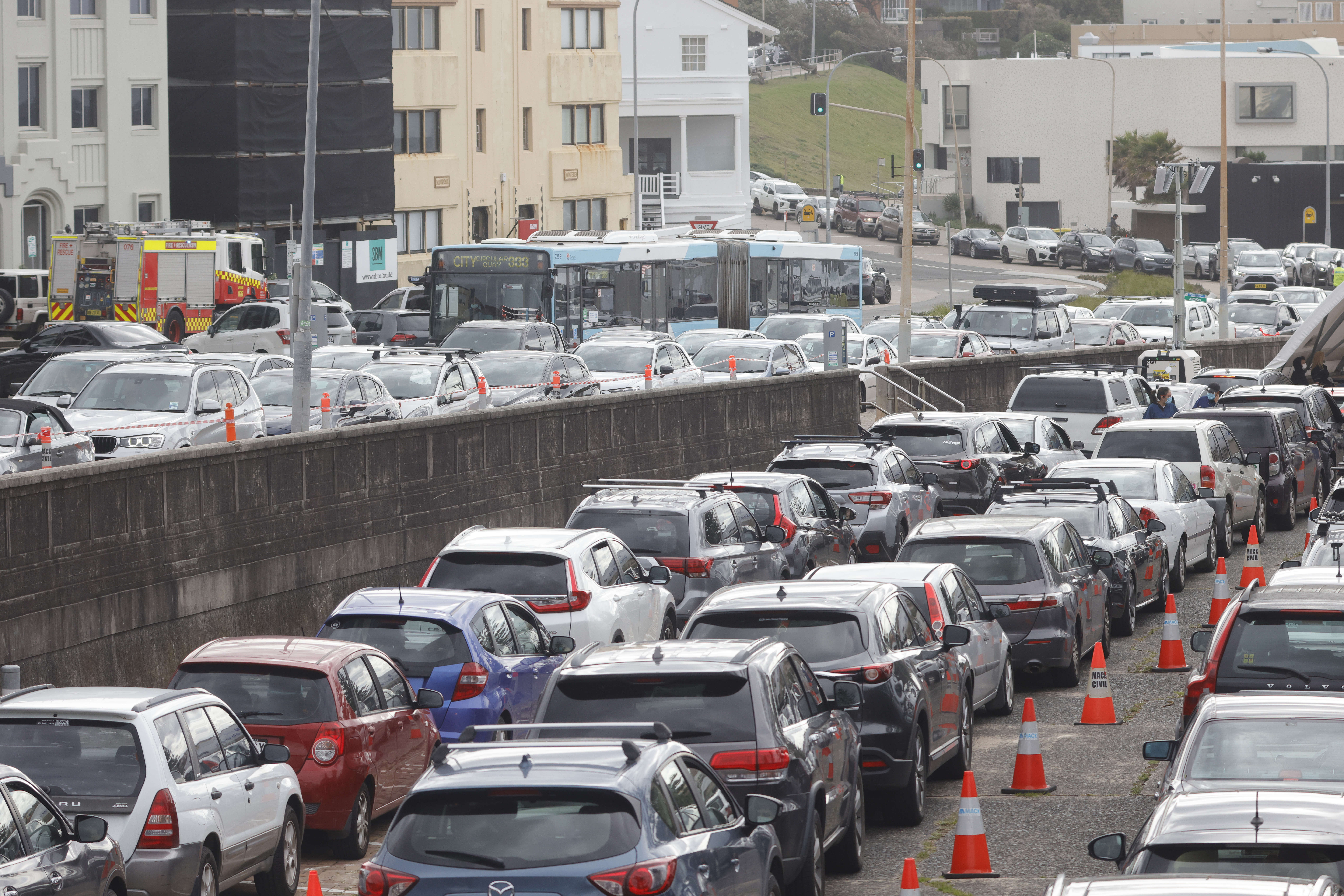
A new definition of close contacts came into place from midnight last night across five jurisdictions.
NSW, Victoria, Queensland, South Australia and the ACT agreed to the terms.
"A close contact is a household contact, or household like, of a confirmed case only," Mr Morrison said.
"A household contact is someone who lives with a case or has spent more than four hours with them in our house, accommodation or care facility setting."
Close contacts will still need to isolate for seven days from their exposure date.
An asymptomatic close contact must take a rapid test, while a close contact who is symptomatic or who returns a positive RAT test must have a PCR test.
Mr Morrison said there was no need for anyone who did not fulfil the close contact definition to line up for PCR tests.
Water tragedy: Former All Black Terry Morrison dies while surfing in Australia
Former All Black and national sprint champion Terry Morrison has died while surfing on Christmas Eve. Morrison, 70, died on the Sunshine Coast; where he has lived for several years. Dubbed the “flying wing”, he played four matches…
Kennards Self Storage Napier break-in: Police charge man with burglary
A 29-year-old man has been charged with burglary in relation to a break-in at Kennards Self Storage Napier.A police spokeswomen said the alleged burglary occurred between Christmas Eve and December 29, when it was reported to police.”One…
Covid 19 Delta outbreak: 49 new community cases ahead of New Year's Eve celebrations
There are 49 new cases of Covid-19 in the community today as Auckland enters the orange traffic light setting ahead of New Year’s Eve celebrations.There are no new Omicron cases in the community today. Ten Omicron cases have been…
How ancient tracks found on a public beach could change history
A set of tracks found on a public beach in the United Kingdom are thought to originate from colossal, long-necked dinosaurs who used to "gather" in the area.
If it proves true it could change Britain's understanding of dinosaur history.
A new paper published in the journal Geological Magazine this week suggests they are from a group 200-million-year-old Triassic sauropods.
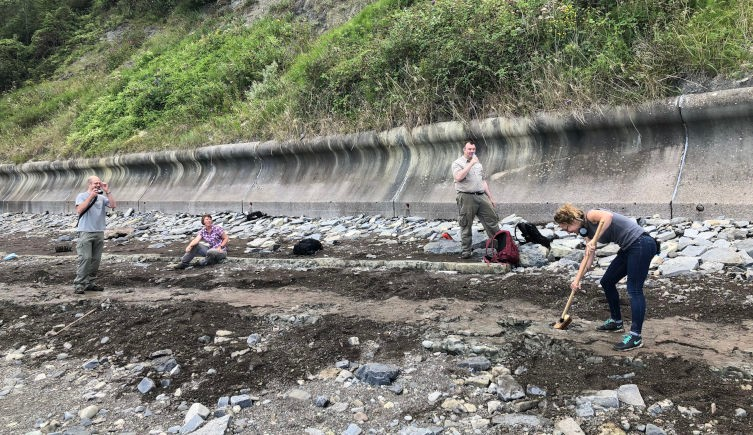
The footprints were discovered by amateur palaeontologist Kerry Rees on a beach in Penarth, Wales last year.
READ MORE: Huge jump in NSW COVID-19 cases, six deaths
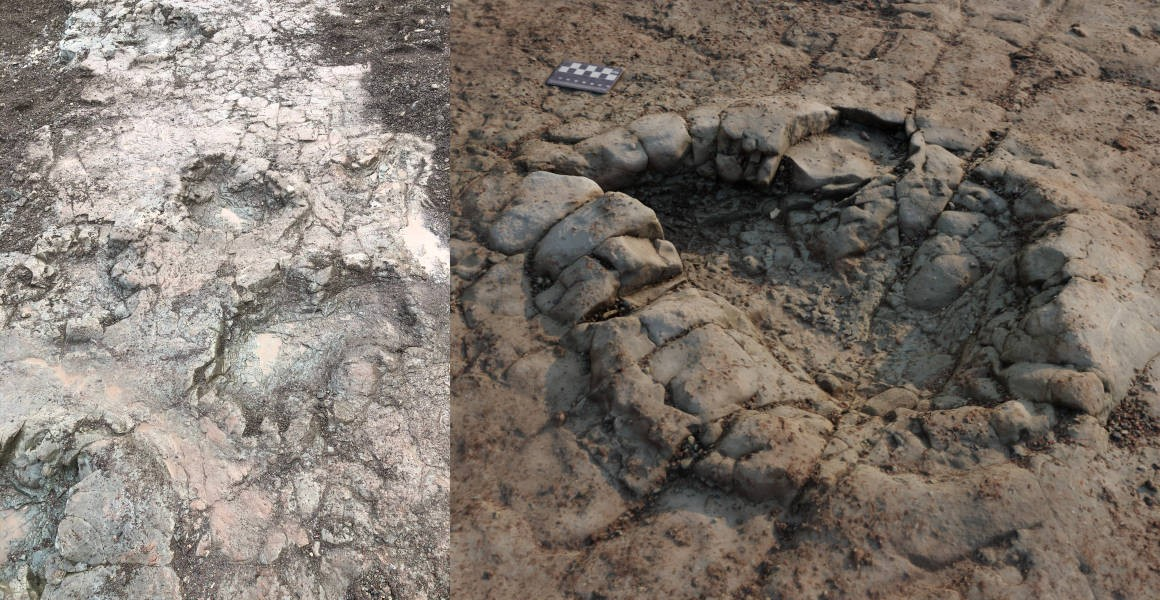
They appear over a 50 metre long stretch of shoreline.
The study said "evidence of Late Triassic large tetrapods from the UK is rare" before adding the tracks haven't yet been linked to an exact species.
READ MORE: Discovery of giant marine reptile skull reveals new evolution theories

Co-author of the paper, Professor Paul Barrett, who researches dinosaurs at the Natural History Museum in London said the number of footprints makes it possible the site was a place where sauropods gathered.
"There are hints of trackways being made by individual animals, but because there are so many prints of slightly different sizes, we believe there is more than one trackmaker involved," he said.
READ MORE: Snake catcher discovers spider with legs 'longer than a toilet roll'
"These types of tracks are not particularly common worldwide, so we believe this is an interesting addition to our knowledge of Triassic life in the UK.
"Our record of Triassic dinosaurs in this country is fairly small, so anything we can find from the period adds to our picture of what was going on at that time."
Sauropod dinosaurs were herbivorous and the largest terrestrial animals to roam the earth.
They first evolved in the early Jurassic period, 201 million to 174 million years ago, and persisted into the Cretaceous Period.
READ MORE: Dinosaur remains found in outback Queensland likely to be new species
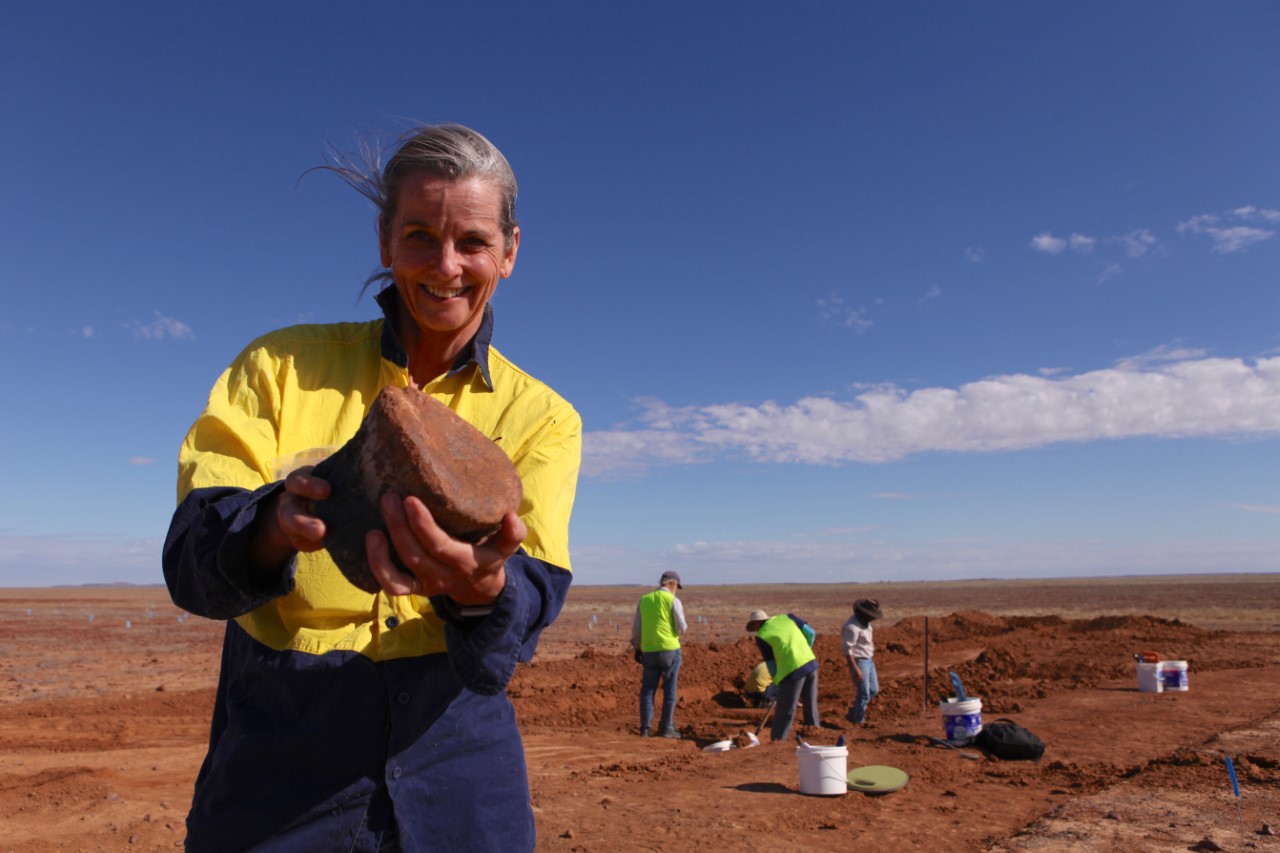
In May this year, a team of palaeontologists found large bones belonging to a sauropod dinosaur in outback Queensland.
Robyn Mackenzie, Director and Palaeontologist for the Eromanga Natural History Museum, told 9News.com.au the bones likely belong to a new species, which she estimated to be around 95 million years old.
Jailed driver's sentence slashed by 100 years after fatal highway crash
A truck driver spending 110 years in prison for an explosive crash that killed four people in the US will have his sentence slashed to just 10 years.
Governor of Colorado, Jared Polis confirmed Rogel Aguilera-Mederos' will now be eligible for parole in December 2026, calling the 26-year-old's original sentence "highly atypical and unjust" in his commutation letter today.
EXPLAINER: What you need to know about close contact, isolation changes

In his clemency letter, Governor Polis said: "I am writing to inform you that I am granting your application for a commutation.
"After learning about the highly atypical and unjust sentence in your case, I am commuting your sentence to 10 years and granting you parole eligibility on December 30, 2026.
"The clemency power is reserved for only the most unique and deserving cases. My decision today is based solely on the circumstances of your case."
Before his original sentence, Mr Aguilera-Mederos testified that he was hauling lumber when the brakes on his semi-trailer failed as he was descending a steep grade of Interstate 70 in the Rocky Mountain foothills of Denver on April 25, 2019.
His truck ploughed into vehicles that had slowed because of another wreck, setting off a chain-reaction wreck and a fireball that consumed vehicles and melted parts of the highway.
The now jailed man wept as he apologised to the victims' families at his December 13 sentencing.
"When I look at my charges, we are talking about a murderer, which is not me," he said.
"I have never thought about hurting anybody in my entire life."
The crash killed 24-year-old Miguel Angel Lamas Arellano, 67-year-old William Bailey, 61-year-old Doyle Harrison and 69-year-old Stanley Politano.
READ MORE: Huge jump in NSW COVID-19 cases, six deaths


Relatives of victims supported at least some prison time at his sentencing hearing, but said the 110 year sentence was too much.
Prosecutors filed a motion earlier this month asking for a reduced sentence and District Attorney Alexis King had asked the court to reconsider the original sentence, suggesting a range of 20-30 years behind bars instead.
But Governor Polis today confirmed the sentence will be commuted to just 10 years after more than five million people signed a petition calling for leniency.
Serious assault: Man arrested after alleged assault in Claudelands
A 40-year-old man will start the New Year with a court appearance after an alleged assault this morning.Emergency services were called to Brooklyn Rd in Claudelands just after 11 am on Friday with reports of a disturbance.A police…
Local Focus: Aotearoa's first saint in the making
The story of the Sisters of Compassion and their relationship with the Whanganui River stretches back more than a century. Established in Whanganui’s Jerusalem/Hiruharama in 1892, it became a highly respected religious order known…
Fire guts film-maker Lara Northcroft's house in Glenholme, Rotorua – house-sitter and dog survive
“Not a nice ending to the year, but it’s been a pretty s*** year anyway. See you later 2021.”That was Rotorua film-maker Lara Northcroft’s summary after a home she owns was “gutted” by fire today – thankfully with no one injured.It…