S. Korea marks deadliest day of pandemic as hospitals buckle
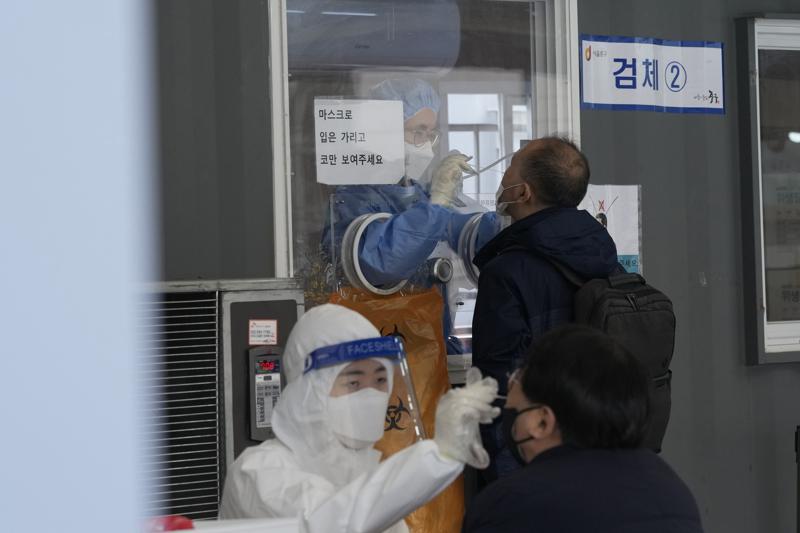
SEOUL, South Korea (AP) — South Korea on Tuesday marked its deadliest day of the pandemic as an unrelenting, delta-driven spread stretched thin hospitals and left people dying while waiting for beds.
Health experts warn that the country’s medical system is quickly approaching its limits and that fatalities could worsen if the government continues to be slow and hesitant in tightening social distancing.
The Korea Disease Control and Prevention Agency said 94 virus patients died in the past 24 hours while a record 906 were in serious or critical condition.
The 5,567 new infections were the highest yet for a Tuesday — daily tallies are usually smaller at the start of the week because of fewer tests on weekends – indicating the virus has continued to gain speed after the government moderately tightened social distancing last week.
Park Hyang, a senior Health Ministry official, said medical resources are quickly running out in densely populated capital Seoul and nearby metropolitan areas, where around 86% of intensive care units designated for COVID-19 treatment were already occupied. More than 1,480 patients were still waiting to be admitted to hospitals or treatment shelters. At least 17 patients died last week at home or at facilities while waiting for beds.
==========================================
COVID-19 cases surpass 50 million in US

© The Associated Press/Mike Zacchino
The United States on Monday passed 50 million recorded COVID-19 cases, according to a tally from Johns Hopkins University.
The grim milestone underscores the toll of the virus in the U.S., where it continues to fuel surges and leave a striking death toll, largely among the unvaccinated.
Case counts nationally have risen to around 120,000 per day, according to Centers for Disease Control and Prevention data. Some experts have been deemphasizing case counts as a metric, given that some are usually mild breakthrough cases that occur after someone has been vaccinated.
But hospitalizations and deaths are also recording alarming trends, largely among the unvaccinated.
About 1,200 people die from the virus every day, and 65,000 are in the hospital, according to a tracker from The New York Times. A total of about 800,000 people have died from the virus in the U.S.
Those numbers have been rising again recently as the weather gets colder in northern parts of the country, and people move indoors.
The omicron variant of the virus poses an additional threat. Cases, hospitalizations and deaths are already on the rise, despite the new variant not yet gaining a predominant foothold in the U.S., where the delta variant still dominates.
===================================================
One year of vaccines: Many lives saved, many needlessly lost
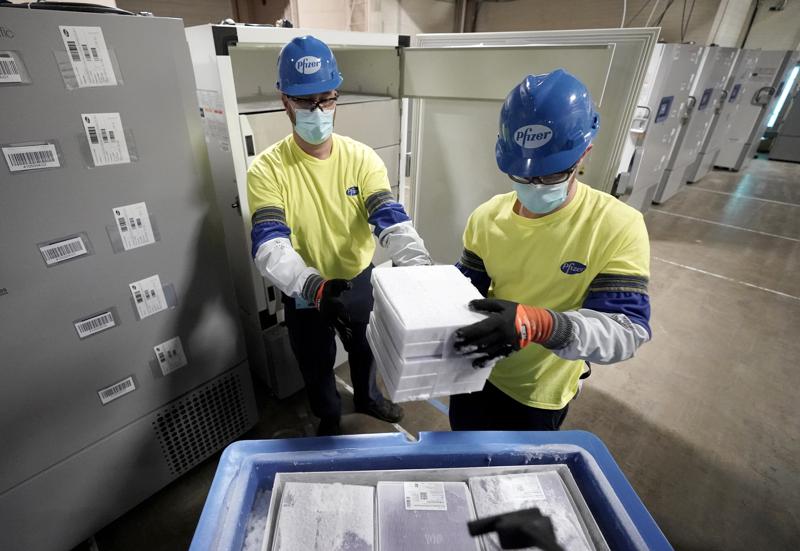
One year ago, the biggest vaccination drive in American history began with a flush of excitement in an otherwise gloomy December. Trucks loaded with freezer-packed vials of a COVID-19 vaccine that had proved wildly successful in clinical trials fanned out across the land, bringing shots that many hoped would spell the end of the crisis.
That hasn’t happened. A year later, too many Americans remain unvaccinated and too many are dying.
The nation’s COVID-19 death toll stands at around 800,000 as the anniversary of the U.S. vaccine rollout arrives. A year ago it stood at 300,000. An untold number of lives, perhaps tens of thousands, have been saved by vaccination. But what might have been a time to celebrate a scientific achievement is fraught with discord and mourning.
National Institutes of Health Director Francis Collins said scientists and health officials may have underestimated how the spread of misinformation could hobble the “astounding achievement” of the vaccines.
“Deaths continue … most of them unvaccinated, most of the unvaccinated because somebody somewhere fed them information that was categorically wrong and dangerous,” Collins said.
Developed and rolled out at blistering speed, the vaccines have proved incredibly safe and highly effective at preventing deaths and hospitalizations. Unvaccinated people have a 14 times higher risk of dying compared to fully vaccinated people, the Centers for Disease Control and Prevention estimated based on available data from September.
Their effectiveness has held up for the most part, allowing schools to reopen, restaurants to welcome diners and families to gather for the holidays. At last count, 95% of Americans 65 and older had had at least one shot.
“In terms of scientific, public health and logistical achievements, this is in the same category as putting a man on the moon,” said Dr. David Dowdy, an infectious-disease epidemiologist at Johns Hopkins Bloomberg School of Public Health.
The vaccines’ first year has been rocky with the disappointment of breakthrough infections, the political strife over mandates and, now, worries about whether the mutant omicron will evade protection.
Despite all that, Dowdy said, “we’re going to look back and say the vaccines were a huge success story.”
On the very day that an eager nation began rolling up its sleeves, Dec. 14, 2020, the U.S. death toll from COVID-19 hit 300,000. And deaths were running at an average of more than 2,500 a day and rising fast, worse than what the country witnessed during the harrowing spring of 2020, when New York City was the epicenter of the U.S. outbreak.
By late February total U.S. deaths had crossed 500,000, but the daily death count was plummeting from the horrible heights of early January. With hopes rising in early March, some states began reopening, lifting mask mandates and limits on indoor dining. Former President Donald Trump assured his supporters during a Fox News interview that the vaccine was safe and urged them to get it.
But by June, with the threat from COVID-19 seemingly fading, demand for vaccines had slipped and states and companies had turned to incentives to try to restore interest in vaccination.
It was too little, too late. Delta, a highly contagious mutated form of coronavirus, had silently arrived and had begun to spread quickly, finding plenty of unvaccinated victims.
“You have to be almost perfect almost all the time to beat this virus,” said Andrew Noymer, a public health professor at the University of California, Irvine. “The vaccine alone is not causing the pandemic to crash back to Earth.”
One of the great missed opportunities of the COVID-19 pandemic is the shunning of vaccination by many Americans.
This fall, Rachel McKibbens, 45, lost her father and brother to COVID-19. Both had refused the protection of vaccination because they believed false conspiracy theories that the shots contained poison.
“What an embarrassment of a tragedy,” McKibbens said. “It didn’t have to be this way.”
More than 228,500 Americans have died from COVID-19 since April 19, the date when all U.S. adults were eligible to be vaccinated. That’s about 29% of the count since the first U.S. coronavirus deaths were recorded in February 2020, according to an Associated Press analysis.
In all, two states — Florida and Texas — contributed more than 52,000 deaths since that date. Alaska, Hawaii, Oregon, Wyoming and Idaho also saw outsize death tolls after mid-April.
Red states were more likely than blue states to have greater than average death tolls since then.
“I see the U.S. as being in camps,” Noymer said. “The vaccines have become a litmus test for trust in government.”
Wyoming and West Virginia, the states with the highest vote percentages for Donald Trump in 2016, have recorded about 50% of their total COVID-19 deaths since all adults were declared eligible for the vaccine in those states. In Oklahoma, nearly 60% of COVID-19 deaths occurred after all adults were vaccine-eligible.
There are exceptions: Notably, Hawaii and Oregon are the only Joe Biden-supporting states where more than half of the COVID-19 deaths came after shots were thrown open to all adults. North Dakota and South Dakota — both ardent Trump states — have kept their share of deaths after the vaccine became available across the board to under 25%.
California has seen more than 15,000 COVID-19 deaths since the state opened eligibility to all adults in mid-April. McKibbens’ father and brother died in Santa Ana, California, in their shared home.
McKibbens pieced together what happened from text messages on her brother’s phone. Some of the texts she read after his death, including back-and-forth messages with a cousin who cited TikTok as the source of bad advice.
“My brother did not seek medical attention for my dad,” keeping him lying on his back, even as his breathing began to sound like a broken-down motor, said McKibbens, who lives across the country in Rochester, New York.
Her father, Pete Camacho, died Oct. 22 at age 67. McKibbens flew to California to help with arrangements.
Her brother was sick, too, but “he refused to let me into the house because he said I shed coronavirus because I was vaccinated,” McKibbens recalled. “It was a strange new belief I had never heard before.”
A friend found her brother’s body after noticing food deliveries untouched on the porch. Peter Camacho, named for his father, died Nov. 8 at age 44.
“For me to have lost two-thirds of my family, it just levels you,” McKibbens said.
Important advice came too late for some. Seven months pregnant and unvaccinated, Tamara Alves Rodriguez tested positive for the coronavirus Aug. 9. Two days later, with many pregnant women falling seriously ill, U.S. health officials strengthened their guidance to urge all mothers-to-be to get vaccinated.
Rodriguez had tried to get vaccinated weeks earlier but was told at a pharmacy she needed authorization from her doctor. “She never returned,” said her sister, Tanya Alves of Weston, Florida.
Six days after testing positive, Rodriguez had to have a breathing tube inserted down her throat at a hospital near her home in San Juan, Puerto Rico. Her baby girl was delivered by emergency cesarean section Aug. 16.
The young mother never held her child. Rodriguez died Oct. 30 at age 24. She left behind her husband, two other children and an extended family.
“Her children ask for her constantly,” Alves said. “I literally feel like a piece of me has been ripped out of me and even those words aren’t enough to describe it.”
She urges others to get vaccinated: “If you would know the terror of being hospitalized or having a loved one there … if people would know, they would be afraid of this instead of fearing the vaccine.
==============================================
Covid: NHS in crisis mode as hospitals told to discharge patients where possible
NHS England asks hospitals to free up beds as estimated daily Omicron cases hit 200,000
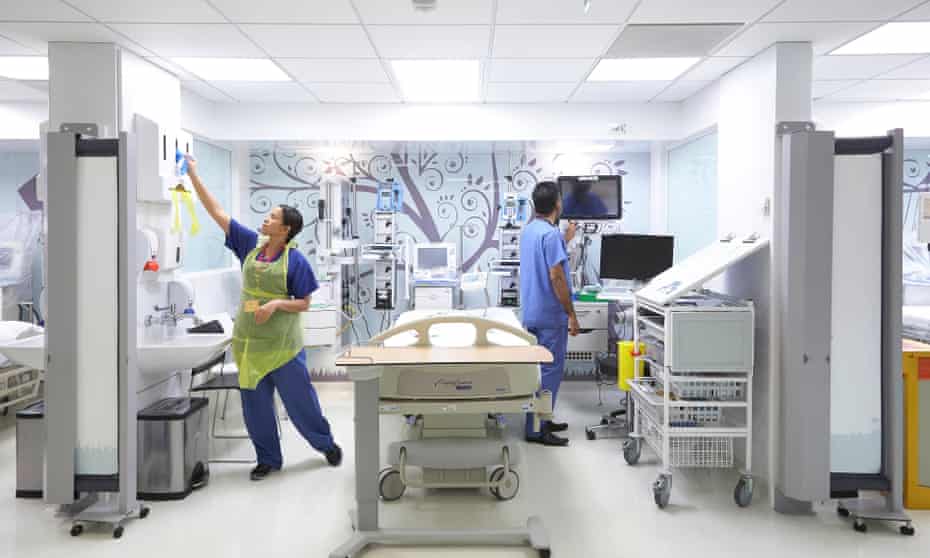
The NHS was put on a crisis footing tonight as hospitals in England were told to discharge as many patients as possible while estimated daily Omicron cases hit 200,000 and the variant claimed its first life in the UK.
Boris Johnson is braced for his biggest rebellion as prime minister on Tuesday, with about 80 Tory MPs confirmed to be preparing to vote against measures on working from home, Covid passports and more mask wearing. He will have to rely on Labour support for the votes to pass.
Amid a scramble for tests and booster jabs, the country’s doctors called for further restrictions to be imposed to stem the rise in cases and Downing Street did not rule out fresh measures.
In a letter to hospitals, NHS England chiefs said patients who could be discharged to care homes, hospices, their own homes or hotels before Christmas to free up beds, should be. The letter from NHS England’s chief executive, Amanda Pritchard, and medical director Prof Stephen Powis said the service was facing a level 4 “national incident”.
Hotels are already being turned into temporary care facilities staffed with workers flown in from Spain and Greece to relieve rising pressure on NHS hospital beds.
Hospitals and GPs have also been told to scale back normal services and limit care to those needing urgent attention so that NHS staff can be freed up to deliver boosters. Hospitals will undertake fewer non-urgent operations, but “highest clinical priority patients”, including people with cancer and those who have been waiting a long time, will be given priority.
They have also been told to take ambulance-borne patients into A&E more quickly so that paramedics can get back on the road to answer more 999 calls, speed up efforts to bring in nurses from overseas to help tackle the NHS’s lack of staff, and send as many patients as possible for surgery at private hospitals.
A campaign to give boosters to more than 1 million people a day got under way, prompting the NHS website to crash and people to queue in the street for up to five hours for their jabs.
But the British Medical Association said the vaccination campaign would not be enough to stop the spread of Omicron, with one in four still not eligible for a booster. They called for a return to face masks in pubs and restaurants, 2-metre social distancing indoors, limits on public gatherings, legal requirements for ventilation in schools and other settings, more rapid testing and advice to wear FFP2 masks.
No 10 insisted that the booster campaign was its immediate priority, with a senior government source describing the main strategy as “keep on jabbing”. But Boris Johnson refused to rule out tougher restrictions if necessary to maintain public health. No 10 said all options were still on the table, leaving open the possibility of closing schools “as a last resort” and bringing in curbs without consulting MPs “in extremis”.
Addressing MPs, Sajid Javid revealed there may now be as many 200,000 Omicron infections a day. He said around 20% of confirmed cases in England had been identified as the Omicron variant, and warned of “difficult weeks ahead”. In London, the centre of the Omicron outbreak, it accounted for over 44% of cases and was expected to become the dominant form within 48 hours, the health secretary said.
He said Covid passports would be toughened to require people to have a booster or recent lateral flow test (LFT) in the new year, risking inflaming Tory backbench anger against restrictions ahead of Commons votes on “plan B” restrictions.
Labour backed the government’s booster campaign and stopped short of calling for any new restrictions, with Keir Starmer saying it was Labour’s “patriotic duty” to vote for plan B.
The prime minister confirmed the first death of a patient with Omicron and 10 people hospitalised with the variant, saying people needed to “set aside” the idea that the variant was mild.
Meanwhile, head teachers warned of “chaos” in schools, with high levels of staff and pupil absences and reports that some parents were planning to keep children home to avoid the virus before Christmas.
On the first day of the new vaccine campaign, 386,000 people in England are understood to have booked booster jabs – almost 50,000 an hour. But there was confusion over whether all eligible over-18s would be able to get a booster by the end of the year, with No 10 insisting they would, while the NHS cast doubt on the goal. Javid suggested the target was to “offer” rather than deliver the boosters.
Johnson and Pritchard launched a joint plea for the public to volunteer in vaccination centres, calling for tens of thousands of people to act as unpaid stewards and thousands to sign up as paid vaccinators. It is understood No 10 will also launch a new effort to reach the unvaccinated, using a publicity campaign potentially involving faith leaders and celebrities.
On Monday people trying to get LFTs were told they were unavailable despite a new requirement for Covid contacts to take them daily for a week.
The call from the BMA for tougher restrictions echoed warnings from scientists that vaccination alone would not be able to stop Omicron causing a dangerous second wave. Leaked documents from the UK Health and Security Agency showed on Friday that public health officials believe there should be “stringent national measures” by 18 December at the latest, with sources saying plan B will not be enough.
The BMA, which represents 150,000 doctors, is the first major medical organisation to call for stricter measures. Dr Chaand Nagpaul, BMA council chair, said: “Despite describing the current situation as an ‘emergency’ with a ‘tidal wave’ of infections on the horizon, the government’s response, relying entirely on the vaccine booster programme, is missing the wider measures required to control the spread of Omicron, including protecting millions of people who will not be eligible for the booster programme by the end of December.”
Chris Hopson, the NHS Providers chief executive, said the new guidance “gives an indication of what a monumental effort this will be”.
The former chair of the South African ministerial advisory committee on Covid-19, Prof Salim Karim, told BBC News early data from South Africa looked good.
“In the past three waves, about two out of every three patients admitted were cases of severe disease, and right now we have only one out of four cases that is severe.”
However, it is important to note that South Africa has a younger population than the UK.
No 10 has been resistant to new measures before Christmas but is planning to review the situation on 18 December.
===============================================
Scientists in South Africa hopeful Omicron wave will be less severe
Andrew Harding
BBC News, Johannesburg

South African scientists say they have yet to see any indication that the Omicron variant is as severe as previous waves in the country.
One of the country’s leading Covid-19 experts, Prof Salim Karim, pointed to hospital data from the area where Omicron was first detected.
He said that in comparison with previous waves of the pandemic, far fewer patients needed oxygen or admission to intensive care.
“In the current wave right now, we have only one out of four cases that is severe – a marked difference. And this is not merely an impact of vaccines, because this reduction in severity goes across all ages, including ages we didn’t vaccinate.”
A similar pattern is now being detected in mortality figures.
Prof Marta Nunes, a vaccine expert at Wits University, also said the mortality rate was lower than in previous waves.
However, scientists and doctors agree they need more data before they can be sure of Omicron’s impact. And it is not yet clear how Omicron will affect other countries.
The variant is spreading remarkably fast. And comparisons with previous waves are only helpful up to a point.
The post SK: Deadliest Day, US: More Than 50m Covid Cases, UK: Hospitals Filled, Hope Omicron Won’t Be Severe appeared first on The St Kitts Nevis Observer.