Category Archives: headline

How 10 news photos can predict stock market movements

Want the good news or bad news?

Turns out artificial intelligence (AI) can answer that very question if there's a news photograph it can carefully scan and analyse.

And, according to a recently published RMIT University study, the AI's answer to that question can help traders predict the mood of global stock markets and, in doing so, make better returns.

Using machine learning, the algorithm produces a daily score based on the types of photos used in global news reports.

The system works, the study said, through the teaching of AI to analyse a list of the most popular news photographs on Getty, an image website used by media outlets around the world.

Getty's top-10 list is made up of the most downloaded news photographs in the past 24 hours, which are submitted by photographers covering and capturing the world's most important events of the day.

Using machine learning to interpret what is happening in each photograph, the AI will then calculate a "photo pessimism" score for that day, according to the study's lead author Dr Angel Zhong.

Once the photo pessimism measure is delivered, Dr Zhong said the AI was then able to predict with "95 per cent accuracy" if a stock market will move up or down.

The top news photographs on April 16, 2003 - a day when 'bad news' prevailed.

Dr Zhong said traders could use the pessimism score to invest in exchange-traded funds (ETF) which mirror the performance of stock market benchmarks such as Australia's S&P/ASX 200 Index, or the S&P 500 and the Dow Jones Industrial Average in the US.

The study, Photo Sentiment and Stock Returns around the World, found that when people are in a bad mood and facing higher uncertainty, trends showed they tend to buy and sell more impulsively and intensively.

Dr Zhong said the pessimism score was "a good tool" which allows traders to get a snapshot of a market's mood in a "very short time".

The RMIT University study harnessed the powers of machine learning to scan an ocean of news photographs between 1995 and 2018, which were then applied to 37 stock markets around the world, including those located in developed and developing nations.

Machine learning and AI is already used by traders and companies to scan newspaper text but this method cannot easily overcome language barriers, meaning any analysis is often only a measure of the English-speaking developed world.

Dr Zhong said her study had developed a method which "transcended language barriers" so that the mood of global markets where all manner of foreign languages are spoken can be quickly gauged.

Research shows how investors can use news photos to better predict daily stock market returns.

The RMIT University study built further on work carried out by University of Missouri researchers who earlier this year devised a way to index daily investor sentiment using news photos in the US.

Dr Zhong said her study had trained the algorithm to recognise what constitutes good and bad news coverage in 37 markets, increasing the complexity and global accuracy of the University of Missouri research.

The pessimism score would often allow "predictability" of a market's mood and movements for up to 72 hours, she said.

"If it is good today, what you can do is buy the ETF index funds that check the ASX and (there is a) 95 per cent chance that they would go up for the next few days."

In trying to establish if a photograph was depicting good or bad news, the AI looked for clues such as body gestures, certain types of facial expressions, colours and subjects in the image.

"If you have guns and weapons, these tend to be related to war and this would indicate bad news," Dr Zhong said, while "blue sky, children smiling and families together" were more likely good news.

No trading houses or investment funds have enquired about the AI technology yet, Dr Zhong said.
2021 in review: Biggest national stories of the year

The information provided on this website is general in nature only and does not constitute personal financial advice. The information has been prepared without taking into account your personal objectives, financial situation or needs. Before acting on any information on this website you should consider the appropriateness of the information having regard to your objectives, financial situation and needs.
One in three parliamentary staffers sexually harassed, report finds

A damning independent report into parliamentary workplace culture has painted a toxic picture of sexual harassment and bullying, with one interviewee describing "aspiring male politicians who thought nothing of … picking you up (and) kissing you on the lips".

The long-awaited report, triggered by the alleged rape of former Liberal staffer Brittany Higgins, found some "individuals responsible for misconduct are an 'open secret' that 'everyone knows' about, but nobody does anything to address".

A "culture of misconduct being normalised and of people being unwilling to intervene or speak out" existed across parliament, the report found, with one in three parliament staffers claiming to have faced sexual harassment.

READ MORE: World slams doors shut as fear grows of Omicron variant

A report into parliamentary culture has painted a toxic picture of sexual harassment and bullying.

Another participant described parliament as "a man's world and you are reminded of it every day thanks to the looks up and down you get".

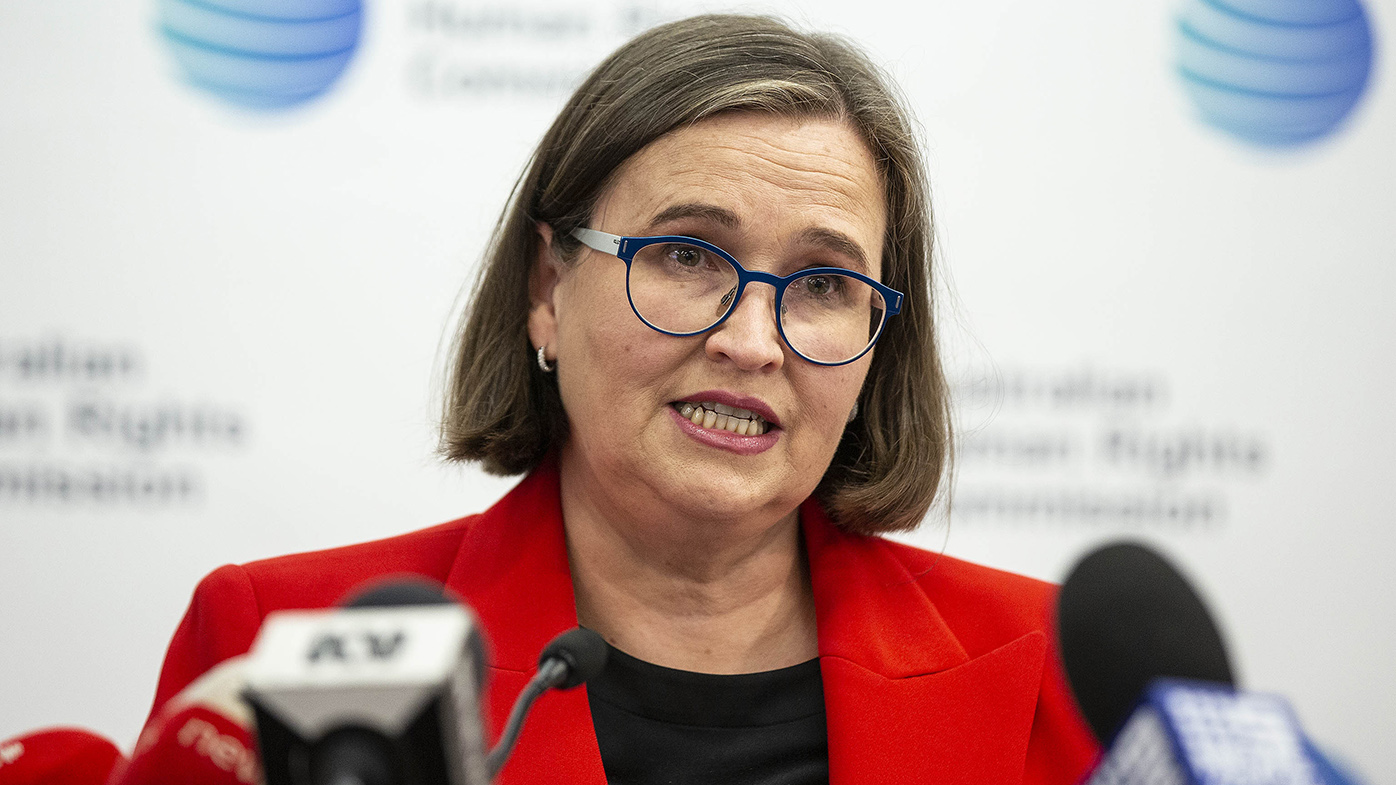
Sex Discrimination Commissioner Kate Jenkins, who led the review, made 28 recommendations, including an Independent Parliamentary Standards Commission to lead a code of conduct for Federal MPs and staff.

Speaking after the report's release, Ms Jenkins said only 11 per cent of people who experienced sexual harassment in parliamentary workplaces had reported it, and that victims were often punished for coming forward to complain about their harassment.

She said she hoped the report's findings "inspire immediate action". 

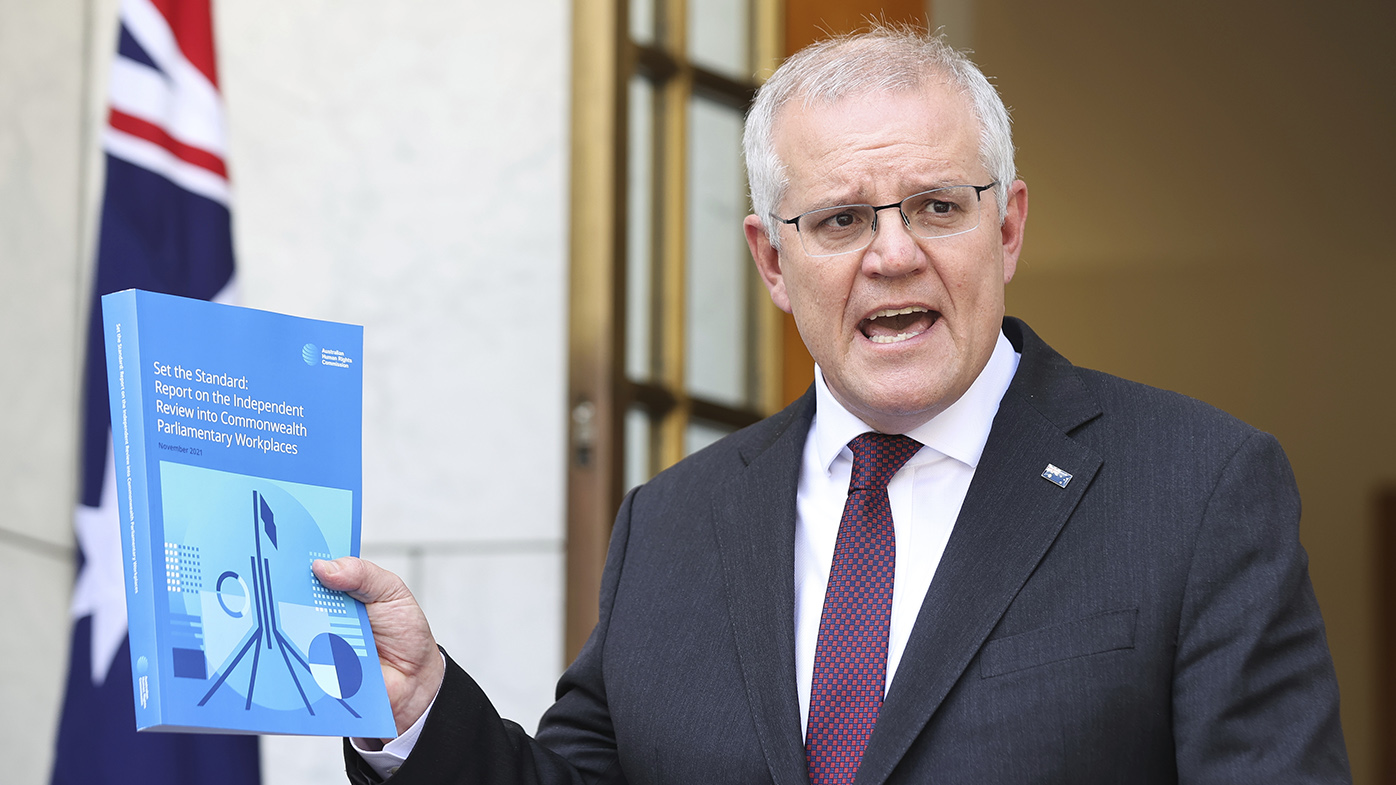
Prime Minister Scott Morrison said he found the details in the report "appalling and disturbing".

"I wish I found them more surprising," Mr Morrison said.

READ MORE: Epstein and Maxwell were 'partners in crime', US court hears

Prime Minister Scott Morrison said he found the report's findings "appalling and disturbing".

Finance Minister Simon Birmingham described the report as a "landmark document" outlining decades of problems and misconduct.

"Many of the stories that are told are distressing and reflect completely unacceptable behaviours," he said.

There are 28 recommendations in the report to set a better standard.

"The lack of clear standards leads to confusion about expected behaviour and also contributes to the normalisation of misconduct," the report said.

"Rather than being held accountable, participants told the Commission that people who engaged in misconduct were often rewarded for, or in spite of, their behaviour.

"The Commission heard about the particular difficulty of sanctioning parliamentarians who engaged in misconduct, because they do not have an 'employer'.

"As one participant put it '[t]here are no ramifications for bad behaviour because there is no risk of MPs getting fired, or otherwise being held accountable for their actions.'"

READ MORE: Death threat at Melbourne cafe over COVID-19 restrictions

https://twitter.com/ElizaEdNews/status/1465494285881524227?ref_src=twsrc%5Etfw

'He grabbed me and stuck his tongue down my throat'

Some of the comments from victims included in the report, arising from more than 1700 interviews across 33 organisations, will cause disgust and alarm.

One account detailed harassment and abuse which drove one woman driven into a suicide attempt, with other reports of the breakdown of a marriage and ongoing psychological damage.

Participants in the report also raised concerns about the limited recourse available for people who experience bullying, sexual harassment and or sexual assault.

Some of the testimonies include:

  • Aspiring male politicians who thought nothing of, in one case, picking you up, kissing you on the lips, lifting you up, touching you, pats on the bottom, comments about appearance, you know, the usual … the culture allowed it.
  • It is a man's world and you are reminded of it every day thanks to the looks up and down you get, to the representation in the parliamentary chambers, to the preferential treatment politicians give senior male journalists.
  • [T]he MP sitting beside me leaned over. Also thinking he wanted to tell me something, I leaned in. He grabbed me and stuck his tongue down my throat. The others all laughed. It was revolting and humiliating.
  • When the work is that fast paced, and the needs of the Minister are so unrelenting, you lose perspective on what is appropriate, what your rights are and the way in which you deserve to be treated.
  • Multiple participants spoke about the lack of women in senior roles, explaining that 'by crowding out women at the most senior levels … a male-dominated and testosterone-fuelled culture dominates'. Participants also drew attention to gender segregation in the workplace, including 'being given tasks on a gendered basis'.
  • One tried to commit suicide, another admitted themselves into a mental facility. I know three women [who worked in CPWs] that are still seeing psychologists. One had a marriage breakdown, and one has completely dislocated with her children as a result of the direct influence of that Member of Parliament … I will never work in a political office again, it's not worth it.

Sex Discrimination Commissioner Kate Jenkins launches the Set The Standard report.

Commissioner praises Brittany Higgins for coming forward

Ms Jenkins paid tribute to Ms Higgins for catalysing the investigation into workplace harassment in Federal Parliament.

"Her contribution and the impact of that is immeasurable," she said.

Ms Jenkins thanked "the many brave people who shared their stories" which contributed to the review and hoped "all sides of politics not only commit to but implement these recommendations in full".

There was an urgent need to change Parliament by bringing in more diversity, she said, while acknowledging the abuse female MPs endured, whether in-person sexual harassment or online trolling, was "really shocking".

"Certainly, it's really clear that our female parliamentarians have a much tougher time in this workplace," she said.

There are a "bucket load" of risk factors that make Parliament a "unique" place for workplace harassment compared to many corporate offices, she said.

Unclear or inconsistent standards made it difficult, Ms Jenkins said, while the fact bosses in Parliament are elected members rather than appointed managers complicates dealing with harassment.

The workplace dynamics of fear, loyalty and politics make things worse, she said.

The social conditions of fly-in, fly-out work, irregular hours, high pressure and high scrutiny are also risk factors.