Nov 25 (Reuters) – The murder rate in Canada last year rose to its highest level since 2005, pushed up in part by the country’s worst-ever mass shooting, in which 22 people died, Statistics Canada said on Thursday.
Statscan also noted societal stresses it said had been caused by lockdowns linked to the COVID-19 pandemic.
Canadian police reported 743 murders in 2020, up from 687 in 2019. The murder rate increased to 1.95 per 100,000 people, the highest in 15 years, from 1.83 per 100,000 people in 2019.
The Canadian rate has gradually declined since its last recent peak in 1991 of 2.69 homicides per 100,000 population.
“While homicide continues to be a relatively rare occurrence, representing less than 0.2% of all violent crimes in Canada in 2020, homicide rates are considered benchmarks for levels of violence,” Statscan said in a commentary.
By comparison, the overall U.S. murder rate in 2020 was around 6.5 homicides per 100,000 people, according to FBI data.
The Canadian increase was driven by more murders in the provinces of Alberta and Nova Scotia.
Gabriel Wortman killed 13 people in Nova Scotia on the night of April 18, 2020, and another nine the next day before police shot him dead.
This contributed to an “uncharacteristically high homicide count and rate for the province,” Statscan said.
The two most populated cities in Alberta, Calgary and Edmonton, recorded large increases, and each contributed 15 more murders to the national tally than in 2019.
Toronto, Canada’s largest city, saw a 22% decrease in the rate of firearm-related homicides from 1.03 per 100,000 population to 0.80.
There were 15 more firearm-related killings in Canada last year, compared with 2019, and gang-related murders decreased 10% in the same period.
Reporting by Ismail Shakil in Bengaluru and David Ljunggren in Ottawa; Editing by Giles Elgood and Jonathan Oatis
LIMA, Nov 25 (Reuters) – Opposition lawmakers in Peru, including from the party of narrowly defeated right-wing presidential candidate Keiko Fujimori, presented a motion in Congress on Thursday seeking to remove leftist President Pedro Castillo.
The motion, citing “moral inability” to govern, was presented with the signatures of 28 legislators. It will face a vote in Congress, as yet unscheduled, where 52 votes from 130 lawmakers would be needed to begin impeachment proceedings.
Castillo’s team did not respond to a request for comment, but the president in a speech in the Andean region of Jauja said he was not concerned.
“I am not worried about the political noise because the people have chosen me, not the mafias or the corrupt,” he said, without directly mentioning the motion in Congress.
“I’m calm,” he said.
A final vote would require 87 votes to oust Castillo, who came to power in July but has seen his popularity wane, including with his own Marxist Free Peru party, amid a spate of mining protests and scandals hitting key ministers and advisers.
The potential impeachment, though yet to gain traction, has cast a shadow over Castillo’s administration. Peru’s Congress, which generally leans to the right, has a history of controversial impeachments.
An anti-corruption prosecutor’s office recently launched an investigation into a key presidential adviser, Bruno Pacheco, and found $20,000 in the bathroom of his government office in a raid. Pacheco, who denies wrongdoing, resigned last week.
Peru, the world’s second largest copper producer, has had five presidents since 2016.
Reporting by Marco Aquino; Editing by Adam Jourdan and Jonathan Oatis
A survivor of the Windrush scandal has said he and others will continue to fight for compensation, as MPs call for the Home Office to be stripped of running the payment scheme.
Johnny Samuels suggested the Home Office could be waiting for survivors to die before they were compensated.
Most who applied had yet to get a penny four years since the scandal emerged, a Home Affairs Committee report said.
A Home Office minister said removing it from the scheme could add more delays.
Kevin Foster, minister for Future Borders and Immigration, said the Home Office was increasing the number of case staff working on the compensation scheme – from 80 to 114. It is also looking to work with community groups and expanding in-person drop-in sessions, he added.
Speaking to BBC Radio 4’s World At One programme, he said removing the compensation scheme “from the department with the most expertise in this area” would “potentially just add further delays in the process”.
Mr Foster insisted the scheme was “not an adversarial process about defending the Home Office against all claims” but about “working with the claimant to find out the impact on them”.
The Windrush scandal saw thousands of UK residents – most of whom were originally from the Caribbean – wrongly classed as illegal immigrants.
It resulted in thousands wrongly being denied healthcare, housing or the right to work – or being held detained or deported by immigration officials.
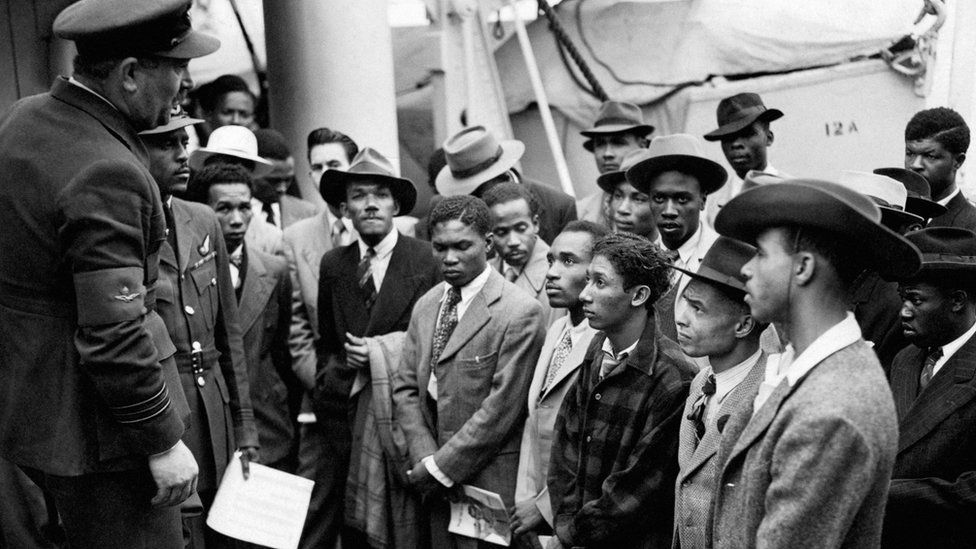
It affected people from the Windrush generation, who arrived in the UK from Caribbean countries between 1948 and 1971.
They were granted indefinite leave to remain in 1971, but thousands were children who had travelled on their parents’ passports.
Because of this, many were unable to prove they had the right to live in the country when “hostile environment” immigration policies – demanding documentation be shown – began in 2012.
‘Still in limbo’
Mr Samuels was eight when he moved from Jamaica to the UK in 1964, after his parents came to “rebuild Britain”, he said.
He told BBC Breakfast he had been shocked to receive letters telling him he could no longer work and he had to leave.
“After 55 years in the UK, working and doing positive good, then the Home Office letter [arrived] telling me I’m an illegal immigrant and giving me six weeks to leave the country”, he said.
The “embarrassment” of being ordered to leave the country while he was at work is a “stigma [that] doesn’t go away” he said, adding that colleagues believed he was an illegal immigrant.
Mr Samuels, who lives in Coventry, said he was “still in limbo” when it came to receiving compensation, adding: “It really makes you wonder, is this carrot real, is it going to happen before we’re put into the grave, and I think that sometimes that is what the Home Office is waiting for.”
He vowed that “justice delayed is not going to be justice denied” and that Windrush survivors would “keeping fighting until our last breath”, even if this meant marching in the streets.
Image source, PA
Image caption,
The Empire Windrush ship brought one of the first large groups of Caribbean people to the UK
Echoing calls by MPs for the scheme to be removed from Home Office control, Mr Samuels called on the home secretary and the prime minister to act.
He said: “Why is it taking so long for us… to receive justice?
“I am sick and tired of being sick and tired of this matter.
“Priti Patel, Boris [Johnson], do something, because we are not going to die.”
The cross-party Home Affairs Committee found that an official scheme launched in 2019 to compensate people affected had now become a further trauma for people applying, with a “litany of flaws” in its design and operation.
It concluded there were excessive burdens on claimants, inadequate staffing and long delays – and many of those affected “are still too fearful of the Home Office to apply”.
The MPs recommended an “independent organisation” should be handed responsibility for running the scheme, to “increase trust and encourage more applicants”.
The scheme contains many of the same bureaucratic insensitivities that led to the Windrush scandal in the first place, the report concluded.
The Home Office took too long to engage at grassroots level to build trust in the scheme, it added.
Such delays mean that by September 2021, only one in five of an estimated 15,000 eligible claimants had applied to the scheme and only a quarter of these had received compensation.
The MPs highlighted the fact that 23 individuals died before receiving any compensation.
The politicians welcomed changes made to the scheme in December 2020 to speed up payments – but said these “were long overdue” and did not go far enough.
“It is truly shocking how few people have received any compensation for the hardship they endured at the hands of the Home Office,” said Yvette Cooper, who is chairwoman of the committee.
Image source, Glenda Caesar
Image caption,
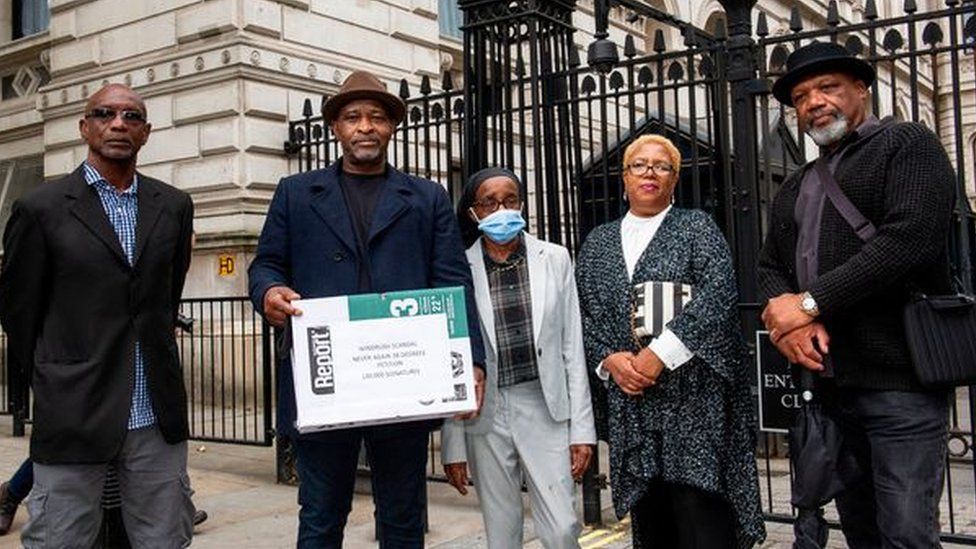
Campaigners took their case to Downing Street
“Urgent action is needed to get compensation to those who have been so badly wronged.
“It is staggering, given the failures of the Windrush scandal, that the Home Office has allowed some of the same problems to affect the Windrush Compensation Scheme too,” she added.
The report urges the Home Office to:
encourage more of the Windrush generation to apply for compensation
ensure everyone affected is granted some compensation quickly
increase the amount paid
guarantee legal assistance for all claimants
give greater support to grassroots campaigns
Responding to the report, the Home Office said: “The home secretary and the department remain steadfast in our commitment to ensure that members of the Windrush generation receive every penny of compensation that they are entitled to.
“We continue to make improvements, such as simplifying the application process, hiring more caseworkers and removing the end date.”
WHO to assess new highly mutated Covid-19 variant as countries ramp up health checks
Meeting will determine if B.1.1.529 variant warrants a designation as one of ‘interest’ or of ‘concern.’
Countries around the world are responding to news of a new coronavirus variant carrying an unusually large number of mutations. Photograph: Michele Spatari/AFP/Getty Images
Guardian- The World Health Organization will meet on Friday to assess a new variant detected in South Africa that is feared to be the worst Covid-19 variant yet identified.
The meeting will determine if the B.1.1.529 variant should be designated a variant of “interest” or of “concern”. The variant, which was identified on Tuesday, initially attracted attention because it carries an “extremely high number” of mutations.
Some world leaders have hastily responded by issuing new precautions and travel restrictions, while markets around the world saw falls sparked by the uncertainty.
Indian health officials on Friday put states on alert, asking them to carry out “rigorous screening and testing” of travellers who had arrived from South Africa, Botswana and Hong Kong, and to trace and test their contacts.
Health secretary Rajesh Bhushan urged all states to ensure that samples from Covid-positive travellers were swiftly sent to genome sequencing labs for testing.
Singapore, a major transit hub, said on Friday it would restrict arrivals from South Africa and countries nearby. All non-Singaporean or non-permanent residents with recent travel history to Botswana, Eswatini, Lesotho, Mozambique, Namibia, South Africa, and Zimbabwe will be denied entry or transit through Singapore, its health ministry said.
Italy announced a similar entry ban on Friday. “Our scientists are studying the new B.1.1.529 variant. In the meantime, we will adopt the greatest possible caution,” health minister Roberto Speranza said.
Japan, too, will clamp down on border controls for visitors from South Africa and five other African countries, the Jiji news service reported.
South Africa to be put on England’s travel red list over new Covid variant
Read more
New Zealand is also closely monitoring global advice on the new variant, the ministry of health said. The deputy prime minister, Grant Robertson, said the new variant was “a real wake-up call for all of us, that this pandemic is still going” and reiterated the need to continue with caution.
Dr Maria Van Kerkhove, WHO’s technical lead on Covid-19, said in a press briefing on Thursday: “We don’t know very much about this [variant] yet. What we do know is that this variant has a large number of mutations. And the concern is that when you have so many mutations, it can have an impact on how the virus behaves.”
The infectious disease epidemiologist said that researchers would meet to “understand where these mutations are and what this potentially may mean” in terms of whether it is more transmissible or has potential to evade immunity.
A high number of mutations does not necessarily make a variant more transmissible. In August, similar concerns emerged about a variant in South Africa, known as C.1.2, but it was never listed as a variant of interest or concern. In Japan, some experts believe the country’s pronounced fall in cases was down to mutations that drove it towards “natural extinction”.
At the meeting the WHO may decide whether or not to give the B.1.1.529 variant a name from the Greek alphabet. If it does, it is likely to be named Nu, the next available letter.
England announced it was temporarily banning flights from South Africa, Namibia, Botswana, Zimbabwe, Lesotho and Eswatini from midnight on Friday, and that returning travellers from those destinations would have to quarantine. Israel has followed suit, saying it will ban its citizens from travelling to southern Africa.
UK civil service sources said the variant, which is feared to be more transmissible and has the potential to evade immunity, posed “a potentially significant threat to the vaccine programme which we have to protect at all costs”.
Britain’s health secretary, Sajid Javid, confirmed the UK Health Security Agency (UKHSA) was investigating, saying “more data is needed but we’re taking precautions now” in a tweet late on Thursday.
UKHSA chief executive Jenny Harries said: “This is the most significant variant we have encountered to date and urgent research is under way to learn more about its transmissibility, severity and vaccine-susceptibility.”
Scotland confirmed late on Thursday that all arrivals from South Africa, Namibia, Lesotho, Botswana, Eswatini and Zimbabwe will be required to self-isolate and take two PCR tests from midday on Friday, while anyone arriving after 4am on Saturday will need to stay at a managed quarantine hotel.
Australia’s health minister, Greg Hunt, said it was investigating and would swiftly close its borders to travellers from the African nation if the WHO were to classify it as a major new variant. “If the medical advice is that we need to change, we won’t hesitate,” he told reporters on Friday morning.
South Africa’s Foreign Ministry said Britain’s decision to ban flights from the nation “seems to have been rushed” voicing concerns over the potential damage to tourism and business in both countries.
Foreign minister Naledi Pandor said South Africa would engage with British authorities to try to get them to reconsider their decision.
Markets took a hit on Friday, with world stocks heading for a 0.7% fall – their largest weekly drop in nearly two months, Reuters reported.
South Africa’s rand fell 1%, Japan’s Nikkei was down 2.4% and Australian shares fell 0.6% in early trade, as did US crude futures. S&P 500 futures fell 0.4%, while the Australian and New Zealand dollars dropped to three-month lows.
“The trigger was news of this Covid variant …and the uncertainty as to what this means,” said Ray Attrill, head of FX strategy at National Australia Bank in Sydney. “You shoot first and ask questions later when this sort of news erupts.”
On Thursday, South Africa’s health minister Dr Joe Phaahla said the new variant could be driving a recent “exponential rise” in cases in Gauteng, a north-eastern province home to the city of Johannesburg.
B.1.1.529 is thought to contain a total of 32 unusual mutations to the spike protein, the part of the virus that most vaccines use to prime the immune system against Covid.
Penny Moore, a virologist at the University of Witwatersrand in Johannesburg, whose lab is assessing the variant, said: “We’re flying at warp speed.” She said there were anecdotal reports of reinfections but that it was too early to draw any conclusions.
Professor Tulio de Oliveira, director of South Africa’s centre for epidemic response and innovation, said the news was “really worrisome at the mutational level” and described the variant as being “of great concern”.
Variants of concern, such as Delta, show increased transmissibility, virulence or change in clinical disease, and a decreased effectiveness of public health and social measures. Variants of interest are those shown to cause community transmission in multiple clusters, and which have been detected in multiple countries, but have not yet necessarily proven to be more virulent or transmissible.
An infectious diseases specialist at the University of KwaZulu-Natal in Durban, Dr Richard Lessells, said the number of mutations “might affect how well the virus is neutralised” and may give the virus enhanced transmissibility.
South Africa has confirmed about 100 cases as B.1.1.529 but the variant has also been found in Botswana and Hong Kong, with the Hong Kong case a traveller from South Africa.
The significance of the variant so far remains unknown, with the coming days and weeks key to determining its severity.
“It will take a few weeks for us to understand what impact this variant has,” Kerkhove of the WHO said, adding the variant is “under monitoring” and “something to watch”.
Ewan Birney, the deputy director general of the European Molecular Biology Laboratory and a member of Spi-M, which advises the UK government, said it posed a risk of worsening the pandemic.
He urged countries not to repeat the mistake of failing to act quickly. “What we’ve learned from the other situations like this – some have turned out OK and some haven’t – is that whilst we’re [investigating] you have to be reasonably paranoid,” he said.
The 32 mutations in the spike protein is about double the number associated with the Delta variant. Mutations of this kind can affect the virus’s ability to infect cells and spread, but also make it harder for immune cells to attack the pathogen.
However, Africa Centers for Disease Control and Prevention chief John Nkengasong urged for caution. “There are so many variants out there but some of them are of no consequence on the trajectory of the epidemic,” he told a news conference on Thursday.
Flights from six countries will be banned as officials review travel measures after scientists voice concern over variant
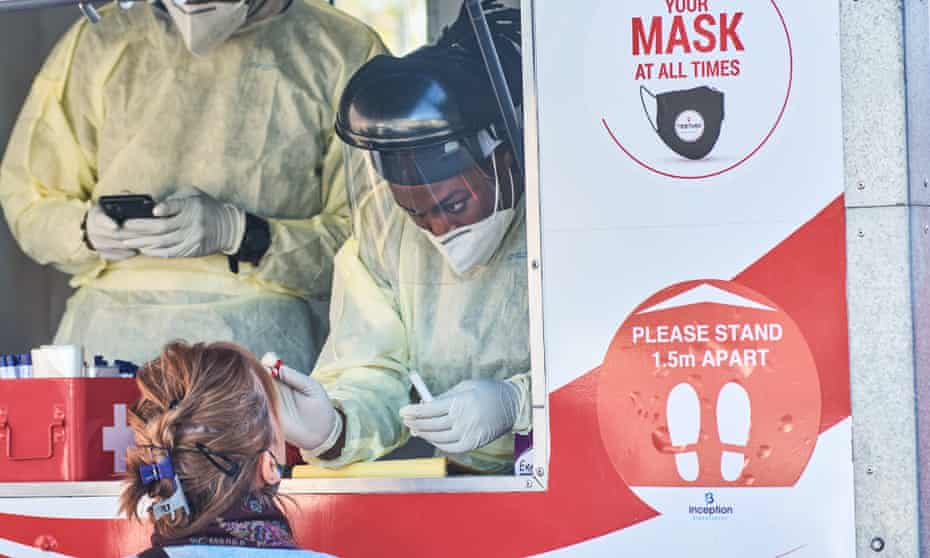
A health worker administers a nasal swab at a Covid-19 mobile testing site in Johannesburg. Photograph: Bloomberg/Getty Images
Flights from southern Africa will be banned, with six countries placed under England’s red list travel restrictions, after scientists raised the alarm over what is feared to be the worst Covid-19 variant yet identified.
Whitehall sources said the B.1.1.529 variant, which is feared to be more transmissible and has the potential to evade immunity, posed “a potentially significant threat to the vaccine programme which we have to protect at all costs”.
Hundreds of people who have recently returned from South Africa, where the variant was detected, and neighbouring countries are expected to be tracked down and offered tests in an effort to avoid the new variant entering the UK.
Scientists warn of new Covid variant with high number of mutations
The variant, which was identified on Tuesday, initially caused concern because it carries an “extremely high number” of mutations meaning that the spike protein looks different from the version that vaccines were designed to target. The latest data, presented by South African scientists on Thursday, revealed that the variant also appears to be more transmissible and is already present in provinces throughout the country.
As well as placing South Africa, Namibia, Lesotho, Botswana, Eswatini and Zimbabwe on England’s travel red list and banning flights from Friday, officials are reviewing a number of travel measures including whether there should be a limited reintroduction of the use of PCR tests for arrivals. Travellers who test positive will be strongly encouraged to take a PCR so that their results can be sequenced to test for variants. The Scottish government later confirmed all arrivals from the six countries will be required to self-isolate and take two PCR tests from midday on Friday, while anyone arriving after 4am on Saturday will need to stay at a managed quarantine hotel. There are no direct flights from any of the countries into Scotland.
Israel also announced it will ban its citizens from travelling to southern Africa – covering the same six countries as well as Mozambique – and barring the entry of foreign travellers from the region.
Announcing the move, the health secretary, Sajid Javid, said: “We’ve always been clear that we will take action to protect the progress that we have made.
“Our scientists are deeply concerned about this variant. I’m concerned, of course, that’s one of the reasons we have taken this action.”
He said that more work was needed to understand how concerning the variant is, adding: “From what we do know there’s a significant number of mutations, perhaps double the number of mutations that we have seen in the Delta variant.
“That would suggest that it may well be more transmissible and the current vaccines that we have may well be less effective.”
Ewan Birney, the deputy director general of the European Molecular Biology Laboratory and a member of Spi-M, which advises the UK government, said it posed a risk of worsening the pandemic.
He urged countries not to repeat the mistake of failing to act quickly. “What we’ve learned from the other situations like this – some have turned out OK and some haven’t – is that whilst we’re [investigating] you have to be reasonably paranoid,” he said.
The new variant was identified after a surge of cases in Gauteng, an urban area containing Pretoria and Johannesburg. Initially the cluster of cases, centred on a university, was assumed to be because of an increase in socialising.
However, this week the variant was identified as a potential cause of the increase. The first detected cases of the variant were collected in Botswana on 11 November and a case has also been found in Hong Kong – a 36-year-old man who tested positive while in quarantine after a trip to South Africa.
In the past 48 hours, South African scientists reviewed PCR test data from the Gauteng region and discovered the variant appeared to be behind the increase in cases, having risen to account for about 90% of cases in a matter of weeks. At a national level, South Africa’s daily number of infections hit 1,200 on Wednesday, up from 106 earlier in the month.
Speaking at a hastily called news conference on Thursday, the virologist Tulio de Oliveira said: “We can see very early signs that this lineage has rapidly increased in prevalence in Gauteng and may already be present in most provinces.”
Prof Anne von Gottberg, a clinical microbiologist and head of respiratory diseases at the National Institute of Communicable Diseases in South Africa, said there were now about 100 cases confirmed through full sequencing of samples, up from just 10 reported on Wednesday, and signs of community transmission.
Prof Richard Lessells, an infectious diseases specialist at the University of KwaZulu-Natal in Durban, said the coming days and weeks would be key to determining the severity of the variant. “At the beginning of a resurgence we sometimes get fooled into thinking everything is a milder disease, and that can be because it’s initially spreading in younger age groups, so we have to see as the spread becomes more generalised whether we are seeing cases of more severe disease,” he said.
“What gives us some concerns [is] that this variant might not just have enhanced transmissibility, so spreads more efficiently, but might also be able to get around parts of the immune system and the protection we have in our immune system,” he added.
Birney and other UK scientists called for new controls to be brought in immediately, saying that it would be preferable to reverse measures if the variant was found to be less of a concern than feared following further investigation.
Pregnant women urged to get Covid jab as data from England shows it is safe
Until now, England no longer had any countries on the red list imposing quarantine on travellers arriving from abroad. People who are not fully vaccinated must test negative before flying and arrange two PCR tests on arrival. Those who are fully vaccinated need to have a Covid test within two days of landing.
The World Health Organization said it was “closely monitoring” the reported variant and was expected to convene a technical meeting on Friday to determine if it should be designated a variant of “interest” or of “concern”.
A No 10 spokesperson said: “We have one of the largest genomic sequencing programmes here in the UK that allows us to spot and track variants as they emerge and, as we have done throughout the pandemic, we will continue to keep an eye and keep this particular variant under investigation.”
Asked whether more travel restrictions would be needed before Christmas as a result of the variant, the spokesperson said: “If we believe we need to take action we will, but we will continue to monitor this variant and other variants in the same way that we have done throughout the pandemic.”
NIA CHARLESTOWN NEVIS — Prayer for peace on Nevis will be the first planned initiative the Nevis Christian Council and the Nevis Evangelical Association will hold as they seek to make Nevis a better place.
Fr. Piotr Palowski, Chairman of the Nevis Christian Council, and Rev. Ron Daniel, Chairman of the Nevis Evangelical Association, told the Department of Information on November 23, 2021, that both organisations agreed to collaborate on what they deem strategic matters of interest for the benefit of the island.
“In our meeting last week Wednesday… we came together and we decided that we would like to organise a special prayer for peace and to stop the violence in Nevis.
“We understand that it is very important and very crucial, and because of that we have agreed that on the weekend of 4th and 5th of December we would like all the churches to pray for peace on Saturday and Sunday, and together ask God to help us to stop the violence, to reconcile, and to make peace among all the people here,” he said.
Fr. Palowski believes that peace can happen and that seeking divine intervention could achieve that goal.
“Recently we witnessed the increase of violence, before that it was peaceful, so it is a sign for us that it’s possible to live in peace with each other, and Jesus said ‘Knock and it will be opened. Ask and it will be given on to you.’ So we would like to do that, to knock at heaven’s door and ask God to give us the grace and the gift of peace, understanding, reconciliation and goodness to each other.
“We believe that God will answer our prayers and help us to stop the violence and to live in peace on this beautiful island,” he said.
Rev. Daniel explained why the prayer session will span two days.
“We know that we have Seventh-Day Adventist Churches on Nevis, and so we expect on the Saturday, the Adventist Churches would be praying as well as on the Sunday then we would have those who worship on Sunday praying. We don’t see this as something as only one set of churches can do.
“We believe that we need all churches and we have enough examples in the Bible when the people of God have decided to pray that God does something, and so as Fr. Palowski says, we want to knock on heaven’s door and ask God for peace, for love, for care [and] reconciliation because at the end of the day the bloodshed in Nevis must end, and we believe that as we speak to God, and as we petition God…asking God to speak to the hearts of our young men and women who may want revenge or who may want to continue this violence to stop, and so that’s one of the key things why we are here today and so we want to make that push,” he said.
Contaminated sugars have been recalled for the second time this month after they were found to have been sold by mistake. Woolworths New Zealand, Countdown’s parent company, announced it was recalling Chelsea and Countdown branded…
By Rukuwai Tipene-Allen of Māori Television OPINION: National is wounded and hurting after internal struggles and division this week. Leader Judith Collins lost her job in a brutal rush but it had only been a matter of…
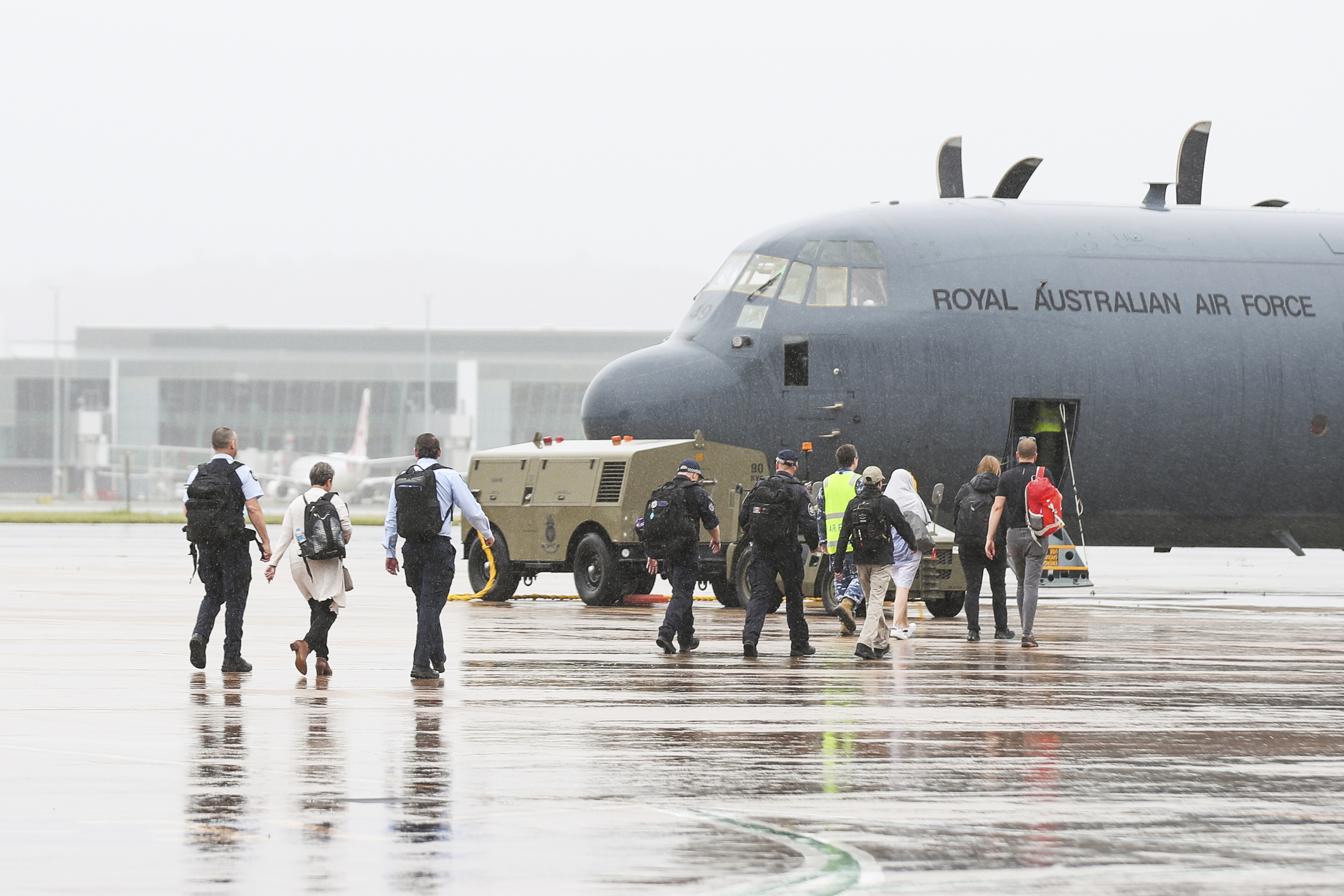
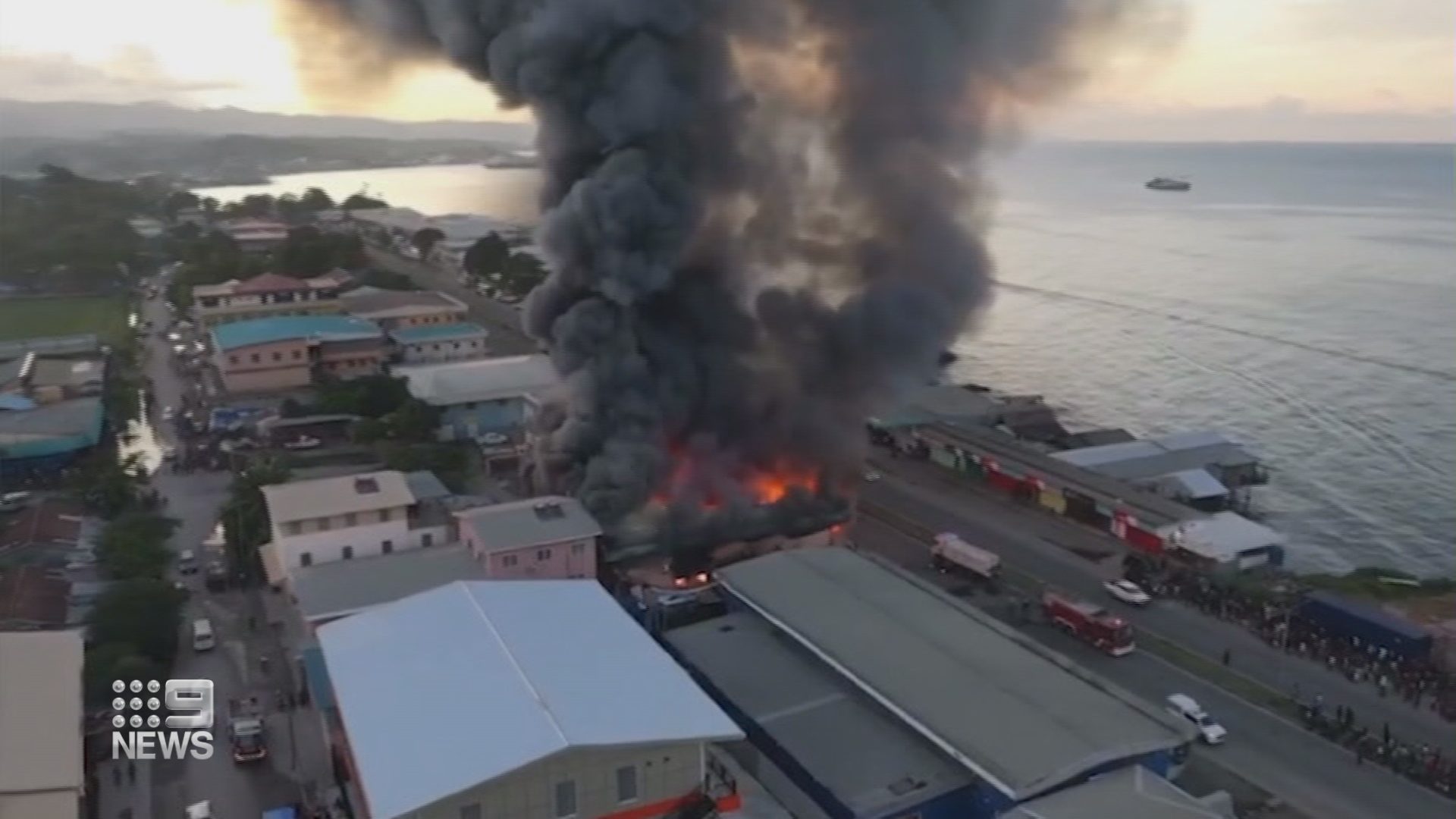
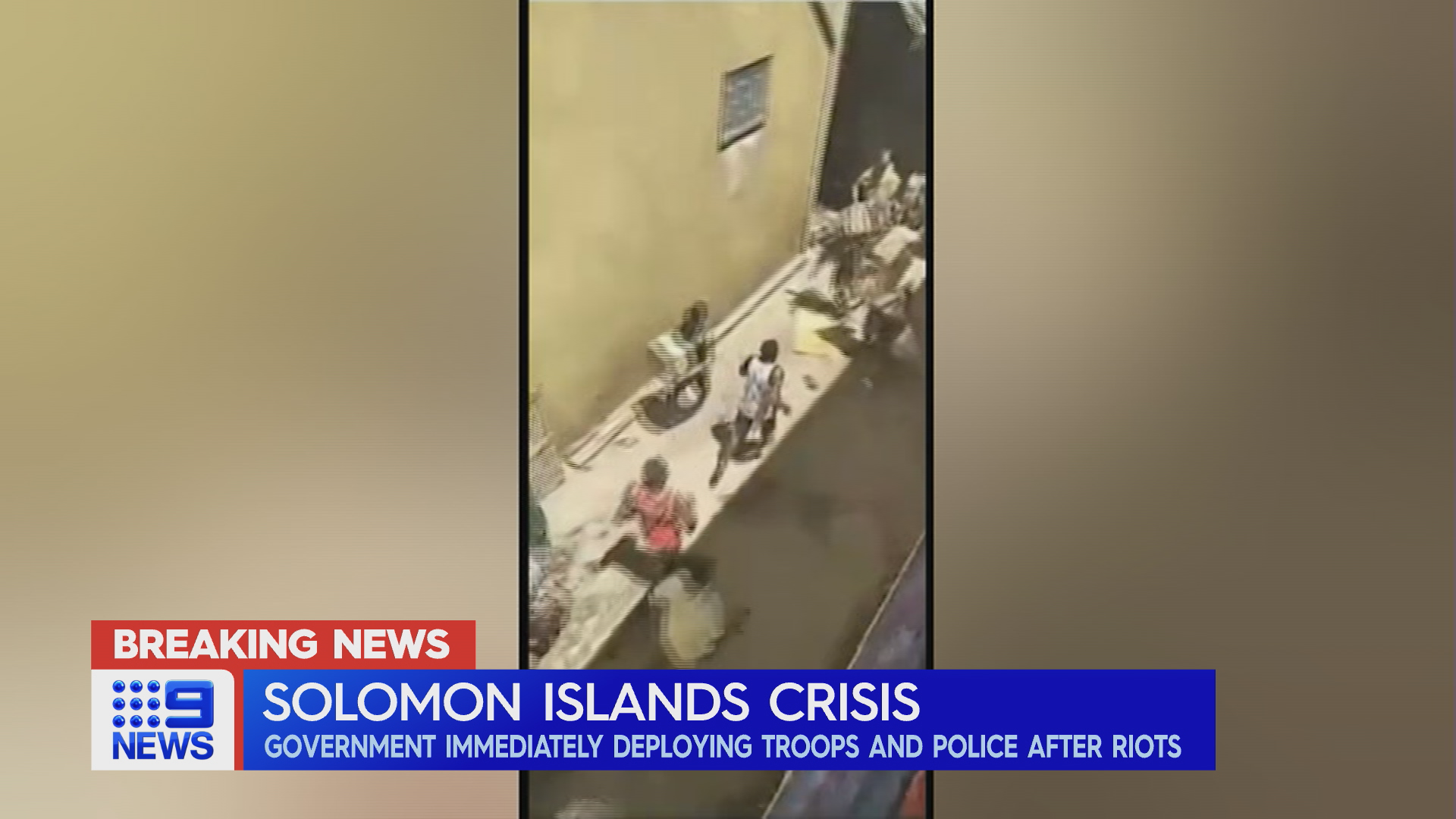
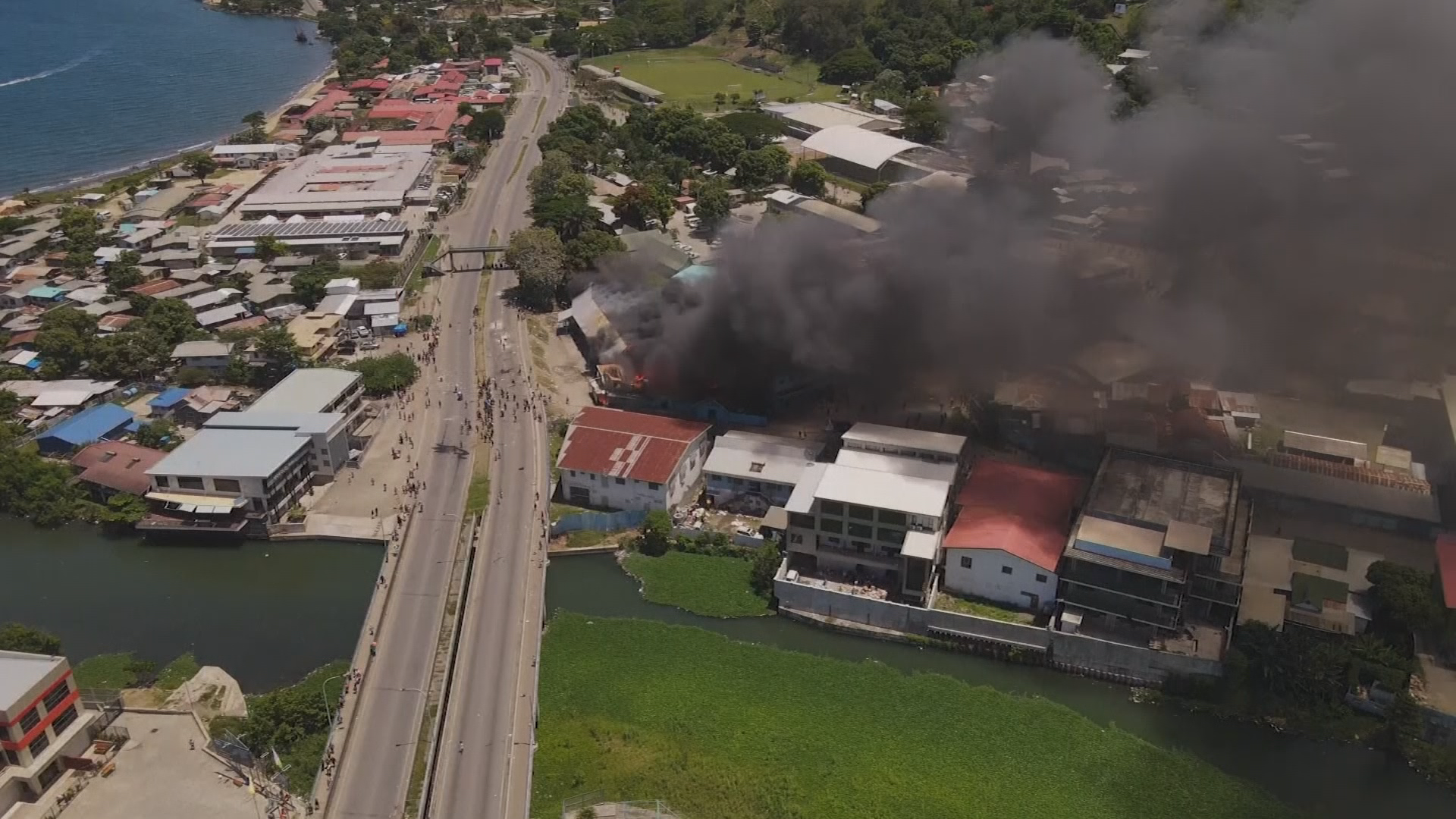
Australian police have touched down in the Solomon Islands amid calls for calm and demands for the Prime Minister to resign after protests rocked the capital of Honiara for the second day in a row, leaving fires raging and smoke billowing above the city.
About 40 Australian Defence Force personnel and a navy ship are due to join Australian Federal Police officers later today in a peace-keeping role as local authorities struggle to control unrest experts say stems from a complex web of issues.
They say much of the tension stems from long-held differences between Malaita, the most populous of the hundreds of Solomon Islands, and Guadalcanal, where the capital and Parliament sit.
Demonstrators from Malaita had travelled to the capital in a spill over of anger about a host of domestic issues including unrealised infrastructure promises, local media reported.
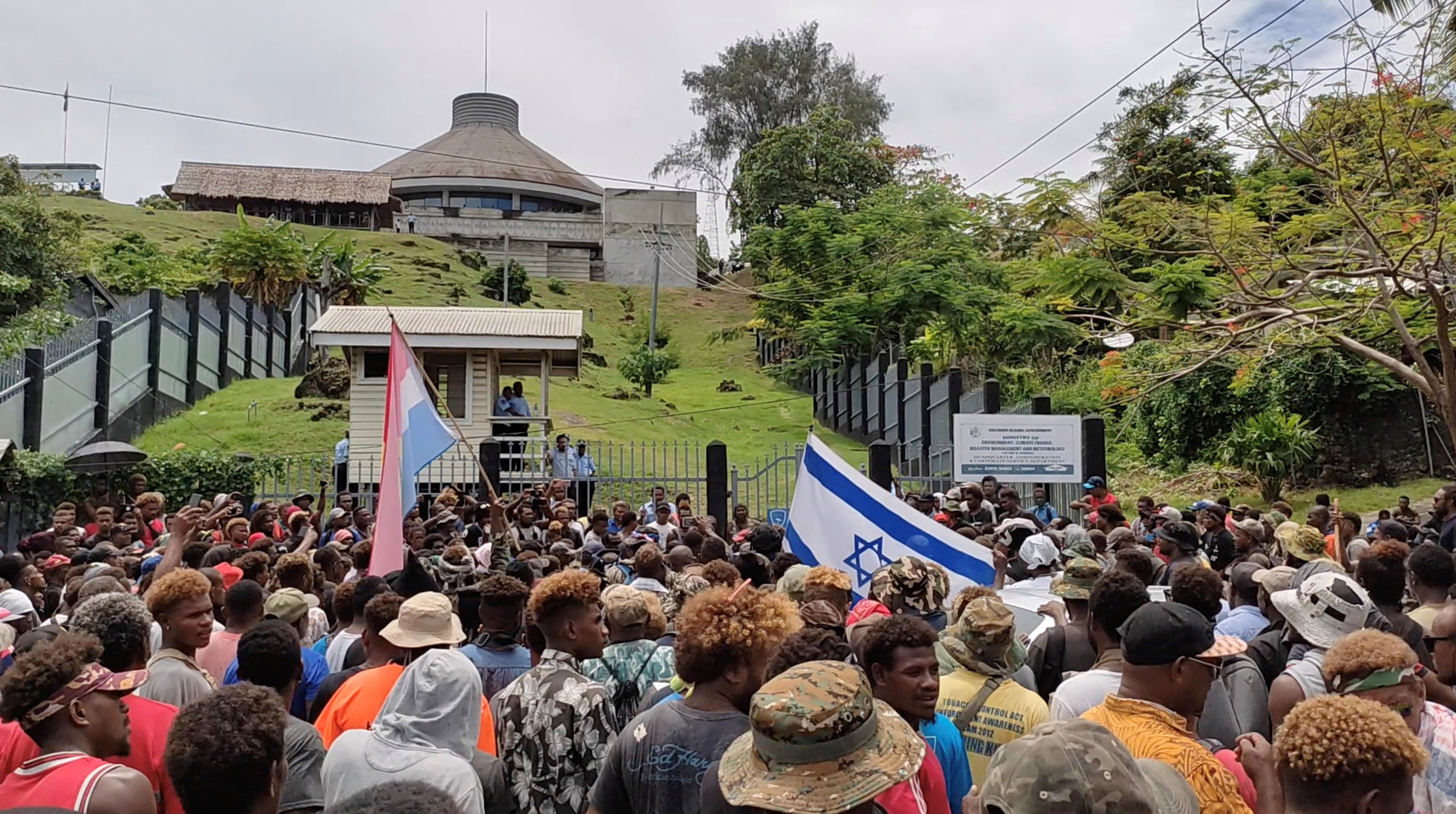
Prime Minister Manasseh Sogavare declared a lockdown on Wednesday after about 1000 people gathered in protest in the capital Honiara demanding his resignation over a host of domestic issues.
The protesters breached the national Parliament building and burned the thatched roof of a nearby building, the government said.
Experts say issues range from concerns over distribution of resources, logging and representation to a 2019 switch in diplomatic allegiances from Taiwan to China.
The Washington Post reported that some protesters set fire to a police station and several buildings in Chinatown.
Edvard Hviding, a professor of social anthropology and founding director of the Bergen Pacific Studies Research Group, told 9News.com.au tensions stretched right back to the early 2000s before Australia led the RAMSI peacekeeping mission to the islands.
Having experienced "this kind of rioting about three or four times" while previously living in the Solomon Islands, he said he wasn't "too pessimistic" about the situation.
"There are many lines of thought about this but I think the Solomon Islanders are resilient and will sort of rise, if not from the ashes at least, but this will pass," he told 9News.com.au.
"But our hope, everyone's hope is that the national government will now speak to the rioters."
Pacific Islands expert Transform Aqorau described the unrest as "unexpected but not surprising" and called for reform to the country's political system.
Writing on the Devpolicy Blog, Dr Aqorau said a number of flashpoints had been ignored over the past few months, with little communication between the central government and the government of Malaita, where Premier Daniel Suidani is extremely popular.
But the man once tipped as the Solomon Islands' next envoy to the United Nations said even outside Malaita, frustration was growing at the outsize influence of foreign loggers, miners and other companies.
"Solomon Islands has been drifting to self-destruction," he wrote.
"It is one of the most aid-dependent countries in the world. Significant donor support is given to its health and education sector."
Solomon Islands Prime Minister Manasseh Sogavare has called for calm in the capital and rejected calls to resign, saying he will only be removed on the floor of Parliament, local media report.
Mr Suidani, Premier of Malaita province, joined calls for the Prime Minister to step down, saying the leader needed to hear the protesters' demands before calling for peace.
"The people are there with their demand, and they want response from the Prime Minister or cabinet on their demand," he said, according to the Island Sun.
The support from Australia comes via a 2017 treaty and what Australian Prime Minister Scott Morrison said was a call for support from Mr Sogavare.
"We are there to support them (local law enforcement) and what they are doing and to provide that backup, particularly in relation to the critical infrastructure that is there," he said.
"And it has been important for us to be quite clear with our Pacific Island nations, in particular with the Prime Minister, about the nature of our involvement."
All Australian high commission staff were accounted for, he said on Thursday.
Former US ambassador to Papua New Guinea, the Solomon Islands and Vanuatu Catherine Ebert-Gray said Australia's continued security assistance was "so important to the Solomon Islands and the region."
"The Prime Minister is a political survivor yet may have no choice but to resign if violence continues and he remains holed up at the Police Compound," she told 9News.com.au in an email.
"Australian troops will find it challenging to bring long-term peace without accompanying changes in national leadership.
"Malaitan Parliamentarians are numerous and should be part of any government. More women should run for office and get the support they need to actively join governance."
Dr Aqorau said it was important to address a sense of "alienation, disempowerment and neglect" that had been "building for some time".
"Yesterday's protest and riots are evidence of serious underlying currents that have been neglected," he wrote.
"There has to be reform to the political system, including making the government more inclusive.
"Those that rioted today probably don't get anything from government. This has to change, otherwise Solomon Islands could be on the pathway to implosion."
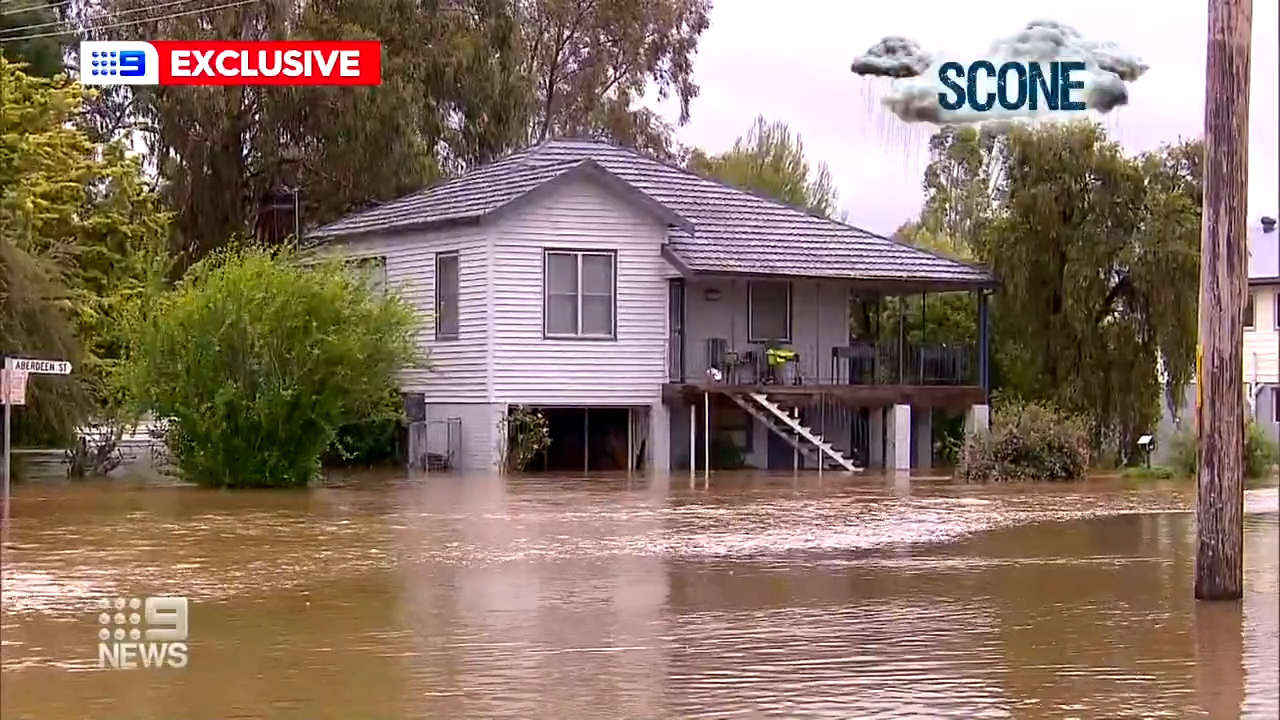
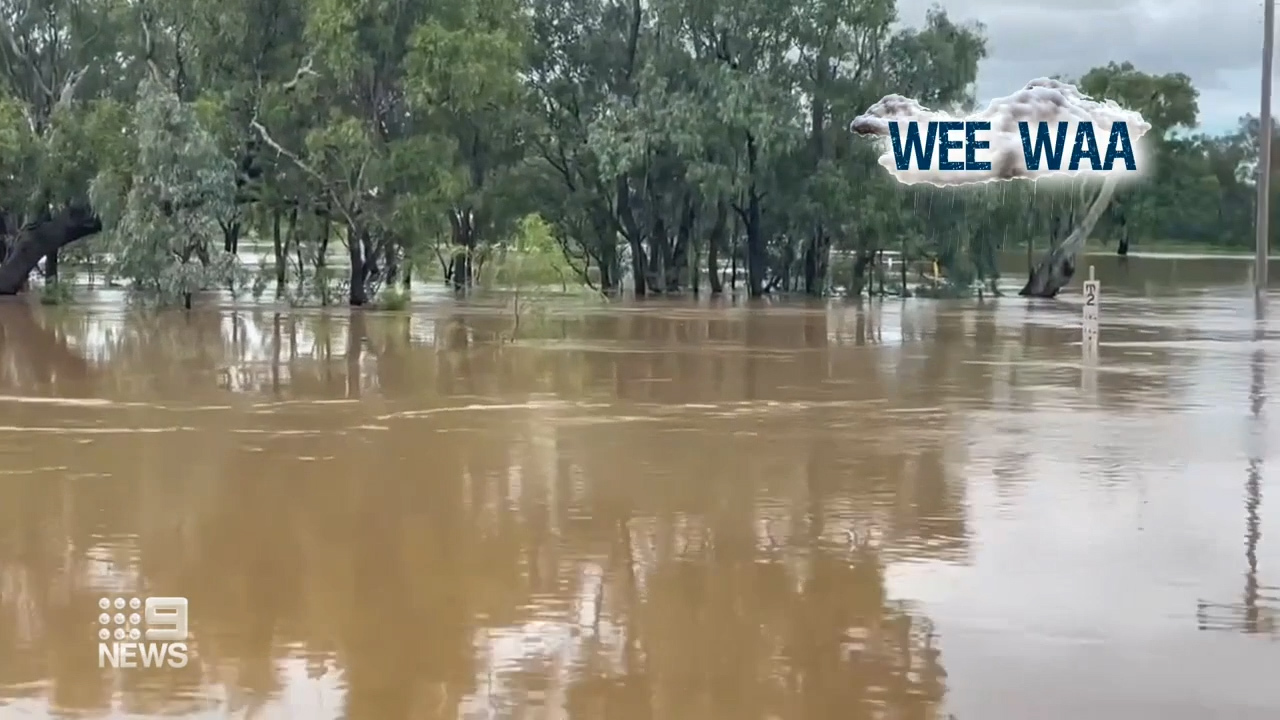
Evacuated residents will be required to head to the Scone Basketball Stadium for shelter if it isn't safe to stay with friends or family.
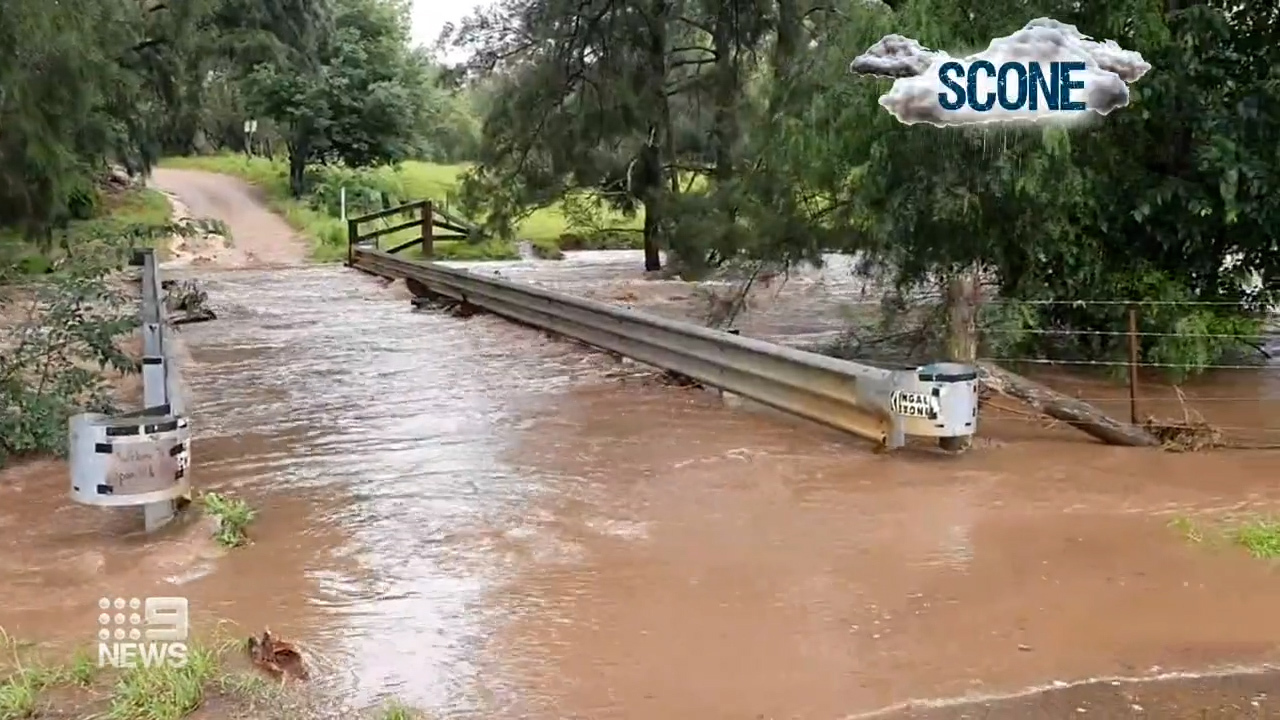
Emergency services are urging people not to drive through floodwaters, with several cars already having to be rescued around Glenbawn Road.
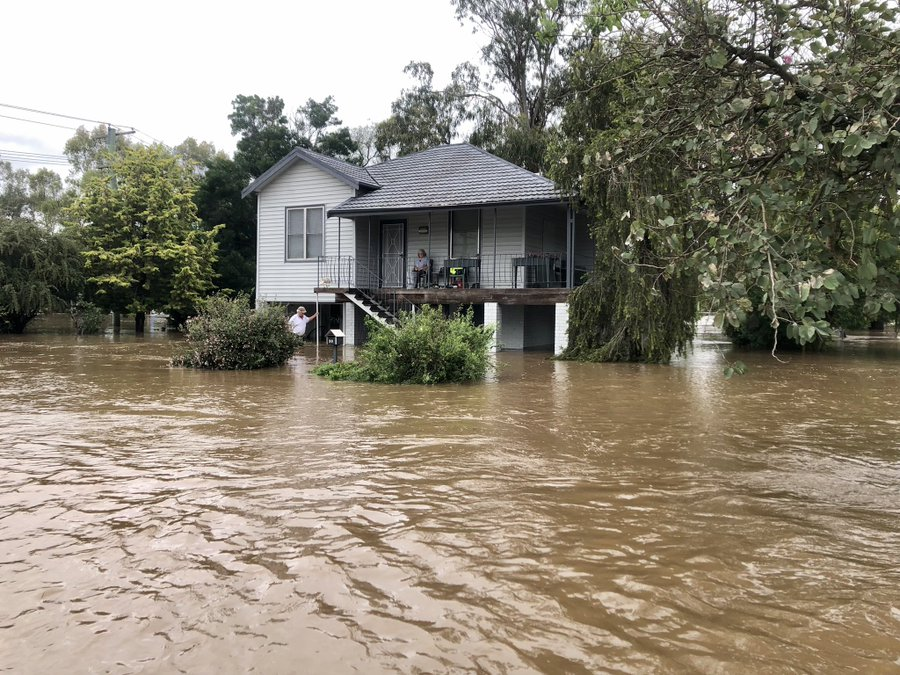
It's the worst flooding in over 30 years, according to Scone locals.
Ernie and Sandra True are just two of the many residents whose homes have been engulfed by floodwater.
Sandra even fell after slipping on stairs in her home and had to be evacuated by emergency services.
"This morning when I woke up it was only up to the back fence line, we thought oh it's alright," Mr True said.
"And then all of a sudden I walked to the front to have a cup of coffee and I seen the water rushing around the front of the house and I thought 'ugh'.
"So that's when we noticed it was rising, it came up that fast and it just caught us.
"This is the worst we've ever seen it. But we're going to stick here as long as we can, nothing we can do."
Torrential flooding has also filled paddocks in the area.
Scone is unlikely to receive much reprieve this weekend, with the Bureau of Meteorology forecasting more dangerous flash flooding due to thunderstorms.
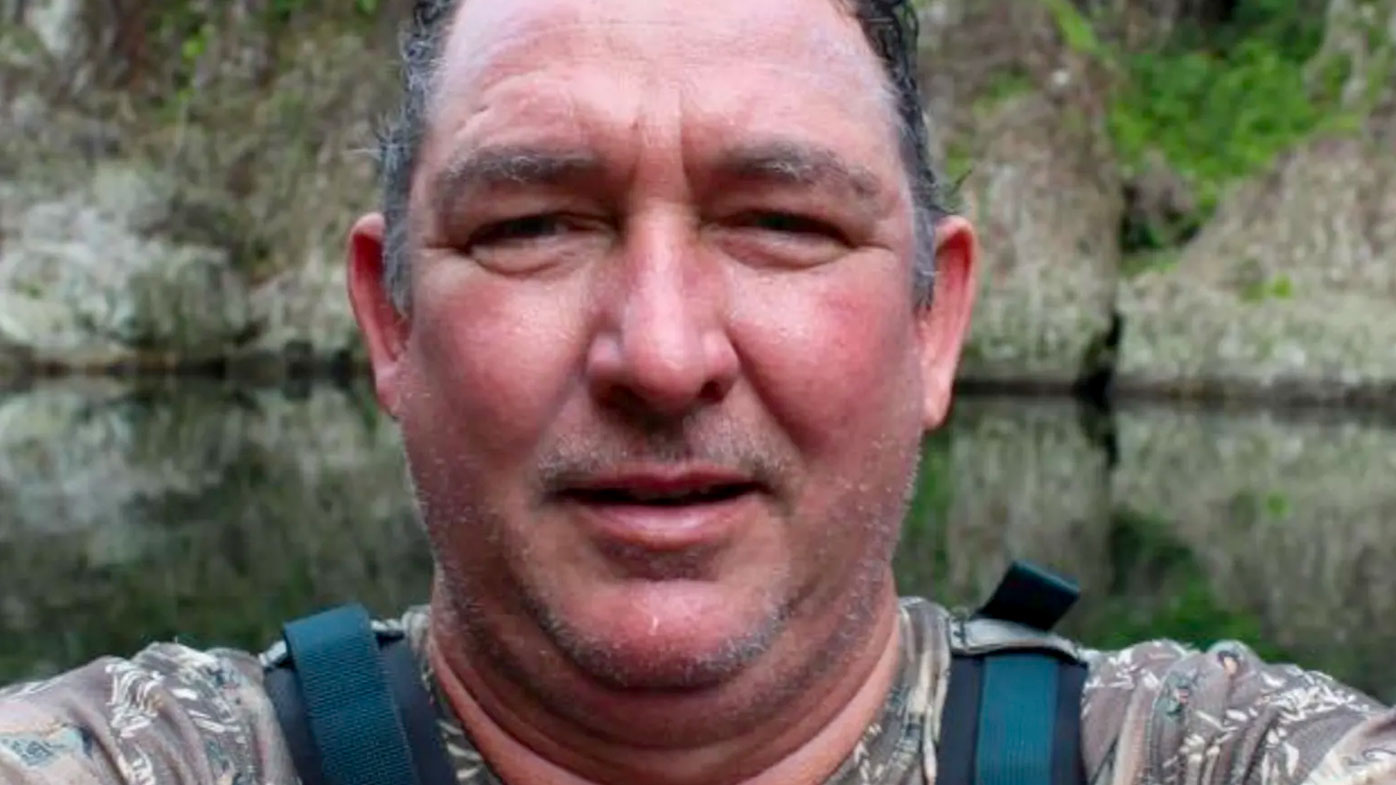
Greg Lynn, 55, was charged yesterday with two counts of murder after being questioned by police at Sale police station in East Gippsland since his arrest on Monday.
In a statement, Mr Lynn's family expressed their distress over the case, while acknowledging the anguish of the campers' families.
"It has been distressing for our family and the families of the deceased and we are completely traumatised as well by these tragic events," they said.
"We need to deal with the legal proceedings as they arise and try to restore some balance in our lives.
"We also acknowledge the suffering of the Clay and Hill families at this difficult time."
The family said they understood the media were interested in the proceedings but asked for privacy.
The Jetstar pilot appeared calm when he fronted Sale Magistrates' Court via video link this morning.
He wore a mask and held his hands together, taking off his mask occasionally to take a sip of water.
His wife Melanie Lynn also tuned in remotely.
He did not apply for bail and will remain in custody until May 31, 2022.
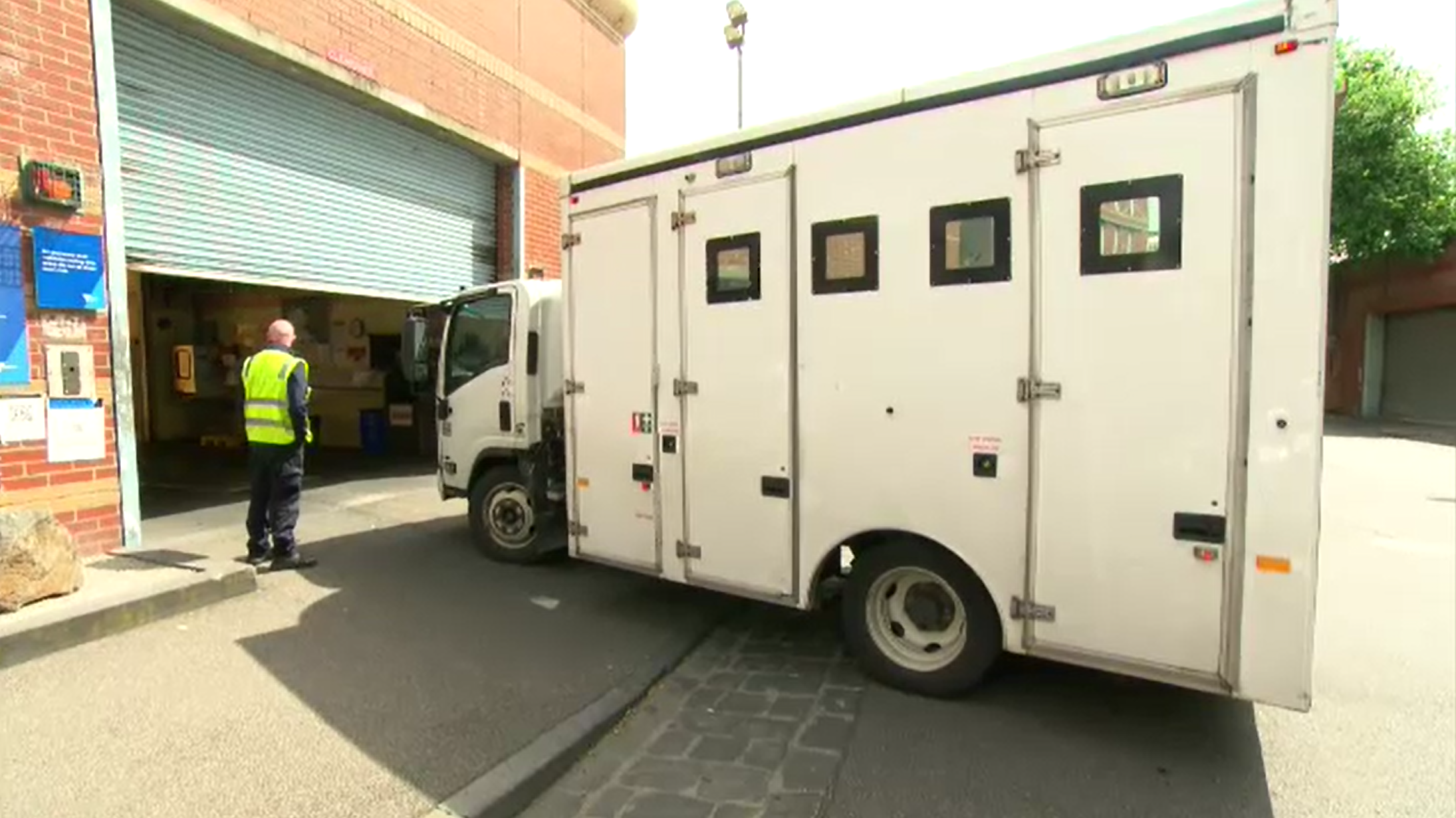
Mr Lynn was taken away from court in a prison van, which arrived at the Melbourne remand centre this afternoon.
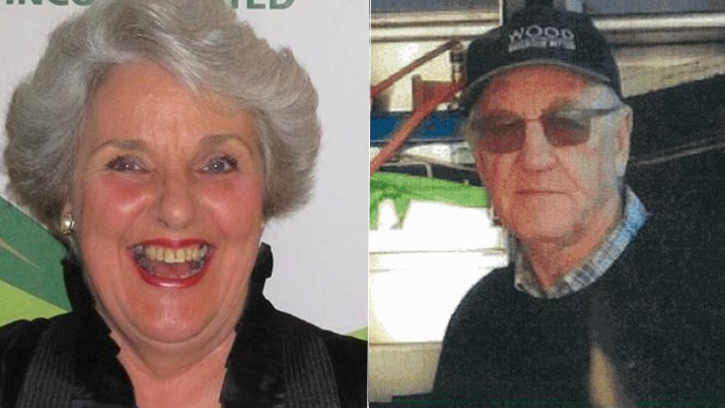
Ms Clay, 73, and Mr Hill, 74, disappeared while camping in the Wonnangatta Valley on March 20 last year.
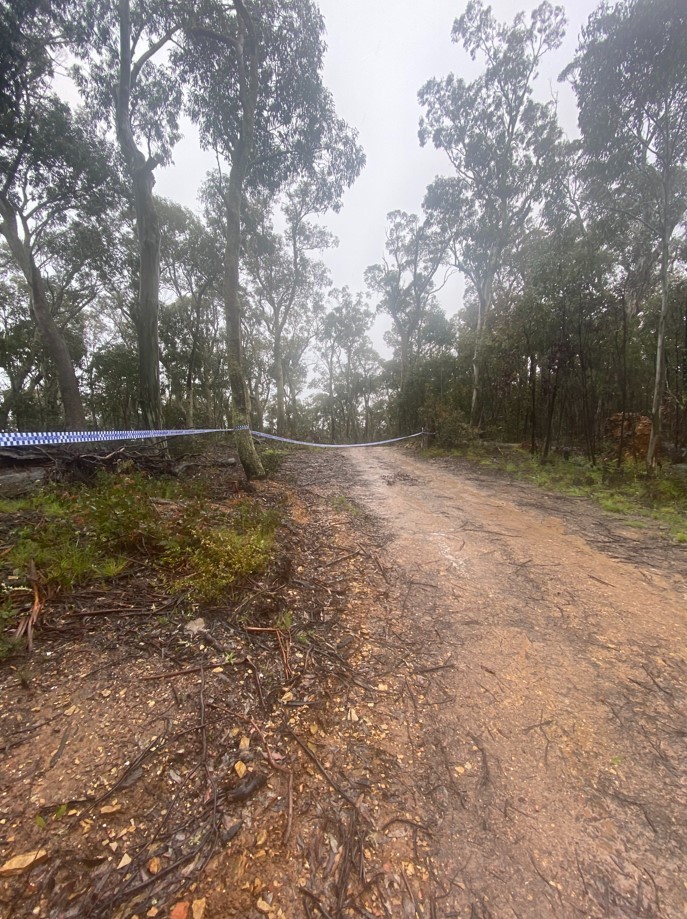
Victoria Police Assistant Commissioner Bob Hill said yesterday police were yet to find the remains of the missing pair.
He said police had located a specific area of interest in the Greater Alpine region in the search for the remains, and that police were hopeful they would find them.