Category Archives: headline

T&T Surge in COVID-19 Deaths Leads Caribbean Region

With more than 100 COVID-19 deaths in the first 10 days of November, Trinidad and Tobago is among four countries with the highest mortality rates in the Caribbean.

While most Caribbean countries have COVID-19 mortality rates below 2 percent, the Pan American Health Organisation (PAHO) says T&T, Antigua and Barbuda, The Bahamas and Grenada are under three percent. At PAHO’s weekly COVID-19 media conference yesterday, Director of Health Emergencies Dr Ciro Ugarte told Guardian Media that many other countries had higher mortality rates.

“When we look at the number of cases in most countries in the region, some countries in the Caribbean have shown an increase although the numbers are still low. The proportion and the temporality of these increases are worrisome for some countries. Most of the countries in the Caribbean show a case mortality rate below two percent. Antigua and Barbuda, Bahamas, Grenada and Trinidad and Tobago have more than two percent, but below three percent,” Ugarte said.

He said that measures taken to protect the population, including the availability of health facilities, hospital and Intensive Care Units, and controlling rapid spread, are working quite well, but with economies reopening, this increases the possibility of transmission among populations and international travellers. Therefore, Ugarte said countries must keep track of the availability of ICU beds because many Caribbean countries have limited capacity.

“Although we have been working very closely with many of those countries to increase the capacity of ICU beds, there are still some limits, not only on equipment and ICU beds themselves but also for health personnel to support and supply to treat the patients.”

After two consecutive months of decreasing trends in the Americas, COVID-19 infections are increasing in some countries.

In the Caribbean, T&T, Barbados and The Dominican Republic experienced a rise in infections, while Cuba, Jamaica and Puerto Rico saw decreases. The Cayman Islands and Dominica are also reporting high case counts. There were increases in Columbia and Bolivia as PAHO noted the relaxation of public health measures.

Vaccination among people in Latin America and the Caribbean climbed to 48 per cent over the past week.

But PAHO Director Dr Carissa Etienne said that while COVID-19 vaccinations pick up in the region, less than one in five people in Jamaica, St Vincent and the Grenadines and Guatemala got the vaccines. In Nicaragua, coverage remains at single digit.

Less than 1 percent of Haiti’s eligible population is fully vaccinated.

PAHO Director Dr Carissa Etienne admitted that the situation in the region was still concerning as infections rose in some countries and the pace of vaccination was not adequate. Etienne said PAHO also observed rising vaccine hesitancy in the Caribbean.

“While many people may be tired of the pandemic, it is not over yet, and this is not the time to relax public health and social distancing measures, and this is what we are seeing,” Etienne said.

The post T&T Surge in COVID-19 Deaths Leads Caribbean Region appeared first on The St Kitts Nevis Observer.

WORLD VIEW: Saudis Deny COP26 Claim, China Warns of new Cold War, Black WW2 GIs to Get Benefits, More

Nov 11, 2021

The Associated Press

The Rundown

I'm an image

GLASGOW, Scotland (AP) — The tightest of smiles on his face and the fabric of his traditional thobe swirling about him as he strides through a hallway at U.N. climate talks, Saudi Arabia’s energy minister expresses shock at repeated complaints that…Read More

I'm an image

WELLINGTON, New Zealand (AP) — Chinese President Xi Jinping warned Thursday against letting tensions in the Indo-Pacific cause a relapse into a Cold War mentality….Read More

I'm an image

GLASGOW, Scotland (AP) — The world’s top carbon polluters, China and the United States, agreed Wednesday to increase their cooperation and speed up action to rein in climate-damaging emissions, signaling a mutual effort on global warming at a time …Read More

I'm an image

KENOSHA, Wis. (AP) — Kyle Rittenhouse told jurors at his murder trial that he tried to get away from his pursuers the night he shot three men during street unrest in Kenosha, saying he never wanted to kill anyone: “I didn’t do anything wrong. I def…Read More

I'm an image

For Veterans Day, a group of Democratic lawmakers is reviving an effort to pay the families of Black service members who fought on behalf of the nation during World War II for benefits they were denied or prevented from taking full advantage of whe…Read More

OTHER TOP STORIES

BRUSSELS (AP) — Fears that the authoritarian leader of Belarus is using migrants as a “hybrid warfare” tactic to undermine the security of the European Union are putting new…Read More

STILWELL, Kan. (AP) — Traffic whizzing behind her, Rep. Sharice Davids gathered reporters at a transportation facility along U.S. 69 in eastern Kansas this week to celebrate…Read More

LOS ANGELES (AP) — The head of lighting on the film “Rust” filed a lawsuit Wednesday over Alec Baldwin’s fatal shooting of cinematographer Halyna Hutchins on the New Mexico…Read More

EAST PROVIDENCE, R.I. (AP) — An 89-year-old Rhode Island man has achieved a goal he spent two decades working toward and nearly a lifetime thinking about — earning his Ph.D….Read More

The post WORLD VIEW: Saudis Deny COP26 Claim, China Warns of new Cold War, Black WW2 GIs to Get Benefits, More appeared first on The St Kitts Nevis Observer.

UK Scandal: MP Geoffrey Cox Made at least $10M from 2nd Job at BVI

Exclusive: former Tory attorney general also recently skipped 12 Commons votes on days when he was engaged in paid legal work

Tortola, British Virgin Islands
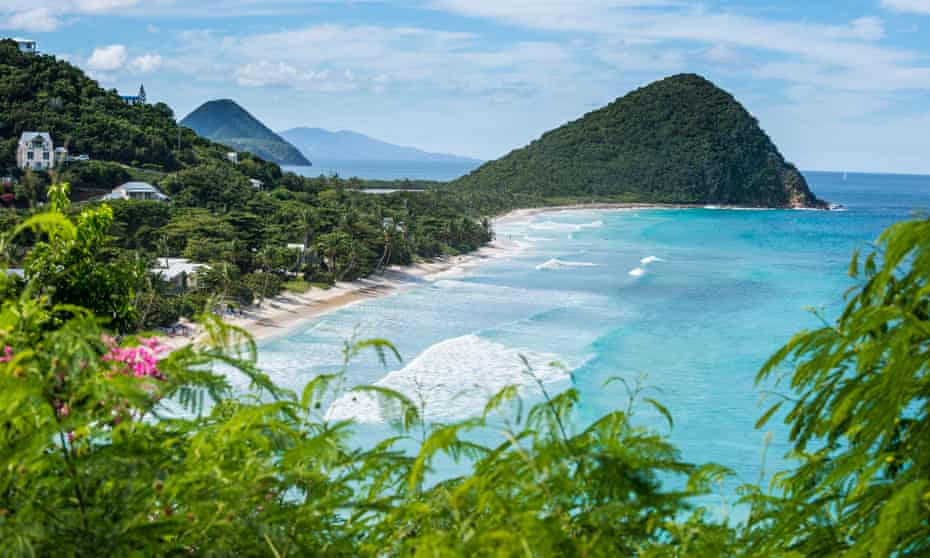
Tortola, British Virgin Islands. Sir Geoffrey Cox is representing some government ministers at the BVI commission of inquiry over allegations of corruption. Photograph: GmbH/Alamy

Sir Geoffrey Cox has earned at least £6m from his second job since he entered parliament, a Guardian analysis reveals, and records show that he skipped 12 recent votes on days when he was doing paid legal work.

The revelations came as Boris Johnson, the prime minister, took the unusual step of seeking to reassure the public that the UK was “not remotely a corrupt country” as the Conservative party continued to be engulfed in a slew of sleaze allegations.

Johnson pointedly did not defend the under-fire Cox, however, whose earnings since becoming a Conservative MP in 2005 have come under intense scrutiny in recent days following the revelations that he spent a month in the British Virgin Islands this year doing paid legal work.

Further questions about Cox’s commitment to his job as MP are likely to be raised after the Guardian also discovered that he had skipped at least 12 parliamentary votes on four days when he appeared by video link in a hearing for the British Virgin Islands (BVI) authorities this autumn.

In a press conference on Wednesday afternoon, Johnson stressed that MPs should always put their constituents’ interests first, and avoid paid lobbying.

Johnson added: “The rules say … you must put your job as an MP first and you must devote yourself primarily and above all to your constituents and the people who send you to Westminster, to parliament. The most important thing is, those who break the rules must be investigated and should be punished.”

Boris Johnson defends MPs’ second jobs but says they must follow rules – video


He was speaking a week after whipping Conservative MPs to back an amendment that sought to avoid punishment for Owen Paterson – a former cabinet minister found to have engaged repeatedly in paid lobbying – by tearing up the parliamentary standards system.

Labour’s deputy leader, Angela Rayner, condemned Johnson’s failure to say sorry for the Paterson fiasco. “Boris Johnson’s refusal to apologise proves that he doesn’t care about tackling the corruption that has engulfed Downing Street, his government and the Conservative party,” she said. “He thinks it’s one rule for him and another rule for everyone else.”

Johnson, speaking in Glasgow, where he was paying a brief visit to the Cop26 climate negotiations, said there should be “appropriate sanctions”, for MPs who were “not putting the interests of their constituents first”.

Cox, a former attorney general, originally came under scrutiny when the Daily Mail reported that he had been voting by proxy from the BVI where he was working during part of the pandemic, representing BVI authorities at an inquiry into allegations of corruption ordered by the Foreign Office.

He is now facing questions over his behaviour following MPs being obliged to vote in person again after June, including whether he prioritised his paid legal appearances over attending parliamentary proceedings.

Cox has been approached for comment on whether any absence to do paid work was permitted by the party.

A Whitehall insider who worked with Cox defended his continuing to work as a lawyer, saying for most MPs the role in parliament “makes them money” but that his “loses him money”.

Only last month Cox missed eight votes on the environment bill, one on a Labour fire-and-rehire bill, and one on the Independent Expert Panel Recommendations for Sanctions and the Recall of MPs Act 2015.

He was also not present for a Labour opposition day debate on squeezed living standards in September, and one on small businesses in October. On all the dates – 22, 20 and 19 October and 21 September – he was appearing at the public inquiry, according to videos on the British Virgin Islands Commission of Inquiry website. It is not clear from his video background where Cox was on these occasions.

On a fifth occasion, on 14 September, Cox appeared to be present in a parliamentary office while on video for the inquiry, leading to a complaint that he had breached the rules banning MPs from using Commons facilities for private work.

Footage appears to show Geoffrey Cox conducting legal work from Commons office – video

Making his first public comments on the affair on Wednesday, Cox did not deny that he had used his parliamentary office for paid work. He insisted that he “regularly works 70-hour weeks and always ensures that his casework on behalf of his constituents is given primary importance and fully carried out”.

A statement said: “As for the allegation that he breached the parliamentary code of conduct on one occasion, on 14 September 2021, by being in his office while participating in an online hearing in the public inquiry and voting in the House of Commons, he understands that the matter has been referred to the parliamentary commissioner and he will fully cooperate with her investigation. He does not believe that he breached the rules, but will of course accept the judgment of the parliamentary commissioner or of the committee on the matter.”

The whips’ office believe Cox did qualify for a proxy vote earlier in the year and that the chief whip, Mark Spencer, was told in advance he would be working on a big case abroad.

However, a source insisted it was not right that the government necessarily approved of his location and what he was doing. “It’s not our place to sanction MPs’ locations and travel plans, even if he was raking it in from a nice sunny island.”

Some Conservative MPs are furious with what they regard as liberties being taken by the “old guard”, including Cox. One predicted there would be “major trouble” with the whips’ office given the level of dissatisfaction, saying: “We’re heading for civil war.”

A spokesman for the chief whip said: “Around 330 Conservative MPs, and a majority of opposition MPs, were granted … proxy votes in order to assist with tackling the pandemic at a time when physical attendance in the Commons was actively discouraged by the parliamentary authorities. All MPs were expected to follow proceedings and participate virtually. They were also expected to continue performing their primary task of serving their constituents.”

The BVI inquiry videos show that Cox made arguments against “open registers” for politicians’ interests at the public inquiry in June.

He told the inquiry: “Let me be quite candid. There are real drawbacks to open registers. It becomes a political tool for every … many, many, frivolous complaints are made. It is a profound invasion into a legislator’s private life, because what happens is, as you can imagine, stories get written, minor infractions are written up to be morally shameful or even impute dishonesty.”

Cox is also facing a conflict of interest claim after it emerged that he had lobbied against imposing tougher financial regulations on the Cayman Islands just months after he gained more than £40,000 from legal firms based in the tax haven.

On Wednesday, Cox’s whereabouts remained a mystery, despite his statement. Staff at the MP’s office declined to respond to questions about where he was, or even whether he was in the UK.

Officials from the BVI commission of inquiry, for which Cox is representing some government ministers over allegations of corruption, said they did not know if or when he would return to the Caribbean.

In his most recent role in the inquiry, from 19 to 22 October, Cox appeared at hearing sessions for almost 30 hours in total. While he was listed in the official transcript as being there in person, on associated video footage Cox was shown appearing virtually, but with the background blurred, meaning it was difficult to know where he might be. An official from the inquiry said he was appearing remotely.

The post UK Scandal: MP Geoffrey Cox Made at least $10M from 2nd Job at BVI appeared first on The St Kitts Nevis Observer.

Caracas Cafe Culture Flourishes as Venezuela Dollarizes Economy

By Mayela Armas

CARACAS, Nov 10 (Reuters) – Restaurateurs Melanie Angulo and Marwin Hernandez have begun serving lattes and specialty coffee in a small storefront in downtown Caracas, joining a new wave of cafe entrepreneurs encouraged by creeping dollarization in Venezuela.

Cafes are springing up across the teeming capital, their owners hoping the currency change will spur green shoots in an economy scorched by seven years of severe recession and hyperinflation.

The new outlets slinging flat whites and cortados (espressos) are no longer just in upmarket eastern Caracas – with its leafy streets, expensive restaurants and large homes – but in the bustling streets of the city center.

“There are many cafes in the east of the city, but they are needed in the center,” Angulo said. “We all need a distraction.”

Although cafes have existed for years in the South American country, they have not been as abundant or glamorous in Caracas as in other capitals across South America, like Buenos Aires with their awnings and fine pastries.

Venezuelans, in fact, have typically drunk their coffee in their homes or in bakeries.

Now, however, about 20 cafes – from chains with their own coffee brands to small family shops – have opened this year in eastern, central and southern Caracas, while provincial cities such as Valencia and Barquisimeto are following suit.

“Coffee is all the rage,” said Pietro Carbone, a coffee shop owner and president of an academy that trains baristas, aiming to capitalise on consumer demand for higher quality. “Now there are young people pushing to make better coffee.”

The trend emerged after socialist President Nicolas Maduro decided at the beginning of 2019 to relax price controls and allow for widespread transactions in foreign currency, which had previously been forbidden.

The move has given Maduro’s government and businesses breathing space while grappling with a protracted recession and U.S. sanctions.

As stores with imported goods sold in dollars, known as bodegones, have flourished, the number of shops offering national and imported coffee has also multiplied.

COFFEE PRODUCTION STILL DOWN

Until the middle of last decade, Venezuela exported coffee but with the onset of the economic crisis production fell, amid price controls and nationalizations.

With the relaxation of economic regulations, some coffee growers have been able to increase the cost of a bag of beans, but the boom in coffee shops has yet to impact production, which is remains around 500,000 quintals per year, according to producers, just half of what it was 15 years ago.

“Less than 10% of coffee growers produce gourmet coffee, which is what the new stores use,” said Diolegdy Paez, director of Fedeagro, an organization of agricultural producers.

The cost of a coffee in the new shops ranges between $1.50 and $5, a price unheard of in Venezuela before dollarization and prohibitively high for many in a country where the minimum wage is equivalent to about $3 a month.

“Those who used to go to a restaurant now go to a cafe, because it gives them enjoyment at a lower cost,” said Ivan Puerta, president of the national chamber of restaurants.

Entrepreneurs and analysts say that while small businesses are able to operate because of the use of dollars and euros, deregulation is still insufficient to offset the broader economic collapse and weaknesses in basic services.

In Venezuela, aside from hyperinflation, business owners have to spend extra money on water tanks and power plants to fill in the gaps of decrepit public services.

After losing his job as a pilot during the coronavirus pandemic, Enrique Perrella opened a cafe in eastern Caracas in December that offers Italian coffee and desserts.

Since July, his store has had more visitors but he has yet to recover his investment. Nevertheless, he believes it is a good moment for Venezuelan entrepreneurs.

“We believe that we must invest,” he said.

Reporting by Mayela Armas with additional reporting by Tibisay Romero in Valencia Writing by Sarah Kinosian Editing by Mark Heinrich

The post Caracas Cafe Culture Flourishes as Venezuela Dollarizes Economy appeared first on The St Kitts Nevis Observer.

Cuba: United States, Facebook Helping to Foment Planned Nov. 15 Protests

HAVANA, Nov 10 (Reuters) – Cuba’s foreign minister on Wednesday said the United States was behind protests over human and civil rights planned for Nov. 15 in the communist-run country, and alleged U.S.-based social media platform Facebook was helping to promote them.

Dissidents on the island, organized under a Facebook group called Archipielago, in September requested permission to conduct the rallies. Cuban authorities denied their request, alleging protesters were working with the United States to overthrow the government.

Foreign Minister Bruno Rodriguez reiterated those allegations before a meeting of foreign diplomats in Havana, saying the United States had helped to underwrite and organize the protests in a bid to destabilize the government. read more

“U.S. policy…is doomed to failure. It is unfeasible. It hasn’t worked for 60 years. It does not work now (…) and it will not work in the future,” he said.

Rodriguez specifically called out the role of Facebook, saying dissidents organized in groups on the platform had violated the social media platform’s own policies, “altering logarithms, altering the geolocation mechanism to simulate the massive presence in Cuba of people with accounts that are known to reside outside our country, primarily in Florida and in the U.S. territory.”

Rodriguez said these practices violated both U.S. and international law.

“As has already happened, Facebook could perfectly be, with strict adherence to the laws, sued for these practices against Cuba.”

Neither the U.S. State Department nor Facebook, which recently changed its company name to Meta, immediately responded to a Reuters request for comment.

The recent expansion of web access in Cuba has given new ways for people to share criticisms and mobilize online.

The Facebook group behind the protests, Archipielago, says it has 31,501 members, more than half of which it says reside in Cuba.

Cuban dissident leader Yunior Garcia, of Archilpielago, could not be immediately reached for comment.

Cuba’s government has a monopoly on telecommunications, and regularly blames trolls and foreign agents on social media for stirring unrest.

The island nation suffered disruptions in access to internet and social media following large anti-government rallies in July, in an apparent bid to dampen further calls to protest . read more

Rodriguez also told diplomats that the United States last week had offered Cuba one million doses of vaccine against coronavirus. He criticized the offer as “opportunistic” and irrelevant, given that Cuba has already vaccinated nearly its entire population with home-grown drugs.

Instead, he made a counter-offer, suggesting that Cuba and the United States each offer a donation of their respective vaccines to a country more in need of them.

Reporting by Dave Sherwood and Nelson Acosta, additional reporting by Elizabeth Culliford in New York, Editing by Nick Zieminski and Alistair Bell

The post Cuba: United States, Facebook Helping to Foment Planned Nov. 15 Protests appeared first on The St Kitts Nevis Observer.

UK Taxpayer Funded Deportation Flight to Jamaica Left with Only 4 People

A deportation flight from the UK to Jamaica left with just four people on board, the Home Office has said.

Several last-minute legal challenges meant 33 people did not board Wednesday morning’s flight as planned.

Some of them were guilty of crimes such as murder and child sexual offences, Home Secretary Priti Patel said, adding it was “absolutely galling” they had been stopped from being deported.

Lawyers for some of those due to be on board said it wasted taxpayers’ money.

According to the Home Office, 13 of the 33 legal challenges were made in the 24 hours before the flight left the UK.

The sentences of the four people on board the flight totalled more than 16 years, the Home Office said.

Ms Patel said she made “no apology for removing foreign national offenders”.

The Home Office said extensive checks have been carried out to ensure none of the people deported were British citizens, British nationals or members of the Windrush generation.

A Movement for Justice survey of 17 Jamaicans detained for the flight found that 10 of them had lived in the UK since they were children.

Wednesday’s flight was reportedly the subject of protests by activists called “Stop the Plane”.

The plane, an Airbus A350-900 which has a maximum capacity of 350 passengers, departed Birmingham Airport at 01:20 GMT.

The Home Office said a new plan for immigration to change the law will make it easier to remove foreign national offenders and prevent them from taking advantage of what it calls a “broken system”.

The government regularly uses charter flights to deport people with serious criminal convictions or those who’ve received a custodial sentence of at least 12 months.

On average, a deportation flight costs around £200,000.

Since April 2020, 75 charter flights have returned people to other countries including Albania, Bulgaria, France, Germany, Hungary, Lithuania, Nigeria, Poland, Romania and Spain.

There were more than 5000 enforced returns in the year ending June 2020 and around half of these were to EU countries.

Jamaica represented 1% of the government’s overall enforced returns in 2020.

The post UK Taxpayer Funded Deportation Flight to Jamaica Left with Only 4 People appeared first on The St Kitts Nevis Observer.

Haiti Water Shortage: ‘We Pray for Rain Every Day’

BBC- A fuel and water shortage brought about by gangs blocking the access roads to distribution terminals is throwing Haiti into further chaos.

Residents of the capital Port-au-Prince say they cannot get hold of drinking water as water pumps have stopped running due to the lack of petrol.

Deliveries of bottled water have also been disrupted meaning that many residents have to rely on rain water.

“We pray every day that it rains,” one woman told Reuters news agency.

No fuel

National Police Chief Frantz Elbé said on Tuesday that measures taken so far to allow for the safe distribution of fuel had failed to work.

Mr Elbé said that the police had set up a security corridor from the Varreux terminal in Port-au-Prince and that goods such as rice, cooking oil and cement were getting through to consumers.

But tanker lorries carrying fuel were not being allowed to pass by gang members blocking the entrances to the port.

Armed police ride in the back of a truck after the streets of the Haitian capital Port-au-Prince.

AFP

Haiti gangs

  • 162number of gangs reportedly active in Haiti
  • 3,000estimated number of gang members
  • 20,000estimated number of Haitians who have fled their homes due to gang violence

Source: BBC Monitoring

1px transparent line

Haitian gangs have long extorted delivery drivers, but the situation has escalated since the assassination by mercenaries of President Jovenel Moïse in July.

In the power vacuum following the president’s killing, gang leaders have become more brazen and stepped up their criminal activities, which include kidnappings for ransom and extortion.

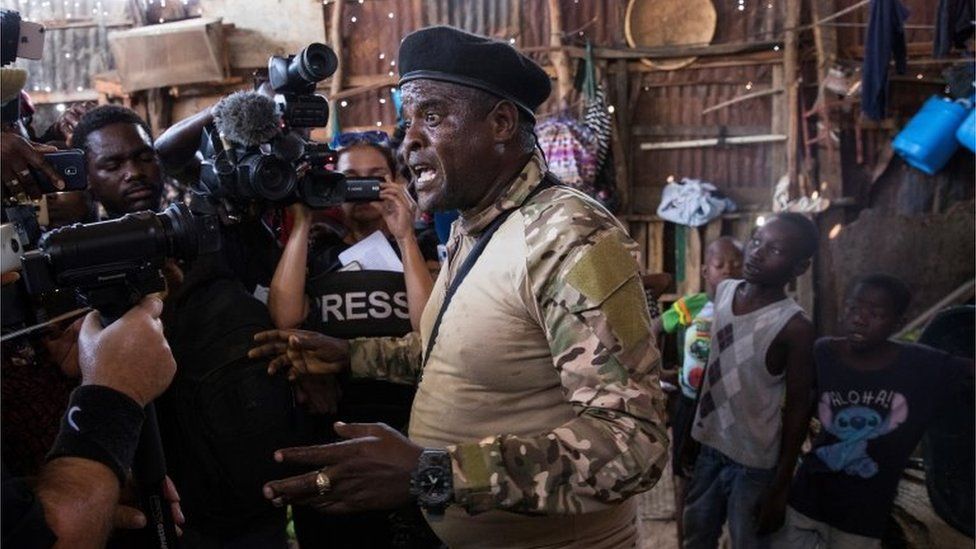
Jimmy Chérizier, better known under his alias, Barbecue, is one of them.

The former police officer, who leads an alliance of nine of the most powerful gangs in Port-au-Prince, demonstrated his power last month when his followers opened fire at a monument just as Prime Minister Ariel Henry was about to lay a wreath.

The leader of Haiti"s main armed gang, Jimmy Cherizier, alias Barbecue, speaks to the media during a tour of the La Saline neighbourhood, in Port-au-Prince, Haiti, 03 November 2021.
Jimmy Chérizier holds news conferences and gives the media tours of areas he controls

The prime minister and his security detail fled, and surrounded by heavily armed masked men, Barbecue made a show of laying a wreath himself.

In a news conference last month, he said that his criminal alliance, G9 and Family, was behind blockades around the fuel terminal.

He said he would not allow fuel to be delivered until Prime Minister Ariel Henry stepped down.

The fuel shortages have been so severe that they have threatened the lives of patients in hospitals, which rely on fuel-powered generators to run life-saving equipment.

But they have had also had a domino effect on many other key goods which rely on lorry drivers for delivery or on fuel for production.

Guito Edouard, who leads Haiti’s Drinking Water Directorate, says some gang members have grasped people’s need for water, but others have not: “We have large infrastructures hijacked by armed groups. We use various social strategies to explain to them that water is a public need. Some understand but others do not accept the message.”

The post Haiti Water Shortage: ‘We Pray for Rain Every Day’ appeared first on The St Kitts Nevis Observer.

Cop26: World on Track for Disastrous Heating of More Than 2.4C: Report

Research from world’s top climate analysis coalition contrasts sharply with last week’s optimism

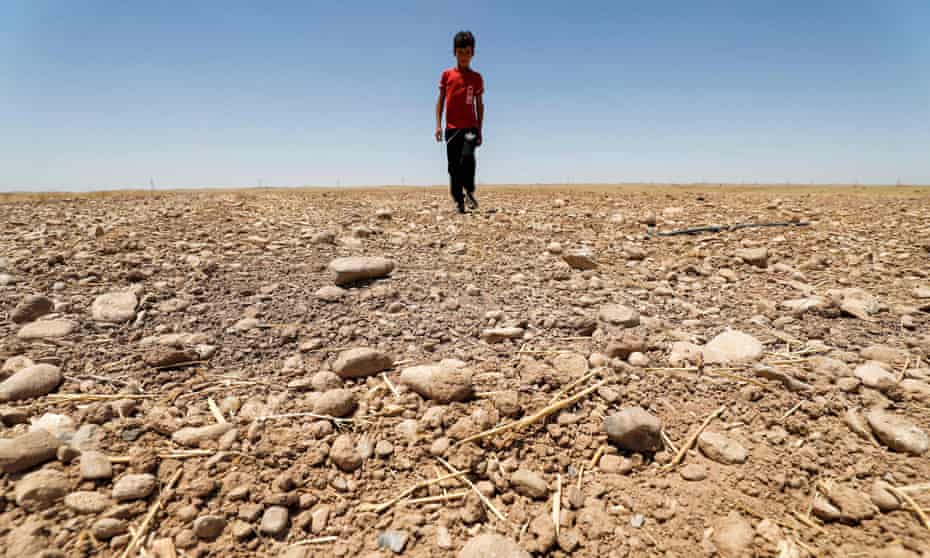
A boy walks through a dried up agricultural field in eastern Iraq
A boy walks through a dried up field in eastern Iraq, which suffered a blistering summer heatwave and drought this year. Photograph: Ahmad Al-Rubaye/AFP/Getty Images
in Glasgow
Guardian


The world is on track for disastrous levels of global heating far in excess of the limits in the Paris climate agreement, despite a flurry of carbon-cutting pledges from governments at the UN Cop26 summit.

Temperature rises will top 2.4C by the end of this century, based on the short-term goals countries have set out, according to research published in Glasgow on Tuesday.

That would far exceed the 2C upper limit the Paris accord said the world needed to stay “well below”, and the much safer 1.5C limit aimed for at the Cop26 talks.

At that level, widespread extreme weather – sea-level rises, drought, floods, heatwaves and fiercer storms – would cause devastation across the globe.

Under the 2015 Paris climate accord, nations committed to restricting global temperature rises to ‘well below’ 2C
What is Cop26 and why does it matter? The complete guide


The estimate stands in sharp contrast to optimistic forecasts published last week that suggested heating could be held to 1.9C or 1.8C, thanks to commitments announced at the talks, now in their second week and scheduled to end this weekend.

Those estimates were based on long-term goals set out by countries including India, the world’s third-biggest emitter, which is aiming for net zero emissions by 2070.

By contrast, the sobering assessment of a rise of 2.4C from Climate Action Tracker (CAT), the world’s most respected climate analysis coalition, was based on countries’ short-term goals for the next decade.

Bill Hare, the chief executive of Climate Analytics, one of the organisations behind CAT, told the Guardian: “We are concerned that some countries are trying to portray [Cop26] as if the 1.5C limit is nearly in the bag. But it’s not, it’s very far from it, and they are downplaying the need to get short-term targets for 2030 in line with 1.5C.”

Emissions will be twice as high in 2030 as they need to be to stay within 1.5C, based on promises made in Glasgow, CAT found. Scientists have warned that beyond 1.5C, some of the damage to the Earth’s climate will become irreversible.

The analysts also found a chasm between what countries have said they will do on greenhouse gas emissions and their plans in reality. If current policies and measures are taken into account, rather than just goals, heating would rise to 2.7C, based on the CAT analysis.

The findings should serve as a “reality check” to the talks, said Niklas Höhne, one of the authors. “Countries’ long-term intentions are good, but their short-term implementation is inadequate,” he told the Guardian.

The 197 parties to the 2015 Paris agreement were asked to come to Glasgow with two aims: a long-term goal of reaching global net zero emissions around mid-century; and shorter-term national plans, known as nationally determined contributions (NDCs), pegging emissions reductions to 2030. Scientists say greenhouse gas emissions must fall by about 45% this decade for global temperatures to stay within 1.5C of pre-industrial levels.

Countries responsible for about 90% of global emissions have signed up to net zero goals, mostly by around 2050 for developed countries, rising to 2060 for China and 2070 for India, but the NDCs for actions in the next decade do not match up. The climate responds to the cumulative carbon in the atmosphere, so if emissions are high enough in the next two decades the world could surpass the 1.5C limit even if carbon reaches net zero later.

“It’s great that countries have long-term net zero targets, but they need to close the gap with short-term measures,” said Hare.

The first week of the Cop26 talks was dominated by a rush of announcements, including commitments on preserving forests, private sector finance for clean energy, and countries phasing out coal. Some of these quickly started to unravel as countries appeared to renege or clarify some of their commitments.

‘We’re in this together’: why I’m protesting at Cop26 – video

At the start of the second week of the fortnight-long talks, sharp rifts are appearing between countries that want tougher action, specifically to force countries to revise their NDCs annually if they are not in line with 1.5C, and others wanting to stick to the Paris timetable of five-yearly revisions. There are also disputes about how countries should monitor emissions, and over climate finance for poor countries.

Hare noted there was no contradiction among the varying assessments, published last week by Melbourne University and the International Energy Agency, as they came to similar conclusions based on long-term goals. CAT also found in its “optimistic scenario” that if all targets countries had promised were fully met, temperatures would rise by 1.8C.

The UN environment programme updated its analysis of the “emissions gap” between the cuts needed to stay within 1.5C and those offered by governments. Unep found that with the recently announced pledges by China, Saudi Arabia and others, temperatures were likely to rise by between 1.9C and 2.1C, but like the IEA and Melbourne estimates, that depended on long-term pledges being fully implemented.

From conference of the parties to climate finance to methane and mitigation, here are the terms to get to grips with
NDCs, climate finance and 1.5C: your Cop26 jargon buster

Hare said many of the long-term goals countries had set out lacked credibility. He pointed to Brazil, Australia and Russia. “We are concerned that there is not a seriousness of purpose at Cop26. It’s very hypothetical, getting to net zero in 2050,” he said.

Höhne said countries must agree to revise their NDCs every year if they were found insufficient, adding: “If we came back every five years that would be a very bad choice. If countries agree to come back every year, they would have a chance of closing the gap.”

Jennifer Morgan, the executive director of Greenpeace International, said: “This new calculation is like a telescope trained on an asteroid heading for Earth. It’s a devastating report. We have until the weekend to turn this thing around. That means countries agreeing how they’re going come back next year and every year after that until the gap to 1.5C is closed. The ministers shouldn’t leave this city until they’ve nailed that.”

A Cop26 spokesperson said: “We know that the window to keep 1.5C alive is closing but the Intergovernmental Panel on Climate Change is clear that it is still achievable. As today’s reports make clear, we’ve seen genuine progress in the first week of Cop26, but we have a lot more to do.”

Labour’s Ed Miliband, the shadow business secretary, said: “The test of Cop26 has always been what concrete commitments it would deliver by 2030, the decisive decade to keep 1.5C alive. This report is an important reality check on the government’s attempt to greenwash Glasgow.”

Green party co-leader Adrian Ramsay said: “Today was the day the sugar coating fell off the Cop26 talks to reveal the bitter pill that world leaders are going to force us to swallow if they don’t take much stronger action. This report shows that action in the next 10 years is vital. Long term targets, promises and non-existent technofixes, with no actual policies to get us there, are worth nothing. It shows that most global leaders have been asleep at the wheel. This is their wake-up call.”

pics

The post Cop26: World on Track for Disastrous Heating of More Than 2.4C: Report appeared first on The St Kitts Nevis Observer.

Europe Passes U.S. in New COVID-19 Case, Germany Gets Deaths Warning, World Covid Summary

US Case Numbers Going Down, Europe Going Up

boy looking at world map

Coronavirus cases have crept up in the 27 countries of the European Union and the UK, finally overtaking the U.S. during the past week for the number of daily cases being reported, according to the Wall Street Journal.

Based on a 7-day average, Europe recorded 78,000 cases a day, which represents about 152 cases for every 1 million residents. During the same time, the U.S. recorded 49,000 daily cases, or about 150 per 1 million residents.

“It does seem like we are at a tipping point in terms of infection numbers,” Flavio Toxvaerd, an infectious disease economics expert at the University of Cambridge, told the newspaper.

The surge looks similar to what the U.S. faced in June as cases peaked in states in the South and West, the newspaper reported. Europe last reported more cases in the U.S. in the spring when countries were first developing their coronavirus responses and testing strategies. Europe’s test positivity rate is increasing as well, which indicates that the virus is spreading even as testing has increased.

The resurgence in cases could be linked with travel and commerce as internal borders within the EU have reopened, according to Travel + Leisure. Socializing at bars and restaurants has also led to an uptick, which has prompted European officials to step up coronavirus-related measures by targeting specific towns and social activities.

“What all countries are trying to do now, the ones that are in trouble, is buy time to try to survive the winter,” Linda Bauld, a public health professor at the University of Edinburgh, told the Wall Street Journal.

“That means getting the case numbers down from the level they are now to allow their systems to be able to function,” she said.

The increase in cases is beginning to lead to an increase in hospital admissions, the newspaper reported. In 19 countries in Europe, the number of hospitalized patients in early October has reached about one-fourth of the number seen in April. At the moment, health officials are detecting cases earlier than before and can provide treatment sooner, and hospitals are better trained to handle COVID-19 patients.

Even still, countries are enforcing new restrictions to stem the increase. Spain declared a state of emergency on Friday, which will restrict travel in Madrid, according to The Associated Press. The UK also announced a new three-tier restriction system on Monday, with the toughest rules focused on Liverpool, according to the BBC.

The regional approach is meant to “seize this moment now to avoid the misery of a national lockdown,” Boris Johnson, prime minister of the UK, said during his announcement.

===================================================

Germany coronavirus: Record rise prompts warning of 100,000 deaths

By Jenny Hill
BBC News Leipzig, Germany

Of the 18 patients on this Covid ward in Leipzig, 14 were unvaccinated
One of Germany’s top virologists has warned that a further 100,000 people will die from Covid if nothing’s done to halt an aggressive fourth wave. Case numbers have soared and Germany on Wednesday registered its highest rate of infection since the pandemic began, with almost 40,000 cases in a day.

“We have to act right now,” said Christian Drosten, who described a real emergency situation.

Doctors in the intensive care Covid ward at Leipzig University Hospital warn this fourth wave could be the worst yet.

One patient here, a woman in her 20s, has just given birth. Her baby is fine, but staff say they don’t know whether she’ll survive.

This state of Saxony has the highest seven-day infection rate in Germany at 459 cases per 100,000 people. The national rate is 232.

It also has the lowest take-up of vaccine: 57% of the population here have been immunised.

There are 18 patients on the Covid ward. Just four were vaccinated.

“It’s very difficult to get staff motivated to treat patients now in this fourth wave,” says Prof Sebastian Stehr, who heads the department. “A large part of the population still underestimates the problem.”

=====================================================

 Here’s what you need to know about the coronavirus right now:


Fewer than 1 mln U.S. kids get COVID-19 shot in first eligible week, White House says

More than 900,000 U.S. children aged 5 to 11 are expected to have received their first COVID-19 shot by the end of Wednesday, the White House said, as the government ramped up vaccinations of younger children. The United States began administering Pfizer/BioNTech’s COVID-19 vaccine to children ages 5 to 11 on Nov. 3.

The seven-day average of total COVID-19 cases in the United States was flat at about 73,300 over the past week, CDC Director Dr Rochelle Walensky said during the briefing, with the hospitalization rate also flat at 5,000 a day. The U.S. seven-day average of daily deaths fell 11% to about 1,000 per day. read more

France experiencing start of fifth wave of COVID epidemic

France is at the beginning of a fifth wave of the coronavirus epidemic, Health Minister Olivier Veran said on Wednesday as his ministry registered 11,883 new cases, the second day in a row with a new case tally over 10,000. New cases have seen double-digit percentage increases week-on-week since around mid-October.

“Several neighbouring countries are already in a fifth wave of the COVID epidemic, what we are experiencing in France clearly looks like the beginning of a fifth wave,” Veran said on TF1 television, adding the circulation of the virus was accelerating. read more

Moderna COVID-19 vaccine patent dispute headed to court, U.S. NIH head says

U.S. National Institutes of Health scientists played “a major role” in developing Moderna Inc’s COVID-19 vaccine and the agency intends to defend its claim as co-owner of patents on the shot, NIH Director Dr Francis Collins told Reuters on Wednesday.

In a story first reported by the New York Times on Tuesday, Moderna excluded three NIH scientists as co-inventors of a central patent for the company’s multibillion-dollar COVID-19 vaccine in its application filed in July.

Moderna, in a statement emailed to Reuters, acknowledged that scientists at NIH’s National Institute of Allergy and Infectious Diseases (NIAID) played a “substantial role” in developing Moderna’s messenger RNA (mRNA) vaccine, but the company said it disagrees with the agency’s patent claims. read more

U.S. brokers J&J-COVAX deal to send vaccines to conflict zones, Blinken says

U.S. Secretary of State Antony Blinken said on Wednesday the United States has brokered a deal between Johnson & Johnson and the COVAX vaccine-sharing program for the delivery of the company’s COVID-19 vaccine to people living in conflict zones.

A senior administration official said the deal means doses of J&J’s vaccine can be distributed in conflict zones and other humanitarian settings by organizations other than governments, which have in the past been restricted by liability concerns. Under the deal, 300,000 doses of J&J’s single-shot vaccine would be made available to front-line humanitarian workers and U.N. peacekeepers, the official said. read more

Severe sleep apnea tied to severe COVID-19

The risk of severe illness from COVID-19 is higher in people with obstructive sleep apnea and other breathing problems that cause oxygen levels to drop during sleep, researchers say.

While the chance of being infected did not increase with the severity of their problems, people with higher scores on the “apnea-hypopnia index” – a measure of the severity of their sleep-related breathing problems – had higher odds of needing to be hospitalized or dying from COVID-19, doctors Cinthya Pena Orbea and Reena Mehra of the Cleveland Clinic and colleagues reported on Wednesday in JAMA Network Open. It is not clear if treatments that improve sleep apnea, such as CPAP machines that push air into patients’ airways during sleep, would also reduce the risk of severe COVID-19, said Pena Orbea and Mehra. read more

Compiled by Karishma Singh

The post Europe Passes U.S. in New COVID-19 Case, Germany Gets Deaths Warning, World Covid Summary appeared first on The St Kitts Nevis Observer.