Category Archives: headline

Havana Syndrome: Blinken Appoints Senior Team to Investigate, Resolve Issue

By Nicole Gaouette, Kylie Atwood and Jennifer Hansler, CN

(CNN) Secretary of State Antony Blinken announced that he has appointed two diplomats to lead efforts to address the anomalous health incidents known as Havana Syndrome that have affected diplomats, their families and other federal employees.

Jonathan Moore will serve as the new head of the State Department’s health Incident Response taskforce, Blinken announced Friday. He also said that Ambassador Margaret Uyehara, a career foreign service office with three decades of experience, will serve as senior care coordinator for those affected by the mysterious attacks.

The announcement comes almost two months after the last person who held the coordinating post left the department, which led to some concern among lawmakers and diplomats about how much effort the department was putting into the ongoing problem.

Cases continue to rise worldwide, including a recent incident that sickened a senior member of CIA Director Bill Burns’ staff while on a trip to India. The intelligence community has yet to reach a consensus on who is behind the incidents, more than 200 of which have been reported worldwide, according to Burns.

‘Profound harm’

On Wednesday, Blinken emphasized the administration-wide effort to address the riddle of the mysterious attacks, which have struck US government staff at embassies from Asia to Latin America and prompted criticism from lawmakers and diplomats about the administration’s response.

“All of us in the US government, and especially we at the State Department are intently focused on getting to the bottom of what and who is causing these incidents, caring for those who’ve been affected and protecting our people,” Blinken told reporters at the State Department.

“These incidents have left our colleagues with profound harm. They’ve experienced serious physical consequences, including persistent headaches and hearing loss. They’ve also experienced psychological harm, including trauma, anxiety, depression,” said Blinken, who has met with victims of the attacks, including during his recent trip to Colombia. “They’ve been affected, their careers have been affected, their families and colleagues have been affected too.”

Blinken also announced a new partnership with Johns Hopkins University to get medical assistance to the diplomats and their family members impacted.

“If we want the State Department to be as strong as it can me, and the most effective advocate for our interests and values around the world we have to take care of the people who serve here,” Blinken said.

The US government has not determined what or who is causing these incidents. Adam Schiff, chairman of the House Permanent Select Committee on Intelligence, said Wednesday that the US is “marginally closer” to figuring out the nature and cause of the mysterious attacks on diplomats and other US government workers known as “Havana Syndrome” and said he has “profound questions” about what is causing symptoms associated with the attacks.

“I would say that we are marginally closer,” Schiff said in an interview at the Aspen Security Forum. “I don’t feel that I have a lot more optimism than that. I think we’re making progress. But it has been very slow and much slower than, certainly, I think any of us like to see. It’s not for lack of effort.”

Blinken, who has recently met with some diplomats affected by the mysterious illness, said that getting to the bottom of the incidents this an “urgent priority” for the Biden administration and the entire US government. “You cannot help but be personally affected when you hear directly from our folks,” Blinken said.

In early October, President Joe Biden signed the bipartisan HAVANA Act — or Helping American Victims Afflicted by Neurological Attacks Act — into law. The legislation, which passed both the Senate and the House unanimously, commits the US government to boosting medical support for officials who have been affected by the strange incidents.

It also requires the CIA and the State Department to create regulations “detailing fair and equitable criteria for payment” to victims suffering from traumatic brain injuries and mandates reports to Congress about how the agencies are using their new funding authorities, including the number of employees and dependents who received payments.

Lawmaker concern

But lawmakers remain concerned that the State Department has been slow to both respond to officials who have been sickened by Havana Syndrome and to share information with Congress, leading a bipartisan group of 18 members of Congress to write Blinken on Tuesday urging swifter action.

The lawmakers expressed concern that the department has been slow to “sustain high-level diplomatic engagement to deter this threat” and urged the secretary to “take immediate steps to begin to rectify these trends.”

They called on the State Department to announce a top official to lead the department’s response to the incidents, improve interagency coordination and information sharing to get State Department officials the best care, rapidly implementing the HAVANA Act and regularizing diplomatic engagement on the threat with allies and adversaries.

On Friday, Sen. Jeanne Shaheen, a New Hampshire Democrat who has championed victims of Havana Syndrome, said she welcomed Blinken’s announcement as “a positive step forward for US personnel and their family members who for years have suffered from serious health effects due to directed energy attacks.”

“While we cannot necessarily see their injuries, they are real and deserve the same attention and urgency as wounds that are visible,” Shaheen said. “These individuals and their loved ones were injured while serving their nation — the US owes them every resource to get well and stay healthy, which is why the responsibilities of the Senior Adviser to the Health Incident Response Task Force are so critical.

“I will do everything in my power to assist Ambassadors Jonathan Moore and Margaret Uyehara and ensure the concerns of those targeted are heard, that they receive timely and comprehensive care and that every measure is taken to uncover the causation of these attacks.”

Blinken praised Moore and Uyehara for the experience they’ll bring to their new roles.

“Jonathan brings decades of experience who are grappling with complex policy challenges,” Blinken said, mentioning Moore’s postings “around the globe from Bosnia to Libya” and his work on portfolios ranging from Russia policy to engagement with the United Nations.

Uyehara has “already gotten to work advocating for those affected, including assisting them with workers compensation and the benefits process,” Blinken said. “She’s compassionate, she’s effective. We’re grateful for her and her commitment to this vital issue.”

In remarks, the two officials stressed that they would bring respect and compassion to their roles — a seeming acknowledgment of complaints from those affected that their concerns were not being taken seriously.

“The most important element of this task is to provide respect, trust, support, information, and compassion to everyone — foreign service, civil service, and family members affected by these incidents,” Moore said.

“The Task Force and I believe in respect those who come forward and reporting incidents and will be relentless in our efforts to provide them the care that they need, just as we take measures to educate and protect our broader workforce,” he said, noting that “every report will be taken seriously.”

Uyehara emphasized that “nothing is more important than the safety and security of our personnel both overseas and domestically.”

“We will continue to work tirelessly to provide the highest possible level of assistance and to ensure that those who are injured are treated with the empathy and compassion that they so richly deserve,” she said.

The post Havana Syndrome: Blinken Appoints Senior Team to Investigate, Resolve Issue appeared first on The St Kitts Nevis Observer.
Australia ranked last on climate policy in major international report

Australia has been ranked last among 60 countries on climate change policy in an annual report that dings the nation's performance in every major category.

Overall, Australia dropped four places to 59th in the 2022 Climate Change Performance Index report, which warned even the best-ranked countries in the world were still not doing enough to stave off dangerous climate change.

Australia figured poorly in all four categories — greenhouse gas emissions, renewable energy, energy use and climate policy — but it was on both national and international policy that it copped the biggest battering.

READ MORE: Obama takes swipe at Russia and China for 'lack of urgency' on climate

Among the G20, South Korea, Canada and Saudi Arabia ranked below Australia overall, with Denmark, Sweden, Norway and the United Kingdom maintaining their places at the top of the list.

The top three places were left blank to signify no country was doing enough across all areas.

Experts contributing to the CCPI report, which is compiled by Climate Action Network, Germanwatch and New Climate Institute, said Australia's Technology Investment Roadmap was not enough to decarbonise the economy and promote renewable energy.

It said despite a growing renewables industry, Australia had "failed to take advantage of its potential".

"Despite public support for a net zero target, there is currently no national plan for transitioning to renewable energy (a backdrop for the very low rating for the National Climate Policy indicator), with the policy uncertainty undermining investment and causing energy supply concerns," the report stated.

"The country's lack of domestic ambition and action has made its way to the international stage."

READ MORE: Fossil fuel lobby bigger than any nation at climate summit

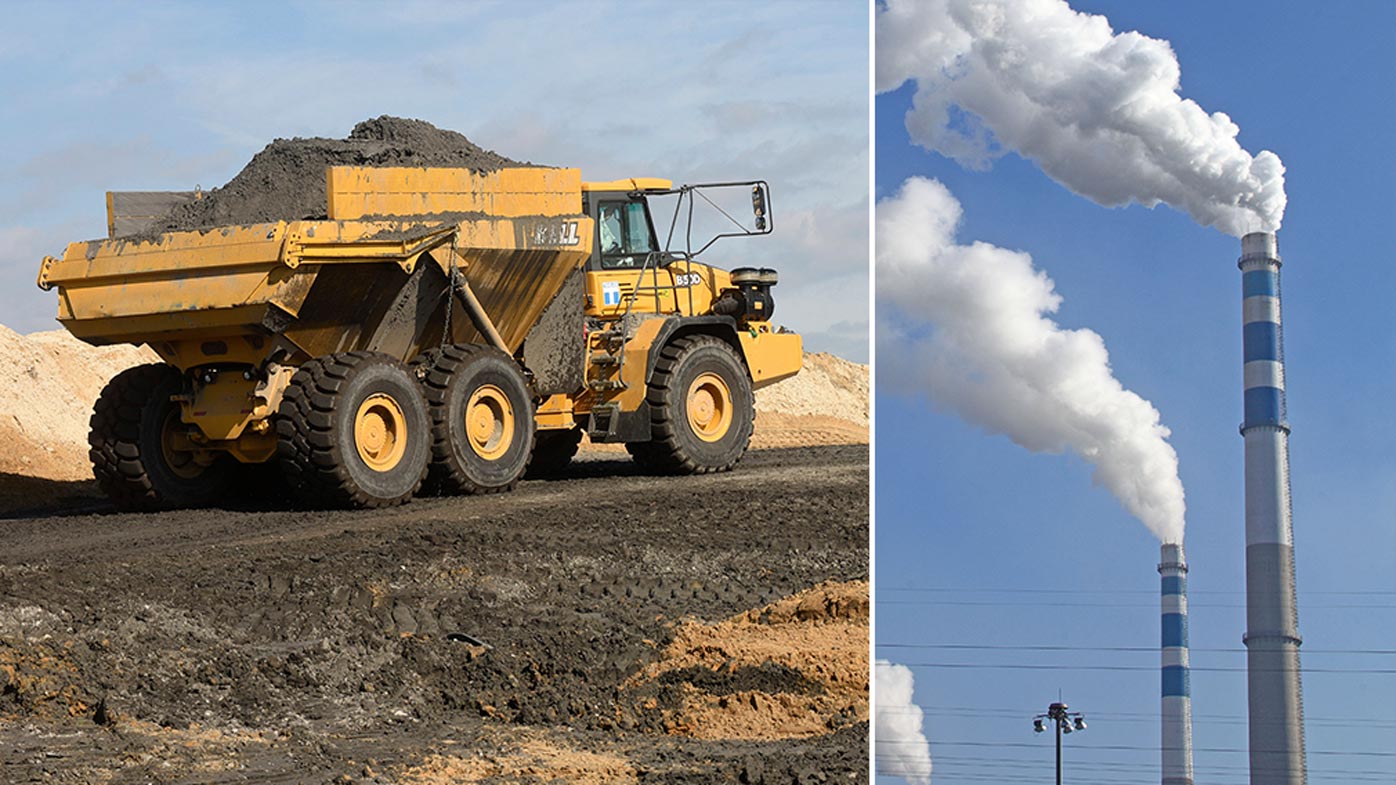
Germanwatch low-carbon strategies and energy senior advisor Jan Burck said as one of the world's largest exporters of coal, Australia was "really part of the problem".

"They really get zero points for national and for international policy from the experts from Australia," he said, at a press conference held at the COP26 United Nations climate summit in Glasgow. 

"And they're proof here at this conference that they deserve it. 

"They really blocked a lot of things and are not willing to change that in this moment."

Australia's highest ranking was 49th for energy use and its best sub-category ranking "medium", for greenhouse gas emissions per capita trends.

It has been a dynamic year for climate policy thanks to COP26 in Glasgow, more ambitious 2030 emissions targets from a number of major polluters and the re-emergence of the US on the world stage under President Joe Biden.

READ MORE: Fears exclusive Melbourne Cup party is a 'super spreader' event

Amidst this backdrop, Prime Minister Scott Morrison's government has committed to reaching net zero emissions by 2050 but failed to update the nation's 2030 target as called for in the Paris Agreement and declined to sign on to international commitments to phase out coal and reduce methane emissions.

"COP26 was squarely focused on increasing short-term action and the Australia Government won't even consider improving its weak, dated emission reduction target for 2030," Australia Institute climate and energy program director Richie Merzian said, in a statement.

"No wonder Australia is slipping further in the global rankings."

In a video shared to Twitter before leaving COP26, Industry, Energy and Emissions Reduction Minister Angus Taylor said Australians were doing "extraordinary things" to bring down emissions, "not just in our own country but across the world, across a whole range of technologies".

READ MORE: What countries produce the most greenhouse gas emissions?

https://twitter.com/AngusTaylorMP/status/1457179062376435714

"Our focus is on bringing down the cost of low emissions technologies, not wiping out industries," he told SBS earlier in the week.

A spokesman for the minister attacked the ranking as lacking credibility.

"It employs a subjective, non-transparent, and non-replicable methodology for ranking countries' performance, promoted by advocacy organisations to suit their own agendas," he said, in a statement.

Australian Conservation Foundation climate and energy program manager Gavan McFadzean said that while 130 countries had increased their short-term emissions reduction ambitions, Australia hadn't, "relegating us to the bottom of the pack with the likes of Saudi Arabia and Iran".

"Although renewable energy is booming in Australia, all the work has been done by state and territory governments and the private sector, which is why Australia is rock bottom on the table of national climate policies," he said, in a statement.

About 130 world leaders met in Glasgow last week for what host Britain says is the last realistic chance to keep global warming to 1.5 degrees above pre-industrial levels — the goal the world set in Paris six years ago to stave off catastrophic climate change. 

The conference continues this week.

Earth has already warmed 1.1 degrees. Current projections range from a 1.9-degree warming by the end of the century to a 2.7-degree increase, depending on whether analysts take into account 2050 net-zero targets or the more immediate 2030 pledges.

The Morrison government on Monday announced a $250 million Future Fuels investment fund aimed at expanding public electric vehicle charging and hydrogen refuelling infrastructure and household smart charging, while looking for greener solutions for heavy, long-distance and commercial vehicles.

Mr Morrison claimed claimed Labor's proposed electric vehicle policy in 2019 would "end the weekend".

He will reportedly announce a $1 billion Low Emissions Technology Commercialisation Fund on Wednesday, designed to encourage investment in Australian companies developing emerging low-emissions technology.

UNICEF Calls for an End to Abductions in Haiti

The United Nations Children Emergency Fund (UNICEF) is calling for an end to the abductions of women and children in Haiti, saying that for the first eight months of this year, kidnappings have already exceeded last year’s total.

“Nowhere is a safe place for children in Haiti,” said Jean Gough, UNICEF Regional Director for Latin America and the Caribbean.

“Whether it’s on their way to school, at home or even at church, girls and boys are at risk of being kidnapped anywhere, at any time of the day or night. It’s every parent’s worst nightmare.”

Figures released by UNICEF based on official sources, indicate show that 71 women and 30 children have been kidnapped in the first eight months of this year, compared to 59 women and 37 children for the entire 2020. Most kidnappings take place in the capital.

“Criminal gangs use children as bargaining chips and earn money from parents’ love for their children,” Gough said, adding it is odious.

“These acts of violence have a lasting impact on kidnapped parents and children, captivity always causes trauma as they often witness or suffer humiliation, threats and in some cases violence.”

To improve incident reporting and assistance to children in need, including kidnapped children, UNICEF says it is supporting the national child protection agency “Institut du Bien-être Social et de Recherches”, in reactivating its free hotline to be used with a telephone hotline of the Brigade for the Protection of Minors.

UNICEF said it was urging all relevant actors to refrain from targeting children and women and calls on the government to take action to combat gang violence against children.

Meanwhile, the fate of 17 United States and Canadian missionaries, including, remains unclear after their abductors demanded US$17 million for their release or that they would be killed.

The leader of the 400 Mawozo gang that police say is holding the missionary group released a video late last month outlining the demands for their release.

“I swear by thunder that if I don’t get what I’m asking for, I will put a bullet in the heads of these Americans,” said Wilson Joseph who was dressed in a blue suit, carrying a blue hat and wearing a large cross around his neck.

In addition to kidnappings, the criminal gangs are also blamed for blocking gas distribution terminals and hijacking supply trucks, which officials say has led to a shortage of fuel.

CMC

The post UNICEF Calls for an End to Abductions in Haiti appeared first on The St Kitts Nevis Observer.
Belize Takes T&T to Court Over Alleged Illegal Brown Sugar Imports

Loop- The Sugar Association of the Caribbean (SAC) has commended the Belize government for its decision to go before the Trinidad-based Caribbean Court of Justice (CCJ) alleging that Trinidad and Tobago failed to comply with its obligations under the Treaty of Chaguaramas (RTC) that governs the regional integration movement (CARICOM).

“This case was not primarily about compensation, it is about ensuring that protections set out in the Treaty, and reinforced by numerous decisions of COTED (Council of Trade and Economic Development), are abided by. Otherwise, the CSME (CARICOM Single Market and Economy) would have very little relative value for any of its members,” said SAC chairman R. Karl James.

Under the RTC, CARICOM states are required to impose a 40 per cent Common External Tariff (CET) on brown sugar imported from sources outside the Caribbean region.

Belize contends that it has evidence to demonstrate that between November 2018 to June 2020 brown sugar which was produced outside the Caribbean region, entered the Trinidad and Tobago market without the 40 per cent CET being imposed.

Trinidad and Tobago deny that it has permitted the importation of extra-regional brown sugar from any extra-regional territory without the imposition of the 40 per cent CET.

Last week, the CCJ, which sat in its Original Jurisdiction, which is an international court with exclusive jurisdiction to interpret and apply the rules set out in the RTC and to decide disputes arising under it, heard the arguments on the matter and has reserved its judgement to a later date.

The SAC said that over the last three years, it has “repeatedly raised its concerns about this practise that has drastically diluted the value and demand of the CARICOM market for regional sugar producers”.

It said that the attorneys representing the Belize government provided evidence of more than 4000 metric tons of sugar imported without any record of CET being paid.

“This evidence was underscored by a dramatic fall-off in prices for brown sugar during the same period. SAC has long contended that the level of pricing demanded by sugar importers to Trinidad and Tobago as well as some other CARICOM member states, could not be supportive of full implementation of the CET, which is set at 40 per cent of the CIF value of sugar entering from extra-regional sources.”

The SAC also indicated that the CCJ heard that as the governments focus on the serious issues confronting the world on dangerous climate increases at the COP26 meeting in Glasgow, it is fitting to focus on sugar cane, a regenerative agricultural crop that not only is a significant sequester of carbon but also the source for the production of green, renewable electricity across the region.

“Most global industries enjoy the benefits of protected domestic and regional markets. Protection of the brown sugar market as set out in the RTC is one small contribution to maintaining this industry’s viability and one that SAC believes should be strictly maintained and enforced,” the SAC added.

The post Belize Takes T&T to Court Over Alleged Illegal Brown Sugar Imports appeared first on The St Kitts Nevis Observer.

Brisbane teen fighting for life after alleged assault

A Brisbane teenager is fighting for his life in hospital after police found him unconscious and in a critical condition on the side of a road.

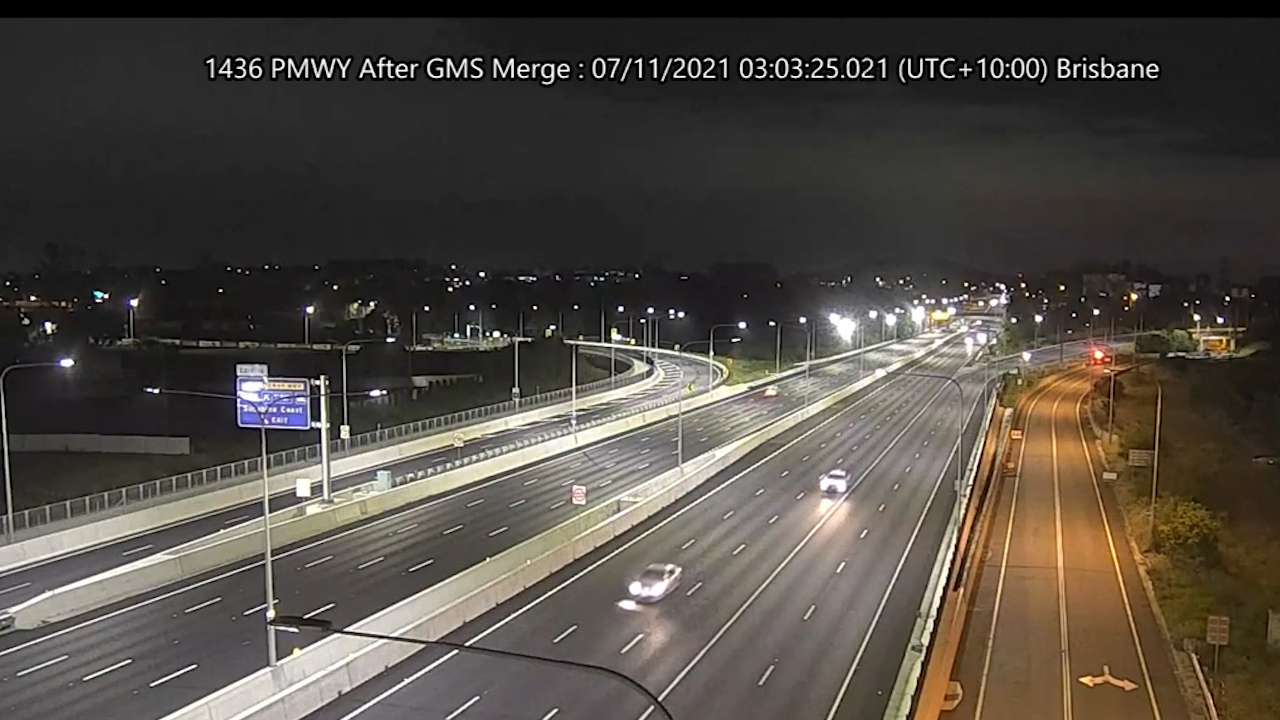
The 18-year-old was taken to the Royal Brisbane and Women's Hospital in a critical condition, with significant head and facial injuries, after being found on the side of Kruger Road in Carbrook on Sunday night.

Investigations are underway into a traffic incident police believe to be related to the alleged assault, with footage showing two cars engaged in dangerous driving behaviour.

READ MORE: Fears exclusive Melbourne Cup party is a 'super spreader' event

A Brisbane teenager is fighting for his life in hospital after police found him unconscious and in a critical condition on the side of a road.

A silver Camry sedan and a red Commodore were located near where the man was found.

They have both been seized by police.

Investigators are appealing to the public for information, particularly in relation to the two cars travelling southbound on the M1 from Brisbane or on Beenleigh Redland Bay Road prior to 3.30am.

The 18-year-old was taken to the Royal Brisbane and Women's Hospital in a critical condition, with significant head and facial injuries.

READ MORE: Mask mandate set to end in Queensland

Detective Superintendent Brendan Smith said officers were trying to determine who was responsible and how the young man came to be at the roadside.

READ MORE: Aussie victims sent bizarre items in the post

https://twitter.com/R_DAlessandro9/status/1457913989627723783The teenager was found on the side of Kruger Road in Carbrook on Sunday night.

READ MORE: Swooping crows with 'grudges' terrorise Gold Coast shopping district

"We've got a young person now who's fighting for his life in hospital," Superintendent Smith said.

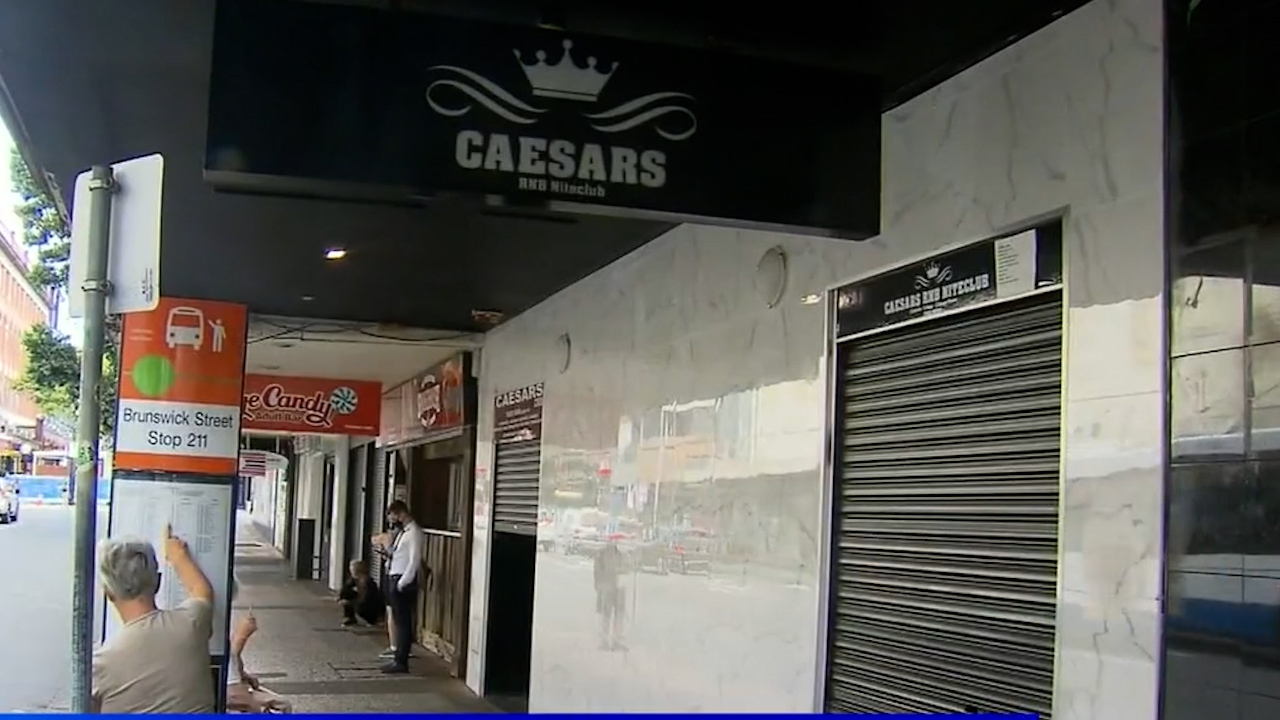
Police suspect the alleged assault followed a disagreement in Brisbane's nightlife district, Fortitude Valley, involving two groups of youths.

Police have identified 15 people of interest aged between 16 and 20.

Investigations are continuing.

Cuba to Welcome Back International Travelers

Cuba hopes to reignite its tourism economy when the borders reopen to leisure travelers this month.

Photo by Lisa Strachan/Shutterstock

Cuba hopes to reignite its tourism economy when the borders reopen to leisure travelers this month.

The Caribbean island destination is set to reopen on November 15 to those who are either vaccinated or COVID tested.

Crafts vendors are returning to the streets, transport between provinces is gradually returning to normal, and crowds once again line the seafront Malecon boulevard as night falls over the Cuban capital.

The characteristic bustle of the Caribbean nation is gradually rebounding after 20 months of pandemic restrictions, with the key moment set to occur on November 15 with the start of the full opening of airports, gateways to a tourism industry that feeds thousands of families.

A significant decrease in infections and mortality caused by the virus has followed an inoculation campaign with three locally developed vaccines—Soberana 02, Soberana Plus, and Abdala—even if some fear the reopening could bring a resurgence of COVID-19.

“Thank God we have a job again,” said Manuel Santos, a 58-year-old taxi driver who is awaiting the arrival of tourists after surviving for months delivering packages rather than visitors in his mid-50s Chevrolet convertible. “Let’s see if everything continues like this and this country can move ahead.”

So far, Cuba has registered 956,452 infections of the new coronavirus and 8,265 deaths, according to the Ministry of Health. The vaccination campaign, covering everyone age two and up, has given all three scheduled doses to 7.3 million people on this island of 11 million people.

What authorities call the “new normal” will retain safeguards: Face masks and cleansing gel will be mandatory. There may be no quarantine, but all travelers will have to have completed vaccination or a negative PCR test. (Additionally information about Cuba’s COVID-related travel restrictions can be found via the U.S. Embassy in Cuba.)

Cuba’s gross domestic product fell by 11 percent in 2020. For the population, that meant long lines, shortages, blackouts, a black market, and unemployment. The problems were exacerbated by U.S. sanctions and by the socialist government’s financial reorganization, including the elimination of a dual currency system.

Authorities have recognized that inflation is a problem. While the U.S. dollar officially is priced at 24 Cuban pesos, it goes for 70 pesos on the street—the only place where you can get a dollar because the government does not sell them.

Opposition groups have called for a protest march on November 15, but the authorities denied permission. Instead, the government has scheduled several events to commemorate the 502nd anniversary of the city’s founding.

In recent weeks, social isolation measures have been eased in almost every sector. Children are back in classrooms, theaters and cinemas have reopened, and the famous Tropicana cabaret will return to the stage. Stores have fewer restrictions and more government offices are open.

Officials dropped a ban on congregating on the Malecon seawall to enjoy the ocean view. A nighttime curfew in the capital was lifted. Interprovincial trains and buses began to schedule departures.

“After two years, I will reunite with my mother, my neighbors, my town, my province. I am very happy,” said Bárbara García, 63, a native of Ciego de Ávila, as she waited at a bus terminal in Havana.

Restaurants are authorized to serve at tables once again after months of take-out or home delivery.

At the privately owned La Guarida restaurant this week, workers were trying to regain their rhythm and restock goods that are now sometimes lacking or are only available in dollars.

“We have had a pretty tough financial and emotional time. Many families from many private businesses in Cuba have been at home without work,” said Vivian Aymerich, manager of La Guarida. “I think that from [November] 15th, there will be an improvement.”

The restaurant began as a small place with 12 chairs 25 years ago. Today, it has 50 employees who were unemployed for nearly two years, subsisting on their savings. Celebrities such as Madonna, Jack Nicholson, Robert De Niro, Rihanna, and Queen Sofia of Spain have visited La Guarida.

The island received 4.2 million tourists in 2019, generating about $3 billion. That dropped to barely a million visitors in 2020—concentrated in the first quarter before the pandemic broke out in earnest.

This year, from January to September, only 280,000 travelers arrived, mostly Russians who concentrated in relatively isolated tourist areas, as well as some Canadians and Cubans living abroad who came to visit their families.

The authorities estimate that after the reopening, about 100,000 more visitors will arrive this year.

The post Cuba to Welcome Back International Travelers appeared first on The St Kitts Nevis Observer.
WORLD VIEW: Astroworld Disaster, 6 Trump Aids Subpoened, APEC Post Pandemic Talks, More

Nov 09, 2021

Alternate text

The Associated Press

The Rundown

I'm an image

HOUSTON (AP) — The Houston police and fire departments were deeply involved in safety measures for the music festival where a surging crowd killed eight people, playing key roles in crowd control measures, on-site security staffing and the emergency…Read More

I'm an image

WASHINGTON (AP) — Further expanding its probe, the U.S. House committee investigating the Jan. 6 Capitol insurrection has issued subpoenas to six additional associates of former President Donald Trump who were closely involved in his efforts to over…Read More

I'm an image

WELLINGTON, New Zealand (AP) — U.S. President Joe Biden and his Chinese counterpart Xi Jinping will have a rare virtual encounter this week as they gather online with other Pacific Rim leaders to chart a path to recovery out of the crisis brought on…Read More

I'm an image

GLASGOW, Scotland (AP) — At 19, Glasgow college student Ross Hamilton doesn’t think highly of world leaders — “they chat a lot of” nonsense — or expect them to accomplish anything on a problem he cares deeply about, climate change. …Read More

I'm an image

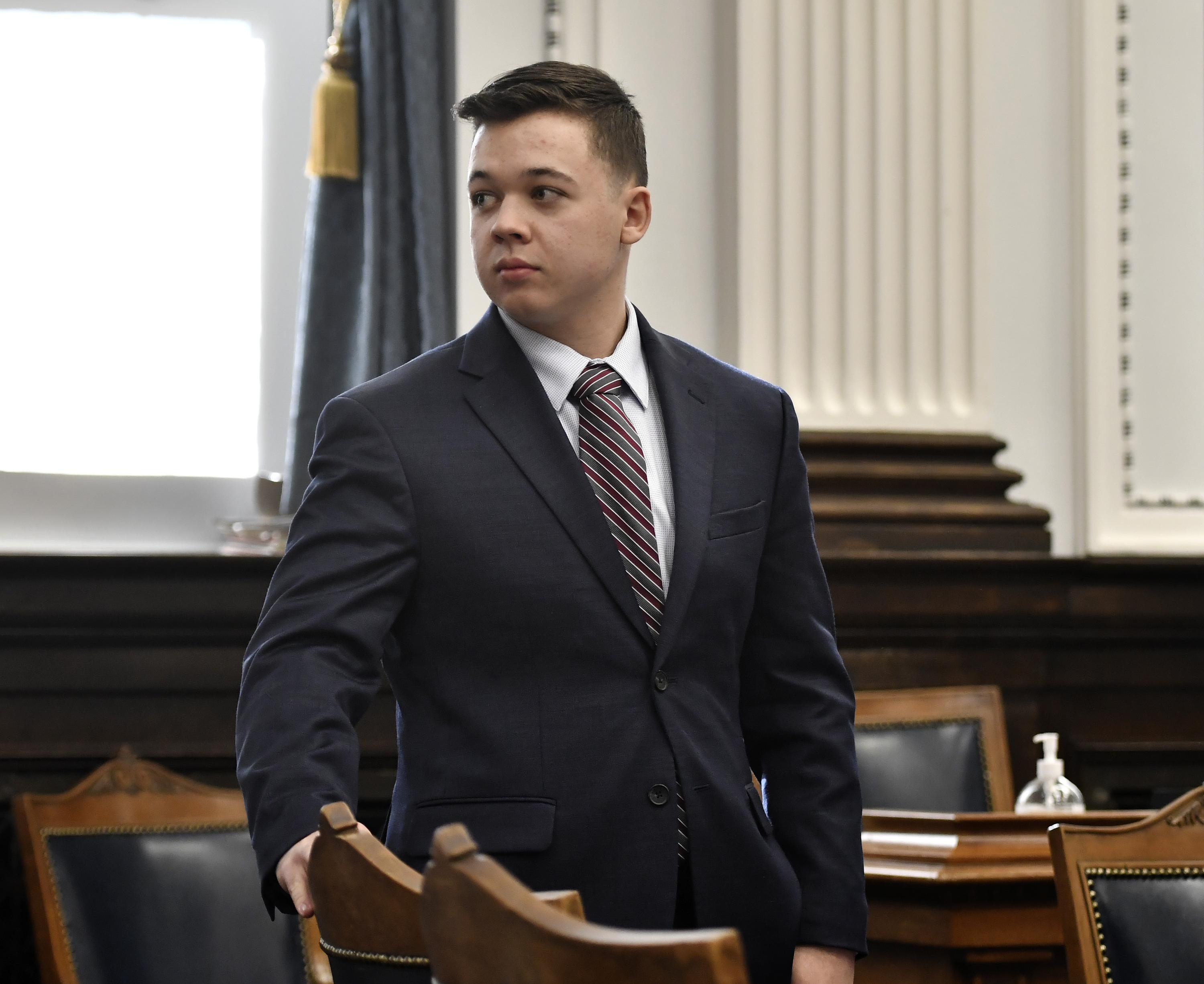
KENOSHA, Wis. (AP) — The protester and volunteer medic who survived after Kyle Rittenhouse shot him on the streets of Kenosha testified that he pointed his own gun at Rittenhouse but didn’t mean to and had no intention of firing it. …Read More

OTHER TOP STORIES

MOSCOW (AP) — A Russian island north of Japan has become a testing ground for Moscow’s efforts to reconcile its prized fossil fuel industry with the need to do something ab…Read More

CAPE CANAVERAL, Fla. (AP) — Four astronauts in orbit since spring headed back to Earth on Monday, aiming for a late night splashdown off the Florida coast. The undocking of…Read More

UNITED NATIONS (AP) — The U.N. humanitarian chief urged Myanmar’s military leaders on Monday to provide unimpeded access to the more than 3 million people in need of life-s…Read More

MARIETTA, Ga. (AP) — Santa may have fewer eyes in homes this Christmas season after a Georgia judge — jokingly — banned the Elf on the Shelf. Cobb County Superior Court Chi…Read More

The post WORLD VIEW: Astroworld Disaster, 6 Trump Aids Subpoened, APEC Post Pandemic Talks, More appeared first on The St Kitts Nevis Observer.
Report: A Billion People Will Suffer Extreme Heat at Just 2C Increase

Climate crisis is driving up deadly combination of temperature and humidity, says study released at Cop26

 
Environment editor
Guardian

A billion people will be affected by extreme heat stress if the climate crisis raises the global temperature by just 2C, according to research released by the UK Met Office at the Cop26 climate summit. The scientists said that would be a 15-fold increase on the numbers exposed today.

The key goal of Cop26 is to keep the chance of limiting global heating to 1.5C alive but delegates said there is much work to do to achieve this in the summit’s final week.

The Met Office assessed wet-bulb temperature, which combines both heat and humidity. Once this measure reaches 35C, the human body cannot cool itself by sweating and even healthy people sitting in the shade will die within six hours. The Met Office analysis used a wet-bulb temperature limit of 32C, at which workers must rest regularly to avoid heat exhaustion, for at least 10 days a year.

If efforts to end the climate emergency fail and temperatures rise by 4C, half of the world’s population will suffer from this extreme heat stress.

Heat is the most obvious impact of global heating and extreme heat in cities across the world has tripled in recent decades, according to a recent study. In the summer of 2020, more than a quarter of the US population suffered from the effects of extreme heat, with symptoms including nausea and cramps.

At least 166,000 people died due to heatwaves around the globe in the two decades to 2017, according to the World Health Organization. The UK government has been repeatedly warned by its official climate advisers that the country is “woefully unprepared” for increased heat, particularly in vulnerable locations such as hospitals and schools.

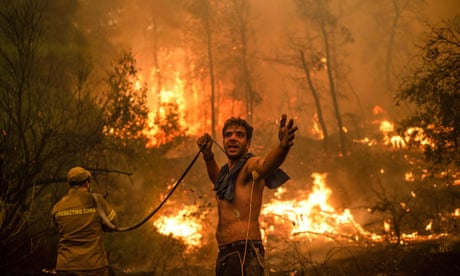
People with hoses attempting to extinguish forest fires approaching the village of Pefki, on Evia island, Greece, in August.
Europe’s record summer ‘impossible’ without global heating

The Met Office analysis is derived from research from the EU-funded Helix project, which also maps the rising risks of river flooding, wildfires, drought and food insecurity. Virtually the entire inhabited world is affected by at least one impact.

Andy Wiltshire, at the Met Office, said: “Any one of the climate impacts presents a scary vision of the future. But, of course, severe climate change will drive many impacts, and our maps show that some regions will be affected by multiple factors.”

Tropical countries including Brazil, Ethiopia and India are hardest hit by extreme heat stress, with some parts being pushed towards the limit of human liveability. But Prof Albert Klein Tank, director of the Met Office Hadley Centre, said: “These maps reveal areas of the world where the gravest impacts are projected to occur. However, all regions of the world – including the UK and Europe – are expected to suffer continued impacts from climate change.”

Scientists have been warning about deadly levels of heat and humidity for some years. A 2015 study showing the Gulf in the Middle East, the heartland of the global oil industry, set to suffer heatwaves beyond the limit of human survival if climate change is unchecked.

The deadliest place on the planet for extreme future heatwaves will be the north China plain, one of the most densely populated regions in the world and the most important food-producing area in the huge nation, according to 2018 research.

The post Report: A Billion People Will Suffer Extreme Heat at Just 2C Increase appeared first on The St Kitts Nevis Observer.

COP26: Focus on Gender as Giant Puppet Takes Center Stage

Here are five things you need to know about the COP26 climate change conference on Tuesday.

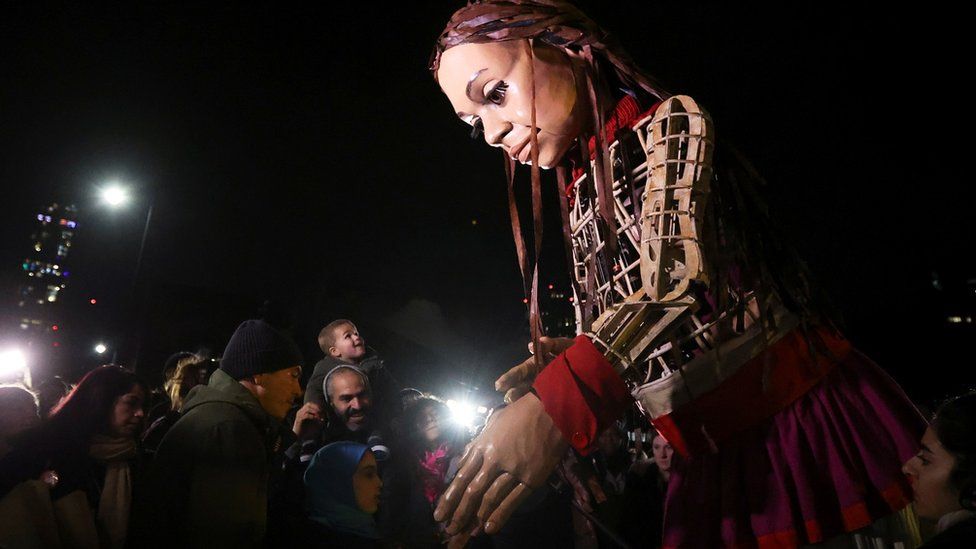
The inequalities that make women and girls more vulnerable to the effects of climate change are high on the agenda today. They form a large majority of the world’s poor, often depending on small-scale farming for their livelihoods. The UK government is set to announce £165m to tackle climate change while addressing and empowering women to take climate action. And we can expect an appearance from Little Amal, the giant puppet of a 10-year-old Syrian refugee, meeting activists from the countries through which she has “walked” during a four-month, 8,000km (4,970-mile) journey from the Syrian border.

The Little Amal puppet in Manchester last weekImage source, Reuters
More on Climate Change bottom strapline

2. What do climate scientists want from COP26?

With negotiations in Glasgow at a critical phase, we asked more than a dozen climate scientists, negotiators and economists what they wanted to see agreed. Top of their list is a greater commitment to “net zero” emissions targets – in other words not increasing the amount of greenhouse gases (such as carbon dioxide, produced when we burn coal, oil or gas to generate power) in the atmosphere. As Prof Martin Siegert from Imperial College London puts it: “The longer you leave it, the more difficult it is to deliver net zero by 2050.”

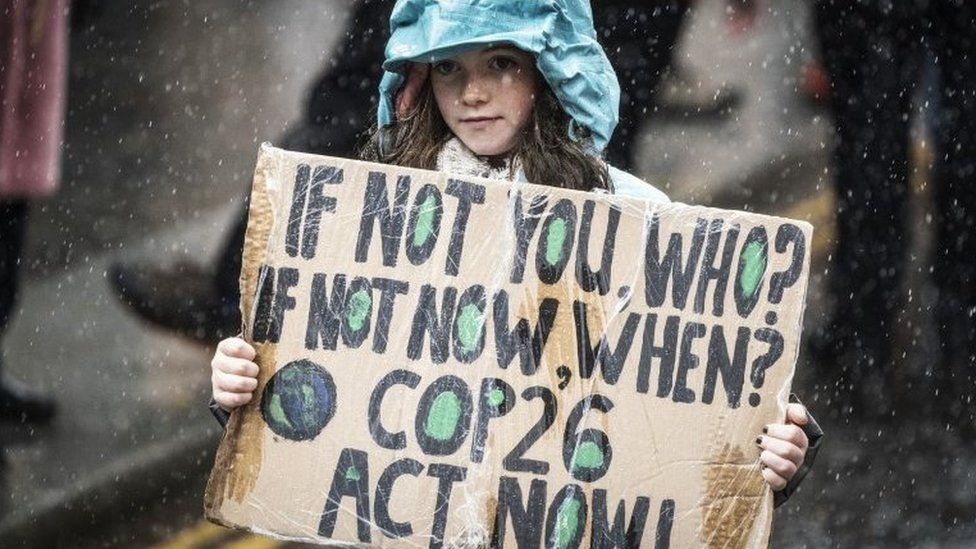
Girl holding a sign saying "If not you, who? If not now, when? COP26 Act Now"Image source, PA Media

3. Catch up on Monday’s events…Obama’s Message

Former US President Barack Obama earned a standing ovation for a speech declaring the world “nowhere near where we need to be” to avoid a climate catastrophe. He took aim at Donald Trump’s “active hostility toward climate science” and chided Russia and China for their absence, calling on young people to “stay angry” while harnessing their frustration to press for political change. However, some activists pointed out the US had failed to honour key pledges made by Mr Obama’s administration.

4. How not to be fooled by ‘greenwashing’

Want to shop sustainably but flummoxed by the language around “eco-friendly” products? Our business reporter Beth Timmins runs through seven ways to spot “greenwashing” – when companies make statements that make them sound more environmentally friendly than they really are.

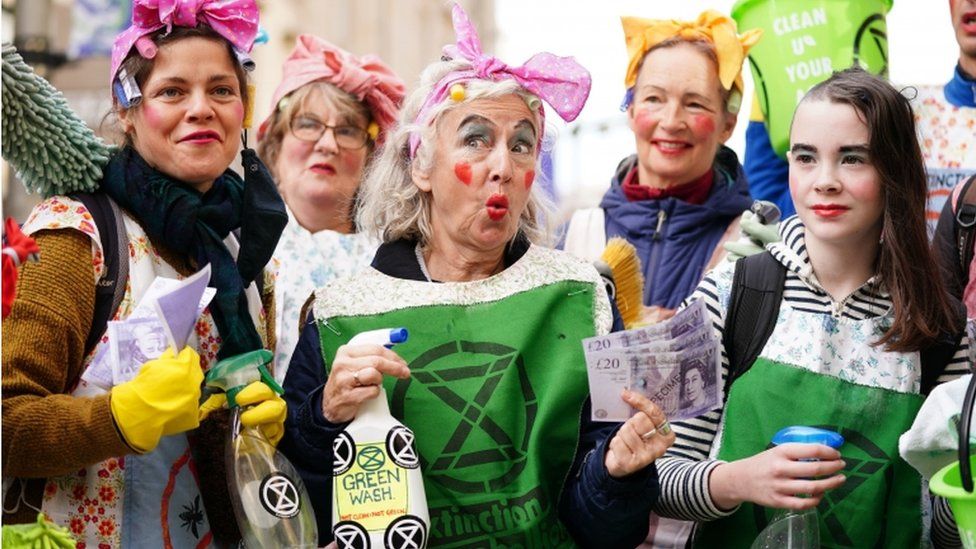
Protesters in Glasgow with fake cleaning products branded as "greenwashing"
Protesters in Glasgow have taken aim at companies overstating their environmental credentials

5. The Scottish inventor ‘drilling the sky’ for energy

At his home in Shetland, he might be closer to Norway than Glasgow but engineer Rod Read’s big idea is one that would doubtless fly with a lot of the delegates. He’s developed a “turbine kite” technology that he says could be cheaper, more portable and even “cleaner” than static wind turbines.

More on Climate Change bottom strapline

And there’s more…

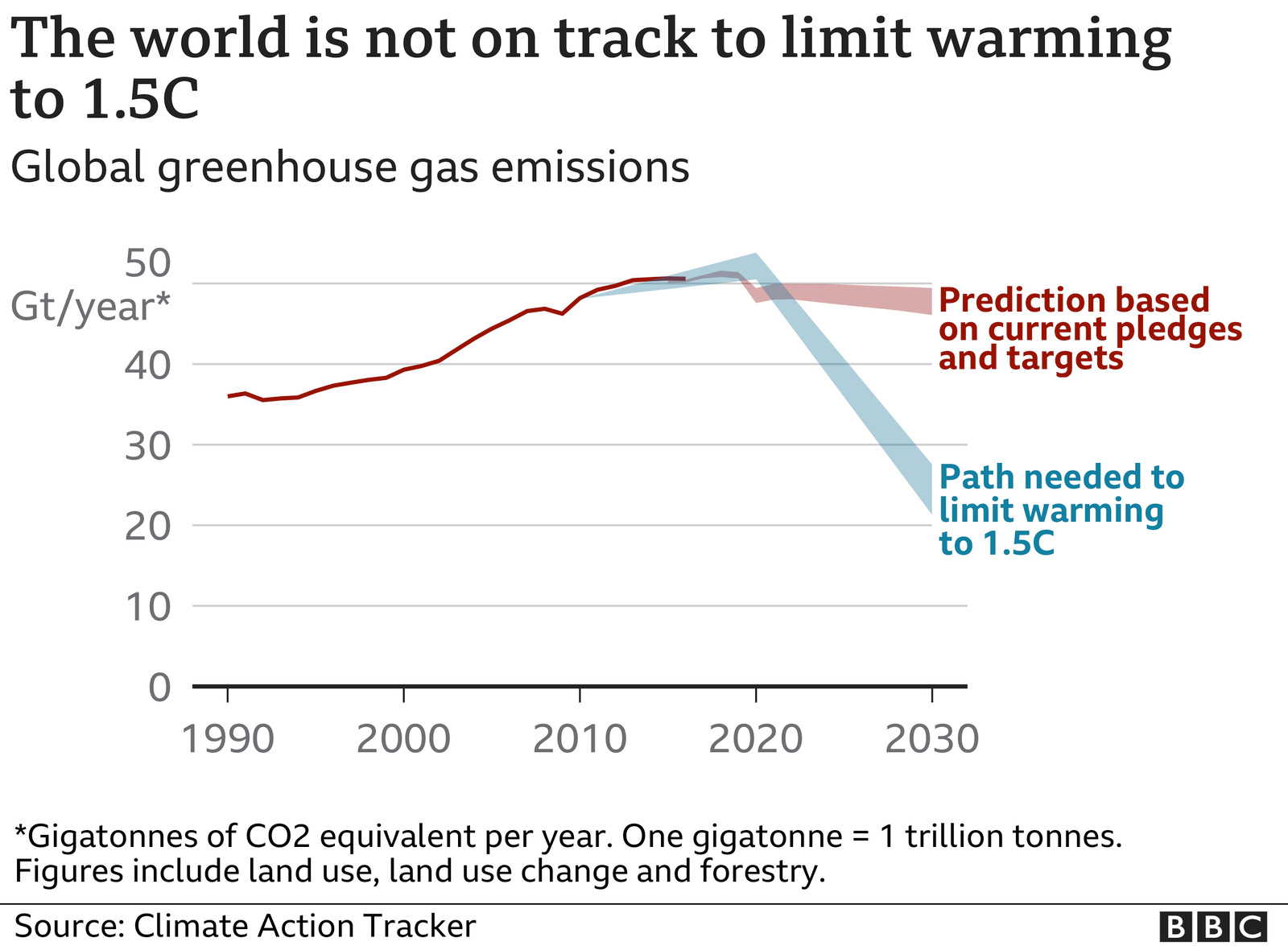
You might have heard lots of references to the Paris agreement or accord. This was a legally binding international treaty on climate change, adopted by nearly 200 countries in 2015. Its most important aspect was an agreement between the countries to limit global temperature rises to well below 2C, and pursue efforts to limit them to 1.5C.

Graph showing the world is not on track to limit climate change to 1.5C

You can find further information on our climate page.

The post COP26: Focus on Gender as Giant Puppet Takes Center Stage appeared first on The St Kitts Nevis Observer.

COVID-19: Dr. Fauci Urges Bahamian Parents to Have Their Kids Vaccinated

The Bahamas like many places in the Caribbean is dealing with a high level of coronavirus (COVID-19) vaccine hesitancy in the population.

And as young children become eligible to be vaccinated, Dr Anthony Fauci, Chief Medical Advisor to the President of the United States, has urged Bahamians to allow their children to get vaccinated.

Children between 5 and 11 were recently approved to receive a smaller dose of the Pfizer-BioNTech COVID-19 vaccine.

Children will receive two doses of the vaccine three weeks apart to become fully vaccinated.

Speaking today on Guardian Radio 96.9 FM, Fauci noted that the US has recorded over 2 million COVID-19 cases in children from the age group of which 83,000 required some form of hospitalisation.

According to Fauci, several thousand of those children developed the rare multisystem inflammatory syndrome and about 100 did not leave the hospital alive.

“Even though it is very clear that children do not generally get a serious case of COVID-19 as adults do but that doesn’t mean they are exempt from getting serious disease,” he said while noting that many children are asymptomatic and have spread the virus to people who are at risk of becoming extremely sick.

Fauci said the benefits of taking the vaccine far outweigh any of the perceived risks since vaccinated persons have a better chance of fighting the virus.

As of November 6, 136,328 eligible Bahamians are fully vaccinated against COVID-19.

This figure represents over 33 per cent of the population.

The Bahamas inoculated its residents with the Pfizer, Johnson and Johnson, Sinopharm and Oxford-AstraZeneca vaccines.

Fauci added that people who are angry with him and other public health officials should “try to just drop back a few yards and think about what’s going on.”

“You have around you an outbreak. The people who are talking about getting vaccinated, the people who are developing the vaccines, are doing it to save lives and to prevent suffering; not to encroach on your civil liberties to decide what you want to do.”

“We are already right now in the middle of a historic, catastrophic outbreak that at least in a country like the United States has killed 750,000 people. That’s unheard of. That is the kind of thing they should focus on. The enemy is the virus.”

The post COVID-19: Dr. Fauci Urges Bahamian Parents to Have Their Kids Vaccinated appeared first on The St Kitts Nevis Observer.