Category Archives: headline

Mottley Wants Greater Financial Self Determination for Developing Nations

The prime minister of Barbados, Mia Mottley, has called on world leaders to back a climate fund that would increase the special drawing rights of developing countries by $500bn annually [€432bn], circumventing climate finance pledges by rich nations, in a push for increased financial self-determination.

Although she garnered praise for the rest of her speech, less attention was paid to this proposal, which she presented at the United Nations Conference for Climate Change (COP26) on Monday.

To cap global heating to 1.5 degrees Celsius and meet the aspirational goal of the 2015 Paris climate accord, greenhouse gas emissions need to be halved in the next eight years. Low-income countries do not have enough financial firepower to meet this challenge, Mottley told leaders, before proposing a solution.

“I say to you now. There is a sword that can cut through this Gordian Knot. And it has already been used,” she said.

“The central banks of the wealthiest countries engaged in $25 trillion of quantitative easing in the last 13 years. Of that, $9 trillion was spent in the last 18 months to fight the pandemic. Had we used that $25 trillion to finance the energy transition we would now be reaching that 1.5 degrees limit that is so vital to us.”

Wealthy countries should enable the International Monetary Fund (IMF) to give poorer countries access to the same monetary firepower the United States and Eurozone countries have been able to use for years to fight their crises.

The amount of $500bn should be put into a trust annually for 20 years, backed by member states of the IMF.

This would alleviate the climate financing gap that exists in the global south – “and if $500bn sounds big to you? Guess what: it is just two percent of the $25 trillion. This is the sword we need to wield.”

However, this kind of monetary firepower is a long way from the climate aid wealthy countries are currently proposing.

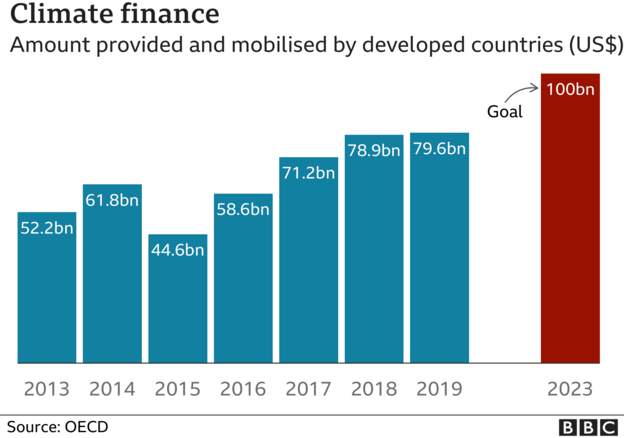
In 2009 wealthy countries agreed to “mobilise” $100bn climate finance per year by 2020 – a target they have not met. Currently, close to $50bn has been pledged to developing countries.

A proportion of this money is private investor money, a sector which is less interested in risky investments in poor countries or countries that already suffer the consequences of climate change, such as Barbados.

“Investment in Pacific nations has actually gone down 25 percent since pledges were made,” Mottley reminded US president Joe Biden and other world leaders in Scotland.

The speech laid bare the deep rift that developing countries and wealthy countries will need to close before coming to a new updated climate agreement at this year’s summit, which formally opened on Sunday and will run to November 12.

While northern countries remain relatively immune to climate change effects, the threat of climate change to island nations like Barbados already is existential.

“For those who have eyes to see, for those who have ears to listen and for those who have a heart to feel, 1.5 is what we need to survive,” Mottley said, adding that even two degrees heating “is a death sentence for the people of Antigua and Barbuda….Kenya and Mozambique, and yes, for the people of Samoa and Barbados.”

“We do not want that dreaded death sentence and we have come here today to say: ‘try harder’,” Mottley said.

The post Mottley Wants Greater Financial Self Determination for Developing Nations appeared first on The St Kitts Nevis Observer.
Winter Travel: American Airlines Offering New Flights to SKN

New flights from American Airlines will accompany the launch St. Kitts and Nevis’ winter travel season. Beginning November 2 American is operating daily flights between Miami International Airport and Robert L. Bradshaw International Airport in St. Kitts through April 2, 2022.

American’s service between St. Kitts and Miami will expand to twice daily, with Saturday and Sunday departures, on Dec. 18, 2021. The carrier will also launch weekly flights to St. Kitts from Charlotte, N.C. beginning December 18. Also scheduled are weekly flights between New York’s John F. Kennedy International Airport and St. Kitts beginning N

St. Kitts visitors who book before December 31 can participate in the St. Kitts Tourism Authority’s “Winter Escape” promotion, part of the country’s “Awake Your Sense of Wander” campaign.

Through the Winter Escape promotion, vaccinated travelers receive benefits including discounted resort rates, free nights on multi-night bookings and complimentary breakfast for travel through April 30, 2022.

The exclusive benefits will be offered at participating hotels: The Four Seasons Resort Nevis, Montpelier Plantation and Beach, Park Hyatt St. Kitts Christophe Harbour, St. Kitts Marriott Resort & The Royal Beach Casino and the Royal St. Kitts hotel.

St. Kitts will also receive an increased number of cruise ships calls in November, including four cruise arrivals during the first week of November.

The visits will comprise St. Kitts’ first four-ship-week since prior to the pandemic, said Saint Kitts Tourism Authority officials. This month November, St. Kitts will receive 28 cruise calls carrying an estimated 72,163 passengers.

Visitors traveling to St. Kitts by air must be fully vaccinated and submit proof of a negative COVID-19 test result from an RT PCR test 72 hours prior to arrival.

For the latest insight on travel around the world, check out this interactive guide.


The post Winter Travel: American Airlines Offering New Flights to SKN appeared first on The St Kitts Nevis Observer.
COP26 Climate Conference–What Was Accomplished

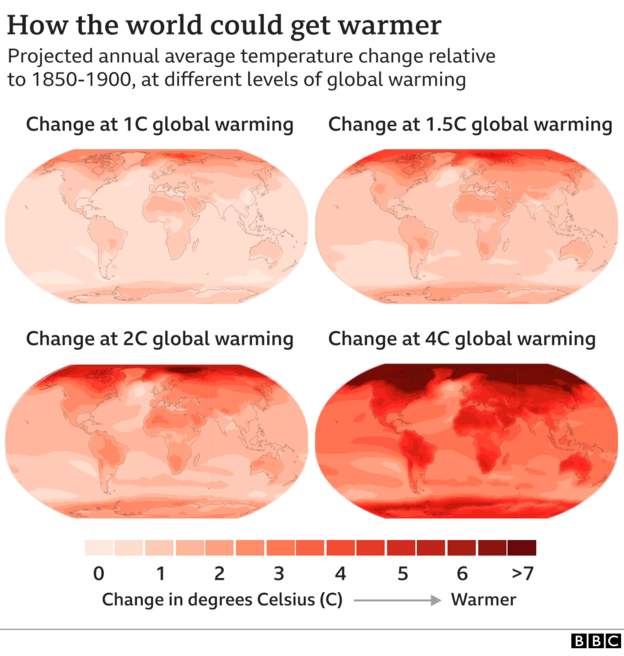
The difference between 1.5C and 2C

You will have been hearing the term 1.5C a lot lately. That’s because one of the main aims of COP26 is to get countries to agree to limit global warming to 1.5C.

Scientists tell us that keeping the rise below 1.5C – compared with pre-industrial times – will avoid the most catastrophic impacts of climate change, but we’re already at least 1.1C warmer so radical action is needed.

In 2015, world leaders agreed on some targets as part of the Paris climate accord – including aiming to keep global temperatures “well below” 2C above pre-industrial times and “endeavour to limit” them even more, to 1.5C.

But we are way off track.

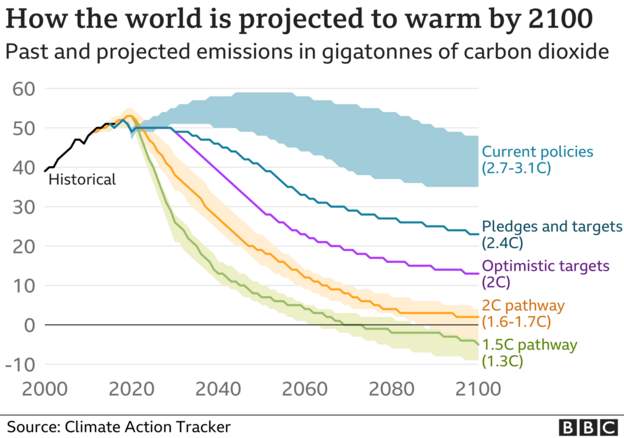
On current plans, the world is expected to breach the 1.5C ceiling within decades and to hit 2.7C of warming by the end of the century.

Scientists say there simply isn’t time for inaction if 1.5C is to be achieved, while some believe we’ve already left it too late.

Graphic showing how much warmer the Earth will be with different levels of global warming
John Kerry

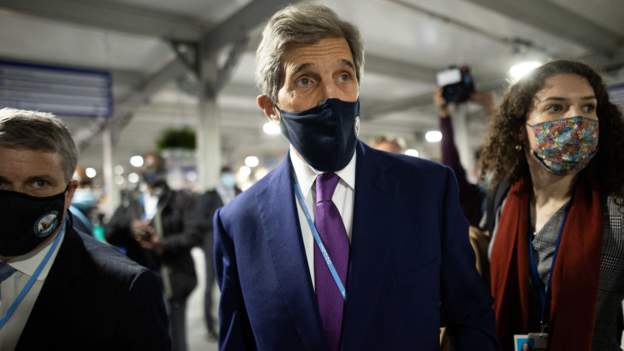
US climate envoy John Kerry says that current commitments to cut carbon emissions mean the world has a 60% chance of capping a rise in the average temperature at 1.5C.

Scientists say limiting the rise to 1.5C will avert the worst effects of climate change.

Kerry told a breakfast event that, with the latest commitments, around 65% of global GDP was now covered by implementable climate change plans.

“But that means 35% isn’t. And we can’t do it without that 35%,” the Reuters news agency reported. “You don’t get this done unless we are all in.”

On Tuesday, China’s climate envoy Xie Zhenhuan said that aiming to limit the temperature rise to 1.5C rather than the 2C target agreed in Paris in 2015 would be “destroying consensus”. He called for countries to be pragmatic and take concrete actions.

The Paris agreement saw countries pledge to limit global warming to well below 2C, preferably to 1.5C, compared to pre-industrial levels.

How the world is projected to warm by 2100

What is the $100bn a year target?

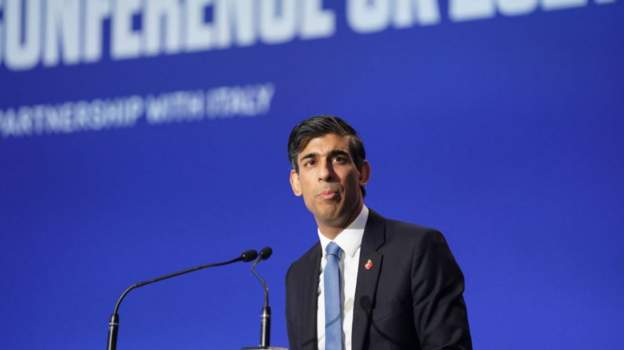
As we’ve been reporting, UK Chancellor Rishi Sunak has said developed governments are going to meet their six-year-old promise to send $100 billion (£73bn) a year to developing countries to tackle climate change by 2023, three years behind target.

“While we know we are not yet meeting it soon enough, we will work closely with developing countries to do more and to reach the target soon,” he told the COP26 climate conference in Glasgow.

Graphic showing climate finance goals

As our Reality Check colleagues note, it is quite hard to calculate what money should be included in the overall figure, because it is a complicated mix of money from governments, international lenders and private companies.

But the UN and the Organisation for Economic Co-operation and Development (OECD) estimate that by 2019 the figure had reached just over $79bn, only a small increase on the previous year, and failing to reach the $100bn a year target by 2020.

It is also important to stress that the majority of this finance comes in the form of loans – not grants – so developing countries will need to pay it back.

Tackling climate change – how will the world pay for it?

Rishi Sunak

Today is all about finance at COP26 and as the host nation it was UK Chancellor Rishi Sunak who got things under way.

If you missed his speech, he said that the challenge facing finance ministers is to “direct the world’s wealth to protect our planet” – deploying investment from both public and private sources.

According to Sunak, there are three main strands to the approach:

Public investment – Sunak says developing countries have been devastated by the “double tragedies of coronavirus and climate change”. He says that the G20 will step up to deliver $500bn of investment to the countries that need it most over the next five years. The G20 is also renewing its pledge of $100bn a year to help developing nations – although Sunak says this is not happening as soon as it needs to.

Private investment – Sunak says COP26 has seen private institutions with assets worth $130tn create a “wall of capital for the net-zero transition around the world”.

Greener financial system – Sunak goes on to say that the entire global finance system will be rewired for net zero. This will involve better climate data, sovereign green bonds and mandatory sustainability disclosures. He says the UK is playing its part and says the UK will become the first ever net-zero aligned financial centre. He says it will become mandatory for firms to set out how they plan to decarbonise and transition to net zero with and independent taskforce to monitor this.

Finance leaders are the new climate activists – COP26 president

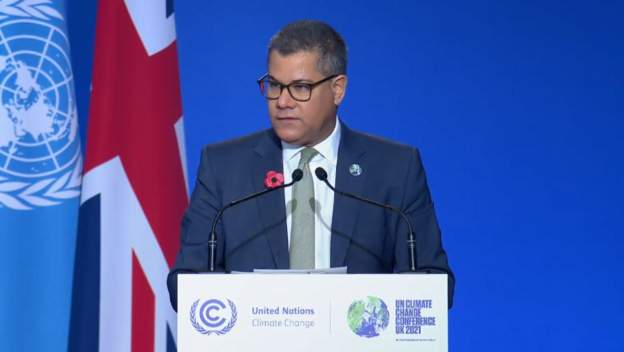
Alok Sharma

Alok Sharma, the COP26 president, takes to the podium next and delivers a short speech by remembering the action taken by climate protester Swampy in the 1990s.

He tells the gathering of global finance leaders: “You, my friends, are the new Swampies.”

The urgency of the situation has been made worse by the global pandemic, he says, and he calls on richer countries to follow through with their investments in solving climate change.

He says there is “some confidence” a pledge of $100bn of public funding will be unlocked by 2023 – with $500bn between 2021 and 2025 – less than the $100bn a year that was hoped.

He says there have been “new climate finance commitments from the UK, Japan, Australia, Spain, Ireland and Luxembourg”.

“I believe we’re on the cusp of a new era,” he says, where richer countries and companies finance key measures that will make a difference to tackling climate change.

kman, went to take a look.

The post COP26 Climate Conference–What Was Accomplished appeared first on The St Kitts Nevis Observer.
New Merck COVID-19 Pill Could Help People in Vaccine Scarce Areas

“There are a lot of people, particularly in developing countries, that have not had the opportunity to have vaccines,” James Love tells The World’s host Marco Werman. “And so, a treatment like this will really be important.”

A new antiviral pill to treat COVID-19 could soon be released to the world’s poorest countries. The drugmaker Merck reported that in a clinical trial, the new drug cut hospitalizations and deaths in half.

Merck is granting a royalty-free license for drugmakers worldwide to produce molnupiravir, the potential antiviral, in a move aimed at helping millions of people in poorer countries get access to the potentially life-saving drug, a United Nations-backed public health organization said on Wednesday.

The Medicines Patent Pool (MPP) said in a statement that it had signed a voluntary licensing agreement for molnupiravir with Merck and its partner Ridgeback Biotherapeutics.

The agreement will allow the MPP to grant further licenses to qualified companies who are approved to make the drug. Neither drugmaker will receive royalties under the agreement for as long as the World Health Organization deems COVID-19 to be global emergency. Molnupiravir is the first pill that has been shown to treat the disease.

Related: India will soon roll out a DNA vaccine for the coronavirus. It’s the latest example of how COVID-19 is transforming vaccines.

“The need for additional treatment options remains key in combating the COVID-19 pandemic,” Dr. Dean Li, president of Merck research laboratories, told analysts.

The FDA has said a panel of outside experts will meet late next month to consider the treatment for use in adults with mild to moderate COVID-19 who are at risk for severe disease or hospitalization.

James Love is the director of Knowledge Ecology International, an NGO in Washington that advocates for affordable medicines worldwide. Love discussed the new pill and license-sharing agreement with The World’s host Marco Werman.

Related: An upcoming vaccine drive in Afghanistan is an ‘unprecedented opportunity’ to eradicate polio, UN official says

Marco Werman: James, first of all, what does this pill do? Who would it help?
James Love: Well, if it passes all the safety reviews, it’s a quite promising treatment. It’s designed to be taken early after an infection and the data that we’ve seen so far is that it’s very effective at preventing hospitalization and death.


And just to be clear, it’s not an alternative to a vaccine, right?
It’s not an alternative to the vaccine, but there are large parts of the world where there’s been a shortage of vaccines. So, there are a lot of people, particularly in developing countries, that have not had the opportunity to have vaccines. And so, a treatment like this will really be important.


What do you know about the license-sharing agreement and what does it mark in the COVID-19 timeline?
This is the first open license that we’ve seen for a COVID therapeutic or COVID vaccine. It’s the only one we’ve seen that allows the manufacturing to be done around the world, and it’s the only one that’s fully transparent. The license is 69 pages long and you can read every single word of it. It is also, I think, the model agreement for scaling up the manufacturing of a therapeutic or a vaccine because it brings in any capable manufacturer.
How will Merck actually make money on this pill?
If the drug is as effective as they say it is, and if it’s as safe as they say it is, it’ll be a very profitable product. The license divides the world into two parts, one half of the world, the lower-income part of the world where the average incomes are around $2,500 per year, is set aside for this competitive, generic, low-cost supply Merck preserves for itself for selling.
And the other half of the world, where incomes are over $20,000 per capita. So, Merck is going to focus on selling the drug in the countries where people have the most money, and they’re allowing the generic suppliers to sell it at very cheap prices in countries that are very low income.
We tend to think of big pharma as focused on big profits. Were you surprised to hear about the license-sharing agreement?
Well, we were happy to see it. I mean, we were kind of surprised we haven’t seen more of these licenses. We’re almost two years into the pandemic, and this is the first time anyone’s made a license to the Medicines Patent Pool.
We think this should have been done earlier. It does fall short of what the proposal was initially in the beginning of the pandemic. They wanted these licenses to be global. They didn’t want them to be limited to low-income countries. They wanted them to be global. Costa Rica, for example, is excluded from the license. So, it falls short of what the ideal is. But if the benchmark is what other companies have done, what Merck has done is objectively better than what any other company’s done so far.


So, those countries that are not on the list, how would they get the pill?
I mean, Merck’s going to be selling the drug itself. They’ve already announced the price in the United States and they’re going to be negotiating or setting prices for other countries. But beyond that, the license does provide a pathway for the generic companies to sell outside of the licensed territory if they meet certain conditions.
So, there is a pathway, but I think for a lot of sales, there’ll just be some additional negotiations with Merck over the price. I know that Merck is in negotiations with Brazil, for example, which is not part of this voluntary license. What Merck has done is explicitly looking at the idea that they have to think about global access.
And I think that this is a very constructive step in that direction. … we’re a group that’s constantly criticizing the companies over the prices and affordability policies, and we take odds with them on a lot of the negotiations on intellectual property rights, but I think we have to give Merck some credit for having done what they’ve done. And I hope that this will put pressure on some of the other manufacturers of vaccines and therapeutics to follow and do the same thing.

The post New Merck COVID-19 Pill Could Help People in Vaccine Scarce Areas appeared first on The St Kitts Nevis Observer.
'You see this in the movies': How town reacted to Cleo Smith rescue

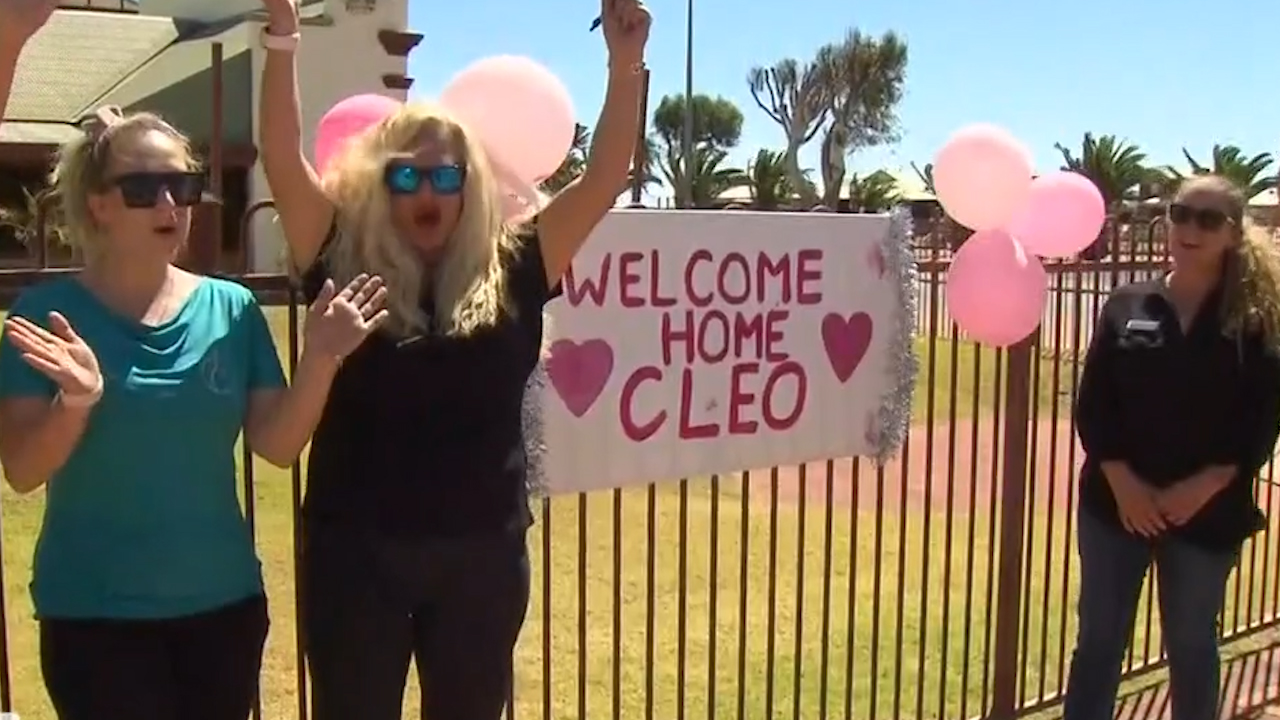
A pink bouquet and balloons sit in the heart of a small coastal Western Australia town, where locals are still reeling from the "amazing" rescue of Cleo Smith.

The four-year-old's home town of Carnarvon, 900km north of Perth, is celebrating after she was found early Wednesday morning following a frantic 18-day search.

Leticia Andreoli said her son, who is a schoolmate of Cleo, didn't understand at first that his little friend had been found.

READ MORE: Items seized as Cleo spends first night at home with family

Locals celebrate after missing Cleo Smith, four, was found.

"It took him a while to get it," she said.

"He said 'no Cleo is lost.' I said 'no bub, she's been found, so you can give her a big hug when you see her.'"

Another local, Naomi Knoll, said "everyone in town is so happy".

"It's a happy day. It's a good day for Carnarvon," she said.

READ MORE: Remarkable video shows moment Cleo was rescued

Some businesses were giving out free coffee and cakes to help spread the joy.

Shire President Eddie Smith said the events felt like a film.

"You see this in the movies, you don't see this in Carnarvon," he said.

"But the way the community has come together and conducted themselves has been wonderful."

READ MORE: Police detail how Cleo Smith was rescued.

Little signs of the relief people are feeling over Cleo's safe return to her family are everywhere.

Facebook group "Bring Cleo Home", started by 10 mums, has grown to more than 65 thousand members worldwide.

Today it was flooded with messages such as "The country cried with you this morning Ellie and Jake", "Safe in your Mummy's arms, I bet she won't ever let go of you", and "Welcome home princess".

Signwriter Jace Kempton was able to make a new sign today, welcoming Cleo home.

He printed more than 15,000 "Find Cleo" bumper stickers and signs at his factory as the 18-day search continued.

"The word got around quick and I hope that was part of the outcome," a "very relieved" Mr Kempton said.

Church of Christ Carnarvon pastor Brendon Law-Davis said it was "a great day to celebrate."

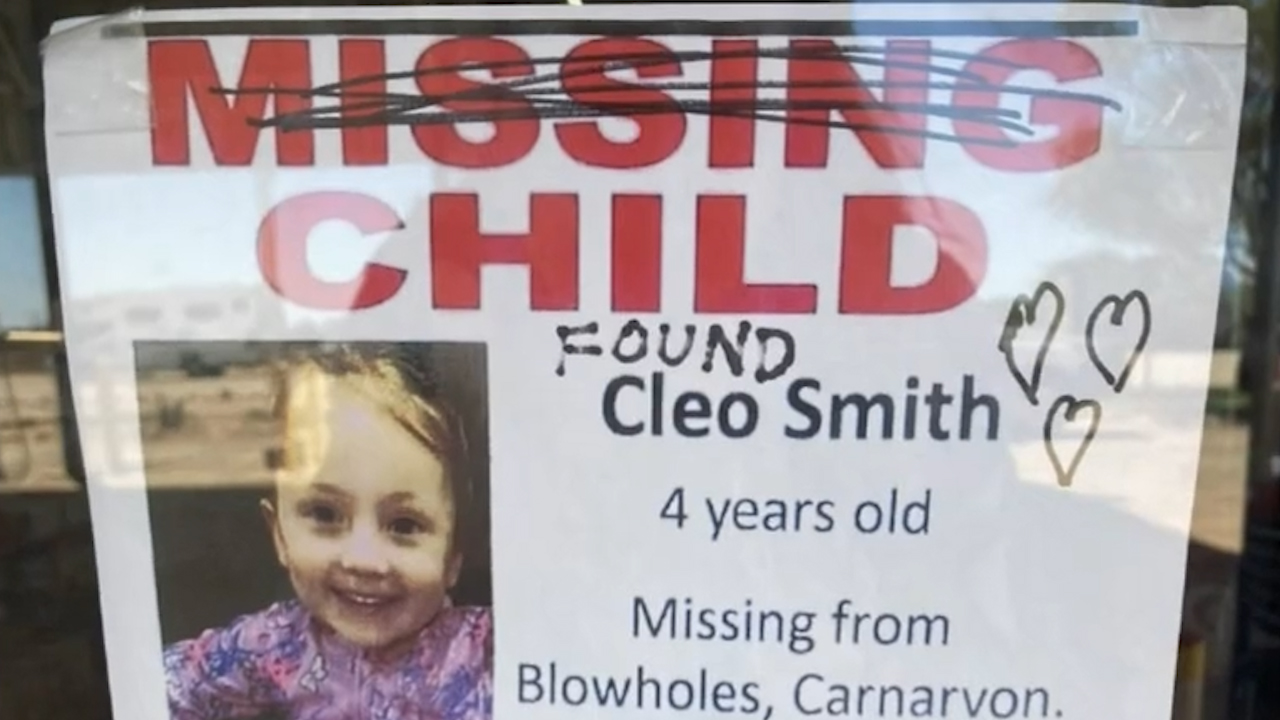
Up the road from Carnarvon at the Wooramel Roadhouse, a previously sad poster now has a poignant message.

It reads "missing child — found".

READ MORE: Missing Cleo Smith smiles and waves in first photos

Up the road from Canarvon at the Wooramel Roadhouse - a poster, now has a poignant message.It reads 'missing child' -  found.

READ MORE: Nation weeps and celebrates as little Cleo found 'alive and well'

CLEO SMITH FOUND: WHAT WE KNOW

  • At 12.46am (AWST) overnight, police broke into a locked home in Carnarvon, Western Australia, where four-year-old Cleo Smith was found alive and well.
  • A 36-year-old man was found not far from the home, and has been taken into custody. He is assisting police with inquiries.
  • Police have said the man has no connection with Cleo Smith's family.
  • Investigators were acting on information received that night, but it has not been disclosed yet what led them to that address.
  • Cleo has been reunited with her family.

Baseball: Atlanta Braves Beat Houston Astros in 6 Games to Win World Series

The Atlanta Braves won the World Series last night, blanking the Houston Astros 7-0 to win the championship in six games. It’s the fourth title in franchise history and their first since 1995.

The win represents a dramatic turnaround for the team, who finished the regular season 88-73 and had a losing record entering the month of August. Designated hitter Jorge Soler was named World Series MVP, with an effort including a three-run homer in the third inning that jump-started Atlanta’s offense last night.

Soler began the season in Kansas City, with Atlanta trading for him July 30. Starting pitcher Max Fried struck out six batters in six scoreless innings.

The post Baseball: Atlanta Braves Beat Houston Astros in 6 Games to Win World Series appeared first on The St Kitts Nevis Observer.
Eric Adams Elected Mayor of New York City

Eric Adams has won the New York City mayor’s race, fending off Republican and Guardian Angels founder Curtis Sliwa

The race was swiftly called for Adams, who was projected to be the winner shortly after polls closed. Early tabulations showed him garnering more than 75 percent of the vote, with Sliwa badly trailing with just under 20 percent.

“Tonight, we celebrate — because tomorrow, the real work begins!” Adams tweeted.To our supporters, volunteers & endorsers of all backgrounds, faiths & from every corner of NYC: Thank you, from the very bottom of my heart, for being a part of our team.

Tonight, we celebrate — because tomorrow, the real work begins! pic.twitter.com/6EAZRN3paB

— Eric Adams (@ericadamsfornyc) November 3, 2021

Adams, the current Brooklyn Borough president and a former state senator and police captain, had been the overwhelming favorite to win the general election after emerging victorious from a fierce primary battle in July.

Known for his more moderate stances, Adams defeated former New York City Sanitation Commissioner Kathryn Garcia, former New York City Hall legal adviser Maya Wiley and entrepreneur Andrew Yang. That race largely was fought over divisions regarding the “defund the police” movement and a rise in crime. Adams campaigned heavily on expanding the police presence in the city.

The ultimate winner of that race was expected to coast to victory in November due to Democrats’ roughly seven-to-one voter registration advantage over Republicans in deep-blue New York City.

Adams is replacing New York City Mayor Bill de Blasio (D), who is forbidden by term limits from running for reelection.

The post Eric Adams Elected Mayor of New York City appeared first on The St Kitts Nevis Observer.
WORLD VIEW: US-Bad News for Dems, Missing Aussie Girl Found, Facebook Overhaul, More

Nov 03, 2021

The Associated Press


The Rundown

I'm an image

The off-year elections for governor in Virginia and New Jersey tend to receive outsize attention, and the results are mined for deeper meaning about what they portend for the midterm elections the following year that determine which party controls…Read More

I'm an image

CANBERRA, Australia (AP) — Police smashed their way into a suburban house on Wednesday and rescued a 4-year-old girl whose disappearance from her family’s camping tent on Australia’s remote west coast more than two weeks ago both horrified and cap…Read More

I'm an image

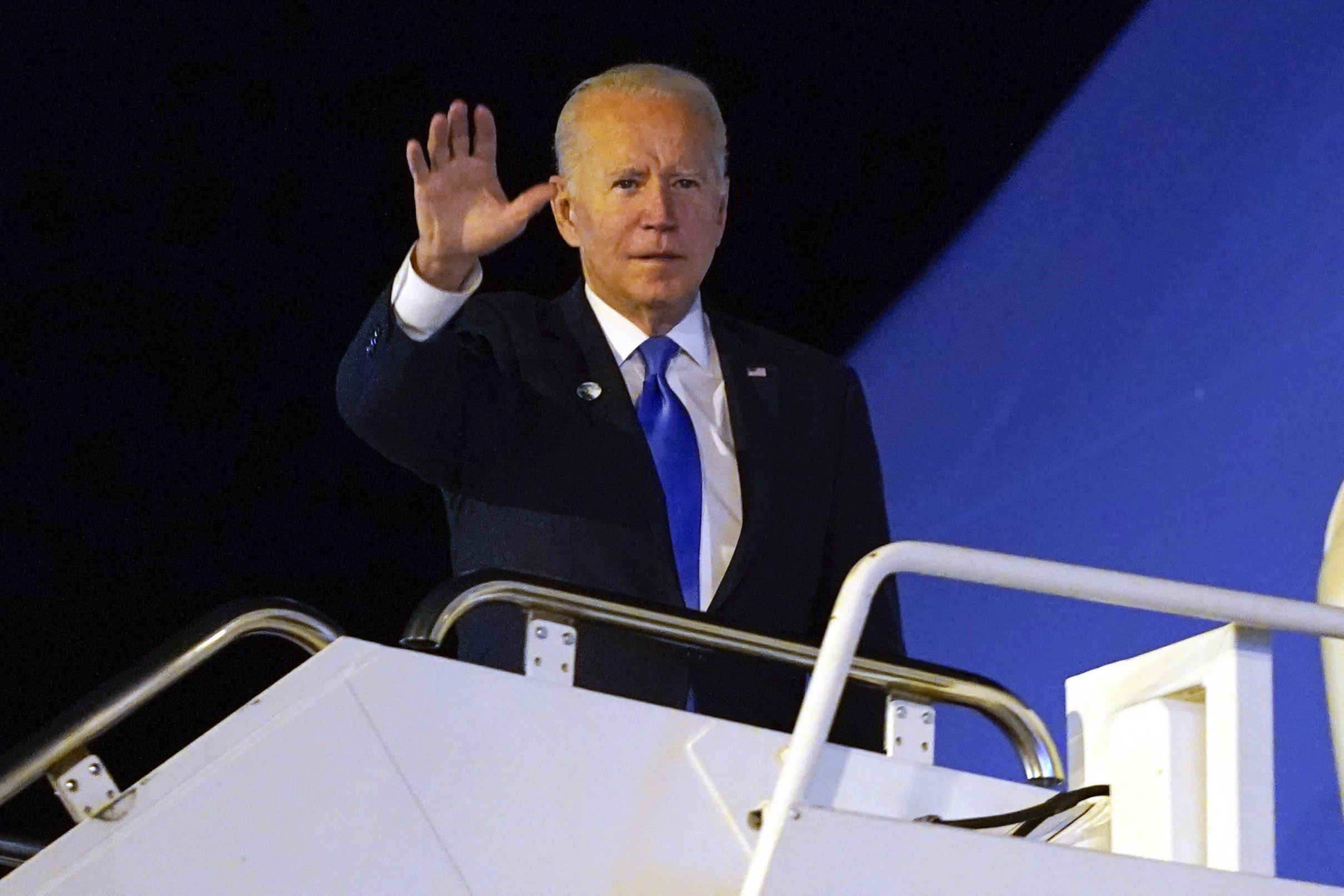
GLASGOW, Scotland (AP) — Over five days abroad at two global summits, President Joe Biden showed a new willingness to openly confront China over climate change and its lack of leadership on the global stage. …Read More

I'm an image

PROVIDENCE, R.I. (AP) — Facebook said it will shut down its face-recognition system and delete the faceprints of more than 1 billion people amid growing concerns about the technology and its misuse by governments, police and others….Read More

I'm an image

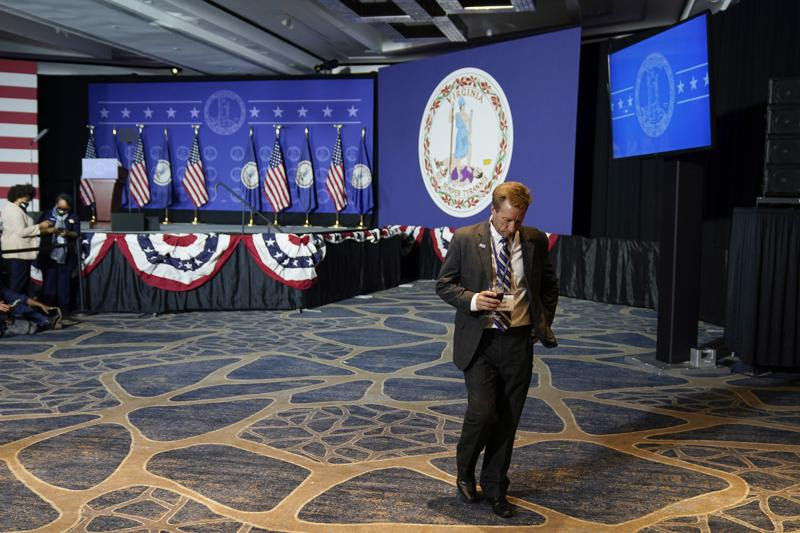
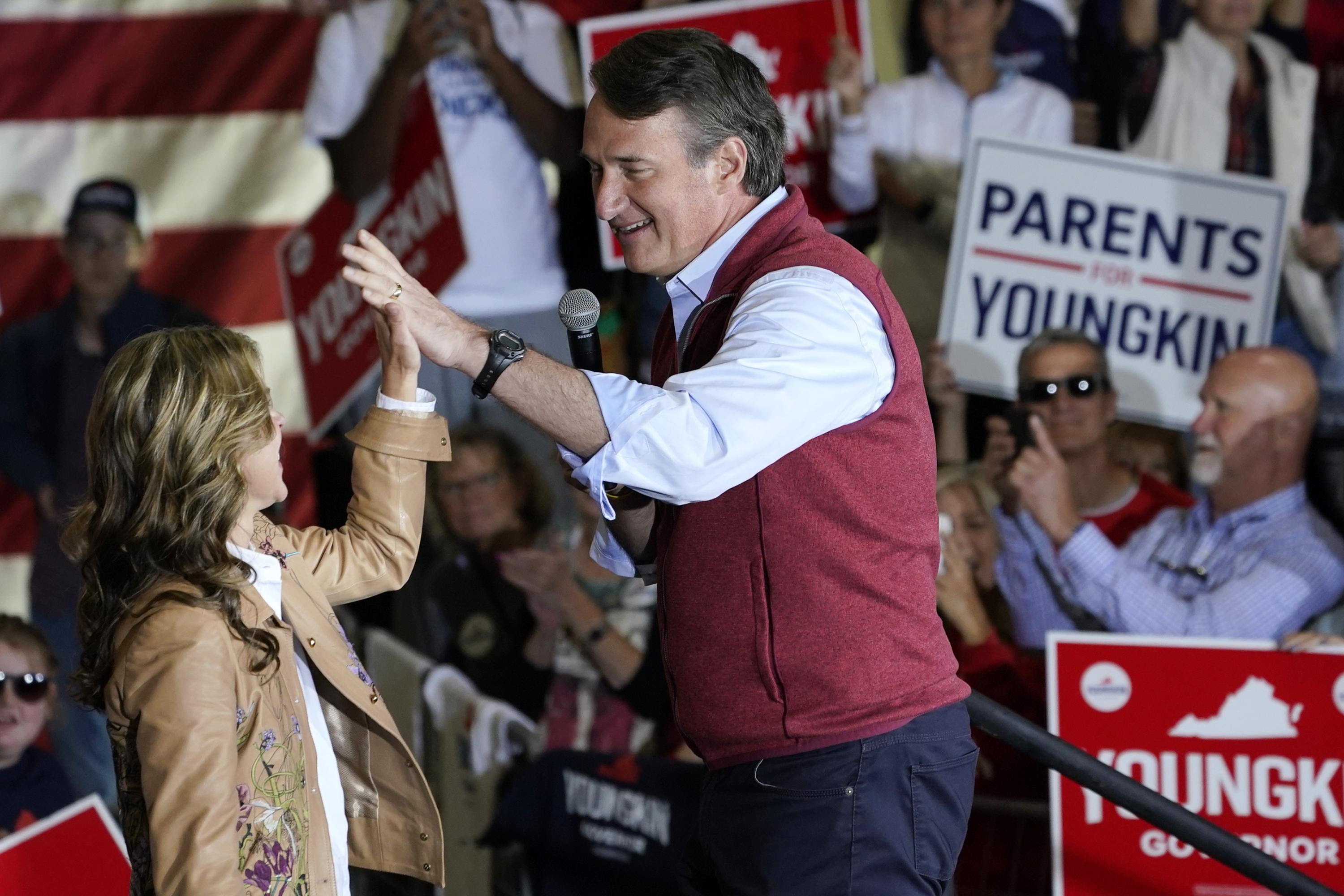
RICHMOND, Va. (AP) — Glenn Youngkin won the Virginia governor’s race early Wednesday, tapping into culture war fights over schools and race to unite former President Donald Trump’s most fervent supporters with enough suburban voters to become the …Read More

OTHER TOP STORIES

GENEVA (AP) — The U.N. human rights chief said Wednesday that Ethiopia’s yearlong war has been marked by “extreme brutality” as a joint investigation into alleged atrocities …Read More

ENCINITAS, Calif. (AP) — The bloom of a giant stinky Sumatran flower has drawn crowds to a Southern California garden. The bloom of the Amorphophallus titanum plant began Sun…Read More

BAGHDAD (AP) — More than three weeks after Iraqis voted in parliament elections, pro-Iran Shiite militias that emerged as the biggest losers are still rejecting the outcome o…Read More

HONG KONG (AP) — Yahoo Inc. is leaving the China market, suspending its services there as of Monday amid what it says is an “increasingly challenging” business and legal envi…R

The post WORLD VIEW: US-Bad News for Dems, Missing Aussie Girl Found, Facebook Overhaul, More appeared first on The St Kitts Nevis Observer.
New – Delta Variant of Variant, World Stats

An Even More Contagious Variant of a Variant

The Hill – A potentially faster-spreading “sub-lineage” of the coronavirus Delta variant named AY.4.2 has been spotted by labs in at least 8 states, and health authorities in the United Kingdom say they are investigating a growing share of cases from this strain of the virus.
Labs in California, Florida, Maryland, Massachusetts, Nevada, North Carolina, Rhode Island and Washington state, plus the District of Columbia, have so far spotted at least one case of AY.4.2.While it may spread somewhat faster, health authorities have not found evidence of more severe illness caused by the variant, and they say current vaccines remain effective against it.

The sub-lineage has remained a small fraction of circulating cases in the U.S. for several weeks, but American health officials say they are already ramping up efforts to study the new Delta variant descendant.

“We have teams that are constantly reviewing the genetic sequence data and looking for blips, an increase in a certain proportion or just something that’s completely new,” says Dr. Summer Galloway, executive secretary of the U.S. government’s SARS-CoV-2 Interagency Group.

Galloway, who also serves as policy lead on the CDC’s laboratory and testing task force, said U.S. labs began preparing last month to prioritize tests to assess whether AY.4.2 can evade antibodies from vaccinated Americans, or from currently authorized monoclonal antibody treatments for the virus.

That process can take up to four weeks, Galloway said, across several laboratories that will run tests with harmless “pseudoviruses” designed to impersonate the variant’s characteristic mutations.

Scientists have already turned up worrying combinations of mutations in other sub-lineages of Delta called AY.1 and AY.2, which like AY.4.2 have also sometimes been interchangeably called “Delta plus” variants.

Last month, the Biden administration temporarily halted distribution of a monoclonal antibody treatment in Hawaii after estimated cases of AY.1 climbed up to 7.7% in the state. The Food and Drug Administration said lab experiments with AY.1 suggested it was “unlikely” the drug would be effective against the variant.

The state has since resumed use of the antibody treatment, after AY.1 dropped below 5% in Hawaii. Nationwide, AY.1 has hovered around 0.1% of cases.

“Right now, I think there’s not a lot that we know. But in terms of the risk that it poses to public health, the prevalence is very low in the U.S. and we don’t really anticipate that the substitutions [of AY.4.2] are going to have a significant impact on either the effectiveness of our vaccines or its susceptibility to monoclonal antibody treatments,” said Galloway.

In the U.K., AY.4.2 has climbed to more than 11% of cases of the Delta variant. Health officials there say the variant does not appear to have led to a “significant reduction” in vaccine effectiveness or an uptick in hospitalizations, but it could be spreading faster because of “slightly increased biological transmissibility.”

“Estimated growth rates remain slightly higher for AY.4.2 than for Delta, and the household secondary attack rate is higher for AY.4.2 cases than for other Delta cases,” said a report published Friday by the U.K. Health Security Agency.

The Centers for Disease Control and Prevention estimates that AY.4.2 has made up less than 0.05% of circulating cases in the U.S. for several weeks, according to an agency spokesperson. Grouped together, CDC estimates that the Delta variant and its sub-lineages has been virtually 100% of cases in the U.S. for months.

“Even based on the data in the U.K., if you look at the transmission advantage, it looks smaller. It’s not like Delta, which as soon as they came in, it was almost a 50[%] to 60% advantage over all previous lineages,” says Dr. Karthik .
Gangavarapu, a postdoctoral researcher at UCLA’s Suchard group.Gangavarapu was part of the team to lead Scripps Research’s variant tracking effort at Outbreak.info, which has tracked variants like AY.4.2 as they have emerged in an international database of “sequenced” viruses maintained by a group called the GISAID Initiative.
“It could have a slight transmission advantage, but it could also have other factors that are important. For example, how is the population immunity in a given location? What is the vaccination rate? Those may have some sort of impact on how the variant is spreading,” said Gangavarapu.The largest share of circulating virus in the U.S. remains closely related to the original Delta variant, among samples reported to GISAID. Scientists have speculated that the next major variant of concern could emerge as a mutation from the Delta variant, though Gangavarapu cautioned that highly-contagious strains have arisen largely independently from one another.Delta variant sub-lineages like AY.25, AY.3, and AY.44 also currently make up large U.S. proportions of cases, though not necessarily because they have an advantage over their siblings.

Outbreak.info had previously counted AY.4.2 sightings in at least 35 states. However, Gangavarapu said a bug in the “Pangolin” system used to generate reports of variants had resulted in some false positives for the sub-lineage showing up in some tallies.

New sub-lineages are frequently re-categorized by scientists to “help researchers track the virus” clustered in certain regions, even when they sport mutations that end up having no meaningful impact on the public health risk of the variant.

“Probably over the next month or so we will get more data to actually see if there is the same sort of increase in prevalence that we see in the U.K. in the U.S. as of now,” says Gangavarapu.

==================================================

World STATS

Coronavirus Cases:

248,402,787

Deaths:

5,031,203

Recovered:

225,071,924
Highlighted in green
= all cases have recovered from the infection
Highlighted in grey
= all cases have had an outcome (there are no active cases)

[back to top ↑]

Latest News

November 3 (GMT)

Updates

  • 10,429 new cases and 124 new deaths in Poland [source]
  • 40,443 new cases and 1,189 new deaths in Russia [source]
  • 221 new cases and 7 new deaths in Japan [source]
  • 3,588 new cases and 269 new deaths in Mexico [source]

The post New – Delta Variant of Variant, World Stats appeared first on The St Kitts Nevis Observer.