Category Archives: headline

Unvaccinated Victorians to be locked out of non-essential shops

Victorians who want to shop at non-essential retail stores will need to be fully vaccinated once the state reaches its 90 per cent vaccine milestone.

COVID-19 Commander Jeroen Weimar clarified confusion surrounding the retail rule today following reports unvaccinated shoppers could still enter non-essential retail stores for the time being.

Mr Weimar today said unvaccinated people could still shop at non-essential stores for the next few weeks, but when the state hits its 90 per cent vaccine threshold next month, they would be locked out.

LIVE UPDATES: TGA approves Pfizer vaccine for Australian booster jabs
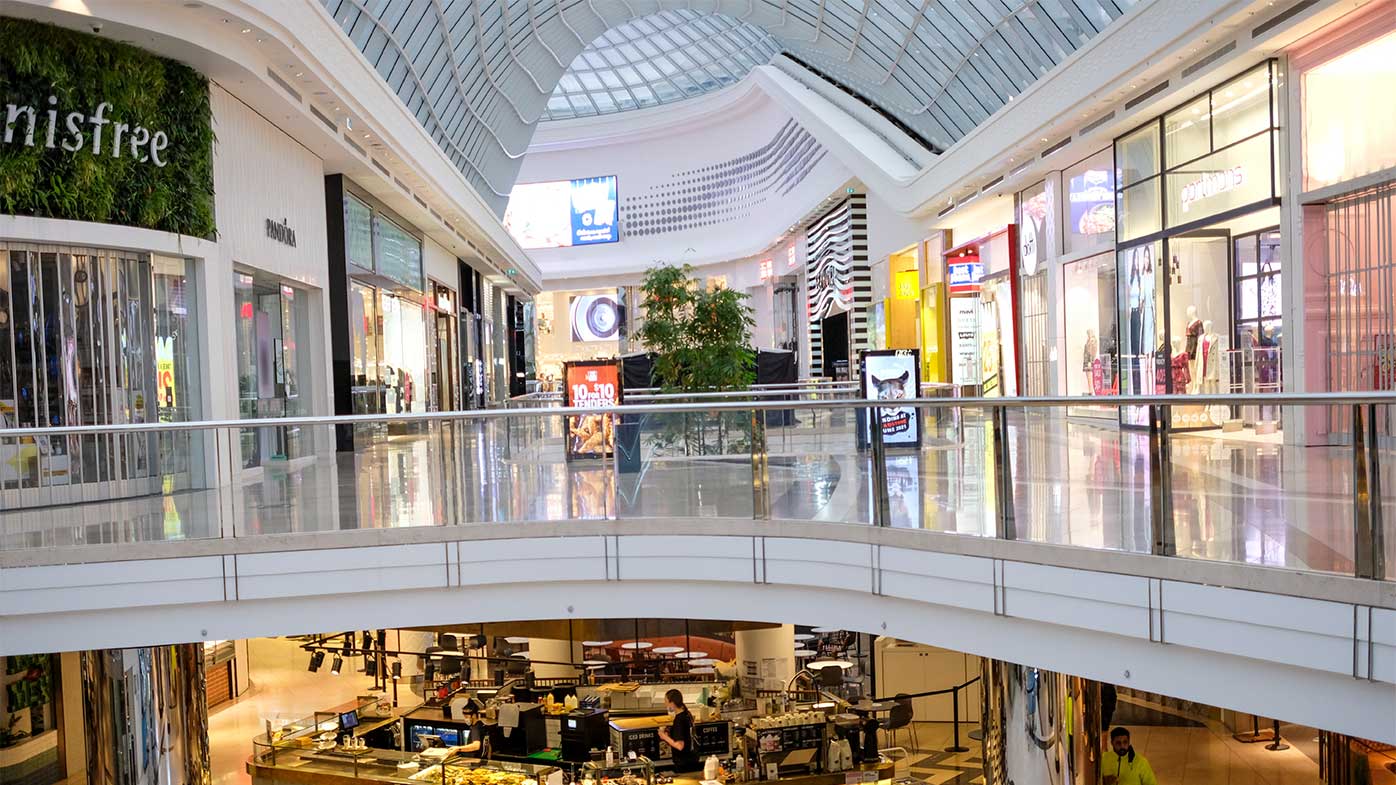
An empty Chadstone shopping centre on Victoria's first day of lockdown.

According to the Victorian roadmap, the state is due to reach its 90 per cent vaccination milestone on November 24.

Mr Weimar likened the temporary rules to a 'grace period'.

"We are sending out a very clear signal that says if you are going to be active in these kinds of retail environments post-90 per cent, you will need to get vaccinated," Mr Weimar said.

"That gives everybody, the few hundred thousand people we have left who are eligible and not yet vaccinated – you can start that journey today and you will be fully vaccinated in time for the 24th of November."

READ MORE: Rent prices skyrocket at fastest rate in 13 years
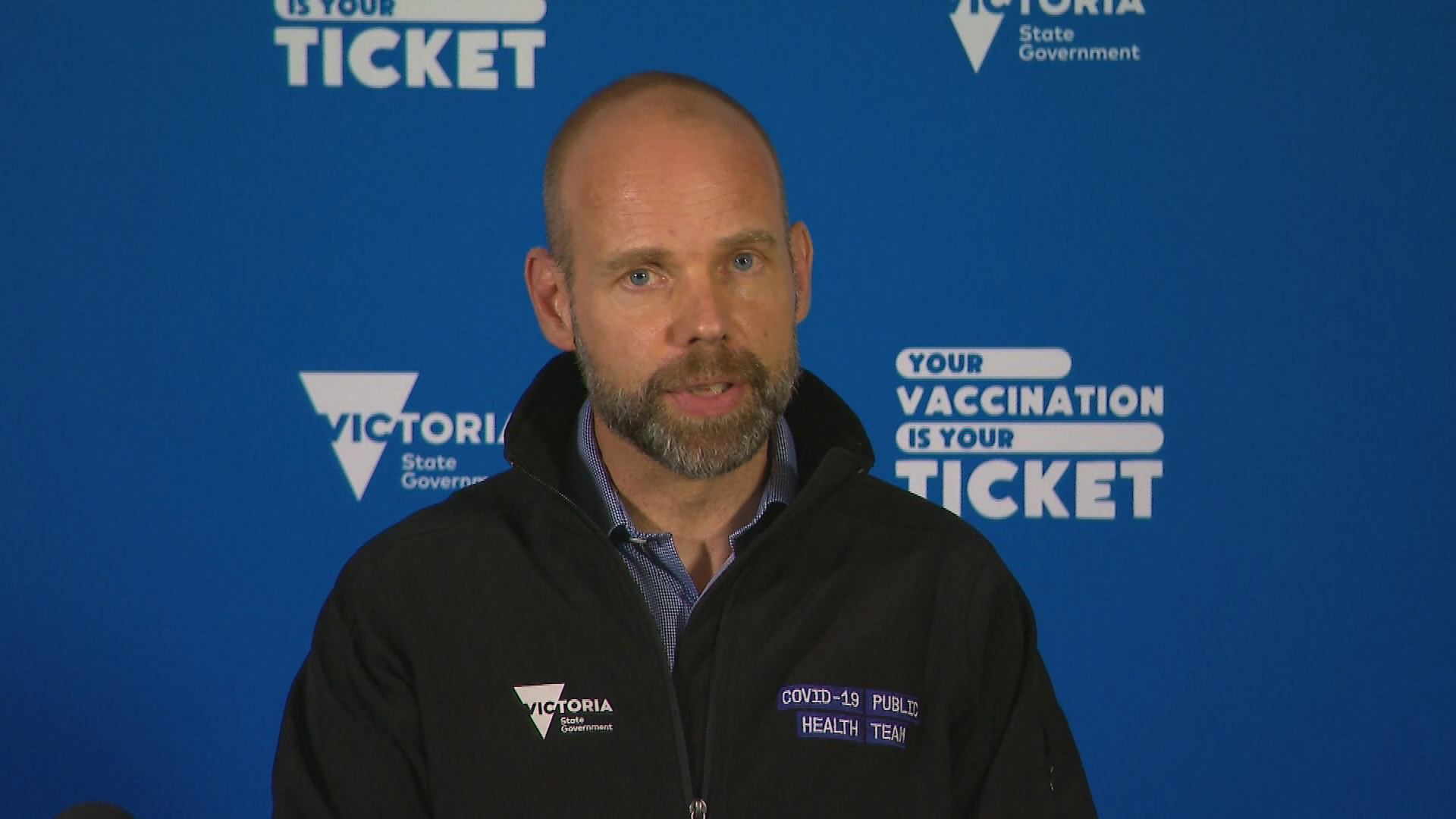
However, unvaccinated people have been discouraged from shopping at non-essential stores when retail settings reopen on Friday at 6pm – when the state reaches its 80 per cent milestone.

Mr Weimar said enforcement of the vaccine mandate next month would be up to retailers to manage.

"The enforcement of this and how retailers manage it, how shop owners manage this will be largely a matter for them," he said.

"We will work with them over the coming weeks to get it right. It has worked well in essential retail."

READ MORE: Victoria's 80 per cent freedoms explained

Victoria's COVID-19 cases

Victoria has recorded 1534 new local cases of COVID-19 amid hopes infections are beginning to stabilise.

Another 13 people died with coronavirus yesterday, including a man in his 30s, a woman in her 40s, four men and a woman in their 60s, two men and three women in their 80s and a woman in her 90s.

A total of 76.5 per cent of Victorians and over 16 are now fully vaccinated against COVID-19.

https://twitter.com/VicGovDH/status/1453119779036794882?s=20

Mr Weimar said it was "reasonably encouraging" to see the daily number of new cases around 1500.

"We have seen it now for a few days, it does feel like we are at a plateau at the moment," he said.

"The plateau is higher than we would like, but it is slightly under the Burnet modelling at this point in time."

There are 748 people in Victorian hospitals with COVID-19, including 138 patients in ICU and 87 on a ventilator.

COVID-positive Victorians are being encouraged to recover from the virus at home through the support of new technologies, rather than take up a hospital bed.

The COVID Community Pathways program, run by Dr Richard Coates at The Alfred hospital, is able to monitor the conditions of patients from afar.

Dr Coates said a text message is first sent out with questions helping to prioritise people who need the most urgent attention, asking about vaccinated status, age and other health conditions.

Health workers then follow up with a phone call to people who are in higher-risk groups and enrol them in care – either in a GP-run program or using home monitoring devices.

"People are often sicker between day five and day 10 after their symptoms start," he said.

READ MORE: Vaccinated Aussies can leave country without exemption from Monday

"If they are breathless, exhausted … if they have high persistent fevers and feel generally unwell.

"We also keep an eye on their oxygen levels.

"If there is any deterioration, they are organised to go to hospital."

https://omny.fm/shows/the-9news-lunch-podcast/oct-27-a-vaccine-booster-announcement-and-why-ther/embed?style=cover

PM says 'flexibility' needed over Australian Open players

Prime Morrison Scott Morrison has suggested "flexibility" is needed around the issue of unvaccinated tennis players entering the country for the Australian Open.

Victorian Premier Daniel Andrews is opposed to issuing exemptions for unvaccinated international stars.

"You just have to manage the public health risk," Mr Morrison told Today.
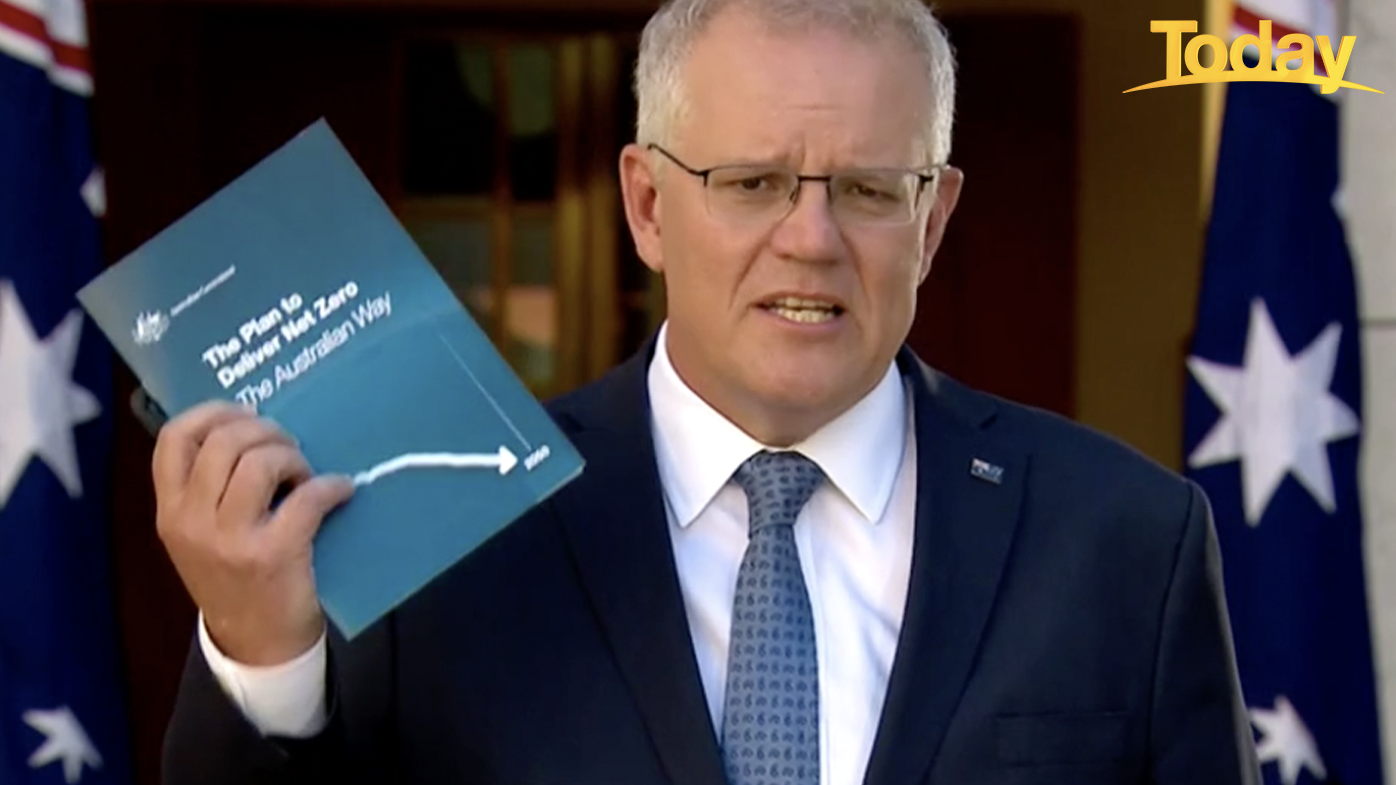
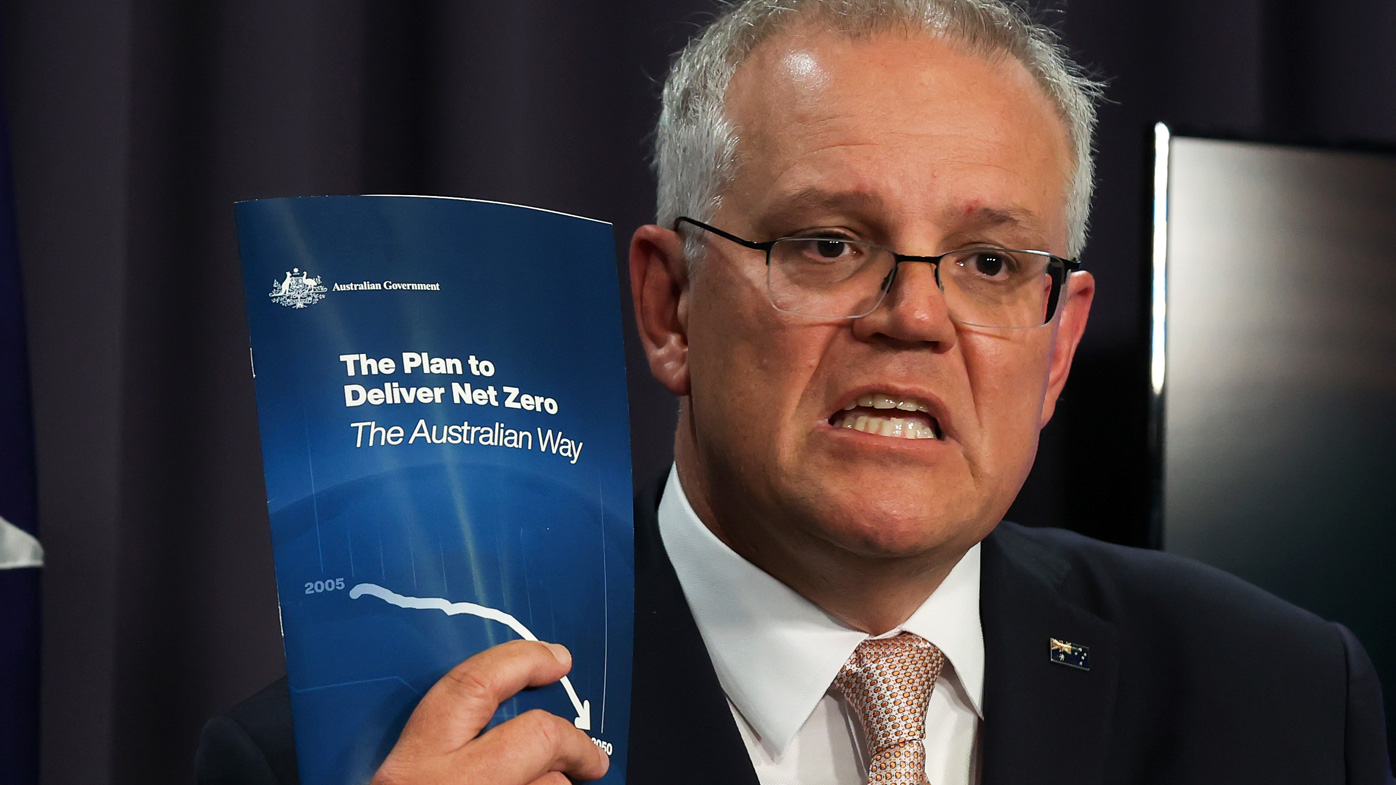
Mr Morrison held up the net zero plan and said it was a 'middle course' between climate debate extremes.

"We talk about large numbers of people, obviously there is a smaller number of actual players."

However, Mr Morrison said arrivals would have to follow state health rules, and that two weeks of quarantine for unvaccinated people was "sensible".

He noted that exemptions were able to be granted.

"It is nice to have clear and hard and fast rules, but there needs to be a little bit of flexibility so we can live with the virus," he said.
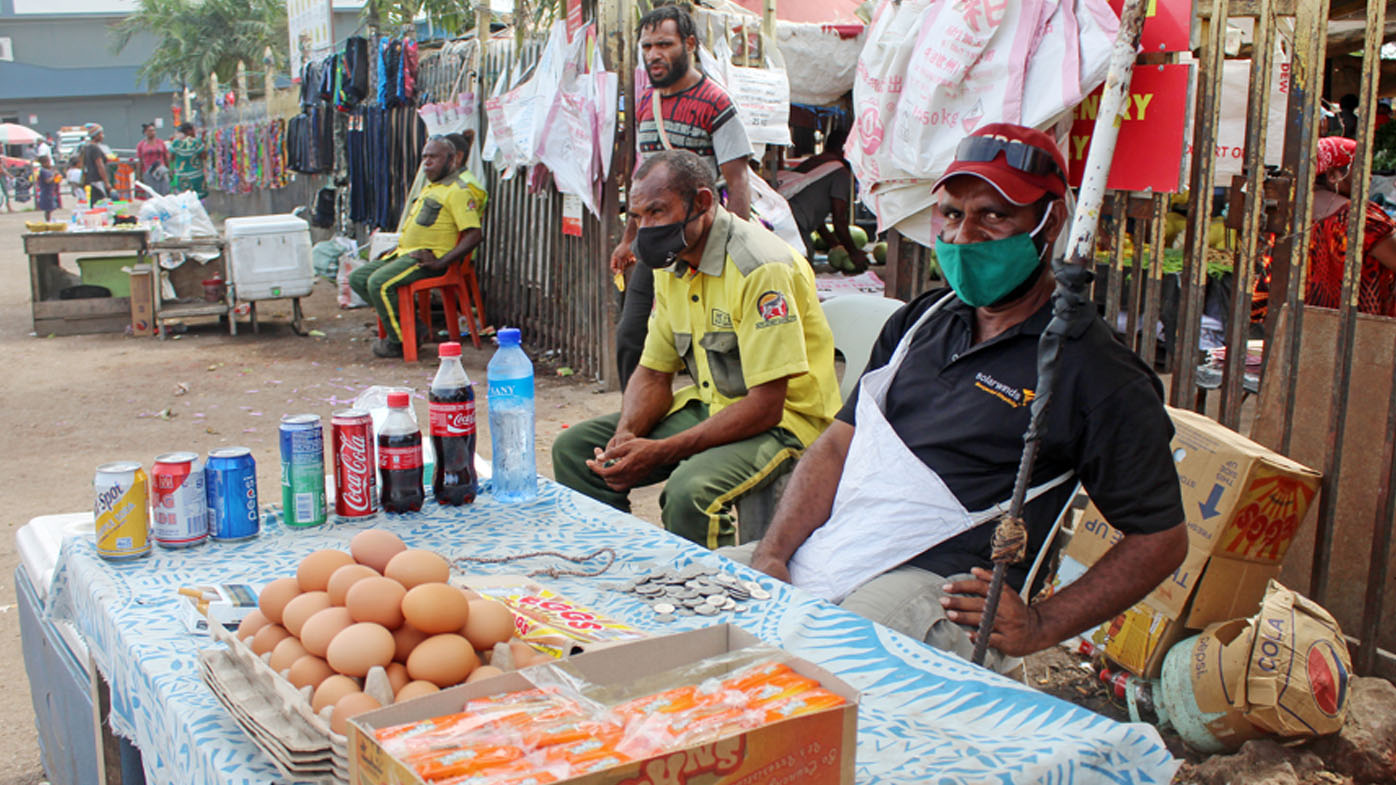
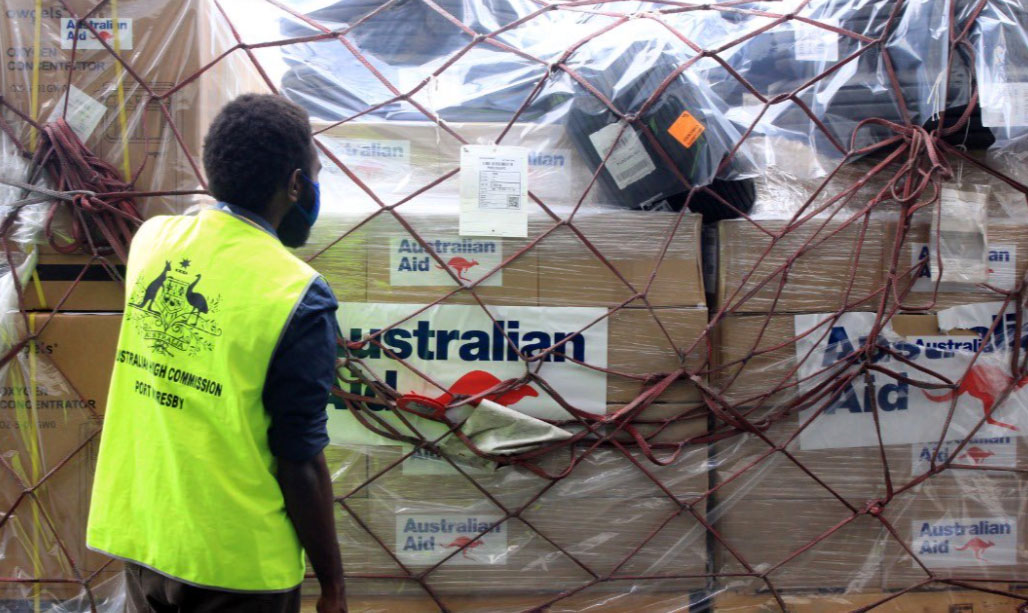
Mass burial of pandemic victims in PNG as Australia increases aid

Authorities in Papua New Guinea have approved the mass burial of COVID-19 victims to relieve the pressure on a major morgue as cases balloon.

The burial is planned for tomorrow and Friday in the country's capital Port Moresby, the National newspaper in PNG reports.

National Capital District Governor Powes Parkop said the Port Moresby General Hospital mortuary, which had a capacity of about 60 bodies, was full with more than 300.

READ MORE: Rent prices skyrocket at fastest rate in 13 years

"Three more (freezer) containers have been installed to store the bodies and a mass burial is being planned this week," Mr Parkop said.

"People are dying on arrival (at the hospital) and those who died despite being under the care of the hospital's isolation centre."

Health authorities in PNG – Australia's nearest neighbour – are struggling to stem a third COVID-19 wave in the country of almost nine million culturally diverse people who speak more than 800 languages and mostly live in traditional remote villages.

READ MORE: Cleo Smith's parents make new plea as cops check home for clues

Jonathan Pryke, director of the Pacific Islands Program with the Lowy Institute, said full vaccination rates for adults in PNG remain at below 2 per cent.

He told nine.com.au testing data showed the country was on the edge of a health catastrophe amid scepticism and rampant misinformation about vaccines.

"Seven out of 10 people presenting at Port Moresby's largest hospital with symptoms are now testing positive," Dr Pryke said.

"Clearly the PNG' health system is buckling under the strain of the pandemic."

Meanwhile, Australia is stepping up its pandemic relief aid for PNG.

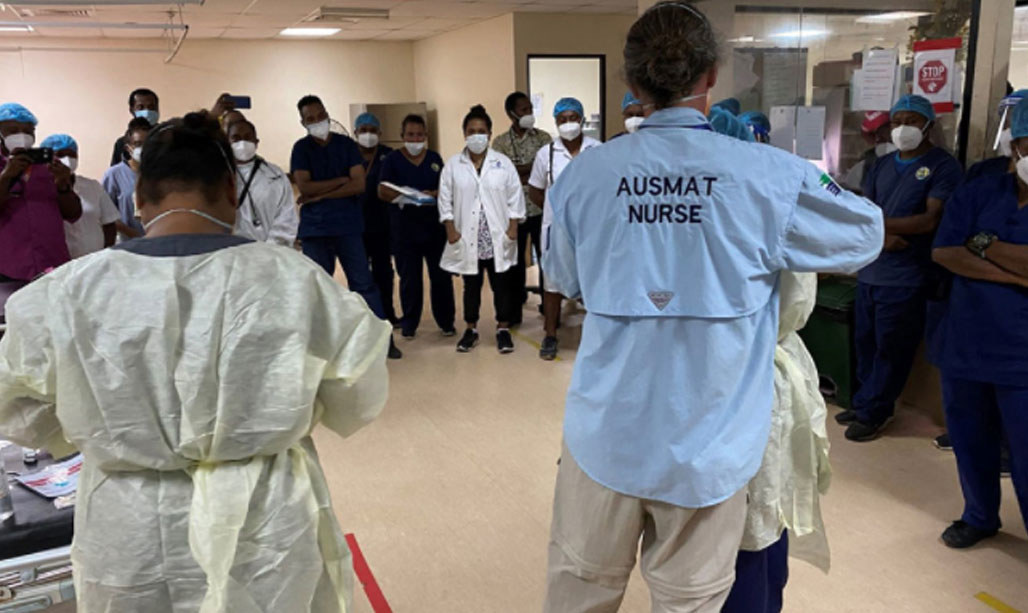
Last weekend, the Federal Government sent a second AUSMAT team of medical staff to PNG.

Australia has already been supplying vaccines, testing kits and funds for health programs.

In March, the Morrison Government sent supplies of its AstraZeneca vaccine to PNG.

READ MORE: International travel opens up for fully vaccinated Australians

Health Minister Greg Hunt said today Australia was committed to delivering 60 million COVID-19 vaccine doses and $500 million in funding to Pacific neighbours affected by COVID-19.

"We always knew that if we had spare vaccines, we would be able to share them," he said.

What you need to know about home COVID-19 tests

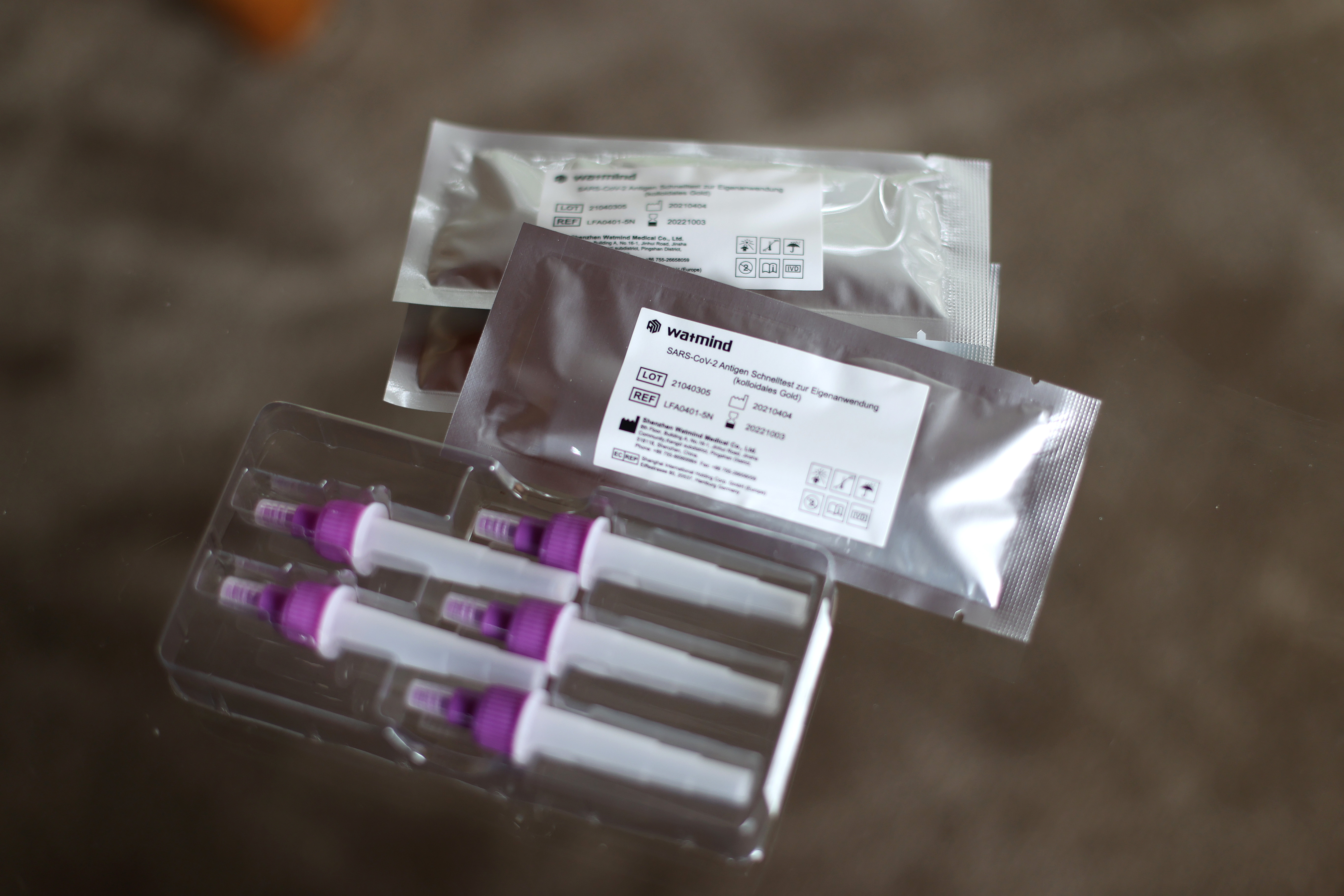
Rapid antigen tests, hailed as a game-changer in the fight against COVID-19, will be available to buy in supermarkets as soon as next week.

The Chinese-manufactured Hough Pharma nasal tests, which have a turnaround time of about 15 minutes, will be available from a selected 700 Coles stores nationally next week.

EXPLAINER: TGA approves Pfizer booster shot

In this photo, an illustration of a COVID-19 rapid antigen test kit is pictured. Supermarkets around Australia will soon start to roll them out for sale.

It comes after Health Minister Greg Hunt announced the Therapeutic Good Administration (TGA) had approved the use of the home testing kits from November 1.

Offering fast results and simply administered in a non-medical setting, they offer advantages over other COVID-19 tests such as the standard polymerase chain reaction or PCR test.

Here is what you need to know.

What is a rapid antigen test?

Antigen tests are a quick and easy way to look for a specific antigen – a term for any foreign substance, such as a virus or bacteria.

Antigen tests for flu or strep throat, for example, can be done in a doctor's office without expensive equipment and give results in 10 to 15 minutes.

EXPLAINER: How to get your international COVID-19 vaccine passport

How do they work?

Think of it like an at-home pregnancy test.

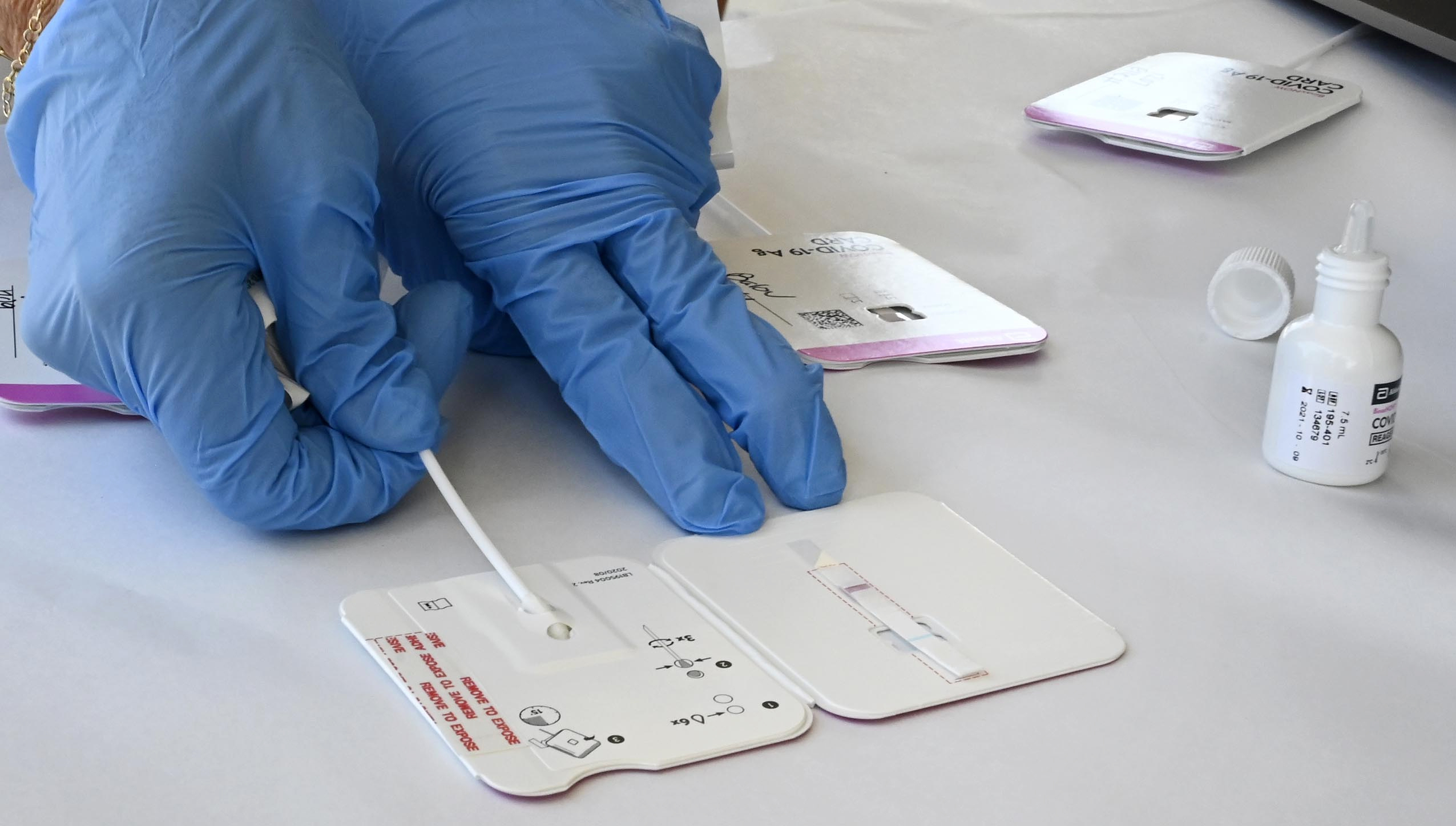
In a coronavirus antigen test, you put a bodily sample such as a throat swab onto a specially treated strip, which then uses a colour or marker to say whether the novel coronavirus is present.

The antigen test works by looking for a unique part of the novel coronavirus, such as a specific protein on one of its namesake "corona" spikes.

If that specific protein is present in detectable quantities, then the test returns a positive result.

How to purchase a rapid antigen test?

Rapid antigen tests will be available from supermarkets around the country, with 700 Coles outlets stocking the kits as early as next week.

A spokesperson for Woolworths said they were also looking to roll out rapid testing kits, first starting with states like New South Wales and Victoria, that are currently managing outbreaks.

How much is a rapid antigen test

It's believed kits will be available in packs of two or five in store and online.

Estimates have the price of the kits pegged at between $10 to $30.

Where can they be done?

Rapid-antigen tests are already being used in a number of settings across Australia, such as aged care homes and some quarantine facilities and workplaces.

The TGA has approved 33 rapid tests for use under supervision.

The kits available from next week are the first of eight rapid antigen tests approved for at-home use.

In a statement, the TGA said any rapid antigen tests approved for at-home use would come with simple-to-use instructions, fact sheets and a supporting phone helpline or explainer video.

Benefits of rapid antigen testing versus PCR

The TGA says rapid antigen tests can detect the virus in the acute phase of infection – especially in the week before symptoms are apparent, and the first week of symptoms being apparent.

And unlike results from PCR testing that take hours or days, rapid antigen tests can return them in 30 minutes or less.

READ MORE: NSW's roadmap out of lockdown explained

How accurate are rapid antigen tests?

Advisor to the World Health Organisation (WHO) and Professor of Epidemiology at University of NSW, Professor Mary Louise McLaws said some tests are "close to 100 per cent" accurate.

"They're relatively cheap and they do have very good accuracy, particularly when you use them a couple of times in a row," she said.

They are most accurate in settings with a high transmission rate of coronavirus.

"In the wider Australian community settings where there are low rates of COVID-19, the tests are less accurate as there is a higher risk of both false positive and false negative results," the TGA said.

The current TGA advice is a PCR test must be carried out to confirm rapid antigen test results.

"While a goal of no or very low community transmission is being pursued, conducting confirmatory testing by PCR is very important if someone gets a positive test from a rapid antigen test," the TGA says.

"It is not acceptable to just repeat the rapid antigen test in the hope of the second test being negative.

"Any positive result needs follow up with a PCR test."

READ MORE: Melbourne truckies plan traffic chaos in protest

What is the overseas experience like?

In the UK, rapid antigen tests have been used widely to complement PCR testing during the pandemic.

The tests have been offered free to millions of people in England, for use at home or at test centres, workplaces and schools.

They are widely used for school students in Britain who are close COVID-19 contacts.

They have proven a safe and accurate alternative to home isolation and enable children to remain in class.

Some countries also accept a negative rapid antigen test result from UK travellers as a condition of entry.

The Singapore government has also distributed millions of free kits to its citizens.

How the world reacted to Australia's net zero plan

Australian billionaire Mike Cannon-Brookes has ripped into the government's key climate document which plans to lead Australia to net zero carbon emissions by 2050, calling it "ridiculously embarrassing" and "just more bulls—".

Using less colourful language, the world's media were more restrained than the Atlassian founder in running the rule over Prime Minister Scott Morrison's plan – but not by much.

Headlines and stories from many of the world's most prestigious mastheads were critical of Australia's net zero 2050 plan, particularly the detail – or lack of it – on the pages.

Prime Minister Scott Morrison hold the plan he claims will lead Australia to net zero by 2050.

READ MORE: Queen cancels COP26 appearance

Mr Cannon-Brookes tweeted late last night that he had read all 129 pages of the blue book Mr Morrison had held up yesterday, The Plan to Deliver Net Zero, The Australian Way – but he mocked the government document as nothing more than a "pamphlet".

"Its (sic) not worth the paper I didn't print it on," he wrote.

"I understand technology damn well."

Mr Cannon-Brookes, a longtime critic of Australia's lack of action on carbon reductions, claimed the plan did not contain a "technology driven approach", despite Mr Morrison repeatedly underlining yesterday how technology would be a core strategy for major reductions in Australia's carbon emissions and achieving net zero.

"It's inaction, misdirection & avoiding choices. I'm going to bed. This is just ridiculously embarrassing," he wrote.

https://twitter.com/mcannonbrookes/status/1452931530167242754?ref_src=twsrc%5Etfw

As Mr Cannon-Brookes and Australia slept, reporters and headline writers were busy in the northern hemisphere analysing Mr Morrison's announcement, just days ahead of the COP26 climate summit in Glasgow, Scotland.

CNN said that "Australia will be the rich world's weakest link at COP26 with hollow net-zero and emissions pledges".

The New York Times said Australia's ambition to hit net zero by 2050 was based on a plan that "makes that hard to believe".

It quoted Richie Merzian, climate and energy director at the Australian Institute, who appeared to back the views of Mr Cannon-Brookes, calling Australia's plan "an update on the marketing materials used by the federal government to claim it's doing something when it's really doing nothing new."

He added: "It's kind of ridiculous."

READ MORE: Fully vaccinated Australians will be able to leave the country without exemption

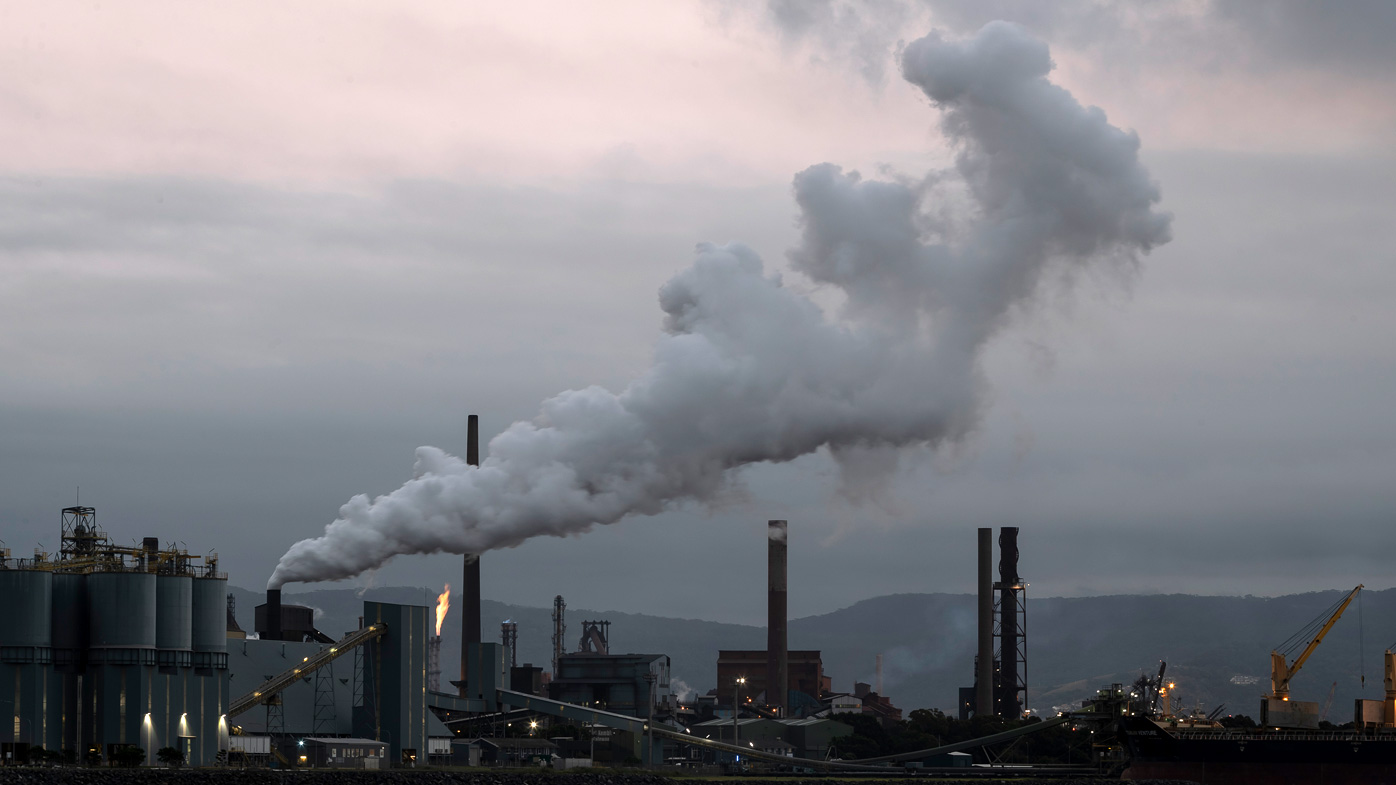
Smoke pours from the steelworks and coal loading facility in Port Kembla, NSW.

The Washington Post called out Mr Morrison over a refusal to "adopt a steeper 2030 commitment".

British newspaper The Financial Times said Australia remained "wedded to fossil fuels" much to the "dismay of green groups which say phasing them out is key to credible decarbonisation goals".

The venerable BBC said "Australia has long dragged its heels on climate action" and quoted Murdoch University fire ecology expert Joe Fontaine saying Mr Morrison's net zero plan had "all the strength of a wet paper bag".

The Irish Times spoke with Richard Black, senior associate at the Energy and Climate Change Intelligence Unit, who said Australia was "in the same camp very much as the Saudis" in presenting "an alternative vision of how you can get to net zero" while still burning fossil fuels.

The Independent detailed how Australia had promised to reach net zero carbon emissions by 2050, joining a host of developed countries, because scrutiny had increased on its "massive fossil fuel sector".

EXPLAINED: What does net zero by 2050 actually mean?

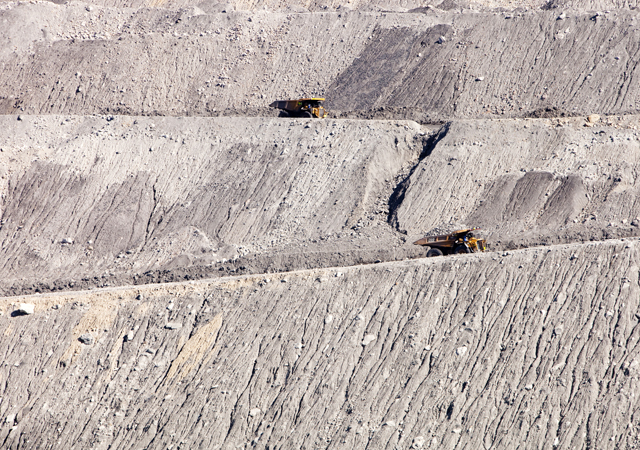
The Beltana number 1 mine, an open cast or drift coal mine managed by Xstrata coal in the Hunter Valley, New South Wales.

Reuters said Australia had been "long under fire as one of world's top producers of coal and gas", and pointed out Mr Morrison "will not legislate" the net zero goal and will "instead rely on consumers and companies to drive emission reductions".

Closer to home, Indonesia's Jakarta Post said Australia had "unveiled a much-delayed 2050 net zero emissions target, but shied away from setting more ambitious goals" ahead of COP26.

Climate protesters glue themselves to major Melbourne CBD road

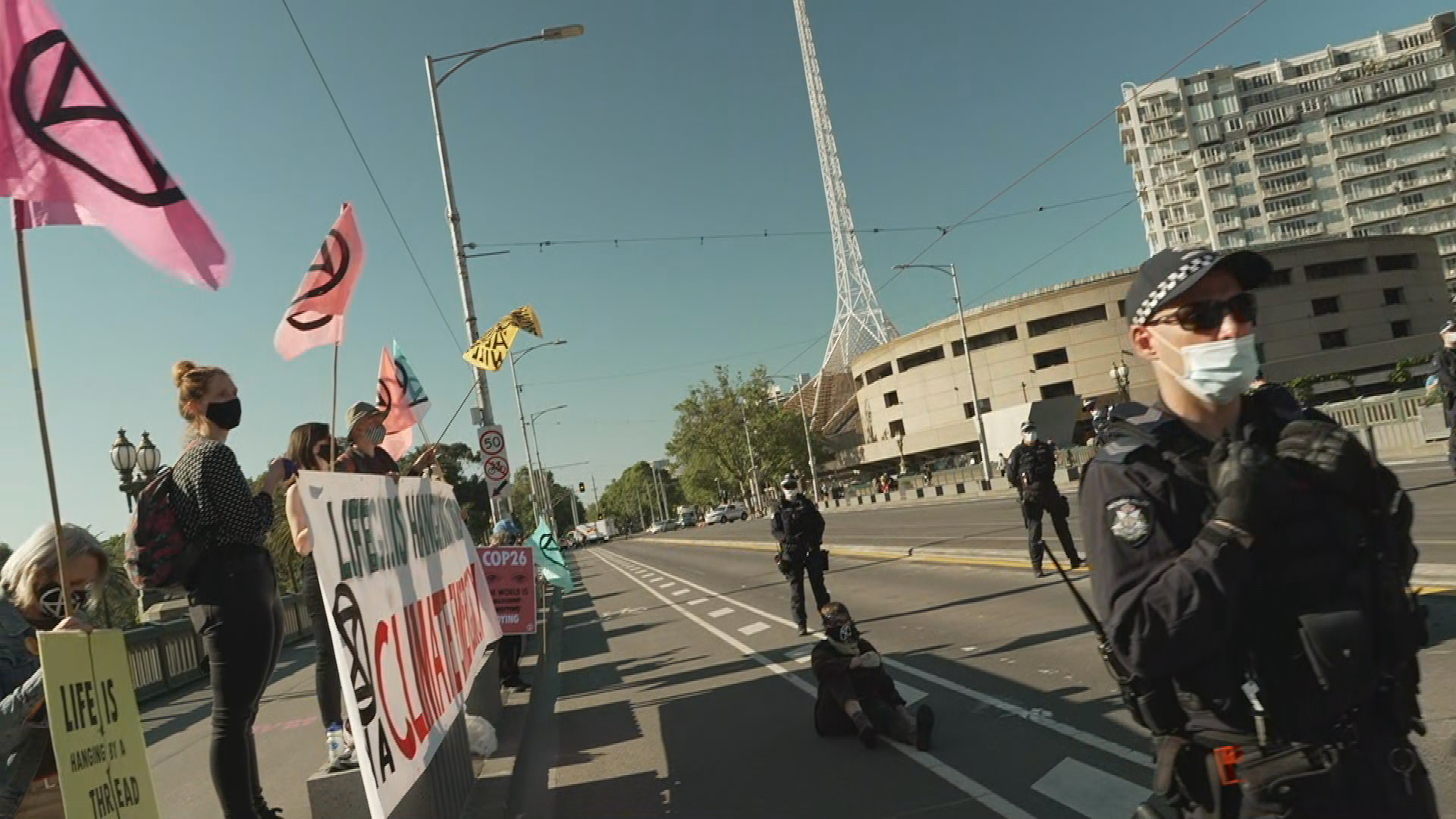
Climate protesters have stopped traffic on a major Melbourne CBD road this morning, sparking a heavy police presence in the city.

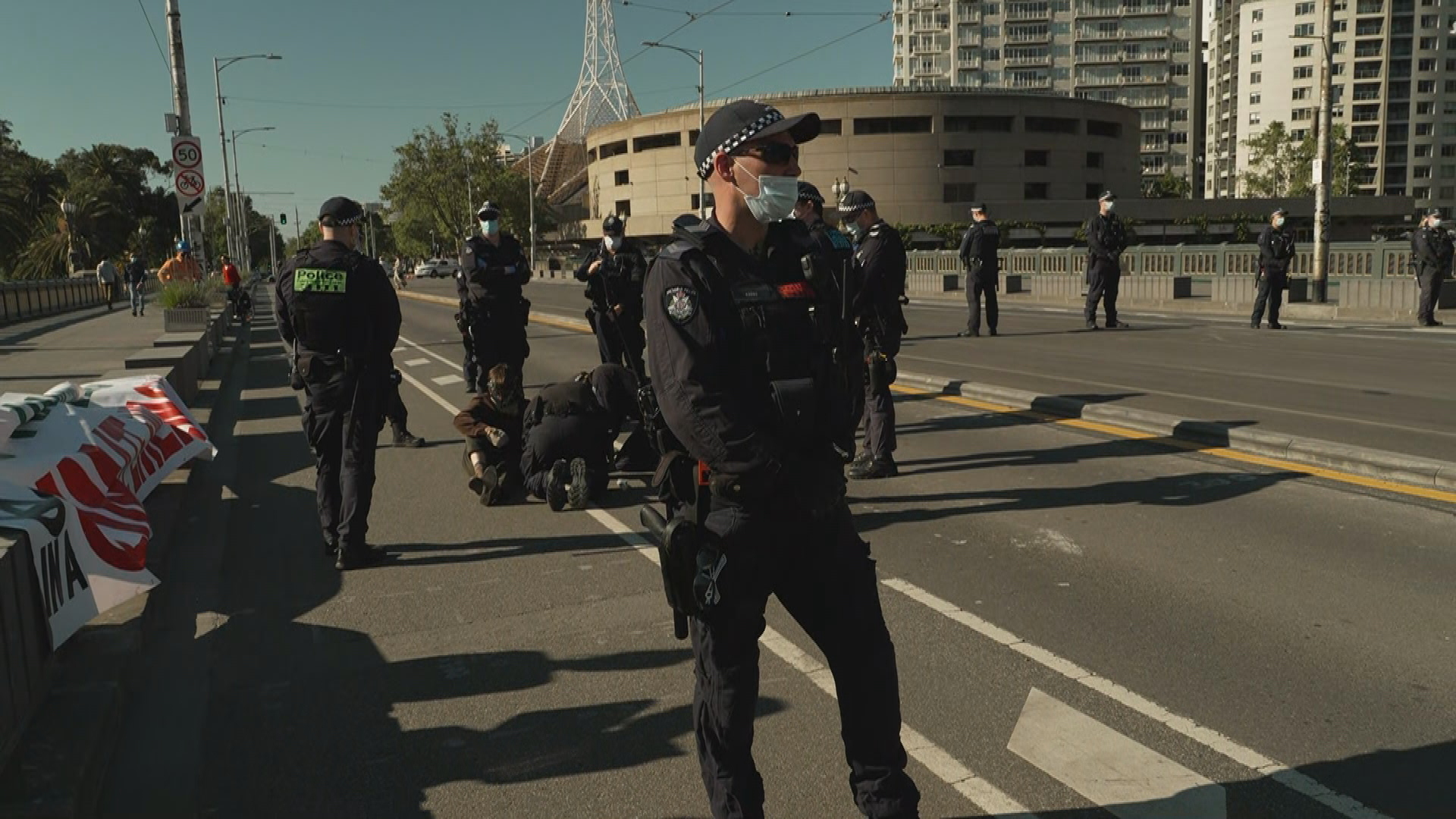
A small number of protesters glued themselves to St Kilda Road, with police working to remove them about 8.30am.

READ MORE: Victoria records 1534 new cases of COVID-19, another 13 deaths

A large police presence turned up to disperse protesters, with some demonstrators being handcuffed in the middle of the tram tracks.

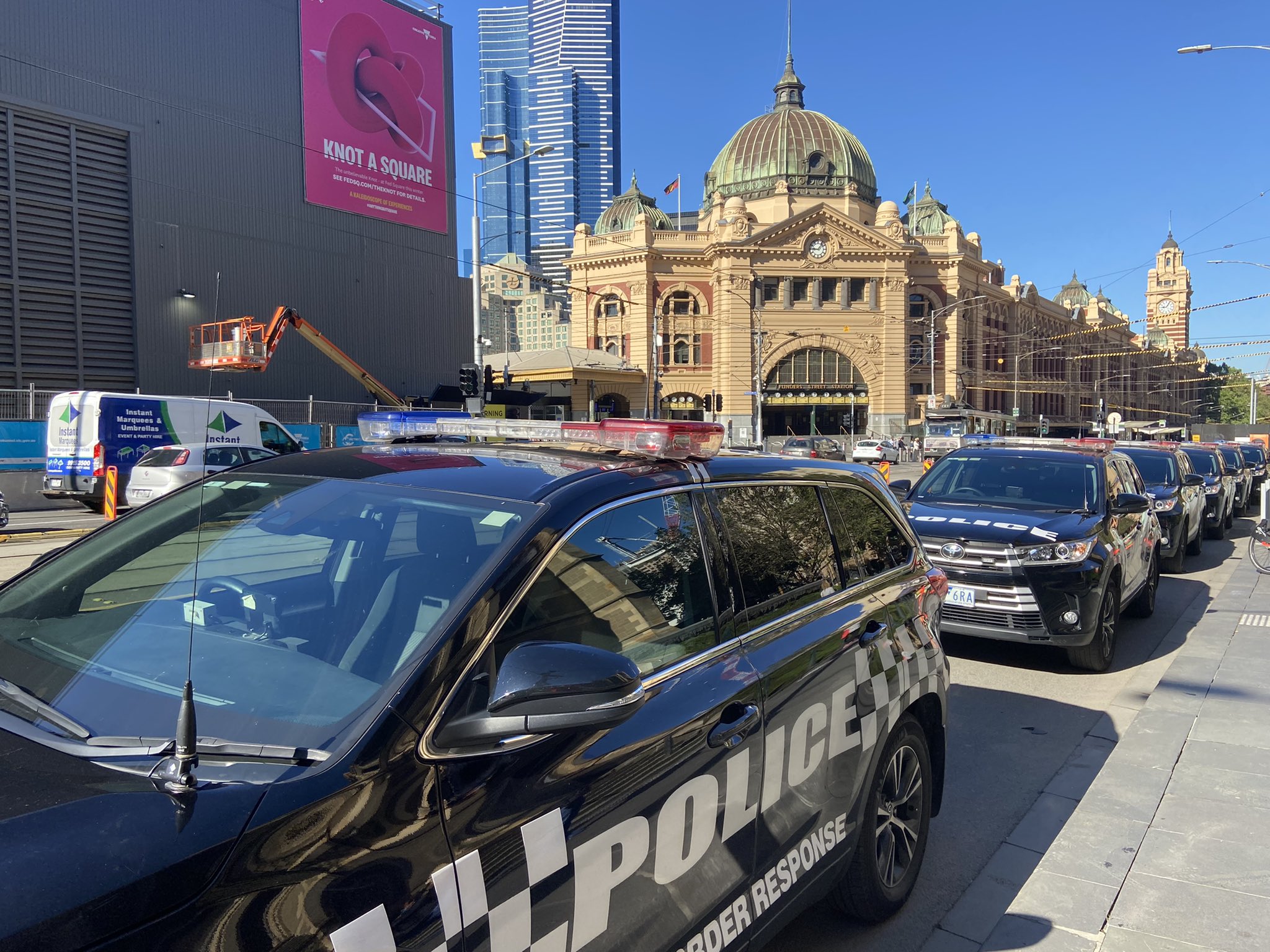
About a dozen riot police cars were spotted near Flinders Street Station.

The protesters are pushing for further action from the Federal Government ahead of the climate summit in Glasgow.

https://twitter.com/ChristineAhern/status/1453113674432876544

White prams were hung over a bridge as part of a demonstration used to symbolise 'life hanging by a thread", protesters told 9News.

The stunt has stopped traffic in both directions.

READ MORE: International travel opens up for fully vaccinated Australians

Prime Minister Scott Morrison today claimed the government's net zero plan was a "middle course" between climate debate extremes.

He told Today the plan would be based on new technologies that were already in development.

"It is green steel and hydrogen, it is low-cost solar, it is battery technology," he said.

"Australia has already reduced our emissions by 20 per cent."

https://omny.fm/shows/the-9news-lunch-podcast/oct-27-a-vaccine-booster-announcement-and-why-ther/embed?style=cover