Friends say there are two fewer “beautiful, shining lights in this world” after a horror crash killed two mothers in Waihola at the weekend.The two women were killed and three others were injured, two critically and one seriously,…
Category Archives: headline
Family of dancer who took life 'begged' for him to be kept in hospital
The family of a popular Brisbane performer who took his own life claim he was failed by Queensland's mental health system after being repeatedly discharged from hospital while appearing to be suicidal.
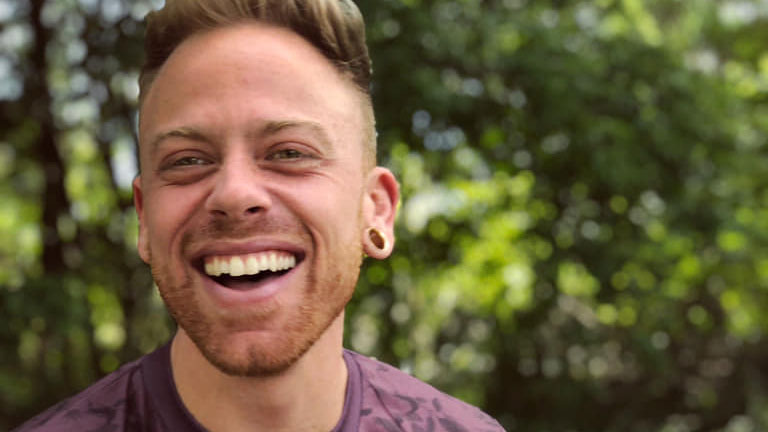
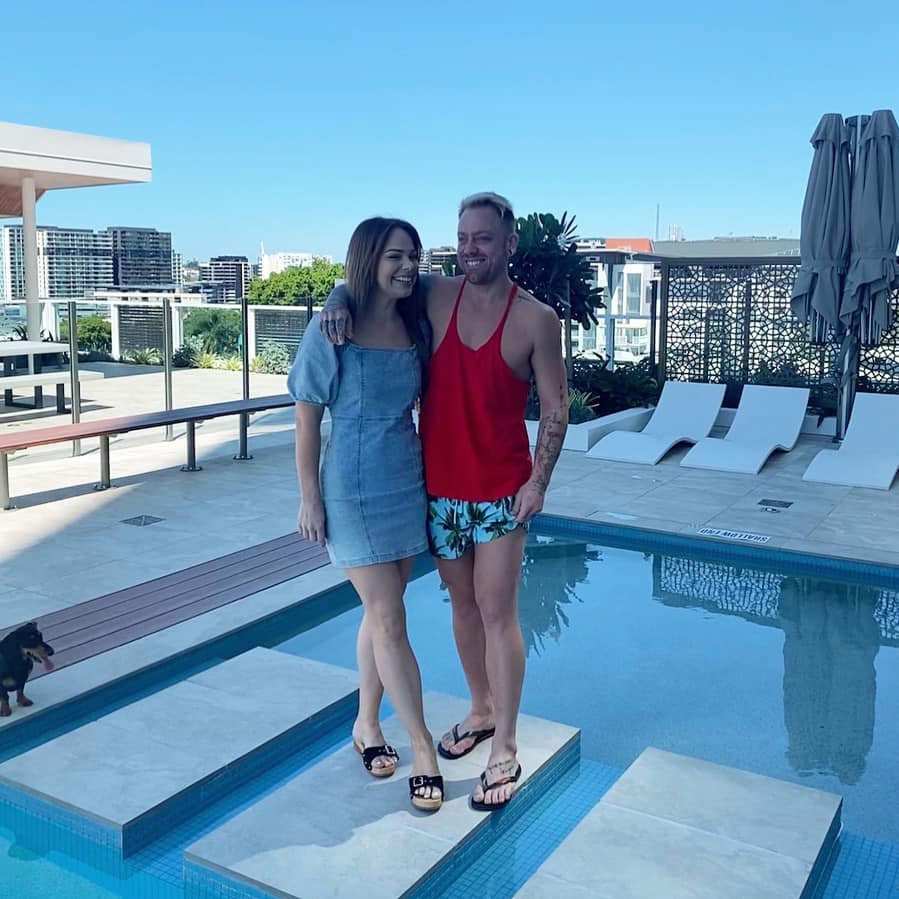
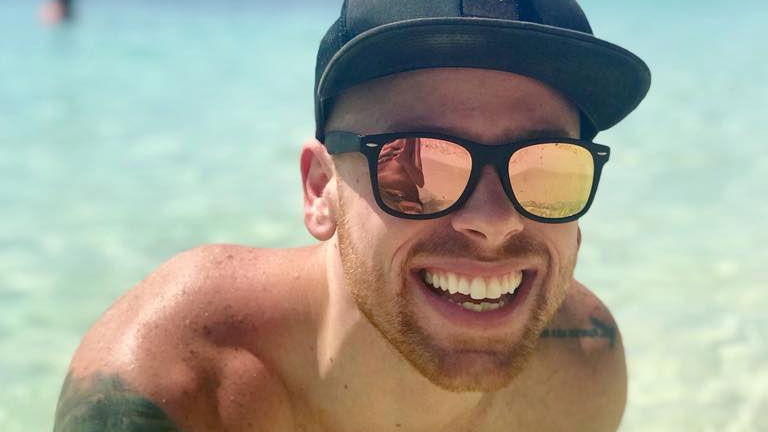
Jamie Wood, 31, was found dead in his Bowen Hills apartment on August 28 after a long battle with his mental health.
The family are now calling for a coronial inquiry into the care Mr Wood received in the months before his death.
TRIGGER WARNING: This article contains information relating to suicide and may be distressing to some readers.
A dancer who was well known in the LGBT community, Mr Wood had previously performed with pop singer Ricki-Lee and was working on cruise ships before the pandemic put him out of work.
Despite his struggles, Mr Wood's sister, Samantha Wood, said her brother always put on a brave face and was known as the "life of the party".
"On the outside he seemed to be the happiest person. No-one would have known that he was suffering so badly," she said.
"He was a very compassionate, kind and non-judgemental person. He would give you the shirt off his back, that is the type of person he was."
In a bid to forge a new career path, Mr Wood had recently taken on a hairdressing apprenticeship, which he seemed happy about, Ms Wood said.
"He called my mum at 6pm the night that he took his life. He was telling her how excited he was about his apprenticeship," she said.
"That is why it was such a shock that that same night he took his life."
READ MORE: 'Shadow' mental health pandemic spreading among children
Despite the promising progress he made in the month before his death, Mr Wood's mental health problems were ever-present.
He had been diagnosed with borderline personality disorder (BPD) and was regularly being transported via police or ambulance to the emergency department at the Royal Brisbane and Women's Hospital.
A month before his death, on July 26, Mr Wood was admitted to the emergency department after attempting to self-harm, requiring surgery, Ms Wood said.
"He had sent my mum a suicide note which I passed on to the hospital," she said.
After being assessed in the emergency department, Mr Wood was sent home from hospital about six hours later and told to return for surgery to repair tendons in his arms in four days.
On three other occasions, between April and May this year, Mr Wood was taken to the same emergency department after he had made attempts on his life, his sister said.
He was never admitted as a mental health patient and usually discharged from the emergency department within hours, she said.
"We begged them to keep him in, but not once was he ever admitted as a mental health patient," she said.
READ MORE: Tradie's R U OK? Day plea
Ms Wood said when her family requested for her brother to be admitted to the mental health unit they were told by hospital staff keeping someone with borderline personality disorder (BPD) against their will in hospital would be more damaging for their mental health.
"As a family we knew Jamie best and what he needed. We wanted him to be admitted so he could be assessed properly by a psychiatrist and perhaps get some intense therapy sessions," Ms Wood said.
"But it was almost like Jamie was put in the 'too hard basket'. They didn't know how to help him and so every single time they would just release him," she said.
The family has since written to the Queensland coroner to request an investigation into Mr Wood's death. The family has also made an official complaint to the hospital and last week met with senior staff.
Ms Wood said her family was told the hospital was conducting a "root cause analysis" investigation to try identify any gaps in her brother's care.
A spokesperson for Metro North Health service declined to comment on or confirm any details of the investigation to 9news.com.au.
"We are unable to provide any detail regarding his care due to patient confidentiality requirements, however we are currently working with the family to address their concerns and will cooperate with any formal requirements relating to his death," the spokesperson said.
"Metro North Health recognises the devastating and lasting impact suicide has on families and the broader community.
"We would like to offer our sincere condolences to the family and friends of Jamie Wood."
9News.com.au has also contacted Queensland Health Minister Yvette D'Ath for comment.
Patients with BPD 'falling through the cracks'
Ms Wood said she believed part of the problem with her brother's care stemmed from a lack of support for people with borderline personality disorder.
Unlike many mental illnesses, there is no medication which specifically targets BPD and treatment usually involves psychotherapies.
President of the BPD Foundation Rita Brown said BPD was perhaps the most stigmatised and misunderstood mental illness, particularly within the medical profession where a belief persisted the condition was untreatable.
"I have heard of people being triaged and basically sat in front of the nurses station covered in their own blood and waiting to be attended to," Ms Brown said.
"I have heard of one person have their self-inflicted wounds stitched without an anaesthetic because the doctor said you must like pain."
Ms Brown said Mr Wood's story was not uncommon and suicidal people were being turned away from emergency departments and other services.

A recent study of data from the Victorian Suicide Registry by Spectrum Personality Disorder Service showed that 10 percent of all suicides in Victoria were linked to a diagnosis of BPD.
A separate study by the same service also showed 99 percent of those people had contact with a mental health service in the year prior to their suicide and 88 percent in the six weeks before their death.
While busy and noisy emergency departments were not the ideal location for suicidal patients, hospitalisation did have its place, Ms Brown said.
"There is the belief that hospitalisation is not useful for people with BPD. However, short term admissions can be lifesaving."
The BPD Foundation is calling for is calling for a national 24/7 hotline dedicated to helping people with BPD, better support and training for carers, the upskilling of clinicians and more mental health funding that is specifically allocated to BPD services.
COVID-19 pandemic putting strain on EDs
Data from the Australian Bureau of Statistics shows 3,139 Australians took their life in 2020 — which is equivalent to 8.6 people each day.
Despite fears the pandemic would lead to an increase in suicides, the figures are the lowest they have been since 2016.
However, demanded for mental health services in hospitals has been higher than ever, the Queensland Alliance for Mental Health, a peak body for the community mental health sector, says.
"The evidence is compelling that the pandemic has had a negative impact on the mental health of all of us with some key groups such as young people, women and those already socially disadvantaged heavily impacted," the alliance's CEO, Jennifer Black, said.
"What we are being told is that there is increased demand for mental health services at hospitals since the beginning of the pandemic."
While many patients with a mental illness ended up in emergency departments, they were not the most appropriate setting for people in distress, Ms Black said.
"We need more alternatives to hospital admission which assist people to stay well in their communities and are able to support people early in distress to prevent their mental health spiralling into crisis and emergency presentations," she said.
Readers needing help are advised to contact their usual supports or can call Lifeline on 13 11 14 or Beyond Blue on 1300 22 4636.
Blue top milk still the most popular, Fonterra figures show
Plant-based milk may be rising in popularity, but classic whole milk is still the people’s choice.Alternative milk has given traditional cow’s milk a run for its money in the past decade – with many dairy substitutes making a rise…
Warning China-Russia naval patrols risk raising Pacific tensions further
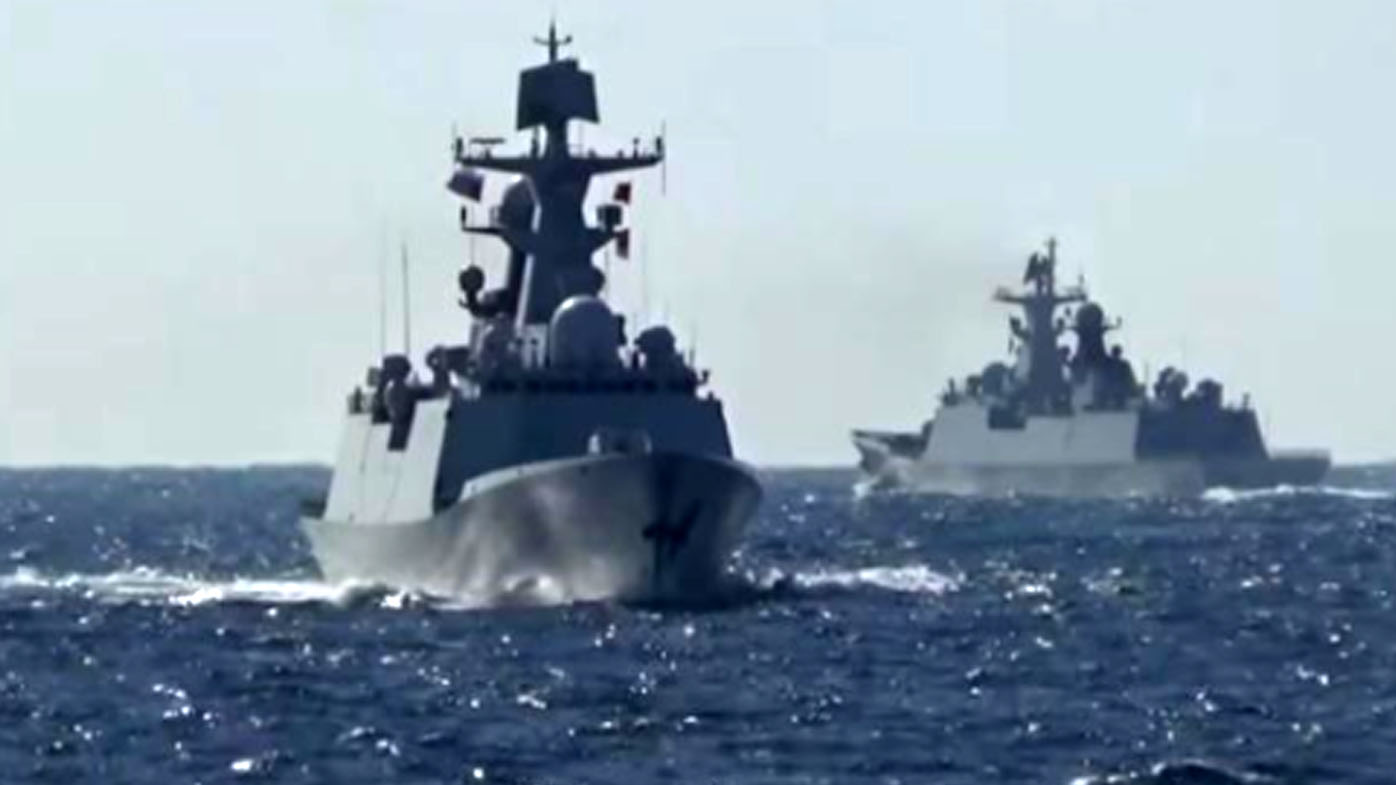
A joint Chinese and Russian naval exercise, in which a flotilla of 10 warships completed a near circle around Japan's main island, has been touted by the two countries as a means of ensuring stability in a volatile region.
But analysts say the drills are likely to have the opposite effect, potentially reigniting regional tensions and enhancing claims by the Japanese government that it needs to increase military spending to counter Chinese aggression.
The voyage, billed as the first joint China-Russia naval patrol in the western Pacific, saw the vessels sail through the Tsugaru Strait that separates Japan's main island and its northern island of Hokkaido, before heading down the nation's eastern coast and then back toward China through the Osumi Strait off the southern Japanese island of Kyushu.
READ MORE: 'No end in sight' for high petrol prices
Though foreign vessels are permitted to sail through the Osumi and Tsugaru straits, both of which are regarded as international waters, the manoeuvres were closely monitored in Japan.
"It will reinforce the conclusion that Japan has already drawn that China potentially presents a threat to Japan and therefore it has to increase its own defence spending and readiness to deal with it," said Drew Thompson, a former United States Defence Department official and a visiting senior research fellow at the Lee Kuan Yew School of Public Policy at the National University of Singapore.
In a statement Monday, the Japanese Defence Ministry described the exercises, which ran throughout last week, as "unusual."
The China-Russia flotilla consisted of five warships from each country, with a mix of destroyers, frigates, corvettes and support ships.
READ MORE: Giant WWII bomb found in Aussie back yard

The Chinese military said the two navies parted ways in the East China Sea on Saturday.
"The joint exercise and joint cruise have further developed the China-Russia comprehensive strategic partnership of coordination for the new era, and effectively improved both sides' capabilities of joint operations, which was conducive to jointly maintaining international and regional strategic stability," Rear Admiral Bai Yaoping of the People's Liberation Army's Northern Theatre Command and the deputy commander of the navy said in a statement.
Russia's Defence Ministry said the objective of the joint patrol was to "demonstrate the state flags of Russia and China, maintain peace and stability in the Asia-Pacific region and also protect facilities of both countries' maritime economic activity."
Japan's military build-up
Tensions between China and Japan have spiked in recent years, amid moves by Beijing to assert sovereignty over Japanese-controlled islands.
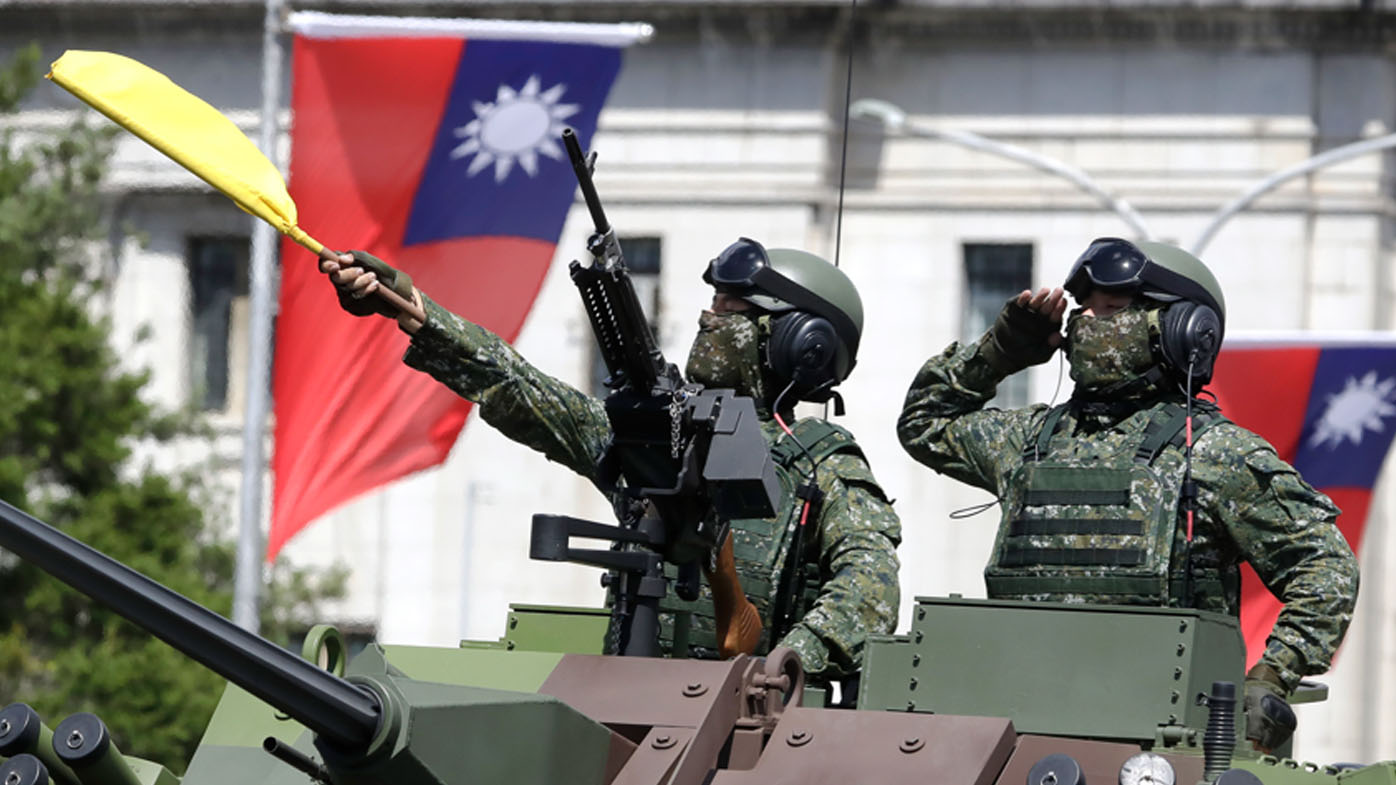
China has also been stepping up its military pressure on nearby Taiwan, sending dozens of warplanes near the island.
Japanese officials have previously tied the security situation in Taiwan to Japan, noting that 90 per cent of Japan's energy is imported through the areas around Taiwan.
READ MORE: Russian cases surge as Kremlin orders workers to stay at home
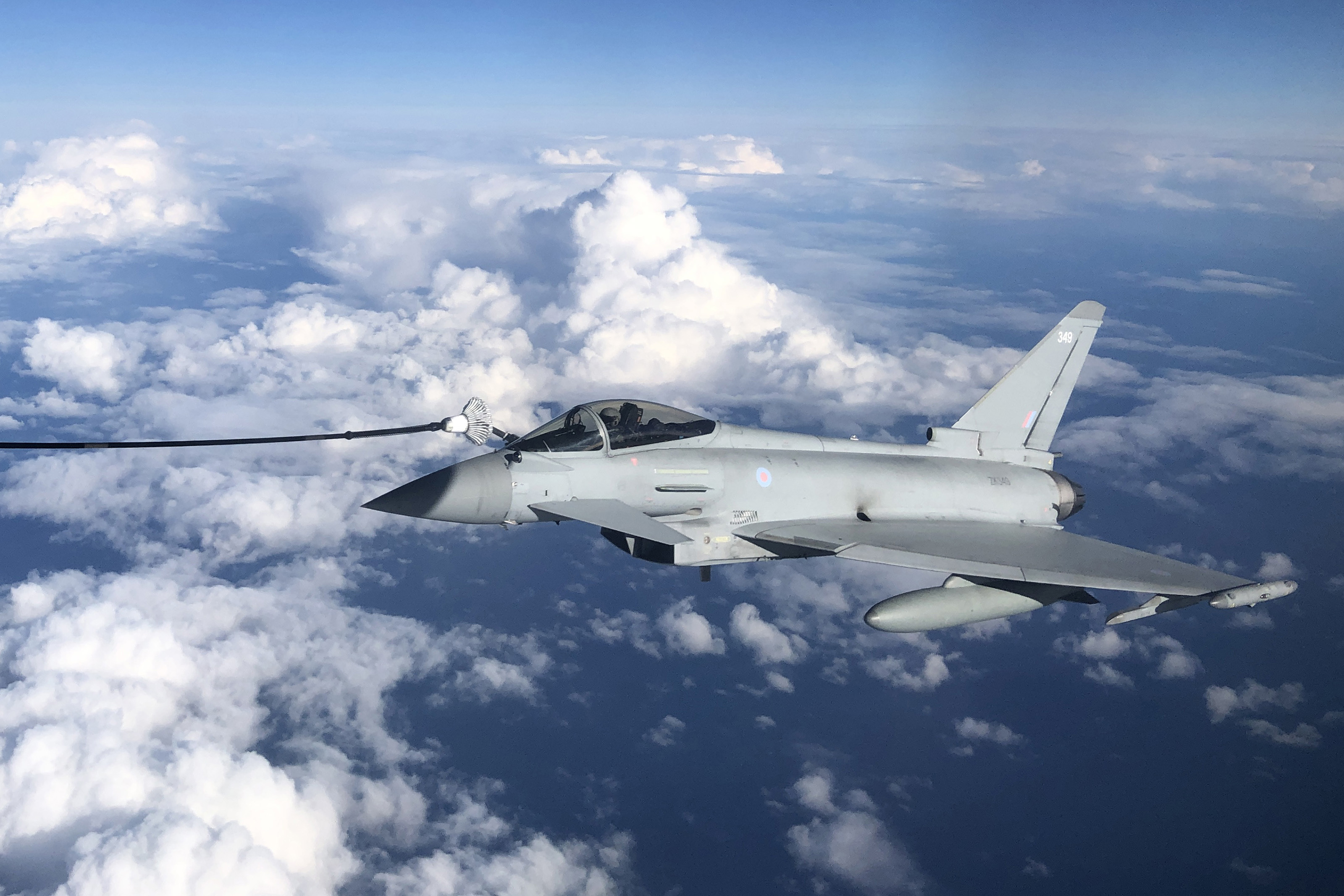
Though Japanese military spending pales in comparison with China, it has moved to significantly bolster its defences, adding state-of-the-art F-35 fighter jets and converting warships to aircraft carriers for them.
It's also in the process of adding high-tech destroyers and submarines – all of which can project its power far from Japanese shores.
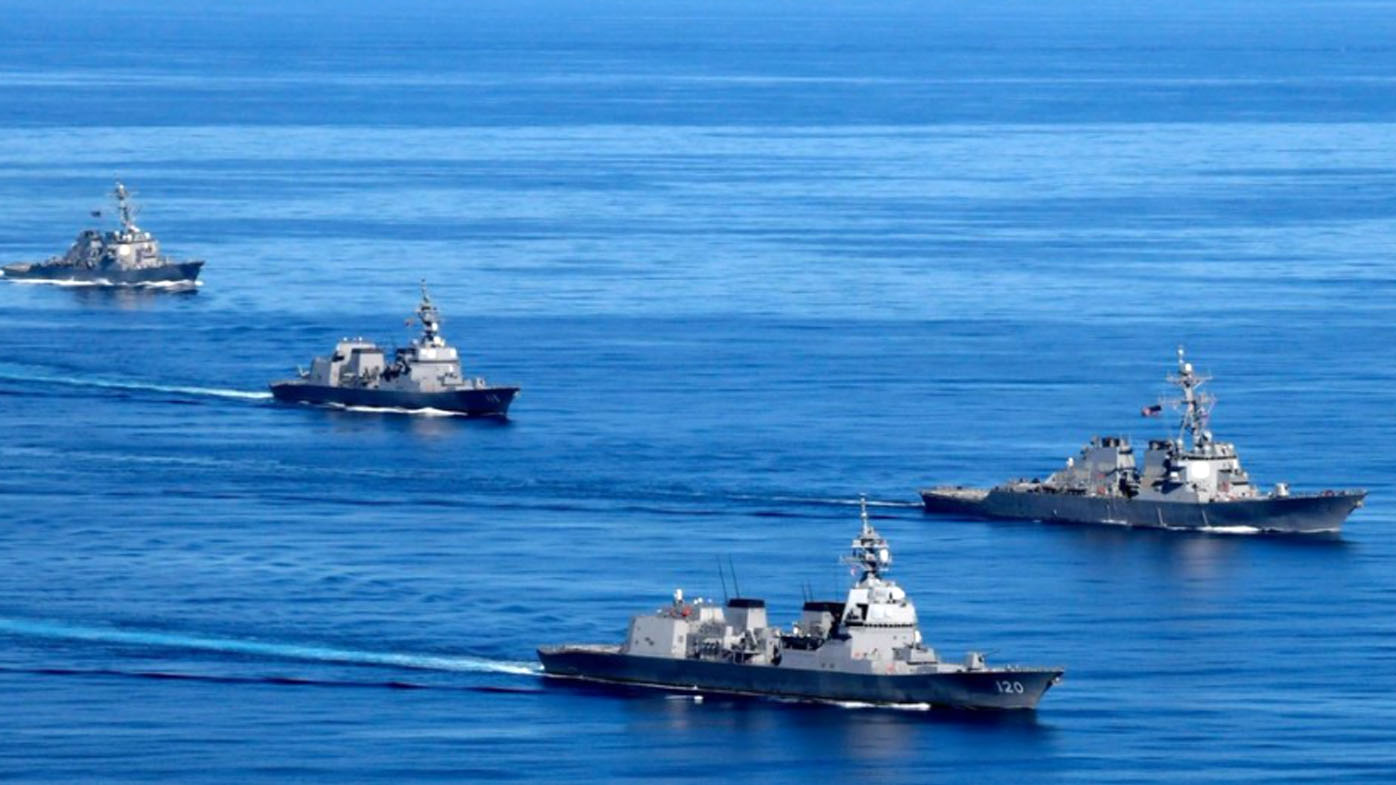
The reach of Japan's Self-Defence Force was clear on Monday, as one the warships that will eventually be outfitted to carry F-35s – the helicopter destroyer JS Kaga – conducted bilateral exercises with a US Navy aircraft carrier strike group in the South China Sea, almost all of which China claims as its sovereign territory.
And over the northern summer, Japanese naval forces trained with their counterparts in the British Carrier Strike Group 21, led by the aircraft carrier HMS Queen Elizabeth, as well as with US Navy ships in the Pacific.
Beijing has kept a close eye on such events, and the joint Russian flotilla is a sign from China that it also has partners, said Alessio Patalano, professor of war and strategy at King's College in London.
https://twitter.com/JMSDF_SDF_ENG/status/1452540580219686913?ref_src=twsrc%5Etfw
"This summer, US and partner navies have considerably elevated the level of interoperability in the west Pacific," he said.
"This is something of a weakness for the Chinese, so the joint patrol seems a response to that."
Russia and China have an ongoing military partnership and have conducted a series of joint drills, the most high profile of which was 'Vostok 2018', a simulated battle in which a Russian-Chinese coalition fought a fictional enemy.
And in August, Russia and China joined forces once again to use a joint command and control system, with Russian troops integrated into Chinese formations, according to a statement by China's Defence Ministry at the time.
China's 'hypocrisy'
The route taken by the joint Chinese-Russian patrol, through the Osumi Strait at the end of their journey, as well as through the narrow Tsugaru Strait between the main islands of Honshu and Hokkaido earlier in the week, has also attracted a considerable amount of attention.
That's because when the US Navy or foreign navies transit the Taiwan Strait between Taiwan and the Chinese mainland, Beijing condemns them as destabilising.
For instance, after US and Canadian warships sailed through the Taiwan Strait earlier this month, the Chinese military's Eastern Theatre Command accused the two sides of colluding to "stir up trouble" and "seriously jeopardise peace and stability" in the strait.
And at 160 kilometres wide at its narrowest point, the Taiwan Strait is huge compared to the passages between the Japanese islands.
READ MORE: The 'calculator' that says if you will catch COVID-19
The Osumi Strait, for example, is just 27 kilometres wide at its narrowest point. While the Chinese and Russian warships weren't in violation of international law, a news segment broadcast on Chinese state TV showed just how close they came to Japanese territory.
A reporter seemingly aboard one of the Chinese ships is shown passing through the Tsugaru Strait as the Japanese coastline looms large behind her.
Later, after transiting the strait, the reporter says, "We are now in the western Pacific, and we can see the Japanese Maritime Self-Defence Force aircraft not far behind us.
They have been following us since the beginning of our patrol. In addition to the aircraft, they also sent multiple vessels to track our formation for intelligence gathering."
Mr Thompson said China can't espouse one thing then act in the opposite way.
"You either support norms or you support power politics," he said of the leadership in Beijing.
"This makes their virulent anti-foreign rhetoric extremely hypocritical."
So if it's good for China and Russia, it must be fine for the US, Canada and other navies that sail in the Taiwan Strait – or even the South China Sea.
"They're establishing that it is a very accepted international norm," Mr Thompson said.
Covid-19 Delta outbreak: see how many jabs your DHB needs to hit 90 per cent
Kiwis keen to keep track of vaccination rates and Aucklanders wanting to know how far they are from bursting out of lockdown can now see exactly how many jabs it will take to hit their local 90 per cent target.That’s due to the…
Why shadows will disappear in Australian city today
People in Darwin today will have a chance to witness a strange weather phenomenon when the sun is directly overhead and shadows disappear completely.
At 12.30pm (ACST), the sun's rays will make an exact right angle of 90 degrees to the ground.
The solar event happens twice a year in the Northern Territory capital and in some parts of northern Australia.
READ MORE: Storms for Queensland, rough surf in NSW and a heatwave in NT
LIVE UPDATES: NSW, Queensland and Victoria record new COVID-19 cases
"As the Earth zips around the Sun, one side is always in daylight, and there's always a point on the Earth's surface where the Sun is directly overhead," Bureau of Meteorology's Senior Meteorologist Jackson Browne explains.
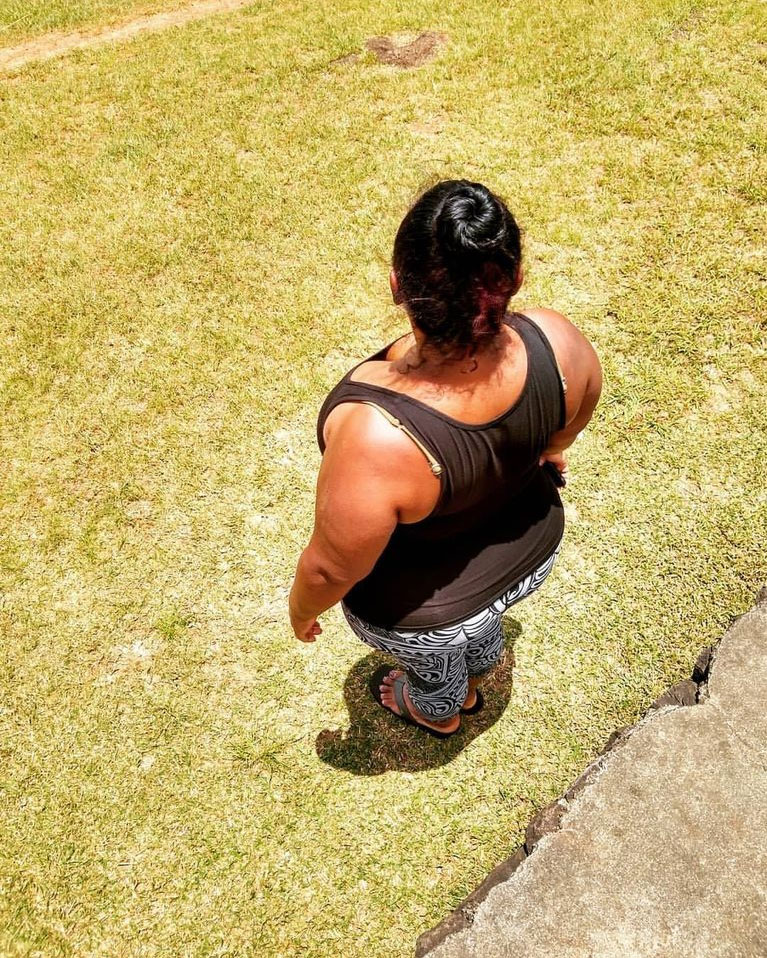
"This is known as the subsolar point – when the Sun's rays are perpendicular, or exactly 90 degrees, to the ground.
"At this point in time the shadows of trees, buildings, people, and in fact any object are at their shortest."
The phenomenon only happens in the tropical regions of the world where there is a zero degree latitude.
It is known and celebrated in Hawaii as the Lahaina Noon.
Those in Cairns and Townsville will get their chance to witness the phenomenon next month.
https://twitter.com/BOM_NT/status/1452689002000171011?ref_src=twsrc%5Etfw
Key dates to watch your shadow disappear
- Darwin – October 26 at 12.30pm (ACST) and February 16, 2022 at 1pm (ACST)
- Cairns – November 9 at 12pm (AEST) and February 2, 2022 at 12.30pm (AEST)
- Townsville – November 18 at 11.57am (AEST) and January, 24, 2022 at 12.24pm (AEST)
Covid 19 Delta outbreak: Man arrested after trying to leave MIQ in Hamilton
A 34-year-old male was arrested for trying to leave a managed isolation facility in Hamilton after he jumped the fence to enter the grounds last night.He’s been been charged with failing to comply with order, unlawfully being in…
NASA detects signs of possible first planet beyond our galaxy
NASA has detected signs of what could be a planet orbiting a star outside of the Milky Way galaxy for the first time in history.
Hints of the new exoplanet – the name given to a world that orbits a star – was detected in Messier 51, also known as M51 or the Whirlpool Galaxy.
The NASA's Chandra X-ray Observatory detected the possible planetary signals by observing transits, which causes light to dim as a planet passes in front of the star.
READ MORE: NASA's Lucy mission launches to explore never-before-seen asteroids

"We are trying to open up a whole new arena for finding other worlds by searching for planet candidates at X-ray wavelengths, a strategy that makes it possible to discover them in other galaxies," said Rosanne Di Stefano of the Center for Astrophysics at Harvard and Smithsonian (CfA) in Cambridge.
So far almost 5000 "exoplanets" have been found by all of these have been detected within our own galaxy, the Milky Way.
READ MORE: Strange signals coming from heart of Milky Way stump scientists
https://twitter.com/NASA/status/1452701850000580616
An exoplanet in M51 would be about 28 million light years away.
"If a planet exists in this system, it likely had a tumultuous history and violent past," the space agency wrote on its website.
"An exoplanet in the system would have had to survive a supernova explosion that created the neutron star or black hole."
Actress who had stroke after jab 'still fiercely supports vaccination'
Exclusive: The husband of an Australian actress who suffered a stroke after having a COVID-19 vaccination remains fiercely supportive of the jab and is making great progress in her recovery after facing a fight for her life.
Melle Stewart, 40, is learning to walk and talk again following a dose of the AstraZeneca vaccine.
She had to have part of her brain removed and spent weeks in intensive care on a ventilator in hospital – but is now in rehabilitation and improving well, her husband said.
READ MORE: 'No end in sight' for high petrol prices
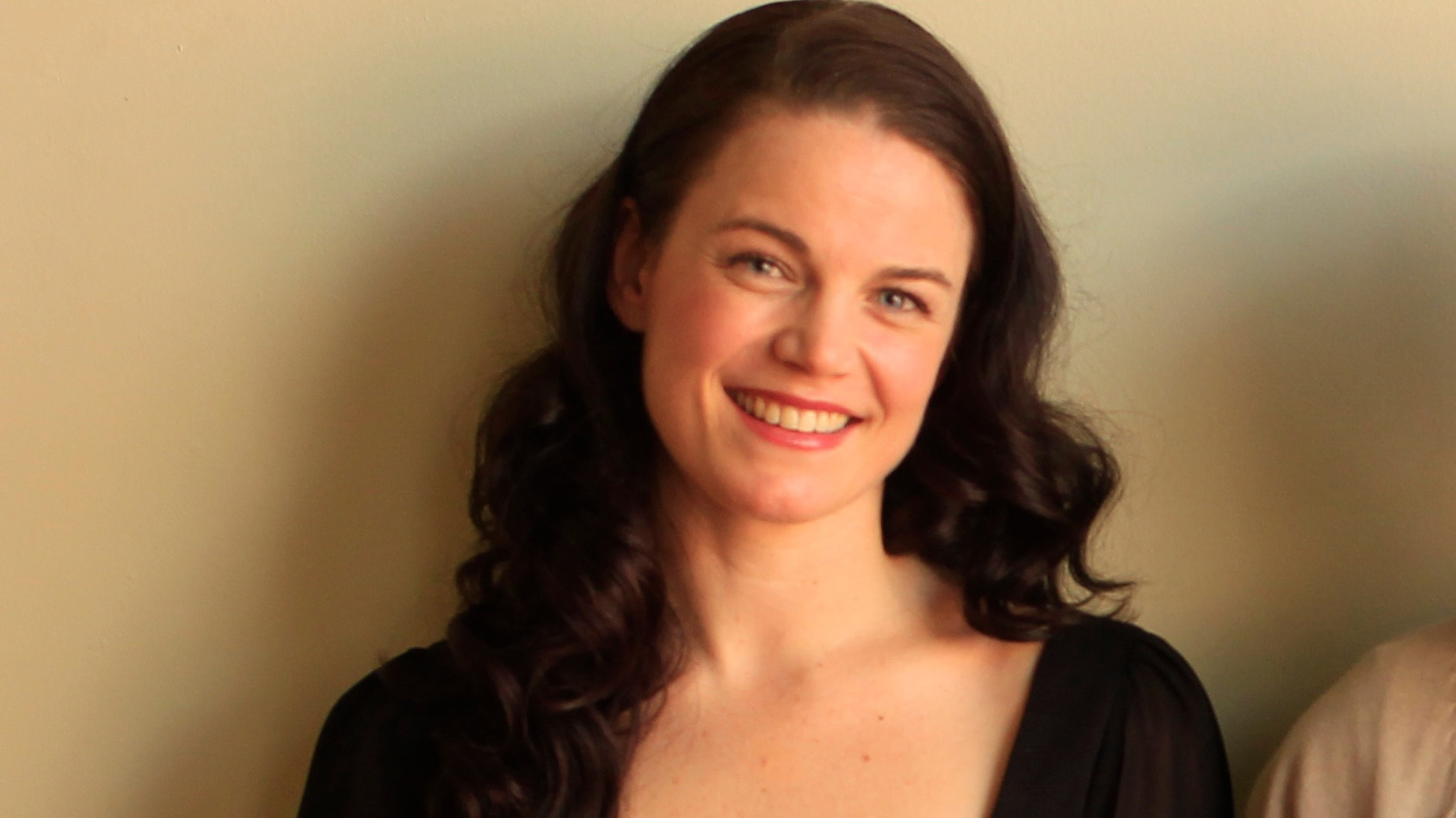
Actor Ben Lewis said that while his wife almost died from the more-than-one-in-a-million rare complication, she wants everyone to get vaccinated if they haven't already.
"Obviously if you're gonna win a lottery you'd prefer it was the other one," he told 9news.com.au from London, where the couple live.
"She really wants people to know that she still supports vaccination.
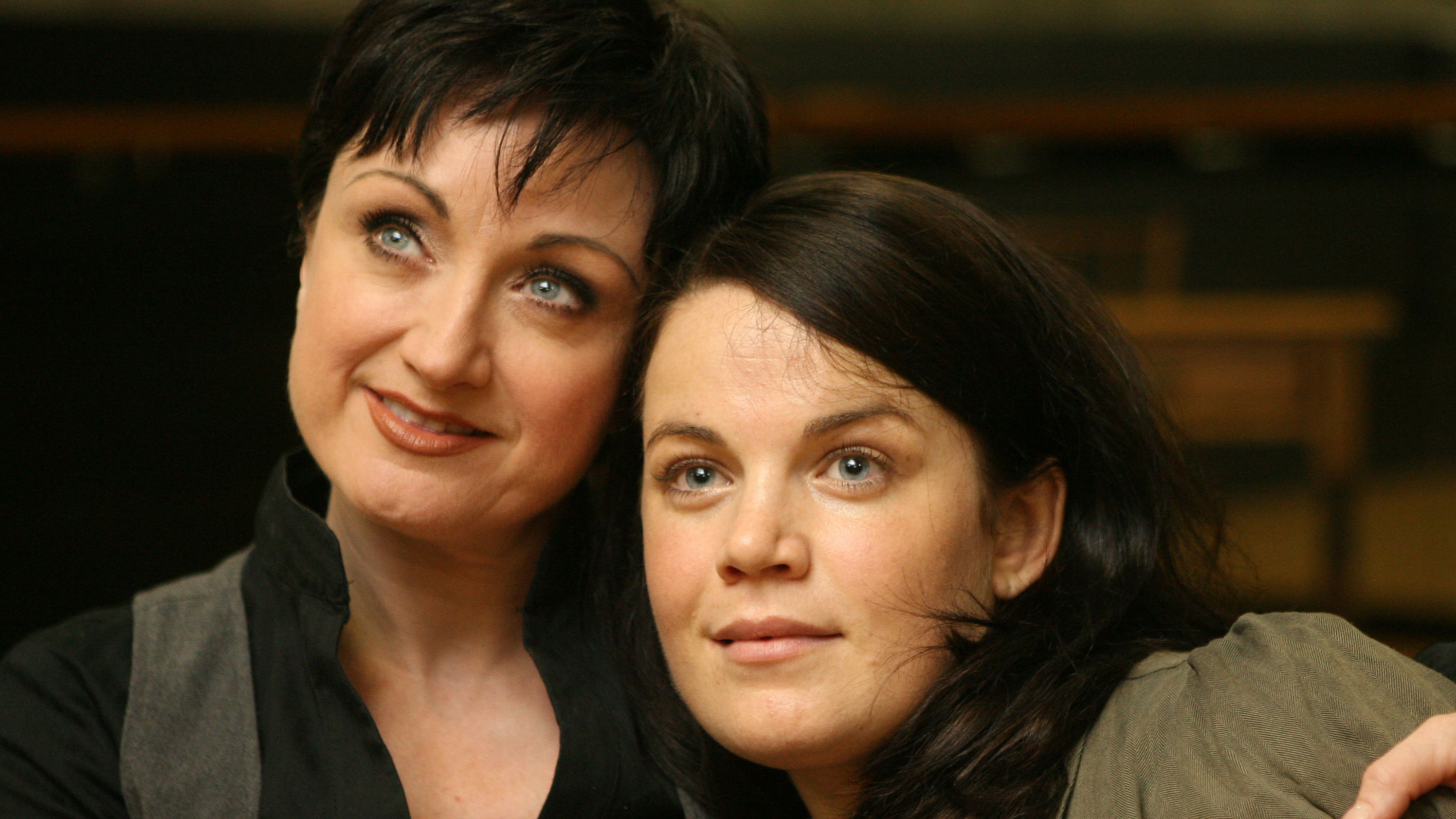
"We've both talked about the fact that if we had our time again, and we didn't know what was going to happen, we would have done the same thing."
'My first hope was that she came back to me – for a few weeks I didn't know that was going to happen'
READ MORE: The 'calculator' that says if you will catch COVID-19
Stewart went to acclaimed theatre school, the Western Australian Academy of Performing Arts in Perth, where the pair met, and has appeared in multiple stage shows in the UK and Australia, including playing the lead in Mamma Mia!
The couple have lived in London for ten years where they've both starred in many shows, with Lewis best known for playing the Phantom in Phantom of the Opera.
But because of the impact of the pandemic on theatre, Stewart was working as a drama teacher and he was working in a bar when she became ill in June.
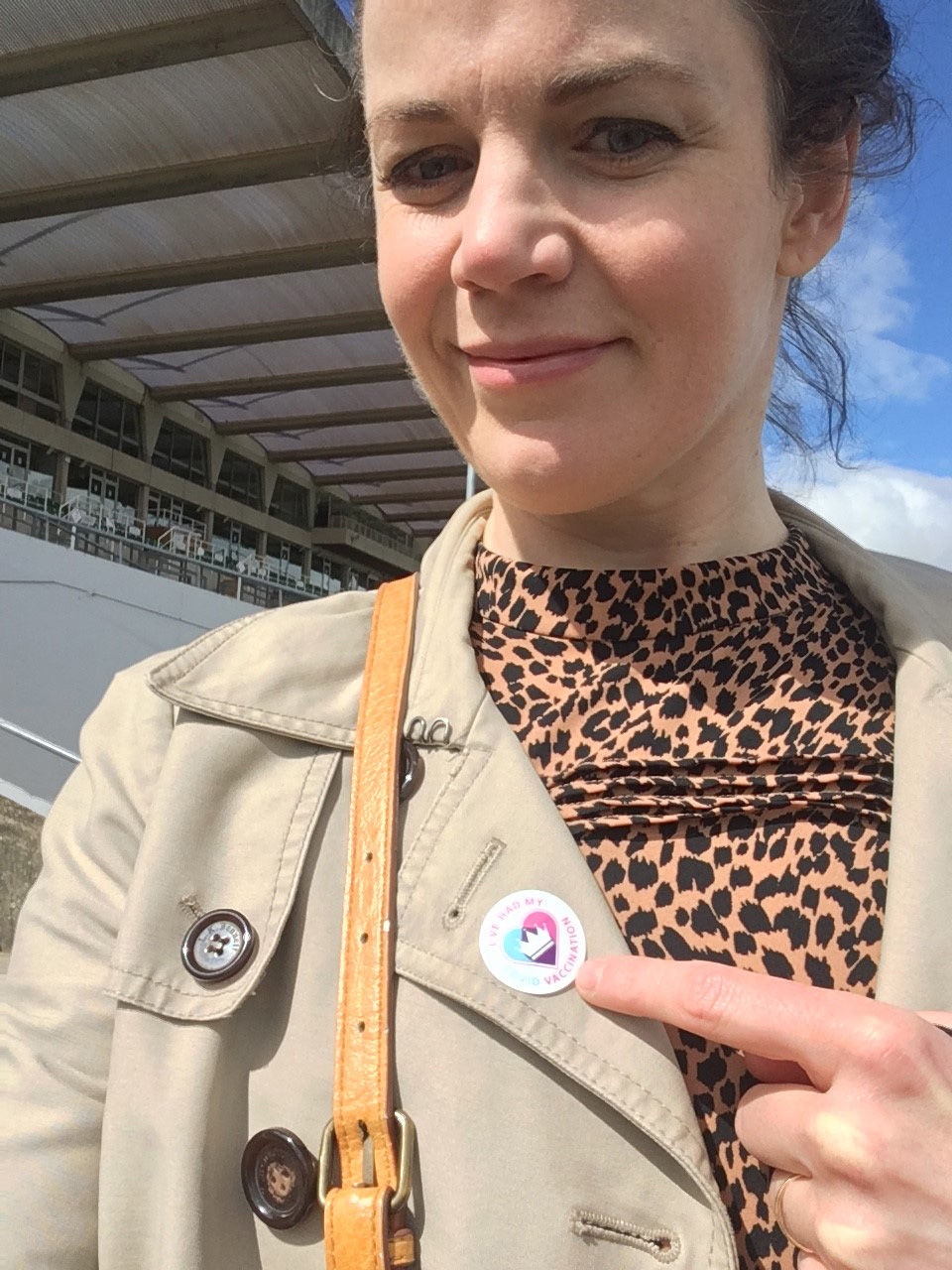
Lewis recalled what happened when his wife of 12 years realised something was wrong, two weeks after getting the jab and proudly taking a photo at the vaccination centre.
"We went to bed at ten o'clock that night and Mel woke up at midnight feeling funny," he told 9News.com.au.
He said he thought maybe she'd just laid funny, giving herself a 'dead' right arm.
When Stewart got up she couldn't put any weight on her right leg.
They rushed to their local hospital in an Uber.
While initial tests were clear, Stewart quickly deteriorated and lost her ability to speak and move her right side.
The pair were rushed by ambulance to the bigger St George's Hospital.
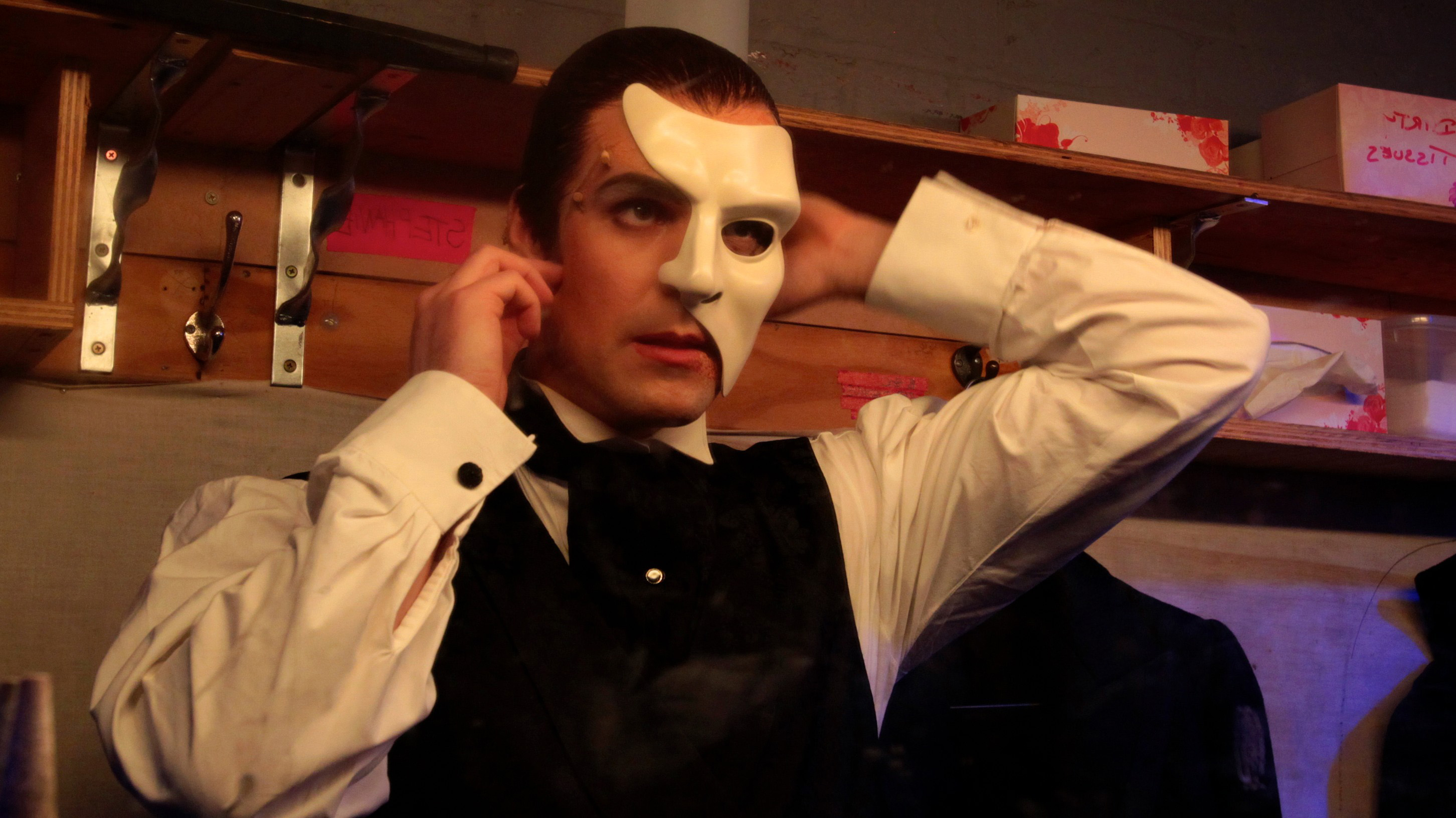
Doctors there confirmed she had Vaccine-Induced Thrombocytopenic Thrombosis (VITT) – blood clotting – which had caused a stroke.
Surgeons operated to save her life by removing part of her skull.
READ MORE: Giant WWII bomb found in Aussie back yard
"If they didn't do that, the pressure would have basically killed her," Lewis, said.
Stewart was put into an induced coma after the surgery for almost four weeks.
Due to the travel ban, her family including six siblings and her parents, were not able to travel from Australia to support her.
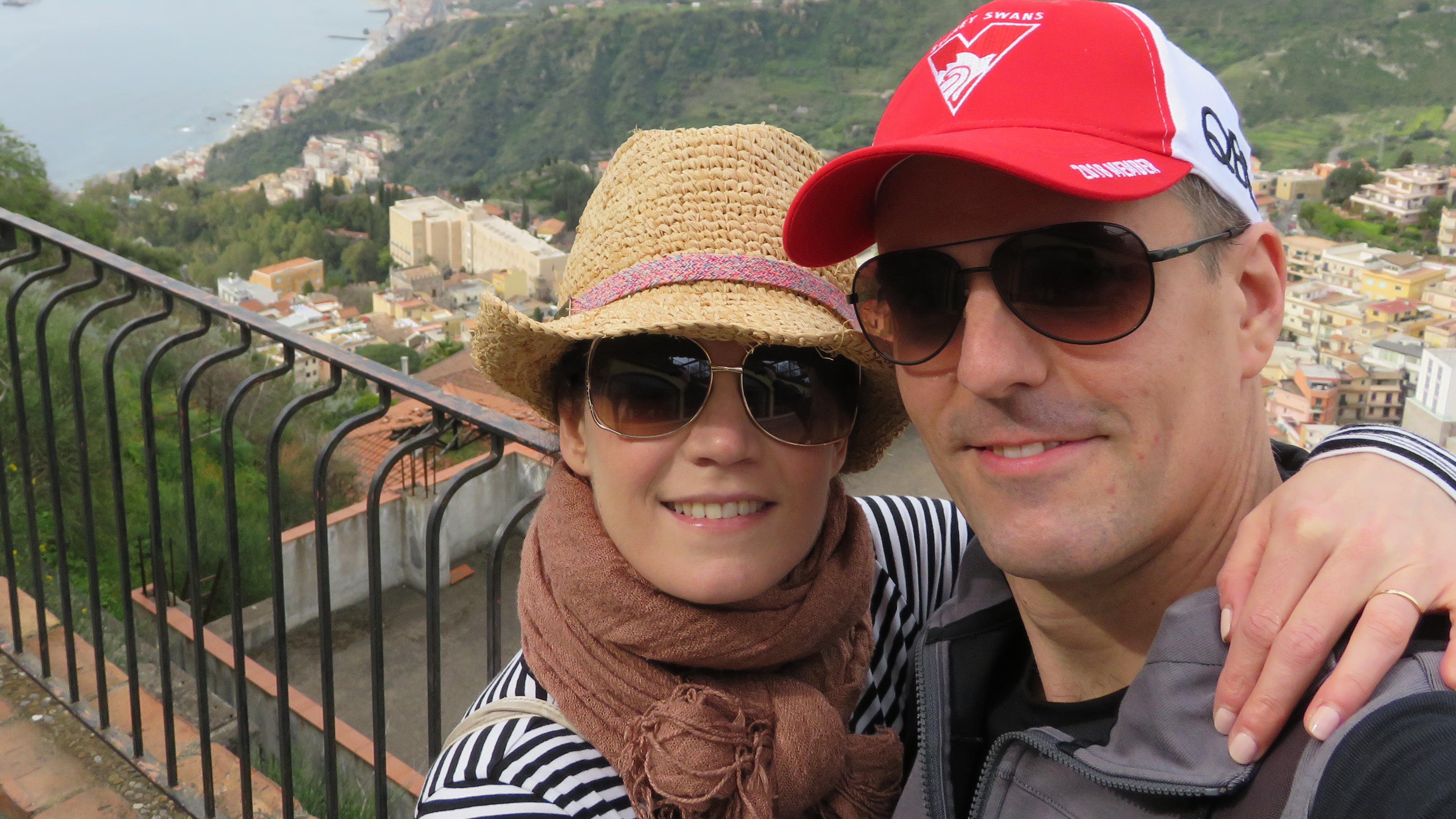
Lewis, who was only allowed to see her every three days due to COVID-19 rules, recalls when she finally woke up.
"I remember very clearly the day when I looked her in the eyes and I could see that she was back," he said. "That was an amazing feeling."
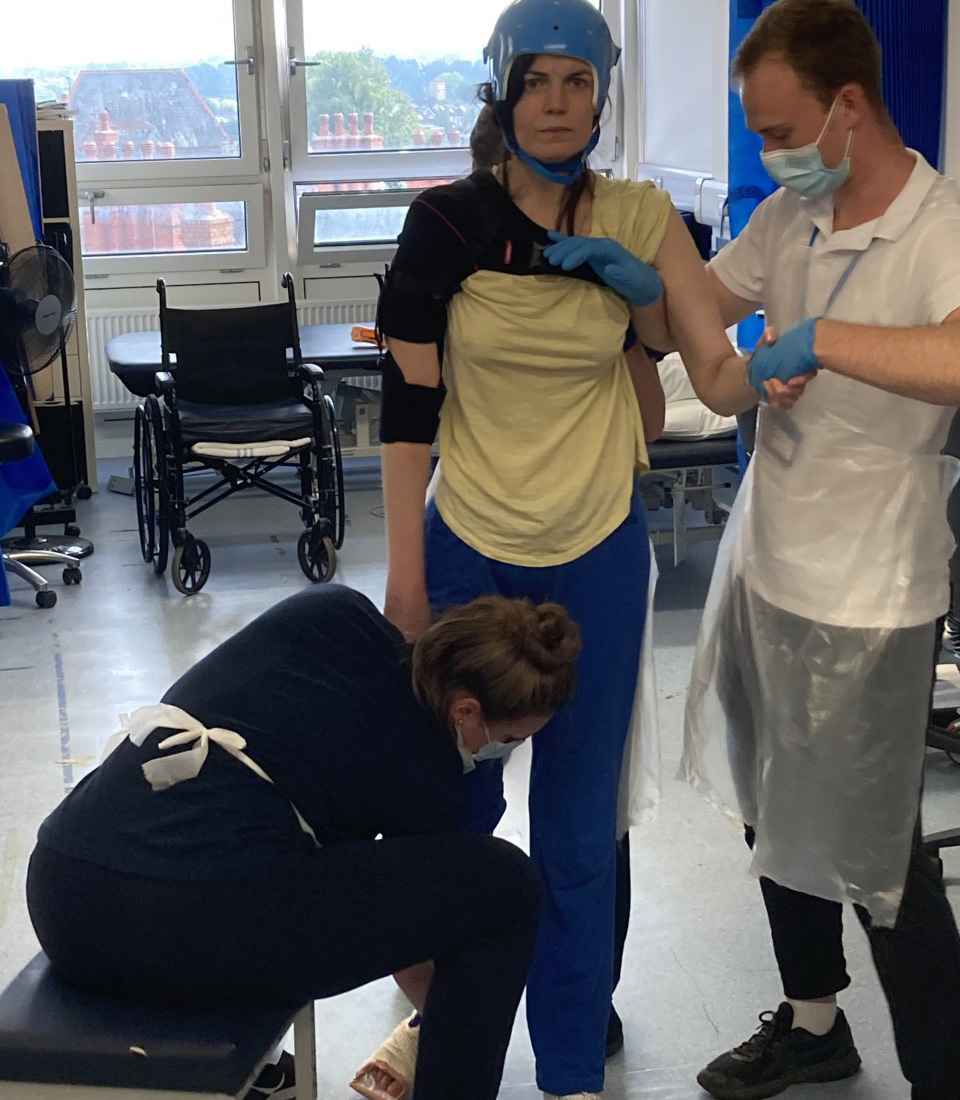
Stewart has continued to improve and is now in a rehab hospital in London's south west.
And while it's too soon to say if she'll make a full recovery, her husband is hopeful.
"She's attacking her therapies with 150 per cent commitment. The NHS staff are just absolutely incredible," Lewis, said.
"The signs are good for her walking. Her muscles are coming back in her right leg which is amazing.
"The end game is always difficult. With brain injuries, recovery is so dependant on an individual.
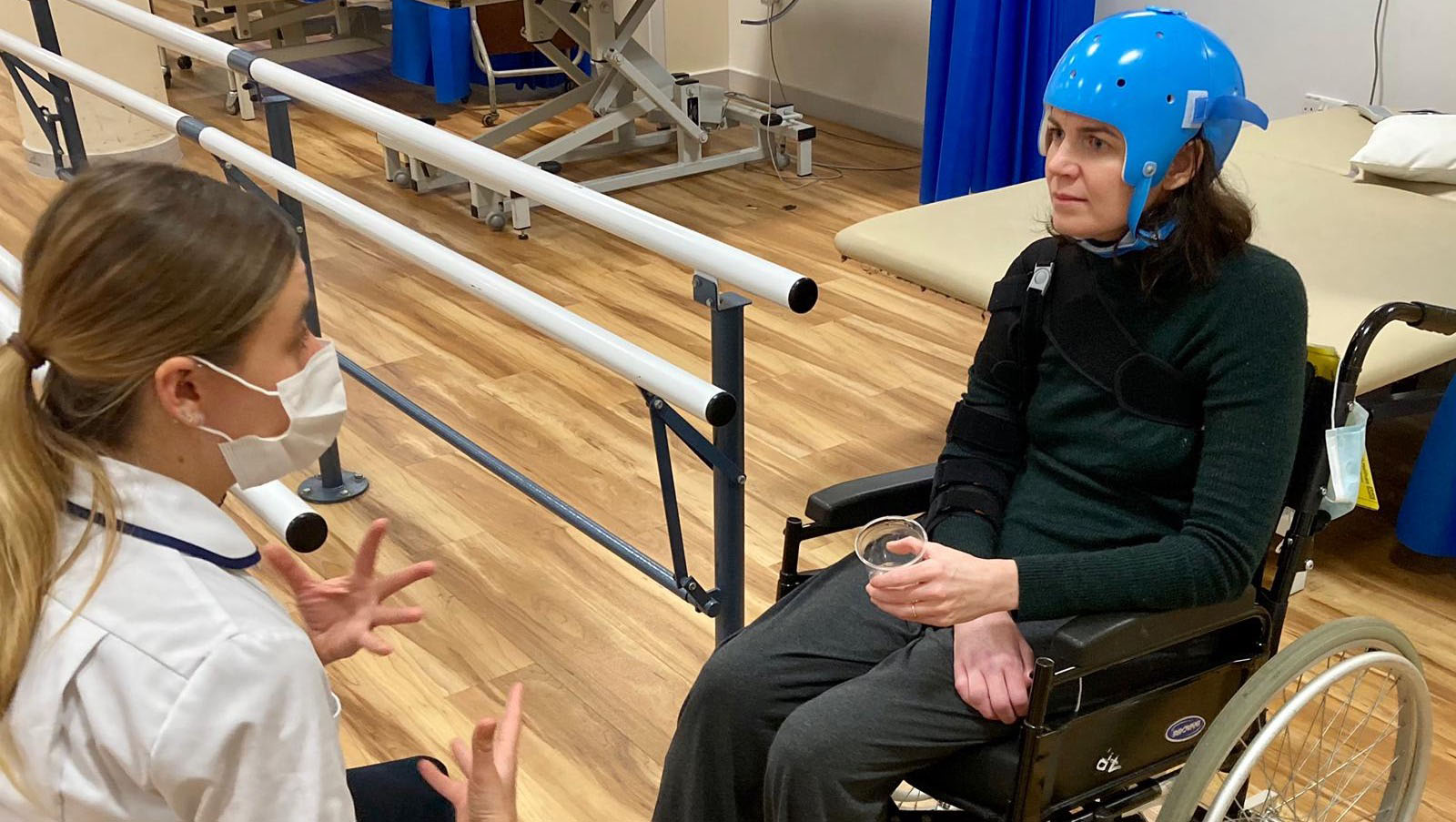
"What we're grateful for is Mel understands absolutely everything.
"She can't speak in sentences. She knows exactly what she wants to say, she just can't get the messages out yet.
READ MORE: Russian cases surge as Kremlin orders workers to stay at home
"We know that Mel was extremely healthy, she's only 40.
"We're hopeful all of these things will mean she's able to make tremendous progress."
He said one day he fully expects her to be able to return to participating in the arts she loves, in some way.

"My first hope was that she came back to me – for a few weeks I didn't know that was going to happen," he said.
READ MORE: The parent rule bringing relief to millions of Aussies
"But knowing my wife I just would never put a cap on anything."
Lewis said the couple feels "blessed" by the support the theatre community around the world have shown.
Celebs, including Today Extra host David Campbell, have posted on social media about a fundraising page the family has set up.
Australian medical body the TGA said eight people have died from the blood clotting condition in Australia, from more than 12m doses.
"In Australia, the risk of dying from TTS after vaccination is approximately one in a million," the TGA said.
READ MORE: 'It's going to be emotional': Curtain finally rises again for Sydney actors
"Like all medicines, COVID-19 vaccines may have some side effects.
"The overwhelming majority of these are mild and resolve within a few days.
"To date, there have been 156 cases of TTS assessed as related to Vaxzevria (AstraZeneca) from approximately 12.6 million vaccine doses."
Symptoms include severe or persistent headache, blurred vision, confusion or seizures, shortness of breath, chest pain, leg swelling or persistent abdominal pain, unusual skin bruising or pinpoint round spots beyond the site of vaccination.
Contact journalist Sarah Swain: ss****@******om.au
Pablo Escobar's cocaine hippos legally 'people', judge rules
The offspring of hippos once owned by Colombian drug kingpin Pablo Escobar can be recognised as people or "interested persons" with legal rights in the US following a federal court order.
The case involves a lawsuit against the Colombian government over whether to kill or sterilise the hippos whose numbers are growing at a fast pace and pose a threat to biodiversity.
An animal rights groups is hailing the order as a milestone victory in the long sought efforts to sway the US justice system to grant animals personhood status. But the order won't carry any weight in Colombia where the hippos live, a legal expert said.
READ MORE: Colombia captures its 'most feared' drug lord
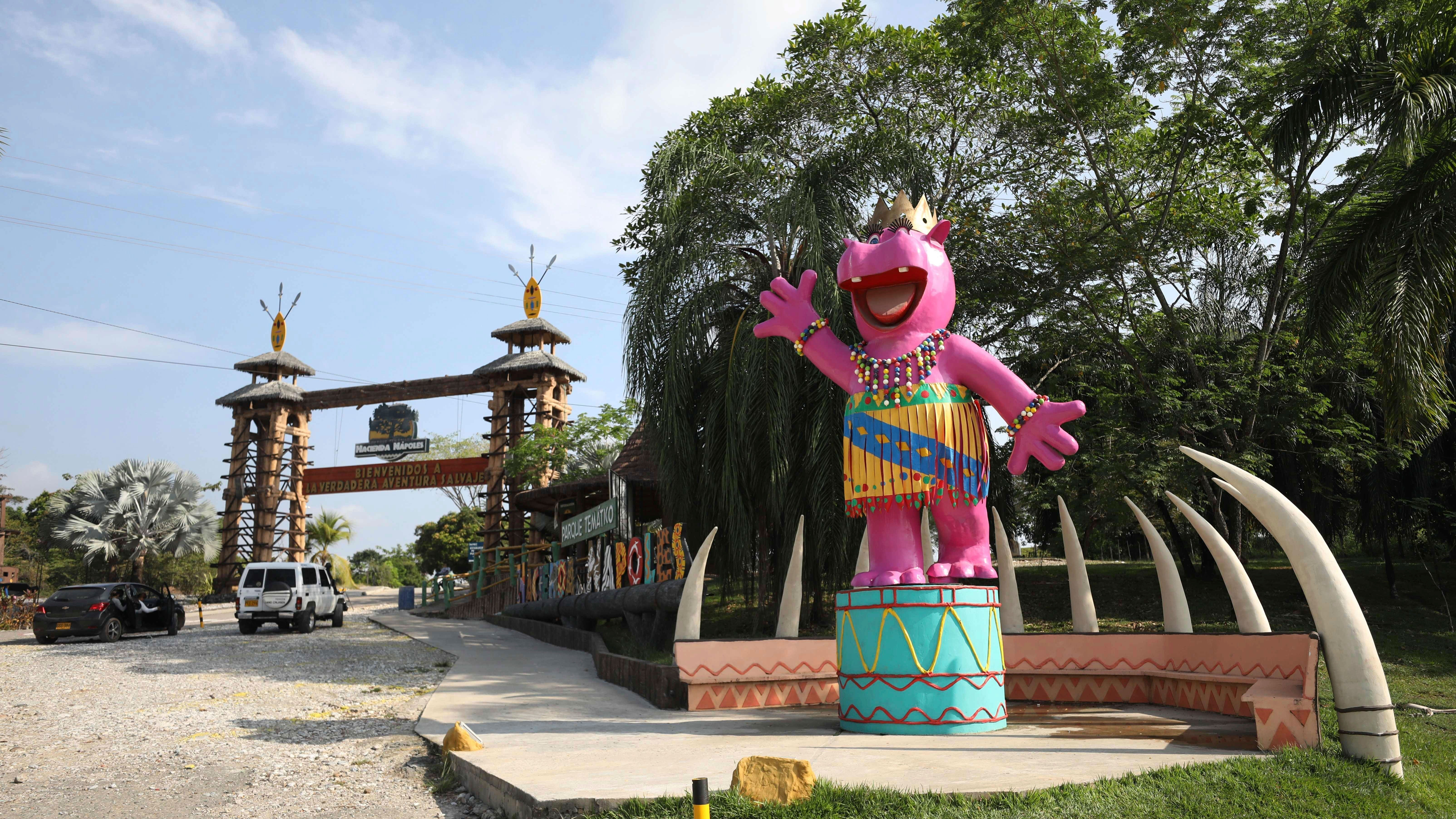
"The ruling has no impact in Colombia because they only have an impact within their own territories. It will be the Colombian authorities who decide what to do with the hippos and not the American ones," said Camilo Burbano Cifuentes, a criminal law professor at the Universidad Externado de Colombia.
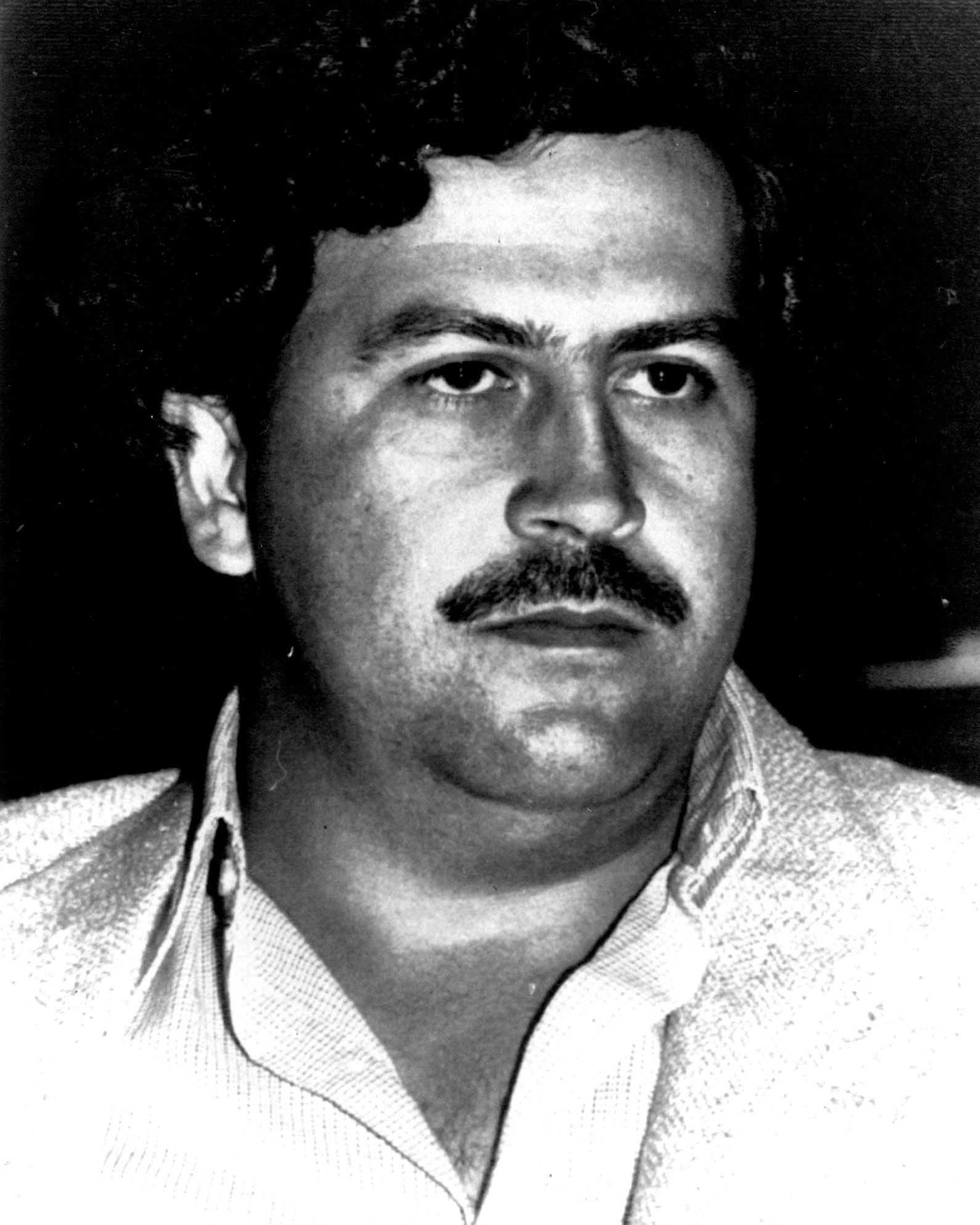
The "cocaine hippos" are descendants of animals that Escobar illegally imported to his Colombian ranch in the 1980s when he reigned over the country's drug trade.
READ MORE: WWII bomb discovered in Victorian backyard
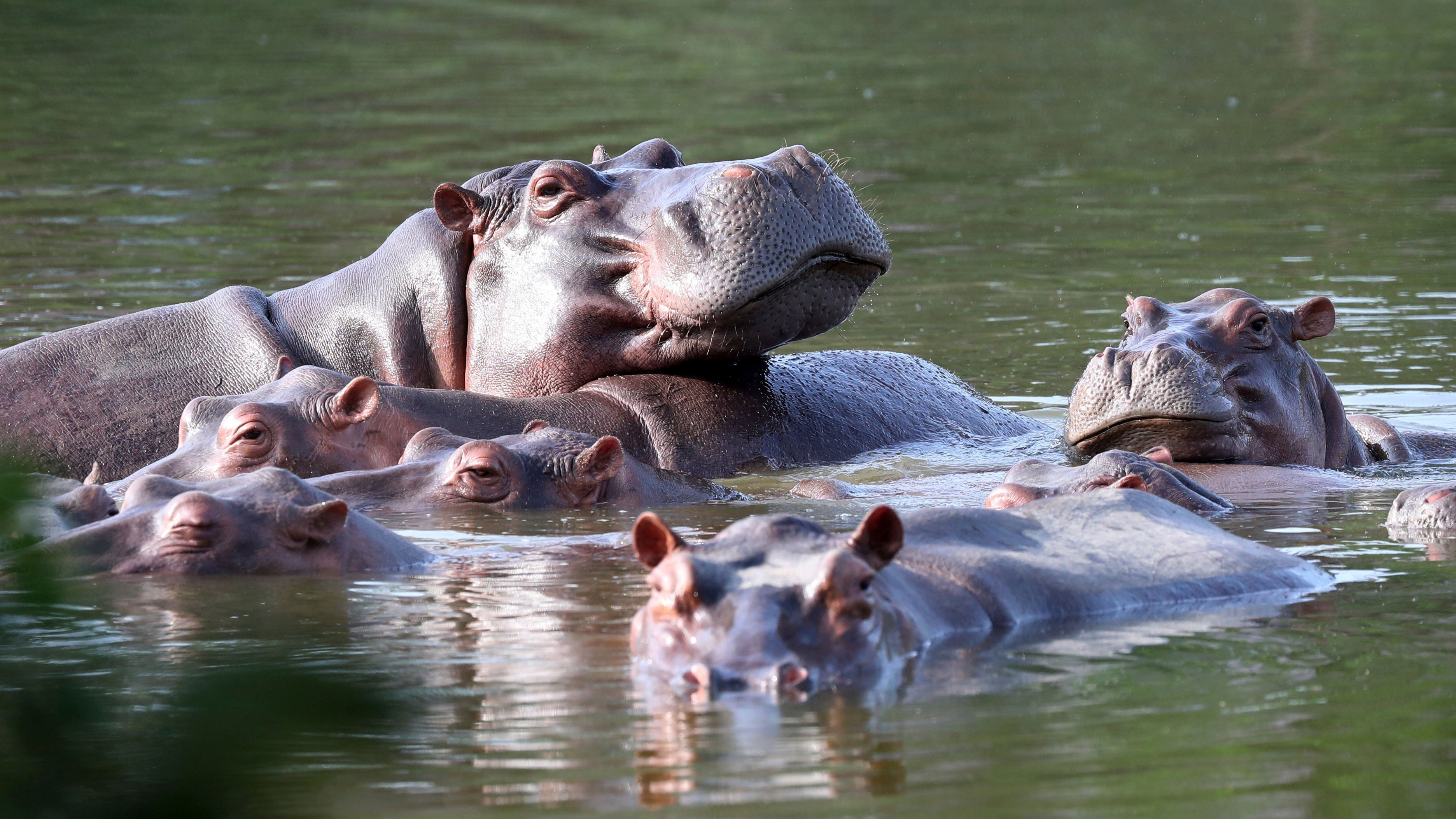
After his death in a 1993 shootout with authorities, the hippos were abandoned at the estate and left to thrive with no natural predators — their numbers have increased in the last eight years from 35 to somewhere between 65 and 80.
A group of scientists has warned that the hippos pose a major threat to the area's biodiversity and could lead to deadly encounters with humans. They are advocating for some of the animals to be killed. A government agency has started sterilizing some of the hippos, but there is a debate on what are the safest methods.
In the suit, attorneys for the Animal Legal Defense Fund asked the US District Court in Cincinnati to give "interested persons" status to the hippos so that two wildlife experts in sterilisation from Ohio could be deposed in the case.
Federal magistrate Judge Karen Litkovitz in Cincinnati granted the request on Oct. 15. The animal rights group based near San Francisco said it believes it's the first time animals have been declared legal persons in the U.S.
Their attorneys argued that because advocates for the hippos can bring lawsuits to protect their interests in Colombia that the hippos should be allowed to be considered "interested persons" under US law.
They pointed to a federal statute that allows anyone who is an "interested person" in a foreign lawsuit to ask a federal court to permit them to take depositions in the US in support of their case.
Christopher Berry, the lead attorney for the Animal Legal Defense Fund, called it a narrow but profound ruling.
READ MORE: New CCTV being examined in Cleo's disappearance
"This really is part of a bigger movement of advocating that animals' interest be represented in court," he said. "We're not asking to make up a new law. We're just asking that animals have the ability to enforce the rights that have already been given to them."
While animals have been granted legal rights in India, Pakistan and Argentina, courts in the U.S. have been unwilling to do so until now.
A judge in Connecticut called a petition filed four years ago by an animal rights group to grant personhood to three elephants in a traveling petting zoo "wholly frivolous."
In another closely watched case, the New York Court of Appeals, the state's highest court, agreed in May to decide whether an elephant at the Bronx Zoo should get human-like rights and be moved to a sanctuary.
Earlier rulings dismissed the claims from the animal rights groups. The zoo contends that granting legal "personhood" to the elephant named Happy would set a dangerous precedent and has called the efforts "ludicrous." Gun rights groups also have criticized the move out of concern it could impact hunting or set a precedent.
Backers point to court rulings that have given corporations legal rights and considered them to be legal persons — reasoning that animals should be treated the same under the law.
"Legal personhood is just the ability to have your interest heard and represented in court," Berry said. "It's about enforcing rights they already have under animal cruelty laws and other protection laws."