Category Archives: headline

Report: SKN Now Leading Caribbean Nation for Crypto-Banking

The dual-island nation of St Kitts and Nevis has quickly become a leading nation in the Caribbean region for crypto-literate banking according to the  GRC Forum report.

stock-market-trading crypto banking

The islands have welcomed the digital asset with open arms, implementing legislation to make crypto transactions easier under its Virtual Asset Bill 2020. Additionally, St Kitts and Nevis has piloted its own digital currency known as DCash under the Eastern Caribbean Currency Union, further highlighting its crypto-friendly approach.

More broadly, the cryptocurrency market is witnessing a significant recovery as it passes the $2.5 trillion mark and continues its upward trajectory. Despite its divisiveness amongst experts, the industry’s value has become too significant to ignore, and cryptocurrency may be one of the greatest assets to have. Global investors have begun to acknowledge the benefits of cryptocurrency, particularly for unlocking greater financial freedom, and there is one country proving to be popular.

The rising demand for cryptocurrency has led to the asset being adopted by businesses and governments in recent years. Companies from PayPal to Twitter have embraced the virtual currency into operations and El Salvador has become the first country to make Bitcoin its national currency.

However, with more sectors adopting the currency, many remain sceptical, as evidenced in China’s recent decision to ban all cryptocurrency transactions.

According to data released by Statista, Asian countries make up half of the top 10 nations that use crypto the most. If more jurisdictions followed China’s recent ban, it could leave a sizeable demographic looking elsewhere for a crypto-friendly banking environment.

A recent report by Chainalysis on crypto adoption states:
“In emerging markets, many turn to cryptocurrency to preserve their savings in the face of currency devaluation, send and receive remittances, and carry out business transactions.”

The advantages of cryptocurrency cannot be denied as it allows for secure and private transactions and an easy transfer of funds. Many also hail it as one of the greatest assets to have in today’s climate, particularly for businesspeople who may want to reach more customers globally.

Aside from its attitudes towards cryptocurrency, which remains an attractive incentive for a growing demographic of crypto millionaires, St Kitts and Nevis also offers investors a trusted route to second citizenship – another valuable asset in a constantly evolving world. Under its Citizenship by Investment (CBI) Programme, investors can contribute towards a government fund in exchange for citizenship, granted that they pass its multi-tiered vetting system

The post Report: SKN Now Leading Caribbean Nation for Crypto-Banking appeared first on The St Kitts Nevis Observer.

WORLD VIEW: US Budget, Violent California Storm, China with Virus Surge, Sudan Coup, More

Oct. 25, 2021

Alternate text
  • Pivotal Democratic Sen. Joe Manchin appears to be on board with White House proposals for new taxes on billionaires and certain corporations to help pay for President Joe Biden’s scaled-back social services and climate change package.
  • In Sudan, military forces arrested the acting prime minister and senior officials, disrupted internet access and blocked bridges in the capital Khartoum. Thousands of demonstrators flooded the streets of Khartoum to protest the apparent military takeover.
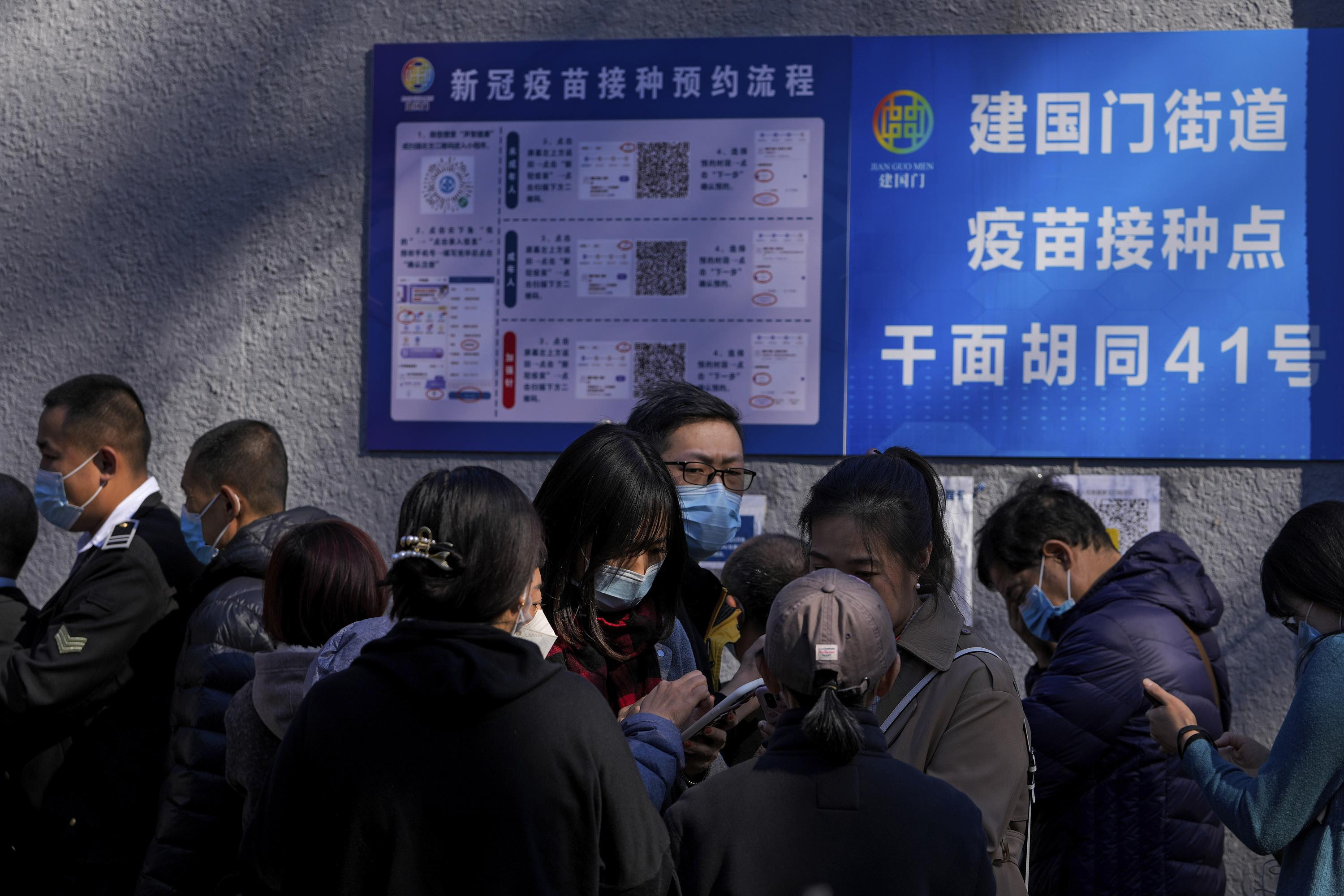
  • Children as young as 3 will start receiving COVID-19 vaccines in China
  • A camera operator told authorities that Alec Baldwin had been careful with weapons on the set of the film “Rust” before the actor shot and killed a cinematographer with a gun he’d been told was safe to use.

ANDREW MELDRUM, Africa News Editor

The Associated Press

The Rundown

I'm an image

WASHINGTON (AP) — Pivotal Democratic Sen. Joe Manchin appears to be on board with White House proposals for new taxes on billionaires and certain corporations to help pay for President Joe Biden’s scaled-back social services and climate change…Read More

I'm an image

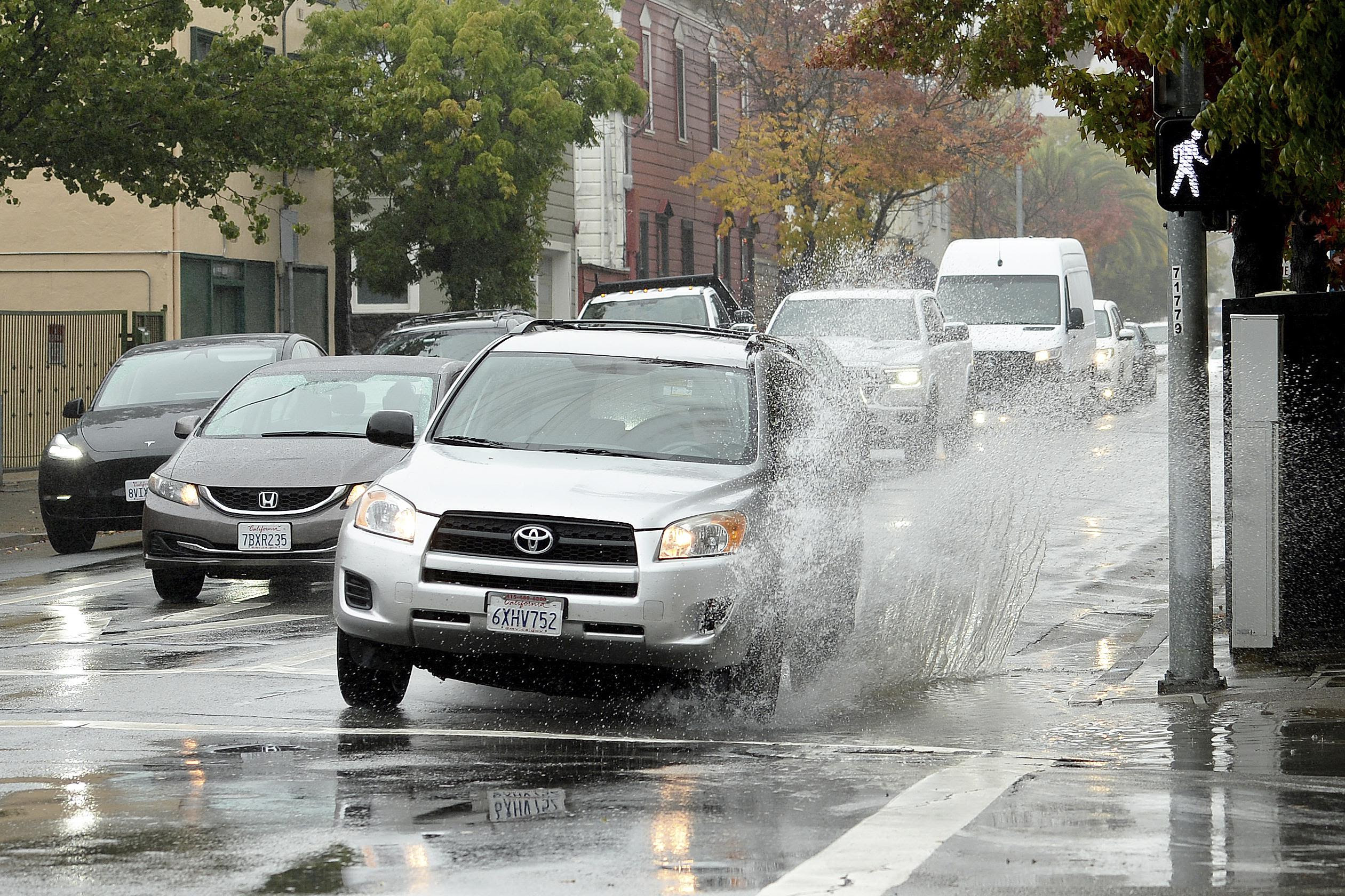
SAN FRANCISCO (AP) — A powerful storm roared ashore Sunday in Northern California, flooding highways, toppling trees and causing mud flows in areas burned bare by recent fires as forecasters predict record-breaking rainfall. …Read More

I'm an image

BEIJING (AP) — A northwestern Chinese province heavily dependent on tourism closed all tourist sites Monday after finding new COVID-19 cases. Gansu province lies along the ancient Silk Road and is famed for the Dunhuang grottoes filled with B…Read More

I'm an image

CAPE TOWN, South Africa (AP) — In a pair of Cape Town warehouses converted into a maze of airlocked sterile rooms, young scientists are assembling and calibrating the equipment needed to reverse engineer a coronavirus vaccine that has yet to r…Read More

I'm an image

SANTA FE, N.M. (AP) — A camera operator told authorities that Alec Baldwin had been careful with weapons on the set of the film “Rust” before the actor shot and killed a cinematographer with a gun he’d been told was safe to use, court records …Read More

OTHER TOP STORIES

CAIRO (AP) — Sudanese officials say military forces have detained at least five senior government officials on Monday, as the Sudanese Professionals’ Association has called o…Read More

PARIS (AP) — A survivor of the terrible journey to Auschwitz remembered how the youngest wailed. There were 99 children squeezed among 751 adults gasping for air, crazed by t…Read More

WHITEHAVEN, England (AP) — In the patchwork of hills, lakes and sea that makes up England’s northwest corner, most people see beauty. Dave Cradduck sees broken dreams. The co…Read More

BLACKSTONE, Va. (AP) — Civil War history casts a long shadow in Virginia, the birthplace of Confederate generals, scene of their surrender, and now a crossroad of controversy…Read More

The post WORLD VIEW: US Budget, Violent California Storm, China with Virus Surge, Sudan Coup, More appeared first on The St Kitts Nevis Observer.

Europe Entering Its 2nd Pandemic Winter of Rising COVID Cases, World Stats

London (CNN) Lockdowns, spiraling cases and a vaccine divide is framing the start of Europe’s second pandemic winter, bringing chaos to eastern European countries and uncertainty to those in the West.

Despite the widescale availability of vaccines this winter compared to the last, Europe is the only part of the world reporting an increase in new Covid-19 cases globally, the World Health Organization (WHO) said Wednesday. This is the third consecutive week the region has recorded a rise in cases, it added.
The suffering has been acute in Eastern Europe and Russia, battling mounting deaths and cases fueled by vaccine hesitancy that has seen coverage rates dip as low as 24%, according to data from the European Centre for Disease Prevention and Control (ECDC).
Last Thursday, Latvia became the first country in the European Union to impose a lockdown as the country struggles with a spike in cases amid low vaccination uptake. Only 56% of all adults have had both doses of the jab compared to the EU average of 74.6%.
Western Europe is also driving the rise in Covid-19 cases despite some countries enjoying near universal vaccine coverage. Germany’s Covid incidence rate rose to 100 new infections per 100,000 inhabitants on Saturday for the first time since May. Belgium, alongside Ireland, is seeing one of the highest case rates in Western Europe, according to the ECDC, of 325.76 and 432.84 per 100,00 people respectively.
Belgium’s Health Minister Frank Vandenbrouck told broadcaster VRT Wednesday that the country was in a fourth wave. More than 85% of the adult population is fully vaccinated, and officials say the vast majority of hospitalized Covid-19 patients were unjabbed, Reuters reported.
The differing vaccination rates have put Europe’s East and West on two separate tracks, but what they share is case rates driven higher by the relaxation of pandemic restrictions as economies open, cold weather driving people indoors, and the highly transmissible Delta variant, now the dominant strain in the region, Dr. Peter Drobac, a global health expert at the University of Oxford’s Saïd Business School in England, told CNN.

Vaccine hesitancy

Caseloads may be high in some Western Europe countries, but thanks to vaccines, Covid-19 deaths and hospitalizations have remained largely flat compared to their Eastern counterparts.
From Monday, Romania will reintroduce night curfews and make health passes mandatory for most venues, days after it recorded 19.25 deaths per million people — one of the world’s highest Covid-19 death rates per capita.

People protest against Covid-19 restrictions in Bulgaria on October 20 as cases skyrocket in the region.

Romania’s woes are not down to vaccine shortages. EU countries have access to all of the shots approved by the EU, but like many countries from the Baltic to the Balkans, Romania’s vaccine rollout has been hampered by vaccine hesitancy, poor government messaging and suspicion of the authorities. Only 35.6% of its adult population is fully vaccination, according to the ECDC.
Neighboring Ukraine reported its highest daily number of Covid-19 cases since the beginning of the pandemic on Thursday, of 22,415 cases, days after President Volodymyr Zelensky implored nationals to get vaccinated, saying it was the only way to prevent a lockdown.
“There are two ways at this crossroads: vaccination or lockdown,” Zelensky said in a televised interview with Ukrainian broadcast channel ICTV on Monday. “Every day we face this challenge and this choice. I am totally against lockdown… because of the economy.”
But by Friday, schools in Ukrainian Covid hotspots were shut down and the government announced vaccine certificates or a negative test to access public transport in the capital after daily deaths hit a record 614, according to Reuters.
Russia is enduring its worst-ever phase of the pandemic. Moscow began a 10-day lockdown on Monday as its officials openly admitted that the country is facing a dire winter. It reported its highest numbers of daily cases and deaths multiple times in recent days, and registered a record 1,028 official fatalities on Wednesday.

Medics work in the intensive care unit for Covid-19 patients in Moscow's Sklifosovsky emergency hospital on October 20.

“Of course, not all that needed to be done was done for informing and explaining the inevitability and importance of vaccination,” President Vladimir Putin’s spokesperson, Dmitry Peskov, told journalists as the Kremlin admitted partial responsibility for the low vaccination rates. “But at the same time, citizens of our country need to take a more responsible position and get vaccinated,” he said.

No silver bullets

Western Europe won’t “reach the crisis levels that we saw in the past — with field hospitals being set up — [because] vaccines have definitely changed the game and in that sense there should be a lot of reason for optimism,” health expert Drobac said.
The United Kingdom, however, shows that vaccines are not a silver bullet, he added.
Britain is registering the most daily cases in Western Europe after dropping almost all its pandemic restrictions in the summer. Health experts and medical unions have implored the British government to reimpose measures like mask mandates or vaccine passes, in line with other European countries, so as to prevent the imposition of restrictive measures like lockdowns.

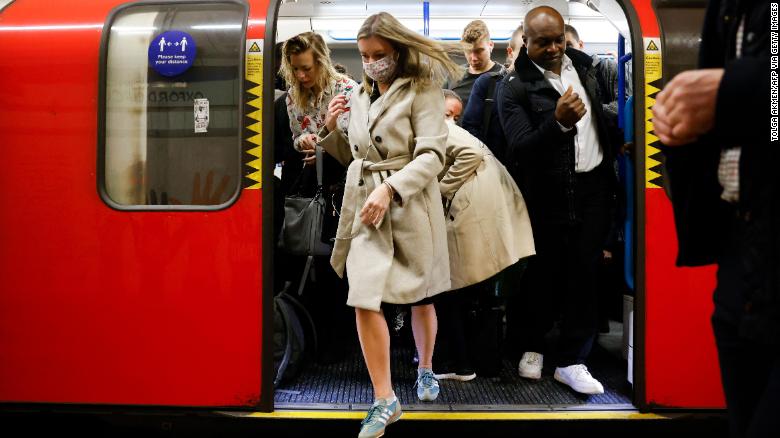
 Healthcare leaders are urging the British government to reinstate some coronavirus restrictions, such as mask mandates, in indoor settings.

But its government has rejected such a move even as hospitalizations and deaths rise. Katherine Henderson, the President of the Royal College of Emergency Care, told Sky News on Sunday that the country’s health service was already in “a terrible place” due to Covid-19. Emergency departments across the UK are “already struggling to cope” with “large queues” of ambulances piling up outside, she said.
British Prime Minister Boris Johnson has instead urged people over the age of 50, and those at high risk of Covid-19, to get a booster vaccine in a bid to overcome waning protection from vaccines after six months.
This won’t be enough amid skyrocketing cases that can be fertile ground for the creation of new variants. On Friday, the UK Health Security Agency designated a descendent of the Delta variant, AY.4.2, a “varient under investigation” due to “some early evidence that it may have an increased growth rate in the UK compared to Delta,” the government agency wrote.
“The UK the strategy has been very much focused on letting vaccinations do all the work. And I don’t think that’s going to be enough,” Drobac said.
It’s a dangerous strategy that relies on the unvaccinated, like children, getting infected to create a “level of overall population immunity from natural infection and vaccination,” he said. “The problem with that, of course, is that it not only allows for some unacceptably high level of hospitalization and death, but also that it may not work,” he added.
As the UK drags its feet on new measures, Ireland is holding off on dropping pandemic restrictions amid a resurgence of cases despite having one of Europe’s highest vaccination rates — of 92% of the population fully vaccinated, according to the ECDC.

A health care and nursing assistant stands in the Covid-19 intensive care unit at Essen University Hospital, Germany.

During a press conference last Tuesday, Irish Prime Minister Micheál Martin said Covid-19 vaccine passes will remain in place for indoor hospitality and events, masks will continue to be mandatory in indoor public spaces, and indoor hospitality will be confined to table service only.
Europe needs to not “sleepwalk” its way to lockdowns and deaths of last winter, Mike Ryan, executive director of the WHO’s health emergencies programme, said Wednesday. We don’t know what the epidemic period will be in two months, three months’ time…we are going to have to be a little cautious … a little careful.”

=============================================

WORLD STATS

Coronavirus Cases:

244,512,570

Deaths:

4,965,637

Recovered:

221,520,208
Highlighted in green
= all cases have recovered from the infection
Highlighted in grey
= all cases have had an outcome (there are no active cases)

[back to top ↑]

Latest News

October 25 (GMT)

Updates

  • 37,930 new cases and 1,069 new deaths in Russia [source]
  • 236 new cases and 8 new deaths in Japan [source]

The post Europe Entering Its 2nd Pandemic Winter of Rising COVID Cases, World Stats appeared first on The St Kitts Nevis Observer.

Battle for Abortion Rights in Mexico Just Beginning

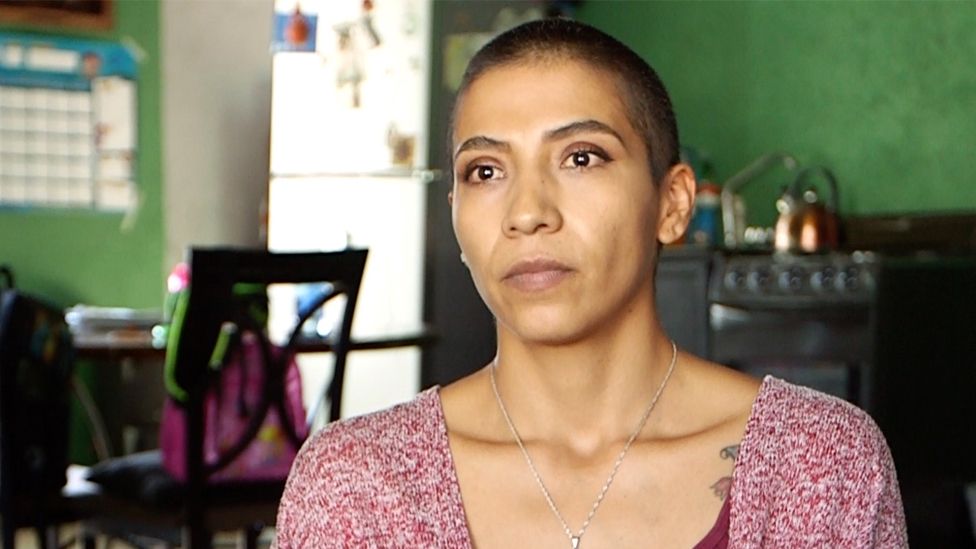
BBC- Few customers who get into Paulina Ramírez’s taxi know her awful story.

But 20 years ago, the so-called Paulina Case made headlines around the world, her name synonymous with Mexico’s strict rules and attitudes on abortion.

In 1999, aged 13, Paulina was raped and was left pregnant by a man who broke into her family’s home. Following the brutal attack, she sought an abortion, fully legal in Mexico in cases of rape. However, Paulina was harangued by conservative doctors, state officials and priests who put up constant obstacles to stop her from terminating the pregnancy.

“I heard the doctors say ‘I’m not doing it, they’ll sack me. I’m not a murderer’,” she recalls in her sweltering home-town of Mexicali on the US-Mexico border.

The campaign of intimidation was relentless. One doctor told Paulina she could bleed to death or be left sterile from an abortion. A priest told her she might be excommunicated.

“They brought pro-life representatives to my room who showed me pictures of dead foetuses and the image of Christ,” she says. “It was a very difficult time, I was still dealing with the trauma of the rape.”

Their cruel tactics worked. Eventually the 12-week deadline for an abortion passed and Paulina, still only a child herself, had to carry the baby to full term.

The suffering of that time has never fully left her but she is greatly encouraged by a unanimous ruling from Mexico’s Supreme Court last month to decriminalise abortion. Specifically the decision referred to the law in the northern state of Coahuila but it set a precedent for the entire country.

Teresa Mesa
“There’s still mountains to overcome,” Teresa Mesa says

“I cried! I cried when I heard!” smiles Teresa Mesa, a single mother-of-three in Coahuila. When she became pregnant a fourth time, Teresa decided the most responsible thing to do was to abort – then illegal in her home state.

“It wasn’t easy. At that time, there was no legal protection for women, no places of an adequate health standard to carry them out, and really a lot of social stigma.”

Teresa hopes the measure will make it easier for other girls to have an abortion than it was for her, particularly as neighbouring Texas in the US moves in the opposite direction, towards much stricter control.

“This is just the start. There’s still mountains to overcome before this is fully legal. We need proper health clinics which carry out abortions and doctors that are prepared to do them.”

“And it’s not just about normalising abortion,” she continues, “but also making visible the domestic violence under which so many women live in Coahuila. Eight in every 10 women here experience some form of violence at home.”

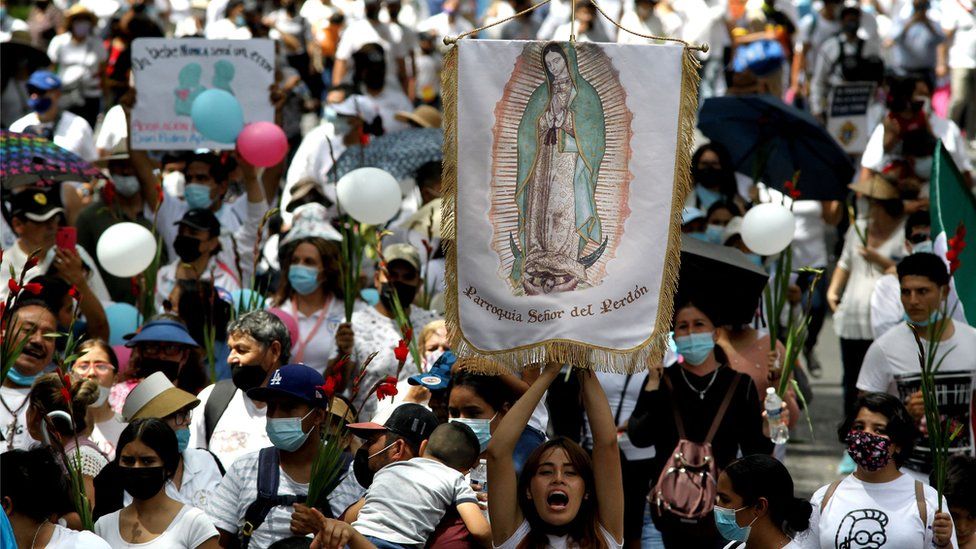
Members of civil and religious organisations march during a protest against the decriminalization of abortion, in Guadalajara, Mexico, on 3 OctoberAbortion remains a deeply polarising issue in a country where the Catholic Church remains influential
A demonstrator wearing a green handkerchief takes part during a demonstration in favour of decriminalization of abortion on 28 September
But across Latin American countries, attitudes on abortion are shifting

While the Supreme Court’s ruling set a historic change into motion, there are several legal challenges ahead before safe abortions are available across the country.

In the meantime, many women – including Teresa – must turn instead to the Safe Abortion Network, an abortion rights’ group which operates on the margins of the law. I met members of the Coahuila branch as they plastered posters with their contact details on them at bus stops around the state capital, Saltillo.

“We helped nearly 300 women last year to obtain abortion pills or travel to Mexico City,” where abortion is legal, the group’s founder Malu Reina told me.

Although their opponents paint them as somehow “promoting abortion”, Ms Reina says that is a deliberate mischaracterisation, and that the co-operative provides sexual health education and support to vulnerable mothers in Coahuila’s marginalised communities.

Nevertheless, there are some powerful forces in Mexico lined up against the new law. Mexico is Latin America’s second-biggest Catholic nation and anti-abortion campaigners have held several demonstrations outside the Supreme Court recently. They say they are determined to block the court’s decision.

“The Supreme Court has failed against the fundamental freedom of life,” argues Rodrigo Ivan Cortes, president of the National Front for the Family.

“Now they also want to proceed against the fundamental freedom of the health sector and take out the freedom of conscious objection for doctors and nurses. That is very, very dangerous for a democratic country.”

Still, such campaigners appear to be losing ground. Across Latin America, attitudes on abortion are shifting. In Chile, Argentina, Mexico and beyond, younger generations are slowly knocking down the traditional positions of their parents and grandparents.

Media caption, Women across Latin America march for abortion rights

Paulina Ramírez’s son is now 20 and they have a strong relationship. But she deeply resents her harrowing treatment as a teenage rape victim, shamed and victimised by those legally obliged to help her.

“Everyone decided for me except for me. All I wanted was to exercise my rights and they didn’t let me.”

Forced teenage pregnancies in impoverished circumstances will not vanish overnight in Mexico. But decriminalisation, Paulina says, is the first step to make sure no other girl goes through the same trauma she did.

The post Battle for Abortion Rights in Mexico Just Beginning appeared first on The St Kitts Nevis Observer.

New Migrant Caravan in Mexico Pushes Past Blockade to Head North

TAPACHULA, Oct 23 (Reuters) – Several thousand migrants from Haiti, South America and Central America set off from southern Mexico headed north on Saturday, clashing with law enforcement trying to hold the caravan back.

Some people among the latest mass movement of migrants trying to pass north through Mexico said they hoped to eventually reach the U.S. border, where the number of migrants trying to gain entry was already hitting new records.

Some 3,000 people, including families with young children, began trekking on foot on Saturday from the city of Tapachula near the Guatemala border toward Mexico’s capital.

One of the caravan’s organizers, Irineo Mujica, said he was leading the group to Mexico City in protest of the lack of government assistance in the south, where officials have attempted to contain thousands of migrants, and to demand legal documents that would let migrants move freely in the country.A highway checkpoint in Tapachula with some 400 law enforcement officers aimed to block their path, but many migrants managed to break past. A Reuters video showed people carrying backpacks and with children on their shoulders pushing through a cluster of officers in anti-riot gear who attempted to contain the crowd.

One family, including a woman and small children, were knocked to the ground in the crush of people, their belongings scattering.

Some migrants who attempted to leave Tapachula in September to head north were subject to brutal treatment by Mexican officials, and the government’s National Migration Institute condemned incidents of violence captured on video.

U.S. authorities arrested more than 1.7 million migrants at the U.S.-Mexico border this fiscal year, the most ever recorded.

Reporting by Jose Torres, Additional reporting by Lizbeth Diaz, Writing by Daina Beth Solomon; Editing by David Gregorio

The post New Migrant Caravan in Mexico Pushes Past Blockade to Head North appeared first on The St Kitts Nevis Observer.

Record High Migrant Detentions at US-Mexico Border

BBC- The US says more than 1.7 million migrants were detained along its border with Mexico in the past 12 months – the highest number ever recorded.

More than one million of them were expelled to Mexico or their native countries, according to data from US Customs and Border Protection.

Agents apprehended people from more than 160 countries.

President Joe Biden’s popularity in opinion polls has been sinking, partly as a result of his immigration policy.

Just 35% of Americans said they approved of his handling of the issue, in an Associated Press-NORC Center for Public Affairs Research survey earlier this month.

Mr Biden promised a more humane immigration policy than his predecessor Donald Trump, but the US-Mexico border has been engulfed in crisis for much of the Democrat’s nine-month-old presidency.

The detention numbers for the 2021 fiscal year, which ended in September, are the highest since 2000. That year, more than 1.6 million migrants were held at the US-Mexico border. But the number has not reached 1.7 million since US authorities first began tracking such entries in the 1960s.

“The large number of expulsions during the pandemic has contributed to a larger-than-usual number of migrants making multiple border crossing attempts,” the US Customs and Border Protection said.

Those trying to enter the US illegally were mainly from Mexico, Guatemala, Honduras and El Salvador.

Of all those detained, the biggest category were adults travelling without children – more than 1.1 million (or 64%).

At the same time, the US authorities said they encountered more than 145,000 unaccompanied children – a record number.

Almost 11,000 of those children remained in government custody on Friday.

Media caption, Watch: Texas migrant camp “kids feel like they’re in prison”

A BBC investigation of the Fort Bliss detention centre in Texas earlier this year found reports of sexual abuse, Covid and lice outbreaks, hungry children being served undercooked meat and sandstorms engulfing the desert tent camps where the young people were being held.

Republicans have blamed Mr Biden’s promise to create a pathway to citizenship for immigrants for fuelling the surge.

Mr Biden – who is making one of his regular trips to his home in Delaware this weekend – has been facing questions this week about why he has not visited the border.

The White House press secretary told reporters on Friday that Mr Biden drove by the border in 2008 when he was campaigning to be Barack Obama’s vice-president.

The post Record High Migrant Detentions at US-Mexico Border appeared first on The St Kitts Nevis Observer.

Alex Quiñónez: Ecuador Sprinter Shot Dead

BBC[ One of Ecuador’s best-known athletes, Alex Quiñónez, has been shot dead.

He was shot along with another person outside a shopping centre in the city of Guayaquil on Friday night. A motive is not yet clear.

Tributes have been pouring in for Mr Quiñónez, 32, who was described by Ecuador’s athletics federation as the country’s greatest sprinter.

President Guillermo Lasso promised that those behind the killing will be found and punished.

It comes after a 60-day nationwide state of emergency came into force in Ecuador on Monday in response to a wave of violent crime.

Official figures suggest the number of murders in the first eight months of this year are double those in the same period last year.

“With great sadness, we confirm the murder of our sportsman Alex Quiñónez,” the Sports Ministry announced on Twitter.

“We have lost a great sportsman, someone who allowed us to dream, who moved us….he was the greatest sprinter this country produced.”

Mr Quiñónez won bronze in the 200 metres at the 2019 World Athletics Championships in Doha. He was suspended prior to the Tokyo Olympics due to “breach of his whereabouts obligations”.

President Lasso tweeted his condolences.

“May he rest in peace. Those who take the lives of Ecuadoreans will not remain unpunished,” he said.

This is the second killing of an international athlete this month.

Agnes Tirop, a Kenyan runner who recently broke the women-only 10km road race world record, was stabbed to death in her home. Her husband has been arrested on suspicion of murder.

The post Alex Quiñónez: Ecuador Sprinter Shot Dead appeared first on The St Kitts Nevis Observer.

Colombian Drug Lord Otoniel to be Extradited to US

BBC- Colombia has announced that the country’s most wanted drug trafficker will be extradited to the US after he was captured in a raid.

Dairo Antonio Úsuga, known as Otoniel, was seized after a joint army, air force and police operation on Saturday.

He led the country’s largest criminal gang and has been on the US Drug Enforcement Agency’s most wanted list for years.

US officials had placed a $5m (£3.6m) bounty on his head.

They accused him of importing at least 73 metric tonnes of cocaine into the country between 2003 and 2014.

What will happen to him?

Colombia’s Defence Minister Diego Molano told El Tiempo newspaper that the next step for officials was to comply with the US extradition order.

Authorities have now taken Otoniel to a military base in the capital Bogotá ahead of his extradition, according to newspaper El Nuevo Siglo.

Being locked up in a jail thousands of miles from their home country, in a place where they have few connections and no means to intimidate guards or prison directors is a fate many Colombian drug traffickers fear.

The late drug lord Pablo Escobar said that he would prefer “lying in a grave in Colombia than being locked up in a cell in the US”.

Except for a six-year period between 1991 and 1997, when Colombia’s constitution banned extraditions of Colombian citizens, a number of top level traffickers facing indictments in the US have been sent to stand trial there.

Among them are the co-founder of the Medellín cartel, Carlos Lehder, drug lord Daniel “The Madman” Barrera and paramilitary leader Salvatore Mancuso.

Otoniel, who was indicted in the the US in 2009, will faces a number of charges, including sending shipments of cocaine to the US, killing police officers and recruiting children.

How was he caught?

Otoniel was captured in his rural hideout in Antioquia province in north-western Colombia, close to the border with Panama.

The operation involved 500 soldiers supported by 22 helicopters. One police officer was killed.

Otoniel had used a network of rural safe houses to move around and evade the authorities, and did not use a phone, instead relying on couriers for communication.

In the past, police have found special orthopaedic mattresses for Otoniel in these sparse homes, as he suffered back pain from a herniated disc.

Police chief Jorge Vargas has said the drug lord was fearful of capture, “never approaching inhabited areas”.

But El Tiempo reported that authorities managed to pinpoint the location where he was eventually captured two weeks ago.

Chief Vargas said his movements were traced by more than 50 signal intelligence experts using satellite imagery. US and UK agencies were involved in the search.

Mr Duque described the operation as “the biggest penetration of the jungle ever seen in the military history of our country.”

Colombia’s armed forces later released a photo showing its soldiers guarding Otoniel, who was in handcuffs and wearing rubber boots.

There have been several huge operations involving thousands of officers to capture the 50-year-old in recent years.

The post Colombian Drug Lord Otoniel to be Extradited to US appeared first on The St Kitts Nevis Observer.

Standardization of Travel Rules Key for Latin America Airlines’ Recovery

BOGOTA, Oct 24 (Reuters) – Getting standardized rules for international travelers amid the coronavirus pandemic is the biggest hurdle for Latin American airlines, with their recovery threatened by a lack of consensus among health authorities, industry leaders said on Sunday.

Passengers suffer constant delays and restrictions as they travel between countries due to differing entry requirements established to curb the spread of different strains of the coronavirus, aviation industry directors said at a conference in Bogota, Colombia.

“Standardization is vitally necessary to build confidence so people return to flying,” said the Latin American and Caribbean Air Transport Association’s (ALTA) chief executive, Jose Ricardo Botelho.

The lack of accord between different countries, with frequent changes to air travel rules, leads to uncertainty for passengers, airlines, and airline staff, said Copa Airlines Chief Executive Officer Pedro Heilbron.

“When you carry passengers and there are thousands of requirements, it’s almost impossible that at least some passengers don’t have the right paperwork,” he told journalists in opening remarks at the ALTA annual conference.

Some countries even fine airlines for passengers’ non-compliance with the rules, Heilbron added, though did not say which ones.

Almost a year and a half of restricted travel has put airlines and airports across the globe under severe financial strain, necessitating a more complete re-opening of travel so that the industry can recover, saving millions of jobs.

“Generally speaking there are quite a few agreements and there is relative standardization, but the big differences come from health authorities,” said Lucas Rodriguez, the head Colombia’s civil aviation authority’s air transport office.

The need to meet new travel requirements has dented airlines’ balance sheets.

The International Air Transport Association (IATA), the industry’s main trade body, this month revised its estimate for airlines’ net losses this year to $51.8 billion, from a previous forecast of $47.7 billion.

IATA expects airlines to lose $11.6 billion in 2022 in revenue.

Reporting by Nelson Bocanegra and Carlos Vargas Writing by Oliver Griffin; editing by Diane Craft

The post Standardization of Travel Rules Key for Latin America Airlines’ Recovery appeared first on The St Kitts Nevis Observer.

George Christensen says 'no one is at fault' for low COVID-19 vaccine rates

One of Queensland's most controversial politicians says his social media posts promoting anti-COVID-19 vaccination aren't having an impact on his region's low vaccine rates and "no one is at fault".

George Christensen has spoken with 9News reporter Tim Arvier to answer questions about his stance on the vaccine and the drug ivermectin.

To see more, watch the full interview at the top of this story.