
The post Newspaper Cover for 8th October, 2021 appeared first on The St Kitts Nevis Observer.
The post Newspaper Cover for 8th October, 2021 appeared first on The St Kitts Nevis Observer.
Nevis Premier Mark Brantley has renewed calls for Nevisians to get vaccinated. During a press conference, he announced that if the vaccination rate doesn’t increase to a satisfactory level, he will be inclined to mandate it.
“I believe that the evidence all around the world makes it clear that COVID has come to kill. It hasn’t come to have tea, it hasn’t come to play dominoes. It has come to kill and if you know as we now know, that COVID kills, why would we not protect ourselves from it?”
He said the evidence around the world and at home in Saint Kitts and Nevis is clear, “those who are dying in disproportionately large numbers are unvaccinated. Those who are suffering and going to hospitals and struggling with this disease and being most afflicted by it, overwhelmingly are unvaccinated. It’s to the point where I believe it is a truism that COVID has become a disease of the unvaccinated.”
Responding to questions posed by the media about whether or not the island has the legal framework in place to implement mandatory vaccination, the Premier said yes.
“Because of the nature of COVID, ones individual right, whatever that may be, can be overridden in the context of saying that whatever mandate is necessary to save lives. I think that is important because any constitutional lawyer will tell you that whatever rights you enjoy in the constitution, there’s a call-out, there’s always an exception for something that is reasonably required in a democratic society.
“So what is important your right to not take a vaccine or the right of others to not be infected by a deadly disease that has come to kill. That really is the debate and I have seen some advice that has been given to governments across the OECS; a legal opinion that was written by our former Chief Justice of the Caribbean Court of Justice Sir Dennis Byron and Professor Rosemary Bell-Antoine who is a Professor at the University of the West Indies and an expert in Labour law- that opinion concluded that governments had the authority to mandate.
“What you’re now seeing is governments- Saint Vincent and the Grenadines, you’re seeing it in Antigua and Barbuda, I’m told in Guyana as well, that governments are mandating it. In Antigua now, as their Prime Minister in his own inimitable style put it ‘no teacher can come on any public school compound unless they are vaccinated and if they stay home, they won’t get paid so they have to be vaccinated…”
The Premier said while Nevis is not yet at that point, people should be responsible and do the right thing.
He hastened to clarify that mandatory vaccination does not mean that Nevisians will be forced to take the vaccines.
According to figures quoted by Premier Brantley, in the first 15 months of the pandemic, only 22 cases of COVID-19 were recorded on the island of Nevis.
He said: “Now within three months, we are well over 300 cases.”
The post Nevis: Brantley Says, If Needed, COVID Vaccinations May Be Made Mandatory appeared first on The St Kitts Nevis Observer.
The World Health Organization (WHO) has decided on a formal definition of Long COVID, defining it as a “post-COVID condition.”
The WHO said: “Common symptoms include fatigue, shortness of breath, cognitive dysfunction but also others… which generally have an impact on everyday functioning. Symptoms may be new-onset, following initial recovery from an acute Covid-19 episode, or persist from the initial illness. Symptoms may also fluctuate or relapse over time.”
Studies have found that up to one-third of Americans have symptoms that lingered for at least six months but most research is still prospective and little is known about the long-term impact COVID-19 might have, mainly due to it being such a new virus.
The so-called “brain fog” is a particular mystery to experts as it remains unclear how a respiratory illness could cause neurological issues. There is currently no treatment for Long COVID but different vaccines for the virus have been shown to ease symptoms in some cases.
What happens now? Research into Long COVID is in such early stages. Many struggling with symptoms feel like they’ve been “left behind” or “abandoned” because of the global focus on the preventative vaccine. As COVID-19 cases come under control (and this is still not a certainty), more focus will be on the long-term impact of the virus.
The post It’s Official: WHO Recognizes Long COVID as Post-Covid Condition appeared first on The St Kitts Nevis Observer.
Bermuda ranked thirteenth out of 20 Caribbean destinations in a recent visitor satisfaction survey.
But tourism chiefs pointed out that the survey, conducted by Conde Nast Traveler magazine, was done in April and May, when the island was under strict health restrictions because of the coronavirus.
Bermuda received a satisfaction rating of 91.16 in the poll.
St Barts topped the list with a score of 94.29, and Nevis, Anguilla, and Jamaica placed second, third and fourth respectively.
Antigua, the Cayman Islands, Aruba and Puerto Rico all finished ahead of Bermuda, as did St Lucia, the US Virgin Islands, British Virgin Islands and Turks & Caicos.
A spokeswoman for the Bermuda Tourism Authority insisted that Bermuda’s appearance on the list was a positive, despite its poor showing.
She said: “We’re delighted to be recognised among the top 15 of the CN Traveler’s Caribbean feature, as well as in the Travel & Leisure world’s best islands in the Caribbean.
“Being included in these surveys elevates our visibility and has directly translated to visitors expressing their desire to visit Bermuda.
“With the world of travel opening up slowly and navigating cautiously, Bermuda is welcoming guests who applaud the island’s robust protocols and how the Government handles the pandemic management. These surveys create excitement, and making the list is as important as the ranking.”
The spokeswoman added: “Visitors to our island have consistently acknowledged their positive on-island experiences in exit surveys, with most noting that the friendliness of the locals exceeded their expectations.
“Our team continues to offer the certified tourism ambassador programme for industry service providers, and to develop memorable, authentically Bermudian experiences through our experience investment programme.”
She said the BTA was “proud of our partnerships” in support of customer service development through a recent “learn to earn” programme.
The spokeswoman added: “The BTA tourism standards and training team has engaged industry stakeholders in the safe travels programme codifying Covid health and safety protocols for the industry – a process that has earned the island the World Travel and Tourism seal of approval.
“And we look forward to measuring the impact of our expansion into new markets and unveiling the research gleaned from our current brand study.”
The post Bermuda Not Happy with13th Place Conde Nast Rating appeared first on The St Kitts Nevis Observer.
As more countries set up requirements to see proof of vaccination for entry, persons who chose not to get vaccinated are getting creative to beat the system. A booming business has sprung up on the internet, where people can purchase fake vaccination cards for between US$25 and $200.
On Tuesday of this week, Guyana’s Health Minister, Dr Frank Anthony said that the government is currently investigating around 12 to 15 cases of forged vaccine cards in the country.
In Jamaica, Minister of Health, Dr. Christopher Tufton, said this week that they, “have seen cases of persons allegedly having fake vaccine cards and that [it] is increasingly becoming a challenge.”
Jamaica has now fully committed to implementing a digital COVID-19 vaccination card, which the government said would be available by December. Guyana has also indicated in the past they are willing to go the route of a digital vaccination passport as well, to “get back to normalcy.”
It is no secret that other Caribbean countries are harboring the thought of having digital vaccination cards, to help with forgery and to stay on top of requirements imposed by larger countries.
Barbados was one of the first countries to implement a digital platform to show proof of covid testing.
At the 42nd regular meeting of the conference of the Heads of Government of CARICOM in July, leaders “agreed to consider the use of a Vaccination Passport for vaccinated persons travelling by air and sea, supported by a Digital Vaccination Database, possibly based on the Barbados model in the first instance.”
There are also reports that the British Virgin Islands (BVI) was unveiling a digital vaccination database that “will be internationally recognized to meet the strict proof-of-vaccination requirements of other countries.” BVI’s Chief Medical Officer Dr. Ronald George, said: “That the territory’s official vaccination database will ensure that unscrupulous persons will be unable to produce counterfeit copies of them.”
Not everyone seemed to be on board with the digital vaccination, however. In March, Jamaica’s tourism minister, Edmund Bartlett cautioned global leaders about the use of digital passport for travel purposes. Speaking in his capacity as Chair of the Organization of American States (OAS), Inter-American Committee on Tourism (CITUR) Working Group 4 he said: “There can hardly be a harmonized position for digital passports and other bio-sanitary protocols when some countries and regions lag dramatically behind in their health response systems, including the vaccination process. If we remain committed to leaving no one behind, we are best positioned to move farther ahead,” said the Minister. The tourism minister went on to add that: “Any requirement for proof of vaccination for travel which does not take into account this reality could very well be considered discriminatory,”
Mr. Bartlett is not alone in his assertion. Last month, according to US News, the World Health Organization said that vaccination passport would “fuel discrimination” at this stage of the pandemic. WHO Director-General Tedros Adhanom Ghebreyesus told a press conference that vaccine passports should not be used at this time, particularly not as a prerequisite for travel “because of lack of vaccine equity.” He said however, that “for the future, when vaccine coverage increases globally, it can be considered.”
While Messrs. Bartlett and Ghebreyesus have a genuine point regarding equity, their position is untenable due to the increasing use of mandates to encourage more vaccination. Yes, there is inequity in the procurement and distribution of the vaccine. Yes, there are instance in which it may be discriminative, but the overall health of the world and its economic survival is at stake.
 According to the latest figures from ourworldindata.org, only 46 percent of the world population has received at least one dose of covid-19 vaccine. In low-income countries a meagre 2.3 percent of persons have received the first dose. In the Caribbean, only six countries out of 22 have gone past the 50 percent mark of being fully vaccinated. Cayman Island tops the numbers with 83 percent being fully vaccinated, while anguishing at the bottom of the table are Jamaica and Haiti, two of the most populous Caribbean nations.
The conundrum for Caribbean countries is multifold. They all depend on tourism to sustain their economies. To provide tourism services they must ensure that their employees are free from covid. These employees mix with the wider population mostly not inoculated and therefore presents a risk of spreading the virus. These countries have low vaccination rates because they do not have access or funding to procure vaccines, and of course there is the strong resistance from members of their populations. Having a low vaccinated population, risk being placed on travel ban lists, which discourages travelers from coming to their shores. At the same time, the main tourist-supplier nations are increasingly mandating vaccination cards and require proof of vaccination.
While the vaccination passports will not solve all the social and economic problems brought on by the pandemic, it does solve headaches associated with administering a sound recovery policy. Firstly, you eliminate or reduce the instances of counterfeit vaccination proofs. Secondly, you ensure that your people can travel to and do business with countries requiring secure proof of vaccination. Thirdly, by blocking the loopholes it may encourage more people to get vaccinated, mitigating the spread of the virus. This includes medical, social, and financial burden. Lastly, with everything going digital now, the passport could also be a replacement for the old yellow booklet used internationally as proof of vaccination against hepatitis, yellow fever, cholera, rabies, and other viral diseases. This will add security to the process and potential savings.
Already some countries are requiring proof to get services. Every Caribbean country in some way has established preferential treatment for vaccinated tourists. As this requirement of ‘proof for service’ spread around the world, it would be more convenient to show proof on you phone, rather than sifting through loads of paper in your purse or wallet.
In the end its virtually a sure bet that vaccination passport will become inevitable.
The post Will Anti-Vaxxers Make Digital Vaccination Cards a Sure Thing? appeared first on The St Kitts Nevis Observer.
The post Caribbean Nations, Except Haiti and DR, Open for Travel to UK appeared first on The St Kitts Nevis Observer.
Guest blog by: Champi Alvarez
Happy Eco
Mexico’s beautiful Caribbean beaches with their turquoise waters and endless white sand have been experiencing a phenomenon that started last decade which pollutes many beaches around the Riviera: the sargassum blooms.
Sargassum is a brown marine macroalgae of the genus Sargassum and can be seen floating on the surface of the ocean. In marine areas, sargassum forms essential ecosystems for the health of the oceans and provides environmental goods and services for human activities. However, when these algae reach coastal areas they have negative effects on nature and the environment, communities and sectors such as fishing and tourism.

The warming of the oceans increases the presence of this algae on the beaches of the Riviera Maya, affecting many industries that depend on these destinations and ecosystems. When on the beach, sargassum forms brown spots up to 150 linear meters and gives off an unpleasant rotten smell, strong enough to keep tourists away.
There are records of the presence of sargassum in the Atlantic from the 15th century with the discovery of the Sargassum Sea, but since 2011 the presence and amount of this algae in the Caribbean Sea have been higher than normal. Since 2014 sargassum has become the uncomfortable guest on the beaches and coasts of Quintana Roo, in the South of Mexico, before then the quantities were not a big of a problem.

An immense and thick brown tide of algae that due to climate change and the acidification of the oceans, proliferates in the water and reaches the coasts of several Caribbean countries. Every year the problem of sargassum blurs the beauty of the sun and beaches offered by some of the most visited destinations in Mexico and affects not only tourism; scientific studies have shown that its decomposition impacts ecosystems, prevents light from filtering into the water and it contains a remarkable amount of heavy metals and dangerous bacteria.
By 2018, NASA observed 20 million tons on the Caribbean coast, which is equivalent to all the garbage that is generated in Mexico City in 4 years, an extremely high volume and sufficient to generate environmental, social and economic problems that must be addressed urgently. Several universities have studied this phenomenon, such as the University of South Florida and UNAM, and it was determined in May of 2021 that the algae would reach the ecosystems of Quintana Roo in greater quantities than in 2019, a record-breaking year, when only from May to July they were 38,892 tons of seaweed collected, according to the Secretary of the Navy.

“Sargassum is an example of what climate change can do to the planet by not taking care of wastewater treatment, injecting so many pollutants into the sea and emitting so many greenhouse gases,” says UNAM researcher Rosa Elisa Rodríguez, a coral specialist.
Sargassum season, when the majority of seaweed arrives in the Mexican Caribbean, runs from April to August, and during these time the current Mexican government entrusted the task of collecting sargassum to the Navy and the Monitoring System for Collected Sargassum (Simsar), an entity which was created in order to tackle the problem. Currently, the government strategy has 289 elements that are in charge of cleaning tasks, 12 sargassum boats and 4.2 kilometers of barriers to prevent sargassum from reaching some of the emblematic beaches, such as Tulum or Playa del Carmen. The measure seeks to systematize the information and improve the use of the algae once it is collected, but researchers are not so optimistic and they have been calling for increased resources not only to remove the algae, but to process it properly and prevent it from contaminating the soil when it is disposed of. Unfortunately, even though it has become a national problem, the government has only helped with very few resources.

Another problem is that in Mexico there are few or no regulations or permits to market sargassum. But even though there are a lot of limitations, many initiatives have been coming up throughout the years once this issue started.
People and groups near the affected area have come up with creative ideas on how to use this algae in order to have an impact on changing the landscape that is so dreaded during the summer months and coming up with products that not only are sustainable but that might help with the algae blooms.
One example is the Mexican company ‘Sargánico, which creates sustainable products with sargassum as their main ingredient. They create notebooks, folders, cup holders, menu holders and business cards among other products.

Victoria Morfín, its creator, following her creative and entrepreneurial instinct, had the idea of turning sargassum into raw material to process and transform it into practical, useful and aesthetic products. The purpose of making this type of materials is to offer products that help to have a lesser impact on the environment, giving its customers the confidence that their products are one of the best alternatives there are in order to have a sustainable life and tackle this issue that hits so close to home.
Sargánico combines sargassum with recycled materials to make its products and has become a great alternative for a more sustainable life around Quintana Roo.
Another initiative is a company with the name of C-Combinator, which with innovative bio-manufacturing they turn the Mexican Caribbean coast’ sargassum into solutions that not only help restore the planet but also look for solutions to a transition without oil in the near future.

Sargassum is a type of brown algae that is very hard to work with and it’s too often overlook, and that is exactly why C-Combinator have turned towards it to center their business strategy on. They have come up with a circular economy design to convert this sargassum that has affected many into a line of sustainable products.
By doing this they are addressing the environmental, social and economic impacts while generating jobs in an economy based in biofuels and bioproducts, by working with local people and undertaking a local problem.
C-Combinator creates an array of products derived from the local sargassum that arrives to the Caribbean waters every year. They create bio stimulants and bio fertilizers that increase the health and the performance of the soil for agriculture, replacing soil degradant fertilizers that only destroy the health of the soil. They are also centering their production towards making textiles and packaging, cosmetics, bio-medical, and tissue-engineering products derived from the seaweed that is collected.
Unsurprisingly it is human activity that is radically altering the sargassum blooms and algae blooms around the oceans and changes need to be made before the problem inevitably gets worse in the future. Seaweed is one of the most fastest growing plants in the world and they survive very harsh environments by being adaptable and regenerative while absorbing carbon dioxide around them. They have become key for the health of the ocean in many parts around the world with different initiatives and projects centered around the benefits of working with their different types. An example outside of Mexico of such initiatives are AlgiKnit, a biomaterials research group located in New York City, comprising a team of scientists and designers that have joined forces to launch a new class of sustainable materials for a cleaner fashion industry based on seaweed and Evoware, a social enterprise in Indonesia that promotes sustainability by providing plastic-free alternatives such as seaweed based packaging.
The demand for these products will only increase, and the cost of production will decrease, making it a real sustainable alternative to other products. Especially companies such as C-Combinator that are offering products that might even help break the process of sargassum blooms by decreasing them while using soil products that do not contribute to making conditions better for the algae blooms but on the contrary, healing the soil and not directing chemicals into the oceans that make sargassum grow more each year.

The process of turning the algae into products helps to restore soils and oceans, remove microplastic residues, and contribute to carbon neutrality. Our oceans are out of balance and this sort of algae pollution, even though it comes from natural sources is heating up our planet. This projects are making a stand and giving a voice to a much needed issue that we all need to be aware of.
Thanks to this first steps of people, communities and businesses, more will eventually follow. The Mexican Caribbean Coast has seen an influx on projects that wish to work with the sargassum blooms and help the community with it and it definitely has become a national environmental catastrophe and together we can help with innovative ways of transforming a hazard into an opportunity of restoring our precious ecosystems that need it so much.
Sargánico IG @sargánico
The post New Initiatives to Tackle Sargassum on Mexico’s Beautiful Caribbean Beaches appeared first on The St Kitts Nevis Observer.
The former US envoy on Haiti who resigned in protest last month testified Thursday that the United States made a mistake by backing Prime Minister Ariel Henry, saying he had no credibility.
Asked at a congressional hearing if Henry’s government could stay in power without US support, Daniel Foote replied: “I do not believe they would survive for a minute.”
Henry was appointed just two days before the July 7 assassination of president Jovenel Moise, who had been ruling by decree, ushering in a new crisis in a nation already battered by rampant violence and natural disasters.
Under a deal reached later in July, a new government was tasked with working toward holding elections. Henry became the favorite after the US, French and other ambassadors in Port-au-Prince in a joint statement threw their support behind him.
Foote said he had no personal grudge against Henry but believed the “consensus is nearly unanimous” among the public that the prime minister belonged to a ruling party that was to blame for Haiti’s problems.

“Haitians see that as meddling and are not happy and do not see the current interim government as credible,” Foote told the House Foreign Affairs Committee.
Foote said that officials in President Joe Biden’s administration had “almost blindly” supported Henry as they felt “nervous” about too much change in government in the troubled country.
Foote, a veteran diplomat who served only two months in his role, said that the row contributed to his resignation.
Representative Andy Levin told Foote he was “furious” that the United States missed what he called a historic chance to involve civil society and instead blessed an appointee of Moise, who had led a “kleptocracy, a gangsterization” of Haiti.
The Democratic lawmaker urged the Biden administration to encourage a “real and not just for-show transition back to democratic rule.”
“I believe our current policy disrespects and fails to see the Haitian people, something our country has done over and over again,” Levin said.
In a letter last month, Foote said that he could not support mass deportations being carried out under Biden amid widespread outrage at scenes of horseback border guards’ harsh rounding up of Haitians.
Deputy Secretary of State Wendy Sherman replied that his explanation was disingenuous and that he had lost a policy debate by calling for a US military involvement in Haiti.
The post Haiti: US Envoy Who Recently Quit Says PM Henry Not Credible appeared first on The St Kitts Nevis Observer.
MEXICO CITY, Oct 7 (Reuters) – The United States and Mexico are hashing out a security arrangement to replace the Merida Initiative that will focus on exchanging information and the root causes of violence, in a bid to soothe bilateral friction, Mexican government sources and U.S. officials said.
Key elements of the new agreement will be up for negotiation on Friday during U.S. Secretary of State Antony Blinken’s visit to Mexico City, where the Biden administration will hold its first U.S.-Mexico High-Level Security Dialogue.
Security cooperation between the neighbors suffered a major blow last October, when U.S. anti-narcotics agents arrested former Mexican defense minister Salvador Cienfuegos, infuriating the Mexican government. Cienfuegos was released but the arrest strained ties and cut down security cooperation.
Two Mexican government officials said the new agreement will replace the multibillion-dollar Merida Initiative, a plan that was launched in 2007 and initially gave U.S. military aid to Mexico in the fight against drug cartels.
“The Merida Initiative is dead,” said one of the Mexican officials, speaking on condition of anonymity.
The officials noted the new accord would signal that the two neighbors had moved past the diplomatic storm unleashed by Cienfuegos’ arrest on drugs charges at Los Angeles International Airport.
Washington is calling the new initiative the U.S.-Mexico Bicentennial Framework for Security, Public Health and Safe Communities, according to senior Biden administration officials, who briefed reporters on condition of anonymity.
After Friday’s talks, Washington would develop an action plan by Dec. 1 and then expects to have a three-year bilateral framework and plan agreed by Jan. 30 next year, the officials said.
Mexico’s foreign ministry did not immediately respond to a request for comment.
State Department spokesperson Ned Price, asked in a media briefing on Thursday whether Merida was dead, said Washington believed security cooperation was “due for an updated look.”
“The Merida Initiative helped Mexico strengthen rule of law and counter-narcotics capacity,” Price said. “We want to see to it that those gains are preserved, (and) that that cooperation is deepened.”
CAUSES OF VIOLENCE
Worked out over the last few months, the new deal did not foresee Mexico receiving military equipment or funds, and was instead focused on information exchange, inter-agency cooperation and training of personnel, the Mexican official said.
Mexican President Andres Manuel Lopez Obrador sees the Merida Initiative as tainted by its association with previous governments, and for financing security equipment in the 2000s. In recent years, the program supported justice reform, immigration infrastructure and drug demand reduction.
The new accord would make clear that Mexico and Washington shared responsibility for addressing chronic cross-border problems such as illicit arms trafficking and the demand for illegal drugs in the United States, said the official.
That would be a win for Mexico, but it means the agreement also implied Mexico was accepting that the United States’ security concerns were its own concerns, the official said.
The new accord’s goals in tackling violent crime and arms trafficking were likely to be announced gradually, not on Friday, the official said. For now, the two sides would focus on explaining how they would work together under it.
A second government source, who is a senior Mexican security official, confirmed the Merida agreement has been “stopped,” and said a key component of the new agreement will be programs that tackle the “root causes” of violence in Mexico.
Cienfuegos’ capture took the Lopez Obrador administration by surprise, and gave fuel to Mexico’s long-standing concerns about U.S. anti-narcotics agents impinging on its sovereignty. It prompted Mexico’s Congress to pass legislation to make it harder for U.S. agents to work on Mexican soil.
U.S. officials have complained that efforts to battle powerful cartels were obstructed because of the fraying in relations, and the inability of U.S. agents to move freely around Mexico.
The senior Mexican security official said while there was room for negotiation, the U.S. agents would not be able to operate in the same manner as before Cienfuegos’ arrest and the passing of the new legislation.
“That’s out … because the president really believes in sovereignty,” he said.
The post U.S., Mexico Prepare New Security Deal to Replace Merida Initiative appeared first on The St Kitts Nevis Observer.
Oct 08, 2021

The Associated Press
|
|
The Rundown
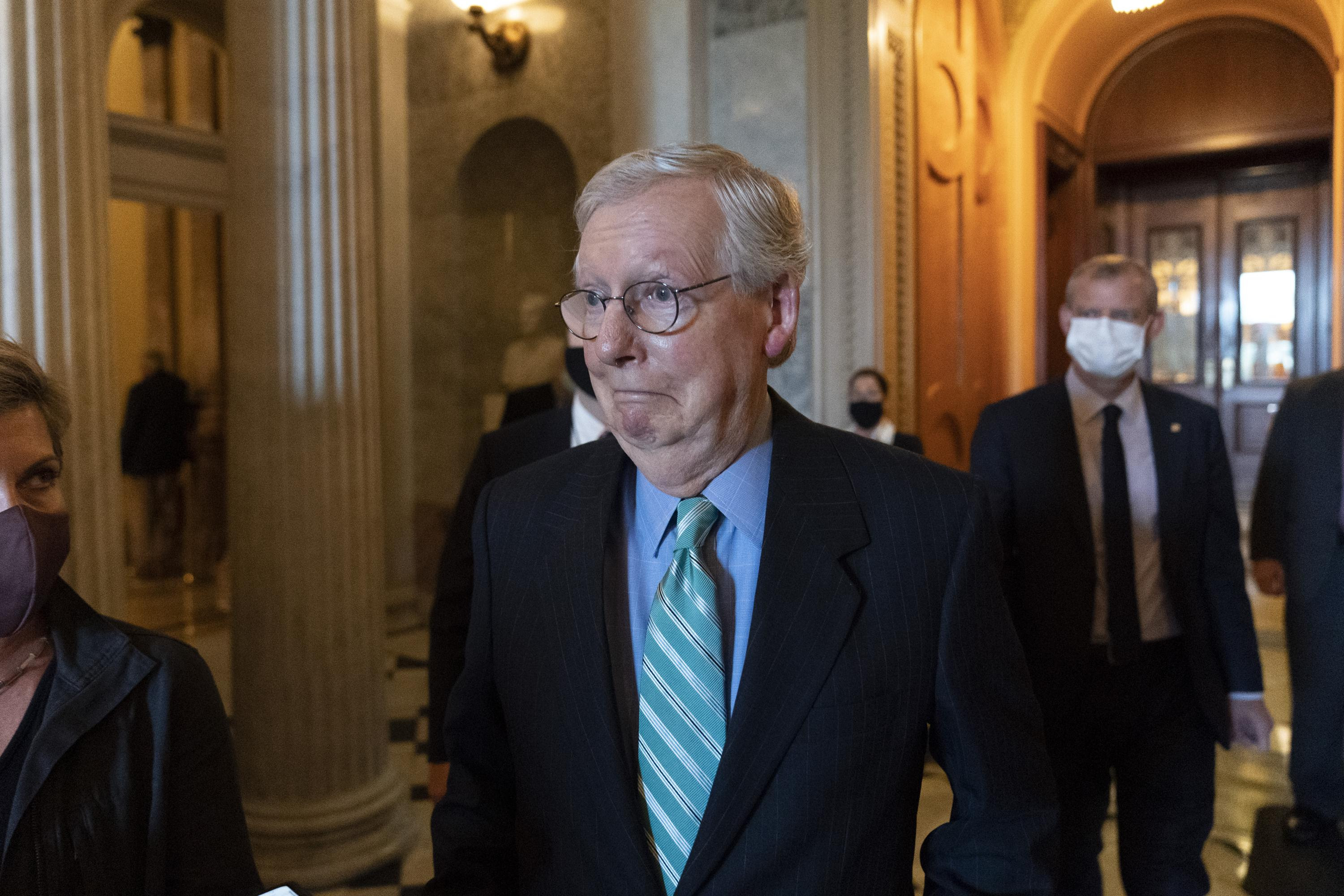
WASHINGTON (AP) — The Senate has dodged a U.S. debt disaster, voting to extend the government’s borrowing authority into December and temporarily avert an unprecedented federal default that experts warned would devastate the economy and harm millions…Read More

OSLO (AP) — The Nobel Peace Prize has been awarded to journalists Maria Ressa of the Philippines and Dmitry Muratov of Russia. They were citing for their fight for freedom of expression….Read More
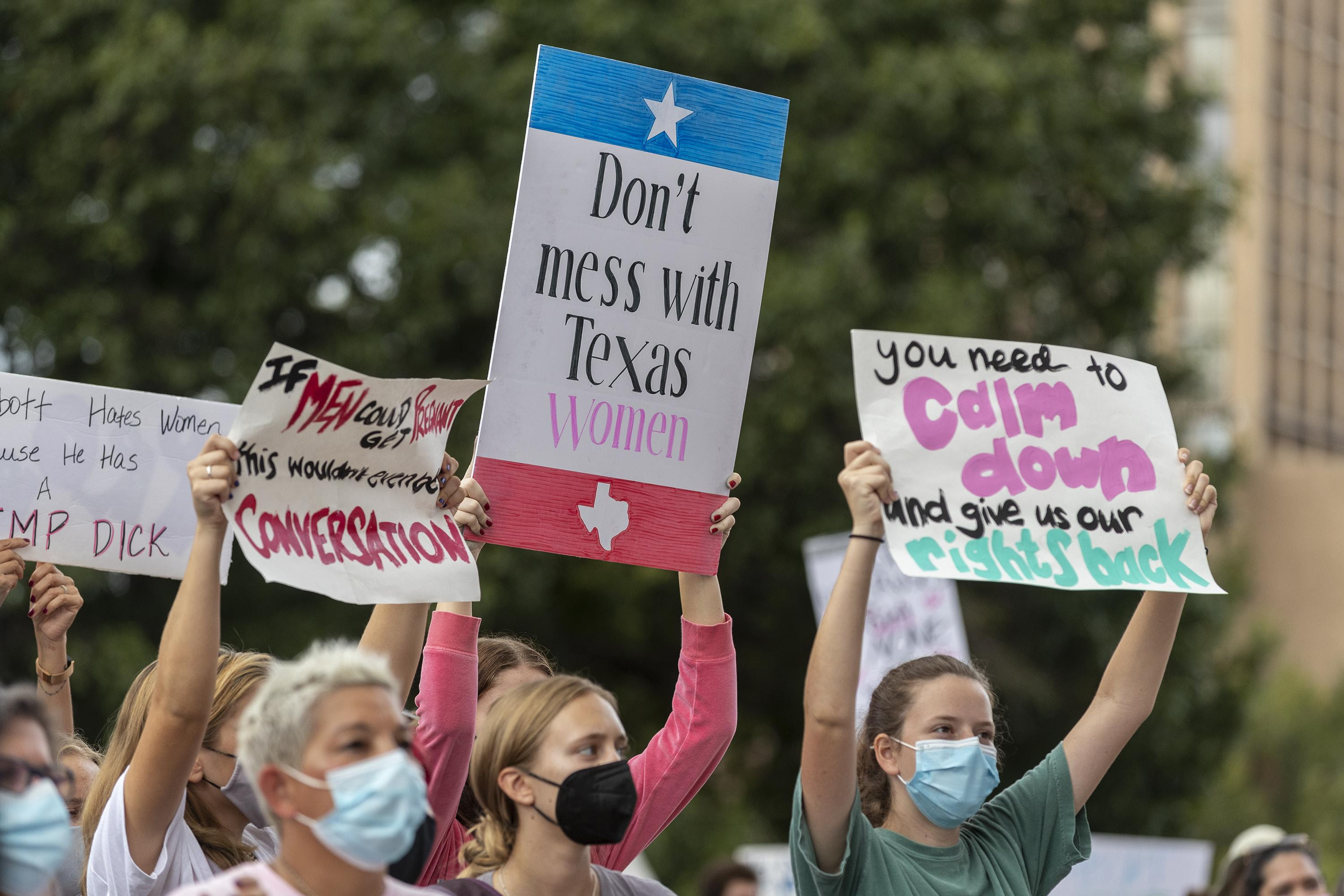
AUSTIN, Texas (AP) — Abortions quickly resumed in at least six Texas clinics after a federal judge halted the most restrictive abortion law in the U.S., but other physicians remained hesitant, afraid the court order would not stand for long and thru…Read More
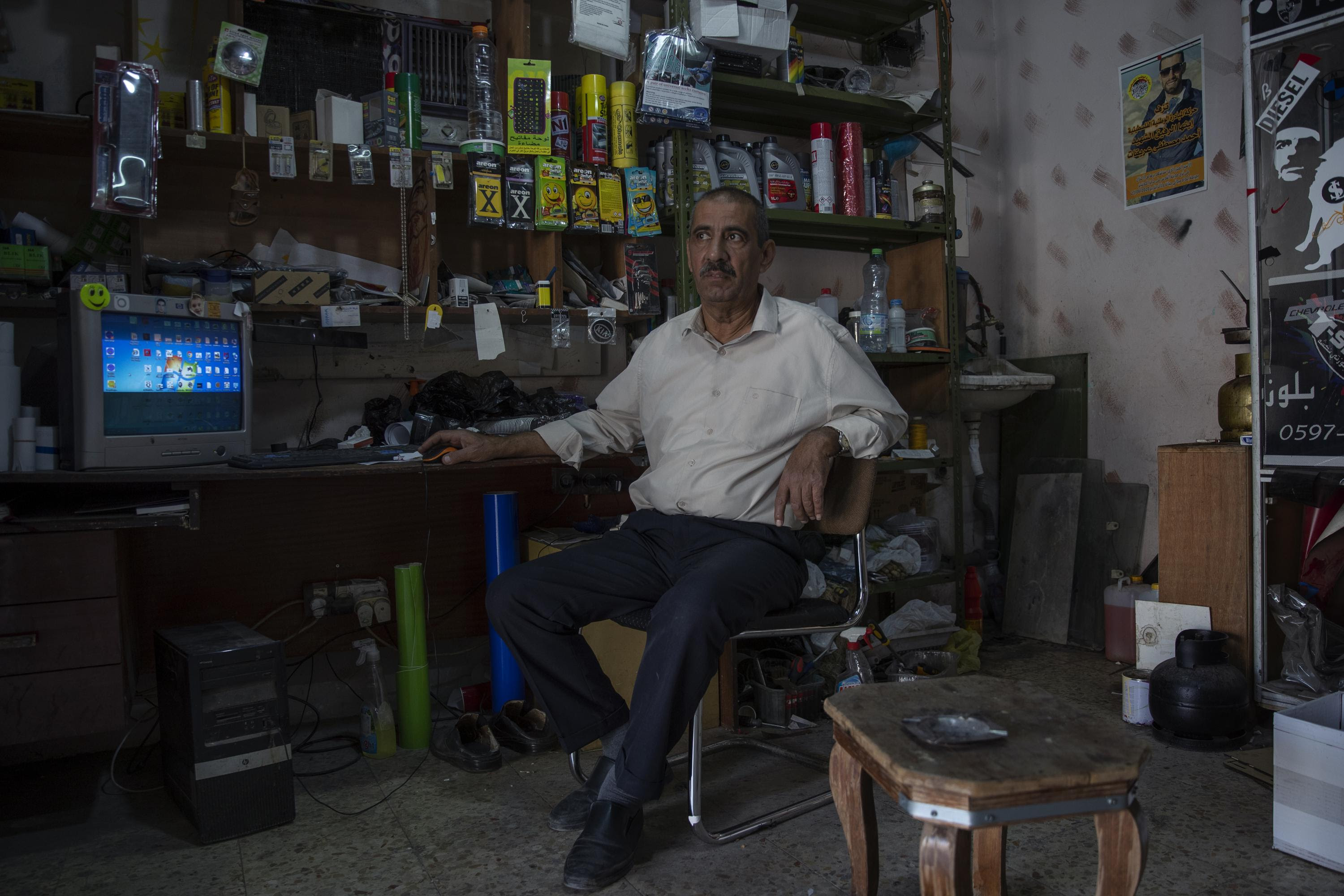
ABU DIS, West Bank (AP) — More than a year after his son was killed by Israeli forces under disputed circumstances in the occupied West Bank, Mustafa Erekat is still seeking his remains. It is one of dozens of cases in which Israel is holding the rem…Read More

WASHINGTON (AP) — Nearly all Americans agree that the rampant spread of misinformation is a problem. Most also think social media companies, and the people that use them, bear a good deal of blame for the situation. …Read More
|
|
OTHER TOP STORIES
NONTHABURI, Thailand (AP) — A flood-hit riverside restaurant in Thailand has become an unlikely dining hotspot after fun-loving foodies began flocking to its water-logg…Read More
BEIJING (AP) — In a relationship as fraught as America’s and China’s, just an agreement that talks were productive was a sign of progress. Nine months into Joe Biden’s …Read More
FOUNTAIN VALLEY, Calif. (AP) — A man suspected of robbing a Southern California bank was arrested when he returned to try and rob the same branch the following day, pol…Read More
ISLAMABAD (AP) — United States and Pakistani officials are meeting Friday amid a worsening relationship between the two countries as each nation searches for a way forw…Read More
|
|
The post World View: US Debt Deal, Nobel Peace Prizes, Israel-Arab Body Diplomacy, China Tensions, More appeared first on The St Kitts Nevis Observer.
 *****@
 *****@
 *****@
 *****@
 *****@
 *****@
 *****@
 *****@
 *****@
 *****@
 *****@
 *****@