Category Archives: headline

Major NSW roadmap to freedom changes revealed

Many NSW school children will return to the classroom earlier than expected and a raft of other restrictions will be eased earlier than previously announced under changes to the state's roadmap to freedom revealed by Premier Dominic Perrottet.

The changes include a doubling in the household visitor cap and an increase in the number of people allowed to gather outside, as NSW prepares for "freedom day" on Monday when pubs, restaurants, gyms and shops will reopen.

It comes as NSW hit its first major milestone of 70 per cent double dose vaccinations yesterday afternoon, which prompted a meeting of the NSW crisis cabinet.

All the changes from Monday will continue to only apply to fully vaccinated people.

LIVE NEWS: Victoria records 1638 cases and two deaths

EXPLAINER: All the big changes happening from Monday

School return to be fast-tracked

All school students will now go back to face-to-face learning on October 25.

Students in Kindergarten, Year 1 and Year 12 students will still return on October 18.

However, students in year 3, 4, 5, 7, 8, 9 and 10 will return a week earlier than expected, joining years 2, 6 and 11 on October 25.

"That's great for kids. It's a major relief for parents and their sanity," Mr Perrottet said.
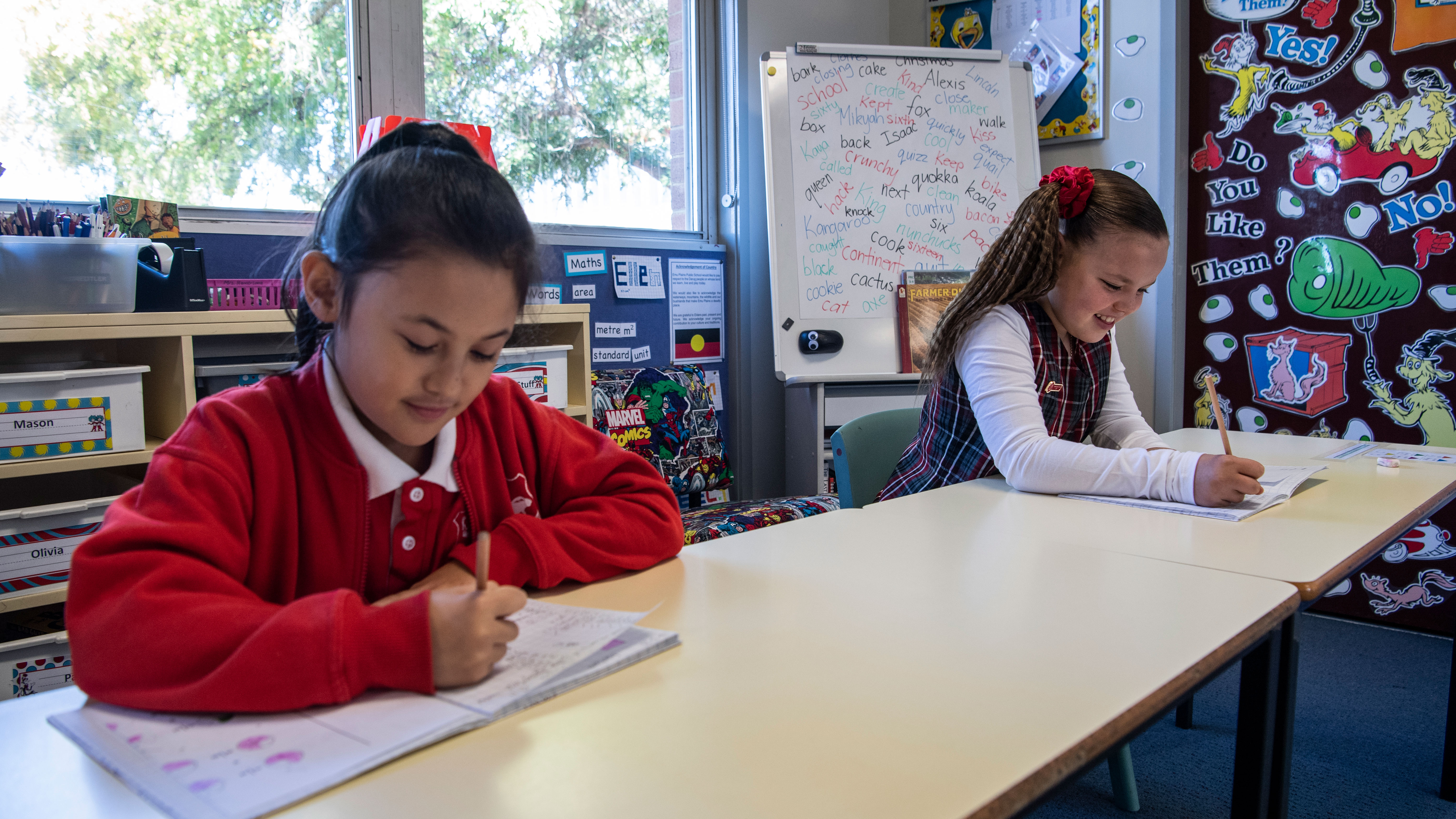
Students will be returning to school  earlier than expected.

NSW Education Minister Sarah Mitchell said COVID-19 safety measures were all in place for the earlier return to school. 

Ventilation in classrooms has been examined, and vaccinations are mandatory for teachers. 

Ms Mitchell said public schools would not be asking for information about a student's vaccination status.

Caps on visitors, gatherings to be increased

Restrictions around people gathering in NSW will also be relaxed further than previously announced. 

From Monday, up to 10 visitors, not counting children 12 and under, will be allowed in homes, instead of five.

The cap on outdoor gatherings has also been lifted to 30 people, previously it was 20.

https://twitter.com/Dom_Perrottet/status/1445881942776311809?ref_src=twsrc%5Etfw

For weddings and funerals, the cap has been doubled from 50 to 100 people.

Indoor swimming pools, which were previously closed until December 1, will be open for for swimming lessons, squad training, lap swimming, and rehab activities. 

READ MORE: WA premier in withering attack on NSW Government

More changes earmarked for 80 per cent vaccination

Other changes to the NSW roadmap have been made for when the state reaches its 80 per cent double dose milestone, which Mr Perrottet predicted would be "in a couple of weeks".

At 80 percent double dose, people able to have up to 20 visitors (excluding children 12 and under) to a home (previously 10).
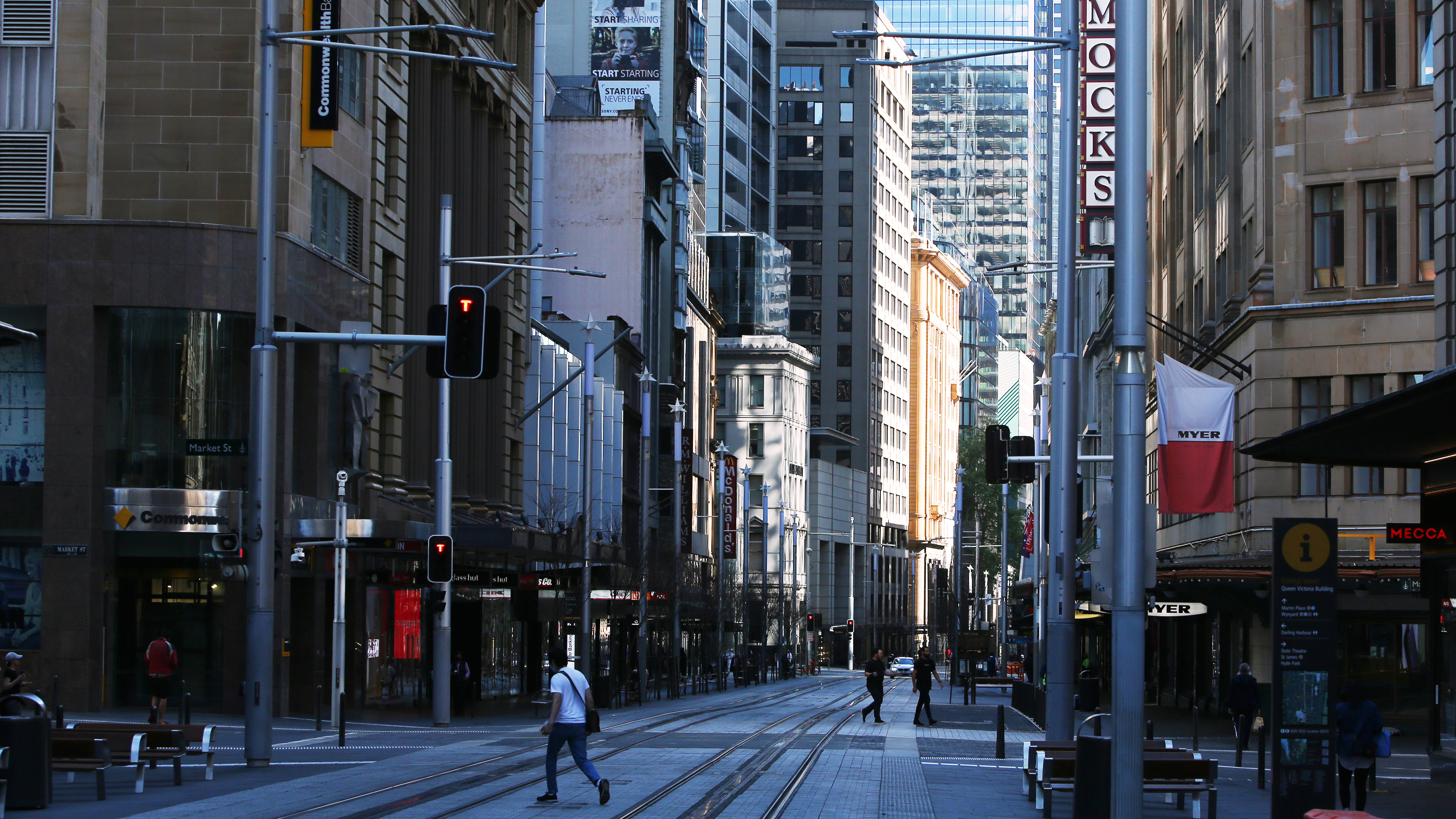
A pedestrian crosses George Street in Sydney.

Up to 50 people will be allowed to gather outdoors (previously 20) and up to 3,000 people will be allowed to attend controlled and ticketed outdoor events (previously 500).

Nightclubs will also be permitted to reopen for seated drinking only and masks will no longer be required in office buildings

Mr Perrottet said he wished to offer an opportunity for nighclubs to reopen for young people who had a rough last couple of months.

"Young people have done it pretty tough during this period of time," he said. 

"This is, for many, the best years of their life, at 18, 19, and they haven't been go out, go clubbing and doing that. 

"I want to thank them. And we'll get those clubs open as quickly as possible."  

Regional workers can return to work with one vaccine dose

Deputy Premier Stuart Ayres has announced workers in regional areas can return to their job from Monday if they have had at least one vaccine dose. 
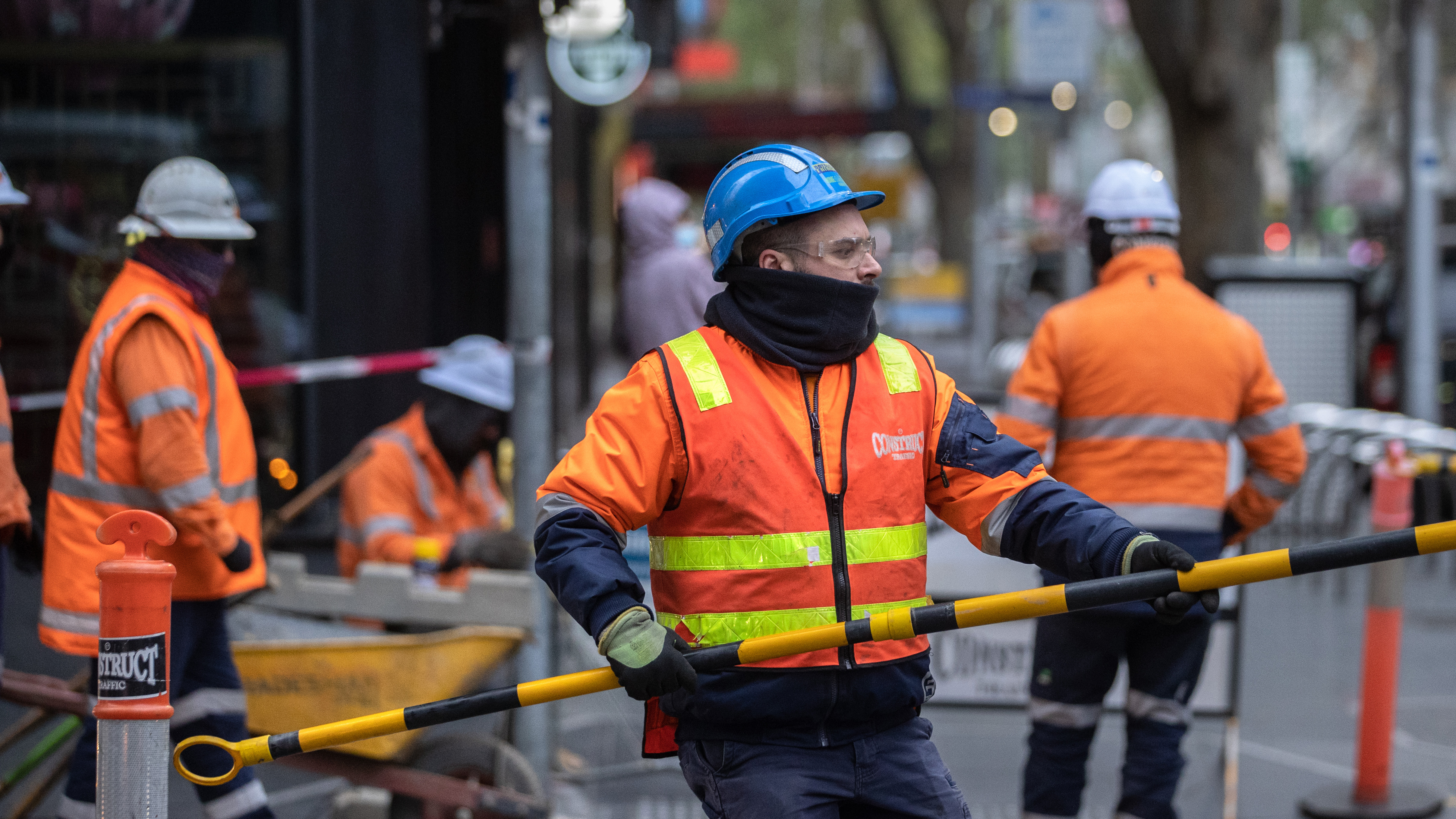
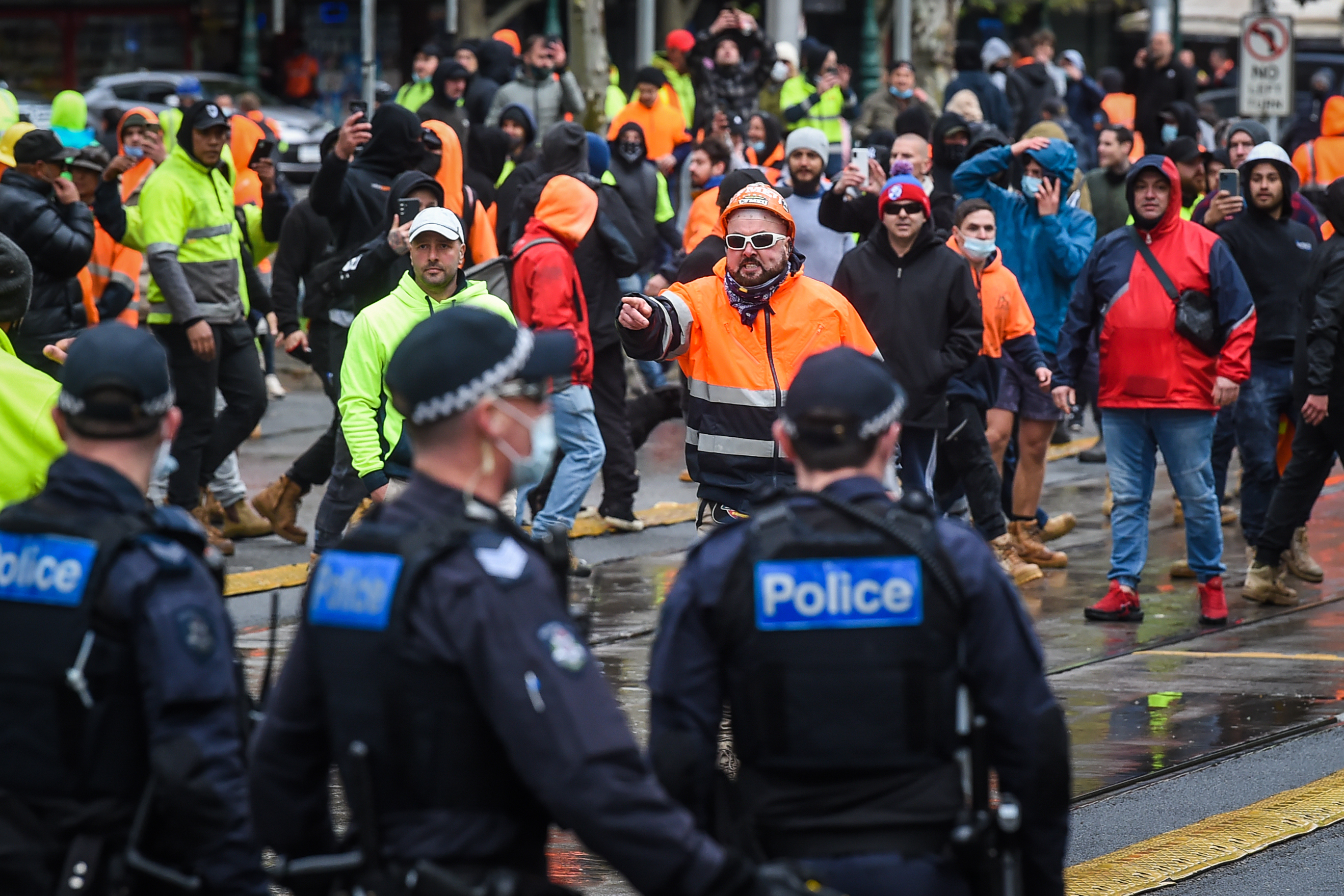
Construction workers returns in Melbourne CBD.

"They'll be given a grace period until November 1 to receive their second," he said.  

"This has been done because in some areas it was difficult to be able to get vaccines." 

This will include regional areas outside the Blue Mountains, Central Coast, Shellharbour and Wollongong.  

AMA warns cases could spike

The NSW Chairman of the Australian Medical Association, Dr Michael Bonning, has warned changes to the state's roadmap could be too fast too soon.

"Just because we've got a new premier in the driver's seat, that's not a good enough reason to deviate from the court that was set out," Dr Bonning said.

He said the health professionals also need to be supported when it comes to the plan, which needs to "look after the health of everyone".

"We can't afford to act like COVID is over. The 80 per cent vaccine rate is like the ticket to starting the finals, it's not the end of the race," he said.

NSW records 587 new COVID-19 cases

Meanwhile, NSW Health Minister Brad Hazzard has announced the state recorded 587 positive COVID-19 cases to 8pm last night. 

A total of 112,186 tests were carried out in the same period. 

Mr Hazzard said from Monday, the 11am publication of the daily figures would be moved to 9am – though health staff will continue to make other announcements at 11am.

Key roadmap changes

All roadmap freedoms at 70% and 80% will continue to be for fully vaccinated people only

Changes to 70 per cent roadmap (Monday, October 11)

  • up to 10 visitors (not counting children 12 and under) to a home (previously five)
  • the cap on outdoor gatherings lifted to 30 people (previously 20)
  • increase the cap for weddings and funerals to 100 people (previously 50)
  • indoor pools will be re-opened for swimming lessons, squad training, lap swimming, and rehab activities

Changes to the 80 per cent roadmap (First Monday after 80 per cent milestone reached)

  • people able to have up to 20 visitors (excluding children 12 and under) to a home (previously 10)
  • up to 50 people will be allowed to gather outdoors (previously 20)
  • up to 3,000 people will be allowed to attend controlled and ticketed outdoor events (previously 500)
  • nightclubs will be permitted to reopen for seated drinking only (no dancing)
  • masks will no longer be required in office buildings

Schools

  • All school students will return to on site learning with a range of COVID-safe measures in place by October 25
  • Kindergarten, Year 1 and Year 12 students will still return to face-to-face learning on October 18

Regional

  • workers in regional areas who have received one vaccination dose will be permitted to return to their workplace from October 11 and will be given a grace period until November 1 to receive their second dose. Regional areas are those outside Greater Sydney, the Blue Mountains, Wollongong, Shellharbour and the Central Coast.

Ivermectin: Has False Science Created a Phoney Covid ‘Miracle Drug?’, Anti-Vaxxers Could Harm Children

By Rachel Schraer & Jack Goodman
BBC Reality Check

BBC- Ivermectin has been called a Covid “miracle” drug, championed by vaccine opponents, and recommended by health authorities in some countries. But the BBC can reveal there are serious errors in a number of key studies that the drug’s promoters rely on.

For some years ivermectin has been a vital anti-parasitic medicine used to treat humans and animals.

But during the pandemic there has been a clamour from some proponents for using the drug for something else – to fight Covid and prevent deaths.

The health authorities in the US, UK and EU have found there is insufficient evidence for using the drug against Covid, but thousands of supporters, many of them anti-vaccine activists, have continued to vigorously campaign for its use.

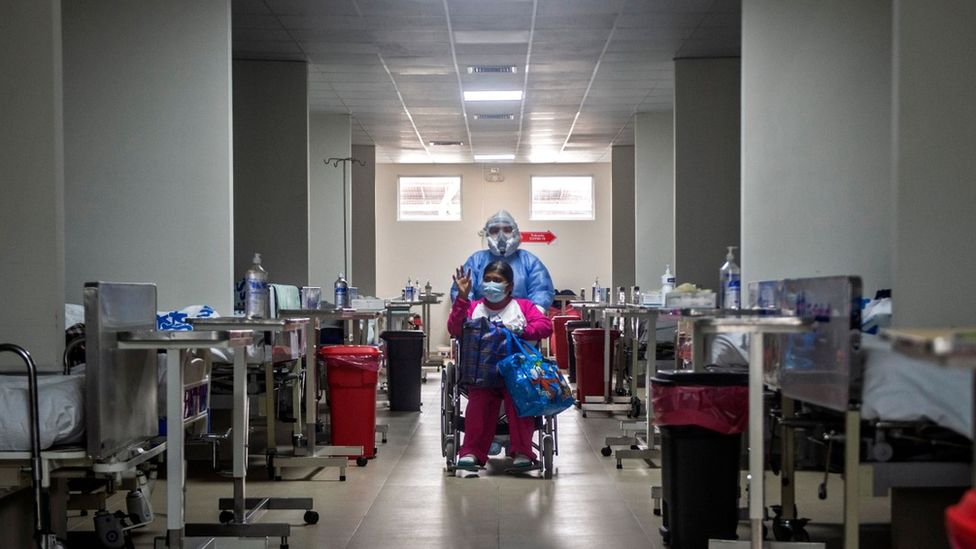
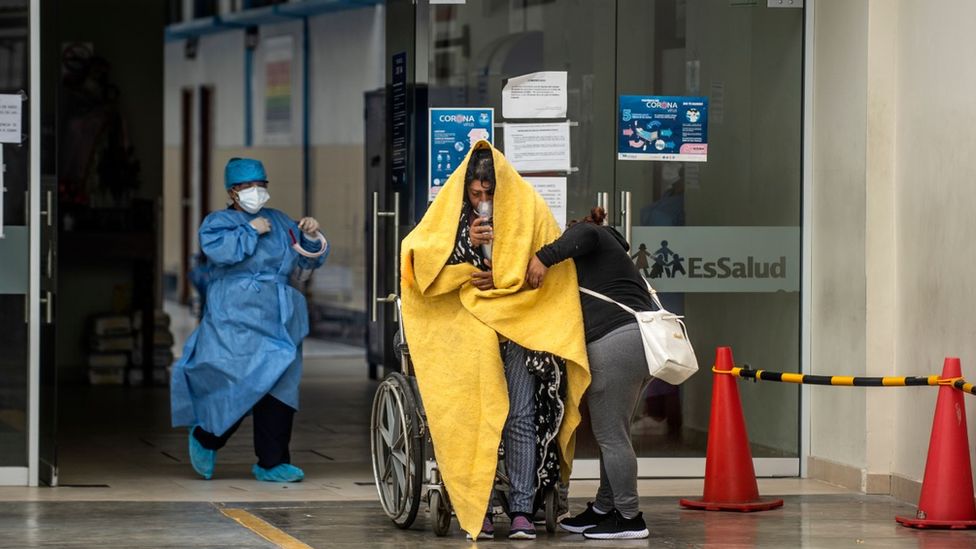
A Covid patient in a wheelchair is greeted by an doctor at the entrance to A&E in PeruIvermectin was approved for Covid treatment in Peru in May 2020

Members of social media groups swap tips on getting hold of the drug, even advocating the versions used for animals.

The hype around ivermectin – based on the strength of belief in the research – has driven large numbers of people around the world to use it.

Campaigners for the drug point to a number of scientific studies and often claim this evidence is being ignored or covered up. But a review by a group of independent scientists has cast serious doubt on that body of research.

The BBC can reveal that more than a third of 26 major trials of the drug for use on Covid have serious errors or signs of potential fraud. None of the rest show convincing evidence of ivermectin’s effectiveness.

Dr Kyle Sheldrick, one of the group investigating the studies, said they had not found “a single clinical trial” claiming to show that ivermectin prevented Covid deaths that did not contain “either obvious signs of fabrication or errors so critical they invalidate the study”.

Major problems included:

  • The same patient data being used multiple times for supposedly different people
  • Evidence that selection of patients for test groups was not random
  • Numbers unlikely to occur naturally
  • Percentages calculated incorrectly
  • Local health bodies unaware of the studies

The scientists in the group – Dr Gideon Meyerowitz-Katz, Dr James Heathers, Dr Nick Brown and Dr Sheldrick – each have a track record of exposing dodgy science. They’ve been working together remotely on an informal and voluntary basis during the pandemic.

They formed a group looking deeper into ivermectin studies after biomedical student Jack Lawrence spotted problems with an influential study from Egypt. Among other issues, it contained patients who turned out to have died before the trial started. It has now been retracted by the journal that published it.

The group of independent scientists examined virtually every randomised controlled trial (RCT) on ivermectin and Covid – in theory the highest quality evidence – including all the key studies regularly cited by the drug’s promoters.

RCTs involve people being randomly chosen to receive either the drug which is being tested or a placebo – a dummy drug with no active properties.

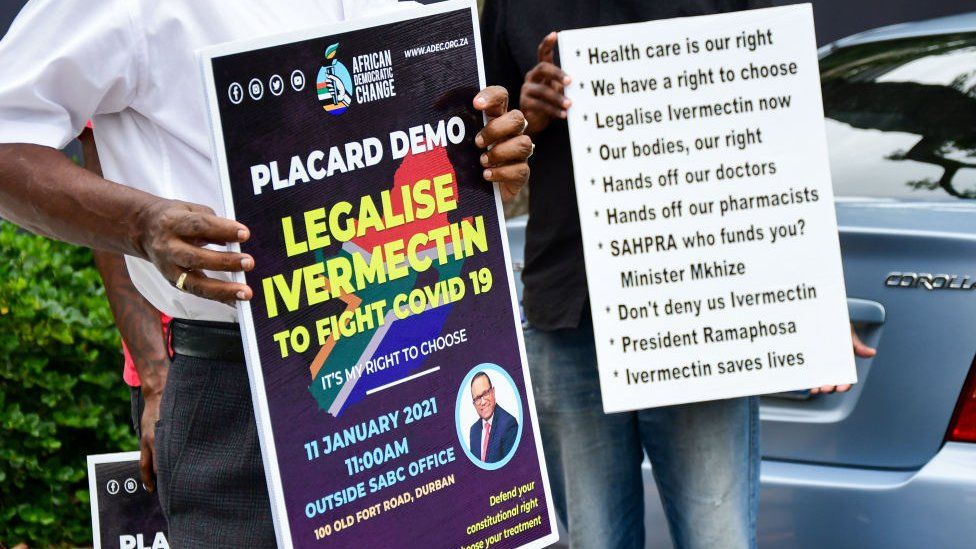
Participants protest during the Legalise Ivermectin to fight COVID-19 demonstration on January 11, 2021Some South Africans took to the streets to demand that the authorities allow ivermectin to be used

The team also looked at six particularly influential observational trials. This type of trial looks at what happens to people who are taking the drug anyway, so can be biased by the types of people who choose to take the treatment.

Out of a total of 26 studies examined, there was evidence in five that the data may have been faked – for example they contained virtually impossible numbers or rows of identical patients copied and pasted.

In a further five there were major red flags – for example, numbers didn’t add up, percentages were calculated incorrectly or local health bodies weren’t aware they had taken place.

On top of these flawed trials, there were 14 authors of studies who failed to send data back. The independent scientists have flagged this as a possible indicator of fraud.

The sample of research papers examined by the independent group also contains some high-quality studies from around the world. But the major problems were all in the studies making big claims for ivermectin – in fact, the bigger the claim in terms of lives saved or infections prevented, the greater the concerns suggesting it might be faked or invalid, the researchers discovered.

While it’s extremely difficult to rule out human error in these trials, Dr Sheldrick, a medical doctor and researcher at the University of New South Wales in Sydney, believes it is highly likely at least some of them may have been knowingly manipulated.

A recent study in Lebanon was found to have blocks of details of 11 patients that had been copied and pasted repeatedly – suggesting many of the trial’s apparent patients didn’t really exist.

The study’s authors told the BBC that the “original set of data was rigged, sabotaged or mistakenly entered in the final file” and that they have submitted a retraction to the scientific journal which published it.

Covid patient wheeled out of hospital in PeruImage source, Getty Images

Another study from Iran seemed to show that ivermectin prevented people dying from Covid.

But the scientists who investigated it found issues. The records of how much iron was in patients’ blood contained numbers in a sequence that was unlikely to come up naturally.

And the patients given the placebo turned out to have had much lower levels of oxygen in their blood before the trial started than those given ivermectin. So they were already sicker and statistically more likely to die.

But this pattern was repeated across a wide range of different measurements. The people with “bad” measurements ended up in the placebo group, the ones with “good” measurements in the ivermectin group.

The likelihood of this happening randomly across all these different measurements was vanishingly small, Dr Sheldrick said.

Dr Morteza Niaee, who led the Iran study, defended the results and the methodology and disagreed with problems pointed out to him, adding that it was “very normal to see such randomisation” when lots of different factors were considered and not all of them had any bearing on participants’ Covid risk.

But the Lebanon and Iran trials were excluded from a paper for Cochrane – the international experts in reviewing scientific evidence – because they were “such poorly reported studies”. The review concluded there was no evidence of benefit for ivermectin when it comes to Covid.

The largest and highest quality ivermectin study published so far is the Together trial at the McMasters University in Canada. It found no benefit for the drug when it comes to Covid.

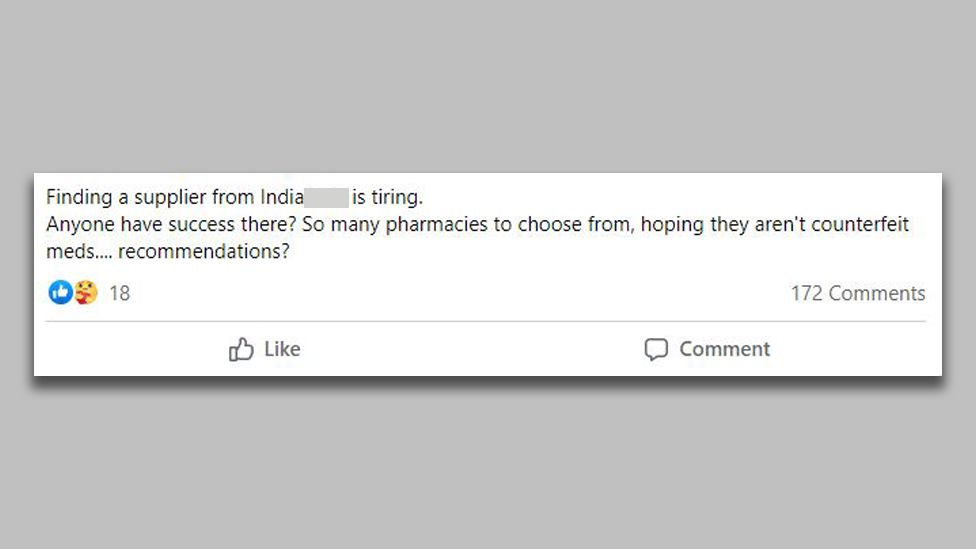
Member of a pro-ivermectin Facebook group asks for advice on how to buy ivermectin online from India

Ivermectin is generally considered a safe drug, though there have been some reports of side effects.

Calls over suspected ivermectin poisonings in the US have increased a lot but from a very small base (435 to 1,143 this year) and most of these cases were not serious. Patients have had vomiting, diarrhoea, hallucinations, confusion, drowsiness and tremors.

But indirect harm can come from giving people a false sense of security, especially if they choose ivermectin instead of seeking hospital treatment for Covid, or getting vaccinated in the first place.

Dr Patricia Garcia, a public health expert in Peru, said at one stage she estimated that 14 out of every 15 patients she saw in hospital had been taking ivermectin and by the time they came in they were “really, really sick”.

Large pro-ivermectin Facebook groups have turned into forums for people to find advice on where to buy it, including preparations meant for animals.

Some groups regularly contain posts about conspiracy theories of ivermectin cover-ups, as well as pushing anti-vaccine sentiment or encouraging patients to leave hospital if they aren’t getting the drug.

The groups often provide a gateway to more fringe communities on the encrypted app Telegram.

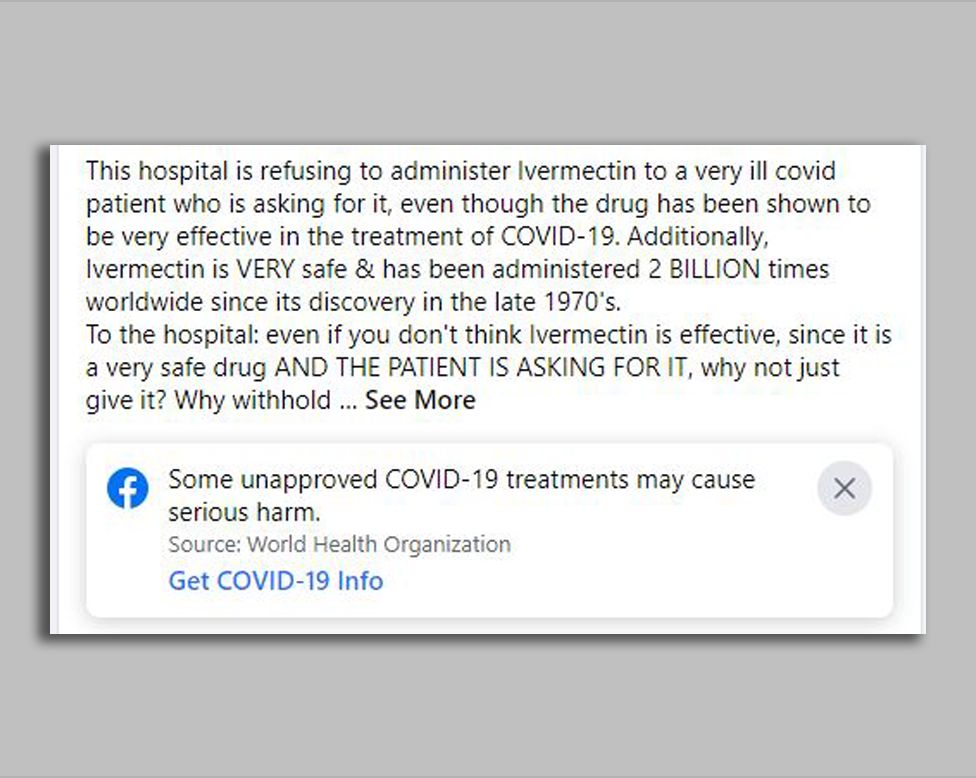
Facebook post complains that a hospital won't treat a very ill patient with ivermectin despite the drug being safe and effective and the patient asking for it.

These channels have co-ordinated harassment of doctors who fail to prescribe ivermectin and abuse has been aimed at scientists. Prof Andrew Hill, from the University of Liverpool, wrote an influential positive review of ivermectin, originally saying the world should “get prepared, get supplies, get ready to approve [the drug]”.

Now he says the studies don’t stand up to scrutiny – but after he changed his view, based on new evidence emerging, he received vicious abuse.

A small number of qualified doctors have had an exaggerated influence on the ivermectin debate. Noted proponent Dr Pierre Kory’s views have not changed despite the major questions over the trials. He criticised “superficial interpretations of emerging trials data”.

Dr Tess Lawrie – a medical doctor who specialises in pregnancy and childbirth – founded the British Ivermectin Recommendation Development (Bird) Group.

She has called for a pause to the Covid-19 vaccination programme and has made unsubstantiated claims implying the Covid vaccine had led to a large number of deaths based on a common misreading of safety data.

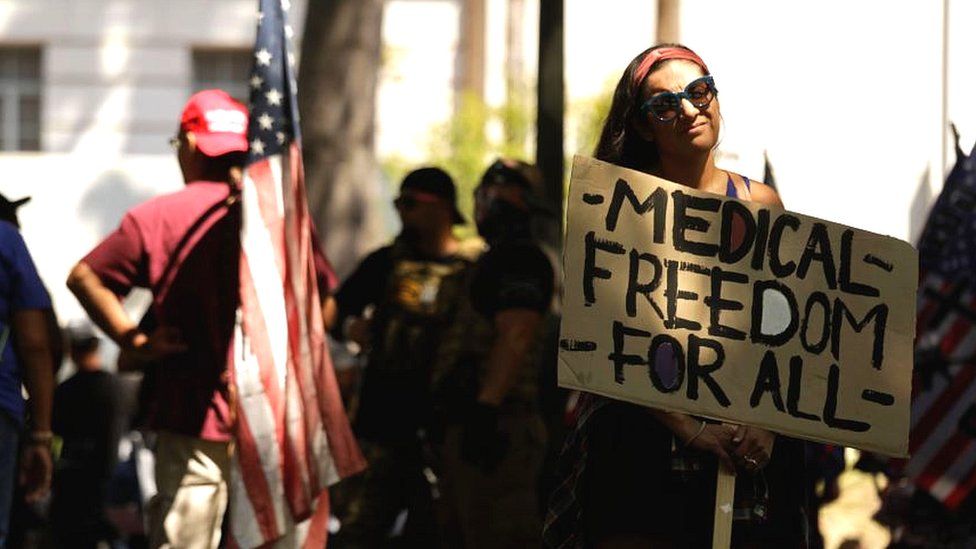
woman at antivax protest holding sign reading medical freedom for allImage source, Getty Images

When asked during an online panel what evidence might persuade her ivermectin didn’t work she replied: “Ivermectin works. There’s nothing that will persuade me.” She told the BBC: “The only issues with the evidence base are the relentless efforts to undermine it.”

Around the world it was originally not opposition to vaccines but a lack of them that led to people to ivermectin.

The drug has at various points been approved, recommended or prescribed for Covid in India, South Africa, Peru and much of the rest of Latin America, as well as in Slovakia.

Health authorities in Peru and India have stopped recommending ivermectin in treatment guidelines.

In February, Merck – one of the companies that makes the drug – said there was “no scientific basis for a potential therapeutic effect against Covid-19”.

In South Africa, the drug has become a battleground – doctors point out the lack of evidence but many patients desperately want access as the vaccine rollout has been patchy and problematic. One GP in the country described a relative, a registered nurse, who didn’t book a coronavirus vaccine she was eligible for and then caught the virus.

“When she started getting worse, instead of getting proper assessment and treatment, she treated herself with ivermectin,” she said.

“Instead of consulting a doctor, she continued with the ivermectin and got home oxygen. By the time I heard how low her oxygen saturation levels were (66%), I begged her daughter to take her to casualty.

“At first they were reluctant, but I convinced them to go. She passed away a few hours later.”

Additional reporting by Shruti Menon

Anti-Vaxxers Could Fuel Spike in Childhood Diseases

A recent gathering in a Quality Inn ballroom in rural Bradley, Illinois, offered a glimpse—terrifying to most epidemiologists, thrilling to longtime vaccine “safety” activists—of America’s growing political divide over vaccinations and its implications for the nation’s health.

Ostensibly, the meeting was a community forum about employer mandates for COVID vaccines that the organizer expected to draw 80 people in this overwhelmingly Republican exurb of Chicago.

Instead, more than 300 people piled in, mostly to complain about the notion that anyone—a boss, a school, a government—could force them to take any vaccines at all. As one Libertarian county commissioner told the crowd: “I will fight for your right to believe in whatever god, medicine or way of life you choose.”

The event is being replicated in some form or another in cities and towns across America, emblematic of a growing grassroots movement of people who believe that vaccine mandates—for COVID, yes, but increasingly for other diseases as well—are an affront to their personal freedom.

That represents a marked shift from pre-pandemic times, when vaccine opponents typically based their reasoning on medical concerns and were largely comprised of a few religious sects and a small number of left-leaning activists seeking explanations for rising rates of autism.

As the anti-vaxx mandate movement gains political traction, particularly on the right, medical experts fear it could not only cripple efforts to eradicate COVID but could also lead to a surge in long-conquered diseases, from mumps to whooping cough to smallpox.

“Those [more established] vaccines have had a long history of use, so there’s certainly data that suggests that they’re relatively safe. But it always has to be a choice of individuals. You can’t have government forcing that on us” – Conservative group Action 4 Liberty president Jake Duesenberg
“There are some more conservative states where we are likely to see other non-COVID vaccine mandates under attack, and it is very worrisome,” says Marcus Plescia, chief medical officer of the Association of State and Territorial Health Officials. “If we have some of these pediatric infectious diseases come back, it will be horrific.”

Even before President Joe Biden’s September 9 announcement of a litany of aggressive COVID vaccine mandates—covering an estimated 100 million Americans, including federal health workers and companies with more than 100 employees—evidence of changes in policy and sentiment toward such rules was cropping up, led by the right.

This summer the Tennessee Department of Health, reportedly pushed by GOP lawmakers, directed its staffers to stop conducting “proactive outreach regarding routine vaccinations,” including those for childhood diseases, HPV and influenza.

Larry Elder, the top Republican vote-getter in the failed recall effort against California’s Democratic Governor Gavin Newsom, told the Los Angeles Times editorial board in August, “I don’t believe that the state should tell a parent whether or not a child should be vaccinated. That’s an intrusion of state power.”

In Minnesota this month, the conservative group Action 4 Liberty, which boasts an email list of more than 100,000 recipients, began hammering a leading Republican candidate for governor for refusing to sign the group’s “Stop Vaccine Mandates” pledge.

The post Ivermectin: Has False Science Created a Phoney Covid ‘Miracle Drug?’, Anti-Vaxxers Could Harm Children appeared first on The St Kitts Nevis Observer.

Police officers in hospital after contracting COVID-19 at Melbourne protests

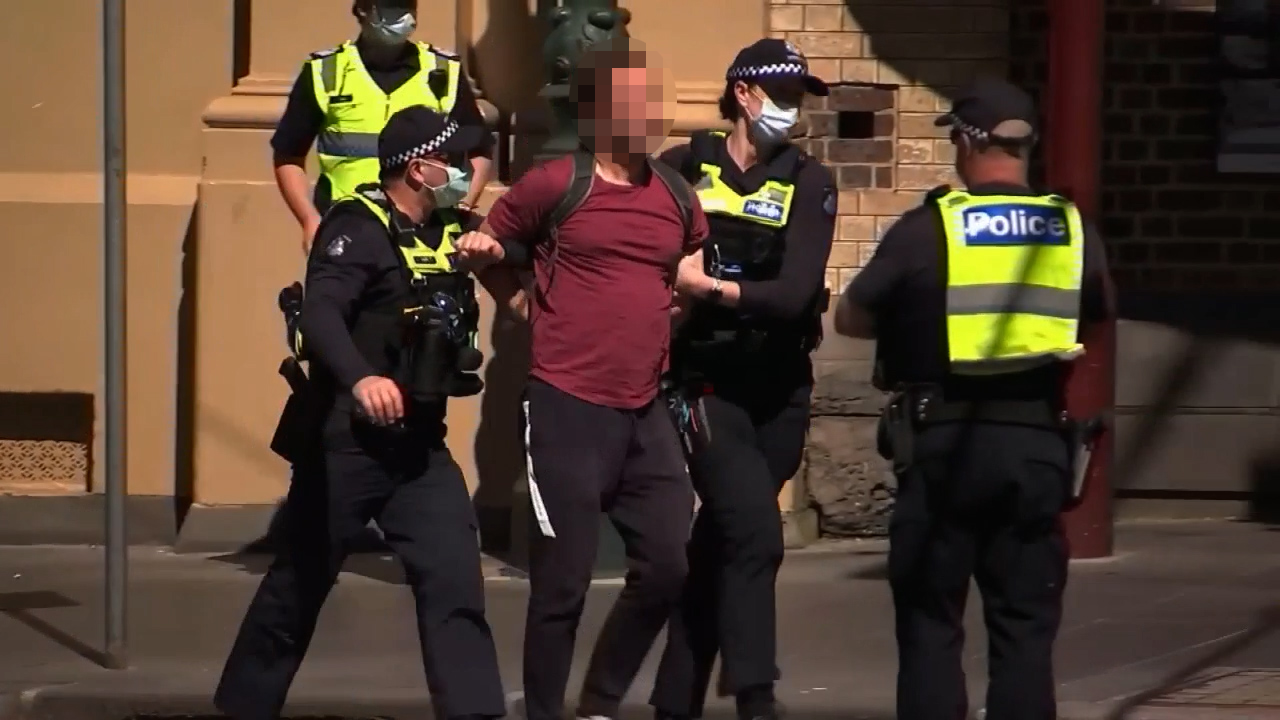
Two Victoria Police officers are in hospital after they contracted COVID-19 at the violent anti-lockdown protests in Melbourne last month.

One is seriously ill in hospital.

They reportedly caught the virus after coming into contact with unmasked protesters.

READ MORE: Push to vaccinate people living with a disability as Victoria records 1638 new COVID-19 cases

The Age, News, 20/09/2021, photo by Justin McManus. Construction workers protest outside the office of the CFMEU against mandatory vaccines in the construction industry.

Both officers reportedly worked at a series of protests in Melbourne in September and are unvaccinated.

The two officers are from an inner city police station.

Another 23 members from that station have now been forced into two weeks quarantine after being exposed to the virus.

Those officers are vaccinated and have returned negative results.

Police Association Victoria secretary Wayne Gatt said neither of the sick officers are in intensive care.

READ MORE: Second protester tests positive to COVID-19

Victoria Police has released a statement saying it has "had a number of employees from many and varied locations furnish positive COVID-19 results which are believed directly linked to their role".

A spokesperson said Victoria Police would not say how many officers and staff were in quarantine for operational reasons.

"Our utmost priority and focus is to ensure our members safety and welfare and as such all impacted officers are supported, offered assistance and guided through any and all health, safety and quarantine measures," the spokesperson said.

The two officers have contracted COVID-19 after a number of Victoria Police officers were forced into isolation late last month following two protesters tested positive to COVID-19.

Two protesters have been known to have contracted the virus since the protests.

Serial Melbourne rapist jailed for enacting 'every woman's worst nightmare'

A serial rapist who preyed on two women as they were walking alone in Melbourne's bayside area has been jailed for more than a decade over the separate attacks.

Justin Mathieson, 32, was sentenced to 12 years' jail before the County Court today, having pleaded guilty to charges including rape and making a threat to inflict serious injury.

Mathieson attacked two women in separate attacks in Elwood in 2012.

READ MORE: Push to vaccinate people living with a disability as Victoria records 1638 new COVID-19 cases

In February 2012, he followed a 47-year-old woman as she walked alongside the canal in Elwood about 11pm before he grabbed her from behind.

Mathieson sexually assaulted the woman on the ground before her screams led to him running away.

Eight months later, in October 2012, he grabbed a 32-year-old woman from a walking track, telling her, "Don't scream or anything or I will stab you".

He sexually assaulted the woman in nearby bushes, saying, "If you scream or struggle I will hurt you. I will stab you. I've got scissors."

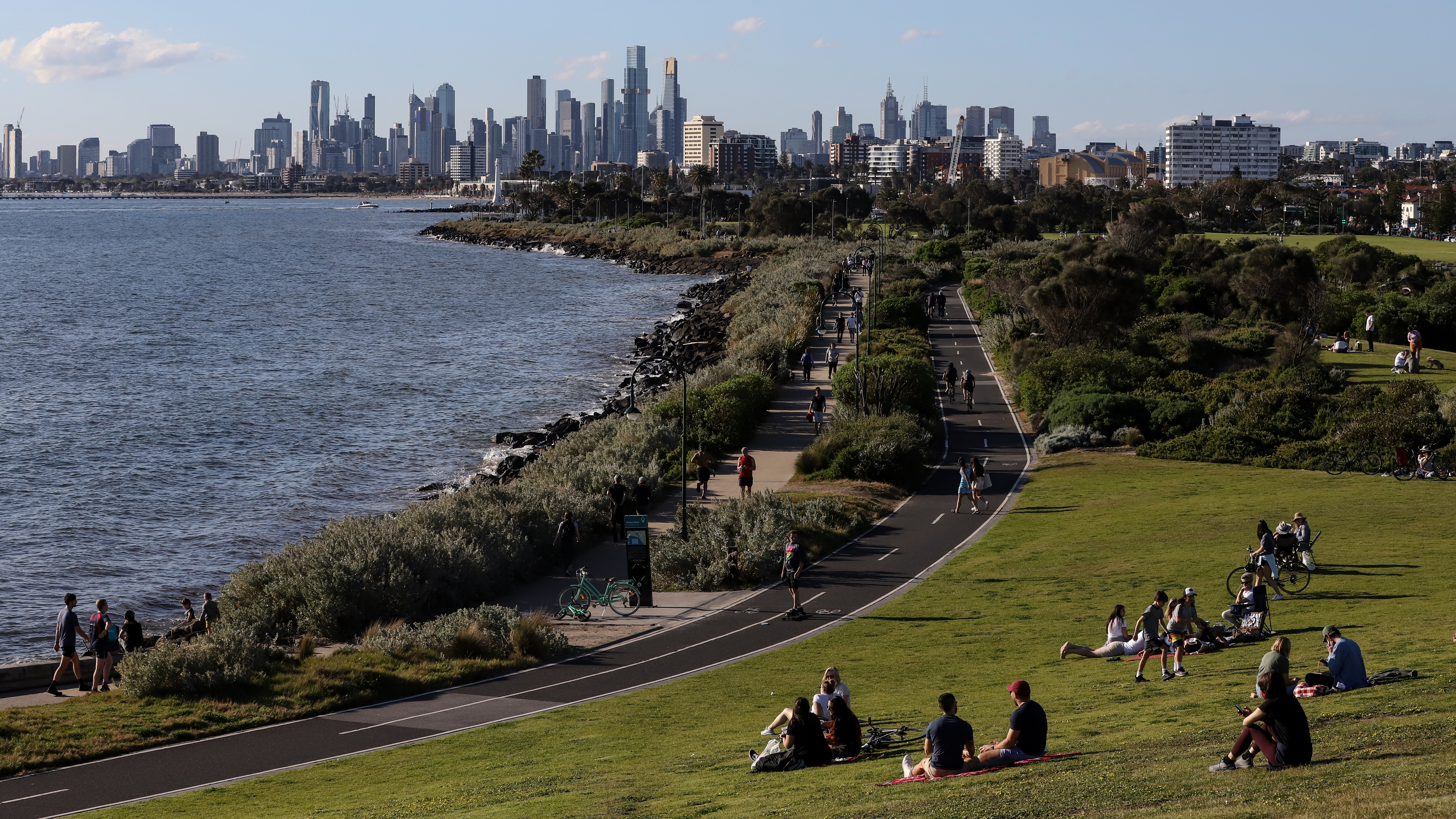
Melbourne from Elwood Beach.

The court heard that at the time Mathieson was a drug user living in the nearby suburb of St Kilda.

He has since been diagnosed with schizophrenia.

He was not arrested until last year when DNA matched him to the two attacks.

When sentencing Mathieson today, Judge Amanda Chambers said, "It is no understatement to describe your offending as every woman's worst nightmare."

With time served, Justin Mathieson will be able to apply for parole in just over six years.

However, he will be a registered sex offender for the rest of his life.

Melbourne man films terrifying attack from fellow cyclist

A 44-year-old man from Melbourne's inner city is hoping police will take action after he claims he was the victim of a terrifying attack by another cyclist.

The father-of-two, who wishes to remain anonymous, was cycling in Thornbury around 5.45pm last Tuesday when he says another man, who was also on bike, threw a bottle at him.

READ MORE: Major NSW roadmap to freedom changes revealed

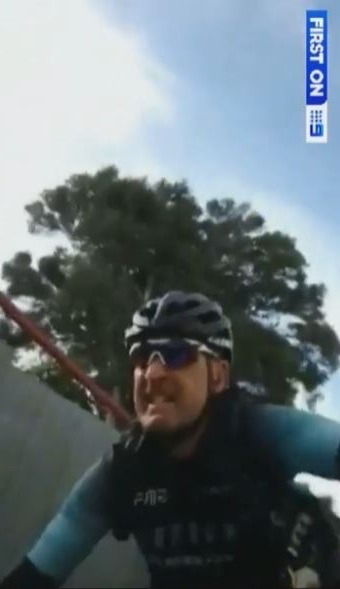
The alleged victim filmed the altercation in which the other man can be seen holding onto his neck before later stomping on the his bike.

In the footage, the man can be heard saying "I don't understand, what have I done to you?"

READ MORE: The 'Oddball' $1 trillion coin which help US pay off debt

"He grabbed me from the shirt, as you can see in the video and he gave me such a bad scratch I had blood on my shirt," he told 9News.

Police have told 9News that the aggressive cyclist in the footage has since handed himself in to authorities and is assisting them with their inquiries.

Schools crack down on TikTok craze amid teacher safety fears

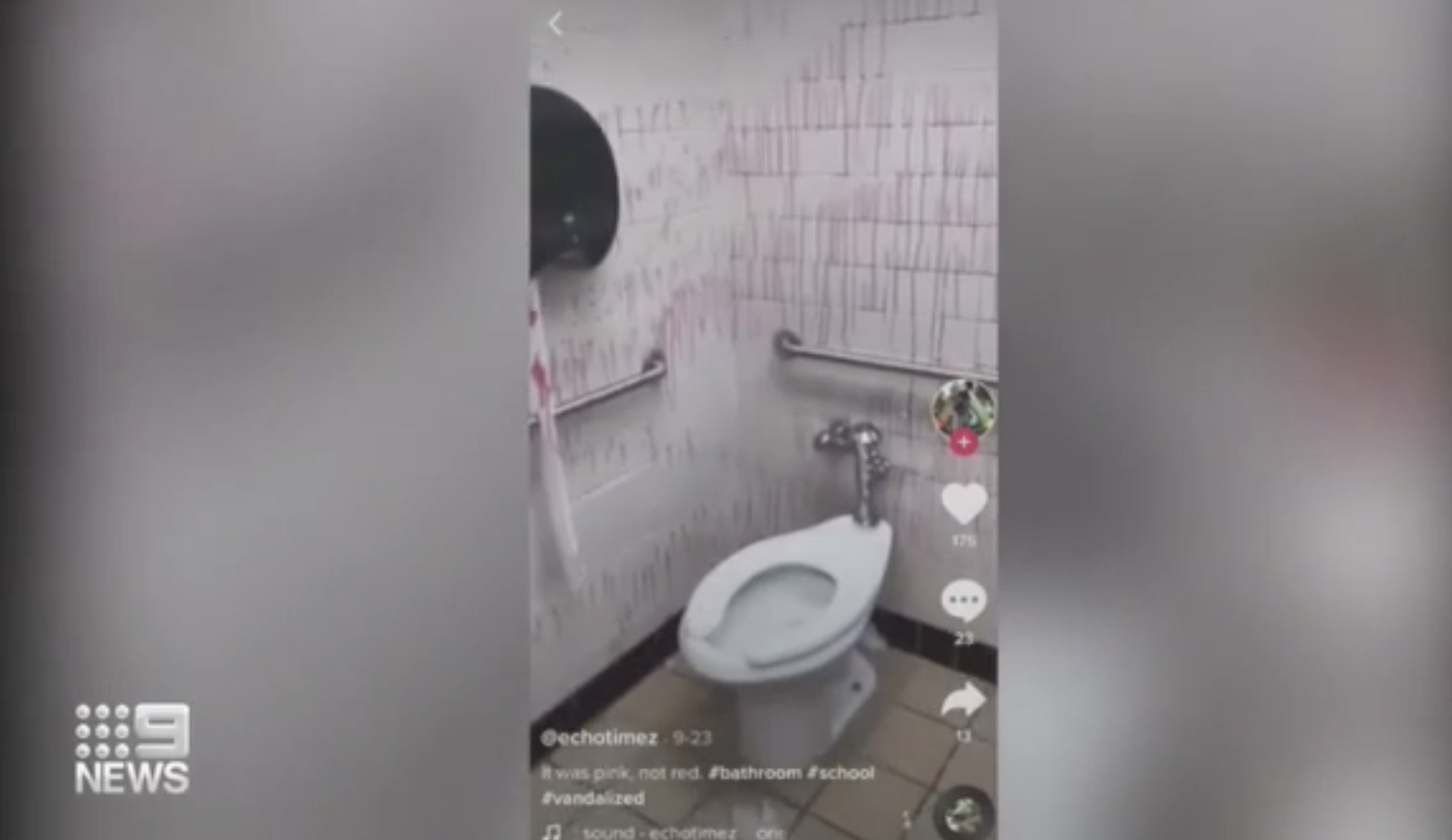
Schools across Queensland are cracking down on a worrying social media craze that's seen bathrooms badly damaged and sparked concerns for staff safety.

Kelvin Grove State High School in Brisbane today sent a letter to parents advising them the school had been forced to restrict access to bathrooms during class time due to "unprecedented acts of vandalism".

Footage shared online showed a toilet had been ripped from the wall at the Gap State High School in the city's north-west.

READ MORE: Tense wait for parents, child cancer patients after COVID-19 exposure

The destructive craze stems from a challenge among users on TikTok called "devious licks", involving a list of pranks that changes each month.

READ MORE: Major NSW roadmap to freedom changes revealed

Last month the directive was to "vandalise school bathrooms".

This month's challenge is called "smack a staff member", sparking concerns students will follow directions to film themselves hitting a teacher and upload the video.

READ MORE: The 'Oddball' $1 trillion coin which help US pay off debt

In its letter to parents, Kelvin Grove SHS principal Kerrie Richards pleaded with parents to talk to their children about the dangerous trend.

"Any assault on a staff member is an extreme breach of the Student Code of Conduct and will not be tolerated," the letter reads.

"Any instances of this will also result in a complaint made to the Queensland Police Service."