New locations of interest have been released by the Ministry of Health this afternoon, including an exposure site from just two days ago.This afternoon, Countdown Manukau City Mall in Manukau was added to the list just after 4pm….
Category Archives: headline
Covid 19 Delta outbreak: Doctors rally to help Pasifika families in isolation
By RNZ The chairperson of the Royal New Zealand College of GPs’ Pasifika chapter, Monica Liva, said about half the people infected with the virus in Auckland are Pasifika.She contacted Pasifika doctors who can talk…
Two dead after car and ute collide in Hornby, Christchurch
Two people have died after a crash at a Christchurch intersection.Police have conrfirmed two people died at the scene after a ute and car collided on Halswell Junction Rd near the intersection of Shands Rd at around 7.40pm last…
Covid 19 Delta outbreak: Sir John Key – 5 ideas to transform our approach
OPINION: On April 11, 1970, when Apollo 13 lifted off from the Kennedy Space Centre in Florida, its mission was to land on the moon but on just the second day, an explosion on board changed everything.Suddenly, with diminished…
Herald Morning quiz: September 26
Test your brains with the Herald’s morning quiz. Be sure to check back on nzherald.co.nz at 3pm for the afternoon quiz. To challenge yourself with more quizzes, CLICK HERE.
Covid 19 coronavirus Delta outbreak: Michael Plank warns New Zealand on a 'knife edge'
A Covid-19 modelling expert says the country is sitting on a “knife edge” and urged Aucklanders not to meet up with friends and family under alert level 3. The warning comes just five days into alert level 3 – the government has…
Rain returns to Auckland today after a glorious Saturday
The fine weather that bathed Auckland in sunshine was a one-off yesterday with a wet front bringing showers this morning across the North Island.MetService meteorologist David Miller said the changeable weather is typical of spring…
Covid 19 coronavirus Delta outbreak: Rule-breaking Aucklanders urged to follow level 3 restrictions
Police were called to a Mt Roskill park after more than 30 people were seen playing touch rugby while crowds – some unmasked – were spotted around the city, including in the city’s most high-profile shopping street and at popular…
Scale up carbon dioxide removal to achieve climate targets, urge United Nations regional leaders.
24 September 2021
In a joint statement, the Executive Secretaries of the United Nations Regional Commissions have called for enhanced regional cooperation to develop nature-based and technological solutions for capturing CO2 emissions from the atmosphere and ensuring its long-term storage.
This week’s High-level Dialogue on Energy will be the first global gathering on energy mandated by the UN General Assembly since 1981. It gives all member states an opportunity to demonstrate their commitments and actions to achieve clean and affordable energy for all by 2030 and net-zero carbon emissions by 2050.
Time is running out to avert a climate emergency. Nations around the world are failing to live up to their objectives and commitments on sustainable energy. The recent Intergovernmental Panel on Climate Change (IPCC) report stated that climate change is “widespread, rapid, and intensifying”. The UN Secretary-General António Guterres called it “code red for humanity”.
First of all, we must protect our precious carbon sinks, which include forests, oceans and wetlands. Second, carbon dioxide removal is essential if the world is to achieve its universally agreed sustainable development goals. Carbon dioxide removal includes nature-based approaches such as reforestation and technology-based approaches such as capture of carbon dioxide emissions from power plants for underground storage or re-use.
All countries should set clear decarbonization targets. In addition, governments and politicians must be empowered to support ambitious and immediate carbon removal targets.
Developed countries should put a fair price on the carbon stocks held as global goods in rainforests and peatlands, including the Amazon and Congo Basin, mangrove and coral reefs ecosystems and ocean, and support efforts to increase the capacity of those carbon sinks which are at risk of becoming carbon sources with increasing land degradation driven by climate change.While countries must continue to increase ambition under the Paris Agreement to cut emissions, data show that fossil fuels will in some ways remain part of the energy mix in many countries for years to come. Some industries such as cement, steel and iron production, and transport cannot be easily decarbonized. Nations need to institute favorable conditions for investment in carbon dioxide removal and develop the needed legal, financial and regulatory frameworks in collaboration with infrastructure and banking institutions.
Industrialized nations should retrofit existing infrastructure now. In coastal regions, nature-based solutions such as mangrove forests can be increased to support carbon dioxide net emissions targets and to alleviate the effects of extreme weather events. Patent waivers on next-generation climate technologies could facilitate investment in modernizing global energy infrastructure.
Carbon dioxide removal is not considered universally as a viable approach to climate change mitigation. The UN Regional Commissions can play an instrumental role in convening stakeholders to address existing gaps in knowledge and governance in the context of regional and national specificities and address the region-specific implications and trade-offs of global action on carbon dioxide removal. Sharing best practices among nations with respect to carbon dioxide removal improves the opportunity to build inclusive sustainable livelihoods.
In developing countries, carbon dioxide removal activities, whether nature based or technological, should also feature as part of the effort to provide sustainable livelihoods that can accelerate the attainment of the Sustainable Development Goals.
A circular economy approach towards carbon needs to be embraced by societies to be able to achieve carbon neutrality by 2050 and net-zero GHG emissions by 2060-2070 to keep the global warming within 1.5 ℃ Having a sound understanding of the potential contributions of natural and technological carbon dioxide removal would underpin the call for a radical transformation of production and consumption patterns. In our everyday lives, the systemic changes required will see high performance buildings that re-use carbon dioxide becoming commonplace alongside stronger commitments on methane management and socio-environmental-economic contracts in resource management. These actions will integrate quality of life aspirations with environmental stewardship to deliver climate change mitigation and adaptation.
Enhancing governance of carbon dioxide removal could provide an excellent opportunity to focus and align regional and international efforts to attain global circular carbon economy. By working together, carbon dioxide removal has the potential to become a critical component of viable climate policy options for regions now and in the decades to come.
Olga Algayerova, Executive Secretary of the UN Economic Commission for Europe (UNECE)
Armida Salsiah Alishahbana, Executive Secretary of the UN Economic and Social Commission for Asia and the Pacific (UNESCAP)
Alicia Bárcena, Executive Secretary of the UN Economic Commission for Latin America and the Caribbean (UNECLAC)
Rola Dashti, Executive Secretary of the UN Economic and Social Commissions for Western Asia (UNESCWA)
Vera Songwe, Executive Secretary of the UN Economic Commission for Africa (UNECA)
A virtual dialogue on “Challenges and Opportunities for Harnessing Climate & SDG Synergies: the role of carbon dioxide removal” was broadcast as an official side-event to the High-Level Dialogue on Energy on 24 September at 07:00-08:15 EST.
This event was organized by the United Nations Economic Commission for Europe (UNECE) In cooperation with Carnegie Climate Governance Initiative (C2G), fellow United Nations’ Economic Commissions and the International Forum on Energy for Sustainable Development.
The post Scale up carbon dioxide removal to achieve climate targets, urge United Nations regional leaders. appeared first on The St Kitts Nevis Observer.
Gold Coast woman bedridden for weeks after magpie attack
A magpie attack has left one Gold Coast woman bedridden for several weeks.
Debbie Galbraith was on a bike ride when she was swooped and knocked to the ground by the black and white bird.
Ms Galbraith said she felt a clip on the back of her helmet and ducked as an "instant reaction".
READ MORE: Queensland records one new local COVID-19 case
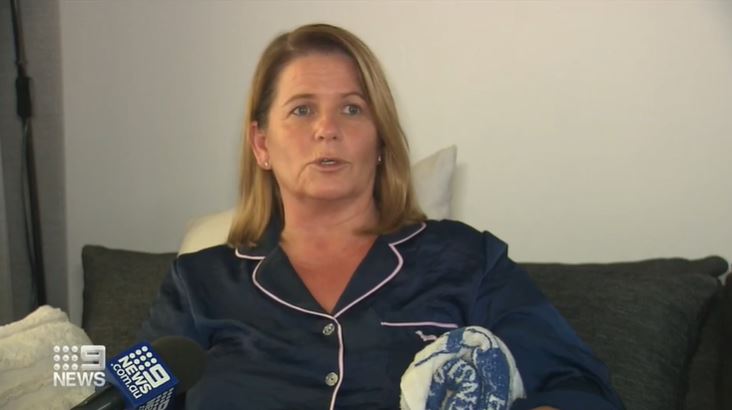
"I've come off and then just the side of my ribs have gone straight into the curb," she said.
This incident left her with seven broken ribs and six plates to hold them in place.
"The ribs weren't lined up or anything so they thought it would be better to put the plates in, line them up, so they could heal correctly," Ms Galbraith said.
"The first couple of days I was just in agony".
READ MORE: Five hurt as car smashes into Gold Coast Starbucks

In the past 12 months on the Gold Coast there have been just 14 reports of swooping.
Meanwhile, there have been 157 from January to August in Brisbane. However, those numbers don't reflect unreported incidents.
Brisbane City Council has encouraged residents to report magpie sightings to council and put up signs in swooping hotspots to warn other residents.
Ms Galbraith said if she'd known about the magpie, she would have moved to the other side of the road or "gone a different way".
"I will not be riding my bike during magpie season again," she said.