The survey across 10 countries was led by Bath University in collaboration with five universities. It’s funded by the campaign and research group Avaaz. It claims to be the biggest of its kind, with responses from 10,000 people aged between 16 and 25.
Many of those questioned perceive that they have no future, that humanity is doomed, and that governments are failing to respond adequately.
Many feel betrayed, ignored and abandoned by politicians and adults.
The authors say the young are confused by governments’ failure to act. They say environmental fears are “profoundly affecting huge numbers of young people”.
Chronic stress over climate change, they maintain, is increasing the risk of mental and physical problems. And if severe weather events worsen, mental health impacts will follow.
The report says young people are especially affected by climate fears because they are developing psychologically, socially and physically.
The lead author, Caroline Hickman from Bath University, told BBC News: “This shows eco-anxiety is not just for environmental destruction alone, but inextricably linked to government inaction on climate change. The young feel abandoned and betrayed by governments.
“We’re not just measuring how they feel, but what they think. Four out of 10 are hesitant to have children.
“Governments need to listen to the science and not pathologise young people who feel anxious.”
The authors of the report, to be published in the journal Lancet Planetary Health, say levels of anxiety appear to be greatest in nations where government climate policies are considered weakest.
There was most concern in the global south. The most worried rich nation was Portugal, which has seen repeated wildfires.
Tom Burke from the think tank e3g told BBC News: “It’s rational for young people to be anxious. They’re not just reading about climate change in the media – they’re watching it unfold in front of their own eyes.”
I don’t want to die, but I don’t want to live in a world that doesn’t care for children and animals
The authors believe the failure of governments on climate change may be defined as cruelty under human rights legislation. Six young people are already taking the Portuguese government to court to argue this case.
The survey was carried out by the data analytics firm Kantar in the UK, Finland, France, the US, Australia, Portugal, Brazil, India, the Philippines and Nigeria. It’s under peer review on open access.
Young people were asked their views on the following statements:
People have failed to care for the planet: 83% agreed globally, UK 80%
The future is frightening: 75%, UK 72%
Governments are failing young people: 65%, UK 65%
Governments can be trusted: 31%, UK 28%
The researchers said they were moved by the scale of distress. One young person said: “I don’t want to die, but I don’t want to live in a world that doesn’t care for children and animals.”
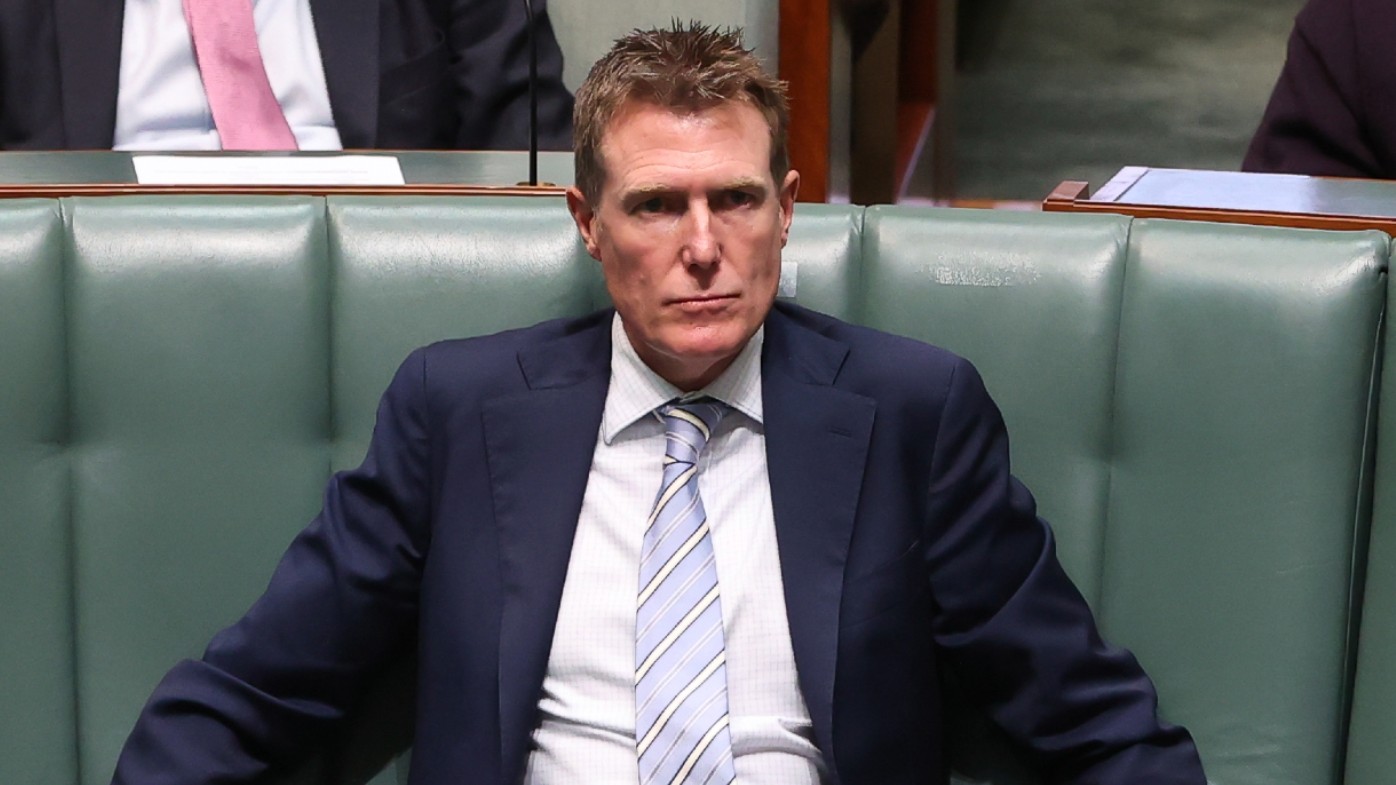
Former Attorney-General Christian Porter been accused of an "outrageous" abuse of his office, after revealing a blind trust paid for part of his legal bill over defamation case against the ABC.
Mr Porter updated his parliamentary register of interests, declaring "part contribution to the payment of my fees by a blind trust known as the Legal Services Trust."
It's been estimated his legal bill could run up to $1 million.
Mr Porter did not reveal how much the blind trust had contributed.
"As a potential beneficiary I have no access to information about the conduct and funding of the trust," he said in his update.
Labor attacked the claim as a "disgrace".
"Christian Porter's claim to have no idea who funded his million-dollar legal case is an outrageous abuse of his office," Shadow Attorney-General Mark Dreyfus said.
"The Australian people need to know who set this trust up, who funded it, how much they donated, and whether they expected to get anything in return for these donations."
Taking no chances, Capitol Police and other law enforcement officials are ramping up security measures ahead of Saturday’s rally in Washington to support the pro-Trump insurrectionists who attacked the Capitol earlier in the year.
Security officials and congressional leaders appeared to be blindsided by the riot of Jan. 6, when a violent mob of Trump supporters overwhelmed police officers and stormed the Capitol in a failed attempt to overturn President Biden’s election victory.
Eight months later, the Capitol’s top security officers are long gone. But their replacements are scrambling to ensure that the tragic events of Jan. 6 don’t recur on their watch.
Capitol Police have installed temporary high-tech security cameras to allow them a vaster view of the Capitol complex. A Capitol security board on Monday approved a plan to reinstall a seven-foot fence around the main Capitol building, which had stood for months after January’s deadly assault.
The board also said it has issued an emergency declaration, which will allow Capitol Police to deputize outside law enforcement as “special” Capitol Police officers on Saturday.
And unlike the lead up to Jan. 6, when a number of lawmakers were warning of rampant violence during Congress’s vote to formalize the election results, Speaker Nancy Pelosi (D-Calif.) and other Hill leaders have been requesting security briefings ahead of Sept. 18, including one held Monday, to ensure officials have a game plan if violence erupts this weekend.
“We are here to protect everyone’s First Amendment right to peacefully protest,” Capitol Police Chief Tom Manger said in a statement after the briefing. “I urge anyone who is thinking about causing trouble to stay home. We will enforce the law and not tolerate violence.”
Leaving Monday’s briefing, Senate Majority Leader Charles Schumer (D-N.Y.) said he sees a clear distinction between the security planning now versus January.
“They seemed very, very well-prepared — much better prepared than before Jan. 6,” he said. “I think they’re ready for whatever might happen.”
Pelosi offered a similar assessment, saying she’s seen “much better communication” between security officials heading into Saturday’s rally. Yet she also took a subtle shot at the former security heads, lamenting that congressional leaders were left out of the loop in January.
“It seems much better,” Pelosi said after Monday’s briefing. But “I don’t have anything to compare to, because we weren’t briefed before.”
Adding to the urgency surrounding the security planning, Capitol Police officers early Monday morning arrested a 44-year-old California man for possessing a bayonet and a machete just outside the Democratic National Committee headquarters, which sits just south of the Capitol and was targeted with a pipe bomb shortly before the Jan. 6 attack.
Both items are illegal in Washington.
The man, Donald Craighead, was driving a truck laden with white supremacist slogans and said he was “on patrol,” according to Capitol Police. Police said it was unclear if there was any connection between Craighead and this weekend’s demonstration at the Capitol.
Organized by Matt Braynard, a former Trump campaign staffer, Saturday’s “Justice for J6” rally is designed to highlight the treatment of hundreds of people who participated in the Capitol riot on Jan. 6. Many of those arrested have been held in jail for months awaiting trial, and former President Trump’s most vociferous allies — including a number of Republicans on Capitol Hill — are characterizing them as political prisoners.
In July, Reps. Matt Gaetz (R-Fla.), Louie Gohmert (R-Texas), Paul Gosar (R-Ariz.) and Marjorie Taylor Greene (R-Ga.) staged a small protest of their own outside the Department of Justice in Washington after they were denied visits with some of the Jan. 6 detainees. And they’ve continued to press the case that those conservatives are being persecuted for their political beliefs.
“The reason why they’re taking these political prisoners is because they’re trying to make an example, because they don’t want to see the mass protests going on in Washington,” Rep. Madison Cawthorn (R-N.C.), another fervent Trump ally, said during a recent rally in his district.
But other high-profile Republicans have rejected that argument, forcefully condemning the insurrectionists as domestic terrorists. In a speech marking the 20th anniversary of the Sept. 11 attacks, former President George W. Bush likened foreign terrorists to those who carried out the violent assault on the U.S. Capitol on Jan. 6.
“We have seen growing evidence that the dangers to our country can come not only across borders, but from violence that gathers within,” Bush said in a speech in Shanksville, Pa. “There is little cultural overlap between violent extremists abroad and violent extremists at home.
“But in their disdain for pluralism, in their disregard for human life, in their determination to defile national symbols, they are children of the same foul spirit. And it is our continuing duty to confront them.”
Among the various security measures being escalated before Saturday, the reinstallation of the Capitol security fence is likely to be the most controversial. The original fence was erected in the days following the deadly rampage at the Capitol on Jan. 6 and quickly became a symbol of both the failure of law enforcers to secure the building and the ongoing effort by Trump to overturn his election defeat.
It also infuriated Republicans in Congress, who accused Democrats of politicizing Jan. 6 by exaggerating the violent threat posed by Trump’s supporters. Closer to home, neighbors in the vicinity of Capitol Hill also pushed hard to have the fence removed.
Manger appears to recognize the volatile nature of the fence debate, vowing Monday that it won’t remain in place very long.
“The fence will go up a day or two before” Sept. 18, he told reporters Monday, “and if everything goes well it will come down very soon after.”
A wild card in Saturday’s security plans is the National Guard. By the evening of Jan. 6, dozens of National Guard troops were on hand helping to secure the Capitol complex and drive rioters back toward the National Mall. And thousands of service members from around the country patrolled the Capitol grounds in the days, weeks and months after the attack.
But it’s unclear if the National Guard will provide direct support to Capitol Police officers on Saturday. As of Monday, a formal request had not been made from the Capitol Police Board to the Pentagon, but law enforcement and national security officials are talking. And it’s possible some Guard troops will be put on standby near the Capitol complex that day, sources said.
“We maintain constant interagency communication, certainly have since the 6th of January for sure, and I expect that that communication will continue,” said Pentagon spokesman John Kirby. “But I’m not aware of any specific requests or specific communications right now.”
The Centers for Disease Control and Prevention (CDC) announced results from a study Friday that found unvaccinated individuals were 11 times more likely to die from COVID-19 than fully vaccinated people.
The research, spanning more than 600,000 people in 13 jurisdictions, also determined that unvaccinated populations were over 10 times more likely to be hospitalized — figures that underscore COVID-19 vaccines protect recipients from deaths and hospitalizations.
The study also showed that unvaccinated people were 4 1/2 times more likely to contract COVID-19 than the fully vaccinated.
The studies come just one day after President Biden announced a new rule that would require private companies with 100 employees or more to mandate vaccinations or frequent coronavirus testing.
The Biden administration as a whole has pushed for the use of vaccines as the best way to combat the pandemic.
CDC Director Rochelle Walensky on Friday made the case for vaccines yet again, citing the study along with two others and stating that COVID-19 shots still work to protect recipients from the worst of the disease amid the rampant spread of the delta variant.
“As we have shown study after study, vaccination works,” Walensky said during the briefing. “CDC will continue to do all we can do to increase vaccination rates across the country by working with local communities and trusted messengers and providing vaccine confidence consults to make sure that people have the information they need to make an informed decision.”
“The bottom line is this: We have the scientific tools we need to turn the corner on this pandemic,” Walensky said. “Vaccination works and will protect us from the severe complications of COVID-19. It will protect our children and allow them to stay in school for safe in-person learning.”
The agency and Biden administration are promoting the data behind the vaccine effectiveness in their bolstered push to get the unvaccinated shots.
The U.S. has made progress with vaccinations, reaching 75 percent of adults who have had at least one dose earlier this week.
But the portion of unvaccinated people continues to affect the U.S.’s trajectory in the pandemic, with the unvaccinated making up almost all of the growing hospitalizations and deaths.
The other two studies in the CDC’s Morbidity and Mortality Weekly Report (MMWR) released Friday focused on the vaccine’s effectiveness against hospitalization.
One involving five Veterans Affairs Medical Centers found the mRNA vaccines’ overall effectiveness against hospitalization reached 86.8 percent.
Another similarly calculated that effectiveness at 86 percent among patients in emergency departments, urgent cares and hospitals across nine states.
However, the studies also provided some evidence that the effectiveness of the vaccines are starting to wane among the older population, prompting the researchers to call for further investigation.
For the patients in emergency departments, urgent cares and hospitals across nine states, the effectiveness among those aged 75 and older was 76 percent, while among those aged 18 to 74, effectiveness reached 89 percent.
But researchers urged caution, with the report saying “this moderate decline should be interpreted with caution and might be related to changes in SARS-CoV-2, waning of vaccine-induced immunity with increased time since vaccination, or a combination of factors.”
The study involving Veterans Affairs facilities determined that the mRNA vaccine effectiveness among those aged 65 and older was 79.8 percent, compared to 95.1 percent among those aged 18 to 64.
More than 82 percent of those aged 65 and older are considered fully vaccinated, according to CDC data.
Surgeon General Vivek Murthy said Friday the administration is aiming to get “as close to 100 percent as possible” through expanded outreach.
“We know that every senior matters in terms of getting them vaccinated as a potential life saved,” he said, adding that booster vaccinations “will likely be helpful” for the older population.
The Biden administration had announced it planned to start administering additional shots to recipients on Sept. 20 beginning eight months after their second shot.
But the plan led to criticism from some experts who said the administration was getting ahead of the review process at the Food and Drug Administration (FDA), although officials say the strategy depends on FDA approval.
Boris Johnson to confirm Covid booster jabs for over-50s in UK
Programme follows approval of vaccinations for 12- to 15-year-olds and is aimed at heading off winter rise in infections
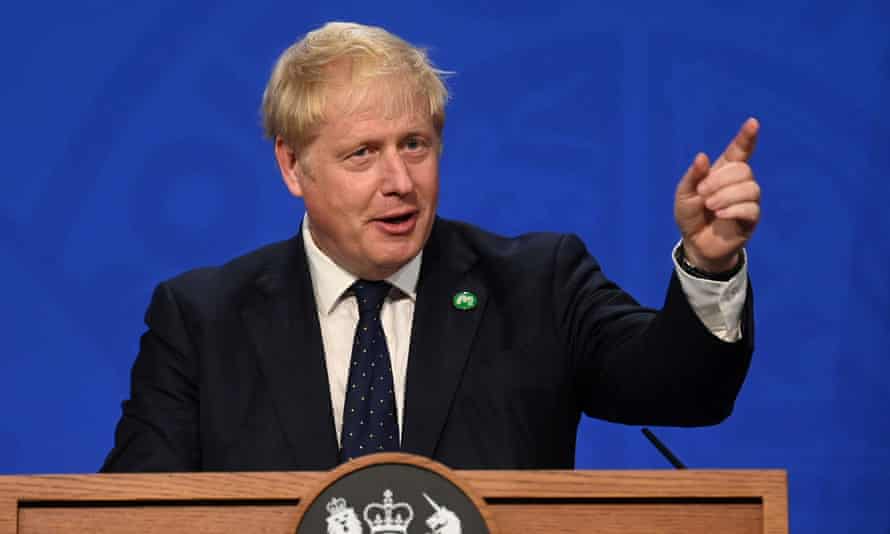
The prime minister, Boris Johnson, is also expected to oppose another lockdown even if coronavirus infection rates increase. Photograph: Toby Melville/Reuters
Boris Johnson is to confirm the start of a booster jabs programme for the over-50s on Tuesday after government scientists finally approved vaccinations for older schoolchildren.
Setting out a widespread acceleration of the vaccine programme before what ministers concede will be a difficult second winter coping with the virus, the prime minister will also signal his opposition to any further lockdowns this year.
In a press conference on Tuesday afternoon, the prime minister will highlight the need to keep some measures in reserve, which could include a return to compulsory mask-wearing in some settings, telling people to work from home where possible and the reintroduction of social distancing across England.
But he will put the vaccination programme at the heart of his approach to trying to keep Covid hospitalisations and deaths at manageable levels during the colder months when people are more likely to gather indoors and in the run-up to Christmas.
They called on ministers to confirm the programme would be overseen by specialists so teachers would not become caught up in issues of consent, or having to deal with anger from anti-vaccination groups.
One NHS trust has told schools it expects the first injections to be completed within six weeks.
Paul Whiteman, general secretary of the National Association of Head Teachers, said: “It is essential that the government immediately confirms that the process surrounding vaccinations will be run and overseen entirely by the appropriate medical teams.”
The Joint Committee on Vaccination and Immunisation (JCVI) is now understood to have endorsed boosters to be given to all over-50s and the clinically vulnerable, given fears about waning immunity.
The rollout is expected to take the same form as the first phase of Covid vaccine distribution begun in December 2020, with the oldest prioritised first before jabs are offered to the lower age groups.
Sajid Javid, the health secretary, will make a statement to the Commons confirming the move, with Johnson fielding questions from the media in a press conference later in the afternoon.
The prime minister will say: “The pandemic is far from over but, thanks to our phenomenal vaccine programme, new treatments and testing we are able to live with the virus without significant restrictions on our freedoms.
“Today I will set out a clear plan for the autumn and winter, when the virus has a natural advantage, to protect the gains we have made.”
Although ministers are expected to relinquish some emergency Covid powers, the government will still retain the ability to enforce a lockdown and tell people to quarantine who test positive.
And despite announcing over the summer that vaccine passports will be required for entry to nightclubs and other large crowded venues, Johnson is also expected to confirm what Javid said on Sunday – that the controversial documents will not be introduced on 1 October. However, the policy will be kept in reserve, much to the frustration of dozens of Tory MPs, who were preparing to vote against such a move to kill it off.
Many privately thought the chances of legislation passing to introduce vaccine passports were slim, given the high level of opposition among Johnson’s own backbenchers, and have told the Guardian the government should rule out their introduction entirely. One said: “The very concept of vaccine passports needs to be ruled out for good, as they are fundamentally unconservative, discriminatory and would lead to a two-tier society that I am confident no one actually wants to see.”
Johnson’s “winter plan” will prepare people for what Labour have warned could be “the worst winter in living memory” for the NHS, with the dual pressures of Covid and flu expected to place even more strain on the health service.
A government insider said that to guard against another lockdown, the prime minister would announce the potential return of “the sorts of interventions we’ve seen before”. They added: “It’s just the choice of in what combination and at what level of cases, deaths and hospitalisations they could be triggered”.
The decision on boosters has become one of the most protracted and complex issues the JCVI has tackled during the pandemic, with significant debate over whether any extra immunity granted by mass third jabs brings a net public health benefit, given the resources involved and the potential impact on areas such as other vaccination programmes.
On Thursday last week the committee held a meeting on the issue which lasted more than four hours, with members given very strict warnings against speaking to the media.
While the JCVI was deciding, there was increasing, if implicit, pressure from ministers to agree to a widespread booster programme, with ministers ordering the NHS to prepare for an immediate rollout once agreement was reached.
Some politicians and scientists, including Sir Jeremy Farrar, the director of the Wellcome Trust, have also stressed it would be unfair for the UK to roll out booster vaccines while millions of people in poorer countries still do not have access to even a first jab, and warned this could lead to the creation of potentially new variants of concern.
Announcements on rules for international travel are not expected to be made tomorrow but could come as early as Thursday.
The red, amber and green lists are expected to be replaced with a “go” and “no go” list of countries, acquiescing to Labour’s longstanding call for a simpler two-tier system.
Sources said there was a deliberate nudge built into the plan that would encourage people to get vaccinated by scrapping the requirement to quarantine and get a PCR test for those returning from “go” places but potentially keeping it in place for those who are not fully inoculated.
There were 30,825 new Covid cases announced on Monday and 61 deaths – lower than the recent daily figures because of the weekend reporting lag.
British health Secretary Sajid Javid will set out the details of England’s booster shot plans when he unveils the Government’s winter Covid plan in a Commons statement on Tuesday.
Meanwhile new local Covid infections have more than doubled in China’s southeastern province of Fujian, which is battling the country’s latest coronavirus outbreak.
The National Health Commission said on Tuesday that 59 new locally transmitted cases were reported for 13 September, up from 22 infections a day earlier.
Here are the other key recent developments:
More evidence is needed that booster jabs will significantly reduce serious cases before governments go ahead with campaigns for third jabs, a new study involving US and WHO health experts said. At the moment, such campaigns are not justified, according to the scientists.
Children aged 12 to 15 will be offered vaccines in the UK, its chief medical officers decided. The first doses should be administered immediately.
China imposed new restrictions in the south-eastern Fujian province, with measures including mass testing, suspended transport services and closures of bars and cinemas.
Medical charity Médecins Sans Frontières called for a waiver of vaccine patents to allow more jabs to be produced and delivered to poorer countries. It said the UK, EU, Switzerland and Norway should stop blocking a proposal being negotiated at the World Trade Organization.
Singapore’s health ministry has reported 607 new locally transmitted Covid cases – the highest since August last year.
The UK government pulled out of a deal with the French pharmaceutical company Valneva to purchase its Covid-19 vaccination, the company has said.
Ho Chi Minh City, at the epicentre of the coronavirus outbreak in Vietnam, is to extend restrictions until the end of September. Authorities said the measures were needed to isolate clusters, speed up vaccinations and stop hospitals from being overwhelmed.
The fully vaccinated accounted for just 1.2% of all deaths involving Covid-19 in England in the first seven months of this year, which is being seen as an encouraging sign that the vaccine is effective in reducing deaths.
About a million children in New York returned to school today, with compulsory masks and mandatory vaccination for teachers, as the city ends remote working.
By Te Aorewa Rolleston of RNZ A young aspiring animator is on a mission to create a series of animated reo Māori music videos to help people connect with the language.Turanga Jacob Mahutonga (Te Arawa, Taranaki me Ngāti…
A pre-production English sportscar that has been hidden away for a staggering 41 years will be finally heading to a new home when it goes under the hammer in the UK on September 25.
Vaxi Taxi. Jabbin’ Wagon. Jabba Waka. Jabba Dabba Doo.These are just some of many name suggestions for the new “Mr Whippy”-style vaccine bus service name after the Prime Minister put the call out for ideas. A “Mr Whippy”-style…
The identities can now be revealed of the Auckland couple accused of visiting a holiday home in Wānaka at the weekend after using their essential worker status to leave lockdown. They are William Willis, 35, whose mother is…
Auckland has been given the best news it has had since the start of the outbreak.There are no new unlinked cases for two days in a row – and there’s more good news, with the Government pegging Auckland could hit a vaccine milestone…