Category Archives: headline

Tradie faces court after allegedly faking positive COVID-19 test

A young tradesman has faced court accused of faking a positive COVID-19 test to avoid work in Newcastle during the current lockdown.

Jamie Pitman-Muir, 23, did not answer questions after his appearance in court today.

He has been charged with conveying false information that a person was in danger.

LIVE UPDATES: Sydney mayors push for lockdown rethink

Police allege the young man sent his boss a text message at 4am on Monday, August 2, claiming he had contracted the virus.

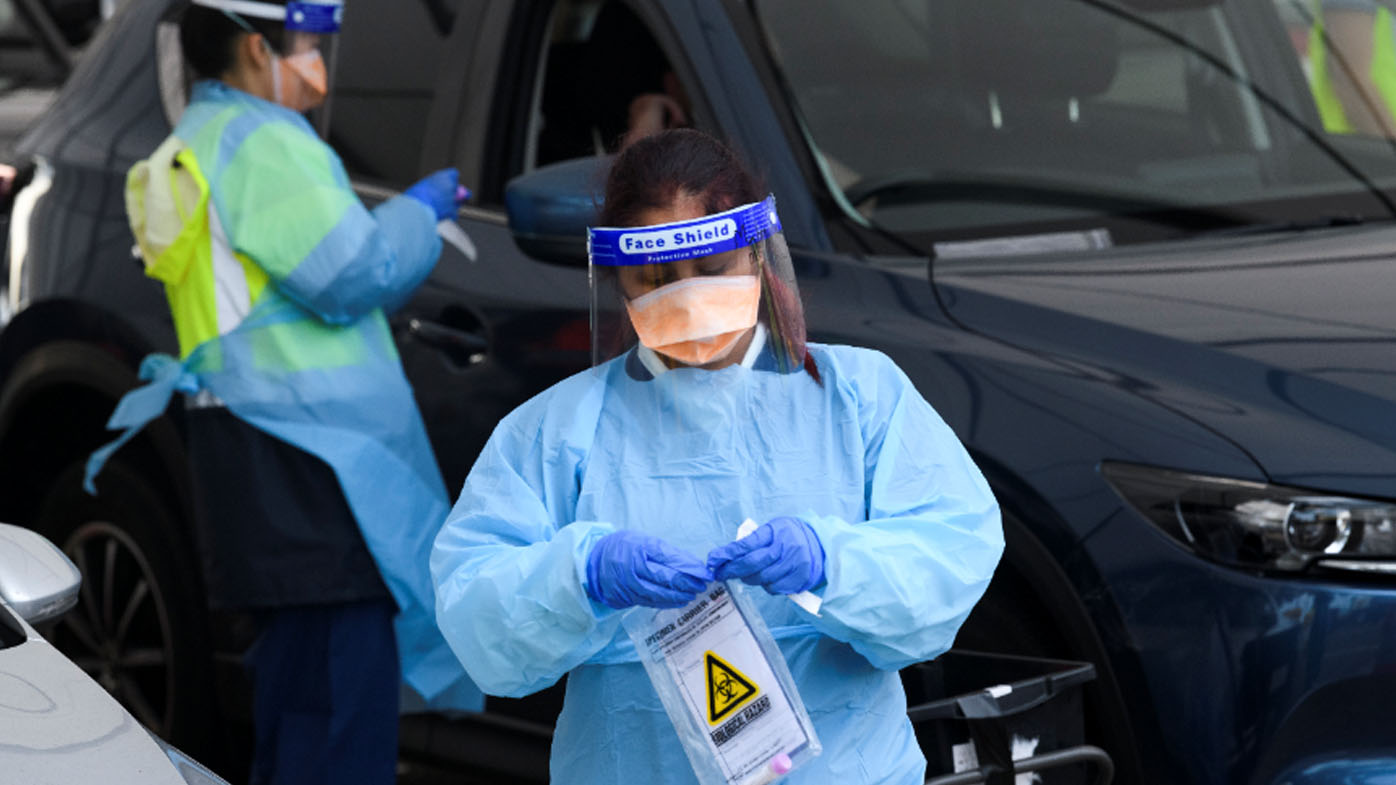
His worksite was shut down and 9News understand 25 co-workers were immediately ordered to test and isolate.

Mr Pitman-Muir is accused of trying to back track, but by then NSW Health were involved.

READ MORE: Christmas COVID-19 peak 'will overwhelm NSW hospitals'

When officials discovered their records did not match, police were notified and began investigations.

Mr Pitman-Muir did not enter a plea in court today, asking for more time to contact Legal Aid about a charge which carries a maximum five year jail term.

The case returns to court in a fortnight.

Search for missing US 22-year-old who vanished during van trip

The family of a missing 22-year-old New York woman are begging for help to find her after she vanished during a road trip with her boyfriend.

Gabby Petito last spoke to her mother via Facetime on August 23 or 24, and continued sending text messages to her up until August 30.

But her mother said she doesn't know for sure if those messages were sent by her.

LIVE UPDATES: Vaccine passports coming for WA

One of the last photos Gabby Petito posted before she disappeared.

She was last known to be at the Grand Teton National Park in Wyoming, on the other side of the country.

Ms Petito had been posting in a YouTube channel about travelling the country with her boyfriend in a van.

And while she remains missing, her boyfriend is in Florida, has hired a lawyer and is not speaking to the media.

The case is now a missing persons investigation in Suffolk County, on New York's Long Island.

READ MORE: Sweeping new vaccine mandates for 100 million Americans

Gabby Petito was last seen at the Grand Teton National Park in Wyoming.

"Gabrielle Petito was traveling in a white, 2012 Ford Transit van with Florida license plate QFTG03 with a companion when she stopped communicating with friends and family," a statement from Suffolk Police read.

"The van she was traveling in has been recovered.

"She has blonde hair and blue eyes, and several tattoos, including one on her finger and one on her forearm that reads 'let it be'."

Suffolk Police are working with the FBI field office in Tampa Bay, Florida, near her boyfriend's home.

The van they had been travelling in was recovered at her boyfriend's parents' home.

Gabby Petito's boyfriend returned home from a road trip, but she didn't.

Police have not revealed if her boyfriend is a suspect in her disappearance, but he has not been charged with anything.

Ms Petito's father Joe told Newsday that her disappearance is like "drowning with your hands tied behind you".

"You can't describe it. There's nothing you can do," Mr Petito said.

"You can't control anything."

Ms Petito last posted on Instagram on August 26, and on YouTube several days earlier.

https://www.instagram.com/p/CTA__ISJZYY/

Travel vaccine mandate could segregate society, experts warn

Experts have warned mandating vaccines for travel could be problematic and promote segregation, as the Federal Government prepares to trial vaccine passports for international travel.

A new study published by the Medical Journal of Australia found mandatory vaccines must be backed by strong justification before being rolled out by the government.

Championing the research, a string of leading health professionals found a general population mandate could cause resentment and mistrust in government and public health agencies.

LIVE UPDATES: New COVID-19 case reported in Queensland

https://omny.fm/shows/the-9news-lunch-podcast/sept-14-lockdown-protesters-warned-the-council-con/embed?style=cover

"Mandates cannot be ethically justifiable if they further entrench existing disadvantage, or if penalties will be experienced very differently by different populations," the study found.

"Supply of the Pfizer vaccine continues to be limited in Australia … access problems continue to be reported.

"Government and employers will need to improve access for workers before a mandate is enforced."

READ MORE: Flight attendant's 'jet lag' turned out to be deadly disease

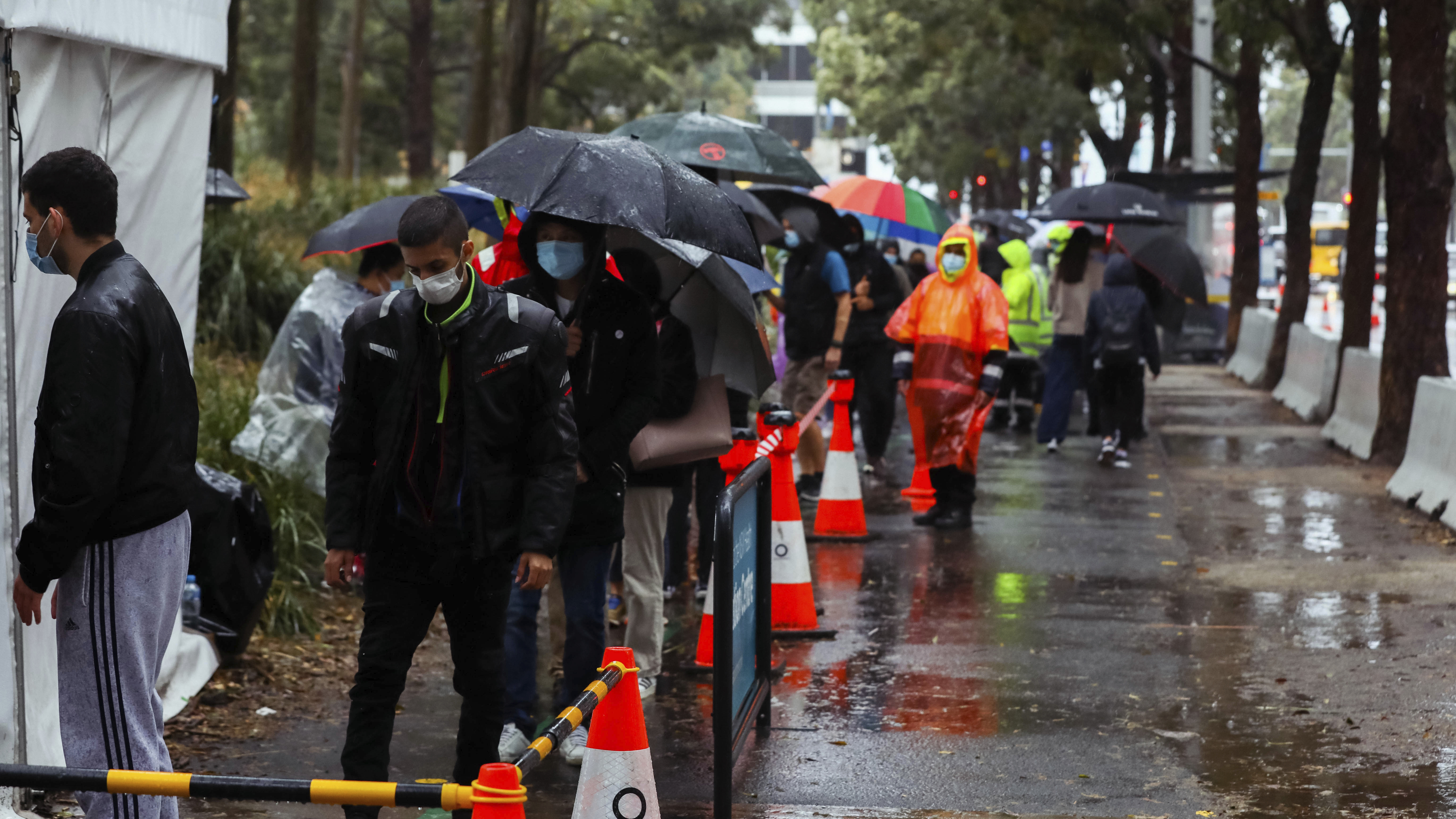
People line up to receive their covid-19 vaccination despite wet weather at the Sydney Olympic Park Vaccination Centre in Sydney.Pfizer

The Federal Government has announced it will develop a system to allow international travel, using MyGov to upload proof of vaccination to a QR code linked to an individual's passport.

Prime Minister Scott Morrison said when 80 per cent of the population is fully vaccinated, residents with two doses will be able to travel overseas again and those stuck abroad will be able to return home.

In a pre-recorded message to Australian expats last week, Mr Morrison acknowledged the frustrations of those stuck overseas.

READ MORE: Christmas COVID-19 peak 'will overwhelm NSW hospitals'

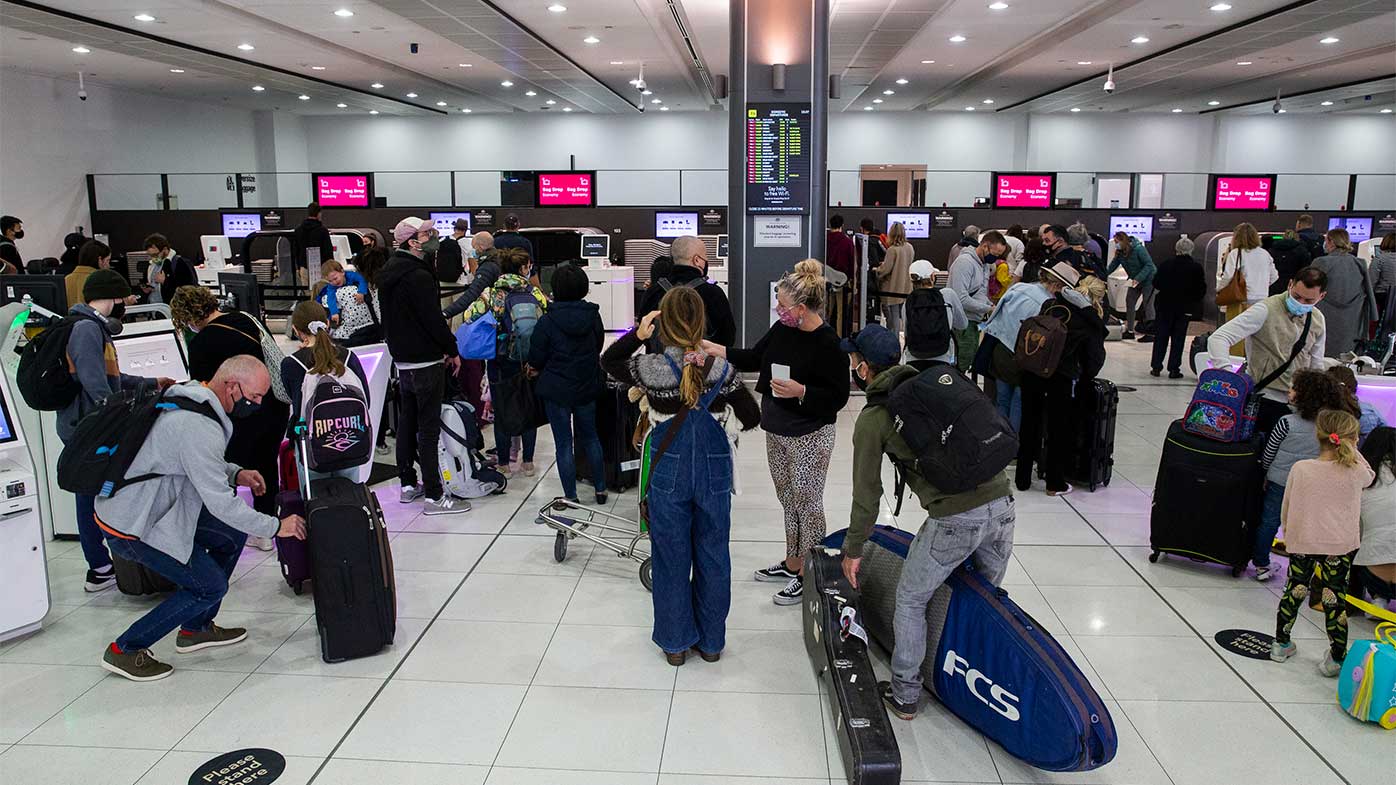
Passengers at Melbourne Airport Terminal 3

"I know it's been difficult, but we are looking forward to welcoming many people home soon," he said.

"We can get there this year, we're looking forward to that opportunity again.

"I thank you for your patience and enduring what has been a frustrating and difficult time for you."

Meanwhile, the Australian Human Rights Commission has warned businesses they must "be cautious about imposing a blanket rule requiring vaccination as a condition of entry".

Australia closed its international borders 18 months ago in a bid to manage COVID-19.

Lego Super Mario 64 delights fans of iconic video game 25 years on

Lego Mario had my curiosity, now it has my attention. 

A giant question block that folds out to reveal four micro-scale levels from Super Mario 64? Yes. Please. 

Sure, it's $289, but it does something Lego's deal with Nintendo hasn't focused on so far; an interactive item that looks great all on its own. 

READ MORE: Flight attendant's 'jet lag' turned out to be deadly disease

The Lego Mario and Luigi sets were created with interactivity at the fore.

They are designed to be played with, pulled apart and put back together in new and interesting ways, then played with again. 

Bowser's Airship expansion – which is on special at Myer now for $120 – bucked this trend to a degree, but there hasn't been a design that looks this good since the 2,646 piece, $349 monster replica of the NES console complete with TV.

The '?' block opens up to reveal four miniature levels from Super Mario 64 that'll have fan's hearts pumping: Bomb-omb Battlefield, Cool Cool Mountain, Lethal Lava Land and of course, the iconic Peach's Castle. 

READ MORE: Beach party chaos as revellers flee croc-infested waters

Among its 2064-pieces are micro figures of Mario, Princess Peach, King Bob-omb, Chain Chomp, Big Bully, Lakitu, Mother Penguin and Lil' Penguin who first slid into Nintendo canon 25 years ago.

There's no word on how long it'll take to build just yet.

Senior Designer Pablo Gonzalez left that to the imagination, saying "it's difficult to imagine the Super Mario Universe without the classic game's iconic levels full of discovery and secrets".

READ MORE: Christmas COVID-19 peak 'will overwhelm NSW hospitals'

"With this amazing set, we're building on the exciting play experience of LEGO Super Mario, both to bring a bit of nostalgia for those who played the Super Mario 64 video game, but also to introduce these wonderful levels to a whole new audience of Super Mario fans," Mr Gonzalez said.

Frustratingly it won't be hitting shelves in all stores until 2022, but you'll be able to get it from LEGO stores and online from October 1, 2021. 

READ MORE: Privacy questions as Facebook launches Ray-Ban sunglasses with built-in video camera

Lawyer for Prince Andrew vows he'll fight 'baseless' lawsuit

A lawyer for Prince Andrew said that the royal had not been properly served with a copy of a new lawsuit filed by a woman who says she was coerced into having sex with him at age 17, and that he intends to challenge jurisdiction in the case.

Lawyer Andrew Brettler, went on the offensive against Virginia Giuffre, telling a judge in New York that her claim was "baseless, non-viable and potentially unlawful."

Andrew has repeatedly denied the allegations in the lawsuit brought by Giuffre, who said that as a teenager living in Florida she was one of many girls and young women sexually abused by the convicted sex offender and millionaire Jeffrey Epstein.

READ MORE: Process server attempts to serve Prince Andrew at the Royal Lodge with legal papers for sexual abuse lawsuit filed by Virginia Giuffre

Prince Andrew could lose taxpayer-funded security protection amid Epstein scandal

In her lawsuit and in interviews, Giuffre says she travelled to London with Epstein in 2001 and had sex with Andrew, after a night of dancing, at the home of British socialite Ghislaine Maxwell. Giuffre has said Epstein paid her $15,000, then arranged for her to have two more sexual encounters with the prince in New York and the US Virgin Islands.

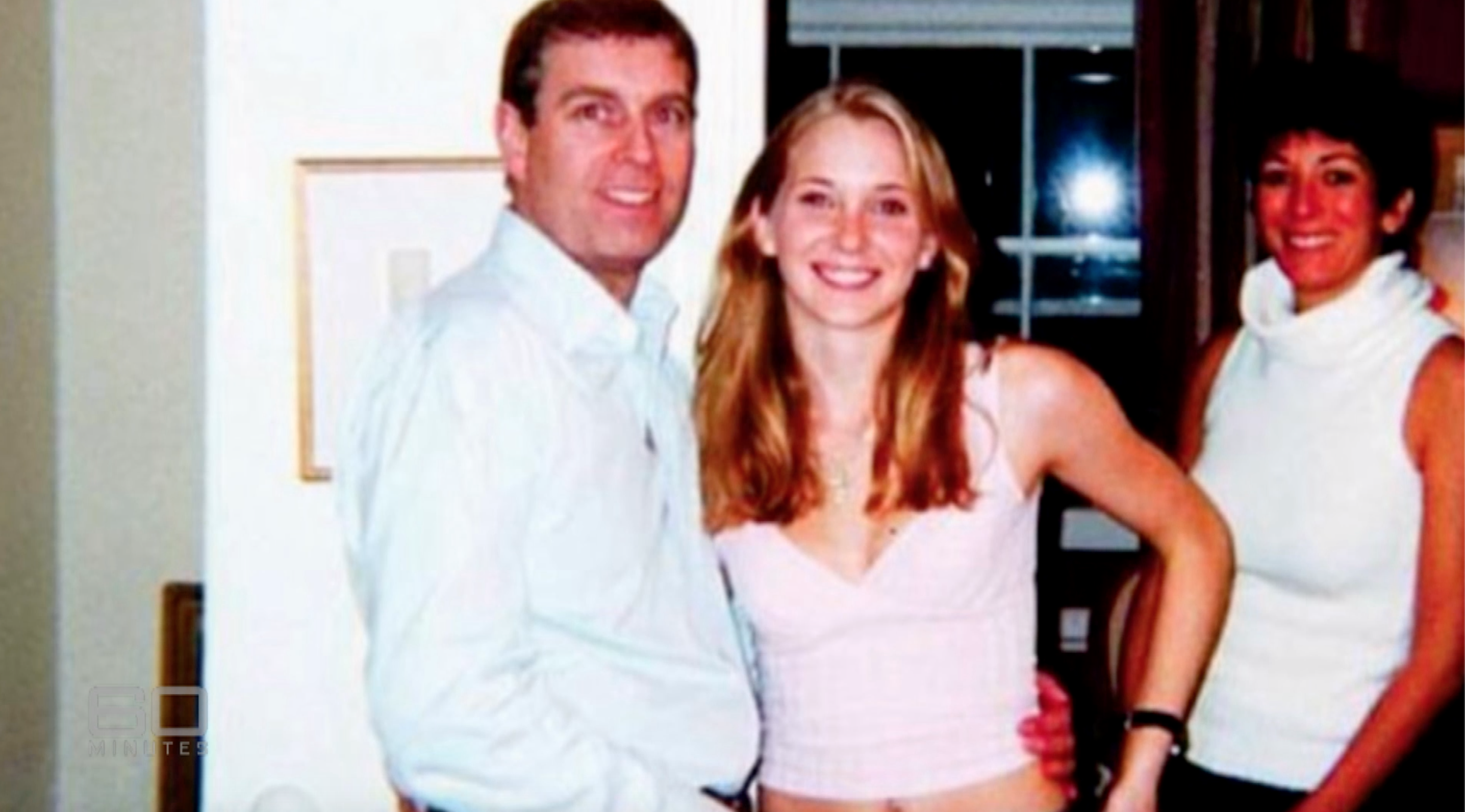
Prince Andrew has denied the allegations, saying in an interview that he doesn't remember ever meeting Giuffre, though at least one photograph appears to show them together.

READ MORE: Prince Andrew sued for sexual assault by Virginia Giuffre

Prince Andrew Prince Philip funeral

Mr Brettler told the judge that the lawsuit against Andrew — who is the Duke of York — is barred by an earlier settlement agreement that "releases the duke and others from any and all potential liability." He added that Andrew intends to ask Britain's High Court to weigh in on the matter.

"We have significant concerns about the propriety of this lawsuit," Mr Brettler said.

READ MORE: US authorities urge Prince Andrew to 'talk with us'

Ms Giuffre previously settled a lawsuit against Maxwell over her allegations. Maxwell is now awaiting trial in the US on charges that she helped recruit young victims for Epstein to abuse. That case does not involved Ms Giuffre or Prince Andrew. Epstein killed himself weeks after his arrest in 2019.

Mr Brettler made a procedural argument on Andrew's behalf at the first pretrial conference in the case, saying that Ms Giuffre's legal team hadn't taken the proper steps required to start the case, including providing Prince Andrew with a copy of the lawsuit. Attorneys for Ms Giuffre say the documents were handed over to a police officer on duty at the main gates of Prince Andrew's home in Windsor Great Park on Aug. 27.

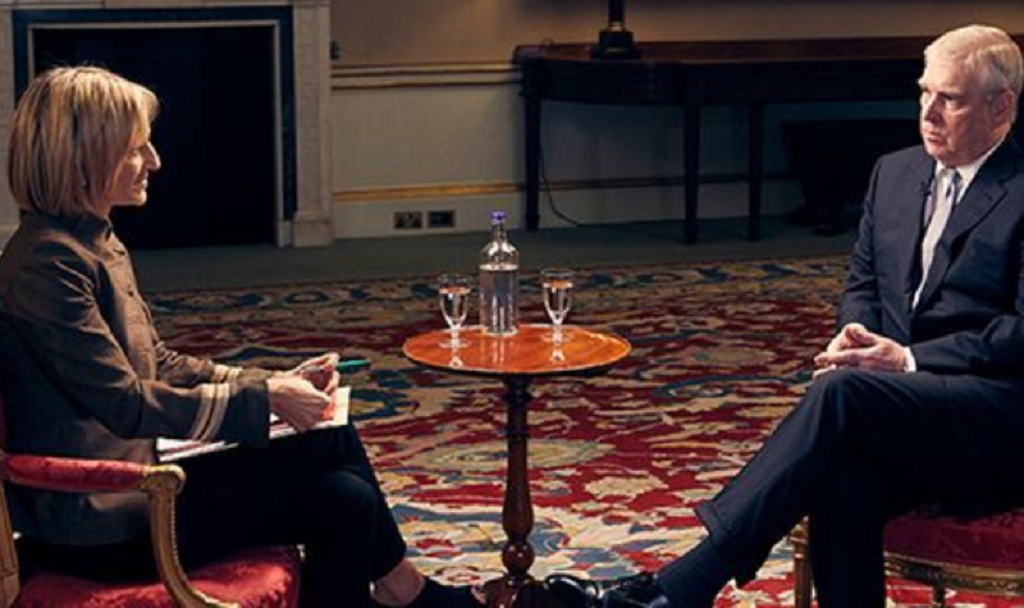
Prince Andrew interview

US Judge Lewis Kaplan didn't immediately rule on the matter, but told the lawyers whatever bureaucratic hurdles regarding service of the lawsuit would be ultimately resolved and that the case would be litigated.

"Let's cut out all the technicalities and get to the substance," he said.

Italy investigates alleged kidnapping of boy who survived cable car crash

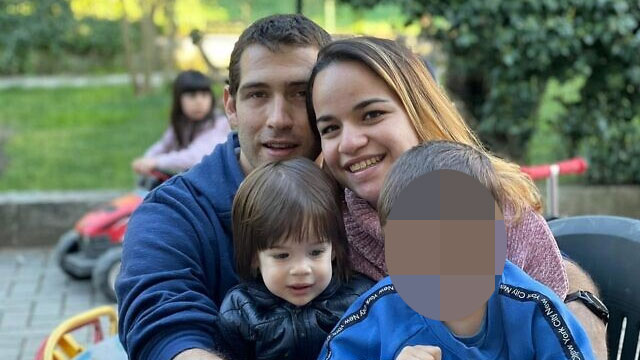
The Italian relatives of a six-year-old boy who was the sole survivor of a cable car crash in northern Italy say they are working to secure his return from Israel as Italian authorities opened a probe into his possible kidnapping.

Eitan Biran is at the centre of a bitter custody battle between his maternal grandparents in Israel and his paternal relatives in Italy.

His Italian relatives claim the boy was flown without their permission to Israel over the weekend. Eitan and his parents were living in Italy at the time of the accident.

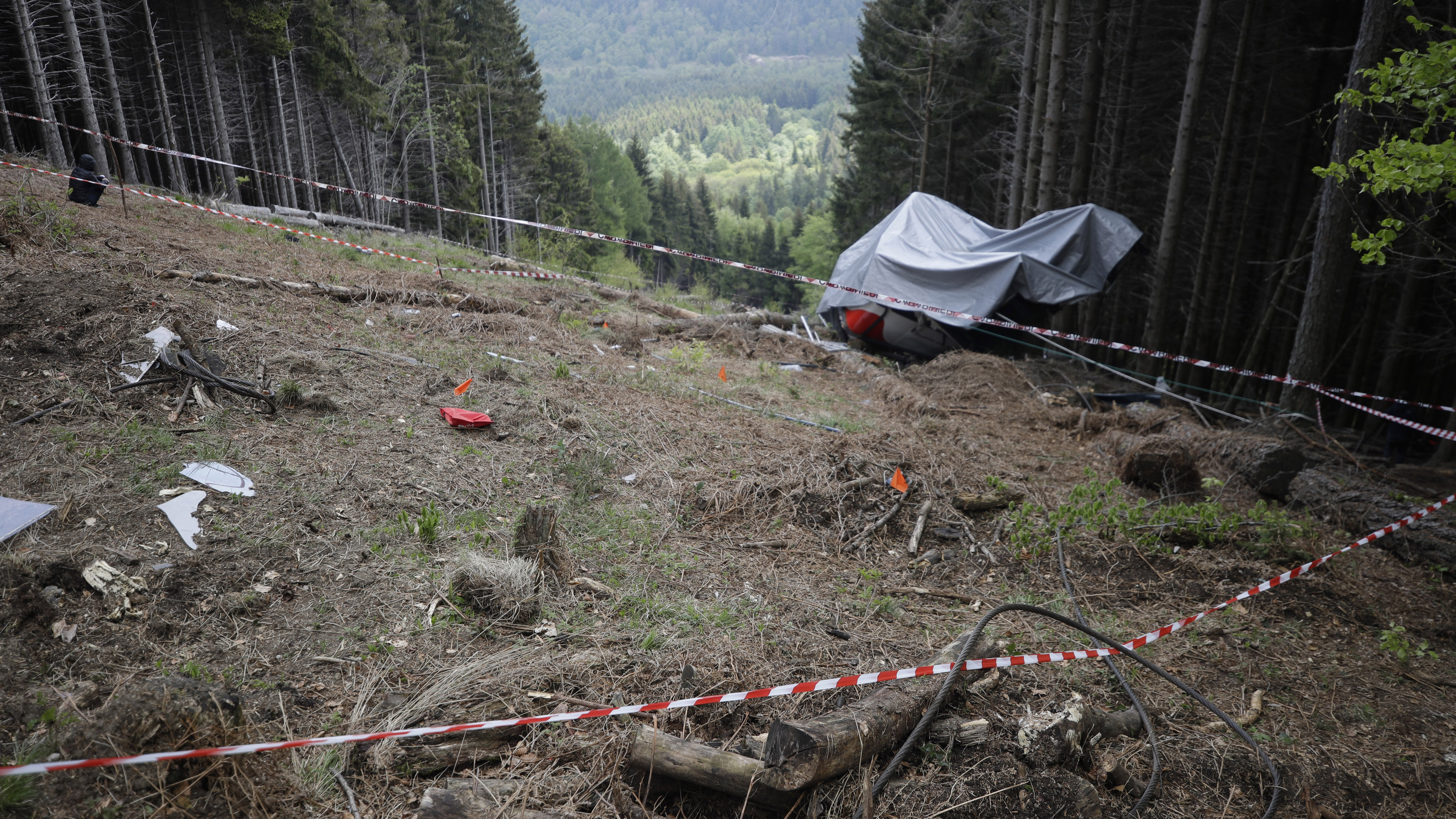
Fourteen people, including Eitan’s parents and younger sibling, died when the cable car slammed into a mountainside on May 23 after the cable broke.

READ MORE: Italian cable car plunges to the ground, killing at least 14

Eitan Biran's parents and younger sibling all died in the cable car crash.

After he was released from a Turin hospital following weeks of treatment for critical injuries, Italian juvenile court officials ruled the child could live with a paternal aunt near Pavia, in northern Italy.

Pavia Mayor Mario Fracassi said Monday evening the Pavia prosecutor has opened a probe into Biran's possible kidnapping, Italian news agency LaPresse reported.

He gave no additional details.

Rescuers worked by the wreckage of a cable car after it collapsed near the summit of the Stresa-Mottarone line in the Piedmont region, northern Italy.

Aya Biran, Eitan's aunt, told reporters Sunday that the boy’s maternal grandfather — Shmulik Peleg — had taken him on an agreed-upon day visit, then flew him without permission to Israel.

Italian daily Corriere della Sera said the grandfather drove Eitan in a rented car to Lugano, Switzerland, where they boarded a chartered flight to Tel Aviv.

The boy's relatives in Israel have denied Eitan was abducted and insist they are working in the boy’s interest.

His uncle in Italy, Or Nirko, went on a Hebrew media blitz Monday, saying that Eitan’s home was in Italy and that his family was doing everything to ensure his safe return.

Eitan's maternal grandparents in Israel and his paternal relatives in Italy are fighting over custody.

The grandfather “brutally tore him away" from his family in Italy, Nirko told Israel’s Channel 13. He said Eitan speaks some Hebrew, but his primary language is Italian.

“He doesn’t have friends in Israel. There’s nothing that fixes him to the place. He’s been going to school in Italy for four years,” Nirko told Israel’s 103FM radio station.

“The one place he calls home as of today is the home of me and my wife Aya and our two daughters.”

Nirko said the family was in contact with the Israeli ambassador to Italy and Israeli and Italian authorities.

Italy’s foreign minister, Luigi Di Maio, asked by reporters on Monday about the boy’s case, said: “We’re looking into what happened in order to then intervene.”

UWI INAUGURAL SIR OWEN S. ARTHUR LECTURE – THE MISSING PIECE

By  Everson W. Hull, Ph. D

On Wednesday September 8th, Caribbean development enthusiasts were treated to a very thoughtful lecture delivered by Dr. H. Gene Leon, the newly elected President of the Caribbean Development Bank.  It was the inaugural address, in a newly established lecture series in honor of the very distinguished Sir Owen S.  Arthur, with a very fitting title – “Re-designing Economic Growth Strategies”.

Dr. Leon’s lecture was outstanding in drawing attention to a number of very thoughtful growth strategies. It was refreshing to observe the wide range of alternative approaches that were offered for consideration.  The depth and breadth of his focus was most impressive, including his  recognition of the significance of the large talent pool that is widely dispersed across the region.

Notwithstanding, while teetering about the edge of a solution to the lethargic performance that has handicapped our region, his presentation fell short.  The very distinguished doctor knocked on the door; but like others who have come before him, chose not to step inside.

He did not allow himself to offer specific actions that would motivate individual members of our very talented labor force to produce at their optimal level; in implementing the policy actions that he very carefully outlined.   Using the language of his discipline, it would be fair to say, that the proposed policy actions, albeit necessary, were not sufficient.

Of special concern, is the likelihood that the region will be left in the same low productivity bucket that it has occupied over the past 40 years.  The ordinal performance ranking, as measured by per capita income, is not radically different from what it has been forty years ago.  The Bahamas which was at the head of the performance class forty years ago has consistently sustained its lead in each and every year; and the most recent World Bank data shows the gap widening.  Very few CARICOM countries have significantly improved their ordinal performance ranking relative to their peers that existed 40 years ago.  As a result, we remain badly exposed to every obstacle that is strewn in our path.

The rapid innovations in technology and associated new innovations that were detailed by the distinguished presenter are most important.  There is concern, however, that we will continue to fall short of extracting optimal performance from our labor force, unless each worker is offered an Incentive-Based-Compensation Plan that clearly links compensatory rewards to the productivity of each individual.

This is a matter of serious concern.  In the overwhelming majority of workplaces across the region, in both Latin American and the Caribbean, we have forgotten the individual.  Our speeches and policies suggest that the individual does not exist.  There are no performance scorecards that measure his or her individual performance.  We have no scorecard or method in place for carefully measuring and comparing the individual’s performance this year with his or her performance last year.

The absence of a performance scorecard and commensurate rewards will not work in cricket.  It will not work in soccer and did not work at the just completed Olympics where each individual, who did the grunt work and outperformed his or her peers, earned a prize.

The reality is that folks, in the same pay bucket, do not show up to work each day and knock themselves out in the delivery of goods and services because of love for country.  Although we are deeply ethnocentric, each has an infinite range of aspirations.  To illustrate, they aspire to making their rental payments on time, to take care of their families and to send their kids to the finest and often most expensive schools.

These very healthy aspirations, invariably come into conflict with a rigidly fixed pay band in which each employee receives the identical pay.  There are no rewards for supra-normal performance.   This is a recipe for disaster.  The brilliant and highly talented employee has no incentive to outperform his colleague, Joe Six Pack, who is in the same pay band.  The absence of these incentives and rewards is harmful to our member states.  The resultant lower rates of productivity / efficiency, as measured by output-per-manhour, increase the cost of production, reduce the volume of highly valued goods and services brought to market, increase our level of imports, and trap our member states at low growth rates, leaving each of our member states, without exception, operating far short of their full productive potential.

The distinguished guest lecturer does not have to look very far to see and observe incentive-driven compensation structures that have been working effectively in motivating work effort, and higher rates of productivity.   Both the Canadian and US Governments have in place incentive-based compensation plans.   And, the majority of those who have fled our shores are, for the most part, gainfully employed under a pay-for -performance plan.  Each of our member states has a ready pool of workers throughout the diaspora who have left our shores and are currently working in, or have worked under, a pay-for-performance plan.  Many will be pleased to share their experiences in the design and implementation of these structures, for gratis.

The distinguished professor has provided much food for thought.   The missing piece is the individual Incentive-driven Compensation Plan.  We do not have to re-invent the wheel.   Others have effectively addressed these productivity issues.   Every U.S. company of asset size greater than US $10 million is required to publish its Incentive Based Compensation Plan in its SEC Form 10-K and DEF 14A filings.  If our region is to break out of the pack and accomplish the mission objectives most carefully outlined by the distinguished presenter, it must have in place a compensation and reward structure that motivates each of our workers to be innovative and creative in producing at their optimal performance level, thrusting our member states closer to their highest productive potential.

The post UWI INAUGURAL SIR OWEN S. ARTHUR LECTURE – THE MISSING PIECE appeared first on The St Kitts Nevis Observer.

Twenty Years After 9/11 the War on Terrorism is Evolving with New Tactics

Twenty years after Sept. 11, 2001, attacks set off the global war on terrorism, now that war is evolving.

The U.S. withdrawal from Afghanistan is ushering in a new era as the Biden administration seeks to balance the continued need to keep terrorist threats in check with both a war-weary public and newer global challenges such as competition with China.

As a result, the so-called forever wars may not be ending any time soon, but the way they are being fought is changing as the United States shifts to a greater reliance on “over the horizon” forces and individual strikes over broader military conflict.

“What we’re seeing is an evolution, and it’s an evolution in how it is the United States has decided to contend with the terrorist threat and how the forever wars are conducted,” said Becca Wasser, a fellow at the Center for a New American Security.

“This might be the next part of this broader evolution to see what really works when you’re removed even further,” she added. “It’s definitely going to be sort of a period of trial and error. And, unfortunately, when it comes down to counterterrorism, there’s not a lot of room for trial and error, especially if there are potential risks to the U.S. homeland. I think over time, the United States will find a formula that works. But I think there’s going to be a lot of back-and-forth before Washington can really get to that point.”

President Biden’s decision to fully withdraw from Afghanistan, a mission that was completed at the end of August, capped an era of U.S. history that began 20 years ago when al Qaeda hijackers crashed planes into the World Trade Center, the Pentagon and a field in Pennsylvania, killing nearly 3,000 people.

Shortly after the attacks, the United States invaded Afghanistan. In the ensuing 20 years, U.S. military counterterrorism operations spread around the globe, with troops targeting al Qaeda, its affiliates and, later, ISIS everywhere from Iraq and Syria to Libya to Yemen to Somalia to the Philippines.

The 2001 authorization for the use of military force passed in response to the 9/11 attacks has been invoked for military operations in at least 19 countries, according to a 2018 Congressional Research Service report.

U.S. concerns over the last two decades have also evolved, including efforts to pivot foreign policy away from the war on terrorism toward so-called great power competition with Russia and China, as well as a rising threat from domestic, white supremacist terrorists.

“Unlike on 9/11, the U.S. is in a different position today on the domestic terrorism side,” said Seth Jones, director of the transnational threats project at the Center for Strategic and International Studies. “We do see definitely more concerns today from domestic terrorism. I think that’s probably going to continue for the near term.”

But the terrorist threats abroad remain.

“One of the fallacies of the GWOT era is that this was something that could come to a conclusion, that all of a sudden the terrorist threat was going to be eliminated. And, unfortunately, that’s not how terrorism works,” Wasser said, using an acronym for the global war on terrorism. “It’s not a single enemy that you can quell and quash and isn’t going to rise back.”

Though Biden withdrew from Afghanistan, there are no plans at the moment to pull out the 2,500 U.S. troops in Iraq or the 900 in Syria helping local forces prevent an ISIS resurgence, though Washington and Baghdad recently rebranded the Iraq operation as purely advisory.

After a pause at the beginning of the Biden administration, U.S. strikes against Somalia’s al Qaeda affiliate have recently picked back up, with American forces conducting at least four strikes against al Shabaab in July and August.

And in Afghanistan, with the Taliban back in power, U.S. officials are also on the watch for a resurgent al Qaeda.

“The whole community is kind of watching to see what happens and whether or not al Qaeda has the ability to regenerate in Afghanistan,” Defense Secretary Lloyd Austin told reporters traveling with him in Kuwait this week.

“The nature of al Qaeda and ISIS-K is they will always attempt to find space to grow and regenerate, whether it’s there, whether it’s in Somalia, whether it’s in any ungoverned space,” Austin added, referring to the Afghan branch of ISIS.

Over the past 20 years, terrorist threats have come in “waves and reversal,” Jones argued as he expressed concern about a coming “fifth wave.”

“The campaign has gone through a series of waves and then reversals,” he said. “So waves meaning there’s been a surge in terrorist activity. And then it’s been reversed by either an effective counter terrorist campaign or bad terrorist activity, poorly run, poorly organized. And so I think we’re coming potentially now to the tail end of a reversal where al Qaeda and the Islamic State have actually suffered serious damage. They lost control of significant territory, they’ve been on the run, and the U.S. is now releasing pressure.”

Even though there are no U.S. troops on the ground, Biden has pledged to continue targeting terrorists in Afghanistan through “over the horizon” forces — or drones, manned aircraft and other assets based beyond Afghanistan’s borders.

The U.S. has already carried out two over-the-horizon drone strikes after last month’s attack at the Kabul airport that killed 13 U.S. troops. But officials have not identified the supposed “high profile” targets of the first strike, and reports on the ground say at least 10 civilians were killed in the second strike, with a New York Times visual investigation saying the target was an aid worker.

Experts and some military and intelligence officials have warned that over-the-horizon operations in Afghanistan will be difficult without a presence on the ground collecting intelligence. Further, no basing agreements with Afghanistan’s neighbors means flying from long distances, most likely from the Gulf region.

“Over the horizon is a crazy concept for Afghanistan with no bases, with no allies and partners on the ground, with no intelligence infrastructure,” Jones said.

Barry Pavel, director of the Atlantic Council’s Scowcroft Center for Strategy and Security, similarly argued relying on over-the-horizon forces will make it more difficult to track terrorist threats.

“This ‘over the horizon,’ wonderful bumper sticker, it’s pretty hard to do, and it takes more resources even to do it minimally because they have to fly from longer distances, you have to maintain the orbits. It’s just going to be harder,” he said.

But as U.S. counterterrorism efforts evolve, Pavel also sees an opportunity to do something the United States has done a “terrible job” at in the last 20 years: diplomacy, development and other efforts to address “the sources of alienation that lead people, in particular in the Middle East, to choose this as a very dangerous profession.”

“We’re gonna have to keep doing this until we do a better job of drying up the sources of why people get motivated to do this kind of stuff, and that’s a long term proposition that I don’t think we’re making very good progress on,” he said. “The Biden administration has an opportunity here, especially as an administration that wants to reduce the emphasis on military instruments.”

The post Twenty Years After 9/11 the War on Terrorism is Evolving with New Tactics appeared first on The St Kitts Nevis Observer.

OAS to Oversee the Bahamas Election

CNW- The Organization of American States (OAS) says it will deploy an Electoral Observation Mission (EOM) to observe the general elections in the Bahamas scheduled for September 16.

The OAS said Secretary General Luis Almagro has appointed Denis Godwin Antoine as chief of mission.

Ambassador Antoine is the former Ambassador Extraordinary and Plenipotentiary of Grenada to the People’s Republic of China (2016-2019) and Ambassador/Permanent Representative of Grenada to the United Nations (2013 to 2015).

According to the OAS, he served as Grenada’s Ambassador to the United States of America and Permanent Representative to the OAS, and non-resident Ambassador for Grenada to Mexico and Panama concurrently, from 1995 to 2009.

The OAS said the mission will begin its deployment on September 9 and is comprised of 17 experts and observers from nine different countries.

“While the majority of the mission’s members are working in-person, some are carrying out their duties remotely,” the OAS said. “In the Bahamas, they will meet with government officials, electoral authorities, political leaders, candidates, representatives of civil society and other relevant actors, which will allow for a comprehensive analysis of the process.

“The mission will focus its work on the examination of issues related to electoral organization, electoral technology, electoral boundaries, electoral registries, political-electoral financing and the political participation of women,” the OAS added.

It said this is the third time that it will deploy an EOM in the Bahamas.

After the elections, the OAS said the mission will present a preliminary report with its observations and recommendations “aimed at contributing to the continued strengthening of the electoral process in the country.

The post OAS to Oversee the Bahamas Election appeared first on The St Kitts Nevis Observer.

Mu Variant of COVID-19 Detected in Jamaica

CNW- Health and Wellness Minister, Dr. Christopher Tufton, says the Mu strain of the Coronavirus (COVID-19) will be manageable once the established public health protocols are followed.

Tufton urged members of the public not to panic, as new strains of the virus will enter Jamaica due to people traveling to the island from other parts of the globe.

“This new strain is not going to lead to more people dying or getting ill. We are still studying it, and while we have an obligation to announce, we are not announcing for you to panic…it is for you to be aware; it is not a failure of the system or the process,” he told reporters.

He said what is required is continuous vaccination, social distancing, and regular hand washing and sanitisation as the observance of the health protocols will help to “build our capacity to resist the virus as we restore some form semblance of normality”.

Last week, Tufton had said that it is imperative that the Jamaican population be protected against the virus.

“Now that we know that there is the Mu variant in the Caribbean and it is one of concern, then we will pay particular attention to ensuring that we not only test for Delta and the others but we test for this particular one as well.

“We have collected samples and sent them to three sites outside of Jamaica for those samples to be tested,” he said, noting this is among the reasons the government is forging ahead with the national vaccination programme to get the majority of the population inoculated

The post Mu Variant of COVID-19 Detected in Jamaica appeared first on The St Kitts Nevis Observer.