Tropical Storm Mindy, the 13th named storm of the 2021 Atlantic hurricane season has formed in the northeast Gulf of Mexico.
A Tropical Storm Warning is in effect for Mexico Beach to Steinhatchee River, Florida. Tropical storm conditions are expected to reach the coast within the warning area later this evening and tonight.
A few isolated tornadoes are possible over portions of the Florida Panhandle this evening into tomorrow morning.
In its 4 pm update, the US National Hurricane Center (NHC) said the centre of Tropical Storm Mindy was located over the northeastern Gulf of Mexico about 90 miles (150 km) west-southwest of Apalachicola, Florida.
Mindy is moving toward the northeast near 21 miles per hour (33 km/h) and northeast to east-northeastward motion is expected to continue over the next several days.
On the forecast track, the centre of Mindy is expected to cross the coastline of the Florida Panhandle later tonight, and then move offshore of the southeastern United States into the western Atlantic Ocean by tomorrow.
Maximum sustained winds are near 40 miles per hour (65 km/h) with higher gusts. Tropical-storm-force winds extend outward up to 35 miles (55 km) from the centre.
Little change in strength is expected before Mindy makes landfall in the Florida Panhandle tonight.
Cuba has become the first country in the world to administer COVID-19 vaccines to toddlers, using locally-made vaccines.
On Monday, the island began vaccinating children as young as two years old, as it aims to reopen schools that have been closed for the most part since March 2020.
The new school year started on Monday, but classes are being broadcasted via local television stations, as most Cuban homes do not have internet access.
According to Cuban health officials, children aged two to 18 will receive either the Soberana 02 or the Abdala vaccine, created by Cuban scientist.
Three locally developed vaccines, Soberana 02, Soberana Plus and Abdala, have finished their trial periods and have been approved for use by Cuba’s Center for State Control for Drugs, Equipment, and Medical Devices (CECMED). The Soberana 02 and Abdala vaccines have been approved for emergency use for minors.
Although the vaccines show an efficacy rate of more than 90%, they have not yet been approved by the World Health Organization, the UN agency which spearheads international public health crises.
The program to vaccinate children began last Friday, with kids 12 and older receiving the Abdala vaccine.
Cuba plans to reopen schools gradually in October, once all children are vaccinated.
Several countries have announced plans to vaccinate younger children but have not yet done so due to the emergence of new COVID-19 variants.
Earlier this year, China announced the emergency use of its Sinovac and Sinopharm vaccines for children over 3 years. The United Arab Emirates soon followed suit with the approval of the Sinopharm vaccine for children. Chile has also approved the Chinese Sinovac vaccines for children between six and 12.
Cuba is also planning to reopen its borders to international passengers starting November 15, the island’s Ministry of Tourism (Mintur) announced.
“The Caribbean nation will relax COVID-19 hygiene and sanitary protocols for incoming travelers,” the ministry said, adding new measures that will focus on monitoring symptomatic patients and temperature checks.
Cuba will no longer demand a PCR test upon arrival and COVID-19 vaccination certificates issued abroad will be accepted by customs authorities.
Additionally, the domestic tourism market will gradually reopen depending on the evolution of the pandemic in each region.
The decision to spur international tourism was made because “more than 90% of the country’s population is expected to be fully vaccinated by November,” the ministry said. According to Reuters, about 67% of the island is currently vaccinated.
Haiti’s provisional Government has released a draft of a new Constitution through which the country will try to recover from the political instability left by the July 7 assassination of President Jovenel Moïse.
According to Prime Minister Ariel Henry, “a new constitution … will be a point of departure for other agreements on the future of our country.”
Henry favours general elections to be held as soon as possible, but the opposition would rather have a transition government for two years. Legislative elections should have been held in 2018 but were delayed, while presidential elections are needed to fill a vacancy after the death of Moïse who had pushed in his own time for constitutional reform.
The new charter would strengthen the powers of the President, at the expense of Parliament. It would suppress the office of prime minister and create a vice presidency instead, which would be filled concurrently with the presidential elections in a move to avoid endless debates before policies can be carried out.
Defenders of the new constitution highlight the fact that it eliminates legal immunity for government officials after leaving office so that they can be tried in regular courts instead of having to go first through a Senatorial approval. ”Immunity is not synonymous with impunity,“ said Mona Jean, a lawyer who sits on the committee that drafted the new constitution. ”A government job must not be a source of illicit enrichment.“
Henry did not specify how he thinks the new constitution should be voted on. Moïse had proposed a referendum, scheduled for Nov. 7, but the idea proved controversial, with critics saying it violates the current constitution, written in 1987 after the fall of the Duvalier dictatorship, which forbids ”any popular consultation aimed at modifying the constitution through a referendum.”
Since 1805, Haiti has known 23 Constitutions, as all leaders, with a few exceptions, have systematically wanted to cling to power one way or the other, referendums being usually some sort of a farce where a small percentage of the population would vote to validate somebody’s personal project.
The B.1.621 or “Mu” variant of the Covid-19 virus has been circulating in the Americas since January of this year, according to the Pan-American Health Organization (PAHO), and there are no immediate fears that it will become a variant of concern, despite being detected in more countries in recent weeks.
St Vincent and the Grenadines is the latest country in the region to report that the World Health Organization (WHO)-listed variant of interest has been identified within its shores, following detections in Aruba, the British Virgin Islands, the Cayman Islands, and Haiti.
“This new variant doesn’t generate any change and it’s not a special threat; [it] is a variant that has been circulating for several months,” said Dr Jairo Mendez, advisor on emerging viral diseases at PAHO.
So far, only the Alpha, Beta, Gamma and Delta variants of the virus have been designated “variants of concern” by the WHO, while others have been named “variants of interest”, including the Eta, Iota, Kappa, Lambda and now, Mu.
All four variants of concern have been identified in Antigua and Barbuda and the twin island state is currently experiencing a drastic spike of infections, with over 500 active cases reported.
Concerns about the Mu variant possibly adding to those woes have been dampened by Dr Mendez, who explained further that there would need to be proof of drastic change in the impact of the variant for PAHO to be overly concerned about its spread.
“To be considered a variant of concern, it has to be demonstrated with solid laboratory evidence that the virus is in fact more transmissible, that it has the capacity to evade the immune response or to generate more severe disease.
“None of this has been demonstrated so far for Mu…[it] has been circulating at least since January this year and no particular impact in transmission or lethality has been demonstrated so far.”
He added that, as there was still a shortage of data about the Mu, any attempt to predict the spread would only be speculation at this point.
“We can expect sporadic detection in other countries, including in the Caribbean of course, but we have no sufficient information to say what the impact may be, particularly [amid] the circulation of different variants of concern, where the increased transmissibility has actually been demonstrated.”
The Mu variant was first identified in Colombia in January this year and it has been affecting that country the worst, accounting for nearly 40 percent of all Covid cases, according to the WHO.
BUENOS AIRES/ASUNCION/SANTIAGO, Sept 9 (Reuters) – Latin America’s mothers are falling behind in the pandemic economic rebound, returning to the labor force more slowly than men in a trend experts say could set back female workforce participation by a decade.
An analysis by the United Nations Development Program (UNDP), which included countries in South America’s “Southern Cone,” as well as Mexico, showed women overall taking the biggest employment hit when COVID-19 struck last year.
Behind the trend: women more often work in sectors most impacted by the pandemic, including tourism, commerce and education. Entrenched gender imbalances also has meant women have faced the lion’s share of unpaid domestic work and care-giving, sharpened by lengthy school closures in the region.
“We are seeing that in a disproportionate way those (domestic) demands are being attended by women,” Luis Felipe Lopez-Calva, UNDP Director for Latin America and the Caribbean told Reuters.
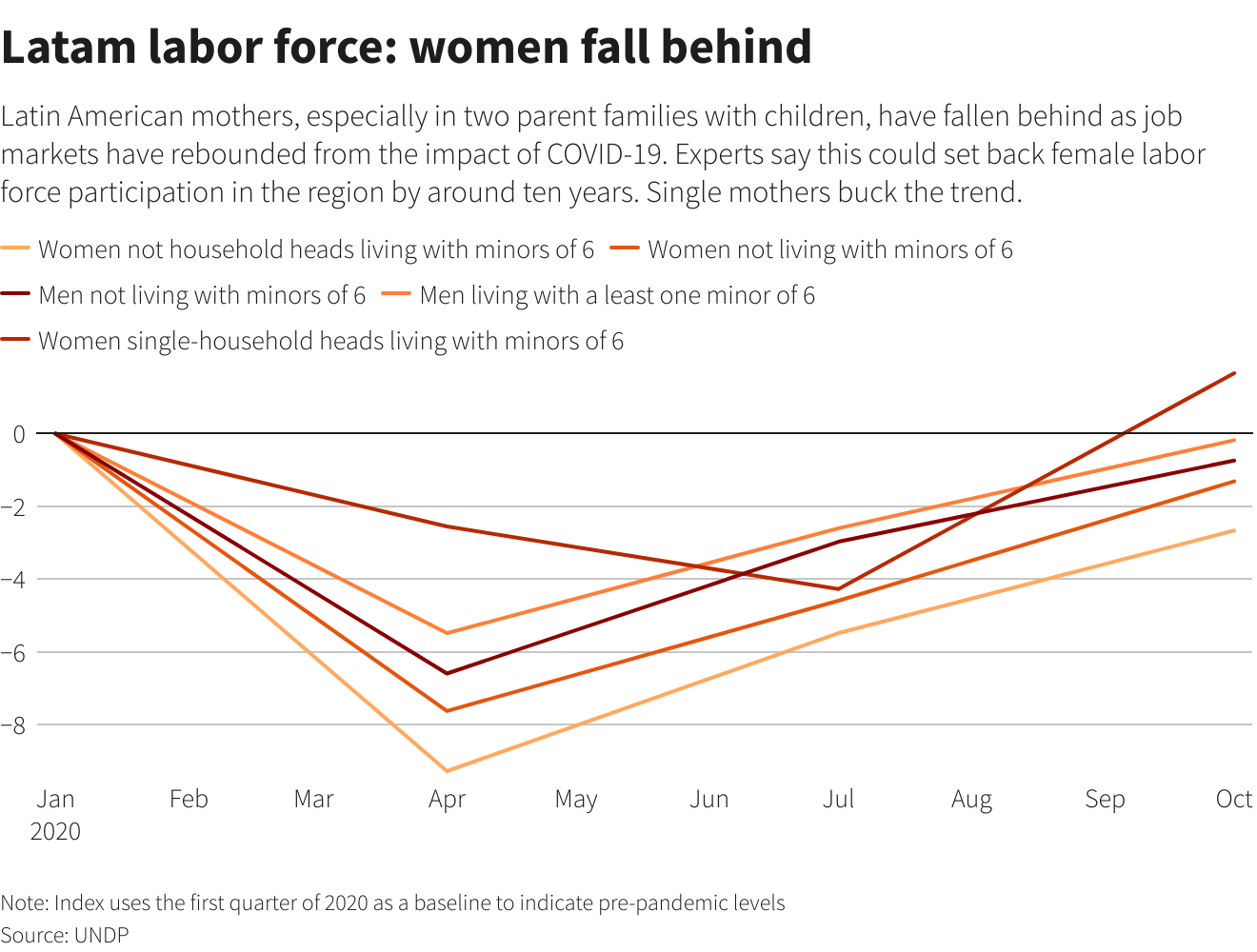
While women overall have been impacted, there are some key differences between groups. Mothers in two-parent households are the least likely to return to work outside the home, while single mothers – though hit hard initially – have seen a sharper rebound in employment and labor participation.
Reuters Graphics
“It was not easy to find work in the pandemic,” said Barbara Temperley, a Buenos Aires business administration graduate with two children aged 9 and 12, adding her guess was that employers were worried about the impact of care tasks on female hires.
“Things did not return to how we were before the pandemic.”
In nearby Paraguay, Rosa Maidana, a 45-year-old mother of three children, cited long school closures, which meant many kids are unlikely to have in-person classes until early next year. She was driving a school bus before the virus spread.
“Everything changed with the pandemic. I had my vehicle and I kept doing it until there were no more classes. Then I stayed home with my kids, who have virtual classes every day, and now we depend on my husband’s work,” she said.
The UNDP report showed the single mothers had been affected in terms of unemployment and labor force participation, but are now actually bouncing back further in the recovery – partly out of necessity to get back a living wage.
“There was no option not to work, something had to be done,” said Rosa Navarro, a 52-year-old Chilean with seven grown children, who had to reinvent her events business with 20-member staff to selling breakfasts and lunches when tough restrictions came into effect.
“I am single, I do not have a husband to help me. My children give me a hand, but we were very affected,” she added.
According to the UNDP, in Latin America, where only 40% of women participate in the labor market, 39% of households are headed by a woman and 26% are single-parent households where the head is a woman. The study was done based on household surveys from Argentina, Bolivia, Chile, Mexico, Paraguay and Uruguay.
Reporting by Lucila Sigal; Additional reporting by Daniela Desantis in Asuncion and Benjamín Mejías in Santiago; Editing by Nicolas Misculin, Adam Jourdan and Aurora Ellis
Brazil’s far-right President Jair Bolsonaro struck a defiant note on the country’s independence day on Tuesday.
He told tens of thousands of his supporters who had gathered in the city of São Paulo that only God would remove him from power.
He also launched fresh attacks on Congress and the Supreme Court, institutions he says are persecuting him and his political allies.
The court recently approved several investigations into Mr Bolsonaro.
What’s behind his remarks?
Mr Bolsonaro has always been fond of giving impassioned speeches in which he not only lambasts his critics and calls them names but also portrays himself as the victim of concerted attacks by his rivals.
Supporters of the president have embraced his disdain for the Supreme Court and its justices
But mounting pressure from several investigations and calls for his impeachment have led to the president’s rhetoric becoming ever more belligerent.
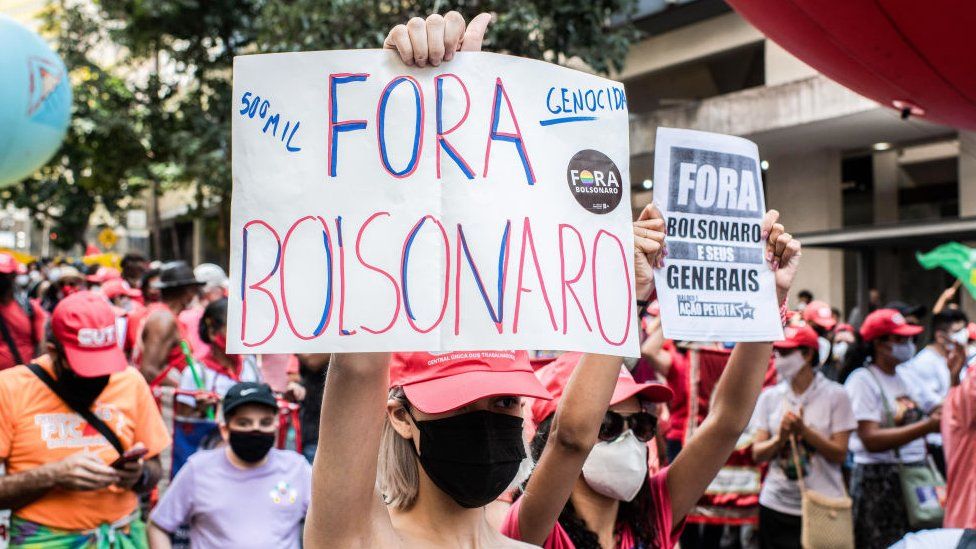
The rallies he convened for independence day were seen as an attempt to demonstrate he can still draw huge crowds of supporters after recent polls had him trailing his left-wing rival Luiz Inácio Lula da Silva by nine percentage points.
Opponents of the president also turned out on independence day
While elections are not due to be held until October 2022, Mr Bolsonaro’s approval ratings have also dropped to an all-time low.
A poll by the Atlas Institute suggested that 61% of Brazilians described his government’s performance as bad or very bad, up from 23% when he first took office in January 2019.
While an attempt to impeach the president over his handling of the Covid crisis was blocked by the speaker of the lower house of Congress, Mr Bolsonaro is portraying himself as under attack from Congress and the Supreme Court.
Last week, he told evangelical leaders – who are among his staunchest backers – that “I have three alternatives for my future: being arrested, killed or victory”.
And he again took up that theme in his speech on independence day, saying that “only God will oust me”.
Casting doubts on election
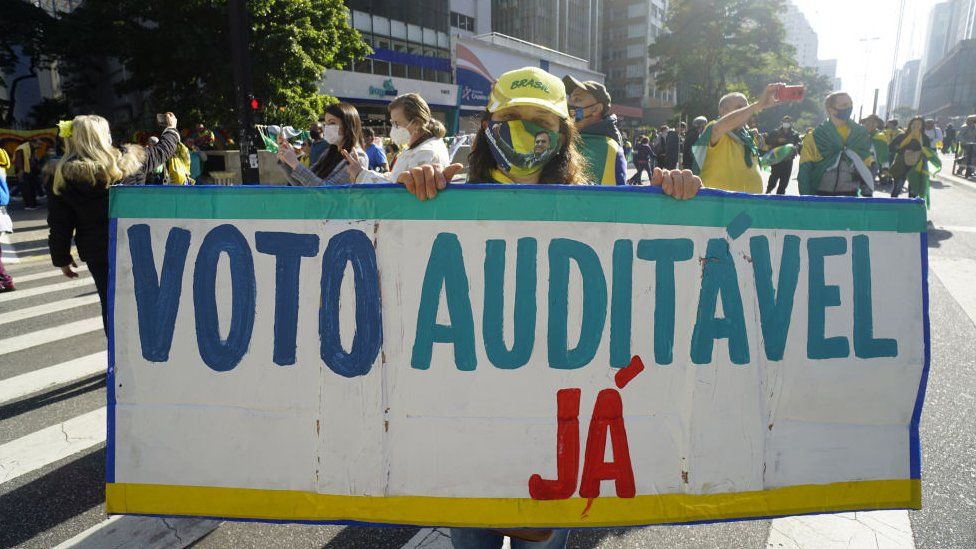
He also used his speech to again cast doubts on Brazil’s electronic voting system, telling his supporters he would not take part in an election “farce” in 2022.
Bolsonaro supporters back his calls for a change to the electronic voting system
Mr Bolsonaro has long tried to change the exclusively electronic system, which he alleges is open to fraud, to one which provides paper receipts for each vote cast.
The electoral tribunal has not only dismissed his attacks as “disinformation” but has also opened an investigation into the president’s allegations that the system is fraudulent.
His critics say he is using the same tactics as former US President Donald Trump to allege widespread fraud in case he loses next year’s presidential election.
Sea of green and yellow
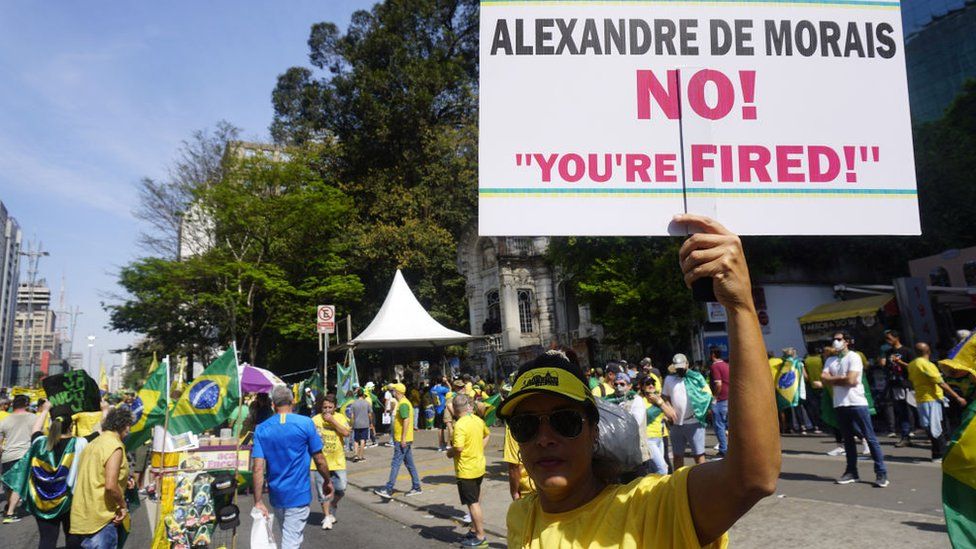
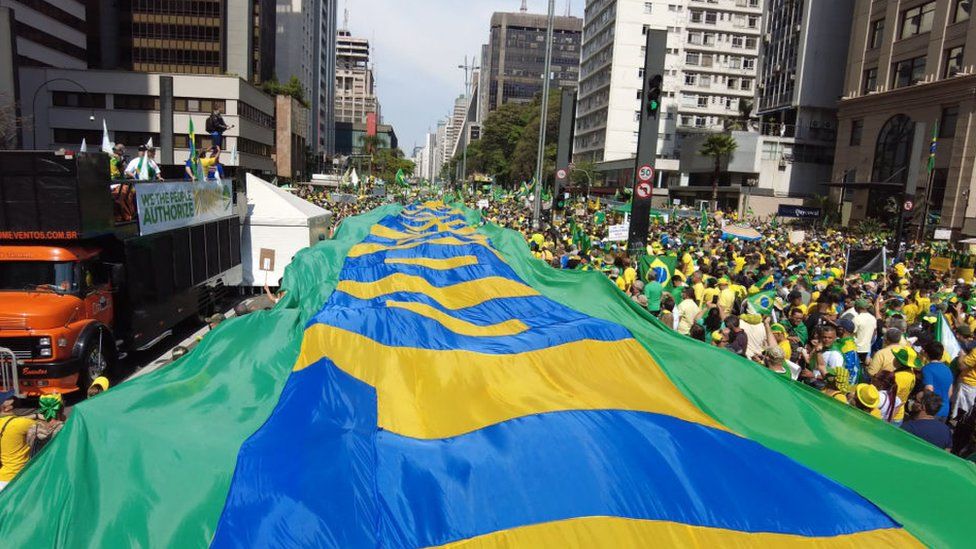
An estimated 140,000 people, many of them waving the Brazilian flag, answered Mr Bolsonaro’s call to rally in São Paulo, where they filled Paulista Avenue.
A huge crowd filled Paulista Avenue in São Paulo
The president had earlier attended another rally in the capital, Brasilia, where tens of thousands gathered to express their support for the president.
There was a large police presence in Brasilia where threats made by some of the president’s supporters to storm the Supreme Court had led to fears that Brazil could see similar scenes to those that played out on 6 January in Washington DC, when supporters of President Trump surged past barricades into the US Capitol.
But while some Bolsonaro supporters broke though a police cordon in the early hours of Tuesday, they did not manage to surround the Supreme Court building.
Mr Bolsonaro did again lash out at the Supreme Court justices, telling the crowd that “I’m very happy to see that all of Brazil got together for a new independence against the communist dictatorship of the judicial authorities”.
He has frequently clashed with Supreme Court justices during his tenure and tried to have one of them impeached after the judge launched two investigations against him.
Many of his supporters called for the closure of the Supreme Court and Congress, accusing them of abusing their powers and persecuting Mr Bolsonaro.
Many left-wing and trade union groups which had originally called on their supporters to hold counter-on Tuesday, moved their events to Sunday to avoid clashes with Mr Bolsonaro’s supporters.
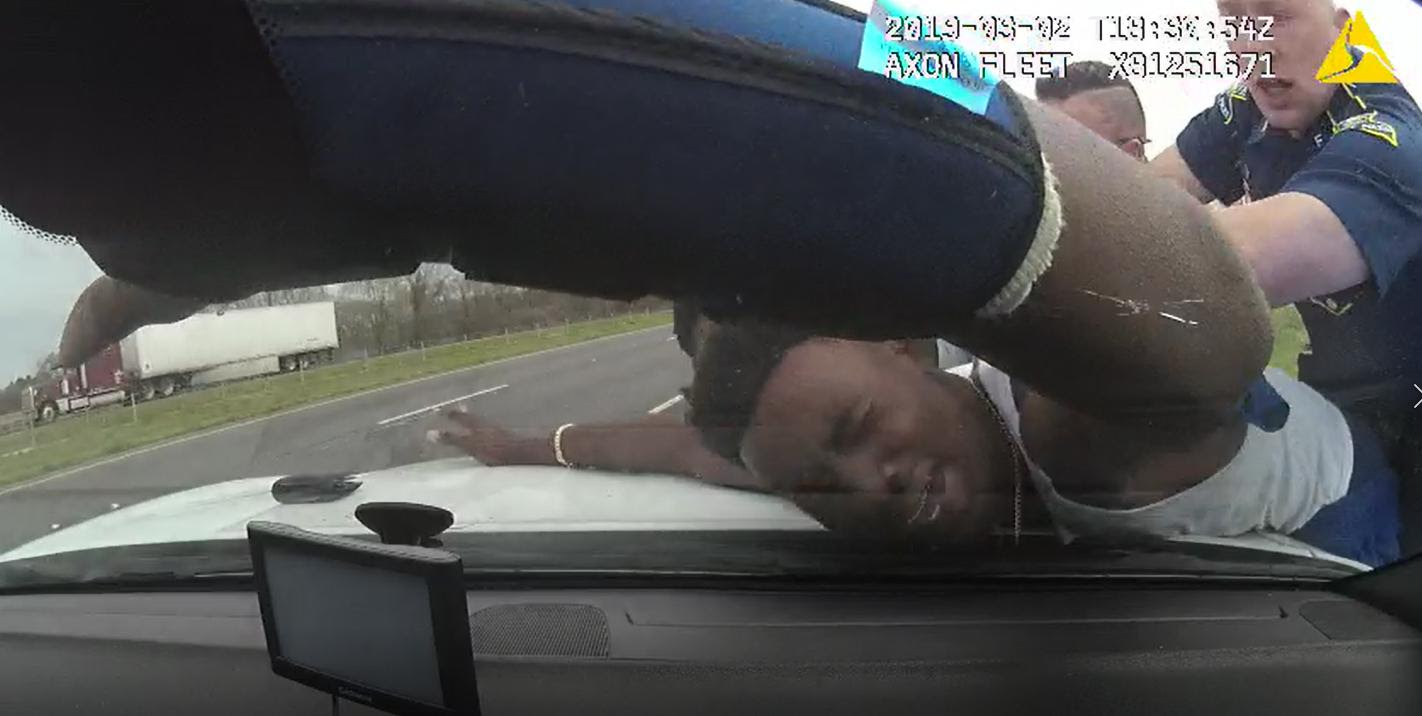
MONROE, La. (AP) — The most violent videos languished for years, lost or ignored in a digital vault. Louisiana State Police troopers and top brass alike would often look the other way, even as officers took to official messaging channels to banter…Read More
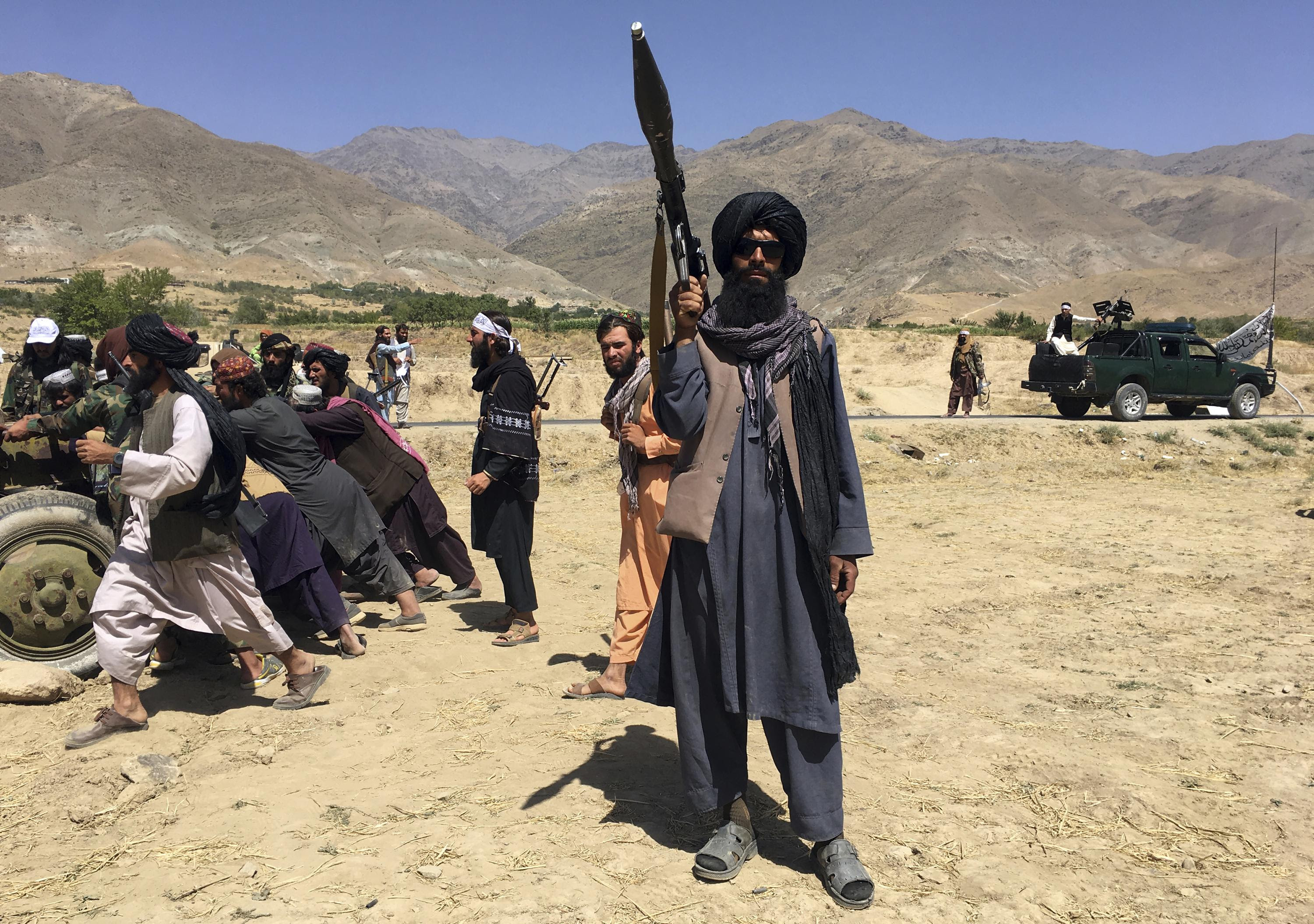
KABUL, Afghanistan (AP) — Reminiscent of their previous harsh rule in the 1990s, the Taliban have already begun to wipe out some of Afghanistan’s gains of 20 years. They’ve denied women a seat at the Cabinet, beaten journalists into silence and en…Read More
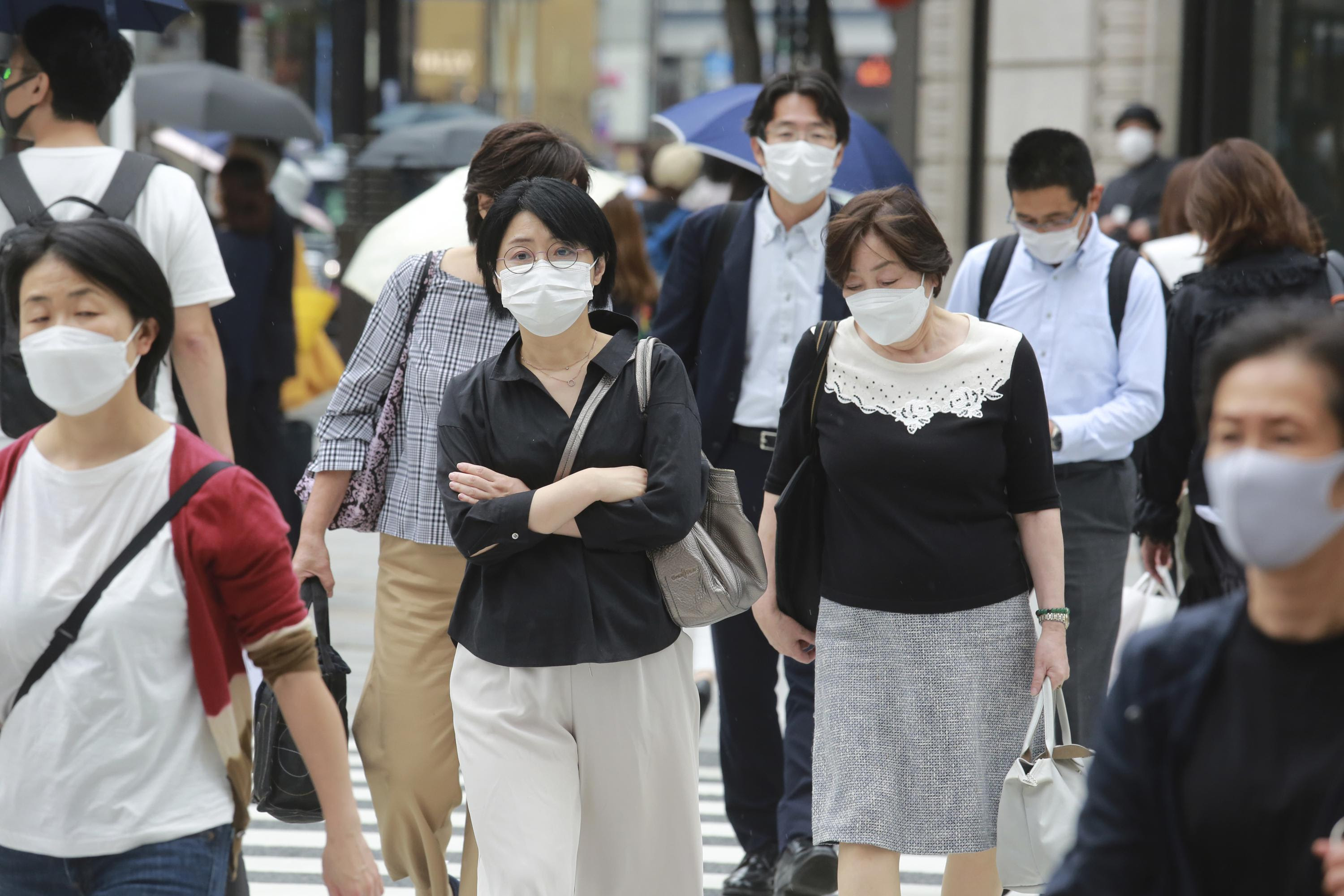
TOKYO (AP) — Japan announced Thursday it is extending a coronavirus state of emergency in Tokyo and 18 other areas until the end of September as health care systems remain under severe strain, although new infections have slowed slightly….Read More
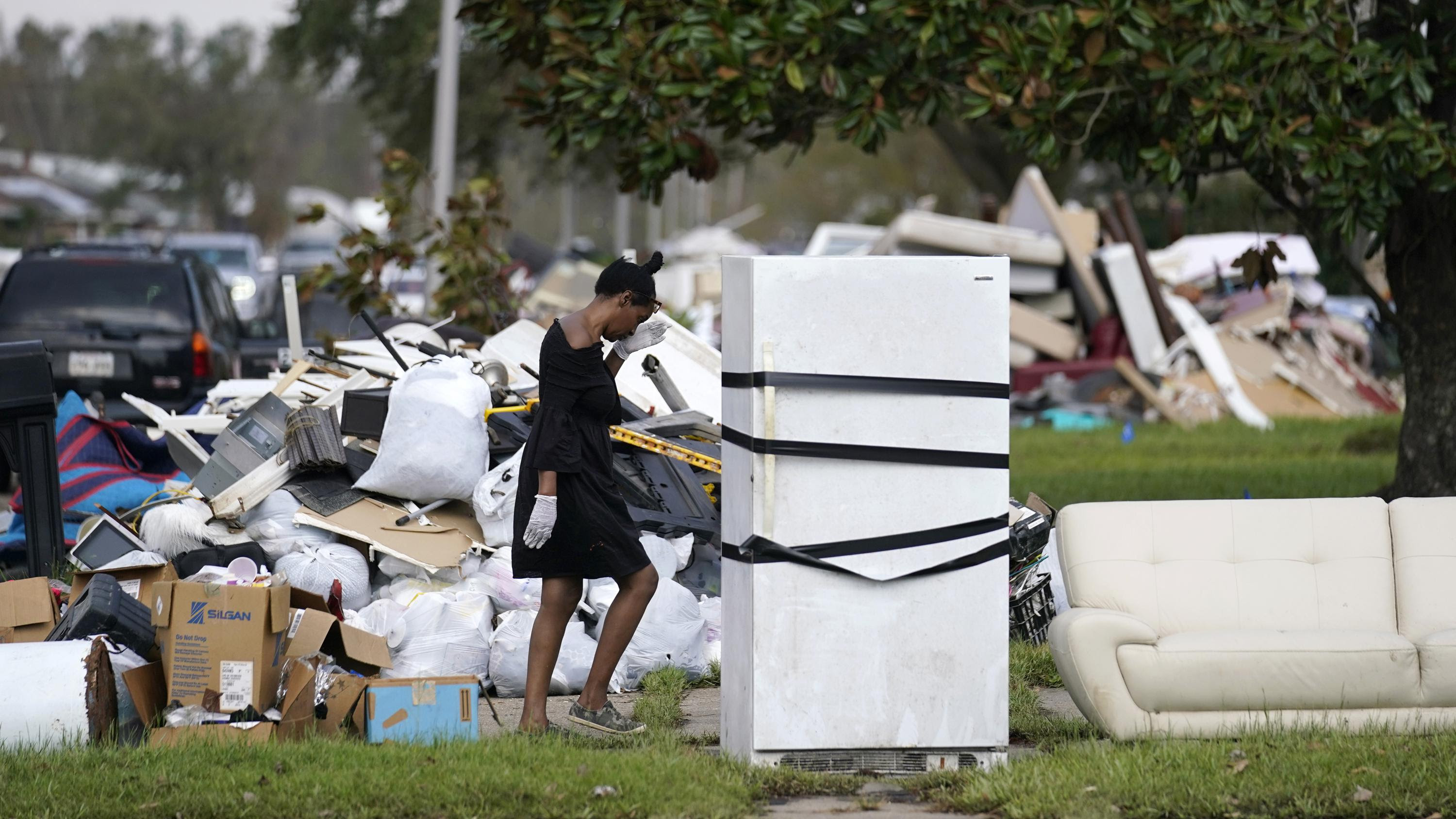
HOUMA, La. (AP) — The death toll in Louisiana from Hurricane Ida rose to 26 Wednesday, after health officials reported 11 additional deaths in New Orleans, mostly older people who perished from the heat. The announcement was grim news amid signs t…Read More
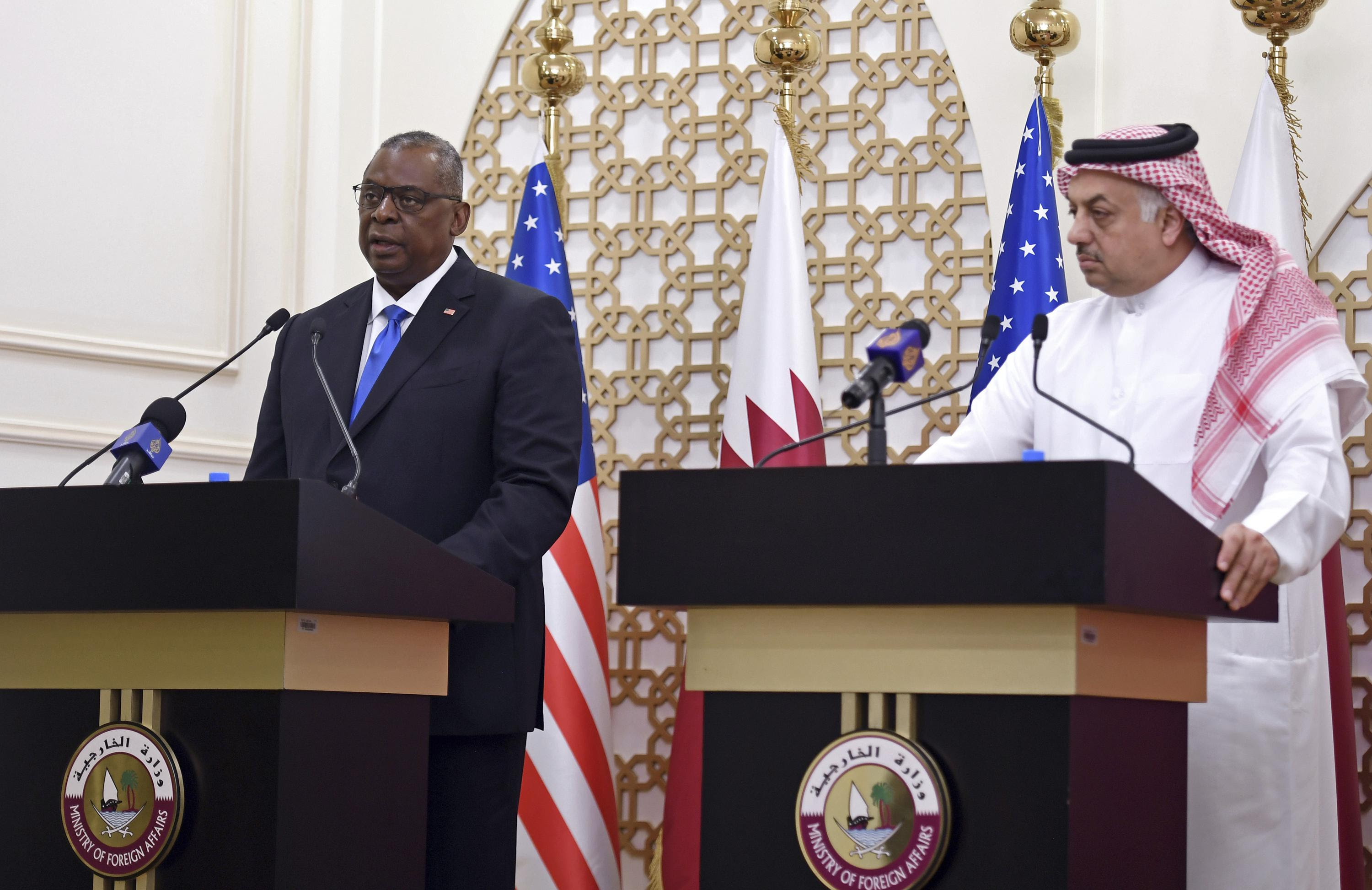
KUWAIT CITY (AP) — U.S. Defense Secretary Lloyd Austin said Thursday the al-Qaida extremist group that used Afghanistan as a staging base to attack United States 20 years ago may attempt to regenerate there following an American withdrawal that ha…Read More
RICHMOND, Va. (AP) — Now that an iconic statue of Confederate Gen. Robert E. Lee has been taken down from its perch above Richmond’s Monument Avenue, crews plan to remove …Read More
In pre-COVID times, business events __ from small academic conferences to giant trade shows like CES __ routinely attracted more than 1 billion participants each year. The p…Read More
One day not long ago, I watched my soon-to-be 3-year-old son jump up and down to the sound of “ho” and “hey.” It’s a song by The Lumineers, an American folk-rock band. The l…Read More
Anthropologists believe our ancient human ancestors spent their time in trees, so it should be no surprise we love treehouses today. Treehouses of all kinds are experiencin…Read More
President Biden is facing rising COVID-19 challenges as he prepares to lay out new steps in the pandemic fight on Thursday.
The president will use a speech on Thursday to try to demonstrate he has a handle on the situation.
But after the pandemic receded in the United States earlier in the summer, the highly contagious delta variant has fueled a new spike, rising to roughly 150,000 cases and over 1,000 deaths per day.
This spike is different from those of last year, in that vaccines are now widely available, meaning the risk is now overwhelmingly for the unvaccinated.
While experts say there certainly is more the federal government can do, they also say part of the challenge is that a segment of the American population is simply refusing to get the vaccine, allowing the virus to continue to spread.
Amesh Adalja, a senior scholar at the Johns Hopkins Center for Health Security, said it is important to “identify what the problem is here, and that is the anti-vaccine movement.”
“This isn’t like what it was last year,” he added. “This is willful.”
What’s coming in the speech? The full details aren’t yet clear, but it’s a six-part plan.
White House Press Secretary Jen Psaki said that the six steps Biden will announce Thursday will include “requiring more vaccinations,” as well as boosting testing and “making it safer for kids to go to school.”
Psaki said that while the administration has made progress after fighting the pandemic for months, she acknowledged that “he’s going to lay out these six steps tomorrow because we have more work to do.
The World Health Organization (WHO) on Wednesday called for rich countries to refrain from giving people booster doses of coronavirus vaccines until at least 2022.
WHO Director-general Tedros Adhanom Ghebreyesus last month said wealthy nations should put a pause on boosters until the end of September. But that plea was largely ignored.
“We have been calling for vaccine equity from the beginning, not after the richest countries have been taken care of,” Tedros said during a news conference. “I will not stay silent when companies and countries that control the global supply of vaccines think the world’s poor should be satisfied with leftovers.”
What’s the goal: Tedros said the WHO’s targets are to support every country vaccinating at least 10 percent of its population by the end of this month, at least 40 percent by the end of this year and 70 percent of the world’s population by the middle of next year.
Almost 90 percent of high-income countries vaccinated at least 10 percent of their populations, and more than 70 percent have vaccinated at least 40 percent of their populations.
But “not a single low-income country has reached either target,” Tedros said.
Why it matters: Much of the developing world still doesn’t have access to the vaccines, despite global commitments and promises. Wealthy countries, including the U.S., are pushing ahead with boosters anyways. The Biden administration is debating internally with health officials about the details; experts have raised serious concerns about the ethics and whether the evidence even shows that the extra shots are necessary. But based on White House comments, the end goal is for boosters to start rolling out Sept. 20.
In related news, the program that’s aimed at getting vaccines to poor countries doesn’t have enough supply.
The COVAX program estimates that its global COVID-19 vaccine deliveries will fall almost 30 percent below its goal of sending out 2 billion doses by the end of the year.
The World Health Organization (WHO), the GAVI Vaccine Alliance, UNICEF and the Coalition for Epidemic Preparedness predicted that by the end of 2021, about 1.4 billion doses would be available for the program designed to make shots more accessible to lower-income nations.
This year’s fourth quarter is expected to see an uptick in vaccine deliveries, but it will not be enough to fulfill the original target for the year, the international organizations forecast. The current “most likely scenario” is that another 1.1 billion doses will be provided between September and the end of the year.
Under the most likely forecast, COVAX would reach 2 billion doses available for delivery between January and February.
Why: The international organizations attributed the predicted shortfall to several factors, including restrictions on exports from the Serum Institute of India — a key supplier for vaccines — and problems increasing manufacturing at vaccine facilities, particularly those that supply Johnson & Johnson and the AstraZeneca vaccines.
Lags in regulatory approval for other vaccines created by U.S. company Novavax and Chinese firm Clover have also contributed to the lack of expected doses.
Figures based on reported number of US airstrikes highlight the human cost of the 20-year ‘war on terror’
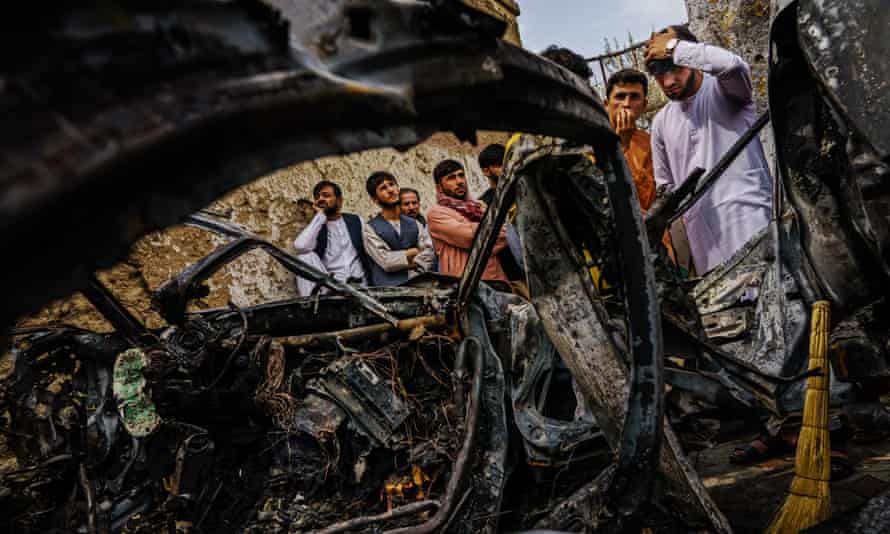
People gathered around the incinerated husk of a vehicle targeted by a US drone strike, which killed 10 people including children, in Kabul, Afghanistan, 30 August 2021. Photograph: Marcus Yam/REX/Shutterstock
On the 20th anniversary of the 9/11 attack, a new study claims US drone and airstrikes have killed at least 22,000 civilians – and perhaps as many as 48,000 – since the 9/11 terrorist attacks in 2001. This is according to new analysis published by the civilian harm monitoring group Airwars.
The analysis, based on the US military’s own assertion that it has conducted almost 100,000 airstrikes since 2001, represents an attempt to estimate the number of civilian deaths across the multiple conflicts that have comprised aspects of the “war on terror”.
Afghan villagers sit near the bodies of children who were reported to have been killed during a NATO airstrike in Kunar province on April 7, 2013. (Photo: Reuters)
The death toll from US airstrikes – which the group admits is imprecise – compares with an estimated 387,000 civilians who are believed to have been killed by all parties during the war on terror, according to work done by Brown University’s Costs of War Programme.
Since taking office Biden has reduced US reliance on airstrikes amid a formal review of US drone policy, and has withdrawn from many of the foreign interventions that marked the time in office of his three predecessors George W Bush, Barack Obama and Donald Trump, since the 2001 attacks on the US by al-Qaida.
Encompassing attacks on Islamic State in Syria, the conflicts in Iraq and Afghanistan, as well as strikes against militant and terror groups in Yemen, Somalia, Pakistan and Libya, the US has said it had conducted at least 91,340 strikes in 20 years – including 9,000 against the Islamic State, the Airwars report said.
Based on that total, Airwars has calculated that “US actions likely killed at least 22,679 civilians, with that number potentially as high as 48,308”.
According to the group’s research, the deadliest year in the past two decades for civilian victims of US airstrikes was 2003 when a minimum of 5,529 civilians were reported to have been killed, almost all during the invasion of Iraq that year.
The next deadliest year was 2017 when at least 4,931 civilians were likely killed, the vast majority in coalition bombing of Iraq and Syria.
However, going by the maximum estimates, 2017 emerges as the worst year for civilians, with up to 19,623 killed, almost all in the bombing campaign against IS.
The issue of civilian casualties of western airstrikes and other military activities during the war on terror has always been highly contested territory, with the US and its allies insisting that strenuous efforts have been made to minimise civilian death and injury.
And despite the wide-ranging umbrella of operations that have encompassed the war on terror, the US – according to a statement issued by the Pentagon – has never sought to calculate a total of civilian deaths ascribed to actions under its aegis.
An email reply to Airwars from the Pentagon’s Central Command (Centcom) said that it did not have information available on the total number of civilian deaths from airstrikes.
“The information you request is not immediately on hand in our office as it spans between multiple operations/campaigns within a span of between 18 and 20 years,” Centcom said.
NIA CHARLESTOWN NEVIS (September 08, 2021) — The Hon. Spencer Brand, Minister of Physical Planning on Nevis, gave contractors on the island an opportunity to discuss the Building Contractors Registration and Regulation Bill, 2021 which had its first reading in the Nevis Island Assembly on July 13, 2021.
Addressing a number of local contractors at a consultation–hosted by the Department of Physical Planning and the Nevis Island Administration’s (NIA) Legal Department at the St. Paul’s Anglican Church Hall on September 07, 2021–the minister underscored the importance of the bill which is designed to ultimately provide a better quality of service to consumers.
“I have…no intention of depriving anyone from earning a living but I feel that there must be a systematic approach for anyone who wants to ply their trade in this very important industry. I believe that it would offer protection for you as a contractor, as an electrician, as a plumber but it would also offer for you the opportunity to expand, to grow and to find yourselves, as it were, taking on larger and much more meaningful projects.
“At the end of this consultation, I hope that we can go to parliament with this legislation and have unanimous support for it, for the benefit and the development of our island because from where I sit, that is what I am all about, to see this develop, to see Nevis progress, to see Nevis advance, and I have a feeling that you who are in this construction sector have and will have a critical role to play,” he said.
Mr. Brand who has a background in architecture, said he had always seen the need for improving the sector, and the time had come for the contractors to contribute to the Bill.
“I believe that the construction sector on the island of Nevis must be taken to a different level, and when I became in that position to give some direction to the sector, I felt that the time was right to bring this piece of legislation for the island of Nevis… I want to say to the contractors, I want you basically to take ownership of this legislation…
“I felt that if we were to pass a piece of legislation that will have far-reaching and wide-ranging impact on such an important sector that there must be consultation. I believe that we are at that stage where we will have that consultation…and we want to have that honest conversation because at the end of the day it is for your benefit,” he said.
The Physical Planning Minister also explained that with new technologies and new methods of construction, and a sector which continues to be dynamic and innovative he does not want to see the local contractors left behind. He urged them to be open and honest during the session.
He expressed hope that in the end there would be a piece of legislation that can work seamlessly with the Department of Physical Planning, the banking sector and the ministry for the benefit of contractors and for the development of Nevis.
Among those present at the consultation were Mr. Denzil Stanley, Principal Assistant Secretary in the Ministry of Communication and Works, who chaired the consultation; Mr. De-Jono Liburd, Legal Counsel at the Legal Department; Mrs. Rhonda Nisbett-Brown, Senior Legal Counsel at the Legal Department; Mrs. Hélène Anne Lewis, Legal Advisor in the Nevis Island Administration; Mr. Raoul Pemberton, Director of the Department of Physical Planning; and Mr. Jevon Williams, Director of the Public Works Department.
 *****@
 *****@
 *****@
 *****@
 *****@
 *****@
 *****@
 *****@
 *****@
 *****@
 *****@
 *****@