Category Archives: headline

El Salvador Leads World into Cryptocurrency: Bitcoin Legal Tender

SAN SALVADOR, Sept 7 (Reuters) – El Salvador on Tuesday became the first country in the world to adopt bitcoin as legal tender, a real-world experiment proponents say will lower commission costs for billions of dollars sent home from abroad but which critics warned may fuel money laundering.

The plan spearheaded by the young, charismatic and popular President Nayib Bukele is aimed at allowing Salvadorans to save on $400 million spent annually in commissions for remittances, mostly sent from the United States.

Last year alone remittances to El Salvador amounted to almost $6 billion, or 23% of its gross domestic product, one of the highest ratios in the world.

Polls show Salvadorans are skeptical about using bitcoin and wary of the volatility of the cryptocurrency that critics say could increase regulatory and financial risks for financial institutions. Still, some residents are optimistic.

“It’s going to be beneficial … we have family in the United States and they can send money at no cost, whereas banks charge to send money from the United States to El Salvador,” said Reina Isabel Aguilar, a store owner in El Zonte Beach, some 49 km (30 mi) southwest of capital San Salvador.

El Zonte is part of the so-called Bitcoin Beach geared toward making the town one of the world’s first bitcoin economies.

In the run-up to the launch, the government has already been installing ATMs of its Chivo digital wallet that will allow the cryptocurrency to be converted into dollars and withdrawn without commission, but Bukele on Monday looked to temper expectations for quick results and asked for patience.

“Like all innovations, El Salvador’s bitcoin process has a learning curve. Every road to the future is like this and not everything will be achieved in a day, or in a month,” Bukele said on Twitter, a platform he often uses to talk up his achievements or excoriate opponents.

On Monday, El Salvador bought its first 400 of the cryptocurrency, temporarily pushing prices for bitcoin 1.49% higher to more than $52,680. The cryptocurrency has been notoriously volatile. Just this spring, it rose over $64,000 in April and fell almost as low as $30,000 in May.

Some analysts fear the move to make bitcoin legal tender alongside the U.S. dollar could muddy the outlook for El Salvador’s quest to seek a more than $1 billion financing agreement with the International Monetary Fund (IMF).

After Bukele’s bitcoin law was approved, rating agency Moody’s downgraded El Salvador’s creditworthiness, while the country’s dollar-denominated bonds have also come under pressure.

But Bukele, who does not shy away from controversy, on Monday retweeted a video that showed face superimposed on actor Jaime Foxx in a scene from Django Unchained, Quentin Tarantino’s film about American slavery. The video portrayed Bukele whipping a slave trader who had the IMF emblem emblazoned on his face.

Bukele later deleted the retweet.

His own tweet said: “we must break the paradigms of the past. El Salvador has the right to advance towards the first world.”

Reporting by Anthony Esposito and Nelson Renteria; Additional reporting by Wilfredo Pineda in El Zonte, El Salvador; Editing by David Gregorio

The post El Salvador Leads World into Cryptocurrency: Bitcoin Legal Tender appeared first on The St Kitts Nevis Observer.

On Course to Pass US: ‘Everything You Should Not Do, Brazil Has Done’

Short presentational transparent line

Had he lived Josildo de Moura would have celebrated his 40th wedding anniversary this December. Instead the devoted husband and father of five died of Covid in May, gasping for breath outside a neighbourhood clinic on the outskirts of São Paulo. He was 62, and like the vast majority of Brazilians, still waiting to be vaccinated.

Josildo died months before his 40th wedding anniversary

“The pain is endless,” says his wife Cida, sitting at her kitchen table, ringed by her children and grandchildren. “And every day we hear about more families suffering as we suffer, losing a loved one.”

The losses here are staggering. More than half a million Brazilians have died with Covid-19, the second highest death toll worldwide, behind only the United States. Experts here predict their country is on course to overtake the US.

How did it come to this, in a middle-income country, with an established system for vaccinating against diseases? For many, responsibility rests with Brazil’s far-right President, Jair Bolsonaro.

“He could have helped everybody take the right measures,” says Cida, who has an unwavering voice, and tight grey curls. “He did the complete opposite. He didn’t have respect for the people. It’s really revolting.”

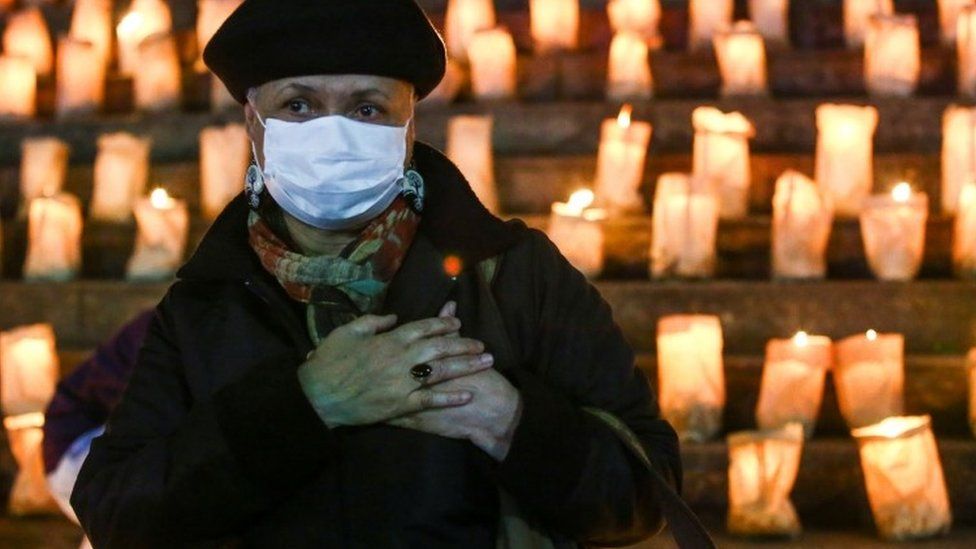
A woman clutches her heart at a candlelit memorial in Brazil
Brazil has been badly hit by the pandemic and the death toll is rising further

Even as Brazil is still burying its dead, the handling of the pandemic is being dissected by the Brazilian senate. The hearings, which began in April, are broadcast live. For many here they have become must-watch TV, a kind of telenovela of tragedy and explosive testimony.

Evidence from a representative of the vaccine manufacturer Pfizer was particularly damning. He told the inquiry the company repeatedly offered to sell the government vaccines last year. It was ignored – for months. Over 100 emails were unanswered.

Another witness at the inquiry accused President Bolsonaro of turning a blind eye to irregularities and massive overcharging, in a contract to buy an unapproved Covid vaccine from India. The President has denied any knowledge, and any wrongdoing.

The inquiry is headed by the opposition senator, Omar Aziz, a towering figure from the hard-hit state of Amazonas, who fist-bumps his way through the corridors of parliament. His own brother, Walid, is among the dead. He lost a life-long friend to the virus on the day we met.

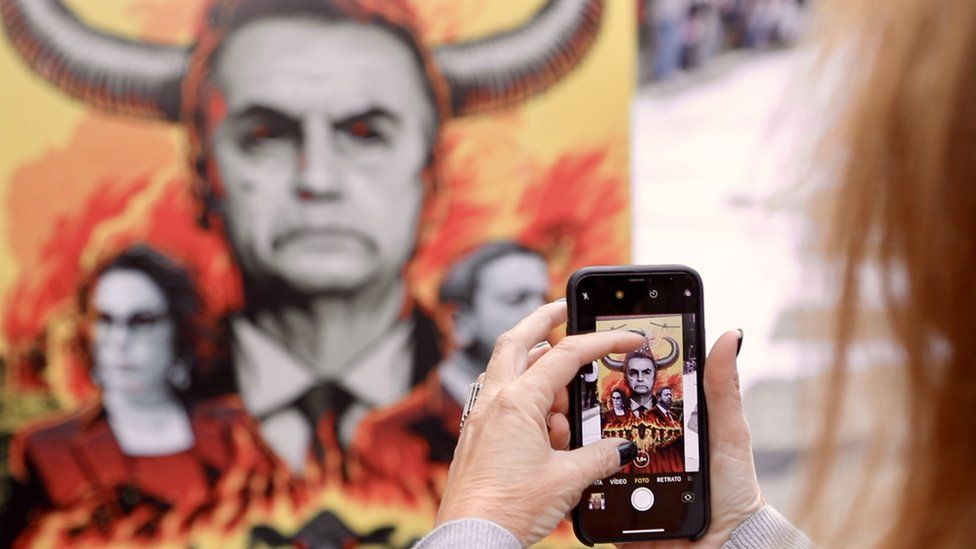
Protester takes picture of image depicting President Bolsonaro
Brazil’s President, Jair Bolsonaro, is facing growing anger

“What saves lives is two jabs in the arms of Brazilians,” he told us. “If the government had bought vaccines early, we would have saved a lot of lives. We have a President who does not believe in science. He believes in herd immunity.” The senator insists his inquiry is not partisan. “The virus does not choose political parties,” he told us. “Everyone is dying.”

From the outset of the pandemic, the Brazilian leader has been dismissive of Covid-19, calling it “a little flu.” Asked last year about deaths from the virus he replied “that’s a question for a grave digger”.

He has scorned social distancing, insisting the economy must remain open, and said staying home is “for idiots”. Just last month he was fined for not wearing a mask as he led a motorbike rally of his supporters.

As the president has minimized the risks, Professor Pedro Hallal has counted the dead. He is an epidemiologist, leading the largest Covid study in Brazil. As a scientist, and as a Brazilian, he says it has been a waking nightmare.

“At some point in life everyone has that dream in which they can’t move, or can’t shout,” he says. “This is exactly my feeling for these 16 months. I have been trained to understand what is happening in a pandemic and I say that and no one in the government is listening. As we are speaking today another 2,000 Brazilians will die.”

Professor Hallal, who has lost several friends, says his country has been a laboratory for everything that could be done wrong in a pandemic. The result, according to his research, is 400,000 deaths that could have been avoided, a quarter of them (100,000) caused by the failure to sign vaccine contracts last year.

“Everything that you should not do,” he said “Brazil has done.”

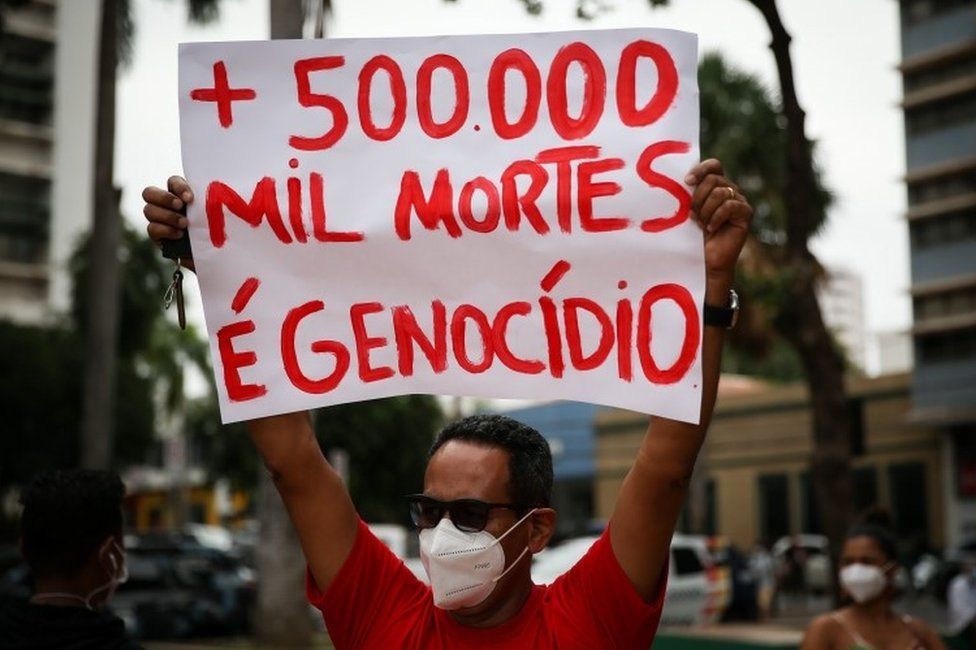
A man holds up a sign protesting against the Covid death toll in Brazil
“A genocide”: More than half a million Brazilians have died

“It said that the pandemic would not be important. In April last year, our president said it is coming to an end. Then he said the vaccines were not safe. These statements from the president himself produced damage, and they killed people and this is what needs to be said.”

Professor Hallal, who has given evidence at the inquiry, has a message for the Brazilian leader. “Just quit your job,” he said. “This is the best thing you can do to help Brazil.”

There’s little likelihood of that, but Jair Bolsonaro is under pressure on several fronts. While the Senate inquiry is not expected to lead to his impeachment, the Supreme Court has authorized a criminal investigation. His approval ratings are at an all-time low and there have been a series of nationwide protests.

If President Bolsonaro is troubled by the gathering storm, or the soaring death toll, he isn’t showing it. He has political allies and die-hard supporters.

With so many dead, Cida de Moura struggles to understand how he remains in office. “He is still in power as if nothing has happened,” she told us. “He should have been pushed out. I would like to hear that Bolsonaro is not president of Brazil any more.”

Like many of the bereaved, she is hoping that Brazil’s dead will speak, and there will be a reckoning at elections next year, if not before.

The post On Course to Pass US: ‘Everything You Should Not Do, Brazil Has Done’ appeared first on The St Kitts Nevis Observer.
Brazil Braces for Trump Style Pro-Bolsonaro Rallies

BRASILIA, Sept 6 (Reuters) – Brazil prepared for Independence Day demonstrations on Tuesday by supporters of far-right President Jair Bolsonaro, who has called for a show of support for his attacks on the country’s Supreme Court that are rattling Latin America’s largest democracy.

Security was reinforced in the capital, Brasilia, and police started blocking access to the central mall where thousands are expected to march, supporting Bolsonaro in his clash with the judiciary over changes to Brazil’s voting system.

Critics fear the president is encouraging supporters to the point they might try to intimidate or invade the courts, warning of parallels with the storming of the U.S. Capitol by supporters of then-President Donald Trump after he gave a fiery speech falsely claiming his election defeat was the result of fraud.

Internationally, more than 150 left-leaning former presidents and party leaders signed an open letter criticizing Bolsonaro for encouraging what they called an imitation of the Jan. 6 assault on the U.S. Capitol.

The demonstrations are “stoking fears of a coup d’état in the world’s third-largest democracy,” the letter warned.

Bolsonaro said on Friday the demonstrations would be an “ultimatum” to the Supreme Court justices who have taken “unconstitutional” decisions against his government.

The court has authorized investigations of Bolsonaro allies for allegedly attacking Brazil’s democratic institutions with misinformation online. He has called the court-ordered probes a violation of free-speech rights.

Congress and the courts also resisted Bolsonaro’s attempt to introduce paper voting receipts as a backup of an electronic voting system, which he argues is vulnerable to fraud. The electoral court maintains the system is transparent and safe.

Bolsonaro’s critics say he is sowing doubts so he can challenge the results of next year’s election, which opinion polls now show him losing to former leftist President Luiz Inacio Lula de Silva. Neither has confirmed his candidacy.

In a brief speech to the nation on social media, Lula said the president on Independence Day should be offering hope of economic recovery and solidarity with the victims of COVID-19.

“Instead of announcing solutions, he is calling people to confrontation … in acts against democracy,” Lula said, accusing Bolsonaro of sowing “division, hatred and violence.”

Brasilia will have 5,000 police and military personnel on hand to maintain order at the march outside Congress, where Bolsonaro is scheduled to appear on Tuesday morning.

In the afternoon, Bolsonaro will join supporters on a major avenue in midtown Sao Paulo at a gathering he has forecast to be the biggest political rally in Brazilian history.

Many leftist leaders have urged their followers to avoid clashes by avoiding counter-demonstrations on Tuesday in favor of larger anti-Bolsonaro protests on Sunday.

Financial, industrial and agribusiness leaders in Brazil have also distanced themselves from Bolsonaro’s attacks on the Supreme Court and called for dialogue between the executive and judiciary, warning the tensions threaten an economic rebound.

Reporting by Anthony Boadle; Editing by Brad Haynes, Marguerita Choy and Peter Cooney

The post Brazil Braces for Trump Style Pro-Bolsonaro Rallies appeared first on The St Kitts Nevis Observer.
Mexico City to Swap Columbus Statue for One of Indigenous Woman

A statue of Italian explorer Christopher Columbus, which stood on one of the main avenues of Mexico City, will be replaced by one of an indigenous woman.

Mexico City Mayor Claudia Sheinbaum said the bronze likeness of Columbus would be moved to a park and a statue of an Olmec woman would take its place.

The Columbus statue was removed from its plinth last year ahead of protests.

Protesters have toppled Columbus statues in Latin America and the US.

Christopher Columbus, an Italian-born explorer who was financed by the Spanish crown to set sail on voyages of exploration in the late 15th Century, is seen by many as a symbol of oppression and colonialism as his arrival in America opened the door to the Spanish conquest.

Mayor Sheinbaum made the announcement on Sunday at a ceremony marking the international day of the indigenous woman.

She said that relocating the statue was not an attempt to “erase history” but to deliver “social justice”.

Ms Sheinbaum said that the Columbus statue “would not be hidden away” but that the civilisations which existed in Mexico before the Spanish conquest should receive recognition.

The mayor said that sculptor Pedro Reyes was working on a statue of a woman from the Olmec civilisation, which flourished in the Gulf of Mexico from 1200 BC to 400 BC, to replace that of Columbus on Reforma Avenue.

The plinth on which the Columbus statue stood has been empty since 10 October 2020 when it was removed “for restoration purposes” just two days before planned protests marking the arrival of Columbus in 1492.

Some activists had issued calls on social media for the statue to be toppled.

The post Mexico City to Swap Columbus Statue for One of Indigenous Woman appeared first on The St Kitts Nevis Observer.
Three men jailed over plan to unleash terror attack on Melbourne's CBD

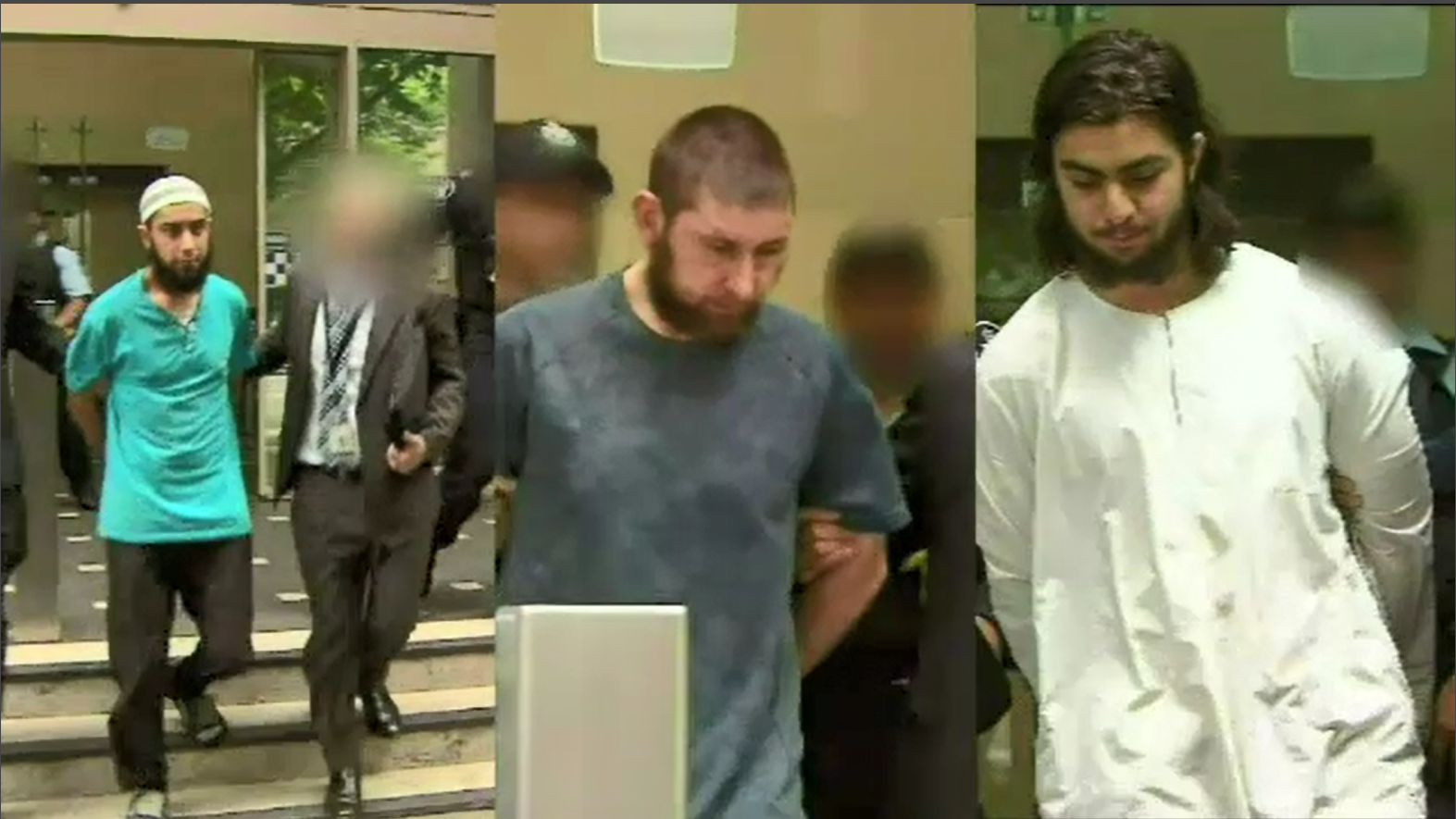
Three men who planned to commit a terror attack in Melbourne's CBD, killing multiple people with a rifle, have each been sentenced to a decade behind bars.

Hanifi Halis, Samed Eriklioglu and Ertunc Eriklioglu were each sentenced to a maximum of ten years' jail before the County Court today, having each pleaded guilty to conspiring to do acts in preparation for a terrorist attack.

The two brothers and their friend, who met through a multicultural youth centre, were arrested at their homes in Melbourne's north-western suburbs in November 2018 before they could carry out the attack.

They had paid a cash deposit for a semiautomatic rifle, which they had planned to use to kill as many people as possible in Melbourne's CBD.

The court heard the men were inspired and "enthused" by the Bourke Street terror attack on 9 November 2018 in which Hassan Khalif Shire Ali stabbed and killed cafe owner Sisto Malaspina.

The group then discussed travelling overseas to fight for the Islamic state and devised a plan to use a firearm to kill people in the CBD.

They then organised to buy a .22 calibre semiautomatic rifle for $1800, putting down a $450 deposit.

Police arrested the men four days later, before they had bought the weapon.

The men's lawyers told the court the three offenders had shown "quite low" commitment to carry out the attack, with there being no evidence they had worked out details to carry out the terror attack.

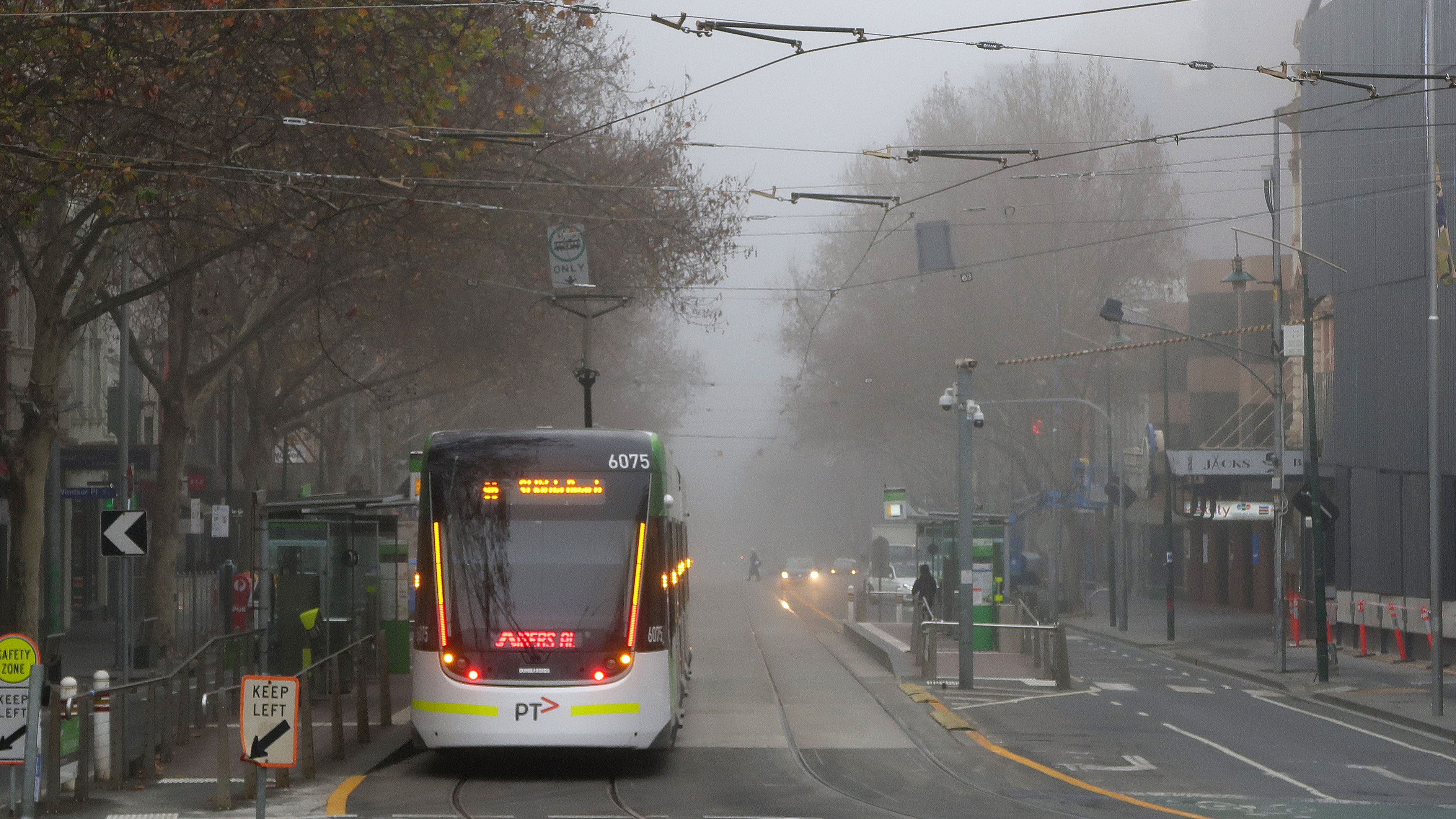
Fog is seen over the the top end of an almost empty Bourke St on July 17, 2020 in Melbourne, Australia.

Judge O'Connell said it could not be overlooked that the men had contemplated killing multiple members of the community, but agreed it could not be said that the planned terrorist act would have certainly gone ahead if they had not been arrested.

"These men embraced an opportunity to acquire a firearm in order to learn how to use that firearm in preparation for, or planning, a terrorist act," he said.

"That terrorist act was an action or threat of action involving an attack on members of the public with a firearm, with the intention of advancing what has been rightly called a 'depraved and evil ideology'."

The men were each handed a non-parole period of seven years and six months.

Having already served 1022 days behind bars, they will be eligible for parole in less than five years.

Phase 2 of Nevis’ Bath Village Road Project to Commence Soon

NIA CHARLESTOWN NEVIS (September 06, 2021) — The second phase of the Bath Village Road Rehabilitation and Reconstruction Project is expected to commence soon.

Hon. Spencer Brand, Minister of Communication and Works made the announcement while addressing residents of Bath Village at a town hall style meeting hosted by the Ministry of Communication and Works on September 02, 2021.

“Phase 2 will commence very shortly, and Phase 2 is basically from Mr. Dick in the south along the main carriageway here in Bath at the intersection of ‘Boom.’

“The length I am told is 3, 400 feet and in most cases the width of the road would be approximately 17 feet. There would be a very short area that would be approximately 16 feet and we feel that a width of 17 feet is comparable to even the Island Main Road. So we are ensuring that Bath Village would have wide enough road that could be comparable to anywhere on the island of Nevis. The cost I am told is somewhere in the region of approximately $2,000,000,” he said.

Mr. Brand noted that there are two additional phases, and the total estimated project cost is $4.1 million when Phase 2, Phase 3 and Phase 4 are added together for a total of about 7,300 feet of road.

Phase 3 of the project would be done on Jericho Road which stretches from the tamarind tree to “Flakesy.”

“That area is expected to be approximately 17 feet in width and it is some 1,000 feet in length, and the estimate that I’ve been given is approximately $600,000 for that particular stretch of road,” the Communication and Works Minister said.

Regarding Phase 4, that segment of the project will be done in the area from Black Hat’s Place up the hill to Maude Smith Pre School through to VON Radio on to Conch Shell.

“That distance is some 29,000 feet and the width of that is expected to between 16 and 17 feet. That segment is expected to cost somewhere in the region of $1.5 million,” Mr. Brand said.

The Communication and Works Minister also used the opportunity to appeal to residents of Bath Village to exercise patience during the execution of the project.

“I want to appeal to you to be patient with us because there will be some disruption: dust, noise, disruption in your water supply at times, disruption in your electricity; disruption maybe also in your internet and cable services.

“All of these things that may be impacted during the construction phase, and I believe that as the folks of Bath Village would have been patient for all of these years, that they can be patient with us and bear with us for the next few months,” he said.

In conclusion the minister stated that in addition to fulfilling the Nevis Island Administration’s commitment, they would ensure that Bath Village would also benefit from improvements as have other villages throughout the island.

Also present at the meeting were Hon. Mark Brantley, Premier of Nevis, Minister of Finance and Area Representative for the St. John’s Parish; Mr.  Jevon Williams, Director of the Public Works Department; Mr. Denzil Stanley, Principal Assistant Secretary in the Ministry of Communication and Works who chaired the session; and Mr. Roger Hanley, Operations Manager at the Nevis Water Department.

The post Phase 2 of Nevis’ Bath Village Road Project to Commence Soon appeared first on The St Kitts Nevis Observer.
Iconic Tasmanian tiger seen in colour footage for the first time

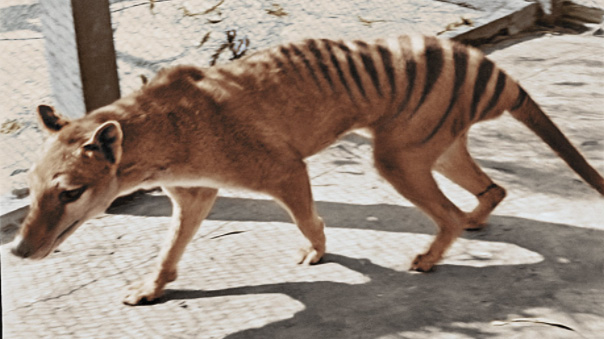
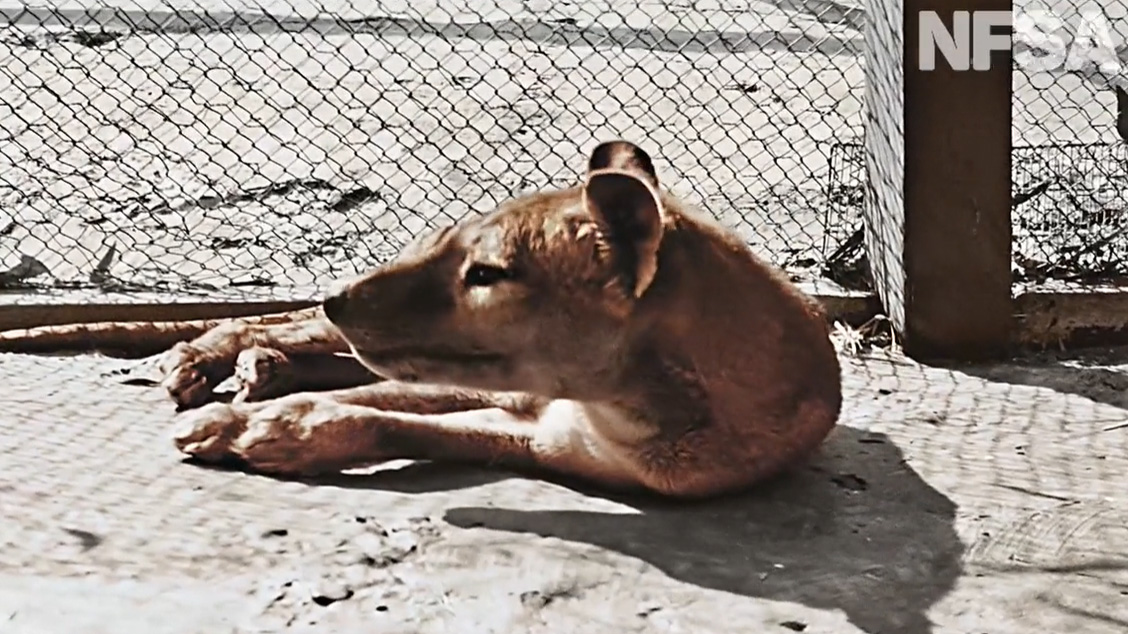
Australia's iconic extinct animal, the Tasmanian Tiger, can be seen on video in colour for the first time.

Released by the National Film and South Archive to mark National Threatened Species Day, it features Benjamin, the last of his kind, who died 85 years ago today, on September 7, 1936.

It was colourised by Samuel François-Steininger from Paris-based Composite Films.

READ MORE: Platypus return to Royal National Park after decades

The footage is of the last Tasmanian Tiger.

Naturalist David Fleay shot the original film in black-and-white at Beaumaris Zoo, Hobart in December 1933.

It features Benjamin, the last captive thylacine, as the animals were properly named.

Mr François-Steininger said it was a special project, which took more than 200 hours.

"I had to take care of the rare filmed footage and pay tribute to the last representative of a species, which disappeared 85-years-ago," he said.

The special footage has been colourised.

"I care a lot about animals and discovered the story of the thylacine while I was living in Australia in 2012, and it really moved me."

READ MORE: Tasmanian tiger expert dismisses claims the species has re-appeared

As well as original skins preserved in museums, his team had to rely on sketches and paintings because of the lack of original colour pictures or footage that could be used for research.

Sadly Benjamin was found dead from cold after being shut out of his enclosure.

'In a lot of pain': Call for vape ban as disinfectant, petrol found inside

A health charity is calling for a ban on the over-the-counter sale of vapes, after finding harmful chemicals including disinfectant, petroleum and fish euthanasia drugs inside the electronic smoking devices.

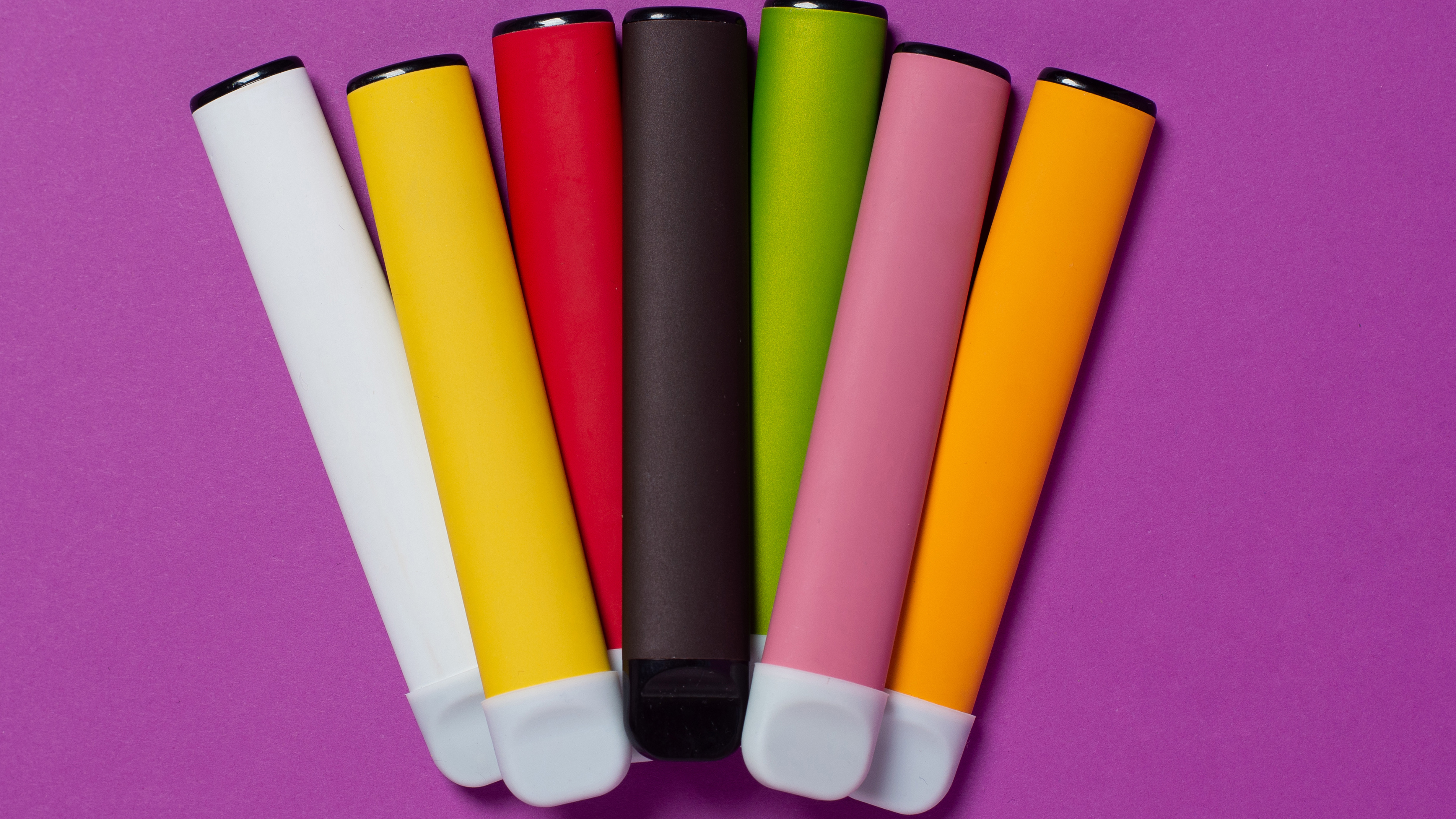
Lung Foundation Australia wants action on the sale of vapes, also known as e-cigarettes, which are largely unregulated but, with colourful packaging and fruity flavours, mostly aimed at young people.

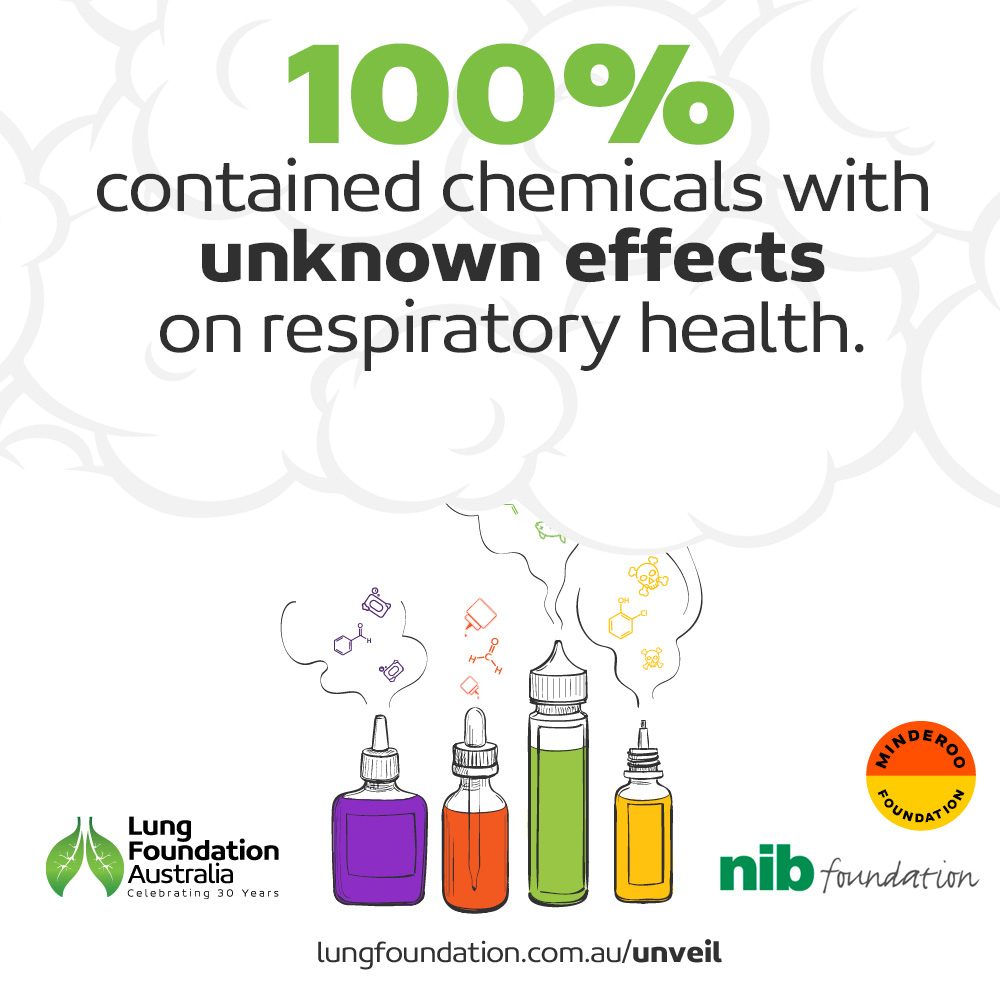
Research by Curtin University and partly funded by the foundation found all of more than 50 vapes bought over the counter contained chemicals with "unknown effects on respiratory health".

READ MORE: Sign of cancer dismissed because of colour of woman's work uniform

Colourful vapes or e-cigarettes can be harmful. (file image)

Household disinfectant, petroleum, cosmetics, paint and even eugenol, which is used to euthanise fish, were found inside the vaping liquid – as well as nicotine, which they're not supposed to contain.

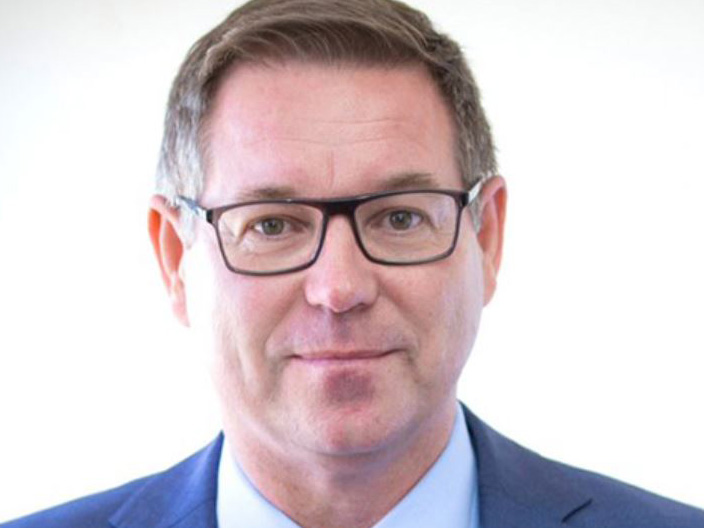
"With the unregulated, untested and unknown nature of the vape industry, we knew the research into the chemicals and toxicity of e-liquids would uncover strong findings," Lung Foundation Australia chief executive Mark Brooke said.

"We never expected such alarming results."

Lung Foundation CEO Mark Brookes

More than half of the vapes contained chemicals likely to be toxic if repeatedly inhaled, the study said, and some of the chemicals could even cause lung cancer.

And while flavoured vapes are not supposed to contain nicotine – they're prescription-only in Australia – 20 per cent of those studied did.

"The damage caused by the continual use of these products could be costing a generation their freedom to healthy lungs and have our hospital respiratory units facing patients with respiratory issues and even lung disease or cancer," Mr Brooke said.

Young people under pressure

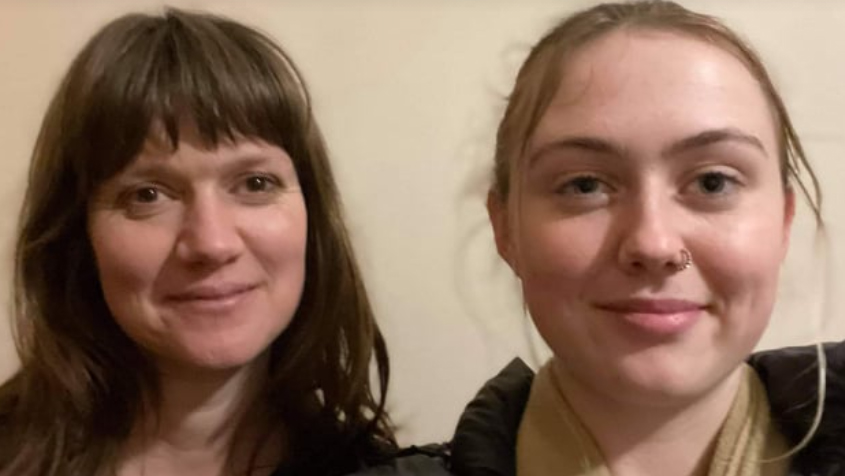
Melbourne woman Cypher Hayden, 19, was diagnosed with a form of pneumonia after becoming a regular user of flavoured vapes she legally bought from a shop.

Her mother Rebekah said her daughter was told by doctors the vapes were the cause of the illness.

Rebekah Hayden's daughter became sick from vaping.

"She was in a lot of pain, breathless and coughing," Ms Hayden said.

"I'm really concerned for my daughter but also on a wider level for young people."

While the teen has recovered from her illness, she now sometimes has to use a puffer.

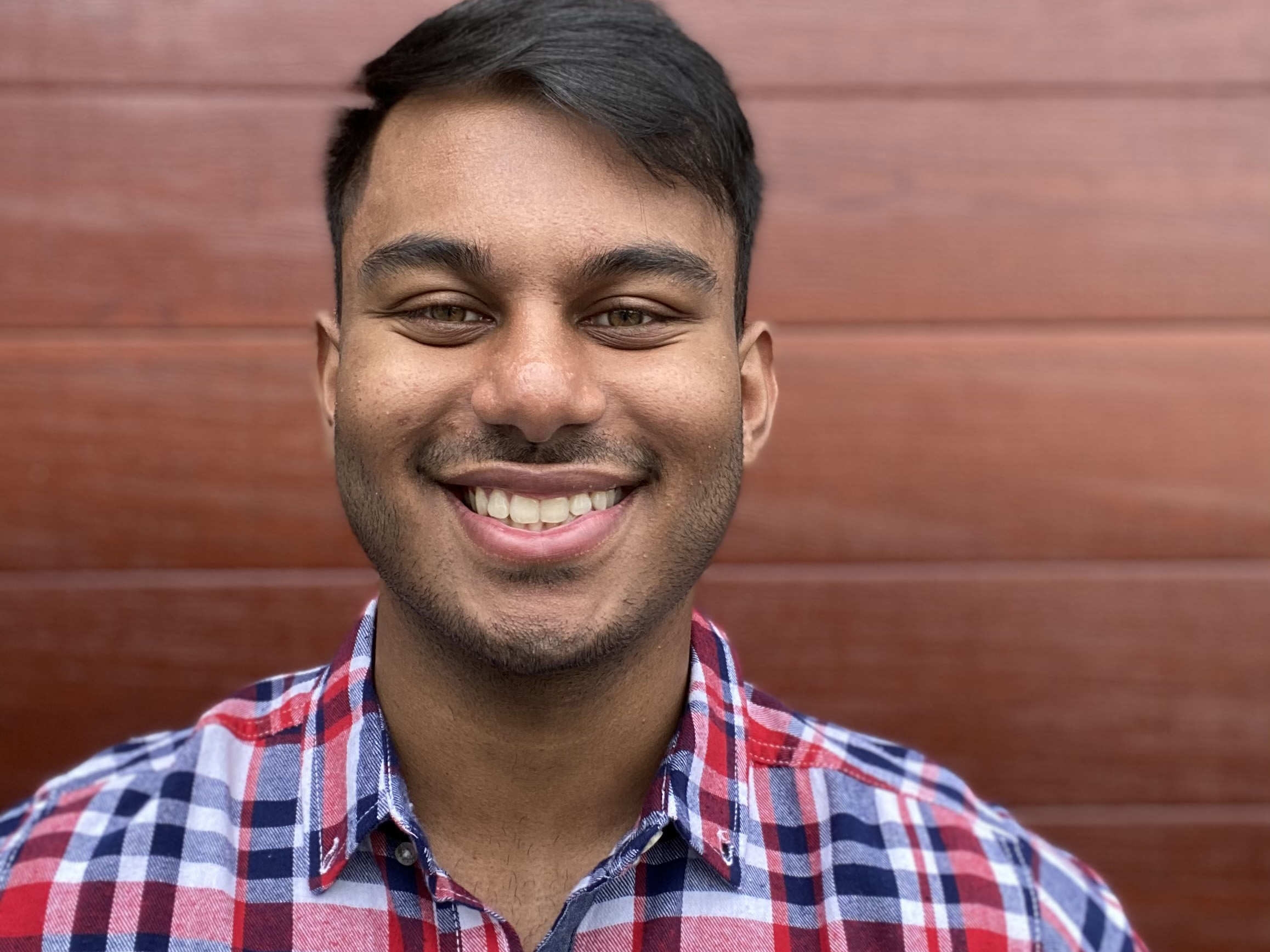
Optometry student Jahin Tanvir, 21, said there is a lot of pressure for young people to get involved in using vapes.

A study by the Alcohol and Drug Foundation found more than a quarter of 18- to 24-year-olds and 14 per cent of 12- to 17-year-olds had tried the devices, figures which have climbed in the past three years.

Mr Tanvir, who is involved with the charity campaign, which also includes the launch of an education project, Unveil What You Inhale, said many friends and classmates at the University of Canberra use them.

He said some often wrongly believe they're "healthier" than cigarettes.

Youth Advocate Jahir said he often has to turn down friends who ask him to use vapes.

He said he knows as part of his health studies, as well as the recent findings, that's not at all true.

"There is a lot of social pressure especially when people frame vaping as a safer option," he said.

"I've had to say no in a lot of instances."

Lung Foundation Australia's new campaign.

READ MORE: 'Stark' difference between Aussie's two different cancer diagnoses

While there are new rules are coming in on October 1 to further regulate nicotine e-cigarettes, devices which do not or should not contain nicotine are unregulated in Australia.

Each state and territory except Western Australia allows the sale of nicotine-free vapes to over 18s.

However, many of the devices are sold on social media sites.

READ MORE: Young dad dies after testicular cancer battle

When contacted by nine.com.au, a Therapeutic Goods Administration spokesman said it would undertake a program of laboratory testing on selected vaping products which may or may not have nicotine declared as an ingredient.

"Products which are determined to contain nicotine will be subject to additional scrutiny through our compliance monitoring program which will commence from 1 October 2021," he said.

"Vaping products which contain nicotine must meet the legal requirements for prescription medicines in Australia, along with the requirements of the therapeutic goods standard for nicotine vaping products, as outlined to you earlier.

"Compliance with these requirements is overseen by the Therapeutic Goods Administration (TGA).

"Any vaping products that do not contain nicotine are not part of the TGA's remit, including flavoured vaping liquids without nicotine."

Contact journalist Sarah Swain: ss****@******om.au