The Ministry of Health have released eight new locations of interest, seven of which are supermarkets, one of which is in Warkworth.Pak ‘nSave Clendon, Countdown Ponsonby, Countdown Three Kings, Countdown Warkworth, Countdown Mt…
Category Archives: headline
Covid 19 Delta outbreak: All Blacks urge New Zealanders to get vaccinated
The All Blacks have a clear message to New Zealanders – get vaccinated against Covid-19 to protect yourself and the community. The national rugby team has released a new video on its social media platforms of players receiving…
Big businesses plea to end lockdowns
An open letter signed by 80 of Australia's biggest businesses has called on state premiers to stick to the country's national reopening plan.
Doubt has arisen over the likelihood of lockdowns ending once the national vaccination rate reaches 80 per cent, despite all states and territories agreeing to a unified plan as part of National Cabinet.
Under the Australian Constitution, the power to control state borders rests solely with state governments.
READ MORE: Lockdown extended until Victoria reaches 70 per cent first vaccine target
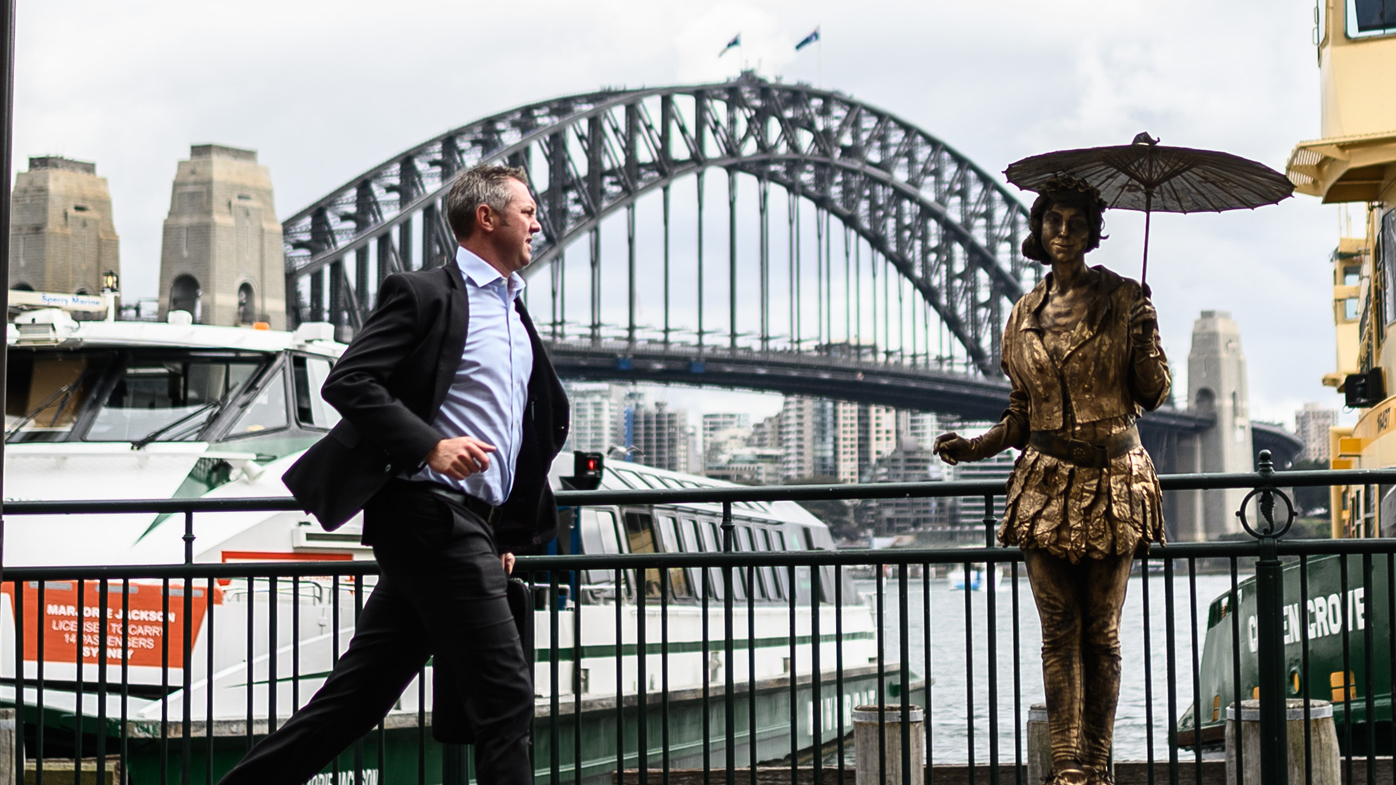
Jennifer Westacott, chief executive of the Business Council, said the business community does not want special consideration – rather it wants a clear plan with a timeline.
"CEOs are not asking for anything more than for state and federal leaders to stick to the national reopening plan so business can begin to plan and give the country confidence that we are going to move forward," Ms Westacott said.
A full copy of the letter can be read below.
READ MORE: By state and territory, how quickly Australia is vaccinating

Signed by businesses such as Coles, Telstra, Shell, all of the big four banks, Woolworths, Wesfarmers and Qantas, the letter represents the employers of almost one million Australians.
"Australia is juggling a mental health emergency at the same time as a global pandemic. Some of the impacts of current lockdowns are hidden, and the effects will be long lasting," the letter reads.
"As vaccination rates increase, it will become necessary to open up society and live with the virus, in the same way that other countries have done.
"The National Cabinet has agreed to a roadmap which provides a path out of lockdowns, with an easing of restrictions from 70 per cent and 80 per cent vaccination rates. We need to stay the course."
READ MORE: China's economy is being rattled by the Delta variant

Treasurer Josh Frydenberg joined the business community in its call to stick to the plan.
"I want to focus on the fact that today you saw an unprecedented number of CEOs from Australia's leading companies, BHP, Telstra, Coles, WestFarmers, Qantas, Commonwealth Bank, AGL, across-the-board representing more than 1 million workers in our country, that it was important for them to voice their support for the national plan," the Treasurer said.
"If we don't stick to the national plan, jobs will be lost. If we don't stick to the national plan, our debt burden will increase. If we don't stick to the national plan, the well-being of Australians will suffer."
As of the 31st of August 2021, 35 per cent of eligible Australians over the age of 16 were fully vaccinated.
READ MORE: Coronavirus vaccines 'not a silver bullet' in stopping the spread
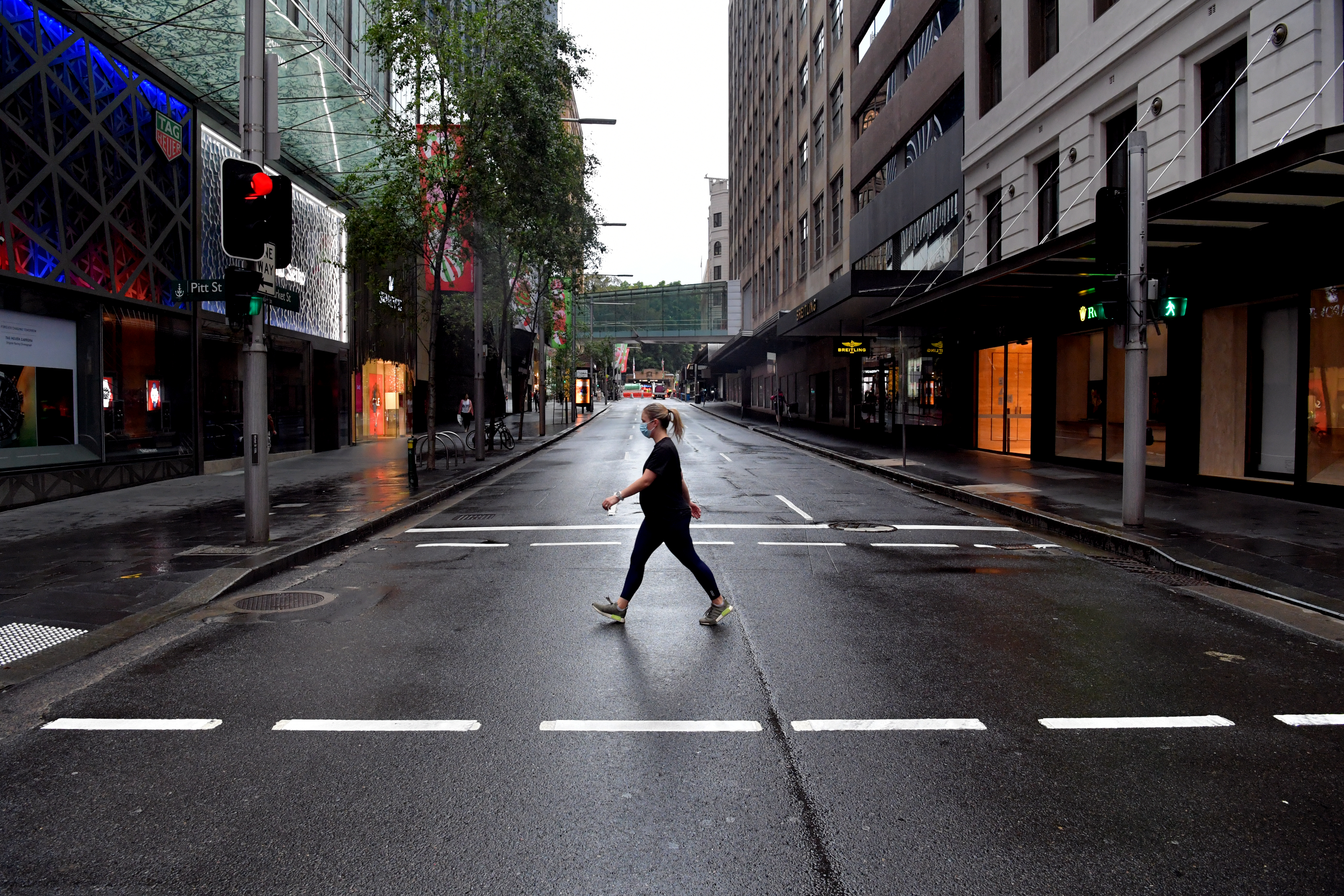
Read the open letter from the business community:
We, the undersigned, represent businesses which employ almost one million Australians, and provide products and services to people right across the country. We have seen how effectively this country can come together over the past 18 months – with state and federal governments working alongside communities and businesses.
We have seen the effectiveness of lockdowns in suppressing the virus last year, and in slowing its spread today while we vaccinate the population as quickly as possible. We are encouraged by the building momentum in the vaccine program, with Australia now administering more doses per capita each week than the UK or the US ever achieved in their programs.
At the same time, we can also see the impact of lockdowns on our people, on our customers, on our small business suppliers, and on communities and families right across the country. Australia is juggling a mental health emergency at the same time as a global pandemic. Some of the impacts of current lockdowns are hidden, and the effects will be long lasting.
As vaccination rates increase, it will become necessary to open up society and live with the virus, in the same way that other countries have done. The National Cabinet has agreed to a roadmap which provides a path out of lockdowns, with an easing of restrictions from 70 per cent and 80 per cent vaccination rates. We need to stay the course.
Informed by modelling from the Doherty Institute, it balances the risks from COVID in a more vaccinated population, with the risks of indefinitely keeping our country divided and cut off from the world, our children out of schools, our friends apart from loved ones, and our small businesses closed.
Businesses will continue to do whatever we can to support our people to get vaccinated and to provide a safe environment for our customers and the community, including the prioritisation of Aboriginal and Torres Strait Islander communities as originally intended.
We ask governments to work together to implement the National Plan and chart a path out of the current lockdowns. Providing a light at the end of the tunnel will encourage more Australians to get vaccinated. We need to give people something to hope for, something to look forward to, something to plan around, and to be confident about their futures.
Taliban claims 41 Australians killed in Afghanistan war 'died in vain'
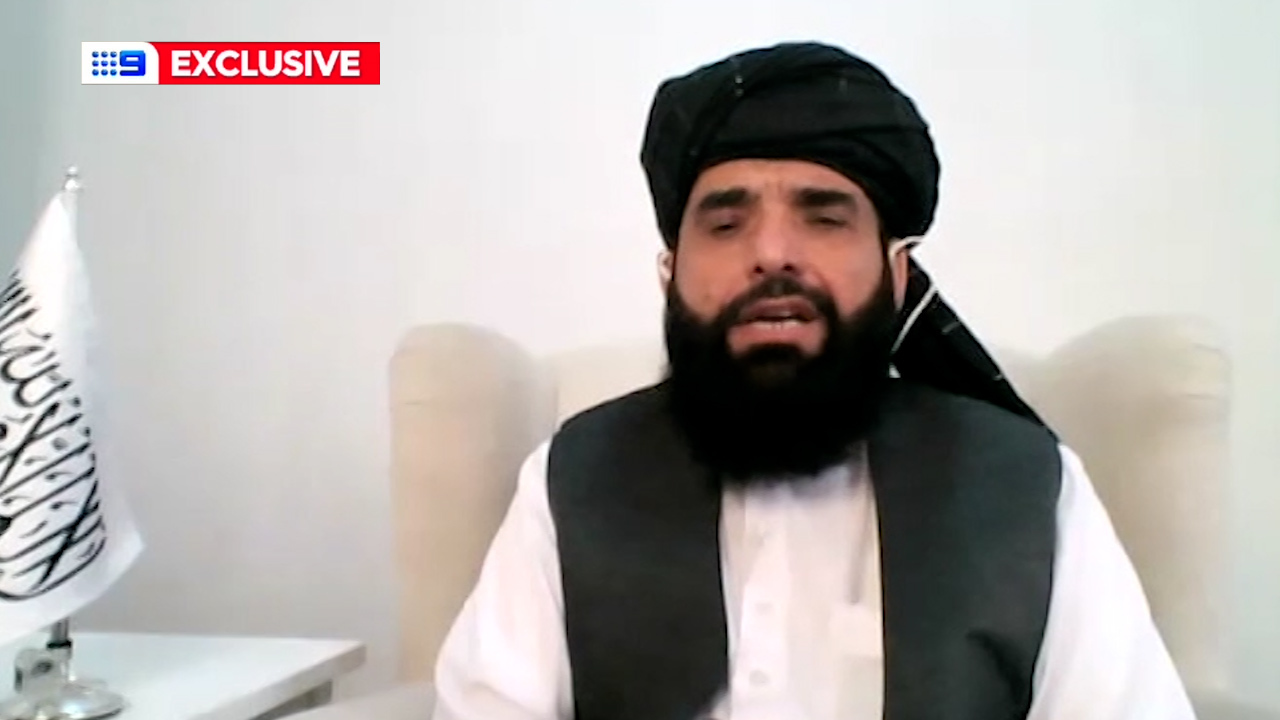
Exclusive: The Taliban has claimed the 41 Australian soldiers killed during the war in Afghanistan "died in vain".
In a wide-ranging interview with 9News, Taliban spokesperson Suhail Shaheen said the soldiers "died in our country, occupying our country".
"If my country's forces go invade your country, occupy your country and they die, what would you say? Would you say they come here for something illegal? It was their right to invade your country? The same applies for my country, Afghanistan," Mr Shaheen said.
Mr Shaheen also disputed claims Australians had been attacked by the Taliban, despite video surfacing of an Adelaide father bloodied and in a tussle with the Taliban.
He has since gone into hiding.
"There is no one targeting them, or their life is at risk, no!" Mr Shaheen said.
The veteran Taliban spokesperson said the hope for his country was "peace", as he accused Prime Minister Scott Morrison of basing policy on "propaganda" and "fake news".
"Some of the Australians are biased they should make their stand to be more pragmatic," Mr Shaheen said.
"I think their judgment should be fair and just not based on baseless reports," the Taliban spokesman said of the Australian government.
The Taliban spokesperson also claimed people fleeing Afghanistan were "economic migrants".
Mr Shaheen denied reports broadcast by 9News that Afghan women had been abducted by the Taliban, and said it would be a breach of law.
READ MORE: ADF interpreter says Taliban rule will be 'brutal'
The spokesperson said girls and women would be entitled to education, but he could not guarantee they would be allowed to have positions of power in a newly formed government.
"It will be up to the constitution, after that it will be clear," he said.
Mr Shaheen also claimed the Taliban planned to "eradicate" the terror group ISIS-K, which claimed responsibility for the deadly blast at Hamid Karzai International Airport.
"We have this capability," Mr Shaheen said.
You can watch the full in-depth interview above.
Man has spent pandemic living in a cave, near multimillion-dollar homes
Awhi is living in a cave surrounded by some of the most expensive real estate in New Zealand. Some residents want him gone but he says it is the only shelter he can find.
The homes around Mt Drury Reserve in Mt Maunganui could feature on Lifestyles of the Rich and Famous.
Immediately opposite the reserve – known as Hopukiore to Māori – is the holiday pad of economist and former political aspirant Gareth Morgan, valued at more than $10 million. Many other homes have multimillion-dollar price tags.
READ MORE: Squatter cites archaic law in claiming ownership of $1m homestead
During lockdown, the streets have been busy with foot traffic as locals get their exercise in.
If you are walking away from the beach along Pacific Ave and glance to your right, you will see a peculiar sight.
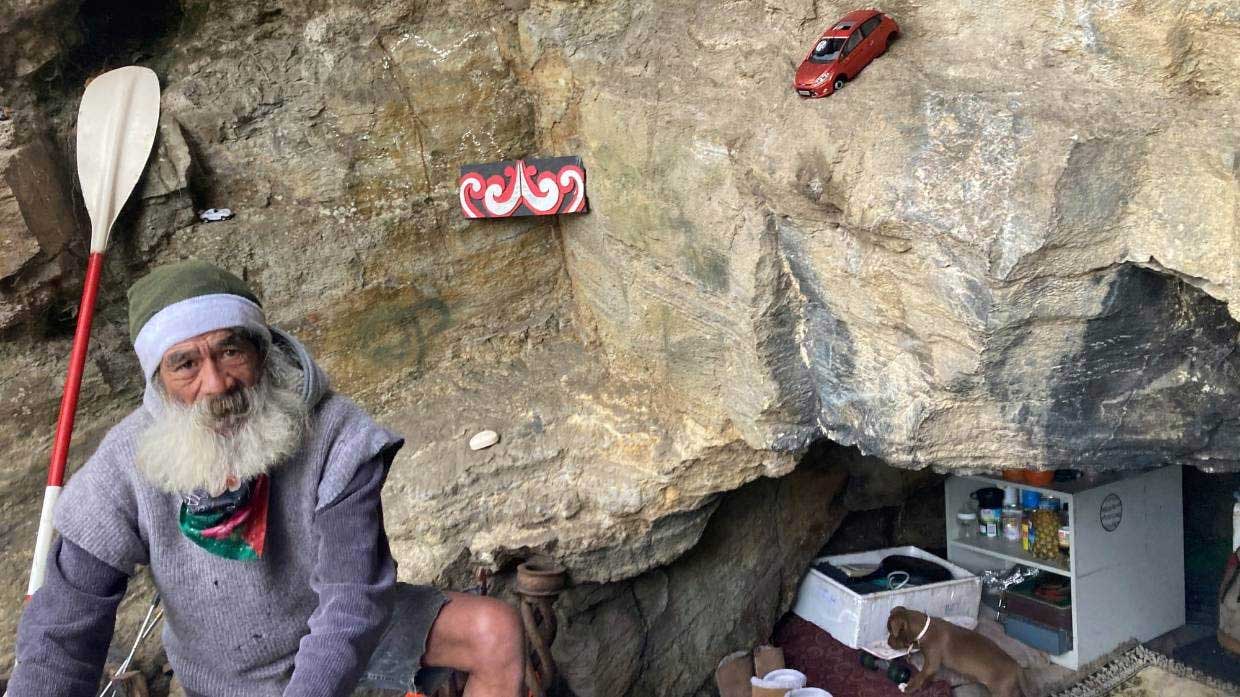
A small cave at the base of the maunga has been turned into a campsite. Someone is living here. A stand-up paddle board has been laid across a table for privacy, creating a makeshift kitchen area complete with gas burners and pots.
Inside the cave, there is a bed raised off the ground and a small set of shelves acting as a pantry. There is even a patterned mat on the floor. There is no room to stand up and the walls are covered in graffiti.
In pre-colonial times, the area was used as a carving school. The name, Hopukiore, means to catch rats; rats' teeth were used as blades in carving chisels.
Early Māori are thought to have used the caves as burial sites. In more recent times, teenagers would light fires and have parties.
This particular cave is home to a 64-year-old man called Awhi (Ngāi Te Rangi/Waitaha), who sports a beard of biblical proportions, shorts and a colourful scarf.
When Stuff called, he was standing at the entrance munching on a simple meal of rice and noodles in a takeaway container, supplied by a homeless charity.
READ MORE: Camera discovery reveals last images of Australian mountain climber
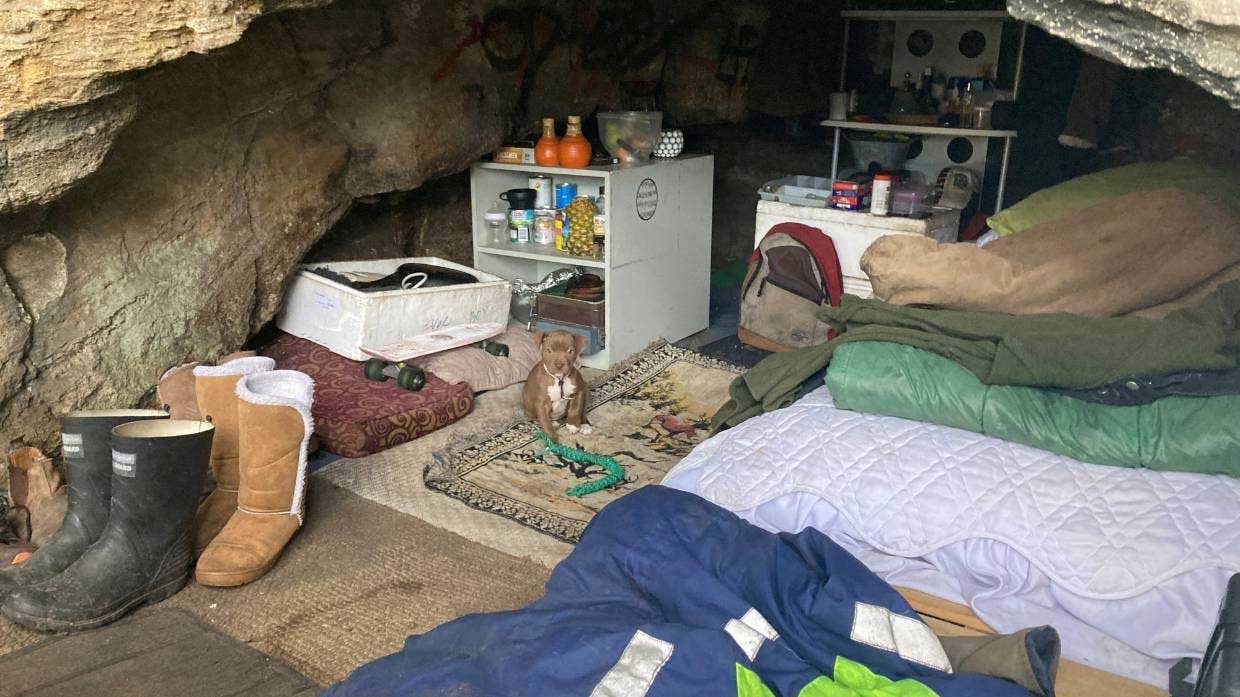
He says the cookers are mostly for show, "so people don't keep on asking me: are you okay?"
Awhi says he has been living in the cave since the start of the COVID pandemic last year. Previously, he had been living in a local park but was moved on as the country prepared to go into level 4 lockdown.
"They were cleaning the park up, I had to go and find somewhere else to bloody sleep, eh."
Why the cave?
"There is no housing out there, mate. It was the only place I could find shelter, in the rock. It might seem pretty grim but to me it is just a shelter, somewhere to stay warm.
"There are a lot of other people in the world today that are worse off than I am. Who am I to complain?"
Awhi might not be complaining but some of his neighbours are.
"They are all millionaires along here," he says. "They would rather get me out of here. They had a meeting of the residents about me being here. They had a thing with the Tauranga MP, he got on to the council."
(Morgan says he is not one of the complainers. "I am not at the beach that often and don't know anything about this," he says.)
But Tauranga MP Simon Bridges confirmed some residents living near the cave approached him a few months ago, concerned about anti-social behaviour.
"It is not so much [Awhi], they tell me, but it is more the mates and hangers-on that come along – drinking, parties, noise … graffiti, breaking into nearby building sites – even fires."
Bridges wrote to Tauranga City Council in April, saying Mt Drury/Hopukiore was a "Tauranga taonga" enjoyed by families and tourists, and he was concerned the anti-social behaviour would only increase.
"I accept the people involved will probably need social assistance and social housing, and I am keen to help you with this in terms of liaising with government departments," Bridges wrote.
"The issues should not be left unaddressed, however. Inaction would be highly regrettable."
Council chief executive Marty Grenfell wrote back, saying: "I'll have our team look at what steps may be required to address or curb this type of behaviour and ensure the same concerns are raised with the police."
Bridges says that was the last he heard. He also got in touch with the commissioners who replaced the councillors when they were sacked last year but still nothing happened.
Is it a case of Nimbyism (Not In My Backyard)?
"We can say it is Nimby, snobbishness, but … if I had a couple of million dollars of mortgage there I might feel the same," he says.
"I acknowledge it is complex and we don't want to lack compassion here. It is saddening at every level.
"It is a very 2021-type problem and it is also a fairly accurate metaphor for Tauranga today – you have got the most expensive properties in New Zealand outside of Auckland, up against homelessness and social problems."
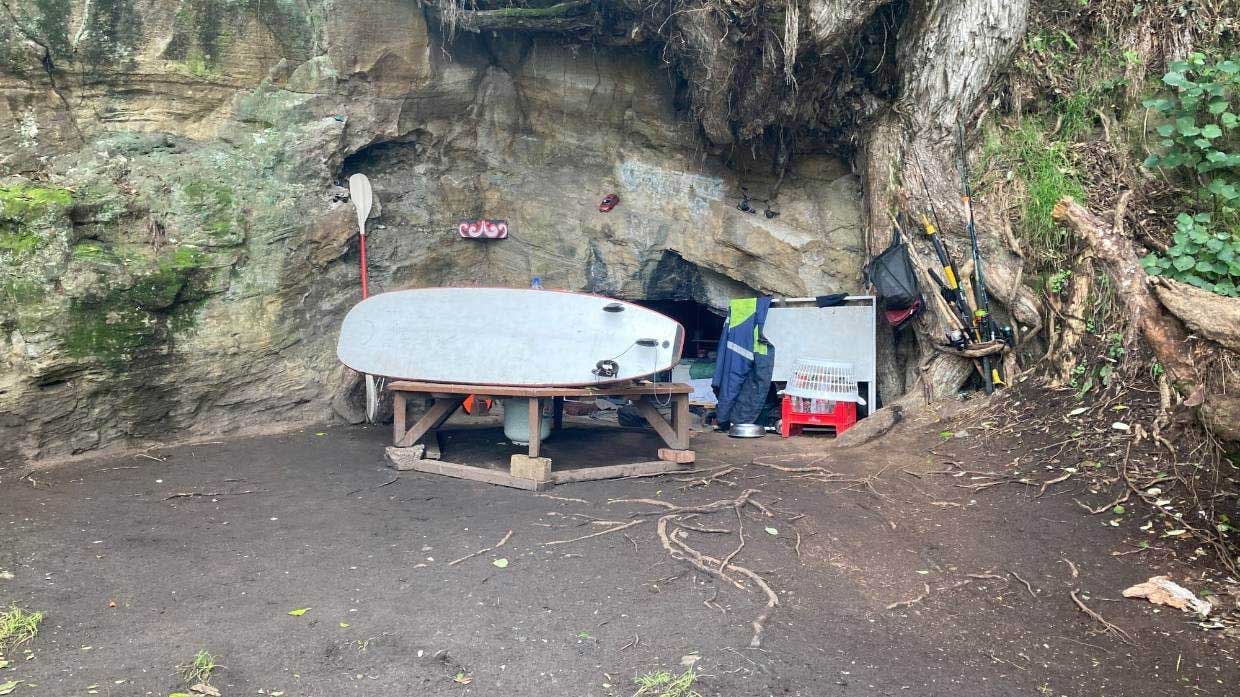
Bridges says the answer is to provide more permanent social housing for people like Awhi.
"Five years ago this would have been sorted. He would have been put into some form of social housing. Today, everyone from the government – local, central – wash their hands of it."
Stuart Goodman, the council's team leader for regulation monitoring, says Awhi has been sleeping in the cave for more than 18 months and "as he is homeless, we are not able to move him".
Council staff have been connecting him with support agencies and making sure the site is kept tidy, Goodman says.
"The man is willing to move into a suitable house but due to lack of availability this has not happened. He is not prepared to move into the men's shelter, for personal reasons.
"Homelessness is a sad and complex issue and is never an ideal situation. It will take a whole-of-community response to address it."
Awhi says he would prefer to stay in his cave and Laura Wood, co-ordinator for the charity Under the Stars, which feeds Tauranga's homeless, says that is not unusual – some people struggle to transition from the street to indoor accommodation.
She met Awhi for the first time a week ago.
"I heard there was a guy living in a cave, and we went and dropped off some food. He seems very personable – he has got an awesome space there."
Wood says the Government's approach to rough sleepers this lockdown has been much different to last year.
"Last time, there was a very conscientious approach to do all they could to get everybody into motels and off the street and the Government stepped up, the agencies took on the people and did an amazing job getting people where they wanted to go.
"This year, that has not happened. The agencies are working with the people they already have on their books but because there has not been any additional motel space made available, they are not able to take on additional clients, which has left many more people out on the streets and in tents and stuff."
Part of the problem is that, unlike last time, there has been no certainty around the length of the lockdown, making it hard for agencies to plan, Wood says.
"Agencies are working together to get people off the streets. It is at a much smaller scale than last time but it is happening."
Simone Cuers, manager of The People's Project in Tauranga, says a "critical" lack of affordable housing in the city is placing people under stress.
The organisation is part of a council-led strategy called Kāinga Tupu: Growing Homes which is aimed at addressing homelessness.
"Many people … placed in temporary accommodation during the 2020 lockdown are still living in those temporary options. We are looking forward to seeing a more affordable and appropriate housing supply coming on board … so we can house everyone in permanent housing," Cuers says.
Awhi says he has been visited by police and council staff and "come to an understanding". They can "moan and groan", he says, but they can't move him on. "There is no housing out there."
He says efforts last year to get people off the street did not achieve much.
"They just took them from one situation, put them into another situation, but they are all still together, they are all still homeless, it is not going to change their way of thinking or living."
Awhi, a father of five and a grandfather, used to work in forestry and as a builder.
"My family were from here. I went to school, went away, got married, had children, my mother died, so I came home.
"Things didn't work out at home, so I just hit the road again."
He has been homeless for several years but does not mind. There are toilets and showers nearby, and he catches fish from rocks around Mt Maunganui.
Twice a day he goes for a ride on an old BMX bicycle. At the moment he is toilet training a puppy for a friend.
A bedraggled teddy bear stands guard in a tree – a leftover from the first Covid lockdown when people were displaying bears for solidarity – and toy cars left behind at the beach by children decorate the cave entrance.
Awhi says the cave is relatively warm. "Whatever the temperature is outside, it has gotta be the same temperature inside."
To prove this, he retrieves a small temperature gauge, showing 13C or 14C.
He is yet to have a COVID-19 jab.
"When they give me a time and schedule I will probably go there. But I don't go anywhere to catch [COVID-19]."
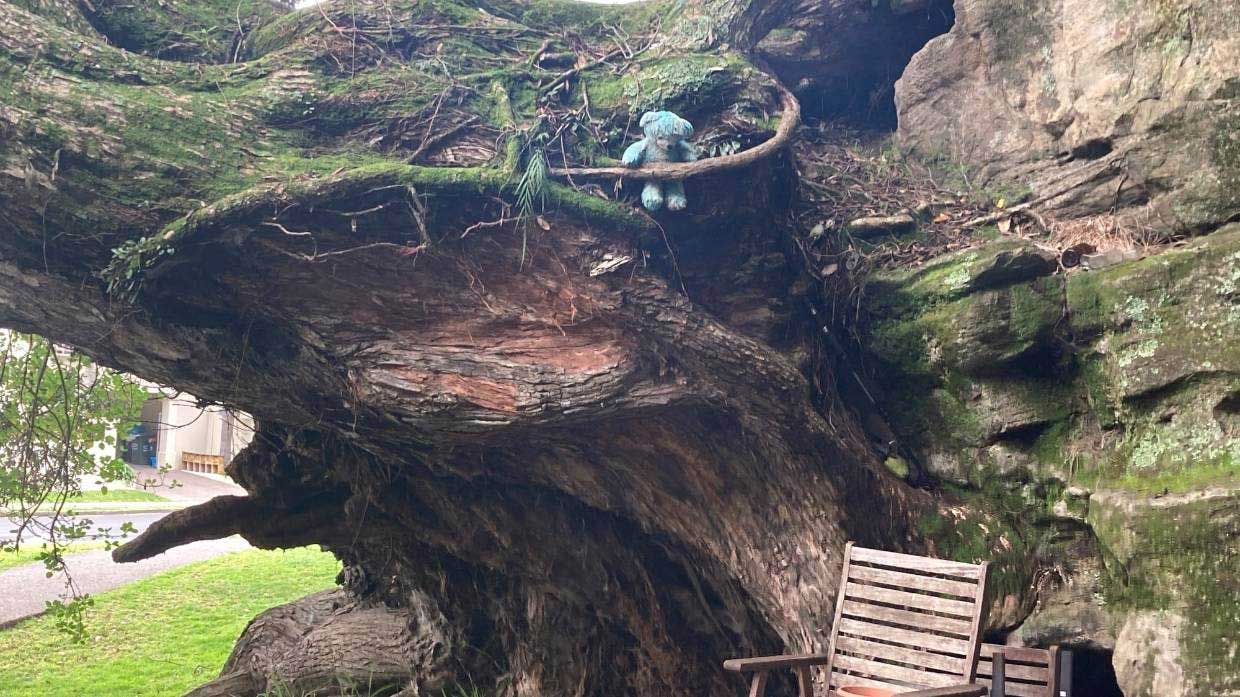
Awhi enjoys the freedom of living rough.
"I am not gonna live forever but I'd like to stay [in the cave] as long as I can, until the time comes."
If there was one thing he could have, what would it be?
There is a long pause.
"I don't think there is anything out there that I'd like to have. I get up in the morning, the sun is shining and I am still above the ground.''
This story originally appeared on stuff.co.nz and has been republished with permission.
Pod of seven orca are still in the Pāuatahanui inlet in Porirua Harbour
A pod of seven orca are still in the Pāuatahanui inlet in Porirua Harbour after swimming into the shallow body of water, probably chasing eagle ray that frequent the area, last Saturday morning. The Department of Conservation…
Covid 19 Delta outbreak: 75 cases in community today – Hipkins and Bloomfield
Covid Response Minister Chris Hipkins says the risk from the 40 supermarkets being listed as locations of interest is “reasonably low”.Speaking to Newstalk ZB Drive host Heather du Plessis-Allan, Hipkins was asked why the grocery…
New Zealand's oldest person, World War II veteran Ron Hermanns, dies aged 109
By RNZ New Zealand’s oldest person, Ron Hermanns, a Royal New Zealand Air Force (RNZAF) war veteran who was still living independently in his own home in Christchurch, has died. He died on Monday, just three weeks from his 110th…
By state and territory, how quickly Australia is vaccinating
National vaccination targets of 70 and 80 per cent have been hammered at all coronavirus briefings the past week.
The prime minister is saying it, the premiers are repeating it, it's a message floating across the airwaves.
If someone is talking COVID-19, you're going to hear references to 70 and 80 per cent.

READ MORE: National Plan targets threaten to divide Australia
Under the National Plan, which is a source of contention, particularly in Western Australia and Queensland, once those numbers of fully vaccinated eligible people are hit, Australia will open up.
Among a raft of other tweaks and loosening of restrictions, international flights are touted to resume, home quarantine will become the norm and punishing lockdowns will be a thing of the past.
So, where are we at?
Just over 7,200,000 Australians, or 35 per cent of the country aged over 16, are now double-dosed, according to government data.
Across the country yesterday, 276,000 doses of the vaccine were put in the arms of Aussies.
The rollout, for so long plagued by problems of supply and muddled messaging, is now gathering pace.
Australia is fast closing in on a total of 20,000,000 doses administered nationally in the 190 days since the rollout began.
READ MORE: China's economy is being rattled by the Delta variant
Prime Minister Scott Morrison yesterday hailed Tasmania for topping the table for fully vaccinated people and New South Wales in single doses administered.
Yes, it seems we are in a race – and always were, according to leading epidemiologists and virus experts.
Let's break down each state and territory, to see how the rollout is progressing.
New South Wales
By far, NSW has put the most doses in people's arms – 6,923,000 jabs.
That's 68.2 per cent first doses and 37.1 per cent a second jab.
Yesterday, NSW health workers administered a whopping 148,000 doses.
That sort of speed has meant NSW is on course to hit 70 per cent by the middle of October, a week or two earlier than expected.
Victoria
With a total of 4,911,000 doses, Victoria has fully vaccinated 34.7 per cent of the eligible population, with 56.1 per cent on one jab.
Yesterday more than 41,000 doses were administered.
EXPLAINED: Full list of restrictions easing in Victoria, pathway out of lockdown revealed
Queensland
Some 31.1 per cent of Queenslanders have had two jabs, and 50.6 per cent a single dose.
Yesterday, 34,600 doses were put in the arms of Queenslanders.
MORE: What happened to countries who opened up during COVID
South Australia
A total of 1,252,000 doses have been administered in South Australia, with 34.2 per cent of the population now fully vaccinated.
Just over 52 per cent have had a single shot.
Yesterday, a total 14,400 doses were given out.
Western Australia
Of all the states and territory leaders, Premier Mark McGowan has shown the most resistance to the National Plan targets.
Nonetheless, Western Australia is running in time with the rest of the country, with 31.5 fully vaccinated and 50.4 per cent on a single dose.
More than 22,200 doses were administered yesterday.
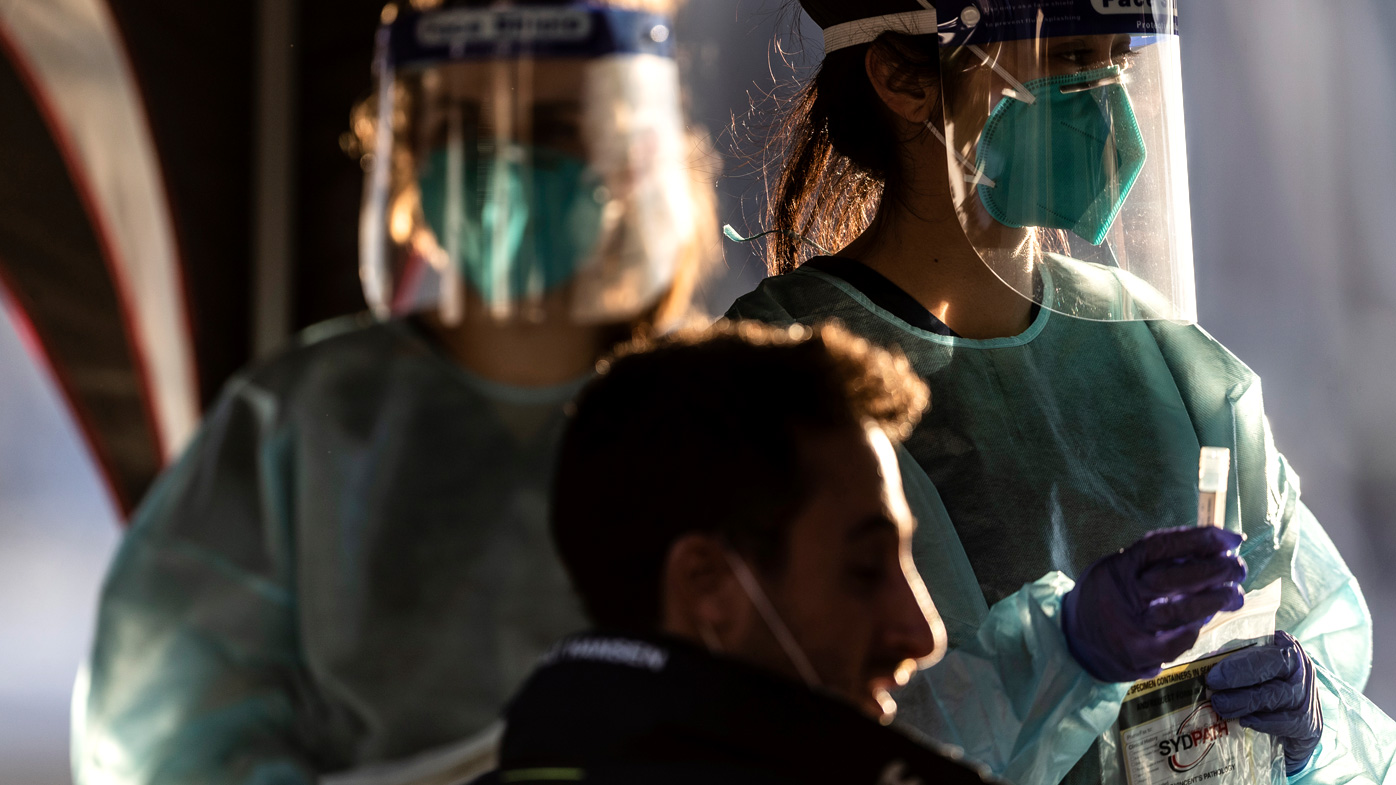
Australian Capital Territory
The ACT is near the top of single and double doses in the country.
Just over 41 per cent are fully vaccinated and 64.6 per cent have had a single shot.
Yesterday, 8500 jabs were completed.
Northern Territory
In the NT, 55 per cent of people have had one shot, and 37.7 per cent are now double-dosed.
NT yesterday administered 1898 vaccines.
Tasmania
With 42.1 per cent of its population double-jabbed, Tasmania is leading the way.
Just over 59 per cent of Tasmanians have had one dose.
Yesterday, 5150 doses were administered.
READ MORE: Everything you need to know about the Beta variant
Famous Aussie art prize winner revealed
Two-time Archibald Prize finalist Julia Ciccarone has been awarded the Archibald Prize 2021 ANZ People's Choice award for a poignant self-portrait.