Category Archives: headline

Cuba First Hit by Hurricane Ida-President Warns of Aftermath

Havana, Aug 28 (Prensa Latina) Cuban President Miguel Diaz-Canel on Saturday urged to remain vigilant about the consequences of Hurricane Ida in the country after heavy rains and strong winds.

On his Twitter account, the president called to ‘show the effectiveness of the Civil Defense of a State that protects its people.’

According to official sources, Hurricane Ida, a category one cyclone in the Saffir-Simpson scale, caused preliminary damage to crops in western Cuba, as well as loss of roofs on facilities, falling trees, power lines and telephone lines.

After directly affecting the Isla de la Juventud Special Municipality and Pinar del Rio province, the National Meteorology Institute reported that the hurricane left Cuba for the Gulf of Mexico.

‘Ida is moving away, a strong challenge, but the greatest of all remains and grows: #COVID19. Let us put our efforts at the height of the innovation of our science and sacrifice of health personnel,’ the head of State tweeted.

The post Cuba First Hit by Hurricane Ida-President Warns of Aftermath appeared first on The St Kitts Nevis Observer.

Report finds no fault after COVID-19 infection at Queensland hospital

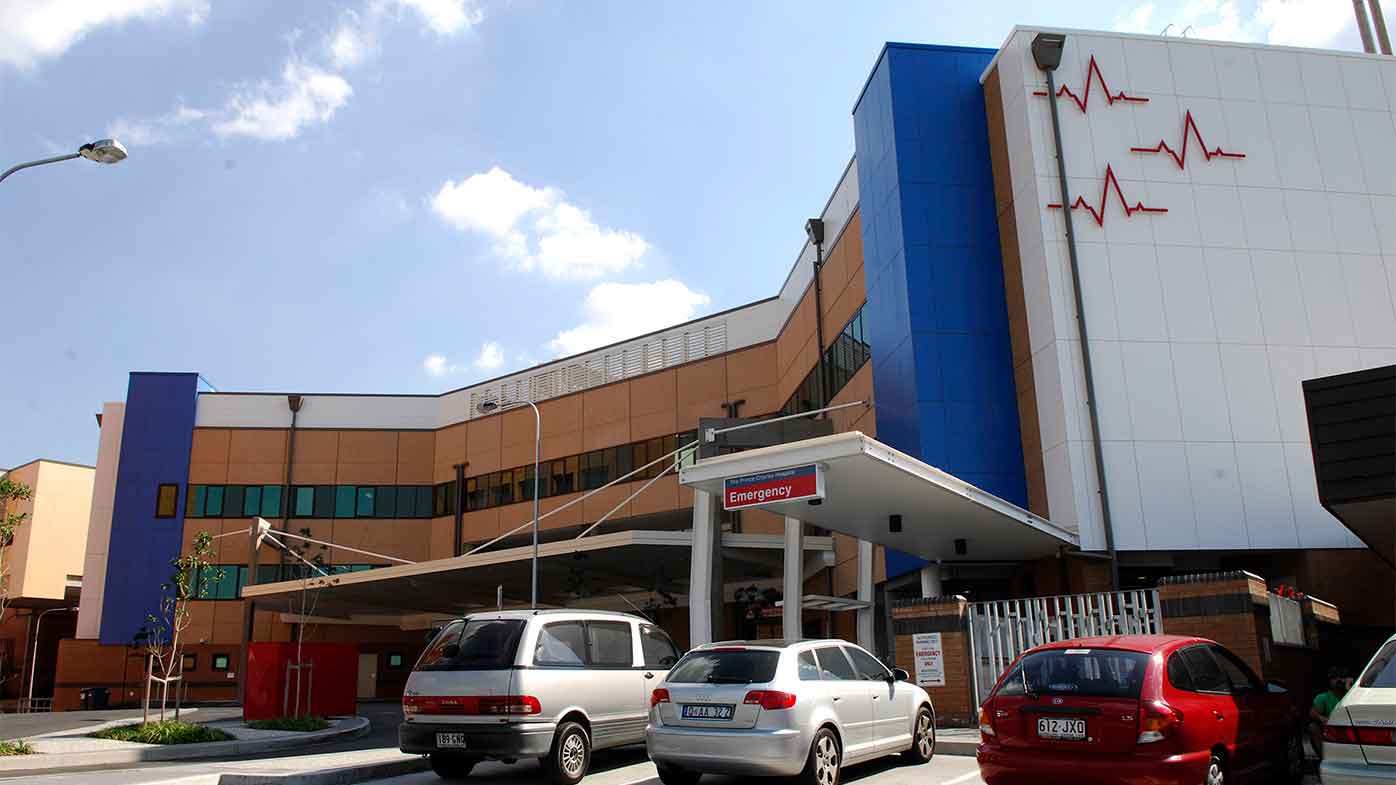
An independent report into a Queensland hospital where an unvaccinated staff member caught COVID-19 while standing near the virus ward found the facility did not breach protocols.

Known as "the Griffin Report" after one of the report's authors, Dr Paul Griffin, it details how an unvaccinated staff member who was working outside the COVID-19 ward at The Prince Charles Hospital became infected with COVID-19 on 29 June, 2021.

The report found no evidence that the local health service nor any individual failed to comply with COVID-19 protocols.

READ MORE: A third of new NSW cases are in kids, but none are in the ICU

The Prince Charles Hospital in Brisbane.

It found the hospital had appropriate policies in place, but did identify opportunities to strengthen infection control such as limiting entry points to any ward treating COVID-19.

The unvaccinated staff member unknowingly took the virus on holiday with her to Magnetic Island for 10 days, sparking a snap lockdown for Queensland in late June.

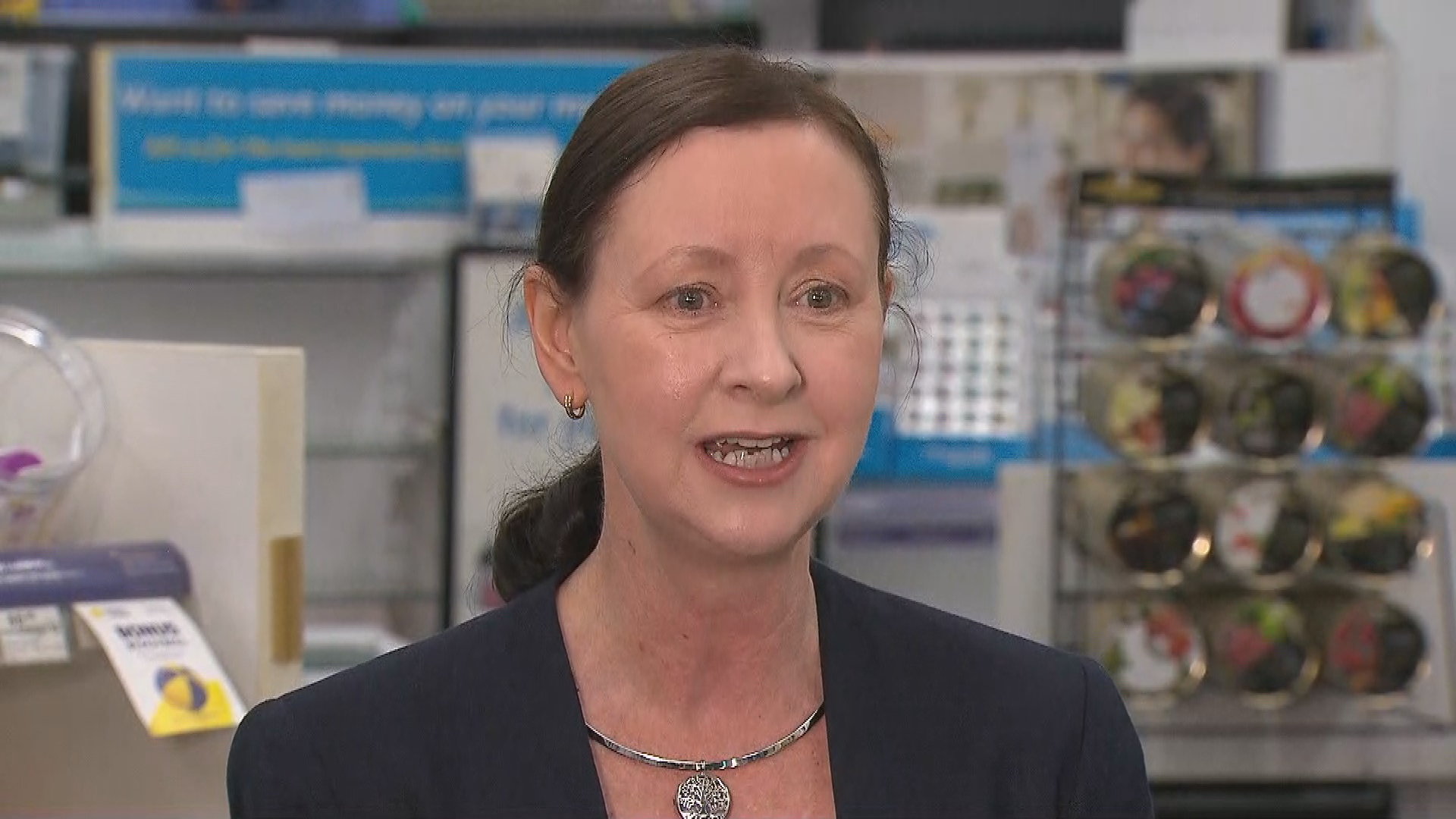
Health Minister Yvette D'Ath said the report by Dr Paul Griffin and Ms Katherine Taylor identifies opportunities for improved infection control procedures in hospitals treating COVID patients.

READ MORE: COVID-19 presents greater blood clot risk than vaccines, study finds

"We've never seen anything like COVID-19 before and with different variants it continues to change and become more transmissible," Ms D'Ath said.

"It's important we take every opportunity to learn and adapt, with work already underway to enhance infection control practices in our hospitals.

"The report makes a number of recommendations around the limiting of entry points, signage and swipe card access procedures in COVID wards."

READ MORE: Children's ward in Melbourne hospital among latest COVID-19 exposure sites

Ms D'Ath said Queensland's COVID-treating hospitals already had very high vaccination rates amongst staff with 77 per cent fully vaccinated and 83 per cent partially vaccinated.

"Importantly, the report confirmed no unvaccinated staff member had entered the COVID-19 ward at The Prince Charles Hospital," she said.

"In recent weeks we have seen the tragic consequences of transmission on COVID-19 within hospitals interstate, so I call on all Queenslanders, especially our few remaining Hospital and Health Service staff across the state to come forward and get vaccinated."

Hurricane Ida: President Biden Calls ‘Major Disaster’ After New Orleans Loses Power

BBC- More than one million people have lost power in the US state of Louisiana, as Hurricane Ida arrived on Sunday.

The city of New Orleans has lost power completely, with emergency generators are the only way people have been able to get any kind of electricity.

US President Joe Biden declared a “major disaster” and said it could take weeks to restore supplies.

He has released extra funds for rescue and recovery efforts.

It was originally declared a category four storm which means people should expect it to cause severe damage to buildings, trees and power lines.

It has now been downgraded to a category one, with its winds dropping to 95mph as it moved inland.

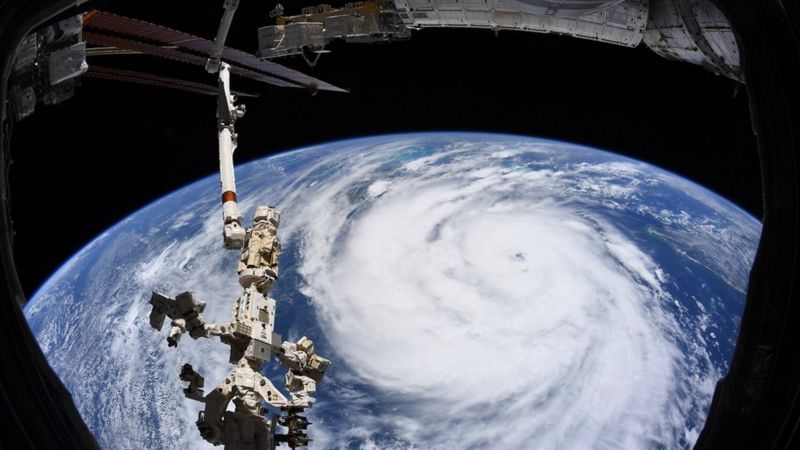
Hurricane Ida is seen in this image taken aboard the International Space StationESA/NASA
European Space Agency astronaut Thomas Pesquet took this photo of Hurricane Ida on Sunday from the International Space Station

People who had not left the area in advance were advised to take shelter.

In a tweet, the US National Weather Service (NWS) told New Orleans residents: “Go to an interior room or a small room with no windows. Stay put during this time.”

So far one person has died. More than 90% of oil production in the Gulf of Mexico has been shut down.

High winds tore part of the roof off a hospital in the town of Cut Off, Louisiana, just inland from the Gulf of Mexico.

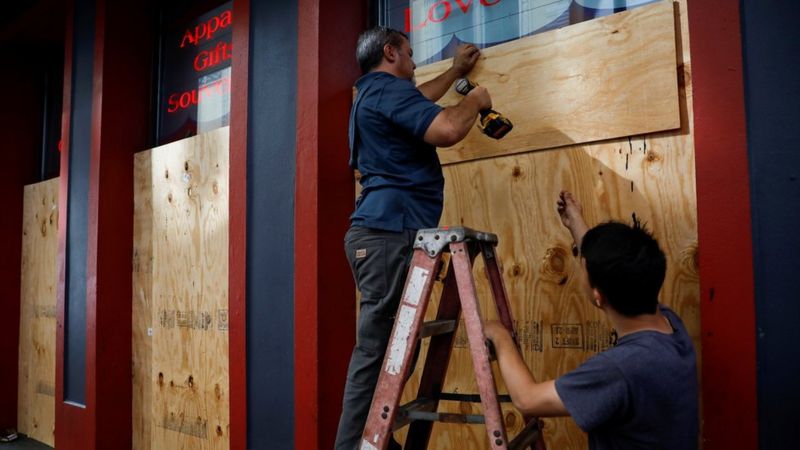
Residents make preparations for the storm in New OrleansReuters
Residents make preparations for the storm in New Orleans on Saturday

Normally, hospitals in the predicted path of the hurricane would be evacuated, but this time due to the impact of covid-19 there are few beds available at other hospitals.

The hospital said it had suffered “significant damage” but that its patients were safe.

Hurricane Ida has hit the state on the same date as Hurricane Katrina did 16 years earlier.

In 2005 Hurricane Katrina killed 1,800 people across Louisiana and Mississippi.

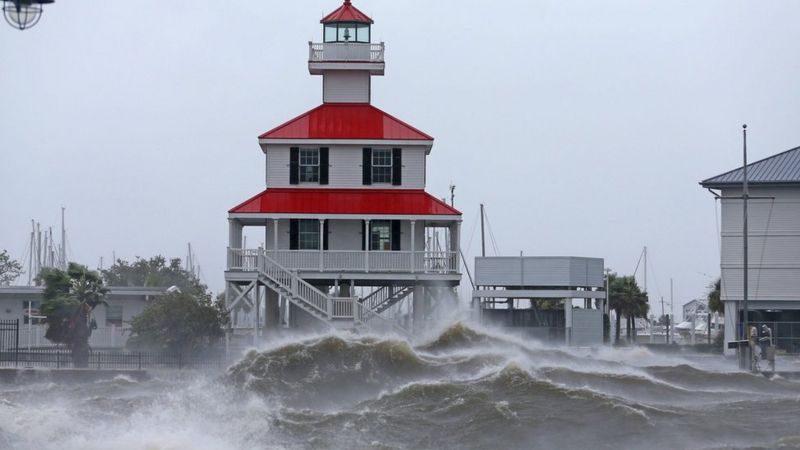
Waves on Lake Pontchartrain, Louisiana (29 August)Reuters
Waves on Lake Pontchartrain, in south-eastern Louisiana

Since then, billions of dollars have been spent on flood defences, and it’s thought they could now be put to the test by Hurricane Ida.

So far they seem to be working although there is a flash flood warning in place for New Orleans.

In some areas the storm surge could be as high as 16ft (4.8m), potentially submerging parts of the low-lying coastline.

President Joe Biden said Ida would be “life-threatening”, with immense devastation likely beyond the coasts.

State Governor John Bel Edwards said that “the coming days and weeks are going to be extremely difficult” but that as a state Louisiana has never been more prepare

The post Hurricane Ida: President Biden Calls ‘Major Disaster’ After New Orleans Loses Power appeared first on The St Kitts Nevis Observer.

A third of new NSW cases are in kids, but none are in the ICU

Around one third of the new coronavirus cases in NSW in the past week have been in children and teenagers.

In the past 24 hours, 177 children under 10 tested positive to COVID-19 and a further 215 aged 10 to 19 caught the virus.

Despite this, there are no children in the ICU, and most children in hospital are there because their parents are also sick and they risk passing the virus on.

READ MORE: NSW records 1290 local COVID-19 cases, four deaths

Primary school students may not go back to face-to-face learning this year.

When mother-of-three Joanne Siamani contracted COVID-19, she feared the worst.

"It's been so heavy on my mind, with my kids and husband at home," she said in a video filmed in Nepean Hospital.

The 32-year-old from Ropes Crossing was in hospital, her husband also became unwell.

He was taken to Westmead while their boys, who also tested positive, went to the COVID-19 ward at the neighbouring Children's Hospital.

"I was crying and I was like, I can't find my kids, I draw all my energy to god, I told him just hold them," she said.

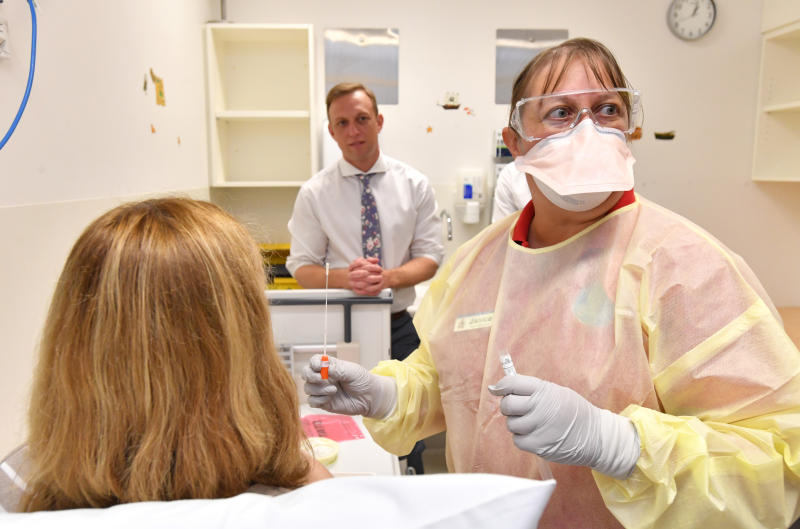
Dr Philip Britton, Paediatric Infectious Diseases physician and Early Career Researcher based at the Children's Hospital at Westmead, said less than one per cent of children with COVID-19 require medical care.

"Younger children often come in having difficulty feeding and need fluids support and then teenagers with COVID 19 affecting the lungs," he told 9News.

While the majority of children recover quickly, many parents are now worried about the long term side effects.

But these are also less severe in children – with only one to two per cent suffering symptoms beyond two months.

"The two most common symptoms are persistent cough and fatigue and a smaller number will have loss of smell," Dr Britton said.

Two Defence personnel die in vehicle crash near Townsville

Two Australian Defence Force personnel have died after their vehicle rolled on a property near Townsville this afternoon.

Defence Minister Peter Dutton told Question Time that he had received unconfirmed reports that the two Australia Defence Force personnel had tragically died after being involved in a crash near Dotswood.

Queensland police and ambulance services were both called to the scene at around 12.45pm today.

"I haven't received confirmation as yet, but that tragically two soldiers are reported to have been died in a vehicle roll-over near Townsville. I'm waiting for further details on that," Mr Dutton said.

"There are movements on the day, on the road every day, and it is a very dangerous task that our troops are involved in, even during training exercise and the movement of equipment up and down our national highways.

"Mr Speaker, that's very sad news for our country to learn and our condolences and thoughts with their friends and family."

The Forensic Crash Unit from Queensland Police are investigating the incident.

9News.com.au has contacted the Department of Defence for comment.

Melbourne dad faces life behind bars for trying to help ISIS terrorists

A father of two from Melbourne's north is facing life in prison after admitting he tried to travel overseas to help ISIS terrorists.

Khaled Temssah, 31, fronted the County Court today, pleading guilty to preparing to travel overseas to engage in hostile activities.

Prosecutors told the court the used car salesman wanted to fight non-believers and even become a martyr in the name of Islamic State.

READ MORE: Hunt for men behind home invasion that left dad with cracked skull

Counter terror police had been monitoring Temssah for weeks when he was arrested at his Roxburgh Park workplace in June 2019.

Temssah had googled "how to join ISIS" and had unknowingly made contact with an undercover police officer.

He told the officer he wanted to join Islamic state in the disputed region of Kashmir, where ISIS had announced it was taking over control.

Temssah said he was a skilled hunter and wanted to use an AK47.

He also bragged that as a charity director he was good with his words.

He then booked a ticket to India.

When he was taken into custody at the car dealership Temssah had an ISIS propaganda video playing on his phone.

The father-of-two initially told police he was only planning to travel from Melbourne to India for humanitarian reasons, but later admitted that was a lie.

Temssah's lawyers told the court that during the two years he had been in custody Temssah has renounced his allegiance to ISIS.

He will be sentenced next month.

Hurricane Ida 'similar to Katrina' but 'stronger, smaller'

Hurricane Ida is looking eerily like a dangerous and perhaps scarier sequel to 2005's Hurricane Katrina, the costliest storm in American history.

But there's a few still-to-come twists that could make Ida nastier in some ways, but not quite as horrific in others.

"The main story with Katrina was storm surge damage, and over a vast area. The main story with Ida will be a combination of wind, storm surge, and fresh water flooding damage," meteorologist Jeff Masters, who flew hurricane missions for the government and founded Weather Underground, said.

LIVE UPDATES: New Zealand's outbreak reaches 562 cases
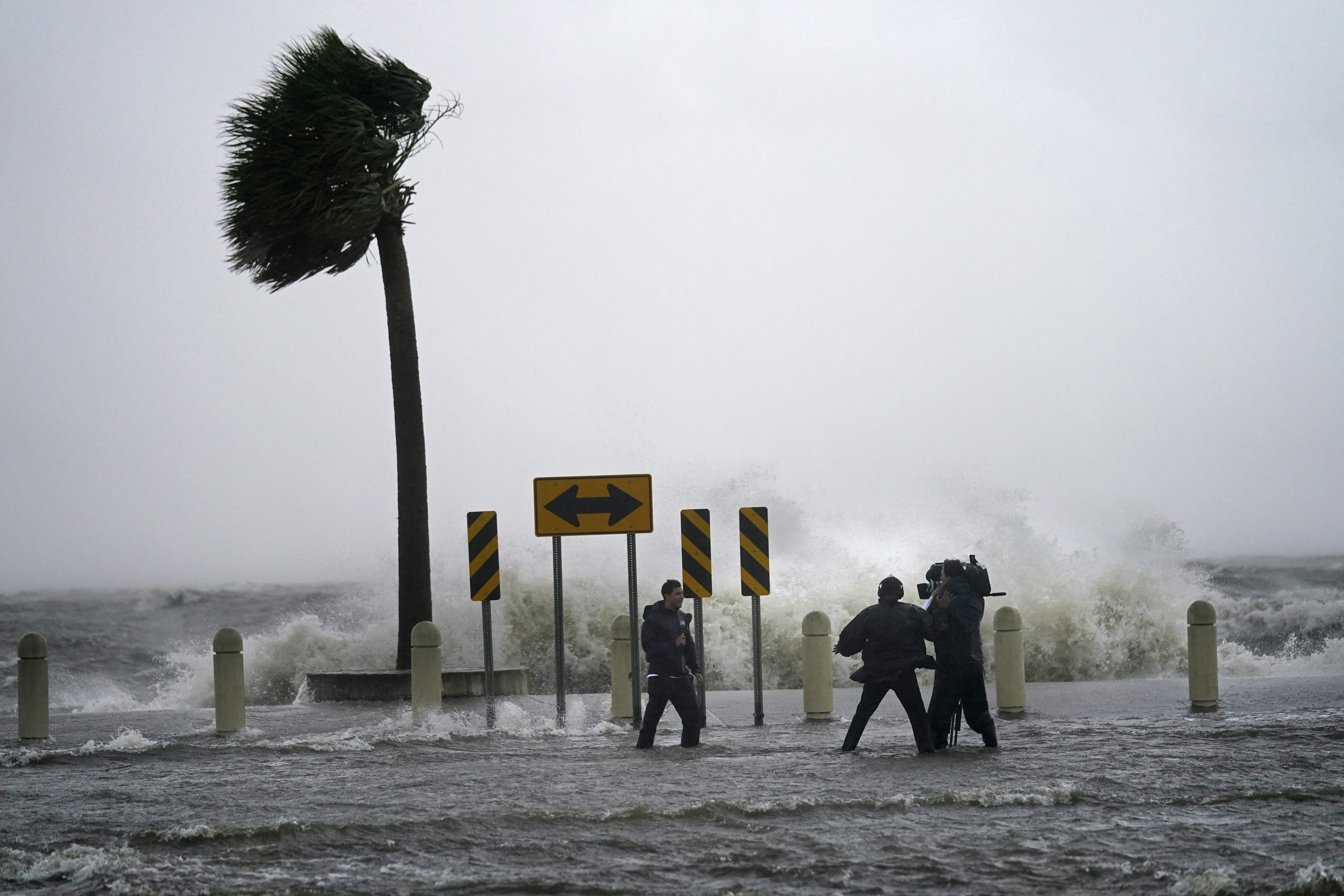
Ida made landfall on the same calendar date, August 29, as Katrina did 16 years ago, striking the same general part of Louisiana with about the same wind speed, after rapidly strengthening by going over a similar patch of deep warm water that supercharges hurricanes.

What could be different is crucial though: direction, size and strength.

"Ida will most definitely be stronger than Katrina, and by a pretty big margin,'' University of Miami hurricane researcher Brian McNoldy said.

"And, the worst of the storm will pass over New Orleans and Baton Rouge, which got the weaker side of Katrina."

Ida was a strong category four storm with 241km/h winds when it made landfall, "a sneeze away from becoming the fifth category five landfall on the continental US," Mr McNoldy said.

READ MORE: Hurricane Ida leaves at least one dead and all of New Orleans without power
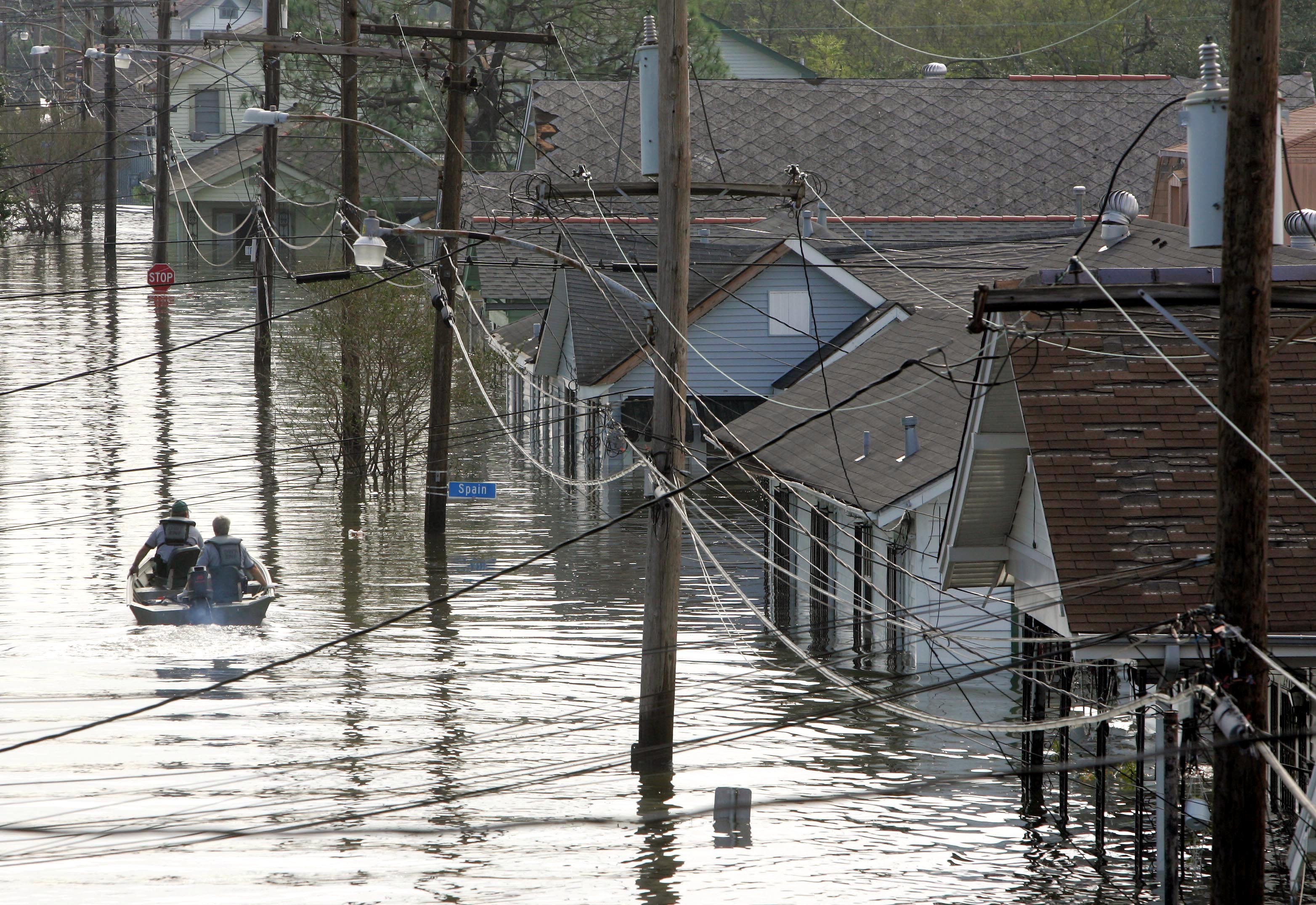
FILE - In this Tuesday, Aug. 30, 2005 file photo, Rescue personnel search from victims as they traverse the New Orleans 8th Ward in the flooded city of New Orleans. Water continues to rise after the onslaught of Hurricane Katrina. Hurricane Ida looks an awful lot like Hurricane Katrina, bearing down on the same part of Louisiana on the same calendar date. But hurricane experts say there are differences in the two storms 16 years apart that may prove key and may make Ida nastier in some ways but

Katrina weakened quite a bit before landfall, striking Louisiana as a category three storm with 127km/h winds.

Katrina hit Louisiana from due south, while Ida is coming to the same part of the state from south-east.

On Sunday, Ida's hurricane-force winds extended 60km from the centre, compared to Katrina's hurricane-force winds that spread 158km from the centre when it made landfall, Mr McNoldy said.

"This has the potential to be more of a natural disaster whereas the big issue in Katrina was more of a man-made one" because of levee failures, Mr McNoldy said.

Levee failures pushed Katrina's death toll to 1833 and its overall damage to about US$176 billion ($241 billion) in current dollars, and experts don't expect Ida to come near those totals.

Different direction

Ida came to the same general place from a slightly different direction.

Several hurricane experts fear that difference in angle may put New Orleans more in the dangerous storm quadrant — the right front part of a hurricane — than it was in Katrina, when the city was more devastated by levee failure than storm surge.

Katrina's northeast quadrant pushed 8.5-metre storm surges in Mississippi not New Orleans.

Ida's "angle is potentially even worse," Mr McNoldy said.

Because it is smaller "it's not going to as easily create a huge storm surge … but the angle that this is coming in, I think is more conducive to pushing water into the lake (Pontchartrain)."
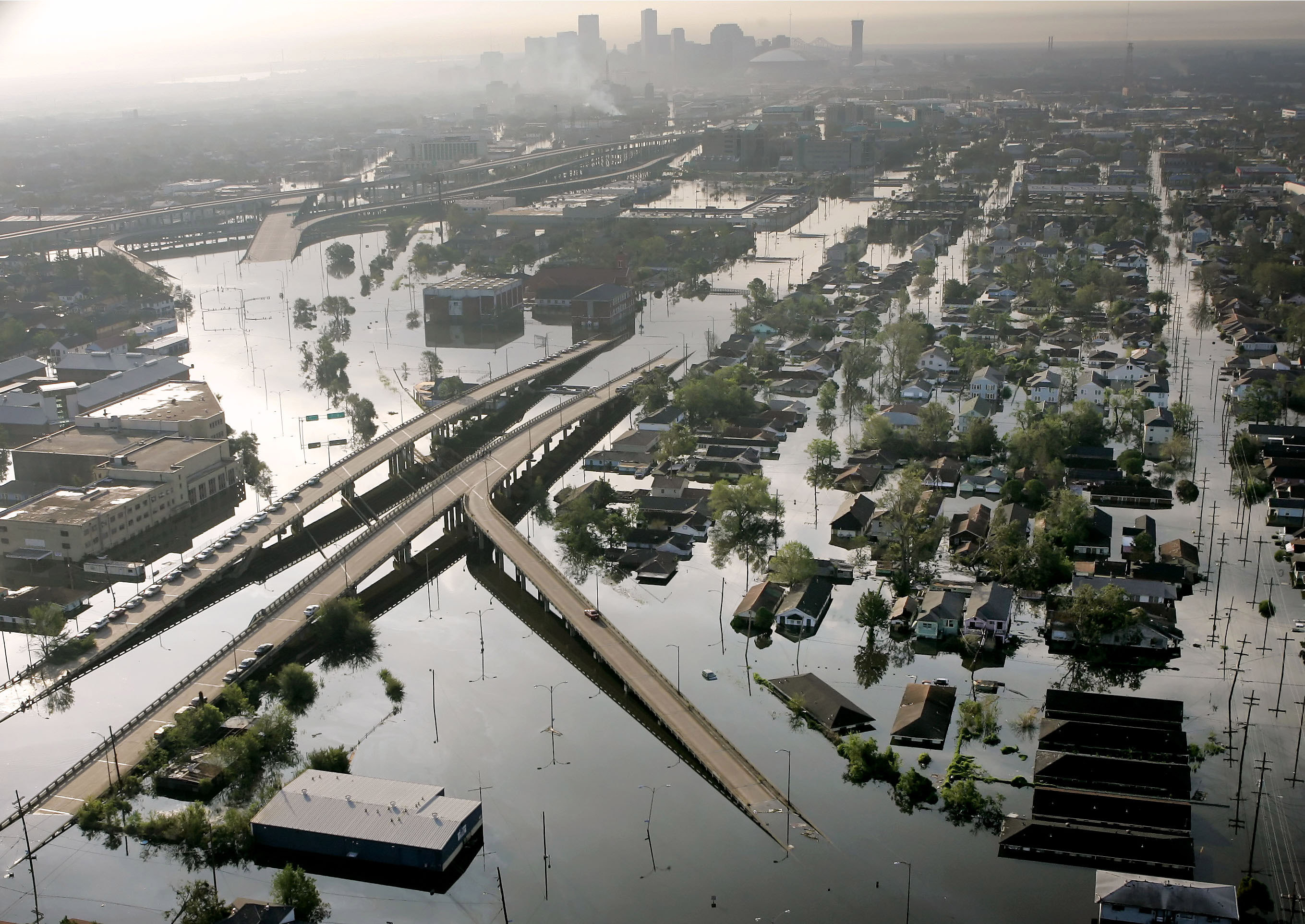
FILE - In this Aug. 30, 2005 file photo, Floodwaters from Hurricane Katrina fill the streets near downtown New Orleans. Hurricane Ida looks an awful lot like Hurricane Katrina, bearing down on the same part of Louisiana on the same calendar date. But hurricane experts say there are differences in the two storms 16 years apart that may prove key and may make Ida nastier in some ways but less dangerous in others.(AP Photo/David J. Phillip, File)

That northwestern path of Ida not only puts New Orleans more in the bullseye than it did in Katrina, but it also more targets Baton Rouge and crucial industrial areas, Masters said.

He said Ida is forecast to move through "the just absolute worst place for a hurricane."

"It is forecast to track over the industrial corridor between Baton Rouge and New Orleans, which is one of the key infrastructure regions of the US, critical to the economy," Mr Masters said.

"You're probably going to shut down the Mississippi River for barge traffic for multiple weeks."

Meteorologist Steve Bowen, head of global catastrophe insight at the risk and consulting firm Aon, said the impact will be felt beyond coastal areas.

"We're certainly looking at potential losses well into the billions," Mr Bowen said.

Size matters

The difference is size is not just physically huge, but it matters for damages.

Storms that are bigger in width have larger storm surge because of the broader push of the water.

Ida "is not going to generate the huge storm surge like Katrina did, it'll have more focused storm surge like (1969's) Camille," Mr Masters said.
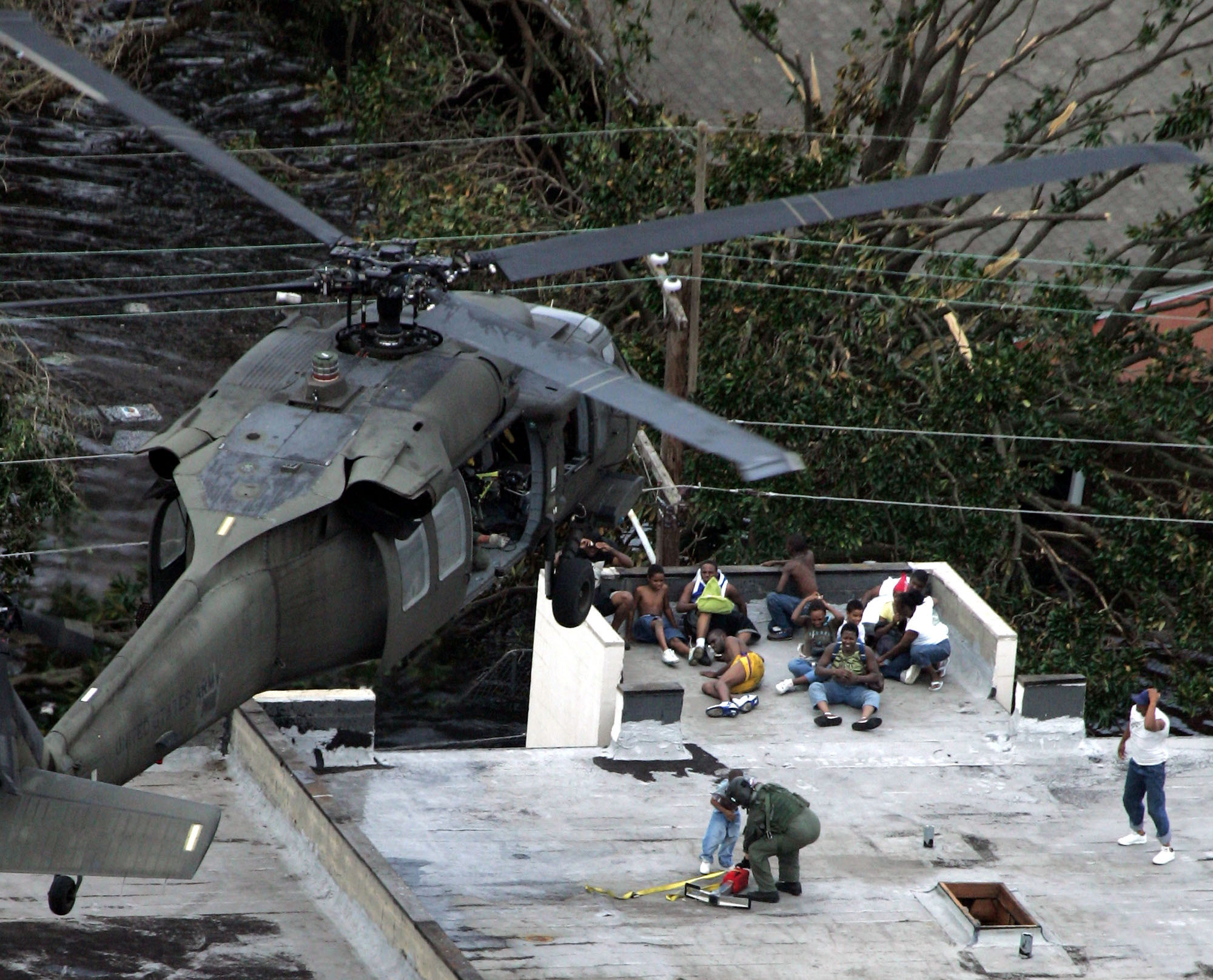
FILE - In this Sept. 1, 2005 file photo, Residents are rescued by helicopter from the floodwaters of Hurricane Katrina  in New Orleans. Hurricane Ida looks an awful lot like Hurricane Katrina, bearing down on the same part of Louisiana on the same calendar date. But hurricane experts say there are differences in the two storms 16 years apart that may prove key and may make Ida nastier in some ways but less dangerous in others.(AP Photo/David J. Phillip, Pool, File)

But larger in size storms are often weaker, Mr Bowen said.

There's a trade-off of intense damage in a smaller area versus less damage, but still bad, in a wider area.

Bowen and Princeton University's Gabriel Vecchi said they don't know which scenario would be worse in this case.

Rapid Intensification

Ida late Saturday and early Sunday (local time) feasted on an eddy of what's called the Loop Current, going from 169km/h winds to 241km/h winds in just eight hours.

The Loop Current is this deep patch of incredibly warm water.

It takes warm water off the Yucatan Peninsula does a loop in the Gulf of Mexico and spins up the eastern edge of Florida into the Gulf Stream.

Water above 26 degrees Celsius is hurricane fuel.

Normally when a storm intensifies or stalls it takes up all of the region's warm water and then hits colder water that starts to weaken the storm or at least keeps it from further strengthening.

But these warm water spots keep fueling a storm.

Katrina powered up this way and so did Ida, gaining power over an area with hurricane fuel more than 150 metres deep, "just a hot tub," Mr McNoldy said.

In the past 40 years, more hurricanes are rapidly intensifying more often and climate change seems to be at least partly to be blame, Jim Kossin and Mr Vecchi said.

"Running over these Loop Current (eddys) is a very big deal. It's really dangerous," climate and hurricane scientist Mr Kossin of The Climate Service said.

Hurricane Grace already rapidly intensified this year and last year Hanna, Laura, Sally, Teddy, Gamma and Delta all rapidly intensified.

"It has a human fingerprint on it," said Mr Kossin, who with Mr Vecchi was part of a 2019 study on recent rapid intensifications.

New eyewall

After a hurricane rapidly intensifies it becomes so strong and its eye so small that it often can't quite keep going that way, so it forms an outer eyewall and the inside eyewall collapses, Mr Kossin said.

That's called eyewall replacement.

When a new eyewall forms, often a storm becomes larger in size but a bit weaker, Mr Kossin said.
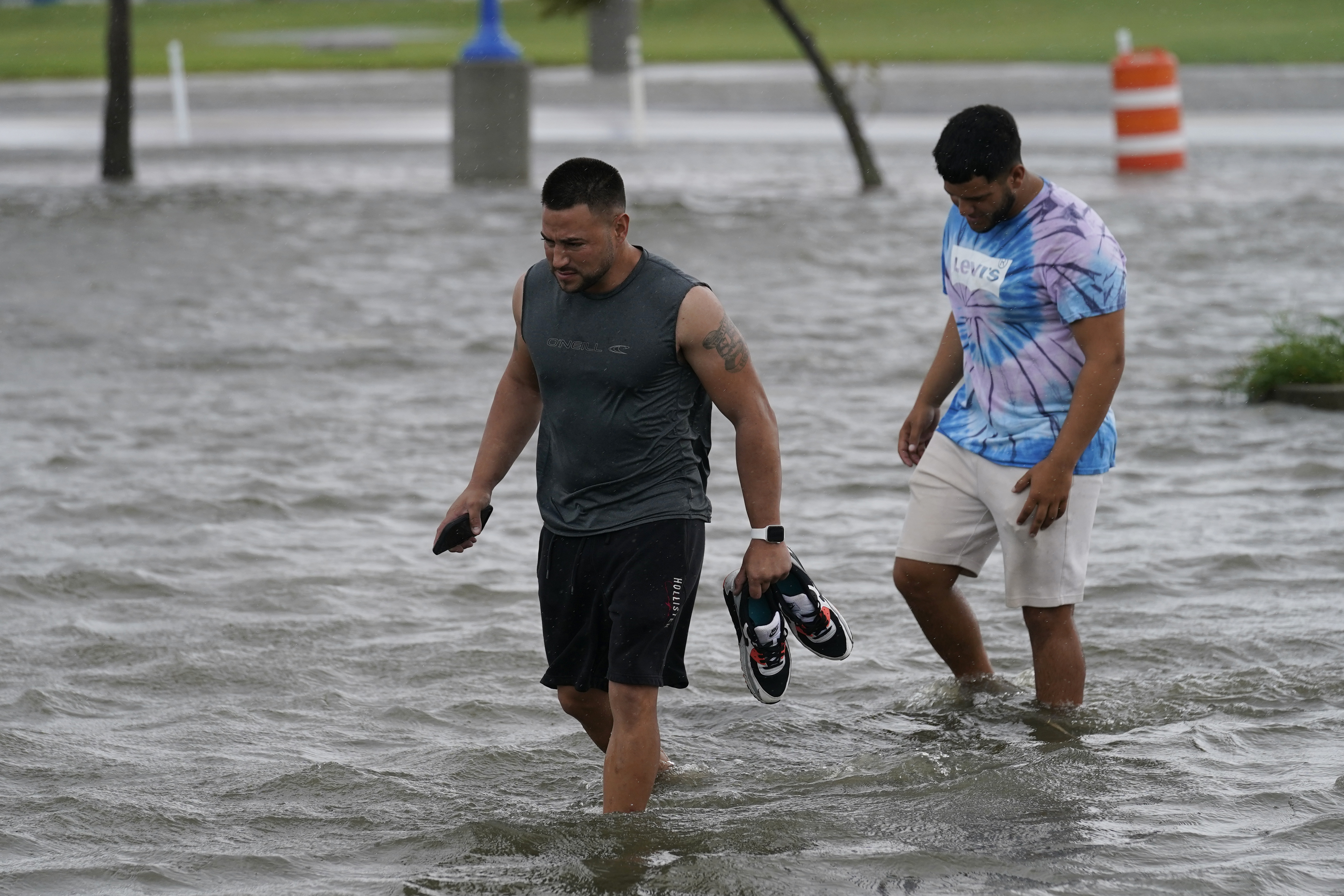
So key for Ida is when and if that happens. It happened for Katrina, which steadily weakened in the 12 hours before it made landfall.

Ida has started the process of eyewall replacement, but Mr McNoldy said he doesn't think it matters.

"It has run out of time to do anything that would make a difference."

History

Meteorologists have improved forecasts and they hope that Louisiana is better prepared than in 2005 with a stronger levee system.

However, Bowen said Ida is coming a year after Hurricane Laura smacked Louisiana in 2020 with 241km/h winds.

"No US state since 1851 has ever recorded back-to-back years of 150+ mph hurricanes making landfall," Mr Bowen said.

"Following Laura's landfall in 2020, Louisiana is about to make unfortunate history."