COVID LATEST* 70 new cases, 347 in total, 19 in hospital – case at Warkworth rest home * Level 3 is imminent for parts of NZ – but what does it actually change? * Business groups disappointed with lockdown decision * Matthew…
Category Archives: headline
Covid 19 coronavirus Delta outbreak: South Island stays in lockdown until Tuesday
The South Island will stay in lockdown for four more days before everyone below the Auckland boundary will move to alert level 3. Prime Minister Jacinda Ardern made the announcement at 3pm on Friday after Cabinet met earlier in…
Explained: The return-to-school plan for NSW students
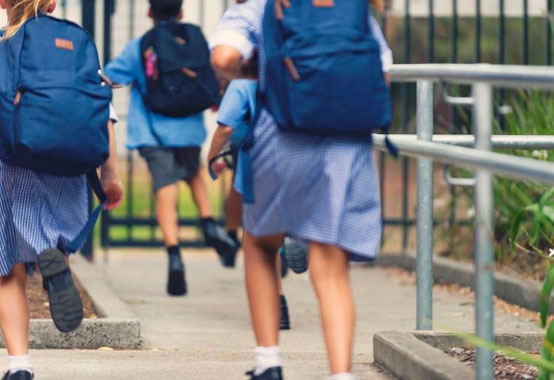
The NSW Government has announced a staggered return to school for all students from late October.
Premier Gladys Berejiklian said today the goal will be for every school staff member to receive COVID-19 vaccination by November 8, with a special day for staff to be vaccinated on September 6.
"We are asking for everybody who works on a school campus to be vaccinated by November 8," Ms Berejiklian said.
"A large proportion of teachers are already vaccinated but we are calling out for anybody, to any teacher, who is not vaccinated to get vaccinated."
LIVE: NSW records 882 cases, two deaths
Later date for HSC exams
HSC exams will be pushed back to November 9, with a revised timetable and guidelines for COVID-safe exams to be released by the NSW Education Standards Authority in early September.
The government says the delay of the HSC exams will not disadvantage NSW students when applying to university.
READ MORE: Lockdown extended for regional NSW
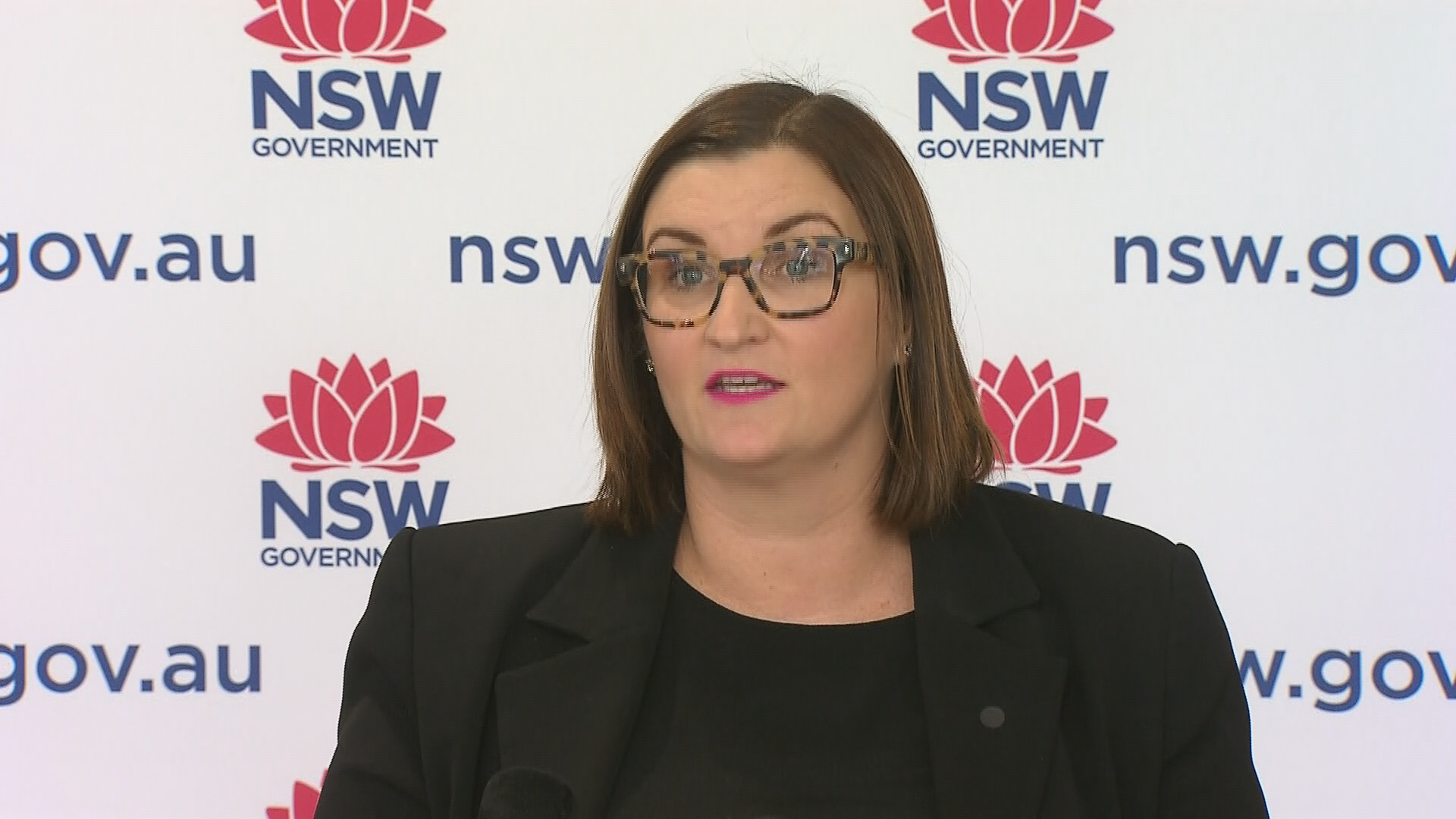
NSW Education Minister Sarah Mitchell said the university sector had been consulted.
"We expect that means the results will come out in mid-January, but the university sector has been consulted, and are able to accommodate those changes," Ms Mitchell said.
"And that means any Year 12 student who wants to go to university will be able to be offered a place, in line with previous years."
READ MORE: More freedoms for fully vaccinated in NSW – What you need to know
Ms Mitchell said existing measures were in place to deal with "illness and misadventure" in the event an HSC student was unable to attend an exam.
"Any particular student on the day of their exams who cannot attend because they are unwell, if they are impacted by being a COVID close contact, there are already procedures in place to help those people in terms of the assessment," she said.
"We did that last year and we do it when there are bushfires or natural events and there are good mechanisms in place."
Staggered return, restrictions remain at school
Children in any area of NSW which comes out of lockdown before October 25 will be automatically allowed to return to school.
The NSW Department of Education says its plan aims to bring students back in a COVID-safe way while stay at home orders are still in place.
Students will return to face-to-face learning in the following order:
- From 25 October – Kindergarten and Year 1
- From 1 November – Year 2, 6 and 11
- From 8 November – Year 3, 4, 5, 7, 8, 9 and 10
Year 12 students are already able to return in a limited way and this will continue for the remainder of Term 3.
From October 25, Year 12 will have full-time access to school campuses and their teachers.
If stay-at-home orders are lifted in a local government area or region before October 25, all students living or learning in that area will return to face-to-face learning.
If COVID-19 cases in LGAs increase significantly, learning from home will resume for that LGA until case numbers drop.
READ MORE: The key COVID-19 symptoms to watch out for – and when to call an ambulance
Ms Mitchell said students will return to school on level three restrictions.
This will involve minimal mixing and no extra adults on campus; no assemblies and large gatherings; and mask-wearing will be compulsory for all staff and all high school students.
Primary school students are also advised to wear masks.
Covid 19 coronavirus: Southland man receives second vaccination too soon
A nurse told a Southland man who received two Covid-19 vaccinations in less than two weeks “we might have a problem”, straight after the second vaccination was done.Centre Bush resident John Scully said he received his first vaccination…
Fall of Afghanistan: Interpreters stranded after New Zealand stops evacuations – 'desperate, hopeless and terrified'
Afghan interpreters and other civilians who helped the New Zealand war effort say they feel “desperate, hopeless and terrified” after learning the evacuation mission had ended, leaving them and their families behind. New Zealand…
Covid 19 coronavirus Delta outbreak: Business taking 'massive hit', some whānau running short of kai
An iwi leader says businesses are taking “a massive hit” in lockdown and some whānau are running short of kai.Te Ranga Tupua iwi collective spokesman Pahia Turia says the government’s resurgence payments and wage subsidy are…
Qantas plan to move flight from Perth to Darwin 'outrageous'
Western Australia's Premier has labelled a suggestion to move its non-stop Perth to London flights to Darwin as "outrageous".
Qantas says it is considering relocating the flights once international borders reopen due to WA's hardline border policy.
But Mark McGowan has criticised the potential change, arguing a terminal at Perth Airport had been upgraded to secure the flights at a cost of $15 million.
READ MORE: Qantas plans restarting international flights despite $1.7 billion loss
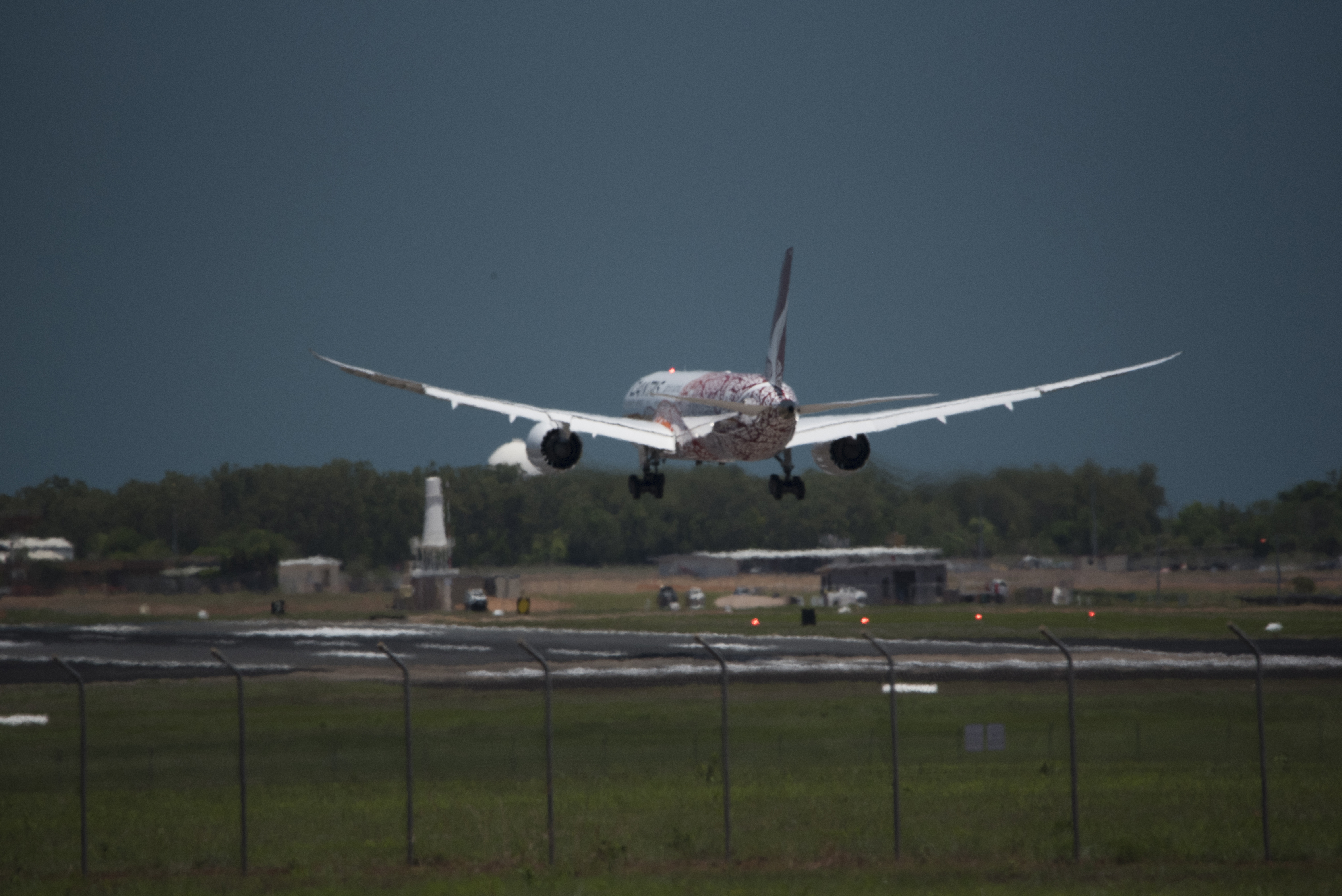
Qantas expects its direct flights from Australia to the UK to be in high demand once international travel is allowed.
The flight time from Perth to London, or Darwin to London, is comparable and that route is now being looked at.
"The airline is investigating using Darwin as a transit point, which has been Qantas' main entry for repatriation flights, as an alternative – or in addition – to its existing Perth hub given conservative border policies in Western Australia," Qantas said in a statement.
READ MORE: 'An odd thing to say': WA Premier hits back at PM's Croods comparison
But Mr McGowan said his state was being "punished" for its tough stance in keeping COVID-19 out.
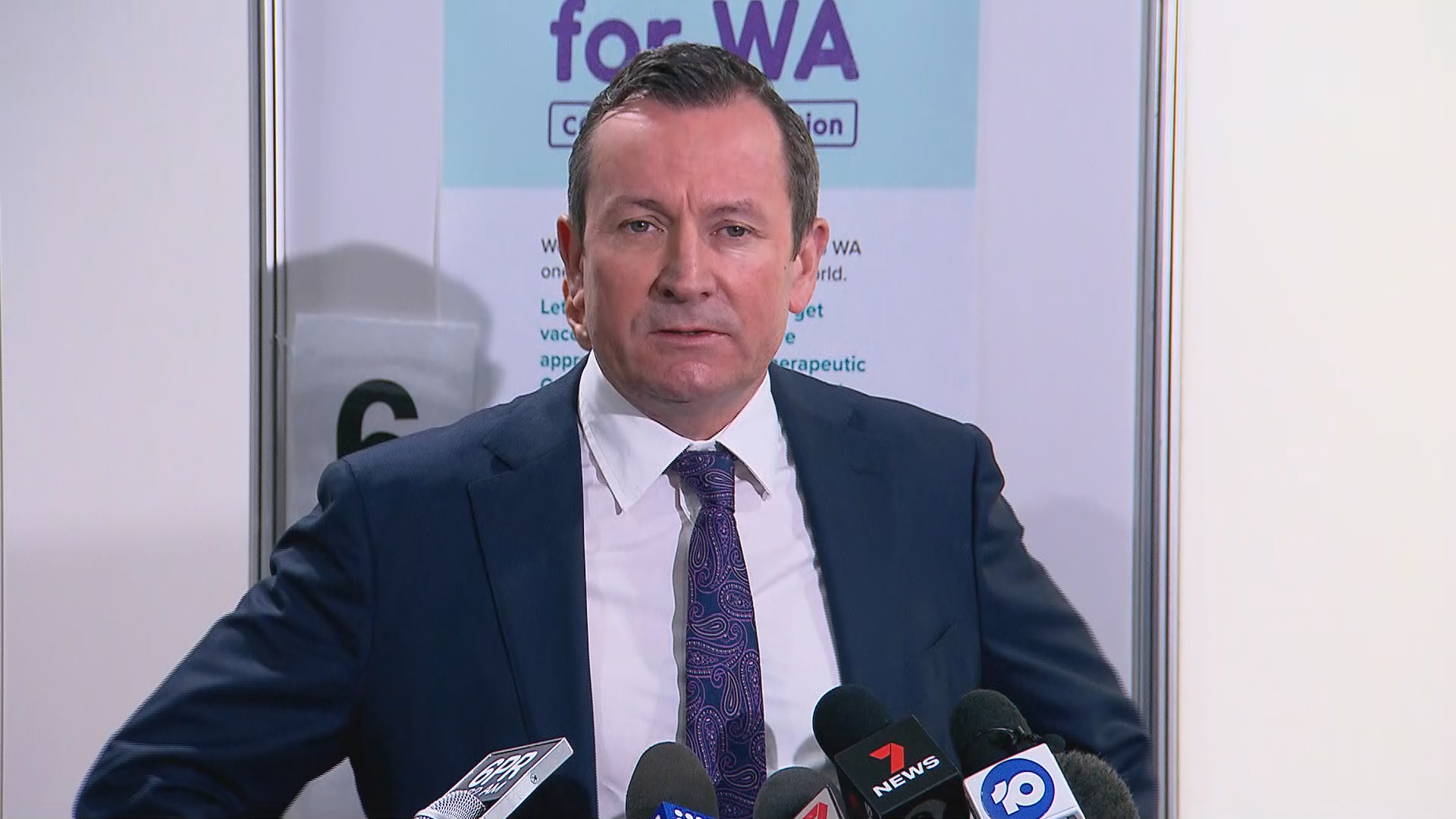
"All of the income we produce … the revenue we produce for the Commonwealth government is keeping Australia alive, we shouldn't be punished for that," Mr McGowan said yesterday.
READ MORE: Qantas offers free points, flight vouchers, for fully vaccinated Australians
"All I'd say to Qantas … as a state, we funded the Perth-London flights.
"We put in place $15 million worth of improvement at the terminal. [Qantas] need to show some understanding and perhaps some gratitude to what the state government has done."
Qantas CEO Alan Joyce says the carrier was ready to launch international flights once vaccination rates in Australia reach 80 per cent, due to happen in December.
What is ISIS-K? Behind the group suspected of Kabul attack
Since coalescing in eastern Afghanistan six years ago, an Islamic State affiliate there has grown into one of the most dangerous terror threats globally.
Despite years of military targeting by the US-led coalition, the group known as Islamic State Khorasan, or ISIS-K, has survived to pursue new attacks as the United States and other NATO partners withdraw from Afghanistan, and as the Taliban return to power.
President Joe Biden cited the threat of Islamic State attacks in sticking with a Tuesday deadline for pulling US forces out of Afghanistan.
And ahead of deadly suicide bombings at the Kabul airport Thursday, there were urgent Western warnings of a potential attack by the group, under cover of the throngs that have gathered at the Kabul airport seeking evacuation.
READ MORE: Multiple explosions in Kabul kill 'a number' of US troops
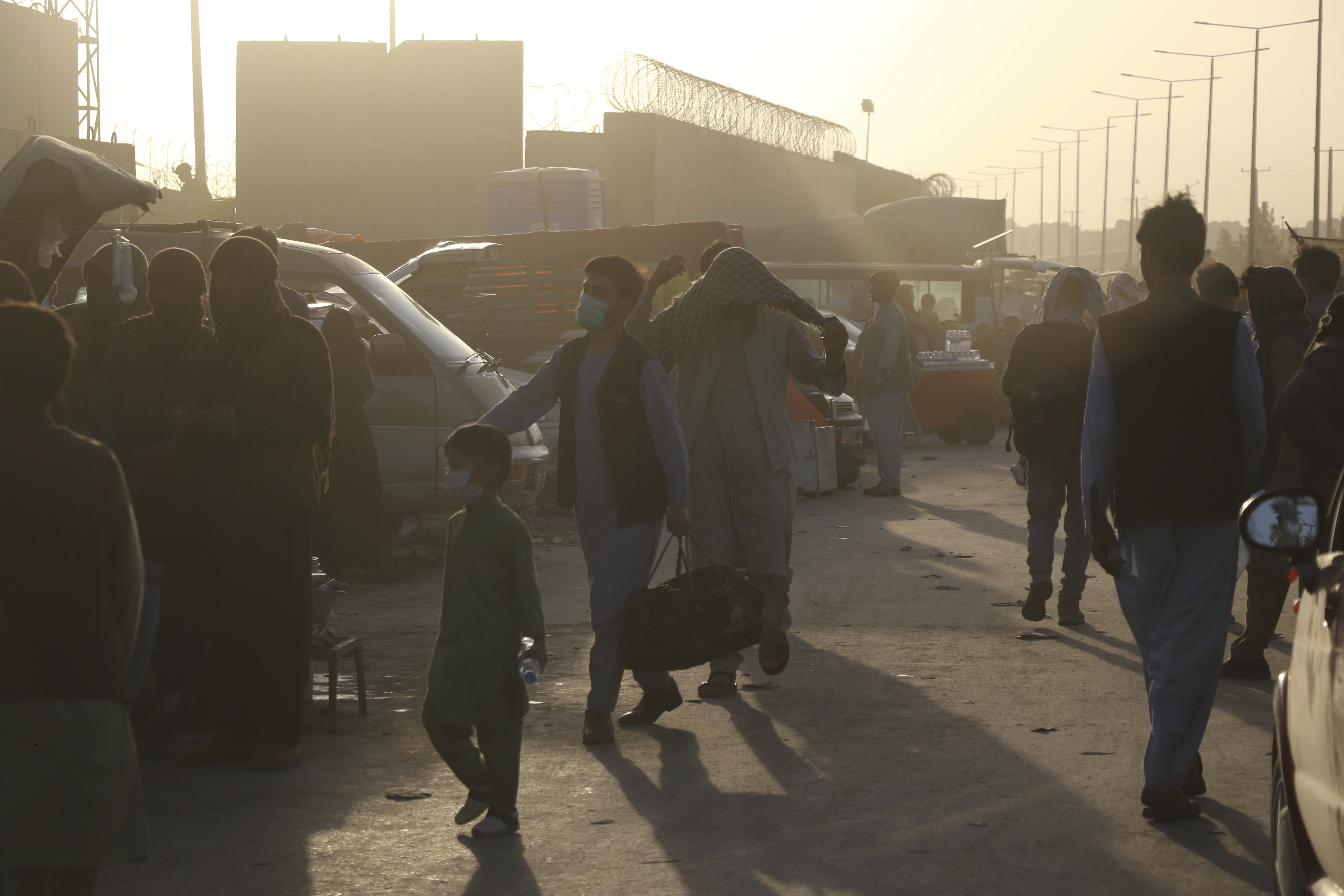
US officials said the killings are believed to have been carried out by the Islamic State group.
The group has built a record of highly lethal attacks in the face of its own heavy losses.
A look at a deadly group influencing the course of the Kabul airlifts and US actions:
What is Islamic State Khorasan?
The Islamic State's Central Asia affiliate sprang up in the months after the group's core fighters swept across Syria and Iraq, carving out a self-styled caliphate, or Islamic empire, in the summer of 2014. In Syria and Iraq, it took local and international forces five years of subsequent fighting to roll back the caliphate.
The Afghanistan affiliate takes its name from the Khorasan Province, a region that covered much of Afghanistan, Iran and central Asia in the Middle Ages.
The group is also known as ISK, or ISIS K.
Who are the Islamic state Khorasan's fighters?
The group started as several hundred Pakistani Taliban fighters, who took refuge across the border in Afghanistan after military operations drove them out of their home country.
Other, like-minded extremists joined them there, including disgruntled Afghan Taliban fighters unhappy with what they — unlike the West — saw as the Taliban's overly moderate and peaceful ways.
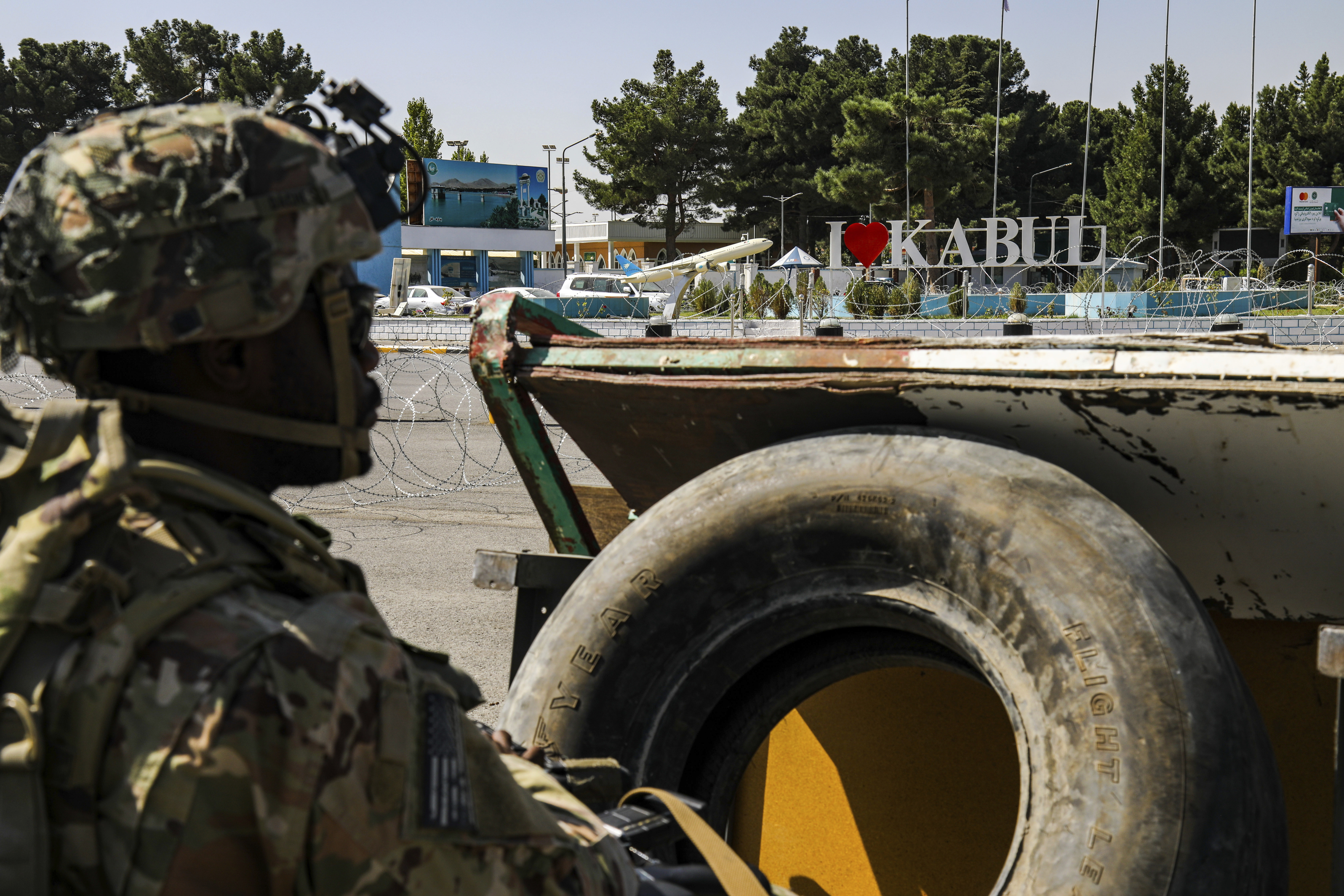
As the Taliban pursued peace talks with the United States in recent years, discontented Taliban increasingly moved to the more extremist Islamic State, swelling its numbers.
Most were frustrated that the Taliban was pursuing negotiations with the US at a time when they thought the movement was on the march to a military win.
The group also has attracted a significant cadre from the Islamic Movement of Uzbekistan, from a neighbouring country; fighters from Iran's only Sunni Muslim majority province; and members of the Turkistan Islamic Party comprising Uighurs from China's northeast.
Many were attracted to the Islamic State's violent and extreme ideology, including promises of a caliphate to unite the Islamic world, a goal never espoused by the Taliban.
What makes them a leading threat?
While the Taliban have confined their struggle to Afghanistan, the Islamic State group in Afghanistan and Pakistan has embraced the Islamic State's call for a worldwide jihad against non-Muslims.
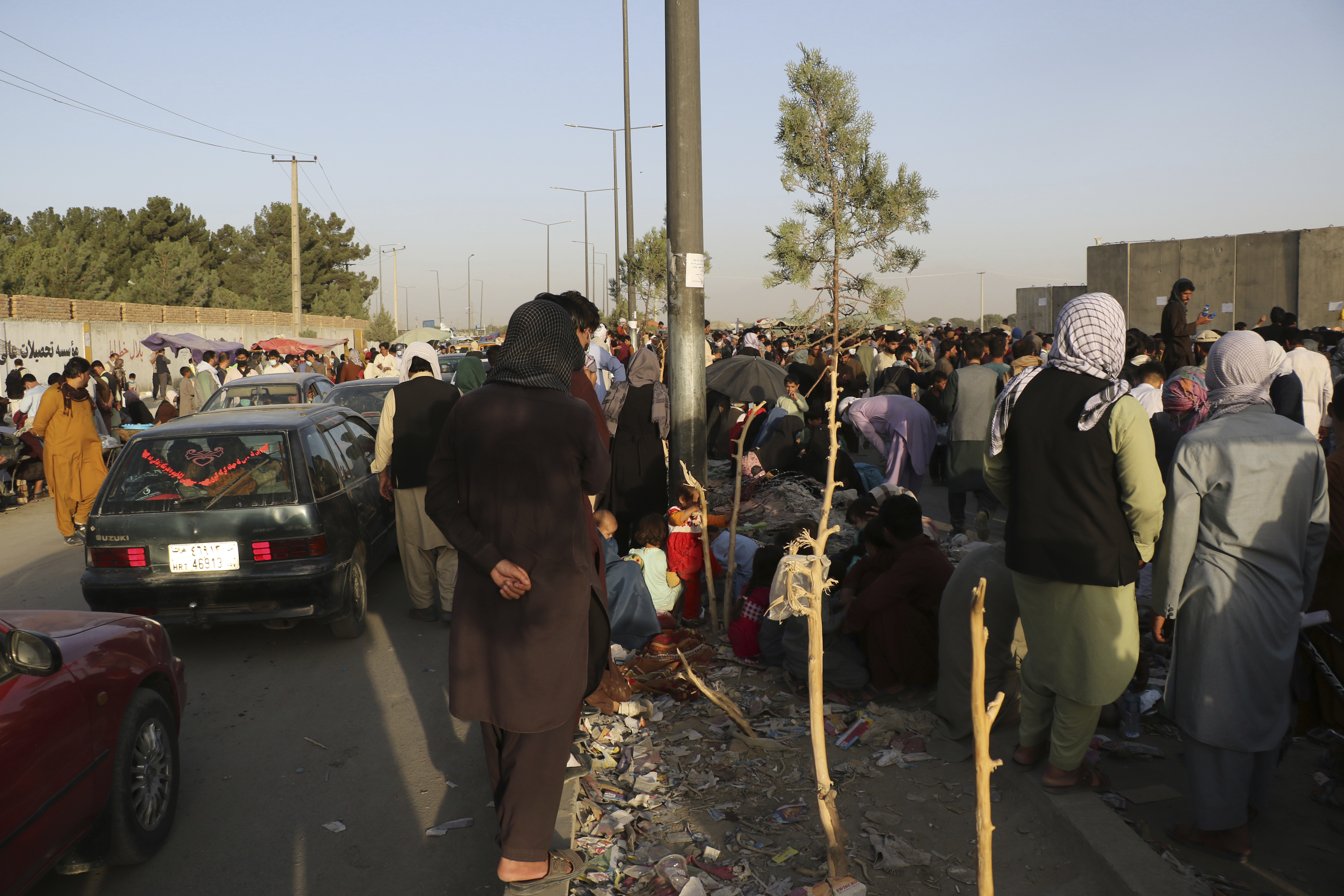
The Centre for International and Strategic Studies counts dozens of attacks that Islamic State fighters have launched against civilians in Afghanistan and Pakistan, including minority Shiite Muslims, as well as hundreds of clashes with Afghan, Pakistani and US-led coalition forces since January 2017.
Though the group has yet to conduct attacks against the US homeland, the US government believes it represents a chronic threat to US and allied interests in South and Central Asia.
What is their role with the Taliban?
They are enemies. While intelligence officials believe al-Qaida fighters are integrated among the Taliban, the Taliban, by contrast, have waged major, coordinated offensives against the Islamic State group in Afghanistan.
Taliban insurgents at times joined with both the US and US-backed Afghan government forces to rout the Islamic State from parts of Afghanistan's northeast.
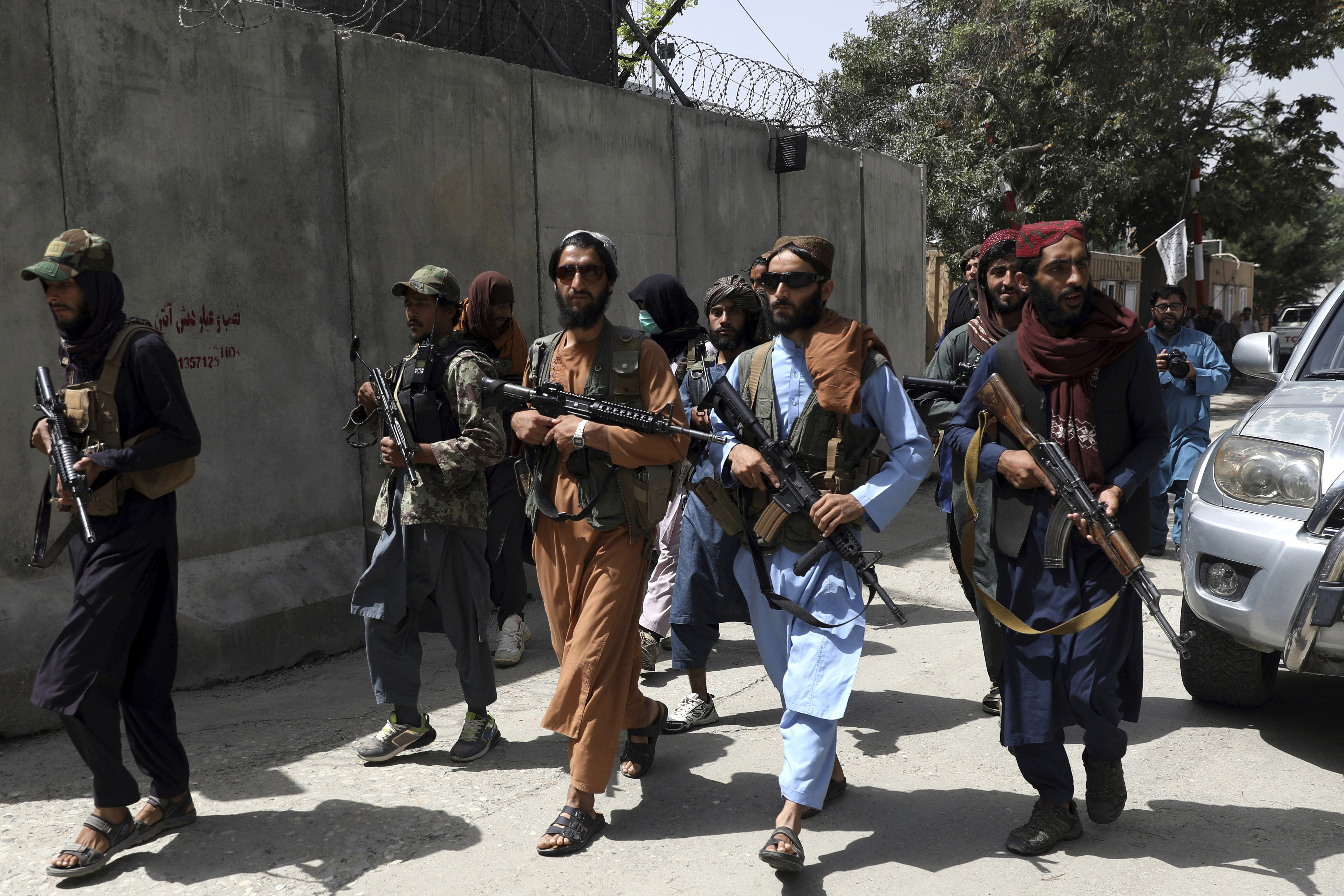
A US Defence Department official, speaking to The Associated Press on condition of anonymity because he was working covertly, said previously that the Trump administration had sought its 2020 withdrawal deal with the Taliban partly in hopes of joining forces with them against the Islamic State affiliate.
The administration saw that group as the real threat to the American homeland.
What is the risk now?
Even when the United States had combat troops, aircraft and armed drones stationed on the ground in Afghanistan to monitor and strike the Islamic State, Islamic State militants were able to keep up attacks despite suffering thousands of casualties, Amira Jadoon and Andrew Mines note in a report for West Point's Combating Terrorism Centre.
The withdrawal is depriving the United States of its on-the-ground strike capacity in Afghanistan, and threatens to weaken its ability to track the Islamic State and its attack planning as well.
Biden officials say the Islamic State group is only one of many terror threats it is dealing with globally.
They insist they can manage it with so-called over-the-horizon military and intelligence assets, based in Gulf states, on aircraft carriers, or other more distant sites.
One of the United States' greatest fears about pulling out its combat forces after two decades is that Afghanistan under Taliban rule again becomes a magnet and base for extremists plotting attacks on the West.
That threat, US national security adviser Jake Sullivan told CNN last weekend, was something "we're focused on, with every tool in our arsenal."
PM Harris joins family and friends at Educator John Charles’ home-going service
BASSETERRE, ST. KITTS, August 26, 2021 (MMS-SKN) — Prime Minister and Area Parliamentary Representative for St. Christopher Seven, Dr the Hon Timothy Harris, on Wednesday August 25 joined family and friends at the home-going service and burial of one of his constituents, renowned educator and sports personality Mr John Adolphus Charles of Christ Church.

The funeral service was held at the Tabernacle playing field where officiating ministers were Pastor Keith Phipps, Pastor Erickson Cumberbatch, Pastor Eldred Henry, and a daughter of the Late Mr John Charles, Senior Pastor Octavia Charles-Warner of the House of Deliverance New Testament Church of God in Tabernacle Village. Interment was at the Tabernacle burial ground.
“I am here to give some remarks, regarding the life and times of someone I knew and ought to have known because he was part and parcel of our community here in Tabernacle, in Mansion, in Molineux, in Christ Church – John Charles was a fixture,” said Prime Minister Harris, as he paid special tribute to Mr Charles.
He added: “I want to extend on my own personal behalf and on behalf of the government and people of St. Kitts and Nevis, sincerest condolences to his wife, faithful and loving wife, Rose Annie Charles, and his children.”
He named the six children saying that from his knowledge of Mr Charles, he would have wanted all of them to be named as in his (Mr Charles) way, he felt a sense of pride and protection as it related to each of them.
“John Charles, as the educator, is well known – yes as teacher, as head teacher, as education officer, but also as education planner,” said Prime Minister Harris. “Not only could I recall his involvement in purveying a quality education at primary school, at secondary school, and elsewhere in which he engaged, but I also remembered John’s strong commitment to his community.”
Mr John Charles was an avid sportsman and had made a name for himself in the field of cricket, as Dr Harris said: “What stood out was John was a classic batsman. He went to the field and to the crease and he always wanted to make runs.”
Prime Minister Harris is the sponsor of the longest running domino league not only in the Federation of St. Kitts and Nevis, but also in the region, the Constituency Number Seven Dr the Hon Timothy Harris Domino League, which last year celebrated its 25th anniversary.
According to Dr Harris, Mr John Charles was one of the founding fathers of the league. Along with Mr Osmond Petty (now the Permanent Secretary in the Ministry of National Security), they had come together and approached him not for politics, but had come together for the community, and to make an intervention which they believed would be an important one to bring the people together. Mr Charles played for the Mansion Domino Club in the league.
“The legacy of sports as a unifier – sports as a vehicle to bring in people – was one which John Charles, along with others saw and utilised to good effect,” said Dr Harris. “So I want to thank him again for that particular contribution.”
Children of the Late Mr John Adolphus Charles were well supported by their colleagues. Pallbearers were members of the Royal St. Christopher and Nevis Police Force, as his son Mr Garfield Charles is a member of the elite Strategic Intelligence Unit of the Police Force. Also giving support was Commissioner of Police Mr Hilroy Brandy.
Tributes were paid in song by the Ministry of Public Infrastructure, Utilities, Posts and Urban Development, with Permanent Secretary Mr Daryl Lloyd, and Post Master General Mr Dario Gill leading the team. PS Lloyd also conveyed condolences from Deputy Prime Minister the Hon Shawn Richards. Mr Charles’ eldest child, Mrs Octavia Charles-Warner, is an Executive Officer at the General Post Office.
Staff at the Cotton Thomas Comprehensive School, where his daughter Ms Celeste Charles teaches, paid tribute in song. Another of his daughters, Mrs Jo-Ann Charles-Williams, is the Community Nurse Manager at the St. Peter’s Health Centre and a result, the Ministry of Health was represented by a team from the Community Nursing Services, led by Community Nurse Manager Doris Bradshaw, who paid tribute in song.
The House of Deliverance New Testament Church of God in Tabernacle where Mrs Octavia Charles-Warner is the Senior Pastor, gave tribute in song. Supporting them was Bishop Matthew Hepburn of their sister-church, the Basseterre based Word of Life New Testament Church of God.
Other tributes were given Nevisian Mr Lawrence Richards who was in university with Mr John Charles, Permanent Secretary in the Ministry of Education Mr William Vincent Hodge, former Prime Minister and now Leader of Opposition the Hon Dr Denzil Douglas, and family members including daughter Mrs Cyntella Charles-Esdaille who works as a nurse in England and who paid her tribute by video link.
Prayer of comfort was offered by Apostle Judah Payne, while eulogy was read by former Senior Assistant Secretary in the Ministry of Education Mr Michael Blake who suggested that a school should be named in honour of Mr John Charles for the contribution he had made to the area of education. Message in Word was delivered by Pastor Erickson Cumberbatch of the Molineux Wesleyan Holiness Church and Chaplain of the Police Force, while closing prayer was offered by Pastor Eldred Henry.
Interment was at the Tabernacle burial ground where graveside service was led by Pastor Keith Phipps, Pastor Erickson Cumberbatch, and Senior Pastor Octavia Charles-Warner. Prime Minister Dr the Hon Timothy laid the first wreath on the grave, followed by the widow, Mrs Rose Annie Charles, family members, and friends.
-

Late John Adolphus Charles’ widow Mrs Rose Annie Charles placing a wreath on the grave of her husband at the Tabernacle burial ground. -

Ministry of Public Infrastructure, Utilities, Posts and Urban Development team, led by Permanent Secretary Mr Daryl Lloyd, paying tribute in song. -

Community Nursing Services team from the Ministry of Health, led by Community Nurse Manager Doris Bradshaw, paying tribute in song. -

Pallbearers made up of officers from the Royal St. Christopher and Nevis Police Force, carry the casket of the Late John Adolphus Charles to its final resting place at the Tabernacle burial ground. -

Members of Late John Adolphus Charles family pose for a group picture at the grave of their loved one at the Tabernacle burial ground.


The post PM Harris joins family and friends at Educator John Charles’ home-going service appeared first on The St Kitts Nevis Observer.
Haiti’s Earthquake has Compounded Years of Corruption and Political Crisis
by Jonathan M Katz
Guardian
The 2010 earthquake response was riddled with failure. Haitians cannot afford another catastrophe
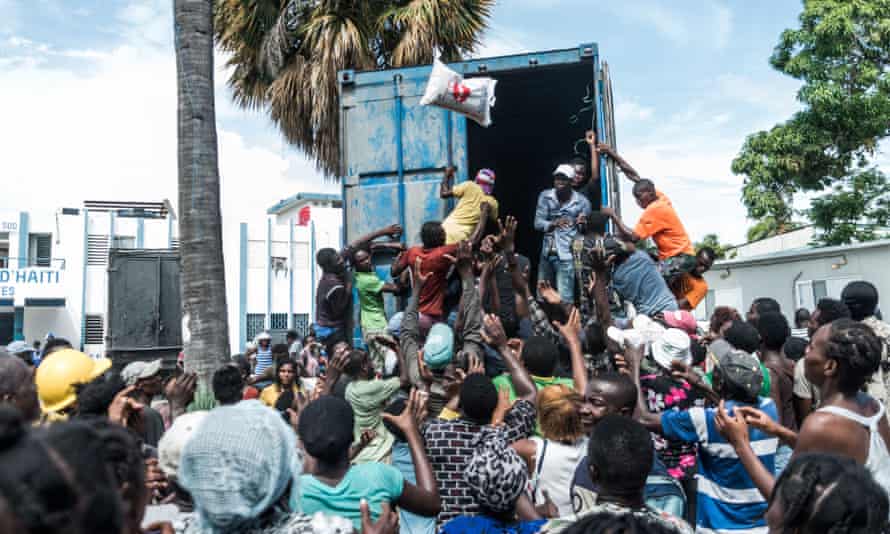
The latest statistics from Haiti’s August 14 earthquake are stark: at least 2,207 people have been confirmed dead and more than 12,000 injured. More than 130,000 homes have been damaged or destroyed. Aftershocks continue, and new landslides in the wake of the follow-on Tropical Storm Grace mean those numbers are expected to rise in the coming weeks.
But the most dispiriting number is 11. That is the number of years that passed between Haiti’s last major earthquake and this one – years in which corruption has hollowed out the state, armed gangs have expanded their territorial control, and political turmoil has intensified, culminating in the assassination of the president, Jovenel Moïse, in July.
The 2010 earthquake, while marginally weaker than this year’s, became the deadliest seismic event recorded in the western hemisphere, with more than 200,000 people killed. That was thanks to two factors: its proximity to Haiti’s densely populated capital, Port-au-Prince, and the Caribbean country’s lack of preparation in terms of building safety, infrastructure and emergency planning. Fixing those underlying weaknesses was what Bill Clinton, the former US president who oversaw the 2010 post-quake recovery, was talking about when he promised Haiti would “build back better”.
The latest disaster has shown the failure to achieve those promises. Not only were the buildings that fell in the quake-hit cities of Les Cayes, Jérémie and the villages and towns of Haiti’s southern Tiburon peninsula every bit as fragile as those that crumbled in Port-au-Prince, Léogâne and Jacmel more than a decade ago, but Haiti’s government has become far weaker and more riven by corruption than the one that flailed in the face of that tremor.
Well-armed gangs now control crucial transportation routes, including an essential corridor on the only road leading from the capital to the new quake zone. Nearly everyone affected by the disaster is poorer and hungrier than they were 11 years back. These vulnerabilities are not despite those earlier efforts to “help”, but a direct result of them.
The response to the 2010 earthquake was marked by talk of big money and big action, with little to show for it in ordinary Haitians’ lives.
The typical quake survivor received a tarp for shelter, immediate medical attention for a deep wound or broken bone, and perhaps a hygiene kit and a few days’ worth of food and water. Only a pittance of the billions spent was put into the hands of Haiti’s poor majority; perhaps the most enduring legacy of the intervention was a devastating cholera epidemic caused by United Nations peacekeepers nine months after the quake.
Donors’ primary excuse for their unwillingness to put money in Haitians’ hands – as opposed to those of their own countries’ militaries, contractors or aid groups – was corruption. Though none offered evidence of significant corruption in the government of the then president, René Préval, the image of the black republic as a place home to endemic corruption persisted in many foreigners’ minds. Many, including those in the Obama administration, blamed Préval – often an obstinate man with an abiding skepticism of foreign interventions – for the slow pace of recovery and reconstruction.
Then, in late 2010, a presidential election was held. When the initial results showed the candidate of Préval’s Unity Party headed to a second-round runoff, the US embassy immediately cast doubt on the results.
In January 2011, Hillary Clinton, in her role as Obama’s secretary of state, flew to Port-au-Prince to demand Préval’s candidate be taken out of the race, and replaced by the third-place finisher, a rightwing populist pop singer named Michel “Sweet Micky” Martelly. Martelly appealed to the most powerful international actors in Haiti, including Bill Clinton, because of his enthusiastic support for foreign investment schemes – including a push to reinvigorate Haiti’s garment assembly sector, in which Haitian people would be used as cheap labour to make clothes.
The Martelly years ended up being some of the most corrupt in Haiti in a generation. A Haitian anti-corruption watchdog reported in 2017 that much of the $2bn in Venezuela’s PetroCaribe oil loans – money freed up to be spent on infrastructure, public health, and other needs – had been embezzled during Martelly’s presidency.
By then Martelly had left office, handing power to his handpicked successor, a largely unknown businessman from Haiti’s rural north called Jovenel Moïse. (Auditors later found that Moïse had been the recipient of millions of dollars of the PetroCaribe money under Martelly, including having been paid two separate times for a road rehabilitation project that was never completed.)
A massive wave of nationwide anti-corruption protests broke out against the Moïse government, only to be crushed violently by police and allied gangs. A wave of kidnappings, massacres and political violence gripped the country from 2019 through 2021. Not a single election was held at any level, allowing parliament to disband and Moïse to appoint mayors himself and otherwise rule by decree. As the end of Moïse’s constitutional term neared in early 2021 he announced his intention to stay on for another year, while planning a constitutional referendum that would allow him to succeed himself. Through it all, Moïse enjoyed the robust support of the Trump administration.
President Moïse’s killing leaves Haiti less stable but as elitist as ever.
On 7 July, Moïse was assassinated in his home above Port-au-Prince. Dozens of Colombian mercenaries were arrested within hours of the attack. The head of Moïse’s presidential security detail was also brought in for questioning. Many questions remain, from who conducted the assassination to which political figures, if any, sanctioned it.
Those were the conditions in place when the 14 August earthquake struck, and they are the conditions in place as the response gets slowly under way. Responders find themselves dealing with chronic problems, such as food insecurity and longstanding health needs, as much or more than the immediate effects of the disaster. Hardworking Haitian bureaucrats within the health ministry, as well as overwhelmed doctors, nurses and scattered local officials, are doing all they can with the meagre resources available.
Prime minister Henry, eager to show the eviscerated central government still exists, is trying to assert control over international aid, and has promised substantial oversight so as not to repeat the disastrous experiences of 2010. Ordinary Haitians, self-reliant as they are, can only hope to see some follow-through this time – to help them strengthen their homes and lives before the next disaster strikes.
- Jonathan M Katz is the author of the Gangsters of Capitalism
The post Haiti’s Earthquake has Compounded Years of Corruption and Political Crisis appeared first on The St Kitts Nevis Observer.